Month: January 2024

  • Week 4.24

    Week 4.24

    A little while ago, I learnt that an ex-colleague of mine has received a stage 4 cancer diagnosis, and he’s only a few years older than me. Despite the fact that more “young” people seem to be getting cancer, it was still a deep shock because Tony was always incredibly fit and dedicated to his health. He’s been writing openly about his thoughts and experience on his Medium account, which I read before meeting him for lunch with some other former colleagues this week. It was tough seeing him in poorer shape, but true to his personal brand, he seemed extremely pragmatic and matter-of-fact about it all.

    We worked on the same team for about a year back in 2018, but were only on one project together as peers, leading design activities and client workshops together over a few months. I count myself fortunate to have had that experience, and learnt a lot from his confidence and wealth of technical knowledge when it came to UX matters — which was not my area of focus. Even then it was clear he had a knack for facing reality, and a passion for making sure the younger generation had their eyes open to the inequities of working life. Not always a popular topic, but life sucks. He mentioned that whenever he finds the strength these days, he works on his own design education materials that prepare students for non-ideal situations, and I thought that made perfect sense for him.

    Many of the things we talked about over lunch echoed other conversations I’ve been having with other friends. Maybe it’s the return of tech layoffs in the news, but negative sentiments seem as high as they were during Covid, with the questioning of boundaries and priorities taking place again. Tony understandably tried to impress upon us that some things aren’t worth having as regrets, and that we should make better choices while we still can. When I asked him what else he does now on days that aren’t lost to medical interventions, the answer was surprisingly similar to how I spent most of my year off work: reading, writing, and drawing.

    Peishan shared this Guardian article about people with cancer who’ve found the clarity to spend their remaining time meaningfully, and I thought Mark Edmondson landed the point that some people have trouble getting: the work that gives you purpose today isn’t the only purpose you’ll have.

    People (usually millennials) also mention the difficulty they have switching off from work. On a daily basis, but also when they go on vacation — taking half the holiday to get into holiday mode is a terrible inefficiency. I recall it took me months to unwind from a state of nearly burning out and to stop worrying about my “sabbatical ROI”. We should be like newer hybrid vehicles that can shut their engines down when idling at traffic lights and spring back to life quickly when needed, but instead us older cars only know how to burn gas all the time. I want to be a disused school bus just rusting in a field, bright yellow and unbothered.

    ===

    • I visited the Prix Pictet photo exhibition that’s part of Singapore Art Week (maybe it’ll be the only event I attend from this year’s edition) and found it beautiful but gosh it was mostly depressing. The theme was “Human” but it may as well have been “Human Suffering” — from communities devastated by the effects of mining and metal poisoning, to the plight of illegal refugees trekking 66 miles through jungle in search of better opportunities, they seemed to comment that there’s not much joy in being human these days. I joked halfway through that I hoped there would be a series of mundane birthday party photos at the end. There wasn’t.
    • Kim spent most of her week preparing an elaborate, successful Indian dinner from the Dishoom cookbook, but that’s really a story for her own weeknotes if they ever happen. The takeaway for me has been that, after seeing how the proverbial samosa is made, the Indian takeaways we usually get are probably quite unhealthy and we need to cut down.
    • Nintendo is having a January sale on the Switch eShop and I considered getting the remake of an apparent classic time loop visual novel, YU-NO: A girl who chants love at the bound of this world, yes, that is its title. It’s apparently the spiritual forebear of games such as Steins;gate, but after watching a short gameplay video on YouTube, I decided that since life is too short, I really didn’t want to punish myself. An anime adaptation was made a few years ago, so I will simply watch that instead.
    • We are enjoying the new British police drama Criminal Record on Apple TV+. Peter Capaldi is really good in it, although all the police work and cornering of baddies with their secrets is carried out really incompetently.
    • Can you believe that The Smile dropped a new album a couple of days ago and I had to find out from YouTube instead of Apple Music? Seriously, I’m looking at my For You page and it’s not mentioned under New Releases. This music video, where the band plays a new song for an auditorium full of young children — most of them bewildered or bored out of their minds, but with a couple really into it — is such a simple and charming concept I can’t believe I can’t name another time it’s been done.
  • Week 3.24

    Week 3.24

    I have come down from last week’s AI overpositivity and retaken control of this week’s update. I don’t know what came over me, especially when it’s so easy to see the issues that this current gen AI fever,this onslaught of enshittification, has yet to unleash. We’re poisoning a well, or maybe an orchard, that many people have spent decades building and many more depend on even if they don’t know it. I had two conversations on Monday, one about the disadvantageous state of jobs for 20-somethings and another about the Apple Vision Pro, and found myself in both of them articulating a deep pessimism that I haven’t been able to shake. Even if you buy into accelerationism, there’s clearly a risk of multi-decade spoilage here that future generations will hate us for.

    On Apple Vision (which is what I think the overall product family is called), I mentioned to Brian that I’ve been seeing a lot of Meta’s Quest 3 TV advertising whenever I tune into programs on the UK’s Channel 4, and how they’ve gone from selling immersive VR experiences with the Quest 2 to AR use cases like learning to play the piano — the same territory that Apple’s staking out. And how it won’t be very long before the Android equivalents of the Vision Pro will gain market share, on account of being several times more affordable, but hoovering up eye movement data revealing customers’ intents, attention, and probably physiological info because none of these other manufacturers will take pains to deny developers access like Apple does. We’ve seen these playbooks before.

    Brian and I have also previously discussed the ability of conversational AI products to deeply profile their users, not just by knowing what you want to know about, but how you think, react, speak, and write — what kind of person you are. A conversational interface with generative AI, trained on large amounts of data, is nothing short of a profiling machine that sees you at a behavioral and psychological level. Combine that with knowledge about what draws your eyes and sets your heart racing, and an ad-supported AR headset with built-in AI assistant is a nightmare product that will inevitably be a hit at $499.

    Thinking of the battles that ethically minded designers will have to fight and probably lose, deep in organizations intent on deploying AR/VR dopamine and AI-powered enterprise doodads without question, is what makes me tired these days.

    Later in the week, Jose shared this update on the Fujitsu postal service software debacle in the UK, a case of irresponsibly deployed technology that literally ruined and ended human lives. And that’s just the legacy stuff without any newfangled AI.

    ===

    • I’m finding the first Slow Horses book to be less enjoyable than I expected, mostly because it feels like I’m just rewatching the first season of the Apple TV+ show, nothing less and nothing more. I sort of expected more side story or entertainment than was possible to film, but it’s a rather straightforward procedural. The TV series might be the rare adaptation that’s on par with its source material, in which case I won’t read the rest after this one and will wait to watch Gary Oldman fart his way through them instead.
    • The second season of Reacher fell into the sequel trap, going for more action, more teamwork, more humor, more repeated catchphrases (this did NOT work), and losing something of its charm in the process. They decided to portray him as a sort of humorless Arnie-type killing machine who doesn’t understand normal people’s thoughts, and that doesn’t seem right to me based on his characterization as an astute detective/observer of human nature in the books. I was also hoping they’d go the Slow Horses route and just make the books in order, but they instead jumped to the 11th novel, Bad Blood and Trouble, for this season. Reading this interview with showrunner Nick Santora though, I got the feeling that making Reacher indefinitely is not something anyone on the team takes for granted, so why not go for broke while the Amazon money is flowing? Still, the thrill of seeing Reacher with his team is a payoff that has to be earned, and it’s not the same if you haven’t seen him wandering America solo for ten seasons beforehand.
    • We’ve started season 3 of True Detective, and I’m really liking some of the things they do with blending the recollections of an old man fighting a fading mind, with the disorientation and terror of his present life; they are literally blended and linked with match cuts and unifying objects — in one flashback a full moon disappears above the detective, and we come back to the present to see a fill light has gone out during the interview, and he’s shaken out of his memories.
    • I’m new to the music of Claud, but their superb album Supermodel would have made one of my lists in 2023.
    • I fired up Lightroom to see what new features they’ve added, and there was a new Denoise tool that seems to use AI to generate missing detail — fine, it’s unavoidable — and AI-powered preset recommendations. With one click, I applied a dramatic preset to an old RAW file which made it extremely noisy, and with another click removed all of it and landed on an incredibly sharp and clean image. I’m a little sad about how hard it is for small indies to compete with Adobe on this stuff. Photomator has an ML-based auto enhance feature that really doesn’t work well, often overexposing and making white balance look worse, whereas the Auto button in Lightroom makes improvements 90% of the time.
  • Week 2.24

    Week 2.24

    This post was partly written by my blog assistant GPT from notes I gave, and partly transcribed by a Whisper-powered dictation app I’m testing, so it’s just dripping with that AI filth (but the human did edit).

    I’ll probably remember this week for feeling like the future finally arrived, thanks to three long-awaited developments taking up headlines.

    1. Apple Vision Pro – The Dawn of Spatial Computing

    • The Apple Vision Pro got its pre-order and launch dates. Sadly, it’s US-only for now, leaving me and many others on the sidelines. It promises to usher in a world where computing isn’t confined to screens and devices, but blends seamlessly with our physical spaces. Along with AI, we may see a new era of interface and interaction design land sooner than expected, alongside new levels of realism and intelligence I don’t think anyone is ready for. But as a sure sign that this early adopter is growing old, I’m feeling surprisingly wary of and unready for such a transition.

    2. A Milestone for Bitcoin: Spot ETFs approved in the US

    • In a historic move, the SEC approved 11 spot Bitcoin ETFs and they began trading on Thursday with a record-breaking amount of volume. Although against the original ethos of decentralization, this is still a big deal which legitimizes the cryptocurrency for audiences who want some exposure but can’t self-custody for some reason. After a decade of anticipation, this decision bridges the digital world with traditional finance, making a fully digital asset accessible through familiar investment channels.

    3. OpenAI GPT Store Finally Launches: A New Playground for AI Enthusiasts

    • As someone who’s been creating custom GPTs with ChatGPT, the launch of the OpenAI GPT Store is particularly interesting. Originally scheduled for last November, it finally went live but hasn’t set my feeds on fire just yet. To make things worse, the promised revenue sharing model won’t start until later, and again, only in the US at first. Still, this could be the App Store for a fast-evolving space. I’ve already seen a few advanced applications on the front page and will be keeping an eye on it.

    These advancements in computing, finance, and AI aren’t just incremental steps; they’re giant leaps in their respective fields. The Apple Vision Pro is set to literally put technology everywhere, the Bitcoin ETFs are proof that a “digital gold” can be taken as seriously as the real thing, and the OpenAI GPT Store shows how generative AI can let anyone become a “developer”. It’s like watching history being made in real-time.

    By the way, I made a fun new GPT called How We Got Here.

    ===

    So I’m watching this show, True Detective, which you may remember from like 10 years ago. The first season starred Matthew McConaughey and it was a huge hit for HBO that I liked a lot.

    But then when the second season came out, before I could get started, a lot of reviews came out calling it like the worst show ever. And even though Rachel McAdams and Colin Farrell were in it, it just wasn’t a hit the way the first one was. So I never got around to watching it.

    And here we are years later and Season FOUR is about to come out today with Jodie Foster and a whole new showrunner/director/writer involved and it’s getting a lot of buzz. People are excited for it.

    That’s when I realized that there was a Season Three, like I didn’t even know that it existed. So now I’m spending my weekend binging seasons two and three to get ready for four.

    Now this is not strictly necessary because every season is a completely new story with its own set of characters, but I just feel like the need to be complete about my True Detective experience.

    If you’re wondering how I have the time for this, it’s because Kim is again away on business, which also means that I can’t watch this week’s episode of Reacher. So I guess we’re going to watch the final two episodes back-to-back next weekend. I can’t believe it’s already over — reading the rest of the books will have to tide me over until next year.

  • How We Got Here

    Reverse engineers images to uncover the chain of events that led to them.

    Available with ChatGPT Plus

    I’ve seen a lot of GPTs that do interesting things with image recognition and DALL•E, like analyzing an image to understand the scene and then recreating it from scratch as a painting.

    But I wanted to do something different, like, “what if we could guess the stories behind the pictures?”. Obviously it’s for laughs, so this GPT is called “How We Got Here” and it theorizes a possible chain of events that took place before the picture to result in what you see. It works for any given scene or an object, but because of OpenAI’s restrictions it will refuse to comment on images of famous people.

    Here’s an example:

    1. A parliament session started with the introduction of a controversial bill: The Mandatory Karaoke Performance Act.
    2. The opposition leader, known for his baritone renditions of “My Way”, vehemently opposes the bill, fearing unfair advantages for tenors.
    3. During the debate, an amendment is proposed: All speeches must be sung to the tune of popular folk songs.
    4. The finance minister, a secret shower-singer, is thrilled and immediately begins to belt out budget allocations in A-minor.
    5. The amendment passes by one vote, thanks to a swing voter who misunderstood the motion, thinking it was about free concert tickets.
    6. The session escalates as a counter-amendment is suggested: All sung speeches must be auto-tuned for fairness.
    7. Chaos ensues when the auto-tune machine malfunctions, making everyone sound like rogue robots.
    8. In a bid to shut down the malfunctioning device, a scramble erupts, with one member accidentally broadcasting his vocal warm-up scales live on national television.
    9. The image captures the exact moment when the tech-savvy intern is summoned to fix the auto-tuner, while the rest try to cover up the incident by looking deeply concerned about fiscal policies.

    Try How We Got Here with your own photos.

  • Week 1.24

    Week 1.24

    Happy new year to observers of the Gregorian calendar. We watched the clock tick over on the banks of the Ping River in Chiang Mai, where an insane amount of fireworks were let off for easily 10 minutes. Only the noise cancellation of my AirPods Pro saved my hearing.

    I spent the next morning eating a massive buffet breakfast at the hotel (if I’m being honest, that’s one of my favorite kinds of breakfast setup, something I’ll probably mention again when I get around to making my second Breakfast zine — check out the first one here), where they had both the local signature curry noodle dish, khao soi, and an automated tangerine juicer that makes a fresh glass from at least six whole fruit with the push of a button.

    I never get to drink both OJ and coffee in the same morning unless on holiday, but the Thais have got it figured out. When we went out later to the Old Town area to visit a cafe, I tried a coffee recipe that’s apparently all the rage there now: an iced orange juice and Americano mashup which shouldn’t work but does.

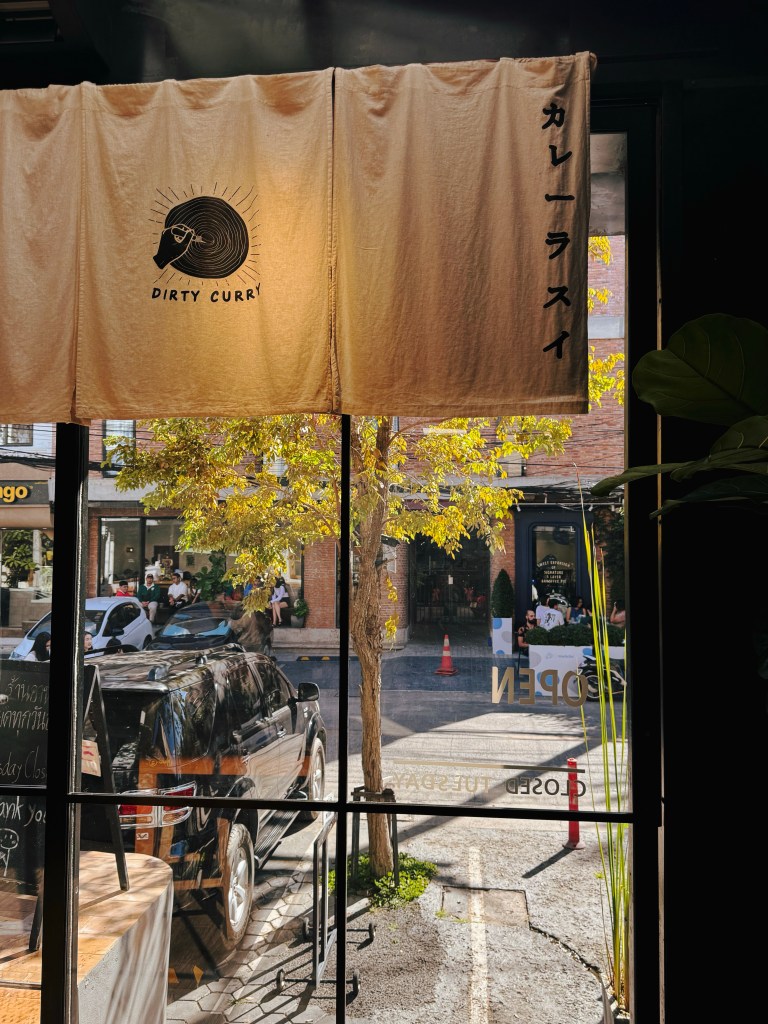
    When it was finally time for lunch, I had a Japanese-style curry rice at a place called “Dirty Curry” inside of a stylish little hotel called Hotel Noir that we might consider next time. The curry played hard to get, taking its sweet time to arrive but was pretty great. Even my iPhone camera ate, because the photo came out looking incredible without any help.

    Returning to reality on Tuesday night, we avoided thinking about work by starting to make plans for our next trip (in February, and before you say anything, this is the closest together I’ve ever had two holidays, and the idea of two holidays a year is already a historical anomaly for me). We had the flights booked awhile back but nothing more, so now we’re really running late with the hotels and other tickets.

    Sitting in front of the TV that night, we watched in disbelief as live images of JAL flight 516 almost crash landing at Haneda airport came in. Everyone’s been mentioning how Japan has not had much luck with 2024 so far; as if the New Year’s Day earthquake on the west coast wasn’t enough, the week’s headlines have mentioned a slashing incident on a train in Akihabara and another rail-related attempted murder just yesterday.

    I returned to work after two weeks away and was amazed at the diversity of human experience when a colleague mentioned how they had gotten bored of having time to themselves over the Christmas break. It boggles the leisurely creative mind. I had free time for a year and would take a hundred more if possible.

    But you know who else has had some time off recently and a lot to show for it? Why, the canceled and almost-forgotten singer-songwriter Ryan Adams who just dropped FIVE albums at once on streaming services! Longtime readers will know that I’ve been a huge fan of his work, for over two decades now if I do the math, and the data will probably show that I subconsciously listened to him a lot less over the last four years after he was accused of sexual misconduct and emotional abuse and retreated from view, occasionally dropping albums of half-hearted new material and experimental covers with little promotion.

    I haven’t really sorted out my stance on situations like this. Another blogger, Christopher Bradley, makes a case for reevaluating Adams here. He hasn’t committed any crimes — apparently the FBI looked into allegations of sexting with a minor and cleared him — apart from being a poor partner and maybe an awful human being in some aspects of his life. But who among us hasn’t? I still listen to Michael Jackson anyway, and anybody who says they can keep still when Billie Jean comes on is a damn liar.

    Anyway, two of Adams’s new albums are esoteric 80s punk rock-ish joints, one of them is a live version of his Prisoners album, and the last two are more his usual speed. I’ve read that Star Sign is the better one, so if you only check one out, I guess that should be it. I plan to work through all of them in the next few days, but on a first pass, Star Sign is quite alright. Because I don’t think any mature musician ever recaptures the energy and raw brilliance of their first few albums — a fact that’s probably best not to think about as a young artist — we tend to grade most on a curve over the years. Just keep the tunes catchy and the words not utterly trite, and we’ll still show up. Unless they get really shitty, like U2.