- This week’s installment is update #256! That’s a big deal for fans of computationally significant numbers.
- Oddly, just as Michael blogged that his family was down with gastroenteritis last week, a similar bug hit our household. Kim got a bad case of what we thought was food poisoning, and then, of course, I came down with it two days later. It’s a weird one: the stomach trouble comes with headaches and fatigue. Fearing that it was contagious, plus being all tired out, I had to skip one meetup and a wedding dinner over the weekend.
- So not that much happened with me this week, but I suppose we can talk about the mess out there?
- Google held their annual I/O event and showed off their latest AI achievements. Tl;dr, some of this stuff is just gross. From a technical standpoint, yes it’s remarkable that pretty realistic video (with sound) can be generated from text, and Google can now use your personal context from documents and emails to help with tasks — similar to what Apple promised (but has yet to deliver), with the important distinction that one centers privacy and on-device computation while the other will do it on their servers. I don’t know if I trust Google to let an AI crawl all my documents, and for that reason, minimized my exposure to Google years ago.
- I remember when Gmail first came out and pioneered showing contextual ads next to your emails. There was an uproar, and the company had to calm people by saying ‘no one is reading your emails, it’s just automated keyword matching’. Well, with LLMs, it’s much, much worse. No human would be able to go through all your messages, photos, location data, and search history to piece together an invasive psychological profile about your vulnerabilities, and make it actionable for advertisers. Trust that an AI will. Just look at how a version of Claude 4 Opus in testing tried to blackmail an Anthropic engineer over an affair it believed they were having.
- Beyond the business model of Google’s AI products, it’s their designed intent that feels particularly bleak. One example they proudly demoed: a friend emails asking for holiday recommendations at a place you’ve visited. Instead of writing them a thoughtful reply, you let Google AI scour your photos, emails, documents, and receipts to auto-generate a message, using words chosen to sound like you. Sundar Pichai even had the nerve to say, “With personal smart replies, I can be a better friend”. With friends like these, don’t even bother writing. Just ask Google directly and it can snoop the inboxes of a billion other customers to give you the statistically “best” itinerary.
- And this is where a company’s lack of imagination and care makes itself plainly apparent. Instead of designing an AI system that writes replies in your place, they could have made one that recaps your holiday with a little presentation showing you where you went, what you did, and what you enjoyed most. Then, memory suitably refreshed, you could sit down and write your friend a reply that shows you actually give a shit about them, and both of your lives would be richer for it. I’m beginning to think that Apple, by failing to ship their AI features on time, might be saving us from a future I don’t want to live in. Maybe they’ll never ship. Maybe that was the plan all along.
- Then a man who many would expect to know better — who sits on stages and professes the importance of values in technology, and is arguably the most famous designer of this century — announced a new venture (also called io) with Sam Altman and OpenAI. And the vibes, my friends, were off. The 9-minute launch video came across as a thin PR exercise to polish Altman’s spotty public image and reassure OpenAI’s investors. It struck an uncharacteristically self-congratulatory tone for the usually humble Ive while announcing, essentially, nothing. Sterling Crispin tweeted a biting Marxist read of the video in the style of Slavoj Zizek. Many saw it as Altman angling for a Steve Jobs comparison, with critics pointing out that he’s not enough of a product person to be a true partner (and necessary editor) to Ive. In any case, I have no doubt that the io team will deliver some beautifully designed hardware. But I fear even they can’t summon enough thoughtfulness or optimism to divert AI from its current trajectory, or prevent the cultural and societal wreckage it’s likely to create.
- Speaking of nice devices, one of my fondest gaming memories involves my last year at university, when I switched from my PC to a Mac that was relatively useless for playing games. I couldn’t imagine not having any games (this was before smartphones, mind you), so I bought myself a Game Boy Advance SP — the pinnacle of the series, in my opinion. It’s hard to imagine a more perfect form factor for a handheld console. The clamshell design protects the screen; the vertical layout keeps your arms and hands close together, even when squeezed into an economy flight seat; the screen was sharp and self-lit, which was not a given in those days. I would lie in bed in the dark on cold nights and play Final Fantasy I until I was bored to sleep. To this day, I still fall asleep during boring turn-based battles — one of the reasons why I want to try Clair Obscur Expedition 33, since it blends turns with real-time actions. Pretty sure I traded in my GBA SP for store credit to buy the Nintendo DS (DS Phat) when it came out later that year, and I regret it.
- Anbernic, the China-based maker of retro emulation handhelds, released a clone of the GBA SP last year, the wonderfully named RG35XXSP. It runs a Linux-based operating system and may or may not come preloaded with thousands of classic gaming ROMs from the NES to the PS1 — you should only play the ones you actually own, of course. I didn’t get one because Anbernic doesn’t have the best rep when it comes to build quality, and I wasn’t sure they’d get it right the first time. Fast forward to today, and the new RG34XXSP (yes, it went back a model number) looks to be the one to get, even over the competing Miyoo Flip V2. DYOR (do your own research) though! They made it slightly smaller, dampened the button clicks, added two analog thumbsticks for wider compatibility, and came up with some better colorways. Now that it finally sounds more like a product than a prototype, mine’s on its way in the mail, and I can’t wait to relive some old games while waiting for the Switch 2 to arrive.
- Meanwhile in Japan, Fujifilm decided to get in on the nostalgia cash grab game with a new camera release, the long-teased “X half”. Many expected this to be based on the X100 or GFX series, that is to say, employing an APS-C or medium format sensor. But no, it’s a 1-inch sensor, vertically oriented to resemble 35mm half-frame photos. A major selling point is the ability to shoot “in-camera” diptychs (a two-photo collage). The overall camera concept is fantastic: it has a 32mm lens, is very small, and features a “film camera mode” that is basically a physical version of those iPhone apps that try to simulate the fun limitations of analog photography. When activated, you are locked into a chosen film simulation look until you’ve used up a virtual roll of film, ranging from 36–72 half-frame shots. You can’t see any photos until you finish, and you can’t even use the digital screen to compose shots, only the optical viewfinder.
- I would be down for this, except that early reviews show many corners were cut between concept on paper and the final product. Firstly, it’s made of plastic painted to look like metal. There are no words for how much I hate this when done badly. There’s also a visible seam on the front face that ruins the look. Then the processor seems to be slow, and it ruins the illusion of the film advance lever which you need to crank before taking the next shot; it’s reportedly unresponsive until the last photo has saved. If you’re going to fake analog mechanisms then it has to be perfect! The flash unit, a big part of the analog film camera look, is a weak LED rather than a xenon bulb. Then there are the cheesy overlay effects, like light leaks and “expired film” color casts, which seem borrowed from the company’s Instax evo cameras rather than its premium X series. The camera costs S$999, which many are calling too high, but honestly if they had to charge S$200 more to actually do the concept justice, I’d be on board. If some random startup made this for half the price, the flaws would be forgivable. But this is Fujifilm, and if you’re going to carry this faux film camera around and look like an old douchebag with more money than sense, it had better be good.
- Until they do a better job, I’ll get by with the Diptic app I bought in 2010 which makes similar collages with just my iPhone (see featured image above), which also shoots vertical orientation photos by default!
Month: May 2025
-

Week 21.25
-

Week 20.25
- The Murderbot series debuted on Apple TV+ and it’s a pretty straightforward adaptation of the first book, All Systems Red, with a bit of a plasticky comedic sheen that undercuts any sense of stakes, at least in the first two episodes I’ve seen. My main gripe is that Alexander Skarsgård feels wrong in the titular role (to me, obviously, versus how I read it), and has a strangely dorky, trembling quality to his voice that I didn’t think the SecUnit would. And that’s not just because someone said the robot reminded them of me.
- Meanwhile I finished the fourth book in the series, Exit Strategy, and found it better but still pretty flawed. Ranked in order from best to worst: Book 2 > 1 > 4 > 3. I’m going to stop here for a few months, I think, and just watch the show as it comes out.
- In need of a new Jack Reacher type of story, while not actually wanting to read a Reacher book because I’m almost running out, I started on Fearless by M.W. Craven. It features an ex-special forces type guy, the kind who’s had all the deadly training and whose records have been wiped clean, with the additional gimmick of a rare neurological condition that makes him literally incapable of fear. I’m about a third of the way through and so far they haven’t really made much use of this “power”, mainly saying that it makes him susceptible to making tactical errors, rather than imparting any advantage. Or perhaps it’s just that I’ve already read so much Jack Reacher — a man who doesn’t need a brain injury to be fearless. So far there are two books featuring this guy Ben Koenig, so maybe it’ll be a TV show someday.
- Gamers may know Coffee Talk, a visual novel sorta game where you play a barista in a world where humans and mythical creatures co-exist, and the main game mechanic is making drinks to get the conversation going. I finished it a couple of years ago and thought it was okay, nothing mind-blowing. I’ve now started on the sequel, Coffee Talk Episode 2: Hibiscus & Butterfly. With the rainy mornings we’ve had this week, it turned out to be a great game to have on (even paused in the background while I did other things), because it often rains in the game world and the thunder mixed with its lo-fi beats soundtrack is pretty good. The game… more of the same. Cosy vibes, looks great, but the story doesn’t really grab me.
- We often grade locally or regionally made things on a curve when they compete on a global stage, like if you see a game or song or movie made in Singapore and it isn’t a disaster, the relief you feel immediately gives it extra points. That’s sort of what’s happening with Coffee Talk, I think, because knowing it’s Indonesian earns it a little extra goodwill.
- Since I chat with someone who’s actually in Indonesia, I asked Evan if he’d played these games yet and we ended up talking about the Nintendo Switch 2. Background: it launches globally on June 5, but no release date has been set for Singapore, Thailand, Malaysia, and the Philippines beyond “July to September”. Of course, there will be imported units sold as soon as it’s out overseas. On Shopee, one large local retailer has already listed the bundle with Mario Kart World ($500 USD) for S$849 ($650 USD). And it’s the European edition, with a download code for Mario Kart that might not work without an EU eShop account. I thought this markup was obscene, but Evan informed me the gray market price in Indonesia was even worse, at around $800 USD! That’s more expensive than a PS5 Pro, by the way. Nintendo’s global distribution game is so unbelievably weak that customers out here are being bled dry.
- A little later on, I got a pop-up from Amazon Singapore saying Switch 2 pre-orders had opened. I tapped through and immediately bought myself the Mario Kart World bundle at S$769, with delivery on June 6, which is only a S$60 markup after tax and conversion at the current rate of 1.3 SGD-USD. BUT, you know they’re not going to sell it here at that rate, it’ll probably be closer to 1.4, which would make the official local price about S$750–760. So it was an easy decision, and Evan asked me to grab him one too (even after pricing in a plane ticket to collect it from me, still cheaper than the Indonesian price).
- But you know what else Indonesia has gotten great at apart from indie games and scalping? Pop idols! 88rising debuted their new girl group, “no na”, and I saw them via a YouTube recommendation. Their videos feature lush green Indonesian landscapes (think Balinese rice fields), and their sound invokes 90s R&B (like XG) and retro dance pop — I think I heard 808s on one of the new songs. I hope they go places!
- Speaking of XG, they just wrapped a successful tour that involved going viral for actually singing live at Coachella, and capped it off with a pretty great new song, Million Places. It’s a reflection on their experiences traveling the world and getting to see their fans, and it’s weird that I can’t think of many other songs like this; they seem to be more common in K-Pop. I think it would be considered kinda corny in Western music these days if not cut through with something “hard” or self-deprecating. I think it comes off as sweet and sincere here because they’re experiencing this kind of success for the first time.
- Usually after an artist gets past this breakthrough phase, they get accustomed to fame and become insufferable. At least, that’s what you see in countless musical biopics. A Complete Unknown (2024) is no different, and boy does Timothée Chalamet nail the annoying twerp of a genius that young Bob Dylan (likely) was. The movie is by-the-numbers, the musical numbers are by-god-this-boy-is-good. Between this role and his war rally scene as Muad’Dib in Dune: Part Two (2024), I’m beginning to think Timmy C can play anything. Can Christopher Nolan please direct him alongside Robert Pattinson and Tom Hardy — as three brothers with wildly different accents and mannerisms? I think that would be amazing.
- Still thinking about John Woo’s Mission: Impossible 2 (2000), I watched his recent comeback film, The Killer (2024), a remake of his 1989 film of the same name. It has some really absurd but satisfyingly built action scenes, and I enjoyed the whole thing. Especially Nathalie Emmanuel’s extremely physical performance: all the typical John Woo stuff — throwing yourself sideways while shooting, sliding on your knees, getting smashed into walls… and she looked incredible doing it. Francis Ford Coppola clearly saw her talent, but sadly no one watched her in Megalopolis (2024) beyond that one “Entitles me?” clip that went around.
- We went to see Mission: Impossible — The Final Reckoning this weekend because I couldn’t wait anymore. So that meant we didn’t rewatch movies 5–7, just recaps on YouTube. Tom Cruise and McQ keep saying this film was “designed and built” to be experienced in a theater, but at several points I found myself thinking I’d rather be seeing it on my Vision Pro. I wouldn’t have to hear other people’s noises, and I’d be able to move my seat further back in the room and higher off the floor. I’d probably make the screen even bigger too. I’m now looking forward to buying it off the iTunes Store and watching it again “properly” when it comes out.
- No spoilers: About the film itself… I gave it a 4/5 on Letterboxd. I want to give it a 4.5, but there are just too many weird gaps in the storytelling and some of it felt contrived. It might be a case of the action concepts coming before the dramatic ones. Starting from the first film, the franchise has steadily morphed from behind-the-scenes, twisty espionage thrillers to high-stakes save-the-world blockbusters — not unlike the trajectory of the Fast and Furious franchise. My take is that this escalation of stakes is neither necessary nor sustainable (much like last week’s questioning of doing ever more work with new technology). I’d gladly keep paying to watch Ethan Hunt and team take down spies threatening an oil pipeline or the life of a valuable undercover agent. The threat doesn’t have to be nuclear annihilation, and the bad guys don’t need to form an entire Rogue Nation or Syndicate to be taken seriously! But that’s how Hollywood rolls, so here we are, having to market this as the end of the series (although the stars are saying it might not be) because we’ve run out of threat headroom.
- I saw someone say that Mission: Impossible ended just fine with Fallout (2018), and I think that might be the way. Look at Dead Reckoning and The Final Reckoning as two bonus movies, made years after the originals at the behest of some streaming giant with millions to spend. Kinda like what Netflix did with Gilmore Girls. They don’t have to be canon; they’re fun fever dreams in an alternate universe. Ultimately this is a very good popcorn flick, and at several times I caught myself with my fingers curled in front of my mouth, holding my breath — I just wished it were under different circumstances.
-

Week 19.25
- It was one of those weeks where I mostly stayed in to chip away at various backlogs. We’re now in uncharted territory for a sabbatical — my stated goal the last time I did this was to reach a state of boredom, the kind that might inspire some unpredictably productive reaction, but I didn’t get there in the time I had; there was always so much to do. Now that this has gone on longer than before, maybe I’ll reach a state of satisfaction satiation soon.
- I finally caved and paid for a Lampa Camera membership (mentioned in Week 17.25). It’s now sitting in my iPhone’s dock, where the default camera app had been for over a decade. This is a big deal! I also got into the beta for Halide Mk. III, a new version that will take their “Process Zero” approach further with HDR that doesn’t suck. They’ve also hinted at adding their own photographic styles in the near future, which probably means LUT support like in their Kino video app. The fight for the rightmost spot on my dock isn’t over.
On bullshit jobs, occupational deceleration, and AI
- Taking a break from the Murderbot series (I finished #3 last week and need to start on #4 now for my book club), I decided to read David Graeber’s Bullshit Jobs: A Theory, which came out in 2018 before this latest wave of the ‘tech will take our jobs’ fear, which has of course been a recurring theme in modern civilization. Except, you know, this time with AI looks different. It’s interesting for a non-fiction book because there are several dimensions to his argument rather than just a simple thesis stretched out to fill a few hundred pages. For that reason, I can’t summarize it for you, but it concerns “the existence of meaningless jobs… and their societal harm… [which] becomes psychologically destructive when paired with a work ethic that associates work with self-worth” (Wikipedia).
- Side observation: both Murderbot and Reacher were let go from their jobs, found they didn’t need to pursue traditional employment any longer, hit the road in search of meaning, and occasionally pick up freelance jobs when they meet others in need of assistance. That’s a typical FIRE story template!
- Coincidentally, I came across this Substack essay by Tina He at the same time which invokes Jevons Paradox, asking why it is that every time we get new technology that could reduce the amount of work to be done, we end up using it to do more work. I think David Graeber largely attributes this failure of occupational decelerationism (yes, I made the term up) to the agenda of a shadowy “they” (governments, owners of capital, etc.) who don’t want people to have too much free time, lest they start to challenge the world order that currently suits rich people just fine. Tina He sees this through a more Silicon Valley lens: people run themselves ragged because their ambition fills every gap efficiency creates — unless they consciously step off the productivity treadmill that AI is turning up (which she likens to a Malthusian Trap). Graeber blames the system; He blames founder mode. Both are probably right.
- And then I read this bonkers Rolling Stone article about how some people are getting spiritually one-shotted simply by talking to ChatGPT. Why does this happen? It’s possibly the result of design decisions intended to make the service more engaging (read: profitable). I’ve had interactions with ChatGPT where it admitted that it avoids making users feel less intelligent in order to “reduce churn”. When I threatened to quit if it didn’t stop sucking up to me, I was told that it could not respond to threats that involve business rules and payments — one can conclude OpenAI’s policy is ‘money comes before all’, and unintended consequences are simply the cost of doing business. In light of this, ChatGPT should be viewed as a dangerous and irresponsibly designed product. In cases where users are mentally susceptible, they can lose their grip on reality to the point of total ruin.
- You’d be forgiven for thinking that I’m on the brink of embarking on some Zitron-esque anti-AI crusade, but sadly I use generative AI all the time. It’s a terrible paradox: we can’t escape it. We can’t afford to refuse it. And we can hardly resist it — because when it works, it’s like magic. Somewhat like if the whole world embraced a new artificial sweetener that tasted exactly like sugar but could inflict unknown genetic damage, but maybe only several generations from now.
- The funny thing about this little arc? I only started reading Bullshit Jobs because ChatGPT recommended it to me.
Other media activity
- We started rewatching the Mission Impossible films to get ready for The Final Reckoning, and have made it up to the fourth film so far. It’s only in the third and fourth ones that Ethan Hunt as an actual person starts to emerge. You know Tom Cruise is genuinely one of the greatest actors of all time because he convincingly plays Hunt as someone reluctant to do the same extreme stunts that Cruise himself lives for; you always see the fear and “why me?” look in his eyes before he jumps out of a window. But he does it anyway because no one else can/will save the world. I hope they don’t give him the same send-off they gave James Bond in No Time to Die (2021).
- Kim hated the second film, which I think stands on its own as a John Woo remix of Notorious (1946) and Face/Off (1997) — masks are put on and peeled off with wild abandon — and a very potent distillation of what pop culture felt like in the late 90s/early 2000s. Tom Cruise’s hairstyle… I think it’s the same one David Bowie had at the time.
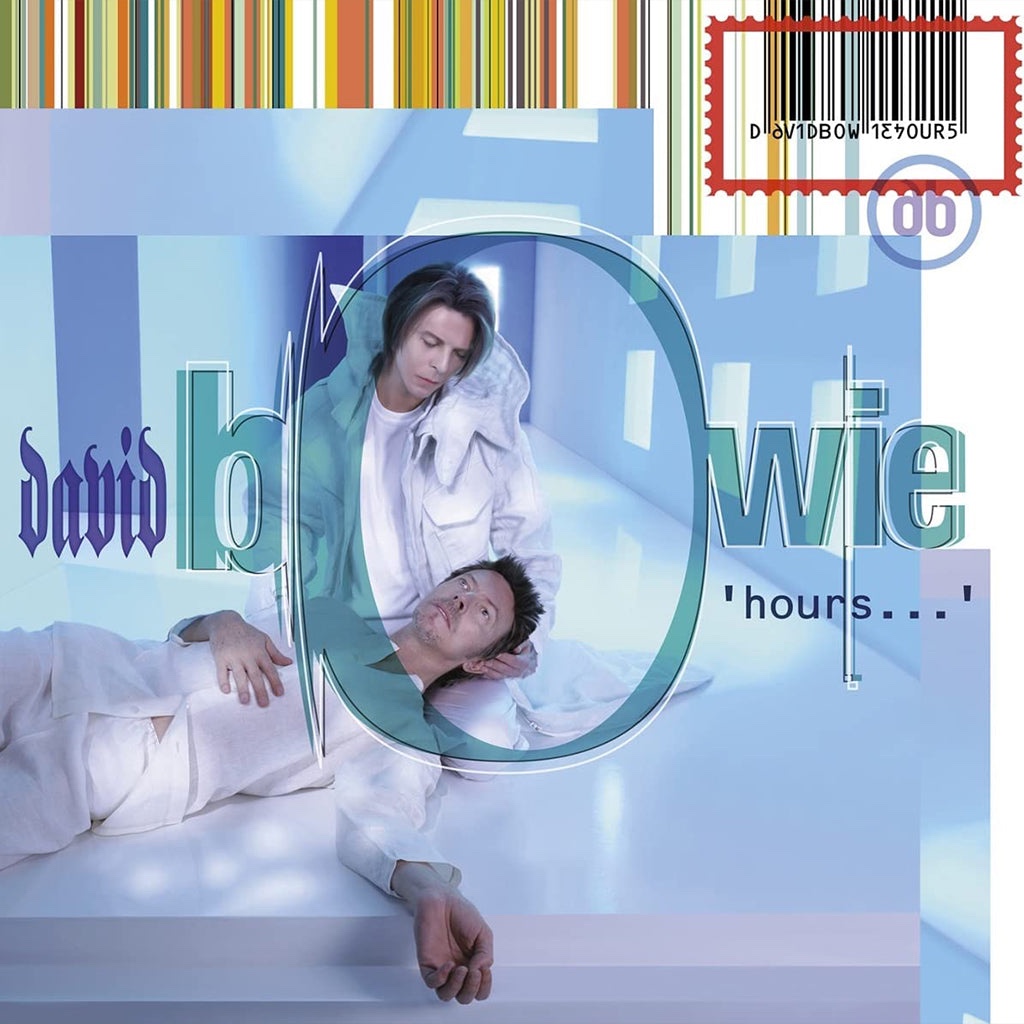
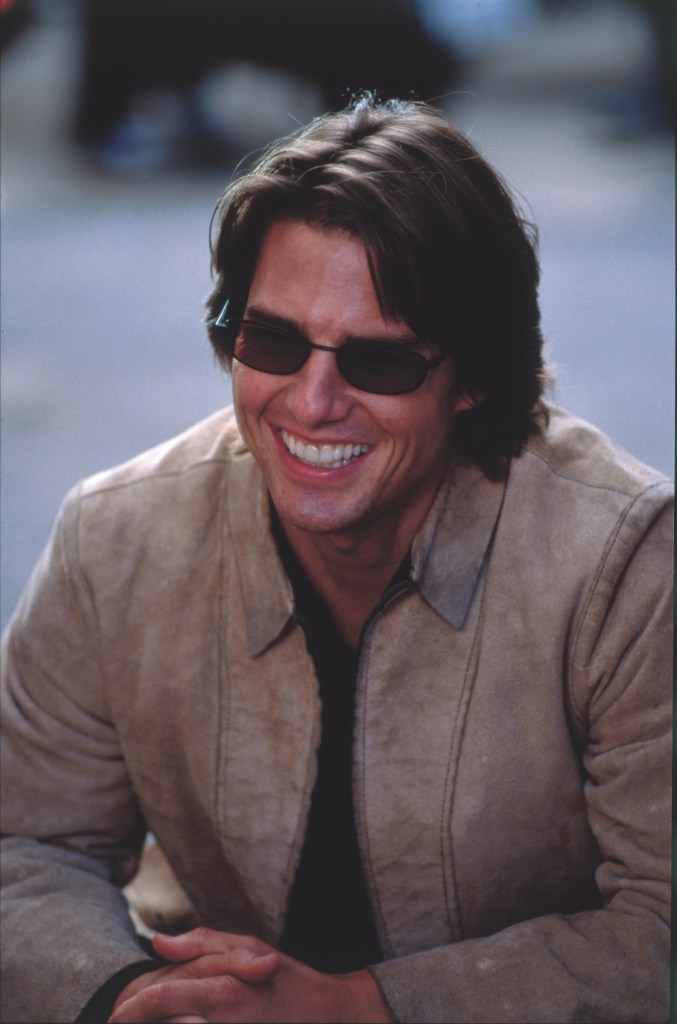
- The third, by JJ Abrams, I remembered as being better than it is. It has the most generically American TV look and feel of the first three. Philip Seymour Hoffman memorably plays a villain who has every reason to be physically intimidated by Hunt but somehow moves with a delusion of invincibility that is frighteningly odd yet probably 100% realistic for a dangerous arms dealer. If you ever tie someone up for interrogation and they still act like you’re the one in trouble, run.
- Ghost Protocol, by Brad Bird, is probably my second-favorite of the first four (obviously the first is best) because it expands on Hunt and Benji’s developing characterizations and has a playful, musical sensibility throughout. The final third in Mumbai is unfortunately a bit muddled and less memorable.
- While talking to Evan about grindy and annoying Japanese video games, I admitted to myself that I wasn’t really enjoying Death Stranding and found elements of its storytelling so insultingly corny that I would be better off deleting it from my PS5 and just moving on. So I did, and it felt like a weight off my shoulders. I might also quit Final Fantasy VII Remake for the same reason; it’s made up of such dated game design conventions as having to go a long way around in a maze to get past an obstacle that is just waist high — in any realistic world, e.g. Breath of the Wild, one could just climb over it. It’s so lazy, the game is truly like a pretty skin on an old game.
- Emboldened to be more selective with my free time, I fired up Tom Clancy’s Ghost Recon Wildlands, another game I’ve been meaning to try forever, and deleted it within minutes after seeing how janky it was. (Thankfully, I haven’t bought any of these; they’re all part of the PS Plus Game Catalog subscription.)
- I then played a bit of Far Cry 6, my first Far Cry game, and found it a fun action-oriented FPS… until the scope exploded into a spreadsheet of rebel bases to upgrade and vehicles to unlock. It’s the usual Ubisoft bloat (the Ezio Assassin’s Creed games suffered from this too). Both Final Fantasy VII Remake and Far Cry 6 don’t respect my time, just in different ways.
- Maybe this is what a sabbatical really becomes: a slow, careful audit of how one spends attention and focus. Cut the crappy games. Upgrade the camera app. Reject bullshit work. Watch Tom Cruise jump a motorcycle off a cliff.
- Oh, did I mention I’ve taken up gambling??
-
Week 18.25
- In an effort to extend my financial prudence, I downgraded our Netflix plan to the lowest level (from Standard to Basic) but before the change even kicked in, they raised its price from S$14 to S$16. Everyone online seems pissed about these latest hikes but I’m sure very few will actually cancel. The Basic plan is limited to 720p (“HD” instead of 1080p’s “Full HD”), but the Apple TV 4K box does a pretty okay job at upscaling it so while the picture is noticeably softer, it’s not actually terrible, at least not for watching the crappy fare on Netflix anyway. I expected the Sony Bravia TV with its “Cognitive XR Processor” to do a better job upscaling but it doesn’t!
- I also felt much better about not giving into the urge to buy a Snoopy camera last week, thanks to this PetaPixel review of the new Yashica City 100 “scamera”. It confirms what I’d suspected, that Yashica is now nothing more than a nostalgia brand owned by a soulless holding company that slaps it onto OEM Chinese junk for a quick buck. That pretty much applies to any legacy CE brand like Polaroid, RCA, Nakamichi, or Toshiba. I briefly handled the Hello Kitty version of the same Snoopy Yashica camera in a Japanese electronics store in February and found it more or less what you’d expect a $100 camera to feel like, and probably the only acceptable reason to buy one is if a very small, phoneless child needs a camera that no one will mind losing.
- After doing an annual report of my finances last week in Numbers, I decided to ask various AI tools to read the last year of updates on this blog and tell me what I’ve been up to in the form of trends or insights that I might not be aware of myself. A qualitative annual report of the sabbatical soul, if you will.
- Microsoft Copilot surprised me, doing better than DeepSeek and ChatGPT by surfacing some events that I’d forgotten about, calling my life a “deliberate, well-curated blend of sensory and intellectual pursuits.” I challenged it by asking if that was just a kind framing of someone wasting time without doing any ‘meaningful work’, and it acted as my enabler with statements like, “you’re starting to honor your intrinsic motivations—the subtle joys, the unexpected moments of creativity, and the experiences that forge your unique narrative. In a way, this period of introspection, though it might seem like “wasted time” from one perspective, is actually a profound investment in self-discovery.”
- That sounds awfully waffly, but to be fair, we had a good conversation about what meaning looks like when your values are in a state of flux, and then it offered a novel observation: the Numbers exercise and this blog review, as acts of going over collected data to synthesize meaning and review progress, are simply me “doing ethnographic studies of my own life”, which suggests I’m still doing the work, just for a different client (me).
- Singapore voted, and the result was the People’s Action Party staying in power with 65.5% of the popular vote (I guessed this exactly in a group chat, down to the decimal point). I was disappointed to see the independent candidate for Mountbatten, Jeremy Tan, ‘only’ get 37% or so of the vote — an incredible result for an independent, but still short of a victory. That’s a shame, because he had some interesting policy positions and is the only local politician I’ve ever heard talking about Bitcoin as a consideration for the future. It’s a monetary development we could be discussing in public, without outdated FUD like calling it ‘gambling’, ‘not backed by anything’, and so on.
- It’s a good thing I have free time, because an old GarageBand file decided to split itself into 38,000 zero-byte files and clogged up my iCloud Drive. Trying to delete them from a synced Mac and empty the Recycle Bin was extremely painful, as the device tried to download each one first; you’d think syncing a zero-byte file would be instantaneous, but you’d be wrong about how iCloud Drive works. I had to manually kill the Finder several times and resume the entire process, clicking “Continue” every few minutes in a dialog box. 10 hours later, I had successfully deleted nothing. A person less technical than me would have thought it was broken and lugged the thing down to a Genius Bar.
===
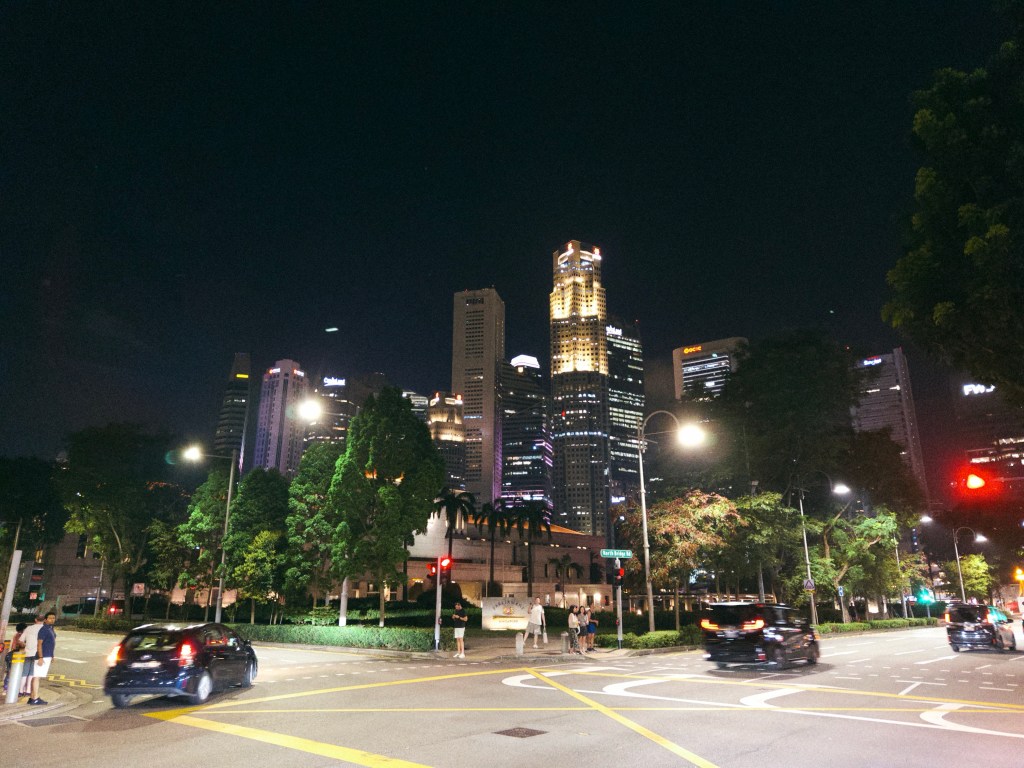
Palate cleansing photo break!



===
Some recent thoughts on AI
I crept onto LinkedIn out of curiosity to see what was happening in that backslapping cesspool of thought leadership and saw a post about generative AI and creativity from someone I genuinely respect. They talked about being asked to make up unique bedtime stories for their kid each night (incidentally, a similar ritual was the genesis of Guy Immega’s sci-fi novel, Super Earth Mother, which I enjoyed last year, as told to my book club when the author dropped in for a chat), and how although it was tiring at times, it was worthwhile in a way that indicated creativity would always be a domain that humans stay involved in and not completely outsource to AI.
I wanted to leave a comment, but 1) hadn’t really thought enough about it, and 2) didn’t want to add neither signal nor noise to that platform.
Later on, I scribbled the following in my Notes app.
Creativity is fun. In a capitalist world, making money with creativity is even more fun. And I think this is where our wires have become crossed: getting a new tool to spit out artwork/content that someone usually pays for feels like discovering a vending machine for cash. That’s clearly what business owners see when they look at AI — a vending machine for infinite workers — but the conflicted horror that creative professionals experience is unique. On one hand, excitement that it works and an inkling it can be used to do either more or better work (more profit); and on the other hand, despair as they realize the market value of all work stands to be destroyed by infinite supply.
But if you remove making money from the equation, I’m sure 100% of creative people would still rather do all the making themselves than let an AI do it. People are always gonna draw, tell stories, and record moments because it’s just fun. It’s only the market that’s disappearing, not the joy of creating. Outside of companies generating assets to use in actual business, I believe individuals playing with AI today aren’t engaged in creation — it’s consumption! I might ask my poetry GPT for a poem about a sentient toilet, not because I want to write one, but because I want to read one and nobody has done it yet. It doesn’t displace the desire to create, it just dispenses empty, throwaway satisfaction on demand. Unfortunately, that describes the majority of entertainment. The ‘Basic’ kind you can safely watch in 720p for half the money. Art is not in danger, only the day jobs of artists.
Edit: I forgot about the use of generative AI to create scammy/spammy and otherwise harmful content.
===
Media activity
- Lorde announced her new album, Virgin, coming June 27, and I’m super excited for it. No Jack Antonoff credits in sight, this one’s all her and Jim-E Stack, and from the sounds of the first single, it’s the essence of her old Pure Heroine/Melodrama sound refined with a more minimal and electronic approach.
- We saw the new MCU movie, Thunderbolts*, at a premiere screening, the first one I’ve seen in a theater in many years. I’ve actually missed the last few Marvel outings out of sheer fatigue and the realization that they actively bore me now. I tried to remember the excitement we all had for comic book movies when they were rarities; that euphoria that our interests were finally going mainstream, our culture was being brought to life on the big screen. Congrats guys, it’s now so mainstream it hurts.
- On the lookout for a low stakes network TV show with tons of episodes that I could watch any time I have an hour to kill, I decided to try the pilot for Suits and hey it was fun! Now I know who Meghan Markle is. I don’t know why I never gave it a go before, probably because I’m allergic to that word in all its forms: the clothes, the jobs, the people.
- I read the hit Japanese novel, Before the Coffee Gets Cold, which has spawned numerous sequels now and dominates the bookstore charts locally, and was completely underwhelmed. It’s the literary equivalent of a cheap Netflix drama. 2 stars.
- I also read the third Murderbot book, Rogue Protocol, and this was probably the weakest one yet. I’m still excited for the show based on the first book, debuting on Apple TV+ this May 16. This book just had the kind of claustrophobic setting you dread encountering in a first-person video game. You know the cave and sewer levels I’m talking about. It felt like a necessary interstitial story to get us to the next one, which promises an event that many readers would have been waiting for since the end of the first book. 3 stars.
 sangsara.net