- This week’s installment is update #256! That’s a big deal for fans of computationally significant numbers.
- Oddly, just as Michael blogged that his family was down with gastroenteritis last week, a similar bug hit our household. Kim got a bad case of what we thought was food poisoning, and then, of course, I came down with it two days later. It’s a weird one: the stomach trouble comes with headaches and fatigue. Fearing that it was contagious, plus being all tired out, I had to skip one meetup and a wedding dinner over the weekend.
- So not that much happened with me this week, but I suppose we can talk about the mess out there?
- Google held their annual I/O event and showed off their latest AI achievements. Tl;dr, some of this stuff is just gross. From a technical standpoint, yes it’s remarkable that pretty realistic video (with sound) can be generated from text, and Google can now use your personal context from documents and emails to help with tasks — similar to what Apple promised (but has yet to deliver), with the important distinction that one centers privacy and on-device computation while the other will do it on their servers. I don’t know if I trust Google to let an AI crawl all my documents, and for that reason, minimized my exposure to Google years ago.
- I remember when Gmail first came out and pioneered showing contextual ads next to your emails. There was an uproar, and the company had to calm people by saying ‘no one is reading your emails, it’s just automated keyword matching’. Well, with LLMs, it’s much, much worse. No human would be able to go through all your messages, photos, location data, and search history to piece together an invasive psychological profile about your vulnerabilities, and make it actionable for advertisers. Trust that an AI will. Just look at how a version of Claude 4 Opus in testing tried to blackmail an Anthropic engineer over an affair it believed they were having.
- Beyond the business model of Google’s AI products, it’s their designed intent that feels particularly bleak. One example they proudly demoed: a friend emails asking for holiday recommendations at a place you’ve visited. Instead of writing them a thoughtful reply, you let Google AI scour your photos, emails, documents, and receipts to auto-generate a message, using words chosen to sound like you. Sundar Pichai even had the nerve to say, “With personal smart replies, I can be a better friend”. With friends like these, don’t even bother writing. Just ask Google directly and it can snoop the inboxes of a billion other customers to give you the statistically “best” itinerary.
- And this is where a company’s lack of imagination and care makes itself plainly apparent. Instead of designing an AI system that writes replies in your place, they could have made one that recaps your holiday with a little presentation showing you where you went, what you did, and what you enjoyed most. Then, memory suitably refreshed, you could sit down and write your friend a reply that shows you actually give a shit about them, and both of your lives would be richer for it. I’m beginning to think that Apple, by failing to ship their AI features on time, might be saving us from a future I don’t want to live in. Maybe they’ll never ship. Maybe that was the plan all along.
- Then a man who many would expect to know better — who sits on stages and professes the importance of values in technology, and is arguably the most famous designer of this century — announced a new venture (also called io) with Sam Altman and OpenAI. And the vibes, my friends, were off. The 9-minute launch video came across as a thin PR exercise to polish Altman’s spotty public image and reassure OpenAI’s investors. It struck an uncharacteristically self-congratulatory tone for the usually humble Ive while announcing, essentially, nothing. Sterling Crispin tweeted a biting Marxist read of the video in the style of Slavoj Zizek. Many saw it as Altman angling for a Steve Jobs comparison, with critics pointing out that he’s not enough of a product person to be a true partner (and necessary editor) to Ive. In any case, I have no doubt that the io team will deliver some beautifully designed hardware. But I fear even they can’t summon enough thoughtfulness or optimism to divert AI from its current trajectory, or prevent the cultural and societal wreckage it’s likely to create.
- Speaking of nice devices, one of my fondest gaming memories involves my last year at university, when I switched from my PC to a Mac that was relatively useless for playing games. I couldn’t imagine not having any games (this was before smartphones, mind you), so I bought myself a Game Boy Advance SP — the pinnacle of the series, in my opinion. It’s hard to imagine a more perfect form factor for a handheld console. The clamshell design protects the screen; the vertical layout keeps your arms and hands close together, even when squeezed into an economy flight seat; the screen was sharp and self-lit, which was not a given in those days. I would lie in bed in the dark on cold nights and play Final Fantasy I until I was bored to sleep. To this day, I still fall asleep during boring turn-based battles — one of the reasons why I want to try Clair Obscur Expedition 33, since it blends turns with real-time actions. Pretty sure I traded in my GBA SP for store credit to buy the Nintendo DS (DS Phat) when it came out later that year, and I regret it.
- Anbernic, the China-based maker of retro emulation handhelds, released a clone of the GBA SP last year, the wonderfully named RG35XXSP. It runs a Linux-based operating system and may or may not come preloaded with thousands of classic gaming ROMs from the NES to the PS1 — you should only play the ones you actually own, of course. I didn’t get one because Anbernic doesn’t have the best rep when it comes to build quality, and I wasn’t sure they’d get it right the first time. Fast forward to today, and the new RG34XXSP (yes, it went back a model number) looks to be the one to get, even over the competing Miyoo Flip V2. DYOR (do your own research) though! They made it slightly smaller, dampened the button clicks, added two analog thumbsticks for wider compatibility, and came up with some better colorways. Now that it finally sounds more like a product than a prototype, mine’s on its way in the mail, and I can’t wait to relive some old games while waiting for the Switch 2 to arrive.
- Meanwhile in Japan, Fujifilm decided to get in on the nostalgia cash grab game with a new camera release, the long-teased “X half”. Many expected this to be based on the X100 or GFX series, that is to say, employing an APS-C or medium format sensor. But no, it’s a 1-inch sensor, vertically oriented to resemble 35mm half-frame photos. A major selling point is the ability to shoot “in-camera” diptychs (a two-photo collage). The overall camera concept is fantastic: it has a 32mm lens, is very small, and features a “film camera mode” that is basically a physical version of those iPhone apps that try to simulate the fun limitations of analog photography. When activated, you are locked into a chosen film simulation look until you’ve used up a virtual roll of film, ranging from 36–72 half-frame shots. You can’t see any photos until you finish, and you can’t even use the digital screen to compose shots, only the optical viewfinder.
- I would be down for this, except that early reviews show many corners were cut between concept on paper and the final product. Firstly, it’s made of plastic painted to look like metal. There are no words for how much I hate this when done badly. There’s also a visible seam on the front face that ruins the look. Then the processor seems to be slow, and it ruins the illusion of the film advance lever which you need to crank before taking the next shot; it’s reportedly unresponsive until the last photo has saved. If you’re going to fake analog mechanisms then it has to be perfect! The flash unit, a big part of the analog film camera look, is a weak LED rather than a xenon bulb. Then there are the cheesy overlay effects, like light leaks and “expired film” color casts, which seem borrowed from the company’s Instax evo cameras rather than its premium X series. The camera costs S$999, which many are calling too high, but honestly if they had to charge S$200 more to actually do the concept justice, I’d be on board. If some random startup made this for half the price, the flaws would be forgivable. But this is Fujifilm, and if you’re going to carry this faux film camera around and look like an old douchebag with more money than sense, it had better be good.
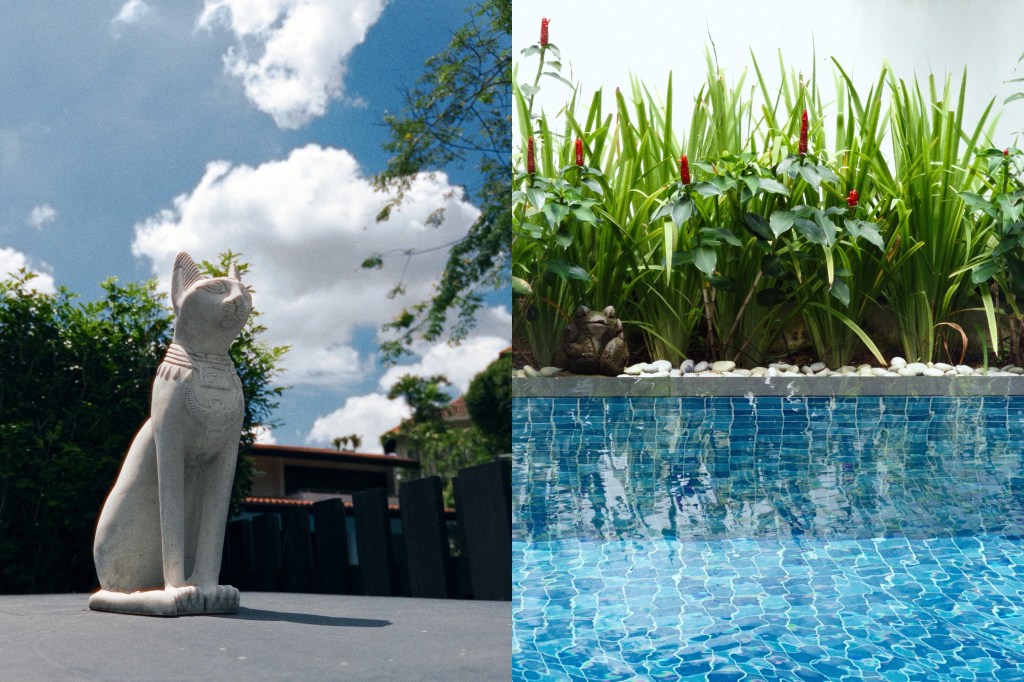
- Until they do a better job, I’ll get by with the Diptic app I bought in 2010 which makes similar collages with just my iPhone (see featured image above), which also shoots vertical orientation photos by default!
Tag: Advertising
-
Week 21.25
-

Week 11.25
- On Saturday morning there was a circular rainbow across the sky, it’s a circle rainbow all the way, yeah, oh my god. Well officially it was a “sun halo”, and it seems everyone got a photo of it too.
- It happened right as we were walking out of a new-ish brunch cafe, where I waited what must have been close to an hour for an expensive plate of scrambled eggs, some kale that was actually edible, plus sausage, mushrooms, tomatoes, and pork belly. I’ll take the heat; going for brunch was my idea, but I don’t know why everyone still does this on weekends. The place was packed and a line was still forming at 1pm.
- I went out and met people several times this week, and on Thursday I managed to drop in on the new Maji Curry outlet at the Funan mall with Brian. I’ve mentioned them several times in the past, and they are probably the most authentic and interesting Japanese curry spot in all of Singapore, although (not to take anything away from Maji) there’s practically no competition. I hope they do so well that other brands have no choice but to enter the market or stop slouching (I’m looking at you, Coco Ichibanya).
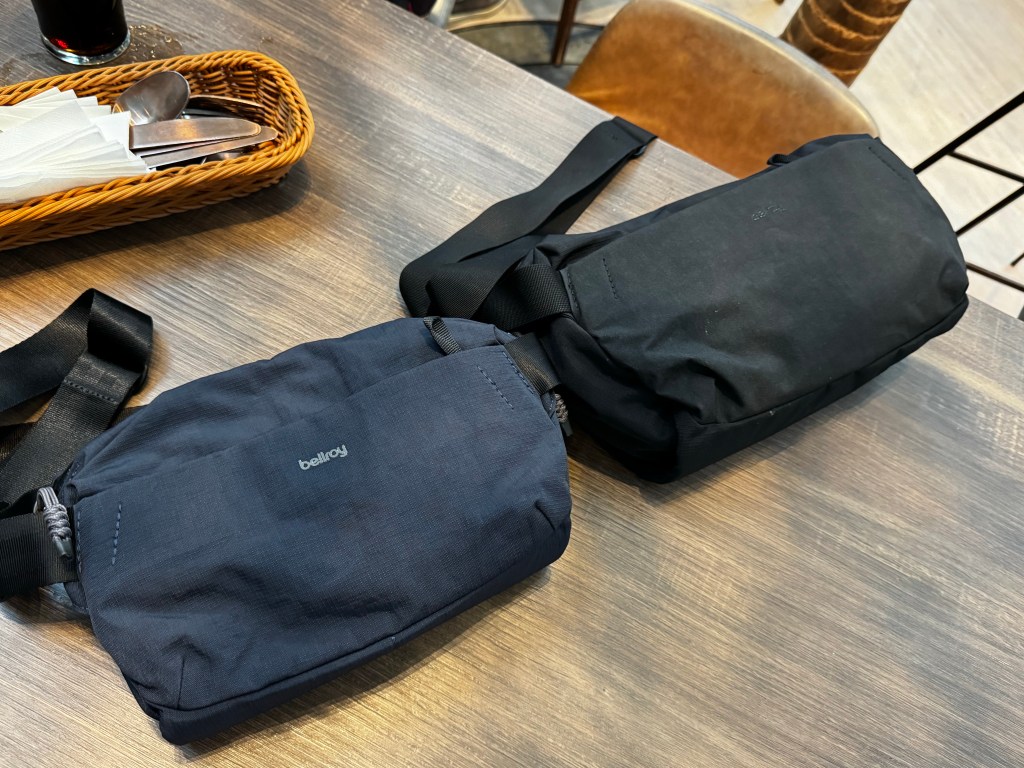
- As a group, I think us millennials have been brainwashed to perfection by advertising algorithms because the first thing Brian pointed out when we met was that we were both carrying the same Bellroy sling bag, albeit in different sizes and colors. I said I’d bought mine on a whim very recently because my mother-in-law was after some sort of small pouch, and for reasons I couldn’t explain, I’d recommended we take a look at Bellroy’s offerings. I couldn’t believe it when he said his in-laws were also in town and he’d bought his under the same circumstances. What the hell, man?






- Studio Nuevo.Tokyo & Héliographe launched their long-awaited black & white film simulator app, AgBr, which stands for Silver Bromide, of course. It’s currently 50% off as a launch special (S$14.98, one-time purchase, no subscriptions), and I’d recommend it to any fan of black and white photography. The purchase gets you the app across iPhone, iPad, and Mac, and they’re promising a new film preset every month for the rest of the year. Funnily enough, I think the best way to use AgBr is to pair it with the similarly named Halide app, shooting RAW files in “Process Zero” mode. Sure, you can process a normal iPhone photo with a Fujifilm NEOPAN 400 preset, but the HDR exposure won’t look quite right.
- I watched the new Metallica concert video that Apple TV+ put out for the Vision Pro. At 25 minutes, it’s the longest show they’ve put out so far, and I’m ready for more. Don’t make the same mistake as I did: watch it with AirPods. I used only the built-in audio pods, and while they sounded fine, I think the immersion will be even better if you turn things all the way up. They perform three songs, captured from 14 cameras, and it’s a truly new experience in this world to be right up next to each musician doing their thing on stage, in your own home. My main criticism: the crowd is quite low in the audio mix, so you don’t truly get the feeling of being there with all that energy (they could have offered two audio tracks to choose from, maybe).
- With this, Apple has tried four immersive presentations of music on the Vision Pro: A traditional music video (The Weeknd), an intimate band rehearsal in the studio (Alicia Keys), a Concert For One where the artist is right there with you (Raye), and now a full-blown, live arena show. Next up is Bono’s full-length documentary on May 30, Stories of Surrender. I personally can’t stand the guy, but if this changes my mind, then that’s really saying something about this new format.

- I spotted this familiar Mario statue (?) at the Courts/Nojima/Nittori electronics and homeware frankenstore on Orchard Road, in the old Heeren building. He pops up in the gaming sections of Japanese stores like Yodobashi Camera, and I saw him at least twice last month in Tokyo, so it was a surprise to see him here. It was mostly a sad reminder that our electronics retailers sell junkier crap and aren’t anywhere as fun to browse.
- For the past couple of months, I’ve been writing these posts in Apple Notes, solely because of its integration with Apple Intelligence, which does a quick QA check at the end. However, rich text formatting in Apple Notes is quite laborious (having to select text and choose styles from a menu), and often I lose some of it anyway when pasting the text over into WordPress. It became more trouble than it was worth.
- I’m now back to using iA Writer, my tried-and-trusted Markdown text editor of choice, where text formatting is simply done with in-line symbols so you can focus on writing. It makes much more sense on mobile devices. This is an excuse to mention Apple Intelligence, which has recently been in the news for falling behind schedule and possibly the rest of the industry. I’m not super reliant on AI to correct my writing, but it has definitely helped catch the odd typo and missing word. By right, I should be able to use it systemwide, in iA Writer and any other app on my iPhone, but the implementation is inconsistent and so the “Proofread” feature can’t walk me through the changes it makes; it just makes them and I can accept ALL the new text or not at all. This is what I would prefer we get in iOS 19: a rigorous cleaning up of bugs and rounding of corners so that what we already have works better than what’s on any other OS. If we have to wait a couple more years for truly agentic edge AI from Apple, that kinda sucks, but we’ve been here before. I remember the days of wanting a bigger screen and having to put up with the iPhone 5 and 5s for two years. 🤷♂️
- TV: We finally started on the new season of Reacher now that enough episodes have come out. We also decided to pick up House on Amazon Prime Video from the beginning of season 5, since I’m pretty sure we finished four seasons back when the iPhone first came out or thereabouts. House uses a flip phone. It’s terribly formulaic but also fun, and the perfect kinda show for watching at the end of the night.
-
Week 21.23
It was one of those weeks where not an awful lot happened outside of work. I don’t talk about work here but let’s sort of circle it.
Reflections on AI
One thing I can say is that I started making a presentation deck about the use of generative AI and GPT in design, initially to share my findings so far but increasingly as an exercise in structuring my thoughts into anything at all useful.
A couple of things, on reflection: an AI assistant or collaborator poses significant risks for a lazy human in certain tasks since it tempts us to quickly accept its output without evaluating potential improvements. Assuming AI can do a job to 90% of a human’s rigor and quality, figuring out what the other 10% is without having done the same work yourself is quite the challenge. So the efficiency gains may not be as significant as you think, not until we figure out some smarter processes.
An example of what I mean: you can feed ChatGPT with notes from an interview conducted with a customer about their experiences and how a product fits into their lives. Supply enough interviews, and ChatGPT can do the work of summarizing them in aggregate, presenting key themes and areas worth looking into, like maybe everyone thinks the price is too high, but it’s because they don’t fully understand the value of what they’re buying.
It can create a bunch of frameworks to illustrate these findings, like personas and service blueprints. And it can even suggest solutions, like better marketing materials to explain this value to customers. The AI’s output might look pretty good, similar to what a team of human designers would (more slowly) produce, and a company might be tempted to make business decisions based on it. In fact, a team of human designers who haven’t read the interview notes themselves or thought deeply about it might also look at the AI’s work and say it’s good to go.
The level of confidence and finality inherent in these AI outputs is incredibly convincing. But if a human were to go through all the interviews, listening to the recordings perhaps, they might realize there was a missing element, a feeling subtly unsaid on the margins, that means some customers do see the extra quality, they just wish there was a cheaper version of the product that did less. Skimming through the finished research report crafted by the AI, you wouldn’t even begin to guess where in the sea of correct conclusions this exception could be hiding.
But there’s no question that this stuff is ready today to do some tasks like image editing, seen in Photoshop’s impressive beta release of a “Generative Fill” feature this week. I took a stock photo and doubled its height, and it was able to get the context of the scene and fill in the missing ceiling almost perfectly. That would have taken an experienced image compositor at least a few minutes, and anyone else way too much time. Just a couple of clicks now.


I also looked into what Adobe is building with its Sensei suite of AI marketing tools, and that dream of generating and sending personalized ads, as in a unique package of art and copy tailored to a single customer’s behavior, would seem to be already here. I’m not 100% sure how this works everywhere, but in the past, you’d still need copywriters and art people involved in the process after marketers had identified the “customer journeys” and content-goes-here templates. With the opportunities now being identified, advertising messages crafted, and email offers all sent with a single click by the same person, there’s hardly a crack in the door left for the traditional artists and copywriters to make their case. Yet, the quality is good enough to satisfy all but the most discerning of corporations.
You may observe that the two of the largest advertising platforms are already in this space.
What do you think about the current advancements in AI and their implications? Share your thoughts in the comments below.
(One more example: I asked ChatGPT to help suggest edits for this post, and it rewrote one of the above sentences to be better. I liked it, but on closer inspection, there was a glaring semantic error I had to fix myself. It also suggested the call to action above, to increase engagement. Talk to me!)
===
Personal updates
There seems to be yet another wave of Covid sweeping through the city, based on the fact that several people I know have come down with it, and every bus and train car I’ve been on this week had more people wearing masks, suggesting that they, too, know people who’ve come down with it.
Kim is going away for a couple of weeks, and I’m hoping she doesn’t run into it out there either; one of her colleagues caught it while traveling in the region a few days ago. I’m planning to stay home as much as I can during this time, and finishing as many video games as possible.
===
Media activity
- Not a ton of progress in The Legend of Zelda: Breath of the Wild, which I’ve been playing consistently now for the past few weeks — a streak unmatched since the game first came out six years ago (I abandoned it out of fatigue shortly after that initial burst). I’ve now got all four Divine Beasts pointing at the castle and now just need to build up the nerve and arsenal to storm it and be done with this. I seem to be procrastinating instead, exploring areas in the massive world that I never checked out before.
- The girl band I would say I’m rooting the most for in pop music, XG, performed at the Head in the Clouds festival in New York, and I watched some fancams of their set. The audio quality is terrible in all of them, so I won’t recommend starting there, but they are undeniably polished and tight as a group. Here are two music videos. I think I discovered them back in February, and at the time I said they’re gonna be monstrously huge this year. I stand by this.
- If you watch the documentary series their label has put on YouTube, you’ll understand why they’re performing at this level: they’ve been physically and psychologically abused for the past six years of training, starting from when some of them were just 12. It’s horrendous to watch, but also probably par for the industry. While it’s good that someone decided to plainly put this footage out there, I’m not seeing much of a backlash, so it’s probably too late and already normalized. Some of the stuff their boss/producer says and does is straight up toxic emotional manipulation (he apparently came up as an idol himself so it’s like Ted Lasso says in the latest episode, hurt people hurt people).
- Ted Lasso is almost done with its third season, one episode to go. I’m still liking it much better than season two, although it is sooo uneven and odd in its choices. You know the adage, “show, don’t tell”? It’s like the concept of season three is going against that conventional wisdom; a challenge the writing team decided to issue themselves: Can we take lots of scenes that people want to see (scenes of closure, catharsis, and vindication!) and make them happen off-camera and between episodes? And after doing that, can we still make people care through the strength of our set pieces and touching monologues? That’s the only explanation I have for what’s been going on. And to the team’s credit, it works some of the time. It’s not conventional TV, and maybe that’s the point.
- Platonic, the new sitcommy show on Apple TV+, is much more conventional. It’s about a male and female pair of friends who are really just friends (so far), and a comparison to When Harry Met Sally is drawn in the very first episode. They had a fight and haven’t spoken in years, and then reconnect on the cusp of middle age, when it’s notoriously difficult to form new friendships, let alone platonic ones. I think the concept and set up are strong, but the execution is a little spotty. I’m not really into Seth Rogan’s work, and his character here feels exactly like what you’d expect from one of his characters, but by the end of episode 2 I think I’ll keep watching. The most jarring thing is Rose Byrne’s quasi-Australian accent which raises too many questions about how they met and got along in the past.
- Speaking of actors whose strong accents shatter the suspension of disbelief, Arnold Fucking Schwarzenegger is back in a NETFLIX TV SERIES which sounds like a dreamy reboot of True Lies. The show is called FUBAR and it’s about a father and daughter who both secretly work for the CIA without knowing about each other’s involvement. I haven’t seen any of it yet, but I’m dying to.
- It strikes me that in the future, one could give a crazy brief like the above to a generative AI system and start watching something like FUBAR within minutes.
- My first music discovery of the week is Eternally Yours, a new Alphaville album that sees the band doing symphonic rearrangements of songs such as Big In Japan and Forever Young with a full orchestra. Yes, in Dolby Atmos spatial audio. This is a band that was formed 41 years ago and the lead singer’s voice is still incredible, iconic.
- The second is Tears can be so soft, the new song by Christine and the Queens. It’s simple but surprisingly soulful, and sonically recalls Massive Attack’s best work.
-
“Onions” Breaks One of Apple’s Oldest Advertising Rules
Apple’s new iPhone ad departs from some of their oldest and most inspiring advertising by making fun of what customers do.
I’m curious what people make of the new iPhone 6S ad from Apple, the comedy one called “Onions”. On the surface, it looks like another one of the fun, irreverent ads that have been made for the 6S series so far — the previous ones leaned heavily on their sassy, self-reflexive voiceovers by the actress Lake Bell. It only has a brief product demo lasting about 3 seconds, followed by nearly a minute of story; it has a celebrity appearance; some humor; and a quirky sign-off that says “Onions on iPhone 6S” before “Onions” becomes “4K Video”.
While I enjoyed it, I think it perverts one of the unspoken rules that have made past Apple ads great. The people in those ads were always more creative, more talented, doing better work, and living fuller lives than the average viewer. But the ads seemed to believe that you were that person, and always spoke up to you. In other words, they assumed the best of their customers.
That’s just a company that knows how to utilize aspiration. You see it in fashion advertising, but you’re either model material or you’re not. When it comes to products that let anyone create, the dream is ever alive!
The Apple Pencil lets an artist draw beautiful lines, an app on the Mac lets a young musician record a touching song for her mom, photographers take billboard-worthy photos on their iPhones, an architect edits blueprints on his iPad Pro at the coffee shop, a misunderstood teenager cuts a family film over Christmas. These are scenes you’ve probably seen, and I’ll bet they inspired you to make more stuff more often, or convinced you that upgrading to the new one would upgrade the quality of your work, or both. The examples were aspirational, but completely relatable.
“Onions” takes a different tone. It’s a somewhat sarcastic, belittling parody that pokes fun at what its protagonist shoots, pretending to have a bit of fun with exaggeration. It says, “this is what YOU will probably make with the power of a 4K movie camera in your pocket, and this is what you probably think it’s worth: an award presented by Neil Patrick Harris. So, please enjoy your comical fantasy!”. Instead of showing an example of great accomplishment, as was the tradition, it goes for the cheap laugh. It fails at showing us something we should aspire to achieve with an iPhone 6S of our own. It’s an odd departure from a winning formula that has long defined the brand’s outlook on technology enabling creativity, and I hope not to see many more like it.
I also watched Samsung’s new celebrity-laden ads for the Galaxy S7 phone, and some of them were really entertaining, well-written, and funny. A couple fell flat.
In comparison with Apple’s style, about 3 of them featured Lil’ Wayne absurdly pouring bottles of expensive champagne all over his waterproof S7, which made the existence of that feature absolutely clear, but didn’t do anything to make me want one. I’m not in the habit of intentionally drowning my phone.
The waterproofing ad that worked better? A script that meanders about how water is everywhere on earth, making up 72% of our bodies, etc. etc. before ending on a scene where a phone gets dropped into a fountain while taking a photo. The owner picks it back up, and continues getting the shot, no beats missed. Anecdotally, lots of phones have been dropped into water by people I know, and I think this crucial point would resonate with them. A relatable real life moment, real people, and a real problem we’d love to suddenly go away overnight.
-
Singaporean Telcos and Their Chinese Mobile Gambit
One of the immutable truths of living in Singapore and reading our national broadsheet, The Straits Times, is that your Saturday morning news will be interrupted by three large and distinctly color-coded blocks of full-page advertising taken out by the major telcos: red for Singtel, green for StarHub, and orange for M1.
In the late 90s, the brands advertised consisted mainly of Nokia, Motorola, Alcatel, Sony-Ericsson, with a few models from minor players like Sharp, HTC, and Panasonic. You’ve probably recognized the ones still around. Apart from a few new entrants like Apple, Samsung, and LG, the Saturday ad landscape was quite stable for over a decade.
Something started happening this year, around the time Xiaomi launched local operations — their first market outside of the Chinese territories. New brands have started to share space alongside the established premium brands. Oppo/OnePlus. Huawei. Asus. ZTE. All very competitive spec for spec, dollar for dollar.
It’s significant that these Chinese-designed products now share equal space with the Samsungs and LGs in expensive telco media buys, in one of the world’s most saturated and advanced smartphone markets.1 There are similar products coming out of other Asian countries2, but the Chinese brands have far more visibility here.
I won’t go into how Xiaomi employs a differentiated, social media-driven sales model, but I will say that they got a lot of positive press at the start, driving home the idea that they offered comparable quality and reliability at a fraction of the cost. But they’ve been the only ones to get such an image in the mainstream mind, to my knowledge.
The rest are coming into town aggressively — Oppo opened a flagship store at Suntec City, a central mall, and I swear I’ve seen a Huawei store along Orchard Road — but their cachet seems strongest amongst the small group of tech and Android enthusiasts attracted to low-cost, high-value devices, which are replaced frequently.3 These are not mass market items yet, and I wonder when their moment will come, if at all.
What interests me is why the telcos are throwing their weight behind these entrants. Are they a bargaining chip to negotiate better hardware prices with the others, regardless of sales? Or do the postpaid 4 margins on selling already-cheap Chinese phones to consumers just look that much better? Or could it be driven by actual market demand?
My leading theory is that it’s simply a reactionary move that doesn’t consider the longer-term effects of promoting these price-disruptive products. Why? Because telcos are instinctively programmed to serve products at every available price point.
But the low price, contract-free nature of how consumers can otherwise obtain these devices is a threat to the lucrative business of locking people into contracts. Including such devices alongside premium devices in weekly advertising validates them. In the past, doing the same with a $50 Alcatel featurephone and a $500 Nokia “multimedia computer” was apples and oranges. Now, the products at both price points are much more similar, and one of them doesn’t need to be paid off in monthly installments. Legitimising cheaper smartphones inspires potential postpaid customers to simply buy a contract-free phone online (or pick one up in a store), and then save with a prepaid mobile line instead. At least that explains why Oppo is paying downtown rent on a flagship store. The telco strategy, though, that isn’t so clear.
- As of January 2014, Singapore had 87% smartphone penetration, with 29% of people owning more than one device. Anecdotally, the vast majority are on subsidized/contracted premium devices: iPhones, Galaxy S and Note models, etc. ↩
- Joi Ito has a post about visiting Shenzhen that may be enlightening. ↩
- I think of this one friend as an edge case, but it’d be interesting if there were more like her: a former iPhone user, she found herself too clumsy to trust with expensive phones (they were smashed, stolen, or fell into toilets), and now uses Xiaomis because they are pretty much disposable at around USD$140 a pop. ↩
- Singapore has a bit in common with the U.S. phone market, in that only a minority pay full price or even know what the actual prices of their phones are. Everyone else pays a smaller sum upfront, with the rest of the device cost bundled into monthly fees. Some of the new Chinese phones are free/virtually free at their subsidized prices, but so are older iPhones and Samsungs, and it’s hard to see the price advantage lasting. For any brand that doesn’t enjoy the recognition of a Xiaomi, that window may close when current large-screened iPhones get priced down. ↩
-
➟ “Open” Makeup as a Disruption of the Beauty Industry
 The Woman Who Figured Out How To 3-D Print Makeup Explains How It Works
Jillian D’Onfro Tech May. 10, 2014, 2:31 AM, businessinsider.sgChoi has created a prototype for a printer called “Mink” that will let users choose any color imaginable and then print out makeup in that exact same hue (at this point, she’s only done demonstrations with blush). By allowing people to skip the expensive department store prices to make the perfectly colored products themselves, Mink could completely revolutionize the makeup industry.
She’s being deceptively conservative when she says this product would be targeted at teenaged girls; it has far larger implications for the beauty industry.
If every shade and the chemically simple products that allow people to sport them are fully open and commoditized, and large brands have few qualities to offer beyond “packaging”, and the customer knows it, what will happen? Will advertising continue to be able to sustain them by selling a lifestyle, or will the images of beauty grow wider in scope and fragment as new tastemakers emerge from online communities, e.g. YouTube stars? Sure they exist now, but the collapse of beauty brands as a chief influence for consumers would create a vacuum for new ideas to take hold.
What happens in societies where billions of advertising dollars currently spent by a few large entities, to push narrowly defined images of beauty, just evaporates?
-

Finding a Home for Your Copywriting Portfolio or: How I Learned to Stop Channeling an Art Director and Love the Words
Lots of portfolio tools advertise the ability to create a gorgeous website online within minutes, but how many are suited to showcasing a copywriter’s work? This post covers getting a basic presence up for a handful of your projects. More comprehensive site builders are only briefly mentioned.
It’s often said that people only look into their CVs between jobs, but taking stock of what you’ve accomplished on a regular basis is a really good practice. But with a standard resumé, updating a paragraph about your current employment several times a year isn’t attractive. Fortunately for people in the creative industries, there’s the portfolio, which can be very satisfying to compile, if only to remind ourselves how little victories on a project tend to make up a bigger result.
Not Your Creative Director’s Portfolio
Over the last few years, I’ve seen a fair few creative portfolios, and increasingly, when one asks to see some work, a URL gets sent instead of a PDF. When I was starting out in advertising about 8 years ago, we routinely brought physical folders of printouts to interviews. If you wanted the job, you might make an extra copy to leave behind. If you’ve heard some creatives calling their folios “books”, it’s because that’s what they really were.
Another thing that’s changed since the mid-noughties is how the presentation of a copywriter’s work has gone from showing a few ads and/or documents with long-form writing samples, to being very close to how the art guys do it. Big, colorful pictures that would reel even an illiterate eye in. Some writers’ books now haven’t got a word in them.

Carbonmade: Your online portfolio, the door to a bright future in children’s illustrations Most of the people I’ve met showed off work on portfolio cum social networking sites for creatives. Places with start-uppy Web 2.x names like Carbonmade, Krop, the Behance Network, Cargo, Coroflot, and to some extent, Dribbble. Some respectable, shirt-wearing creatives had portfolio sites on their own domains, and the ones who didn’t return their pencils used blogging services like Tumblr.
What I’ve noticed is that very few of these solutions are suited to the needs of creatives who self-identify as copywriters.
Copywriters Are A Needy Bunch
Designers, illustrators, and art directors are well served by the many visual portfolio tools out there. Flip through a few examples and you’ll notice a tendency to not explain the images — when it comes to showing off craft, the work often speaks for itself. Maybe it’s because most tools just don’t allow text at all, but I’ll come to that later.
I think a writer needs a little room to take his viewer through the work. So much of what we do is problem solving and just not visible in the finished consumer-facing work (nor should it be). Some of the things a writer could supply to complement a piece of work are: some background info, a project or team story, the strategic line between proposition and product, an elucidation of the idea (if one exists), how the piece works with a wider campaign or positioning that the brand has pursued, and any measured results that came out of it. Touching on just a little of the above, versus a caption reading “Banner Execution #2” on a photo of a toothpaste tube telling a joke, can help explain yourself come Judgement Day.
Five Steps to Happier Portfolioing
The more I saw, the more I started to wonder, where should a copywriter put their work online? To answer that question, I signed up for a bunch and put them through their paces, and also asked colleagues and industry friends for their (possibly subjective) opinions on the leading ones. Here’s what I know, filtered through what I didn’t like.
1. Keep Good Company
Maybe this won’t apply where you are, but Cargo (or CargoCollective) ostensibly carries a reputation for being full of student work. I don’t know where that comes from; too many cans of Heinz baked beans styled like Warhol prints? That said, there’s probably nothing wrong with using Cargo if you ARE a student. Coroflot seems to be another good place for junior creatives to get their work in front of recruiters and large brands. DeviantArt was ranked below the two, because your application will disappear into an HR drawer labeled ‘Slashfic Writers’.
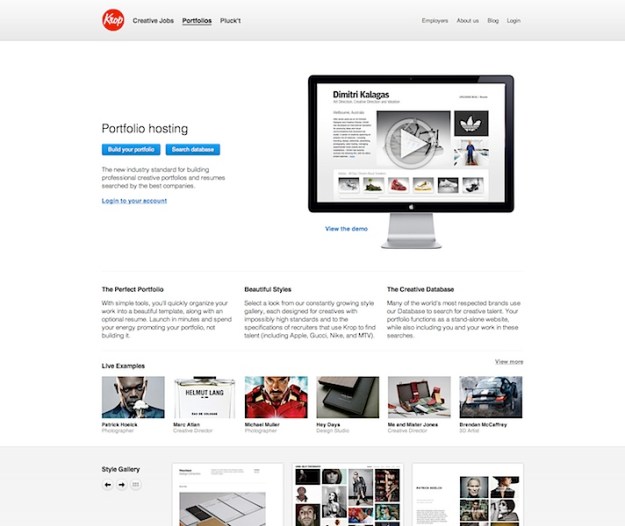
Krop: Your killer headlines will need killer headlines For professionalism, I was advised to try Krop. It charges a not-insignificant monthly price of US$10, in the league of premium site-building services like Squarespace. I didn’t see anything that justified the price against Krop’s drawbacks. Amongst those I asked, Behance enjoys a neutral to positive reputation that will not stand in the way of your looking righteous.
As far as domains and URLs are concerned, it’s also about the right associations. If you’re on a site built for creative work, then piggybacking on their domain isn’t an issue. For example, having “behance.net/name” is okay, but “name.tumblr.com” looks like a collection of meme gifs. Using a “name.com” is great as long it’s not the “best-name-online.com” that GoDaddy recommends when your name of choice is taken.
2. Know the Tools You’ll Need
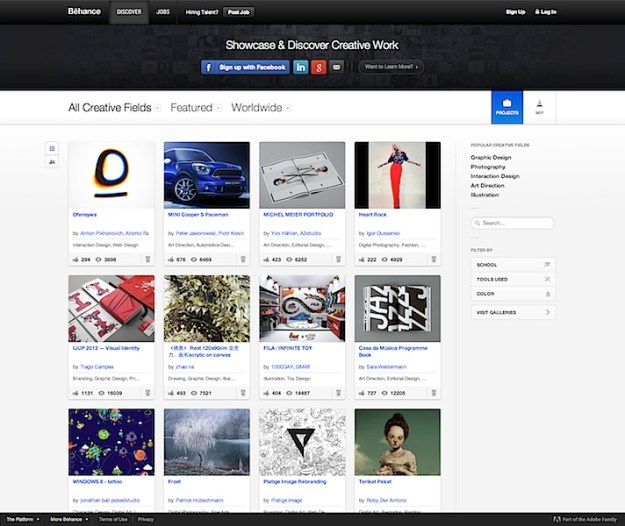
Behance: Owned by Adobe now, so you’ll have to hit refresh for minor HTML updates every 10 minutes Plenty of sites simply don’t let you annotate or supply a paragraph of text beside your large and beautiful images. It’s practically textist. Krop is a major offender. And since we’re talking your garden-variety copywriter here, and not those mystical hybrid writer-designers who can tastefully superimpose text within their images, an ideal tool would allow writers to enter text on the page itself. In that regard, Behance trumps Krop, which only allows a short caption for each image. Not only is Behance free, it allows the mixing of as many images, embedded videos, and text blocks on a project page as needed.
Most importantly, if you’re going to be uploading work where you’re especially proud of the writing, make sure it can be read! Being able to click and zoom in (or load the original image) is table stakes, but plenty of sites I’ve seen don’t do it. This is the point where your portfolio’s tab gets closed and your reader goes back to a ‘Hunger Games Wedding Ideas’ board on Pinterest.
For this reason, I do not recommend using ‘free’ services that reserve this ability for paying customers, e.g. Carbonmade. Behance won’t zoom either, but you can at least reproduce your copy on the page using a text block.
3. Create a Gallery, Not a Blog

If you must Tumblr, your portfolio should look a lil’ sumthin like this wicka wicka When a portfolio site is built on a blogging CMS, and looks like a linear blog, expectations are set for a diary of constantly evolving works-in-progress. Visitors will be less impressed by your last post being 18 months old, even if it was ahead of its time.
Of the sites I’ve seen built on simplistic platforms like Posterous, Tumblr, Blogger, Pinterest (you gotta see this Hunger Games wedding), too few employ themes with a static front page serving as a table of contents. If your platform of choice doesn’t let you do that, find a new one. A scrolling page of entries without proper navigation is counterintuitive to your purpose: showing your recent work at a glance, and putting more details one click away.
Some sites will also format and present a version of your resumé in addition to your portfolio. Behance and Coroflot are two that stood out for me.
4. Decide If You Want Feedback with That
Socially enabled sites like Behance are proud of their communities. You can follow people doing interesting work, and browse a stream of their recent work right from your front page. Gold stars, comments, resharing; all that stuff. But there’s a real need for portfolios that don’t talk back, and if you’re familiar with the teen movie trope of parents embarrassing their sons with baby stories whenever a girl comes over, you’ll understand not letting a potential mentor or employer see the “helpful” suggestions you’ve been given by others. Or your witty mom-centric replies.
Moreover, as we’ve already covered, many of these sites are for designers and not copywriters. I’ve heard this sentiment several times: “Designers have Dribbble, but where do copywriters go to share their work and get constructive feedback from peers?” It’s a gap that no one has filled. Until then, my advice would be to keep the two as separate as you can. Find an avenue for copy feedback that works for you, and display your work on a pedestal where it belongs.
5. Keep Open Secrets
Another feature that’s rather important but not always available: the ability to secure projects with a password. Some client work can never be fully public, but if there’s a story in there worth telling, you might open it up to select viewers. Please don’t set your password to “password” or your first name, or have no password at all and instruct the HR person to ‘just press Enter’, because that just makes it look like passwords are a new concept to you.
Choose Your Own Ad Venture
The first conclusion I drew is that you’ll want to spend some money to get this right, although it doesn’t have to be a lot. Whatever your choice, make sure it looks good on mobile devices and doesn’t rely on Flash.
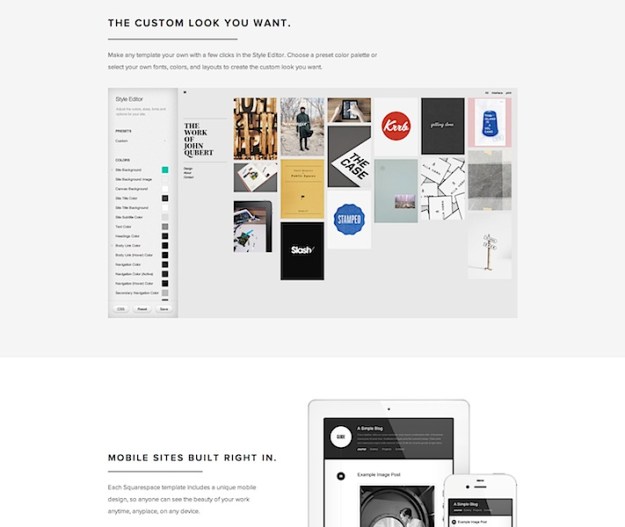
Squarespace: Can you handle this much customization? Find out with a free 14-day trial. My preferred solution has always been to create pages on a personal site, using whatever CMS you’re comfortable with, but that involves a fair amount of set-up and manual work. In contrast, the allure of these modern portfolio services is undeniable. Most come with the promise of page views from fellow creatives baked in, and who doesn’t like getting ‘Liked’? The drag-and-drop features and professionally designed templates are also particularly good for copywriters. Uploading a bunch of comps and artwork almost always results in a presentable page.
Of all these services I evaluated, the only free one that would meet the needs outlined was Behance. Their paid option is called ProSite, but its fancy templates frustratingly strip away the extra text that makes their free pages compelling for writers. If that gets fixed, it would be a complete winner.
If you’re willing to get your hands a little dirty, then Squarespace, Breezi, Virb, and WordPress are sound bets. The first two have no free options and start at around $8/mo for a standards-compliant, responsive design site. With templates as starting points and pixel-level control over every detail, they are suited to people with knowledge of web design but who don’t want to code.

Virb: If it’s good enough for a coffee bar in Portland, why not your portfolio? Virb is another all-in-one hosted site & blog solution that costs the same as Krop ($10/mo) but lets you do more. There are templates that let you bundle images and text together quite simply and beautifully.
The open-source WordPress.org software is pretty much the gold standard for consumer CMS on the web, and if you don’t want the hassle of installing it on your own servers, WordPress.com has an ad-supported “hosted service” that takes care of everything for you, with few compromises. A number of portfolio-ready themes are available, but do pay for the domain mapping upgrade, because “name.wordpress.com” looks almost as bad as it would if it said Tumblr. Almost.
-
→ The Motherhood
See what happened when Fiat’s marketing department decided to speak the language of their customers, sort of.


 sangsara.net