When I discovered a fix for an annoying iOS photo date/time saving bug last month, it required a reset of all my phone’s settings. Which means that many of my apps still can’t send notifications or use my location — these are being restored ad hoc, as the apps only get to ask for permission whenever I reopen them.
As a consequence of this, it wasn’t until recently that I suddenly noticed I wasn’t getting the twice-daily ‘State of Mind’ check in reminders from Apple Health anymore, and went to turn them back on. These are quite useful for being able to look back and see how happy/depressed I was at any point in time, and it sucks that I now have a big hole in this dataset.
I’m taking this opportunity to change the way I approach this exercise: literally being more positive. For those unfamiliar with it, you’re meant to rate how you’re feeling from Very Unpleasant, Slightly Unpleasant, Neutral, and so on. I never used to go up all the way to “Very Pleasant”. Like, I could win a million dollars and wonder if even that warranted using such strong language. But now I’m giving myself permission to be more generous with my feelings. I can feel “Very Pleasant” more often and nothing will get broken.
In other recalibration news, I spent half a day in Numbers (Apple’s spreadsheet software) and did a personal annual report of sorts to inspect how I’ve been managing my money in the last year. Now that I have enough data, I was able to build some graphs and breakdowns of what a realistic budget looks like. I’ve always recorded my expenses on a daily basis with an app, but never crunched the numbers before; I was happy just knowing that I could. Naturally, now that I have, I wish I’d done it years ago.
At several points during the above activity, I wanted to upload my file into ChatGPT and have it analyze my spending patterns and offer up some money-saving strategies for me to consider. But of course, giving OpenAI that data would be a terrible idea. I wondered if Apple Intelligence in Numbers could do anything with it, but nope. It’s just the same old Writing Tools that make more sense in a word processor document than a spreadsheet.
I spent most of my time reading this week, although the temptation to jump on the Clair Obscur: Expedition 33 bandwagon is very strong — at this point in time, it’s the highest-rated game of 2025 and the 13th best game of all time on the PS5. Maybe next week?
On top of finishing Broken Money as scheduled, I read Meditations by Marcus Aurelius and rated it just three stars on Goodreads. It’s absurd that one can even humble the great emperor with a thumbs down on the internet, but his journals are in dire need of an editor! Yes I know these were never meant to be published, but he repeats the same handful of principles over and over (which I largely agree with), and this could have been cut down to be a podcast or self-help PDF on Etsy?
I also read the second book in the Murderbot series, Artificial Condition, and found it even more fun than the first. At this point, I’m kinda desperate to watch the Apple TV+ show and not sure I can wait for weekly drops over the next few months.
While looking for a manga with some colored pages to try out on my Kobo Clara Color, I started reading the oddly titled I Want to Eat Your Pancreas (trust me, there’s a mostly acceptable explanation for this), and enjoyed it enough to finish everything in a day. Unfortunately, while experiencing color on an ereader is real nice, the Clara’s screen is too small and I read most of it in black & white on my old Kobo Libra. Irony!
I’m now close to finishing Erik Olin Wright’s How to Be an Anticapitalist in the Twenty-First Century, not because I dare dream that this world could ever abandon capitalism, but it wouldn’t hurt to have some alternatives. I’ve now begun to think of capitalism and its systems as a spectrum rather than as absolutes.
Coincidentally, it’s election season here in Singapore and we go to the polls next Saturday. I’ve been watching the political rallies live-streamed on YouTube over the last few evenings, and have mostly been annoyed at the complaints and vague promises to do better (to say nothing of the insanity that sometimes shows through in racist, antivax, and xenophobic ad libs). Singapore already enjoys some of the best quality-of-life outcomes possible under a hybrid capitalist/social democracy, but it seems people want more. They want a hands-off government, but also want it to protect them from job-stealing AIs and foreigners. They want everyone to be paid more, but don’t want to spend more on services in return. It’s so exhausting.
I was looking to spend some money on a birthday present for myself since I’ve been such a good little budgeter, but the best thing I could find were these new Yashica Peanuts cameras featuring Snoopy, who I’m still kinda obsessed with. The idea was quickly abandoned because I do not need another digital camera, especially not an intentionally mediocre one.
Still in the mood for a photo-related splurge, I went back to the Lampa camera app (first mentioned last September), which got three new ‘film-inspired’ color profiles in a major update this week. That brings the number of available looks up to six, which better justifies the high asking price (S$40/yr or S$90/forever) which was previously out of the question. I’ve been using the free trial while looking for cheaper alternatives, but Lampa just does what it does so well.
In terms of UX design, it’s super focused and perfectly walks the line between too simple (Zerocam) and too complicated (almost every competitor I’ve looked at). There’s just enough control, and few enough options that you can actually make decisions. In that way, it out-Leicas the official Leica app, which does not have a great UI and asks for S$100/yr. Technically, it uses a bayer RAW image pipeline for more natural captures, keeps those RAW files so you can “redevelop” photos if you didn’t get the right filter or exposure the first time, AND deletes those RAWs automatically after 30 days to save space. Hats off to great work, but man, the cost is uncomfortably close to buying an actual Snoopy camera.
People sometimes say that I’d make a good teacher if I ever tried it. I think good teachers are probably more patient than I am and love speaking in front of people a lot more than I do. But on reflection, those are both things I’ve gotten a little better at over the last decade, so maybe.
I got a little taste of it this week when I was given the chance to hear a class of college students make their final presentations for a design thinking course, and provide assistance in the assessment of their assignments. They were asked to identify a group with needs, understand them, and then design games that could be of help. They had to prototype and test their ideas before finalizing a working version. They all did pretty well, creating solutions that were surprisingly polished.
The general idea about deploying Generative AI tools in the workplace is that they don’t do much to enhance the work of already talented employees. But for the vast majority of average or below-average workers, LLMs elevate their productivity and quality of work to a consistently higher level, which is still a net positive for teams.
Apple’s current ad campaign for Apple Intelligence seems to take that tack too, resulting in a message that’s so far from the Macintosh’s promise of a “bicycle for the mind” that these ads are rightfully catching some flak. But in the classroom, I saw AI tools give students (with limited time and a lack of traditional design skills) the ability to execute their ideas at high fidelity. Making card games that look and feel almost like professional products, fully illustrated without the help of artists, is not something we could have pulled off when I was their age. I’m partly envious, but also afraid that on a wider scale, execution will be confused with education.
Earlier in the year, when I sat in on another class being taught by a friend, I was struck by how hard it is to control the chaos of a large room of modern students, and the same thing was true here. When you get over 40 laptop and iPad-equipped young adults in a room, having their attention is not a given. Side conversations are happening all the time, and listening to whoever’s speaking seems like a choice.
Maybe it was just my experience as an English student, but our class sizes were smaller, and discussions almost always followed a single track, led by a professor pacing around the room rather than anchored to a screen at the front. There were hardly any screens, come to think of it, just books and notepads. Now everyone’s on Figma, Canva, Miro, and a host of other infinite sheets of AI-enabled SaaS paper. I’m not saying we had it better, but I worry that the option to take things slowly and still excel is disappearing. When kids today say they’re stressed, it’s hard not to believe them, having seen the performative polish that’s now standard. We’re getting awfully close to expecting students to pop out fully formed and ready for the mines.
===
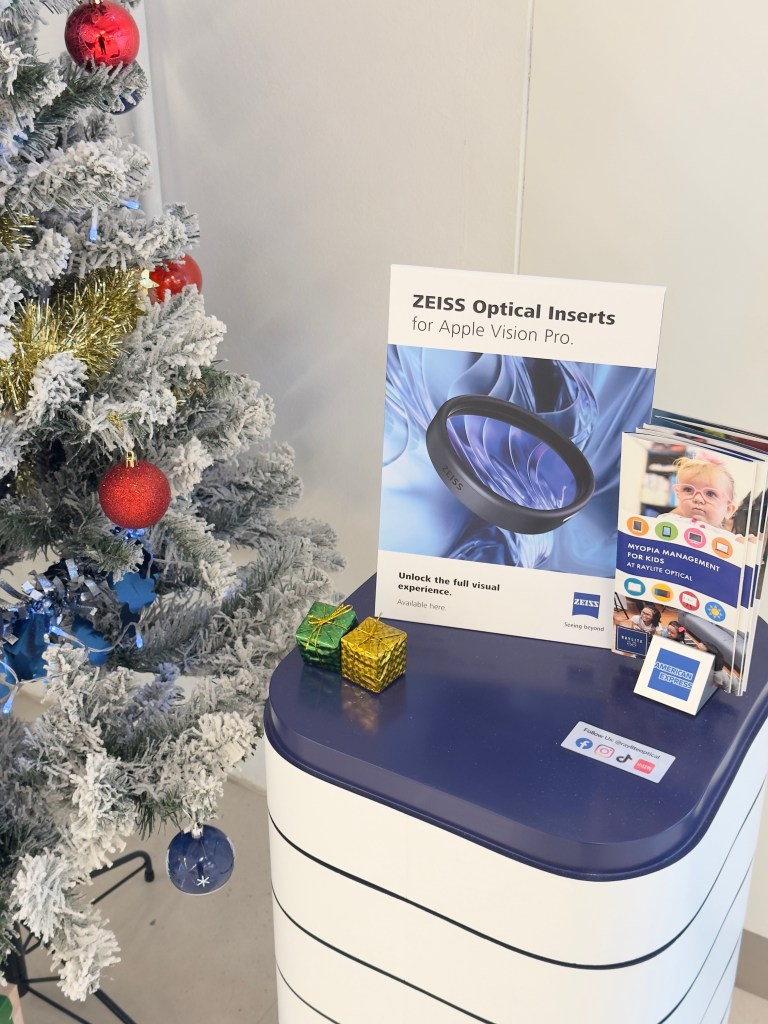
Over the weekend, we decided to get our eyes tested at a Zeiss-approved optician’s, to order the official prescription inserts for Apple Vision Pro. This will let me use the device on days when I’m not wearing contact lenses. The need to have them on first has admittedly been only a very minor inconvenience, but now nothing will get in the way of hopping into the uh… spatialverse.
Of the three eye tests I’ve had this year, this was probably the most thorough one. The key seems to be patience (there’s that word again) on the part of the tester, in the sense that the testee should never feel hurried. They should be allowed to flip between options 1 and 2 as many times as they need to identify the sharpest and most comfortable images. As a result, I have a new prescription that shows my eyesight has slightly, but surely, deteriorated for the first time in over a decade.
My last test was in 2019, when I got my last pair of glasses from Zoff. Those were so comfortable that I stopped wearing contacts regularly and became a spectacles guy again. Now I wonder if wearing contacts actually helped arrest the decline of my eyes.
Anyway, armed with a new prescription and an appetite for vision correction, I went to the nearest Zoff outlet and ended up with a new pair of glasses. I learnt afterwards that the frames I chose were “trendy” and “perfectly suited for Gen Z styling”. Along with recent purchases of wide-leg pants and oversized tees, my fashion Bryan Johnsoning is complete.
Side note on Japanese express optical brands: I stopped considering Owndays because all their frames are small and narrow — they literally don’t have large options. Zoff at least stocks a few, and in general they overindex on “Boston” and “Wellington” shapes, so on both occasions I’ve been able to find something I like with almost no effort.
===
Media activity
After taking a break for several months, I returned to Like a Dragon Gaiden: The Man Who Erased His Name on the PS5 and finished it. And this was a short game by Yakuza standards. I expected to feel pretty over the series by this point, but the emotional ending to Kaz’s story has got me quite excited to get started on the next game, Like a Dragon: Infinity Wealth, sooner rather than later.
I also returned to Luigi’s Mansion 3 on the Switch, which I started (and stopped) playing when I first got the console back in 2017. This game has just sat there for 6 years waiting for me to get back in, and all credit to Nintendo’s designers, it was stunningly easy to pick up where I left off.
There’s a ton of movies on MUBI due to leave in the next two weeks, so I started with Toni Erdmann (2016), which was nominated that year for the Palme d’Or. On the surface, it’s about a jokey dad whose daughter has become a miserable management consultant, and he decides she/they are not doing so well and could use a little cheering up. And yet as a film it was like nothing I’ve ever seen before: I laughed, I cried, I was bewildered. It’s simply art. 4.5 stars.
Another film that is leaving is a 2011 documentary by the late Austrian filmmaker Michael Glawogger, Whore’s Glory, which examined the lives of sex workers in Thailand, Bangladesh, and Mexico. The film’s biggest problem is its inappropriately “cool” millennial-era Western music soundtrack featuring Cocorosie, Tricky, and PJ Harvey. My 3.5-star Letterboxd review: “If anyone asks why I look sad, from now on my answer is ‘I saw Whore’s Glory back in 2024’.”
I haven’t held space to experience the new suddenly released Kendrick Lamar album, GNX, the way it deserves. Hopefully by next weekend.
Kim Deal of the Pixies has a new album out at the age of 63 and I quite like it. It’s called Nobody Loves You More.
I discovered a Japanese singer by the name of Kaneko Ayano while looking for artists with a similar sound to Happy End. She has an awesome ‘gimmick’ where every album is recorded and released in two different ways: acoustic and with a full band.
But for the song/video of the week, it’s Hanumankind’s Big Dawgs. I was listening to Apple Music 1 when it came on, and had to look it up immediately. He’s an Indian rapper from Kerala by way of Texas, and he’s just broken out now with this song after years of making music. His lyrical game is considerable, and as evidence I offer the existence of a YouTube comment calling him “Lendrick Kumar”.
I’m also embedding an older video I like, a freestyle performance, and a recent interview on Apple Music where it’s clear he’s an articulate and very driven young musician who’s going to be huge.
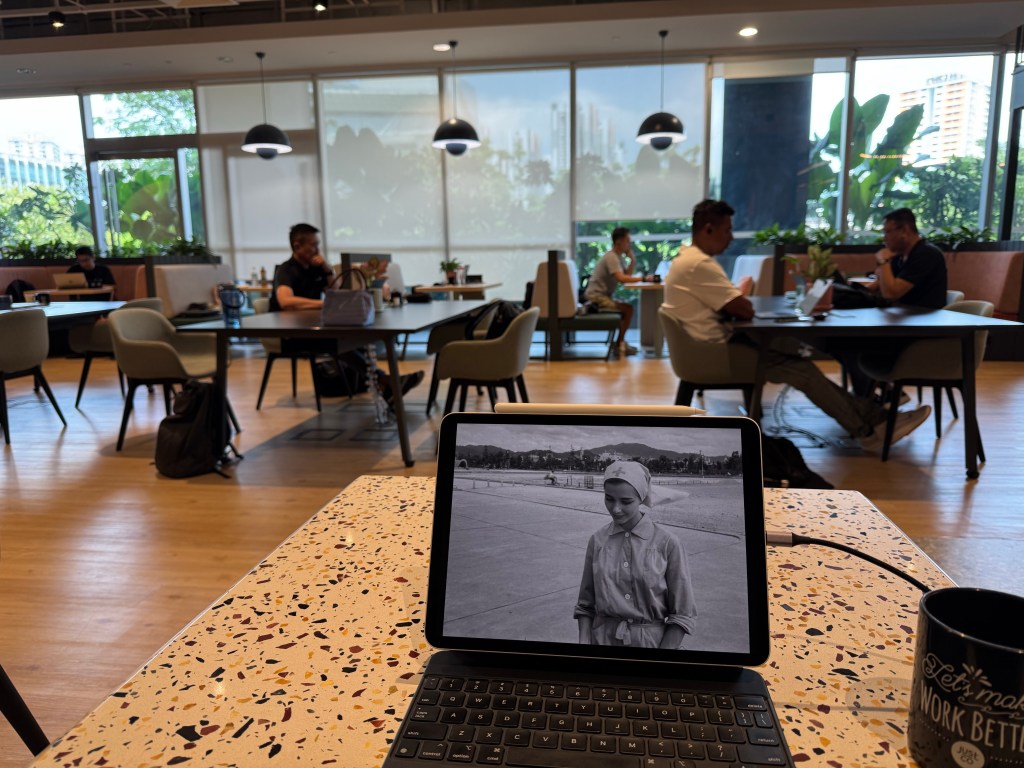
Monday got off to a good start when I finally landed one of the coveted booth seats at the co-working space. Up to then, they were always occupied by the time I got in, and it was a feat not repeated at any other point in the week. Because I’d only signed up for the month of October, and with Thursday the 31st being a public holiday (Deepavali, not Halloween), this chapter of drinking too much coffee and watching movies while surrounded by busy people has come to an end — let’s be honest, though, most of their screen time looks like chatting on Slack/WhatsApp and browsing the web.
I’m feeling a sense of loss about it, actually. For starters, the renovation noise is set to continue next week and might drive me out of the house still, now without a place to go. But more than that, I was just getting used to the routine and would jokingly say to Kim, “I’m going to the office”. It’s akin to the loss of a ‘third place’, a social setting distinct from home and work. However, I don’t even have a second place these days!
One thing that sitting still in front of an iPad for hours on end has highlighted is how important yet increasingly difficult it is to single-task. While thinking about my/our deteriorating attention span — that constant feeling of being pulled towards other tasks while in the middle of doing things I chose to do — I identified a root cause in myself: I have less trust in my memory these days. So when something occurs to me, say looking up a fact or sending someone a message, it’s harder to file it away for later follow-up, because I think I might forget. Past experience has probably taught me that I’ll forget.
On one hand, I could make peace with that. So I’ll forget a thing or two; big deal! I don’t have to optimize every detail. Things can be allowed to slip and it’ll probably be fine. Or I could use the time-honored second brain productivity hack of… jotting thoughts down and then getting back to what I was doing? I may give that a go with the Quick Note button in my phone’s Control Center and see if it makes the distracted feeling go away.
The filmmaker Lav Diaz is known for making extremely long movies. At 10 hours, his Evolution of a Filipino Family (2004) is probably only consumable in several sittings and is the ultimate test of patience and focus. Like Richard Linklater’s Boyhood (2014), it was shot over more than a decade, and you see the actors age for real.
One could criticize its poor production values, shot in grainy and low-res black-and-white film and video, often with inadequate microphone coverage, or its loose editing and lack of action (its 10-hour runtime probably says something about Diaz’s attitude towards concision). But the message is in his medium, and I’ve found watching it to be a great meditative exercise; letting the mind alternately empty and gather and empty again as you watch the family slowly lead cattle from one end of the screen to the other or hold sparse conversations over meals, spread over minutes of near inaction. The first 2.5 hours passed effortlessly in a state of detached attention.
I also managed to watch Alain Resnais’s Hiroshima Mon Amour (1959) on MUBI without much distraction. It’s a hell of a film, visually inventive and beautiful, with an opening sequence that you have to see to believe, going from sensual shots of skin to burned and scarred consequences of the atomic bomb. Which is the backdrop for this film about war, love, and memory.
Having just visited Hiroshima for the first time last year, I was surprised to find so much of it familiar in this old work: the bombed-out dome, the peace museum, and its garden sculptures. It was also incredible to see its depiction of an interracial relationship between an Asian man and a white woman as equals. As far as I can tell, it was probably one of the first films to center such a couple.
The first few Apple Intelligence features launched this week in iOS 18.1, and while many in the tech press seem unimpressed by these ‘basic’ capabilities, especially when compared to products from OpenAI, Google, and Meta, I’ve found them so impactful to the way I use my computing devices that I can’t imagine going back.
Apple also announced impressive M4 updates to the iMac, Mac mini, and MacBook Pro this week, but I don’t need to upgrade!
For one, I can summarize long emails and webpages directly in Mail.app and Safari. My bank likes to send me long, jargon-filled market updates in its email newsletters, and now I can summon a quick paragraph that gets to the point.
When I get back to my phone after some time away, I can see what would normally be stacks of messages and notifications summarized into a few lines. I’ll still read them anyway, but it’s great to get a preview so I can triage for urgency. This is also useful when getting Siri Announcements over AirPods. Say someone sends me a long string of messages, instead of having them all read out over my music, I can hear a summary and know whether it’s important enough to pull my phone out for.
And coming back to the point about avoiding distractions, there’s a new focus mode called “Reduce Interruptions”, alongside others like “Work” and “Do Not Disturb”. This reads and assesses all your notifications with AI, and will only show you things that seem time-sensitive or important.
There are also Writing Tools that I’ll be using to proofread this post before sending it out, and a Clean Up tool that can remove objects in photos using a generative model. It’s quite good, certainly enough for casual use, and I’ve seen online examples of it pitted against Adobe’s equivalent AI tools and actually coming out ahead in some situations. Plus, everything happens on device, which is great for data privacy reasons.
A quick demo of the Clean Up feature in Photos.app
One grumble I have, though, is that Apple appears to be reserving its upcoming Visual Intelligence feature (where you can point your camera at something and have the phone offer contextual information) for iPhone 16 models with the new Camera Control “button”. I hope they’ll make it work with the Action Button on iPhone 15 Pro models, but am preparing that I won’t have it until I upgrade to next year’s 17.
In the meantime, I have found a new use for my Action Button: starting the Apple Music 1 radio station. This has proved super useful and convenient. If I’m anywhere with my AirPods in, getting some music going is now just a button press away, even without getting my iPhone out of my pocket.
Take a minute to appreciate this ad that Apple made to celebrate the debut of this radio station back in 2015, back when it was called Beats 1 — a far better brand in my opinion. It was a simpler, more optimistic time. Watching this, I believed that a global internet radio station dedicated to great music, across all genres, could map differences in culture and unite us all.
I must mention that Nintendo joined the music streaming app business this week. Nintendo Music is free for subscribers to the Nintendo Switch Online service (USD$19.99/yr), which I already am for purposes of playing games online and backing up saves from my Switch. However, the app is not available in Singapore as Nintendo’s online services are not officially available here — one has to create a US account instead. But complaining about Nintendo’s digital and worldwide strategy is a whole other post.
So far, this music service is pure win. Classic first-party soundtracks from the best in the business, with curated playlists for different moods and activities, and the ability to “extend” some tracks to an hour’s length (it appears there’s more to this than just looping the songs) for use as background music? With more music continuously being added? It was enough to make me jump through the hoops of switching App Store accounts to get the app on my phone. And so I’ve been listening to the sounds of Animal Crossing: New Horizons again, feeling nostalgic for the early days of the pandemic when great music in a cozy game did unite the world during a very stressful time.
They should add Shortcuts support to the Nintendo Music app so I can start playing music via the Action Button.
I may buy Nintendo’s upcoming Animal Crossing: Pocket Camp Complete smartphone app, which is their clever solution to keeping the live service mobile around after its servers shut down. You can buy a fully offline version for $10 (going up to $20 in January 2025), with all 7 years (!) of old in-app purchase content included. Current players with saves can resume their progress, but I will probably start over again. The new app launches on Dec 3, 2024.
Remaining media activity
I’m halfway through reading Variable Star, a book by Spider Robinson based on an idea and notes left behind by Robert Heinlein. So, it’s a posthumous collaboration, and a very entertaining one at that.
We waited till all episodes were out and then binged Season 4 of Only Murders in the Building. This is not my preferred way of watching the show; I believe spacing them out lets the story breathe and be remembered better. But Kim is going away again for a couple of weeks, and neither of us wanted to wait that long to pick it back up.
I finished Season 2 of The Old Man and remain impressed. It’s one of the best ‘classic’ espionage shows in recent years, and if you have a better one to recommend I’d love to see it. I’m talking old-school, Tinker Tailor-type spy intrigue, which reminds me I should pick up a John le Carré book next, because I don’t think I’ve ever read one. Btw did you know Nick Harkaway is his son??
After six months, we caved and reactivated the Netflix subscription. Kim wanted to watch Culinary Class Wars on her flight, and I’m keen to check out some of the new anime series they’ve put out, like Ranma 1/2, Dan Da Dan, and Season 2 of Oshi no Ko. I watched 9 episodes of the latter on Sunday; it’s that addictive. It was always a great looking show but the artistry and animated flexing is on another level now: some of the kinetic montages and dramatic sequences jump through a dozen art styles in as many seconds, and feel inspired by the Spiderverse films and maybe even Satoshi Kon’s Millennium Actress (2001), which might be my favorite animated film of all time.











 sangsara.net