Tag: Apple Vision

  • Week 11.26

    Week 11.26

    If you thought I was going to stop after last week’s two apps, I wouldn’t blame you. I’ve been having poor luck staying focused on new hobbies and pursuits over the past year; they all just seem like too much work for too little payoff and I drift off. Vibe coding seems different so far because it lets me start making weird things that I want to see, without being dependent on anyone else’s time or generosity.

    If you think in terms of music albums/careers, then Collagen was the mixtape that I put together to see if I could be a real musician. Urban Jungles was a big leap forward, the debut album, if you will. It had way more polish and was usable by almost anyone (whereas Collagen had what you might call a niche audience).

    Which brings us to the sophomore curse or slump. The second album tends to be over-ambitious, myopically conceived, and underwhelms audiences looking for more of what made the debut good. There are exceptions to this mythical rule, like Radiohead’s The Bends, Lorde’s Melodrama, and D’Angelo’s Voodoo. By this logic, my next app was statistically going to “fail” by being a harder one to get into.

    I ended up making two apps again this week: SkySpotter and Library Supercollider. Each one has a separate page on this site that shows and explains what they are, so you should stop here and go read them before coming back.

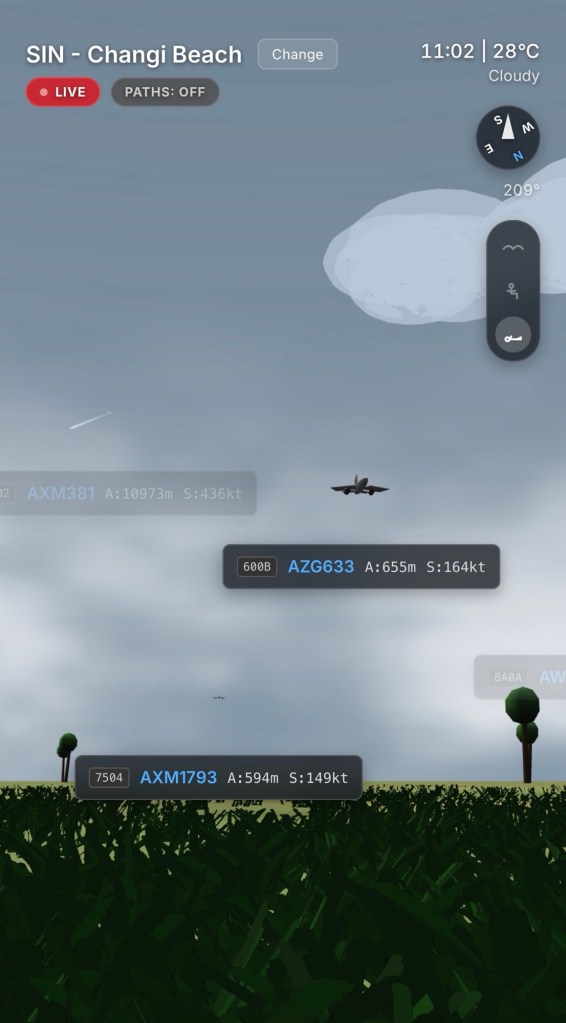
    Like a sophomore album, SkySpotter probably reached a little too far. It took the real-time weather data angle from Urban Jungles, added the more complex dimension of real-time air traffic data, and then threw in rendering a first-person 3D world as a bonus challenge. I started refining the concept and prototyping it on Sunday afternoon, and then worked on it for two full days on Monday and Tuesday. I literally forgot to eat lunch, and was still messing with it at 11pm both nights. It was like a job.

    Gemini 3 struggled. The Canvas chat became so long and convoluted that it won’t even load now in the iOS apps — I have to use the web interface. It hallucinated making changes, and introduced new bugs each time I made an improvement. It built planes with reversed wings and nose cones pointing backwards. Working with bugs in a 3D app was so blood-boilingly frustrating that I wanted to give up.

    I actually did give up… on implementing a VR mode for Apple Vision Pro. We got it to half work but the skybox sphere was too far away and would keep turning black. Rather than risk corrupting the working regular version any further, I decided to cut it.

    I’m proud of SkySpotter because it’s pretty damned cool to lie in the virtual grass and watch real planes go by. Even as someone who doesn’t care about planes more than the average person! But it was a technical challenge first and a passion project second. So if that was my over-produced sophomore studio album the label breathed down my neck for, then the next release would be its opposite: a scrappy, self-funded back-to-roots project recorded directly to tape in a Nashville studio over an inspired couple of days.
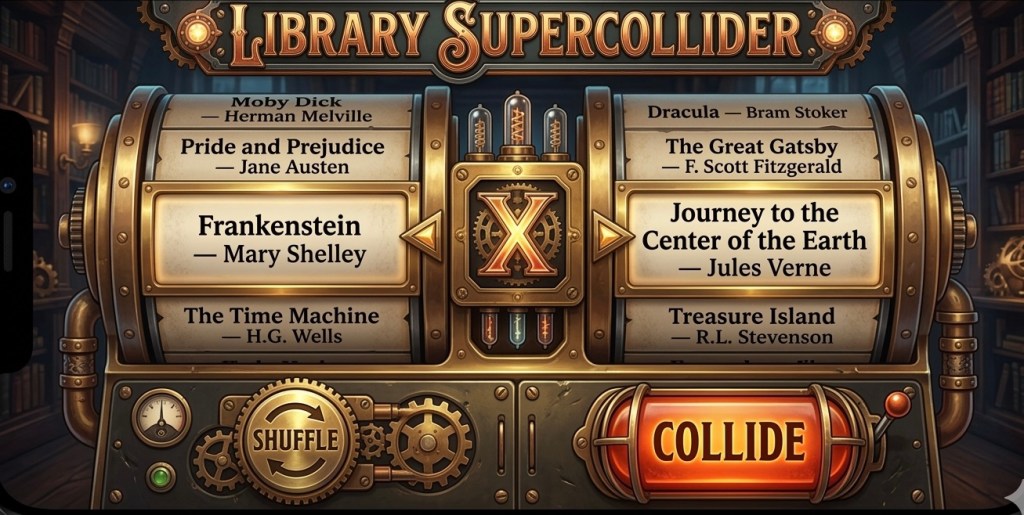
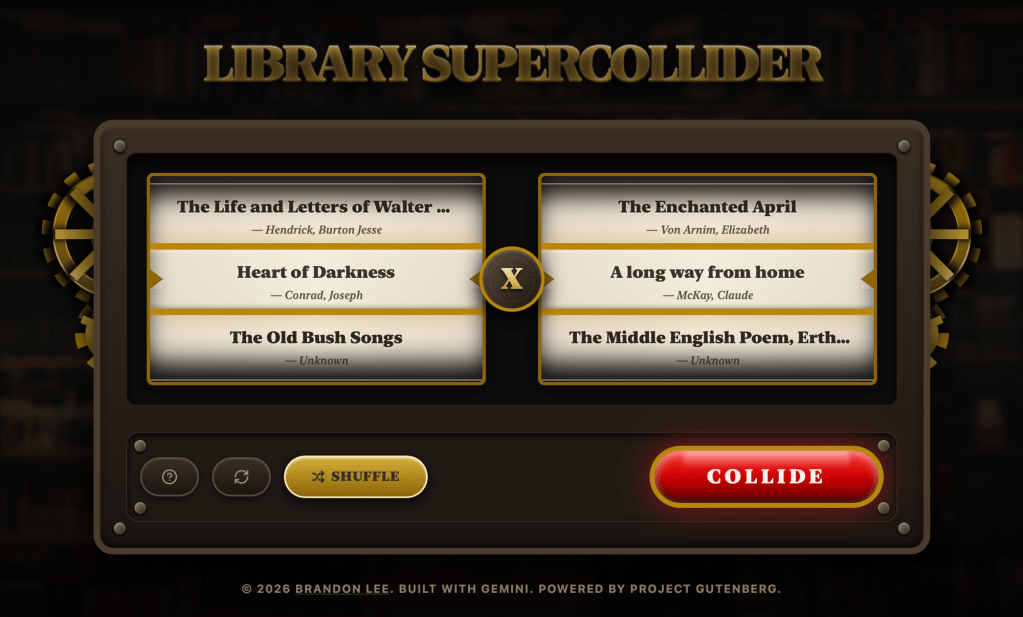
    Library Supercollider was an idea that came to me all of a sudden after I’d finished SkySpotter. I’d been interested in the concept of cut-up poetry since I was in university (popularized by Brion Gysin and William Burroughs around the 1960s), and I believe it occurred to me back then that someone could make a computer program to cut up and mash two classic texts. I just didn’t know it would be me, twenty years later.

    I expected it would take me the next couple of days to get working, being that it requires the somewhat complex-sounding downloading and processing of entire ebooks in the background of a web app. I didn’t know if it could even be done. So imagine my surprise when I had a working prototype by lunchtime on Wednesday. But between polishing the experience and overcoming download limits with Project Gutenberg servers, I wouldn’t be done until Saturday morning, making it a longer project with different challenges — comparatively less frustrating, more educational.

    I understand that it’s not an app for everyone — you might read a page and conclude that it’s worthless gibberish. Maybe it takes the sort of person who likes abstract art and free jazz. But personally I’m so pleased with this project that I’ve bought two domain names to go with it: librarysupercollider.com and the superior smashmybooksup.com, which I’ll retain for a year as a ‘marketing URL’.

    In all seriousness, I think this is the finest work of my two-week career as a builder of software! The user experience for remixing and reading the resulting texts is brilliant, if I do say so myself. The steampunk UI and animations are completely unnecessary but bring me joy (notice the moving gears in desktop view). I had to come up with caching and proxy solutions to make the app more reliable under load. I even got a little into the weeds: installing node.js and Vite on my Mac, running scripts in the terminal, trying to compile a macOS port to get around problems (eventually unnecessary).

    Even if I were a skilled and experienced developer, I can’t see how I would have made these apps in two weeks; from writing to designing and coding them up, plus preparing documentation and website copy (plus one very dubious video ad). Deploying Library Supercollider to its own domain made the reality click for me, a feeling kinda like publishing your first thing on the App Store. It says: this thing is now real and can be used by real people.

    Then I came across this article in the NYT Magazine, entitled “Coding After Coders: The End of Computer Programming As we Know It”. It notes an interesting inversion of what we’re seeing in other fields — AI is taking away the drudgery of programming and leaving the human, soulful (and fun) parts.

    “The work of a developer is now more judging than creating.”

    In that way, I may not have magically joined the ranks of coders overnight, but I could probably say I’m developing. At my job, I used to direct the form of apps in a way so removed that I could only claim the role of design, but not the larger making. Part of the handwringing in design circles today is precisely about how designing and developing are merging, and soon only making will remain.

    Not everyone will bother to turn their ideas into reality, and fewer still have the experience and vocabulary to prompt polished apps distinct from the models’ averaged-out defaults, but those who persevere will be bringing tools and toys into existence the likes of which you may have been waiting decades to see.

    What’s next? Well, I might have a couple of ideas…

    One thing all this app-making has done is bring me back to my Mac. I usually spend most of my computing time on my iPhone and iPad, but there’s no substitute for a Mac when it comes to managing local files, running scripts and compiling code. I’ve had coders like Michael make this point to me before, but I never got it because I never needed to sync a local repo with GitHub or anything before.

    So a side effect of spending long stretches of time on my five-year-old and long-neglected M1 MacBook Air is that I’m wondering “Why did I ever stop? This thing is great!”

    It’s worth noting that this week Apple’s newly released MacBook Neo has been getting a ton of praise on my social feeds for being an affordable and all-round capable machine at an unbelievable $599 price point. I got a tear in my eye as I read this essay by Sam Henri Gold: “This Is Not The Computer For You” — it perfectly encapsulates what it was like to grow up on computers and teach yourself things, even on PCs.

    Too much screen time is awfully bad for you, so on the weekend I touched some metaphorical grass by taking our niece out to Disney on Ice at the Singapore Indoor Stadium. It’s extremely well-timed, with the world still coming down from Alysia Liu’s gold medal, and Singapore being in the midst of a Disney craze — a Disney Cruise offering has launched after delays and is now at the local docks, with fireworks and drone shows along the bay at night.


    These were Live Photos of some stunts

    I have no deep affection for Disney IPs but appreciate the amount of effort and coordination that goes into making magic, and it clearly works with so many adults into this stuff. What’s interesting is that while ice-skating can get pretty boring after awhile — it’s all the same moves over and over, around a static rink — adding a layer of characters and storytelling works to keep it fresh over an hour and a half.

    Oh, and our niece is 9, and by way of introducing her to the MacBook Neo, I asked her what computer she uses. I swear, her response was not far off the punchline in that Apple ad that everyone but me seems to hate, in which a girl who’s been using her iPad all day for creative things is asked what she’s doing on her computer, and she responds “What’s a computer?” Will iPads become open enough to support kids learning to (vibe) code? Or will nature heal in a post-post-PC revival led by the MacBook Neo? In any case, that ad was prescient.

    Bonus: Steve asks the same question in a different context (around 1:30). You must watch this video, it’s breathtaking. He’s 28 at this point. In addition to confidently describing things like Street View, mobile wireless computing, LLM chatbots, and the App Store, there’s a part near the end where he says “What we need to do is get away from programming. People don’t want to learn programming, they want to use computers.” He was talking about providing more finished software products to customers, because writing custom software was the norm then, but it’s an eerily relevant quote!
  • Week 9.26

    Week 9.26

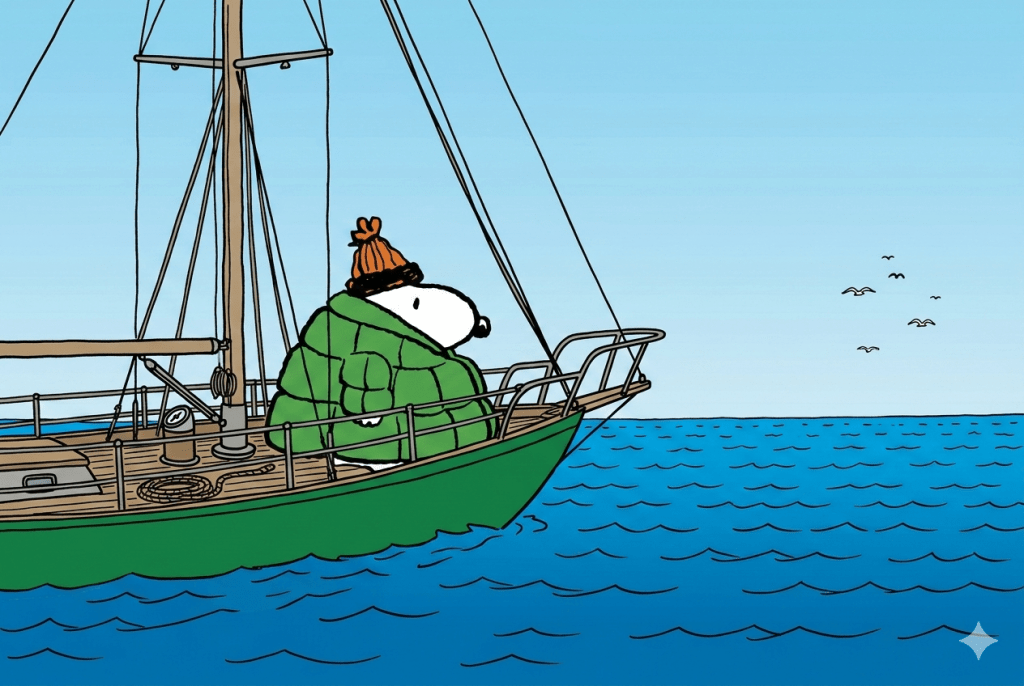
    • The featured image above is the result of having Geese’s Au Pays du Cocaine in my head all day. The line about a sailor in a big green boat and a big green coat made me think of Puffer Jacket Snoopy, and of course I had to realize the joke.
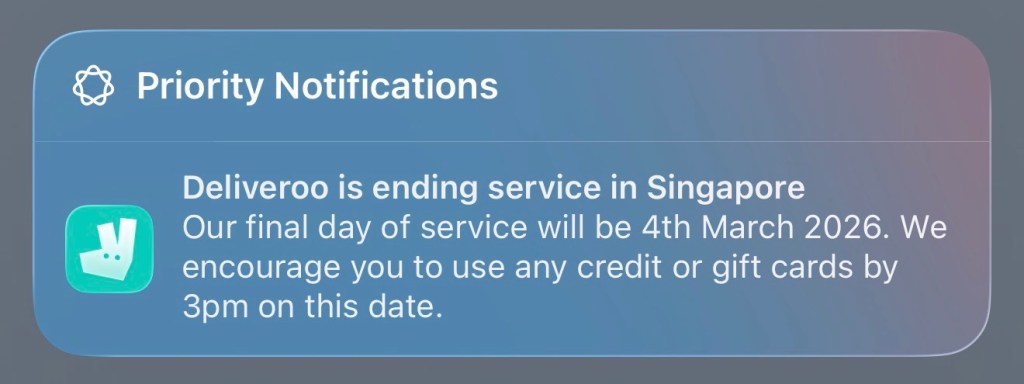
    • We got the sad news that Deliveroo is shutting down operations in Singapore. This comes on the back of an acquisition by DoorDash who must have run the numbers and decided that a 7% share of the local food delivery market after a decade wasn’t worth investing further in. We use it all the time and prefer it over Grab and Foodpanda — it is by far the better app and their subscription service is better value for money, but we’ve seen this movie before. It’s like how Uber lost out to Grab; the market doesn’t always choose efficiently.
    • I will probably switch to Foodpanda because Grab as a brand has the same icky halo as, say, Facebook or Spotify.
    • Google released Nano Banana 2, the new version of their hit image generation model. This one is cheaper to run and kind of almost as good as Nano Banana Pro, so they’re making it the default for everyone. Paid users can still access the Pro model, but it’s hidden behind some menus. It’s a regression in quality, a slight improvement in speed, and most importantly, a boost to Google’s bottom line. Since I only do silly things with these tools, it doesn’t bother me tremendously, but imagine the same happening at an enterprise level for more important work.
    Screen recording of an AI panorama
    • One of the new things Nano Banana 2 can do is generate very wide panoramic images, so I asked it to render some “panoramas taken with an iPhone” in various locations. I then upscaled those and opened them in my Apple Vision Pro. They don’t have the photorealistic quality of images from Nano Banana Pro, and the resolution leaves a lot to be desired, but they’re still immersive and impressive when viewed in this way. You can see where this might go.
    • There’s been a lot of talk lately about how AI vibe coding could upend the SaaS market, if not replacing dependable enterprise tools with individually created ones, then at least giving IT departments a billion more unapproved apps to worry about. A viral essay from last week posited that AI coding could kill DoorDash, though I’d say they did a good job of that themselves out here. The other oft-discussed idea is that AI could replace the App Store, and everyone will just make their own apps instead of buying them from developers. Michael has been blogging about vibe-coding his own to-do list app based on Clear. I’ve been wanting to try this myself, making more little tools of my own to solve niche problems, but the opportunities have been slow to materialize.
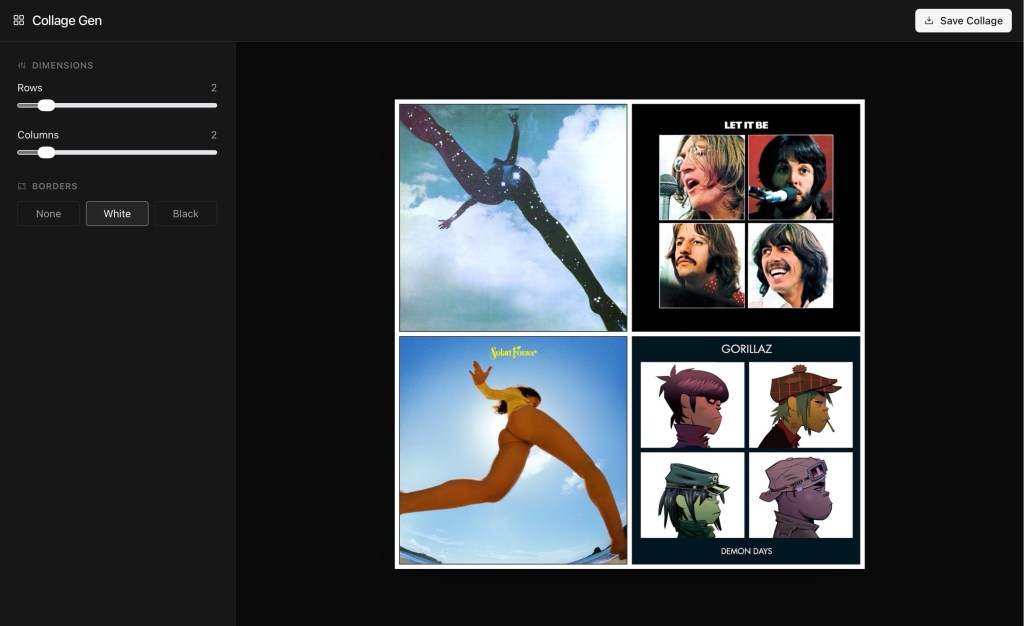
    • This week the right idea presented itself and I made a web app using Gemini: an album cover collage maker that searches for the artwork or lets you upload your own. I’ve looked online for something like this before but only found a few that were quite lacking. Making one to my own specifications took maybe five minutes of prompting and testing. Then I thought it would be nice if you could drag the images to different locations. Gemini added that feature like it was nothing. I’m pretty hyped that even someone like me with zero current coding knowledge could will this into existence. If you’d like to try it, I’ve deployed it at usecollagen.netlify.app.
    • Otherwise it was a sort of decompression week where I just read a lot, listened to the records I bought/ordered last week, and was regrettably glued to my phone watching day trading losses (Chekhov’s gun has fired!) and social media feeds.
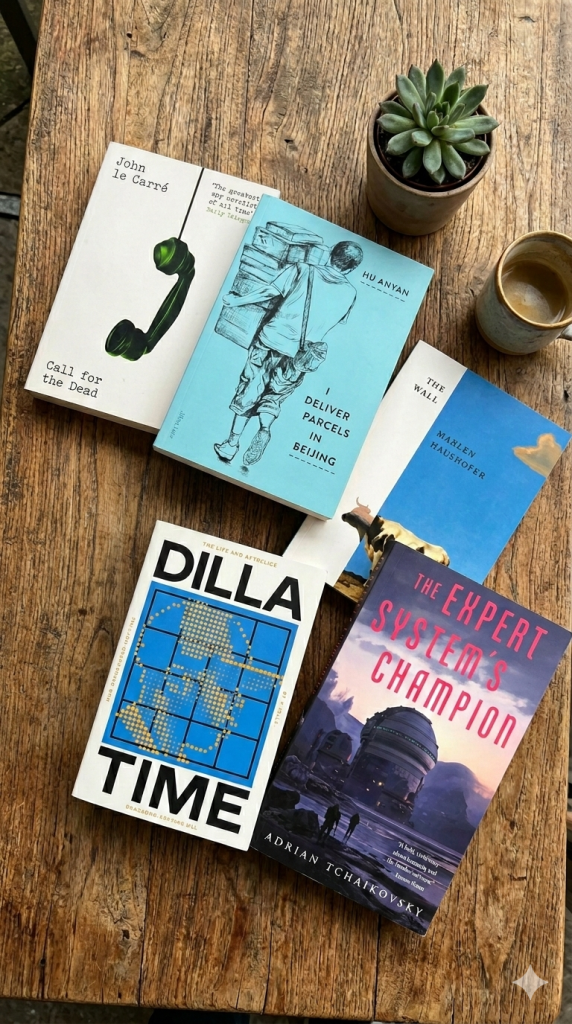
    • It took a couple weeks of dawdling but I finished John Le Carré’s Call for the Dead, his first novel featuring the spy George Smiley. I may continue reading the series, seeing as his son Nick Harkaway (whose work I really enjoy) has decided to continue his father’s legacy and written one more already: Karla’s Choice. This one was a little dated and not particularly thrilling, but a fine introduction and scene setter.
    • It was immediately followed by Adrian Tchaikovsky’s The Expert System’s Champion, sequel to The Expert System’s Brother which I read at the end of last year. I recommend both as examples of sci-fi stories set so far in the future that humanity has looped back around to the beginning. It reminds me of the “middle chapter” in Cloud Atlas, if you remember that.
    • Then I read Hu Anyan’s I Deliver Parcels in Beijing, a modern memoir that reportedly did well in China when it came out in 2022. It details the author’s dual career as a writer and on-and-off gig economy worker, which is made more interesting by also being a portrait of what it’s like to live in the lower brackets of Chinese society today.
    • I also had time to tackle Rob’s recommendation of Marlen Haushofer’s The Wall, which was written in the 1960s but doesn’t feel that way, unlike Le Carré’s spy novels. He called it the best book he read last year, so I could hardly say no. It starts off like an intriguing sci-fi novel: a woman visiting friends in the Austrian alps wakes up one morning in the log cabin to discover she’s alone, and there’s an invisible wall separating her from the outside world. Things then focus on survival and what it means to live and be human in solitude, and in nature. Which, given that I’ll be home alone next week while Kim is away again for work, means I’m already in the appropriate headspace.
    Some of the better books I’ve read this year
  • Week 6.26

    Week 6.26

    • A quick follow-up on one of last week’s topics: it turns out that some posts on Moltbook may have been faked because there were security holes allowing people to get on there and post directly (instead of being a bot-only place as promised). Doesn’t change the main point that future agents will collaborate not just on one computer, but sync up across wide networks with effects most of us can’t fathom. Look at the crowd that gathered to discuss Clawd a couple of days ago, to see how much excitement there is for this box that says Pandora on it.
    • I’m too tired to dwell on this much more today! Keeping up with the AI space is still a full-time job, and I’m not going to try. But Claude Opus 4.6 was just released, along with demos of what it can do in Cowork mode, which is very impressive if true. Apparently these models are also able to tell when they’re being evaluated by safety/alignment teams, which makes it very hard to know how they’ll really behave in the wild. Look at this example where a model can infer the user’s cultural background with just a few words, owing to the words they choose. These are tools, except other tools don’t do things like this.
    • I read a fantastic sci-fi short story that sort of involves AI: Julia, by Fernando Borretti. If you also enjoy fiction that drops you into a context and makes you swim, and then shows you strange and beautiful ideas as you break above the surface, you’ll love this. Like how China Miéville uses ornate language in The Book of Elsewhere to suggest Keanu Reeves’s… I mean the protagonist’s immortal, mystical otherness, Borretti uses a dense, intellectually dominating host of references here to illustrate the POV of an artificial mind at the end of humanity’s time. I haven’t stopped thinking about it.
    • What will we do when all the jobs are gone? A young entrepreneur in our neighborhood has started a home-based business selling smashburgers, and we bought some for dinner midweek. They were good, and I’m slightly afraid of what this proximity will do to my waistline. For those unaware, this was a bit of a trend last year and local media outlets like ChannelNewsAsia ran stories (example) about how such businesses were springing up as a result of low employment opportunities and rising rents.
    • Retreating further into the virtual world is another option. A bunch of new experiences became available on the Apple Vision Pro recently, and I caught up with some of them. The cutest is an immersive documentary on Apple TV called Top Dogs (two 15-min episodes), which looks at the annual Cruft’s dog show in Birmingham, UK. You get really up close to some of these beautiful animals, and the urge I felt to reach out and pet them was extremely strong. It wouldn’t be the same seeing this on TV. Here you get a sense of their size and presence, see them in incredible detail — everything but smell them. Apparently there are 25,000 dogs at the convention center each year, but I imagine these are all shampooed and much more pleasant than your average wet dog.
    • There’s also Retrocade, a game on Apple Arcade that uh… simulates an arcade. The game is playable on other devices, but on Vision Pro you get life-sized arcade cabinets standing in front of you, playing licensed retro titles like Space Invaders and Bubble Bobble. The only thing that breaks the illusion is of course that you can’t reach out to grab the sticks and mash the buttons. Instead, you have to use a connected game controller.
    • Speaking of emulating old hardware, I played and finished a game on Switch (also available on PC) called The Operator. It’s one of those where the entire UI is a computer’s desktop and you have to chat, look into files, and do hackery stuff to experience the story. I think this can be filed along with the other murder mystery games I’ve played lately. It’s fairly short at under four hours, almost completely linear, and not something you’d play twice. Wait for a sale, I think.
    • You know who else is a hacker? The lead character in Apple TV’s Tehran, a show that came out in 2020 and has since been renewed for a fourth season. We watched Episode 1 back when it came out, liked it enough, but for some reason completely forgot to go back until this year. It’s been topping the charts lately, maybe because of the recent civil unrest in Iran. Having just finished Season 1, I can say it‘s a really good espionage thriller, and we’re keen to keep going.
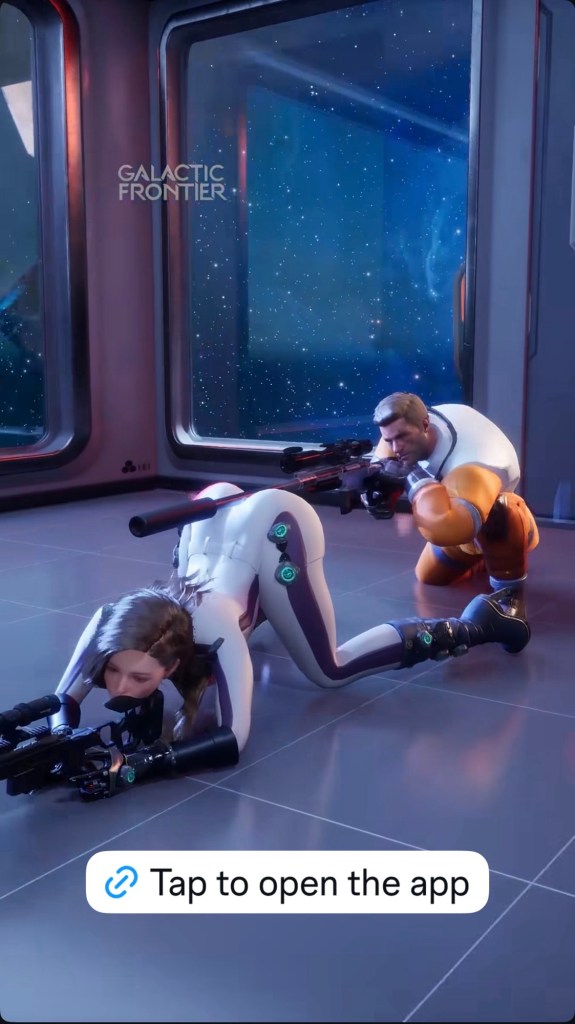
    • Oh and check this out. Someone has managed to license Isaac Asimov’s Foundation series and made a free-to-play (i.e. shitty) mobile game: Foundation: Galactic Frontier. It even has an Apple TV logo appear on startup?! And the next day, I saw this insane animated ad for it pop up on Instagram and couldn’t believe my eyes — I took a screenshot to prove it. In all fairness the actual game isn’t anything like this, it’s just a heinous misrepresentation that probably has Asimov spinning in his grave.
  • Week 3.26

    Week 3.26

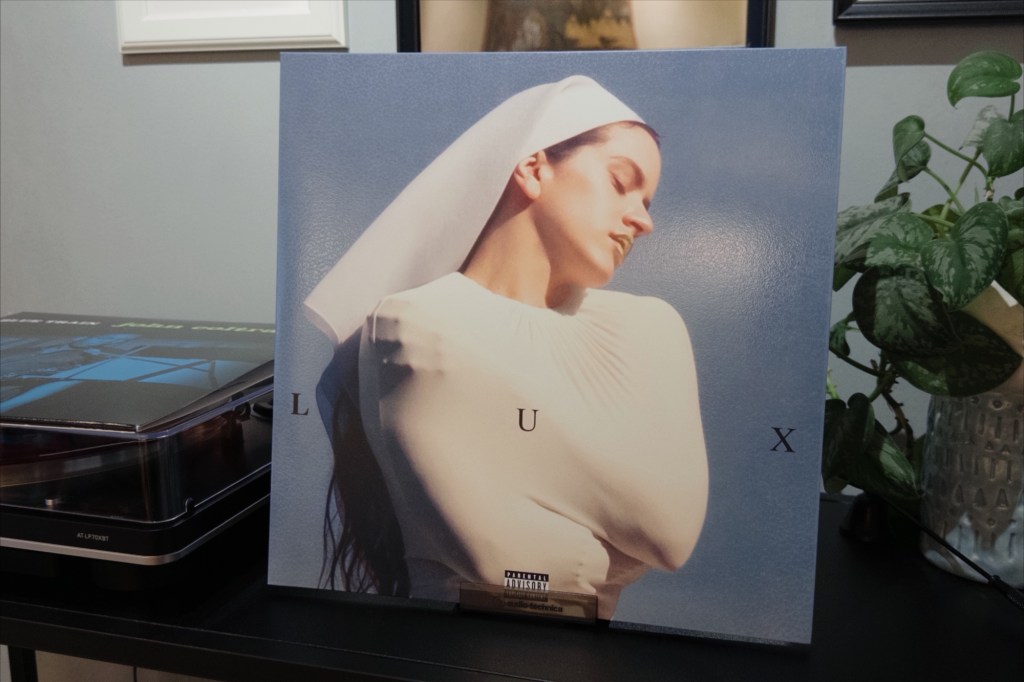
    This week’s vinyl purchase was the album that restarted the whole idea of buying physical music again for me at the end of last year: Rosalía’s LUX. The digital/streaming version is intentionally incomplete, with 15 tracks instead of 18. Purportedly because she wanted to highlight the importance of ownership. The first thing I did after hearing that fact was to hunt down an MP3 rip of the CD and upload it to my Apple Music library. But it never felt right, and so I wanted to buy the CD, which led me to look at CD players, and then… you know the story. That’s it, no more. For real this time.


    You know which company or live service does the best Wrapped/Replay/Year-in-review thing? It’s Nintendo, because they actually wait for the entire year to be over before sending theirs out. I think Apple Music gives out the Artist of the Year award in November. As a borderline OCD pedant, that shit doesn’t sit right with me.

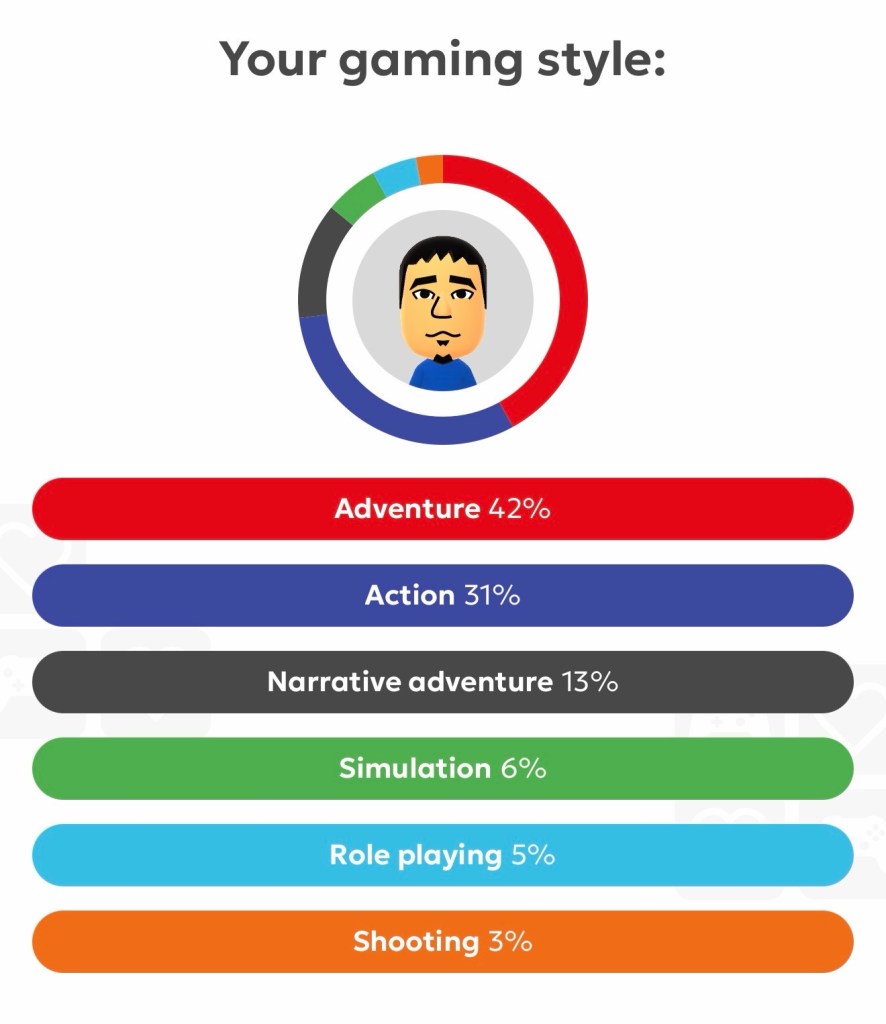
    So my Nintendo 2025 report says I played just 172 hours, spread across 43 games. I believe the first number but the second seems high. Maybe it erroneously counted some games I reinstalled after getting my Switch 2. In any case, that’s an average of half an hour per day, which is kind of a sweet spot: not high enough to be called a good-for-nothing bum, and not low enough that I’d question my life choices. My top game was The Legend of Zelda: Tears of the Kingdom, which I likely won’t return to and finish for another couple of years, if the previous game was anything to go by.

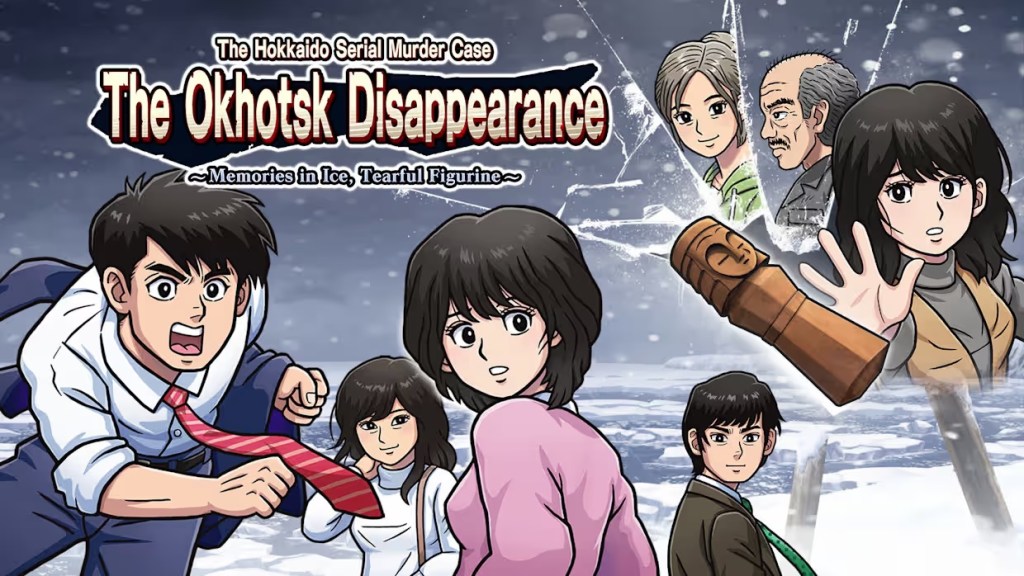
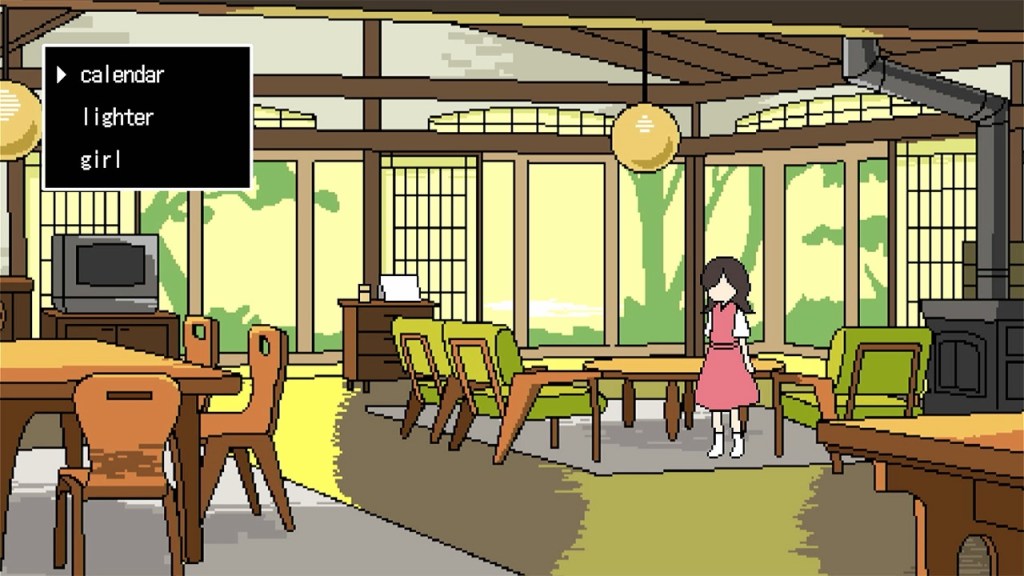
    I started on a new game this week and discovered that an old-school adventure game was just what I’ve been needing. The kind where you don’t have to physically walk a character around, but instead choose options from menus to prod at scenes and investigate murders. This is its actual full name, btw: The Hokkaido Serial Murder Case: The Okhotsk Disappearance ~Memories in Ice, Tearful Figurine~.

    If you remember the Famicom Detective Club games, this is similar in that it’s a remake of a classic NES-era Japanese adventure game, with updated graphics and music — albeit nowhere as lavish as the treatment that Nintendo and MAGES gave to their versions. Where the Hokkaido murder game justifies its asking price is in its scope. It’s actually two games in one; the original story set in the 80s, and a new sequel set in 2024 where your character returns to wrap up loose ends.

    Ah that reminds me, when I was in Japan around this time last year, I saw a similar Switch game for sale that I didn’t recognize. I took a photo of the cover to follow up on later, and found out it’s my kind of murder mystery but hadn’t been translated for global release.

    Then a few months ago, I remembered to look it up again. This is where that new feature in iOS that lets you tap and select text in a photo comes in super useful, especially when it’s a language you can’t read. I discovered that it’s been given a new title Path of Mystery (originally Mystery Walk in Japan) and a global release date: Feb 26, 2026.

    This one has a unique feature that I’m excited for: while the story unfolds in both the past and present (similar to the Hokkaido game I’m playing), there are two separate UIs and gameplay styles. The past has retro pixel art graphics, menu-based commands, and outmoded gameplay conventions; while the present portion looks like a new game with modern controls.

    Let’s round up all this game talk by making a list of the other titles I bought on sale over this holiday season. I fear there were quite a few, but I won’t know how many until I do this, and maybe this will keep me honest.

    Okay, maybe I do have a problem! It’s going to take me all year to get through these alone — this is who you’re asking to get a regular job, by the way.


    I read Network Effect, Book #5 in the Murderbot series for our book club, and I think this will be the last one I waste my time on. The writing is artless, soulless, and mainly serves to perfunctorily describe actions that the characters take. Surely reading this blog already gives you your recommended weekly allowance of that. Making matters worse is this installment being ‘normal novel length’ where the rest up to this point have been relatively short little stories. It’s definitely overstayed its thinly premised welcome.

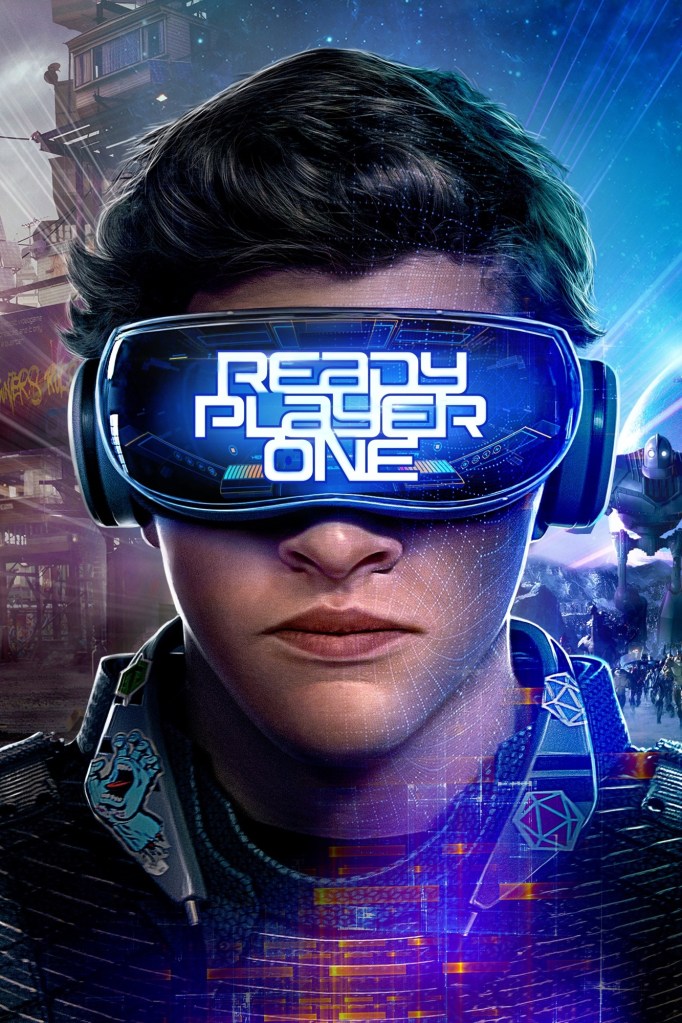
    One of the fun things my book club does is watch film adaptations whenever a book we’ve read has one, and they recently read Ready Player One. I already read the book once when it came out, so I skipped this one, but joined for the movie watch party. Most of us rented the 3D version for Vision Pro from iTunes/Apple TV, which was worth the six bucks.

    The 3D presentation is spectacular, helped a lot by the fact that no one blocks action sequences like Steven Spielberg. Even when almost everything is CGI with billions of particle effects flying on screen, he’s an absolute master at keeping the eye focused on what matters. But time and growing up in general has not been kind to Ernest Cline’s writing.

    The dialogue was so cringe, the heroes have zero aura, and honestly I’d forgotten the story and was convinced the genius game developer god Halliday was a bad guy because of how toxically narcissistic he was. I mean, he built a library of his own life story for “scholars” searching for clues to win the in-game prize he left behind. And in one scene, he actually says the words “I’m a dreamer” to the co-founder who wants him to take more responsibility for the online world he created. If I’ve learnt anything in this life, it’s not to trust any douchebag who calls themselves a ‘dreamer’ or ‘visionary’, especially if they’re involved with a metaverse project.

  • Week 43.25

    Week 43.25

    Vertigo (1958) is a great film, because Hitchcock was a master. It’s also the title of a mediocre stadium rock song, because I love hating on U2.

    Unfortunately, vertigo is also something I experienced for the first time this week — I’m fairly sure I jinxed myself at some point earlier this year by saying out loud “I don’t have any problems”. It hit me on Friday night in the form of extreme dizziness and nausea, and even the walk to bed to sleep it off was difficult without support. It got better the next morning with the help of something called the Epley Maneuver, which I found online.

    Asking around, I discovered that this is a more common human experience than you’d think, with several people I know having suffered episodes. Some of them had dizziness lasting days, and yet it’s strangely not discussed like, all the time? From what I can tell, it’s probably something called benign paroxysmal positional vertigo (BPPV), where calcium deposits in your inner ear become dislodged and move around, screwing with your balance. I’ll be seeing a doctor next week to confirm it, but in any case there’s no known cure and it might keep happening for the rest of my life. It’s crazy that so many are just quietly living with this.

    Have I been self-diagnosing with the help of AI? Maybe? I did just sign up for Claude Pro after all, which I’ve mentioned finding more agreeable than ChatGPT. I made vibe-coded two little apps before being laid low: a primitive prototype of my long-gestating stealth game, Cat Creeper, and a tool for my book club to figure out how many chapters of any given book we should read in the coming week. That one is called Book Splitter, and I offer it here for any book clubs out there with a similar need to figure out stopping points conveniently near chapter breaks.

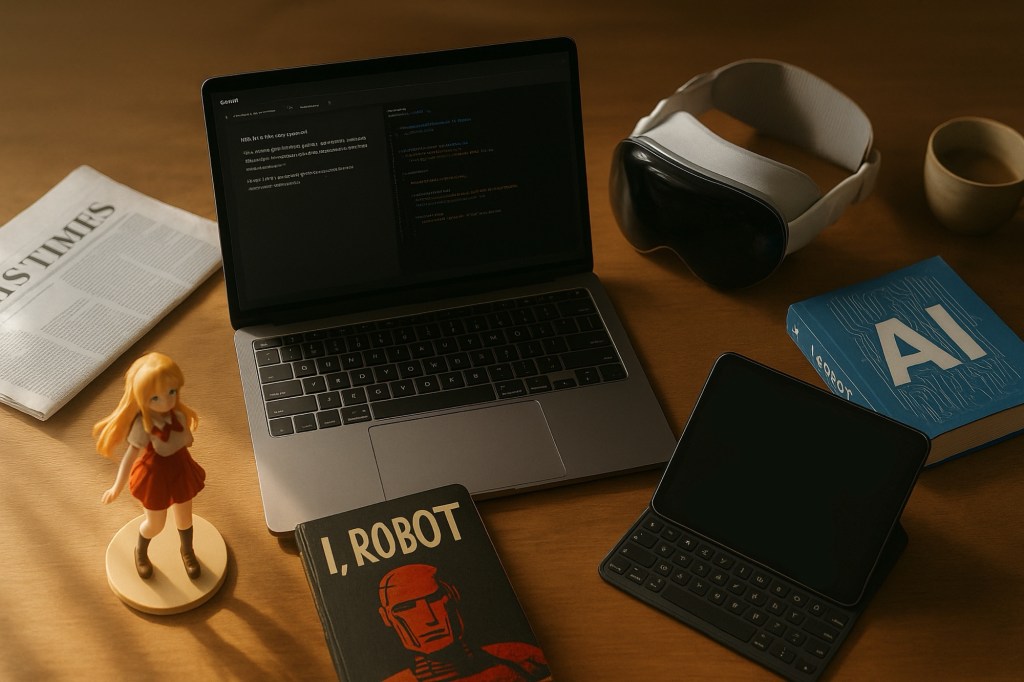
    It’s been a unique experience using Claude’s impressive capabilities alongside reading Asimov’s I, Robot, which foresaw many of our modern discourse around AI safety, and The Optimist at the same time, which has finally begun to chronicle some of Sam Altman’s questionable and unethical moves both at OpenAI and in his private life. The sections detailing his gaslighty, ungenerous, and cruel interactions with his sister Annie ironically reminded me of reading about Steve Jobs’s treatment of his daughter Lisa, in her memoir Small Fry.

    I just passed the part where Dario Amodei and other employees left to start Anthropic. Just as I try to avoid Meta and Google products because of their comparatively weaker stance on privacy versus Apple, it makes sense that some prefer Anthropic over OpenAI for a more cautious approach to AI.

    ===

    My mother-in-law stayed with us this week, which meant getting the newspaper in for her because that’s how some people still get their news. I was shocked to see how thin the physical Straits Times is these days — almost completely devoid of advertising, and on the whole maybe having 20% of the heft I remember from the 90s. It’s also S$1.10 now, up from the 50 to 80 cents I thought it was. Still, it was kinda nice (nostalgic) to sit at the dining table and read the paper in the morning.

    It was also the week where my favorite retro-game-hunting IRL streamer, 4amlaundry, went on a 5-day trip to Kansai, checking out thrift stores and exploring Osaka and Nara. I didn’t want to miss watching it live, so I tried explaining the whole concept of streamers to said mother-in-law, and got her to watch him with me for awhile on the TV, the whole time silently praying that he wouldn’t go look at the display cases of half-naked anime figurines that he sometimes checks out in those stores.

    Thankfully, that didn’t happen, and instead we watched him walk down countryside roads, eat at chain restaurants, and get knocked down by the aggressive deer in Nara. All of that made for some good conversation, so if you get the chance to introduce an elder to Twitch, it’s not the worst idea if you can avoid the NSFW aspects.

    Speaking of shows that you would hope won’t be awkward to watch with your parents or in-laws BUT ACTUALLY ARE, add the latest season of The Diplomat to the list. There’s a lot of cursing (I kinda expected that), and some sex scenes that maybe the producers thought were hot and their audience wanted, but are so unnecessary and desperate that they come across as unintentional comedy. Apart from that, it’s still a fun series that leans into unrealistic political drama, with some unexpectedly good writing (for a Netflix show). Just watch it on your own.

    ===

    I somehow forgot to mention the slate of new Apple products announced last week: M5-powered iPad Pros, a 14” basic MacBook Pro, and a spec-bumped Apple Vision Pro. The product lineup is designed to lead you to the conclusion that you should buy everything, because how do you choose between an 11” and 13” iPad Pro, and a 14” MacBook Pro?

    The 11” iPad size is portable for couch use, but the 13” becomes an advanced desk computer for creative work when paired with the Magic Keyboard and Pencil Pro. But if you’re going to be using it while deskbound, why not get a MacBook Pro with 24 hours of battery life (versus just 10 on the iPad), and the possibility of running local AI models and all kinds of other software that isn’t allowed on iPad?

    Making things harder is the fact that a 13” iPad Pro with accessories costs more than an “equivalent” 14” MacBook Pro, and they’re too costly for an average user like me to justify buying both. So the final decision was to hold out a little longer with my current M1-generation gear, and see what upgrades the 13” iPad Air gets next year — hopefully an M4 or M5 processor, ProMotion, and the aluminum Magic Keyboard currently exclusive to iPad Pro models.

    But bringing the M5 to the Apple Vision Pro makes it a better system to use and own for the next two years, while we wait for the next big leap forward in miniaturization. However as a casual user who only clocks a few hours a week, I couldn’t see myself upgrading for a faster chip alone. The more compelling improvement is a new “Dual Knit Band” that comes as standard, which sorta combines the previous Solo Knit Band and Dual Loop Band into one much-improved design.

    The best part is that this new band is also available as a standalone accessory, so I ordered one immediately for my first-gen AVP. It’s simply a marvel of engineering and feels incredibly premium. The build quality is off the charts, and the Fit Dial they’ve created to independently adjust both the back and top straps might be the most Apple-y thing they’ve shipped on an accessory since the Stainless Link Bracelet for the original Apple Watch.

    Thanks to this more comfortable and ergonomic band, I’d planned to spend more time with the AVP this week, until the vertigo and unusual weekly routine got in the way. Not gonna lie, my first thought during the vertigo attack, after “What if this never goes away and I’m disabled for life?” was “Does this mean I can’t use the Vision Pro anymore?”

  • Week 34.25

    Week 34.25

    In a week that didn’t feel like a lot of forward motion, I realized I spent it looking back on and revisiting old experiences to see if they’ve changed, or if maybe I have.

    • Upon my return from the UK back in 2005, I realized that it was extremely hard to find good fish and chips in Singapore. No one seemed to like splashing malt vinegar and lashing salt over everything; it was always tartar sauce and lemon slices. And then a little place called Smith’s opened at Balmoral Plaza and it was as close to the real thing as you could find here.
    • Earlier this year, it seemed like Smith’s would close down after nearly two decades, another victim of high rents, rising ingredient costs, and a weakened consumer. But the regulars cried out, social media amplified it, and they got a lease extension into the summer. In a recent turn for the better, the landlord capitulated and they got a good price on the place for another year. That’s about the time I started seeing more advertising from them on Instagram.
    • You can guess what happened next (for someone who used to make ads, I’m surprisingly susceptible to suggestion). I dragged my parents down for dinner — my first visit since 2018, according to my records on Swarm. Yes, I was part of the problem, but here in Singapore I don’t exactly feel like eating it every week the way I once did! Prices are indeed a lot higher than they used to be; S$30 for a cod and chips stings like lemon in the eyes, but I don’t blame Smith’s. The Guardian made a whole video showing things aren’t much better back in the UK. The food was good, by the way, save for some watery curry sauce that I wouldn’t bother with again. I know it looks a little light on the chips above, but we all left satisfied.
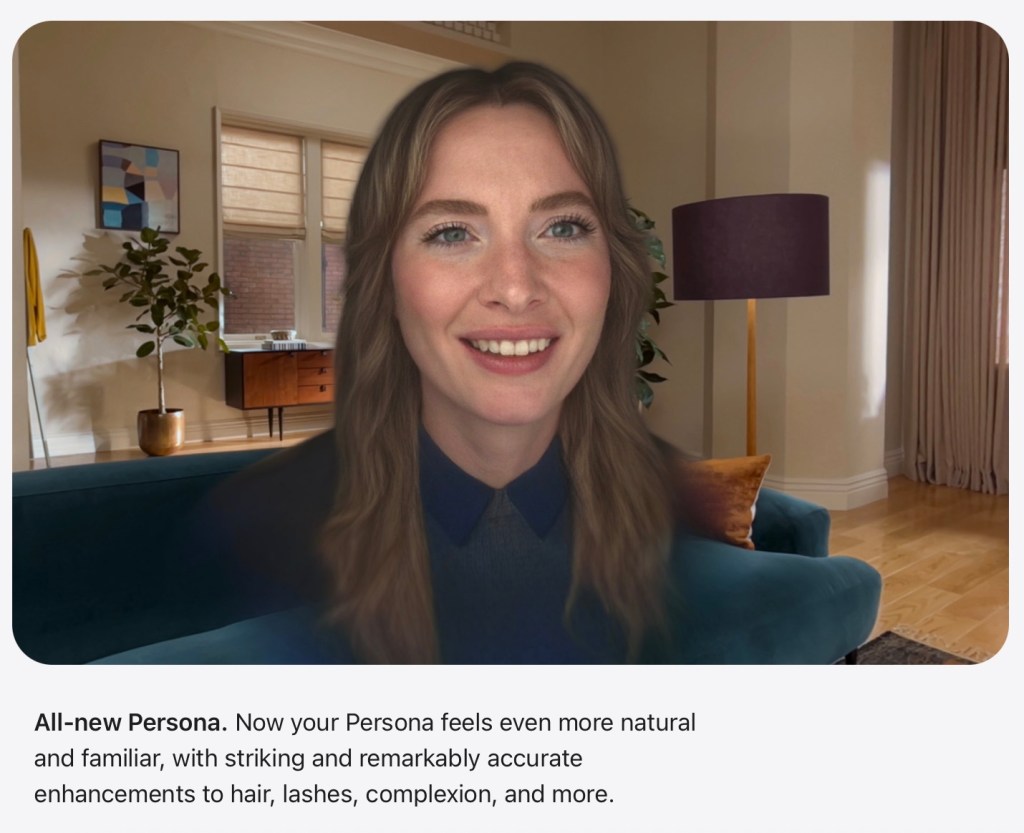
    • As promised last week, I threw caution to the wind and upgraded my Vision Pro to the developer beta, mostly motivated by the need for a more realistic Persona. And it really is a huge upgrade in resolution and fidelity from exactly the same scanning process. There’s even a pair of glasses in there that looks just like mine. Disappointingly, the UI looks exactly the same, and neither the new design language nor the Liquid Glass material have been implemented. This is a curious state of affairs: all other platforms have a new look and feel that were purportedly inspired by visionOS, but they’re now “further ahead” than visionOS itself, which risks looking dated with more opacity and frosting. I sure hope this isn’t because glass elements don’t actually hold up in a mixed reality setting. I can see how the bright chromatic aberrations might actually be too distracting when they’re 8-feet high in your living room.
    • One of the earliest apps that I installed upon getting my Vision Pro was Explore POV. It’s a library of immersive (16K, 180º, 3D) videos shot in some of the world’s wildest and most beautiful environments. Think forest trails in New Zealand, blue Caribbean waters, the Swiss Alps, but also the Eiffel Tower. As the name suggests, they’re first-person POV and mounted on someone actually hiking the mountain’s edge and so on. Depending on your relationship with heights and VR motion, the effect can range from thrilling to nauseating. When it first came out, there were maybe just three videos on offer, and I didn’t really take to it because of all the other apps and content I wanted to check out first.
    • I went back into the app this week after hearing that they were running a summer sale, and decided to pay S$50 for six months of access. They’ve leveled up their video production game, and the latest videos are shot with Blackmagic URSA Cine cameras. Their crew are actively shooting around the world and there’s even a community poll for people to vote where they should go next (I voted for Nepal). It’s third-party stuff like this that we really need to see succeed for the long-term success of the platform, and unlike some casual iPad game ported to 3D, it really shows off the magical qualities of this device.
    • Thanks to my book club voting to tackle David Mitchell’s Cloud Atlas next, I’m breaking three of my usual rules. One, I don’t really make time to re-visit books I’ve already read, but given that the last time was in 2014, I’m interested to see if it’ll feel different now. My memory of it is roughly “very good, sort of like The Fountain (2006), but also claustrophobic and harrowing somewhere in the middle”. Two, I usually cheat at book club and read the whole book at once rather than stopping where agreed each week. I thought it’d be nice to experience it at the same time as everyone else for a change, which leads to my third broken rule: Only reading one book at a time. Since Cloud Atlas is going to take about six weeks, I’ll have to read another book in parallel if I’m going to read anything else at all.
    • I just finished Nick Harkaway’s Tigerman, which is such an odd duck I don’t know how to tell you about it. It’s only my second book of his that I’ve read, and so different in setting and language from Gnomon, which I also enjoyed. He blends real-world references with imagined details that create a sense of — not fantasy exactly, but unreality. Within that space, absurdist humor sits comfortably alongside themes of family, colonialism, mental health, geopolitics, and bursts of comic-book action. 4 stars.
    • The year has so far seen a lot of exciting music releases, and there are even more to come. I’m really hyped for the next few drops from the “Legend Has It” series. The albums from Raekwon and Ghostface Killah have already dropped, but new material from De La Soul? Nas and DJ Premier? Oh my.
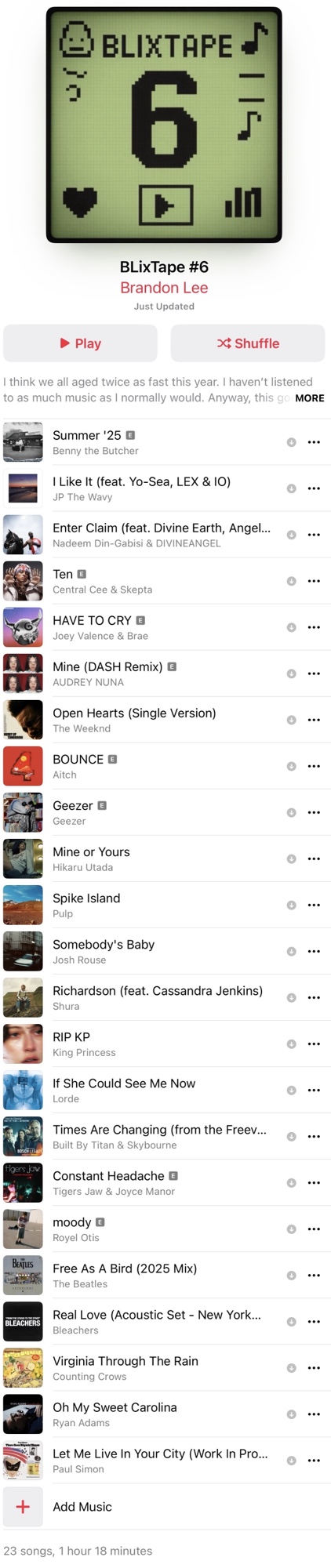
    • Despite (or because of?) all the great stuff coming out, I feel like I haven’t spent enough time listening to music this year. Maybe it’s the lack of commuting time, which is where I would normally get to put an entire album on and listen closely. So it’s also taken me from January till now to finish BLixTape #6, the latest in my poorly named series of “currently listening to” playlists. Hopefully the next few will be quarterly. Here it is on Apple Music.
  • Week 24.25

    Week 24.25

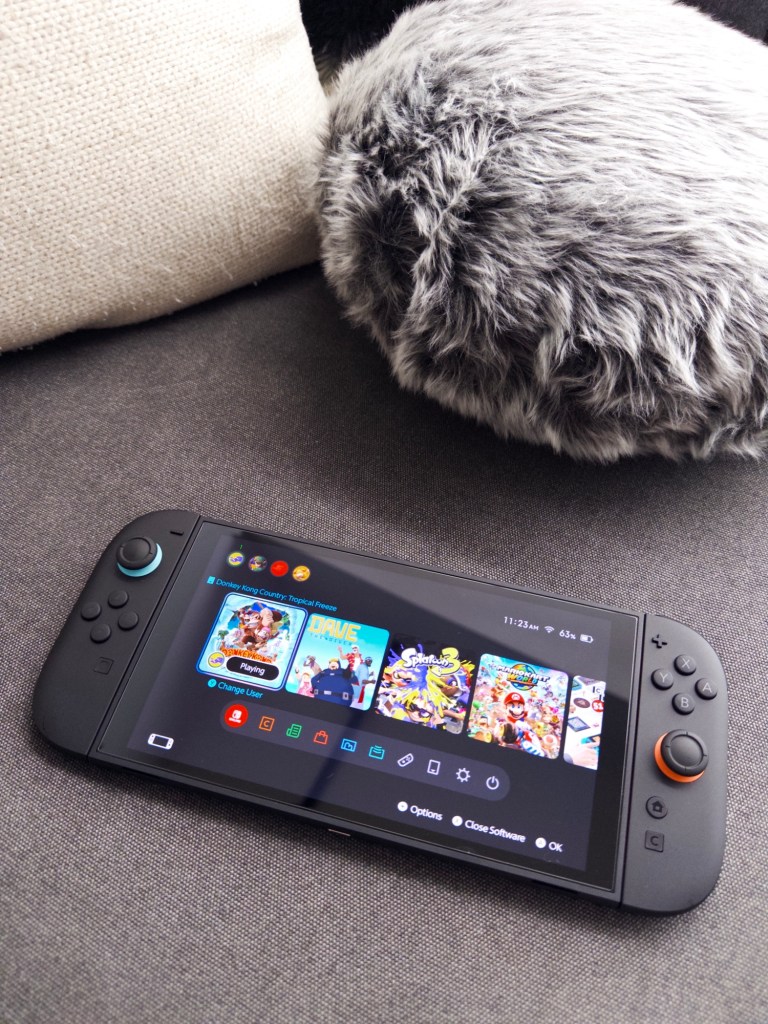
    • My Switch 2 finally arrived on Monday, praise be. It turned out to be an imported European unit, so it has the right kind of power plugs, but the included download code for Mario Kart World would only work with an EU eShop account. It didn’t take long to make one, but it’s yet another needless fragmentation of my digital footprint.
    • It’s a fantastic improvement on the original Switch. It feels more solidly built, and the magnetic Joy-Cons don’t creak and give as much when supporting the console’s weight. The screen is enormous but since the original wasn’t exactly pocketable anyway, who cares? It seems powerful enough to keep up with game requirements for easily another five years. The only regression is battery life, which they’ll surely fix with a new model two years from now.
    • I have yet to play anything on it that graphically pushes into PS5 territory with ray tracing and photorealism; although running Mario Kart World at 60fps in 4K is definitely not something the old Switch could do. That same smoothness extends to Splatoon 3, which got a Switch 2 upgrade patch on Thursday for the franchise’s 10th anniversary, and it feels amazingly fast and fluid on the new hardware. The once painful load times have been reduced to almost nothing, which is nearly worth the price of admission all by itself. At the very least, reviewers agree it’s more powerful than a Steam Deck.
    • Bert was back in town on a last-minute trip, so we met up with some of the old gang for beers and the kind of talk that middle-aged people will get up to if you let them: aging parents, how everything was much better before, and how we’d like to retire voluntarily before AI forces us to. Jussi was once again unable to make it, but he had the acceptable reason of being out of the country.
    • It was WWDC week, and with the comprehensive OS updates that were announced, it wouldn’t be an exaggeration to say that every Apple product experience will be changing this fall. I’ve had several conversations about the new cross-platform design language system they unveiled, which doesn’t have a name but is anchored by a new digital material called Liquid Glass, so people have just been calling it that. I wrote last week that I hoped the new look wouldn’t come with regressions in usability, specifically thinking about legibility and interaction clarity, but those are exactly the issues that everyone has been pointing out in the first developer beta. I’m hopeful that they’ll be able to moderate some of the more extreme decisions before the launch, but there’s no turning back. Like it or not, this is just how things are going to be for us users. What are you going to do, move to Android?
    • While talking to Michael again, one of us offered that Liquid Glass is simply a flex. It’s Apple building a visible moat with their superior silicon. Every iPhone, iPad, and Mac made in the last five years possesses power-efficient cycles to spare, which can’t be said of Android devices, save for a minority of the highest-end flagship phones. So when you look over someone’s shoulder in public and see morphing glass buttons accurately refracting the light coming off other elements on their screen at 60 to 120 fps, you’re looking at the digital equivalent of fine stitched leather. Luxury pixels. Veblen UI. Android manufacturers can’t follow Apple down this road without bifurcating the experience into cheap and premium versions, or forcing tradeoffs like reduced battery life and jankier animation.
    • The iPad got the most extreme makeover of all the platforms, and I’m a mixture of relieved, disappointed, and excited. Relieved that they’ve given up on trying to define some new paradigm for managing multiple apps on a screen; turns out the answer is just the same overlapping windows we’ve had since the first Mac. Mildly disappointed that if they couldn’t crack it after some 15 years, then maybe there just isn’t a better way. The universe might be more constrained than we’d hoped. And excited that the iPad will now be a truer laptop replacement for the majority of people, and with that increase in adoption perhaps we’ll get developers excited to build new kinds of experiences for it.
    Screenshot from Apple.com
    • As a Vision Pro owner, I can’t wait for the improved Personas, sharing virtual spaces with people nearby, and the new “spatial scene” rendering from 2D photos. I’ve already spoken to some people in inSpaze who are rocking the new Personas, and they look 10x better and more realistic than the old ones. In fact, it’s given rise to a weird social dilemma that can only exist in this age. I’ve known these people for a while and we’ve talked with each other quite a bit, but suddenly overnight, their faces have changed and it feels like I’m meeting them for the first time — or realizing I never really had. One person in the group chat looked younger now that his Persona got more accurate. Another person looked older and more intense than his previous Pixar-esque Persona suggested he was. They mentioned feeling slightly uncomfortable with how realistically they’re now presenting — the opposite of the safety that I described back in August last year: “the use of Personas creates psychological distance; it’s you, but it’s also more a puppet that looks like you.” Well, now it’s just your real face for everyone to see. I apologize in advance.

    I’ll leave you with two videos from Pulp, whose comeback album More continues to surprise me by being actually good, as if the band hadn’t gone anywhere for the last two decades. The first single has a great video (above) that uses generative AI in the best way possible. The second video below is a live performance of an old favorite, one of many appearances they’ve been making in support of the new stuff.

  • Week 23.25

    Week 23.25

    • Last week when I said ‘God willing, my Switch 2 will be delivered on Friday’, I actually meant to say ‘inshallah’, and so, as punishment, it didn’t arrive. And because Saturday was a Muslim public holiday, the postal service didn’t deliver it over the weekend either. Why didn’t it come as promised? The seller made a real mess of things, opting for Standard instead of Express delivery (one working day vs. two hours), but that wasn’t even the worst part. They canceled one of my two orders at the very last minute, one I’d made for a friend, and offered no apologies apart from saying it would come at the end of the month when it’s officially released locally. They obviously took more orders than they had supply for! The name of the vendor is “Unrival SG” on Amazon, so use that knowledge how you will.
    • Ironically, I ordered a Japanese import Pro Controller 2 off Shopee on Thursday, and that arrived on Friday with no issues. As everyone has reported, it feels amazing — possibly the best-feeling controller I’ve ever used, especially its buttons and thumbsticks. Everything is dampened and silent; the amount of tension seems just right. The only thing that could improve this (for me, with my big hands) would be making it more like the PS5’s DualSense in size and hand feel.
    • I’m hoping it’ll come on Monday instead, which would make that a jam-packed day what with WWDC after midnight. I’m not expecting any new hardware or life-changing software features, so the main thing for most people will probably be the unified redesign. I really hope they smash it, and not ship a visual refresh that turns out to be a regression in usability.
    • Without a new console in hand, I thought I’d pass the weekend by starting on Like A Dragon: Infinite Wealth (PS5), the 8th game in the Yakuza series. It’s one of the highest rated RPGs of all time, sprawling in scope and packed with too many things to do, including “minigames” that are basically full-on Animal Crossing and Pokémon parodies.
    • But it turns out I still like the idea of console gaming more than the reality. Within an hour, I’d quit and gone back to reading manga and watching a guy hunt for retro games in Book-Off.
    • Kim is/was away for work again, and the weather has been rough (forecasted to touch 35ºC at some point this month), so I’ve mainly stayed in most days. Exceptions were made for a Korean chicken meetup and a couple of evening walks. The Vision Pro got an above average amount of use this week as I’ve woken up early enough to meet the American users I know on inSpaze, and because I wanted to watch a bunch of films in a theatrical environment.
    • The first I should mention was Sinners (2025), which was probably overhyped because I didn’t think it was the greatest film of the last decade or anything, although it was very good. What took me out of the moment was thinking about how it’s so structurally and thematically similar to From Dusk Till Dawn (1996), another film that delightfully switches gears halfway to become a vampire story out of nowhere. When I saw that as a teenager, my mind was blown. I didn’t think they put money behind films with premises that audacious. I suppose Sinners is that for a new generation.
    • The next was The Zone of Interest (2023), an A24 Jonathan Glazer film that got a lot of buzz at Cannes the year it came out, but I put it off because the subject matter seemed too heavy. It shows the unnervingly normal family life of the commandant at Auschwitz, with wife, kids, and servants in a home just outside the camp’s walls. As screams and gunfire are heard in the background throughout the day, and the ovens pump out smoke and fire at night, they just pretend like nothing’s wrong and it’s probably a more effective horror than setting vampires loose.
    • I was primed to finally confront it because I watched Alain Resnais’s concentration camp documentary Night and Fog (1956) on MUBI last Sunday — I didn’t mention it at the time because I was honestly too traumatized. For a 30 minute film, it packs a lot of unspeakable horror, images of brutality on a scale that you’ll desperately want to believe are a one-time aberration in history. Sadly, while the efficiency and nature of the gas chambers were perhaps unique to Nazi Germany, you just know that this is no different from any of the genocides that have taken/continue to take place. Watching it, you’ll believe that something is intrinsically broken in human nature, because even the victims of such crimes can’t even be counted on not to do the same to others.
    • I’ve been enjoying three new albums. The new Counting Crows which I’d been saving, Butter Miracle, actually might be a return to form based on my few spins so far. Its main issue is the difference in vocal sounds between the two halves, maybe owing to the fact that the latter half was recorded and first released as an EP a couple of years ago. But I’d say it’s their strongest work since Hard Candy.
    • Pulp is also back with their first album in 23 years, More, and it’s also a very strong comeback. The kind you don’t expect from an old band putting something out in the post-Covid era: they’re usually forgettable and anaemic, you know, like U2 albums after the 90s. But More might be classic Pulp — playful, raunchy, cynical yet open-hearted — with just a couple more decades on top.
    • Shura is also back with a new one, I Got Too Sad For My Friends, and it’s got some lovely songs as usual, recalling Fleetwood Mac (and by extension, recent Clairo) and even a little bit of Prince, with her use of synths.