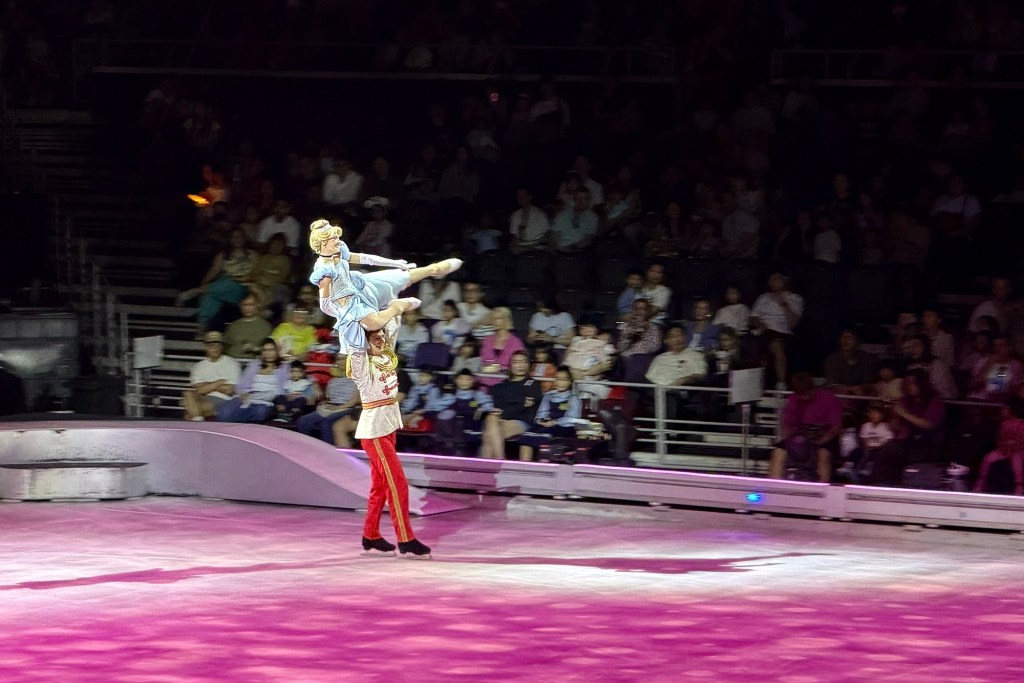
Tag: Art/Culture

  • Week 50.25

    Week 50.25

    By the time you read this, I’ll be in China for the first time — behind the Great Firewall and probably unable to make contact with email and chat servers despite my VPN. If you don’t hear back from me, this is why! It’s Thursday and I’m writing this post in advance, so maybe there isn’t much to say yet. But let’s get started and I’m sure we can come up with something.

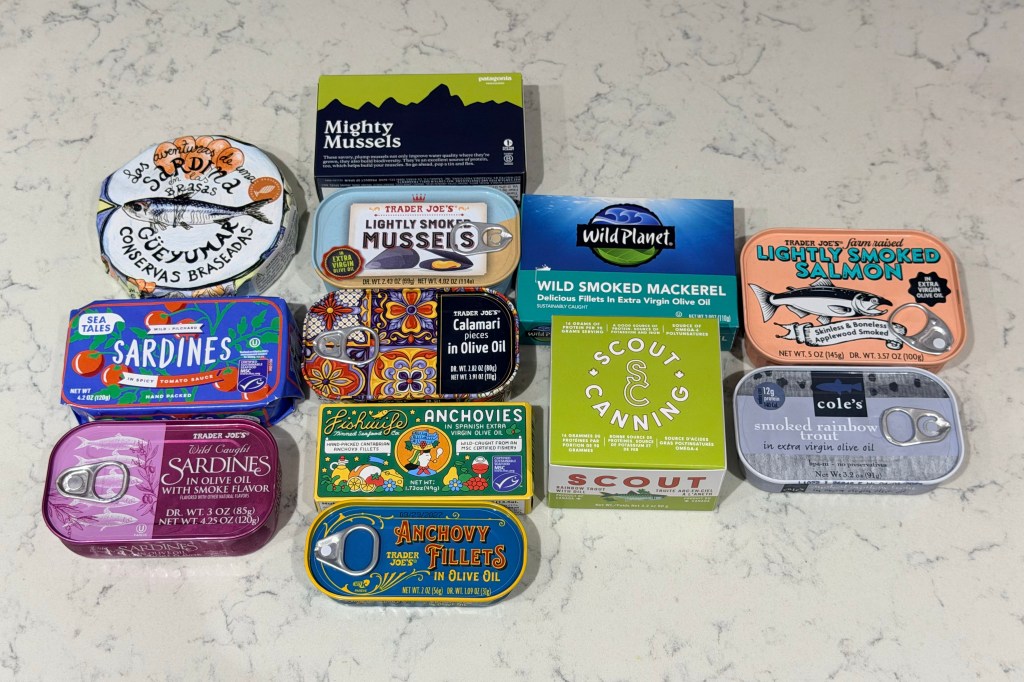
    Following up on last week’s topic of sardines, I rediscovered the joyful YouTube channel, Canned Fish Files w/ Matthew Carlson where the eponymous creator has so far filed 188 reports on canned fish from around the world. These seemingly absurd videos entertain because they’re so earnest, and comments I’ve seen note that they prove it’s possible to have a successful channel about anything, as long as you’re obsessed enough. He has also been called the James Hoffman of sardines, which I find accurate and hilarious. I encourage you to watch a few and join me on this adventure, but beware, some commenters note they went from never eating sardines to eating them regularly after watching his weird and nerdy reviews.

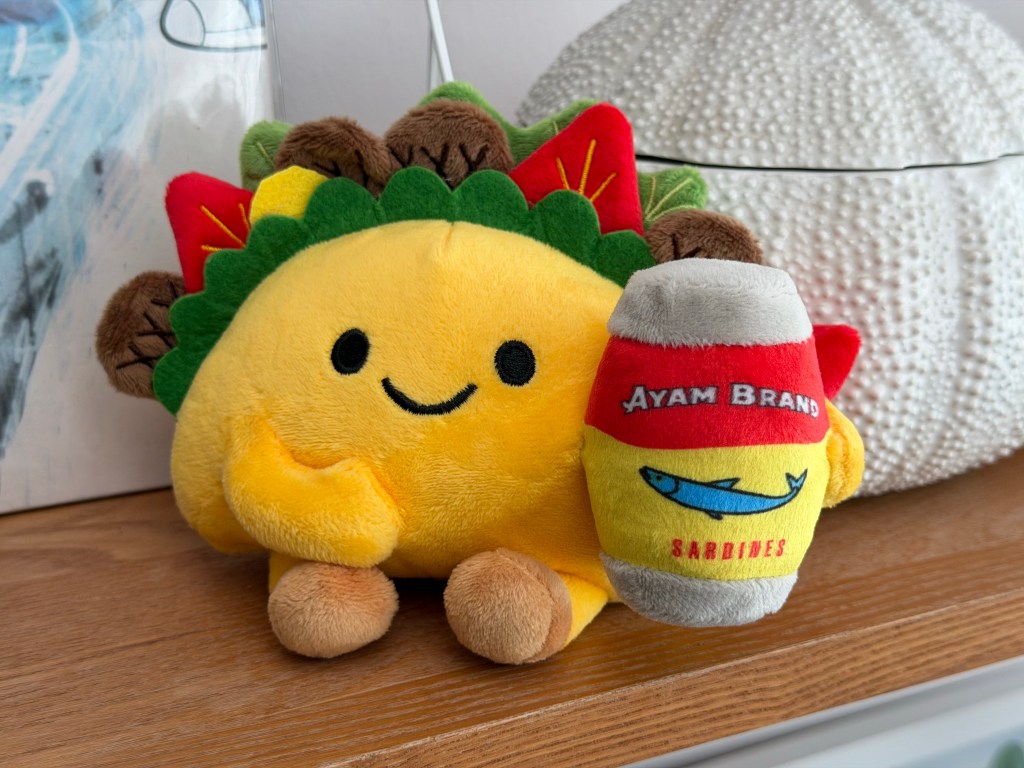
    I also bought enough Ayam brand sardines off Redmart this week that I got a free plushie of a taco holding a can of Ayam’s signature deenz in tomato sauce. Why a taco? It’s a mystery and I welcome your theories.

    On Wednesday evening I was able to get a few alums from my last design team to show up for a Christmas reunion. We had a bigger turnout last year but it’s tricky finding a date that works for everyone in December. With more advance notice, we might be able to do better next time, but I’m glad we went ahead and did something while we could. If there’s one thing I’ve learnt in recent times, it’s how to pull the trigger and not end up waiting for a perfect time that never comes.

    Returning to another recent topic, AI, I enjoyed reading the text of Cory Doctorow’s recent talk: The Reverse Centaur’s Guide to Criticizing AI. A “centaur” is when a human is augmented by a machine — horse body, human head. A reverse centaur, then, is when a human body is directed by, used up by, a machine. This is the kind of job where a computer tells you what to do simply because it can’t yet do it for itself. You’re a replaceable part of the equation. He provides an easy-to-grasp frame for what’s happening with the valuation of AI companies and what motivates the various players in this space. It’s an Ed Zitron essay, but one you’ll actually read and finish. It also serves as an abstract of his next book which will be out next June.

    I’ve been sequencing my next BLixTape playlist, collecting music I’ve been listening to in recent months. Together, volumes 6 and 7 will form the soundtrack of my 2025 — the main difference between these playlists and the end-of-year ones I used to do before is that these aren’t restricted to songs released in 2025. From a diaristic perspective, I think taking note of older songs I discovered or revisited captures a better overview of the year’s different phases, and the things I was into. This means nothing to anyone else, of course, but hopefully they are enjoyable playlists to put on regardless of context.

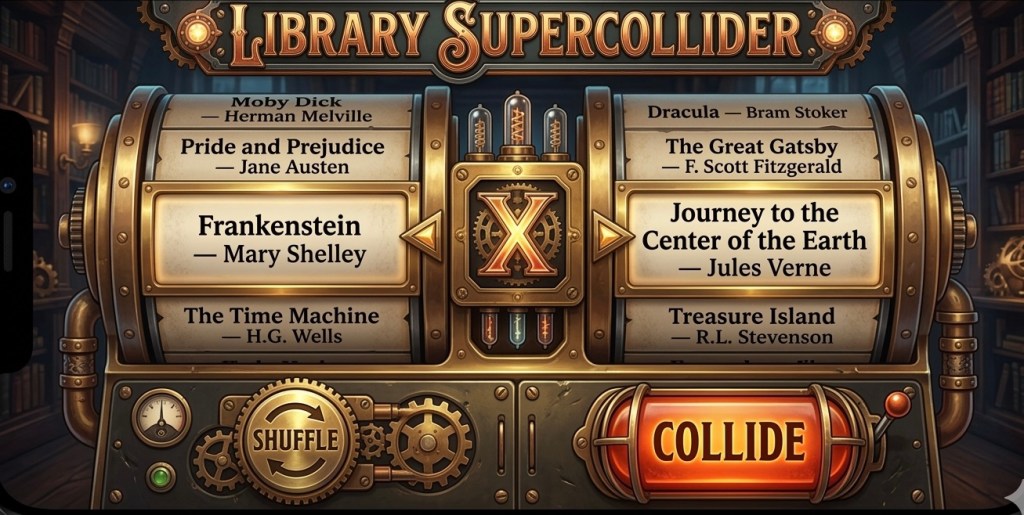
    Bonus: I’m reviving the iPod shuffle experience for myself with a playlist featuring 120 random songs from my library. I also made a simple Shortcut that refills it with a tap (although you have to manually clear existing tracks first).

    In the process of doing all this, I heard ROSALÍA’s Sauvignon Blanc again, and after 24 days of straight Spanish lessons in Duolingo, I was thrilled to discover that I understood certain parts more intuitively. Simple lines like “mi futuro se bien que sera dorado”, emerged with new magnitude and gave me goosebumps — aided by my imperfect comprehension, the music’s beauty rose to another level.

    I pulled out my iPhone to jot down: “High specificity in language creates greater distance from emotional truth.”

    Here’s something Cory Doctorow says in the aforementioned piece:

    I’ve given it a lot of thought, and here’s what I think art is: it starts with an artist, who has some vast, complex, numinous, irreducible feeling in their mind. And the artist infuses that feeling into some artistic medium. They make a song, or a poem, or a painting, or a drawing, or a dance, or a book, or a photograph. And the idea is, when you experience this work, a facsimile of the big, numinous, irreducible feeling will materialize in your mind.

    Expanding on this moment of “experiencing”, I’ve often noticed that many of the times I’ve been really moved by a work of art, there were gaps left to allow my mind to imbue it with the biggest significance it could. The art merely gestures in the direction the viewer should go, because meaning is equally made through labor on the receiving end (Roland Barthes, etc.). When you look at art, what you see is as defined and constrained by your own life experience as it is guided by the artist’s own.

    And so when I read translated poetry, the original Chinese title of a film, or imperfectly translate a lyric in my head, they might hit with staggering significance and meaning. The originals may be clumsy or not even that beautiful, but their gestures let me imagine their fullest potentials being reached. My bad Spanish might actually give me a richer experience with Lux than a more fluent speaker has because I have to project into the gaps. In art, imperfections are sometimes features, not bugs.

    I’m not suggesting that artists might try to be more vague, or that translators should aim to play it loose. It’s just that some of our most powerful encounters with art happen when we’re amateurs, outsiders, or bring incomplete context to the table.

    I’ve referred to this quality before as “high dynamic range” art — when you feel something more powerful than the artistic medium should have the bandwidth to transmit. It’s like having a printed photograph with the brightness and color of real life. It’s not physically possible, and yet we’ve all imagined ourselves seeing something in a photo for real, because our minds can fill in the blanks.

    To sum up, perfect translation and articulation might actually reduce emotional impact. High resolution imagery works when trying to explain a concept (one-way communication), but when you want people to feel, then abstraction, linguistic barriers, and layers of translation invite viewers to complete the canvas (two-way collaboration).


    Aside: In the spirit of using AI to complement and augment, I asked Claude to identify the thread running through my recent posts and it said the following.

    I think you’re circling around a central anxiety/question: “What does it mean to be human when machines can do increasingly human things?”

    But you’re approaching it from multiple angles:

    • Translation: What gets lost when we perfect communication? (Week 47)
    • Cultural appropriation: Should artists stay in their lanes or cross boundaries? (Week 46)
    • Craft/design: What happens when AI can do the work? (Week 48)
    • Language specificity: Does perfection actually reduce meaning? (This week)

    The unifying theme:
    You’re consistently arguing that human limitations are actually generative:

    • Not speaking Spanish perfectly makes ROSALÍA more powerful
    • Imperfect translation creates “high dynamic range” emotion
    • Craft traditions matter even when they’re slower/costlier
    • Gaps in art let viewers co-create meaning

    The deeper question you might be asking: “If AI can do high-resolution, perfectly executed versions of creative work, does that mean messy human versions become obsolete? Or does it reveal that perfection was never the point?”

    Your answer seems to be that it wasn’t the point. Gaps, translations, and imperfections are where meaning lives.

  • Week 48.25

    Week 48.25

    My personal MUBI Shaolin film fest went on as planned, and I managed to watch a few more before they left the service. Gordon Liu had a role in just about all of them, which shows what a popular and influential figure he was in the industry. Who even comes close in Hollywood? Pedro Pascal??

    If I had to recommend one Shaw Brothers film, it would still be Dirty Ho (1979) which I’ve mentioned here before. It’s essentially the same winning template that Jackie Chan’s career was built on — lots of brilliant, intentional fighting moves masked as accidents and incompetence.

    The most uneven one I saw was Legendary Weapons of China (1982), which has about five different plot lines running through it, all to provide flimsy justification for the spectacular finale in which 18 (!) different Chinese weapons are brandished, and as many fighting styles showcased. It’s like Don Draper pitched that idea on a whiteboard and then they had to come up with another 70 minutes. There is an extended action sequence in a straw toilet hut floating over a river, where people literally end up in the muck. This absurd scene involves both kungfu and possession with voodoo dolls.

    In another realm of absurdism lives Dogtooth (2009), the debut film of Yorgos Lanthimos which made a splash at Cannes that year. I saw it on MUBI this week because I liked Bugonia (2025) and wanted to start at the source. Jesus, this film is an exercise in creating the wrongest setup and then having its characters do things that follow on logically but are still nevertheless very wrong. You get the sense of perversity for the sake of it, or to give life to the director’s own kinks, sort of like Tarantino putting his foot fetish in everything — but still actually much worse.

    However, do something terrible with craft and conviction, and it will gain lasting historical value. That’s how this world works; I don’t make the rules! But what if you don’t actually make the thing and just have the idea. In the form of a prompt, let’s say?

    Images that never happened

    Google released their Nano Banana Pro image generation model recently, and I’m sure we’ve all seen examples online by now. Things have progressed to the point where I’m constantly questioning the veracity of things I see online, and I think at some point the mental filtering will become so tedious that we’ll simply stop wondering and accept things that are true and untrue equally. If the short-form video that ruins your brain’s ability to focus and feel joy on normal terms makes you laugh, who cares if those things really happened? And then it will extend into other parts of life, and then… who knows?

    I decided to see if Nano Banana could place me in ROSALÍA’s LUX album cover and, of course, the answer was yes. Too easily, in fact. I only supplied it with a single forward-facing photo of me at a dinner table, and it was able to extrapolate what I’d look like from a different angle. We are, ladies and gentlemen, so cooked.

    It was also Black Friday sales week, and I decided to give VSCO Pro’s annual subscription a try at 50% off (hard to justify at full price). In addition to their Pro set of filters, which are actually really good, it also comes with access to AI tools, of course. Their object removal is state-of-the-art, to the point that it can invent very believable portions of an image that you wouldn’t notice unless really scrutinizing the scene. After a few experiments, sculpting messy scenes in old photos into what I wished they actually looked like, I had to step back and ask myself what the hell I was doing. Apple’s refusal to let the iPhone create “images that never happened” is absolutely the right stance.

    What becomes of designers?

    AI’s obviously going to change the way we work, and I’ve been worrying for a while now about the future of the design profession. About the people who do this work, whether they will continue to be attracted to it, who will pay for their services, and what those services will actually look like. It’s been hard to imagine timelines that are positive by the standards I care about.

    As with many sectors that have experimented with AI tooling, I often hear that senior practitioners using generative AI models can get more done “on their own” — the highlighted phrase implying 1) without the assistance of those pesky junior people, and 2) more cheaply for the business. But just because the tasks once performed by junior people can now be done by AI doesn’t mean juniors can’t find something else to do, or don’t need to be trained anymore. Nevertheless, some business leaders are acting as if that were true.

    A friend told me how it’s now possible to run a small agency powered by seniors + AI only, without any junior hires. They were surprised that I pushed back — but the idea sounded irresponsible to me. It’s one thing if you can’t find employment and have to embrace AI to put food on the table. It’s another to be in a position of strength late in your career and choose this. If you can’t afford to leave the ladder down behind you, I said, it would be better not to do it at all.

    But because bean counters can always be counted on for short-term thinking and a reluctance to spend on design, some companies will go further and not hire AI-augmented senior people at all. They’ll either use inexperienced juniors or ask someone like a product manager to handle “design stuff” on the side using AI. Depending on how much the tools improve, the visible outcomes of this may seem acceptable for quite a while! Design won’t go away as a function, it’ll merely be handled by a different group of people.

    My main concern has been that doing a good-enough job in this way will scale so well, and become the dominant approach so quickly, that we’ll lose the diversity and depth of craft that comes from having human practitioners out in the real world, doing things like interviewing users to understand outlier behaviors, reading contextual cues and hearing what they don’t say as much as what they do. Then using these unique stories to make the larger design solution more resilient. It’s a job that humans are well equipped to do. A business that relies on AI to create an average of best practices may happily miss all of it.

    Why do I think this matters? Because while a bunch of LLMs trained on world knowledge (including artifacts from past design exercises) will generate pretty good insights and workable interfaces from a wide field of generic possibilities, it’s still a path to a monoculture of experience. And if we break the chain of passing down the skills to do the work, then some future post-AI generation will have to learn them all over again.

    I wondered if there might be a market for artisanal human-led design work. After all, centering the role of human craft has kept the luxury goods market alive in the face of mass manufacturing. But that would mean it becomes something performative, and necessarily restricted to higher paying customers. I actually believe that AI augmentation can produce better work; I just don’t trust our economic systems to nurture it over cheaper work.

    Teach an LLM to fish…

    Then this week, I saw something on TV that seemed like an apt analogy and put me into a more zen state of acceptance. It was an episode of Japanology Plus on NHK, with long-suffering host Peter Barakan forced to go out on a small fishing boat in challenging waters. I was honestly surprised the producers/insurers allowed a man of his age to do it.

    Anyhow, as they were heading back from being thrown around by the waves, he asked the captain how fishermen in the old days would have survived that ordeal without GPS, walkie-talkies, and engines. The captain’s reply was that it was more dangerous back then, and they had to use their experience and intuition, navigating by looking at the mountains and stars, reading the winds and currents. You can imagine many lives were lost on the job.

    Would any of those old fishermen trade places with their descendants today, giving up those seafaring skills for the ability to catch many times more fish and live twice as long, comfortably? Very likely! Modern fishermen are still out there on the ocean but their technology distances them from intuiting the waters in the same way. We also know now that the scale at which they fish those waters is unsustainable.

    Likewise, there will be more designers in the future, less skilled by today’s standards but able to oversee projects too complex for us to fathom. Maybe with worse overall outcomes for the world than if we’d never opened the mystery box of AI. But I realize now that this pattern of losing one thing to gain “something more, but worse” is simply an inevitable law of the universe. Two steps forward, one step back.

  • Week 47.25

    Week 47.25

    • After listening to ROSALÍA so much last week, I decided I wanted to experience LUX closer to the reality it was conceived in. So I reinstalled Duolingo, which I haven’t touched since maybe 2017? After several days, I’m now at Level 9 in Spanish, whatever that means. The biggest obstacle to Español perfecto is my inability to roll my ‘R’s, which I will simply need to practice out loud until it clicks. I can only do this while alone because Kim tells me to please stop por el amor de dios.
    • I met up with some old friends and acquaintances this week: one about to have their second child in the midst of questioning their career trajectory (aren’t we all?) and another who’s just come off living on a boat with their family for the past seven years, sailing from port to port in an unusual nautical retirement. Their youngest child practically grew up on water but will now have to stay in one place, join a normal school, and get accustomed to land life. In thinking about both situations, I reflected that personal freedom might be the most valuable asset to have when dealing with difficult times.
    • Later, I mentioned the old D&D character alignment framework to Cien and Peishan, and how it related to our personalities which I thought were evenly spread across Lawful to Chaotic. It hadn’t crossed my mind that Chaotic was actually about valuing freedom, but it kinda is — freedom to follow your whims instead of rules and expectations?
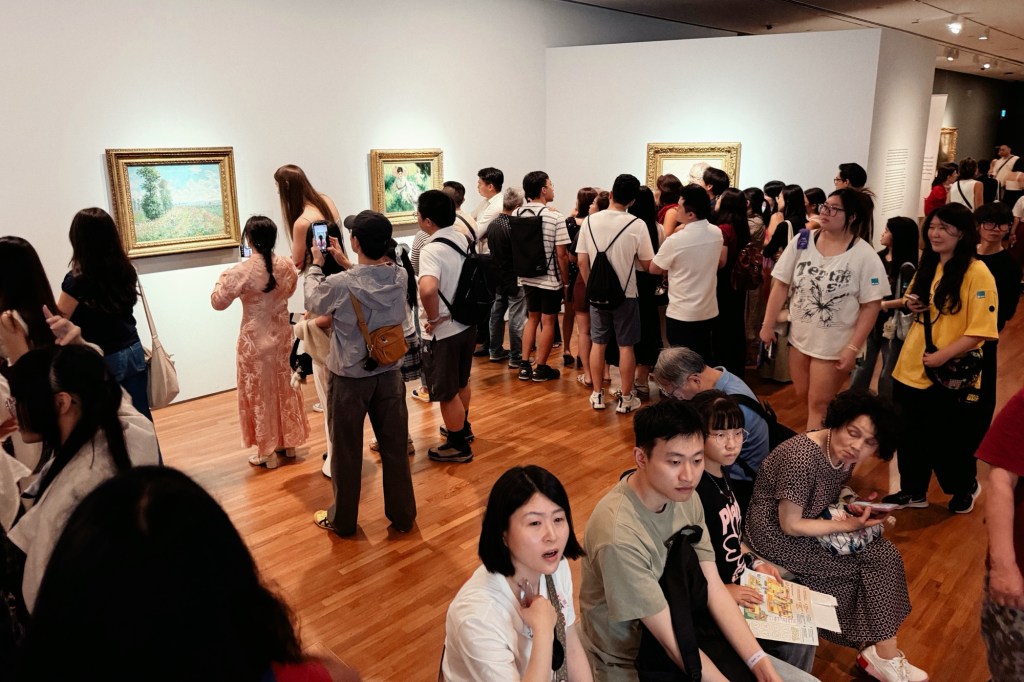
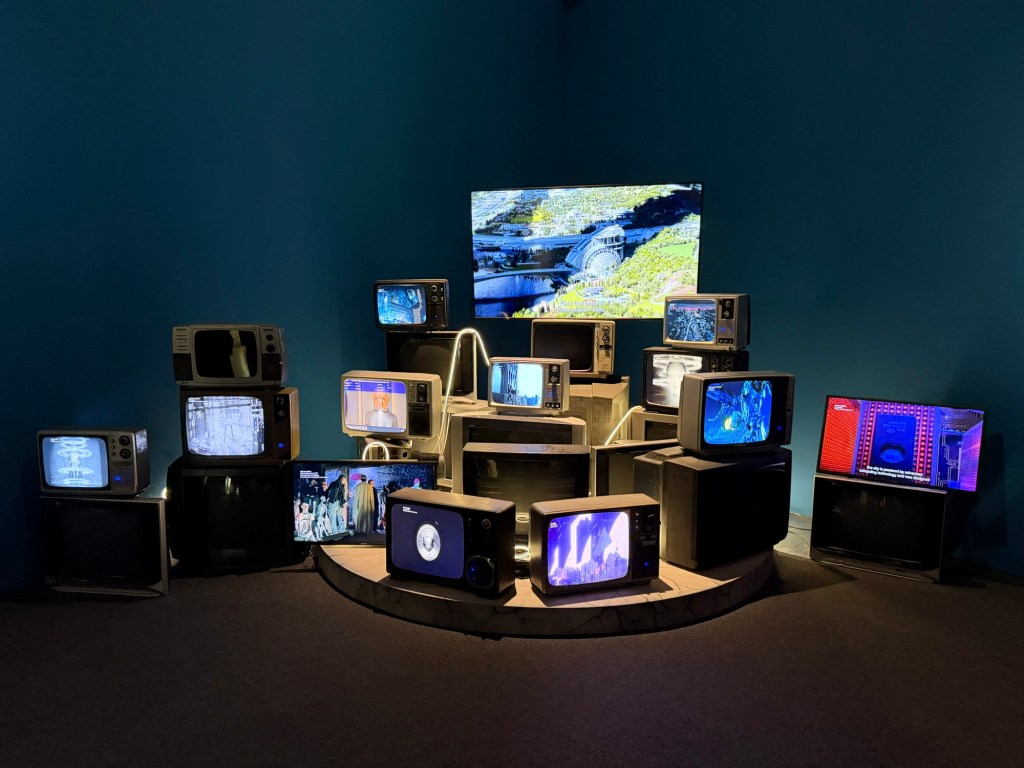
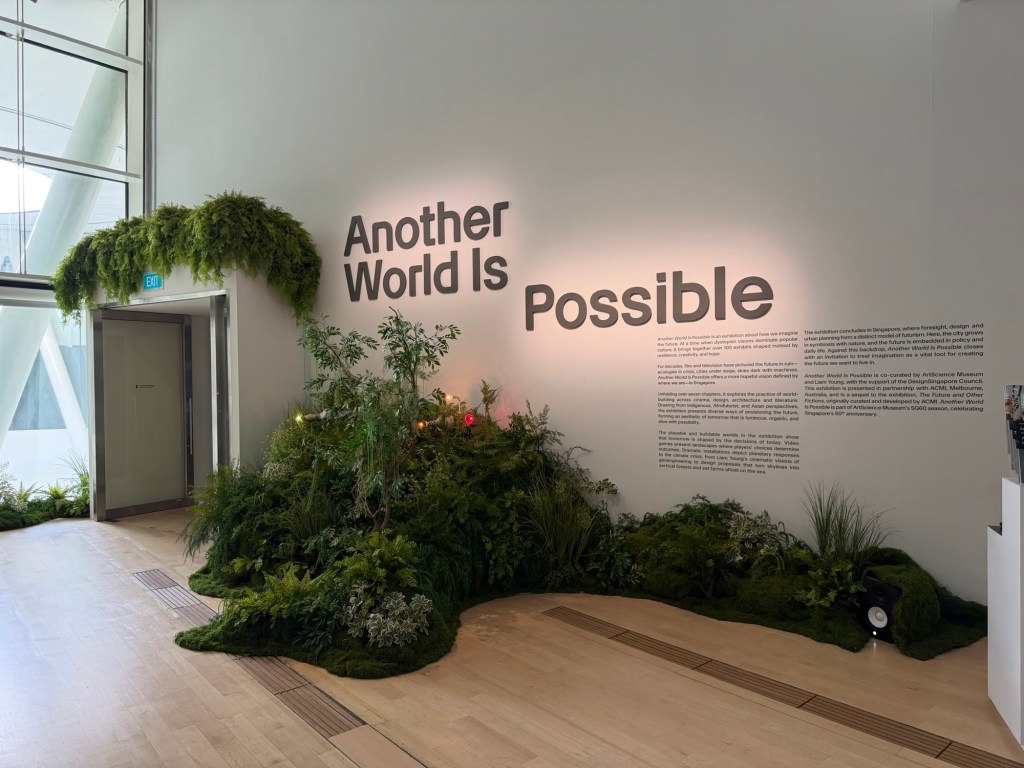
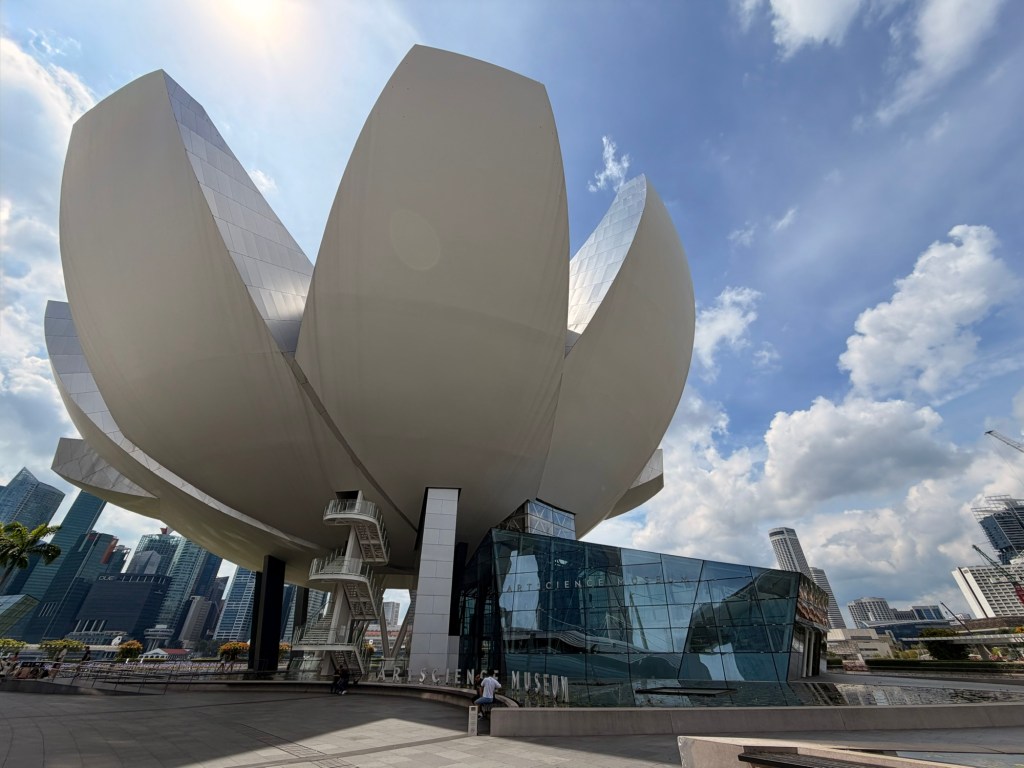
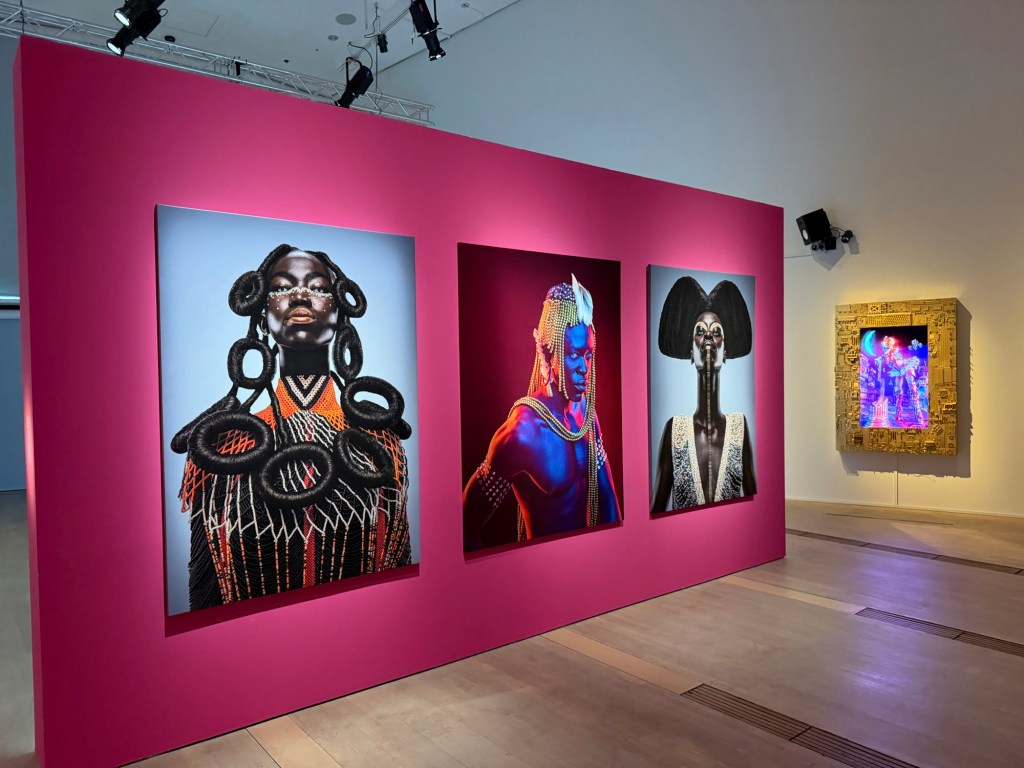
    • Then I visited the Artscience Museum on a weekday afternoon for a futurism exhibition called Another World Is Possible – a hopeful title promising alternative models for living, maybe even freedom from our current constraints. My expectations were high because it was yet another collaboration with ACMI (Australian Centre for the Moving Image) out of Melbourne. Alas, I left feeling rather annoyed and unfulfilled.
    • The space itself is inadequate for multimedia shows. There’s not enough surface area, and the adjacent rooms without doors bleed sound into each other at an atrocious level. Near the end, there were some screens with a peaceful computer-generated nature scene meant for reflection, but all you can hear is music blaring from another video installation.
    • But regarding the actual show, several of the items presented were clearly AI-generated slop, unlabeled. The wall text just says things like “12-minute audio/video presentation” or “14-inch giclée print.” I don’t want our institutions of culture to charge $20 for mediocre renderings one could Midjourney at home. Hard to feel like ‘another world is possible’ when the medium represents what’s wrong with the present one.
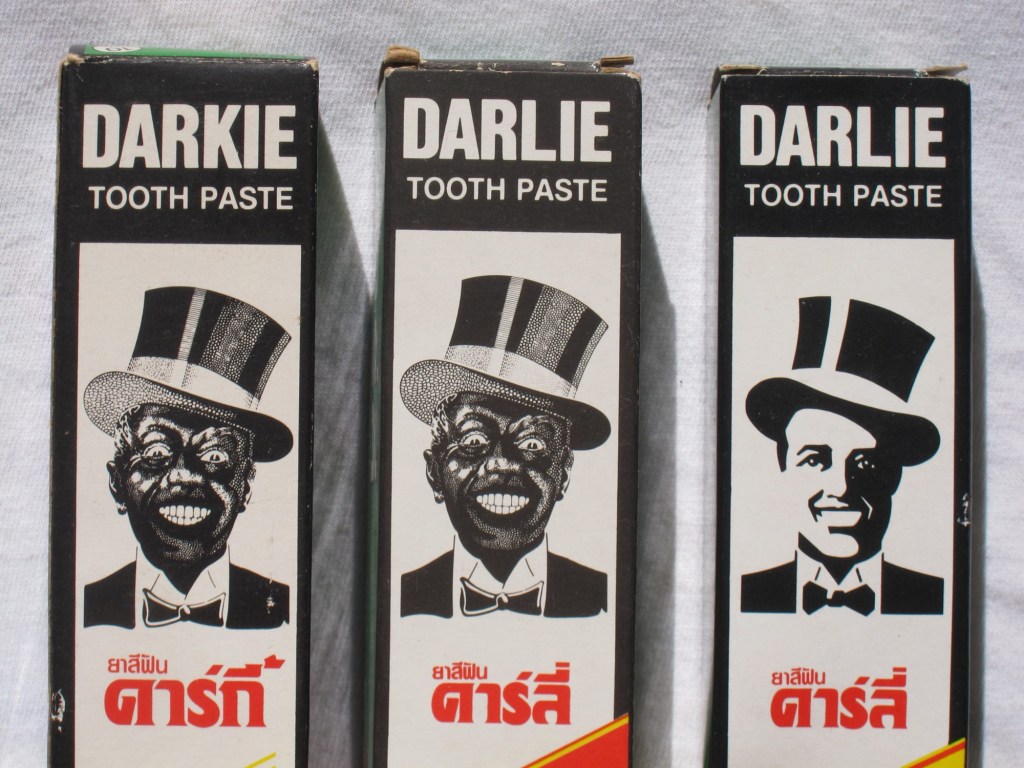
    • Racism came up during my book club meeting this week, which gave me a chance to traumatize the Americans with “Darkie” toothpaste. It’s a brand that’s been ubiquitous in these parts since I was a kid. The name is bad enough, but they also put a minstrel on the box, highlighting the contrast between black skin and white teeth. It rebranded to “Darlie” at some point and made it somewhat arguable that the man wasn’t black, but we all know. It was only in late-2021 that its Chinese name changed from 黑人牙膏 “Black Person Toothpaste” to 好來 “Bright Future” (my translation). Reading the Wikipedia page, I was surprised to learn that it had a market share as high as 50% in Singapore in the 80s!
    • But hey, cultural theft isn’t just about race. Kill Bill is getting a theatrical re-release next month — both volumes cut together with unseen footage into the 4hr 40min epic Tarantino originally intended. Maybe no cinema in Singapore will take it up, but this means there’s hope for an updated digital release at some point.
    • That iconic siren when the camera zooms into Uma Thurman’s rage-filled eyes? Sampled from the Shaw Brothers film Five Fingers of Death aka King Boxer (1972), which I saw for the first time this week on MUBI. The Chinese title 天下第一拳 translates to “The Greatest Fist Under Heaven” — not “in the world” but “under heaven,” which is somehow more evocative and poetic.
    • A bunch of these old Shaw Brothers wuxia flicks are leaving MUBI in the next few days so I’ll be on a little martial arts marathon in the coming week.
    • And since we were talking about cultural appropriation last week (I’m cool with it), you know who else loves sampling kung-fu movies and helped Tarantino put the sound of Kill Bill together? That’s right, the RZA aka the Abbott, who resurfaced this week with the release of Japanese rapper Awich’s new album Okinawan Wuman, which he produced.
    • Apart from a little cringey self-caricaturing from Awich — the usual “we say arigato” shit, not unlike Utada Hikaru singing “You’re easy breezy and I’m Japanesey” back in 2005 — it’s a solid album on first listen. Maybe I’m being too critical about someone trying to break into another market by dumbing down their own culture, but she’s already got the RZA in her corner. She doesn’t need to prove anything. Feel free to switch up languages and drop the most obscure Okinawan slang! ROSALÍA’s success has proven that you can trust listeners to find their way to you.
    • Awich’s promotional video has a Japanese hip-hop expert explain, by way of establishing how monumental it is that RZA has produced this Japanese lady’s album, that the two most important acts in history were the Wu-Tang Clan and De La Soul. What good fortune for us, then, that this week saw the latter’s first new album in 9 years, Cabin In The Sky! We eating good, mi familia.
  • Week 42.25

    Week 42.25

    • I woke up from one of those dreams where you need to go to the bathroom, so you visit a bathroom (in your dream) but it’s very unpleasant and almost in a state of dilapidation. For example, the sinks and toilets might be taped up to say “out of service”, or the tiles and floors are all ruined, and it’s clearly not a functioning toilet — but you gotta go! And then later that same day, someone mentioned having a recurring dream about a gross “squat toilet” in their childhood home, and a light clicked on in my head. Maybe everyone has these dreams, and it’s the brain’s way of saying “don’t pee now!” I’d bet this is a universal experience.
    • I learnt on Instagram that the singer D’Angelo passed away. He was only 51, and they say it was cancer, maybe pancreatic. That would make it at least two world-changing visionaries to go that way. Voodoo remains one of my favorite albums of all time, one of those that exists fully as a complete work — there’s nothing that can be added or removed, and even the idea of a super deluxe edition with remixes or outtakes feels unnecessary. It’s so loose and hard to pin down in terms of genre and style (he reportedly hated the “neo-soul” label and said he simply played Black music), that I don’t think I knew what I was listening to as I played it the first hundred times. He brought together everything I love about hip-hop, jazz, funk, soul, R&B, Prince’s ecstatic falsetto… into a single masterpiece. What’s also tragic is that he never released the promised follow-up to 2014’s Black Messiah and I don’t know how to feel about it being dug out of the vault and released someday.
    • Speaking of deaths, I Want to Die but I Want to Eat Tteokbokki has moved to the top of my reading list after its author Baek Se-Hee passed away this week at 35. News reports only say she died, but everyone is surely wondering if it was suicide on account of the book being about her journey with depression. It makes me wonder why suicides are often sidestepped in the news these days. They could at least say that it wasn’t? It just seems very weird to not address the question. Maybe they’re afraid of copycats, or there’s some assumption about shame on the side of the surviving family. I think for anyone who was so open in struggling with the decision, letting people know that they did what they wanted is actually kinda respectful.
    • Speaking of existential questions, my book club has elected to read Isaac Asimov’s I, Robot, which I was reluctant to revisit. The last time I read it was in secondary school — I read just about every science fiction novel, and probably all the Asimov ones, they had in the school library. As I feared, it doesn’t entirely hold up to the lofty memories I had of encountering The Three Laws of Robotics for the first time. The writing is a little, shall we say, 1940s? But that’s not to say this isn’t an absolute miracle, because it was written in the 1940s. It’s a compilation of short stories, each concerned with testing the boundaries and interpretation of the Laws in different ways, and basically highlighting the importance of rigorous prompt engineering! Reading this in 2025 is a trip. Asimov holds up a mirror to humanity more than anything, and we see people behaving rudely to AIs as if they were slaves or farm animals, but also others becoming attached to them as if they were “real”.
    • I’m also halfway through The Optimist, a biography of Sam Altman and his path to leading OpenAI. It’s as much about the Valley as it is about Altman, to be fair, and I’m learning a lot about the history of Y-Combinator and other companies along the way. I might have been influenced by all the hit pieces on Altman’s character, but I’m mostly skeptical about him being a force for good. An analyst’s note I heard on Bloomberg the other day went something like, “Sam has the power to destroy the global economy for the next decade, or to lead us to the promised land”. And as a mad prophet once said: “no one man should have all that power”.
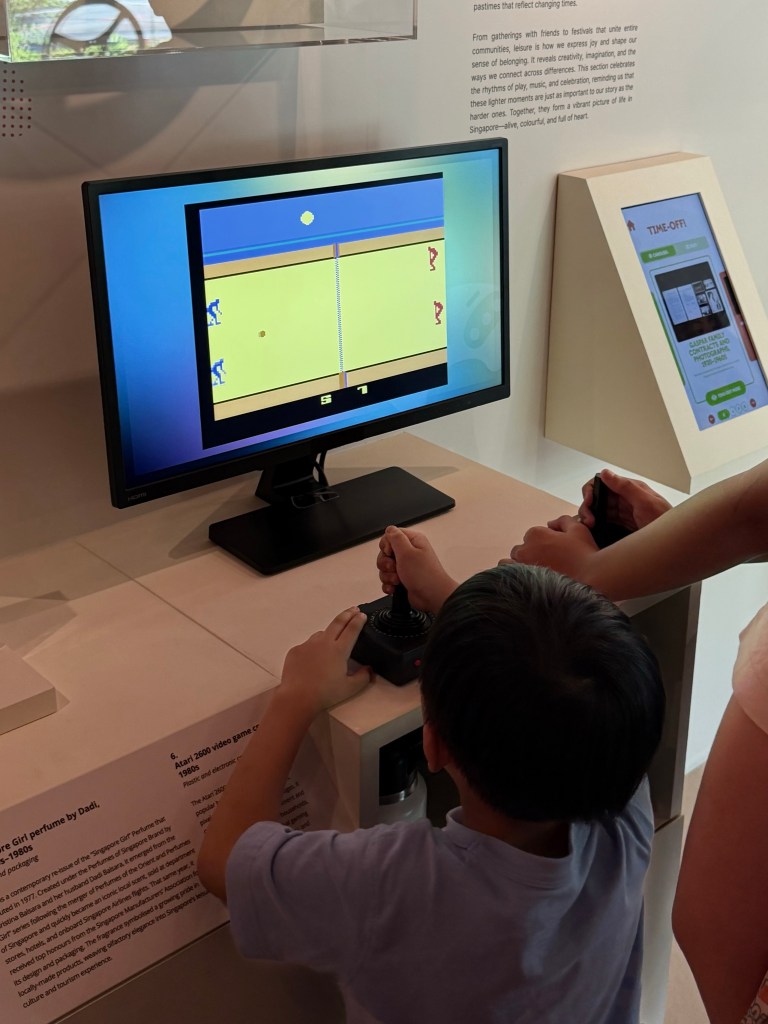
    • Over the weekend we visited the National Museum where I saw a kid playing RealSports Volleyball on an Atari 2600. Way to make a guy feel old — I played that myself at his age and now it’s in a museum! He looked to be enjoying it, which just goes to show ancient software can still hold power over the lizard brain (as long as it hasn’t been exposed to Fortnite).
    • Then as we headed to the last stop, a new permanent exhibition called Singapore Odyssea, we discovered that we were too late and it had closed for the day (at 6pm). I wasn’t even particularly interested in it, but felt pretty bummed out that we missed it anyway. Then Kim pointed at a family and noted that I was having the same reaction as their kid, who was being consoled by his parents, “it’s not that we don’t want to go sweetheart, but it’s closed.” Hmph. People are always like, ‘stay young at heart’ and ‘don’t lose your childlike wonder’, but then they don’t want the grumpy tantrums that come with it!
  • Week 38.25

    Week 38.25

    I type this while listening to Sam Fender’s last album, People Watching. I’ve been meaning to hear this through for awhile, but it got buried in my ever-growing library of new music. Thankfully, with the latest update to Apple Music in the OS26 series, you can now pin up to six albums or playlists to the top of your screen. I’ve wanted this sort of ‘Now Playing’ or ‘Heavy Rotation’ virtual shelf for the longest time — it’s the first feature I’d add if designing a music player app. So this album and five other neglected ones are now sitting up there, and I can give them the attention I want.

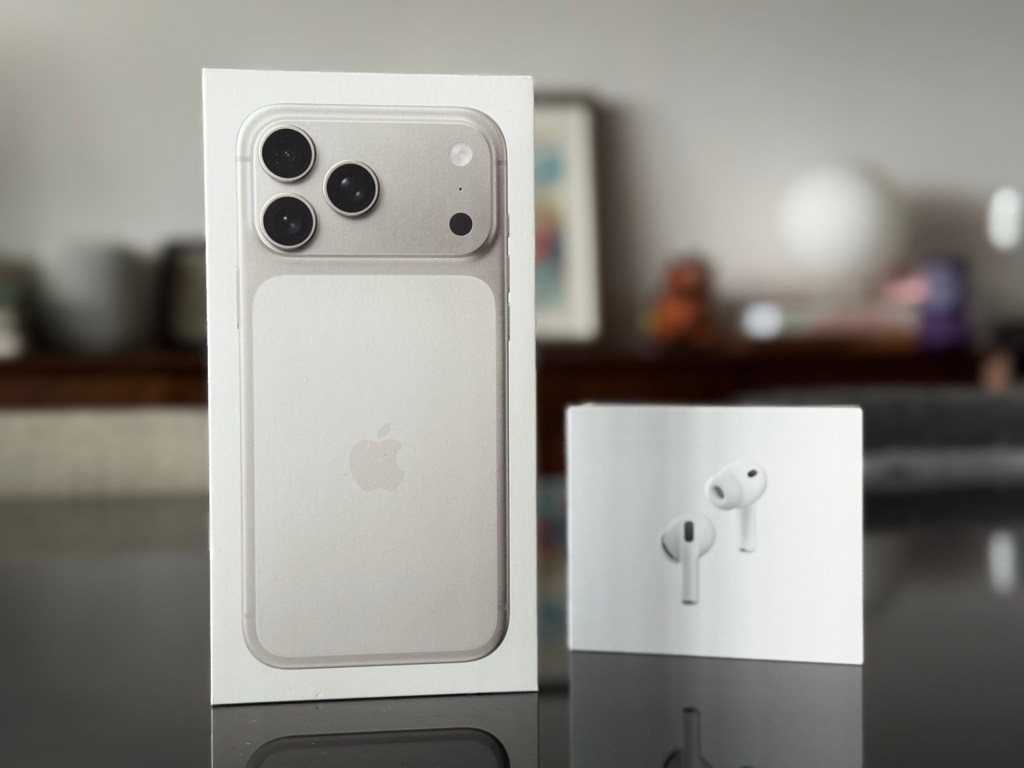
    I’ve been listening on both my new AirPods Pro 3 and an original pair of AirPods Pro, and dare I say the difference is quite obvious. Louanne asked me what I do with old pairs of headphones when I get new ones, and the answer was “put them in different rooms!”, of course. I’m fast running out of rooms. The new model sounds much more Beats-like than ever (modern Beats, not OG Monster Beats). That is to say, a bass-forward sound with a very clear, almost sparkling high end. It’s a fun sound, and I think they’ll be very popular for all kinds of music, if not audiophile-grade neutral. They appear to fit better than before too, and the difference in body shape will strike longtime AirPods users as soon as they pick them up.

    Then my new iPhone arrived, and before you judge, the old one is being returned to Apple’s Trade In partner in a few days, where it will hopefully be responsibly refurbished or at worst recycled. They’ve suggested that I’m likely to get nearly half the original cost back, which is an astounding deal for a two-year-old model! I’ll believe it when the deposit lands in my bank account.

    I’m very happy I decided to stick with the Pro Max size instead of switching to a Pro. The slight increases in height and width are visible if you put them together, but isn’t really noticeable in the hand. The increase in thickness IS, but combined with the new gentler corners on the seamless aluminum body, I think thicker is actually better? This might be the best feeling iPhone ever.

    I’ve yet to put the new camera system through its paces, but I’m excited and very pleased after a couple of days with it. Images look cleaner, and the redesigned front-facing camera is a revelation. I took a test selfie and could scarcely believe how presentable I looked. Coming from the iPhone 15 series, I’m also new to the new Photographic Styles that were introduced last year, and am getting a lot out of them. I compared photos shot in RAW with Halide and in HEIC with the default camera using a tweaked “Natural” style, and they’re extremely close in both SDR and HDR. This is a big deal! Along with the revised Photonic Engine this year, the dark days of overprocessed iPhone photos may be behind us.

    When reviews get creative

    One thing I’ve noticed this year is how bland and predictable the video reviews from the usual tech YouTubers and influencers have been. They go through the spec sheets while speaking to the camera, do a few test shots, and end without any thoughts you couldn’t have pulled out of ChatGPT. But then I saw a couple of videos from the Chinese-speaking side of the internet, and that’s when I realized Western civilization is well and truly finished.

    Take a look at these and tell me you’re not duly impressed by the storytelling creativity, production skill, points of view, and passion on display — even if you can’t understand a word (but most of them have English subtitles you can enable). They could just shoot the phones on a stand while swinging a light overhead, but they instead they go hard with CGI, costumes, sets, comedic sketches, and cinematic editing. And they do these in the WEEK they’ve given between the phones being revealed and launching.


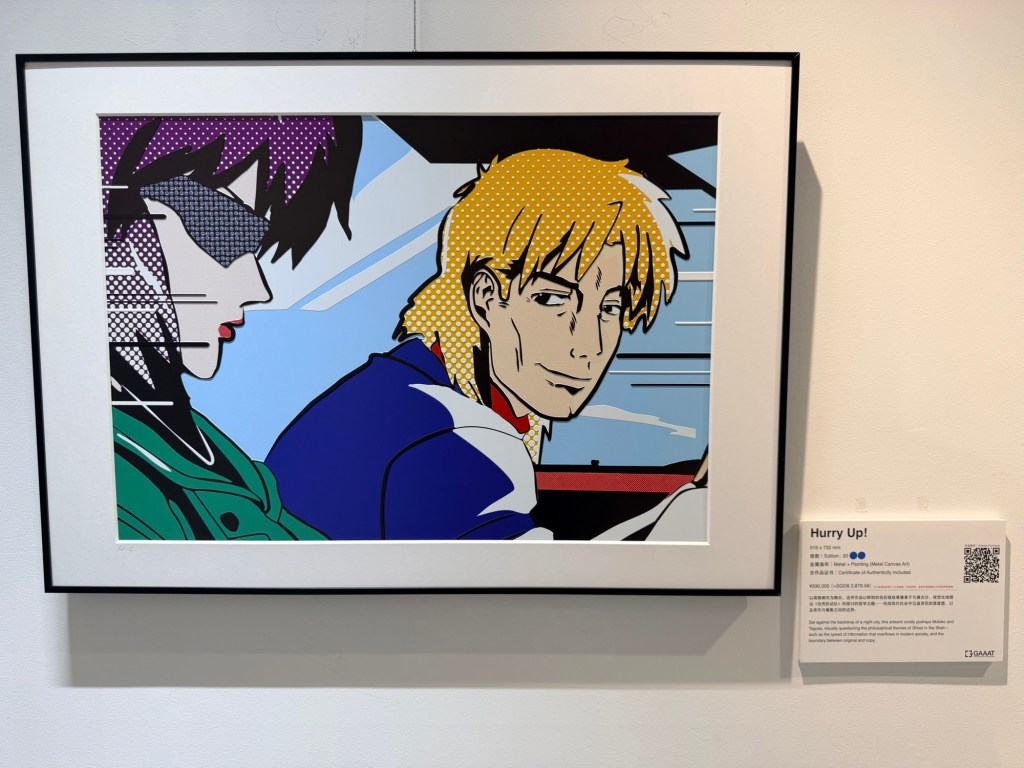
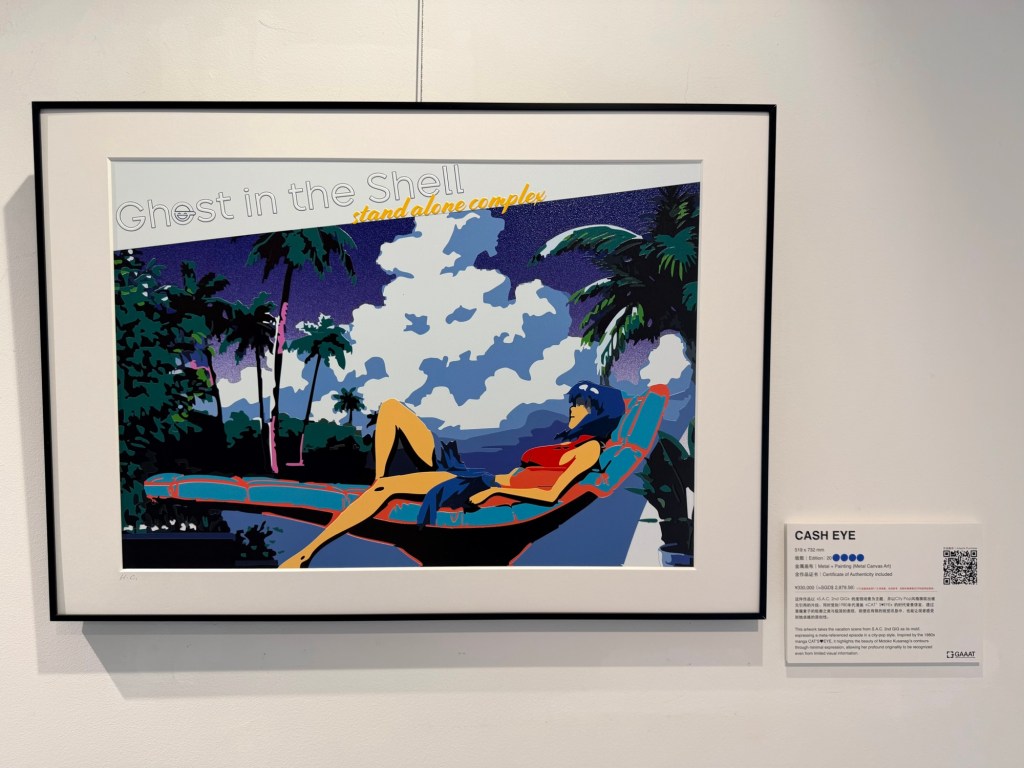
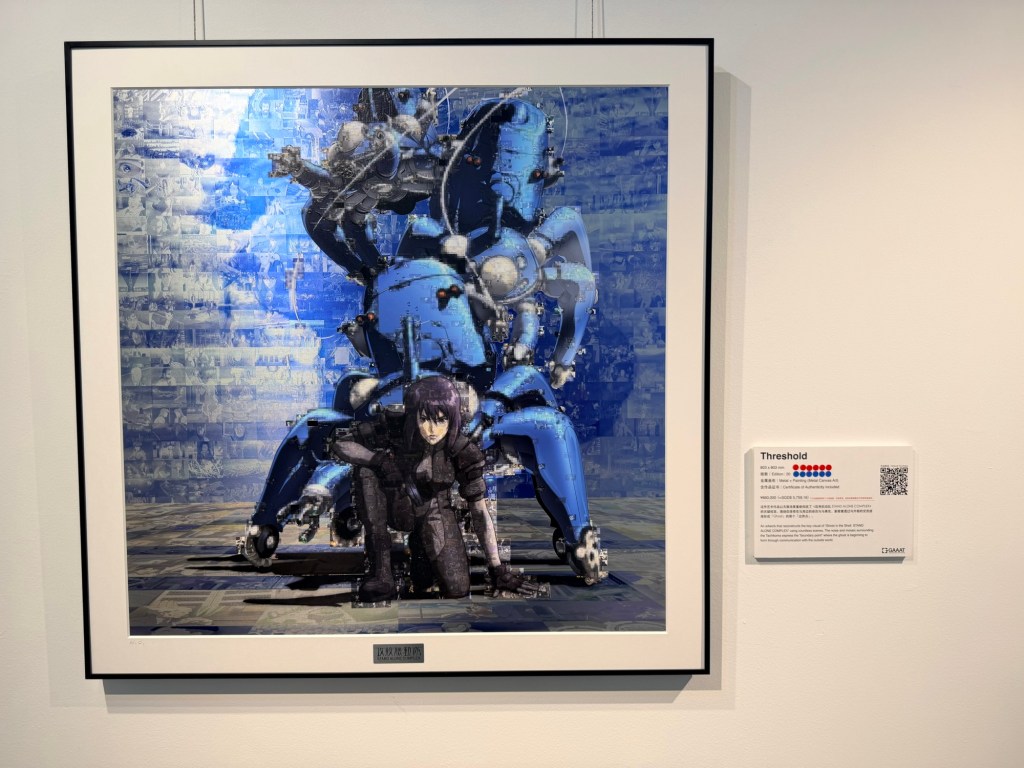
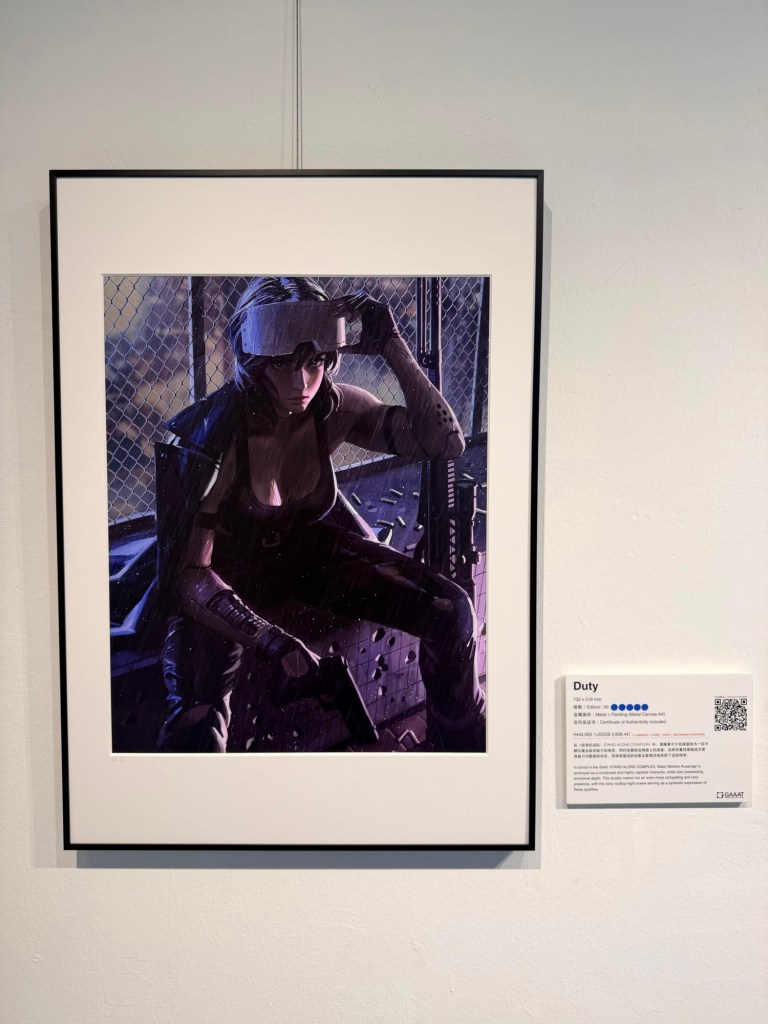
    We visited a local art sales event for works based on the Ghost in the Shell: Stand Alone Complex franchise, just to have a look. The metal-printed pieces were going for upwards of S$4,000, so there was never any chance we’d buy one — but I got a little acrylic plate standee for my desk (S$25). Above are some snaps straight from the iPhone 17 Pro Max, using only Photographic Styles.

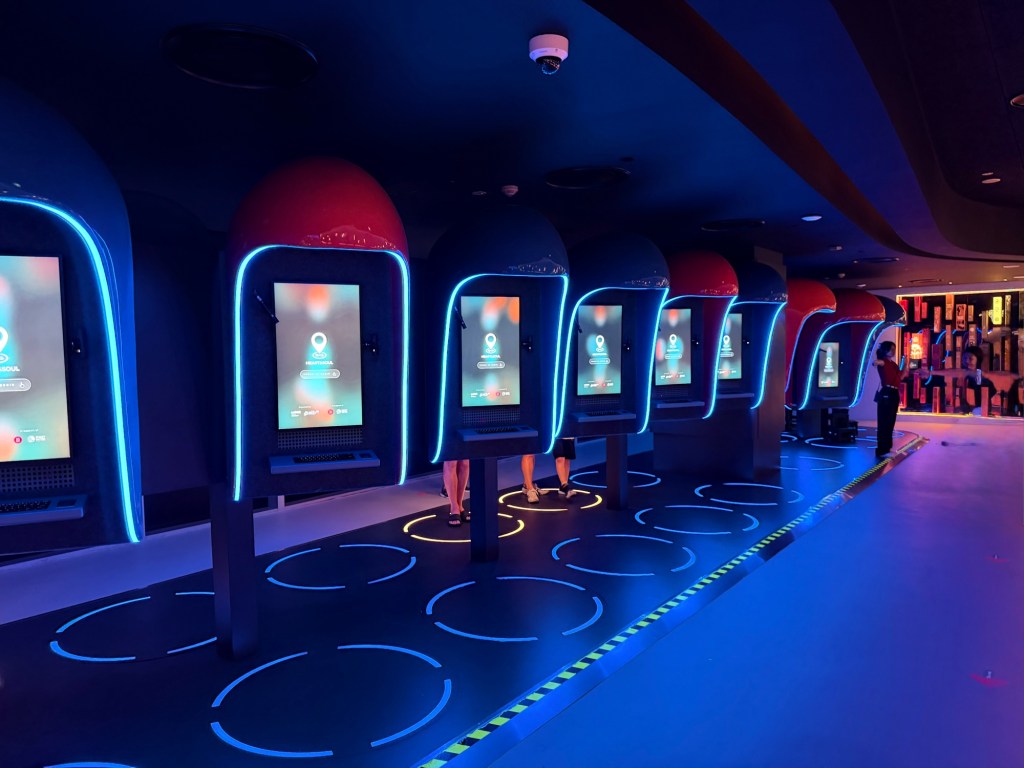
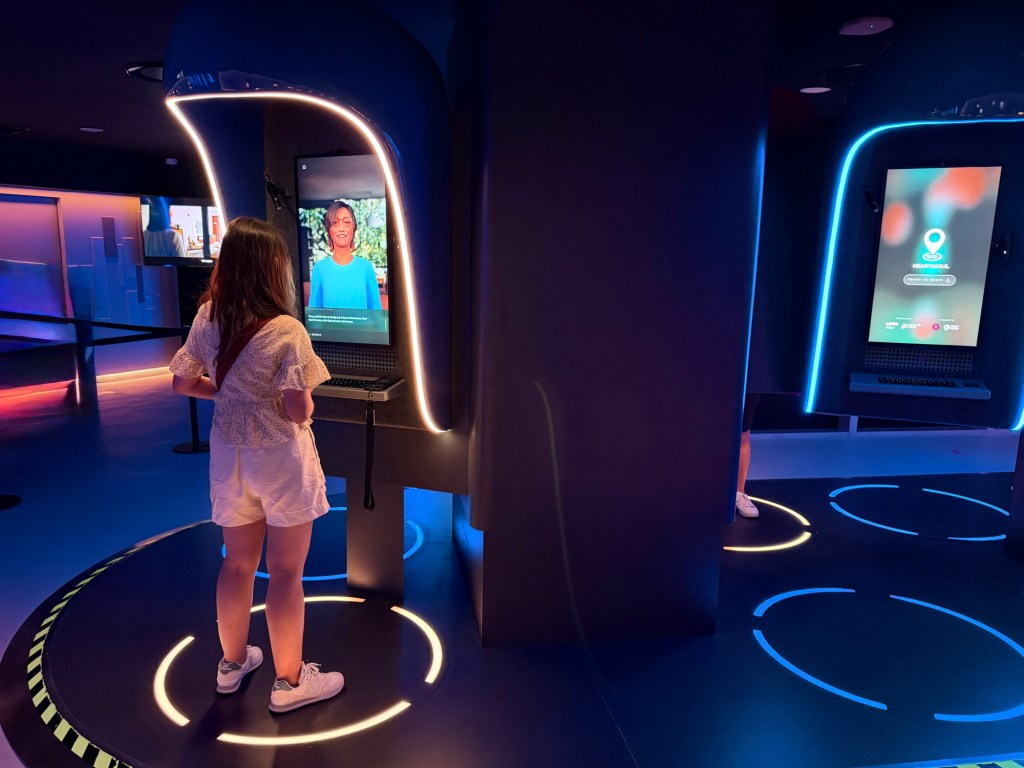
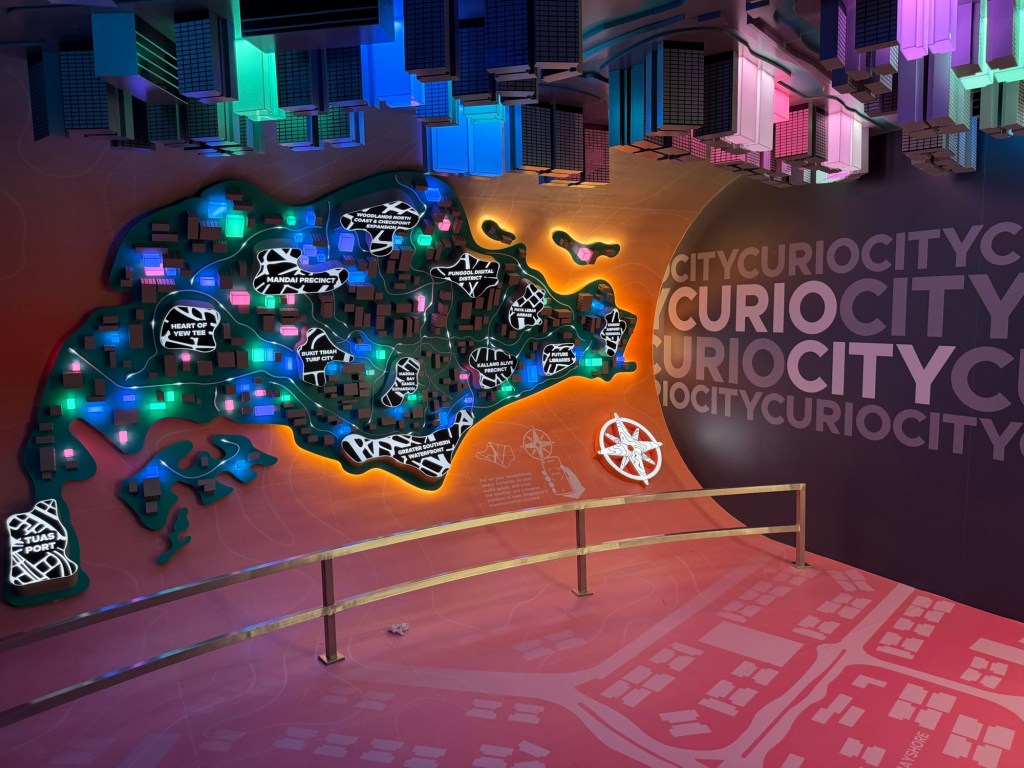
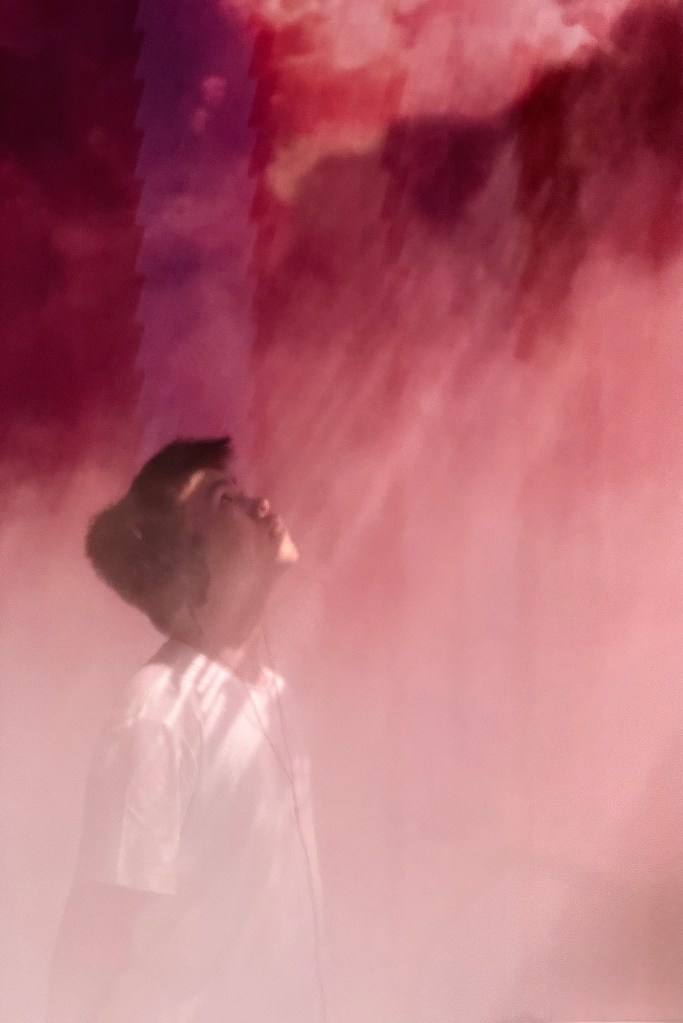
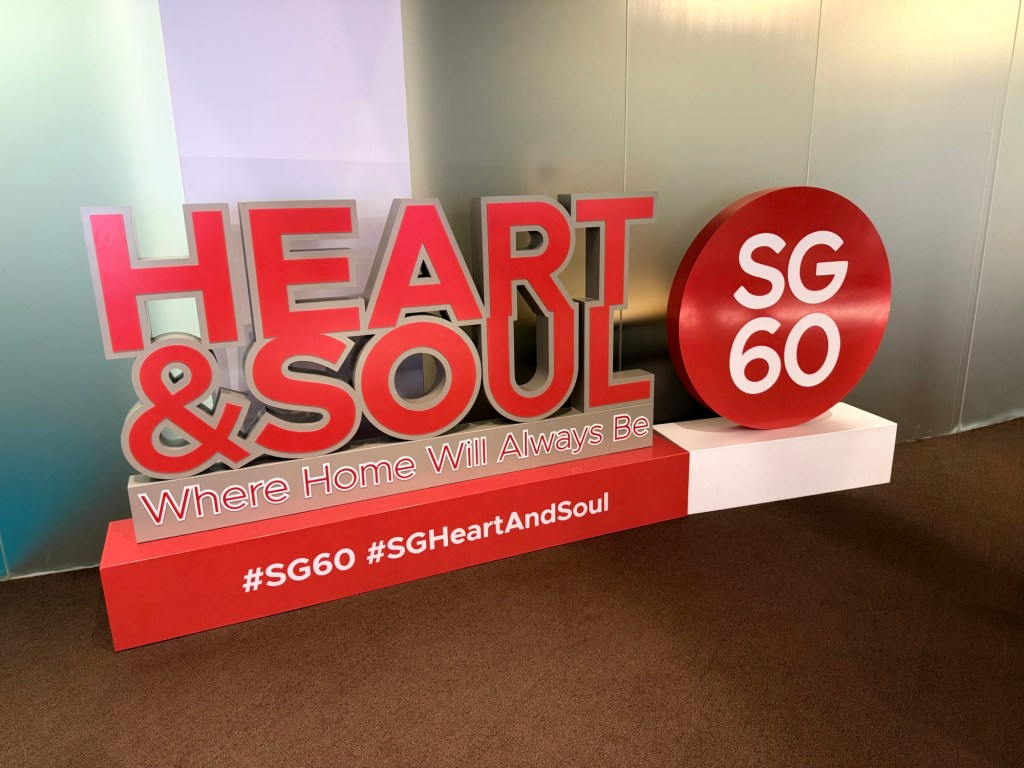
    Afterwards, we visited the SG60 Heart&Soul Experience which is being housed at the site of the old library@orchard. Supposedly it will be renovated and return as a downtown library next year, which is great news. From what I can gather, it’s meant to inspire people about what Singapore’s future might look like, and what place they’d have in it (employing lots of tech to personalize the journey). Criticisms I’ve heard are that it doesn’t go far enough, and the future shown looks kinda like the present: delivery drones, working in VR headsets, greenery everywhere. Visit and see for yourself. Bookings are required, but the tickets are free. It’s quite an involved production with each visitor being given a guide device (an encased Xiaomi smartphone) to wear around their necks, and human facilitators bringing them through the stations.

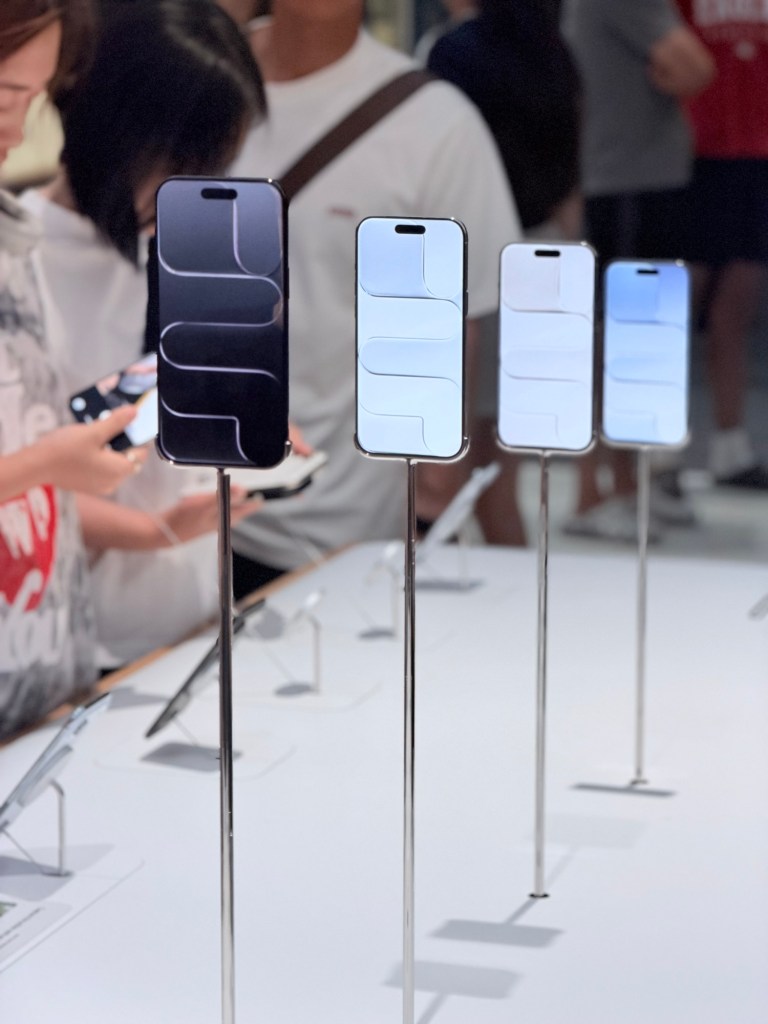
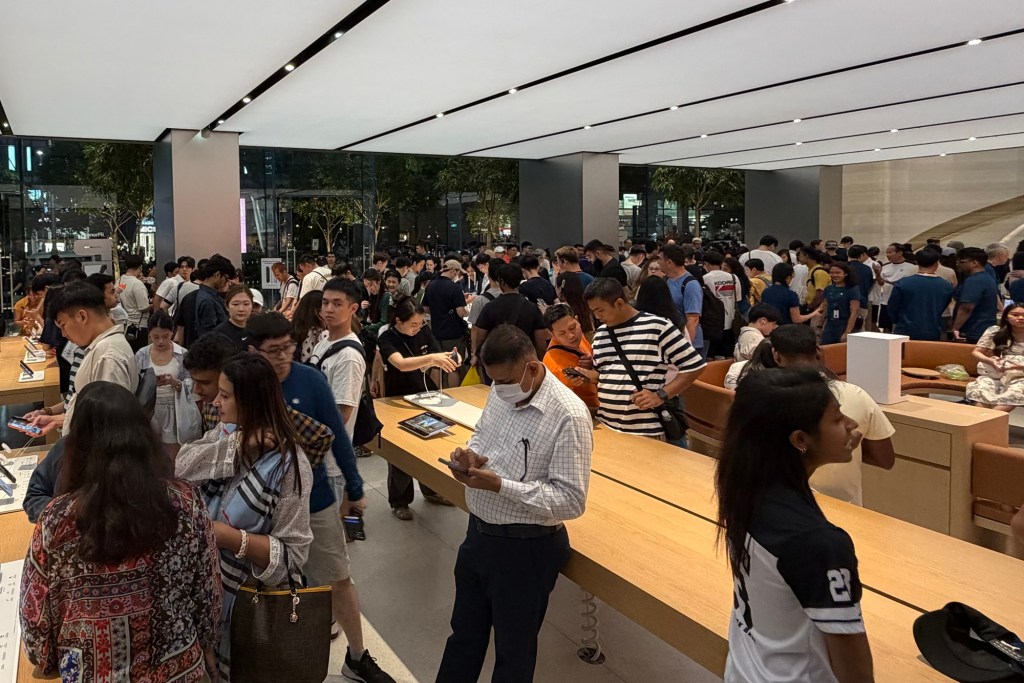
    Oh, speaking of cases, we went by Apple Orchard Road after the show to have a look at the iPhone Air, and I haven’t seen that store so packed in years. I picked up a rather loud Beats case in “Pebble Pink”, mostly because I really wanted a Beats case last year but they only made them for the iPhone 16 series. It’s hard plastic with a matte finish that’s slippery when your hands are dry but tacky enough if there’s a bit of moisture.

    Check out my reel with the Pink Panther theme:

    And while we’re on the subject of great directors, I finally sat down with Bernardo Bertolucci’s The Dreamers (2003) on MUBI. More explicit than I expected, it’s easy to see why people call it pretentious with its heavy callbacks to classic cinema, but it’s never boring and it sure knows how to use mirrors. I gave it 3.5 stars on Letterboxd, mostly because there’s “altogether too much time spent lying on floors for my liking”. There’s also one truly revolting moment where, out of money, they raid the apartment building’s trash for scraps of food and assemble the world’s grossest bento.

    Spike Lee’s Highest 2 Lowest (2025), now on Apple TV+, is a remake of Kurosawa’s High and Low (1963), which I’ll embarrassingly only get around to watching after this homage. But this is a fine film that stands on its own: a sharp, sometimes experimental exploration of class and morality, constantly playing on the gulf between generations — Motown vs. modern rap, film vs. digital, Kurosawa vs. Lee.

  • Week 37.25

    Week 37.25

    Happy iPhone week aka Tech Christmas to all who celebrate! I wrote up my thoughts (below) after the event on Wednesday, and since then I’ve seen the same sentiments echoed throughout YouTube videos, podcasts, and articles, so I at least know I’m not reading these things entirely wrong. All in all, one of the best iPhone lineups ever. They went all out, with very few compromises or artificial impairments to make the expensive models more attractive — they are all seriously good value, extremely capable-sounding devices.
    On Tuesday, we went over to my parents’ place for dinner, and spurred by a question someone had last week after seeing a photo of their living room, I asked after some family history and got some new information. The accuracy and completeness of Singaporean family stories must vary widely; after all most families here only arrived in the last century. My dad only knows where his grandfather came from in China, and a suspicion of his occupation (ask me and I’ll tell you), but not why or how they made their way down to Southeast Asia. Apparently no one ever said. I’d say that was weird, but then I’ve waited this many decades to even ask.

    You know what else I’ve waited forever to do? Start The Legend of Zelda: Tears of the Kingdom. I finished Breath of the Wild in the summer of 2023 — I could have sworn it was last year, oh my — after letting it languish uncompleted for about six years. Since both games are set in the same world of Hyrule, albeit expanded in TotK, many recommend taking a break in between. Now that the Switch 2 edition is out, with modern luxuries like running at 4K 60fps, it was time. And because this is a game where skills also accrue in the player rather than purely in the character, jumping back in feels great. I’m better at combat and finding my way around than I was at the beginning of BotW, which makes sense for a sequel: Link has been here and done this before. It’s marvelous game design all around.

    Speaking of capital-D Design, Singapore Design Week is back again, but I’m less inclined to explore every venue and event after seeing that last year’s slipshod execution probably hasn’t been rectified. The website and program directory are still confusing and missing key visitor info.

    Case in point: On Sunday we went down to the Science Park district for a talk I’d signed up for, only to find that no one in the stated venue (a building lobby) knew where it was happening. It turned out to be in an open space outside instead. I’m not sure the speakers knew either, given that several used packed slides unreadable on the small screens provided. To make matters worse, some presenters’ slides weren’t even fit to the full screen size. When informed by the audience, they said “sorry, we can’t fix it. We can send you the deck!”

    Nearby, one of the robotics exhibitions had info cards printed in such tiny type you’d literally have to crouch on the floor to read them. I don’t know why we can’t get these things right for a design week.

    But there was a high point! Local graphic and art book seller Basheer had a small stand at the fair, and I found a copy of Silvio Lorusso’s What Design Can’t Do: Essays on Design and Disillusion, which Jose recommended ages ago. It was S$37 for future reference.
    If you follow me on Goodreads and were shocked at the amount of reading I suddenly got done, calm down. Those were not five separate books, but short sci-fi stories in something called The Forward Collection, published by Amazon, and curated by Blake Crouch of Dark Matter fame. For some reason, each story has its own entry on Goodreads instead of just one for the compilation. I recommend them!

    ===

    Apple Fall Event

    • The annual Apple fall event took place as it always does in early September (I love that it’s been over 15 years but some people still ask “When do the new iPhones come out?”). This year was of particular interest to me because 1) I didn’t upgrade my iPhone for once last year, mostly content with my iPhone 15 Pro Max and even wondering if I could stretch it out to three years. 2) If I can save any money somewhere in my annual budget, I’d be open to it! Alas, my Apple Watch is three years old, and my AirPods Pro 2 are the Lightning version that don’t do lossless audio with Vision Pro. So as the livestream began, I started praying that none of the announcements would make me feel like I needed to buy stuff.
    • Right out of the gate, the new AirPods Pro 3 were shown and I was like “goddamnit!” These mostly look the same, but have been subtly refined to fit better in your ears and yup, I need that as they’ve always been a little loose on one side. They supposedly sound better, thanks to a new acoustic port design. The active noise cancellation is now 2x better, and battery life has gone up about a third, to 8 hours. There’s also heart rate monitoring but I don’t give a crap about that. Nevertheless, a very hard purchase to resist.
    • Then, the Apple Watch Series 11 and Ultra 3 were shown, but thankfully I’m not sporty enough so the bulk of their workout/outdoors adventure-centric improvements bounced off my consumer armor. I mainly use my Series 8 as a timepiece, with occasional notifications and stock prices that I read when waking up in the middle of the night, and all it needs is a new battery. Lighter, smaller, more health sensors, faster charging — these are all nice to have but not when a new titanium model comes to over S$1,200 with AppleCare+. What’s that? Buy aluminum? Oh no, darling.
    • I was excited to see the iPhone 17 get a ProMotion display (variable refresh rates up to 120hz), because it suggests that the iPad Air might get one next year too. Overall, this is a truly great phone to offer as the base model. With better battery life, 256GB starting storage, and very capable cameras (including a smart new multi-aspect selfie camera), there are no compromises to be seen here and most people will be fully satisfied with one. It stands up well beside the Pro phone for everyday use in nearly all aspects.
    • When rumors of the the iPhone Air leaked, I didn’t believe a thinner phone with less battery life made any sense. And including only a single camera with no ultrawide lens? That excludes most Gen Z buyers! But I think I was wrong. The new wider front-facing camera might handle the Gen Z selfie use case. In truth, this is a phone that matches or exceeds the specs of last year’s iPhone 16, but is way more desirable. With its unique and recognizable design, glossy titanium frame, and premium semi-pro price positioning, this is the peacocking model. It’s literally the shiny new object. And that place in the lineup is made possible by a welcome pivot in the Pro line.
    • The iPhone 17 Pro and Pro Max are now freed from their jobs of pushing up iPhone ARPU by appealing to customers with a little more money to spend, and who want something better than the base model. That’s the Air now. The Pro models have now transitioned to powerful professional tools with features that most people won’t even have heard of (e.g. GenLock for video), let alone know how to use. Which means they can ditch premium/luxury materials like stainless steel and titanium, for a more pragmatic forged aluminum that’s lighter and better for thermal management. They can also withstand weirder/uglier industrial designs (emphasis on industrial) like the new camera plateau that houses bigger sensors and makes room elsewhere for massive batteries. These models can now be thicker and heavier than most consumers would like because the Air exists.
    • The Air, by the way, looks like they got halfway through the development of next year’s rumored foldable iPhone and decided to ship one half as a product. Which is probably not entirely untrue; many niche Apple products are test beds for scaling ideas that will later appear elsewhere. The Air’s remarkable miniaturization and the Pro’s new vapor chamber cooling system will probably be echoed in a future Apple Vision Pro.
    • It’s also worth noting the ever-changing definition of “Air” in Apple parlance. It usually means either cheaper or lighter, and never premium/luxury. The MacBook Air is both the cheapest and lightest laptop, at least for now. The iPad Air is a Goldilocks model, sitting between the basic iPad and the Pro (which is the thinnest and lightest). But while the iPhone Air is cheaper than the Pro, it’s the thinnest, lightest, and also nicest. It’s elegant where the Pro is beastly, and I think this is their main design direction for the future.
    • Even if it doesn’t sell well this year, I don’t see this being canceled like the Plus phones. If anything, the Pro Max might be the one to go next. Its role is now to simply be the biggest screen, which a certain folding device might take the place of. So 12 months from now, we may be talking about iPhone 18, iPhone 18 Pro, iPhone Air 2, and an iPhone DS or whatever.
    • So it’s decision time. By the time this gets posted, I would have chosen a phone, size, and color. The Air is very tempting, except I couldn’t live without macro and telephoto photos. I do think its 6.5” screen size is in the sweet spot. The Pro’s 6.3” is too small and according to myself in 2023, going back to a bigger Pro Max after three years of Pro was worth the pocket bulge and hand strain. The new Cosmic Orange is striking as hell, but will it look tired after two years? Or two weeks? Brian called it reminiscent of “80s anime” and I think he’s onto something with that bit of free association. It also reminds me of some Sony MP3 players and phones.
    • Update: Pro Max in Silver. Big, heavy, and expensive. I’ll have to tighten my belt now in more ways than one.
  • Week 31.25

    Week 31.25

    Checking in now from the first row of a Boeing Dreamliner — a plane that has probably been in the news recently for the wrong reasons. But if you’re reading this post, it means we made it back safely.

    There was a moment early in the week where we were telling our Melbourne-based friends about last year’s trip to New Zealand and for some reason we both blanked on some key details and took awhile to align on what exactly happened. Maybe we were just tired, but then I had another theory: what if planning that trip with the help of AI meant the details didn’t form strong memories? Normally, planning a trip forces you to do research and make choices, with the resulting success or failure of your trip all on you. Those actions burn the memories in. But when ChatGPT spoon-feeds you an itinerary, maybe the details just float in and out of your mind. I wonder if this will really rot our lazy brains like no technology has before.

    We dropped in on a French Impressionism exhibit at the National Gallery Victoria, and I should say “yet another”, because every time we come by there seems to be something either French or impressionistic on. It was fine, but the $50+ ticket prices are surprising in contrast to exhibition prices in Singapore. I was also really hoping to see something new at ACMI, but sadly their new ‘Game Worlds’ videogame exhibition won’t open till September. Maybe I’ll have to come back.

    And then I fell ill and had to take it easy for a couple of days! If I had to guess, I probably picked up a flu bug from the airport or on the flight out. Still, I spent a large chunk of the week in bed or otherwise resting while Kim ran shopping errands for her mom and so on.

    As I got steadily better, we went out a bit for a nice dinner, lunch at a winery, and a visit to this bookstore, The Paperback, in the CBD that I always buy something from. This time I got a collection of Louise Glück’s poems that I’ve been wanting for awhile. Just taking it slow and enjoying a change of scenery. Normally getting sick on holiday would be a disaster, but having no expectations or plans means no disappointments either.

    I also went to my first Costco and had their famous hotdog, which was just $1.99 AUD with a soda. The financial engineering is strong at this company because it was a good and sizable pork sausage that I would have bought at thrice the price. We bought some other things there not worth mentioning except for a physical copy of Donkey Kong Bananza for the Switch 2 that’s S$20 cheaper in Australia than in Singapore. We really are getting ripped off out here; even buying it off the US eShop is S$5 cheaper than the local physical price.

    Another thing I discovered was how nice it can be to watch a fire and sit in front of a fireplace for a few hours. This is something that I maybe understood before but forgot. Continually tending to a fire — rearranging logs, blowing on embers, adding more fuel — it’s like a mindfulness retreat no one has yet packaged up for Singaporeans without winter experience. I cleared my inbox one evening while doing that and warming my feet by the flames.


  • Week 25.25

    Week 25.25

    • Lots of reading this week, but not the traditional sort. I decided it was time to cross Emio: The Smiling Man off my Nintendo Switch backlog — that would be the murder mystery sorta-visual novel published by Nintendo (developed by Mages) last year. It’s the third installment in the ‘Famicom Detective Club’ series that laid dormant for decades (the clue’s in the name; they were made for the original Famicom aka the Japanese NES) until remakes of the first two games were released in 2021.
    • I played the first remake back in Week 31 of 2021, and apparently felt it was “a crock of shit”. When Emio came out, I wrote more about the series in Week 36.24, and watched a YouTube playthrough of the second game rather than pay good money to torture myself some more.
    • Thankfully, Emio is much better than those two. Perhaps because it’s a new game with a more sophisticated and complex story than was possible in the 80s. But I suspect it’s also because I’m now familiar enough with, and more forgiving of, the series’ game design ideas that I’d called “archaic and frustrating”. In any case, it has the most lavish animation production values I’ve ever seen in a visual novel, and the detective vibes are a lot of fun. I was let down by the mystery’s resolution, but the journey was definitely worth the time.
    Japanese workplace sexism in Emio The Smiling Man
    • Rather than dive into Zelda Tears of the Kingdom (can you tell I’m afraid of the commitment?), I decided to continue down the VN path by starting on TSUKIHIME A piece of blue glass moon, a decision I will probably soon regret. This is a remake of a supposed masterpiece by the developer Type-Moon, and involves some 30–50 hours of reading, which is about 3x longer than Emio. It is, however, much less interactive and more like reading a novel with visuals and sound to set the mood. I’m only a little while in, but finding it a pleasant ‘multimedia’ midpoint between watching a show and reading a book. Luckily, I played Type-Moon’s Witch on the Holy Night back in March, and because TSUKIHIME takes place later on in the same universe, it feels like a continuation.
    • There was a real book, though! What You Are Looking For Is in the Library by Michiko Aoyama is a charming collection of five little stories centered around a community library, where people stuck in different ruts meet a librarian who has a knack for recommending books that set them off and thriving in new directions. I wrote in my Goodreads review that on top of being above average as translated Japanese books go — most of them come across sounding dumber and more boring than I’d hope they are in the original texts — but the extremely healing nature of these stories warranted a five-star rating from me.
    • It looks like I’ll be going to Bangkok again next month, but this time the heat will be even more unbearable (a RealFeel of 40–45ºC?), so please pray for me. In preparation, I’ve purchased a white t-shirt for the first time in several years.
    • Over the weekend, we dragged ourselves out to see the City of Others exhibition at the National Gallery despite not being fully in the mood. I thought it would be healthy/helpful to just wander through it anyway, even if not fully attentive, and I did find some things unexpectedly inspiring. I may start a new project soon on the back of one idea!
    • While looking at some artifacts behind glass, I remembered that I’d installed Adobe’s new iOS camera app, Project Indigo, which was apparently developed by some of computational photography’s living legends, and promises “SLR quality” images by combining up to 32 frames at a time. It includes an AI-powered feature that removes reflections by inferring what the subject is, and generating detail to fill the less-visible areas. I tried it out on a couple of artworks and got a warning that my phone was overheating — I guess I’m upgrading to an iPhone 17 Pro this year! Anyway, see how it did for yourself.
    • For a free app, Project Indigo is a great deal. I’m sure it’ll eventually be shut down and folded into a paid Adobe offering, but for now, everyone should try it out for a bit. It takes very clean and likely superior photos to the default camera, and does super-resolution oversampling to give you more zoom reach than the iPhone’s lenses will. But the outputs still have that hyperreal HDR look that comes with computational photography, and for the moment that’s something I’m a little tired of. A little grain goes a long way in making a phone photo feel more like a real moment.
    • After the gallery visit, we had lunch at a Cafe&Meal Muji where I was shocked to see the latest inflation-adjusted menu; a massive downgrade from when I used to visit frequently during office lunch hours. The “4-Deli” meal of two hot and two cold dishes alongside rice and soup used to cost maybe $17.80 pre-Covid, then crept up to $20.80 in the years after. Today, it’s been entirely removed from the menu, and $20.80 only gets you a “3-Deli”: one hot and two cold dishes. To try and obfuscate the loss in value, they’re now throwing in a half-boiled egg (which can’t cost more than 30 cents).
    • I probably should have expected it, because for breakfast that same day we stopped by a Toast Box for some kaya toast, which I honestly haven’t done in years, and the breakfast set (coffee, two eggs, a sandwich) is now S$7.60, or about 50% more than in the pre-Covid era. You can of course get this sort of thing cheaper elsewhere, but these prices are still wild.
    • In Craig Mod’s nearly three-hour book tour interview on Rich Roll’s podcast, which I’m listening to in small doses, he mentions the ¥300 breakfast set, a Japanese coffee house staple, and how apologetic businesses have been about having to raise prices by even ¥20 or ¥50. That’s what the kaya toast set is to Singapore, and I wonder if Japan is going to see a ¥500 or ¥700 breakfast set before too long.
    • Speaking of Japan, the Blue Bottle chain arrived in Singapore back in April. While I know they’re American, I’d only ever had their coffee while in Japan. Now that two months have passed, I thought the hype would have died down enough to try and visit the branch here in Raffles City’s tiny LUMINE department store. It was still packed, but I got an iced NOLA-style coffee to go for S$8 — lightly sweetened and flavored with chicory, it was pretty good tbh! But you can see Nestlé’s dirty fingerprints all over the brand now. It feels like the stores only exist to justify selling merch through other channels. Do a search for “Blue Bottle NOLA” and instead of a store menu or info page about their drink offerings, you’ll get tons of spinoff products like NOLA Nespresso capsules, brew-at-home kits, tumblers, instant coffee mix, foamers, and so on. Even Starbucks, synonymous with the mercenary scaling of coffee, looks kinda restrained in comparison.