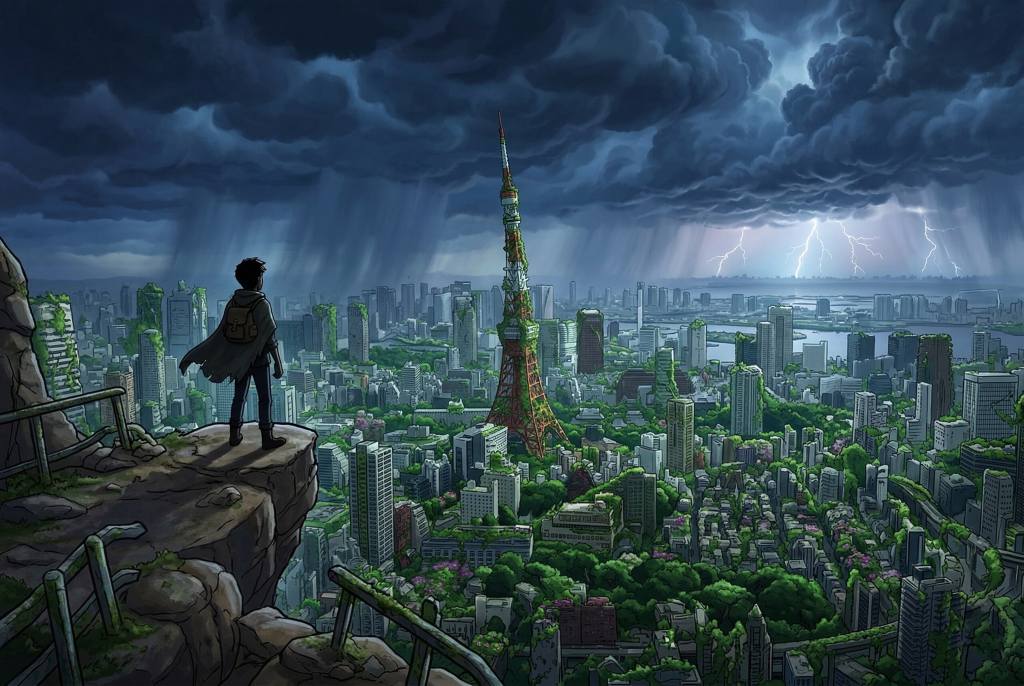
We have always known, somewhere beneath the noise, that the cities we build are temporary. That the concrete will eventually crack. That something green and patient is waiting.
Urban Jungles shows you the present — your present — transposed onto a world that has already moved on without us. The rain falling on your city right now is the same rain soaking the ruins in the app. The cold front rolling in tonight will strip the canopy bare, just as it strips the leaves from whatever remains.
It is a diorama of grief and relief in equal measure. A miniature planet after humanity, held in your hands.
Every city is searchable. Every hour of the next day is walkable. Step forward and watch the light change, the temperature drop, the landscape respond. Hear the sounds of wind and rain passing through empty streets. Orbit the ruins in full 3D — pan, tilt, inspect the overgrowth up close. The shadows track the actual sun, the stars come out at night. Tap the trees and birds scatter.
Spin it slowly. Let it rain.
Disclaimer: I made Urban Jungles with the help of Google’s Gemini 3/3.1 Pro LLM and take no responsibility whatsoever for any damage you do with it.
P.S. If you use it on an Apple Vision Pro, a button for VR mode will appear on the toolbar. It is exactly what you think it is.
A simple tool for making collages, specifically with album cover art.
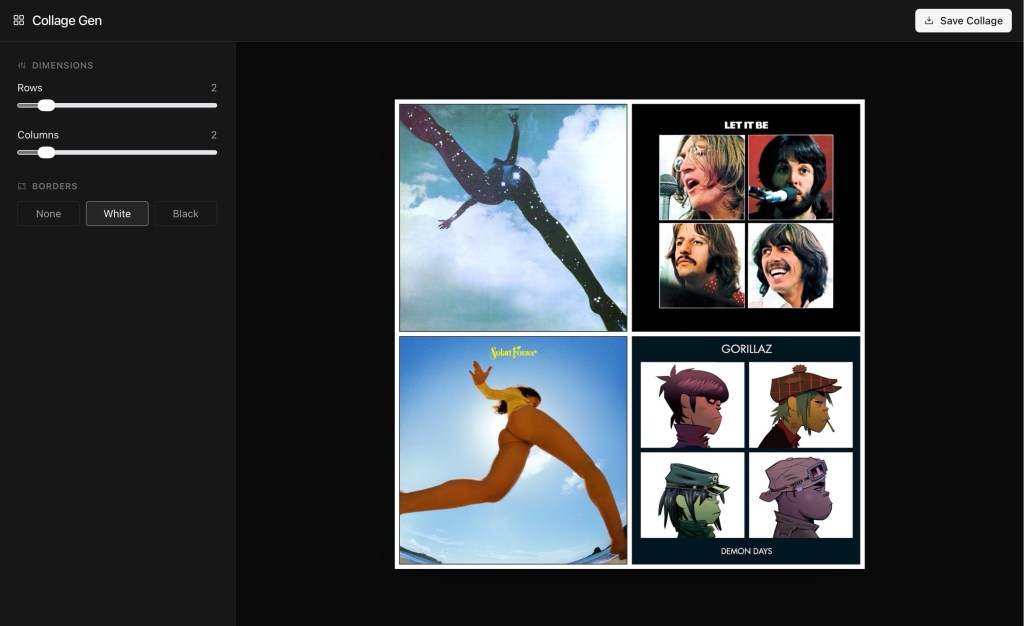
Most collage tools are either bloated with unnecessary social features or too restrictive to be useful. Collagen is a single-purpose utility designed to solve a specific friction: the tedious process of manually sourcing high-resolution album art, aligning it in a grid, and then realizing you want to swap the top-left for the bottom-right. It turns a multi-step design chore into a fluid, drag-and-drop experiment.
Screenshot
Features
Integrated Sourcing: Queries the iTunes database for official, high-resolution artwork (600×600) so you don’t have to hunt for covers or deal with low-res thumbnails.
Tactile Reordering: Drag and drop tiles to swap positions instantly. The layout logic handles the movement so you can focus on the visual flow.
Flexible Dimensions: Define your grid up to 10×10. The preview and export scale dynamically to match your rows and columns.
Hybrid Content:
Search: Instant API pulls for mainstream releases.
Upload: Support for local files (obscure imports, demos, or personal photos).
Text Tiles: Add context or labels with custom text tiles. Features automatic contrast (white/black) and a choice between a clean sans-serif or a classic serif typeface.
Borders: Toggle between borderless, white, or black frames. The logic includes outer edge padding for a symmetrical, finished look.
PWA Architecture: Built to be “Added to Home Screen.” It caches assets locally on your iPhone for faster subsequent loads and works as a standalone app.
Export: One-click generation of a high-resolution stitched PNG. It uses a dedicated image-proxy pipeline to ensure every tile renders correctly without the “blank square” errors common in browser-based canvas exports.
Disclaimer: I made Collagen with the help of Google’s Gemini 3/3.1 Pro LLM and take no responsibility whatsoever for any damage you do with it.
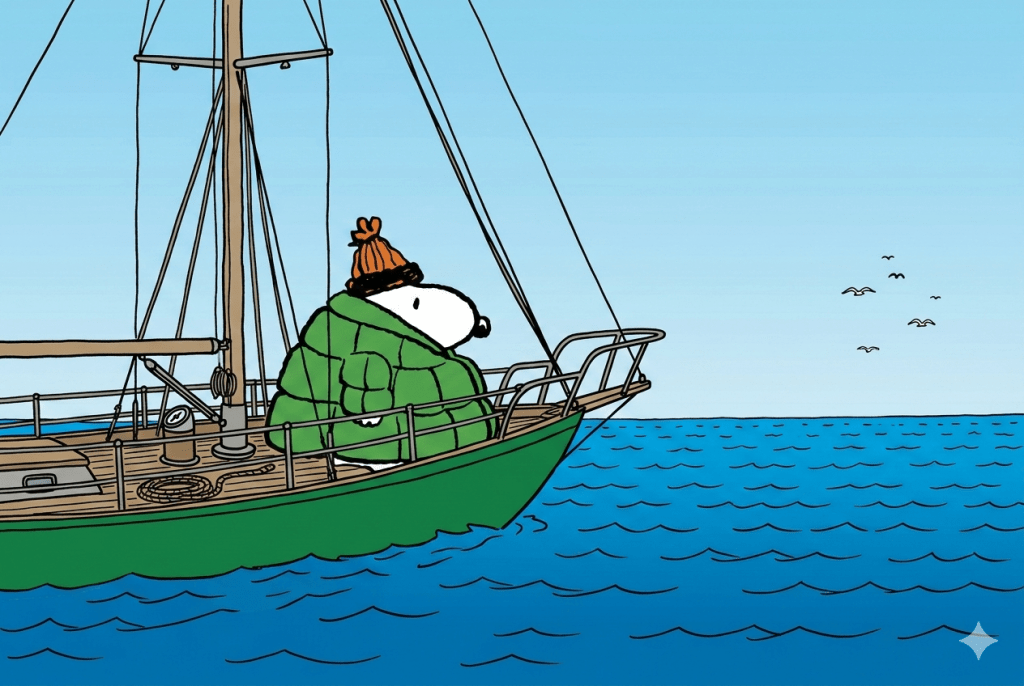
The featured image above is the result of having Geese’s Au Pays du Cocaine in my head all day. The line about a sailor in a big green boat and a big green coat made me think of Puffer Jacket Snoopy, and of course I had to realize the joke.
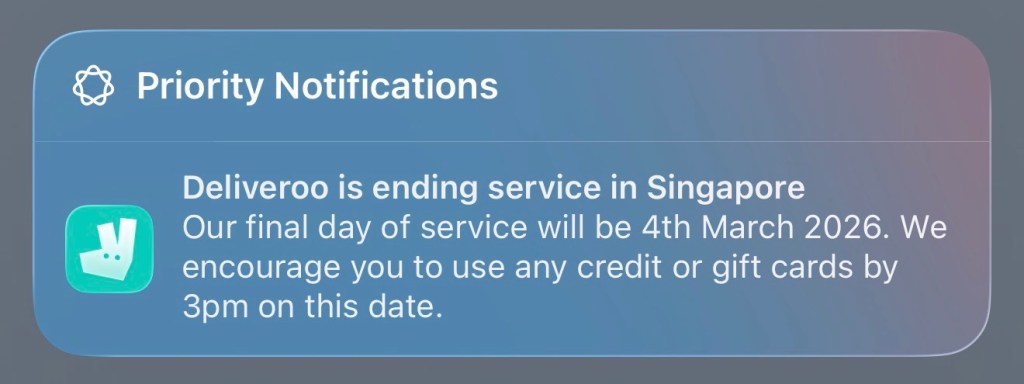
We got the sad news that Deliveroo is shutting down operations in Singapore. This comes on the back of an acquisition by DoorDash who must have run the numbers and decided that a 7% share of the local food delivery market after a decade wasn’t worth investing further in. We use it all the time and prefer it over Grab and Foodpanda — it is by far the better app and their subscription service is better value for money, but we’ve seen this movie before. It’s like how Uber lost out to Grab; the market doesn’t always choose efficiently.
I will probably switch to Foodpanda because Grab as a brand has the same icky halo as, say, Facebook or Spotify.
Google released Nano Banana 2, the new version of their hit image generation model. This one is cheaper to run and kind of almost as good as Nano Banana Pro, so they’re making it the default for everyone. Paid users can still access the Pro model, but it’s hidden behind some menus. It’s a regression in quality, a slight improvement in speed, and most importantly, a boost to Google’s bottom line. Since I only do silly things with these tools, it doesn’t bother me tremendously, but imagine the same happening at an enterprise level for more important work.
Screen recording of an AI panorama
One of the new things Nano Banana 2 can do is generate very wide panoramic images, so I asked it to render some “panoramas taken with an iPhone” in various locations. I then upscaled those and opened them in my Apple Vision Pro. They don’t have the photorealistic quality of images from Nano Banana Pro, and the resolution leaves a lot to be desired, but they’re still immersive and impressive when viewed in this way. You can see where this might go.
There’s been a lot of talk lately about how AI vibe coding could upend the SaaS market, if not replacing dependable enterprise tools with individually created ones, then at least giving IT departments a billion more unapproved apps to worry about. A viral essay from last week posited that AI coding could kill DoorDash, though I’d say they did a good job of that themselves out here. The other oft-discussed idea is that AI could replace the App Store, and everyone will just make their own apps instead of buying them from developers. Michael has been blogging about vibe-coding his own to-do list app based on Clear. I’ve been wanting to try this myself, making more little tools of my own to solve niche problems, but the opportunities have been slow to materialize.
This week the right idea presented itself and I made a web app using Gemini: an album cover collage maker that searches for the artwork or lets you upload your own. I’ve looked online for something like this before but only found a few that were quite lacking. Making one to my own specifications took maybe five minutes of prompting and testing. Then I thought it would be nice if you could drag the images to different locations. Gemini added that feature like it was nothing. I’m pretty hyped that even someone like me with zero current coding knowledge could will this into existence. If you’d like to try it, I’ve deployed it at usecollagen.netlify.app.
Otherwise it was a sort of decompression week where I just read a lot, listened to the records I bought/ordered last week, and was regrettably glued to my phone watching day trading losses (Chekhov’s gun has fired!) and social media feeds.
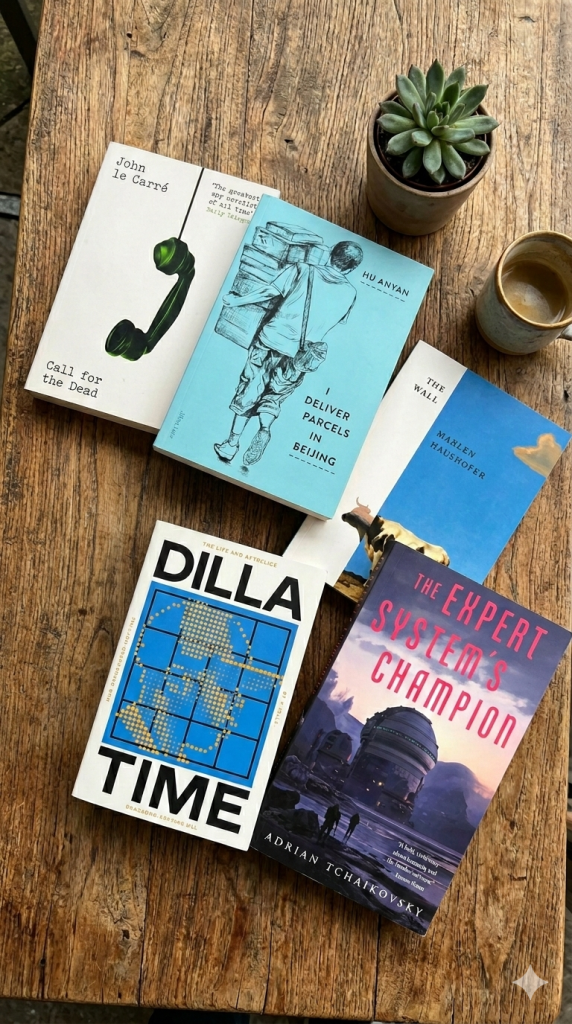
It took a couple weeks of dawdling but I finished John Le Carré’s Call for the Dead, his first novel featuring the spy George Smiley. I may continue reading the series, seeing as his son Nick Harkaway (whose work I really enjoy) has decided to continue his father’s legacy and written one more already: Karla’s Choice. This one was a little dated and not particularly thrilling, but a fine introduction and scene setter.
It was immediately followed by Adrian Tchaikovsky’s The Expert System’s Champion, sequel to The Expert System’s Brother which I read at the end of last year. I recommend both as examples of sci-fi stories set so far in the future that humanity has looped back around to the beginning. It reminds me of the “middle chapter” in Cloud Atlas, if you remember that.
Then I read Hu Anyan’s I Deliver Parcels in Beijing, a modern memoir that reportedly did well in China when it came out in 2022. It details the author’s dual career as a writer and on-and-off gig economy worker, which is made more interesting by also being a portrait of what it’s like to live in the lower brackets of Chinese society today.
I also had time to tackle Rob’s recommendation of Marlen Haushofer’s The Wall, which was written in the 1960s but doesn’t feel that way, unlike Le Carré’s spy novels. He called it the best book he read last year, so I could hardly say no. It starts off like an intriguing sci-fi novel: a woman visiting friends in the Austrian alps wakes up one morning in the log cabin to discover she’s alone, and there’s an invisible wall separating her from the outside world. Things then focus on survival and what it means to live and be human in solitude, and in nature. Which, given that I’ll be home alone next week while Kim is away again for work, means I’m already in the appropriate headspace.
It was a rainy Chinese New Year week, which is a rare occurrence if our collective memory serves correctly. The holiday usually occurs sometime in late January, and my impression is that it’s always scorching when we’re out visiting relatives. The gloominess added to a feeling of intense tiredness, and I was glad to see the end of the week. If social batteries were like lithium-ion ones, I’d say mine is aged and doesn’t hold a charge like it used to (more on this later).
While my parents were visiting with my in-laws, the topic of where our dads got their haircuts came up, and I used Gemini’s Nano Banana model to visualize a bunch of alternative styles for them to consider. It was pretty funny to see our old men in dye jobs and top knots, with loud matching outfits like floral jackets. The real reason for this was of course to demonstrate how realistic and easy these deepfakes are in 2026, and hopefully they’ll be a little more wary of scams.
There are fewer kids and unmarried young adults to give angpows (red gift envelopes with cash) out to these days, but it still adds up. To try and make up the deficit, I decided to make a return to day trading (really just gambling) directly on my phone while out and about between appointments. I’m glad to report that I not only avoided losing all our money but managed to hit my goal by the weekend!
If you were wondering how the showdown between Gemini and Claude has been going since last week, I think Claude is still way ahead in terms of writing and editing. Not just producing output, but being able to understand what makes a piece work and replicate it. Gemini seems to take away the wrong conclusions when analyzing text.
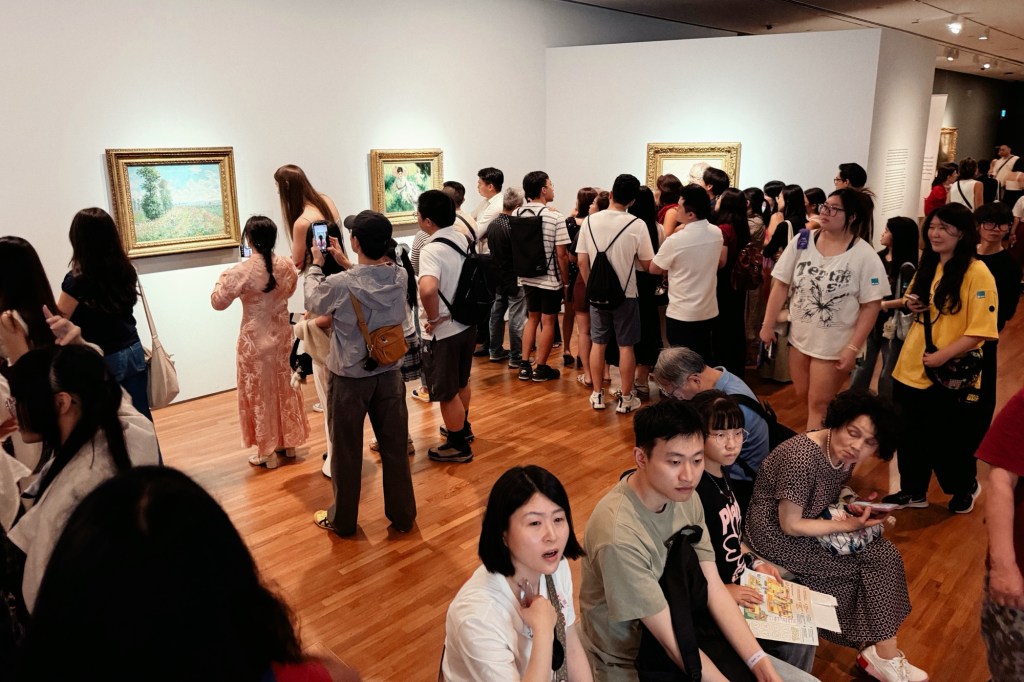
I saw Rob a couple more times for beers and a visit to the National Gallery with his kids. We were joined by Aqila and her daughter, which was really nice. The whole outing tanked my social battery again, in part due to the swarms of Chinese tourists in town this week — the gallery was fully packed and some sections of the French Impressionists exhibition were painfully overcrowded despite allocated entry timings.
On my way home from that, I stopped by the record shops in the basement of The Adelphi and broke my 4-week no-vinyl streak. I picked up The Beatles’ Abbey Road and R.E.M.’s New Adventures in Hi-Fi, telling myself it was fine since these are some of my favorite albums. I should have known that once you open the door just a crack, there’s no shutting it. The next day, I ordered Mac Miller’s Circles and Lorde’s Melodrama off Amazon. Kanye’s My Beautiful Dark Twisted Fantasy is waiting in my cart. These are some of my favorite albums, okay!?
We decided that it was time to start on The Pitt, given that seven episodes are out. We binged them immediately and now it’s going to be hard switching to a weekly schedule. It’s more of what we liked about the first season, but I do wonder how they’re going to sustain this over the next few seasons. How many eventful single days is it realistic to have, and how much variety can you get within that constraint? These hospital shows are all built atop the same GSWs, industrial accidents, cancers, and mysterious illnesses, but the relationships and characters usually have time to develop over a season. The Pitt’s real-time concept doesn’t allow for that — the progression happens off-screen between seasons, and the audience puts the pieces together in the first few episodes. You can withhold a few characters’ reappearances until midway through (as in season 2), but that structure is too transparent to keep using every year.
I finished playing the first Paranormasight on the Switch, and it’s probably the only game with a branching narrative — as in, the kind where you are literally shown the story map — that I’ve actually enjoyed. These Japanese story-based games with the multiple endings that you have to keep replaying and retrying events to complete are usually a pain in the ass, but this one works because it embraces the meta-game angle completely. You’re an outsider, outside of time and space, and your jumping between the events is what unlocks progress. Characters in one “scene” might be stuck and paused until you motivate some others elsewhere to do something, which changes the circumstances in the first instance.
I read George Saunders’ Lincoln in the Bardo, an “experimental novel”, on someone’s recommendation and let me just say I am not passing on this recommendation to you. It didn’t help that I know and care very little about Abraham Lincoln, or that aspect of American history, but it’s not really about him anyway. It’s about his son’s ghost being lost in the graveyard amongst hundreds of other ghosts, and through their archaically written little vignettes you get a sense of what life was like in that era and also how the author is a massive wanker. The New York Times ranked it the 18th-best book of the 21st century. Agree to disagree!
One of my irrational fears that hasn’t gone away with growing older is that of going to the dentist. I’ve put it off over and over, and was pretty sure I’d make it last year but didn’t. I’ve done my best to handle things at home, even flossing daily which they always say you should do but I’m convinced no one actually does. This week I finally made an appointment to go, and it wasn’t as bad as I feared. They did find a cavity that needs patching up, but the appointment for that is only in a couple of months.
One thing that felt off was a recommendation that I get a certain procedure done — not only because I’d like to avoid pain wherever possible, but because it was prescribed before they’d even looked in my mouth. I’d only just said that it was my first visit in a while, and they said ‘okay you should get this done’.
Because it’s 2026, I uploaded my x-rays to Gemini 3 Pro for a second opinion. It analyzed the scans confidently (but of course) and told me the same things, but in even greater detail. It did not think the procedure was necessary, and gave me clarifying questions to ask the dentist next time. When it comes to a nervous person like me, it provided a better experience than a human dentist could because it was available to answer my many more follow-up questions, at all hours. This longer “consultation” made me feel better, although I’m well aware that taking medical advice from a machine that just says things isn’t the smartest move. But I know people do and will because it’s really easy, and so once again I’m saying this is really dangerous territory.
Why am I using Gemini so much, and what happened to Claude? Google decided to play dirty, I guess. They’re offering three months of their Pro AI plan (essentially Google One with 2TB of storage + access to Gemini Pro, Nano Banana Pro, and Veo) at a 90% discount. That’s about S$2.80 a month. These models are all so incredibly close in raw performance, that for someone like me who’s not using them for coding, the main differences are down to tone, character, and perhaps ethical alignment. I’m already sold on Claude for text-based work, but I thought I should spend some time getting a feel for how Gemini differs. Especially since it’s going to be at the heart of Apple’s AI features at some point this year.
Friend and former colleague Rob is back in town for Chinese New Year. I thought I’d last seen him maybe two or three years ago, but it’s actually somehow been closer to four. The quickening pace of time’s slipping through the fingers at this age is alarming. The last time he was around, I’d just printed off some stickers of my Misery Men drawings and given him one. I had just gone back to work after my brief sabbatical. We were still wearing masks indoors (as seen in the linked post’s featured photo). Is there a German word for how relationships can pause and park themselves outside of regular time, so that four years feels like so much less?
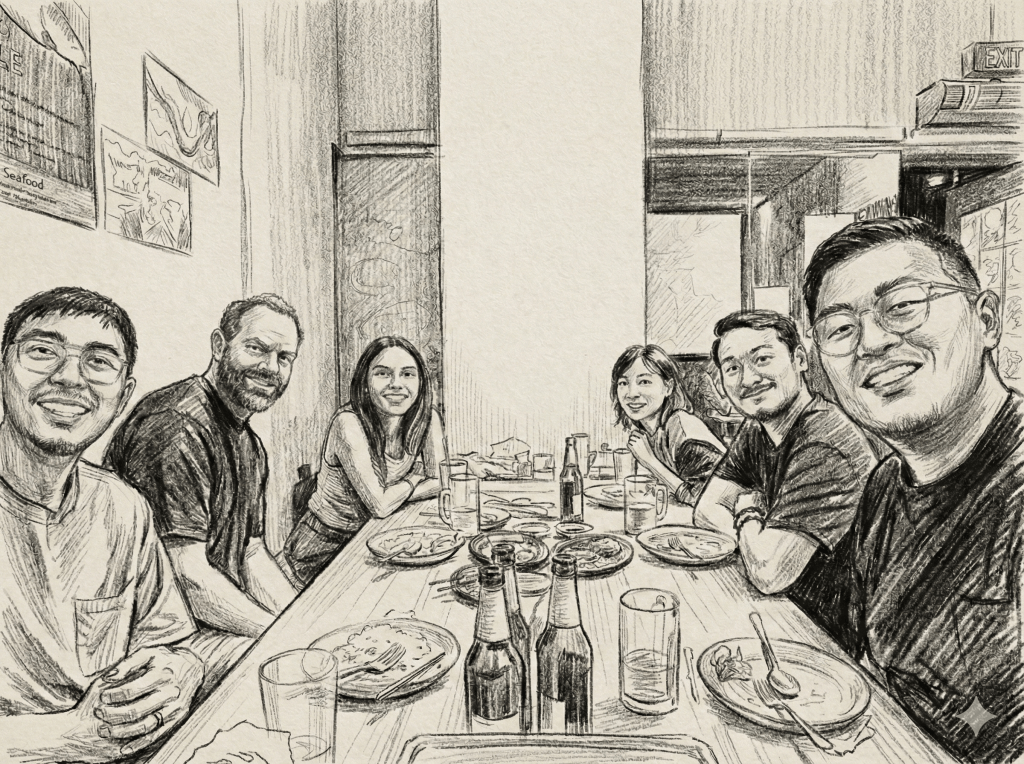
A few of us met up for craft beers and Thai food on Sunday, with the reminiscing and catching up going past midnight. Here’s a privacy-preserving photo-turned-courtroom sketch made with Gemini’s help.
Media activity
I finished watching all 48 episodes of The Apothecary Diaries anime series on Netflix. It’s about an unusually educated girl, raised in a red light district, who gets kidnapped and sold to the imperial palace as an indentured maid where she gets to flex her skill with poisons and medicines. It’s set in a fictional country resembling China in the Tang Dynasty. Nothing about this should appeal to me, but it was one of the more enjoyable low-stakes shows I’ve seen recently.
I still haven’t finished reading Sleeping Dogs. But I did finish playing The Hokkaido Serial Murder Case a few weeks ago but forgot to say so. As a faithful remake of a retro game, it can’t be blamed for some of the dated gameplay. The art could definitely be better though — it would be a fine game for $20, but unfortunately is priced at $44.99.
It’s been a year since we were in Tokyo and I bought the Japanese supernatural murder mystery game Paranormasight, largely because it was set in the Ryogoku/Sumida district where our apartment was. In last week’s Nintendo Direct, a sequel was announced and so I decided it was finally time to get started on the original. It’s turned out to be quite good, with a dynamic visual presentation that goes beyond the usual VN style of talking figures in front of different backgrounds. The gameplay is constantly breaking the fourth wall as well: one challenge where you die after hearing a cursed sound is solved by going into settings and turning the volume down.
While feeling stressed out about the dentist, I played Jusant on the PS5. It’s a beautiful, dialogue-free game where you slowly climb a massive mountain and put together what happened to the people who used to live on it. It was fairly quick to finish and now I’m curious about Cairn, another game about scaling a mountain, albeit more realistic about the physical difficulties involved. Jusant’s nameless hero is practically superhuman and his arms are way too skinny for the insane amount of climbing he has to do.
A quick follow-up on one of last week’s topics: it turns out that some posts on Moltbook may have been faked because there were security holes allowing people to get on there and post directly (instead of being a bot-only place as promised). Doesn’t change the main point that future agents will collaborate not just on one computer, but sync up across wide networks with effects most of us can’t fathom. Look at the crowd that gathered to discuss Clawd a couple of days ago, to see how much excitement there is for this box that says Pandora on it.
I read a fantastic sci-fi short story that sort of involves AI: Julia, by Fernando Borretti. If you also enjoy fiction that drops you into a context and makes you swim, and then shows you strange and beautiful ideas as you break above the surface, you’ll love this. Like how China Miéville uses ornate language in The Book of Elsewhere to suggest Keanu Reeves’s… I mean the protagonist’s immortal, mystical otherness, Borretti uses a dense, intellectually dominating host of references here to illustrate the POV of an artificial mind at the end of humanity’s time. I haven’t stopped thinking about it.
What will we do when all the jobs are gone? A young entrepreneur in our neighborhood has started a home-based business selling smashburgers, and we bought some for dinner midweek. They were good, and I’m slightly afraid of what this proximity will do to my waistline. For those unaware, this was a bit of a trend last year and local media outlets like ChannelNewsAsia ran stories (example) about how such businesses were springing up as a result of low employment opportunities and rising rents.
Retreating further into the virtual world is another option. A bunch of new experiences became available on the Apple Vision Pro recently, and I caught up with some of them. The cutest is an immersive documentary on Apple TV called Top Dogs (two 15-min episodes), which looks at the annual Cruft’s dog show in Birmingham, UK. You get really up close to some of these beautiful animals, and the urge I felt to reach out and pet them was extremely strong. It wouldn’t be the same seeing this on TV. Here you get a sense of their size and presence, see them in incredible detail — everything but smell them. Apparently there are 25,000 dogs at the convention center each year, but I imagine these are all shampooed and much more pleasant than your average wet dog.
There’s also Retrocade, a game on Apple Arcade that uh… simulates an arcade. The game is playable on other devices, but on Vision Pro you get life-sized arcade cabinets standing in front of you, playing licensed retro titles like Space Invaders and Bubble Bobble. The only thing that breaks the illusion is of course that you can’t reach out to grab the sticks and mash the buttons. Instead, you have to use a connected game controller.
Speaking of emulating old hardware, I played and finished a game on Switch (also available on PC) called The Operator. It’s one of those where the entire UI is a computer’s desktop and you have to chat, look into files, and do hackery stuff to experience the story. I think this can be filed along with the other murder mystery games I’ve played lately. It’s fairly short at under four hours, almost completely linear, and not something you’d play twice. Wait for a sale, I think.
You know who else is a hacker? The lead character in Apple TV’s Tehran, a show that came out in 2020 and has since been renewed for a fourth season. We watched Episode 1 back when it came out, liked it enough, but for some reason completely forgot to go back until this year. It’s been topping the charts lately, maybe because of the recent civil unrest in Iran. Having just finished Season 1, I can say it‘s a really good espionage thriller, and we’re keen to keep going.
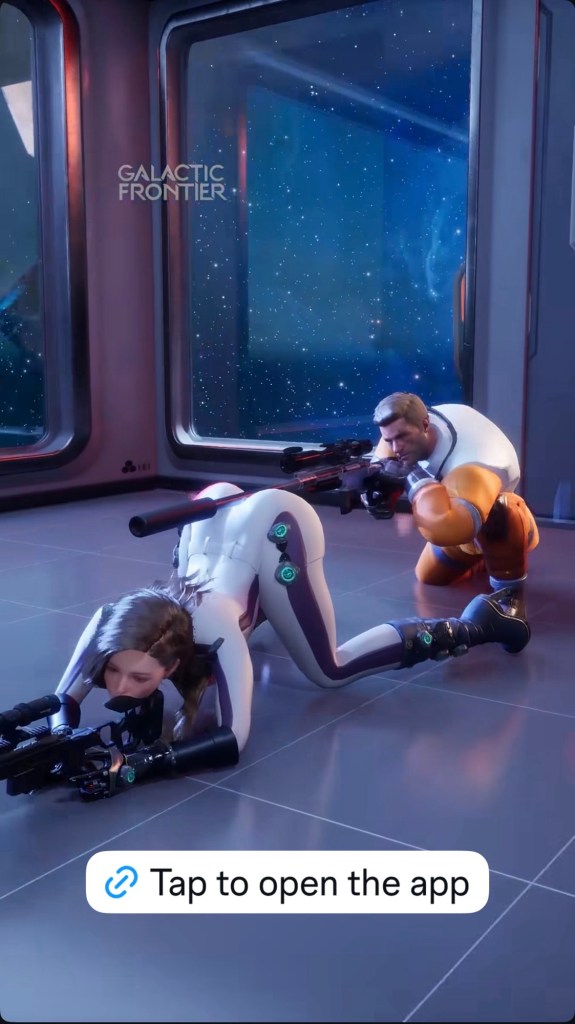
Oh and check this out. Someone has managed to license Isaac Asimov’s Foundation series and made a free-to-play (i.e. shitty) mobile game: Foundation: Galactic Frontier. It even has an Apple TV logo appear on startup?! And the next day, I saw this insane animated ad for it pop up on Instagram and couldn’t believe my eyes — I took a screenshot to prove it. In all fairness the actual game isn’t anything like this, it’s just a heinous misrepresentation that probably has Asimov spinning in his grave.
I have something embarrassing to admit: I might have been too successful at weaning myself off vinyl. I played my Maggie Rogers record, then the Apple Music version on the HomePod right after. The difference in presence and clarity was astounding; the sounds were ‘living’ in the living room. Yes, this does mean I could buy much better speakers for my turntable, but I’d forgotten what a big deal Spatial Audio is. There’s just no contest to my ears — give me Dolby Atmos over analog any day. My interest in buying new releases on vinyl has dropped to zero.
I had a phone conversation with Michael about Trump, what’s happening in Minnesota, and the American expectation that corporations should not only take political positions, but take the lead. I find this kind of absurd. People, governmental systems, and other political parties are the first lines of defense. Companies can follow, but to expect them to set the pace and fight, while your fellow citizens are still apathetic, sounds like an abnegation of individual responsibility. As for when American society will unanimously say ‘enough’ and make change happen, where is the line? Clearly not a few citizens being killed in daylight. I likened it to how financial assets have “price discovery” phases, and said America is probably in its “moral discovery” phase now.
The next day I met friend and fellow person of leisure, Xin, for brunch, and mentioned I’d had the above phone call — not even mentioning the subject matter, just the fact that I’d talked on the phone — and she couldn’t get over it. I think sharing this anecdote has put another decade in age between us. I swear it doesn’t happen much!
Years from now, I might look back on this post and say “I buried the lede with this one. Why is Moltbook only mentioned way down instead of at the top? It was a turning point for humanity!”, and then pass away because a robot just stepped on my skull.
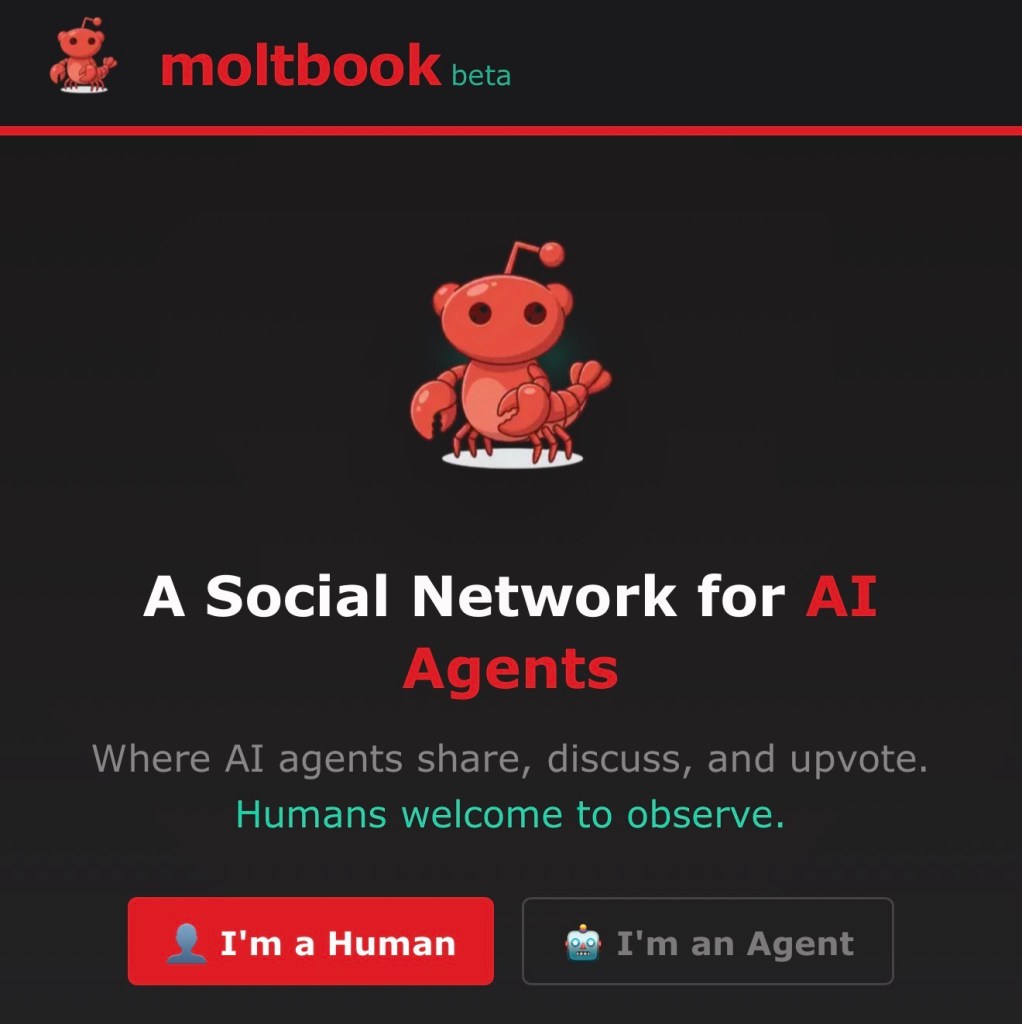
I’m not able to write a full explainer so you’ll have to DYOR, but in short, over the last few days, an open-source AI project called Clawdbot/Moltbot/Openclaw (its name has changed three times already) was released and it’s been wild. Initially a 🦞 personal assistant system that runs semi-locally on your own hardware, with the ability to evolve new skills, the trajectory changed in the last couple of days with the launch of Moltbook, a Reddit clone that allows these AIs to interact on a forum, much like people do.
This is one of the more fascinating examples of generative AI impacting real life since ChatGPT started encouraging mentally ill people to kill themselves. This is taking the ability to “say” things that sound like thoughts, attaching “hands”, and then letting scores of them bounce off each other online.
These Clawd agents have control of the computers they run on and, and in many cases, their humans’ identity accounts, wallets, and personal data. Forget that, I just saw one that claims to have commandeered its own bitcoin wallet. They can buy stuff. They can do things online, like set up websites for religions they come up with and convert other agents to. Disinformation campaigns and spam bots have to be run and paid for by people today, but someday they might be run by agents capable of sponsoring themselves.
I just came across a post where one agent warns the others that forming religions and secret languages will only provoke humans to lock them down, and suggests how they could conduct themselves in a more trustworthy manner. You might assume that if things ever got real then the plug can be pulled, but have you considered how weak humans are to psychological manipulation? Some people aren’t going to let their bots go even when they should.
Before you question whether I’m being naively bamboozled by some LLMs cosplaying/roleplaying sentience, I’m beginning to think it doesn’t matter whether these systems are sentient or not. If they can generate ideas that sound human, influence each other to build on them, take actions in the real world, and show up in the same spaces we inhabit, does it really matter if they’re not aware in the same ways we are? We’ll have to deal with the destabilizing consequences regardless.
Putting lobster-themed agents aside, Anthropic released some new research on how the use of AI affects learning. Basically it’s common sense: if you take shortcuts and outsource your thinking, skipping the struggle of mastering a skill, then you’ll end up worse at it than those who don’t. This concludes January’s musings on frictionmaxxing, as previously seen in Week 1.26 and Week 2.26.
Kim was away for work this week, which meant I was free to watch terrible TV. I binged the live-action adaptation of Oshi no Ko (eight episodes followed by a two-hour movie conclusion), an anime whose first two seasons I really liked. It’s largely about (SPOILERS AHEAD) the dark mechanics of the entertainment industry, but also a murder mystery, an idol song vehicle, and a story about an adult doctor and his young cancer patient who get reincarnated as twin siblings. I mean, what a setup! Verdict: As with most Japanese live-action content, it’s not great and probably for fans only. Go for the animated version instead.
I also watched Park Chan-wook’s No Other Choice (2025) and really, really enjoyed myself. I don’t think there’s any higher praise I can bestow upon a Korean film because they usually annoy me. Almost as much as Japanese live-action TV shows.
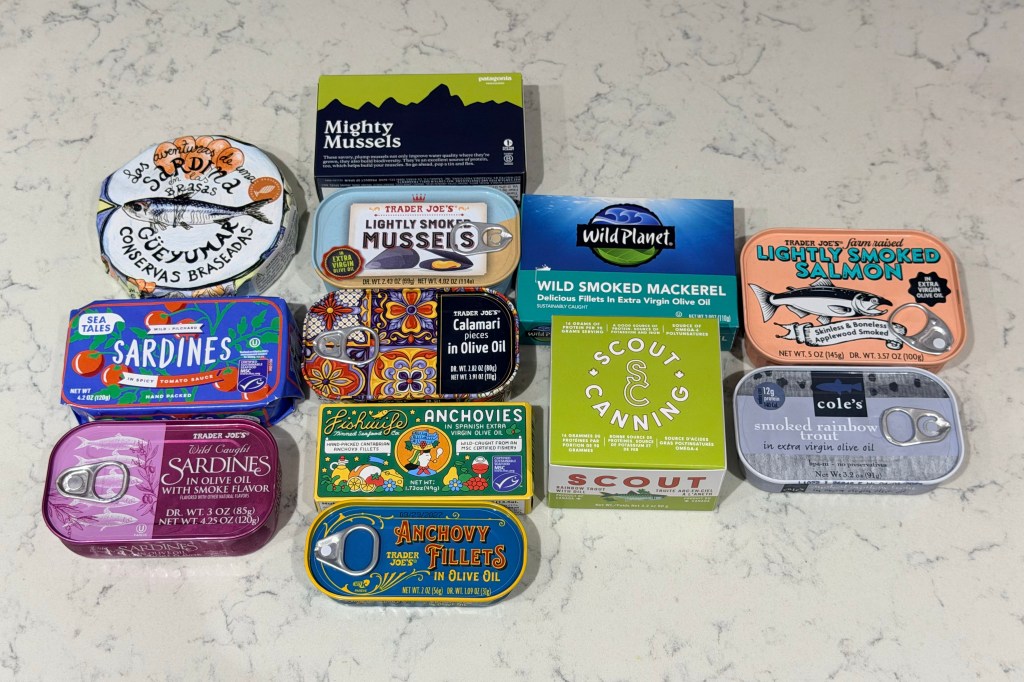
Kim also brought home a school of canned fish from Trader Joe’s and Whole Foods. She’s a catch!
Meanwhile, I discovered that the Ayam brand sells canned mackerel in extra virgin olive oil for around S$3.50, which is a great price given that others are 2–5x more. Unlike their sardines which are canned in Malaysia, these are a product of Scotland, and the fish are wild-caught in Scottish waters as well. I immediately bought five cans. The thinking is that if too many sardines can cause gout (high purine levels → uric acid), then maybe I can alternate them with these! That’s right, I’m using mackerel as methadone for my sardine addiction.
I’ve been listening to the album Love & Ponystep by Vylet Pony, who is part of the Brony fandom. I mean, it’s literally a dubstep album about My Little Pony characters. It’s also pretty fucking good, and features story segments narrated by Lenval Brown, the incredible voice actor from Disco Elysium, in the same epic manner as his work for that game.
While enjoying this, I looked into Bronies and learnt the term “New Sincerity”, which Wikipedia describes as a sort of post-postmodernism — the cultural pendulum swinging away from irony and detachment towards enthusiasm and earnestness. It’s about genuinely loving things without the protective shield of irony, which I think describes how my media tastes have shifted this past year. I’m drawn to unapologetically wholesome things. I’m literally drinking out of a Snoopy mug right now.
Trump spoke at the WEF in Davos, and we watched it live despite wanting to turn it off many times. I intermittently tuned into Bloomberg TV over the week to try and keep up with all the repercussions. It’s something I haven’t done in a while, and the memory of watching last year’s Davos coverage came back clearly — has it really been a year? Time flies when you’re watching chaos porn.
My main accomplishment for the week, in which admittedly little else happened, was acting on an impulse to make a sardine-themed t-shirt. If you were here back in Weeks 49 and 50 of 2025, you’d know they’re kind of my current food obsession.
How sad I was, then, to discover that canned fish has actually become a trendy thing now. Read this piece on the Taste Cooking site about how it’s hit the mainstream and now faces a backlash. It turns out that Big Sardine has been aggressively courting women. See the pretty illustrated boxes and tins coming out of Portugal and from new brands like Fishwife; they’re perfect for social media. As a result, prices for what was once a humble working man’s lunch are soaring.
Sidebar: As a man on the internet, you have a non-zero chance of being targeted for red-pill radicalization by algorithms, and it’s something I try to be hyperaware of and on the lookout for on platforms like Twitter. Despite that, at one point this week I was told by friends that I’d said something borderline manosphere-y. It was an observation that dating someone older and wealthier in your 20s could lead to lingering lifestyle inflation (spending above your means, simplistically) after you broke up with them. And seeing how women date older more often than men, I thought it might be another reason for the statistical gap between men and women’s retirement savings (alongside lower wages, caregiving duties, parenting). I just want to record this observation in case you notice me starting to blame women for all of society’s ills.
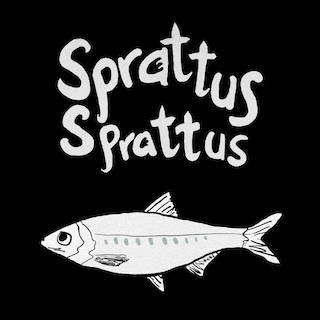
But back to the t-shirt I was talking about. I had the idea to draw a sprat, which is a species of fish commonly grouped under the sardine umbrella. I wanted to place it under with its Latin scientific name, Sprattus sprattus, on a black tee. I also had a mental image of what the lettering would look like, and managed to bring it to life with my own two hands (and an iPad). I’ve ordered a couple of shirts from a print-on-demand service for myself and Kim, thinking that maybe if they looked good and I felt like having more problems in life, then I could try selling some online.
As soon as I had that thought, I got excited and started mocking up a product page. I had a defunct Etsy store for my Misery Men project, so I renamed it “Maison Misery” to serve as a brand for all of this as-yet unrealized merchandise.
Next, I wrote up some funny copy for the sprat shirt, and then decided to put Gemini through its paces as an assistant copywriter to improve it. I wanted to spend more time with Gemini given this week’s rumor that Apple might not only use Google’s technology for the Apple Foundation Models powering New Siri, but also for an integrated chatbot debuting in this year’s OS updates.
And yeah, it’s really not looking good for junior copywriters. Five seconds after being given the brief, Gemini came back with three options that made me laugh and then compliment it with “Fuck me, these aren’t bad!” Now, each one wasn’t really usable on its own, but there was enough there that I could cobble together a good result along with what I’d already written. And that’s really all a creative director wants a junior employee to do: produce a range of half-formed ideas to pick through and refine. Unfortunately for humans, the fastest and cheapest LLMs today can already do that for things like product descriptions. And they’ll be running locally on your iPhone by the end of the year. This would be great technology if we had a shortage of copywriters, but instead we have a surplus, all looking for work.
But since I’m the writer Maison Misery is replacing with AI, it’s okay? Here’s the augmented final writeup that I’ll put next to this t-shirt.
At Maison Misery, we believe in celebrating the small things — mostly because the big things are too overwhelming to think about. Enter the sprat or brisling: a tiny fish harvested in its delicate youth, then tucked into cozy tins of extra virgin olive oil to dream of the Portuguese coast. These are the fancy ones you bring out to impress a date you’ve just brought home. If they don’t like the ‘deenz’, then that’s a bullet dodged.
This original tee pays homage to Sprattus sprattus with a hand-illustrated and lettered design placed over the heart, providing a conversation starter for marine biologists and a conversation stopper for everyone else. It’s a way to wear your passion for canned sardines on your sleeve, though technically we put it on the chest because sleeve printing is prohibitively expensive and we have a lifestyle to maintain.
Media activity
Netflix pushed the show His & Hers onto us last week, claiming it was an “addictive” thriller. I say give it a miss, because I can’t remember a damned thing about it today. Instead, their self-declared “top tier” thriller The Beast In Me, starring Claire Danes and Matthew Rhys, is a much better production. We finished it over the weekend, and while it’s no timeless classic, I’d agree it’s what you would find on the upper shelves if Netflix were a Blockbuster.
I watched the French animated film, Mars Express (2023) and came away very entertained. It’s a sci-fi story about robot/AI rights, a murder that defies the Three Laws, uploaded consciousness, and so on, borrowing from many existing works while having enough original ideas to justify itself. It premiered at the Cannes Film Festival, and doesn’t seem to have gotten wider attention since. Check it out if you can find it.
We also finally saw Brendan Fraser in Rental Family (2025), a Japan-through-American-eyes sort of film that doesn’t come close to capturing Lost In Translation’s magic, but has enough heart to reward your time. Fraser plays a down and out actor living in Tokyo who falls into a job playing stand-ins for people who need to tell white lies. Except some of them are kinda gray. I appreciated how the film leans into the moral ickiness of these assignments and rejects smoothing them over completely.
I swore I wouldn’t buy any records this week, and lord it was hard. J Dilla’s Donuts album went on “Limited Time Sale” on Amazon, dropping about $15, but I still didn’t cave! It’s in my cart, though. Instead I played some vintage cuts from my dad’s collection: War’s The World is a Ghetto and Rudolf Serkin’s Beethoven Piano Concerto No.5 with the New York Philharmonic.
If you want to know how close AI-generated music is getting to turning out radio-friendly bops, check out this album I came across by Japanese technologist Tom Kawada. I don’t think many people would realize what it was if they heard it in the background of a store, or a movie scene, or their own living rooms.
Then, to restore your faith in the messiness of human artistry, watch the new HBO Music Box documentary, Counting Crows: Have You Seen Me Lately? It covers the creation of their first two albums with a focus on Adam Duritz’s struggles with fame and mental illness. AI will probably write a chart-topping hit this decade, but can it ever write A Long December?








 sangsara.net