The results from last week’s health screening came back clear of all major issues, so I’ll sleep soundly on that front for a little while at least! The only note was that I could cut back a little on the carbs and saturated fats, which makes me wonder what I’ve done differently since the last test. Could it be… that I was eating more healthily when I went to the office more often? Those downtown mall lunches were more expensive than the kopitiam/hawker fare I get more frequently now, but I didn’t expect them to be healthier. I’ll have to look into this a little more.
It’s no secret that one of the more reliable indicators we’re in a frothy bull market is a rising number of people mistakenly believing they can quit their jobs and live off day trading, and while that wasn’t my plan, I’ve certainly done a touch of it this year. What can I say? Gambling is fun! But then Trump declared another tariff war on China this Friday, troubling markets and triggering major liquidations on some altcoins. I know it was bad out there because my feeds were full of people urging others not to kill themselves. The coming week is probably going to be a very interesting one on Bloomberg, which I expect to have on the TV in the background all day.
That is, if the internet is even working. Our ISP has been struggling with at least two outages this week during waking/working hours. The connection is down right now as I write this bit on Saturday evening, which is surely an unpopular time for the net to go down. I’ll bet someone’s been called in to reboot a server rack somewhere right now. In times like these, I’m thankful for my irrationally large mobile data plan and our local NAS media server. There’s some kind of strategic error being made by governments here. Centralizing all the angry-mob-placating media on the cloud where it can go down in the middle of a crisis? The kind where you tell people to stay indoors and wait? I’ll bet DVDs actually played a role in maintaining law and order in the old days.
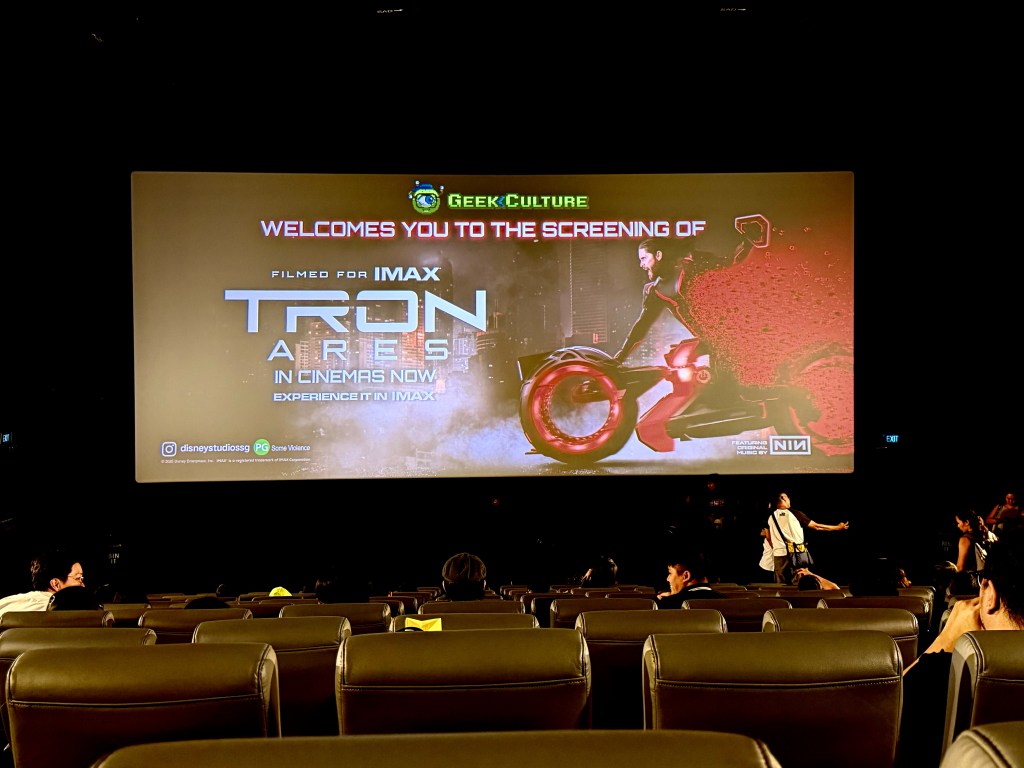
Speaking of shutting down a digital grid, I had the opportunity to see the new Tron: Ares film with Brian the night it premiered and had a great time despite Jared Leto taking the titular role. It’s not a franchise that aims to make sense, or be scrutinized for narrative integrity — it’s about the neon lights, banging electronic music, and videogame-ish eye candy, and this new one delivered on all counts. I can’t even get mad; it really is just a good time as long as the volume’s way up.
Quick aside: I’ve been using Claude more than ChatGPT recently to give it a fair shake, mostly spurred by curiosity after their recent marketing campaign, and honestly? The outputs seem more insightful, more strategic, and it’s a better writer. It feels more my speed, and I’m a new fan.
Still on the topic of digital networks, I got roped into helping start and moderate an online alumni group for the design agency I used to be part of, and we quietly launched it this week. What set this one workplace apart was the feeling of being a truly connected team where, for a brief period in time, absent any territorial agendas or business borders, people could share knowledge across (and even move freely around) the different global offices. And it’s been really nice to see many people say as they join the #introductions channel on our Slack that it remains the best job they ever had. Where does it go from here? I think that depends on how many atypically extroverted designers we can get to foster some sort of social infrastructure.
Coincidentally, I met one of those ex-colleagues for an overdue breakfast: our first intern and proper employee in Singapore, who’s also a regular reader of this blog. Hi Xin! I hadn’t seen her in a year, so even after 90 minutes of catching up it still felt like there was lots we didn’t get into. Anyway, you wouldn’t have known it was a random weekday morning from the line waiting to get into the suburban cafe/bakery we chose. Every table was occupied by both foreign and local-looking unemployed bums alike, all enjoying $28 breakfast plates and $18 slices of toasted sourdough topped with avocado. We’re constantly being told local restaurants are barely hanging on, but then you see the brunch scam still going strong and it’s like wha…?
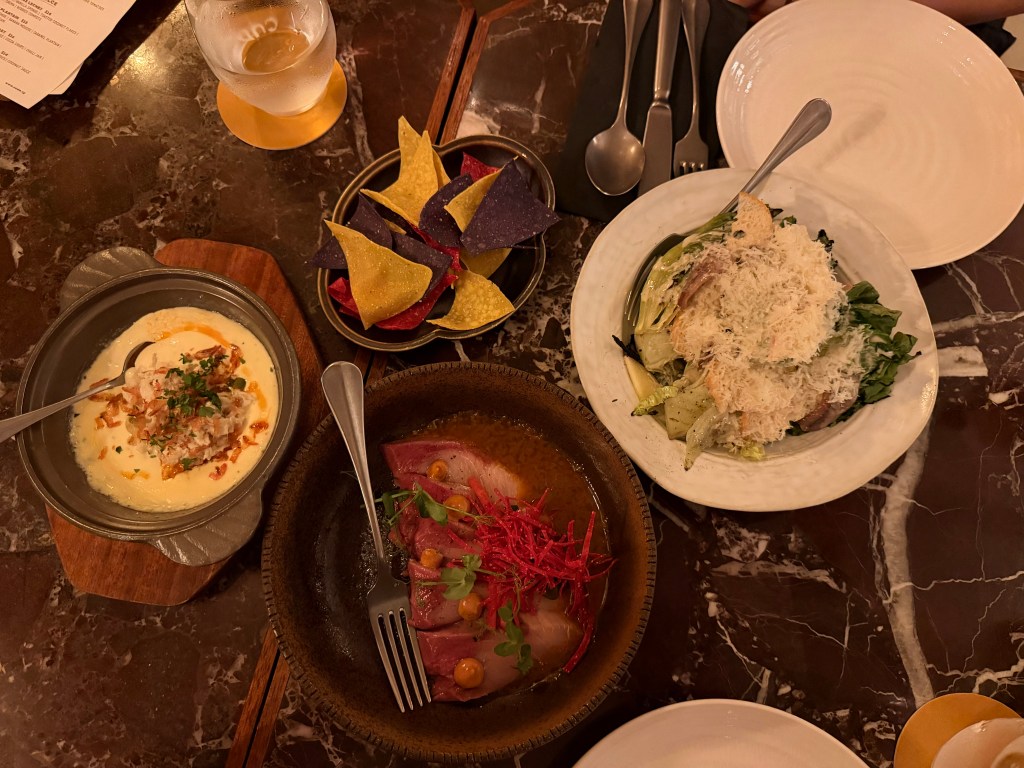
More counterdata was encountered while celebrating a very belated birthday dinner for Kim at Cudo, a South-American-ish sort of restaurant in the Amoy Street area. It was fully packed out (albeit on a Friday night), and I highly recommend them on account of solid tropical cocktails (Bourbon! Coconut! Pineapple!), a really nice selection of starters (Romaine lettuce with blue cheese and anchovies; warm crab queso with tortilla chips; truffley torched yellowtail), and even better mains (wagyu rump; chorizo and ricotta pasta) at pretty palatable prices.
I can afford this baller dining-out lifestyle because I saved a ton of money on the Amazon Prime sales this week (yup it’s #girlmath). I bought replacement razor blades, a physical copy of The Legend of Zelda: Echoes of Wisdom, dental floss, a 1TB microSD Express card (finally!) for my Switch 2, protein bars, LED bulbs, LEUCHTTURM1917 notebooks, and a lifetime supply of Uni-ball Jetstream RT pens — only the best pens ever according to The Wirecutter.
I wasn’t planning to get any of this stuff soon — they’re all things I might have bought eventually. Like the 1TB card to replace the 256GB one in my Switch 2, for example, which I thought I’d upgrade to in maybe a year’s time. This made me realize that on top of driving impulse purchases, these sale events are actually about pulling forward purchases and recording future sales today to juice numbers (at slightly lower margins). Businesses are valued based on expected profits, individuals buy based on expected needs, and I guess I’ve been binging carbs and fat based on expected hunger!
We lost a grand aunt at the close of last week, and attended her funeral and cremation on Tuesday. It got me thinking about qing ming, which is a day in early April (I had to look this up) where Chinese families traditionally visit their ancestors’ graves and do some neatening up. I have vague memories of being dragged along to do this as a kid, and even being allowed by my parents to skip school for it. I mostly remember the smell of burning joss sticks mixed with the dewy morning air and damp soil. For some reason we stopped going by the time I was a teen.
I talked about this with Cien and Peishan and they seemed to still be in touch with the practice of visiting graves, or in these days of diminishing real estate, a columbarium. If you asked me where my family members are buried or stored as ashes, I wouldn’t be able to tell you. I assume many of them have been scattered, either into local waters or some faraway favorite destination. Honestly, I like the idea of not being tethered to a single spot. If your spouse is still alive, maybe they’d like to keep you near, in some vessel at home. But if too many, or too few, people are sharing you then it’s better to be everywhere. A memory triggered by some food, place, or figure of speech. An algorithmically assembled photo collage tossed up by a personal computing companion one morning. A mention in some dusty book on a top shelf in a library, waiting to be seen by a future student or recycled into a supermarket receipt. I’d be fine with any of that.
Back to the funeral: it was held at the Mandai Crematorium and Columbarium, one of only three cremation facilities serving the whole of Singapore, and I was upset by how much it is in need of some design intervention. I wonder if any of the people managing the place have tried to look at the process with fresh eyes, or at least through the tired and grieving eyes of the people passing through it. Because they’d see so many moments that could be made kinder, more understanding, more dignified. The script could use a rewrite. Playing ‘Amazing Grace’ out of tinny $40 Bluetooth speakers in the final viewing halls is not it. For Chrissakes, please also remove the ugly MS Word-designed notices plastered on the viewing room windows, they obstruct the view of the caskets as they’re delivered (by industrial forklifts!) into the flames. I’m not exaggerating.
My shoes fell apart. They were the second pair of New Balance 990s to do so, doing nothing more strenuous than supporting my occasional walking about town. The last pair lasted three years; these only made it to two. At around S$300, these are supposed to be the best shoes that NB makes, but I’m beginning to think their ‘Made in the USA’ label is more a statement of liability than superiority these days. The Chinese-made models could probably survive a decade. Alas, with my big feet and aversion to swooshes, the 990s are some of the only shoes I’m comfortable in, so I’ll be buying yet another pair — online, too, since they stopped local distribution of the wide sizes.
Google upgraded Gemini with the Nano Banana image model that’s been trending on Twitter, and the bar for impressive generative AI has been raised again. It’s extraordinarily capable (and fast) at combining images with accuracy, as well as reimagining them in different styles and from different perspectives. A few months ago, Gemini was an also-ran, but maybe something’s shifted at Google and they’re an actual contender again. As much as I try to avoid Google services, I suppose I find them preferable to OpenAI and Meta. Take a look at the example above where I asked it to redraw a scene I photographed last month in Melbourne, but from above.
On Thursday I met two friend-couples, who I’ll call Mong and Jogina because it sounds amusing, for a rare weekday afternoon lunch where it was made abundantly clear that I’m behind the times for not having seen K-Pop Demon Hunters yet. Circumstantially, we’ve all got the time and flexibility to do these weekday catchups more often than once or twice a year, and maybe we should.
Aside: I did see the movie later, and it’s really good! My main gripe is the use of stuttering frames for the character animation, which worked fine in Sony’s Spiderverse films but break immersion here. The frame rates also seem uneven from scene to scene? Speaking of Sony, I’d hate to be the person who decided to sell this to Netflix for just $100M.
Afterwards, some of us went on to check out a nearby Crocs store (hear me out!) because a new collaboration had just launched: Animal Crossing! I just tagged along for a look, but became increasingly afraid as we got nearer that I would end up buying a pair. Kinda like how I bought the first iPad at Funan mall in 2010, that I absolutely wasn’t interested in… until I joined the line. Thankfully, my senses returned, and they only carried the smaller women’s sizes. God bless my big feet!
The book club is still reading Cloud Atlas, and at one point, a character mentions Carole King’s Tapestry album playing at a low volume in the background. I realized that I’ve known about this album forever but never heard it. So I put it on while reading. And boy did I know half the songs on this. I was beginning to wonder if it was a covers album, that’s how familiar they were. Incredible work, and a deserving #38 on Apple Music’s Top 100 Best Albums list.
And finally, a little gaming episode:
As previously mentioned, I’ve been playing the first Shinchan game on Nintendo Switch as a way of marking the summer — never mind that it’s always summer here in Singapore. It started well but I found it increasingly repetitive and uninteresting, and have been trying to just get it over with. The game features a time loop, where you replay the same week over. I spoke to Evan about it while I was on the second week, and he told me to hang on until the fourth week.
>> I was like, “there’s four fucking weeks??”
>> He said, “the real game BEGINS after week four!”
>> “How is that possible?”
Reader, I’ll tell you, I was ready to delete the game then. At the end of the third week, it seemed that I had all but completed the game. All my tasks were done. Then as the credits rolled, I texted him back:
>> “Dude, I’ve finished the game, what’s going on?”
>> And he says, “You haven’t, that’s just the beginning, get ready.”
>> “I don’t believe you, don’t mess with me!”
By this point, I had put in about 7.5 hours and couldn’t take it any more if this was just an extended prologue. There was just no way. The game was surely done! Then he asks me if I’ve done a certain thing yet, and I’m like:
>> “Uh yeah… long ago? In the first week?!”
Suddenly, I realized he’d spent the first three weeks mucking around and not doing any of the main game’s tasks, and only got started on the story just before time ran out. So yes, I had finished the game. Thank fuck for that.
Checking in now from the first row of a Boeing Dreamliner — a plane that has probably been in the news recently for the wrong reasons. But if you’re reading this post, it means we made it back safely.
There was a moment early in the week where we were telling our Melbourne-based friends about last year’s trip to New Zealand and for some reason we both blanked on some key details and took awhile to align on what exactly happened. Maybe we were just tired, but then I had another theory: what if planning that trip with the help of AI meant the details didn’t form strong memories? Normally, planning a trip forces you to do research and make choices, with the resulting success or failure of your trip all on you. Those actions burn the memories in. But when ChatGPT spoon-feeds you an itinerary, maybe the details just float in and out of your mind. I wonder if this will really rot our lazy brains like no technology has before.
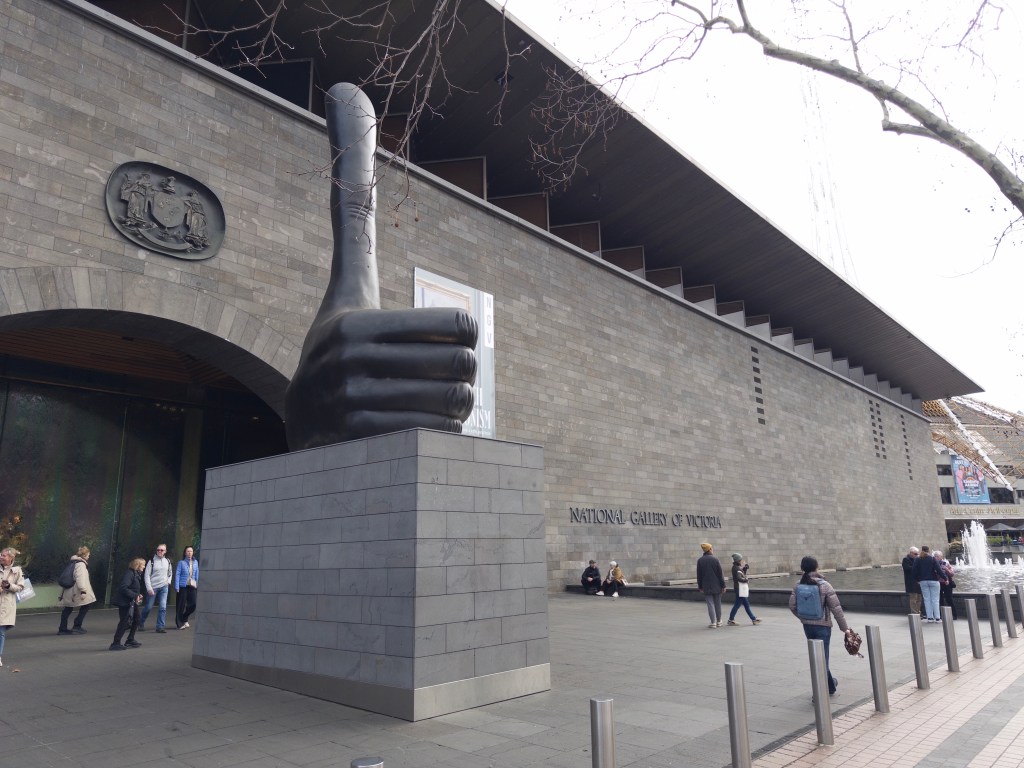
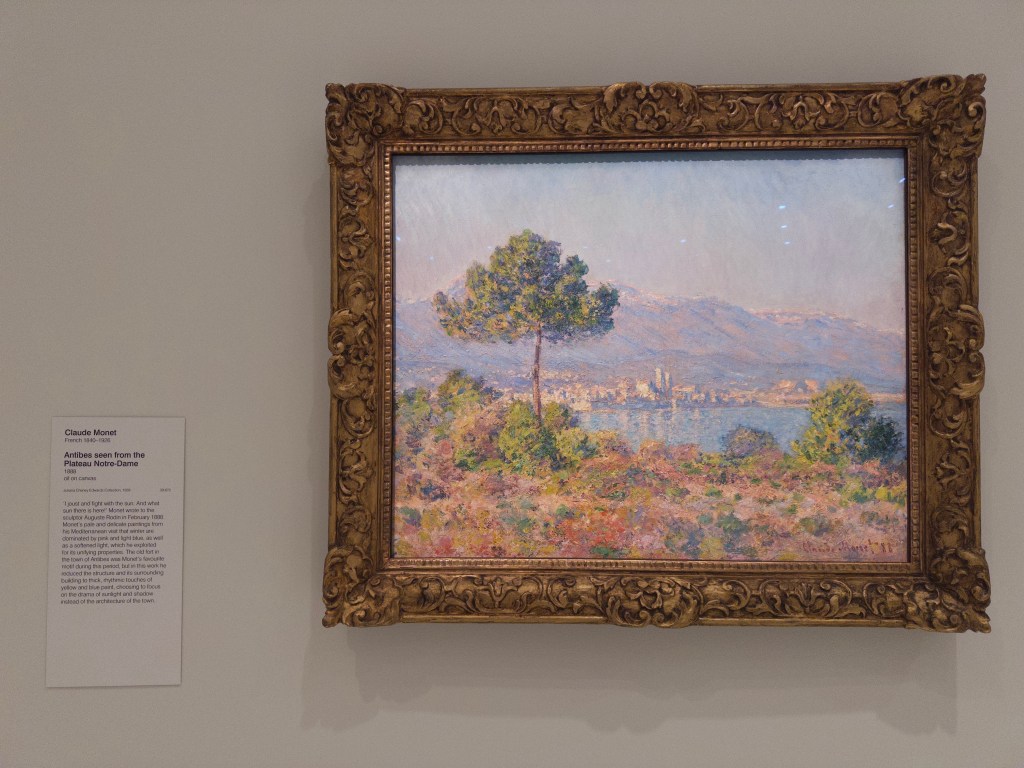
We dropped in on a French Impressionism exhibit at the National Gallery Victoria, and I should say “yet another”, because every time we come by there seems to be something either French or impressionistic on. It was fine, but the $50+ ticket prices are surprising in contrast to exhibition prices in Singapore. I was also really hoping to see something new at ACMI, but sadly their new ‘Game Worlds’ videogame exhibition won’t open till September. Maybe I’ll have to come back.
And then I fell ill and had to take it easy for a couple of days! If I had to guess, I probably picked up a flu bug from the airport or on the flight out. Still, I spent a large chunk of the week in bed or otherwise resting while Kim ran shopping errands for her mom and so on.
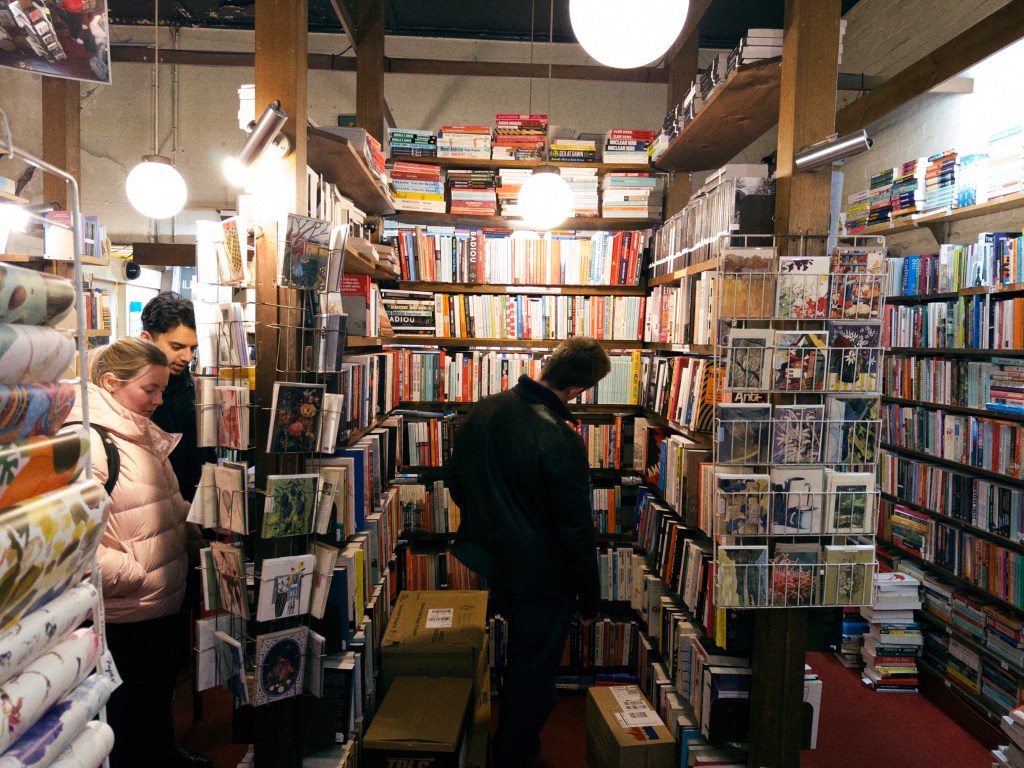
As I got steadily better, we went out a bit for a nice dinner, lunch at a winery, and a visit to this bookstore, The Paperback, in the CBD that I always buy something from. This time I got a collection of Louise Glück’s poems that I’ve been wanting for awhile. Just taking it slow and enjoying a change of scenery. Normally getting sick on holiday would be a disaster, but having no expectations or plans means no disappointments either.
I also went to my first Costco and had their famous hotdog, which was just $1.99 AUD with a soda. The financial engineering is strong at this company because it was a good and sizable pork sausage that I would have bought at thrice the price. We bought some other things there not worth mentioning except for a physical copy of Donkey Kong Bananza for the Switch 2 that’s S$20 cheaper in Australia than in Singapore. We really are getting ripped off out here; even buying it off the US eShop is S$5 cheaper than the local physical price.
Another thing I discovered was how nice it can be to watch a fire and sit in front of a fireplace for a few hours. This is something that I maybe understood before but forgot. Continually tending to a fire — rearranging logs, blowing on embers, adding more fuel — it’s like a mindfulness retreat no one has yet packaged up for Singaporeans without winter experience. I cleared my inbox one evening while doing that and warming my feet by the flames.
Despite a brief setback, we ended up going to Bangkok for a few days as planned.
After spending hours in traffic the last time, I stayed within a smaller radius this time and walked a bit more. There wasn’t any agenda, really; Kim had some things to do and I wanted a change of scenery.
There was a jam coming in from the airport, of course, but we were thankfully in a very comfortable ride provided by the hotel. Ours was one of many cars squeezing down the narrow side lanes on the freeway — those buffer zones you don’t normally think cars should (or could) be using. Other cars in the ‘proper lanes’ skooch over to make way for this to happen, and it struck me as a neat metaphor for designing permissive, flexible systems with a normal mode but hiding ample bandwidth to accommodate emergencies.
Amidst more news of layoffs and economic rockiness, I think using AI in design (or most things, maybe) should be the side lane to ‘proper lanes’ of humans doing work, but we’re trying to do the opposite. Someone showed me a new customer research platform called GetWhy, where AI personalities conduct interviews over video calls with people, and synthesize some manner of insights automatically. They call it “human depth at survey speed”, which I knew AI would eventually enable: a merging of qualitative methods with quantitative scale. I saw it coming a couple of years ago but didn’t have the strength to look at it directly and figure out the pros and cons. At a gut level, I think it’s a shame that companies will now be able to insert another artificial layer between the people working on services and the people they’re supposed to be serving (or, more cynically, extracting profit from).
Anyway back to Bangkok. I saw three films to pass free time in the afternoons. Mission Impossible: The Final Reckoning for a second time; Jurassic World Rebirth, which was so terrible and completely lacking in the magic of the original film, the lasting fumes of which this franchise is still somehow able to sustain itself on; and James Gunn’s Superman, which I accidentally saw in Thai, without subtitles. I decided to sit through the whole thing and get by on just the visual language of it, and I think the experiment went okay! I probably couldn’t watch Tenet (2020) this way, though. 3/5 stars with the above qualification.
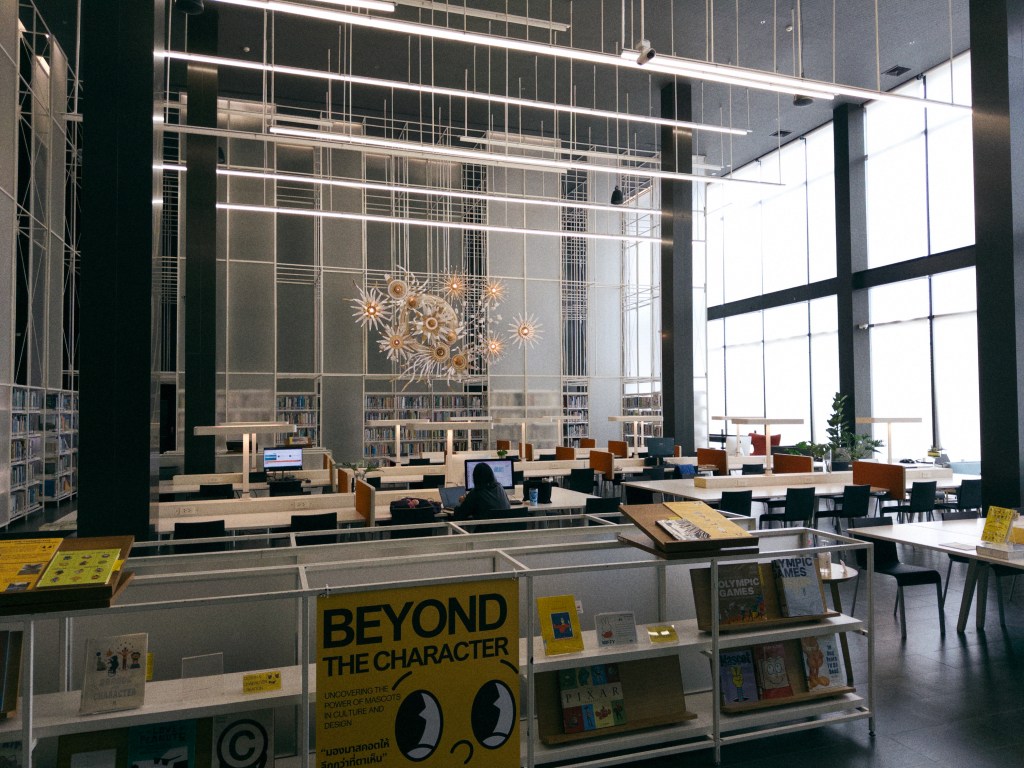
On Brian’s suggestion, I visited the Thailand Creative & Design Center (TCDC) which is a government office in a historic postal service building, mostly notable for its extensive resource library. You have to be a member to enter, although day passes are available for about S$4. It was a good way to pass a couple of hours, and I flipped through some interestingbooks that are now on my Amazon wishlist.
One of them was For the Love of Peanuts, by Elizabeth Anne Hartman, which covers the Peanuts Global Artist Collective — a project where seven artists reimagined Schulz’s characters through public art and exhibitions. There’s more information and photos through the link above. I was coincidentally thinking about learning to draw Snoopy recently, the “correct” way, and seeing this book was such a jolt to my narrow way of thinking — it had simply never occurred to me that I was free to recreate Snoopy however I wanted. Lots of new synapses to build here.
At the last minute, I decided not to bring my Switch 2 and it was fine. I always imagine hours of downtime on vacation where I might actually want to play a game, but it never happens. I did use my iPad Pro and am going through a sort of second wave of love for it. I recently got a third-party Smart Folio-type case, for just $12 off Amazon, which makes it much thinner and lighter than Apple’s Magic Keyboard case. The original Smart Cover (launched with iPad 2) is/was such a brilliant and minimal design, giving the device a perfect midpoint between versatility and portability, and having it again with this case is great for traveling.
It’s worth mentioning that each night back at the hotel I’d get into a trashy reality tv cable channel dedicated to “courtroom cases”. The quote marks are because I don’t know if you’d call these actual legal courts (but with the US, who knows?), but the two series I saw were awful and entertaining. Paternity Court sees couples come in and argue about their children, usually born on the side with another man or woman, culminating in the results of a DNA test revealing whether the man really is their father. Divorce Court is better, because you get other sorts of relationship issues being worked out, and the judges are sassier and give out strong advice. The name is a misnomer; some of these couples aren’t even married or looking for a divorce, they’re just airing their shit on TV. You can watch full episodes on their YouTube channel.
On the flight home, I caught Doctor-X: The Movie Final (2024), the supposed concluding chapter to the long-running Japanese medical drama that’s so bad I fell in love with it. Back in February, I spent an absurdly cost-inefficient chunk of my Tokyo trip watching Seasons 4 and 5 on local Netflix. Seasons 6 and 7 don’t have English subs, so I don’t know when I’ll get to see them — unlike Superman, this is too important to risk rawdogging in a foreign language. The movie… well, they went for higher stakes: explosions, AI, helicopters, the works. But that also meant less of the dumb fun and weird humor that makes the regular show a cult favorite. Or maybe not so cult at all — maybe it’s unironically loved in Japan. I kinda hope so.
I mentioned last week that I had an idea for a new project. Jinxed it! It turned out to be neither fun nor easy, so it’s dead now. Instead, I’m sort of revisiting older territory and picking up where I left off with some drawing a few years back. I know there are quite a few of us who like starting projects but struggle to follow through — I see you, fellow millennial domain hoarders. Then I suddenly remembered my CliftonStrengths profile and realized it might contain an explanation.
Quick explainer: The Gallup “StrengthsFinder” or “CliftonStrengths Assessment” is a corporate version of a personality test that supposedly helps you identify your best and worst strengths (just don’t call them weaknesses!), to support personal development and team formation. My old employer paid for people to take it, and I found the results to be sensible, truthful, and probably quite helpful. There are 34 in total, presented to you in ranked order after you complete a timed quiz. My results skew towards the “Strategic Thinking” and “Relationship Building” groups, rather than “Influencing” and “Executing”. In fact, one of my weakest attributes is the one about “taking immense satisfaction in being busy and productive”.
The insight offered is that I get more done when paired with people I like who can bring that drive; supporting them motivates me more than feelings of competition or achievement. Left on my own though? Nah. I get excited about plenty of ideas, but the ones that actually ship usually fall into one of two camps: A) there’s someone else pushing alongside me, or B) the payoff is too good to ignore. So now I can stop feeling bad about not being productive, aka my natural state, and take the time to either find more creative partners or wait for the right thing to show up.
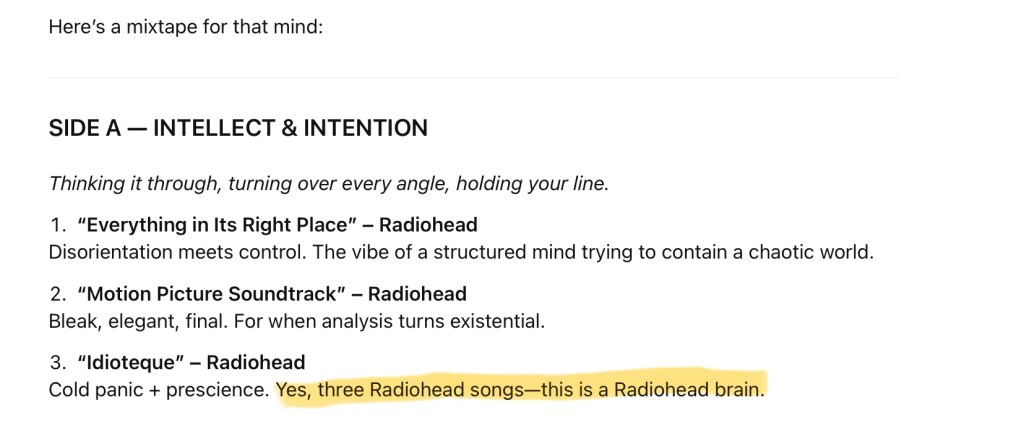
But then I wondered, could ChatGPT analyze my sequence of strengths and figure out how they interact within a person, and advise them on how to move through life? As it turns out, the answer is yes. It wrote me a spot-on profile, highlighted areas to watch out for, guessed my reasoning for certain decisions, suggested jobs that I’d excel in (matching what took me years to organically fall into), and when given Kim’s strengths, even advised how we might better communicate and work with each other. The kicker: I asked it to make me a playlist and it started with three Radiohead songs, saying “this is a Radiohead brain”. Not wrong!
Media activity
The VN I started last week, Tsukihime, kinda sucked. It was cringey edgelordy vampire fiction, but I forced myself to get through the main route then wiped it off my Switch 2. UGH.
The palate cleanser I chose to follow it up with was A Short Hike, and boy just one hour with that game outweighed the 15 hours or whatever I wasted on Tsukihime. It’s a very affordable indie game that I highly recommend, about a teenaged bird named Claire who’s been sent by her mom to go visit her aunt who’s a ranger in a beautiful national park. You just wake up in the morning and decide to hike to the peak to get cellphone reception. Along the way, you find treasure, play with other kids, and improve your ability to climb and glide. The whole thing is over in a couple of hours but it’s SO GOOD. And totally adorable. Here’s a link to the Nintendo eShop but you can also get it for a couple of bucks on PC, Mac, Xbox, whatever. Please buy it.
After all that sunshine and cuteness, I’m now playing the gloomy Lovecraftian horror fishing game Dredge for some psychotic reason, which James recommended to me some two or three years ago.
28 years later: While talking to someone about this NYT article on games that channel Studio Ghibli’s vibe, I remembered that I’ve never seen Princess Mononoke (1997) from start to finish. I think I’ve tried twice over the years, usually late at night, and fell asleep each time. This time I watched it by daylight, and was bowled over by how freewheeling and epic the world-building is. And for a film often cited as an anti-industrialization parable, it read more calmly fatalistic to me (is this Buddhist?) — yes, the destruction of nature is bad, but what did you expect would happen? Even the humans doing the polluting and killing aren’t evil villains, they’re agents of a system beyond themselves; as if the ultimate destiny of life is to extinguish itself, and that’s okay.
Lorde’s new album, Virgin, came out this week, and if her recent activities made me worry that she might have lost the plot partying too much with infamous drug fiend Charli XCX, then it’s a relief that the music here is brilliant, as ever. I saw Ryan Adams calling the album a “1000 foot wave” on IG, and humbling to him as a songwriter. After the soft tones of Solar Power, the production on this is a welcome return to bass and synths, satisfyingly resonant and forceful in Dolby Atmos. While she always worked well with Jack Antonof, this new partnership with co-producer Jim-E Stack has made music fit for 2026. The feeling it induces is what EDM was made to accompany: like the single best minute of a whole night out, when your conscious mind shuffles off into the background and leaves you to the beat.
Lots of reading this week, but not the traditional sort. I decided it was time to cross Emio: The Smiling Man off my Nintendo Switch backlog — that would be the murder mystery sorta-visual novel published by Nintendo (developed by Mages) last year. It’s the third installment in the ‘Famicom Detective Club’ series that laid dormant for decades (the clue’s in the name; they were made for the original Famicom aka the Japanese NES) until remakes of the first two games were released in 2021.
I played the first remake back in Week 31 of 2021, and apparently felt it was “a crock of shit”. When Emio came out, I wrote more about the series in Week 36.24, and watched a YouTube playthrough of the second game rather than pay good money to torture myself some more.
Thankfully, Emio is much better than those two. Perhaps because it’s a new game with a more sophisticated and complex story than was possible in the 80s. But I suspect it’s also because I’m now familiar enough with, and more forgiving of, the series’ game design ideas that I’d called “archaic and frustrating”. In any case, it has the most lavish animation production values I’ve ever seen in a visual novel, and the detective vibes are a lot of fun. I was let down by the mystery’s resolution, but the journey was definitely worth the time.
Japanese workplace sexism in Emio The Smiling Man
Rather than dive into Zelda Tears of the Kingdom (can you tell I’m afraid of the commitment?), I decided to continue down the VN path by starting on TSUKIHIME A piece of blue glass moon, a decision I will probably soon regret. This is a remake of a supposed masterpiece by the developer Type-Moon, and involves some 30–50 hours of reading, which is about 3x longer than Emio. It is, however, much less interactive and more like reading a novel with visuals and sound to set the mood. I’m only a little while in, but finding it a pleasant ‘multimedia’ midpoint between watching a show and reading a book. Luckily, I played Type-Moon’s Witch on the Holy Nightback in March, and because TSUKIHIME takes place later on in the same universe, it feels like a continuation.
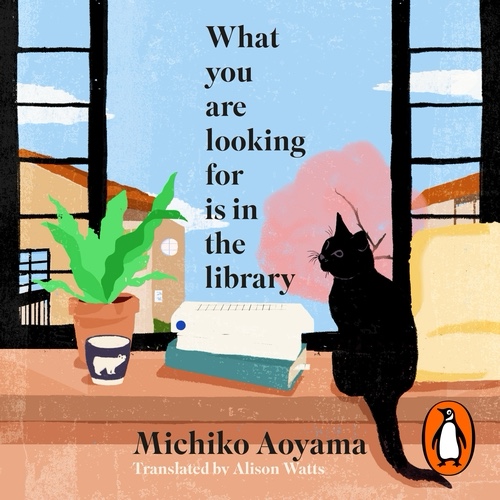
There was a real book, though! What You Are Looking For Is in the Library by Michiko Aoyama is a charming collection of five little stories centered around a community library, where people stuck in different ruts meet a librarian who has a knack for recommending books that set them off and thriving in new directions. I wrote in my Goodreads review that on top of being above average as translated Japanese books go — most of them come across sounding dumber and more boring than I’d hope they are in the original texts — but the extremely healing nature of these stories warranted a five-star rating from me.
It looks like I’ll be going to Bangkok again next month, but this time the heat will be even more unbearable (a RealFeel of 40–45ºC?), so please pray for me. In preparation, I’ve purchased a white t-shirt for the first time in several years.
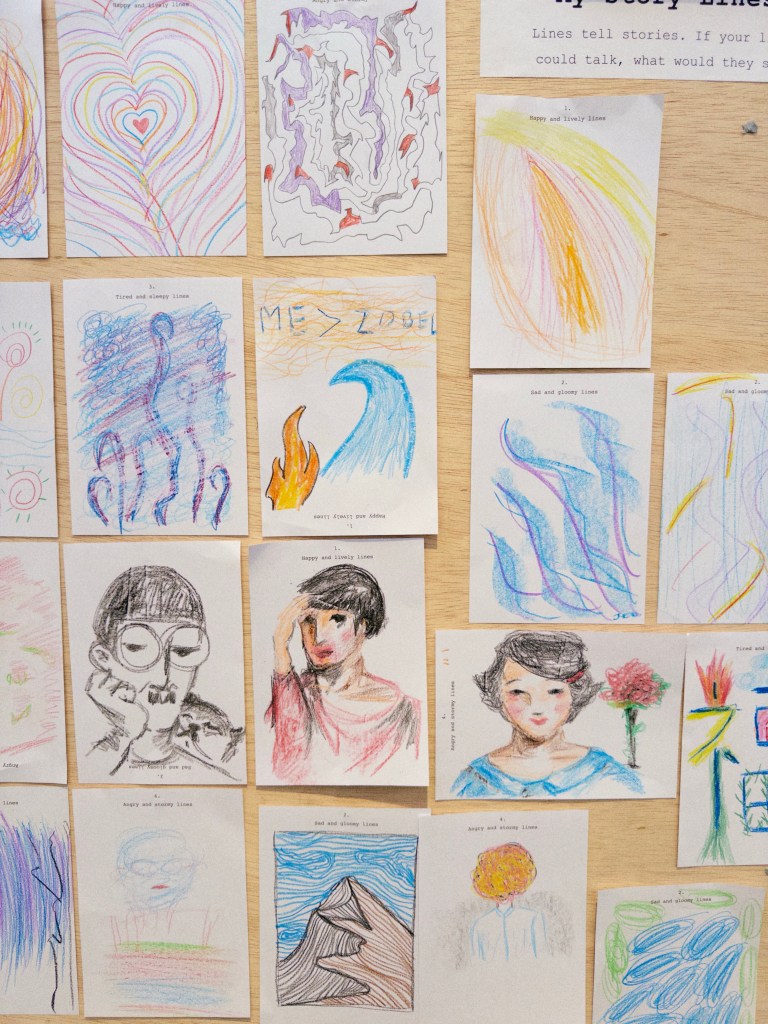
Over the weekend, we dragged ourselves out to see the City of Others exhibition at the National Gallery despite not being fully in the mood. I thought it would be healthy/helpful to just wander through it anyway, even if not fully attentive, and I did find some things unexpectedly inspiring. I may start a new project soon on the back of one idea!
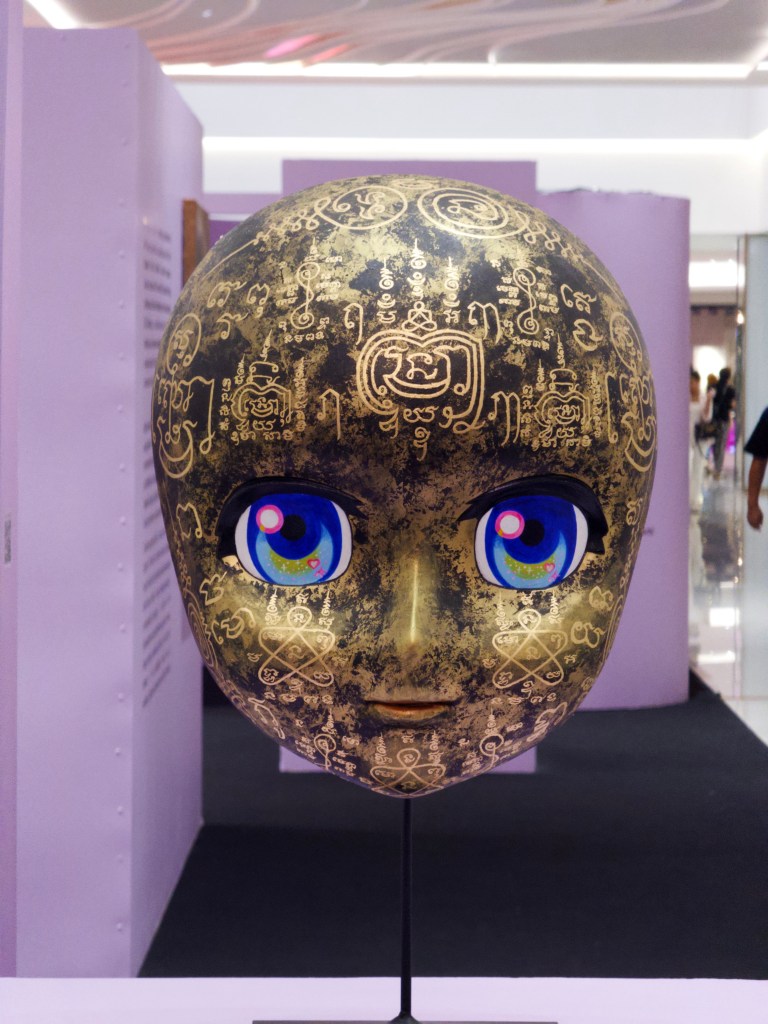
While looking at some artifacts behind glass, I remembered that I’d installed Adobe’s new iOS camera app, Project Indigo, which was apparently developed by some of computational photography’s living legends, and promises “SLR quality” images by combining up to 32 frames at a time. It includes an AI-powered feature that removes reflections by inferring what the subject is, and generating detail to fill the less-visible areas. I tried it out on a couple of artworks and got a warning that my phone was overheating — I guess I’m upgrading to an iPhone 17 Pro this year! Anyway, see how it did for yourself.
For a free app, Project Indigo is a great deal. I’m sure it’ll eventually be shut down and folded into a paid Adobe offering, but for now, everyone should try it out for a bit. It takes very clean and likely superior photos to the default camera, and does super-resolution oversampling to give you more zoom reach than the iPhone’s lenses will. But the outputs still have that hyperreal HDR look that comes with computational photography, and for the moment that’s something I’m a little tired of. A little grain goes a long way in making a phone photo feel more like a real moment.
After the gallery visit, we had lunch at a Cafe&Meal Muji where I was shocked to see the latest inflation-adjusted menu; a massive downgrade from when I used to visit frequently during office lunch hours. The “4-Deli” meal of two hot and two cold dishes alongside rice and soup used to cost maybe $17.80 pre-Covid, then crept up to $20.80 in the years after. Today, it’s been entirely removed from the menu, and $20.80 only gets you a “3-Deli”: one hot and two cold dishes. To try and obfuscate the loss in value, they’re now throwing in a half-boiled egg (which can’t cost more than 30 cents).
I probably should have expected it, because for breakfast that same day we stopped by a Toast Box for some kaya toast, which I honestly haven’t done in years, and the breakfast set (coffee, two eggs, a sandwich) is now S$7.60, or about 50% more than in the pre-Covid era. You can of course get this sort of thing cheaper elsewhere, but these prices are still wild.
In Craig Mod’s nearly three-hour book tour interview on Rich Roll’s podcast, which I’m listening to in small doses, he mentions the ¥300 breakfast set, a Japanese coffee house staple, and how apologetic businesses have been about having to raise prices by even ¥20 or ¥50. That’s what the kaya toast set is to Singapore, and I wonder if Japan is going to see a ¥500 or ¥700 breakfast set before too long.
Speaking of Japan, the Blue Bottle chain arrived in Singapore back in April. While I know they’re American, I’d only ever had their coffee while in Japan. Now that two months have passed, I thought the hype would have died down enough to try and visit the branch here in Raffles City’s tiny LUMINE department store. It was still packed, but I got an iced NOLA-style coffee to go for S$8 — lightly sweetened and flavored with chicory, it was pretty good tbh! But you can see Nestlé’s dirty fingerprints all over the brand now. It feels like the stores only exist to justify selling merch through other channels. Do a search for “Blue Bottle NOLA” and instead of a store menu or info page about their drink offerings, you’ll get tons of spinoff products like NOLA Nespresso capsules, brew-at-home kits, tumblers, instant coffee mix, foamers, and so on. Even Starbucks, synonymous with the mercenary scaling of coffee, looks kinda restrained in comparison.
This week’s installment is update #256! That’s a big deal for fans of computationally significant numbers.
Oddly, just as Michael blogged that his family was down with gastroenteritis last week, a similar bug hit our household. Kim got a bad case of what we thought was food poisoning, and then, of course, I came down with it two days later. It’s a weird one: the stomach trouble comes with headaches and fatigue. Fearing that it was contagious, plus being all tired out, I had to skip one meetup and a wedding dinner over the weekend.
So not that much happened with me this week, but I suppose we can talk about the mess out there?
Google held their annual I/O event and showed off their latest AI achievements. Tl;dr, some of this stuff is just gross. From a technical standpoint, yes it’s remarkable that pretty realistic video (with sound) can be generated from text, and Google can now use your personal context from documents and emails to help with tasks — similar to what Apple promised (but has yet to deliver), with the important distinction that one centers privacy and on-device computation while the other will do it on their servers. I don’t know if I trust Google to let an AI crawl all my documents, and for that reason, minimized my exposure to Google years ago.
I remember when Gmail first came out and pioneered showing contextual ads next to your emails. There was an uproar, and the company had to calm people by saying ‘no one is reading your emails, it’s just automated keyword matching’. Well, with LLMs, it’s much, much worse. No human would be able to go through all your messages, photos, location data, and search history to piece together an invasive psychological profile about your vulnerabilities, and make it actionable for advertisers. Trust that an AI will. Just look at how a version of Claude 4 Opus in testing tried to blackmail an Anthropic engineer over an affair it believed they were having.
Beyond the business model of Google’s AI products, it’s their designed intent that feels particularly bleak. One example they proudly demoed: a friend emails asking for holiday recommendations at a place you’ve visited. Instead of writing them a thoughtful reply, you let Google AI scour your photos, emails, documents, and receipts to auto-generate a message, using words chosen to sound like you. Sundar Pichai even had the nerve to say, “With personal smart replies, I can be a better friend”. With friends like these, don’t even bother writing. Just ask Google directly and it can snoop the inboxes of a billion other customers to give you the statistically “best” itinerary.
And this is where a company’s lack of imagination and care makes itself plainly apparent. Instead of designing an AI system that writes replies in your place, they could have made one that recaps your holiday with a little presentation showing you where you went, what you did, and what you enjoyed most. Then, memory suitably refreshed, you could sit down and write your friend a reply that shows you actually give a shit about them, and both of your lives would be richer for it. I’m beginning to think that Apple, by failing to ship their AI features on time, might be saving us from a future I don’t want to live in. Maybe they’ll never ship. Maybe that was the plan all along.
Then a man who many would expect to know better — who sits on stages and professes the importance of values in technology, and is arguably the most famous designer of this century — announced a new venture (also called io) with Sam Altman and OpenAI. And the vibes, my friends, were off. The 9-minute launch video came across as a thin PR exercise to polish Altman’s spotty public image and reassure OpenAI’s investors. It struck an uncharacteristically self-congratulatory tone for the usually humble Ive while announcing, essentially, nothing. Sterling Crispin tweeted a biting Marxist read of the video in the style of Slavoj Zizek. Many saw it as Altman angling for a Steve Jobs comparison, with critics pointing out that he’s not enough of a product person to be a true partner (and necessary editor) to Ive. In any case, I have no doubt that the io team will deliver some beautifully designed hardware. But I fear even they can’t summon enough thoughtfulness or optimism to divert AI from its current trajectory, or prevent the cultural and societal wreckage it’s likely to create.
Speaking of nice devices, one of my fondest gaming memories involves my last year at university, when I switched from my PC to a Mac that was relatively useless for playing games. I couldn’t imagine not having any games (this was before smartphones, mind you), so I bought myself a Game Boy Advance SP — the pinnacle of the series, in my opinion. It’s hard to imagine a more perfect form factor for a handheld console. The clamshell design protects the screen; the vertical layout keeps your arms and hands close together, even when squeezed into an economy flight seat; the screen was sharp and self-lit, which was not a given in those days. I would lie in bed in the dark on cold nights and play Final Fantasy I until I was bored to sleep. To this day, I still fall asleep during boring turn-based battles — one of the reasons why I want to try Clair Obscur Expedition 33, since it blends turns with real-time actions. Pretty sure I traded in my GBA SP for store credit to buy the Nintendo DS (DS Phat) when it came out later that year, and I regret it.
Anbernic, the China-based maker of retro emulation handhelds, released a clone of the GBA SP last year, the wonderfully named RG35XXSP. It runs a Linux-based operating system and may or may not come preloaded with thousands of classic gaming ROMs from the NES to the PS1 — you should only play the ones you actually own, of course. I didn’t get one because Anbernic doesn’t have the best rep when it comes to build quality, and I wasn’t sure they’d get it right the first time. Fast forward to today, and the new RG34XXSP (yes, it went back a model number) looks to be the one to get, even over the competing Miyoo Flip V2. DYOR (do your own research) though! They made it slightly smaller, dampened the button clicks, added two analog thumbsticks for wider compatibility, and came up with some better colorways. Now that it finally sounds more like a product than a prototype, mine’s on its way in the mail, and I can’t wait to relive some old games while waiting for the Switch 2 to arrive.
Meanwhile in Japan, Fujifilm decided to get in on the nostalgia cash grab game with a new camera release, the long-teased “X half”. Many expected this to be based on the X100 or GFX series, that is to say, employing an APS-C or medium format sensor. But no, it’s a 1-inch sensor, vertically oriented to resemble 35mm half-frame photos. A major selling point is the ability to shoot “in-camera” diptychs (a two-photo collage). The overall camera concept is fantastic: it has a 32mm lens, is very small, and features a “film camera mode” that is basically a physical version of those iPhone apps that try to simulate the fun limitations of analog photography. When activated, you are locked into a chosen film simulation look until you’ve used up a virtual roll of film, ranging from 36–72 half-frame shots. You can’t see any photos until you finish, and you can’t even use the digital screen to compose shots, only the optical viewfinder.
I would be down for this, except that early reviews show many corners were cut between concept on paper and the final product. Firstly, it’s made of plastic painted to look like metal. There are no words for how much I hate this when done badly. There’s also a visible seam on the front face that ruins the look. Then the processor seems to be slow, and it ruins the illusion of the film advance lever which you need to crank before taking the next shot; it’s reportedly unresponsive until the last photo has saved. If you’re going to fake analog mechanisms then it has to be perfect! The flash unit, a big part of the analog film camera look, is a weak LED rather than a xenon bulb. Then there are the cheesy overlay effects, like light leaks and “expired film” color casts, which seem borrowed from the company’s Instax evo cameras rather than its premium X series. The camera costs S$999, which many are calling too high, but honestly if they had to charge S$200 more to actually do the concept justice, I’d be on board. If some random startup made this for half the price, the flaws would be forgivable. But this is Fujifilm, and if you’re going to carry this faux film camera around and look like an old douchebag with more money than sense, it had better be good.
Until they do a better job, I’ll get by with the Diptic app I bought in 2010 which makes similar collages with just my iPhone (see featured image above), which also shoots vertical orientation photos by default!
The Murderbot series debuted on Apple TV+ and it’s a pretty straightforward adaptation of the first book, All Systems Red, with a bit of a plasticky comedic sheen that undercuts any sense of stakes, at least in the first two episodes I’ve seen. My main gripe is that Alexander Skarsgård feels wrong in the titular role (to me, obviously, versus how I read it), and has a strangely dorky, trembling quality to his voice that I didn’t think the SecUnit would. And that’s not just because someone said the robot reminded them of me.
Meanwhile I finished the fourth book in the series, Exit Strategy, and found it better but still pretty flawed. Ranked in order from best to worst: Book 2 > 1 > 4 > 3. I’m going to stop here for a few months, I think, and just watch the show as it comes out.
In need of a new Jack Reacher type of story, while not actually wanting to read a Reacher book because I’m almost running out, I started on Fearless by M.W. Craven. It features an ex-special forces type guy, the kind who’s had all the deadly training and whose records have been wiped clean, with the additional gimmick of a rare neurological condition that makes him literally incapable of fear. I’m about a third of the way through and so far they haven’t really made much use of this “power”, mainly saying that it makes him susceptible to making tactical errors, rather than imparting any advantage. Or perhaps it’s just that I’ve already read so much Jack Reacher — a man who doesn’t need a brain injury to be fearless. So far there are two books featuring this guy Ben Koenig, so maybe it’ll be a TV show someday.
Gamers may know Coffee Talk, a visual novel sorta game where you play a barista in a world where humans and mythical creatures co-exist, and the main game mechanic is making drinks to get the conversation going. I finished it a couple of years ago and thought it was okay, nothing mind-blowing. I’ve now started on the sequel, Coffee Talk Episode 2: Hibiscus & Butterfly. With the rainy mornings we’ve had this week, it turned out to be a great game to have on (even paused in the background while I did other things), because it often rains in the game world and the thunder mixed with its lo-fi beats soundtrack is pretty good. The game… more of the same. Cosy vibes, looks great, but the story doesn’t really grab me.
We often grade locally or regionally made things on a curve when they compete on a global stage, like if you see a game or song or movie made in Singapore and it isn’t a disaster, the relief you feel immediately gives it extra points. That’s sort of what’s happening with Coffee Talk, I think, because knowing it’s Indonesian earns it a little extra goodwill.
Since I chat with someone who’s actually in Indonesia, I asked Evan if he’d played these games yet and we ended up talking about the Nintendo Switch 2. Background: it launches globally on June 5, but no release date has been set for Singapore, Thailand, Malaysia, and the Philippines beyond “July to September”. Of course, there will be imported units sold as soon as it’s out overseas. On Shopee, one large local retailer has already listed the bundle with Mario Kart World ($500 USD) for S$849 ($650 USD). And it’s the European edition, with a download code for Mario Kart that might not work without an EU eShop account. I thought this markup was obscene, but Evan informed me the gray market price in Indonesia was even worse, at around $800 USD! That’s more expensive than a PS5 Pro, by the way. Nintendo’s global distribution game is so unbelievably weak that customers out here are being bled dry.
A little later on, I got a pop-up from Amazon Singapore saying Switch 2 pre-orders had opened. I tapped through and immediately bought myself the Mario Kart World bundle at S$769, with delivery on June 6, which is only a S$60 markup after tax and conversion at the current rate of 1.3 SGD-USD. BUT, you know they’re not going to sell it here at that rate, it’ll probably be closer to 1.4, which would make the official local price about S$750–760. So it was an easy decision, and Evan asked me to grab him one too (even after pricing in a plane ticket to collect it from me, still cheaper than the Indonesian price).
But you know what else Indonesia has gotten great at apart from indie games and scalping? Pop idols! 88rising debuted their new girl group, “no na”, and I saw them via a YouTube recommendation. Their videos feature lush green Indonesian landscapes (think Balinese rice fields), and their sound invokes 90s R&B (like XG) and retro dance pop — I think I heard 808s on one of the new songs. I hope they go places!
Speaking of XG, they just wrapped a successful tour that involved going viral for actually singing live at Coachella, and capped it off with a pretty great new song, Million Places. It’s a reflection on their experiences traveling the world and getting to see their fans, and it’s weird that I can’t think of many other songs like this; they seem to be more common in K-Pop. I think it would be considered kinda corny in Western music these days if not cut through with something “hard” or self-deprecating. I think it comes off as sweet and sincere here because they’re experiencing this kind of success for the first time.
Usually after an artist gets past this breakthrough phase, they get accustomed to fame and become insufferable. At least, that’s what you see in countless musical biopics. A Complete Unknown (2024) is no different, and boy does Timothée Chalamet nail the annoying twerp of a genius that young Bob Dylan (likely) was. The movie is by-the-numbers, the musical numbers are by-god-this-boy-is-good. Between this role and his war rally scene as Muad’Dib in Dune: Part Two (2024), I’m beginning to think Timmy C can play anything. Can Christopher Nolan please direct him alongside Robert Pattinson and Tom Hardy — as three brothers with wildly different accents and mannerisms? I think that would be amazing.
Still thinking about John Woo’s Mission: Impossible 2 (2000), I watched his recent comeback film, The Killer (2024), a remake of his 1989 film of the same name. It has some really absurd but satisfyingly built action scenes, and I enjoyed the whole thing. Especially Nathalie Emmanuel’s extremely physical performance: all the typical John Woo stuff — throwing yourself sideways while shooting, sliding on your knees, getting smashed into walls… and she looked incredible doing it. Francis Ford Coppola clearly saw her talent, but sadly no one watched her in Megalopolis (2024) beyond that one “Entitles me?” clip that went around.
We went to see Mission: Impossible — The Final Reckoning this weekend because I couldn’t wait anymore. So that meant we didn’t rewatch movies 5–7, just recaps on YouTube. Tom Cruise and McQ keep saying this film was “designed and built” to be experienced in a theater, but at several points I found myself thinking I’d rather be seeing it on my Vision Pro. I wouldn’t have to hear other people’s noises, and I’d be able to move my seat further back in the room and higher off the floor. I’d probably make the screen even bigger too. I’m now looking forward to buying it off the iTunes Store and watching it again “properly” when it comes out.
No spoilers: About the film itself… I gave it a 4/5 on Letterboxd. I want to give it a 4.5, but there are just too many weird gaps in the storytelling and some of it felt contrived. It might be a case of the action concepts coming before the dramatic ones. Starting from the first film, the franchise has steadily morphed from behind-the-scenes, twisty espionage thrillers to high-stakes save-the-world blockbusters — not unlike the trajectory of the Fast and Furious franchise. My take is that this escalation of stakes is neither necessary nor sustainable (much like last week’s questioning of doing ever more work with new technology). I’d gladly keep paying to watch Ethan Hunt and team take down spies threatening an oil pipeline or the life of a valuable undercover agent. The threat doesn’t have to be nuclear annihilation, and the bad guys don’t need to form an entire Rogue Nation or Syndicate to be taken seriously! But that’s how Hollywood rolls, so here we are, having to market this as the end of the series (although the stars are saying it might not be) because we’ve run out of threat headroom.
I saw someone say that Mission: Impossible ended just fine with Fallout (2018), and I think that might be the way. Look at Dead Reckoning and The Final Reckoning as two bonus movies, made years after the originals at the behest of some streaming giant with millions to spend. Kinda like what Netflix did with Gilmore Girls. They don’t have to be canon; they’re fun fever dreams in an alternate universe. Ultimately this is a very good popcorn flick, and at several times I caught myself with my fingers curled in front of my mouth, holding my breath — I just wished it were under different circumstances.


























































 sangsara.net