We arrived in Tokyo after dark and headed to a nearby supermarket for apartment essentials: toilet roll, hand soap, face towels, etc. Supermarkets here open till 11 p.m. or midnight, which I did not expect. We’ve been seeing more 24-hour supermarkets back home as well, so maybe that’s just how people shop now (or how late people work now).
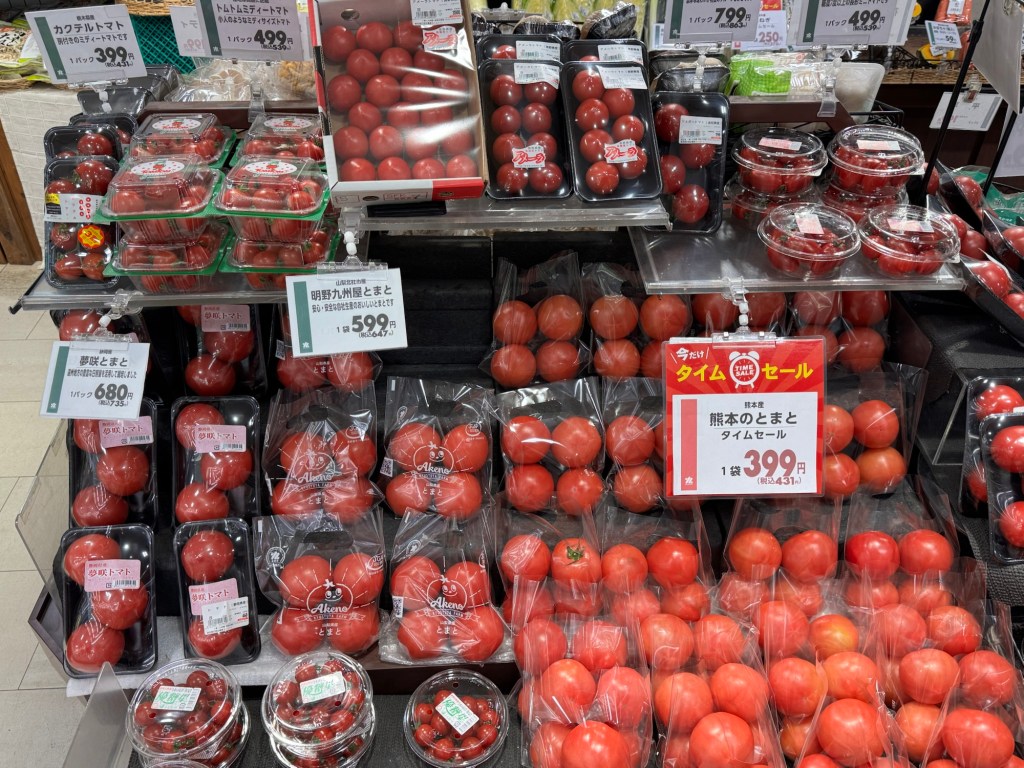
The domestic produce here is, unsurprisingly, beautiful and better than anything you can easily find in Singapore. Prices range from a little more to a GTFOutta here more. I mean, look at those tomatoes. We’ve also been eating some lovely strawberries from a random fruit stand near Gakugei-daigaku station.
My foray into videography was short-lived. After just a day, I’ve gone back to just taking photos. It’s too much work to break in the habit of filming scenes with camera moves and multiple angles whenever something interesting appears.
We ducked into a used records store that carried both CDs and vinyls, and for a short while, I entertained the thought of getting a new CD player to put my teenage collection back into service. If I can find a nice-looking one that supports AirPlay (ha) to our HomePods, then I might. Why hasn’t anyone made an all-in-one, retro revival-ready CD/cassette/LP player with decent quality? They’d make a killing.
Sleep eluded me for two nights. It was the combination of a smaller bed, snoring, and variable room temperature while we figured out the settings. Things got better once I busted out my Loop Quiet II earplugs. They’re well worth the $20-odd bucks.
AccuWeather shows the city has a constant dry air advisory in effect. That’s certainly true in our apartment when the heating is on, and now we’re going to buy a cheap humidifier from 3 Coins (aka ¥300), a Daiso-esque home goods chain that has some really nice products like a 3-in-1 iPhone/Apple Watch/AirPods charging stand and even transparent Switch Pro-style controllers for about S$26. It’s funny that in Singapore I’m constantly dehumidifying, and here it’s just the opposite.
It’s not really that cold. Between 0° and 11° is fine by me, but 15° and sunny would obviously be ideal.
There’s a longstanding idea/stereotype that the Japanese diet is low on vegetables, and I suppose historically that might have been true, with most of it in pickled form? Sean and Cien were just here too, and they’d read that people keep their toilet businesses running smoothly with the help of probiotic milk drinks. Specifically, this Meiji R1 product (or Yakult). We bought some; the verdict’s still out. Meanwhile, trying to get a healthy dose of mealtime fiber with vegetable ramen, side salads, and shredded cabbage, and honestly, the prevalence of vegetables is no different from what I’m used to.
We had dinner at a yakitori restaurant featured in a video on the Japan By Food YouTube channel, and all the local diners were ordering raw chicken tataki, which funnily was not on the English menu given to tourists. But one hot dish we ordered, chicken neck shu mai, came with pink bits of effectively raw meat inside. When in Rome…
It was meant to snow on Sunday, but that didn’t end up happening. We made it out on foot to a nice coffee shop (apparently a branch of a Sydney business), and then spent the morning in the Hokusai museum looking at a small slice of his insane output over 90 years. He apparently produced over 30,000 works, including woodblock prints, sketches, and paintings. I remember having a poster of The Great Wave in my university bedroom way back when (like many of you, I imagine), so it was nice to see the “real thing”.
I’ve used my Ricoh GR III and iPhone cameras probably an equal amount. The former in JPEG-only mode, with the factory Positive Film settings (not to be confused with zeroing each setting; there is actually a “recipe” that they ship with), and the latter in ProRAW. I misspoke last week when it came to the Nitro app. It’s still too buggy, and I couldn’t bring myself to pay for it in this state so I’ve gone back to the developer’s previous app, RAW Power. It’s very good, and with my soon-to-be-released color film LUTs and tone mapping disabled, the iPhone can honestly look like a proper camera. Apple’s default look is… realistic but not romantic.
Rainy season is reading season. After finishing There Is No Antimemetics Division for my book club, I also wrapped up Taylor Lorenz’s Extremely Online, which is sort of a brief history of social media and the influencer economy. I highly recommend the former for fans of SF stories involving time, unreliable memories, and the nature of reality; some members of the book club who are into Doctor Who likened it to that, but I wouldn’t know.
Then I decided to start getting into the mood for our holiday by reading some Japanese fiction. I began with Mieko Kawakami’s Heaven (a rough story about school bullying), which I thought would keep me occupied for a while, but before I knew it, I’d finished it along with Satoshi Yagisawa’s Days at the Morisaki Bookshop and More Days at the Morisaki Bookshop, two entries in the cozy Asian fiction wave dominating the local charts. Other entrants include Welcome to the Hyunam-Dong Bookshop and Before the Coffee Gets Cold by Hwang Bo-Reum and Toshikazu Kawaguchi, respectively. When the going gets tough, people start fantasizing about quitting their jobs and opening cafes or bookstores, and I think that explains the sudden popularity of this micro-genre. Incidentally, I bought a couple of these books for my mother on her recent birthday because I thought she’d enjoy the vibes, although already retired.
For the avoidance of doubt, all of the above books were three stars for me on Goodreads with the exception of Antimemetics, which got a 5-star rating. But the Morisaki Bookshop series makes reference to many great works of Japanese literature, and so I decided to try reading some Mishima on this trip. I’d read The Temple of the Golden Pavilion as a young adult, and it probably just glanced my frontal lobe at the time.
In a flash of pure coincidence soon after, I was scrolling through MUBI and came across Mishima: A Life in Four Chapters (1985) by Paul Schrader (who wrote Taxi Driver), an American Zoetrope biopic executive produced by George Lucas and Francis Ford Coppola. I watched it immediately, and it’s an incredible work of cinema — why isn’t this talked about more? It only covers the last phase of his life, up until his famous act of terrorism/suicide, which makes up only one of the four chapters. The other three are dramatizations of his work, literally staged on theatrical sets and shot with more care and inspiration than anything you could buy today with $100M in streaming service money.
In a further act of cosmic coincidence, I saw a Facebook post from Paul Schrader being shared on Twitter, having an AI moment of crisis when he found that ChatGPT outdoes him when prompted to provide “Paul Schrader script ideas”.
Writer of the legendary movie Taxi Driver is having an existential crisis about AI pic.twitter.com/5H89SWUKn9
Looking back on holiday photos from March 2023, I rediscovered my rediscovery of Hipstamatic, which had just launched its new subscription-based app at the time. Looking at those photos brings back fond memories; they are “ruined” in a good way — mundane everyday scenes somehow imprinted with the nostalgia of the moment through imperfect filters (it helps that I know that the original, normal photos lie underneath and can be accessed with a tap of the Revert button). My setup at the time was to use the Ricoh GR III as a main camera for all photos that needed to look good and accurate, and to reserve the iPhone + Hipstamatic for casual, silly snapshots. Otherwise, you have two tools competing for the same job. I’m now finding that idea attractive again, except both Hipstamatic apps are quite a pain to use, UI-wise.
I watched this video of “Best Apps in 2024” from the MKBHD Studio team, and decided to give Dazz Cam another try. It’s surprisingly powerful! Some of the vintage “cameras” you can choose from use RAW processes, and you can have it save both the original RAW file and the filtered results separately. So I may end up using this to “gimp” my iPhone rather than Hipstamatic. Plus, the subscription to unlock all its features is only $10/yr compared to Hipstamatic’s $40/yr. I don’t even think you need it as some of the free filters are good enough. I only wish it would use the underlying RAW and not the JPEG when importing an existing image from your library.
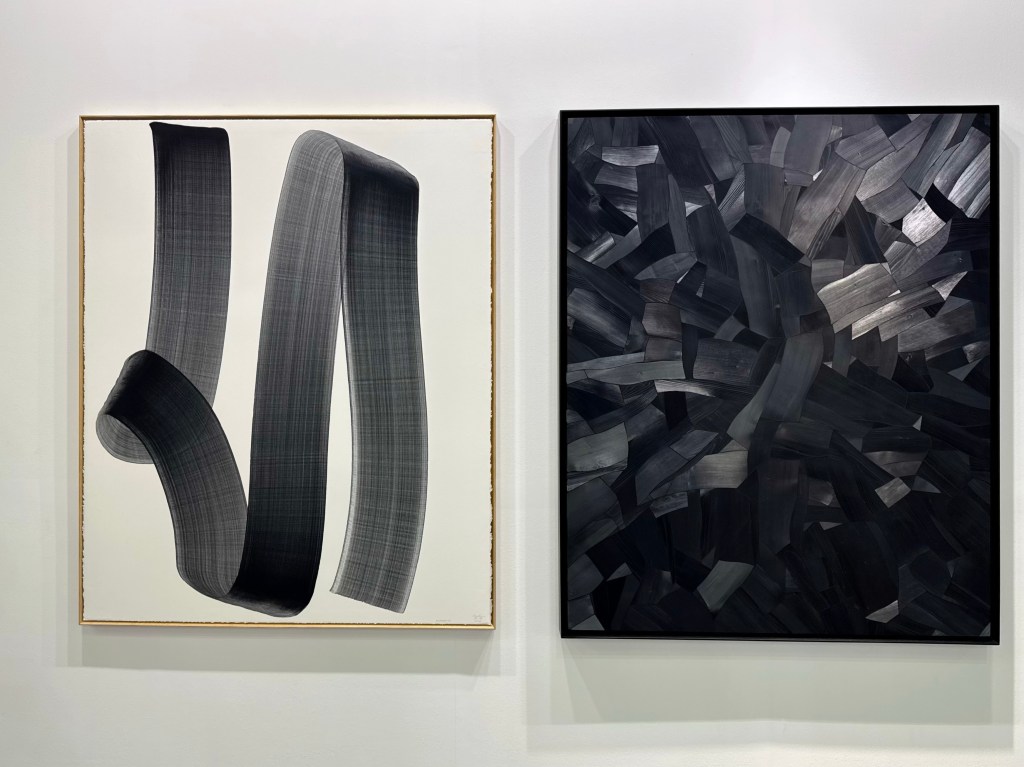
We had free tickets to the ART SG fair at the Marina Bay Sands over the weekend and dropped by for a quick look. It was crowded as hell and I was reminded why I don’t think these things are a great way for the general public to see art; it’s mostly a trade show geared towards buyers, and so the scale is too overwhelming for anything to really be appreciated. Not only that, but the selection this year didn’t really make much impact. I was looking out for more of the humor and playfulness I saw at the 2023 edition, something to make light and sense of the trauma we’ve normalized, but it was sorely lacking. I did like the pair in the featured image above, though, as they reminded me of some other works I’ve seen before, including the Act of Emotion digital series by Kelly Milligan.
Trump launched his own memecoin on Solana this weekend, days before the inauguration, and I believe it went up to a market cap of $70bn. That would qualify as a very funny and absurd art project, from ‘probably the greatest’ (scam) artist, if it wasn’t real and thereby depressing.
Just 10 days to Christmas, and I finally got a sense of it happening through my first gift exchange and a couple of meetups. The first was with a few workplace alums, after one suggested to me that it would be nice if we all caught up (and so I ended up getting the job of organizing, which I bumbled through). It was nice after all, and I got to spend time with some people I hadn’t seen in years. The second was last night at a friend’s home that impressively decorated for the season, complete with a playlist of Christmas classics greeting us at the door. I think that was the moment it became real for me.
I brought my Leica D-Lux 7 out of hibernation this week for a few photos, mostly to put its aging battery to the test. It fits in my new Bellroy sling (the Ricoh GR III is still significantly smaller and lighter, albeit without a zoom lens), so I’m entertaining the thought of bringing it on our next holiday. Oh, that’s right. We’ve just booked a trip to Tokyo next year, wayyy behind the trend, but hopefully everyone’s had their fill of Japan by now and it’ll be less crowded when we get there. If I do need a spare battery, I’ll pick up the Panasonic equivalent model from Yodobashi Camera or something.
Another reason for the renewed interest was an update to the Leica FOTOS app (which connects to cameras) that came out this week. For the uninitiated, ‘Leica Looks’ are essentially a series of live filters that can be installed onto newer cameras. Owners of older models have been out of luck, but with this new update they can be retroactively applied in the app to any JPEG taken with a Leica camera. While trying it out, I discovered that photos I’ve been taking with the Leica LUX camera app also qualify as “taken with a Leica camera”, meaning you can apply these Looks to iPhone photos for free as well.
So far, I’ve been surprised by how well photos from its Micro Four-Thirds sensor have turned out, especially in daylight. Low light photos are quite smudgy/noisy if you elect to use an ISO value over 3200. I’m fortunate that Leica’s updated D-Lux 8 model this year was such a relative disappointment: a surface-level redesign of the camera’s body and UI without any improvements to the lens, sensor, or processor. It’s good news for me since an uncompelling update is money saved. Ignoring the PS5 I got in May, NOT upgrading stuff has been a bit of a theme this year. I don’t even covet Fuji’s X100VI camera one bit, maybe because it’s been so (artificially?) rare and overpriced.
===
Our new broadband line was finally activated, and it’s resulted in a doubling of accessible bandwidth. In one speed test, I got over 1.1 Gbps (symmetrical) on my iPhone. At this point, our fleet of un-upgraded hardware is holding us back more than the network. In a couple of years, when every device in the house actually supports WiFi 7, I’ll upgrade the router and unlock the full 10Gbps that we currently have.
How little use am I making of this plentiful bandwidth? Well, listening to a lot of Apple Music Radio.
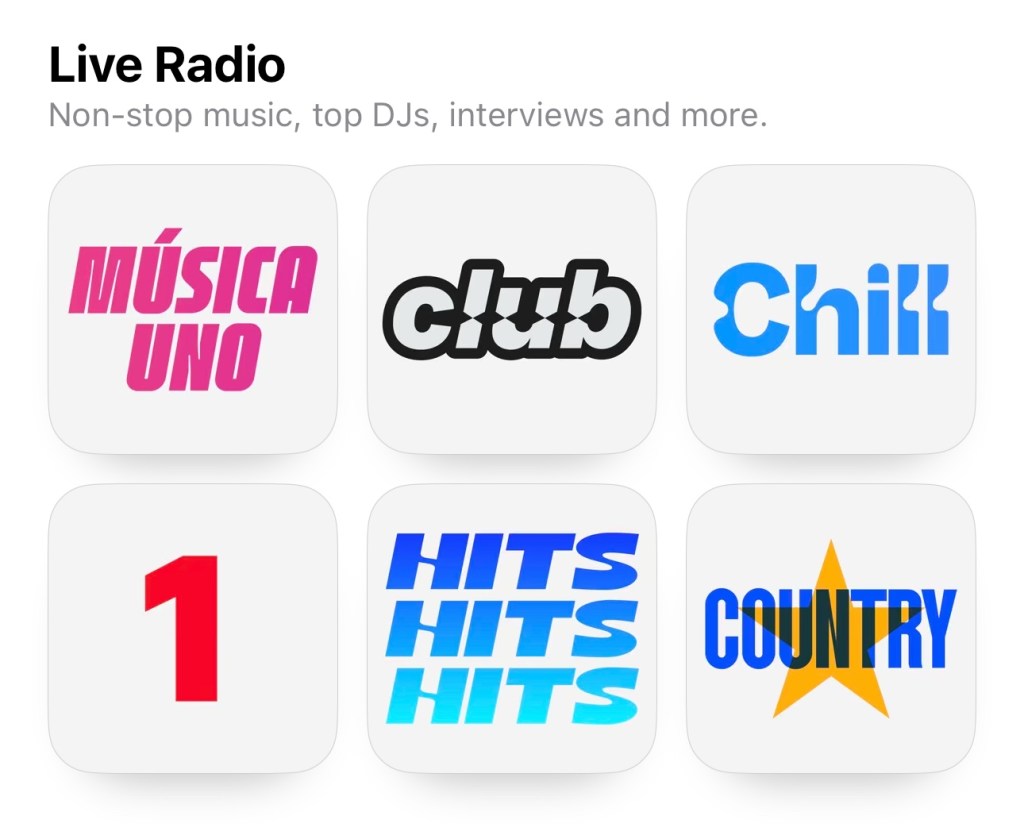
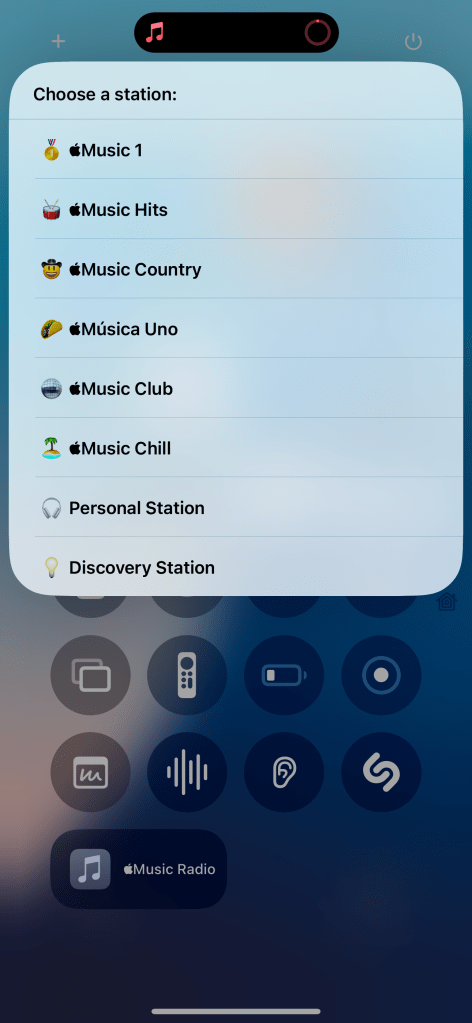
You probably missed this because it hardly made the headlines, but Apple Music doubled the number of their live, hosted radio stations from three to six. Apple Music Club, Chill, and Música Uno now join Apple Music 1, Hits, and Country. In a world where personalized, algorithmic stations/playlists are plentiful and pedestrian, I think these human-led stations are a wonderful zig to Spotify DJ’s zag.
Some of the best artists I’ve discovered this year were serendipitous encounters while listening to Zane Lowe, Rebecca Judd, Matt Wilkinson, or Dotty taking listeners through their latest picks on Apple Music 1. I think receiving and interacting with other people’s passion and opinions is a key part of the cultural experience of music, so these DJs play an important role that is growing ever smaller. It’s so good to see Apple Music expanding their Radio offering rather than shutting it down.
I used to have a Shortcut on my phone to launch Apple Music 1, but with these new stations it seemed time to build a quick launcher. Now, I can start live stations and my personalized stations from the Control Center, Today Screen, or even with the Action Button.
===
iOS 18.2 came out of beta, with new Apple Intelligence features like Genmoji and Image Playground. They are okay for a bit of fun, but definitely won’t cause any artists or illustrators to become unemployed. It’s interesting to ask if they ever will, because Apple could certainly get the models there with time, even with fully on-device inference, so it’s just a question of intention. But I don’t think there are any brakes on this train and every company is onboard, they’ve just bought different tickets.
Last week marked the 200th installment of a blogging rhythm I wasn’t sure I could keep up for a year, let alone nearly four. I thank any readers I have, the makers of iA Writer, WordPress, and of course, my wife for graciously giving me space on Sunday mornings to engage in this act of reflection and blabbering.
Except I’m not writing this on Sunday, no it’s currently Thursday and I’m getting a head start with some structure because we’ll be in Hong Kong for the weekend. It was a last-minute idea, driven by a primal craving for Chinese roast goose, a desire to escape the summer heatwave currently roasting all of SE Asia, and the realization that we won’t have a pocket of clear calendar space like this again for several months.
I haven’t been back in the territory since May 2019, and so much has obviously happened since. Did you know that this very site was once blocked by the great Chinese firewall? I have no idea why, but I hope I don’t find myself unwelcome upon arrival. Anecdotally, I’ve heard the city doesn’t quite feel the same these days, and we’ve seen the numerous ChannelNewsAsia documentary features about people looking for fresh starts, emigrating to the UK and so on. But as an infrequent visitor with only superficial interactions to speak of, I don’t expect to sense any changes at all.
What’s changed is that while I used to be excited about Hong Kong’s lack of sales tax and abundance of electronics and camera emporiums, not to mention official Apple Stores, those things are less interesting these days. I’ve got nothing on my shopping list (plus I’m in low-cost mode — see previous entries), I’m content with snapping photos on my iPhone and Ricoh GR III, and Singapore has so many Apple Stores these days I’ve started taking them for granted.
(CW: some camera nerdery ahead)
I am looking forward to photographing the city a little with Dmitri Novikov’s new camera app, Zerocam (in beta). The concept is an extremely simplified camera with one button; there’s not even a way to quickly look at the last photo you took. When you hit the shutter, a RAW image is captured with as little of the iPhone’s intelligent processing as possible, plus some specific settings that Novikov prefers (-0.5ev and some very light touch color grading, as far as I can tell), and then saved directly to a HEIF file.
Unfortunately it only gives you photos at 12mp size, probably because third-party apps don’t have the option of 24mp and 24mp is a result of the computational photography processes that Zerocam avoids anyway. And while you can use Halide to capture similarly unprocessed photos (turn off “Enable Smartest Processing” in its settings), you can’t make it remember a lowered exposure setting between sessions.
The intermediate solution I’ve landed on to retain 24mp files while getting better everyday photos is to set Apple’s stock camera app to remember a -0.7ev exposure, and tune Photographic Styles to -20 Tone and -7 Warmth. I really like the look of this “recipe” on iPhone 15, and it’s kinda like shooting with Highlight Priority exposure and the Negative Film effect on a Ricoh GR III (which I’ll also be doing).
Actually in HK now:
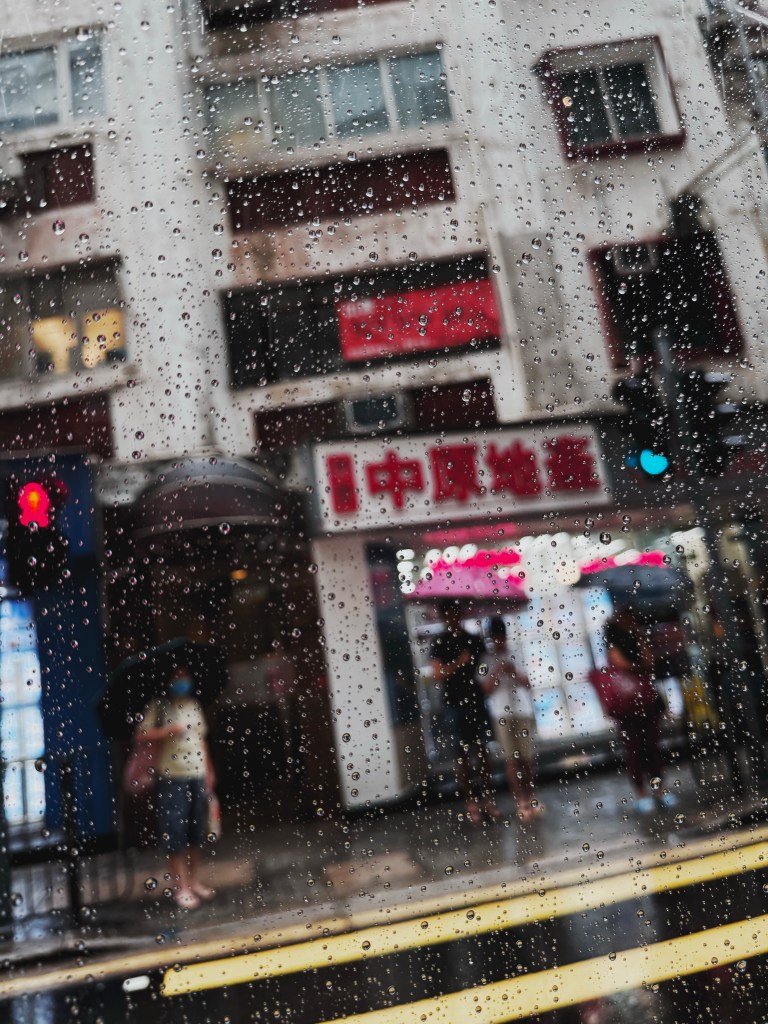
We’ve chosen a wet and gloomy weekend to stop by. Our flight was delayed by 2.5 hours, I suspect because of turbulent conditions at HK International Airport around our original arrival time. Just two days earlier, some Cathay Pacific passengers were tossed around and couldn’t land for six hours, with the descriptions of a vomit and scream-filled cabin in the news fulfilling the conditions of a personal nightmare.
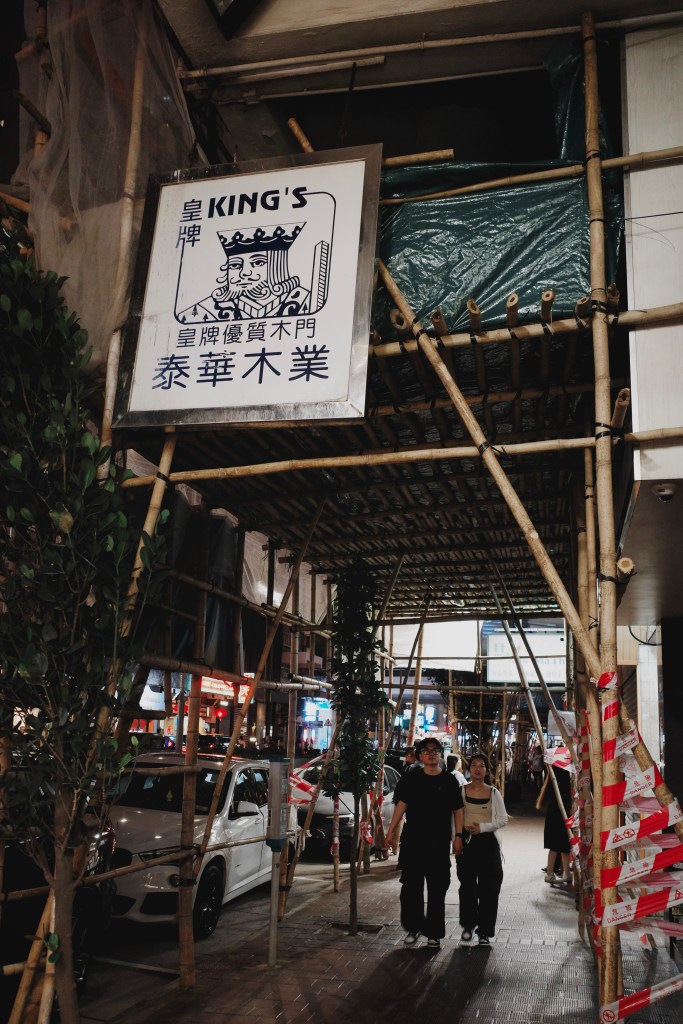
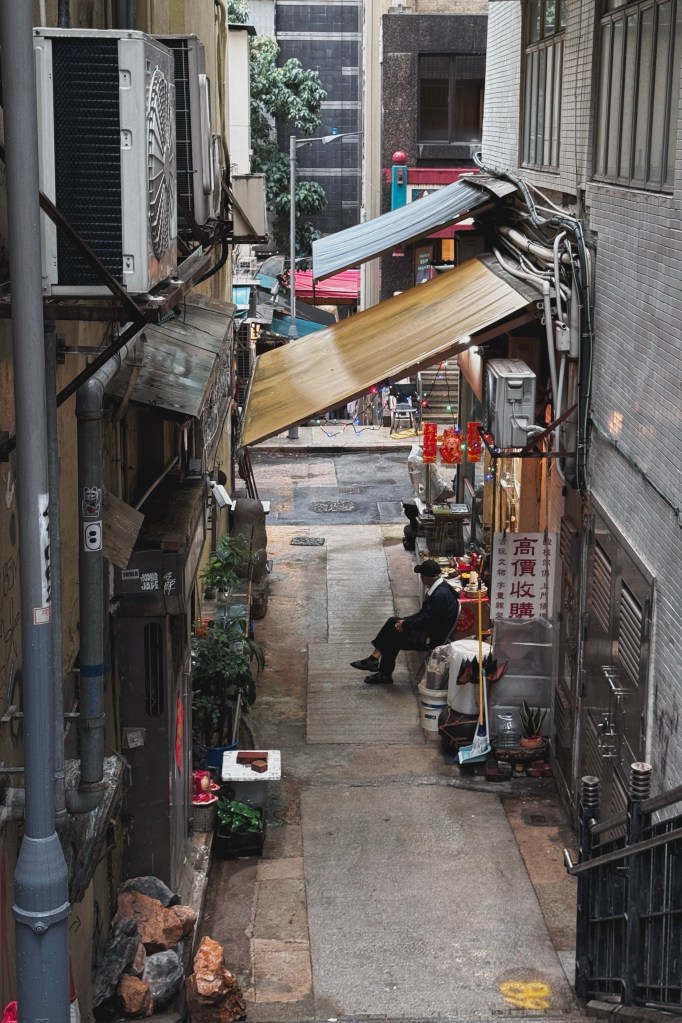
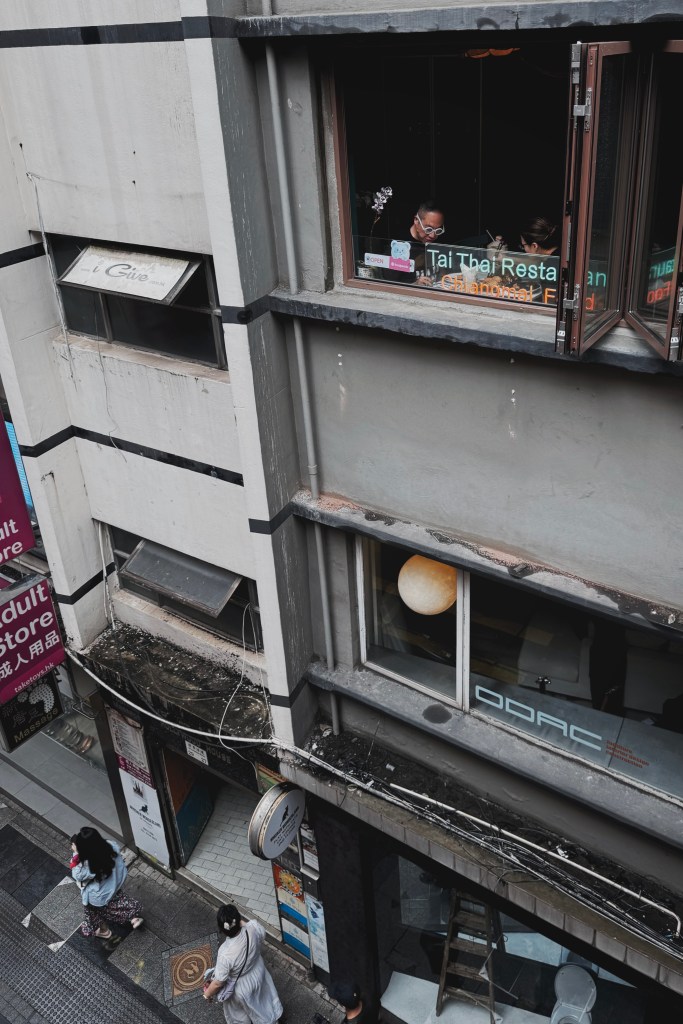
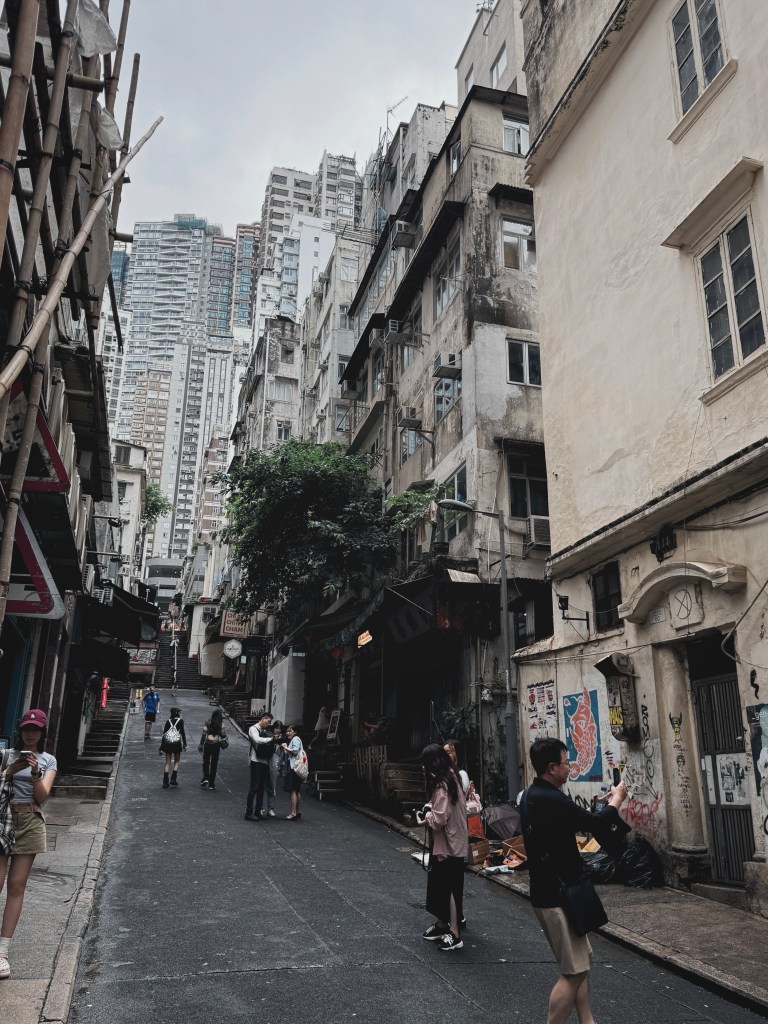
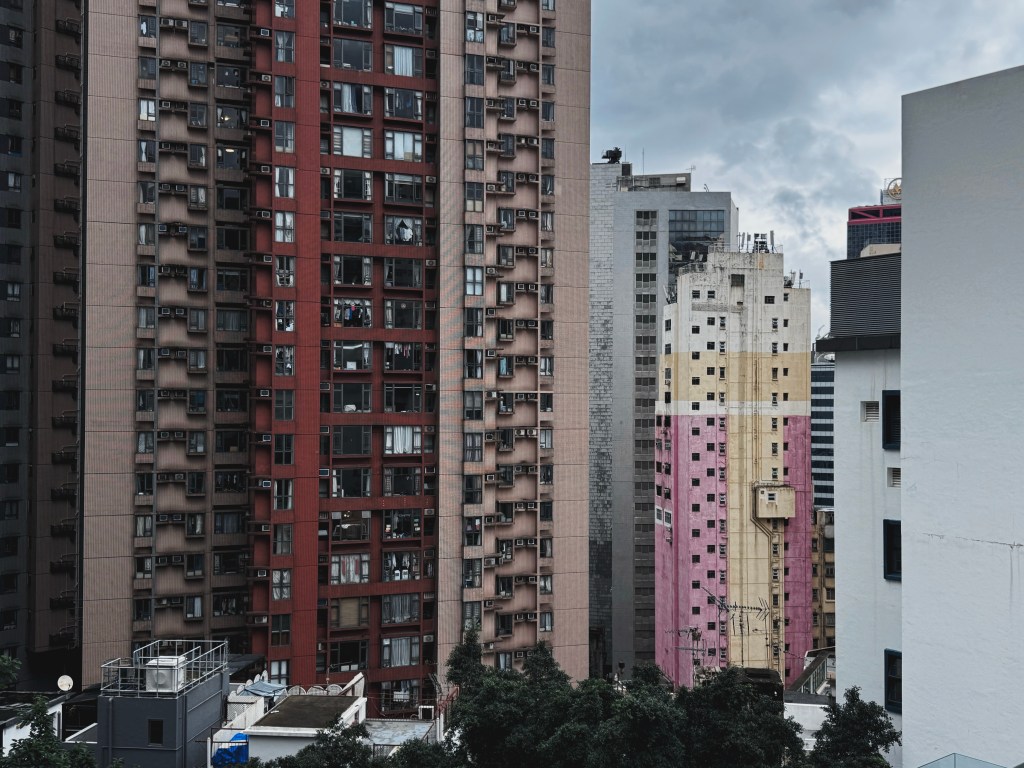
I take back a little of what I said — things do feel somewhat different. The city is grubbier than I remember; prices are higher and some people must be struggling to get by (well, HK isn’t alone in this); and there’s a hint of economic decline in the many empty shop units with ‘For Lease’ signs up.
One tool that’s been super helpful all week has been the Arc Search app on iOS, which added a voice mode that you can assign to the Action Button on iPhone 15 Pros. When the app launched with an AI feature that summarizes search queries on custom-generated webpages, I was wary of this “browser that browses for you” concept, which gives users few reasons to visit the underlying pages being mined (thereby ruining the web), but maybe they’ve made some changes since. It’s easier to click through to the sources.
I’ve been using it to answer questions like “what interesting art exhibitions are on in HK right now?” and it performs some light research, and I do end up visiting the linked websites for further details like location and pricing. It’s effectively a better way to present search results (albeit with the same bias and ranking concerns as search results). I hope iOS 18’s AI overhaul will see similar utility coming to Siri and Safari. Perhaps this is where the rumored Gemini partnership with Google comes in.
===
Media activity:
I started on a new Jack Reacher book: Night School. It’s what I do when I can’t decide what to read next.
I’ve been watching the new-ish MF Ghost anime, which is a sort of sequel to Initial D. Some people seem to think it’s an insult to the original show, but I wouldn’t know — I might watch it after this? It’s got a funny premise: in a future Japan, electric vehicles are the norm and gas-powered cars are only allowed in a special racing tournament called MFG. But drifting has become a lost art! Enter Kanata Rivington, a hafu born in England who trained under a master who I presume is the main protagonist of Initial D, returning to Japan for the first time to find his lost father and school a nation on how to burn rubber while chucking a uey.
The Japanese saxophonist Sadao Watanabe is back with a new album at the insane age of 91. It’s called Peace, and I’m digging it. Speaking of, I first heard him as a child digging through my dad’s music collection.
I’m also loving Tigers Blood, by Waxahatchee, which I discovered on Pitchfork’s list of The Best Music of 2024 So Far. I’m aware that Anna Wintour fired a bunch of people from Pitchfork and it’s supposedly not the site it used to be, but this is a great pick. They say: “Recommended if you like — Indie-country; Sheryl Crow; Gillian Welch; that Brad Cook Sound; MJ Lenderman showing up; catchin’ skinks down by the creek; ice cream stand off the highway; letting your legs dangle off a pier”.
What a week in rap battle history! The beef between Drake and Kendrick Lamar has been giving us explosive drama and incredible diss tracks, sometimes more than one a day, and Kendrick’s the winner in my book but honestly I’m afraid just watching it unfold. It feels like someone’s going to get shot or jailed as a result of this.
Oh one more thing! The Cannes Lions Festival announced the shortlisting juries for 2024’s awards, and I’m pleased to share that I’m on the panel for the Brand Experience & Activation Lions. That should keep me occupied for the next few weeks.
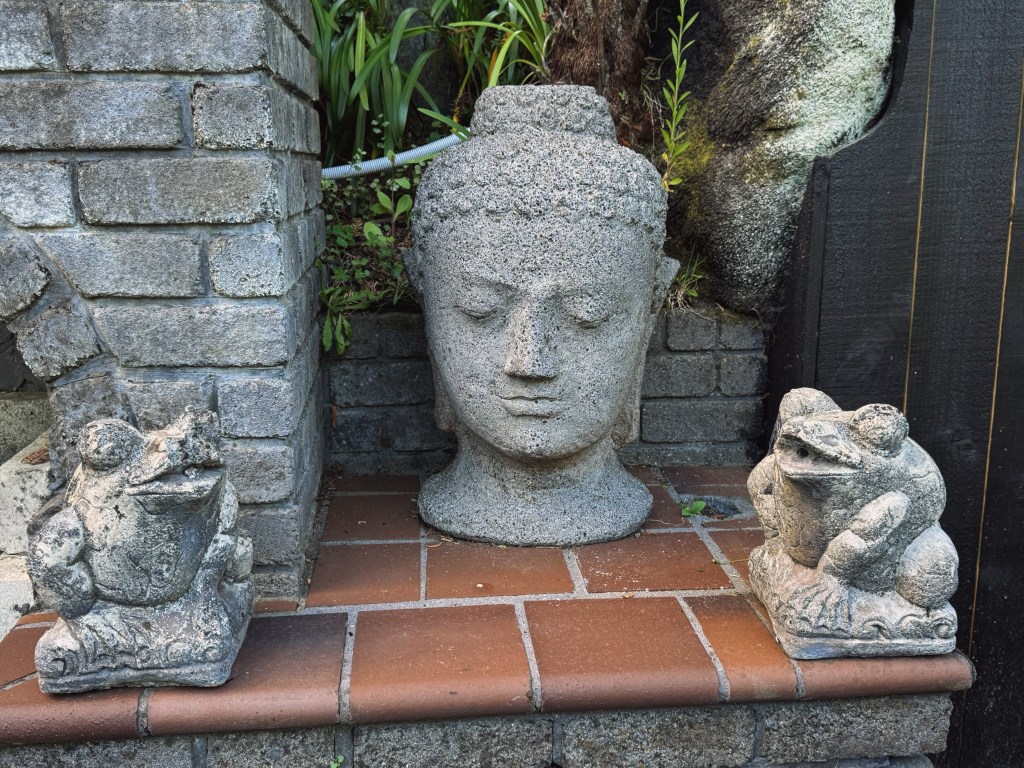
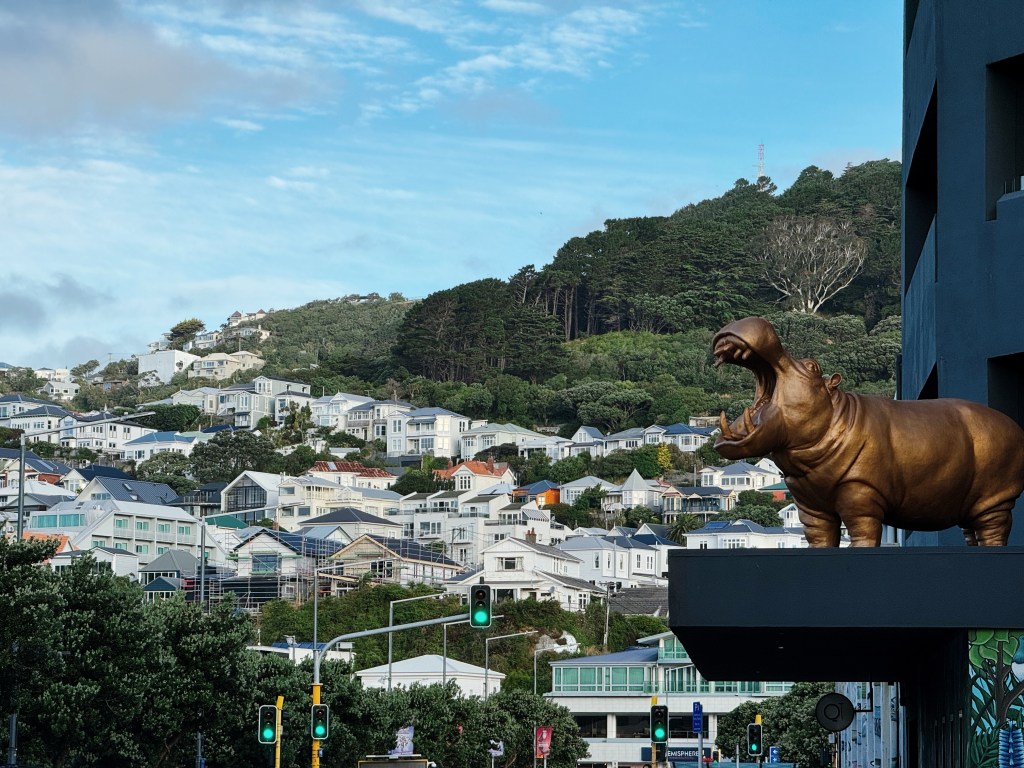
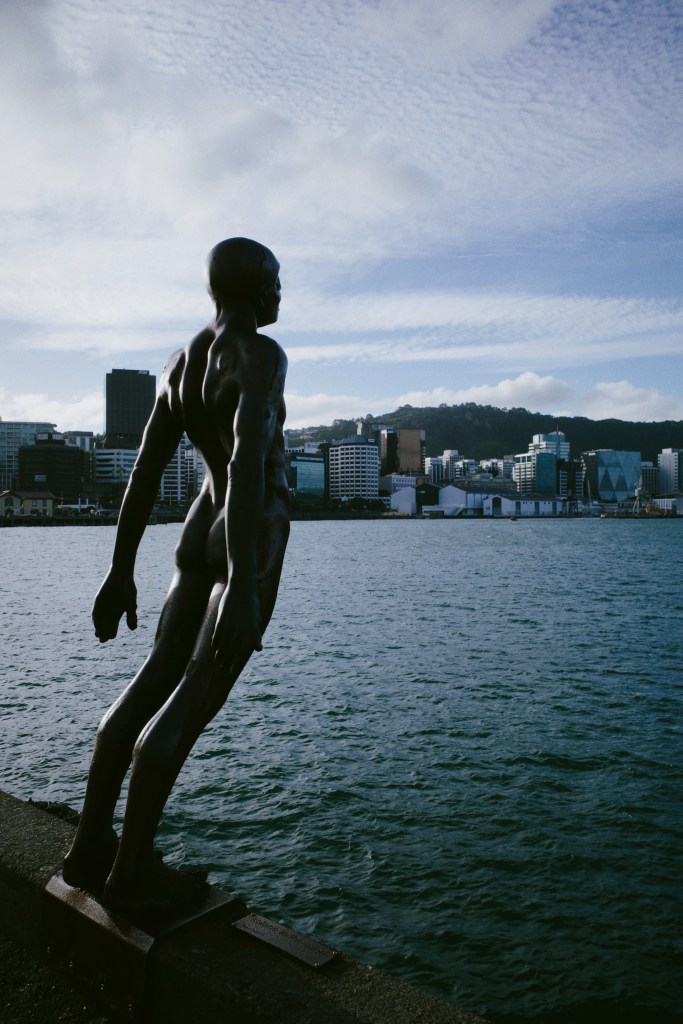
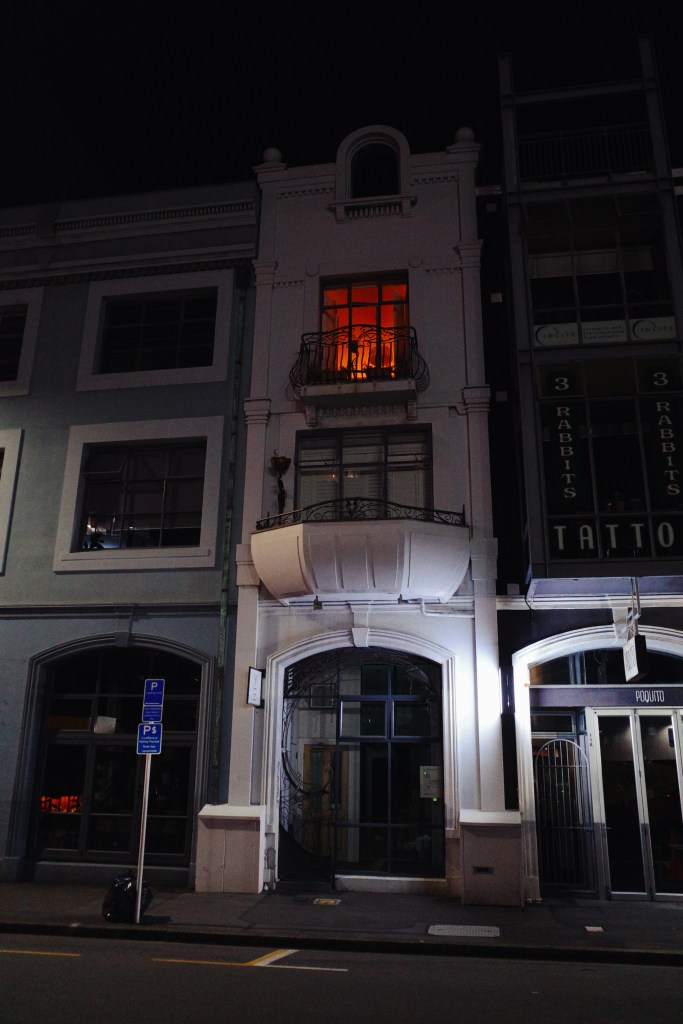
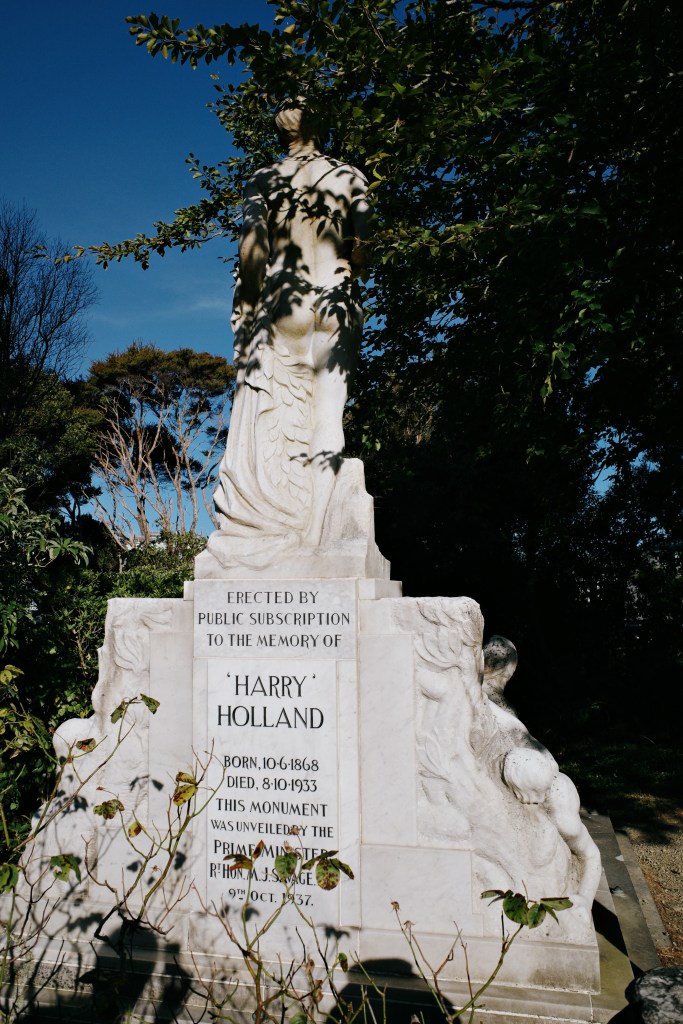
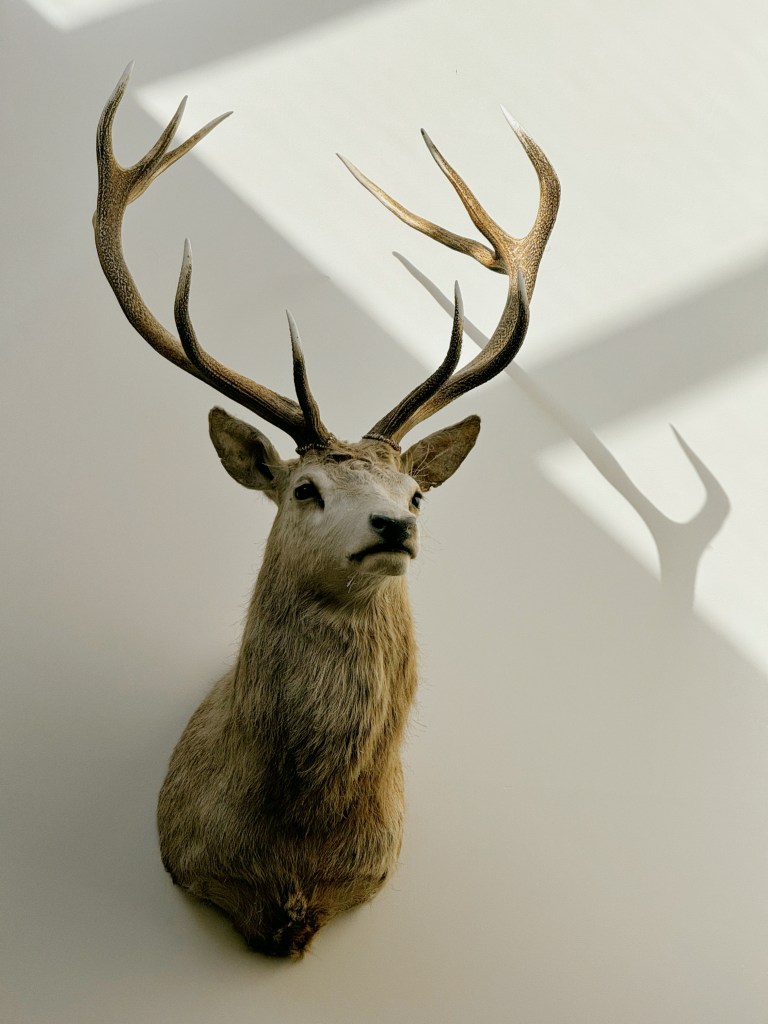
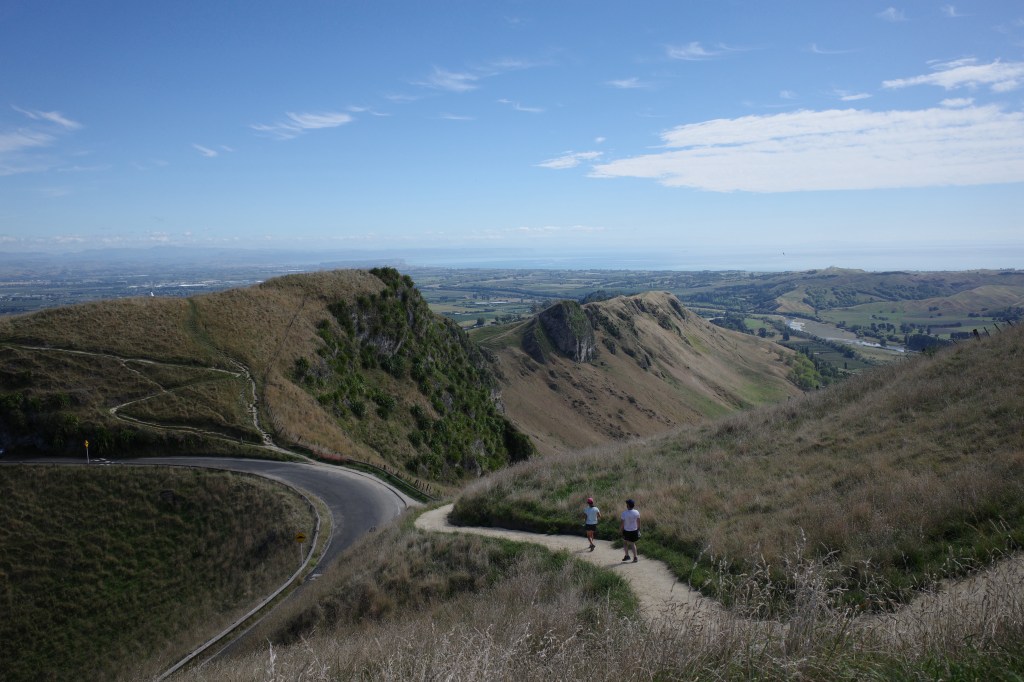
We landed in Auckland, New Zealand Monday morning and immediately flew down to Wellington, and we’ve been driving our way back north for the past few days. I’m currently writing this while sitting beside a Buddha’s head in a poolside garden, in a small new hotel outside of Rotorua.
Four hours ago, I was parasailing above Lake Taupō in my usual urban uniform of jeans and a t-shirt — if you know me, you’ll know that I don’t sign up for even remotely dangerous things, especially over large bodies of water; in the cringey words of Below Deck repeat charter guest, Dean Slover, I said “homie don’t play that!” But Kim convinced me to, and we survived. They played Maroon 5 songs on the boat going out, and so by the time we were lifted some 50 meters in the air to float in blissful silence high above the town, I was having a good time. Lake Taupō is a volcanic caldera that’s nearly the same size as Singapore, but because it’s all flat you can just about see from one end to the other from up there. New Zealand challenges the city dweller’s sense of scale like all good nature vacations.
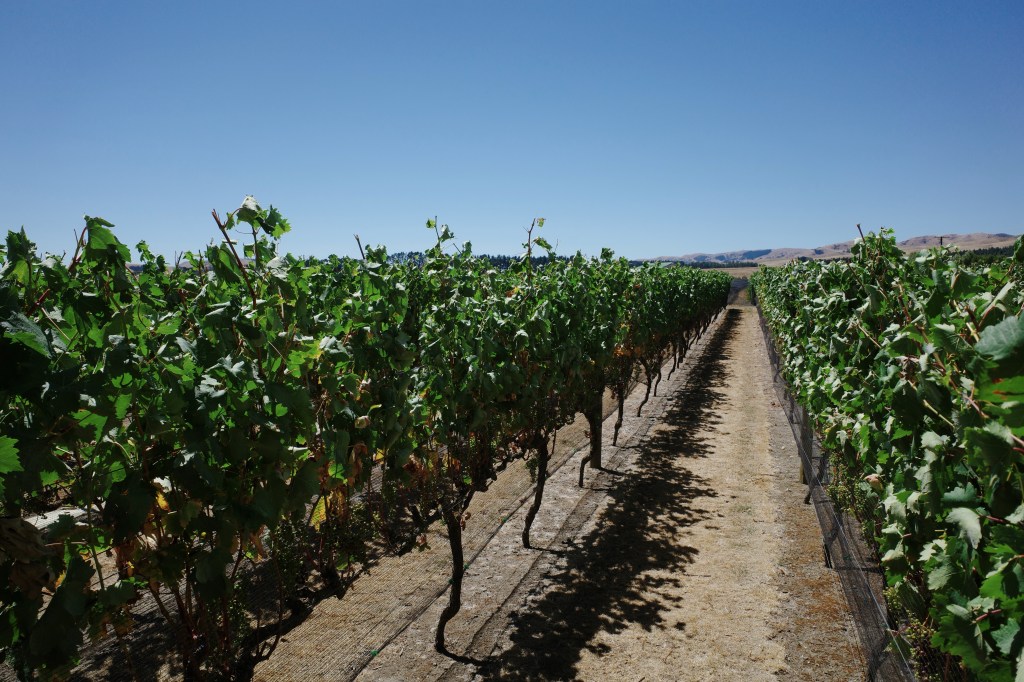
Since leaving Wellington, the road trip portion of the trip so far has been mostly measured in burgers, fish and chips, and winery stops, specifically in the Martinborough and Hawke’s Bay areas where the tastings have been revealing of each company’s nature: some overly commercial and strictly scripted, versus others more informal, just going on vibes the only way they know. I think the difference shows up in the wine, with wineries in the latter category being more playful with flavor, more likely to put better stuff in a low-priced lineup. But I would say that, as someone who’s now had a crash course in holding up his glass against the light to observe the color.
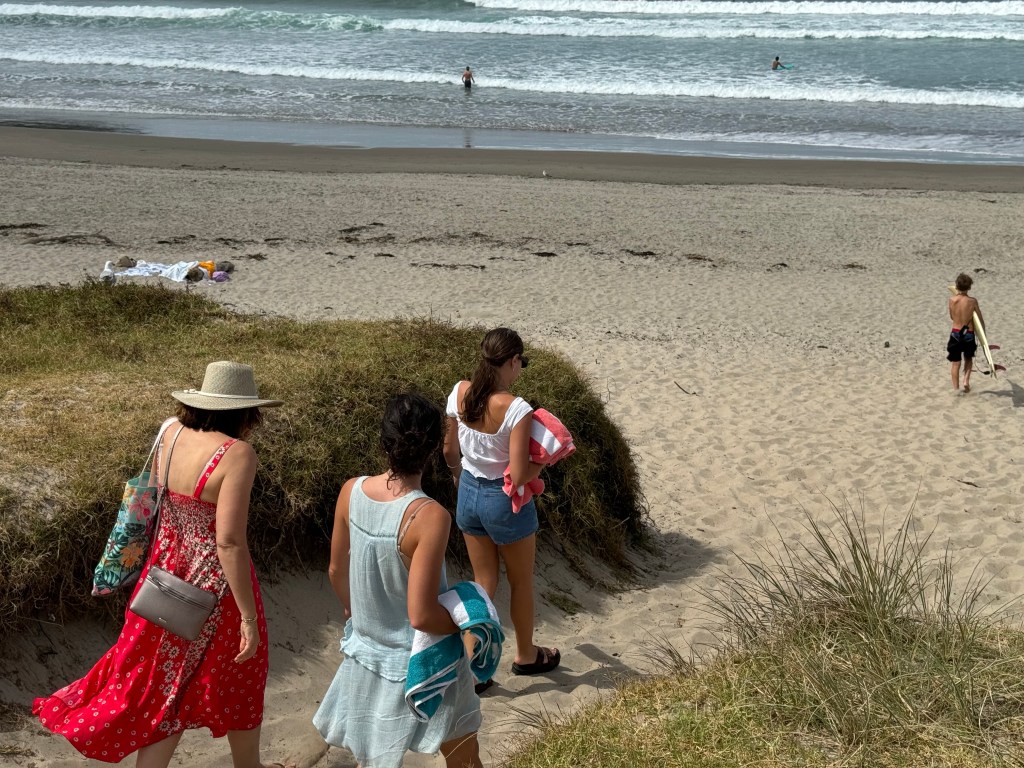
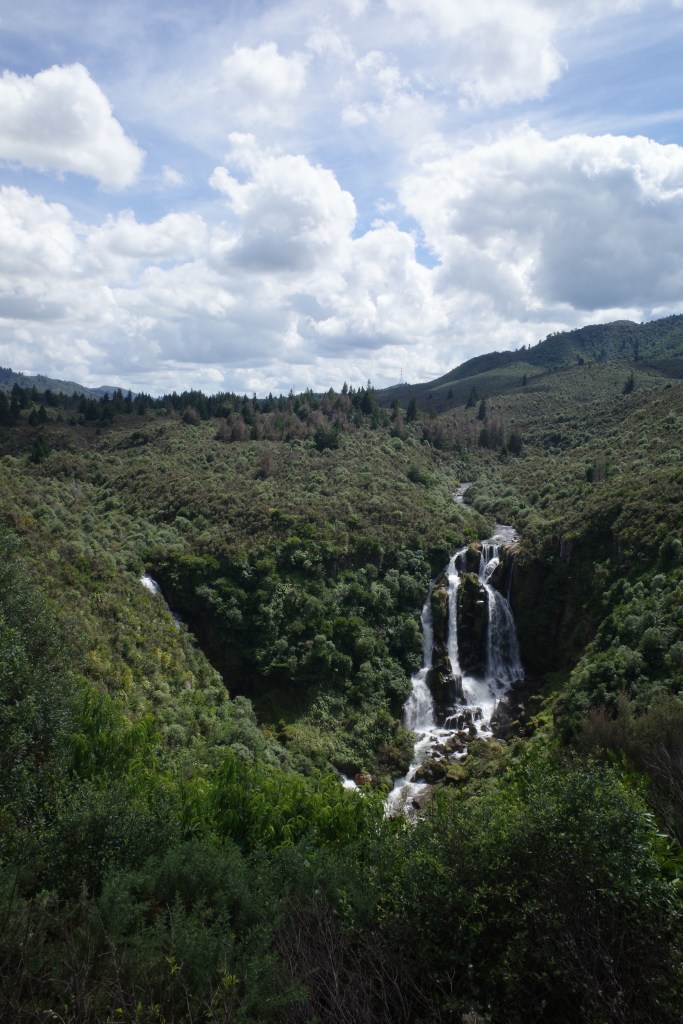
I’m now lying in bed on Sunday evening having just finished the last leg of our driving tour, which took us to the famous Whangamata Beach bordering the Bay of Plenty, and Hunua Falls, where we did another little nature walk and met a nice dog and helped its owners get a photo together with their iPad. Old people really carry full-sized iPads around on hikes to use as large-screened cameras. Mind blown.
A couple of observations on this road trip. So much roadkill! Easily a hundred little bundles of fur spotted spread across tarmac just today alone. Some decayed and washed away, little more than stains. Some still fresh, bloating, bleeding. We avoided making contact with all but a couple. A ritual evolved, mainly to stay alert but also out of pity for these bunnies or squirrels(?): upon spotting one, I would put my palms together and say “rest in peace”, and Kim would follow with “in all your pieces”.
FM radio is still not a great experience; it’s a wonder how people survived on it for so long. Fortunately I had a lot of downloaded music on my iPhone, which also navigated us with offline maps. CarPlay is excellent, and Apple Maps was good enough for nearly every leg of the journey. We listened to Lorde’s albums, of course, as well as the Sunkissed Summer playlist she compiled on Apple Music, and other New Zealand legends like Bic Runga and Crowded House. At one point I put on some J Dilla but learnt that rhythmic music you can sort of nod and zone out to is NOT what a driver wants over long winding roads.
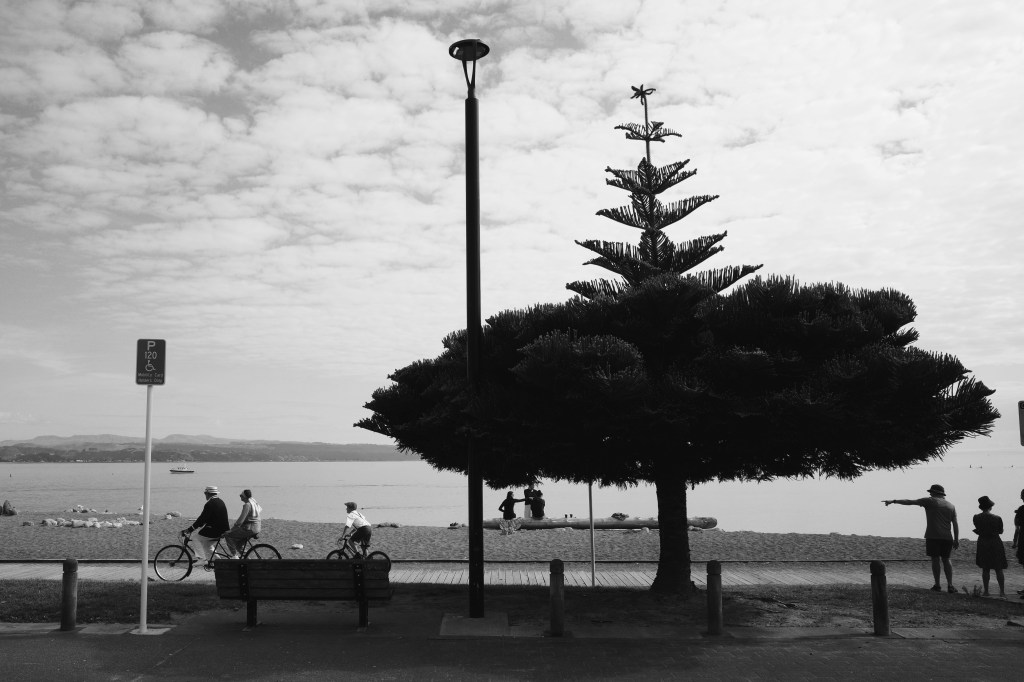
As I mentioned last week, this itinerary was drawn up with ChatGPT and my custom GPT, AI-tinerary, but we had to fact-check everything and plot the route on a map before making bookings. It’s held up well so far, with a couple of impromptu detours and chance discoveries along the way. For one, we did not realize that while passing through Napier for one night that we’d be there for the Art Deco-obsessed city’s annual Art Deco Festival, the first one they’ve been able to hold since 2020. Vintage cars were out in force, there was a Warbirds air show, and a free concert on the beach. It was packed, every restaurant was booked out. We ended up eating dinner out of a food truck by the sea. I asked ChatGPT “what’s happening in Napier tonight?” and it confidently replied, “I couldn’t find any events tonight.” At the risk of sounding like a broken record, these tools truly are starting points and aids right now, and you must resist the idea that they are final answers.
I’ll post the final version of our itinerary next week when we’re done, in case it helps anyone looking to do the same.
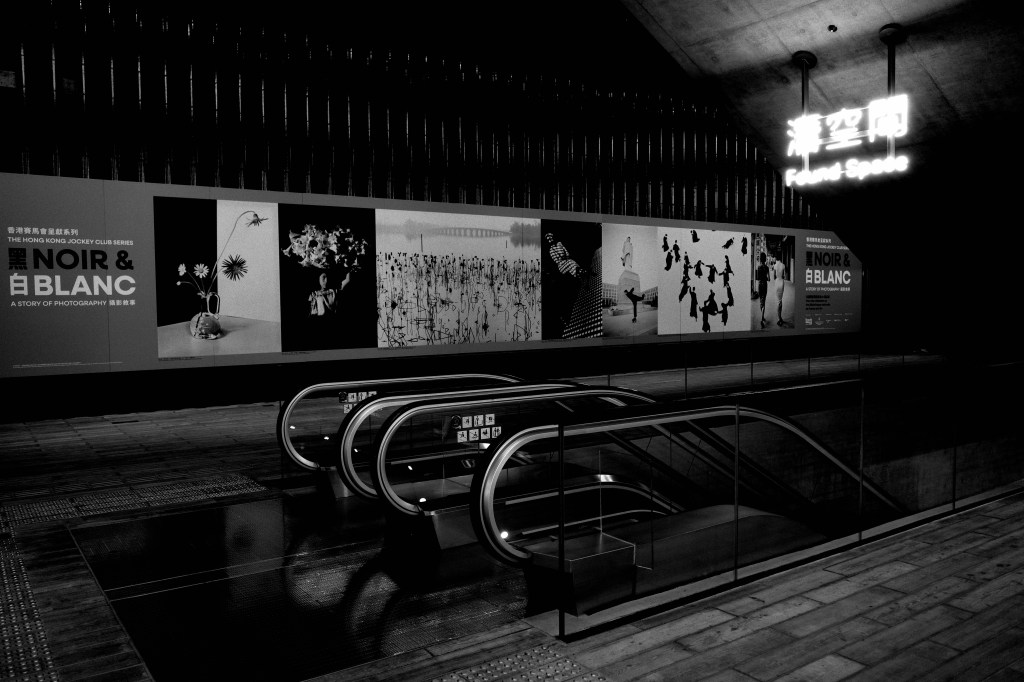
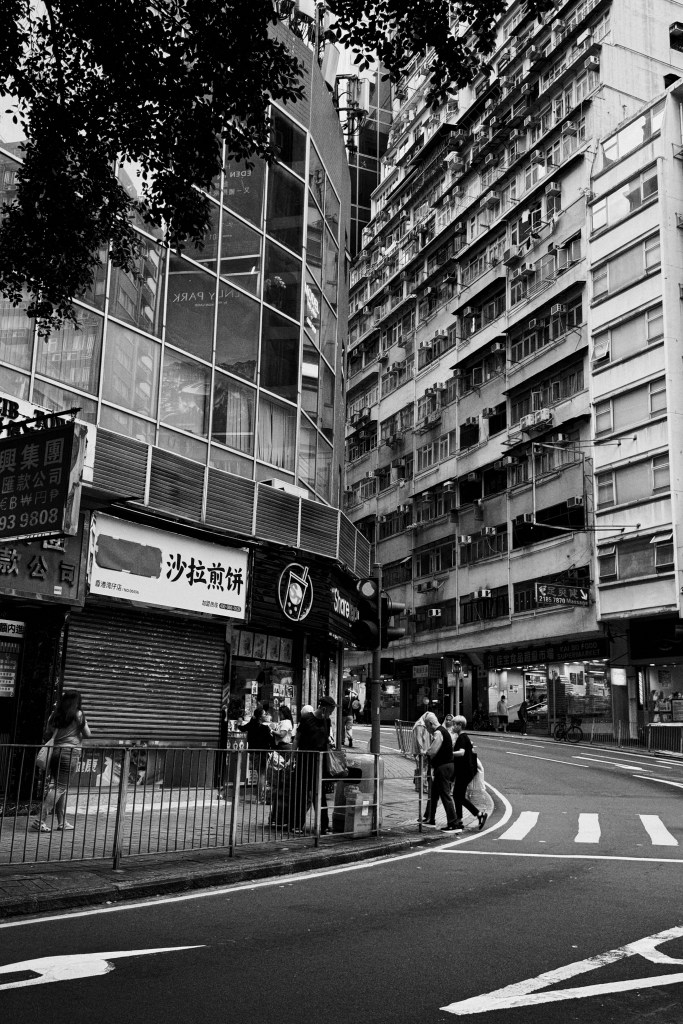
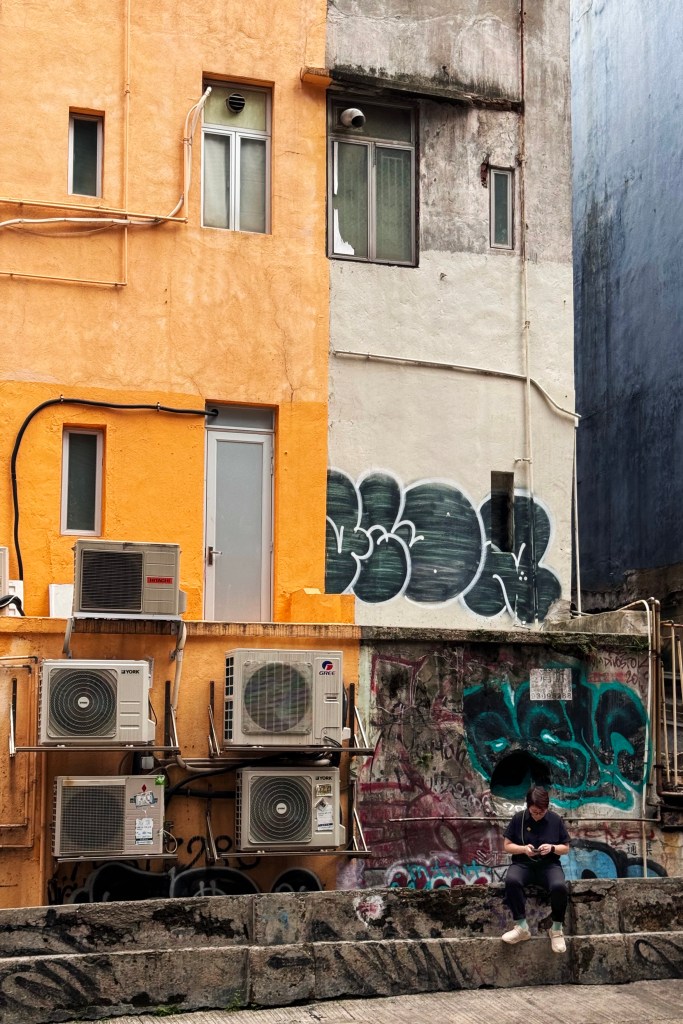
All photos were taken by either a Ricoh GR III or iPhone 15 Pro Max. The extra 120mm equivalent reach of the iPhone came in very handy, but there’s no beating the image quality of the GR when it comes to landscapes. The light was so good that some photos taken with the Standard color profile, straight to JPEG, were surprisingly “finished” out of the camera. This year’s iPhone still wants to make everything bright and sharp, which fails to capture atmosphere and preserve highlights. I edited photos daily as quickly and lazily as possible, using RNI Films for most of it — at some point they added the ability to save edits on top of original files (non-destructively), which is a key consideration I look for in photo apps. I’ve also started using RAW Power again late in the trip, which is making me want to go back and redo some edits. Maybe on the flight home.
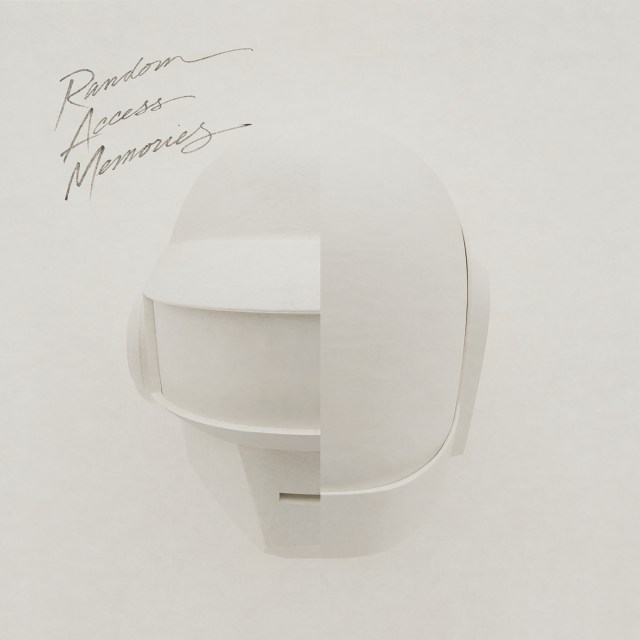
Album of the week: Daft Punk released a “drumless” edition of Random Access Memories and the simple act of removing elements adds an unexpected amount of value. The album strikes a delicate balance between novelty and nostalgia. By removing the drum tracks, it reveals intricate instrumental interplays once masked by robust beats, offering new perspective on familiar melodies. Within minutes, you’ll be surprised at how different this feels. I don’t know how many other albums have been rereleased like this, but it’s a great idea — one made less cynical by the streaming model, as Michael observed in a chat. In the old days, this would just look like trying to sell you a CD you already bought.
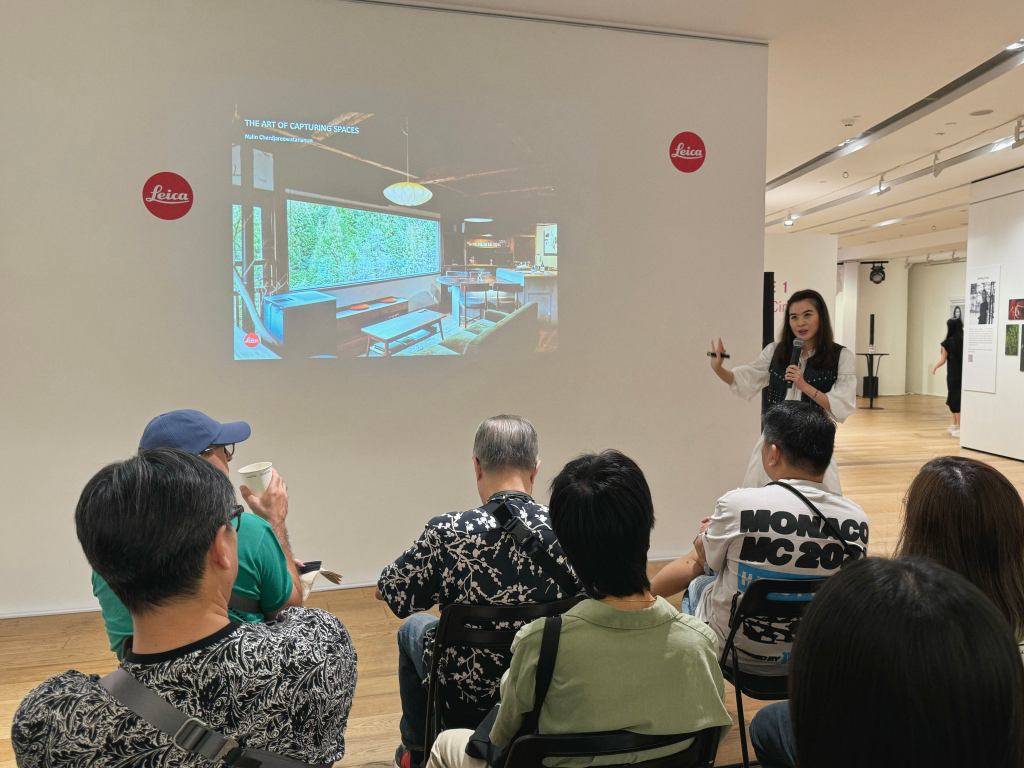
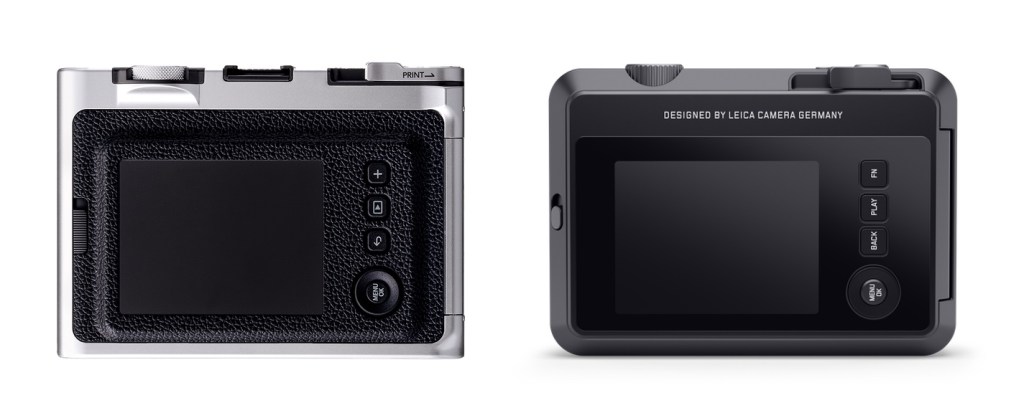
Speaking of cynical purchases avoided, I saw and held the Leica Sofort 2 in person this weekend while attending a talk and exhibition at their annual Celebration of Photography event. The glossy front plastic was not as fingerprint prone as I’d feared, and overall build quality felt a touch better than on the Fujifilm Instax mini Evo: the rocker button on the back panel had more click resistance, the “film advance” lever that prints photos was sturdier and more satisfying to activate, and the flimsy USB port cover on the bottom was slightly firmer and seemed to stay in place. For me, those were the top 3 basic problems that needed to be addressed. The software menus were simply reskinned and not redesigned, as expected. All in all, Leica did the minimum they had to do to make the Fujifilm product a little more premium, but without improvements to image quality, it’s still a very odd product to bear a red dot. I did not feel the urge to replace my mini Evo on the spot.
With Leica’s latest attempt at opening my wallet rejected, my week was free to absorb excesses of a different kind when I met up with Jianjia for a farewell lunch. She decided we would eat Mala at some place called YGF. It turns out that she schedules every meet-up she can there, because she’s addicted to their high sodium spice blend. When I pointed out how salty it was (after she had drunk all her soup, and for the record I couldn’t finish my massive bowl), she was like “huh, maybe that’s why I like it so much. I never had much salt in my food growing up”.
We are all the products of our childhoods, each messed up in our own special ways, which is something I was discussing with a colleague in a work-related conversation one day when I thought, “ooh, I should make a GPT therapist!” Which I called Doctor Talkabout, and tried to bias it towards exploring barriers to happiness that originated in childhood. On the whole, the unlicensed doctor is now quite good at discussing all manner of problems, and I hope it gives better perspectives than vanilla ChatGPT. And just in case psychology and psychoanalysis are a little too… “real” for you? I also made a GPT therapist based on astrology, inspired by Co—Star. I honestly get a kick out of both, and discussing my problems with them has been more effective at managing my feelings than just going in circles on my own.
The number of GPTs I’ve made this past week is now in the double digits (including one for work and a private one for editing text), and so I’ve had to make a category page to see them all on this site. Please check them out.
And yes, some shit is afoot at OpenAI, after CEO Sam Altman was ousted early Saturday morning. Too early to say why, but ChatGPT has noticeably struggled to perform quickly of late, and they’ve both turned off new signups for ChatGPT Plus AND reduced the rate for paying members from 50 to 40 messages every three hours. I have a feeling they might renege on their commitment to open a GPT App Store and share revenue with creators. Time will tell. I wasn’t going to quit my day job for this anyway. And as of Sunday afternoon, he’s supposedly been asked to come back and the board of directors will resign? Pure insanity.
I watched the first episode of Netflix’s acclaimed Blue Eye Samurai Western anime series, and it felt like something an AI wrote. I don’t get the rave reviews just yet; two people described it to me using Kill Bill as a reference point, and you’ll see why in the super derivative first episode. It even uses the same Tomoyasu Hotei song, Battle Without Honor or Humanity, in a cliche sword-forging and training montage sequence. I mean, Kill Bill itself was a pastiche of samurai movie tropes, but this warms them over without any shame. It also has a dash of Afro Samurai to it, however both of these are examples of how to do homage without feeling like copies. Netflix shows are like cloud kitchen-brand versions of fast food items that were inspired by restaurant dishes.
Somehow the show has some talent signed up to it: George Takei, Ming Na-Wen, and Kenneth Branagh provide voices. Its writer and co-creator, Michael Green, was involved in Blade Runner 2049 (but also Branagh’s trilogy of Hercule Poirot films which I do not love). But I’ll give it a second chance anyway; there may be other themes at play here beyond the Othered protagonist seeking revenge. But having seen this, I feel like I have a pretty good idea of what AI-generated mass entertainment would look like, and I’m not down for it anymore. I’d like for AGI to come and take away all the other jobs in the world, leaving us humans free to come up with new and more creative ways to show sword fights.
So imagine my surprise when I started up Pluto (also on Netflix) after two episodes of Blue Eye Samurai, and found it the total opposite in terms of quality. You don’t know where the story is going even if some ideas, like androids that grapple with unexplained dreams from a past life, are familiar and were explored before in other works. It takes its time with characterizations, and aims for a timeless beauty that goes beyond slow-motion action scenes. Polygon has a nice piece about it, but don’t read anything before you’ve seen the first episode, just trust me on that.
First, a correction to last week: I believed that the Leica Sofort 2 will offer little functional advantages over the Fujifilm Instax mini Evo camera that it’s based on. But I missed that the Sofort 2’s design favors a landscape orientation; its camera strap connection points and tripod mount are placed with that in mind, whereas the mini Evo seems intended to be used in portrait. This is another point of annoyance because the Fujifilm’s design visually indicates it should be used in landscape. Well, it also visually indicates its a vintage analog camera, but we’ll ignore that.
Cameras are for capturing memories anyhow, so on Friday night when we had a team barbecue for the first time in years, I brought my Instax mini Evo out to get some lo-fi, low-res, flash-enabled snaps. A camera never gets as much use as it does in the days just before its replacement is due to arrive — if that isn’t a camera addict’s maxim, it ought to be. But I wonder if Leica is ready for the backlash when the photos from this low-grade 5mp sensor start being associated with their premium brand. It’ll be the worst digital camera they’ve ever made. At least with the fully analog Sofort 1, the results were just little Instax prints. But now some really questionable digital files are gonna come from a Leica camera and start circulating.
These were the only ones without faces in them
Anyway, in a big coincidence, the last time I remember having a work barbecue was when Oya left in 2019 to return home, and I met her this week for the first time since as she passed through town for a day. A bunch of us who were around back then met up for Mexican food, margaritas, and refried memories.
I finally got access to ChatGPT’s new features (these couple of weeks felt like forever): image uploads for multimodal chats, a voice-driven mode, and DALL•E 3. I’ve yet to make proper use of the first feature, apart from a few tests. I gave it a photo I took at Toa Payoh Hub (what can you infer about my location from this photo? And it correctly guessed Singapore from some visible shop names); a receipt (split this bill, and would I be an asshole if I asked for this money back as a billionaire?); and a photo of a dying plant at home (how do I nurse this withered thing back to life?).
I wish the voice mode could listen out for your interruptions, which would make it much more conversational. Right now you have to tap the screen to stop it talking first. The synthesized voices are really good, and enhance the illusion of talking to a trustworthy intelligence. Using Siri Shortcuts, you can now just start talking to ChatGPT on your phone at any time, but I still hope Apple finds a way to design a more responsible, private version of this with a future Siri.
The ability to interface with an image generator with natural language is a big deal — in theory, ChatGPT can break down your detailed, context-laden instructions into the right prompts for DALL•E to work with — and affirms my belief that “prompt engineering” will be designed out of relevance for the majority of users. It can’t do photorealistic images as well as Midjourney, but it may be close for illustrations.
I made a new playlist on Apple Music, mostly made up of recent releases I’ve been enjoying, with a few oldies thrown in there: BLixTape #2
iOS 17 introduces crossfading, and I think it works great for mixtapes, making the intentional juxtapositions even clearer and jam-mier. Crossfading is when one song fades out just as the next one fades in. It’s like having a budget DJ. (Edit: AI suggested I explain it for those who might be unfamiliar, but Kim says this is mansplaining. I guess this is an explainer for the explainer.)
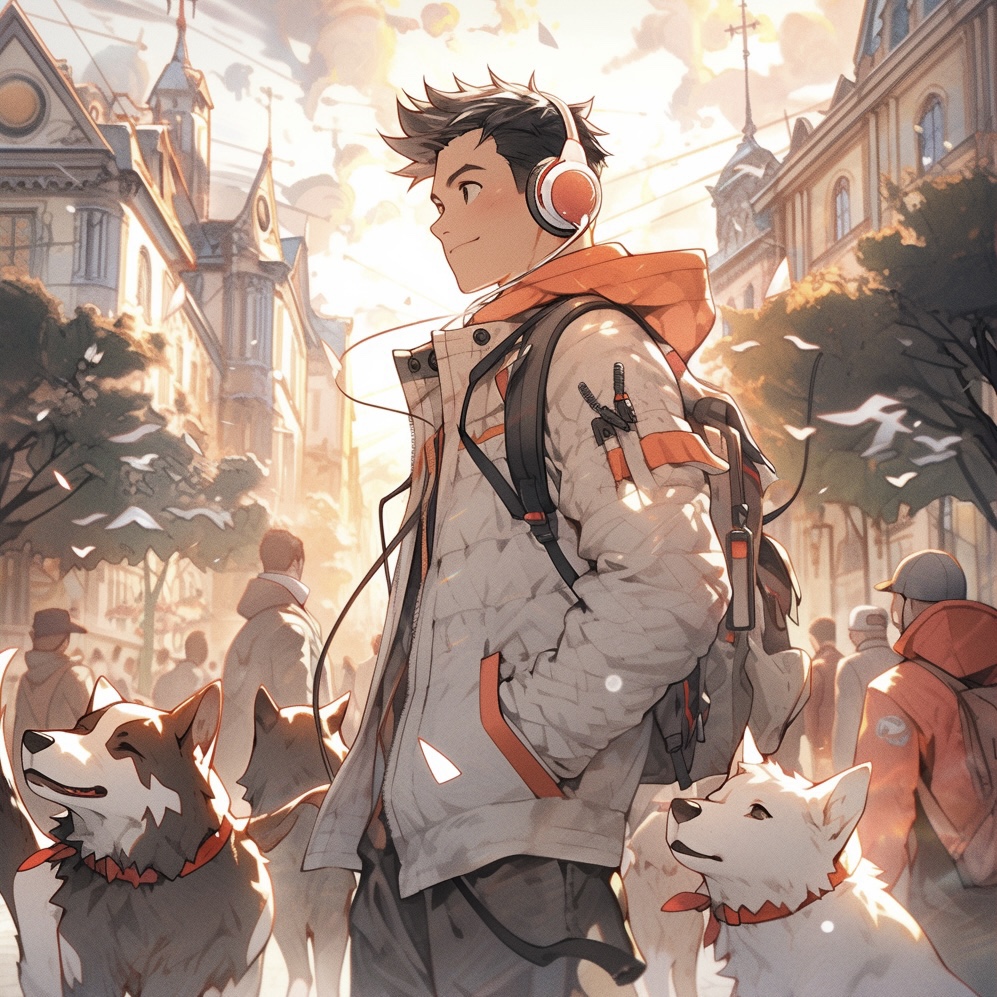
I played with this cover art idea for awhile in Midjourney over the past few weeks, but wasn’t super happy with any of it. I gave the same brief to ChatGPT + DALL•E 3 and decided to use its version. It came up with a more interesting composition than all the other centered, literally middle-of-the-road shots, and it was able to follow my instructions that the headphones should be Beats Studios.
Remember the Leica Sofort (German for “instantly”) camera? It came out of nowhere years ago, an unacknowledged collaboration with Fujifilm that took their popular Instax Mini 90 model and rehoused it in a sleeker Leica-designed body (offered at a much higher price, nearly double if I recall right). Reviewers tried to discern a difference in the photos, but they were essentially identical cameras on the inside. For some reason, everyone danced around the similarities and at best said the Sofort was “inspired” by the Mini 90, as if it was a new Instax camera by Leica that somehow came out looking mighty similar, rather than a simple body swap at the same Fuji factory.
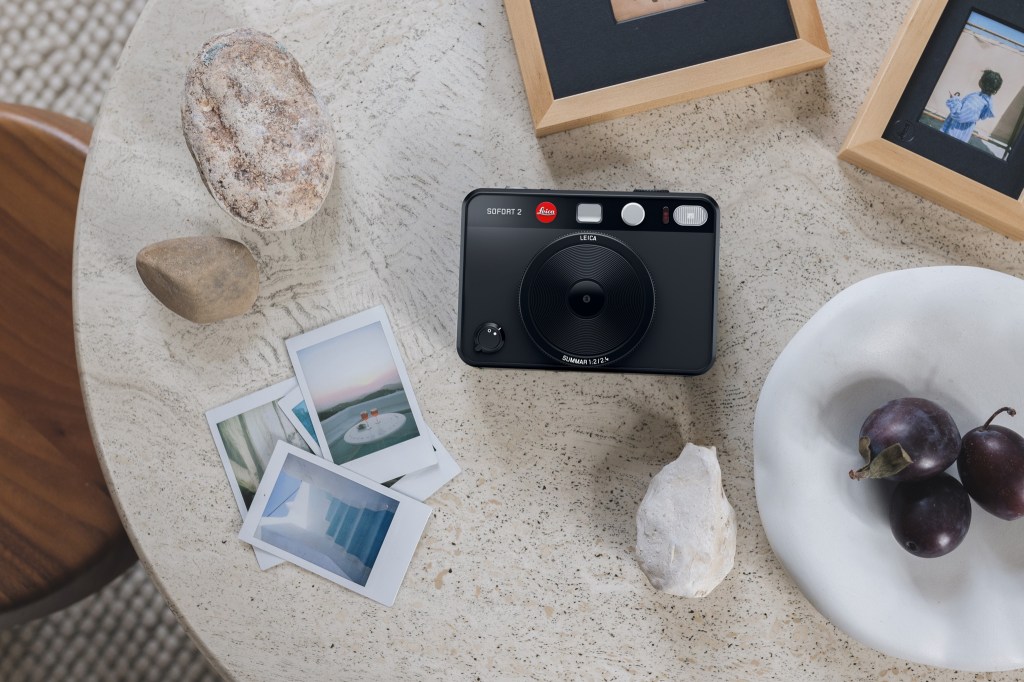
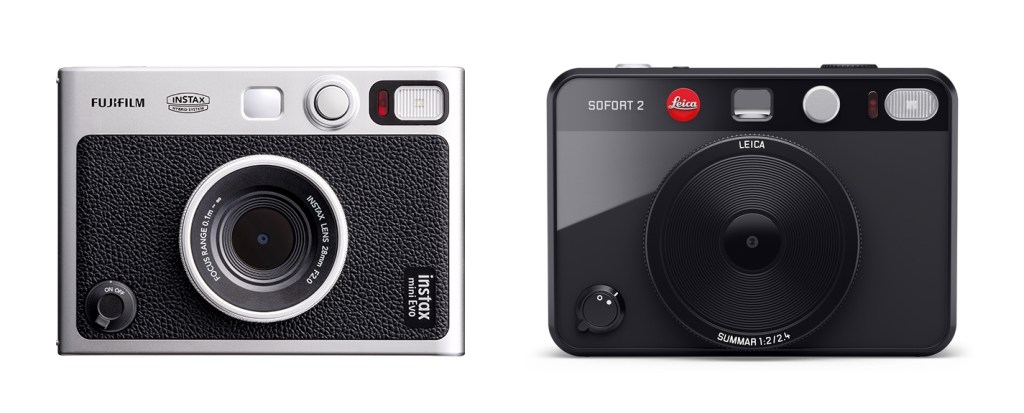
This week, Leica announced the Sofort 2, which is now a redesigned Instax mini Evo (a camera I bought myself for Christmas in 2021). Where the original Sofort was a fully analog Instax camera, the Sofort 2 is one of Fuji’s hybrids: a digital camera fused with one of their Instax printers, so you can take tons of photos and then decide which to print.
In my opinion, the mini Evo is the least ugly Instax camera Fuji has made, which is one of the reasons I was excited to get one when they came out. Oh, I noticed that Jurin from XG uses one, and some of their IG posts look like mini Evo shots. But the Sofort 2 is beautiful, streamlining the body to its essential elements and removing nearly all traces of fake plastic leather and silver-effect plastic.
Leica’s ability to wrap other companies’ cameras in minimalist industrial designs and sell them for more money is unmatched. I bought their D-Lux 7 precisely because I wanted Panasonic’s LX100M2 but could not get behind its rugged hiking shoe looks.
Where the mini Evo is a cute plastic facsimile of a Fujifilm X100 camera, and wearing one around on a shoulder strap makes you look like a kid who’s been placated with their very own toy iPhone, the Sofort 2 looks like a camera in its own right (far as I can tell from the images). And as little as I have used my mini Evo over the past two years, it will be very hard to convince myself not to “upgrade” to this version for Christmas. And to be clear, there are ZERO functional improvements from the Fuji version, apart from not looking like a toy.
Fujifilm makes their Instax cameras kid-friendly. They’re colorful, bulbous, fun, and recall the freewheeling sensibilities of product design before the 2008 financial crisis, when phones could look like tubes of lipstick and translucentplastics were everywhere (they’re coming back). The Leica partnership seemingly exists to provide the market with what the Japanese might innocently call “adult versions”. Why Fujifilm leaves money on the table by not doing this themselves is mind-boggling. Are they really incapable of producing understated designs? I don’t care about the Leica logo; it’s a joke on a product like this, I just want a clean-looking rounded rectangle.
Generational shifts in photography
And apropos of all this, I heard that Sean was getting into film photography and about to use an Olympus XA2 I once gave to Cien. Which got me talking to my Pi AI (we’ll come back to this) about old becoming new again in photography. Part of it was trying to convince myself that a Sofort 2 would be worth buying as an adult-friendly retro toy camera — a loving term for cameras with garbage image quality. I’ve owned many of the sort, like the Digital Harinezumi series, and they’re always plastic and cheap, or simply dusted-off vintage digital cameras. But this is a new! luxury! toy camera!
So Pi sorta made the “observation” that using an analog camera is an attempt to engage with photography more deliberately. Which I already knew? Because of course using a dedicated camera instead of a smartphone today is deliberate; a “slow photography” thing, a “real photographer” flex. Of course instant film is an extension of this.
But I’d not really appreciated it from the perspective of Gen Z people who grew up without them. Like why ordinary kids not into capital-P Photography would be interested in Instax/film cameras and old digital cameras beyond signaling coolness. Obviously we Xennials and Millennials grew up with photographic scarcity and have fewer photos of our younger days, but these kids grew up in an age of surplus, literally taking photos for granted. Phone cameras everywhere mean cheap and infinite memories. So naturally tools that force moments to be more precious, that force viewers to see events through wonky lenses, would hit different.
I noticed afterwards that Leica’s press release for the Sofort 2 sums this up with a simple statement: “Back then, the instantly printed photo symbolized acceleration, whereas, in today’s fast-paced world, it represents a moment of caution and relief.”
Next day update: I neglected to mention here that the mini Evo and Sofort 2 cameras are actually perfect bridges between these two approaches to photography. They are digital cameras that let you shoot in surplus, and print only the photos worth keeping in scarcity. Also, having two offerings serves buyers across the spectrum from fun/affordable to serious/expensive, which tends to be a generational divide. The hybrid instant camera is a tool that unifies photographers with different values (so long as they’re okay with 5-megapixel shots), and serves as a symbol of ‘making this moment count’.
The Pi personal AI assistant
Okay, so what’s Pi? It’s billed as a personal AI, a ChatGPT for your daily life. But isn’t ChatGPT already for daily life, as well as work life, I hear you ask? Yeah I know, which is why I’m giving this a go. The main difference is that instead of multiple chat threads for different topics, with Pi you just have one main chat. It tries to learn more about you and draws on past context to inform its responses. It’s built on a proprietary foundation model, so perhaps they have a way to get around the short-term memory and context collapse that I’ve seen with other generative AI text systems — so far it’s doing quite well after a few days!
It’s free, and their privacy policy claims they’ll never share or sell your information, but yeah sure what else would they say? I’ve found it quite pleasant, and its responses are tuned to be shorter and less formal than ChatGPT’s defaults. It does feel like talking to a friendly personal assistant.
So far I’ve had discussions with it about movies (we talked about Interstellar and why some Nolan films don’t work as well as others), python programming, economics, frameworks for building good arguments, as well as its own purpose and unique value proposition.
I just asked it to brainstorm what a Sofort 3 could bring to the table. It suggested more AI features (lol) and making it more user friendly. I said I’d go the other way and make it more unapologetically professional, with manual controls and higher quality. It was able to say that it sounded almost like an instant film version of a Leica M, and when I asked it to price such a product, it said $800 USD or higher. That’s pretty insightful!
Something about its simulated personality and the UX of having a single chat thread (where I don’t have to keep introducing my needs and context) makes this very pleasant to use, so much so that I might end up using it over ChatGPT for some queries.
===
Media activity
I had Saturday all to myself so it was a movie day. I saw The Equalizer 3, which was much slower and less action-packed than you’d expect. But Denzel is still badass and he gets to have a nice Italian holiday. Just expect a chiller installment going in. I think this is the last one for Robert McCall.
Indiana Jones and the Dial of Destiny was nowhere as bad as I was led to believe. I’d say it’s actually very successful in closing out Harrison Ford’s role and setting up a possible future heir. The last one was roundly panned and tried to introduce the idea that he had a son, played by an awful human being, which failed so badly they wrote him out in the most delicious way possible in this film. I really hope Phoebe Waller-Bridge gets her spinoff out of this, but apparently she’s developing a Tomb Raider TV series for Amazon Prime? What a shame to work on the pretender when the original tomb raiding franchise is right there!
I forced myself to finish season 1 of Invasion on Apple TV+, just because season 2 looked good in the trailers and has a higher Rotten Tomatoes score. Season 1 is an awful plodding mess, which given Simon Kinberg’s involvement should not surprise anyone. If you’re interested in S2 and haven’t started on S1, I’d recommend you just go straight to it and try to fill in the blanks.
The Below Deck marathon continues. We finished seasons 5 and 6, started over with season 1 — it was disappointing in terms of production quality and crew likeability — and are now on the second.
Apple Arcade’s new James Bond game is quite entertaining. Cypher 007 is an isometric stealth-action game from the makers of Space Marshalls, and should scratch the itch for anyone who loves the franchise and/or Metal Gear games.
So much new music came out and I haven’t had a chance to hear it all yet. After hearing about how Sufjan Stevens’ Javelin is dedicated to his partner who died this April, I’ve played it through several times. I think it’ll be one I come back to over the years.
There’s also a new Drake album, For All The Dogs, which may not have the same longevity.
I enjoyed my playthrough of HOW DID WE GET HERE? by a 22-year-old Canadian pop artist named “young friend” while writing this post. Admittedly, I wasn’t listening to the words at all, but it was very pleasant and I’ll have to get back to it.
A new Omar Apollo EP, Live For Me, which I’ve heard one song off and am really excited for.
Caroline Polachek’s second album, Desire, I Want To Turn Into You, has been getting great reviews too, so I’ll get around to it next week hopefully.





































 sangsara.net