
Tag: Copywriting

  • Week 4.26

    Week 4.26

    Trump spoke at the WEF in Davos, and we watched it live despite wanting to turn it off many times. I intermittently tuned into Bloomberg TV over the week to try and keep up with all the repercussions. It’s something I haven’t done in a while, and the memory of watching last year’s Davos coverage came back clearly — has it really been a year? Time flies when you’re watching chaos porn.

    My main accomplishment for the week, in which admittedly little else happened, was acting on an impulse to make a sardine-themed t-shirt. If you were here back in Weeks 49 and 50 of 2025, you’d know they’re kind of my current food obsession.

    How sad I was, then, to discover that canned fish has actually become a trendy thing now. Read this piece on the Taste Cooking site about how it’s hit the mainstream and now faces a backlash. It turns out that Big Sardine has been aggressively courting women. See the pretty illustrated boxes and tins coming out of Portugal and from new brands like Fishwife; they’re perfect for social media. As a result, prices for what was once a humble working man’s lunch are soaring.

    Sidebar: As a man on the internet, you have a non-zero chance of being targeted for red-pill radicalization by algorithms, and it’s something I try to be hyperaware of and on the lookout for on platforms like Twitter. Despite that, at one point this week I was told by friends that I’d said something borderline manosphere-y. It was an observation that dating someone older and wealthier in your 20s could lead to lingering lifestyle inflation (spending above your means, simplistically) after you broke up with them. And seeing how women date older more often than men, I thought it might be another reason for the statistical gap between men and women’s retirement savings (alongside lower wages, caregiving duties, parenting). I just want to record this observation in case you notice me starting to blame women for all of society’s ills.

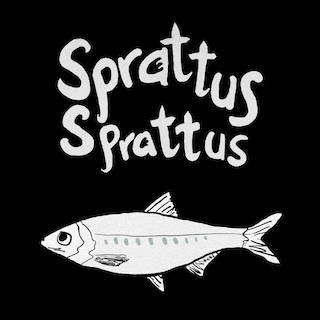
    But back to the t-shirt I was talking about. I had the idea to draw a sprat, which is a species of fish commonly grouped under the sardine umbrella. I wanted to place it under with its Latin scientific name, Sprattus sprattus, on a black tee. I also had a mental image of what the lettering would look like, and managed to bring it to life with my own two hands (and an iPad). I’ve ordered a couple of shirts from a print-on-demand service for myself and Kim, thinking that maybe if they looked good and I felt like having more problems in life, then I could try selling some online.

    As soon as I had that thought, I got excited and started mocking up a product page. I had a defunct Etsy store for my Misery Men project, so I renamed it “Maison Misery” to serve as a brand for all of this as-yet unrealized merchandise.

    Next, I wrote up some funny copy for the sprat shirt, and then decided to put Gemini through its paces as an assistant copywriter to improve it. I wanted to spend more time with Gemini given this week’s rumor that Apple might not only use Google’s technology for the Apple Foundation Models powering New Siri, but also for an integrated chatbot debuting in this year’s OS updates.

    And yeah, it’s really not looking good for junior copywriters. Five seconds after being given the brief, Gemini came back with three options that made me laugh and then compliment it with “Fuck me, these aren’t bad!” Now, each one wasn’t really usable on its own, but there was enough there that I could cobble together a good result along with what I’d already written. And that’s really all a creative director wants a junior employee to do: produce a range of half-formed ideas to pick through and refine. Unfortunately for humans, the fastest and cheapest LLMs today can already do that for things like product descriptions. And they’ll be running locally on your iPhone by the end of the year. This would be great technology if we had a shortage of copywriters, but instead we have a surplus, all looking for work.

    But since I’m the writer Maison Misery is replacing with AI, it’s okay? Here’s the augmented final writeup that I’ll put next to this t-shirt.

    At Maison Misery, we believe in celebrating the small things — mostly because the big things are too overwhelming to think about. Enter the sprat or brisling: a tiny fish harvested in its delicate youth, then tucked into cozy tins of extra virgin olive oil to dream of the Portuguese coast. These are the fancy ones you bring out to impress a date you’ve just brought home. If they don’t like the ‘deenz’, then that’s a bullet dodged.

    This original tee pays homage to Sprattus sprattus with a hand-illustrated and lettered design placed over the heart, providing a conversation starter for marine biologists and a conversation stopper for everyone else. It’s a way to wear your passion for canned sardines on your sleeve, though technically we put it on the chest because sleeve printing is prohibitively expensive and we have a lifestyle to maintain.


    Media activity

    • Netflix pushed the show His & Hers onto us last week, claiming it was an “addictive” thriller. I say give it a miss, because I can’t remember a damned thing about it today. Instead, their self-declared “top tier” thriller The Beast In Me, starring Claire Danes and Matthew Rhys, is a much better production. We finished it over the weekend, and while it’s no timeless classic, I’d agree it’s what you would find on the upper shelves if Netflix were a Blockbuster.
    • I watched the French animated film, Mars Express (2023) and came away very entertained. It’s a sci-fi story about robot/AI rights, a murder that defies the Three Laws, uploaded consciousness, and so on, borrowing from many existing works while having enough original ideas to justify itself. It premiered at the Cannes Film Festival, and doesn’t seem to have gotten wider attention since. Check it out if you can find it.
    • We also finally saw Brendan Fraser in Rental Family (2025), a Japan-through-American-eyes sort of film that doesn’t come close to capturing Lost In Translation’s magic, but has enough heart to reward your time. Fraser plays a down and out actor living in Tokyo who falls into a job playing stand-ins for people who need to tell white lies. Except some of them are kinda gray. I appreciated how the film leans into the moral ickiness of these assignments and rejects smoothing them over completely.
    • I swore I wouldn’t buy any records this week, and lord it was hard. J Dilla’s Donuts album went on “Limited Time Sale” on Amazon, dropping about $15, but I still didn’t cave! It’s in my cart, though. Instead I played some vintage cuts from my dad’s collection: War’s The World is a Ghetto and Rudolf Serkin’s Beethoven Piano Concerto No.5 with the New York Philharmonic.
    • If you want to know how close AI-generated music is getting to turning out radio-friendly bops, check out this album I came across by Japanese technologist Tom Kawada. I don’t think many people would realize what it was if they heard it in the background of a store, or a movie scene, or their own living rooms.
    • Then, to restore your faith in the messiness of human artistry, watch the new HBO Music Box documentary, Counting Crows: Have You Seen Me Lately? It covers the creation of their first two albums with a focus on Adam Duritz’s struggles with fame and mental illness. AI will probably write a chart-topping hit this decade, but can it ever write A Long December?
  • Finding a Home for Your Copywriting Portfolio or: How I Learned to Stop Channeling an Art Director and Love the Words

    Finding a Home for Your Copywriting Portfolio or: How I Learned to Stop Channeling an Art Director and Love the Words

    Lots of portfolio tools advertise the ability to create a gorgeous website online within minutes, but how many are suited to showcasing a copywriter’s work? This post covers getting a basic presence up for a handful of your projects. More comprehensive site builders are only briefly mentioned.

    It’s often said that people only look into their CVs between jobs, but taking stock of what you’ve accomplished on a regular basis is a really good practice. But with a standard resumé, updating a paragraph about your current employment several times a year isn’t attractive. Fortunately for people in the creative industries, there’s the portfolio, which can be very satisfying to compile, if only to remind ourselves how little victories on a project tend to make up a bigger result.

    Not Your Creative Director’s Portfolio

    Over the last few years, I’ve seen a fair few creative portfolios, and increasingly, when one asks to see some work, a URL gets sent instead of a PDF. When I was starting out in advertising about 8 years ago, we routinely brought physical folders of printouts to interviews. If you wanted the job, you might make an extra copy to leave behind. If you’ve heard some creatives calling their folios “books”, it’s because that’s what they really were.

    Another thing that’s changed since the mid-noughties is how the presentation of a copywriter’s work has gone from showing a few ads and/or documents with long-form writing samples, to being very close to how the art guys do it. Big, colorful pictures that would reel even an illiterate eye in. Some writers’ books now haven’t got a word in them.

    Carbonmade
    Carbonmade: Your online portfolio, the door to a bright future in children’s illustrations

    Most of the people I’ve met showed off work on portfolio cum social networking sites for creatives. Places with start-uppy Web 2.x names like Carbonmade, Krop, the Behance Network, Cargo, Coroflot, and to some extent, Dribbble. Some respectable, shirt-wearing creatives had portfolio sites on their own domains, and the ones who didn’t return their pencils used blogging services like Tumblr.

    What I’ve noticed is that very few of these solutions are suited to the needs of creatives who self-identify as copywriters.

    Copywriters Are A Needy Bunch

    Designers, illustrators, and art directors are well served by the many visual portfolio tools out there. Flip through a few examples and you’ll notice a tendency to not explain the images — when it comes to showing off craft, the work often speaks for itself. Maybe it’s because most tools just don’t allow text at all, but I’ll come to that later.

    I think a writer needs a little room to take his viewer through the work. So much of what we do is problem solving and just not visible in the finished consumer-facing work (nor should it be). Some of the things a writer could supply to complement a piece of work are: some background info, a project or team story, the strategic line between proposition and product, an elucidation of the idea (if one exists), how the piece works with a wider campaign or positioning that the brand has pursued, and any measured results that came out of it. Touching on just a little of the above, versus a caption reading “Banner Execution #2” on a photo of a toothpaste tube telling a joke, can help explain yourself come Judgement Day.

    Five Steps to Happier Portfolioing

    The more I saw, the more I started to wonder, where should a copywriter put their work online? To answer that question, I signed up for a bunch and put them through their paces, and also asked colleagues and industry friends for their (possibly subjective) opinions on the leading ones. Here’s what I know, filtered through what I didn’t like.

    1. Keep Good Company

    Maybe this won’t apply where you are, but Cargo (or CargoCollective) ostensibly carries a reputation for being full of student work. I don’t know where that comes from; too many cans of Heinz baked beans styled like Warhol prints? That said, there’s probably nothing wrong with using Cargo if you ARE a student. Coroflot seems to be another good place for junior creatives to get their work in front of recruiters and large brands. DeviantArt was ranked below the two, because your application will disappear into an HR drawer labeled ‘Slashfic Writers’.

    Krop
    Krop: Your killer headlines will need killer headlines

    For professionalism, I was advised to try Krop. It charges a not-insignificant monthly price of US$10, in the league of premium site-building services like Squarespace. I didn’t see anything that justified the price against Krop’s drawbacks. Amongst those I asked, Behance enjoys a neutral to positive reputation that will not stand in the way of your looking righteous.

    As far as domains and URLs are concerned, it’s also about the right associations. If you’re on a site built for creative work, then piggybacking on their domain isn’t an issue. For example, having “behance.net/name” is okay, but “name.tumblr.com” looks like a collection of meme gifs. Using a “name.com” is great as long it’s not the “best-name-online.com” that GoDaddy recommends when your name of choice is taken.

    2. Know the Tools You’ll Need

    Behance
    Behance: Owned by Adobe now, so you’ll have to hit refresh for minor HTML updates every 10 minutes

    Plenty of sites simply don’t let you annotate or supply a paragraph of text beside your large and beautiful images. It’s practically textist. Krop is a major offender. And since we’re talking your garden-variety copywriter here, and not those mystical hybrid writer-designers who can tastefully superimpose text within their images, an ideal tool would allow writers to enter text on the page itself. In that regard, Behance trumps Krop, which only allows a short caption for each image. Not only is Behance free, it allows the mixing of as many images, embedded videos, and text blocks on a project page as needed.

    Most importantly, if you’re going to be uploading work where you’re especially proud of the writing, make sure it can be read! Being able to click and zoom in (or load the original image) is table stakes, but plenty of sites I’ve seen don’t do it. This is the point where your portfolio’s tab gets closed and your reader goes back to a ‘Hunger Games Wedding Ideas’ board on Pinterest.

    For this reason, I do not recommend using ‘free’ services that reserve this ability for paying customers, e.g. Carbonmade. Behance won’t zoom either, but you can at least reproduce your copy on the page using a text block.

    3. Create a Gallery, Not a Blog

    Your Tumblr should look like this
    If you must Tumblr, your portfolio should look a lil’ sumthin like this wicka wicka

    When a portfolio site is built on a blogging CMS, and looks like a linear blog, expectations are set for a diary of constantly evolving works-in-progress. Visitors will be less impressed by your last post being 18 months old, even if it was ahead of its time.

    Of the sites I’ve seen built on simplistic platforms like Posterous, Tumblr, Blogger, Pinterest (you gotta see this Hunger Games wedding), too few employ themes with a static front page serving as a table of contents. If your platform of choice doesn’t let you do that, find a new one. A scrolling page of entries without proper navigation is counterintuitive to your purpose: showing your recent work at a glance, and putting more details one click away.

    Some sites will also format and present a version of your resumé in addition to your portfolio. Behance and Coroflot are two that stood out for me.

    4. Decide If You Want Feedback with That

    Socially enabled sites like Behance are proud of their communities. You can follow people doing interesting work, and browse a stream of their recent work right from your front page. Gold stars, comments, resharing; all that stuff. But there’s a real need for portfolios that don’t talk back, and if you’re familiar with the teen movie trope of parents embarrassing their sons with baby stories whenever a girl comes over, you’ll understand not letting a potential mentor or employer see the “helpful” suggestions you’ve been given by others. Or your witty mom-centric replies.

    Moreover, as we’ve already covered, many of these sites are for designers and not copywriters. I’ve heard this sentiment several times: “Designers have Dribbble, but where do copywriters go to share their work and get constructive feedback from peers?” It’s a gap that no one has filled. Until then, my advice would be to keep the two as separate as you can. Find an avenue for copy feedback that works for you, and display your work on a pedestal where it belongs.

    5. Keep Open Secrets

    Another feature that’s rather important but not always available: the ability to secure projects with a password. Some client work can never be fully public, but if there’s a story in there worth telling, you might open it up to select viewers. Please don’t set your password to “password” or your first name, or have no password at all and instruct the HR person to ‘just press Enter’, because that just makes it look like passwords are a new concept to you.

    Choose Your Own Ad Venture

    The first conclusion I drew is that you’ll want to spend some money to get this right, although it doesn’t have to be a lot. Whatever your choice, make sure it looks good on mobile devices and doesn’t rely on Flash.

    Squarespace theming
    Squarespace: Can you handle this much customization? Find out with a free 14-day trial.

    My preferred solution has always been to create pages on a personal site, using whatever CMS you’re comfortable with, but that involves a fair amount of set-up and manual work. In contrast, the allure of these modern portfolio services is undeniable. Most come with the promise of page views from fellow creatives baked in, and who doesn’t like getting ‘Liked’? The drag-and-drop features and professionally designed templates are also particularly good for copywriters. Uploading a bunch of comps and artwork almost always results in a presentable page.

    Of all these services I evaluated, the only free one that would meet the needs outlined was Behance. Their paid option is called ProSite, but its fancy templates frustratingly strip away the extra text that makes their free pages compelling for writers. If that gets fixed, it would be a complete winner.

    If you’re willing to get your hands a little dirty, then Squarespace, Breezi, Virb, and WordPress are sound bets. The first two have no free options and start at around $8/mo for a standards-compliant, responsive design site. With templates as starting points and pixel-level control over every detail, they are suited to people with knowledge of web design but who don’t want to code.

    Virb
    Virb: If it’s good enough for a coffee bar in Portland, why not your portfolio?

    Virb is another all-in-one hosted site & blog solution that costs the same as Krop ($10/mo) but lets you do more. There are templates that let you bundle images and text together quite simply and beautifully.

    The open-source WordPress.org software is pretty much the gold standard for consumer CMS on the web, and if you don’t want the hassle of installing it on your own servers, WordPress.com has an ad-supported “hosted service” that takes care of everything for you, with few compromises. A number of portfolio-ready themes are available, but do pay for the domain mapping upgrade, because “name.wordpress.com” looks almost as bad as it would if it said Tumblr. Almost.