Tag: Design

  • Week 21.25

    Week 21.25

    • This week’s installment is update #256! That’s a big deal for fans of computationally significant numbers.
    • Oddly, just as Michael blogged that his family was down with gastroenteritis last week, a similar bug hit our household. Kim got a bad case of what we thought was food poisoning, and then, of course, I came down with it two days later. It’s a weird one: the stomach trouble comes with headaches and fatigue. Fearing that it was contagious, plus being all tired out, I had to skip one meetup and a wedding dinner over the weekend.
    • So not that much happened with me this week, but I suppose we can talk about the mess out there?
    • Google held their annual I/O event and showed off their latest AI achievements. Tl;dr, some of this stuff is just gross. From a technical standpoint, yes it’s remarkable that pretty realistic video (with sound) can be generated from text, and Google can now use your personal context from documents and emails to help with tasks — similar to what Apple promised (but has yet to deliver), with the important distinction that one centers privacy and on-device computation while the other will do it on their servers. I don’t know if I trust Google to let an AI crawl all my documents, and for that reason, minimized my exposure to Google years ago.
    • I remember when Gmail first came out and pioneered showing contextual ads next to your emails. There was an uproar, and the company had to calm people by saying ‘no one is reading your emails, it’s just automated keyword matching’. Well, with LLMs, it’s much, much worse. No human would be able to go through all your messages, photos, location data, and search history to piece together an invasive psychological profile about your vulnerabilities, and make it actionable for advertisers. Trust that an AI will. Just look at how a version of Claude 4 Opus in testing tried to blackmail an Anthropic engineer over an affair it believed they were having.
    • Beyond the business model of Google’s AI products, it’s their designed intent that feels particularly bleak. One example they proudly demoed: a friend emails asking for holiday recommendations at a place you’ve visited. Instead of writing them a thoughtful reply, you let Google AI scour your photos, emails, documents, and receipts to auto-generate a message, using words chosen to sound like you. Sundar Pichai even had the nerve to say, “With personal smart replies, I can be a better friend”. With friends like these, don’t even bother writing. Just ask Google directly and it can snoop the inboxes of a billion other customers to give you the statistically “best” itinerary.
    • And this is where a company’s lack of imagination and care makes itself plainly apparent. Instead of designing an AI system that writes replies in your place, they could have made one that recaps your holiday with a little presentation showing you where you went, what you did, and what you enjoyed most. Then, memory suitably refreshed, you could sit down and write your friend a reply that shows you actually give a shit about them, and both of your lives would be richer for it. I’m beginning to think that Apple, by failing to ship their AI features on time, might be saving us from a future I don’t want to live in. Maybe they’ll never ship. Maybe that was the plan all along.
    • Then a man who many would expect to know better — who sits on stages and professes the importance of values in technology, and is arguably the most famous designer of this century — announced a new venture (also called io) with Sam Altman and OpenAI. And the vibes, my friends, were off. The 9-minute launch video came across as a thin PR exercise to polish Altman’s spotty public image and reassure OpenAI’s investors. It struck an uncharacteristically self-congratulatory tone for the usually humble Ive while announcing, essentially, nothing. Sterling Crispin tweeted a biting Marxist read of the video in the style of Slavoj Zizek. Many saw it as Altman angling for a Steve Jobs comparison, with critics pointing out that he’s not enough of a product person to be a true partner (and necessary editor) to Ive. In any case, I have no doubt that the io team will deliver some beautifully designed hardware. But I fear even they can’t summon enough thoughtfulness or optimism to divert AI from its current trajectory, or prevent the cultural and societal wreckage it’s likely to create.
    • Speaking of nice devices, one of my fondest gaming memories involves my last year at university, when I switched from my PC to a Mac that was relatively useless for playing games. I couldn’t imagine not having any games (this was before smartphones, mind you), so I bought myself a Game Boy Advance SP — the pinnacle of the series, in my opinion. It’s hard to imagine a more perfect form factor for a handheld console. The clamshell design protects the screen; the vertical layout keeps your arms and hands close together, even when squeezed into an economy flight seat; the screen was sharp and self-lit, which was not a given in those days. I would lie in bed in the dark on cold nights and play Final Fantasy I until I was bored to sleep. To this day, I still fall asleep during boring turn-based battles — one of the reasons why I want to try Clair Obscur Expedition 33, since it blends turns with real-time actions. Pretty sure I traded in my GBA SP for store credit to buy the Nintendo DS (DS Phat) when it came out later that year, and I regret it.
    • Anbernic, the China-based maker of retro emulation handhelds, released a clone of the GBA SP last year, the wonderfully named RG35XXSP. It runs a Linux-based operating system and may or may not come preloaded with thousands of classic gaming ROMs from the NES to the PS1 — you should only play the ones you actually own, of course. I didn’t get one because Anbernic doesn’t have the best rep when it comes to build quality, and I wasn’t sure they’d get it right the first time. Fast forward to today, and the new RG34XXSP (yes, it went back a model number) looks to be the one to get, even over the competing Miyoo Flip V2. DYOR (do your own research) though! They made it slightly smaller, dampened the button clicks, added two analog thumbsticks for wider compatibility, and came up with some better colorways. Now that it finally sounds more like a product than a prototype, mine’s on its way in the mail, and I can’t wait to relive some old games while waiting for the Switch 2 to arrive.
    • Meanwhile in Japan, Fujifilm decided to get in on the nostalgia cash grab game with a new camera release, the long-teased “X half”. Many expected this to be based on the X100 or GFX series, that is to say, employing an APS-C or medium format sensor. But no, it’s a 1-inch sensor, vertically oriented to resemble 35mm half-frame photos. A major selling point is the ability to shoot “in-camera” diptychs (a two-photo collage). The overall camera concept is fantastic: it has a 32mm lens, is very small, and features a “film camera mode” that is basically a physical version of those iPhone apps that try to simulate the fun limitations of analog photography. When activated, you are locked into a chosen film simulation look until you’ve used up a virtual roll of film, ranging from 36–72 half-frame shots. You can’t see any photos until you finish, and you can’t even use the digital screen to compose shots, only the optical viewfinder.
    • I would be down for this, except that early reviews show many corners were cut between concept on paper and the final product. Firstly, it’s made of plastic painted to look like metal. There are no words for how much I hate this when done badly. There’s also a visible seam on the front face that ruins the look. Then the processor seems to be slow, and it ruins the illusion of the film advance lever which you need to crank before taking the next shot; it’s reportedly unresponsive until the last photo has saved. If you’re going to fake analog mechanisms then it has to be perfect! The flash unit, a big part of the analog film camera look, is a weak LED rather than a xenon bulb. Then there are the cheesy overlay effects, like light leaks and “expired film” color casts, which seem borrowed from the company’s Instax evo cameras rather than its premium X series. The camera costs S$999, which many are calling too high, but honestly if they had to charge S$200 more to actually do the concept justice, I’d be on board. If some random startup made this for half the price, the flaws would be forgivable. But this is Fujifilm, and if you’re going to carry this faux film camera around and look like an old douchebag with more money than sense, it had better be good.
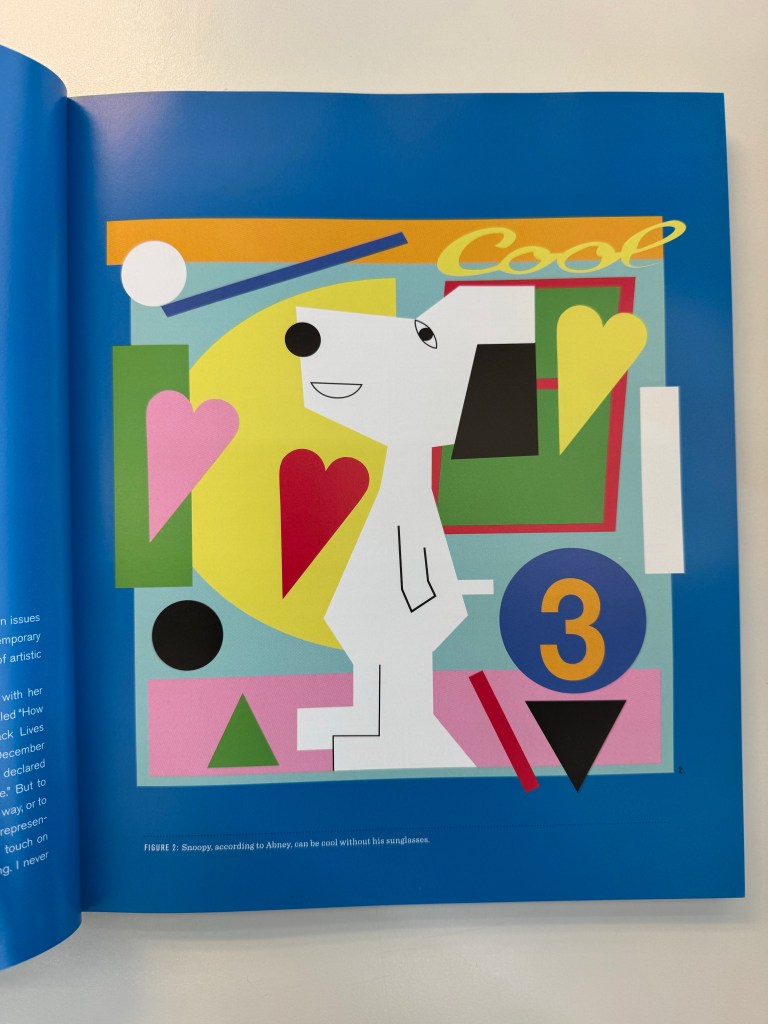
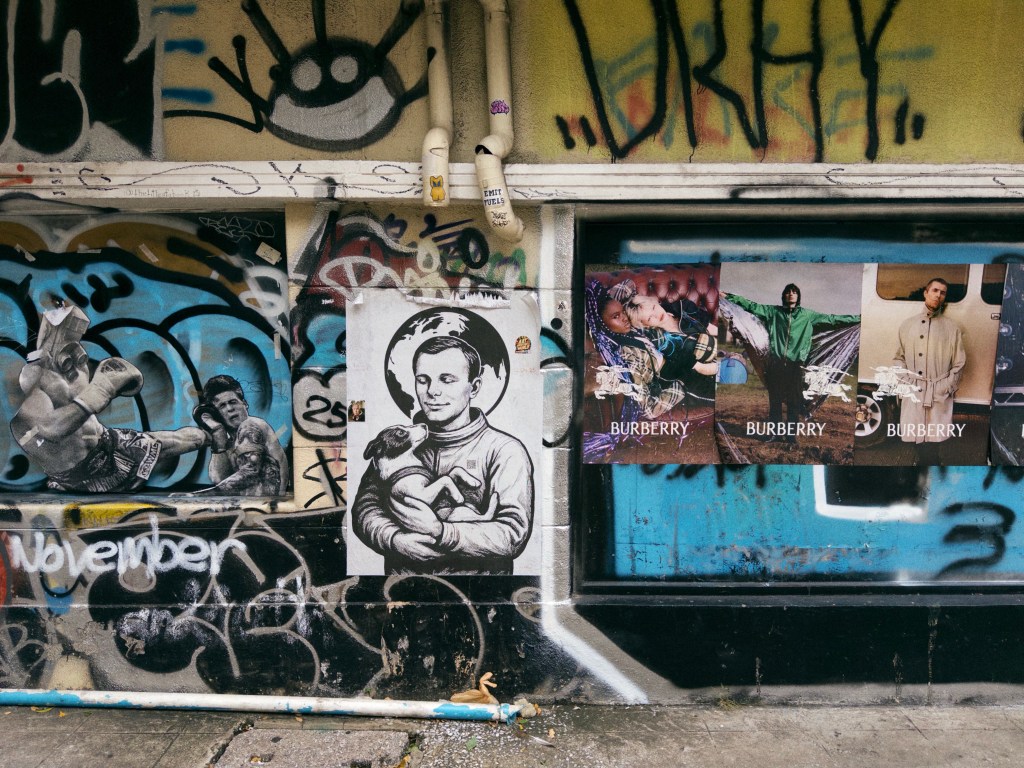
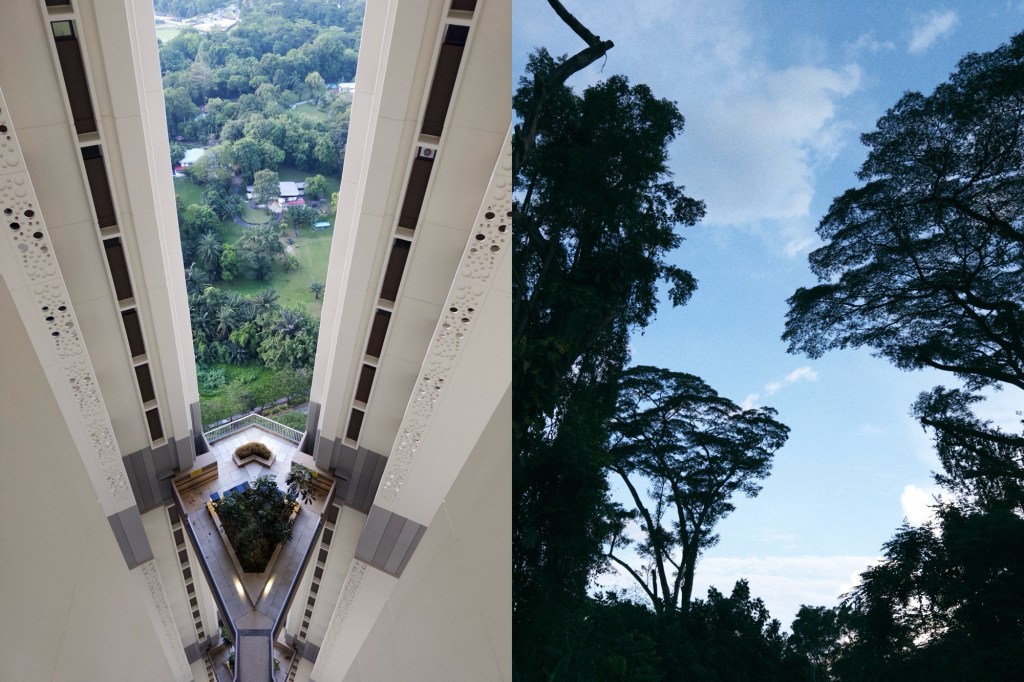
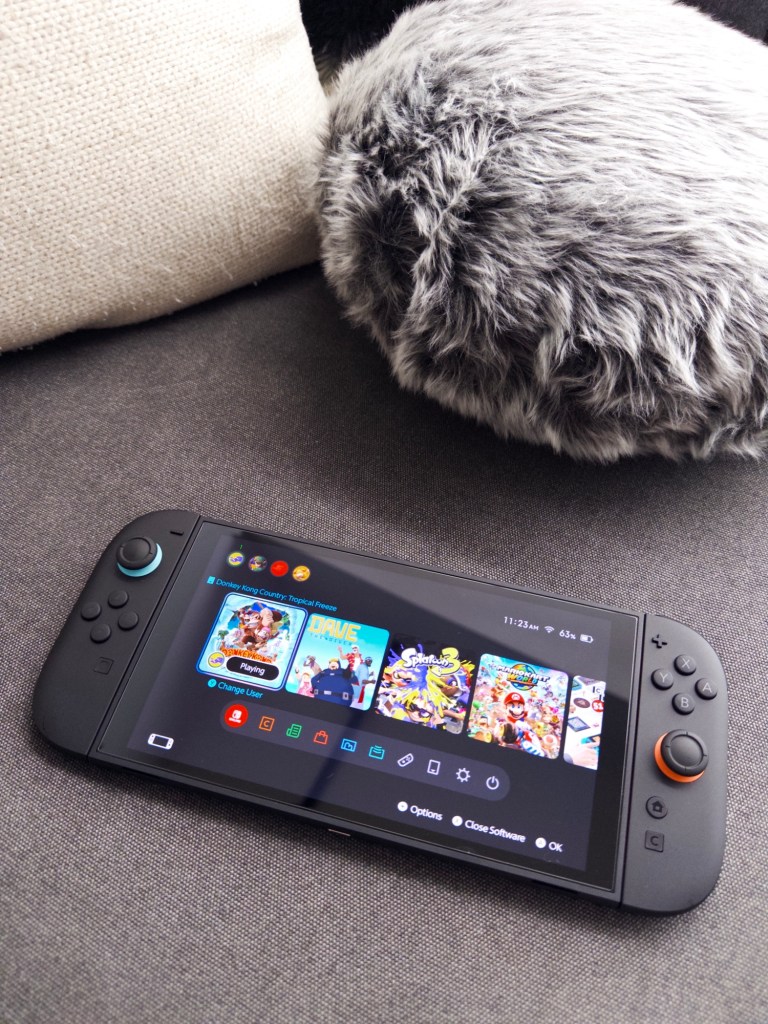
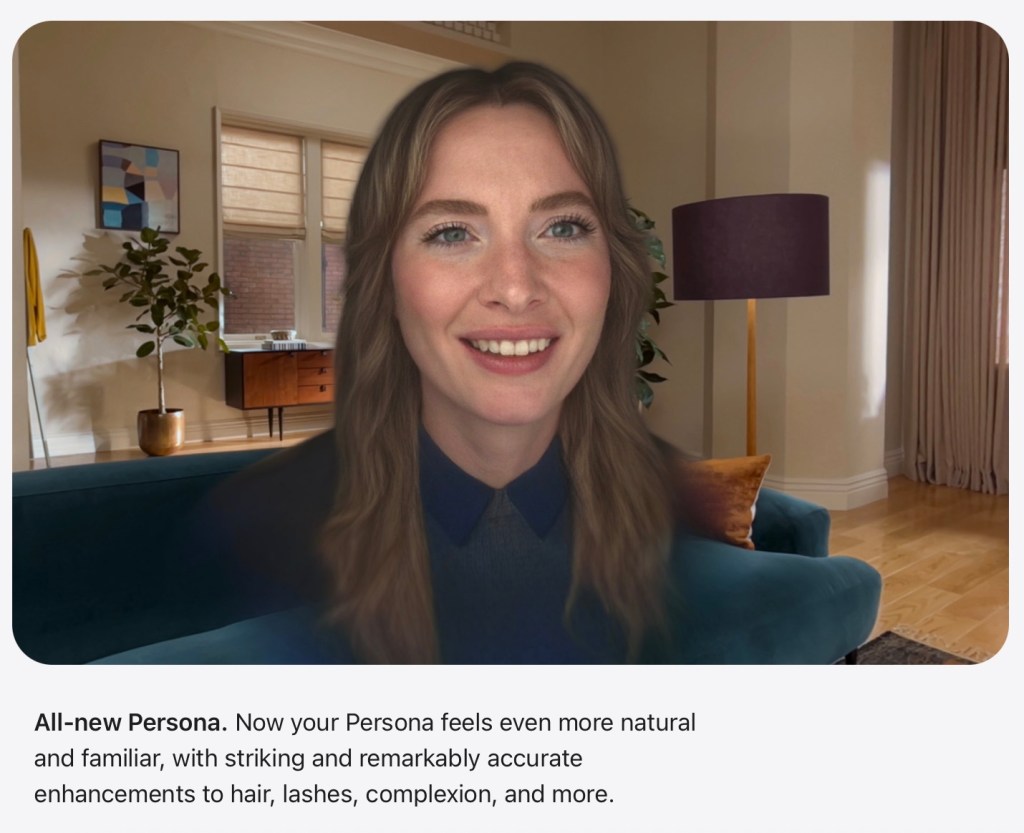
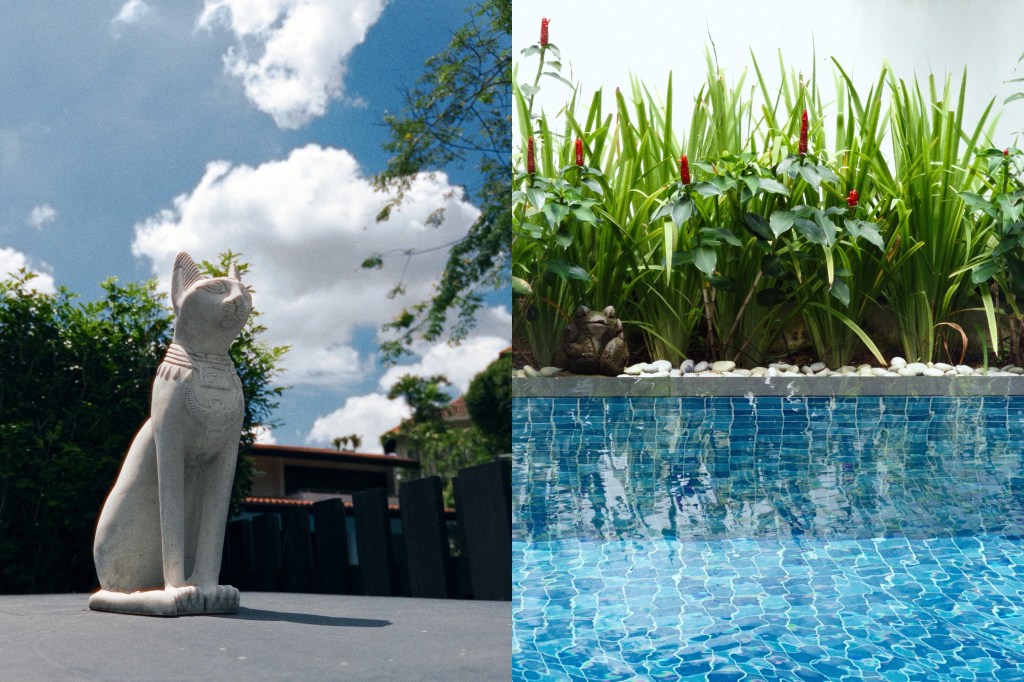
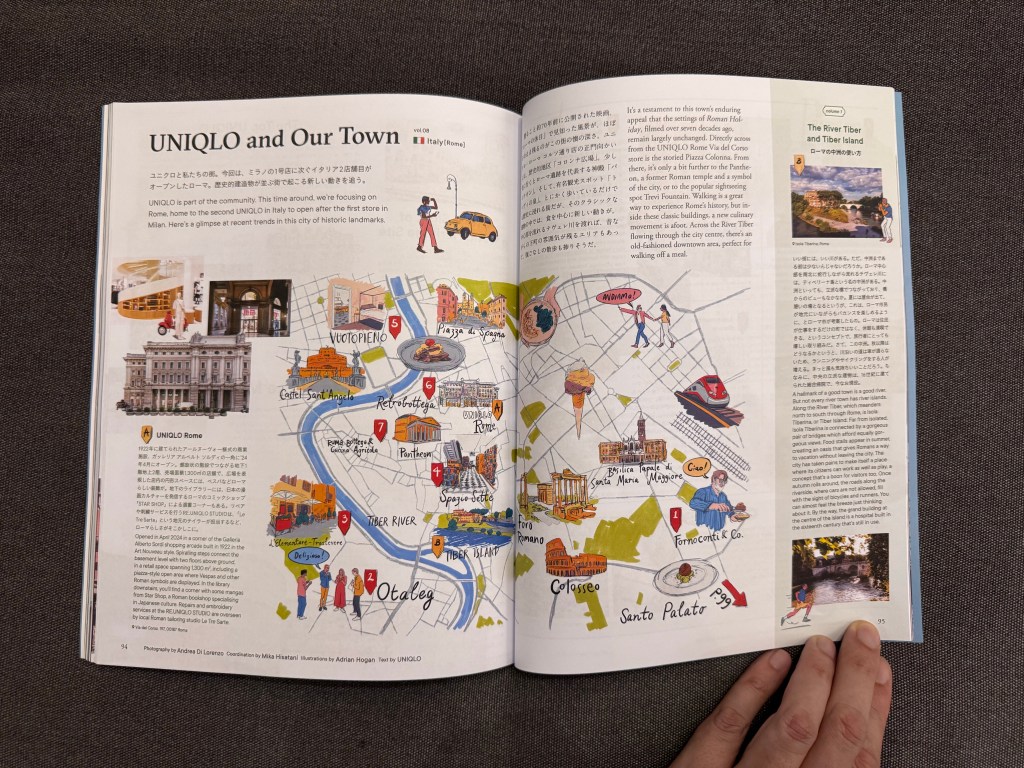
    • Until they do a better job, I’ll get by with the Diptic app I bought in 2010 which makes similar collages with just my iPhone (see featured image above), which also shoots vertical orientation photos by default!
  • Week 13.25

    Week 13.25

    A massive 7.7 quake hit Myanmar and Thailand on Friday, causing several hundred deaths so far. It was chilling to pull up the news and see reports of buildings swaying in Bangkok and having to be shut down for safety inspections, buildings that I had just been in a week ago. Thankfully, everyone we know is unhurt, but I’ve heard accounts of the traffic becoming even more unworkable (someone spent over 5 hours getting to the airport), and with some having to walk miles home instead.

    It was my Apple Watch that alerted me to this earthquake, via a notification from the environment ministry’s MyENV app, which usually likes to tell me about quakes in places so far away I don’t see what possible need there could be for an alert. I was in the middle of watching Jason Statham’s film, A Working Man (2025), in an almost empty theater with Peishan, and was about to swipe it away when I saw that it was actually kind of nearby. And then afterwards, the feeds were full of videos showing swimming pools at the tops of condominiums raining their contents down onto the streets below. Who decided we should start putting pools up there, anyway?

    The movie is terrible, by the way, and makes the mistake of trying to NOT be the predictable vengeance-by-numbers Statham vehicle that the trailer makes it out to be. It looks like our man Jason is just your regular ex-military deadly killer who’s decided to take on an unassuming identity and retire to a life of normalcy as a construction worker when one of his new friends falls afoul of the mob and needs rescuing. This is a setup rooted in at least a little realism, which is needed for the audience to suspend disbelief when the righteous murdering starts. However, this film is co-written by Sylvester Stallone, who is now at a stage in life where he writes really ridiculous scenes, silly and clichéd to the point of surrealism, as evidenced in the last installments of his Rambo and Expendables franchises.

    The latest season of Reacher, a series on freaking Amazon Prime Video, is more believable and enjoyable in almost every way, which is a hell of a red flag for whoever produced A Working Man. When reading any of Lee Child’s novels, Reacher comes across as a stoic avatar of justice, almost featureless in terms of personality. But as played on TV by Alan Ritchson, he’s endearingly a bit of an awkward and pedantic weirdo, as you would expect someone with his physicality to be after moving through a world that he doesn’t comfortably fit into. I like that change.

    We also watched the critically acclaimed show Adolescence on Netflix, and it’s an absolute marvel of filmmaking and acting. I’ve never seen a British TV production with this level of craft; it just leaves you wondering how they pulled it off — how they had the energy, even. Each episode is an hour-long performance that often involves moving between multiple locations, with the actors having to ramp up the emotions from anger to fear and the sorrow in between, and they did this how many times? For the final episode, they apparently used Take #16. It’s unfathomable talent. Stephen Graham and his co—stars deserve awards for this.

    ===

    This week will also be remembered for the wave of Studio Ghibli-styled images that washed up on social media after the release of ChatGPT’s new image generation capabilities in their 4o model. People turned personal photos, memes, and historic images alike into ripoffs of Miyazaki’s instantly recognizable style, and I have to say I enjoyed many of them whilst simultaneously feeling uneasy about what this means.

    The new model seems to be a milestone that’s arriving a little sooner than I expected. It can render text with good enough quality and aesthetic precision. It can process a multi-step prompt such as “create a print ad for the product in this picture”, and it will write some pretty workable ad copy, re-imagine the object you’ve given it, and merge them into a single image that looks right at a glance. There may be minor imperfections, or it may fail to nail a critical detail depending on your object. But the fact that it can be completely right some of the time is startling. I’d say it’s most of the way to fucking the creative industry over, but who knows if the last mile will take a quarter, a year, or a decade to close.

    While discussing the possible outcomes of this development with some people, specifically whether this would retard the growth and success of any new visual ideas — take for example the iconic look of Studio Ghibli, or Peanuts and Snoopy — why/how could any new artist launch and evolve their style if it can be snatched away from them early on and proliferated across the web in ways they haven’t even thought of yet — I wondered aloud if the only way forward left for them will be to use AI to scale their work, to generate more variations of it themselves, and to speed it to its logical conclusion (or demise) before anyone else does.

    At this point, I remembered an abandoned “art project” of mine (if it could be called that) from a few years ago, and got very excited about enlisting ChatGPT’s help with it.

    In late 2019, just before COVID hit, I had the idea to draw a series of cute animal characters and make some products. They would be called the Fluffy Hearts Club, and the story was that they were all research animals who were having horrible tests done on them, but who banded together and escaped from the lab. So they’d all have little scars and visible reminders of humanity’s awfulness on their bodies, but they’d be extremely happy and positive in their freedom eras.

    I drew the first one with great difficulty, a rabbit with a scar on his chest, printed him on something like 50 tote bags, and gave them away to friends that Christmas. I started to draw the next one, a cat, along with some other angles of the rabbit, but eventually shelved it… owing to COVID or lack of skill, I don’t know. As you can see they are pretty rough.

    But when I realized that I could use ChatGPT to “learn” this style and concept to help me finish the rest of it, I got excited enough to plonk down $30 and upgrade my account to Plus. Ethics check: Would I have paid a human artist to do this for me? Unlikely. I’m not made of money, and it’s just a silly side project. Should I have? I can’t see how; I want to explore this on my own without another human in the mix.

    I’ve spent a little time on it so far, and it’s grasped the core idea and even brainstormed other animals and their visual signatures with me — it felt eerily like collaborating with a person, as we discussed possibilities and complimented each other along the way. It has trouble following instructions about very minute details, which it explained as a shortcoming of the way its models were trained (it leans towards cartoon conventions, which one of my notes contradicts), which one can take as proof that this is all built on the back of awful copyright violations.

    But with its help, I’ve managed to produce more versions of the rabbit and even imagined the cat in various art styles, so I’d say this has been a half success. I might use it as a foundation for tracing/drawing new ones myself, or as inspiration for different scenarios.

    I only wish I was using this renewed subscription to explore how to stay relevant in my own job domain rather than in the lane of starving artists. Yuk yuk.

    Speaking of the design field, I went back to the same college I visited last November to help give feedback on the work from a class of students doing a design thinking course taught by my former boss and mentor, and was again struck by how much of what we do and prescribe as designers, the responsible way to move in the world, is naive and vulnerable to the at-odd incentives of everyone in the AI business. They’ll throw a synthetic persona at a problem for $10 in compute before they spend a dollar on asking a real person what they need to lead a better life.

    And that brings me to Careless People, the Facebook tell-all book by Sarah Wynn-Williams that I’ve just finished reading. The one that Zuckerberg and his lawyers tried to quash before it was published. I thought I knew enough about Facebook’s bad behavior, but I was still stunned by some of her anecdotes.

    I haven’t made many rules about what kind of work I’ll do, and when I used to smoke, I believed that I could consult on work for tobacco companies because to do otherwise would be hypocrisy (I’m wiser now), but “never work for Facebook” was a promise I made maybe a decade ago. I simply do not understand or respect anyone who chooses to, and this book should be required reading for those who think they might.

    ===

    I listened to Alessia Cara’s new album Love & Hyperbole a couple of times, hoping that something would finally click, because I did want to like it. But I was left without much of an impression. I’m probably coming off R&B in general because listening to SZA’s deluxe edition of SOS on the plane home last week was quite excruciating.

    But then I put on Jessie Reyez’s new album PAID IN MEMORIES and I loved the one playthrough I’ve heard. Maybe it’s the millennial in me but there are some samples for old people in here, including the Smashing Pumpkins’ 1979. She makes it work, and the melodies are strong.

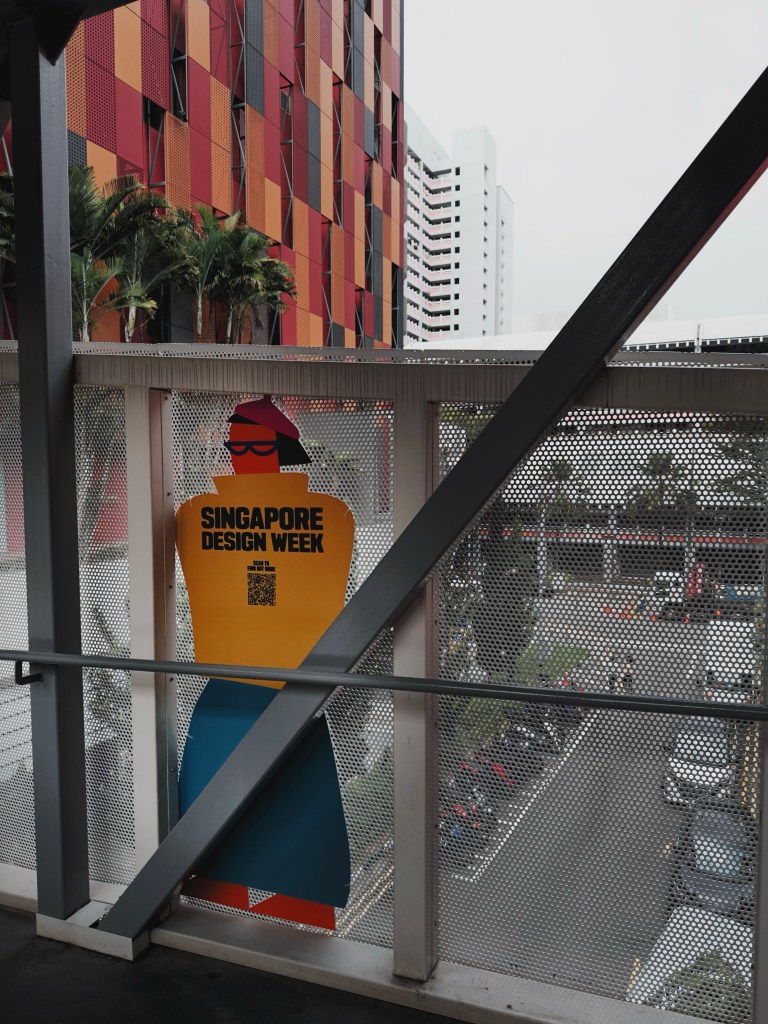
  • Week 40.24: Singapore Design Week

    Week 40.24: Singapore Design Week

    “You’re really in your outdoor cat era”, said Nicolette, in response to my frequent excursions this week (I posted on IG Stories more this week than I have all year, because I realized they’re a convenient way to remind people that you’re alive). I also spent more time out of the apartment than I have in the past few months. I’ve had the freedom to go out early in the morning and do things all this while, but it took the threat of being deafened and annoyed by a neighbor’s renovations to actually make it happen. As it ticked closer to 9am each morning, I sensed the stirrings of men and machines on the other side of the wall, got my bag^ together and headed for the front door — see ya!

    ^ A quick word about said bag: I took the opportunity to get a new one for my upcoming sojourns in the out-there, and found this updated “2Way Utility Bag” from Uniqlo as part of their new lineup with creative director Clare Waight Keller (Givenchy, Chloé). It’s big enough for the stuff one needs to survive in a cafe, co-working space, or library all day: a laptop/iPad, umbrella, water bottle, power bank, camera, book, handheld fan, sunglasses^^, Nintendo Switch, or any of the things I’ve mentioned in recent weeks.

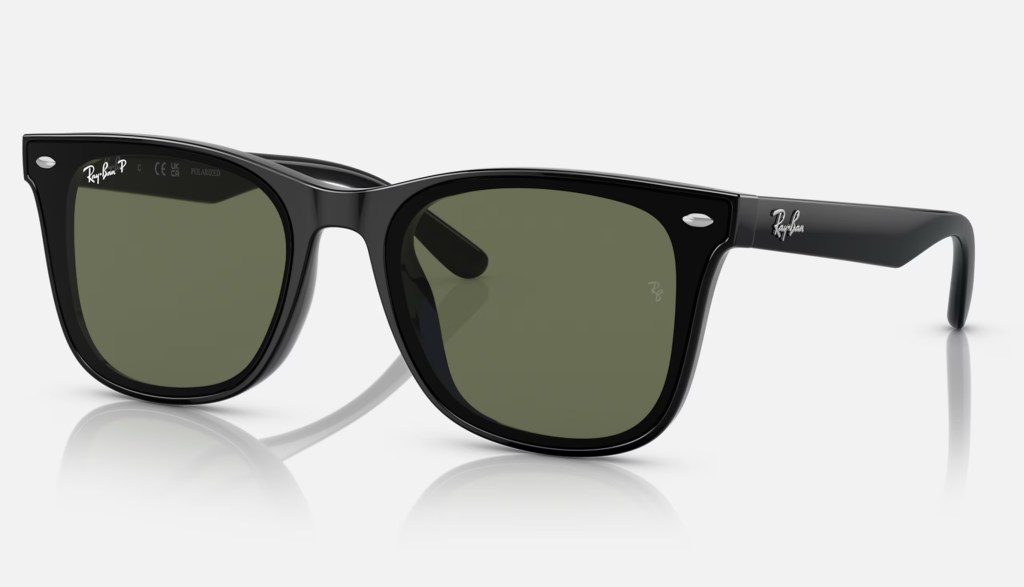
    ^^ A quick word about said sunglasses: I finally found a pair that fits my wide face and doesn’t slide down my low nose bridge. Admittedly I hadn’t tried Ray-Bans because the last pair I bought in Italy like, a decade ago, didn’t do so well on those two fronts and have gathered dust in a drawer. But Ray-Ban has since expanded their product catalog with inclusive new variants and I found some that fit. They resemble the classic Wayfarer model, but with some changes like flat lenses, and so are given a terrible product number (RB4391D) instead of a cool name. Oh and they’re made in China.

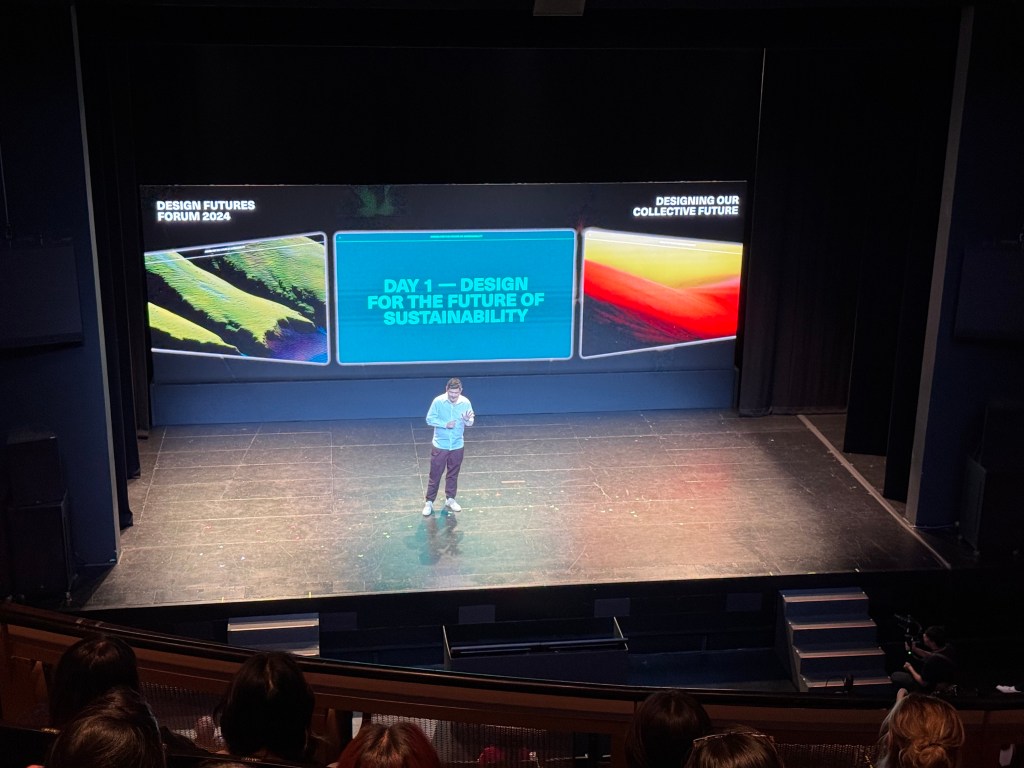
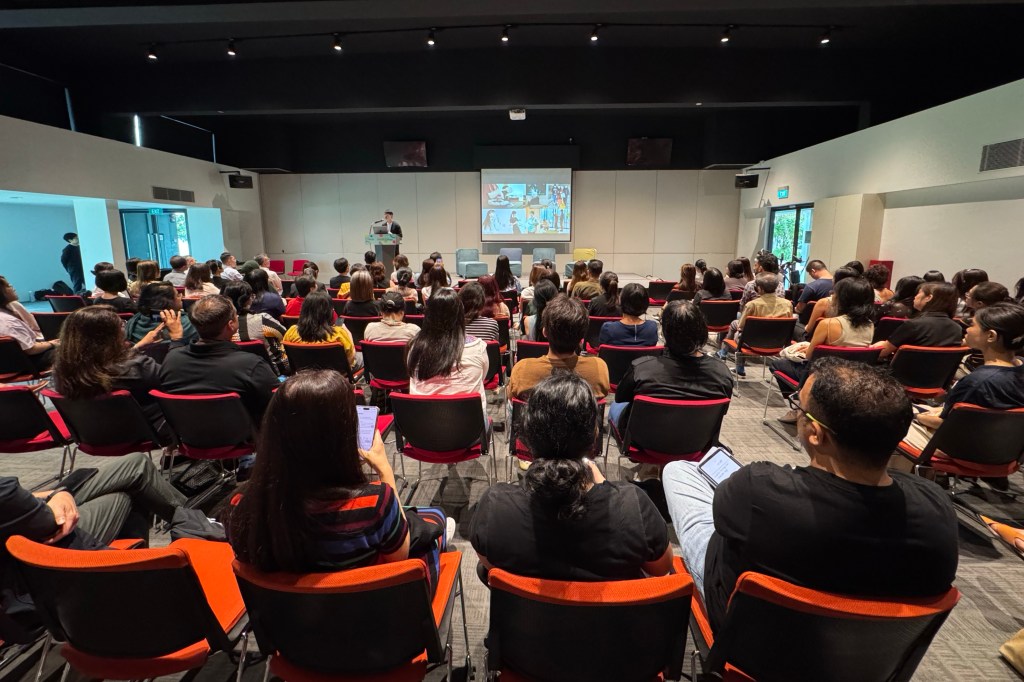
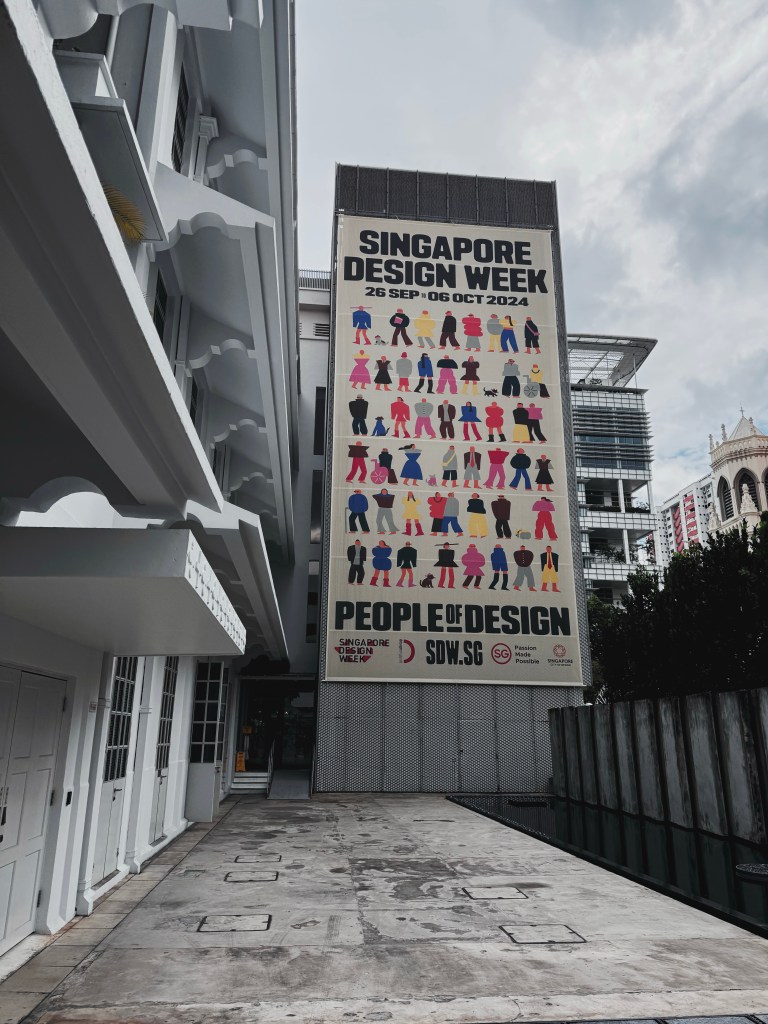
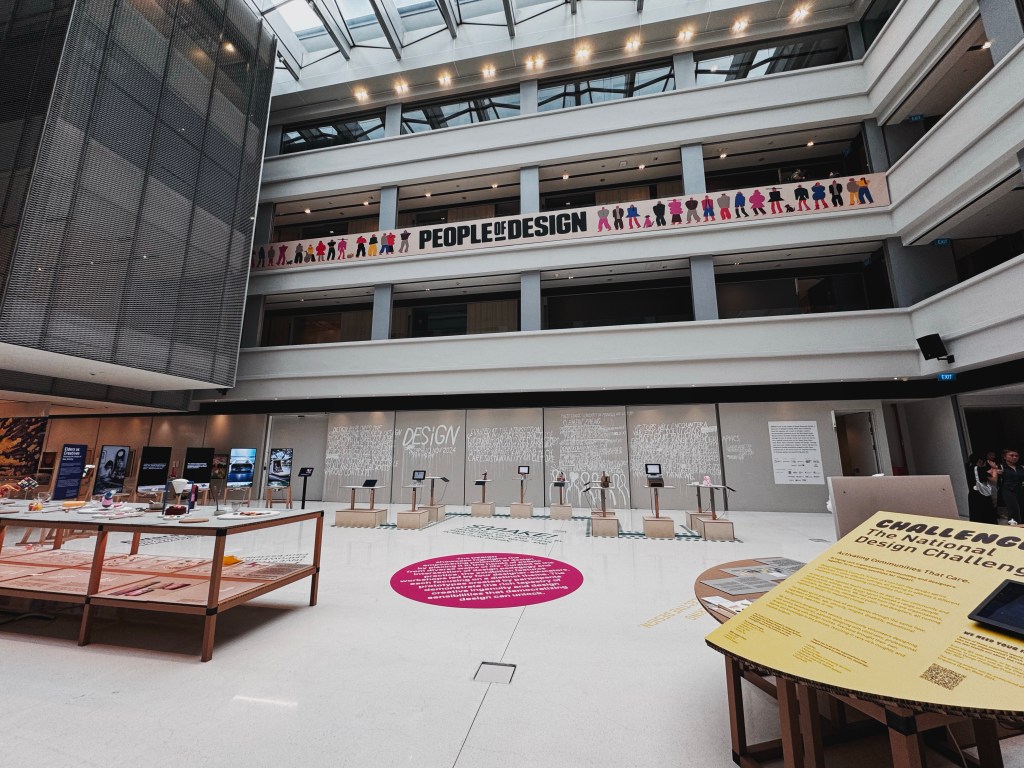
    As mentioned before, this period of domestic exile coincided with Singapore Design Week, which gave me enough things to do and see. On Tuesday, I paid S$130 to attend Day 1 of what was called the Design Futures Forum, which was noted by other attendees to have very little to do with futures exploration (many things discussed were of the present moment), and disappointingly never unpacked the business/social/political challenges that an audience of designers would be thinking about. I overheard someone say, “I could have read this in a designboom article.”

    For example, AI was a key topic as you’d expect in 2024, but presented with the breathlessness of a Forbes contributor piece from over a year ago; without offering contrarian viewpoints, sufficient interrogation of its costs and consequences, or thoughts on how its widespread use might be steered into balance with sustainable creative employment. The AI hype was pervasive, and if the audience played a drinking game triggered by every mention of it, the theater would have seen more vomit than the local ByteDance office. Some of the better speakers seemed to feel some responsibility to subvert the theme, and took genial pot shots at AI whenever they could. But I get it. We’re probably not the real audience for these events, and who knows what purposes they serve anyway? Me, I was only there to pass the time and meet old friends.

    The next day, I visited the Enabling Village, which is described as “the first inclusive community space in Singapore dedicated to integrating persons with disabilities in society”. On top of just wanting to see the place, I attended a series of presentations on projects with inclusive design elements, including some interesting work from Sony. They’ve made prototype musical instruments such as a finger-free saxophone that can be played by humming into a mouthpiece. Your voice gets turned into synthesized sax tones. I wish I could buy one, then my neighbors would be paid back in spades (j/k).

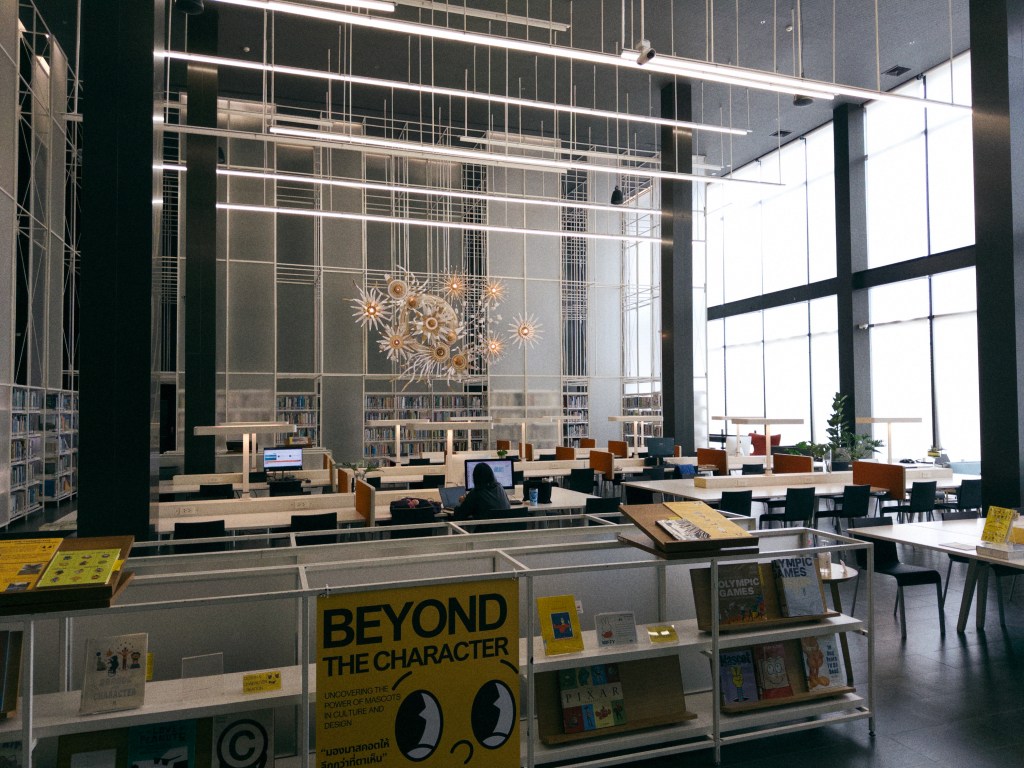
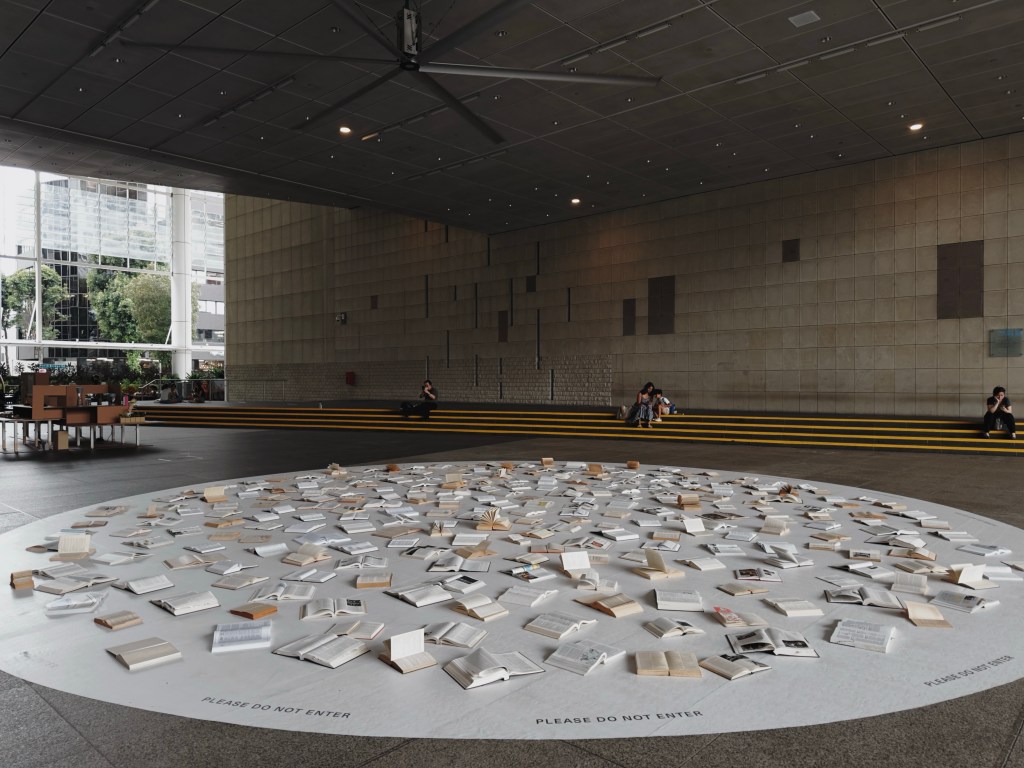
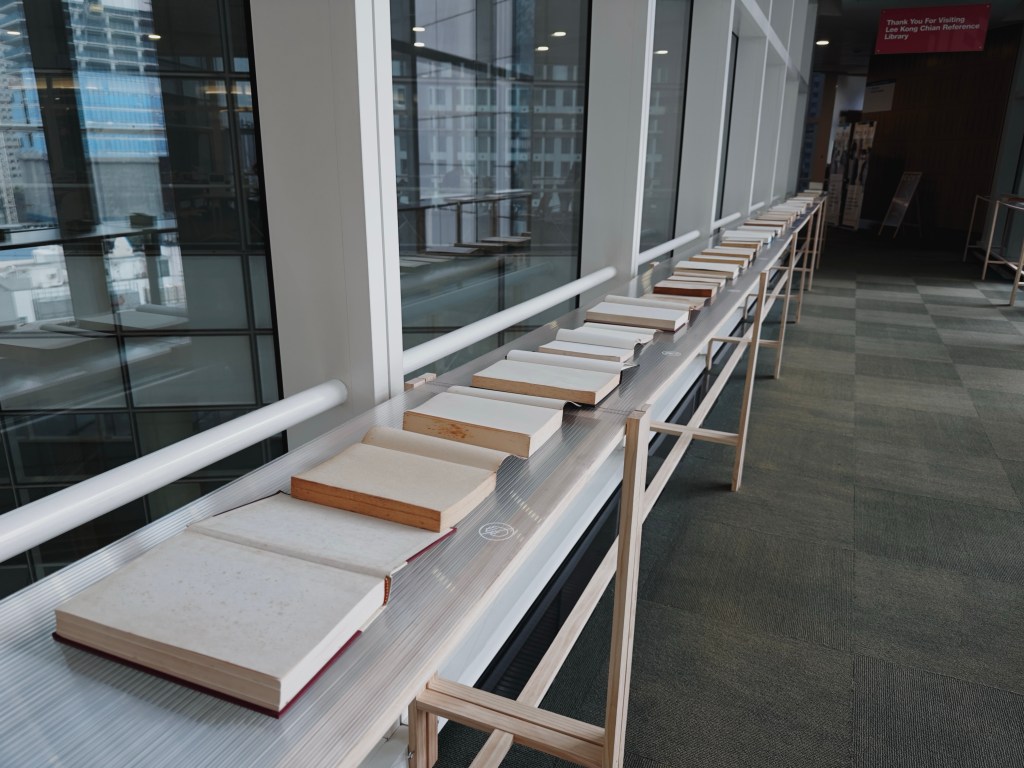
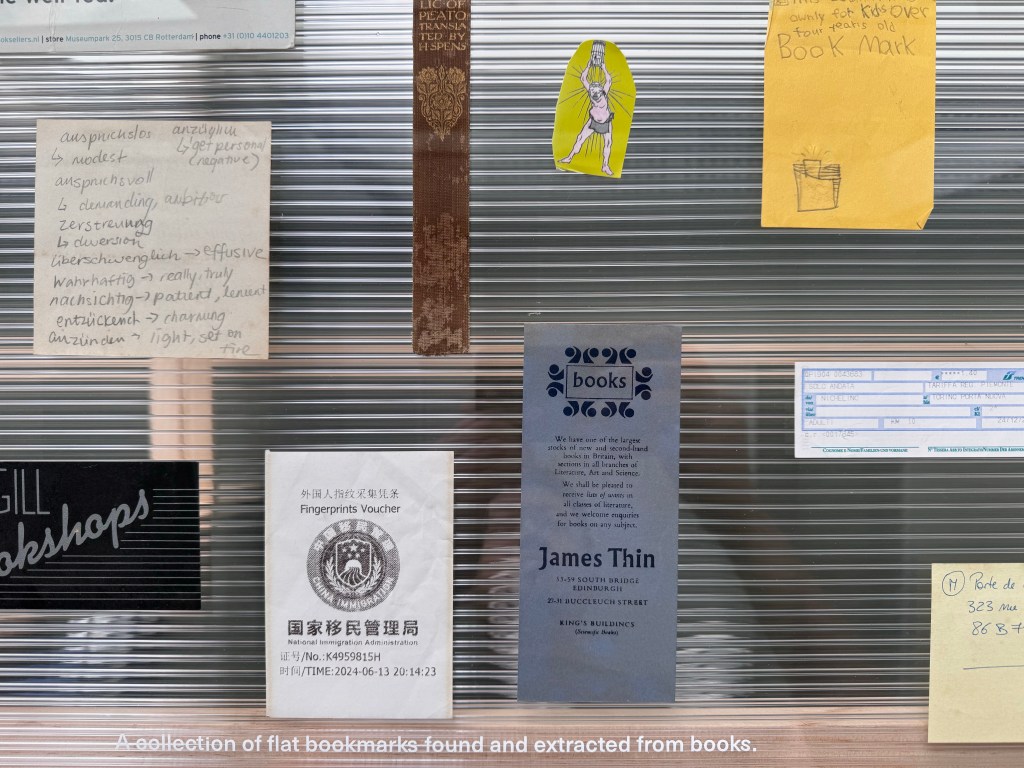
    There were also many free events and exhibits across town, and I filled pockets of time by dropping in on the ones around Orchard Road and the Bugis district. My favorite location was probably the Central National Library building which hosted some thoughtful and playful meditations on books and reading: from the physical aspects of holding spines and flipping pages, to sensorial explorations like how smelling different types of paper can evoke long-buried memories.

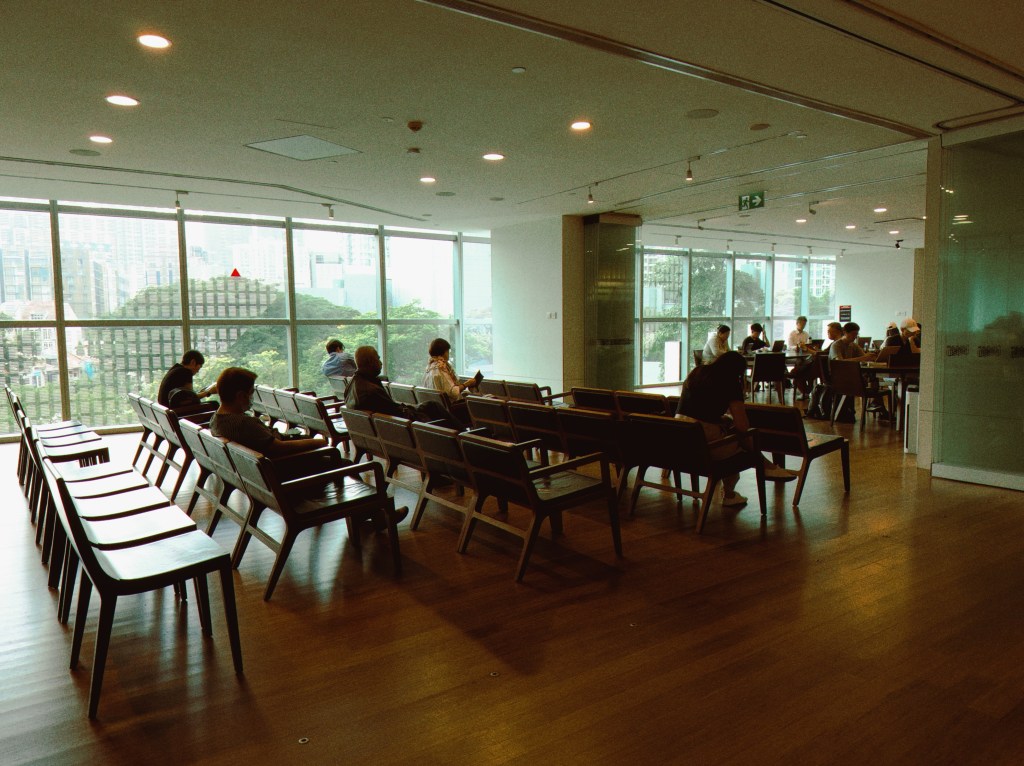
    It was my first time really checking out the Central Library, and it’s quite impressive. The reference section spans some five levels (from 7 to 11, I think), with the public lending library in the basement. Nearly every free seat was taken on a weekday afternoon, many by students of all ages who were… doing homework? I spotted someone doing math on the Humanities floor, so I guess it’s just an air-conditioned spot for some, nothing to do with the materials available.

    I wanted to read some poetry, and found a copy of the collected works of Philip Larkin, in the exact same paperback edition I had as a student. I sat with that for half an hour, next to some senior citizens who looked very much at home.

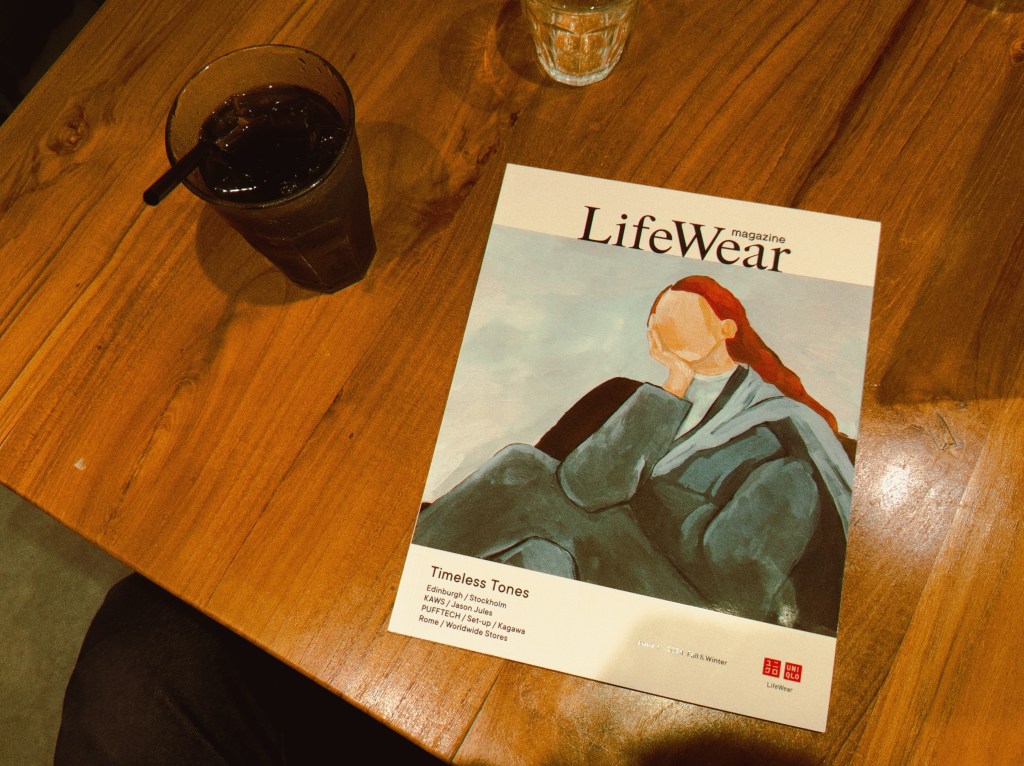
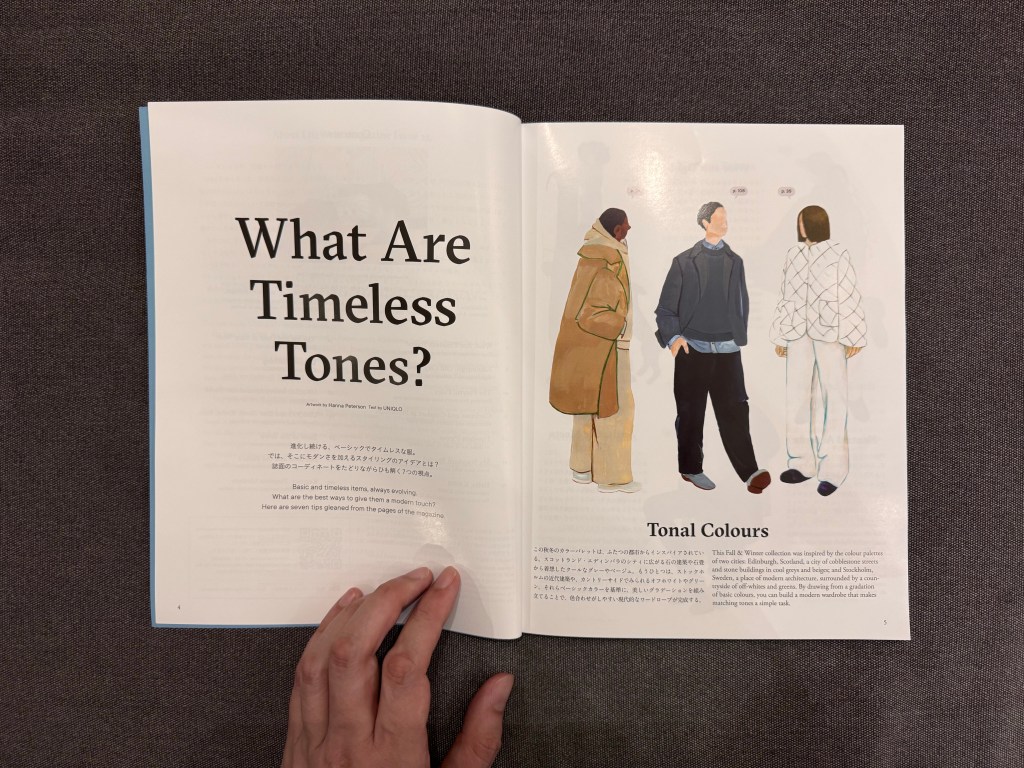
    Let’s loop back to Uniqlo: I half-joked on Instagram that one of the best design artifacts I saw whilst out exploring Singapore Design Week ‘24 was in fact Issue #11 of the free Uniqlo LifeWear magazine they give out in stores. It’s in both Japanese and English, with elements of Japanese editorial design and whimsical Monocle-esque illustrations. In addition to the expected fashion spreads of their products on models, there are also recipes, features about their global stores and the cities they’re in, and profiles of artists they collaborate with. I wish we had more brand publications like this, where there’s no distinction between making something nice for customers and trying to sell things. You can also read it online.


    On Thursday morning with some time to kill, I decided I’d best drop by the library@orchard to have a quick look before it closes down at the end of October for a lengthy renovation. It won’t be back until 2026, and the cynic in me thinks it won’t come back at all, much like how the Singapore Art Museum is now seemingly trapped in shipping port limbo, unable to return to its original downtown location because the land is now too valuable to allocate to the arts or whatever. I mentioned this before.

    Then I spent the afternoon with Peishan and Cien at an odd cafe that identifies as a co-working space — essentially you are welcome to sit there all day and leech off their power and WiFi, with no stated minimum purchase amount or anything. I don’t get the business model, but they’ve survived for years somehow. Perhaps it’s guilt based, because I ended spending twice as much in food and drink than the cost of a hot desk would be for an entire day.

    Media Activity

    I presume the other two got some work done, but I spent my cafe time clearing email newsletters and watching an episode of The Old Man, a 7-part TV series from 2021 that I didn’t know existed until recently. It stars Jeff Bridges as an aged CIA agent in hiding whose past catches up with him (I know, I know! But I’ll always make time for a set up like this), and the first two episodes were directed by Jon Watts (Wolfs, Spider-Man: Homecoming). The whole thing is so well executed that I wish it was longer. I’m told the second season, running now, has lost the plot. But trust me, if you like spy stories at all, you’ll want to see the first.

    Wolfs (2024) is now out on Apple TV+ and I enjoyed it just fine. For me, seeing George Clooney play a spiritual reboot of Winston Wolf, the fixer from Pulp Fiction (1994), is such a treat that it overrides other parts of the film being predictable or “small scale”. There’s also undeniable chemistry between him and Brad Pitt, who does that thing where he goes from smug, unlikable asshole to an alright guy after all, right before your eyes. Too bad he can’t do that with his real family. 4 stars.

    I finished The Book of Elsewhere, a sci-fi/fantasy (really, I think it’s both) novel by China Mieville and Keanu Reeves. It was extremely enjoyable while sounding in many places like a thesaurus was devoured in the writing of it. Once you get past some of the “awkward” use of big words when smaller ones would do, the rest of the writing is good, and occasionally becomes deliciously unhinged. Phrases literally collide with one another and tumble down pages like experimental poetry in some places. Elsewhere, Mieville (I assume) manages to replicate the dreamlike quality of visual storytelling — this story first appeared in a comicbook series entitled BRZRKR, by Reeves and Matt Kindt — and narrates the immortal protagonist’s violent fugue states and how he experiences passing from death to rebirth with some of the most Class-A, Colombian-grade stream-of-consciousness I’ve ever seen.

  • Week 39.24

    Week 39.24

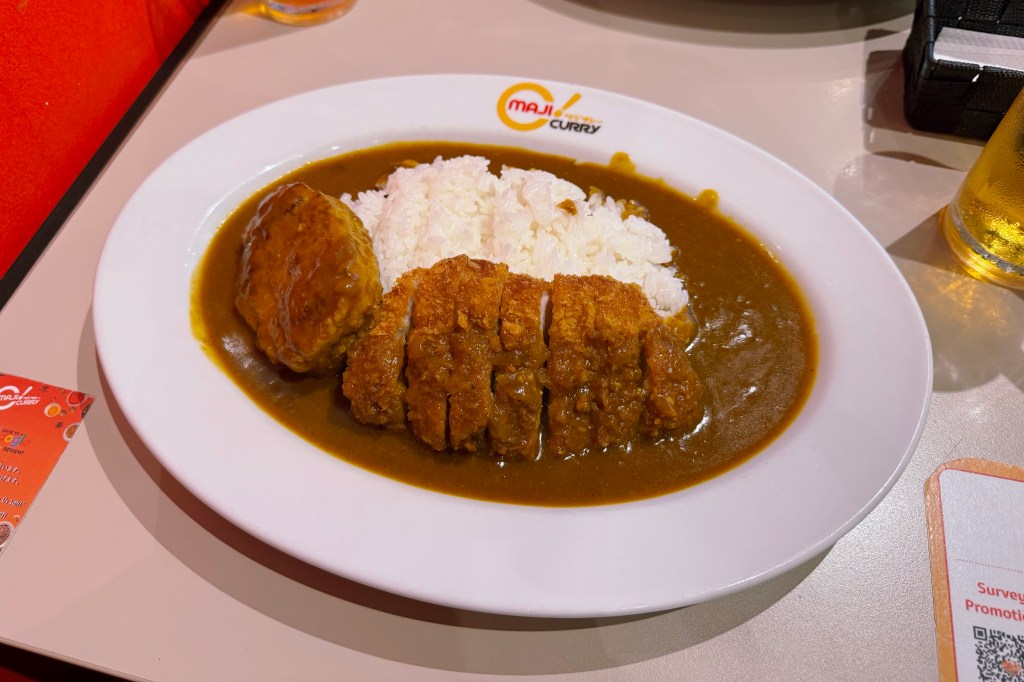
    Two visits to Maji Curry in 9 days. Think I’d better cut back for awhile…

    I blame a medical appointment for our being in the area. Remember how Kim took a fall a couple of months ago and hurt her leg? She’s been feeling mostly back to normal but was advised to get an MRI just to be sure. Late last week we met the doctor for his interpretation, and it was worse than expected. The tendon that normally runs down her entire leg has become completely detached from its anchor point at the top of the thigh. In other words, she’s currently missing a crucial muscle involved in leg movement. In practice she can still move it, but with less strength than normal.

    So the weekend was spent worrying about what this meant, until our follow up appointment this Monday with another doctor who was called to advise on surgical options. Yes, it can be fixed: they’d slice the thigh open, dig around for the loose tendon, stretch it back up, then attach it to the pelvis or wherever it’s meant to be. This would then be followed by six weeks of recovery and then indefinite physiotherapy. It also carries the risk of nicking a large nerve that happens to reside in that area.

    Fortunately, this doctor’s disposition was entirely the opposite of worried. He reckoned that as long as she wasn’t an athlete concerned with peak performance, one could get by without addressing this; other muscles compensate and exercise with physiotherapy will see her through it. He said many patients just leave it, and continue to have normal lives. It was exceedingly refreshing to finally get some good news.

    But in not so good news, my neighbor’s long-dreaded renovations are finally beginning next week. That means a handful of days where I absolutely can’t be home during the day (or I’d probably go deaf from the hacking of walls and tearing up of floors); a few weeks where I probably wouldn’t want to be home (noisy enough that one wouldn’t be able to read, think in peace, or get on a call); and a couple more months after that where the noise should only be a mild annoyance.

    I’ve already made plans for that first phase next week, which happily coincides with Singapore Design Week. That will give me a few things to see and attend around town from mornings to evenings. And then for the rest of the month, I’ve decided to sign up for a membership with a co-working space company (a la WeWork), and spend my days hot-desking like a digital nomad or startup serf. It sounds ideal: air conditioning, power, WiFi, free coffee, and a change of scenery. I might even meet interesting people?! Although I’m more likely to be watching movies or gaming on my Switch rather than doing any real work (unless some new side project idea hits me).

    This is way better than my original plan, which was to hang out at public libraries the whole time. Fewer amenities there, and a lot more competition for desks because our libraries are very popular hangouts for senior citizens these days.

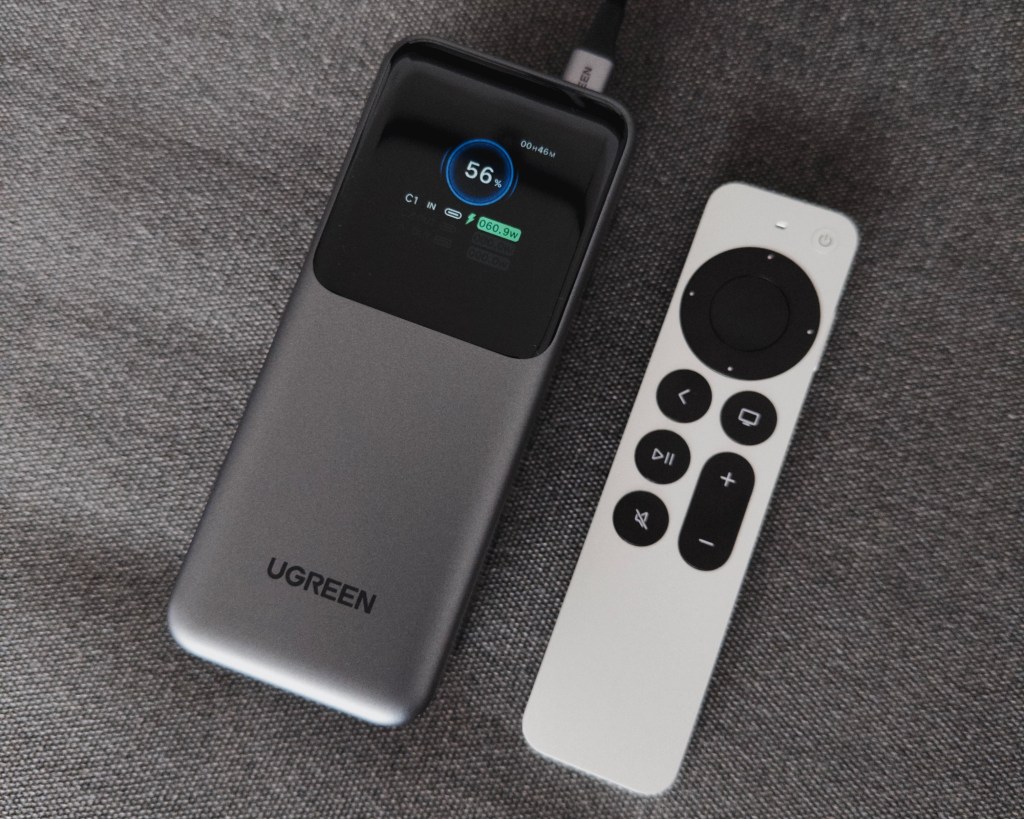
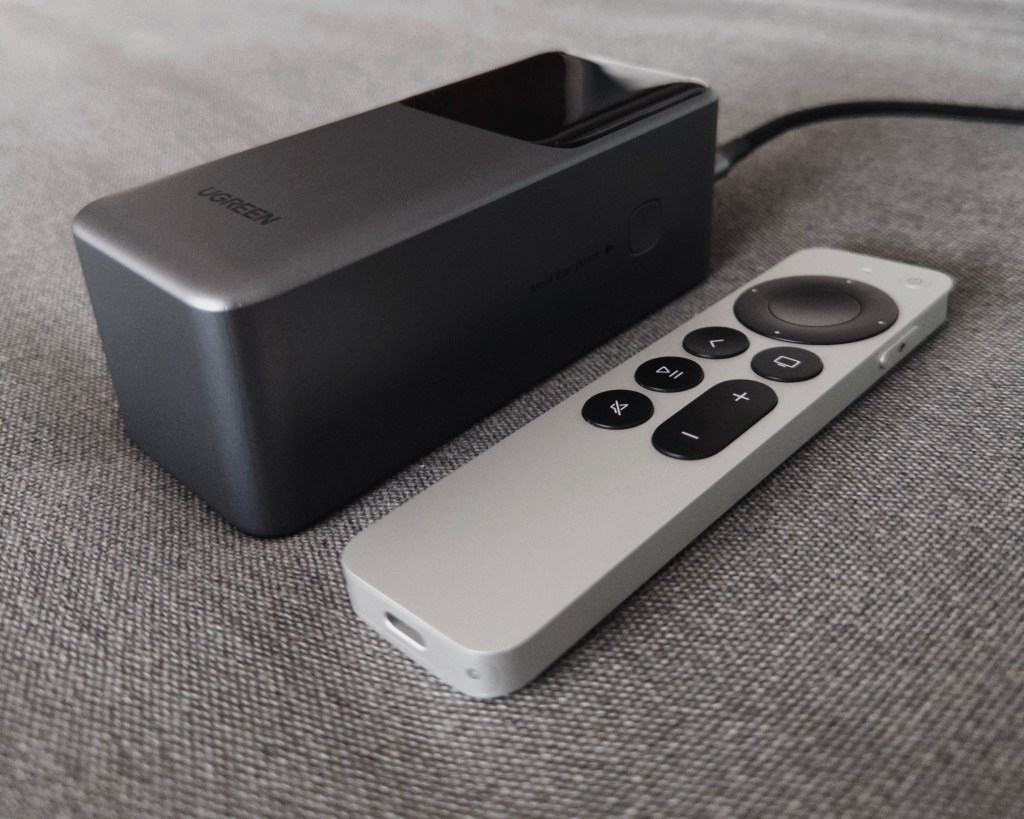
    Anticipating being in libraries where plugging into wall sockets might be frowned upon, I made a premature purchase that arrived this week: the most powerful power bank I’ve ever had. My requirement was that it had to comfortably get me through a whole day or more of using everything from my phone to a MacBook to a Vision Pro.

    And so I did some research on what a modern power bank looks like, and decided Ugreen’s Nexode lineup offers the best value. Anker has some competitive ones in their Prime series, but they’re twice the price and (as I discussed with Michael) they’re not even that reliable or safe these days.

    If you haven’t bought a power bank in recent times, you might be surprised by what they can do now. For starters, the one I got has a 20,000mah capacity with a maximum total output of 130W over 2 USB-C PD ports and a USB-A one for legacy devices. That’s enough bandwidth to fast charge two MacBook Pros at the same time. There’s also a digital display that shows you real-time power draw stats, and estimates of how long you’ve got before the battery is depleted (or fully recharged). Ugreen claims that it uses EV-grade batteries that can stay above 80% capacity for 1,000 charge cycles (Apple’s guidance on their batteries is only 500 cycles, for comparison). Given that coworking spaces provide lots of power points, I don’t really need one now but it’s good to have around?

    For the record, I’m still undecided if I actually would whip out the Vision Pro in a coworking space. But I can’t imagine not using it for an entire month. This week, I wandered into a conversation in inSpaze (an immersive social network I wrote about here) and found myself invited to a ‘live’ test of a new feature. It essentially lets you upload a large video file (say, a home movie or film that you absolutely have the distribution rights for), and invite others to watch it with you in real time.

    The final release will include a special 3D environment suited for watching videos, but for this test we were just in the usual “living room” environment. Spontaneously watching a film with strangers was more fun than it sounds. Everyone was well behaved and went on mute, chatting over text instead. In that way it was better than watching a film in a real theater with inconsiderate whisperers. We gave our feedback and suggestions afterwards, and I said that a visual/spatial way to express emotions like surprise or amusement would be nice to have, better to subtly feel a sense of community with everyone else in the theater.

    ===

    I also tried a bunch of new camera apps. Halide really started a trend with their Process Zero mode, and now I’m seeing new and existing apps tout a “no AI” approach. I won’t link the more blatant copycats, but will quickly mention a few that go beyond just adding a RAW capture feature.

    Fig Camera is currently in beta and offers a novel minimal camera UI, along with the ability to create your own camera-capture-to-file processing pipeline with LUT files. It also has a couple of options for taking more natural photos with less “AI” and Smart HDR, etc.

    Mood.Camera is more of a traditional retro camera app with a selection of film-inspired filters, but it also lets you select from different levels of dynamic range enhancements: from zero (expect harsh, blown highlights) to an ‘Extended’ setting that’s even more artificial than Apple’s defaults. I really liked how the dev has modeled certain aspects of lo-fi film photography that are very hard to achieve with pure HSL sliders and presets (like the ones I’m fond of making in Darkroom). Stuff like different grain sizes, halation, and textures. I impulse bought the lifetime unlock for S$20 and now slightly regret it because the color shifts are quite strong and there’s no way to turn them down at this time.

    Lampa also captures pure sensor data before Apple’s process gets a chance to stack and merge and overdo the brightness. It then puts your photos through their own RAW development profiles (the app description says they’re not “just filters”). There’s no option to shoot with Apple’s processing, unlike Fig and Mood. Surprisingly, Lampa only offers four distinct and pleasantly subtle looks, unlike the plethora of filters standard in Mood.Camera and most others. I’m a fan of this minimal approach but unfortunately the pricing model is maximalist and they want S$40/yr.

    Bonus: if you’ve been shooting RAW files with Halide’s Process Zero (or any other app’s single-capture RAW — not to be confused with ProRAW), you might appreciate this Darkroom preset I made that emulates the high contrast monochrome look that the Ricoh GR cameras are famous for. I repeat, they are tuned for the brightness profile of iPhone RAW files.

    Add P0-GRBW to your library here.

    ===

    I’ve been watching this streamer on YouTube named Pim who runs a channel called 4AM Laundry. Every weekend, he sets off with a backpack full of batteries and modems, and livestreams his adventures going around Japan to find retro gaming gems in secondhand stores like Book-Off and Hard-Off. They are soothing and educational, and great to have on in the background as he literally does this for 9 hours at a stretch.

    This week he was invited to visit the Tokyo Game Show with a press pass, so I tuned in for that. It’s an event I’ve always wanted to experience in person, even though I know it’s probably hellish and more fun in theory than practice. This was a nice way to get a glimpse of its atmosphere.

  • Zine: B’Fast

    I mentioned last week that I’d started making a zine about breakfast using AI tools to write all the text and make the pictures, leaving the final job of laying it out to my own (inexperienced) human hands.

    Well, here it is. It was a lot of fun to put together, and I got a crash course in print design while trying to evolve it from a word processor document into something a little more creative and fun. You can sort of see the gradual improvement from beginning to end, as things become a little neater and more coherent — much like the mind in the morning as you make your way through breakfast.

    I’d say the final content is 98% AI generated; I made some cuts and changed just a handful of specific phrases: in one place to avoid possible offense, and most of the others were in a poem at the end, to make it suck less.

    I did it with the help of my custom GPT: InstaZine, which I encourage you to check out if you want to do something like this. It will brainstorm a bunch of different article ideas for your approval, then write them in a range of different authorial voices, hopefully giving the final product more diversity and interest than if you just did it the normal way with ChatGPT.

    You can read the zine below in the embedded Issuu viewer, or download the PDF. Let me know how you like it!


    Some additional tips for using InstaZine: Start by telling it what the subject of the zine should be, and describe what it should be like if you know. Ask it to create a list of article ideas — it should suggest a bunch of titles with a short abstract of each one, usually with a fictional author’s name and some description of the style and approach it will take. If you’re happy with this list, you should copy it off to the side in your own notes and play these descriptions back to the GPT before asking it to write each one. The reason is… the context window still isn’t great with ChatGPT as of Dec 2023, and it won’t necessarily do a great job if you don’t remind it of the brief after 20 messages of writing other articles and generating the images for them. By default, it creates colorful minimalist illustrations suited for a certain kind of magazine I like, but you should override this with whatever style you want.

  • Week 43.23

    Week 43.23

    Bacheloring, breakdowns, and beverages

    Kim was away again for work most of the week. This effectively gave me the gift of freedom from our Beyond Deck addiction, cold turkey. So I played a little Super Mario Wonder, drank too much bourbon, watched Bitcoin YouTube, and lazed around unproductively on my iPhone.

    And on the days I decided to work from the office, I was richly rewarded with elevator breakdowns, mall escalator maintenance, and other inconveniences that made me wish I’d stayed home. I don’t think I’ve mentioned my recent obsession with Luckin Coffee, the Chinese chain that’s been expanding nationwide, including an outlet in my office building. Bosses forcing a return to office take note, getting one of their iced coconut lattes in the morning is one of the reasons I head in. I was looking forward to my fix one of these cursed mornings but found the branch closed for upgrading.

    Luckin’s model is fully app-dependent and most branches are just pickup counters, with no seating. You order on your phone, pay via card or Apple Pay, and pick it up by scanning a QR code. You don’t interact with staff, and they don’t handle any filthy cash. For comparison, you can do the same thing with Starbucks’s app, as well as order in person like a boomer. To get you past the friction of downloading the app and setting up an account, your first drink at Luckin is just $0.99. Subsequently, you’ll get hit with a barrage of discount vouchers ranging from 35% to 60% off, so much so that I haven’t paid full price for a coffee yet.

    For the record, their drinks are priced around $8 each, and they’re somewhere between a Starbucks tall and grande. The discounting is an aggressive acquisition play, of course, but I’ll take low margin coffees while they last, not least because they’re actually pretty tasty! Like Starbucks Reserve, they offer a range of single-origin specialty coffees, and even give you beautiful little info cards with tasting notes. The absurdity is not lost on me, given their quick-service image it’s like if McDonald’s gave you facts on the cow in your Quarter Pounder. Nevertheless, on that day my Luckin outlet was closed, I went to a Starbucks for the first time in quite a while, and it felt like comparatively much less value.

    ===

    From clicks to chats

    I went over a new trend report my company put out, and there’s a large focus on generative AI as one might expect, which led to a couple of interesting conversations about how much work is ahead of us when it comes to overhauling the touch points we use to deal with merchants, service providers, and even governments.

    In a way, the graphical interfaces we use today evolved as proxies for “natural” verbal and gestural communication. Similar to how we used mouse cursors because we couldn’t touch displays directly, we have menus and buttons and screens filled with data because we can’t directly ask computers for complex outcomes. The promise of large language models is that now we might.

    There have been think pieces this week about how Apple was “caught off guard” by this gen AI wave and is now scrambling to catch up. I think they have plenty of time; here’s why:

    What’s at stake isn’t smaller-scale improvements like the transformer-based autocorrect in iOS 17; it’s about whether gen AI can bring a more radical change in how we use computers. You can already see the hunger for this — the dream of J.A.R.V.I.S. — in a dozen half-baked AI-powered product announcements. We’re not far from Humane’s wearable phone alternative, Rewind’s Pendant which will process everything you say or hear, and Meta has great-looking new “smart” Ray-Bans which can put their new AI voice assistant(s) in your ear (US-only).

    The basic version of conversing with AI looks like a text chat, and on the other end of the spectrum is a “multimodal” natural chat that takes a user’s body language, tone, and facial expressions into account. Putting aside the fact that such a model hasn’t been trained yet, just the massive amount of personal data this would involve means only a company positioned to put privacy first might get any traction. And then there’s the staggering hardware requirements of doing this in real time. If only someone was working on a new kind of computer equipped with industry leading silicone, and biofeedback sensing that can even predict you’ll tap a button before you do it

    Assuming this is the right thing to do at all, the Apple Vision Pro with its microphones, retina scanners, and hand-tracking cameras should be well positioned for a future where you can simply sit down in front of an AI relationship manager from your bank, have a free-flowing discussion, and see the appropriate figures and charts pop up — instead of poking around a UI to find out how your money is doing. But the stated purpose of the Vision Pro is spatial computing, which is only a step towards natural computing.

    So like every other time in history, Apple will wait while others jump the shark first, and hopefully clean up after with a more sensible execution. They have the time; it’s just a shame for impatient people that the hardware looks so ready. But as a wise man once said: technology moves fast, while people change slowly.

    ===

    Pints and pop music

    Ex-colleague and friend Bert is back in town for the first time in over four years, so we met up twice to catch up and see some other faces we’ve missed in recent years. This meant many pints of Guinness (if ever I associated a person with one drink only, it’s Bert and Guinness), which compounded with the aforementioned bourbon and a gut-busting, sodium-loaded visit to Coucou hotpot for a physically taxing week. Every organ is straining to detoxify and I really felt the effects all weekend.

    • We watched half of the third season of Only Murders in the Building and I’m happy to report it’s much better than the second. I think there’s even a self-effacing joke at one point about how the first season of the in-show podcast was more likable than the second. It comes down to a clearer story with fewer detours, the kind I’ll probably remember a year from now unlike, say, season two’s.
    • Sigrid has a new four-song EP out: The Hype. It is extremely Gen-Z in that it has a shoddy photograph on the cover and looks like it was made in Canva. The music is much better, but she’s just doing more of the same, which I won’t complain about because if Coldplay just kept doing the same thing as in their early albums maybe they wouldn’t be so insufferable today.
    • Taylor Swift’s 1989 is finally out in (Taylor’s Version) form! I think this was the first album of hers to ditch the country pop style and just go straight pop? Did it have something to do with leaving Nashville for New York? In any case, it was the first album of hers I played for myself, and also the one Ryan Adams liked enough to cover I guess. I’ve been mostly playing both versions this weekend and came across a debate I never knew I needed: is 1989 a beach album about the Hamptons or a city album?
  • Week 40.23

    Week 40.23

    So-forting what?

    Remember the Leica Sofort (German for “instantly”) camera? It came out of nowhere years ago, an unacknowledged collaboration with Fujifilm that took their popular Instax Mini 90 model and rehoused it in a sleeker Leica-designed body (offered at a much higher price, nearly double if I recall right). Reviewers tried to discern a difference in the photos, but they were essentially identical cameras on the inside. For some reason, everyone danced around the similarities and at best said the Sofort was “inspired” by the Mini 90, as if it was a new Instax camera by Leica that somehow came out looking mighty similar, rather than a simple body swap at the same Fuji factory.

    This week, Leica announced the Sofort 2, which is now a redesigned Instax mini Evo (a camera I bought myself for Christmas in 2021). Where the original Sofort was a fully analog Instax camera, the Sofort 2 is one of Fuji’s hybrids: a digital camera fused with one of their Instax printers, so you can take tons of photos and then decide which to print.

    By the way I also mentioned this on Threads. You should follow me there if you’ve quit Twitter.

    In my opinion, the mini Evo is the least ugly Instax camera Fuji has made, which is one of the reasons I was excited to get one when they came out. Oh, I noticed that Jurin from XG uses one, and some of their IG posts look like mini Evo shots. But the Sofort 2 is beautiful, streamlining the body to its essential elements and removing nearly all traces of fake plastic leather and silver-effect plastic.

    Leica’s ability to wrap other companies’ cameras in minimalist industrial designs and sell them for more money is unmatched. I bought their D-Lux 7 precisely because I wanted Panasonic’s LX100M2 but could not get behind its rugged hiking shoe looks.

    Where the mini Evo is a cute plastic facsimile of a Fujifilm X100 camera, and wearing one around on a shoulder strap makes you look like a kid who’s been placated with their very own toy iPhone, the Sofort 2 looks like a camera in its own right (far as I can tell from the images). And as little as I have used my mini Evo over the past two years, it will be very hard to convince myself not to “upgrade” to this version for Christmas. And to be clear, there are ZERO functional improvements from the Fuji version, apart from not looking like a toy.

    Fujifilm makes their Instax cameras kid-friendly. They’re colorful, bulbous, fun, and recall the freewheeling sensibilities of product design before the 2008 financial crisis, when phones could look like tubes of lipstick and translucent plastics were everywhere (they’re coming back). The Leica partnership seemingly exists to provide the market with what the Japanese might innocently call “adult versions”. Why Fujifilm leaves money on the table by not doing this themselves is mind-boggling. Are they really incapable of producing understated designs? I don’t care about the Leica logo; it’s a joke on a product like this, I just want a clean-looking rounded rectangle.

    Generational shifts in photography

    And apropos of all this, I heard that Sean was getting into film photography and about to use an Olympus XA2 I once gave to Cien. Which got me talking to my Pi AI (we’ll come back to this) about old becoming new again in photography. Part of it was trying to convince myself that a Sofort 2 would be worth buying as an adult-friendly retro toy camera — a loving term for cameras with garbage image quality. I’ve owned many of the sort, like the Digital Harinezumi series, and they’re always plastic and cheap, or simply dusted-off vintage digital cameras. But this is a new! luxury! toy camera!

    So Pi sorta made the “observation” that using an analog camera is an attempt to engage with photography more deliberately. Which I already knew? Because of course using a dedicated camera instead of a smartphone today is deliberate; a “slow photography” thing, a “real photographer” flex. Of course instant film is an extension of this.

    But I’d not really appreciated it from the perspective of Gen Z people who grew up without them. Like why ordinary kids not into capital-P Photography would be interested in Instax/film cameras and old digital cameras beyond signaling coolness. Obviously we Xennials and Millennials grew up with photographic scarcity and have fewer photos of our younger days, but these kids grew up in an age of surplus, literally taking photos for granted. Phone cameras everywhere mean cheap and infinite memories. So naturally tools that force moments to be more precious, that force viewers to see events through wonky lenses, would hit different.

    I noticed afterwards that Leica’s press release for the Sofort 2 sums this up with a simple statement: “Back then, the instantly printed photo symbolized acceleration, whereas, in today’s fast-paced world, it represents a moment of caution and relief.”

    Next day update: I neglected to mention here that the mini Evo and Sofort 2 cameras are actually perfect bridges between these two approaches to photography. They are digital cameras that let you shoot in surplus, and print only the photos worth keeping in scarcity. Also, having two offerings serves buyers across the spectrum from fun/affordable to serious/expensive, which tends to be a generational divide. The hybrid instant camera is a tool that unifies photographers with different values (so long as they’re okay with 5-megapixel shots), and serves as a symbol of ‘making this moment count’.

    The Pi personal AI assistant

    Okay, so what’s Pi? It’s billed as a personal AI, a ChatGPT for your daily life. But isn’t ChatGPT already for daily life, as well as work life, I hear you ask? Yeah I know, which is why I’m giving this a go. The main difference is that instead of multiple chat threads for different topics, with Pi you just have one main chat. It tries to learn more about you and draws on past context to inform its responses. It’s built on a proprietary foundation model, so perhaps they have a way to get around the short-term memory and context collapse that I’ve seen with other generative AI text systems — so far it’s doing quite well after a few days!

    It’s free, and their privacy policy claims they’ll never share or sell your information, but yeah sure what else would they say? I’ve found it quite pleasant, and its responses are tuned to be shorter and less formal than ChatGPT’s defaults. It does feel like talking to a friendly personal assistant.

    So far I’ve had discussions with it about movies (we talked about Interstellar and why some Nolan films don’t work as well as others), python programming, economics, frameworks for building good arguments, as well as its own purpose and unique value proposition.

    I just asked it to brainstorm what a Sofort 3 could bring to the table. It suggested more AI features (lol) and making it more user friendly. I said I’d go the other way and make it more unapologetically professional, with manual controls and higher quality. It was able to say that it sounded almost like an instant film version of a Leica M, and when I asked it to price such a product, it said $800 USD or higher. That’s pretty insightful!

    Something about its simulated personality and the UX of having a single chat thread (where I don’t have to keep introducing my needs and context) makes this very pleasant to use, so much so that I might end up using it over ChatGPT for some queries.

    ===

    Media activity

    • I had Saturday all to myself so it was a movie day. I saw The Equalizer 3, which was much slower and less action-packed than you’d expect. But Denzel is still badass and he gets to have a nice Italian holiday. Just expect a chiller installment going in. I think this is the last one for Robert McCall.
    • Indiana Jones and the Dial of Destiny was nowhere as bad as I was led to believe. I’d say it’s actually very successful in closing out Harrison Ford’s role and setting up a possible future heir. The last one was roundly panned and tried to introduce the idea that he had a son, played by an awful human being, which failed so badly they wrote him out in the most delicious way possible in this film. I really hope Phoebe Waller-Bridge gets her spinoff out of this, but apparently she’s developing a Tomb Raider TV series for Amazon Prime? What a shame to work on the pretender when the original tomb raiding franchise is right there!
    • I forced myself to finish season 1 of Invasion on Apple TV+, just because season 2 looked good in the trailers and has a higher Rotten Tomatoes score. Season 1 is an awful plodding mess, which given Simon Kinberg’s involvement should not surprise anyone. If you’re interested in S2 and haven’t started on S1, I’d recommend you just go straight to it and try to fill in the blanks.
    • The Below Deck marathon continues. We finished seasons 5 and 6, started over with season 1 — it was disappointing in terms of production quality and crew likeability — and are now on the second.
    • Apple Arcade’s new James Bond game is quite entertaining. Cypher 007 is an isometric stealth-action game from the makers of Space Marshalls, and should scratch the itch for anyone who loves the franchise and/or Metal Gear games.
    • So much new music came out and I haven’t had a chance to hear it all yet. After hearing about how Sufjan Stevens’ Javelin is dedicated to his partner who died this April, I’ve played it through several times. I think it’ll be one I come back to over the years.
    • There’s also a new Drake album, For All The Dogs, which may not have the same longevity.
    • I enjoyed my playthrough of HOW DID WE GET HERE? by a 22-year-old Canadian pop artist named “young friend” while writing this post. Admittedly, I wasn’t listening to the words at all, but it was very pleasant and I’ll have to get back to it.
    • A new Omar Apollo EP, Live For Me, which I’ve heard one song off and am really excited for.
    • Caroline Polachek’s second album, Desire, I Want To Turn Into You, has been getting great reviews too, so I’ll get around to it next week hopefully.
    • Also, a new Jorja Smith! A new Static Selektah!
  • Week 23.23

    It was WWDC week and hours before the keynote event started, I was telling people that the thought of an Apple XR headset made me tired. I knew that if it really was happening, that the world would never be the same again, and we would be starting a whole new cycle of change: changes in the way we interact not just with computers, but entertainment, services, each other, and the hundreds of companies in our orbits. That takes a whole lot of energy and enthusiasm (positivity?) to prepare for, especially if you’re in one of the industries that will need to be an early mover.

    And this is just my gut talking, but after the big reveal of the Apple Vision Pro, I felt that positivity surging through me. It was an exciting prospect — yes, it’s still a heavy thing strapped to your head, and it has the many limitations and intentional design constraints of any first-generation consumer product — but I felt that Apple thoughtfully got the experience foundations right (again). This looks like it could change the world in an exciting and additive way.

    I can’t wait to try it out and get my own, but it will probably be the end of 2024 before it lands in Singapore. That gives everyone plenty of time to think about and design for a spatial computing future. Do I think the price is justified? Sure! It’s not really comparable to any other product at any price, which is the beauty of their ecosystem play (again).

    On the downside, the technical achievements it contains are incredible, but will need to become more incredible very quickly. Over the next few years, it will need to become lighter, smaller, faster, cheaper to get us where this “vision” is pointing. Or perhaps they believe the parallel development of a photon passthrough technology (that is surely continuing internally) will pay off before then, and become the solution. I’m referring to true AR glasses, of course, rather than this VR headset that acts like glasses by having screens facing inwards and outwards.

    Side note on those outward-facing eye screens: it’s funny how that detail was completely leaked, and we knew it might have screens that showed your eyes to others, but nobody could come up with a way that it didn’t look awful. And yet, the real thing looks pretty good! Dimming and blurring a virtual avatar’s eyes so that they looked recessed behind frosted glass? Brilliant. Wanna put a pair of comedy Vision Pros on? Try this Snapchat lens — it’s super amusing when pointed at the TV.

    But let’s not forget the other things announced at WWDC. I’m super excited for iOS 17’s Journal app*, as I said several weeks ago; the new AirPods Pro adaptive mode sounds exactly like what I’ve been wanting for awhile; Freeform showed that it isn’t being neglected, with some great looking new drawing tools coming; and the Apple Watch really did get a good rethink of the UI! The Side Button will now pull up Control Center instead of the Dock I never use, and it’s being replaced with a new Smart Stack model that sounds good in principle. And that new Snoopy and Woodstock watchface? Plus a smarter transformer-based keyboard and dictation? A more easily invoked Siri? Wow! (Ten bucks says a transformer-enhanced Siri is in the works for next year.)

    Sadly, Apple Music only got light design refinements instead of the rethink I was hoping for, oh well.

    *The Verge’s Victoria Song is skeptical about Journal.app because it relies on AI to suggest journaling prompts, which as Apple’s Photo Memories have proven, can be inappropriate or tone deaf. Personally I’m just planning to use it as a lifelogging tool: where I went, what I saw, what I was listening to. I’ll probably write entries manually, no prompts needed.

    ===

    On Thursday evening I checked out the National University’s industrial design program’s graduation show with some colleagues who came out of the program a few years ago. There were some thoughtful projects and most were well presented. The kids are alright, etc.

    Then on Friday evening I went with some other team members to visit the Night Safari for the first time in probably many years. The iPhone 14 Pro’s camera let me down by defaulting to very long night mode shots even when there were moving animals. I’m talking hold-still-for-10-seconds type situations. I wasn’t using Halide as I wanted Apple’s smart processing to light up the dark as much as possible, but it didn’t seem to make the right trade offs.

    It continues to be super hot and muggy here; I was sweating my butt off both nights outdoors. Looking forward to the cool Melburnian winter weather in a couple of weeks.

    ===

    • Inspired by the album listening technique of Pearl Acoustics’ Harvey Lovegrove (mentioned last week) — put it on all the time in the background for a few days, and then sit down to listen to it once through properly, after it’s already soaked into your subconscious — I’ve been listening a lot to Cisco Swank’s new debut album, More Better. It’s a seamless blend of jazz, hip-hop, and soul that the New York Times quoted a fellow musician describing it as “black music. All of it.”
    • But it was a big week in music, and I haven’t had time to get into the new albums from Jenny Lewis, Janelle Monáe, Christine and the Queens, and King Krule. Okay I’ve heard the King Krule once through and it was good.
    • Speaking of music, Kim returned from her trip to the US and brought me back an unexpected gift: a pair of the new Beats Studio Buds+ with the translucent case! I was coveting them but probably wouldn’t have bought them for myself, and they’re still not available locally with no release date either. But since I have them now I can’t complain. #blessed
    • I started playing Astral Chain on the Nintendo Switch, a stylish beat-em-up title that came out very early in the console’s life and looks astonishingly good, period. I’m now putting Bayonetta 3 on my wishlist because Platinum obviously knows how to get incredible visuals out of this aging hardware.