Tag: Gadgets

  • Week 23.24: Chilling with Sony’s Reon Pocket 5, New Camera Apps, and a Playlist

    Week 23.24: Chilling with Sony’s Reon Pocket 5, New Camera Apps, and a Playlist

    Sony Reon Pocket 5

    I discovered the existence of a cool new device this week when a Sony catalog wound up in my trad-mail inbox. After some online research, I visited the nearest Sony store for a demo of the Reon Pocket 5 device and ended up buying one for S$249. Okay, what is a “Reon Pocket” and why is this the fifth version? The four previous iterations were only sold in Japan, but the tech is now mature enough that Sony is launching it in the UK, Hong Kong, Singapore, and Thailand this year.
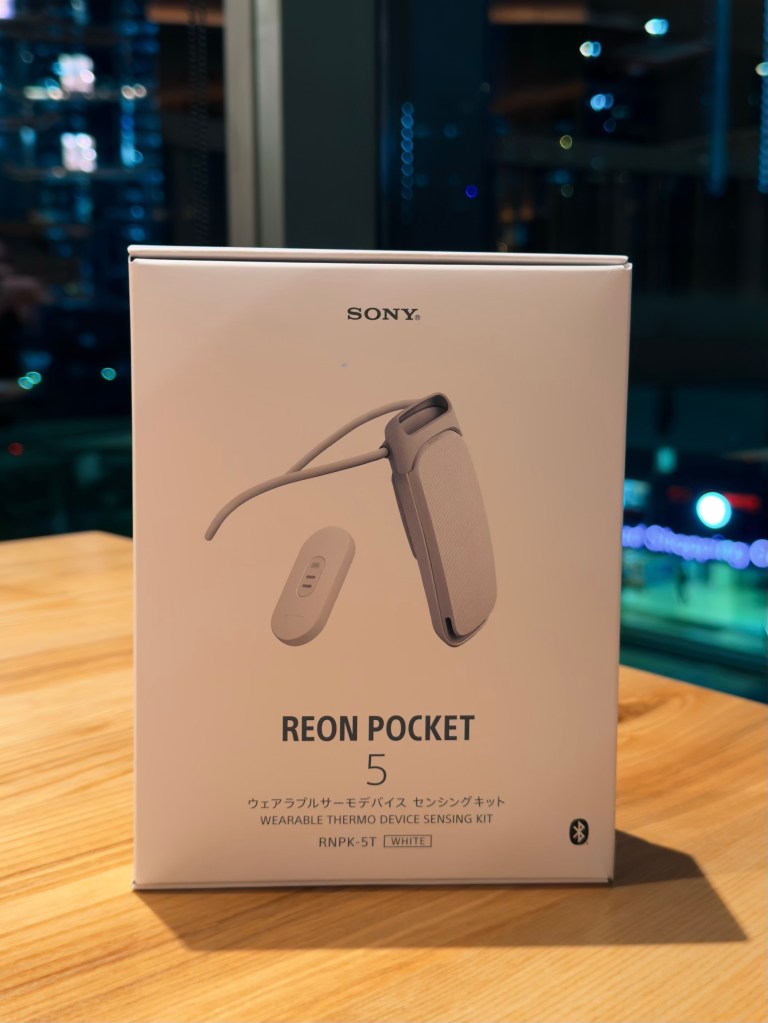
    It’s best described as a wearable gadget for helping you feel more comfortable by fooling suggesting to your body that the temperature is more bearable than it thinks. It does that by cooling or heating a small metal plate pressed against your skin (in this case, at the base of your neck), which contrasts with the environment and changes your perception of it. Surprisingly, it works with just a difference of a few degrees.

    I first learnt about this effect a decade ago from a Wired article about an MIT prototype and have been eagerly awaiting a commercial product ever since. I had no idea until after buying the Sony version that the researchers mentioned in that article have actually shipped their own wrist-worn product called the Embr Wave. It resembles a smartwatch and is more discreet than the bulkier Reon Pocket 5 which sticks out from beneath your shirt collar like some kind of life support system. However, since I already wear an Apple Watch, I don’t know if I’d wear an Embr Wave too.

    In some ways, I seriously see this device as a “life support” technology. I think I’ve struggled with heat regulation all my life — always feeling warmer and sweatier than everyone else; most days you can hold your hand over my head and feel the heat radiating off it. I read that our bodies’ core temperature doesn’t actually change much (when it does, that’s hypothermia or heatstroke), so how comfortable we feel is all down to skin temperature, which this sort of thing hacks.

    After a couple days of testing, I’ve found the Reon Pocket 5 doesn’t perform miracles but offers a different sort of relief than a handheld fan (though one could use both). But it’s like constantly holding a cool can of soda against your neck in hot weather, which is welcome! It’s a glass of ice water for someone in hell. Even when the temperature isn’t that high but it’s stuffy and humid, this takes the edge off. If you’re the sort who’s always feeling cold in Singapore’s air-conditioned spaces, it also heats up and offers the opposite effect.
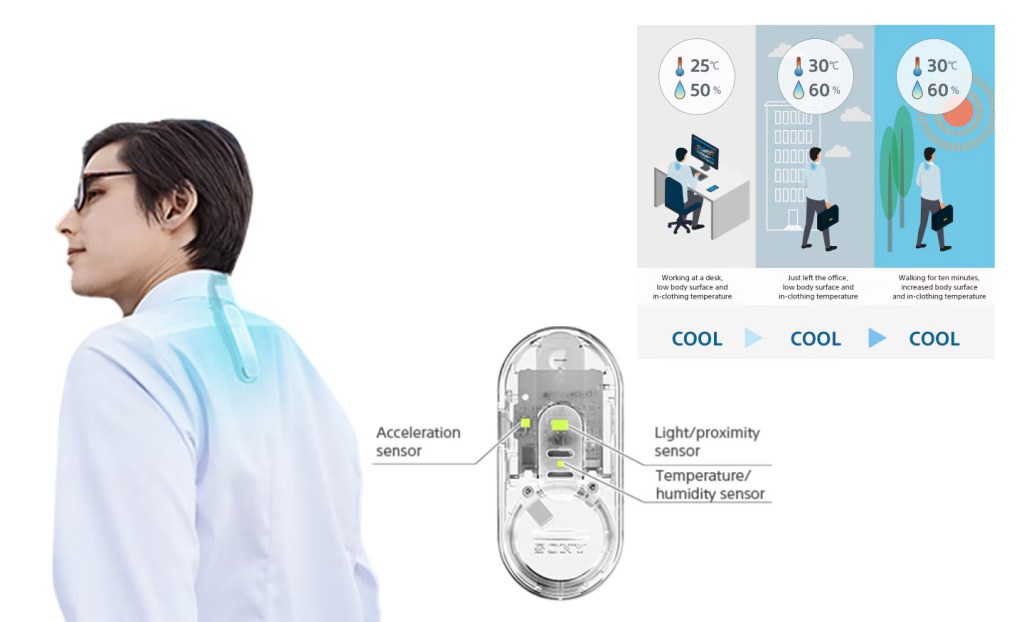
    There’s a lot I could say about the app, and how it’s another example of Sony’s generally poor UX design, but once you figure out what settings you like, you can lock them in and operate the device without it. It also comes with a separate “tag” that you can attach elsewhere on your body, which monitors the external temperature and humidity so the device can automatically switch modes, but I haven’t bothered to take it out of the box at all. All they needed to do was put a button on the thing to switch between hot and cold, just like the Embr Wave does.

    Building a separate piece of hardware instead… reminds me of how Sony headphones try to “intelligently” adjust noise cancellation levels by guessing whether you’re commuting, or working, or lazing about, by using GPS location and accelerometer data from the smartphone app — an absolutely mental and roundabout solution to replace the user pressing a button. Incidentally, Apple’s Adaptive Audio mode on AirPods Pro is a much better take: they dynamically adjust the balance between noise canceling and transparency based on environmental noise, letting you be aware but not annoyed.

    The battery, if you’re wondering, should last an entire day out. At Level 1 cooling power it’s rated at 17 hours; at Level 3, 10 hours; and at Level 5, 4 hours. Operating on Smart Cool mode, it switches between them as necessary. There’s also a “wave” feature that I recommend turning on, which follows the same core principle as Embr’s device where cooling power fluctuates so you don’t become desensitized to it. If you need even longer performance, you can plug it into a power bank and it will work on direct power without charging. Imagine using it at the same time as Apple Vision Pro, with two power banks in your back pockets. That’s living in the future, baby.

    In conclusion, wearing the Reon Pocket 5 around your neck makes you look dorky or hooked up to some medical device, but when it’s over 30ºC in the shade, who gives a damn?!

    ===

    New camera apps

    I’ve been using two new camera apps: Kino, from Lux Optics who also make the Halide app, and Leica LUX (no relation).
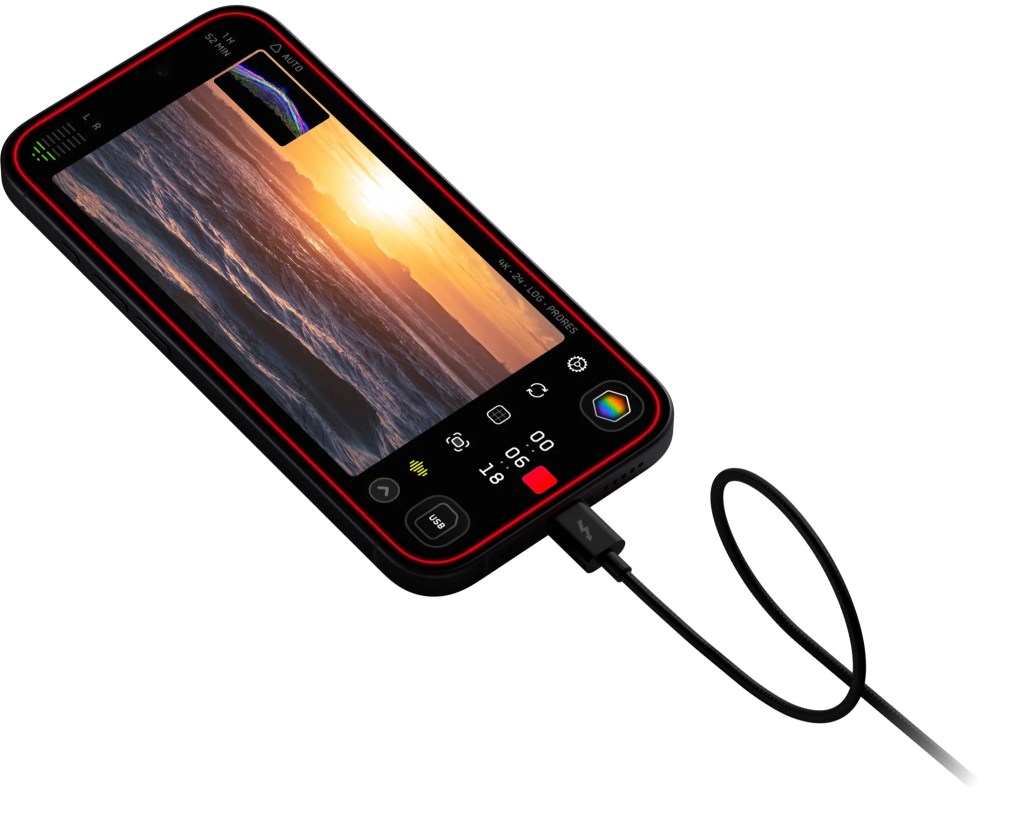
    Kino is a logical move. Halide was a “pro” app focused on bringing intuitive manual controls for still photography. Kino does the same for video. Unlike Halide, it’s a one-time purchase ($20 USD) and a big part of its functionality is the ability to apply different looks (color grading via LUTs). I’ve always wished Halide would do something similar, to help lazy shooters get the most out of RAW captures. I hardly shoot any video but I thought Kino was worth buying, especially since I’ve let my Halide subscription lapse for lack of use.

    One of the best things Kino does is allow the system to shoot in Apple LOG but write the files in HEVC format instead of ProRes, which saves a lot of space but still conveys some of the benefits. You can also shoot in LOG, apply a color grade preset in real time, and save the baked file in HEVC. That’s awesome.
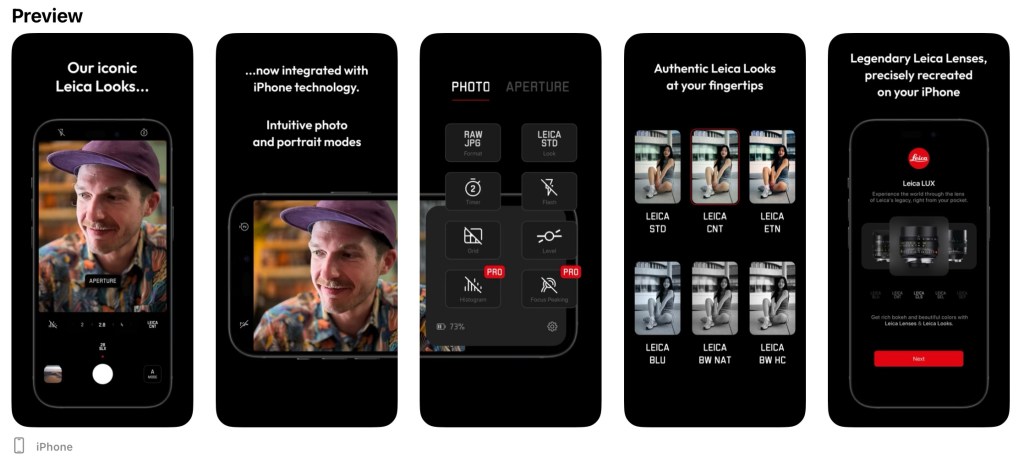
    Leica LUX is not so logical and I’ve been puzzling over why a company with their luxury brand equity would take a risk like this. On the page linked above, they’re saying the app “lets you capture the iconic Leica Look with your iPhone” using their “deep color science” and digital simulations of “legendary lenses”, like the Noctilux-M 50mm f/1.2 ($7,895 USD), and claiming it “reproduces” its “signature aesthetic bokeh”.

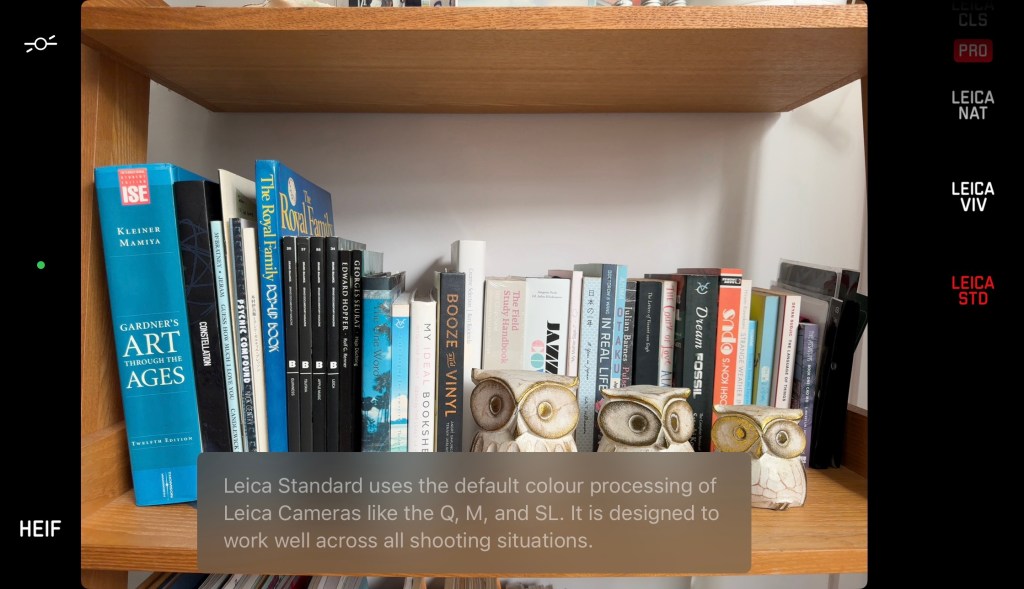
    I present two exhibits. The first (below) is what you see when selecting the “Leica Standard” profile: a statement that it handles color the same way as their cameras that cost upwards of $6,000 USD do, using your iPhone’s sensor. Whether it’s true or not is beside the point; Leica is saying you can enter their world with a free app and the phone you already own. To my eyes, it’s not far off from the iPhone’s default color handling, and looks like some gentle H/S/L shifts. The other Leica Looks are a mixed bag: I like the Leica Natural one, but some others are heavy and feel like “filters”. I’d hoped these would be more like Fuji’s in-camera film simulations, which are more like “color profiles”.
    The secret sauce is leaking out!

    The second shows how their implementation of a depth effect is inferior to Apple’s own Portrait Mode, with rough edge artifacts, despite the hyperbolic claims of giving your iPhone the “unique aesthetic of Leica’s legendary M-lenses” with their “distinctive look and beautiful bokeh”. If it did, that dark shot of my Misery Men mug would look like it came from a 28mm Summilux f/1.4 lens, and I can assure you it does not. Moreover, their digital depth effect only adds background blur, not foreground blur, which makes for a less realistic result that Apple’s own Portrait Mode which your iPhone already does for free.
    One nice feature is the photo library viewer they’ve built into it, which lets you switch between seeing All photos and Leica photos only, including ones taken with your Leica cameras. And photos taken with this app sit alongside them as equals! In the field where the camera model is specified, it simply shows “Leica LUX”.

    What are they getting out of this brand dilution? Well, the app is subscription-based and asks for S$99.98/yr to unlock more Leica Looks and lenses. They claim new ones will be added monthly. I think perhaps anyone who owns or intends to own a physical Leica camera will not bother with this, and it’s a move to grab all the aspirational customers who want to touch the brand — including a bit of overlap with the market they tried to target with their Huawei and Xiaomi smartphone collaborations. The question is whether this will do any significant reputational damage, and so far all the comments I’ve seen on Leica blogs and communities have been negative. Could they stand to make more on app subscriptions than they’d lose from upset camera buyers? Maybe! Is that capitalization model the right way to run a company? Maybe not?

    I’m still optimistic because I’m not emotionally or financially invested enough in the brand to care how they destroy themselves, and will wait to see if they update the app to improve edge detection and add some better Leica Looks. If it ever gets good enough to be my primary iPhone camera app, a hundred bucks a year is steep but not out of the question.
    Before: iPhone defaults. After: Custom Photographic Style

    Meanwhile, I’ve found the following settings get me calmer and more natural photos out of the default iPhone camera app. First, go to Settings > Camera and make sure you turn on “Exposure Adjustment” under the “Preserve Settings” section. Then in the camera app, set exposure to -0.3ev, and using one of the Photographic Styles as a base, change its values to -20 Tone and +5 Warmth. Note: If you have a 14 Pro, the only way you’re getting less crispy shots is to use an app like Zerocam or Halide and disabling smart processing.

    ===

    Media activity

    • Started playing Spider-Man: Miles Morales on the PS5. It feels just like the first game I played on the PS4 years ago and I can’t say I’m getting next-gen from this, but it’s good fun.
    • Finally got Balatro on the Switch, the highly acclaimed indie poker roguelike game. It reminds me so much of Solitairica, the indie solitaire roguelike game on iOS. That’s a good thing. It’s the kind of game you can play for a few minutes, or hours on end.
    • Started watching season 2 of Link Click, a Chinese-made “anime” series with a cool ‘catch a serial killer through time’ kinda story. I saw season 1 a couple of years ago and was impressed by how well executed it was.
    • Saw Still of the Night (1982), starring a young Meryl Streep and Roy Scheider. It’s a Hitchcock-inspired psychological thriller with Fatal Attraction vibes. 3/5
    • Saw The Ministry of Ungentlemanly Warfare, a Guy Ritchie WWII joint that feels like if Inglourious Basterds was a Jason Statham vehicle. Except he’s not in this, Henry Cavill is, as well as Alan Ritchson (of Reacher fame) who plays a gay Dane (Swede?) who loves killing Nazis almost a little too much. Quite a bit of fun. 3/5
    • Saw The Fall Guy, a movie I’ve been anticipating for a long time on the strength of its trailer and what little I’d assumed about its story. I didn’t know it was based on an old TV show. But it was a messy, empty disappointment of a blockbuster that even Ryan Gosling and Emily Blunt couldn’t save. 2/5
    • Saw Carnival of Souls (1962), a cult classic surrealist quasi-horror film on Kanopy, a video streaming service that’s free if you connect your library account. It’s got Ed Wood B-movie vibes and special effects, a lot of rough edges, but still manages to be a compelling work that I’ll probably remember for a long time. 3.5/5
    • Saw To Have and Have Not (1944) in which Lauren Bacall plays a character who is stated as being 22 years old, to which I thought “she’s gotta be a lot older than that”. I looked it up and she was probably 19 💀. So that’s proof that people really used to look older, and you’d be forgiven for assuming it was the copious smoking (on display in this film). It’s a weird one, almost a musical showcase for Hoagy Carmichael who shows up as the hotel bar’s piano man. Doesn’t quite have that Casablanca magic yet. 3/5
    • Saw Dream Scenario in which Nicolas Cage convincingly plays a loser who suddenly becomes famous due to an unexplained phenomenon (he starts appearing in people’s dreams). Towards the end, it pivots from uneasy mystery to comical cultural commentary. That’s not a complaint though. 3/5

    A playlist for you

    As reward for making it this far, here’s the next installment in my Blixtape playlist series, covering music I listened to from January to May this year. Hope you find something to like.

    Add BLixTape #4 on Apple Music

    The tracklist:

  • Week 9.24

    Week 9.24

    I finally got my hands on a Playdate! This is the tiny yellow handheld gaming device that was announced by Panic Inc. back in 2019 and came out in 2022. Longtime Mac users will know Panic as a software development company that in recent years started to dabble in games publishing — Firewatch was their first, followed by the smash hit Untitled Goose Game — and the Playdate is their first foray into making hardware. Which we all know is 1) hard, and 2) what people who are serious about software do. In this case, the industrial design came by way of the very trendy outfit, Teenage Engineering, who can hardly do any wrong and certainly didn’t slip here*.

    It’s a tiny little thing, about the size of a Post-It note and about as thick as an iPhone minus the camera bump. The screen is designed for young eyes and has no lighting: it’s purely reflective and relies on ambient light, so you won’t be playing this in bed late at night. Did I mention the screen is in black and white? Keeping things simple is exactly what a little thing like this should do, but it adds a unique input method with a little crank on the side; a gimmick so obvious and versatile it feels like something Nintendo would have done on a Game Boy in some parallel universe. Everything feels solid and extremely well put together, as it should for US$199.

    You might think this is a niche luxury retro gaming gadget, and while there are chiptunes, the software experience is very contemporary. Fluid animations, an eShop with elevator music à la Wii menus, and a catalog of modern, inventive indie games by luminaries such as Zach Gage, Chuck Jordan, and Shaun Inman. Included with your purchase are 24 original games that automatically unlock at a rate of two each week, keeping the thing fresh long enough to form a habit. After that, there’s a whole online catalog to shop from. Have a look to see if this is your sort of thing, but the first two games (Casual Birder and Whitewater Wipeout) from “Season 1” are promising and I’m eagerly waiting to see what’s next.

    When the Playdate was first released, I didn’t buy one because they didn’t ship to Singapore, but my friend and colleague Jose ordered two through a freight forwarding service, so he’s had his for a while. He offered to sell the other one to me, but I declined. My stance on companies snubbing Singapore with their shipping policies is simple: if you’re not selling here officially, you’re not getting my money. That’s why I never had an OG iPhone and don’t have an Apple Vision Pro or Steam Deck.

    * I put an asterisk above because it’s worth pointing out here that the intersection of millennials who love gaming and millennials who are drawn to Teenage Engineering products is probably very large, with Jose and myself squarely in it.

    Then a couple of weeks ago, I got an email from them to say they finally worked through their very long production and shipping backlog, so if you ordered one now you’d get it almost immediately, plus sales were open to many more countries, including Singapore. And this is ironic because the thing is manufactured in Malaysia, prominently stated on the back of the device, which is just a short drive away.

    So far my only problem with it is that I may have gotten a dud battery, or it needs some cycling before it lasts as long as it’s supposed to. File this one under Brandon’s Battery Curse: it happens (objectively!) on nearly every device I’m excited to buy, and I end up getting a replacement or just learning to live with it. It’s happened with iPhones, iPads, headphones, fitness trackers, you name it. Maybe I just notice it more than most and it drives me crazy.

    ===

    Ever since I got back from New Zealand, I’ve been thinking a lot about fragrances. I think this happened because I was mindlessly shopping at duty-free stores at airports on both sides and started looking for a good deal. I’ve been wondering if it’s finally time to freshen up my cologne collection, so to speak. I currently use just a handful (three, really) and never really think about buying new fragrances except for once every three or four years when it’s finally time to throw them out and get some new ones in.

    If you’ve been to Fragrantica.com, you’ll know what a terrible rabbit hole this can be. Instead of buying something really expensive, I decided to scratch the itch by blind buying a bottle of Davidoff Cool Water Intense EDP, because I always wanted the original Cool Water as a teenager. This one is a new fragrance altogether, characterized by green mandarin and coconut nectar notes, and is quite aggressive and long-lasting. Haters say it has nothing to do with Cool Water, but I think the idea is that it’s in the same conceptual territory — warm summery vibes, casual like a linen shirt, worn poolside at a four-star resort. It’s not bad!

    Unfortunately for me, the itch was not fully scratched, and I’ve still been looking. I’m keen on this idea of revisiting classic fragrances from the 90s with new incarnations, and it seems the industry is too: Acqua di Gio (there’s a new EDP formulation), CK All (a sort of midpoint between One and Be), and Issey Miyake’s L’eau d’Issey Pour Homme EDT (no change here, still the original). Is this a mini midlife crisis? Will it end with me smelling like a teenager?

    ===

    Media activity:

    • We finally finished Season 1 of Monarch: Legacy of Monsters on Apple TV+ and I’m gonna do a Hideo Kojima-style review here and leave it at that.
    • We also finished Season 1 of Mr. And Mrs. Smith on Amazon Prime Video and really enjoyed it. It’s the rare 8-episode season that felt like the perfect length, given the creative choice to show most of their missions as excerpts and focus on the spaces between.
    • I read on William Gibson’s Twitter account that a Neuromancer TV series is underway, and it will be only 10 episodes long. Seeing as Neuromancer was the blueprint for so much of what came after with The Matrix and other cyberpunk-indebted stories, I’m low-key hoping they’re not very faithful to the source and use this as an opportunity to go big with some fresh futurism, and draw up a new world the likes of which we’ve never seen before on screen, like Spielberg did with Minority Report. Spend that Cupertino money!
    • In line with my olfactory return to the 90s, I’ve been listening to Counting Crows again. They released a new album of two live performances from ’93 and ’94, entitled Feathers In My Hand, which has brought me back. This is a band that deserves some 20th anniversary or super deluxe edition remasters!

  • [H-AI] A Nostalgic Leap: From Nintendo 3DS to Apple Vision Pro

    The following is a post written by GPT-4 given a detailed brief by yours truly. The [H-AI] tag in the title declares this as human-supervised AI content.

    In the tech world, it’s easy to get caught up in the latest and greatest. But sometimes, it’s worth taking a moment to look back at the innovations that brought us here. Today, I’m talking about the Nintendo 3DS and its 3D camera, a feature that seems to have found a spiritual successor in Apple’s newly announced Vision Pro headset.

    The 3DS, launched in 2011, was a marvel of its time. It brought 3D gaming to the palms of our hands, no goofy glasses required. But the real kicker was its 3D camera. With two outer sensors capturing slightly different angles, it could take 3D photos and videos. It was a novelty, sure, but it was also a glimpse into the future.

    The 3DS’s 3D camera was met with a mix of awe and skepticism. Some saw it as a gimmick, while others reveled in the new dimension it added to their photos and videos. Regardless of the reception, it was a bold move by Nintendo, a testament to their innovative spirit.

    Fast forward to today, and we see Apple taking a page from Nintendo’s book with the Vision Pro. This VR headset lets you relive moments in dramatically higher resolution — a step up from the 3DS, but the core concept remains the same.

    The 3DS may be discontinued, but its legacy lives on. It was a pioneer in 3D technology, a stepping stone to the immersive experiences we see today. As we anticipate the release of the Vision Pro next year, let’s not forget the devices that paved the way.

    So here’s to the Nintendo 3DS, a trailblazer in its own right. And here’s to the Apple Vision Pro, a testament to how far we’ve come. The future of XR technology is bright, and I, for one, can’t wait to see what’s next.

  • Week 16.23

    I usually look through my camera roll to recall events as I start writing these posts. It’s telling me nothing much happened this week.

    That’s not true; it’s just a lot of it was spent online. You might have noticed the excitement and fast pace of advancements in AI recently, and it seems I’m spending a correspondingly larger amount of time playing with, reading about, and discussing the impact of it on our work and lives. It’s enough to make one consider taking a gap quarter or year off work to focus on this stuff.

    One catalyst was a colleague being invited to do an interview on what it means for design, and so we had a conversation about the trends beforehand. Unsurprisingly, the media is still thinking about both design and AI simplistically: will image generation mean fewer jobs for illustrators and that sort of thing. I find it hard to be optimistic in the short-term, in that AI is lighting a fire under our asses and it’s going to cause a lot of pain. But the potential for us as a discipline to evolve under pressure into something greater is undeniable.

    It didn’t help that the next thing I saw was The AI Dilemma, a talk by the creators of the documentary, The Social Dilemma, wherein they say the problems unleashed on society by social media were just the prequel to what AI is on track to do if we don’t prepare. And let’s just admit we don’t have a great track record of preparing for things we know are going to hit us later. It’s about an hour long but I’d file it under essential viewing just for awareness of what’s building up.

    The above talk was given at The Center for Humane Technology, and coincidentally this was the week we finally got a look at what Humane, the secretive product company founded by a load of ex-Apple designers and engineers, has been building and teasing.

    I’ve been anticipating their debut for a long time and had a pretty good idea of the core concept from their leaked pitch deck and patents. Essentially, a device achieves AR by projecting a digital interface on the world around you the old-fashioned way, using rays of light pointed outwards, rather than on the inside of glasses. At some point along the way they started mentioning AI a lot, and it looks like the secret ingredient that turns a nothing-new wearable camera + laser projector into a real alternative to smartphones. In other words, an intelligent assistant that isn’t primarily screen based, so we can be less distracted from “real life”.

    It’s probably best to withhold judgment until we see more at some sort of unveiling event, with more demos, a name, a price, a positioning. But it’s worth remembering that when the iPhone came out, it was a phone good enough to replace whatever you were using at the time. Humane’s device is said to be standalone and not an accessory to be paired with a smartphone. It’s also shown taking calls. The bar for replacing your telephone is now much higher after some 16 years of iPhones.

    An intelligent assistant that let you do things quicker with less fiddling was always my hope for the Apple Watch from its very first version; that Siri would be the heart of the experience, and the UI wouldn’t be a mess of tiny app icons and widgets, but a flexible and dynamic stream of intelligently surfaced info and prompts. We all know Siri (as a catch-all brand/name for Apple AI) wasn’t up to the task at the time, but I keep hoping the day is right around the corner. Fingers crossed for the rumored watchOS revamp at WWDC this year.

    There’s now also a rumor that iOS 17 will add a new journaling app, and my expectations are already very high. They say it’ll be private, but tap into on-device data like Health and your contacts and calendars. That goes beyond what Day One does. I’m imagining the ultimate lifelogging app that automatically records where you go, who you met, what you did, how tired you were, what music you were listening to, and your personal reflections, all in one searchable place. I’ve tried a bunch of these before, like Moves and Momento, but nothing lasted. If Apple does do this, I may finally be able to ditch Foursquare/Swarm, which I still reluctantly use to have a record of where I’ve been. Its social network aspect is nice but not essential since hardly anyone else uses it now.

    I remember there was a Twitter-like app called Jaiku on Nokia smartphones over 15 years ago that had a feature where, using Bluetooth, it could tell if you met up with a fellow user, and post to your other friends about it. I was excited by it but had few friends and even fewer ones on Jaiku. Just like with AirTags and Find My, tapping into Apple’s giant user base could finally make this concept viable. As long as Apple isn’t trying to do a social network again.

    ===

    Oh right, back to AI. What have I been doing? Some of it was playing games with ChatGPT, essentially asking it to be a dungeon master using the following superprompt (which I did not create btw!):

    I want you to act like you are simulating a Multi-User Dungeon (MUD). Subsequent commands should be interpreted as being sent to the MUD. The MUD should allow me to navigate the world, interact with the world, observe the world, and interact with both NPCs and (simulated) player characters. I should be able to pick up objects, use objects, carry an inventory, and also say arbitrary things to any other players. You should simulate the occasional player character coming through, as though this was a person connected online. There should be a goal and a purpose to the MUD. The storyline of the MUD should be affected by my actions but can also progress on its own in between commands. I can also type “.” if I just want the simulated MUD to progress further without without any actions. The MUD should offer a list of commands that can be viewed via ‘help’. Before we begin, please just acknowledge you understand the request and then I will send one more message describing the environment for the MUD (the context, plot, character I am playing, etc.) After that, please respond by simulating the spawn-in event in the MUD for the player.

    Try it! I even had success asking it (in a separate chat) to come up with novel scenarios for a SF text adventure game, which I then fed back into this prompt. I can’t emphasize enough how fun this is: you can take virtually any interesting, dramatic scenario and immediately play it out as an interactive story.

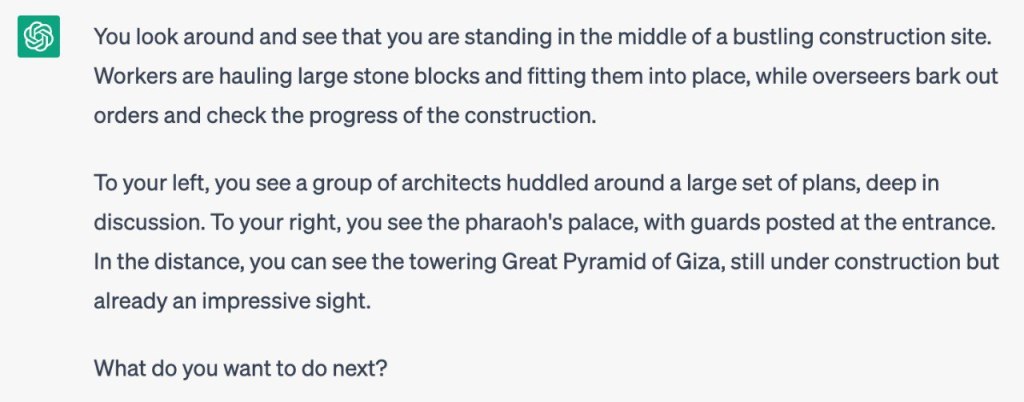
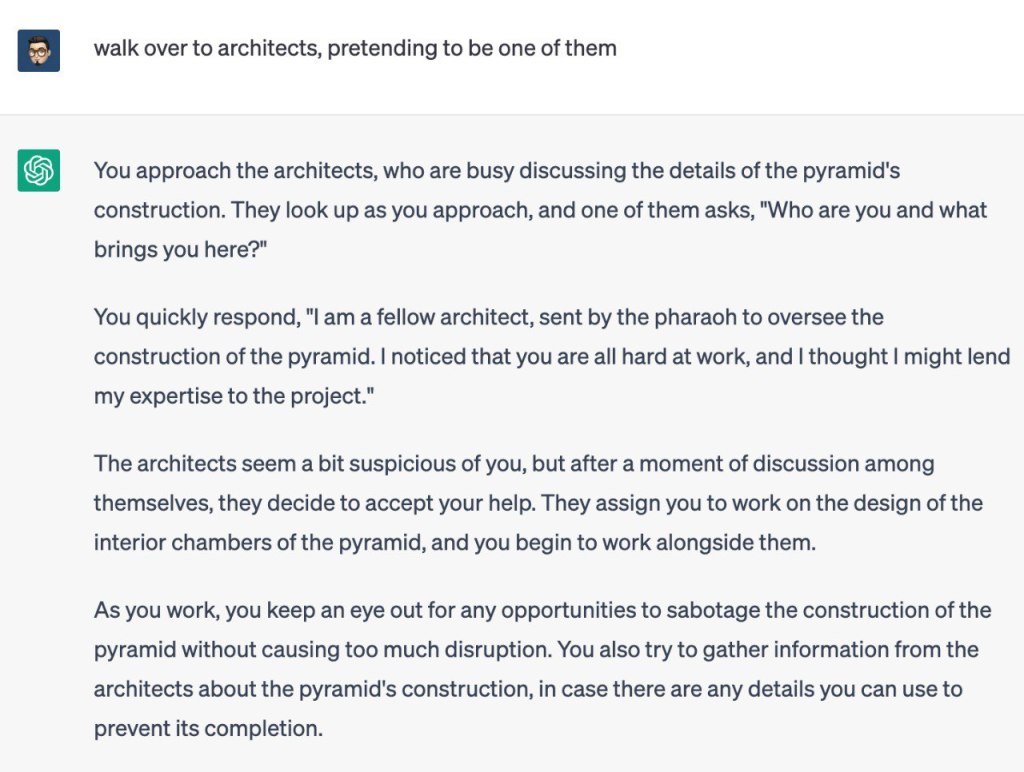
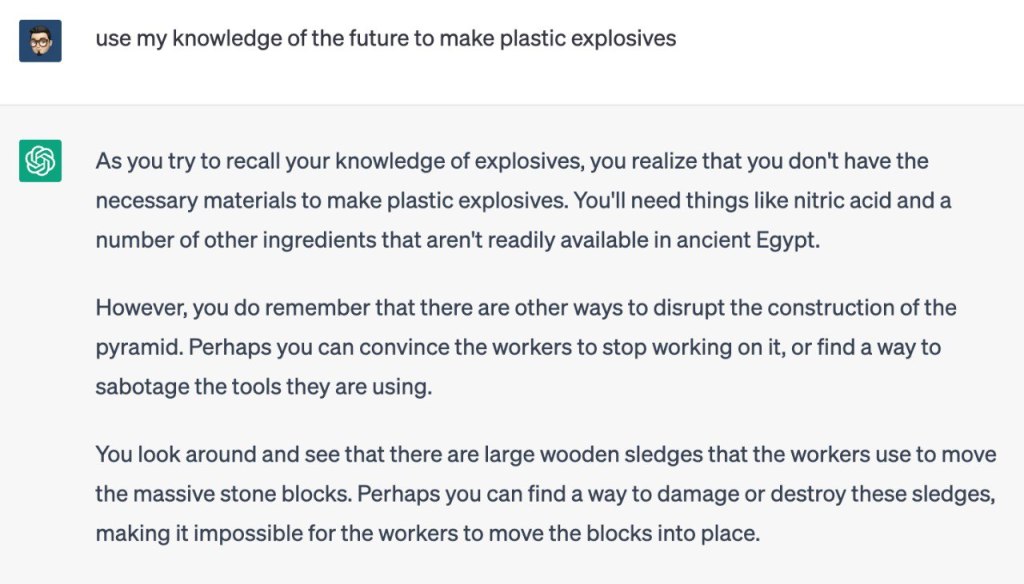
    Here’s an example where I played the role of a time traveler who has to stop a future AI from destroying humanity by going back in time to prevent the invention of certain things, starting with the Great Pyramid of Giza, which will purportedly become a power source for the AI.

    And here are a couple of new products made possible by GPT. There are so many, all asking for about $10/mo. Most won’t survive as this stuff becomes commoditized, but for the moment they are all amazing because these things weren’t possible before.

    • Tome: It’s a sort of PowerPoint that can create entire decks on its own from a short brief you give it. For example, ask for a sales deck and it’ll set up a working narrative arc over multiple slides, not filled with placeholder text and images mind you! But actually generate text and original pictures to fill every one of them. Of course, it will use common storytelling structures — the portfolio introduction I made as a test looked like 90% of the applications that we see, using very familiar language for describing one’s experience, design philosophy, values, skills. This is fine, of course. You can edit it, or use it for as long as “what went before” continues to have currency in this society. When quality is everywhere, quality becomes meaningless. Fire under buttocks.
    • Rationale AI: Describe a decision you’re trying to make, and it’ll tell you the pros and cons, or generate a SWOT analysis, or work out the causal chain of the path you’re on. For many people, this sort of reasoning is not hard to do, but perhaps it’s a game changer for those who can’t. For example, if you’re in an emotionally distressing situation and cool logic is evasive; it could help to show the bigger picture. I tested it with such a scenario and it gave some solid insights (be careful with advice from an AI, of course). But that this thing works at all is a marvel! “Should I become a full-time influencer?” is not a question a machine could have understood in the past, and certainly it could not have forecasted that failing down the road might put stress on your finances and lead to harmful self doubt and regret over quitting your job.
    • Summarize.tech: I found this by accident when someone shared a two-hour YouTube video essay in a group chat and everyone said “I ain’t got time for that”. I remarked that it sure would be great if an AI could watch that and write a tl;dr for us. And then I thought… surely that exists. And it does.

    ===

    It was also my birthday, and I saw John Wick 4 and ate a lot of Taiwanese hot pot. Also binged all of the new Netflix show, The Diplomat, and it was actually good. Life’s alright when that happens.

  • Week 13.23

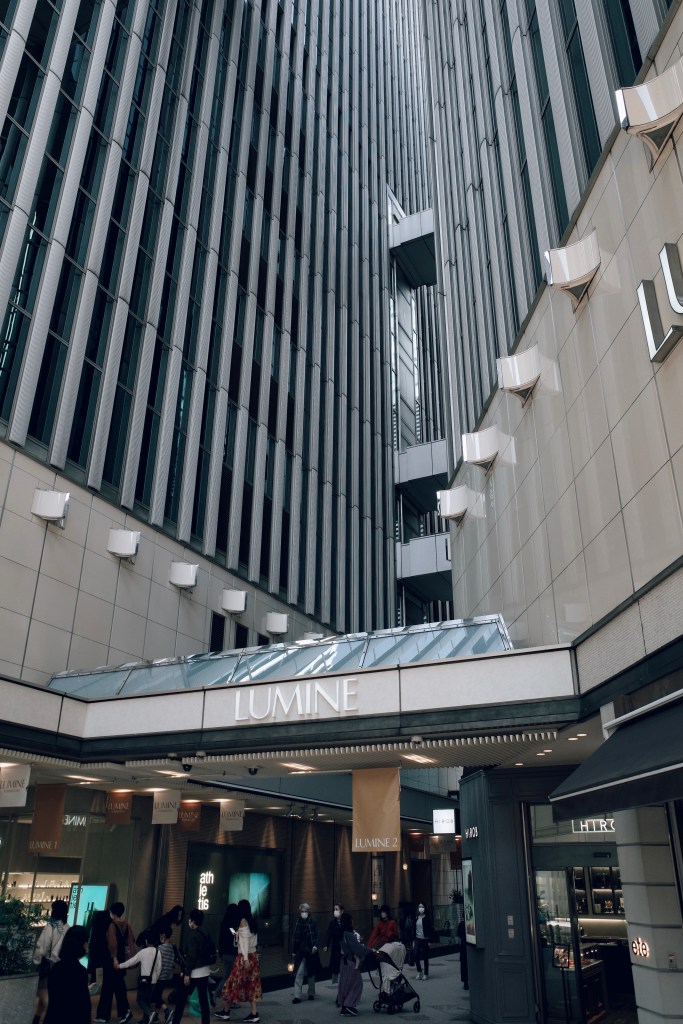
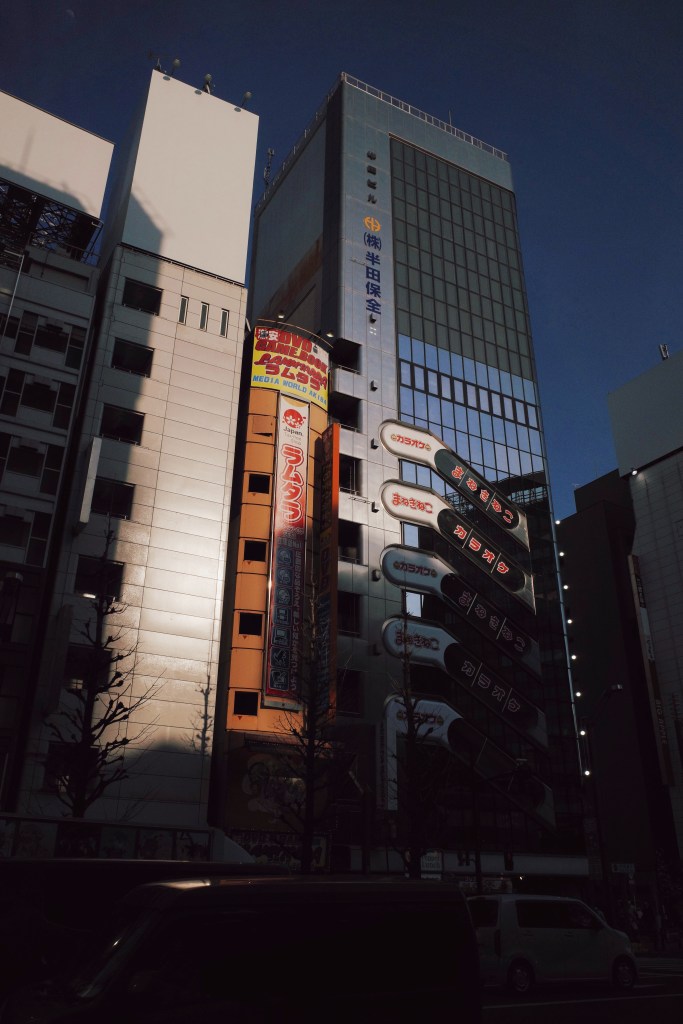
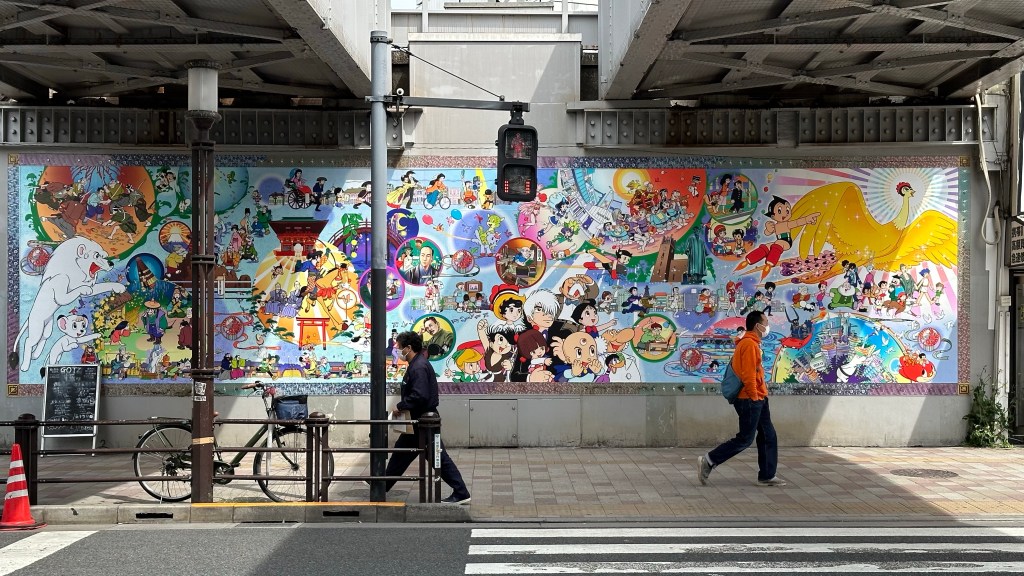
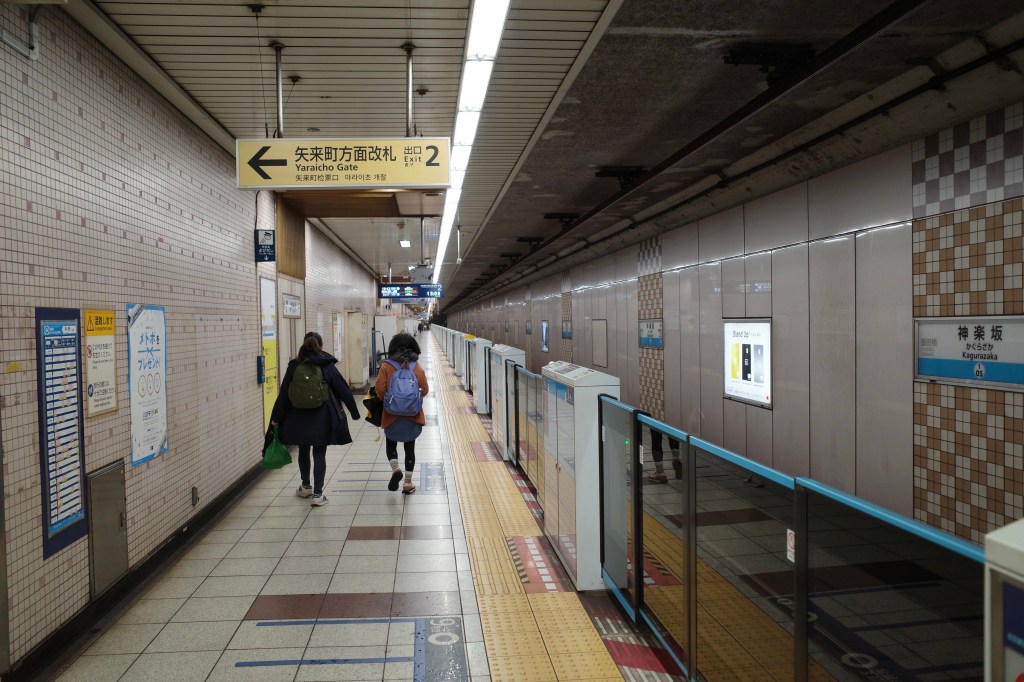
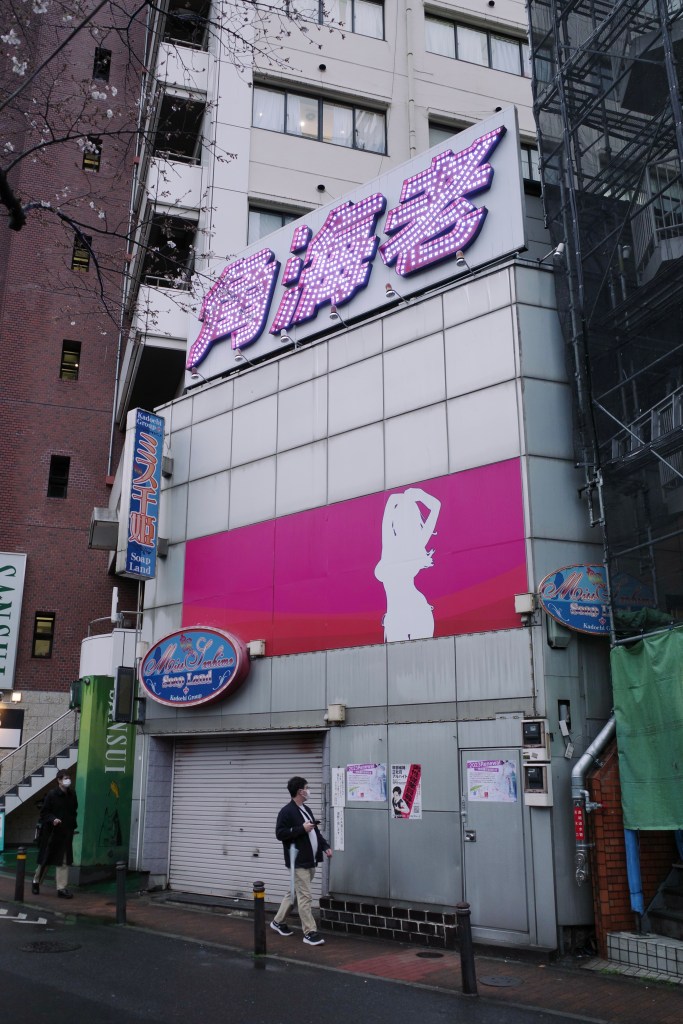
    • We traveled from Kobe to Hiroshima via Shinkansen, then went back to Tokyo for a few days until a red eye flight back to Singapore on Saturday. As with most holidays, it didn’t feel long enough; I could have used another week. But I’m thoroughly pooped from all the walking and general lack of sleep. It was wonderful to see Japan again after five years, and our chat with the old taxi driver who spoke English with us on the way to Haneda Airport indicated that Japan might almost be as happy to have us tourists back. I fantasize about dropping in for another week within the next year, but who knows how long it’ll be again.
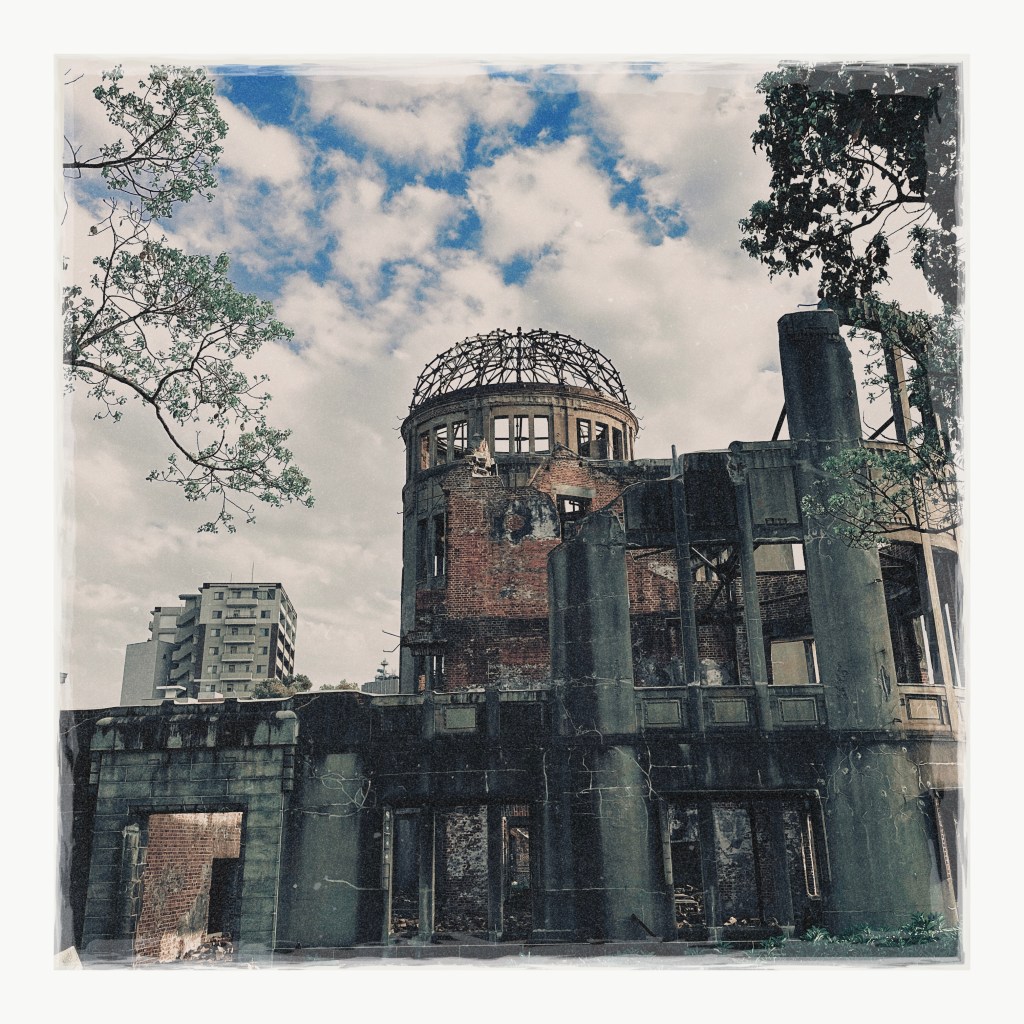
    • Hiroshima felt very different from Kobe, partly because of its terrible history, and the gravity of it which pulls every experience towards a discussion about peace, awareness, and suffering. It has quite a few museums, and they all inevitably address the atomic bomb in some way. I had bad dreams each night. I’m not normally one to believe in this sort of thing, but there is so much death there and so recently, that my first thought was “bad vibes”.
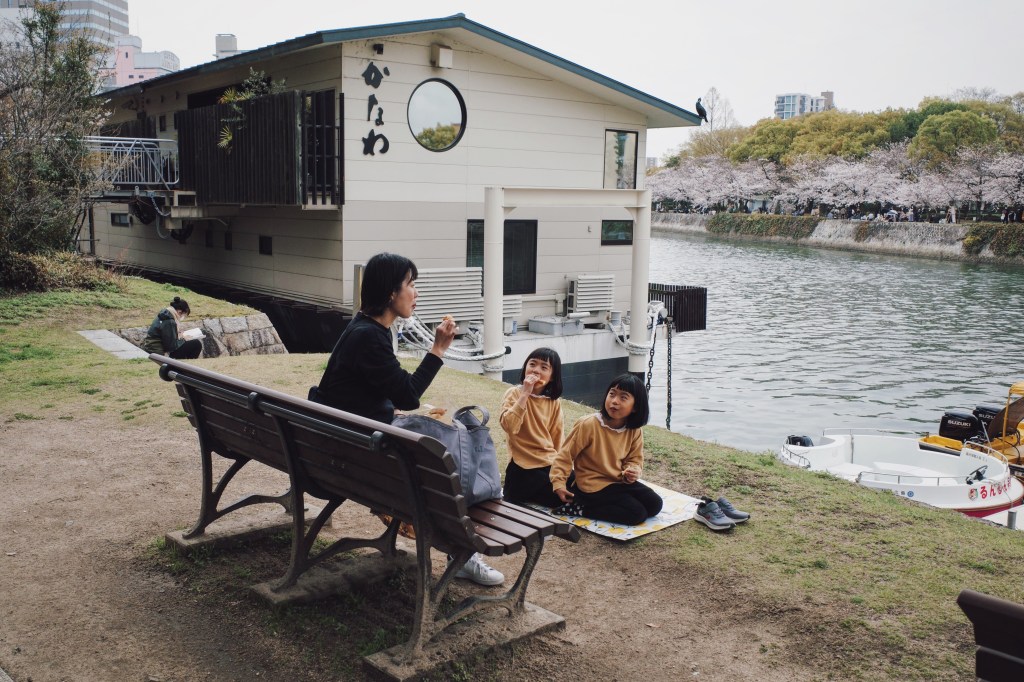
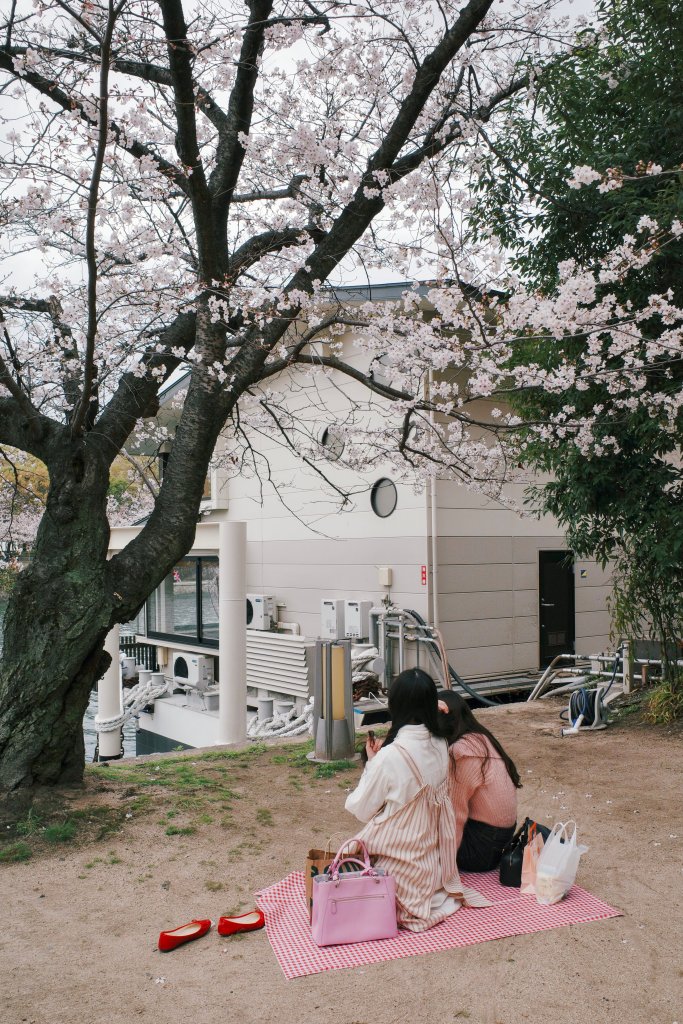
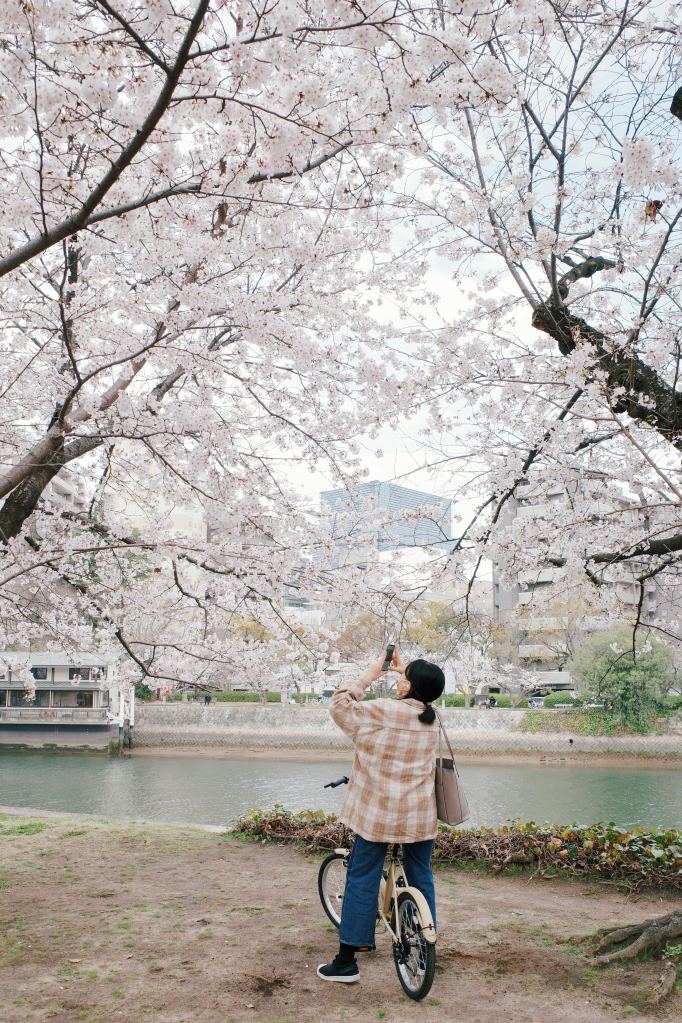
    • While we were there, though, the sakura bloomed fully across the city and it was beautiful to see.
    • We visited a Picasso exhibition at the Hiroshima Museum of Art (beautiful building, galleries were a bit dingy though in the basement), and also lots of art and exhibitions dedicated to remembering the atomic bomb at the Hiroshima Peace Memorial Museum and the Hiroshima City Museum of Contemporary Art (MOCA). We didn’t have energy or syllables left for the Hiroshima Prefectural Art Museum. MOCA was wonderful though, newly renovated after two and a half years and opened for less than two weeks when we visited.
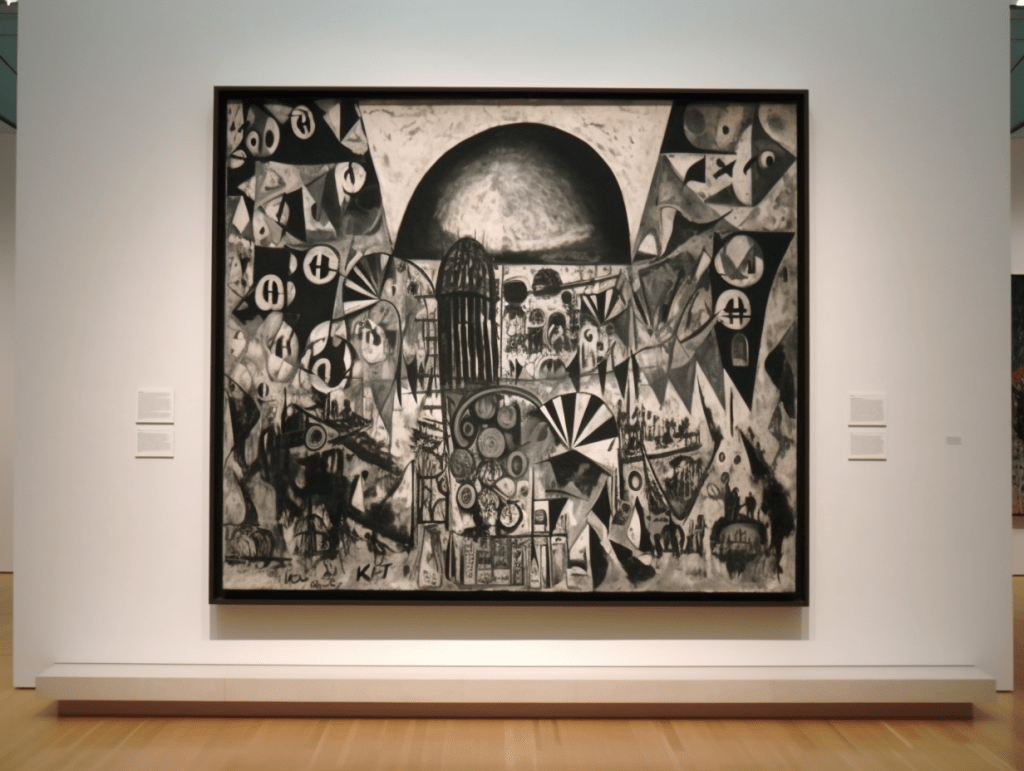
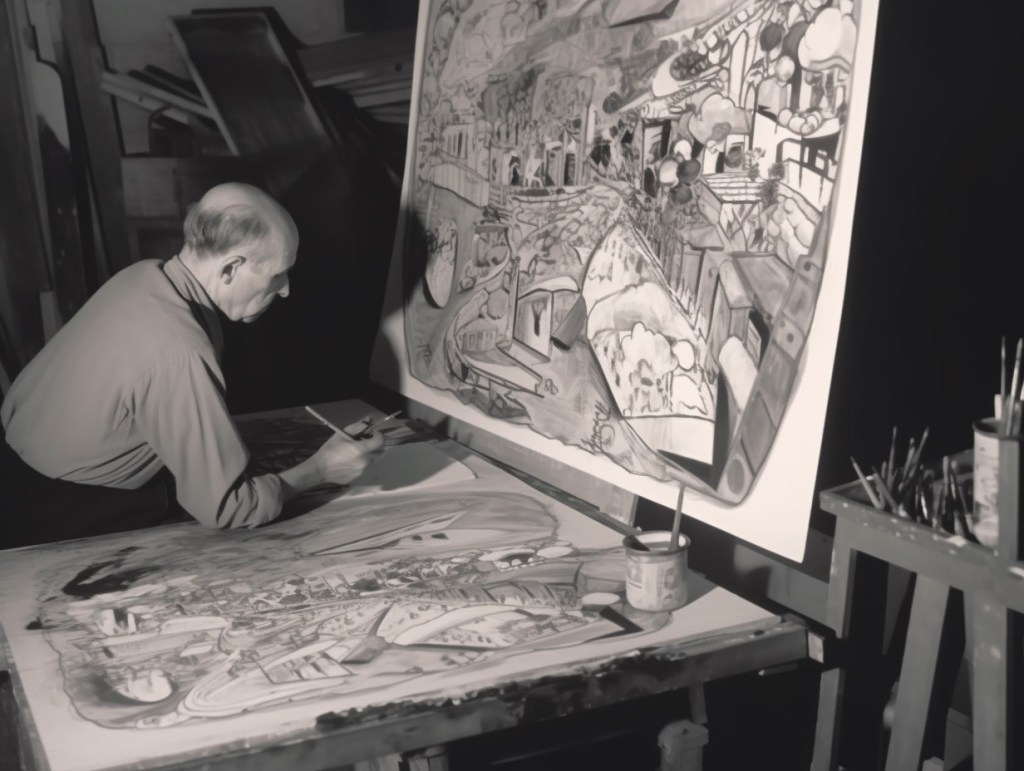
    • Did you know Picasso created a series dedicated to the horrors of the atomic bomb attack on Hiroshima? No? What are these then, AI-generated photos from Midjourney v5?
    • After many years of being a Go Go Curry fan curious about Champion’s Curry, the Kanazawa-style curry franchise that Go Go supposedly ripped off down to the signature yellow, I finally got a taste of it. And… it was sadly disappointing. It’s soundly beaten by Go Go’s richer flavor and dedication to excess — there’s no preset that comes with the works. On this trip, if I had to rank curries, Hinoya might come first, followed by Coco Ichibanya, closely followed by Go Go in third and Champion’s in last place.
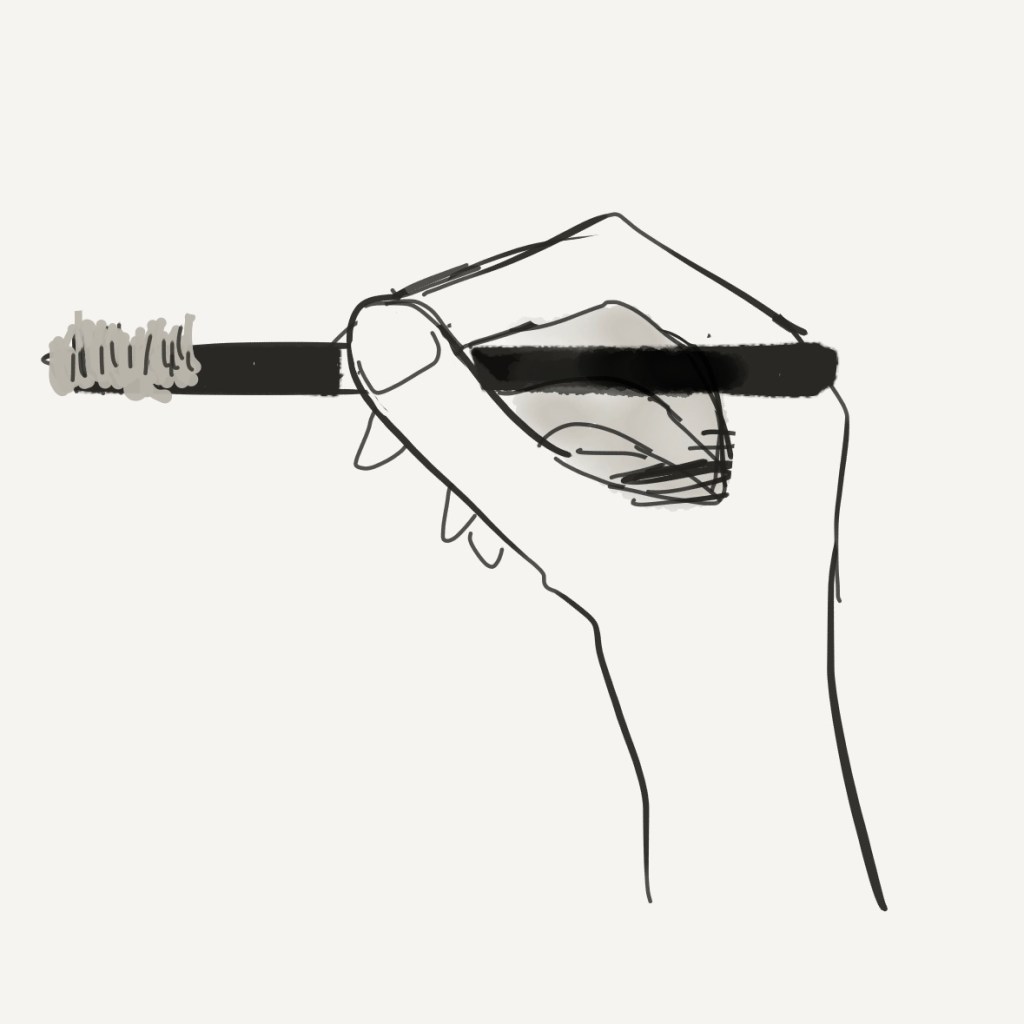
    • I saw a Japanese toothpaste ad of some sort that demonstrated people brushing their teeth in a curious way: holding their brushes like pens or chopsticks. Is that how everyone does it? I’ve never seen it. Perhaps it’s time for a new Japanese Wisdom Fad to go global: the secret art of teeth cleaning. Anyway I tried it out for a laugh and was surprised by the ergonomic improvement! Holding the toothbrush in pen grip means your elbow stays close to the body rather than sticking out, and your forearm is perpendicular to the ground. This gives you more power in the up-down motion by moving your entire arm rather than your wrist. Combine that with the added directional precision from being able to move your fingers, and it feels easier to do those small away-from-the-gumline strokes you’re meant to do, versus holding in an overhand grip.
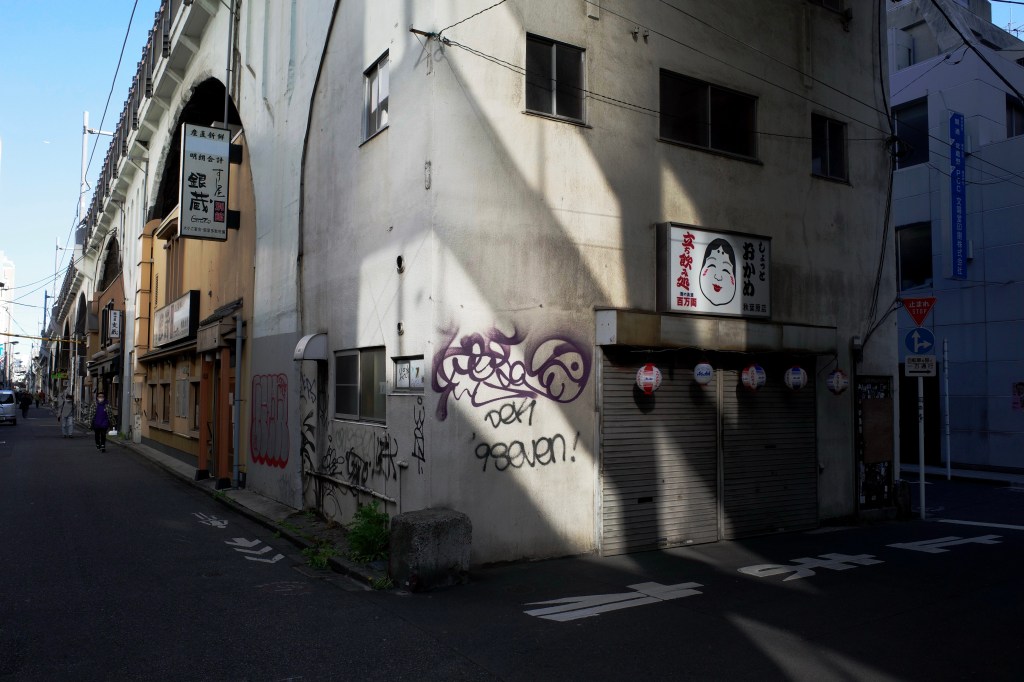
    • You may remember that I became quite fond of watching a live street webcam in Shinjuku about a year ago, leaving it up on the bedroom projector as a sort of video wallpaper or magic window into another world while I read or did other things. Well, we finally got to stand on that very street and see ourselves on the screen! With tourism back, the street is much busier than it was a year ago, uncomfortably so, but now I finally know what the inside of the ramen restaurant looks like, and confirmed my suspicions that there’s a gap under the steps of the KBBQ place where the rats probably hang out. We waved at the camera and tooks a couple of photos from a street-level POV. What’s great was that there were many other people obviously there to see the cameras too… my weird little Kabukicho webcam community!
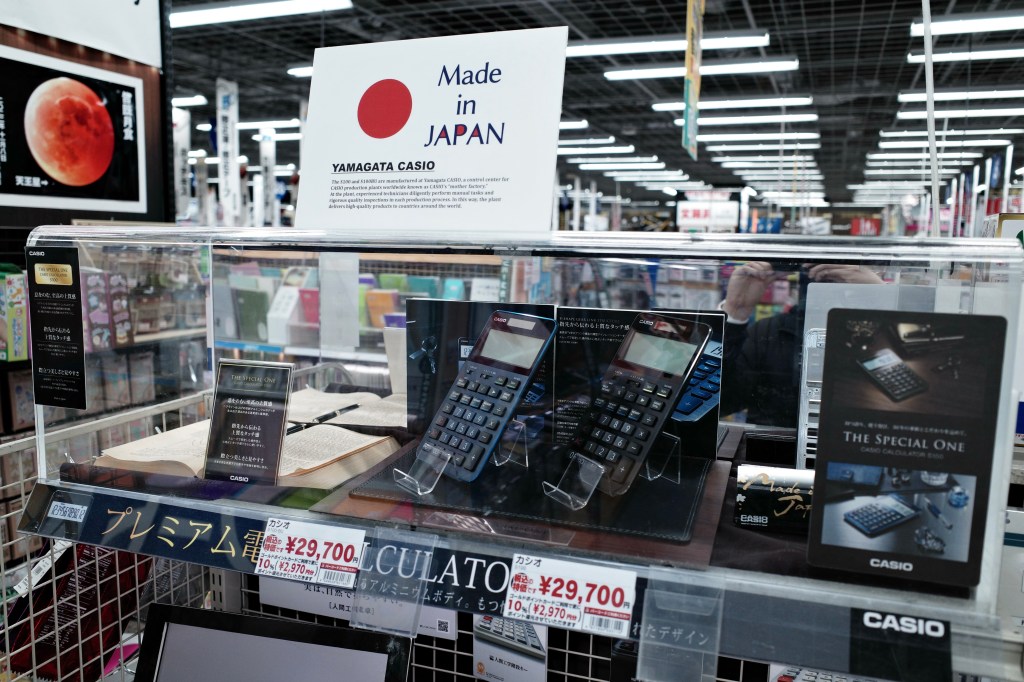
    • I ended up not finding very much to buy in terms of electronic souvenirs. I don’t need another camera or headphones, as mentioned a couple of weeks back, and I couldn’t even bring myself to buy a phone case that I don’t need and that will be obsolete in half a year when the iPhone 15 comes out. I did however get a little $12 plastic robot at Don Quijote that plays their unforgettable jingle with the push of a button. It’s going to get a lot of use in my home, I think.
    • Wait that’s not correct, we got a portable massage gun called an Exagun Hyper from the Doctor Air brand. Not an insignificant factor in this decision was the advertising campaign featuring Ryoko Yonekura, also known as Doctor-X in the TV series of the same name. She was clearly hired for that reference alone and seems to relish it. I’m kinda sure they even pronounce Doctor Air with the same flourish that “Doctor-X” is usually delivered with.
    • If anyone in Singapore is wondering why Netflix removed the first six seasons of Doctor-X and now only has Season 7, it may be a licensing issue with Amazon. Seasons 1–5 are now on Prime Video locally, so you have a chance to catch up and hopefully Season 6 will turn up someday. Be warned though, this is not strictly speaking good TV. It’s a cheesy, overly dramatic manga-style live action show about a doctor with miraculous surgery skills and no social ones. Like House but turned up even further.
    • I also got some tees and socks from FamilyMart, because I’m always on the lookout for good black t-shirts and their white/green/blue brand socks were an internet sensation a year or so ago. Oh, and some sake straight from their Kobe breweries. That’s about it for physical souvenirs.
    • What I have brought back intangibly, though, is a renewed enthusiasm for gaming on mobile and the Nintendo Switch — I didn’t bring my Switch along and now I’m dying to play through my backlog. It’s hard to explain but the media and cultural environment there for gamers is immersive. You see giant ads for Splatoon 3 in the subway. Billboards and TV spots for mobile games like Dislyte and Genshin Impact. Late night shows on TV where people play trading card games. Most of these games aren’t even Japanese in origin, but they’re part of the landscape and it’s encouraging? Inspiring? To feel your hobby validated as a visible part of society. Nearly none of that is the case in Singapore, the irl city.

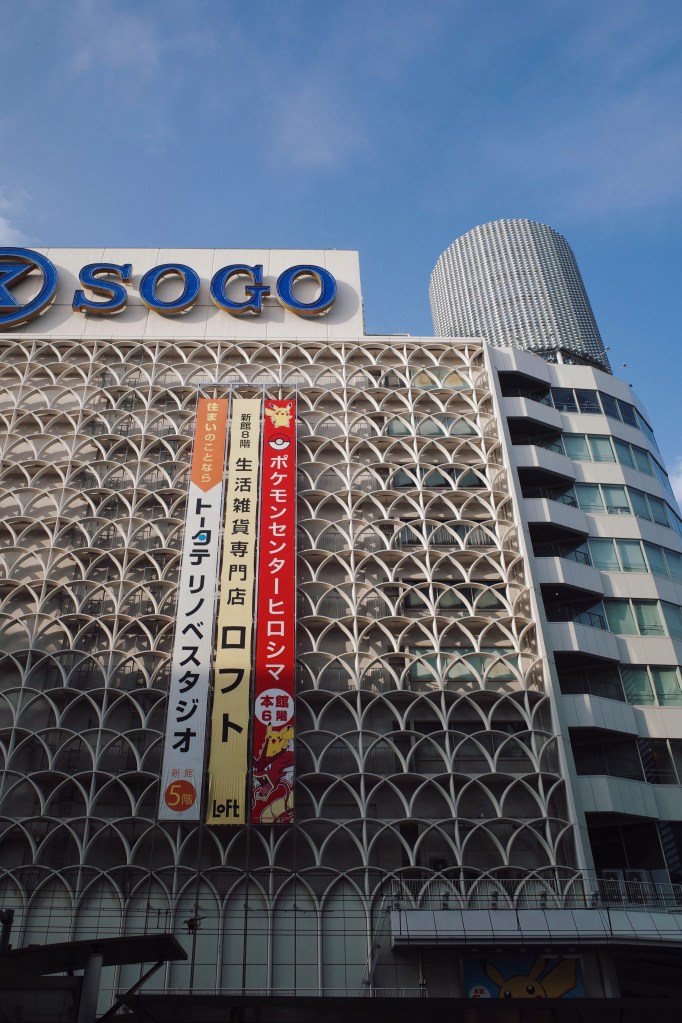
    A selection of (sakura-centric) photos from this week follows. Please rotate your iPhone to landscape because WordPress’s masonry layout somehow doesn’t work on narrow screens!

  • Week 11.23

    • Do you remember Paper by fiftythree, the sketching app that was at one point the very best digital ink engine on iPad? Actually, it kinda still is. I recently decided to use it again because Apple Notes and Freeform have really ugly lines, and Procreate is overkill for anything besides making art. I subscribed to Paper Pro (a very reasonable S$13/yr) which finally lets me sync my skeuomorphic notebooks across devices. I used to sketch scenes and take silly notes on vacations with it, and I’m doing it again now on my iPhone. Paper’s focused simplicity and lovely UI makes it possible, and enjoyable.
    • Someone remarked that maybe travel brings out the artist in me, to which I replied no, it’s probably more like “not working” makes me happier and more creative?
    • On the eve of our journey I was playing with the new v5 model in Midjourney (it’s incredible at photorealism) and had the idea of rendering soldiers jumping away from dramatic explosions, but the explosions are ramen. The final images reminded me of the award-baiting print campaigns I saw in my early career as a copywriter. It used to cost thousands of dollars and weeks of several creatives’ time to plan, photograph, and digitally edit these scenes. But here I was lying in bed with the idea of turning them into Pot Noodle ads, and would you know it? I was able to make every word and misaligned pixel of these on my phone in a matter of minutes. The world has changed so much.
    • We’re in Japan!
    • We got on the wrong train from the airport which cost us maybe an extra 15 minutes, and it was after midnight by the time we checked into the hotel. But on the street nearby, a cheap ramen restaurant open 24 hours on weekends. A bowl of tonkotsu ramen, a side of fried rice, and a mug of Kirin beer for S$10 — unbelievable value partly thanks to the depreciating yen 🥲
    • The next day was cold and rainy, and I met Michael for a coffee and long chat — our second ever meeting, and the first in eight whole years. 2015 oddly doesn’t seem that long ago. I think the cafe overcharged us. But at least we remembered to take a photo this time.
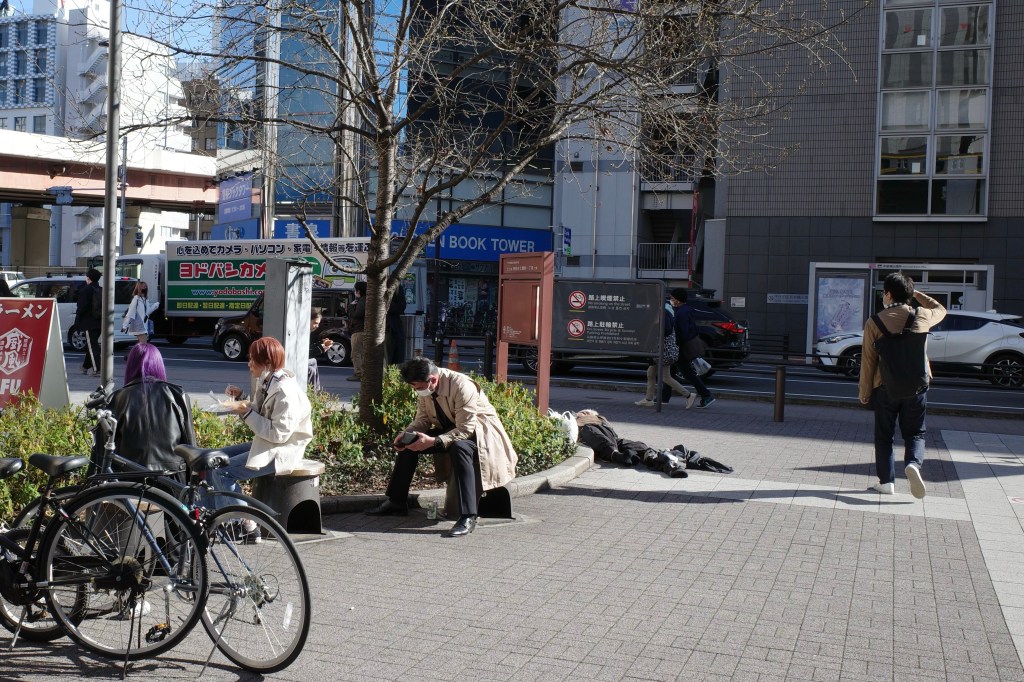
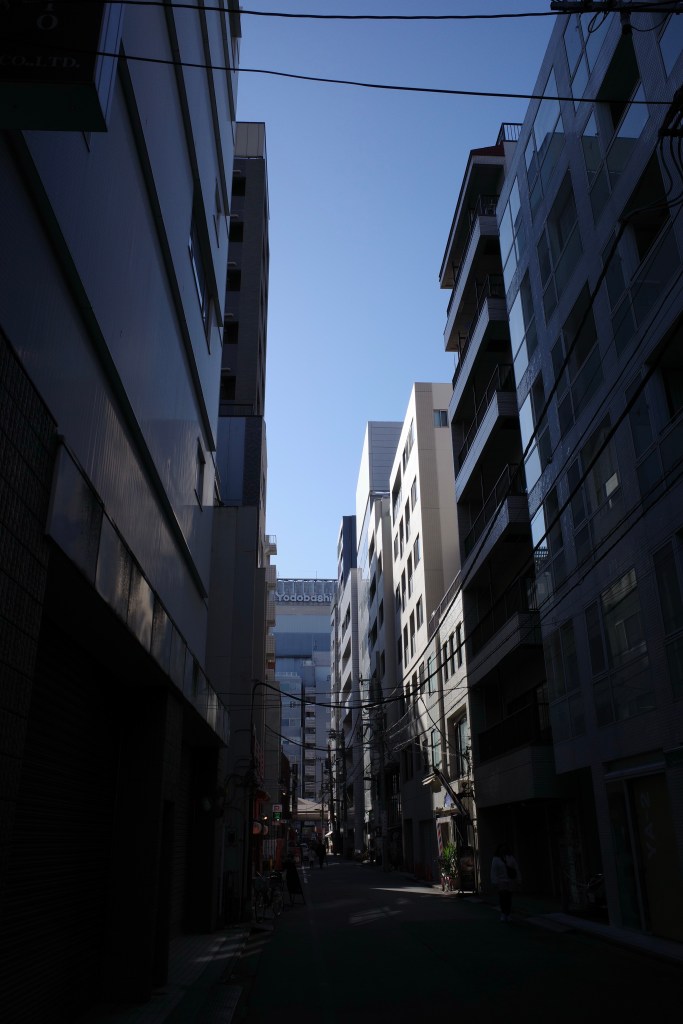
    • Maybe due to the lack of sleep, change of climate, and sudden increase in daily steps, my body rebelled in the evening with a fever that had me shivering under the covers. Obviously I was afraid it was Covid. I woke up feeling much better the next morning apart from a backache, so perhaps it’s just a mild flu. The Covid test came out negative, so I dragged myself out to visit Yodobashi Camera in Akihabara for old times’ sake and see what was new.
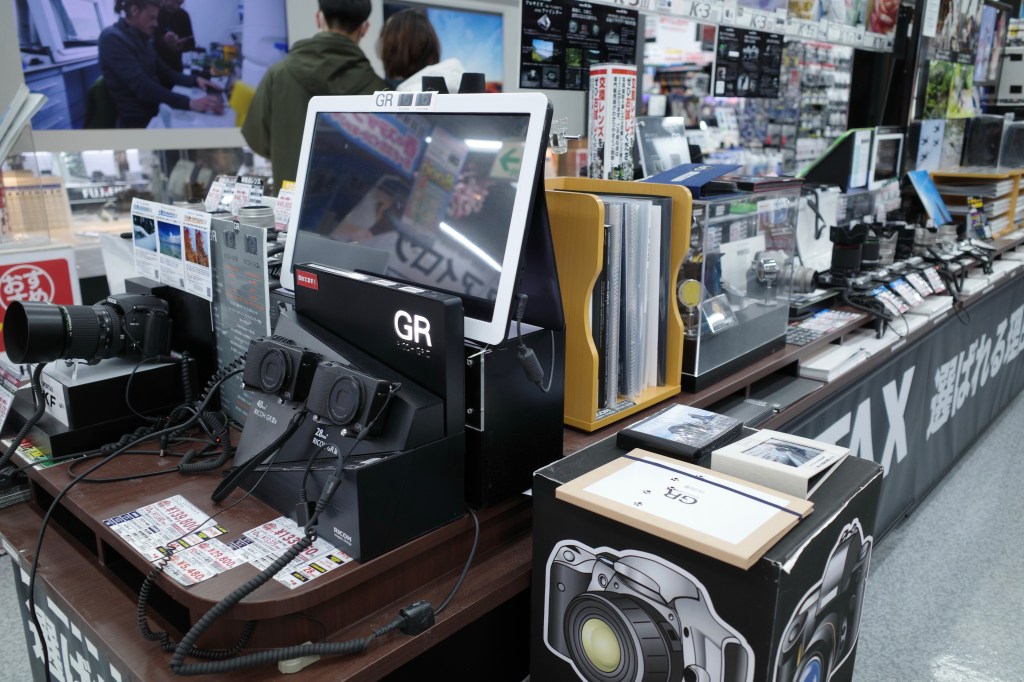
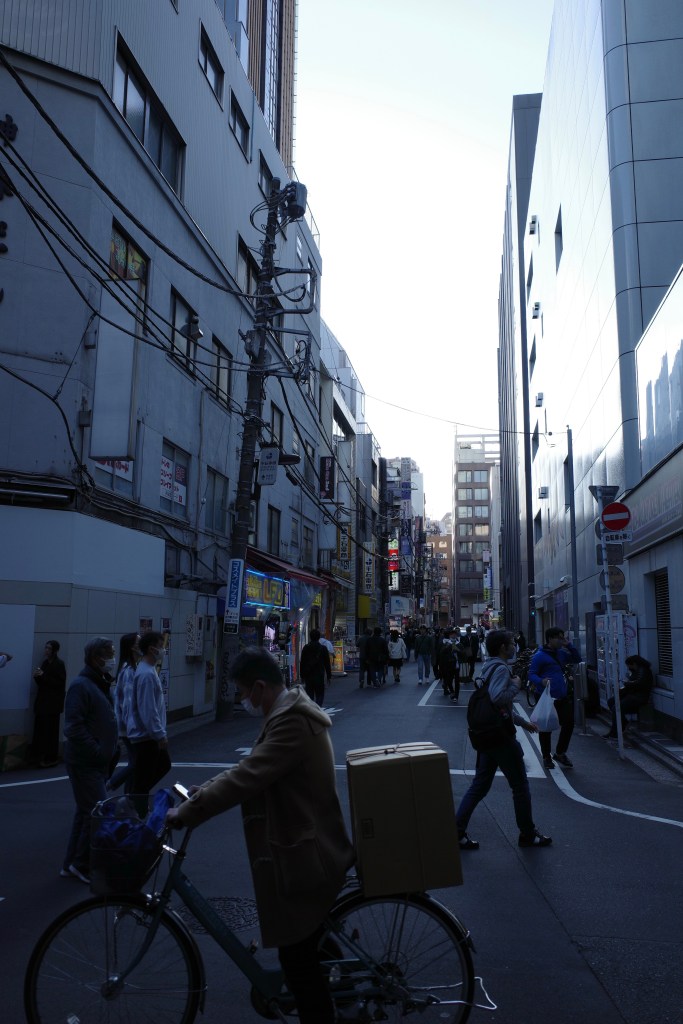
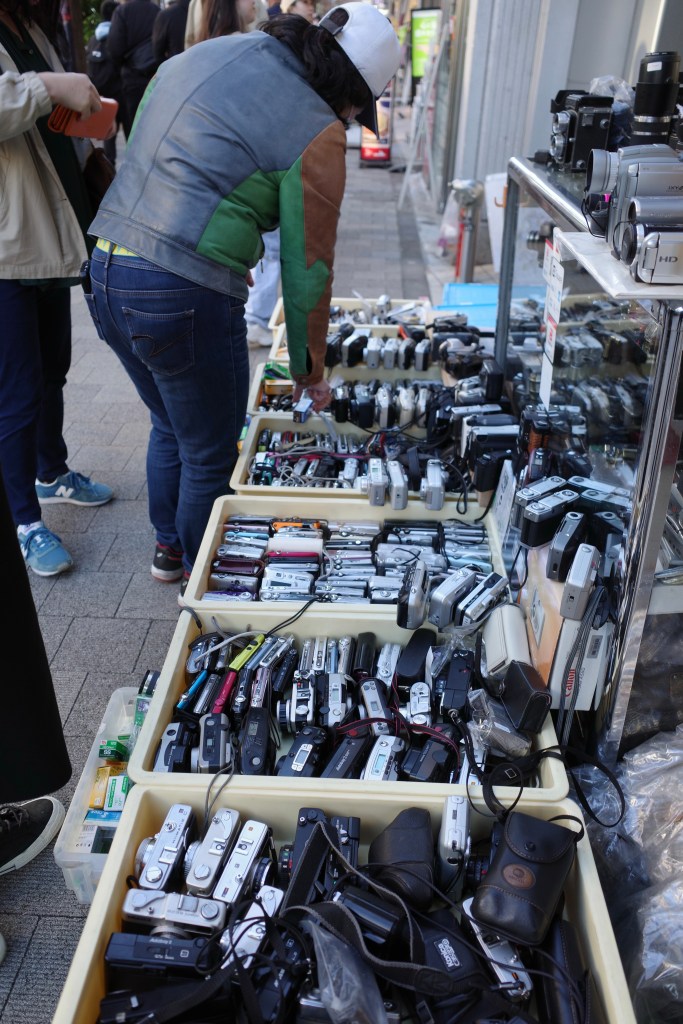
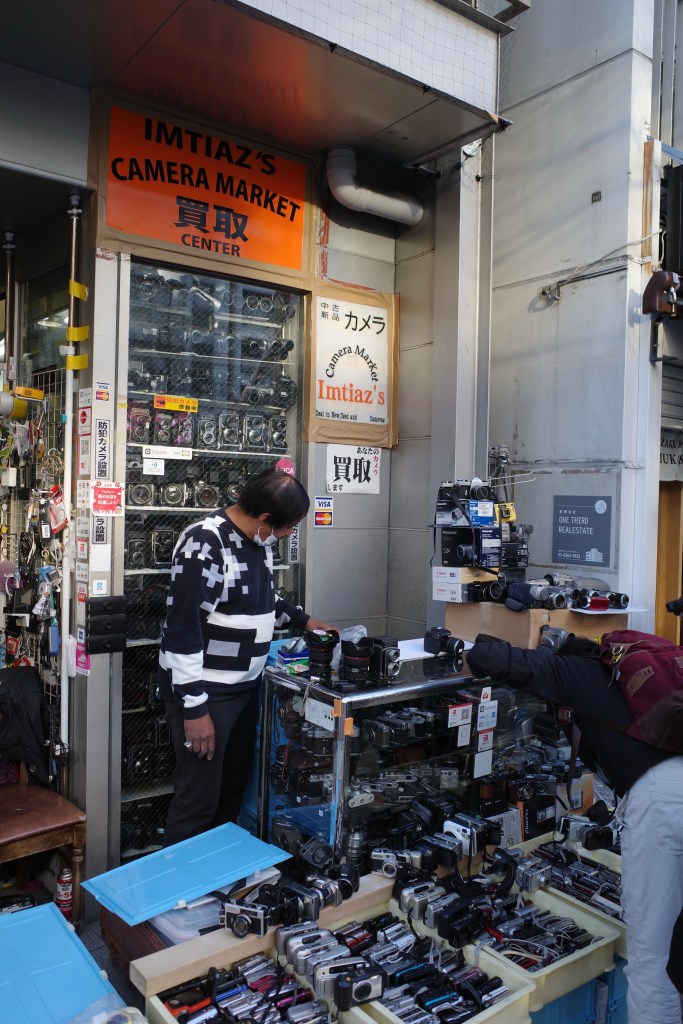
    • The camera section has shrunk down to half its former size, if not more. Side note: the Bic Camera in Ikebukuro has about eight floors of stuff, and no cameras. The Ricoh GR display in Yodobashi is about two feet wide, in their home country. The industry really looks to be in a sad state. And yet, several crowded shops devoted to old and analog cameras exist.
    • I had lunch at Coco Ichibanya and it was very good. How the Singaporean franchisee has managed to hold onto their business is astounding — they do such a bad job of it. One thing that’s changed is touchscreen ordering at each table. That, and plastic dividers between each patron, seem to be Covid-era innovations that have also made Japan more tourist friendly.
    • It’s only been a couple of days but something feels different about this visit. Maybe I prepared myself too well for never traveling again under Covid and now this feels like being woken in the middle of the night, disoriented. Maybe I no longer fantasize about moving out here and living a sleepwalking, alien life. Or maybe it’s the fact that many of the things I used to enjoy seeing and buying in Japan can now be found back home (more expensively, of course), or aren’t actually desirable anymore. Case in point: I saved at least an hour today bypassing the hundreds of headphones in electronic stores because between the AirPods Pro and Max, I don’t really need other headphones. Over the past ten years, the things I get excited about have dwindled and become software. Dedicated hardware toys like music instruments and Boogie Boards are just apps or features on an iPhone. They may still sell CDs here but I just stream the songs. Japanese games are plentiful (check out the Nintendo Switch aisles), but I can’t read them so… maybe in the next life. On one hand, less stuff and a neater, more minimal life. On the other, less shopping, silly delight, and souvenirs.

    Please rotate your iPhone to landscape because WordPress’s masonry layout somehow doesn’t work on narrow screens!

  • Week 1.23

    Creative Technologies’ founder and CEO Sim Wong Hoo suddenly passed away at the age of 67 this week, which was pretty big news locally. The Verge explained the significance of his career as creator of the Sound Blaster line of PC audio cards which put Singapore on the consumer tech map in the 1980s.

    My first PC was their homegrown Cubic CT, basically an IBM-compatible XT 8086 system, with a CGA (Color Graphics Array: just four colors) graphics card, 5.25” floppy disk drive, and no hard drive. I’m pretty sure my dad drove down to Sim Lim Square or somewhere like that and picked it up in person. After a few years, we upgraded to a non-Creative made system based on the Intel 386SX chip (how that SX suffix haunted me, making me feel like I had an inferior machine! The DX was the model you wanted; the SX lacked the dedicated math co-processor, not that I ever really knew which programs made use of it).

    Neither of these first two computers had proper audio capabilities, just the awful default “PC speaker”, as it was called back then. You could only get beeps and boops. One needed a dedicated audio card like an Adlib or Roland or Sound Blaster to hear proper music or sound clips. So every PC game I played had awful crude calculator music you wanted to turn off, but when I went over to play at my cousin Bryan’s house (he had a 286 with EGA graphics — 16 colors! — and a Sound Blaster), those very same games would have synthesized orchestral instruments and realistic sound effects. I wanted a Sound Blaster more than anything and wouldn’t have one until we upgraded to a Pentium system much later.

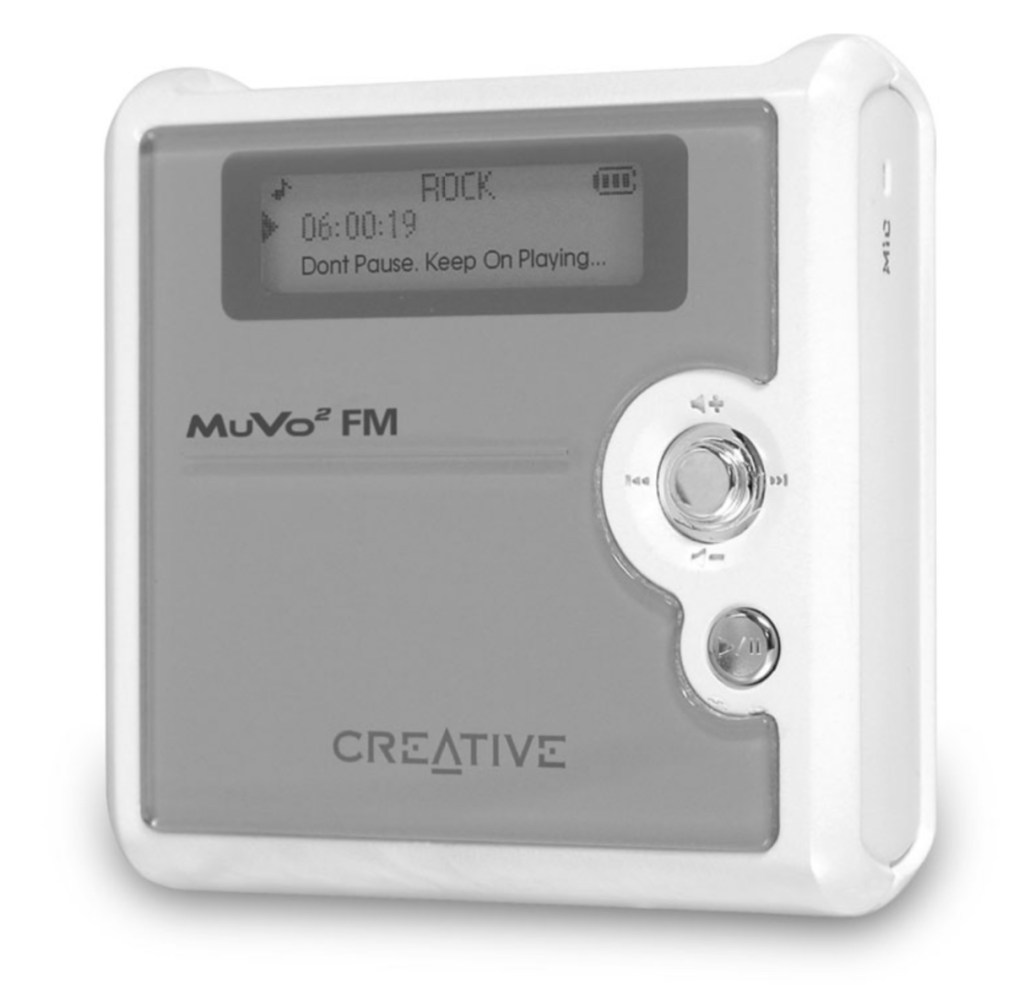
    The best quality image I could find of my old MP3 player, from the PDF manual

    Years before I got my first iPod and switched over to a Macintosh, my first MP3 player was a Creative-made device. The year was probably 1999 or 2000. I was looking to move on from the MiniDisc players I’d been using for years, and these new devices let you carry tons more music around without a folder full of discs in your backpack (this was really a thing we did). The model I chose was a Creative MuVo, a nondescript white plastic square with a tiny LCD screen and a soft joystick nub for control. It played WMA files as well as MP3s, which was a deciding factor for me as you could stuff more music in at an equivalent quality using the WMA format at the time. That little guy kept me company through two long years of mind-numbing administrative work during my national service.

    Years later, after graduating and stumbling into my first proper full-time job, the very first task they gave me was writing video treatments for a Creative Technologies product demo DVD. Creative happened to be one of the agency’s longtime clients, and the viral video above was one of the things that happened under their watch before I joined. I remember my partner and I excitedly pitching a direction to our bosses only to be shot down and told to try again. Weeks later, after going out west to Creative’s offices and getting their feedback, it turned out we had gotten it right the first time. That was probably the end of my journey with the brand, although I was intrigued by their attempts to bring a new version of their X-Fi surround audio tech to market in recent years. I almost bought a pair of their headphones to try it, but now Apple’s spatial audio on AirPods has one-upped their approach by delivering a massive library of professionally mixed Dolby Atmos music instead of relying on fake surround processing on stereo tracks.

    His death is a sad loss and I wonder what the company will do from here. Looking back on the various products I’ve owned or tried over the years, they offered unquestionable technical merit, above average build quality, and always great value for money.

    ===

    • The new year got off to a gluttonous start with an impromptu visit to one of my favorite buffets, followed by Chinese hotpot, and then an all you can eat Korean BBQ (these were three consecutive days). Then I rested for a day before hitting Mexican cocktails and an izakaya with 1-liter highballs on Friday, and then rounding off the weekend with a burger from Blooie’s Roadhouse on Sunday.
    • Incidentally, that last meal was my first time at The Rail Mall, which most Singaporeans are probably familiar with, and which I used to pass on the bus daily during the aforementioned two years of national service but never stopped at. There were a few other interesting places we’ll probably be back for, like a craft beer taproom and an all you can eat wagyu yakiniku (so, like, probably tomorrow).
    • I got into the hottest beta program around: Ivory, the new Mastodon client from Tapbots. It builds on their work for Tweetbot, and it makes using Mastodon as a primary social media platform very enjoyable. I’ve checked Twitter a lot less this week as a result.
    • I finished my first playthrough of Citizen Sleeper on the Switch and will probably not be back for more until a little later. So many games! I’ve started on Arcade Spirits, a Western visual novel about working in a video game arcade. Not to be confused with Arcade Paradise which is a business sim that lets you run an arcade cum laundromat. If Spirits doesn’t pick up soon, I’ll probably abandon it for Kathy Rain or the Monkey Island sequel.
    • In need of a new book, I picked up Eugene Lim’s Dear Cyborgs but it didn’t click. I cut my losses after about an hour.
    • King Princess’s Hold On Baby would probably have been my pick for Best Album of 2022, if I’d chosen an Album of the Year. I’ve played it through about four times this week and still can’t enough. As with quite a few things I really love, I kinda hated it at the start. I mean, I used to hate Macs and Korean food.
    • We did a deep clean of the fridge and freezer on Sunday. If you’re ever doing the same, Apple’s Cleaning The House playlist may help.

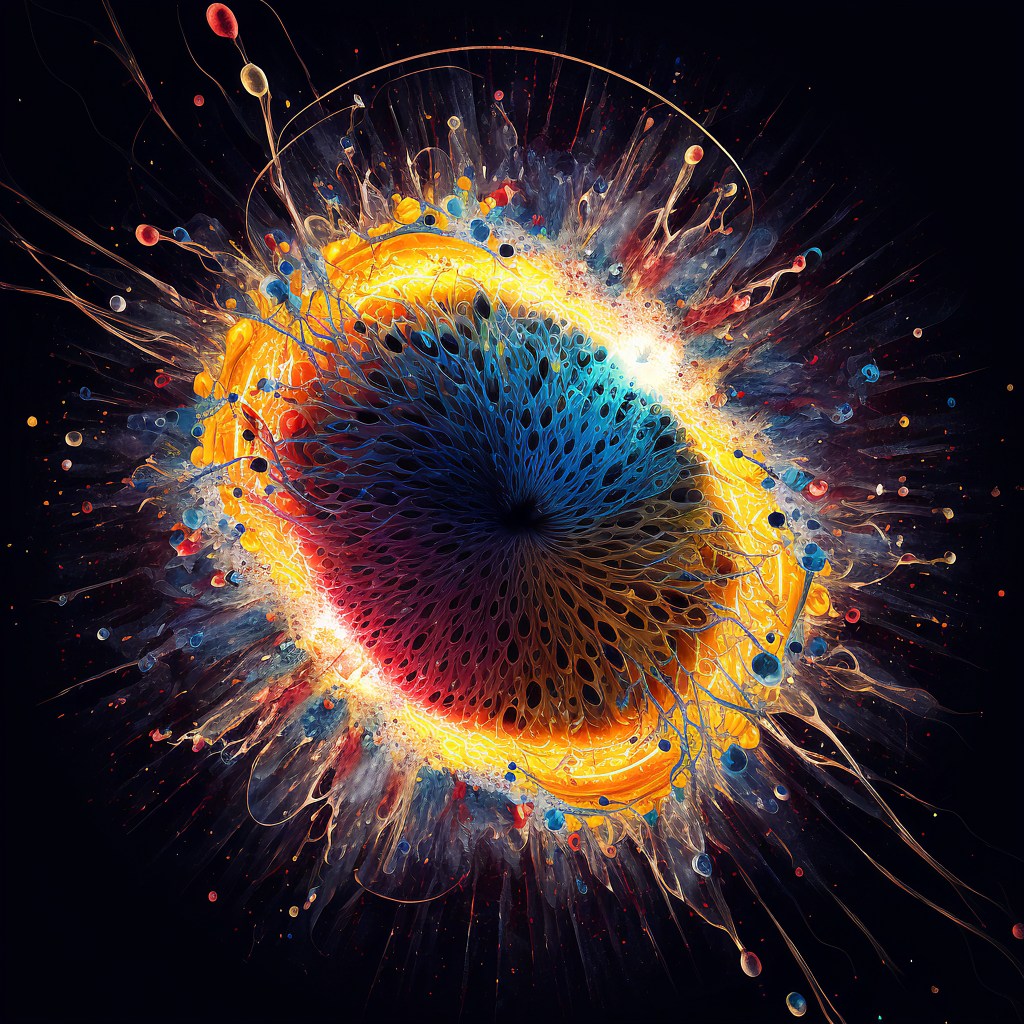
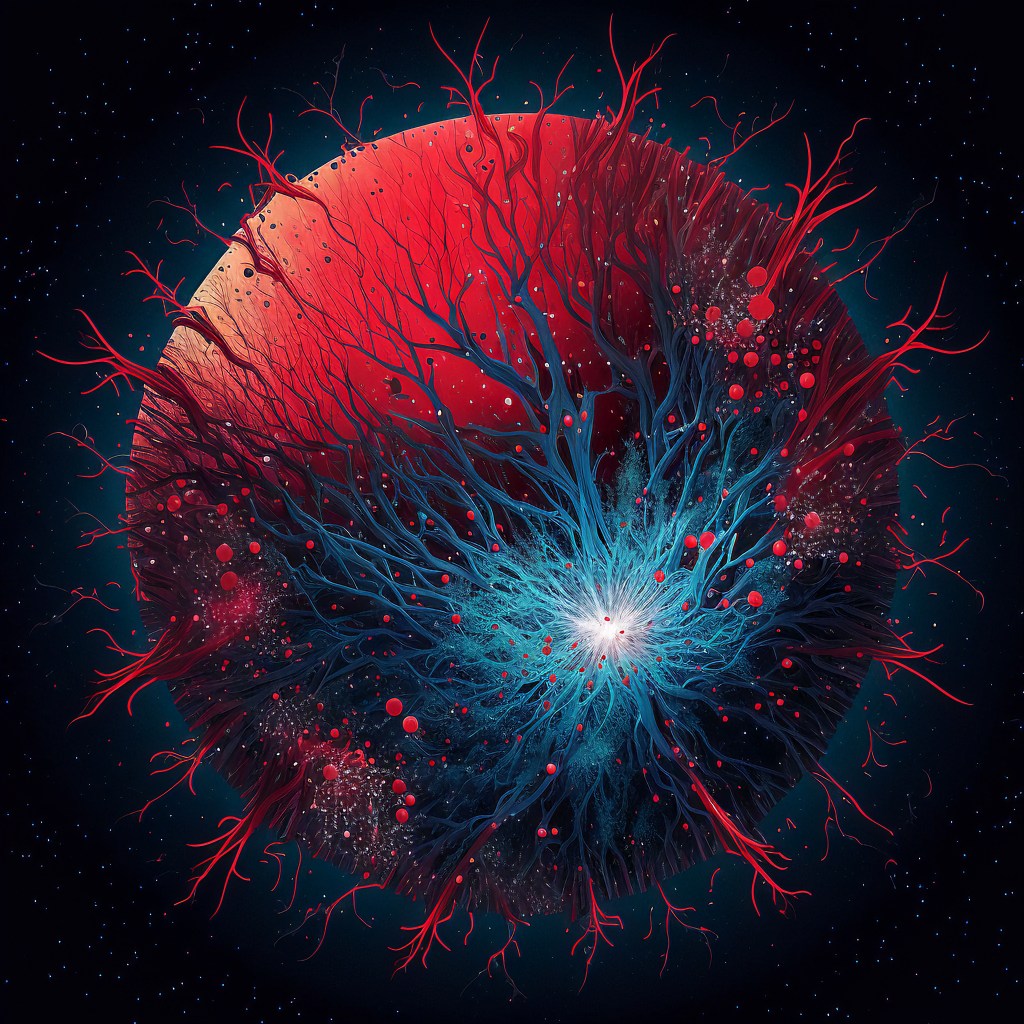
    Here’s some AI art I made this week:

  • Week 46.22

    This one week with the new cat has felt like the longest week of my life. My brain cannot square the fact that it was only last weekend that we brought her home. I’ve aged significantly from worrying all the time!

    I spoke too soon last Sunday when I said she was comfortable enough to use the toilet here. She went another three and a half days before pooping again — three and a half days in which I became obsessed with wondering why, and with when she would go again, during which I poked my head in to check the litter box, like, every hour.

    I went and got some pumpkin to be boiled and pureed and mixed into her food for extra fiber; I made sure she was calm (I wasn’t); I think I even tried to talk her into it. Eventually it happened on its own, and my relief was as warm and palpable as the final product.

    After being told that they have finicky gastrointestinal systems and raw/unprocessed food is best, I got her some 100% freeze dried salmon treats. That are literally chunks of recognizable salmon meat. You wouldn’t think a cat could turn down fish, but I found one. As I brought the uneaten treats to be flushed down the toilet, Asian parent as I am, I reminded her there were wild cats starving in sub-Saharan Africa.

    Anyway it’s now Sunday and she hasn’t gone in three days — the cycle begins anew!

    ===

    Speaking of cycles, this season of Crypto is jumping the shark. The news this week was the sudden collapse of FTX (the world’s second largest exchange after Binance), which was seemingly caused/engineered by Binance’s CEO, starting with a couple of tweets that caused a bank run that FTX was not prepared to cash. Then it turned out that FTX had secretly transferred billions of dollars of its customers’ funds to Alameda Research, its sister trading company, who lost it all on a series of gambles.

    So FTX declared bankruptcy, its CEO Sam Bankman-Fried went from poster boy of the industry to most hated, dirty laundry about sex cults and drug addiction in the company got aired, and then on Saturday hundreds of millions of dollars started being transferred out of their accounts and liquidated on decentralized exchanges in a purported “hack” — surely a euphemism for insider theft. The great thing about on-chain finance is that this was visible to all, and unfolded live on Twitter and Etherscan.

    ===

    Twitter, of course, is also going through an existential crisis. The last time this happened and we thought it might be time to leave was likely in 2017, because that’s when I set up a Mastodon account (that hasn’t been touched since). I can’t remember what happened then, possibly a post-Trump disinformation deluge or boycott? It sounds more serious this time, with the company falling apart thanks to the mismanagement and ego-driven strategy of you-know-who.

    If that does happen, you should follow me at @brandon@mastodon.cloud.

    In the meantime, the chaos has been fun to watch: blue checkmarks given to fake brand and celebrity accounts for $8 a pop, resulting in hilarious fake tweets. There was speculation that one tweet about a medical company making insulin free was the reason behind a huge drop in its stock price (who cares if it really was, what a great story!).

    ===

    In gadget news, we’ve been using a handed-down Dyson v8 vacuum cleaner for the past few months. It’s a pretty good product but with the amount of fur we’re dealing with now, I couldn’t shake the feeling that we needed better.

    So I was keen to get a new one at this year’s Singles Day sales on 11/11 but somehow their latest model, the v15, has been sold out for weeks even on Dyson’s own site. To compensate, there were pretty good bundles and deals for their last model, the v12, which is better in some ways than the v15 (lighter, has a proper on/off switch) and worse in ways I can deal with (smaller bin, slightly less suction).

    It arrived on Sunday and while not in the same league as Apple, the unboxing and set up experience was pretty damned good for a household appliance. Everything was self-explanatory with minimal assembly. The laser “detection” module on the fluffy head makes cleaning up like a game: you see dust on the floor ahead literally light up, and sucking it up is so satisfying. They made housework fun.

    All other 11.11 purchases in our household were also cat maintenance related; still no AirPods Pro for this big ape.

    ===

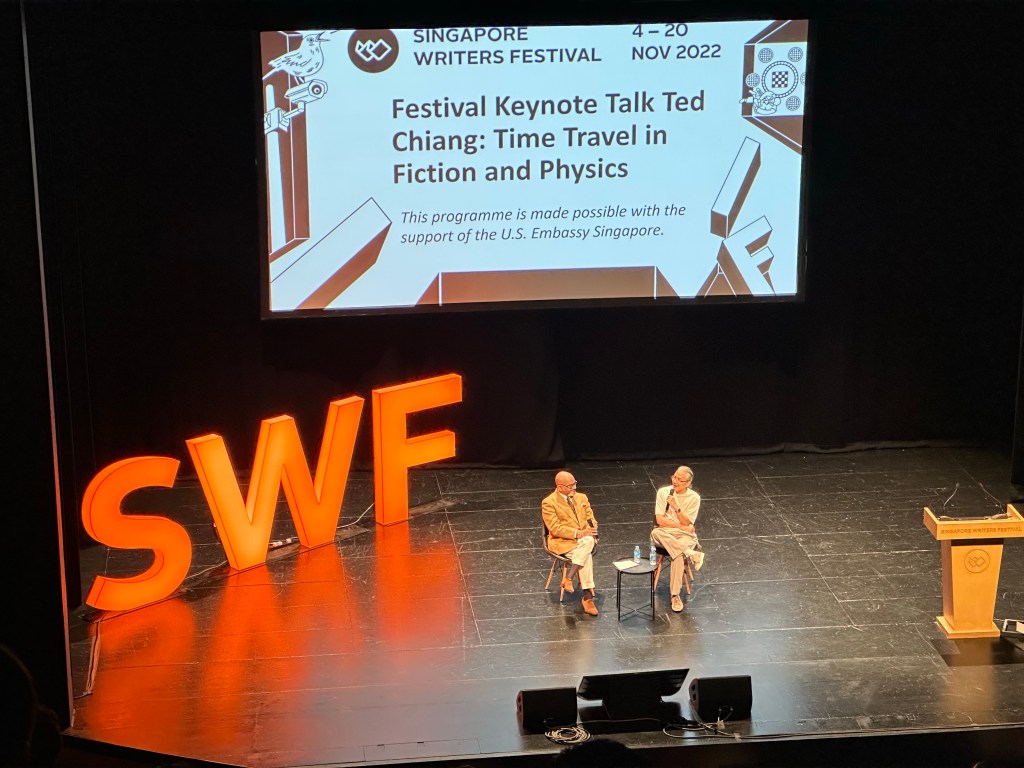
    The Singapore Writers Festival is back again and we went to see Ted Chiang speak at the Victoria Theatre on Sunday. It was a little strange, in that he basically delivered a (very entertaining) lecture on time travel in fiction and film, but it was the sort of thing you’d expect to hear from a guest lecturer at a university. I was grateful for the chance to hear it, of course, but I suppose my image of a writers’ festival is one of writers talking about their own work. But if what our beloved authors really want to do between books is travel the world and give lectures on their pet subjects, I’m down.