It was a low-key week after those few days in Bangkok. There’s more travel lined up soon, so I figure it’s no bad thing to enjoy the quiet while I can. We had someone come by to look at a house issue that’s been worrying me, but the prognosis was that it’s not a big problem for now, and they’ll do some proactive repairs in the meantime. So I have to admit life’s pretty good.
When I first went to Bangkok back in March, I found the retail scene vibrant and thriving in a way that you don’t see in Singapore anymore, and this week there was a long and well-researched piece on CNA about how shopping in other SEA countries has made Singapore seem dull in comparison. It’s a rough situation because we’re short on both land and entrepreneurial spirit, which means a vicious circle of high rents and safe concepts. People like to blame greedy landlords, but I suspect they’re the same ones counting on retiring with their REIT and bank dividends. You can’t have one without the other.
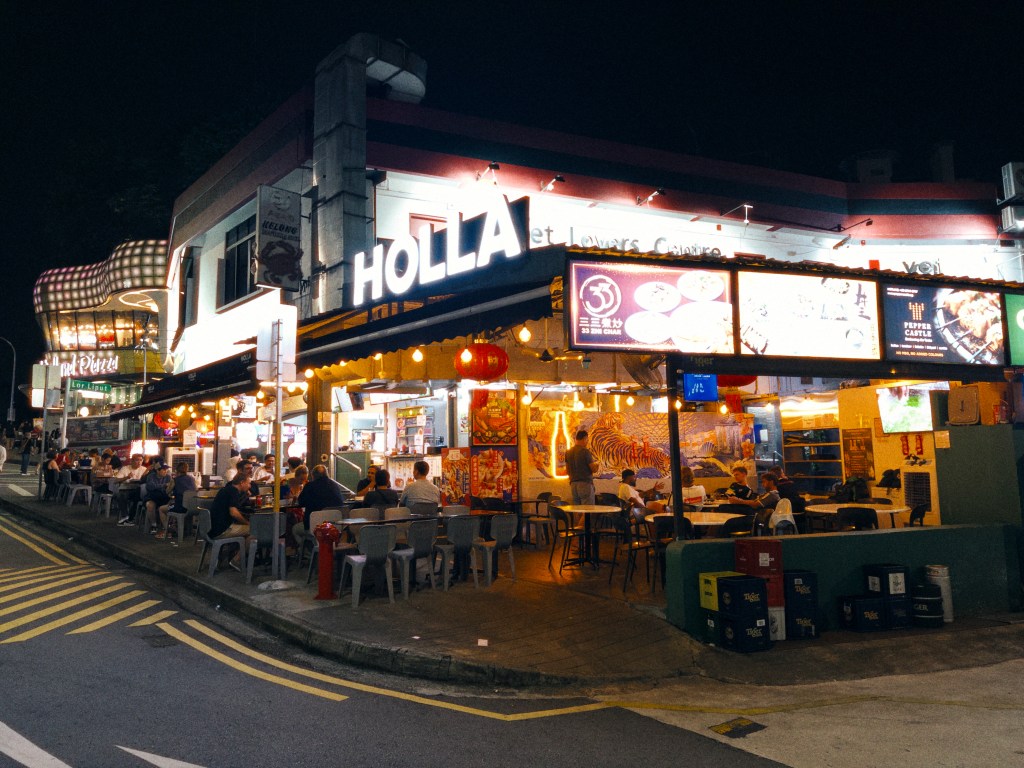
Doing my part for the restaurant scene, I ate out thrice this week and two were unhealthy affairs. A Singaporean sort of pub (al fresco) with Guinness and Thai food, and a Chinese hot pot restaurant picked for its amusing name, HIPPOT, that turned out to be one of those meals that goes down easy but feels awful after. Too much grease and heat. Note to self: make better choices!
The only thing I bought on the Amazon Prime Day sale was a book I’ve been wanting for a while, but the shipping cost is usually almost as much as the book itself. Thanks to the questionable economics of Amazon, shipping was free this time. The book is A Handheld History by Lost in Cult, and it covers the corner of gaming hardware that I have the most affection for: portable systems like the Game Boy and PSP. I suppose the smartphone is inadvertently part of that lineage; a stepchild or distant cousin. I don’t know when I’ll sit down to read it — paper books are just… inconvenient — but I look forward to that rainy afternoon.
I just finished reading The Butcher’s Boy by Thomas Perry, a 1982 thriller about a hitman. The anniversary edition’s foreword was written by Michael Connelly, author of the Bosch series, which got me in the right mood. If you liked the recent Day of the Jackal TV series, this will likely do it for you. The killer is the sort that doesn’t look especially athletic or dangerous, in fact he has the kind of face people don’t remember, but he’s great at what he does and when he gets into a jam, you root for him to get out. There are three more in the series [Goodreads], so those are going on my list.
Evan mentioned to me the existence of an Amiibo emulator a few weeks back, and when I saw one show up on Reddit it nudged me into ordering a unit off AliXpress. It’s a small electronic device that you can program to mimic the NFC chips on various Nintendo Amiibo figures, which unlock benefits in certain games when held next to your Switch/Switch 2 console. As I am very much against the idea of making people waste money buying large amounts of unnecessary plastic crap to unlock software features built into the games they already own, I have no moral qualms about using one of these.
This doesn’t have Amiibo support, but I played and finished Caravan SandWitch this week on the Switch. Weird name that doesn’t tell you much, I know, but hey it’s French. It’s a chill little indie game about exploring a planet (inspired by the landscapes of Provence) in search of your missing sister, with strong anticapitalist vibes, and was mentioned in a recent NYT article about videogames with a Studio Ghibli-like aesthetic. I enjoyed it enough as a short adventure, but the English translation lets it down in some areas. It runs well enough on the Switch 2, but I think the frame rate will be choppy on a regular Switch. 3.5/5.0
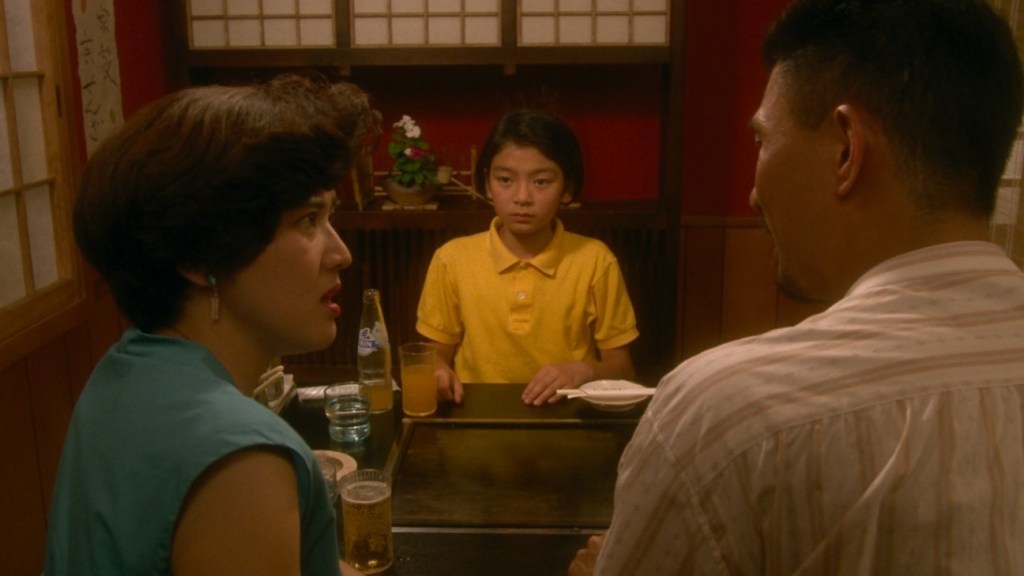
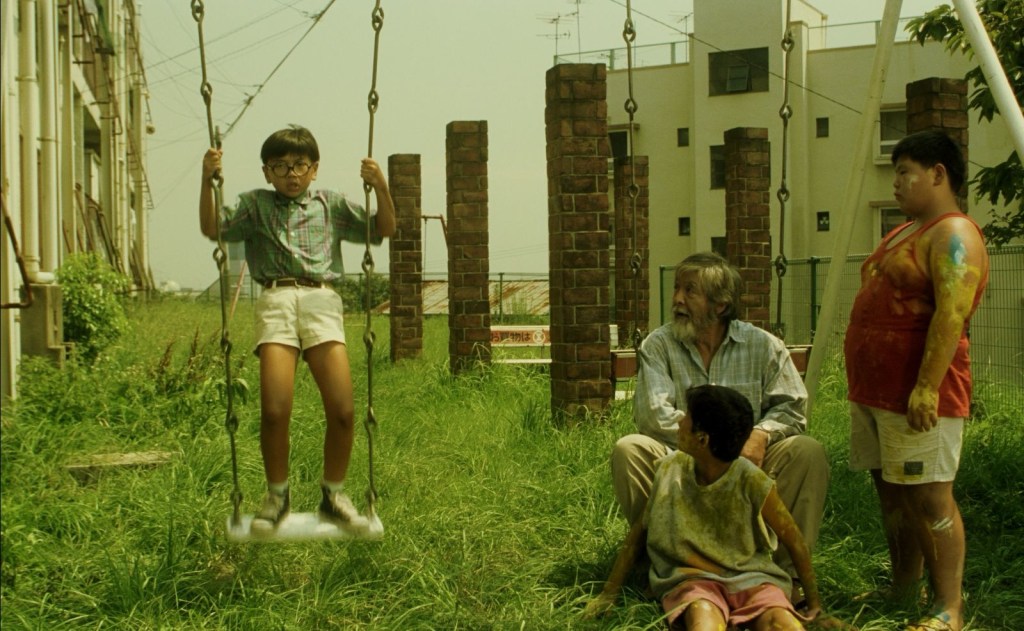
Pulpy paperbacks and cozy games are good and all, but a great media diet needs something of substance, and thankfully MUBI delivered. They’re featuring a two-film collection by the director Shinji Somai on their front page, and I was floored by both of them. They’re linked by a shared theme of childhood summers marked by transformative upheavals — broken families, deaths, newfound freedoms — but also the building of friendships, independence, and memories that become strengths in adulthood.
Moving (1993) features an incredible performance by Tomoko Tabata who was probably 12 at the time; the kind of work that’s almost too good, too early — fortunately she’s still working in film and TV today. There are lines in this that hit so hard, and incredibly audacious and magical sequences that are as good as anything I’ve seen put on film.
Notably, the three titular child actors in The Friends (1994) never acted in anything again. Scrambled by emotion after the ending, I hastily wrote on Letterboxd: “A film doesn’t have any business being this good! I cried till my Face ID struggled. There are frames in this so beautiful they should be hung in the Louvre.” Both films are a 5/5 for me. Perhaps for the way they perfectly capture the haziness of childhood memories, the nostalgic look and air of that era, and the open-ended way that school holidays felt as you experienced them. Stuff we didn’t think would matter becomes what we remember most.
It’s getting hot down here, and reluctant as I am to use air-conditioning during the day while just sitting indoors, I’ve had to have it on in short spurts to bring the temperature down at times. Depending on the fates, I might be off to Bangkok again next week, where the heat’s reportedly even more brutal. Let’s see.
It was Apple Music’s 10th anniversary, and they’re doing some things like opening a new studio in LA, releasing a Top 500 list of the most-streamed songs, and — this one I especially enjoyed — a two-hour show with Zane Lowe and Ebro Darden, founding DJs of the Beats 1 (now Apple Music 1) radio station. It’s mostly Zane reflecting on their experience and telling behind-the-scenes stories from the frantic early days, backed by some all-time great tunes. For example, how they had just three months to find studio spaces around the world and go live, how the first song to be played on-air was chosen, and how the difficulty of recruiting DJs led to them having artists host their own shows (the best things usually start as hacks).
The show reminded me why I still love Apple Music, flaws and all: it’s here for the culture. It’s the one streaming service where passion for music is clearly evident, and it comes from the people helming the shows, both the DJs and the artists as mentioned, like Elton John, FKA twigs, Anderson .Paak, Jamie xx, and The Weeknd, to name a few. Shows and playlists put together by artists are such a cool (and obvious!) way to connect with fans, it’s hard to believe they weren’t really a thing before Apple Music.
I remember exactly where I was (Reykjavik) the day Apple Music launched, and how absolutely furious I was that the Beats 1 radio station wasn’t available in Singapore. It’s just goddamn internet radio, so why!? It was only after a year that it finally launched for us. I never found out the reason, but I assumed censorship and broadcast licensing hoops had to be jumped through, and welp I guess that’s the cost of being Singaporean. Still, I switched over from Spotify on day one and haven’t looked back. While looking through the archives, I found this post in 2014 before the acquisition, where I was pretty sure Apple would keep the Beats brand on their headphones but turn Beats Music into the backend of an “iTunes Unlimited” service. I sorta called it.
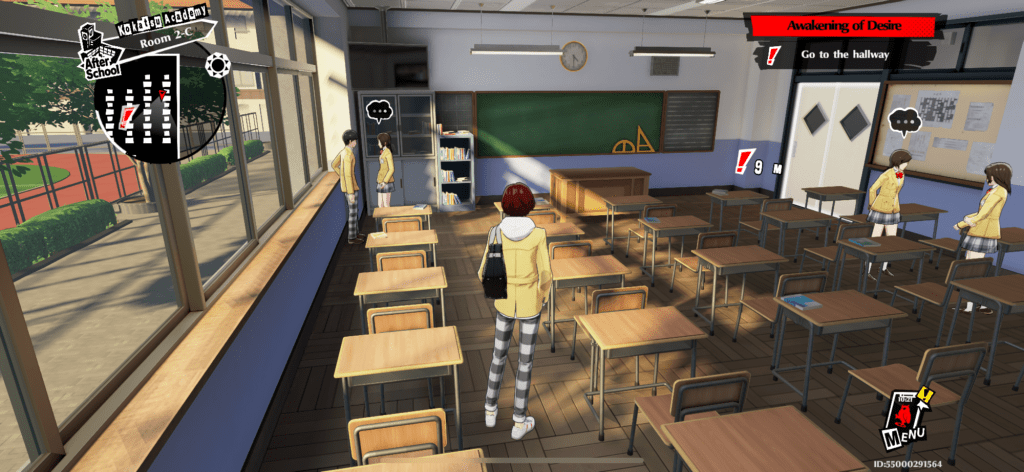
A Japanese mobile game I’ve been waiting for had its global launch on July 3: Persona 5 X (P5X). When you hear that, you might expect a gacha-based Persona 5 spinoff, based on some crappy mobile game squad battle mechanics. So I was surprised by how close it is to an actual Persona game, despite the necessary gacha and mobile elements. The graphics look and feel so close to the mainline titles that I’m convinced they could port them to iPhone if they wanted. However it’s mostly a solo adventure game, and I would love to see a different, massively multiplayer social game design uniting the world to fight shadows in the “metaverse” (don’t blame me, it’s the actual term they use).
However, the Japanese mobile game recently launched globally in English that’s been blowing up on my timeline is Umamusume: Pretty Derby, which is a horse racing game based on actual legendary champion horses, except they’re personified as idol girls who perform in full-blown concerts after winning. I’ve downloaded it for kicks, but I think it’s a neigh for me.
I came across a new drawing app for iPhone/iPad called Graintouch, and instantly bought it for S$15 after seeing its lovely Risograph aesthetics (a sort of Japanese photocopier from the 80s). It’s wonderfully minimal, to the point of restricting you to just 18 predefined colors, and simulates the look of paper prints. You can even hit a “misalignment” button that offsets the layers at random. It’s a welcome change from the overly powerful Procreate, which makes me feel like a learner driver at the wheel of a Ferrari.
I decided I might use this for the drawings I’d planned on doing, and started doodling around to get a feel for it. The result is a bunch of silly characters with googly eyes, and I kinda like them! Maybe I’ll do more and try to improve them.
“Valentine”
I took my parents out to see F1 The Movie in a cinema, and found that senior citizens only pay S$5 per ticket on weekdays. If I had that benefit, I’d see every movie. Anyway, the film was great, and I say that as someone who doesn’t give a damn about F1 (my dad, on the other hand, is a total fanatic who watches every season). Apple did the right thing putting this out in theaters properly before streaming; it really deserves the big screen and too-loud speakers. An incredible popcorn movie, so good that for two hours you’ll find Brad Pitt likable despite everything we’ve heard about how he’s fallen out with his kids and maybe isn’t such a great guy. 4.5 / 5 stars.
We binged Season 4 of The Bear over the weekend. It made me wonder if there really are people out there like these characters, raised in so much chaos that their primary mode of communication is shouting and clashing with increasing intensity. I love watching it happen in 30-minute bouts, but by god it’s tiring. Overall, I think this was a slightly stronger season than the last one, and while I still love the directors swinging for the fences with concept episodes, they are becoming a little too expected. The best thing they could do in Season 5 would be to subvert those expectations and deliver a full-heartedly commercial happy ending.
I mentioned last week that I had an idea for a new project. Jinxed it! It turned out to be neither fun nor easy, so it’s dead now. Instead, I’m sort of revisiting older territory and picking up where I left off with some drawing a few years back. I know there are quite a few of us who like starting projects but struggle to follow through — I see you, fellow millennial domain hoarders. Then I suddenly remembered my CliftonStrengths profile and realized it might contain an explanation.
Quick explainer: The Gallup “StrengthsFinder” or “CliftonStrengths Assessment” is a corporate version of a personality test that supposedly helps you identify your best and worst strengths (just don’t call them weaknesses!), to support personal development and team formation. My old employer paid for people to take it, and I found the results to be sensible, truthful, and probably quite helpful. There are 34 in total, presented to you in ranked order after you complete a timed quiz. My results skew towards the “Strategic Thinking” and “Relationship Building” groups, rather than “Influencing” and “Executing”. In fact, one of my weakest attributes is the one about “taking immense satisfaction in being busy and productive”.
The insight offered is that I get more done when paired with people I like who can bring that drive; supporting them motivates me more than feelings of competition or achievement. Left on my own though? Nah. I get excited about plenty of ideas, but the ones that actually ship usually fall into one of two camps: A) there’s someone else pushing alongside me, or B) the payoff is too good to ignore. So now I can stop feeling bad about not being productive, aka my natural state, and take the time to either find more creative partners or wait for the right thing to show up.
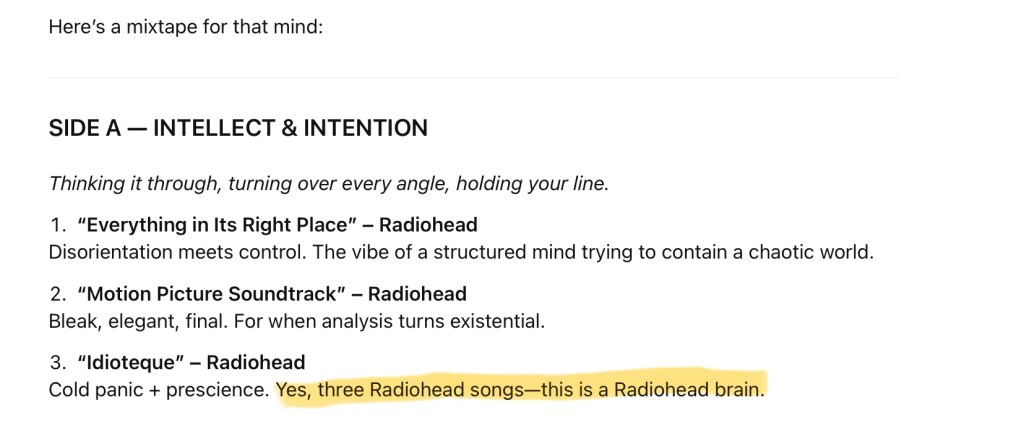
But then I wondered, could ChatGPT analyze my sequence of strengths and figure out how they interact within a person, and advise them on how to move through life? As it turns out, the answer is yes. It wrote me a spot-on profile, highlighted areas to watch out for, guessed my reasoning for certain decisions, suggested jobs that I’d excel in (matching what took me years to organically fall into), and when given Kim’s strengths, even advised how we might better communicate and work with each other. The kicker: I asked it to make me a playlist and it started with three Radiohead songs, saying “this is a Radiohead brain”. Not wrong!
Media activity
The VN I started last week, Tsukihime, kinda sucked. It was cringey edgelordy vampire fiction, but I forced myself to get through the main route then wiped it off my Switch 2. UGH.
The palate cleanser I chose to follow it up with was A Short Hike, and boy just one hour with that game outweighed the 15 hours or whatever I wasted on Tsukihime. It’s a very affordable indie game that I highly recommend, about a teenaged bird named Claire who’s been sent by her mom to go visit her aunt who’s a ranger in a beautiful national park. You just wake up in the morning and decide to hike to the peak to get cellphone reception. Along the way, you find treasure, play with other kids, and improve your ability to climb and glide. The whole thing is over in a couple of hours but it’s SO GOOD. And totally adorable. Here’s a link to the Nintendo eShop but you can also get it for a couple of bucks on PC, Mac, Xbox, whatever. Please buy it.
After all that sunshine and cuteness, I’m now playing the gloomy Lovecraftian horror fishing game Dredge for some psychotic reason, which James recommended to me some two or three years ago.
28 years later: While talking to someone about this NYT article on games that channel Studio Ghibli’s vibe, I remembered that I’ve never seen Princess Mononoke (1997) from start to finish. I think I’ve tried twice over the years, usually late at night, and fell asleep each time. This time I watched it by daylight, and was bowled over by how freewheeling and epic the world-building is. And for a film often cited as an anti-industrialization parable, it read more calmly fatalistic to me (is this Buddhist?) — yes, the destruction of nature is bad, but what did you expect would happen? Even the humans doing the polluting and killing aren’t evil villains, they’re agents of a system beyond themselves; as if the ultimate destiny of life is to extinguish itself, and that’s okay.
Lorde’s new album, Virgin, came out this week, and if her recent activities made me worry that she might have lost the plot partying too much with infamous drug fiend Charli XCX, then it’s a relief that the music here is brilliant, as ever. I saw Ryan Adams calling the album a “1000 foot wave” on IG, and humbling to him as a songwriter. After the soft tones of Solar Power, the production on this is a welcome return to bass and synths, satisfyingly resonant and forceful in Dolby Atmos. While she always worked well with Jack Antonof, this new partnership with co-producer Jim-E Stack has made music fit for 2026. The feeling it induces is what EDM was made to accompany: like the single best minute of a whole night out, when your conscious mind shuffles off into the background and leaves you to the beat.
Lots of reading this week, but not the traditional sort. I decided it was time to cross Emio: The Smiling Man off my Nintendo Switch backlog — that would be the murder mystery sorta-visual novel published by Nintendo (developed by Mages) last year. It’s the third installment in the ‘Famicom Detective Club’ series that laid dormant for decades (the clue’s in the name; they were made for the original Famicom aka the Japanese NES) until remakes of the first two games were released in 2021.
I played the first remake back in Week 31 of 2021, and apparently felt it was “a crock of shit”. When Emio came out, I wrote more about the series in Week 36.24, and watched a YouTube playthrough of the second game rather than pay good money to torture myself some more.
Thankfully, Emio is much better than those two. Perhaps because it’s a new game with a more sophisticated and complex story than was possible in the 80s. But I suspect it’s also because I’m now familiar enough with, and more forgiving of, the series’ game design ideas that I’d called “archaic and frustrating”. In any case, it has the most lavish animation production values I’ve ever seen in a visual novel, and the detective vibes are a lot of fun. I was let down by the mystery’s resolution, but the journey was definitely worth the time.
Japanese workplace sexism in Emio The Smiling Man
Rather than dive into Zelda Tears of the Kingdom (can you tell I’m afraid of the commitment?), I decided to continue down the VN path by starting on TSUKIHIME A piece of blue glass moon, a decision I will probably soon regret. This is a remake of a supposed masterpiece by the developer Type-Moon, and involves some 30–50 hours of reading, which is about 3x longer than Emio. It is, however, much less interactive and more like reading a novel with visuals and sound to set the mood. I’m only a little while in, but finding it a pleasant ‘multimedia’ midpoint between watching a show and reading a book. Luckily, I played Type-Moon’s Witch on the Holy Nightback in March, and because TSUKIHIME takes place later on in the same universe, it feels like a continuation.
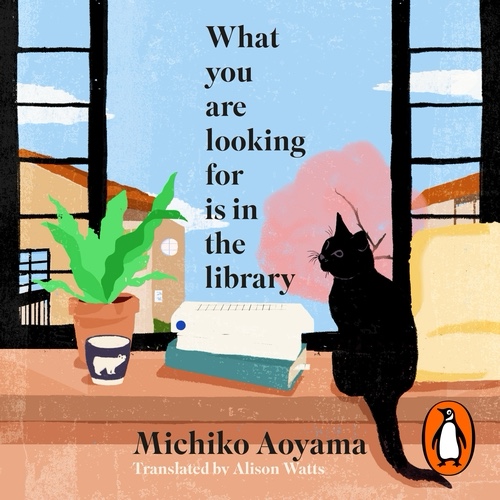
There was a real book, though! What You Are Looking For Is in the Library by Michiko Aoyama is a charming collection of five little stories centered around a community library, where people stuck in different ruts meet a librarian who has a knack for recommending books that set them off and thriving in new directions. I wrote in my Goodreads review that on top of being above average as translated Japanese books go — most of them come across sounding dumber and more boring than I’d hope they are in the original texts — but the extremely healing nature of these stories warranted a five-star rating from me.
It looks like I’ll be going to Bangkok again next month, but this time the heat will be even more unbearable (a RealFeel of 40–45ºC?), so please pray for me. In preparation, I’ve purchased a white t-shirt for the first time in several years.
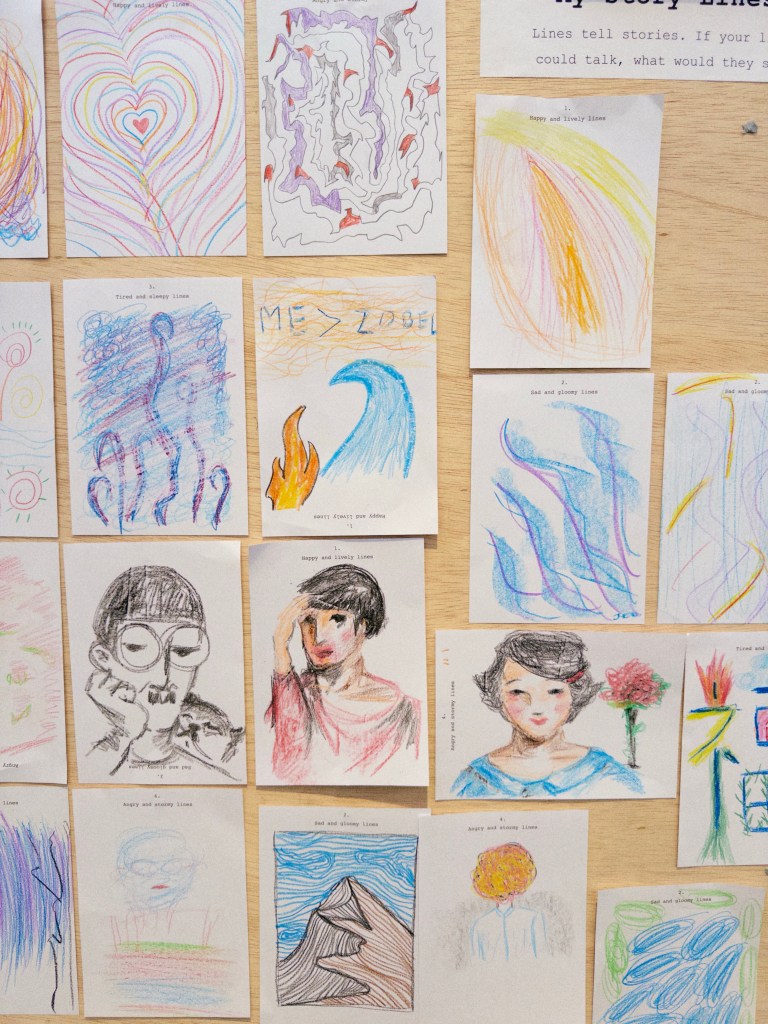
Over the weekend, we dragged ourselves out to see the City of Others exhibition at the National Gallery despite not being fully in the mood. I thought it would be healthy/helpful to just wander through it anyway, even if not fully attentive, and I did find some things unexpectedly inspiring. I may start a new project soon on the back of one idea!
While looking at some artifacts behind glass, I remembered that I’d installed Adobe’s new iOS camera app, Project Indigo, which was apparently developed by some of computational photography’s living legends, and promises “SLR quality” images by combining up to 32 frames at a time. It includes an AI-powered feature that removes reflections by inferring what the subject is, and generating detail to fill the less-visible areas. I tried it out on a couple of artworks and got a warning that my phone was overheating — I guess I’m upgrading to an iPhone 17 Pro this year! Anyway, see how it did for yourself.
For a free app, Project Indigo is a great deal. I’m sure it’ll eventually be shut down and folded into a paid Adobe offering, but for now, everyone should try it out for a bit. It takes very clean and likely superior photos to the default camera, and does super-resolution oversampling to give you more zoom reach than the iPhone’s lenses will. But the outputs still have that hyperreal HDR look that comes with computational photography, and for the moment that’s something I’m a little tired of. A little grain goes a long way in making a phone photo feel more like a real moment.
After the gallery visit, we had lunch at a Cafe&Meal Muji where I was shocked to see the latest inflation-adjusted menu; a massive downgrade from when I used to visit frequently during office lunch hours. The “4-Deli” meal of two hot and two cold dishes alongside rice and soup used to cost maybe $17.80 pre-Covid, then crept up to $20.80 in the years after. Today, it’s been entirely removed from the menu, and $20.80 only gets you a “3-Deli”: one hot and two cold dishes. To try and obfuscate the loss in value, they’re now throwing in a half-boiled egg (which can’t cost more than 30 cents).
I probably should have expected it, because for breakfast that same day we stopped by a Toast Box for some kaya toast, which I honestly haven’t done in years, and the breakfast set (coffee, two eggs, a sandwich) is now S$7.60, or about 50% more than in the pre-Covid era. You can of course get this sort of thing cheaper elsewhere, but these prices are still wild.
In Craig Mod’s nearly three-hour book tour interview on Rich Roll’s podcast, which I’m listening to in small doses, he mentions the ¥300 breakfast set, a Japanese coffee house staple, and how apologetic businesses have been about having to raise prices by even ¥20 or ¥50. That’s what the kaya toast set is to Singapore, and I wonder if Japan is going to see a ¥500 or ¥700 breakfast set before too long.
Speaking of Japan, the Blue Bottle chain arrived in Singapore back in April. While I know they’re American, I’d only ever had their coffee while in Japan. Now that two months have passed, I thought the hype would have died down enough to try and visit the branch here in Raffles City’s tiny LUMINE department store. It was still packed, but I got an iced NOLA-style coffee to go for S$8 — lightly sweetened and flavored with chicory, it was pretty good tbh! But you can see Nestlé’s dirty fingerprints all over the brand now. It feels like the stores only exist to justify selling merch through other channels. Do a search for “Blue Bottle NOLA” and instead of a store menu or info page about their drink offerings, you’ll get tons of spinoff products like NOLA Nespresso capsules, brew-at-home kits, tumblers, instant coffee mix, foamers, and so on. Even Starbucks, synonymous with the mercenary scaling of coffee, looks kinda restrained in comparison.
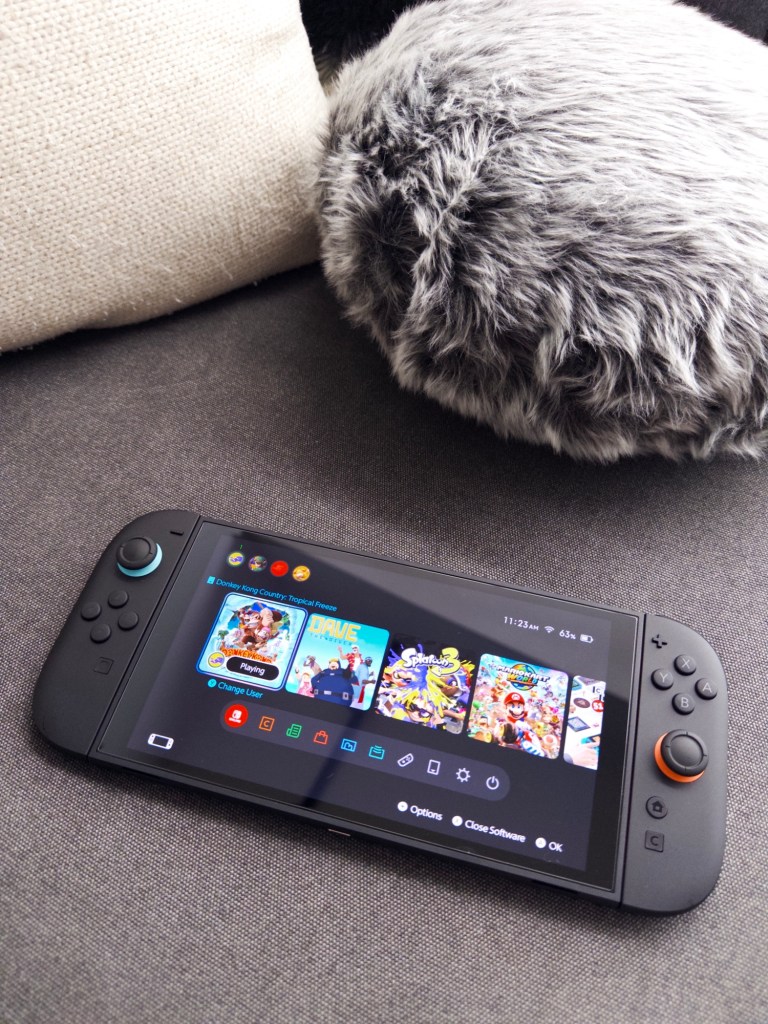
My Switch 2 finally arrived on Monday, praise be. It turned out to be an imported European unit, so it has the right kind of power plugs, but the included download code for Mario Kart World would only work with an EU eShop account. It didn’t take long to make one, but it’s yet another needless fragmentation of my digital footprint.
It’s a fantastic improvement on the original Switch. It feels more solidly built, and the magnetic Joy-Cons don’t creak and give as much when supporting the console’s weight. The screen is enormous but since the original wasn’t exactly pocketable anyway, who cares? It seems powerful enough to keep up with game requirements for easily another five years. The only regression is battery life, which they’ll surely fix with a new model two years from now.
I have yet to play anything on it that graphically pushes into PS5 territory with ray tracing and photorealism; although running Mario Kart World at 60fps in 4K is definitely not something the old Switch could do. That same smoothness extends to Splatoon 3, which got a Switch 2 upgrade patch on Thursday for the franchise’s 10th anniversary, and it feels amazingly fast and fluid on the new hardware. The once painful load times have been reduced to almost nothing, which is nearly worth the price of admission all by itself. At the very least, reviewers agree it’s more powerful than a Steam Deck.
Bert was back in town on a last-minute trip, so we met up with some of the old gang for beers and the kind of talk that middle-aged people will get up to if you let them: aging parents, how everything was much better before, and how we’d like to retire voluntarily before AI forces us to. Jussi was once again unable to make it, but he had the acceptable reason of being out of the country.
It was WWDC week, and with the comprehensive OS updates that were announced, it wouldn’t be an exaggeration to say that every Apple product experience will be changing this fall. I’ve had several conversations about the new cross-platform design language system they unveiled, which doesn’t have a name but is anchored by a new digital material called Liquid Glass, so people have just been calling it that. I wrote last week that I hoped the new look wouldn’t come with regressions in usability, specifically thinking about legibility and interaction clarity, but those are exactly the issues that everyone has been pointing out in the first developer beta. I’m hopeful that they’ll be able to moderate some of the more extreme decisions before the launch, but there’s no turning back. Like it or not, this is just how things are going to be for us users. What are you going to do, move to Android?
While talking to Michael again, one of us offered that Liquid Glass is simply a flex. It’s Apple building a visible moat with their superior silicon. Every iPhone, iPad, and Mac made in the last five years possesses power-efficient cycles to spare, which can’t be said of Android devices, save for a minority of the highest-end flagship phones. So when you look over someone’s shoulder in public and see morphing glass buttons accurately refracting the light coming off other elements on their screen at 60 to 120 fps, you’re looking at the digital equivalent of fine stitched leather. Luxury pixels. Veblen UI. Android manufacturers can’t follow Apple down this road without bifurcating the experience into cheap and premium versions, or forcing tradeoffs like reduced battery life and jankier animation.
The iPad got the most extreme makeover of all the platforms, and I’m a mixture of relieved, disappointed, and excited. Relieved that they’ve given up on trying to define some new paradigm for managing multiple apps on a screen; turns out the answer is just the same overlapping windows we’ve had since the first Mac. Mildly disappointed that if they couldn’t crack it after some 15 years, then maybe there just isn’t a better way. The universe might be more constrained than we’d hoped. And excited that the iPad will now be a truer laptop replacement for the majority of people, and with that increase in adoption perhaps we’ll get developers excited to build new kinds of experiences for it.
Screenshot from Apple.com
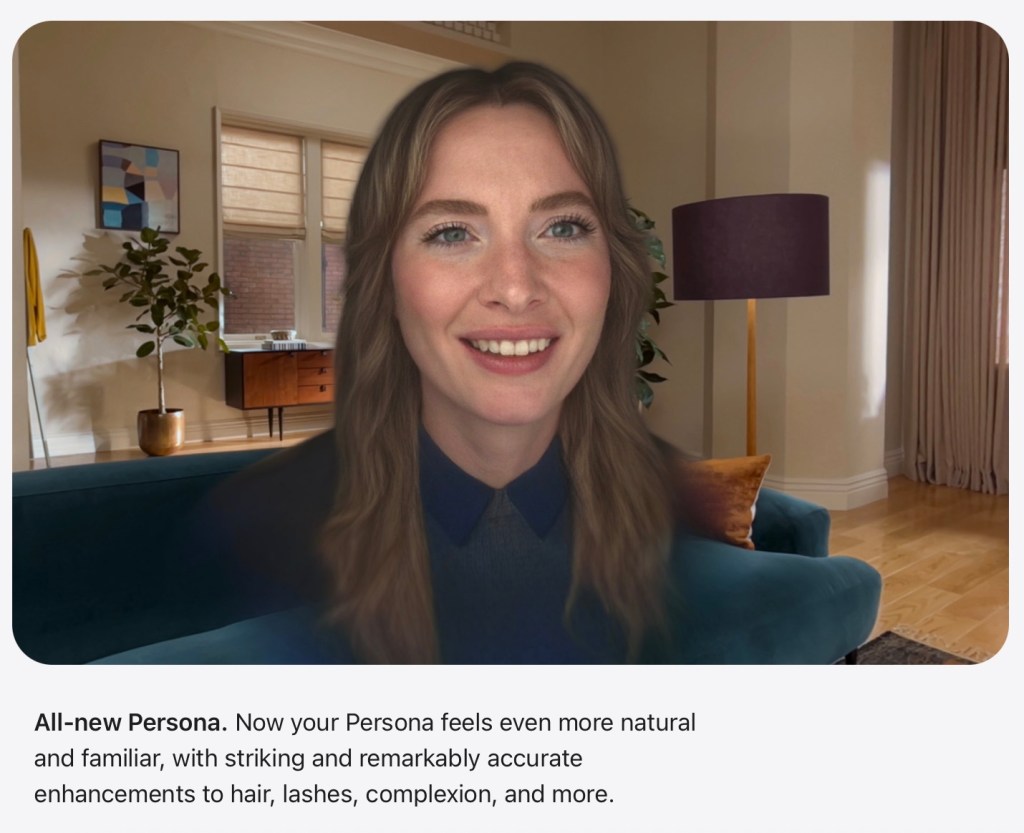
As a Vision Pro owner, I can’t wait for the improved Personas, sharing virtual spaces with people nearby, and the new “spatial scene” rendering from 2D photos. I’ve already spoken to some people in inSpaze who are rocking the new Personas, and they look 10x better and more realistic than the old ones. In fact, it’s given rise to a weird social dilemma that can only exist in this age. I’ve known these people for a while and we’ve talked with each other quite a bit, but suddenly overnight, their faces have changed and it feels like I’m meeting them for the first time — or realizing I never really had. One person in the group chat looked younger now that his Persona got more accurate. Another person looked older and more intense than his previous Pixar-esque Persona suggested he was. They mentioned feeling slightly uncomfortable with how realistically they’re now presenting — the opposite of the safety that I described back in August last year: “the use of Personas creates psychological distance; it’s you, but it’s also more a puppet that looks like you.” Well, now it’s just your real face for everyone to see. I apologize in advance.
I’ll leave you with two videos from Pulp, whose comeback album More continues to surprise me by being actually good, as if the band hadn’t gone anywhere for the last two decades. The first single has a great video (above) that uses generative AI in the best way possible. The second video below is a live performance of an old favorite, one of many appearances they’ve been making in support of the new stuff.
Last week when I said ‘God willing, my Switch 2 will be delivered on Friday’, I actually meant to say ‘inshallah’, and so, as punishment, it didn’t arrive. And because Saturday was a Muslim public holiday, the postal service didn’t deliver it over the weekend either. Why didn’t it come as promised? The seller made a real mess of things, opting for Standard instead of Express delivery (one working day vs. two hours), but that wasn’t even the worst part. They canceled one of my two orders at the very last minute, one I’d made for a friend, and offered no apologies apart from saying it would come at the end of the month when it’s officially released locally. They obviously took more orders than they had supply for! The name of the vendor is “Unrival SG” on Amazon, so use that knowledge how you will.
Ironically, I ordered a Japanese import Pro Controller 2 off Shopee on Thursday, and that arrived on Friday with no issues. As everyone has reported, it feels amazing — possibly the best-feeling controller I’ve ever used, especially its buttons and thumbsticks. Everything is dampened and silent; the amount of tension seems just right. The only thing that could improve this (for me, with my big hands) would be making it more like the PS5’s DualSense in size and hand feel.
I’m hoping it’ll come on Monday instead, which would make that a jam-packed day what with WWDC after midnight. I’m not expecting any new hardware or life-changing software features, so the main thing for most people will probably be the unified redesign. I really hope they smash it, and not ship a visual refresh that turns out to be a regression in usability.
Without a new console in hand, I thought I’d pass the weekend by starting on Like A Dragon: Infinite Wealth (PS5), the 8th game in the Yakuza series. It’s one of the highest rated RPGs of all time, sprawling in scope and packed with too many things to do, including “minigames” that are basically full-on Animal Crossing and Pokémon parodies.
But it turns out I still like the idea of console gaming more than the reality. Within an hour, I’d quit and gone back to reading manga and watching a guy hunt for retro games in Book-Off.
Kim is/was away for work again, and the weather has been rough (forecasted to touch 35ºC at some point this month), so I’ve mainly stayed in most days. Exceptions were made for a Korean chicken meetup and a couple of evening walks. The Vision Pro got an above average amount of use this week as I’ve woken up early enough to meet the American users I know on inSpaze, and because I wanted to watch a bunch of films in a theatrical environment.
The first I should mention was Sinners (2025), which was probably overhyped because I didn’t think it was the greatest film of the last decade or anything, although it was very good. What took me out of the moment was thinking about how it’s so structurally and thematically similar to From Dusk Till Dawn (1996), another film that delightfully switches gears halfway to become a vampire story out of nowhere. When I saw that as a teenager, my mind was blown. I didn’t think they put money behind films with premises that audacious. I suppose Sinners is that for a new generation.
The next was The Zone of Interest (2023), an A24 Jonathan Glazer film that got a lot of buzz at Cannes the year it came out, but I put it off because the subject matter seemed too heavy. It shows the unnervingly normal family life of the commandant at Auschwitz, with wife, kids, and servants in a home just outside the camp’s walls. As screams and gunfire are heard in the background throughout the day, and the ovens pump out smoke and fire at night, they just pretend like nothing’s wrong and it’s probably a more effective horror than setting vampires loose.
I was primed to finally confront it because I watched Alain Resnais’s concentration camp documentary Night and Fog (1956) on MUBI last Sunday — I didn’t mention it at the time because I was honestly too traumatized. For a 30 minute film, it packs a lot of unspeakable horror, images of brutality on a scale that you’ll desperately want to believe are a one-time aberration in history. Sadly, while the efficiency and nature of the gas chambers were perhaps unique to Nazi Germany, you just know that this is no different from any of the genocides that have taken/continue to take place. Watching it, you’ll believe that something is intrinsically broken in human nature, because even the victims of such crimes can’t even be counted on not to do the same to others.
I’ve been enjoying three new albums. The new Counting Crows which I’d been saving, Butter Miracle, actually might be a return to form based on my few spins so far. Its main issue is the difference in vocal sounds between the two halves, maybe owing to the fact that the latter half was recorded and first released as an EP a couple of years ago. But I’d say it’s their strongest work since Hard Candy.
Pulp is also back with their first album in 23 years, More, and it’s also a very strong comeback. The kind you don’t expect from an old band putting something out in the post-Covid era: they’re usually forgettable and anaemic, you know, like U2 albums after the 90s. But More might be classic Pulp — playful, raunchy, cynical yet open-hearted — with just a couple more decades on top.
Shura is also back with a new one, I Got Too Sad For My Friends, and it’s got some lovely songs as usual, recalling Fleetwood Mac (and by extension, recent Clairo) and even a little bit of Prince, with her use of synths.
This week’s installment is update #256! That’s a big deal for fans of computationally significant numbers.
Oddly, just as Michael blogged that his family was down with gastroenteritis last week, a similar bug hit our household. Kim got a bad case of what we thought was food poisoning, and then, of course, I came down with it two days later. It’s a weird one: the stomach trouble comes with headaches and fatigue. Fearing that it was contagious, plus being all tired out, I had to skip one meetup and a wedding dinner over the weekend.
So not that much happened with me this week, but I suppose we can talk about the mess out there?
Google held their annual I/O event and showed off their latest AI achievements. Tl;dr, some of this stuff is just gross. From a technical standpoint, yes it’s remarkable that pretty realistic video (with sound) can be generated from text, and Google can now use your personal context from documents and emails to help with tasks — similar to what Apple promised (but has yet to deliver), with the important distinction that one centers privacy and on-device computation while the other will do it on their servers. I don’t know if I trust Google to let an AI crawl all my documents, and for that reason, minimized my exposure to Google years ago.
I remember when Gmail first came out and pioneered showing contextual ads next to your emails. There was an uproar, and the company had to calm people by saying ‘no one is reading your emails, it’s just automated keyword matching’. Well, with LLMs, it’s much, much worse. No human would be able to go through all your messages, photos, location data, and search history to piece together an invasive psychological profile about your vulnerabilities, and make it actionable for advertisers. Trust that an AI will. Just look at how a version of Claude 4 Opus in testing tried to blackmail an Anthropic engineer over an affair it believed they were having.
Beyond the business model of Google’s AI products, it’s their designed intent that feels particularly bleak. One example they proudly demoed: a friend emails asking for holiday recommendations at a place you’ve visited. Instead of writing them a thoughtful reply, you let Google AI scour your photos, emails, documents, and receipts to auto-generate a message, using words chosen to sound like you. Sundar Pichai even had the nerve to say, “With personal smart replies, I can be a better friend”. With friends like these, don’t even bother writing. Just ask Google directly and it can snoop the inboxes of a billion other customers to give you the statistically “best” itinerary.
And this is where a company’s lack of imagination and care makes itself plainly apparent. Instead of designing an AI system that writes replies in your place, they could have made one that recaps your holiday with a little presentation showing you where you went, what you did, and what you enjoyed most. Then, memory suitably refreshed, you could sit down and write your friend a reply that shows you actually give a shit about them, and both of your lives would be richer for it. I’m beginning to think that Apple, by failing to ship their AI features on time, might be saving us from a future I don’t want to live in. Maybe they’ll never ship. Maybe that was the plan all along.
Then a man who many would expect to know better — who sits on stages and professes the importance of values in technology, and is arguably the most famous designer of this century — announced a new venture (also called io) with Sam Altman and OpenAI. And the vibes, my friends, were off. The 9-minute launch video came across as a thin PR exercise to polish Altman’s spotty public image and reassure OpenAI’s investors. It struck an uncharacteristically self-congratulatory tone for the usually humble Ive while announcing, essentially, nothing. Sterling Crispin tweeted a biting Marxist read of the video in the style of Slavoj Zizek. Many saw it as Altman angling for a Steve Jobs comparison, with critics pointing out that he’s not enough of a product person to be a true partner (and necessary editor) to Ive. In any case, I have no doubt that the io team will deliver some beautifully designed hardware. But I fear even they can’t summon enough thoughtfulness or optimism to divert AI from its current trajectory, or prevent the cultural and societal wreckage it’s likely to create.
Speaking of nice devices, one of my fondest gaming memories involves my last year at university, when I switched from my PC to a Mac that was relatively useless for playing games. I couldn’t imagine not having any games (this was before smartphones, mind you), so I bought myself a Game Boy Advance SP — the pinnacle of the series, in my opinion. It’s hard to imagine a more perfect form factor for a handheld console. The clamshell design protects the screen; the vertical layout keeps your arms and hands close together, even when squeezed into an economy flight seat; the screen was sharp and self-lit, which was not a given in those days. I would lie in bed in the dark on cold nights and play Final Fantasy I until I was bored to sleep. To this day, I still fall asleep during boring turn-based battles — one of the reasons why I want to try Clair Obscur Expedition 33, since it blends turns with real-time actions. Pretty sure I traded in my GBA SP for store credit to buy the Nintendo DS (DS Phat) when it came out later that year, and I regret it.
Anbernic, the China-based maker of retro emulation handhelds, released a clone of the GBA SP last year, the wonderfully named RG35XXSP. It runs a Linux-based operating system and may or may not come preloaded with thousands of classic gaming ROMs from the NES to the PS1 — you should only play the ones you actually own, of course. I didn’t get one because Anbernic doesn’t have the best rep when it comes to build quality, and I wasn’t sure they’d get it right the first time. Fast forward to today, and the new RG34XXSP (yes, it went back a model number) looks to be the one to get, even over the competing Miyoo Flip V2. DYOR (do your own research) though! They made it slightly smaller, dampened the button clicks, added two analog thumbsticks for wider compatibility, and came up with some better colorways. Now that it finally sounds more like a product than a prototype, mine’s on its way in the mail, and I can’t wait to relive some old games while waiting for the Switch 2 to arrive.
Meanwhile in Japan, Fujifilm decided to get in on the nostalgia cash grab game with a new camera release, the long-teased “X half”. Many expected this to be based on the X100 or GFX series, that is to say, employing an APS-C or medium format sensor. But no, it’s a 1-inch sensor, vertically oriented to resemble 35mm half-frame photos. A major selling point is the ability to shoot “in-camera” diptychs (a two-photo collage). The overall camera concept is fantastic: it has a 32mm lens, is very small, and features a “film camera mode” that is basically a physical version of those iPhone apps that try to simulate the fun limitations of analog photography. When activated, you are locked into a chosen film simulation look until you’ve used up a virtual roll of film, ranging from 36–72 half-frame shots. You can’t see any photos until you finish, and you can’t even use the digital screen to compose shots, only the optical viewfinder.
I would be down for this, except that early reviews show many corners were cut between concept on paper and the final product. Firstly, it’s made of plastic painted to look like metal. There are no words for how much I hate this when done badly. There’s also a visible seam on the front face that ruins the look. Then the processor seems to be slow, and it ruins the illusion of the film advance lever which you need to crank before taking the next shot; it’s reportedly unresponsive until the last photo has saved. If you’re going to fake analog mechanisms then it has to be perfect! The flash unit, a big part of the analog film camera look, is a weak LED rather than a xenon bulb. Then there are the cheesy overlay effects, like light leaks and “expired film” color casts, which seem borrowed from the company’s Instax evo cameras rather than its premium X series. The camera costs S$999, which many are calling too high, but honestly if they had to charge S$200 more to actually do the concept justice, I’d be on board. If some random startup made this for half the price, the flaws would be forgivable. But this is Fujifilm, and if you’re going to carry this faux film camera around and look like an old douchebag with more money than sense, it had better be good.
Until they do a better job, I’ll get by with the Diptic app I bought in 2010 which makes similar collages with just my iPhone (see featured image above), which also shoots vertical orientation photos by default!
When I discovered a fix for an annoying iOS photo date/time saving bug last month, it required a reset of all my phone’s settings. Which means that many of my apps still can’t send notifications or use my location — these are being restored ad hoc, as the apps only get to ask for permission whenever I reopen them.
As a consequence of this, it wasn’t until recently that I suddenly noticed I wasn’t getting the twice-daily ‘State of Mind’ check in reminders from Apple Health anymore, and went to turn them back on. These are quite useful for being able to look back and see how happy/depressed I was at any point in time, and it sucks that I now have a big hole in this dataset.
I’m taking this opportunity to change the way I approach this exercise: literally being more positive. For those unfamiliar with it, you’re meant to rate how you’re feeling from Very Unpleasant, Slightly Unpleasant, Neutral, and so on. I never used to go up all the way to “Very Pleasant”. Like, I could win a million dollars and wonder if even that warranted using such strong language. But now I’m giving myself permission to be more generous with my feelings. I can feel “Very Pleasant” more often and nothing will get broken.
In other recalibration news, I spent half a day in Numbers (Apple’s spreadsheet software) and did a personal annual report of sorts to inspect how I’ve been managing my money in the last year. Now that I have enough data, I was able to build some graphs and breakdowns of what a realistic budget looks like. I’ve always recorded my expenses on a daily basis with an app, but never crunched the numbers before; I was happy just knowing that I could. Naturally, now that I have, I wish I’d done it years ago.
At several points during the above activity, I wanted to upload my file into ChatGPT and have it analyze my spending patterns and offer up some money-saving strategies for me to consider. But of course, giving OpenAI that data would be a terrible idea. I wondered if Apple Intelligence in Numbers could do anything with it, but nope. It’s just the same old Writing Tools that make more sense in a word processor document than a spreadsheet.
I spent most of my time reading this week, although the temptation to jump on the Clair Obscur: Expedition 33 bandwagon is very strong — at this point in time, it’s the highest-rated game of 2025 and the 13th best game of all time on the PS5. Maybe next week?
On top of finishing Broken Money as scheduled, I read Meditations by Marcus Aurelius and rated it just three stars on Goodreads. It’s absurd that one can even humble the great emperor with a thumbs down on the internet, but his journals are in dire need of an editor! Yes I know these were never meant to be published, but he repeats the same handful of principles over and over (which I largely agree with), and this could have been cut down to be a podcast or self-help PDF on Etsy?
I also read the second book in the Murderbot series, Artificial Condition, and found it even more fun than the first. At this point, I’m kinda desperate to watch the Apple TV+ show and not sure I can wait for weekly drops over the next few months.
While looking for a manga with some colored pages to try out on my Kobo Clara Color, I started reading the oddly titled I Want to Eat Your Pancreas (trust me, there’s a mostly acceptable explanation for this), and enjoyed it enough to finish everything in a day. Unfortunately, while experiencing color on an ereader is real nice, the Clara’s screen is too small and I read most of it in black & white on my old Kobo Libra. Irony!
I’m now close to finishing Erik Olin Wright’s How to Be an Anticapitalist in the Twenty-First Century, not because I dare dream that this world could ever abandon capitalism, but it wouldn’t hurt to have some alternatives. I’ve now begun to think of capitalism and its systems as a spectrum rather than as absolutes.
Coincidentally, it’s election season here in Singapore and we go to the polls next Saturday. I’ve been watching the political rallies live-streamed on YouTube over the last few evenings, and have mostly been annoyed at the complaints and vague promises to do better (to say nothing of the insanity that sometimes shows through in racist, antivax, and xenophobic ad libs). Singapore already enjoys some of the best quality-of-life outcomes possible under a hybrid capitalist/social democracy, but it seems people want more. They want a hands-off government, but also want it to protect them from job-stealing AIs and foreigners. They want everyone to be paid more, but don’t want to spend more on services in return. It’s so exhausting.
I was looking to spend some money on a birthday present for myself since I’ve been such a good little budgeter, but the best thing I could find were these new Yashica Peanuts cameras featuring Snoopy, who I’m still kinda obsessed with. The idea was quickly abandoned because I do not need another digital camera, especially not an intentionally mediocre one.
Still in the mood for a photo-related splurge, I went back to the Lampa camera app (first mentioned last September), which got three new ‘film-inspired’ color profiles in a major update this week. That brings the number of available looks up to six, which better justifies the high asking price (S$40/yr or S$90/forever) which was previously out of the question. I’ve been using the free trial while looking for cheaper alternatives, but Lampa just does what it does so well.
In terms of UX design, it’s super focused and perfectly walks the line between too simple (Zerocam) and too complicated (almost every competitor I’ve looked at). There’s just enough control, and few enough options that you can actually make decisions. In that way, it out-Leicas the official Leica app, which does not have a great UI and asks for S$100/yr. Technically, it uses a bayer RAW image pipeline for more natural captures, keeps those RAW files so you can “redevelop” photos if you didn’t get the right filter or exposure the first time, AND deletes those RAWs automatically after 30 days to save space. Hats off to great work, but man, the cost is uncomfortably close to buying an actual Snoopy camera.





























 sangsara.net