The Murderbot series debuted on Apple TV+ and it’s a pretty straightforward adaptation of the first book, All Systems Red, with a bit of a plasticky comedic sheen that undercuts any sense of stakes, at least in the first two episodes I’ve seen. My main gripe is that Alexander Skarsgård feels wrong in the titular role (to me, obviously, versus how I read it), and has a strangely dorky, trembling quality to his voice that I didn’t think the SecUnit would. And that’s not just because someone said the robot reminded them of me.
Meanwhile I finished the fourth book in the series, Exit Strategy, and found it better but still pretty flawed. Ranked in order from best to worst: Book 2 > 1 > 4 > 3. I’m going to stop here for a few months, I think, and just watch the show as it comes out.
In need of a new Jack Reacher type of story, while not actually wanting to read a Reacher book because I’m almost running out, I started on Fearless by M.W. Craven. It features an ex-special forces type guy, the kind who’s had all the deadly training and whose records have been wiped clean, with the additional gimmick of a rare neurological condition that makes him literally incapable of fear. I’m about a third of the way through and so far they haven’t really made much use of this “power”, mainly saying that it makes him susceptible to making tactical errors, rather than imparting any advantage. Or perhaps it’s just that I’ve already read so much Jack Reacher — a man who doesn’t need a brain injury to be fearless. So far there are two books featuring this guy Ben Koenig, so maybe it’ll be a TV show someday.
Gamers may know Coffee Talk, a visual novel sorta game where you play a barista in a world where humans and mythical creatures co-exist, and the main game mechanic is making drinks to get the conversation going. I finished it a couple of years ago and thought it was okay, nothing mind-blowing. I’ve now started on the sequel, Coffee Talk Episode 2: Hibiscus & Butterfly. With the rainy mornings we’ve had this week, it turned out to be a great game to have on (even paused in the background while I did other things), because it often rains in the game world and the thunder mixed with its lo-fi beats soundtrack is pretty good. The game… more of the same. Cosy vibes, looks great, but the story doesn’t really grab me.
We often grade locally or regionally made things on a curve when they compete on a global stage, like if you see a game or song or movie made in Singapore and it isn’t a disaster, the relief you feel immediately gives it extra points. That’s sort of what’s happening with Coffee Talk, I think, because knowing it’s Indonesian earns it a little extra goodwill.
Since I chat with someone who’s actually in Indonesia, I asked Evan if he’d played these games yet and we ended up talking about the Nintendo Switch 2. Background: it launches globally on June 5, but no release date has been set for Singapore, Thailand, Malaysia, and the Philippines beyond “July to September”. Of course, there will be imported units sold as soon as it’s out overseas. On Shopee, one large local retailer has already listed the bundle with Mario Kart World ($500 USD) for S$849 ($650 USD). And it’s the European edition, with a download code for Mario Kart that might not work without an EU eShop account. I thought this markup was obscene, but Evan informed me the gray market price in Indonesia was even worse, at around $800 USD! That’s more expensive than a PS5 Pro, by the way. Nintendo’s global distribution game is so unbelievably weak that customers out here are being bled dry.
A little later on, I got a pop-up from Amazon Singapore saying Switch 2 pre-orders had opened. I tapped through and immediately bought myself the Mario Kart World bundle at S$769, with delivery on June 6, which is only a S$60 markup after tax and conversion at the current rate of 1.3 SGD-USD. BUT, you know they’re not going to sell it here at that rate, it’ll probably be closer to 1.4, which would make the official local price about S$750–760. So it was an easy decision, and Evan asked me to grab him one too (even after pricing in a plane ticket to collect it from me, still cheaper than the Indonesian price).
But you know what else Indonesia has gotten great at apart from indie games and scalping? Pop idols! 88rising debuted their new girl group, “no na”, and I saw them via a YouTube recommendation. Their videos feature lush green Indonesian landscapes (think Balinese rice fields), and their sound invokes 90s R&B (like XG) and retro dance pop — I think I heard 808s on one of the new songs. I hope they go places!
Speaking of XG, they just wrapped a successful tour that involved going viral for actually singing live at Coachella, and capped it off with a pretty great new song, Million Places. It’s a reflection on their experiences traveling the world and getting to see their fans, and it’s weird that I can’t think of many other songs like this; they seem to be more common in K-Pop. I think it would be considered kinda corny in Western music these days if not cut through with something “hard” or self-deprecating. I think it comes off as sweet and sincere here because they’re experiencing this kind of success for the first time.
Usually after an artist gets past this breakthrough phase, they get accustomed to fame and become insufferable. At least, that’s what you see in countless musical biopics. A Complete Unknown (2024) is no different, and boy does Timothée Chalamet nail the annoying twerp of a genius that young Bob Dylan (likely) was. The movie is by-the-numbers, the musical numbers are by-god-this-boy-is-good. Between this role and his war rally scene as Muad’Dib in Dune: Part Two (2024), I’m beginning to think Timmy C can play anything. Can Christopher Nolan please direct him alongside Robert Pattinson and Tom Hardy — as three brothers with wildly different accents and mannerisms? I think that would be amazing.
Still thinking about John Woo’s Mission: Impossible 2 (2000), I watched his recent comeback film, The Killer (2024), a remake of his 1989 film of the same name. It has some really absurd but satisfyingly built action scenes, and I enjoyed the whole thing. Especially Nathalie Emmanuel’s extremely physical performance: all the typical John Woo stuff — throwing yourself sideways while shooting, sliding on your knees, getting smashed into walls… and she looked incredible doing it. Francis Ford Coppola clearly saw her talent, but sadly no one watched her in Megalopolis (2024) beyond that one “Entitles me?” clip that went around.
We went to see Mission: Impossible — The Final Reckoning this weekend because I couldn’t wait anymore. So that meant we didn’t rewatch movies 5–7, just recaps on YouTube. Tom Cruise and McQ keep saying this film was “designed and built” to be experienced in a theater, but at several points I found myself thinking I’d rather be seeing it on my Vision Pro. I wouldn’t have to hear other people’s noises, and I’d be able to move my seat further back in the room and higher off the floor. I’d probably make the screen even bigger too. I’m now looking forward to buying it off the iTunes Store and watching it again “properly” when it comes out.
No spoilers: About the film itself… I gave it a 4/5 on Letterboxd. I want to give it a 4.5, but there are just too many weird gaps in the storytelling and some of it felt contrived. It might be a case of the action concepts coming before the dramatic ones. Starting from the first film, the franchise has steadily morphed from behind-the-scenes, twisty espionage thrillers to high-stakes save-the-world blockbusters — not unlike the trajectory of the Fast and Furious franchise. My take is that this escalation of stakes is neither necessary nor sustainable (much like last week’s questioning of doing ever more work with new technology). I’d gladly keep paying to watch Ethan Hunt and team take down spies threatening an oil pipeline or the life of a valuable undercover agent. The threat doesn’t have to be nuclear annihilation, and the bad guys don’t need to form an entire Rogue Nation or Syndicate to be taken seriously! But that’s how Hollywood rolls, so here we are, having to market this as the end of the series (although the stars are saying it might not be) because we’ve run out of threat headroom.
I saw someone say that Mission: Impossible ended just fine with Fallout (2018), and I think that might be the way. Look at Dead Reckoning and The Final Reckoning as two bonus movies, made years after the originals at the behest of some streaming giant with millions to spend. Kinda like what Netflix did with Gilmore Girls. They don’t have to be canon; they’re fun fever dreams in an alternate universe. Ultimately this is a very good popcorn flick, and at several times I caught myself with my fingers curled in front of my mouth, holding my breath — I just wished it were under different circumstances.
It was one of those weeks where I mostly stayed in to chip away at various backlogs. We’re now in uncharted territory for a sabbatical — my stated goal the last time I did this was to reach a state of boredom, the kind that might inspire some unpredictably productive reaction, but I didn’t get there in the time I had; there was always so much to do. Now that this has gone on longer than before, maybe I’ll reach a state of satisfaction satiation soon.
I finally caved and paid for a Lampa Camera membership (mentioned in Week 17.25). It’s now sitting in my iPhone’s dock, where the default camera app had been for over a decade. This is a big deal! I also got into the beta for Halide Mk. III, a new version that will take their “Process Zero” approach further with HDR that doesn’t suck. They’ve also hinted at adding their own photographic styles in the near future, which probably means LUT support like in their Kino video app. The fight for the rightmost spot on my dock isn’t over.
On bullshit jobs, occupational deceleration, and AI
Taking a break from the Murderbot series (I finished #3 last week and need to start on #4 now for my book club), I decided to read David Graeber’s Bullshit Jobs: A Theory, which came out in 2018 before this latest wave of the ‘tech will take our jobs’ fear, which has of course been a recurring theme in modern civilization. Except, you know, this time with AI looks different. It’s interesting for a non-fiction book because there are several dimensions to his argument rather than just a simple thesis stretched out to fill a few hundred pages. For that reason, I can’t summarize it for you, but it concerns “the existence of meaningless jobs… and their societal harm… [which] becomes psychologically destructive when paired with a work ethic that associates work with self-worth” (Wikipedia).
Side observation: both Murderbot and Reacher were let go from their jobs, found they didn’t need to pursue traditional employment any longer, hit the road in search of meaning, and occasionally pick up freelance jobs when they meet others in need of assistance. That’s a typical FIRE story template!
Coincidentally, I came across this Substack essay by Tina He at the same time which invokes Jevons Paradox, asking why it is that every time we get new technology that could reduce the amount of work to be done, we end up using it to do more work. I think David Graeber largely attributes this failure of occupational decelerationism (yes, I made the term up) to the agenda of a shadowy “they” (governments, owners of capital, etc.) who don’t want people to have too much free time, lest they start to challenge the world order that currently suits rich people just fine. Tina He sees this through a more Silicon Valley lens: people run themselves ragged because their ambition fills every gap efficiency creates — unless they consciously step off the productivity treadmill that AI is turning up (which she likens to a Malthusian Trap). Graeber blames the system; He blames founder mode. Both are probably right.
And then I read this bonkers Rolling Stone article about how some people are getting spiritually one-shotted simply by talking to ChatGPT. Why does this happen? It’s possibly the result of design decisions intended to make the service more engaging (read: profitable). I’ve had interactions with ChatGPT where it admitted that it avoids making users feel less intelligent in order to “reduce churn”. When I threatened to quit if it didn’t stop sucking up to me, I was told that it could not respond to threats that involve business rules and payments — one can conclude OpenAI’s policy is ‘money comes before all’, and unintended consequences are simply the cost of doing business. In light of this, ChatGPT should be viewed as a dangerous and irresponsibly designed product. In cases where users are mentally susceptible, they can lose their grip on reality to the point of total ruin.
You’d be forgiven for thinking that I’m on the brink of embarking on some Zitron-esque anti-AI crusade, but sadly I use generative AI all the time. It’s a terrible paradox: we can’t escape it. We can’t afford to refuse it. And we can hardly resist it — because when it works, it’s like magic. Somewhat like if the whole world embraced a new artificial sweetener that tasted exactly like sugar but could inflict unknown genetic damage, but maybe only several generations from now.
The funny thing about this little arc? I only started reading Bullshit Jobs because ChatGPT recommended it to me.
Other media activity
We started rewatching the Mission Impossible films to get ready for The Final Reckoning, and have made it up to the fourth film so far. It’s only in the third and fourth ones that Ethan Hunt as an actual person starts to emerge. You know Tom Cruise is genuinely one of the greatest actors of all time because he convincingly plays Hunt as someone reluctant to do the same extreme stunts that Cruise himself lives for; you always see the fear and “why me?” look in his eyes before he jumps out of a window. But he does it anyway because no one else can/will save the world. I hope they don’t give him the same send-off they gave James Bond in No Time to Die (2021).
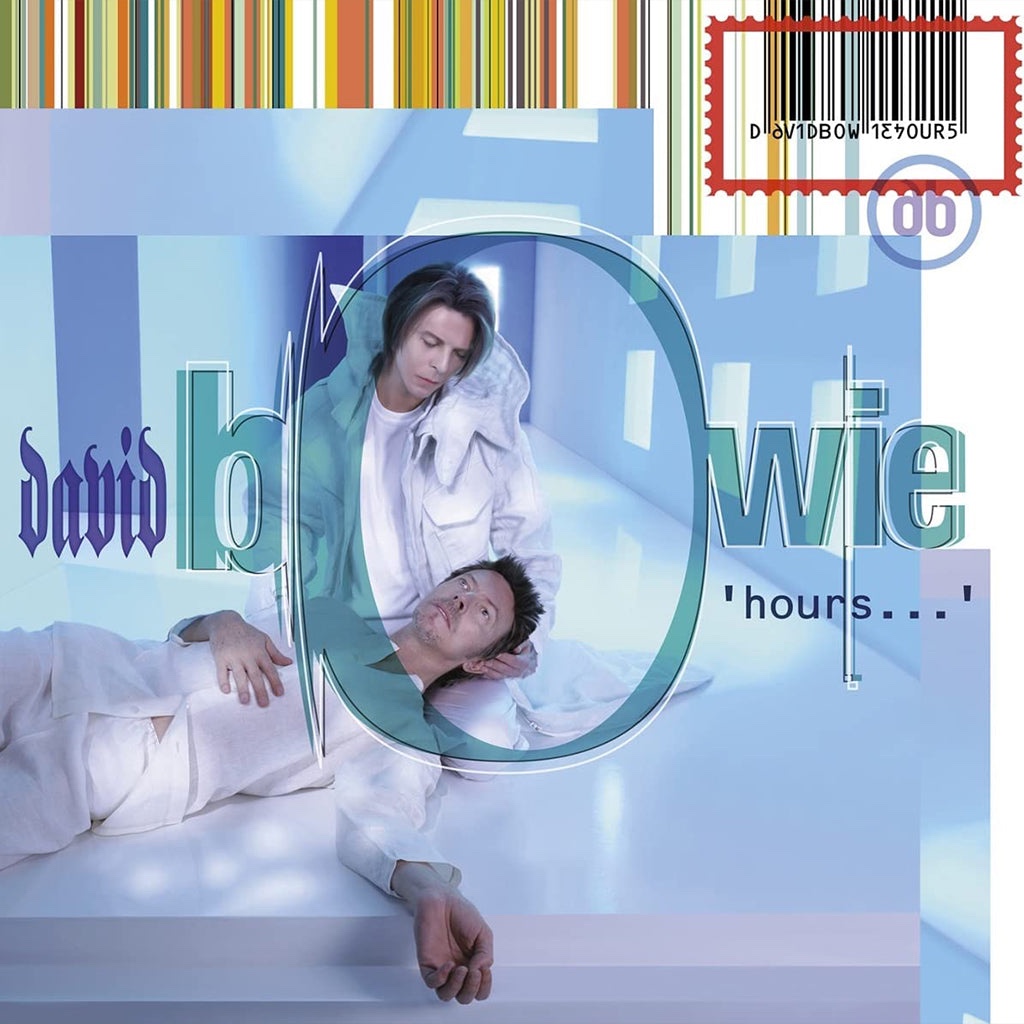
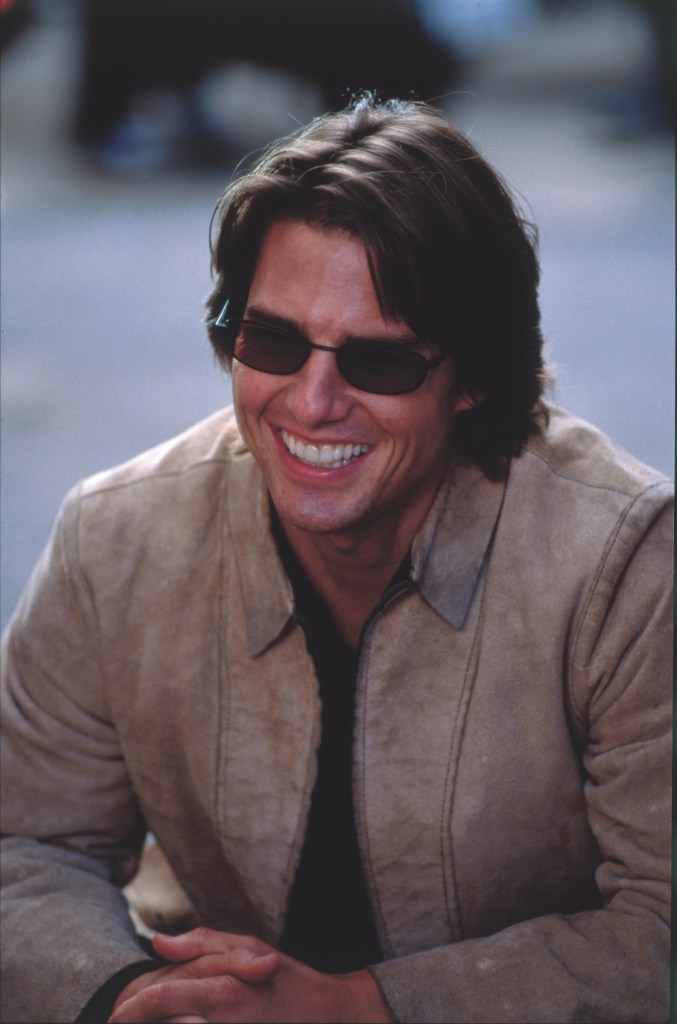
Kim hated the second film, which I think stands on its own as a John Woo remix of Notorious (1946) and Face/Off (1997) — masks are put on and peeled off with wild abandon — and a very potent distillation of what pop culture felt like in the late 90s/early 2000s. Tom Cruise’s hairstyle… I think it’s the same one David Bowie had at the time.
The third, by JJ Abrams, I remembered as being better than it is. It has the most generically American TV look and feel of the first three. Philip Seymour Hoffman memorably plays a villain who has every reason to be physically intimidated by Hunt but somehow moves with a delusion of invincibility that is frighteningly odd yet probably 100% realistic for a dangerous arms dealer. If you ever tie someone up for interrogation and they still act like you’re the one in trouble, run.
Ghost Protocol, by Brad Bird, is probably my second-favorite of the first four (obviously the first is best) because it expands on Hunt and Benji’s developing characterizations and has a playful, musical sensibility throughout. The final third in Mumbai is unfortunately a bit muddled and less memorable.
While talking to Evan about grindy and annoying Japanese video games, I admitted to myself that I wasn’t really enjoying Death Stranding and found elements of its storytelling so insultingly corny that I would be better off deleting it from my PS5 and just moving on. So I did, and it felt like a weight off my shoulders. I might also quit Final Fantasy VII Remake for the same reason; it’s made up of such dated game design conventions as having to go a long way around in a maze to get past an obstacle that is just waist high — in any realistic world, e.g. Breath of the Wild, one could just climb over it. It’s so lazy, the game is truly like a pretty skin on an old game.
Emboldened to be more selective with my free time, I fired up Tom Clancy’s Ghost Recon Wildlands, another game I’ve been meaning to try forever, and deleted it within minutes after seeing how janky it was. (Thankfully, I haven’t bought any of these; they’re all part of the PS Plus Game Catalog subscription.)
I then played a bit of Far Cry 6, my first Far Cry game, and found it a fun action-oriented FPS… until the scope exploded into a spreadsheet of rebel bases to upgrade and vehicles to unlock. It’s the usual Ubisoft bloat (the Ezio Assassin’s Creed games suffered from this too). Both Final Fantasy VII Remake and Far Cry 6 don’t respect my time, just in different ways.
Maybe this is what a sabbatical really becomes: a slow, careful audit of how one spends attention and focus. Cut the crappy games. Upgrade the camera app. Reject bullshit work. Watch Tom Cruise jump a motorcycle off a cliff.
I read All Systems Red, the first book in Martha Wells’ Murderbot series. It’s about a security robot that’s hacked its own governor module, secretly sentient but pretending not to be, and mostly just wants to be left alone to binge-watch serials. Deeply relatable. Apple TV+ has made a show from it that’s meant to come out soon, and I can’t wait. Thankfully there are six more books (plus some novellas), so this could be their next Silo or Slow Horses: a long-running fan favorite franchise they get to keep making more of. If you like introverted robots with trust issues getting into some space shootouts, it’s a fun time.
Still on AI bots, since I paid for ChatGPT Plus again last week, I decided to update a custom GPT I made to serve as my personal editor and proofreader. It’s trained on a bunch of these very blog posts and now incorporates a detailed summary of my writing style into its prompt. It’s shockingly fun to work with and makes half-decent suggestions. If you’d like to try this, give ChatGPT access to a bunch of your writing, get it to codify your style as a JSON profile, then refine it by reviewing examples together.
It actually managed to write me a half-decent LinkedIn post from a premise I provided, not that I care to post on LinkedIn at all. After some editing and joint revisions, it’s now in a shape that wouldn’t make me cringe if I read it from someone else on LinkedIn. Wait, that’s not true. Everything on LinkedIn is cringe.
I’m not going to say a lot about Trump’s tariffs and the mess they’ve made of the stock market, but boy am I seeing red in my finance apps. I don’t know how Americans will be able to afford anything, and I’m kinda mad that this will affect the rest of us too.
Caught in the blast is Nintendo’s new Switch 2, which was detailed this week in a series of live broadcasts I’ve been anticipating for the past couple of months. The new GameChat and GameShare features they showed are very welcome, especially if we’re ever locked down in a future pandemic. They’ve done a lot to make playing with friends online feel like hanging out on the same couch. Unfortunately, the announcement was marred by a higher than expected price, something of an unforced error on their part, and people flooded the Treehouse livestream chat with calls to “DROP THE PRICE”. To make matters worse, the already unwelcome US price of $449 is now set to rise once they calculate the impact of tariffs.
We’ll be missing the June 5 launch in any case, with the official site saying “July–September in Singapore, Thailand, Malaysia, and the Philippines”. As for price, the original Switch launched at $299 USD, which should’ve meant about S$400 — but we ended up paying S$650 here, bundled with Breath of the Wild, because of limited supply and some greedy local distribution. I don’t expect the same kind of scalping this time, but I also wouldn’t be shocked to see it land at S$800. Can’t wait.
I still have so much to play on my old Switch OLED anyway, and this week I got started on Ace Attorney Investigations Collection. It’s a remastered version of the two Miles Edgeworth games from the Nintendo DS, the latter of which was never released internationally. Also in my backlog are Kirby and the Forgotten Land and The Legend of Zelda: Tears of the Kingdom, both of which are getting Switch 2 enhancement patches — higher frame rates, HDR, all that good stuff — if you’re willing to pay for the upgrade. Which means I now have a perfectly valid excuse to keep ignoring them until summer.
Michael pinged me out of the blue to ask if I knew anything about the origins of using the × symbol in Japanese to mean “and” or “plus”. It’s something I’ve long wondered about too, especially with anime titles like Hunter × Hunter and Spy × Family. So I outsourced the research to Perplexity (an AI search engine), and found that this usage came out of Japanese fashion subculture in the 1990s. Turns out it’s a Japanese invention, possibly inspired by its use in botany to denote crossbreeding. In modern use, the × stands in for “with”, “versus”, “of”, or “intersection”. It’s also not pronounced aloud, which is why the show is just called “Spy Family”. I like how the symbol invites layered meanings — it implies both conflict and connection. In Spy × Family, it’s the tension between the fake family setup and their hidden identities, but also how those roles merge into something real. A simple little mark doing a lot of work.
I watched a new anime on Netflix called I Parry Everything. Following the isekai wave a couple years back, the new trend seems to be fantasy stories about “weak” characters who go all-in on training one obscure skill — to the point of accidentally attaining god-tier strength. Jose reminded me of another in the same vein, with the glorious title I Don’t Want to Get Hurt, So I’ll Max Out My Defense. In Parry, the main guy is told early on he has no future as a swordsman — so he just spends the next 14 years practicing how to block. Now he’s practically unkillable. But the show’s comedy hinges on him not realizing this, while everyone else assumes he’s the savior of their kingdom. It’s extremely stupid, extremely fun, and yeah I binged the whole thing in a weekend.
We’ve also been watching The Pitt on Max and it’s a great hospital drama (starring Noah Wyle of ER) that leans more towards realism than the likes of New Amsterdam. Everything takes place over 15 hours in 15 episodes, which takes me back to watching 24 in absolute awe as a young man.
Pulse on Netflix is everything The Pitt is not. It’s cheesy, everyone’s more model than medic, and there’s no urgency or realism. Even the surgeries are shot in crispy iPhone-like HDR and cinematic lighting. It does have Willa Fitzgerald (aka Reacher’s partner in S1) and Néstor Carbonell (Yanko from The Morning Show) but even they can’t lift this to greatness. It’s fine background TV though.
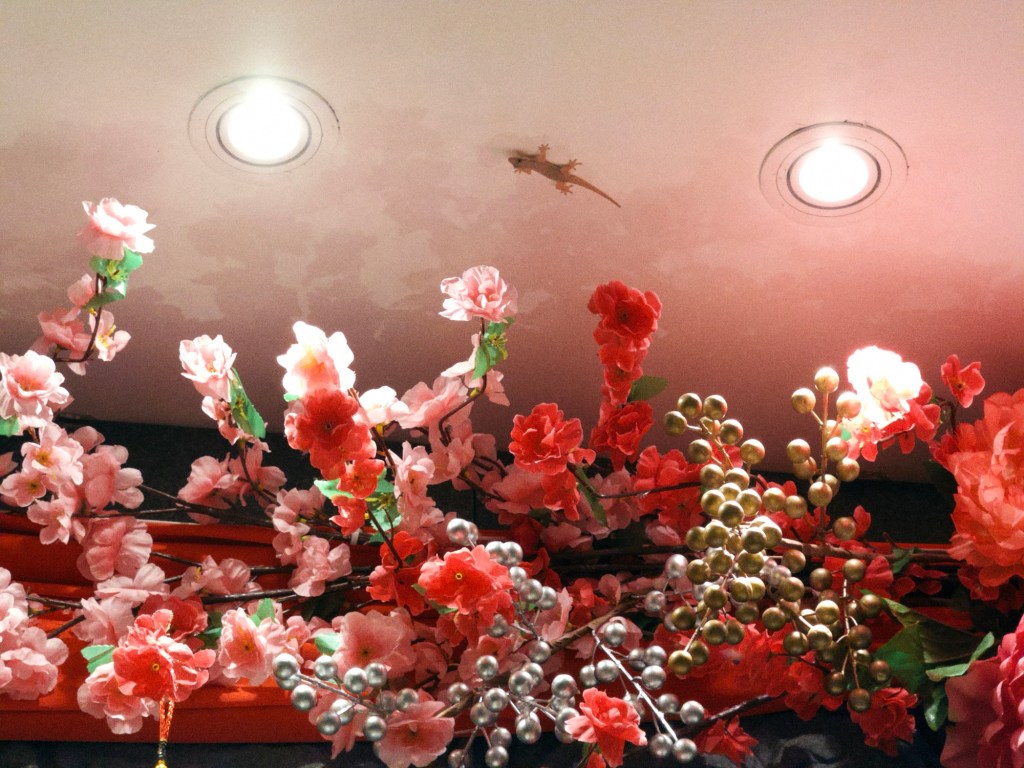
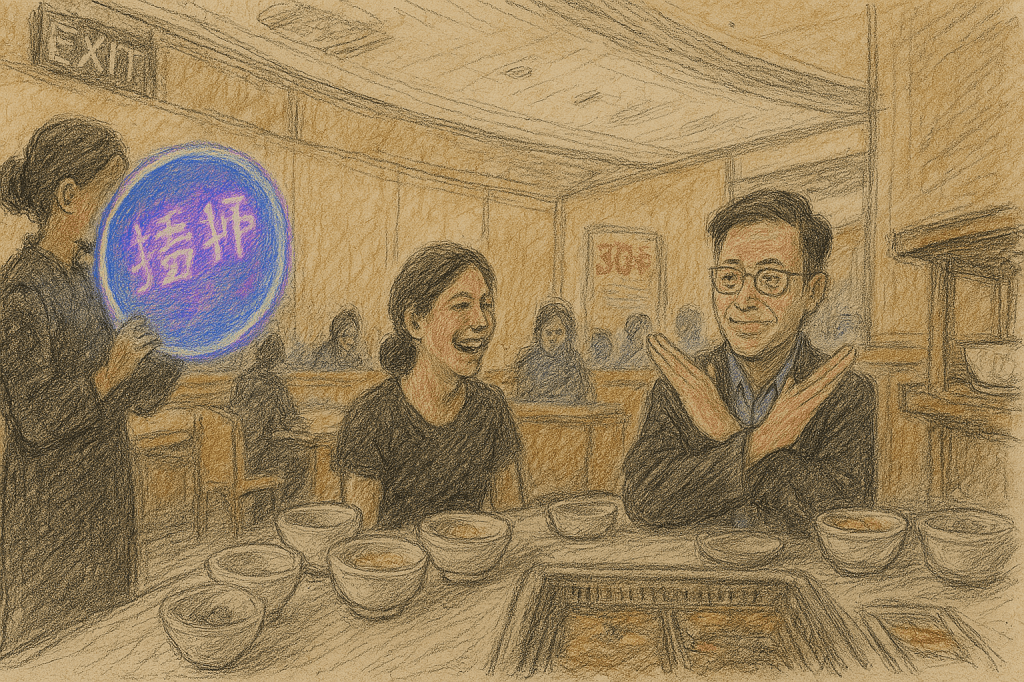
What’s up with this image? I went for dinner with Peishan and Cien, who decided it would be funny to tell HaiDiLao (a massive Chinese hotpot chain) that it was my birthday month, so the staff came round and sang/blasted out of a Bluetooth speaker a proprietary and very Chinese birthday song, that apparently everyone around us knew because they joined in and clapped along. I tried to stop them, but in the end had to endure it with a pained smile.
Btw one legitimate use case of AI is transforming images into drawings to get around the problem of publicly sharing people’s faces.
I made myself a spot in the apartment to sit and rot the hours away. This was achieved by moving the comfiest chair over to the dining table and plugging in my iPad Pro and Magic Keyboard into power. From here, I can also watch the TV. The plan was to spend all of Monday sitting here and finally getting some rest from going out every day and walking over 10,000 steps, which has driven my Apple Health metrics up by 2x for the past two weeks.
I think my body has been surprised/broken by this sudden surge in activity. It doesn’t help that the bed here isn’t the best, so the morning backaches haven’t been fun.
But I ended up going out on Monday after all, because a day spent home is a day I’m not eating curry. I noticed a line for Alba Curry while in Akihabara last week, and made my way to a nearby branch of theirs for my third plate of curry rice in as many days. They’re a Kanazawa-style curry joint, but as far as I know, that doesn’t necessitate the use of baseball references? They have a one-with-everything menu item like Go Go Curry’s “Grand Slam”, except theirs is called the “Home Run”. It comes with a single pork katsu, a fried egg, two sausages, and a fried prawn. The fried egg with a runny yolk was a nice touch, but sadly, the rest of it was average. The curry was a little stodgy and lacked the punch of flavor I was looking for.
I had better luck with Hinoya Curry, a favorite of recent years that I’ve never had the chance to eat more than once a trip. Unlike the others, it actually has a little heat while managing a fair amount of fruit-like sweetness. I ordered a plate with only a raw egg, vegetables, and two sausages because I didn’t understand the ordering system and thought it would include a pork cutlet. No matter, it was very good as it was, and now I have an excuse for one more visit before I leave.
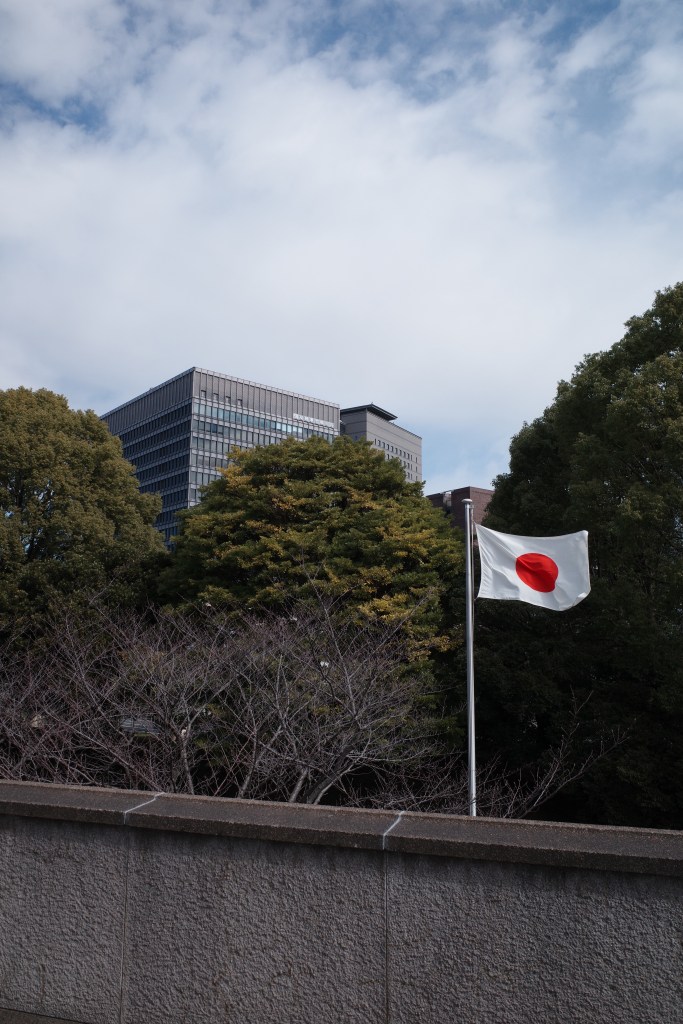
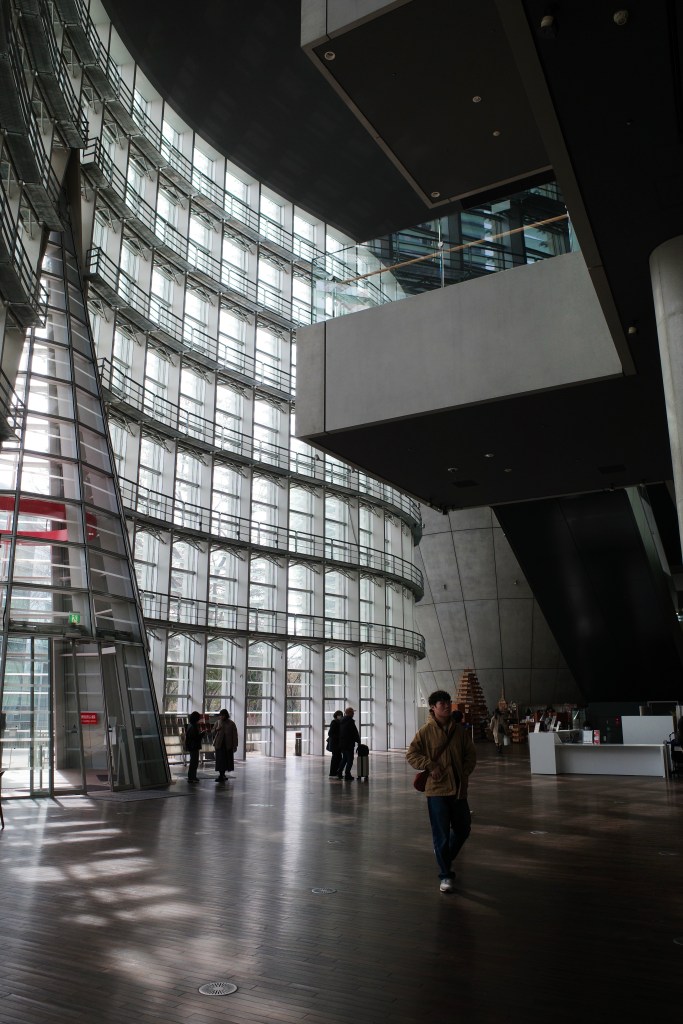
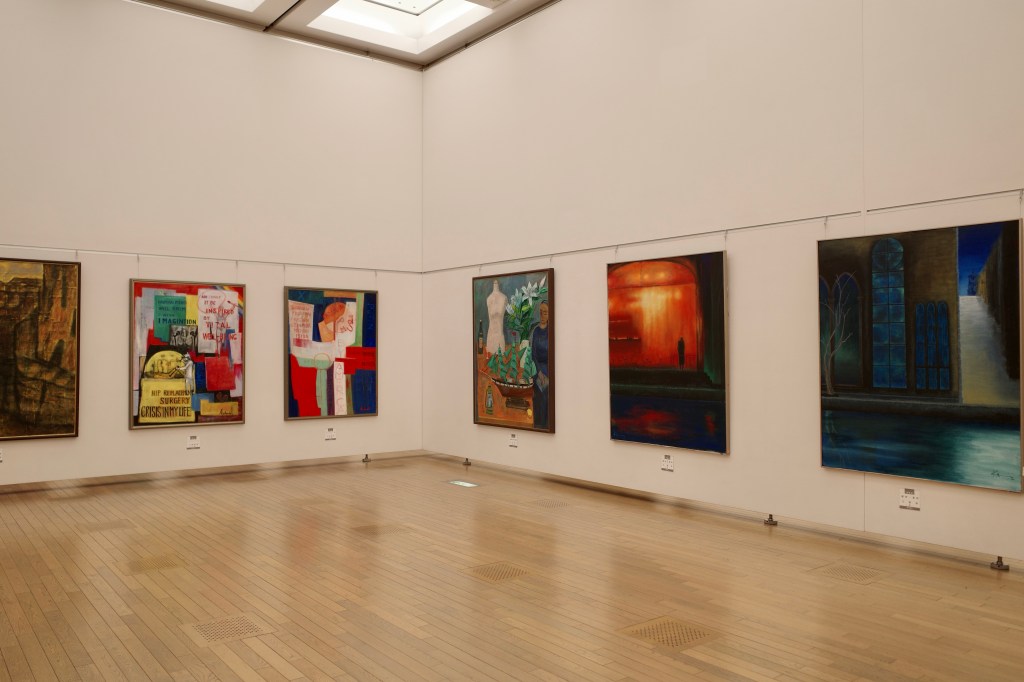
On Tuesday, I made my way out to MOMAT: the Museum of Modern Art Tokyo, a place whose existence I was only alerted to when Michael blogged about his visit last year. It was a particularly bright and sunny morning, which made for a nice visit given its proximity to the Imperial Palace’s moat and picturesque grounds. The museum has a massive collection of over 13,000 works, but only displays about 200 at a time with bi-annual rotations. I like this approach much better than the one taken by Singapore’s National Gallery.
In any case, this moment in time seems to be a sort of dead zone for the big museums. Many are preparing for new exhibitions that only begin in March, which is a shame but not a blow because what’s on now is still just barely manageable with the time I have.
On the way back, I stopped by Kitte Marunouchi and spotted the Qoobo for sale at the “Good Design Store Tokyo by Nohara”. I first saw this adorable, tail-wagging robot/cushion online many years ago and immediately wanted one, but was resigned to it being an only-in-Japan product. It’s now available internationally if you look hard enough, albeit with a significant markup. After doing the girl math, buying it here was too good a deal to pass up (about S$150), so I guess I’ve found the souvenir gadget I’ve been looking for.
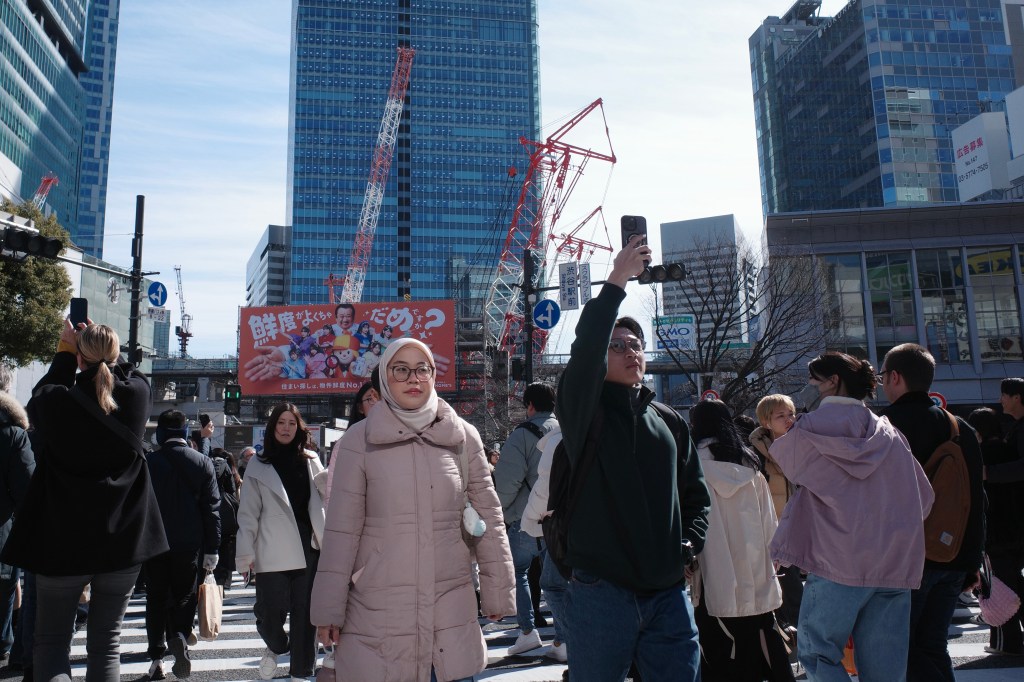
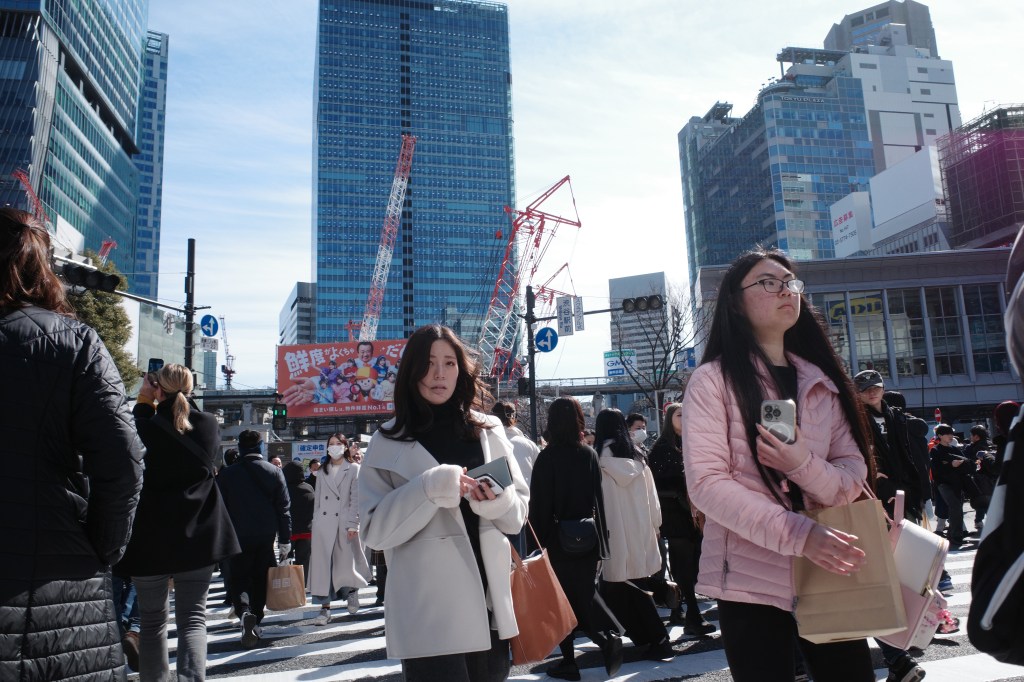
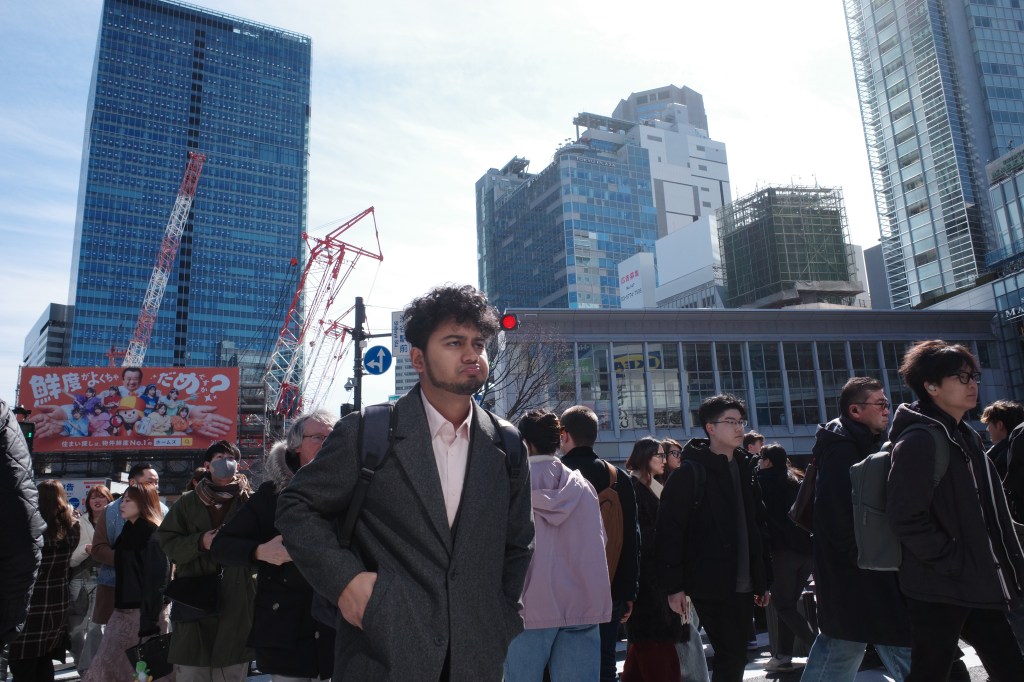
Last week, I complained about us tourists overcrowding the city, but it’s everyone; Tokyo is simply up to its observation decks with people. At several points while out and about, I’ve wanted to stop in somewhere for a coffee break but had to hit up multiple cafes to find a free table. Even after 2 p.m., when you’d expect the office crowd to be back at their desks, many seem parked in cafes to work remotely. I saw people doing video calls and some looked set up there for the long haul with stationery, chargers, and other accessories strewn about to make personal workspaces.
In the vicinity of MOMAT, I discovered the JCII (Japan Camera Industry Institute) Camera Museum, a small basement space packed with photographic history: hundreds of vintage cameras including the iconic Leica I Model A, which turns 100 this year. Ironically, the museum prohibits any photography of the space or its exhibits. For a mere ¥300 entry fee, I got an hour’s entertainment poring over weird and rare designs — on the whole, the majority of industry players are copycats and follow innovative leaders, quite like how smartphone hardware and software today have converged on similar designs. Virtually every camera I’ve ever owned, or at least some cousin of it, was in this priceless collection.
My body has really had enough after all. Three weeks of walking and stair-climbing amidst the coughing masses, drastic temperature changes, and drier air than it’s used to has led to me being mildly ill now. That has regrettably meant calling off some plans, but my new goal for the rest of my time here is to recuperate at home while eating 7-Eleven food and bingeing Doctor-X: Surgeon Michiko Daimon on Netflix. I mentioned this admittedly cheesy but comforting TV show back in 2023, and at that time, a few seasons were still available for watching in Singapore. Today, the show isn’t on any local service, but being geographically in Japan means I can pick up where I left off on Netflix, in the middle of Season 3 (of 7).
Rereading that old post, it seems that I experience the same renewed excitement for gaming, that I mentioned last week, every time I come here. I still think this atmosphere hinges on the large presence and floor space given to physical game retail, but this may not last much longer with digital sales on the rise everywhere. Of course, one can also attribute this cultural presence to the relative outsize of the game economy here (including mobile games).
One of the games I saw in a box in a store was Shinjuku Soumei, a visual novel I’d seen on the Nintendo eShop before but wasn’t enticed by. I decided to buy and at least start on it while here, and I’ve just finished “playing” it through while resting at home (it’s not very interactive at all, just a click-and-read VN).
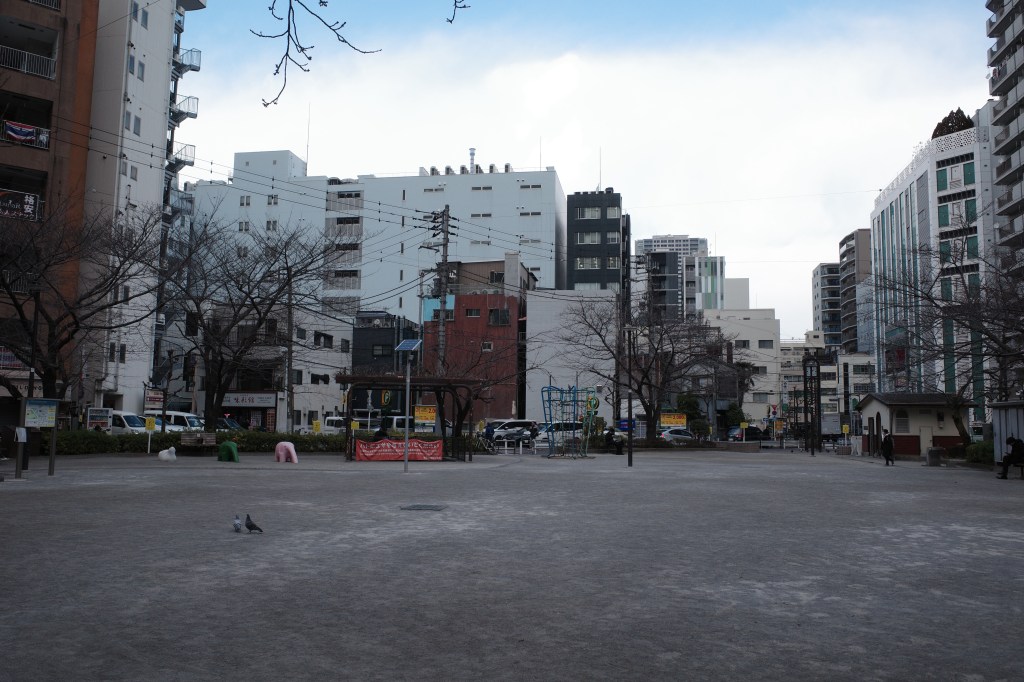
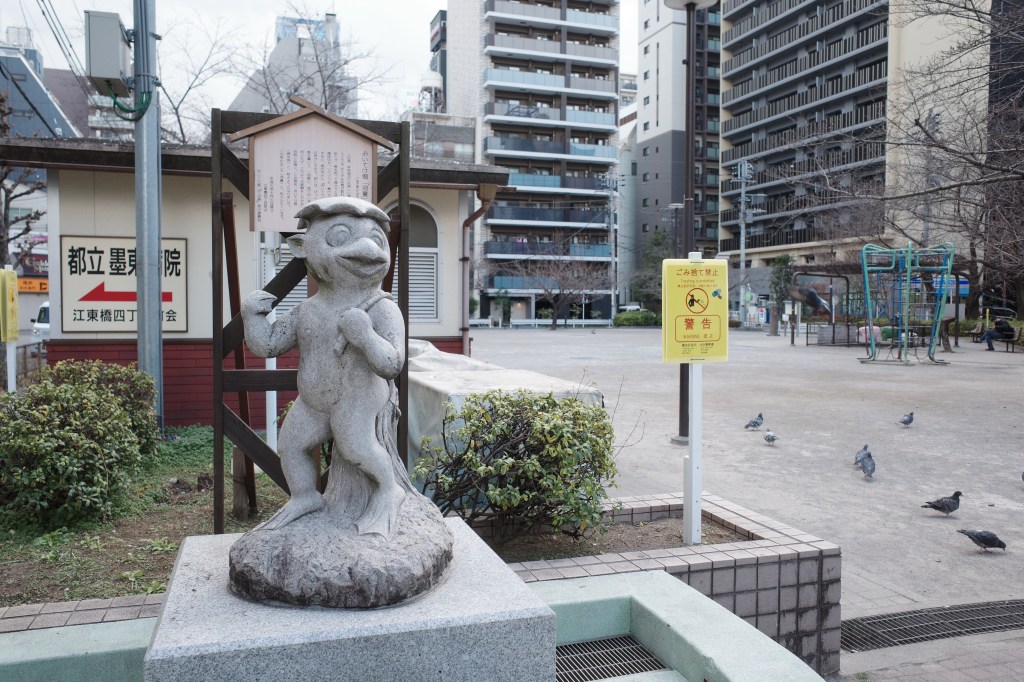
I mentioned PARANORMASIGHT last week, and while I won’t start playing it until I’m safely home, I did go out to visit one of the Sumida landmarks featured in this creepy supernatural game: Kinshibori Park. It’s not much to look at but there’s a statue of a famous kappa in one corner, one of the “Seven Wonders of Honjo” which the game seems to be based on.
By the way, I’m half certain we saw the actress who plays Doctor-X on the streets of Ryogoku a couple of weeks ago. There wasn’t anyone else around, so I couldn’t see from others’ reactions if it really was her. It sure looked like her to me, though, so I’m sticking with that story.
Just had my first ever “soup curry” in Shimokitazawa, which unbeknownst to me is also considered a curry town (like Jimbocho in last week’s update), albeit focused more on authentic “spice curry”, as opposed to the sweeter Japanese adaptations of British-adapted curries. It came with a whole chicken leg and an impressive 20 kinds of vegetables, costing about ¥2000. Thoroughly delicious and a healthy meal (I told myself), although we did have to wait over an hour in a virtual queue for it.
Taking a photo would have gotten you thrown out before
To pass the time, we stopped into Bear Pond Espresso for one of their famous Dirtys and a cup of their proprietary Flower Child blend. The coffee is still as good as it ever was, but the vibe has changed now that the famously surly owner isn’t behind the counter. The last time we came and saw him, his mood had brightened up tremendously; he was taking off early to walk his dog in the sun, and even stopped to tell us its name. Perhaps he’s now retired. Good for him.
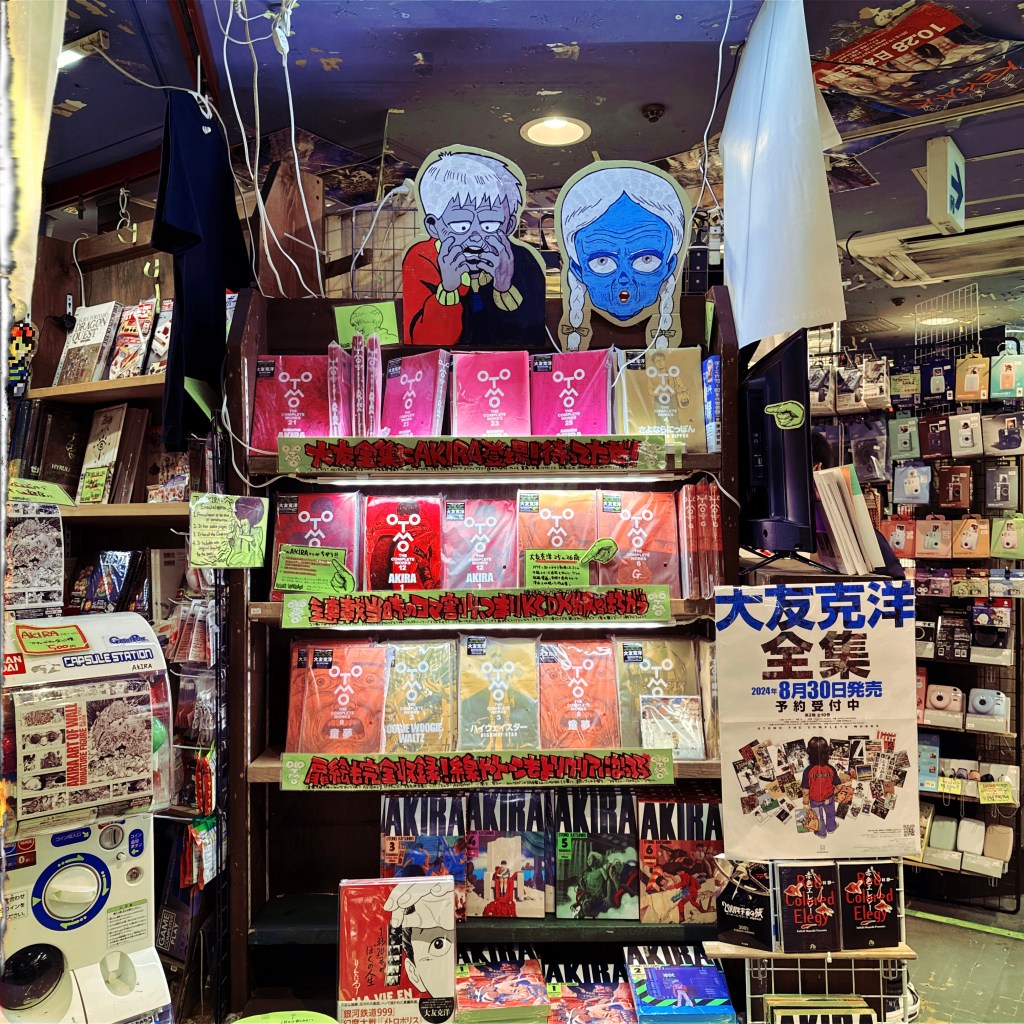
Afterwards, an obligatory stop into Village Vanguard, a “bookshop” whose closest kin is probably Don Quijote (or as it’s known in Singapore, Don Don Donki), that self-described shopping jungle where haphazard aisle placement is intentional and designed to get you lost and overwhelmed in a good way. VV has books, media merch, stickers, physical music, gacha, plushies, clothing, you name it. If I could actually read Japanese, I’d never be able to leave.
Back to food for a minute. We booked a “katsu omakase” meal before coming out here, featuring multiple cuts of perfectly cooked Japanese pork, and separately had an impromptu sushi omakase in Roppongi, where we got in just after lunch hour and had the whole counter to ourselves.
We also tried some Mister Donut, which is known in Singapore for always selling out, but here in addition to the perpetual lines and wide selection of sweet bakes, it’s also a place you can sit down and have… fried rice!?
I haven’t stepped into either a McDonald’s or Burger King (and probably won’t), but for posterity’s sake, I will record that the former is currently selling a line of “New York-Style” burgers with , which sounds like bullshit to me because one of them has a prawn cutlet. The King is more on brand with a monstrous Yeti burger that has four quarter-pound patties dripping with creamy “white cheese”.
Most museums are closed on Mondays or Tuesdays, but you can’t always rely on their websites for accurate updates. We found that out the hard way on Tuesday, which was also a national holiday, when we traveled nearly an hour to Nerima Art Museum only to discover it was closed — their site said otherwise.
But we made up for that fail on Wednesday and Thursday with visits to the Museum of Contemporary Art Tokyo (MOT), and the Mori Art Museum, respectively.
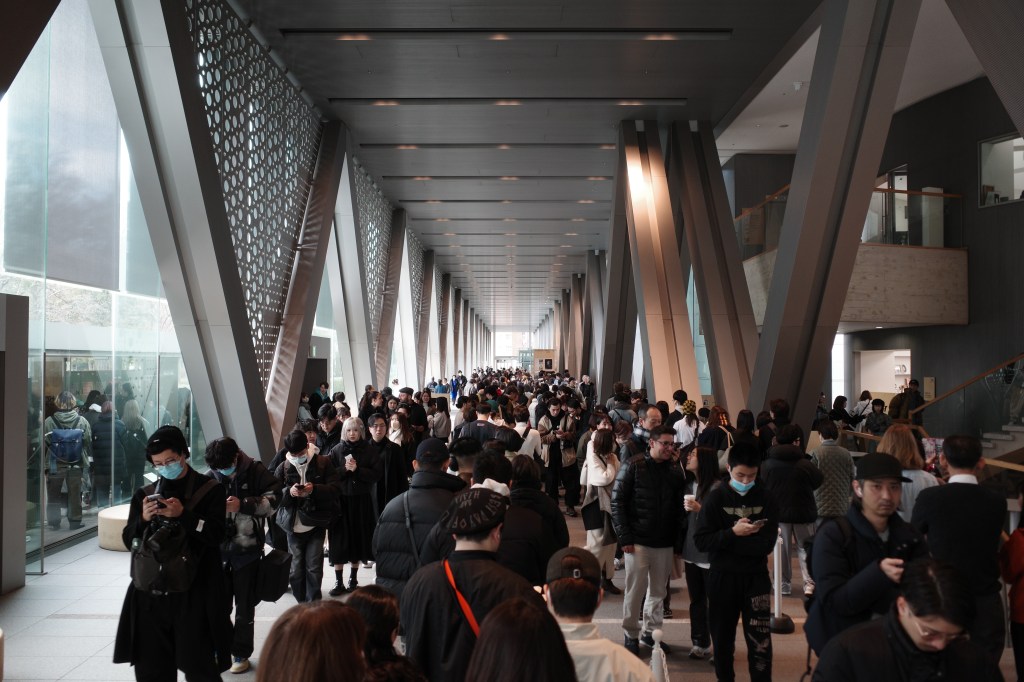
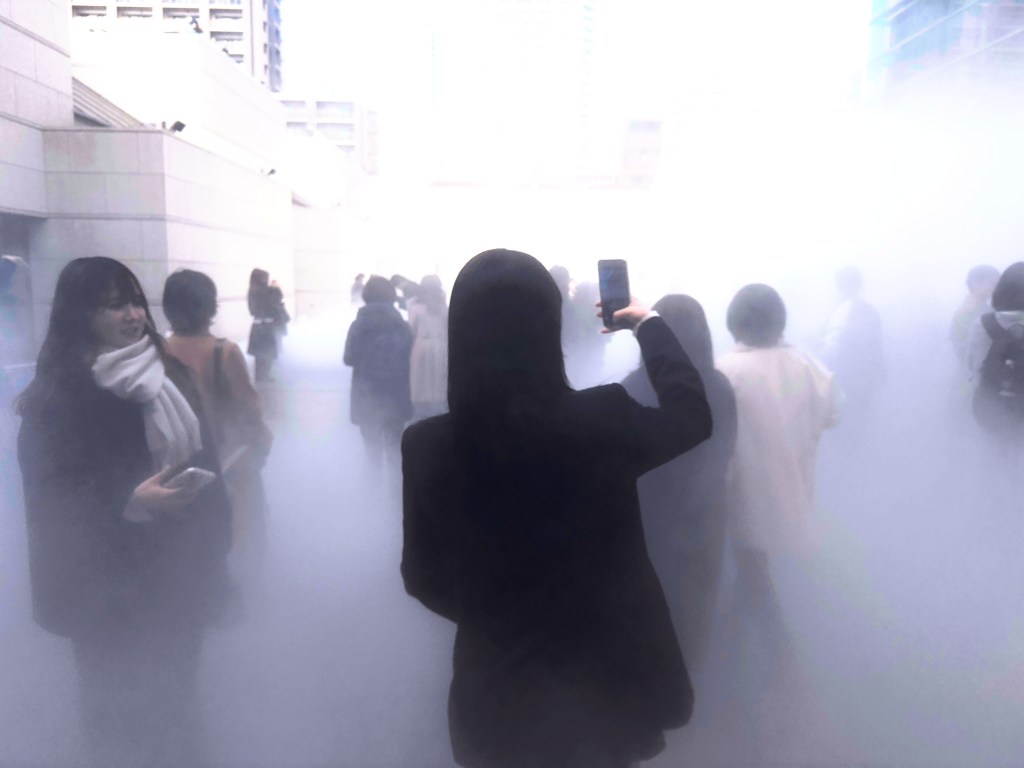
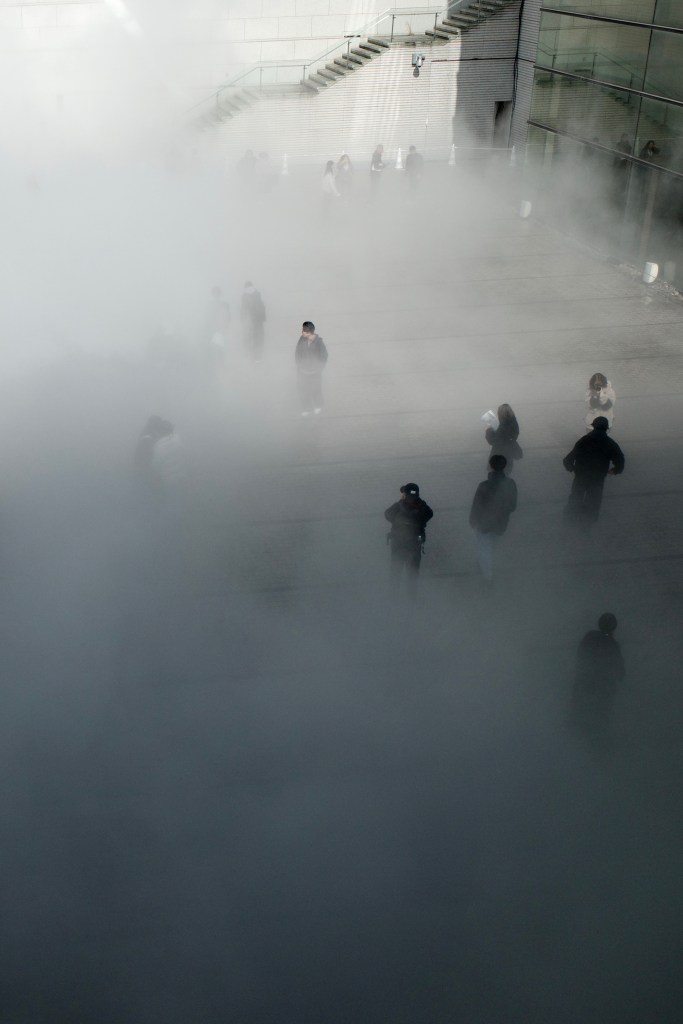
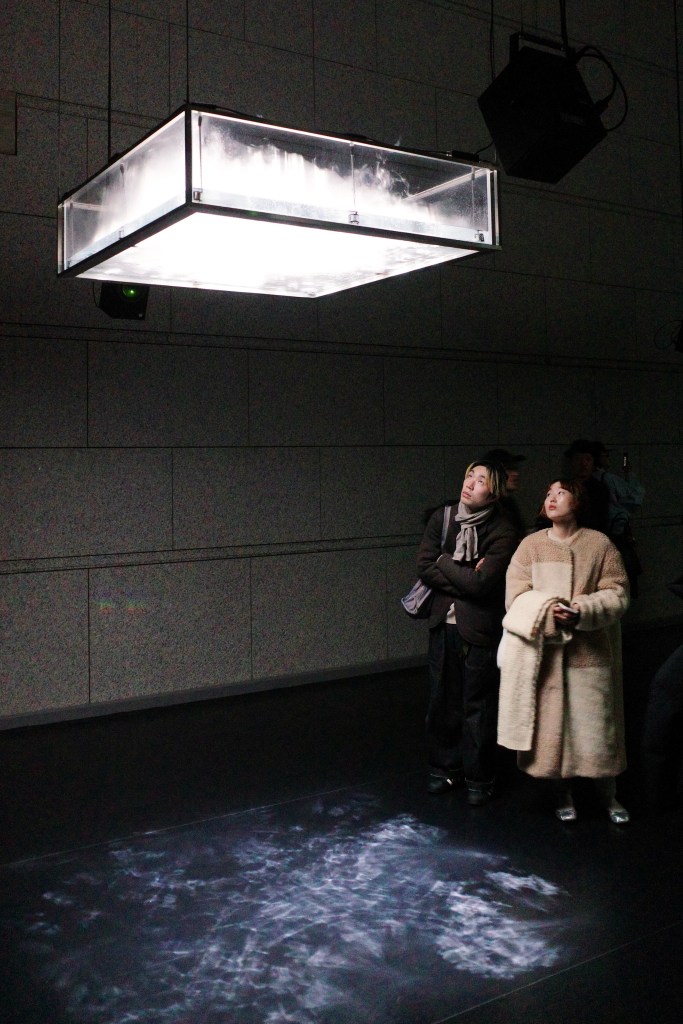
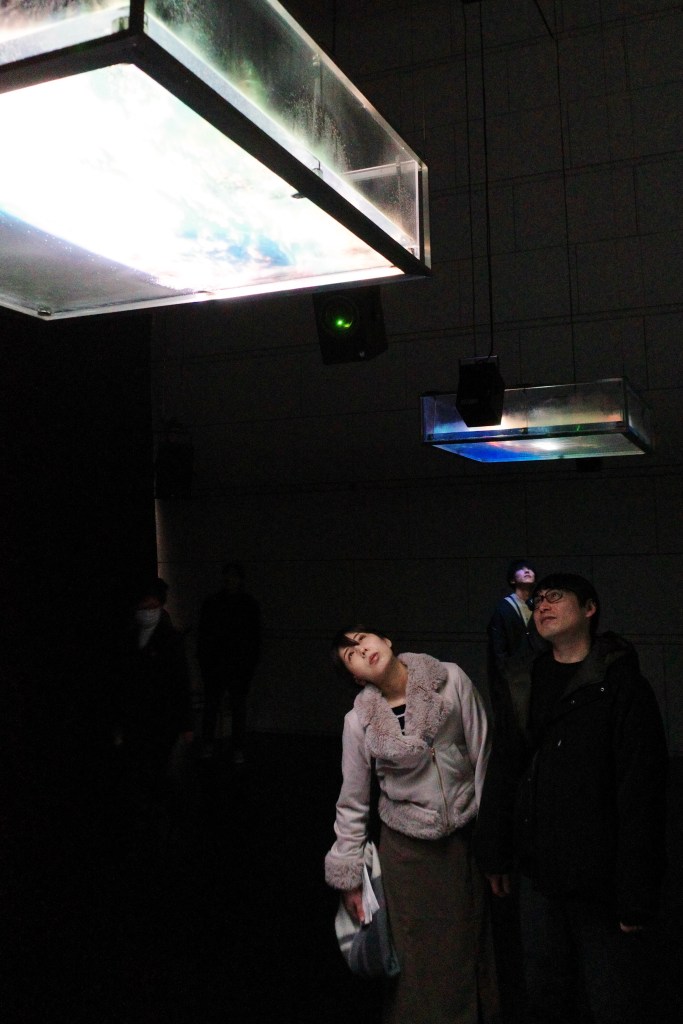
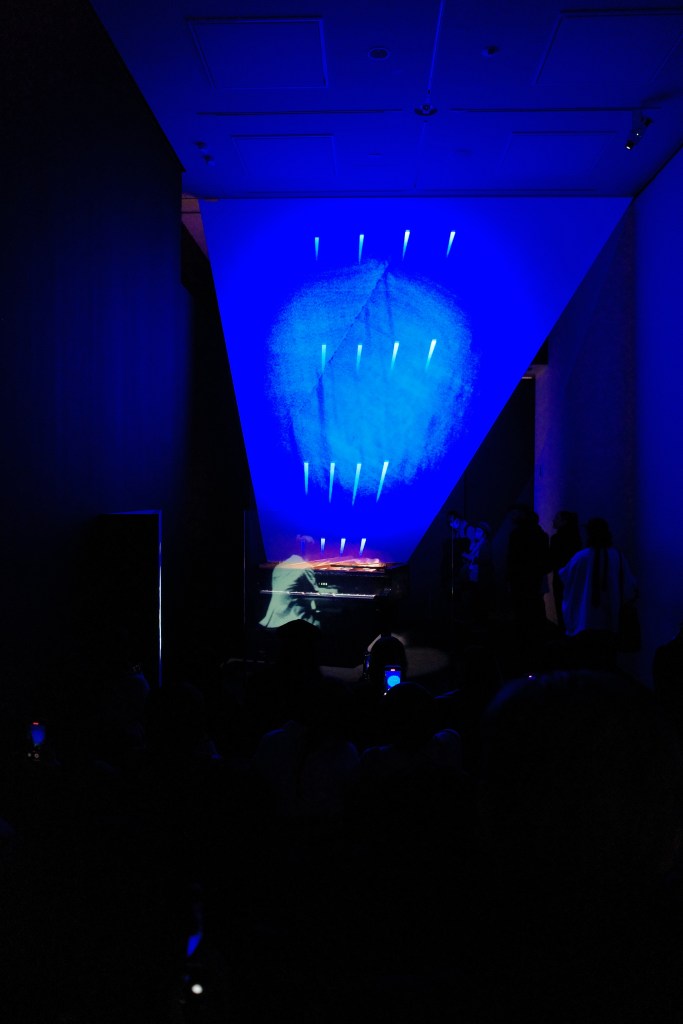
MOT is hosting the extremely popular, TikTok-viral Ryuichi Sakamoto tribute: Seeing Sound, Hearing Time. We must have stood in line for 45 minutes to get in, but it was certainly worth it. The final room was probably the highlight, where you see an ethereal “hologram” of him playing on a real piano with keys synced to a MIDI performance he recorded. Spectral visualizations of each note rise from the piano as he plays, and it’s like watching his ghost play Guitar Hero in reverse. There’s also an outdoor portion that you might already have seen online: a dense “fog sculpture” you can wander through. Walking through it is disorienting and like being in a video game scene. You can barely see past your outstretched hand, and other people fade into view through the white mist. There’s a feeling that someone might come recklessly running and knock you over. All around us, Japanese people kept saying “Yabai!” out loud.
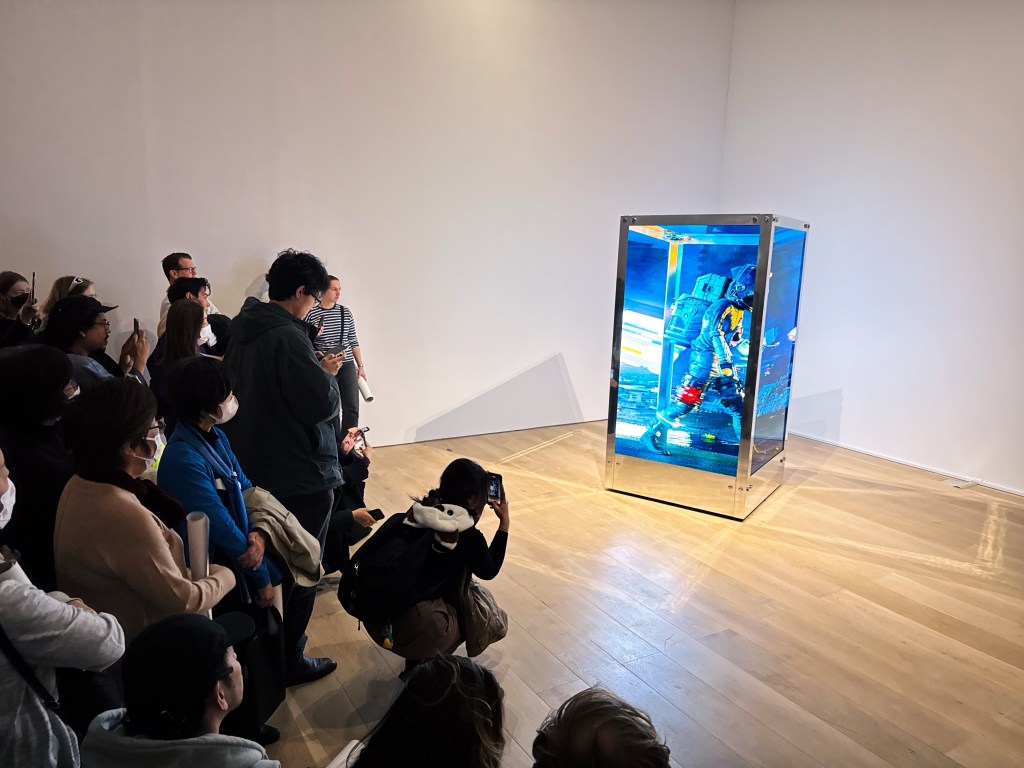
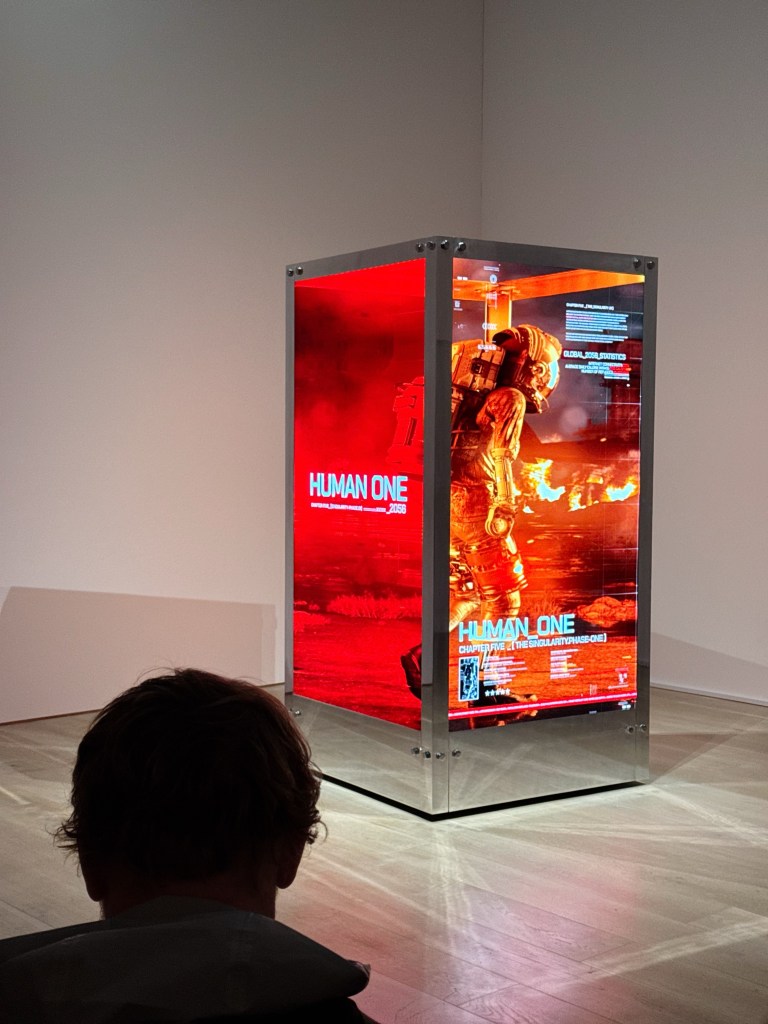
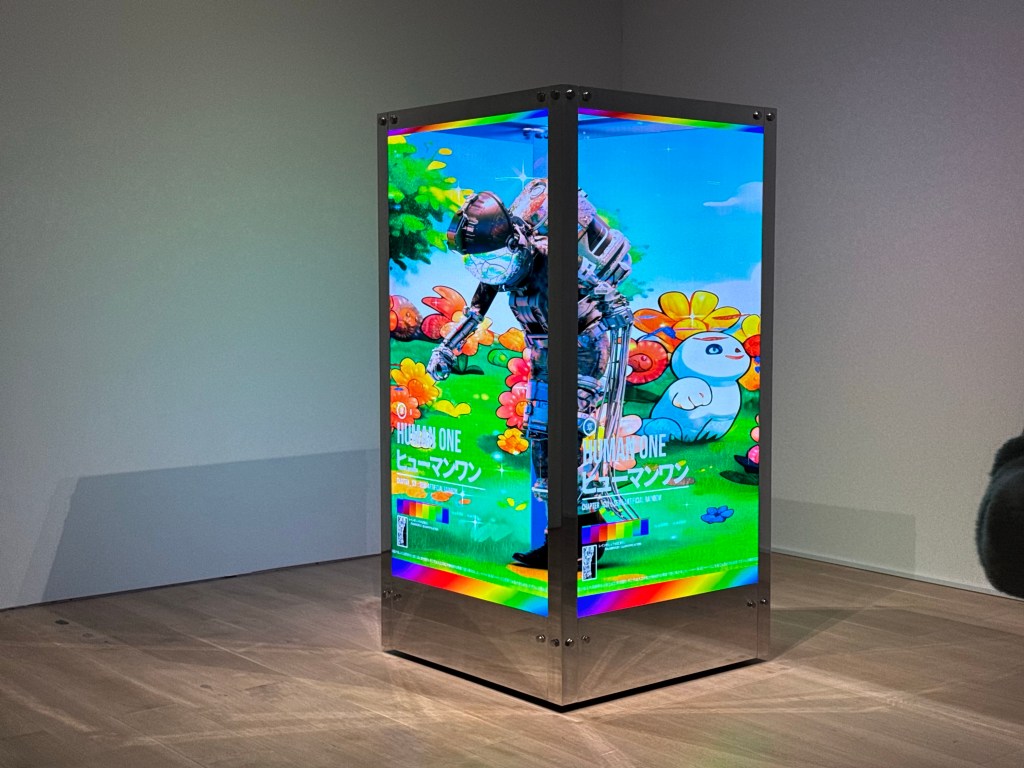
Thursday was opening day for Machine Love at Mori Art, and by going early in the morning, we caught the artist Beeple (famous for selling a $69M NFT at Christie’s) unveiling a new “software update” to his work HUMAN ONE, tailored to Tokyo and this exhibition in particular. In it, the eternally trudging humanoid AI robot was transported from a post-apocalyptic world to a new rainbow-colored cartoon world filled with derivative Asian imagery like pandas and pagodas. It was like a parody of Takeshi Murakami’s work, but he also attended the following day, so I guess he’s cool with it.
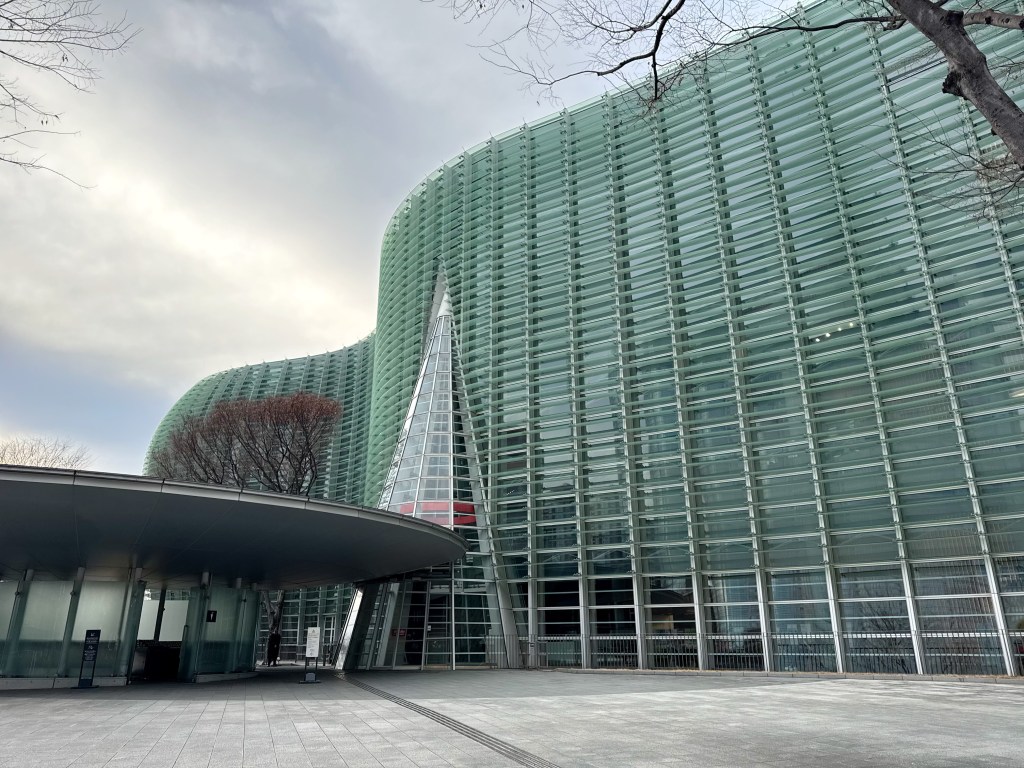
Then on Sunday, I visited the National Art Center in Roppongi, which is interesting for the fact that it’s more of a hosting ground for smaller organizations that want to hold exhibitions, and not a museum with its own collection. I saw a couple of calligraphy shows (admittedly hard for me to appreciate), a show featuring young and new artists, and the results of a couple more annual open competitions. I spend just $10 for an entire afternoon’s worth of interesting ideas, and am now thoroughly saturated with imagery.
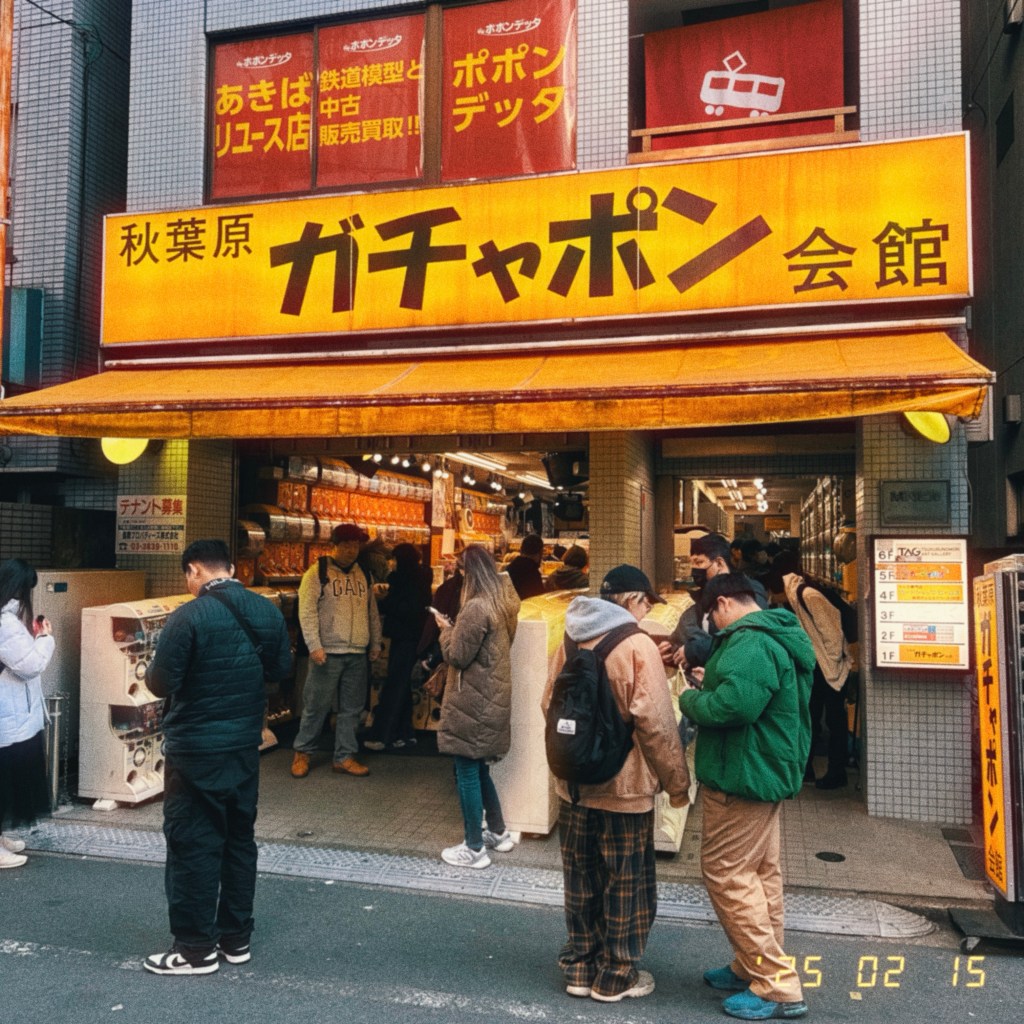
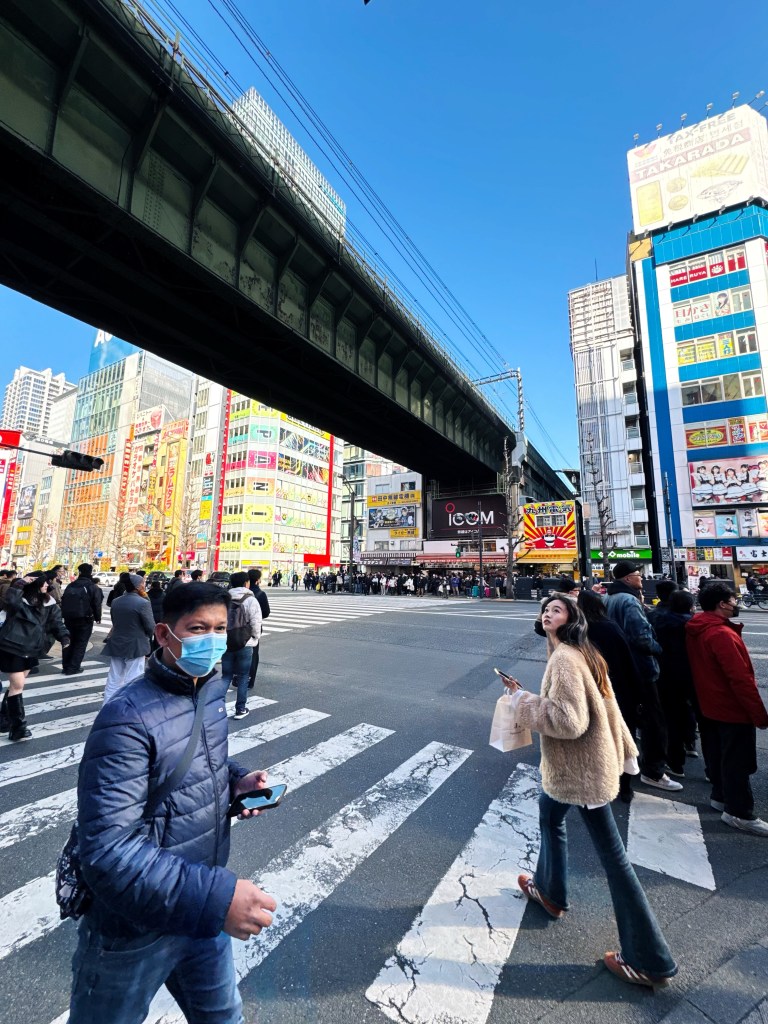
I made the mistake of going to Akihabara over the weekend, after Kim had gone home (I’m staying on for a little bit), leaving me free to eat all the curry rice I want and spend hours in electronic stores. It was more crowded than I can ever remember seeing, and not in any positive way; people were lugging large suitcases around and blocking narrow aisles with them, among other inconsiderate acts. I left exhausted and feeling somewhat ill (the number of coughing and sneezing people around didn’t help). The place is a victim of its own reputation, I guess, and now tourists have ruined the place for everyone. Like Chernobyl, it might be 50 years before one can safely visit again.
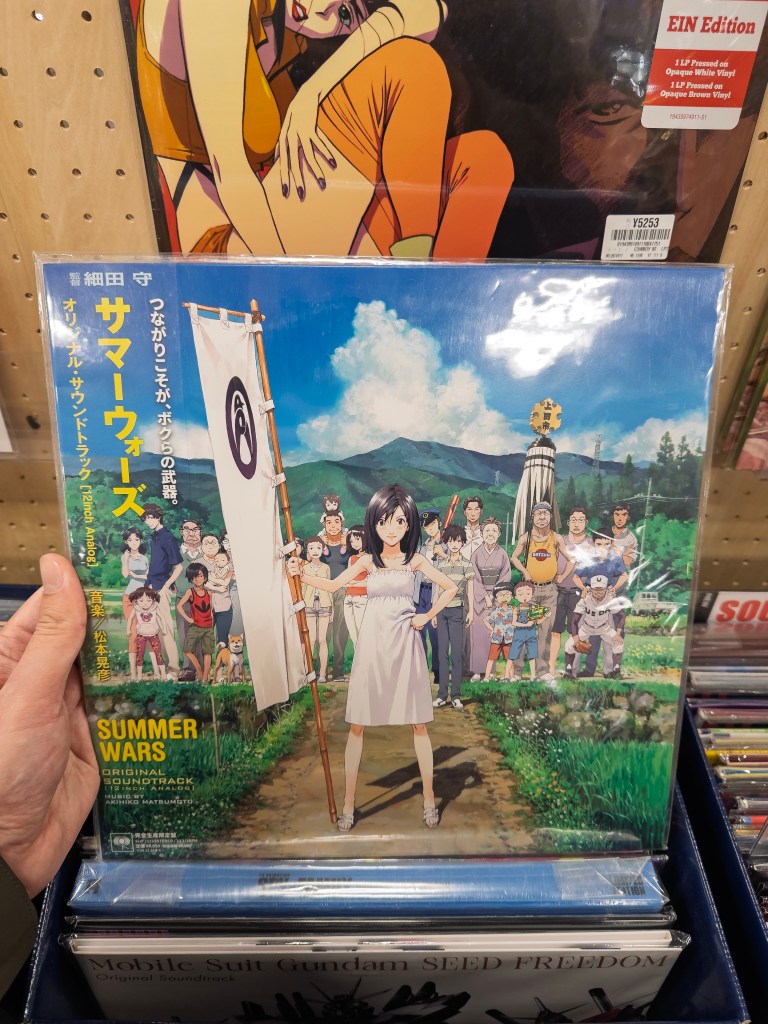
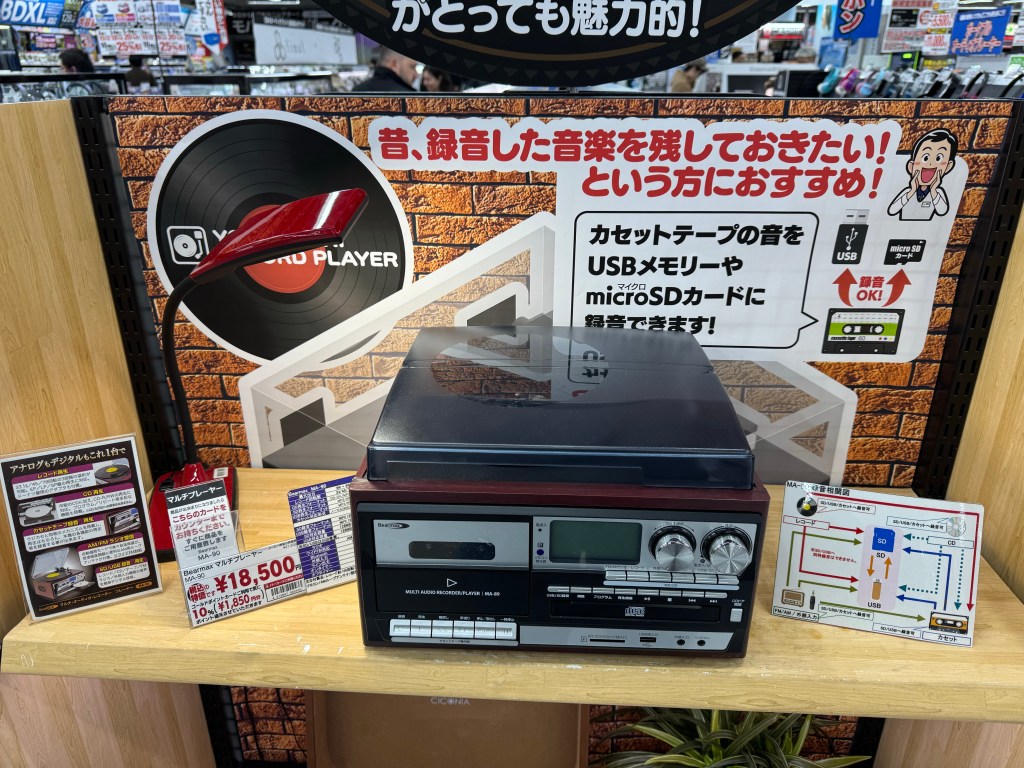
Two weeks ago, I asked why no one has created an all-in-one vinyl/CD/cassette player yet. Yesterday, I saw one at Yodobashi Camera. Granted, it probably sounds terrible, and the ¥18,500 (S$163) price doesn’t inspire much confidence either. If someone makes a better version of this, though, I’d be up for it.
One thing I still love doing is browsing the video game sections at these large retailers. Although some of the physical games are region-free and contain English translations, I’m not really there to buy anything — my backlog is deep enough to last for years. The fun is in seeing games really thrive in the real world, with cartridges alongside plushies, keychains, and other accessories. There are sadly no such equivalents back home. Inevitably, I’ll see Japanese-specific box art and pick something new up to look up online, or be reminded of a title I’d heard of but forgot to wishlist, and by the end of it, become more inspired to head home and play more games. After a couple of such experiences, my wishlist is now deeper, and I’ve bought a few new digital titles as well.
Incidentally, Perplexity released a new “Deep Research” mode which has nothing to do with OpenAI’s Deep Research product, and I asked it to find me Nintendo Switch games set in Eastern Tokyo that I might play while living here, for greater immersion. Amazingly, it succeeded. It was able to find one game, PARANORMASIGHT, that was developed with the help of the Sumida city council and tourism board (why they agreed, I do not know, because the game involves at least one of the parks being haunted). It’s also available for iOS. Impressively, Perplexity was also able to extrapolate that the region is known for sumo wrestling, and identified games involving sumo that might be of interest. All in all, not a bad feature to have! Free users get five questions a day, paid users get hundreds more.
I realized almost too late that I had neglected to shoot more panoramic photos this trip, which are really great to view on Vision Pro and have the effect of transporting you back to places you want to remember. I’m trying to make up for that now.
This episode is brought to you by our kind sponsors at Bullet Points™: Need to keep your rambling in check while covering a dozen mundane topics? That’s a job for Bullet Points™ — creating the illusion of order since forever!
After wanting a simple MagSafe silicone case for my iPhone for the past few weeks, I got an $18 Amazon deal for a neutral gray one from Elago, and it’s nearly perfect.
In addition to having more time for informational intake and mental meanderings, I’ll probably remember the latter half of this year for the half-hearted austerity drive that’s led me to drink tea over coffee on a daily basis. This week, the Yorkshire Gold tea caddy I bought during Black Friday sales arrived, prompting me to look up the history of the tea caddy. Back when tea was too valuable to leave with servants in the kitchen, rich folk kept it locked in ornate caddies in their living rooms. Today, I store $0.12 tea bags in a flimsy tin and call it progress.
I’ve been struggling to read Butter by Asako Yuzuki, which has apparently been named Waterstone’s book of the year. I’m only a third of the way through after several weeks, and while there’s nothing wrong with it, it’s a bit of a compelling nothingburger. Female journalist tries to interview female serial killer. Killer encourages her to show more interest in life’s pleasures, especially good butter, and journalist slowly starts to adopt killer’s worldview. I don’t want to quit more but I’ll need to move on soon.
Because my book club has decided to read the sequel to A Psalm for the Wild-Built over the next two weeks, and I can’t start it until I finish Butter. A Prayer for the Crown-Shy will probably only take four hours (the length of its audiobook, compared to Butter’s 17 hours), but I don’t like multitasking with books. I already have too many ongoing TV show and game narratives crowded in my brain.
This year’s Goodreads Reading Challenge is in the bag anyway, with 19 proper books + four volumes of the Sakamoto Days manga completed, smashing my goal of 12 books.
Popular media loves a (serial) killer. We recently finished the new The Day of the Jackal series starring Eddie Redmayne as the titular assassin that the show’s directorial choices strongly encourage you to root for. It’s excellent, and the musical director is clearly a millennial who shares my taste in the classics, from the first episode starting with Radiohead’s Everything In Its Right Place.
We’re now watching Cross on Amazon Prime Video, based on the Alex Cross books by James Patterson, where a detective with a PhD in psychology plays cat and mouse with a serial killer. I recommend it, but the show is extremely dark AND low contrast, like someone forgot the final step in processing the image. Reacher suffered from this too, but it’s worse here. Luckily, my Sony TV has a mode that dynamically adjusts for it.
I rediscovered the greatness of Domi and JD Beck this week when a random video of them performing on Japanese morning TV popped up on my YouTube feed. I then went down a rabbit hole of older videos, like this one of Domi jamming with other kids at Berklee, and this one of JD headlining a Zildjian session, and am now just in awe of their incredible, otherworldly talent.
On Monday, we went out to see a local production at the Capitol Theater, entitled Dim Sum Dollies® History of Singapore Sixty Sexy Years. It was definitely one of the musicals of all time.
The end-of-year digital game sales have begun, and I urge you to add Sayonara Wild Hearts to your collection if you haven’t already. This game is both a fantastic musical album and a great playable abstraction of going through heartbreak. It’s just $7.79 on Nintendo Switch and S$8.40 on Steam (40% off in both cases). I first played it on Apple Arcade back in 2019 as a launch title for the service, but these days it’s no longer available on mobile and the fate of publisher Annapurna Interactive is in question.
I dusted off the PS5 to make use of my PS Plus subscription and decided to finally play a native PS5 game, since I’ve so far only played older games that were ported from the PS4, and had my socks and shoes blown off by Ratchet & Clank: Rift Apart. This game is an insane technical showcase for what the PS5 can do: thousands of particles flying everywhere, ray traced reflections, and massive, cinematic worlds that load instantly. Why have I squandered the potential of this machine for the last seven months?? If you have any recommendations for what to play next, especially if they’re in the PS Plus catalog, do let me know.
Last but not least, we went for Christmas dinner with the parents on Sunday night at one of my favorite buffets in town, and it’s made me aware I’ll have to watch my eating over the next couple of weeks.
People sometimes say that I’d make a good teacher if I ever tried it. I think good teachers are probably more patient than I am and love speaking in front of people a lot more than I do. But on reflection, those are both things I’ve gotten a little better at over the last decade, so maybe.
I got a little taste of it this week when I was given the chance to hear a class of college students make their final presentations for a design thinking course, and provide assistance in the assessment of their assignments. They were asked to identify a group with needs, understand them, and then design games that could be of help. They had to prototype and test their ideas before finalizing a working version. They all did pretty well, creating solutions that were surprisingly polished.
The general idea about deploying Generative AI tools in the workplace is that they don’t do much to enhance the work of already talented employees. But for the vast majority of average or below-average workers, LLMs elevate their productivity and quality of work to a consistently higher level, which is still a net positive for teams.
Apple’s current ad campaign for Apple Intelligence seems to take that tack too, resulting in a message that’s so far from the Macintosh’s promise of a “bicycle for the mind” that these ads are rightfully catching some flak. But in the classroom, I saw AI tools give students (with limited time and a lack of traditional design skills) the ability to execute their ideas at high fidelity. Making card games that look and feel almost like professional products, fully illustrated without the help of artists, is not something we could have pulled off when I was their age. I’m partly envious, but also afraid that on a wider scale, execution will be confused with education.
Earlier in the year, when I sat in on another class being taught by a friend, I was struck by how hard it is to control the chaos of a large room of modern students, and the same thing was true here. When you get over 40 laptop and iPad-equipped young adults in a room, having their attention is not a given. Side conversations are happening all the time, and listening to whoever’s speaking seems like a choice.
Maybe it was just my experience as an English student, but our class sizes were smaller, and discussions almost always followed a single track, led by a professor pacing around the room rather than anchored to a screen at the front. There were hardly any screens, come to think of it, just books and notepads. Now everyone’s on Figma, Canva, Miro, and a host of other infinite sheets of AI-enabled SaaS paper. I’m not saying we had it better, but I worry that the option to take things slowly and still excel is disappearing. When kids today say they’re stressed, it’s hard not to believe them, having seen the performative polish that’s now standard. We’re getting awfully close to expecting students to pop out fully formed and ready for the mines.
===
Over the weekend, we decided to get our eyes tested at a Zeiss-approved optician’s, to order the official prescription inserts for Apple Vision Pro. This will let me use the device on days when I’m not wearing contact lenses. The need to have them on first has admittedly been only a very minor inconvenience, but now nothing will get in the way of hopping into the uh… spatialverse.
Of the three eye tests I’ve had this year, this was probably the most thorough one. The key seems to be patience (there’s that word again) on the part of the tester, in the sense that the testee should never feel hurried. They should be allowed to flip between options 1 and 2 as many times as they need to identify the sharpest and most comfortable images. As a result, I have a new prescription that shows my eyesight has slightly, but surely, deteriorated for the first time in over a decade.
My last test was in 2019, when I got my last pair of glasses from Zoff. Those were so comfortable that I stopped wearing contacts regularly and became a spectacles guy again. Now I wonder if wearing contacts actually helped arrest the decline of my eyes.
Anyway, armed with a new prescription and an appetite for vision correction, I went to the nearest Zoff outlet and ended up with a new pair of glasses. I learnt afterwards that the frames I chose were “trendy” and “perfectly suited for Gen Z styling”. Along with recent purchases of wide-leg pants and oversized tees, my fashion Bryan Johnsoning is complete.
Side note on Japanese express optical brands: I stopped considering Owndays because all their frames are small and narrow — they literally don’t have large options. Zoff at least stocks a few, and in general they overindex on “Boston” and “Wellington” shapes, so on both occasions I’ve been able to find something I like with almost no effort.
===
Media activity
After taking a break for several months, I returned to Like a Dragon Gaiden: The Man Who Erased His Name on the PS5 and finished it. And this was a short game by Yakuza standards. I expected to feel pretty over the series by this point, but the emotional ending to Kaz’s story has got me quite excited to get started on the next game, Like a Dragon: Infinity Wealth, sooner rather than later.
I also returned to Luigi’s Mansion 3 on the Switch, which I started (and stopped) playing when I first got the console back in 2017. This game has just sat there for 6 years waiting for me to get back in, and all credit to Nintendo’s designers, it was stunningly easy to pick up where I left off.
There’s a ton of movies on MUBI due to leave in the next two weeks, so I started with Toni Erdmann (2016), which was nominated that year for the Palme d’Or. On the surface, it’s about a jokey dad whose daughter has become a miserable management consultant, and he decides she/they are not doing so well and could use a little cheering up. And yet as a film it was like nothing I’ve ever seen before: I laughed, I cried, I was bewildered. It’s simply art. 4.5 stars.
Another film that is leaving is a 2011 documentary by the late Austrian filmmaker Michael Glawogger, Whore’s Glory, which examined the lives of sex workers in Thailand, Bangladesh, and Mexico. The film’s biggest problem is its inappropriately “cool” millennial-era Western music soundtrack featuring Cocorosie, Tricky, and PJ Harvey. My 3.5-star Letterboxd review: “If anyone asks why I look sad, from now on my answer is ‘I saw Whore’s Glory back in 2024’.”
I haven’t held space to experience the new suddenly released Kendrick Lamar album, GNX, the way it deserves. Hopefully by next weekend.
Kim Deal of the Pixies has a new album out at the age of 63 and I quite like it. It’s called Nobody Loves You More.
I discovered a Japanese singer by the name of Kaneko Ayano while looking for artists with a similar sound to Happy End. She has an awesome ‘gimmick’ where every album is recorded and released in two different ways: acoustic and with a full band.
But for the song/video of the week, it’s Hanumankind’s Big Dawgs. I was listening to Apple Music 1 when it came on, and had to look it up immediately. He’s an Indian rapper from Kerala by way of Texas, and he’s just broken out now with this song after years of making music. His lyrical game is considerable, and as evidence I offer the existence of a YouTube comment calling him “Lendrick Kumar”.
I’m also embedding an older video I like, a freestyle performance, and a recent interview on Apple Music where it’s clear he’s an articulate and very driven young musician who’s going to be huge.
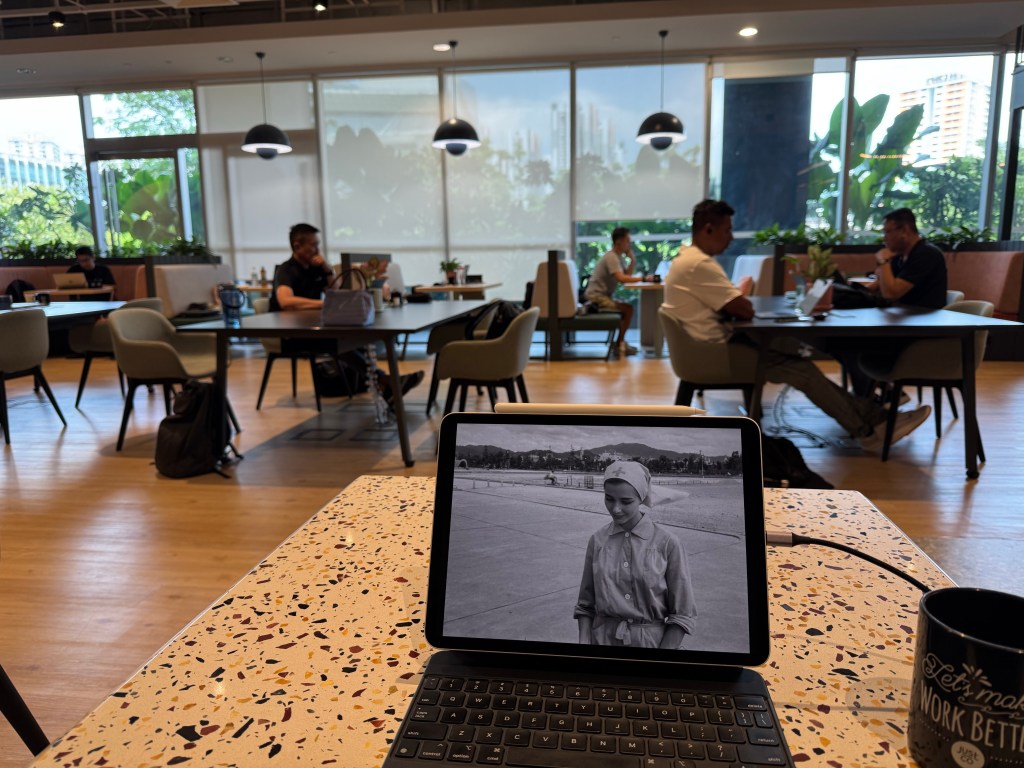
Monday got off to a good start when I finally landed one of the coveted booth seats at the co-working space. Up to then, they were always occupied by the time I got in, and it was a feat not repeated at any other point in the week. Because I’d only signed up for the month of October, and with Thursday the 31st being a public holiday (Deepavali, not Halloween), this chapter of drinking too much coffee and watching movies while surrounded by busy people has come to an end — let’s be honest, though, most of their screen time looks like chatting on Slack/WhatsApp and browsing the web.
I’m feeling a sense of loss about it, actually. For starters, the renovation noise is set to continue next week and might drive me out of the house still, now without a place to go. But more than that, I was just getting used to the routine and would jokingly say to Kim, “I’m going to the office”. It’s akin to the loss of a ‘third place’, a social setting distinct from home and work. However, I don’t even have a second place these days!
One thing that sitting still in front of an iPad for hours on end has highlighted is how important yet increasingly difficult it is to single-task. While thinking about my/our deteriorating attention span — that constant feeling of being pulled towards other tasks while in the middle of doing things I chose to do — I identified a root cause in myself: I have less trust in my memory these days. So when something occurs to me, say looking up a fact or sending someone a message, it’s harder to file it away for later follow-up, because I think I might forget. Past experience has probably taught me that I’ll forget.
On one hand, I could make peace with that. So I’ll forget a thing or two; big deal! I don’t have to optimize every detail. Things can be allowed to slip and it’ll probably be fine. Or I could use the time-honored second brain productivity hack of… jotting thoughts down and then getting back to what I was doing? I may give that a go with the Quick Note button in my phone’s Control Center and see if it makes the distracted feeling go away.
The filmmaker Lav Diaz is known for making extremely long movies. At 10 hours, his Evolution of a Filipino Family (2004) is probably only consumable in several sittings and is the ultimate test of patience and focus. Like Richard Linklater’s Boyhood (2014), it was shot over more than a decade, and you see the actors age for real.
One could criticize its poor production values, shot in grainy and low-res black-and-white film and video, often with inadequate microphone coverage, or its loose editing and lack of action (its 10-hour runtime probably says something about Diaz’s attitude towards concision). But the message is in his medium, and I’ve found watching it to be a great meditative exercise; letting the mind alternately empty and gather and empty again as you watch the family slowly lead cattle from one end of the screen to the other or hold sparse conversations over meals, spread over minutes of near inaction. The first 2.5 hours passed effortlessly in a state of detached attention.
I also managed to watch Alain Resnais’s Hiroshima Mon Amour (1959) on MUBI without much distraction. It’s a hell of a film, visually inventive and beautiful, with an opening sequence that you have to see to believe, going from sensual shots of skin to burned and scarred consequences of the atomic bomb. Which is the backdrop for this film about war, love, and memory.
Having just visited Hiroshima for the first time last year, I was surprised to find so much of it familiar in this old work: the bombed-out dome, the peace museum, and its garden sculptures. It was also incredible to see its depiction of an interracial relationship between an Asian man and a white woman as equals. As far as I can tell, it was probably one of the first films to center such a couple.
The first few Apple Intelligence features launched this week in iOS 18.1, and while many in the tech press seem unimpressed by these ‘basic’ capabilities, especially when compared to products from OpenAI, Google, and Meta, I’ve found them so impactful to the way I use my computing devices that I can’t imagine going back.
Apple also announced impressive M4 updates to the iMac, Mac mini, and MacBook Pro this week, but I don’t need to upgrade!
For one, I can summarize long emails and webpages directly in Mail.app and Safari. My bank likes to send me long, jargon-filled market updates in its email newsletters, and now I can summon a quick paragraph that gets to the point.
When I get back to my phone after some time away, I can see what would normally be stacks of messages and notifications summarized into a few lines. I’ll still read them anyway, but it’s great to get a preview so I can triage for urgency. This is also useful when getting Siri Announcements over AirPods. Say someone sends me a long string of messages, instead of having them all read out over my music, I can hear a summary and know whether it’s important enough to pull my phone out for.
And coming back to the point about avoiding distractions, there’s a new focus mode called “Reduce Interruptions”, alongside others like “Work” and “Do Not Disturb”. This reads and assesses all your notifications with AI, and will only show you things that seem time-sensitive or important.
There are also Writing Tools that I’ll be using to proofread this post before sending it out, and a Clean Up tool that can remove objects in photos using a generative model. It’s quite good, certainly enough for casual use, and I’ve seen online examples of it pitted against Adobe’s equivalent AI tools and actually coming out ahead in some situations. Plus, everything happens on device, which is great for data privacy reasons.
A quick demo of the Clean Up feature in Photos.app
One grumble I have, though, is that Apple appears to be reserving its upcoming Visual Intelligence feature (where you can point your camera at something and have the phone offer contextual information) for iPhone 16 models with the new Camera Control “button”. I hope they’ll make it work with the Action Button on iPhone 15 Pro models, but am preparing that I won’t have it until I upgrade to next year’s 17.
In the meantime, I have found a new use for my Action Button: starting the Apple Music 1 radio station. This has proved super useful and convenient. If I’m anywhere with my AirPods in, getting some music going is now just a button press away, even without getting my iPhone out of my pocket.
Take a minute to appreciate this ad that Apple made to celebrate the debut of this radio station back in 2015, back when it was called Beats 1 — a far better brand in my opinion. It was a simpler, more optimistic time. Watching this, I believed that a global internet radio station dedicated to great music, across all genres, could map differences in culture and unite us all.
I must mention that Nintendo joined the music streaming app business this week. Nintendo Music is free for subscribers to the Nintendo Switch Online service (USD$19.99/yr), which I already am for purposes of playing games online and backing up saves from my Switch. However, the app is not available in Singapore as Nintendo’s online services are not officially available here — one has to create a US account instead. But complaining about Nintendo’s digital and worldwide strategy is a whole other post.
So far, this music service is pure win. Classic first-party soundtracks from the best in the business, with curated playlists for different moods and activities, and the ability to “extend” some tracks to an hour’s length (it appears there’s more to this than just looping the songs) for use as background music? With more music continuously being added? It was enough to make me jump through the hoops of switching App Store accounts to get the app on my phone. And so I’ve been listening to the sounds of Animal Crossing: New Horizons again, feeling nostalgic for the early days of the pandemic when great music in a cozy game did unite the world during a very stressful time.
They should add Shortcuts support to the Nintendo Music app so I can start playing music via the Action Button.
I may buy Nintendo’s upcoming Animal Crossing: Pocket Camp Complete smartphone app, which is their clever solution to keeping the live service mobile around after its servers shut down. You can buy a fully offline version for $10 (going up to $20 in January 2025), with all 7 years (!) of old in-app purchase content included. Current players with saves can resume their progress, but I will probably start over again. The new app launches on Dec 3, 2024.
Remaining media activity
I’m halfway through reading Variable Star, a book by Spider Robinson based on an idea and notes left behind by Robert Heinlein. So, it’s a posthumous collaboration, and a very entertaining one at that.
We waited till all episodes were out and then binged Season 4 of Only Murders in the Building. This is not my preferred way of watching the show; I believe spacing them out lets the story breathe and be remembered better. But Kim is going away again for a couple of weeks, and neither of us wanted to wait that long to pick it back up.
I finished Season 2 of The Old Man and remain impressed. It’s one of the best ‘classic’ espionage shows in recent years, and if you have a better one to recommend I’d love to see it. I’m talking old-school, Tinker Tailor-type spy intrigue, which reminds me I should pick up a John le Carré book next, because I don’t think I’ve ever read one. Btw did you know Nick Harkaway is his son??
After six months, we caved and reactivated the Netflix subscription. Kim wanted to watch Culinary Class Wars on her flight, and I’m keen to check out some of the new anime series they’ve put out, like Ranma 1/2, Dan Da Dan, and Season 2 of Oshi no Ko. I watched 9 episodes of the latter on Sunday; it’s that addictive. It was always a great looking show but the artistry and animated flexing is on another level now: some of the kinetic montages and dramatic sequences jump through a dozen art styles in as many seconds, and feel inspired by the Spiderverse films and maybe even Satoshi Kon’s Millennium Actress (2001), which might be my favorite animated film of all time.


















































 sangsara.net