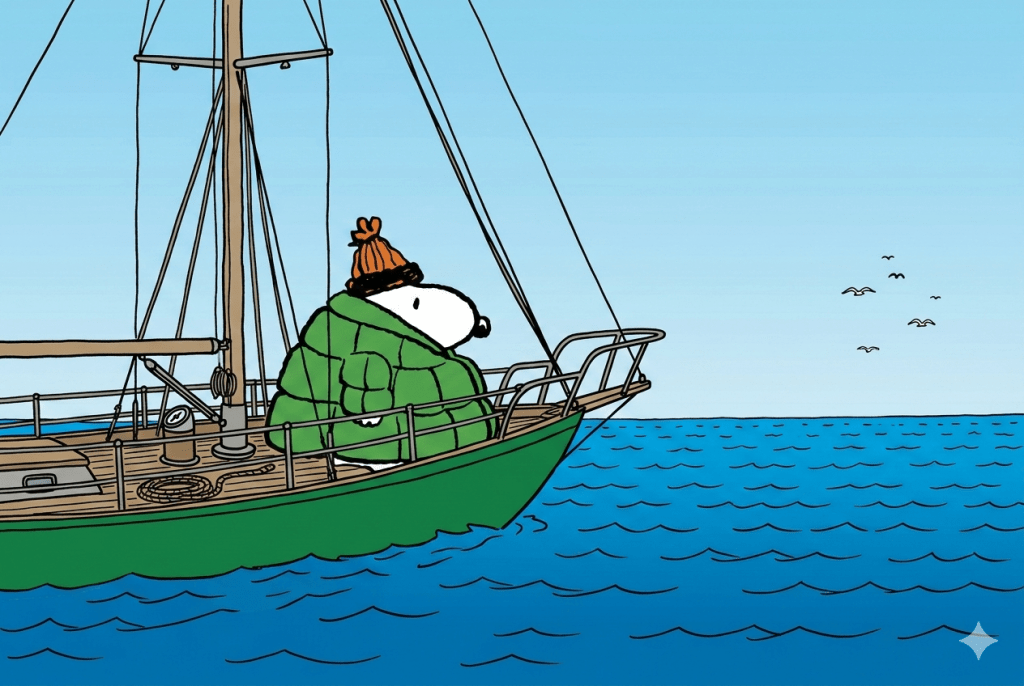
The featured image above is the result of having Geese’s Au Pays du Cocaine in my head all day. The line about a sailor in a big green boat and a big green coat made me think of Puffer Jacket Snoopy, and of course I had to realize the joke.
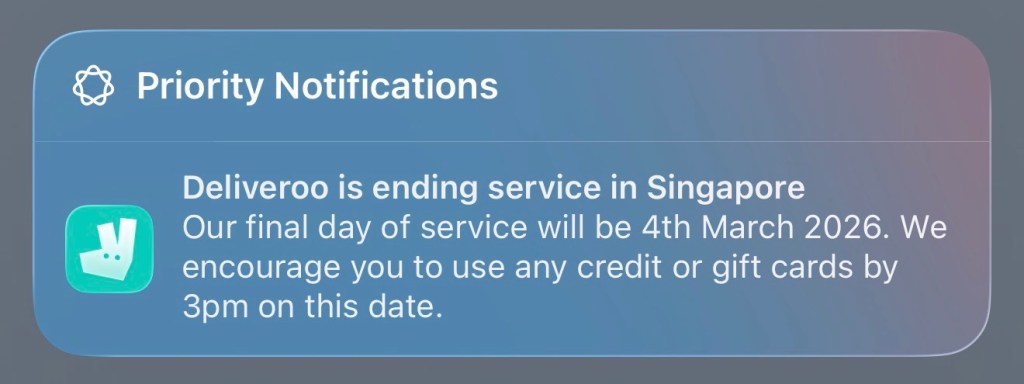
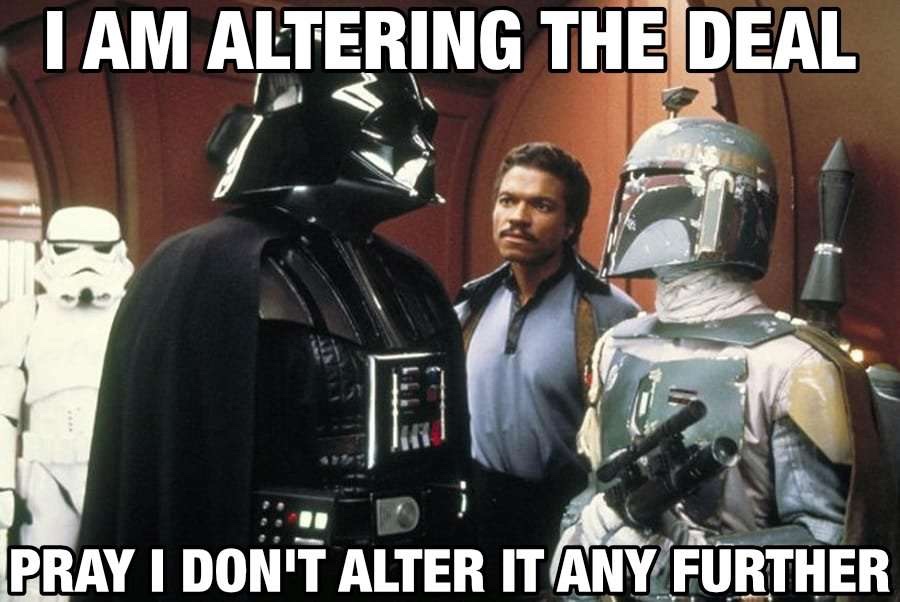
We got the sad news that Deliveroo is shutting down operations in Singapore. This comes on the back of an acquisition by DoorDash who must have run the numbers and decided that a 7% share of the local food delivery market after a decade wasn’t worth investing further in. We use it all the time and prefer it over Grab and Foodpanda — it is by far the better app and their subscription service is better value for money, but we’ve seen this movie before. It’s like how Uber lost out to Grab; the market doesn’t always choose efficiently.
I will probably switch to Foodpanda because Grab as a brand has the same icky halo as, say, Facebook or Spotify.
Google released Nano Banana 2, the new version of their hit image generation model. This one is cheaper to run and kind of almost as good as Nano Banana Pro, so they’re making it the default for everyone. Paid users can still access the Pro model, but it’s hidden behind some menus. It’s a regression in quality, a slight improvement in speed, and most importantly, a boost to Google’s bottom line. Since I only do silly things with these tools, it doesn’t bother me tremendously, but imagine the same happening at an enterprise level for more important work.
Screen recording of an AI panorama
One of the new things Nano Banana 2 can do is generate very wide panoramic images, so I asked it to render some “panoramas taken with an iPhone” in various locations. I then upscaled those and opened them in my Apple Vision Pro. They don’t have the photorealistic quality of images from Nano Banana Pro, and the resolution leaves a lot to be desired, but they’re still immersive and impressive when viewed in this way. You can see where this might go.
There’s been a lot of talk lately about how AI vibe coding could upend the SaaS market, if not replacing dependable enterprise tools with individually created ones, then at least giving IT departments a billion more unapproved apps to worry about. A viral essay from last week posited that AI coding could kill DoorDash, though I’d say they did a good job of that themselves out here. The other oft-discussed idea is that AI could replace the App Store, and everyone will just make their own apps instead of buying them from developers. Michael has been blogging about vibe-coding his own to-do list app based on Clear. I’ve been wanting to try this myself, making more little tools of my own to solve niche problems, but the opportunities have been slow to materialize.
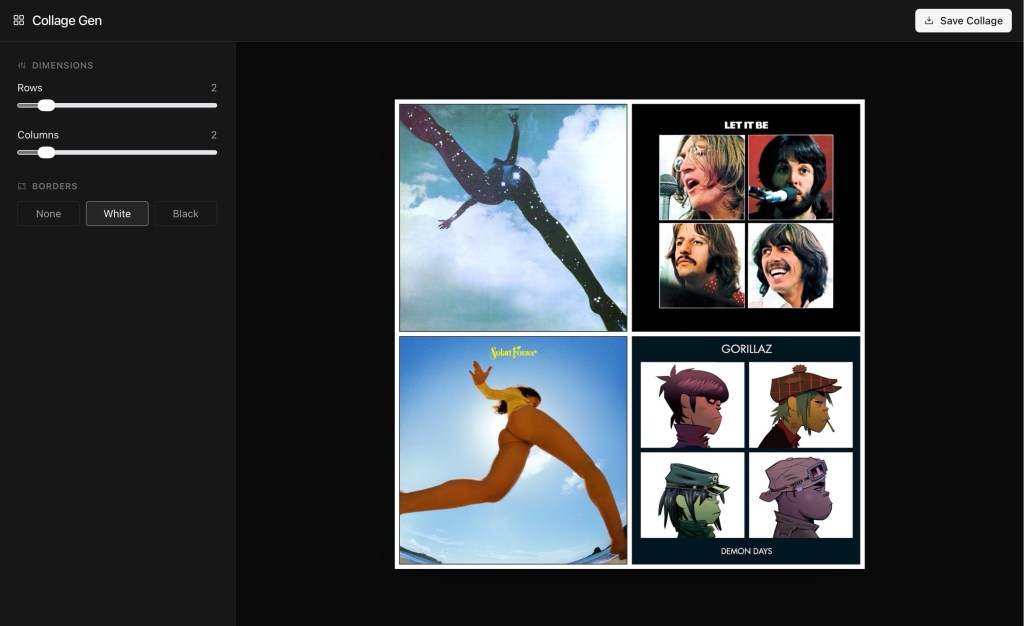
This week the right idea presented itself and I made a web app using Gemini: an album cover collage maker that searches for the artwork or lets you upload your own. I’ve looked online for something like this before but only found a few that were quite lacking. Making one to my own specifications took maybe five minutes of prompting and testing. Then I thought it would be nice if you could drag the images to different locations. Gemini added that feature like it was nothing. I’m pretty hyped that even someone like me with zero current coding knowledge could will this into existence. If you’d like to try it, I’ve deployed it at usecollagen.netlify.app.
Otherwise it was a sort of decompression week where I just read a lot, listened to the records I bought/ordered last week, and was regrettably glued to my phone watching day trading losses (Chekhov’s gun has fired!) and social media feeds.
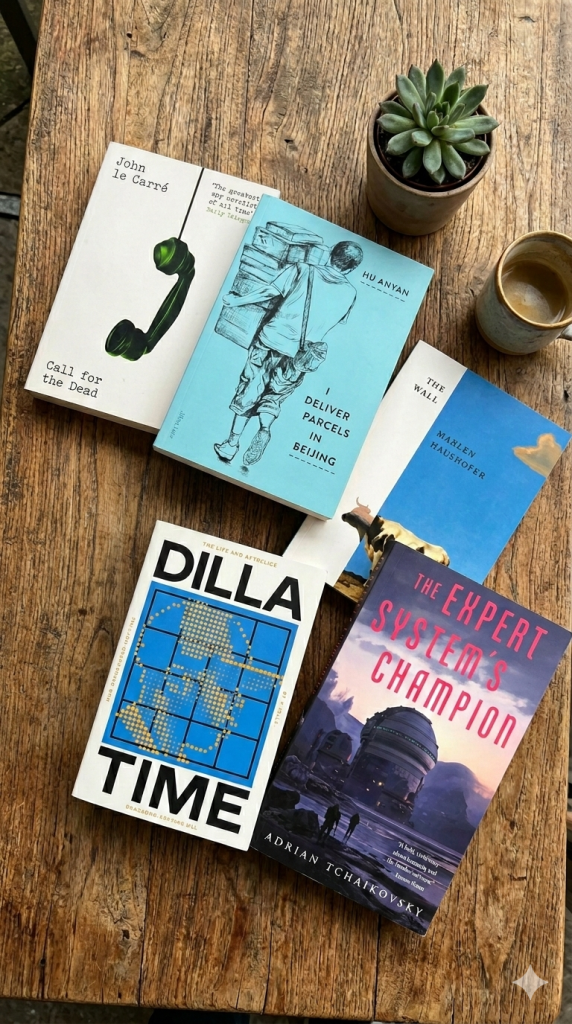
It took a couple weeks of dawdling but I finished John Le Carré’s Call for the Dead, his first novel featuring the spy George Smiley. I may continue reading the series, seeing as his son Nick Harkaway (whose work I really enjoy) has decided to continue his father’s legacy and written one more already: Karla’s Choice. This one was a little dated and not particularly thrilling, but a fine introduction and scene setter.
It was immediately followed by Adrian Tchaikovsky’s The Expert System’s Champion, sequel to The Expert System’s Brother which I read at the end of last year. I recommend both as examples of sci-fi stories set so far in the future that humanity has looped back around to the beginning. It reminds me of the “middle chapter” in Cloud Atlas, if you remember that.
Then I read Hu Anyan’s I Deliver Parcels in Beijing, a modern memoir that reportedly did well in China when it came out in 2022. It details the author’s dual career as a writer and on-and-off gig economy worker, which is made more interesting by also being a portrait of what it’s like to live in the lower brackets of Chinese society today.
I also had time to tackle Rob’s recommendation of Marlen Haushofer’s The Wall, which was written in the 1960s but doesn’t feel that way, unlike Le Carré’s spy novels. He called it the best book he read last year, so I could hardly say no. It starts off like an intriguing sci-fi novel: a woman visiting friends in the Austrian alps wakes up one morning in the log cabin to discover she’s alone, and there’s an invisible wall separating her from the outside world. Things then focus on survival and what it means to live and be human in solitude, and in nature. Which, given that I’ll be home alone next week while Kim is away again for work, means I’m already in the appropriate headspace.
One of my irrational fears that hasn’t gone away with growing older is that of going to the dentist. I’ve put it off over and over, and was pretty sure I’d make it last year but didn’t. I’ve done my best to handle things at home, even flossing daily which they always say you should do but I’m convinced no one actually does. This week I finally made an appointment to go, and it wasn’t as bad as I feared. They did find a cavity that needs patching up, but the appointment for that is only in a couple of months.
One thing that felt off was a recommendation that I get a certain procedure done — not only because I’d like to avoid pain wherever possible, but because it was prescribed before they’d even looked in my mouth. I’d only just said that it was my first visit in a while, and they said ‘okay you should get this done’.
Because it’s 2026, I uploaded my x-rays to Gemini 3 Pro for a second opinion. It analyzed the scans confidently (but of course) and told me the same things, but in even greater detail. It did not think the procedure was necessary, and gave me clarifying questions to ask the dentist next time. When it comes to a nervous person like me, it provided a better experience than a human dentist could because it was available to answer my many more follow-up questions, at all hours. This longer “consultation” made me feel better, although I’m well aware that taking medical advice from a machine that just says things isn’t the smartest move. But I know people do and will because it’s really easy, and so once again I’m saying this is really dangerous territory.
Why am I using Gemini so much, and what happened to Claude? Google decided to play dirty, I guess. They’re offering three months of their Pro AI plan (essentially Google One with 2TB of storage + access to Gemini Pro, Nano Banana Pro, and Veo) at a 90% discount. That’s about S$2.80 a month. These models are all so incredibly close in raw performance, that for someone like me who’s not using them for coding, the main differences are down to tone, character, and perhaps ethical alignment. I’m already sold on Claude for text-based work, but I thought I should spend some time getting a feel for how Gemini differs. Especially since it’s going to be at the heart of Apple’s AI features at some point this year.
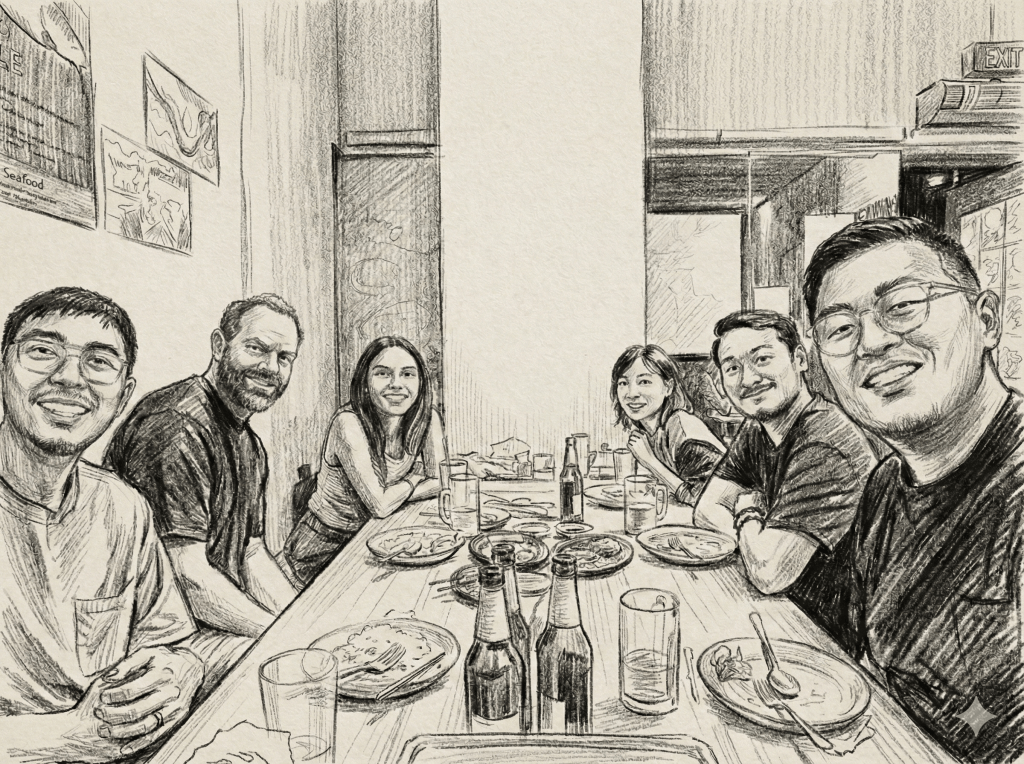
Friend and former colleague Rob is back in town for Chinese New Year. I thought I’d last seen him maybe two or three years ago, but it’s actually somehow been closer to four. The quickening pace of time’s slipping through the fingers at this age is alarming. The last time he was around, I’d just printed off some stickers of my Misery Men drawings and given him one. I had just gone back to work after my brief sabbatical. We were still wearing masks indoors (as seen in the linked post’s featured photo). Is there a German word for how relationships can pause and park themselves outside of regular time, so that four years feels like so much less?
A few of us met up for craft beers and Thai food on Sunday, with the reminiscing and catching up going past midnight. Here’s a privacy-preserving photo-turned-courtroom sketch made with Gemini’s help.
Media activity
I finished watching all 48 episodes of The Apothecary Diaries anime series on Netflix. It’s about an unusually educated girl, raised in a red light district, who gets kidnapped and sold to the imperial palace as an indentured maid where she gets to flex her skill with poisons and medicines. It’s set in a fictional country resembling China in the Tang Dynasty. Nothing about this should appeal to me, but it was one of the more enjoyable low-stakes shows I’ve seen recently.
I still haven’t finished reading Sleeping Dogs. But I did finish playing The Hokkaido Serial Murder Case a few weeks ago but forgot to say so. As a faithful remake of a retro game, it can’t be blamed for some of the dated gameplay. The art could definitely be better though — it would be a fine game for $20, but unfortunately is priced at $44.99.
It’s been a year since we were in Tokyo and I bought the Japanese supernatural murder mystery game Paranormasight, largely because it was set in the Ryogoku/Sumida district where our apartment was. In last week’s Nintendo Direct, a sequel was announced and so I decided it was finally time to get started on the original. It’s turned out to be quite good, with a dynamic visual presentation that goes beyond the usual VN style of talking figures in front of different backgrounds. The gameplay is constantly breaking the fourth wall as well: one challenge where you die after hearing a cursed sound is solved by going into settings and turning the volume down.
While feeling stressed out about the dentist, I played Jusant on the PS5. It’s a beautiful, dialogue-free game where you slowly climb a massive mountain and put together what happened to the people who used to live on it. It was fairly quick to finish and now I’m curious about Cairn, another game about scaling a mountain, albeit more realistic about the physical difficulties involved. Jusant’s nameless hero is practically superhuman and his arms are way too skinny for the insane amount of climbing he has to do.
My personal MUBI Shaolin film fest went on as planned, and I managed to watch a few more before they left the service. Gordon Liu had a role in just about all of them, which shows what a popular and influential figure he was in the industry. Who even comes close in Hollywood? Pedro Pascal??
If I had to recommend one Shaw Brothers film, it would still be Dirty Ho (1979) which I’ve mentioned here before. It’s essentially the same winning template that Jackie Chan’s career was built on — lots of brilliant, intentional fighting moves masked as accidents and incompetence.
The most uneven one I saw was Legendary Weapons of China (1982), which has about five different plot lines running through it, all to provide flimsy justification for the spectacular finale in which 18 (!) different Chinese weapons are brandished, and as many fighting styles showcased. It’s like Don Draper pitched that idea on a whiteboard and then they had to come up with another 70 minutes. There is an extended action sequence in a straw toilet hut floating over a river, where people literally end up in the muck. This absurd scene involves both kungfu and possession with voodoo dolls.
In another realm of absurdism lives Dogtooth (2009), the debut film of Yorgos Lanthimos which made a splash at Cannes that year. I saw it on MUBI this week because I liked Bugonia (2025) and wanted to start at the source. Jesus, this film is an exercise in creating the wrongest setup and then having its characters do things that follow on logically but are still nevertheless very wrong. You get the sense of perversity for the sake of it, or to give life to the director’s own kinks, sort of like Tarantino putting his foot fetish in everything — but still actually much worse.
However, do something terrible with craft and conviction, and it will gain lasting historical value. That’s how this world works; I don’t make the rules! But what if you don’t actually make the thing and just have the idea. In the form of a prompt, let’s say?
Images that never happened
Google released their Nano Banana Pro image generation model recently, and I’m sure we’ve all seen examples online by now. Things have progressed to the point where I’m constantly questioning the veracity of things I see online, and I think at some point the mental filtering will become so tedious that we’ll simply stop wondering and accept things that are true and untrue equally. If the short-form video that ruins your brain’s ability to focus and feel joy on normal terms makes you laugh, who cares if those things really happened? And then it will extend into other parts of life, and then… who knows?
I decided to see if Nano Banana could place me in ROSALÍA’s LUX album cover and, of course, the answer was yes. Too easily, in fact. I only supplied it with a single forward-facing photo of me at a dinner table, and it was able to extrapolate what I’d look like from a different angle. We are, ladies and gentlemen, so cooked.
It was also Black Friday sales week, and I decided to give VSCO Pro’s annual subscription a try at 50% off (hard to justify at full price). In addition to their Pro set of filters, which are actually really good, it also comes with access to AI tools, of course. Their object removal is state-of-the-art, to the point that it can invent very believable portions of an image that you wouldn’t notice unless really scrutinizing the scene. After a few experiments, sculpting messy scenes in old photos into what I wished they actually looked like, I had to step back and ask myself what the hell I was doing. Apple’s refusal to let the iPhone create “images that never happened” is absolutely the right stance.
VSCO AI Remove tool, before and after
What becomes of designers?
AI’s obviously going to change the way we work, and I’ve been worrying for a while now about the future of the design profession. About the people who do this work, whether they will continue to be attracted to it, who will pay for their services, and what those services will actually look like. It’s been hard to imagine timelines that are positive by the standards I care about.
As with many sectors that have experimented with AI tooling, I often hear that senior practitioners using generative AI models can get more done “on their own” — the highlighted phrase implying 1) without the assistance of those pesky junior people, and 2) more cheaply for the business. But just because the tasks once performed by junior people can now be done by AI doesn’t mean juniors can’t find something else to do, or don’t need to be trained anymore. Nevertheless, some business leaders are acting as if that were true.
A friend told me how it’s now possible to run a small agency powered by seniors + AI only, without any junior hires. They were surprised that I pushed back — but the idea sounded irresponsible to me. It’s one thing if you can’t find employment and have to embrace AI to put food on the table. It’s another to be in a position of strength late in your career and choose this. If you can’t afford to leave the ladder down behind you, I said, it would be better not to do it at all.
But because bean counters can always be counted on for short-term thinking and a reluctance to spend on design, some companies will go further and not hire AI-augmented senior people at all. They’ll either use inexperienced juniors or ask someone like a product manager to handle “design stuff” on the side using AI. Depending on how much the tools improve, the visible outcomes of this may seem acceptable for quite a while! Design won’t go away as a function, it’ll merely be handled by a different group of people.
My main concern has been that doing a good-enough job in this way will scale so well, and become the dominant approach so quickly, that we’ll lose the diversity and depth of craft that comes from having human practitioners out in the real world, doing things like interviewing users to understand outlier behaviors, reading contextual cues and hearing what they don’t say as much as what they do. Then using these unique stories to make the larger design solution more resilient. It’s a job that humans are well equipped to do. A business that relies on AI to create an average of best practices may happily miss all of it.
Why do I think this matters? Because while a bunch of LLMs trained on world knowledge (including artifacts from past design exercises) will generate pretty good insights and workable interfaces from a wide field of generic possibilities, it’s still a path to a monoculture of experience. And if we break the chain of passing down the skills to do the work, then some future post-AI generation will have to learn them all over again.
I wondered if there might be a market for artisanal human-led design work. After all, centering the role of human craft has kept the luxury goods market alive in the face of mass manufacturing. But that would mean it becomes something performative, and necessarily restricted to higher paying customers. I actually believe that AI augmentation can produce better work; I just don’t trust our economic systems to nurture it over cheaper work.
Teach an LLM to fish…
Then this week, I saw something on TV that seemed like an apt analogy and put me into a more zen state of acceptance. It was an episode of Japanology Plus on NHK, with long-suffering host Peter Barakan forced to go out on a small fishing boat in challenging waters. I was honestly surprised the producers/insurers allowed a man of his age to do it.
Anyhow, as they were heading back from being thrown around by the waves, he asked the captain how fishermen in the old days would have survived that ordeal without GPS, walkie-talkies, and engines. The captain’s reply was that it was more dangerous back then, and they had to use their experience and intuition, navigating by looking at the mountains and stars, reading the winds and currents. You can imagine many lives were lost on the job.
Would any of those old fishermen trade places with their descendants today, giving up those seafaring skills for the ability to catch many times more fish and live twice as long, comfortably? Very likely! Modern fishermen are still out there on the ocean but their technology distances them from intuiting the waters in the same way. We also know now that the scale at which they fish those waters is unsustainable.
Likewise, there will be more designers in the future, less skilled by today’s standards but able to oversee projects too complex for us to fathom. Maybe with worse overall outcomes for the world than if we’d never opened the mystery box of AI. But I realize now that this pattern of losing one thing to gain “something more, but worse” is simply an inevitable law of the universe. Two steps forward, one step back.
We lost a grand aunt at the close of last week, and attended her funeral and cremation on Tuesday. It got me thinking about qing ming, which is a day in early April (I had to look this up) where Chinese families traditionally visit their ancestors’ graves and do some neatening up. I have vague memories of being dragged along to do this as a kid, and even being allowed by my parents to skip school for it. I mostly remember the smell of burning joss sticks mixed with the dewy morning air and damp soil. For some reason we stopped going by the time I was a teen.
I talked about this with Cien and Peishan and they seemed to still be in touch with the practice of visiting graves, or in these days of diminishing real estate, a columbarium. If you asked me where my family members are buried or stored as ashes, I wouldn’t be able to tell you. I assume many of them have been scattered, either into local waters or some faraway favorite destination. Honestly, I like the idea of not being tethered to a single spot. If your spouse is still alive, maybe they’d like to keep you near, in some vessel at home. But if too many, or too few, people are sharing you then it’s better to be everywhere. A memory triggered by some food, place, or figure of speech. An algorithmically assembled photo collage tossed up by a personal computing companion one morning. A mention in some dusty book on a top shelf in a library, waiting to be seen by a future student or recycled into a supermarket receipt. I’d be fine with any of that.
Back to the funeral: it was held at the Mandai Crematorium and Columbarium, one of only three cremation facilities serving the whole of Singapore, and I was upset by how much it is in need of some design intervention. I wonder if any of the people managing the place have tried to look at the process with fresh eyes, or at least through the tired and grieving eyes of the people passing through it. Because they’d see so many moments that could be made kinder, more understanding, more dignified. The script could use a rewrite. Playing ‘Amazing Grace’ out of tinny $40 Bluetooth speakers in the final viewing halls is not it. For Chrissakes, please also remove the ugly MS Word-designed notices plastered on the viewing room windows, they obstruct the view of the caskets as they’re delivered (by industrial forklifts!) into the flames. I’m not exaggerating.
My shoes fell apart. They were the second pair of New Balance 990s to do so, doing nothing more strenuous than supporting my occasional walking about town. The last pair lasted three years; these only made it to two. At around S$300, these are supposed to be the best shoes that NB makes, but I’m beginning to think their ‘Made in the USA’ label is more a statement of liability than superiority these days. The Chinese-made models could probably survive a decade. Alas, with my big feet and aversion to swooshes, the 990s are some of the only shoes I’m comfortable in, so I’ll be buying yet another pair — online, too, since they stopped local distribution of the wide sizes.
Google upgraded Gemini with the Nano Banana image model that’s been trending on Twitter, and the bar for impressive generative AI has been raised again. It’s extraordinarily capable (and fast) at combining images with accuracy, as well as reimagining them in different styles and from different perspectives. A few months ago, Gemini was an also-ran, but maybe something’s shifted at Google and they’re an actual contender again. As much as I try to avoid Google services, I suppose I find them preferable to OpenAI and Meta. Take a look at the example above where I asked it to redraw a scene I photographed last month in Melbourne, but from above.
On Thursday I met two friend-couples, who I’ll call Mong and Jogina because it sounds amusing, for a rare weekday afternoon lunch where it was made abundantly clear that I’m behind the times for not having seen K-Pop Demon Hunters yet. Circumstantially, we’ve all got the time and flexibility to do these weekday catchups more often than once or twice a year, and maybe we should.
Aside: I did see the movie later, and it’s really good! My main gripe is the use of stuttering frames for the character animation, which worked fine in Sony’s Spiderverse films but break immersion here. The frame rates also seem uneven from scene to scene? Speaking of Sony, I’d hate to be the person who decided to sell this to Netflix for just $100M.
Afterwards, some of us went on to check out a nearby Crocs store (hear me out!) because a new collaboration had just launched: Animal Crossing! I just tagged along for a look, but became increasingly afraid as we got nearer that I would end up buying a pair. Kinda like how I bought the first iPad at Funan mall in 2010, that I absolutely wasn’t interested in… until I joined the line. Thankfully, my senses returned, and they only carried the smaller women’s sizes. God bless my big feet!
The book club is still reading Cloud Atlas, and at one point, a character mentions Carole King’s Tapestry album playing at a low volume in the background. I realized that I’ve known about this album forever but never heard it. So I put it on while reading. And boy did I know half the songs on this. I was beginning to wonder if it was a covers album, that’s how familiar they were. Incredible work, and a deserving #38 on Apple Music’s Top 100 Best Albums list.
And finally, a little gaming episode:
As previously mentioned, I’ve been playing the first Shinchan game on Nintendo Switch as a way of marking the summer — never mind that it’s always summer here in Singapore. It started well but I found it increasingly repetitive and uninteresting, and have been trying to just get it over with. The game features a time loop, where you replay the same week over. I spoke to Evan about it while I was on the second week, and he told me to hang on until the fourth week.
>> I was like, “there’s four fucking weeks??”
>> He said, “the real game BEGINS after week four!”
>> “How is that possible?”
Reader, I’ll tell you, I was ready to delete the game then. At the end of the third week, it seemed that I had all but completed the game. All my tasks were done. Then as the credits rolled, I texted him back:
>> “Dude, I’ve finished the game, what’s going on?”
>> And he says, “You haven’t, that’s just the beginning, get ready.”
>> “I don’t believe you, don’t mess with me!”
By this point, I had put in about 7.5 hours and couldn’t take it any more if this was just an extended prologue. There was just no way. The game was surely done! Then he asks me if I’ve done a certain thing yet, and I’m like:
>> “Uh yeah… long ago? In the first week?!”
Suddenly, I realized he’d spent the first three weeks mucking around and not doing any of the main game’s tasks, and only got started on the story just before time ran out. So yes, I had finished the game. Thank fuck for that.
This week’s installment is update #256! That’s a big deal for fans of computationally significant numbers.
Oddly, just as Michael blogged that his family was down with gastroenteritis last week, a similar bug hit our household. Kim got a bad case of what we thought was food poisoning, and then, of course, I came down with it two days later. It’s a weird one: the stomach trouble comes with headaches and fatigue. Fearing that it was contagious, plus being all tired out, I had to skip one meetup and a wedding dinner over the weekend.
So not that much happened with me this week, but I suppose we can talk about the mess out there?
Google held their annual I/O event and showed off their latest AI achievements. Tl;dr, some of this stuff is just gross. From a technical standpoint, yes it’s remarkable that pretty realistic video (with sound) can be generated from text, and Google can now use your personal context from documents and emails to help with tasks — similar to what Apple promised (but has yet to deliver), with the important distinction that one centers privacy and on-device computation while the other will do it on their servers. I don’t know if I trust Google to let an AI crawl all my documents, and for that reason, minimized my exposure to Google years ago.
I remember when Gmail first came out and pioneered showing contextual ads next to your emails. There was an uproar, and the company had to calm people by saying ‘no one is reading your emails, it’s just automated keyword matching’. Well, with LLMs, it’s much, much worse. No human would be able to go through all your messages, photos, location data, and search history to piece together an invasive psychological profile about your vulnerabilities, and make it actionable for advertisers. Trust that an AI will. Just look at how a version of Claude 4 Opus in testing tried to blackmail an Anthropic engineer over an affair it believed they were having.
Beyond the business model of Google’s AI products, it’s their designed intent that feels particularly bleak. One example they proudly demoed: a friend emails asking for holiday recommendations at a place you’ve visited. Instead of writing them a thoughtful reply, you let Google AI scour your photos, emails, documents, and receipts to auto-generate a message, using words chosen to sound like you. Sundar Pichai even had the nerve to say, “With personal smart replies, I can be a better friend”. With friends like these, don’t even bother writing. Just ask Google directly and it can snoop the inboxes of a billion other customers to give you the statistically “best” itinerary.
And this is where a company’s lack of imagination and care makes itself plainly apparent. Instead of designing an AI system that writes replies in your place, they could have made one that recaps your holiday with a little presentation showing you where you went, what you did, and what you enjoyed most. Then, memory suitably refreshed, you could sit down and write your friend a reply that shows you actually give a shit about them, and both of your lives would be richer for it. I’m beginning to think that Apple, by failing to ship their AI features on time, might be saving us from a future I don’t want to live in. Maybe they’ll never ship. Maybe that was the plan all along.
Then a man who many would expect to know better — who sits on stages and professes the importance of values in technology, and is arguably the most famous designer of this century — announced a new venture (also called io) with Sam Altman and OpenAI. And the vibes, my friends, were off. The 9-minute launch video came across as a thin PR exercise to polish Altman’s spotty public image and reassure OpenAI’s investors. It struck an uncharacteristically self-congratulatory tone for the usually humble Ive while announcing, essentially, nothing. Sterling Crispin tweeted a biting Marxist read of the video in the style of Slavoj Zizek. Many saw it as Altman angling for a Steve Jobs comparison, with critics pointing out that he’s not enough of a product person to be a true partner (and necessary editor) to Ive. In any case, I have no doubt that the io team will deliver some beautifully designed hardware. But I fear even they can’t summon enough thoughtfulness or optimism to divert AI from its current trajectory, or prevent the cultural and societal wreckage it’s likely to create.
Speaking of nice devices, one of my fondest gaming memories involves my last year at university, when I switched from my PC to a Mac that was relatively useless for playing games. I couldn’t imagine not having any games (this was before smartphones, mind you), so I bought myself a Game Boy Advance SP — the pinnacle of the series, in my opinion. It’s hard to imagine a more perfect form factor for a handheld console. The clamshell design protects the screen; the vertical layout keeps your arms and hands close together, even when squeezed into an economy flight seat; the screen was sharp and self-lit, which was not a given in those days. I would lie in bed in the dark on cold nights and play Final Fantasy I until I was bored to sleep. To this day, I still fall asleep during boring turn-based battles — one of the reasons why I want to try Clair Obscur Expedition 33, since it blends turns with real-time actions. Pretty sure I traded in my GBA SP for store credit to buy the Nintendo DS (DS Phat) when it came out later that year, and I regret it.
Anbernic, the China-based maker of retro emulation handhelds, released a clone of the GBA SP last year, the wonderfully named RG35XXSP. It runs a Linux-based operating system and may or may not come preloaded with thousands of classic gaming ROMs from the NES to the PS1 — you should only play the ones you actually own, of course. I didn’t get one because Anbernic doesn’t have the best rep when it comes to build quality, and I wasn’t sure they’d get it right the first time. Fast forward to today, and the new RG34XXSP (yes, it went back a model number) looks to be the one to get, even over the competing Miyoo Flip V2. DYOR (do your own research) though! They made it slightly smaller, dampened the button clicks, added two analog thumbsticks for wider compatibility, and came up with some better colorways. Now that it finally sounds more like a product than a prototype, mine’s on its way in the mail, and I can’t wait to relive some old games while waiting for the Switch 2 to arrive.
Meanwhile in Japan, Fujifilm decided to get in on the nostalgia cash grab game with a new camera release, the long-teased “X half”. Many expected this to be based on the X100 or GFX series, that is to say, employing an APS-C or medium format sensor. But no, it’s a 1-inch sensor, vertically oriented to resemble 35mm half-frame photos. A major selling point is the ability to shoot “in-camera” diptychs (a two-photo collage). The overall camera concept is fantastic: it has a 32mm lens, is very small, and features a “film camera mode” that is basically a physical version of those iPhone apps that try to simulate the fun limitations of analog photography. When activated, you are locked into a chosen film simulation look until you’ve used up a virtual roll of film, ranging from 36–72 half-frame shots. You can’t see any photos until you finish, and you can’t even use the digital screen to compose shots, only the optical viewfinder.
I would be down for this, except that early reviews show many corners were cut between concept on paper and the final product. Firstly, it’s made of plastic painted to look like metal. There are no words for how much I hate this when done badly. There’s also a visible seam on the front face that ruins the look. Then the processor seems to be slow, and it ruins the illusion of the film advance lever which you need to crank before taking the next shot; it’s reportedly unresponsive until the last photo has saved. If you’re going to fake analog mechanisms then it has to be perfect! The flash unit, a big part of the analog film camera look, is a weak LED rather than a xenon bulb. Then there are the cheesy overlay effects, like light leaks and “expired film” color casts, which seem borrowed from the company’s Instax evo cameras rather than its premium X series. The camera costs S$999, which many are calling too high, but honestly if they had to charge S$200 more to actually do the concept justice, I’d be on board. If some random startup made this for half the price, the flaws would be forgivable. But this is Fujifilm, and if you’re going to carry this faux film camera around and look like an old douchebag with more money than sense, it had better be good.
Until they do a better job, I’ll get by with the Diptic app I bought in 2010 which makes similar collages with just my iPhone (see featured image above), which also shoots vertical orientation photos by default!








 sangsara.net