Tag: inSpaze

  • Week 24.25

    Week 24.25

    • My Switch 2 finally arrived on Monday, praise be. It turned out to be an imported European unit, so it has the right kind of power plugs, but the included download code for Mario Kart World would only work with an EU eShop account. It didn’t take long to make one, but it’s yet another needless fragmentation of my digital footprint.
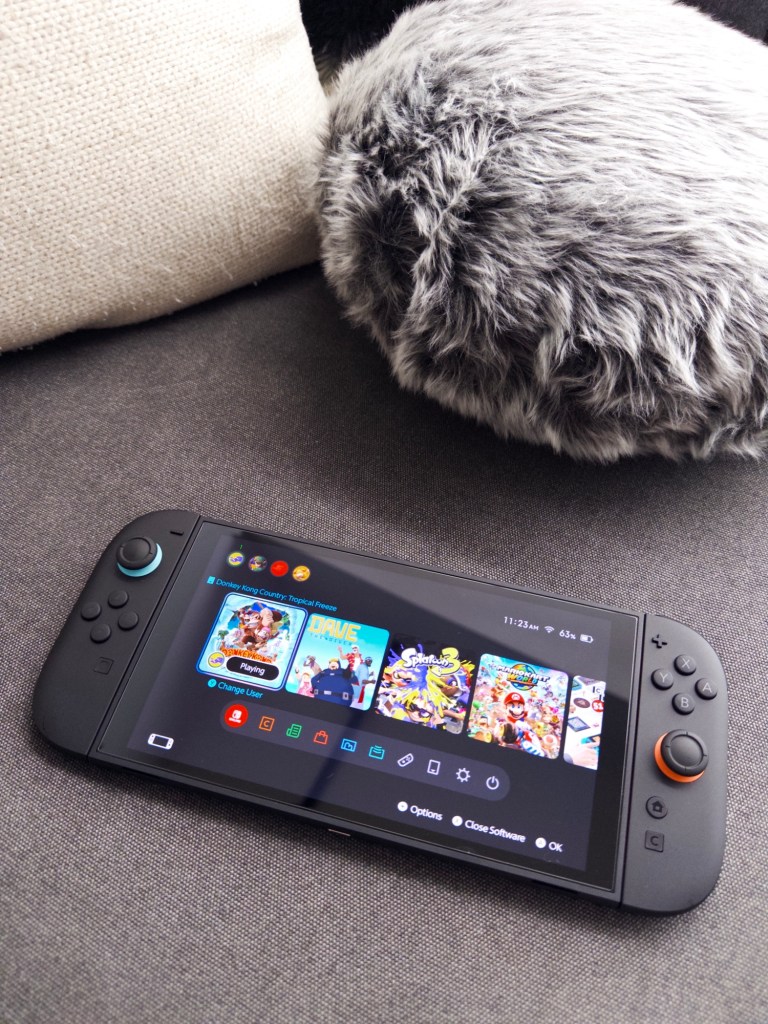
    • It’s a fantastic improvement on the original Switch. It feels more solidly built, and the magnetic Joy-Cons don’t creak and give as much when supporting the console’s weight. The screen is enormous but since the original wasn’t exactly pocketable anyway, who cares? It seems powerful enough to keep up with game requirements for easily another five years. The only regression is battery life, which they’ll surely fix with a new model two years from now.
    • I have yet to play anything on it that graphically pushes into PS5 territory with ray tracing and photorealism; although running Mario Kart World at 60fps in 4K is definitely not something the old Switch could do. That same smoothness extends to Splatoon 3, which got a Switch 2 upgrade patch on Thursday for the franchise’s 10th anniversary, and it feels amazingly fast and fluid on the new hardware. The once painful load times have been reduced to almost nothing, which is nearly worth the price of admission all by itself. At the very least, reviewers agree it’s more powerful than a Steam Deck.
    • Bert was back in town on a last-minute trip, so we met up with some of the old gang for beers and the kind of talk that middle-aged people will get up to if you let them: aging parents, how everything was much better before, and how we’d like to retire voluntarily before AI forces us to. Jussi was once again unable to make it, but he had the acceptable reason of being out of the country.
    • It was WWDC week, and with the comprehensive OS updates that were announced, it wouldn’t be an exaggeration to say that every Apple product experience will be changing this fall. I’ve had several conversations about the new cross-platform design language system they unveiled, which doesn’t have a name but is anchored by a new digital material called Liquid Glass, so people have just been calling it that. I wrote last week that I hoped the new look wouldn’t come with regressions in usability, specifically thinking about legibility and interaction clarity, but those are exactly the issues that everyone has been pointing out in the first developer beta. I’m hopeful that they’ll be able to moderate some of the more extreme decisions before the launch, but there’s no turning back. Like it or not, this is just how things are going to be for us users. What are you going to do, move to Android?
    • While talking to Michael again, one of us offered that Liquid Glass is simply a flex. It’s Apple building a visible moat with their superior silicon. Every iPhone, iPad, and Mac made in the last five years possesses power-efficient cycles to spare, which can’t be said of Android devices, save for a minority of the highest-end flagship phones. So when you look over someone’s shoulder in public and see morphing glass buttons accurately refracting the light coming off other elements on their screen at 60 to 120 fps, you’re looking at the digital equivalent of fine stitched leather. Luxury pixels. Veblen UI. Android manufacturers can’t follow Apple down this road without bifurcating the experience into cheap and premium versions, or forcing tradeoffs like reduced battery life and jankier animation.
    • The iPad got the most extreme makeover of all the platforms, and I’m a mixture of relieved, disappointed, and excited. Relieved that they’ve given up on trying to define some new paradigm for managing multiple apps on a screen; turns out the answer is just the same overlapping windows we’ve had since the first Mac. Mildly disappointed that if they couldn’t crack it after some 15 years, then maybe there just isn’t a better way. The universe might be more constrained than we’d hoped. And excited that the iPad will now be a truer laptop replacement for the majority of people, and with that increase in adoption perhaps we’ll get developers excited to build new kinds of experiences for it.
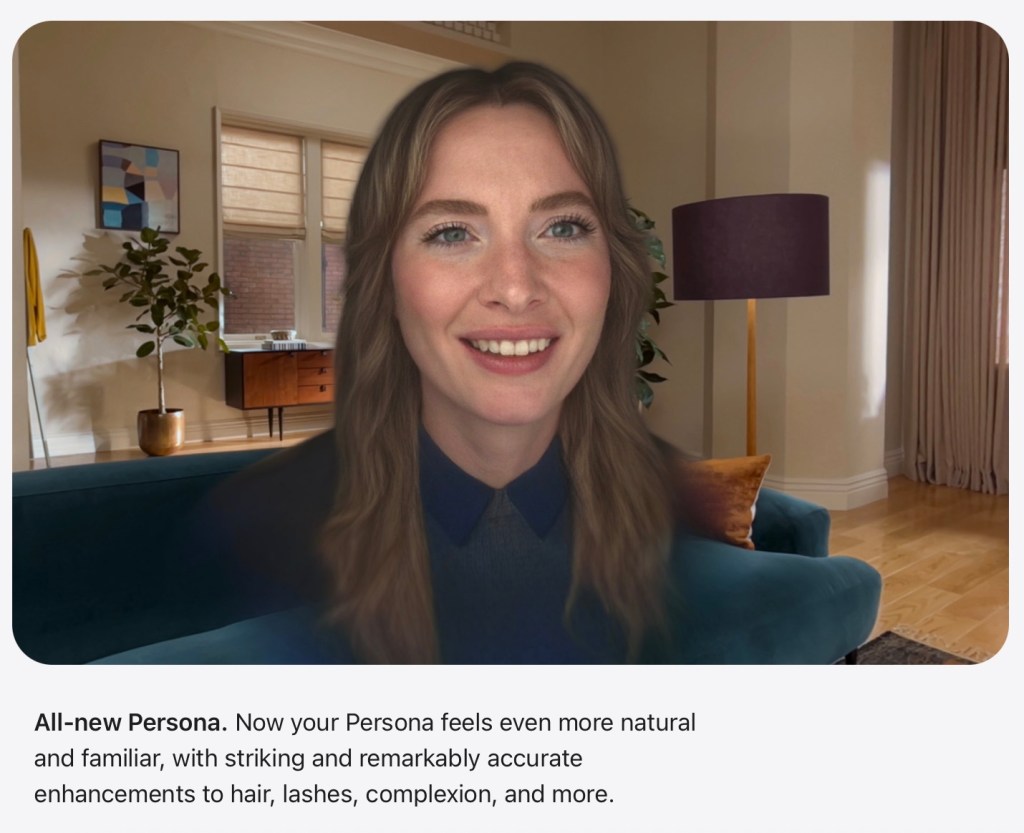
    Screenshot from Apple.com
    • As a Vision Pro owner, I can’t wait for the improved Personas, sharing virtual spaces with people nearby, and the new “spatial scene” rendering from 2D photos. I’ve already spoken to some people in inSpaze who are rocking the new Personas, and they look 10x better and more realistic than the old ones. In fact, it’s given rise to a weird social dilemma that can only exist in this age. I’ve known these people for a while and we’ve talked with each other quite a bit, but suddenly overnight, their faces have changed and it feels like I’m meeting them for the first time — or realizing I never really had. One person in the group chat looked younger now that his Persona got more accurate. Another person looked older and more intense than his previous Pixar-esque Persona suggested he was. They mentioned feeling slightly uncomfortable with how realistically they’re now presenting — the opposite of the safety that I described back in August last year: “the use of Personas creates psychological distance; it’s you, but it’s also more a puppet that looks like you.” Well, now it’s just your real face for everyone to see. I apologize in advance.

    I’ll leave you with two videos from Pulp, whose comeback album More continues to surprise me by being actually good, as if the band hadn’t gone anywhere for the last two decades. The first single has a great video (above) that uses generative AI in the best way possible. The second video below is a live performance of an old favorite, one of many appearances they’ve been making in support of the new stuff.
  • Week 39.24

    Week 39.24

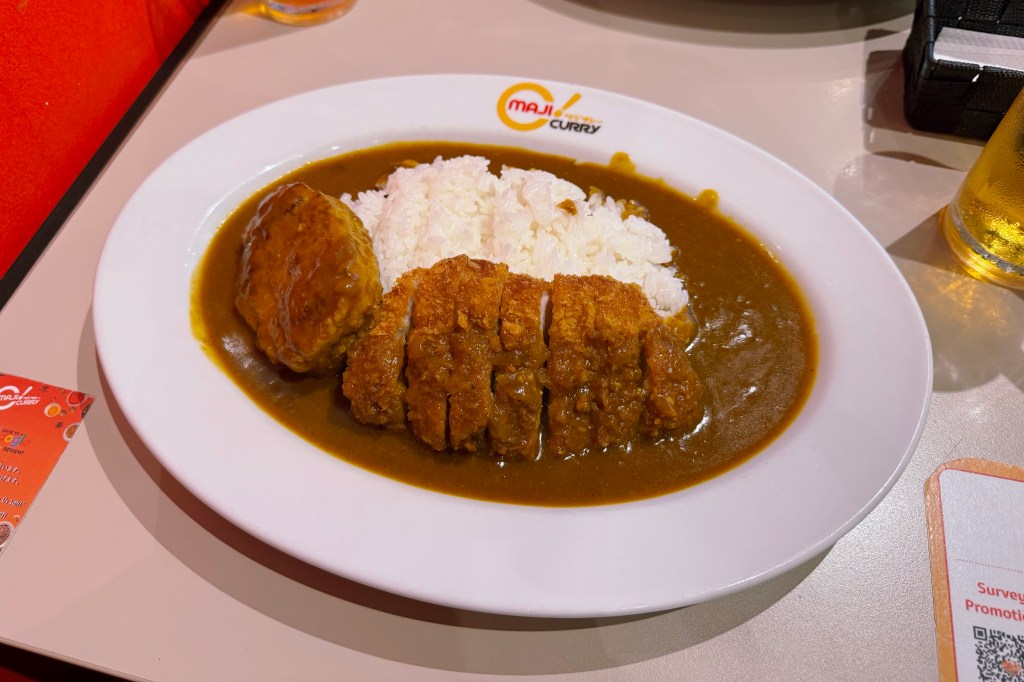
    Two visits to Maji Curry in 9 days. Think I’d better cut back for awhile…

    I blame a medical appointment for our being in the area. Remember how Kim took a fall a couple of months ago and hurt her leg? She’s been feeling mostly back to normal but was advised to get an MRI just to be sure. Late last week we met the doctor for his interpretation, and it was worse than expected. The tendon that normally runs down her entire leg has become completely detached from its anchor point at the top of the thigh. In other words, she’s currently missing a crucial muscle involved in leg movement. In practice she can still move it, but with less strength than normal.

    So the weekend was spent worrying about what this meant, until our follow up appointment this Monday with another doctor who was called to advise on surgical options. Yes, it can be fixed: they’d slice the thigh open, dig around for the loose tendon, stretch it back up, then attach it to the pelvis or wherever it’s meant to be. This would then be followed by six weeks of recovery and then indefinite physiotherapy. It also carries the risk of nicking a large nerve that happens to reside in that area.

    Fortunately, this doctor’s disposition was entirely the opposite of worried. He reckoned that as long as she wasn’t an athlete concerned with peak performance, one could get by without addressing this; other muscles compensate and exercise with physiotherapy will see her through it. He said many patients just leave it, and continue to have normal lives. It was exceedingly refreshing to finally get some good news.

    But in not so good news, my neighbor’s long-dreaded renovations are finally beginning next week. That means a handful of days where I absolutely can’t be home during the day (or I’d probably go deaf from the hacking of walls and tearing up of floors); a few weeks where I probably wouldn’t want to be home (noisy enough that one wouldn’t be able to read, think in peace, or get on a call); and a couple more months after that where the noise should only be a mild annoyance.

    I’ve already made plans for that first phase next week, which happily coincides with Singapore Design Week. That will give me a few things to see and attend around town from mornings to evenings. And then for the rest of the month, I’ve decided to sign up for a membership with a co-working space company (a la WeWork), and spend my days hot-desking like a digital nomad or startup serf. It sounds ideal: air conditioning, power, WiFi, free coffee, and a change of scenery. I might even meet interesting people?! Although I’m more likely to be watching movies or gaming on my Switch rather than doing any real work (unless some new side project idea hits me).

    This is way better than my original plan, which was to hang out at public libraries the whole time. Fewer amenities there, and a lot more competition for desks because our libraries are very popular hangouts for senior citizens these days.

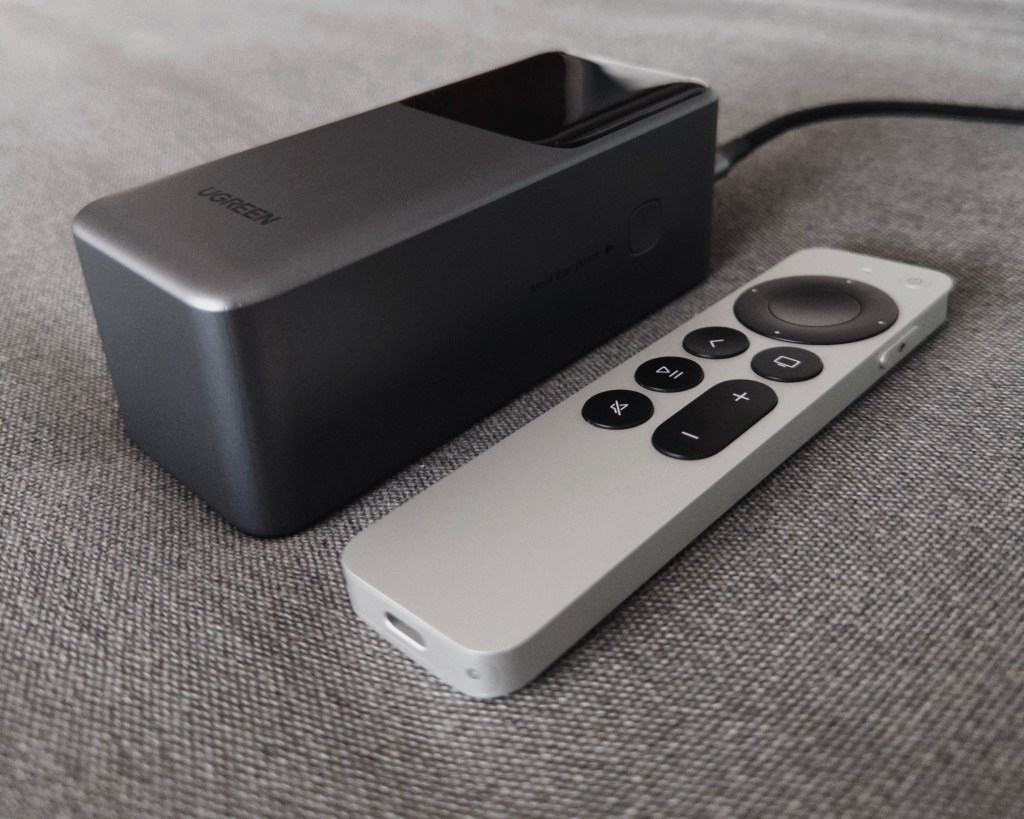
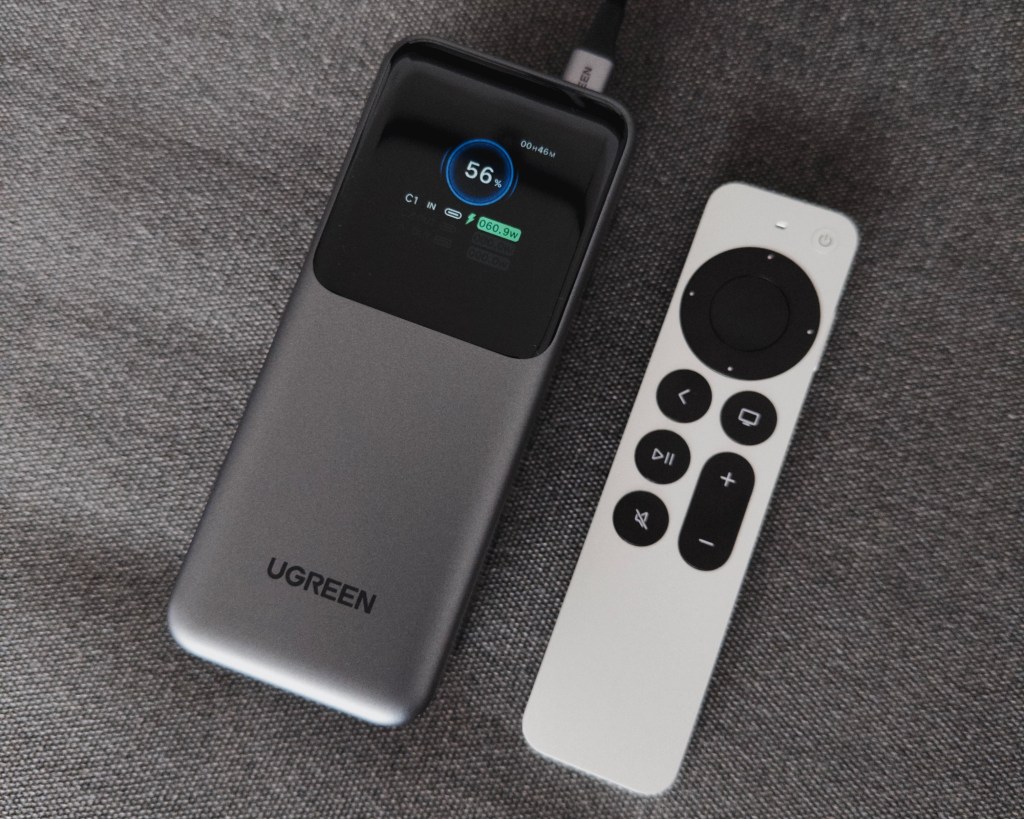
    Anticipating being in libraries where plugging into wall sockets might be frowned upon, I made a premature purchase that arrived this week: the most powerful power bank I’ve ever had. My requirement was that it had to comfortably get me through a whole day or more of using everything from my phone to a MacBook to a Vision Pro.

    And so I did some research on what a modern power bank looks like, and decided Ugreen’s Nexode lineup offers the best value. Anker has some competitive ones in their Prime series, but they’re twice the price and (as I discussed with Michael) they’re not even that reliable or safe these days.

    If you haven’t bought a power bank in recent times, you might be surprised by what they can do now. For starters, the one I got has a 20,000mah capacity with a maximum total output of 130W over 2 USB-C PD ports and a USB-A one for legacy devices. That’s enough bandwidth to fast charge two MacBook Pros at the same time. There’s also a digital display that shows you real-time power draw stats, and estimates of how long you’ve got before the battery is depleted (or fully recharged). Ugreen claims that it uses EV-grade batteries that can stay above 80% capacity for 1,000 charge cycles (Apple’s guidance on their batteries is only 500 cycles, for comparison). Given that coworking spaces provide lots of power points, I don’t really need one now but it’s good to have around?

    For the record, I’m still undecided if I actually would whip out the Vision Pro in a coworking space. But I can’t imagine not using it for an entire month. This week, I wandered into a conversation in inSpaze (an immersive social network I wrote about here) and found myself invited to a ‘live’ test of a new feature. It essentially lets you upload a large video file (say, a home movie or film that you absolutely have the distribution rights for), and invite others to watch it with you in real time.

    The final release will include a special 3D environment suited for watching videos, but for this test we were just in the usual “living room” environment. Spontaneously watching a film with strangers was more fun than it sounds. Everyone was well behaved and went on mute, chatting over text instead. In that way it was better than watching a film in a real theater with inconsiderate whisperers. We gave our feedback and suggestions afterwards, and I said that a visual/spatial way to express emotions like surprise or amusement would be nice to have, better to subtly feel a sense of community with everyone else in the theater.

    ===

    I also tried a bunch of new camera apps. Halide really started a trend with their Process Zero mode, and now I’m seeing new and existing apps tout a “no AI” approach. I won’t link the more blatant copycats, but will quickly mention a few that go beyond just adding a RAW capture feature.

    Fig Camera is currently in beta and offers a novel minimal camera UI, along with the ability to create your own camera-capture-to-file processing pipeline with LUT files. It also has a couple of options for taking more natural photos with less “AI” and Smart HDR, etc.

    Mood.Camera is more of a traditional retro camera app with a selection of film-inspired filters, but it also lets you select from different levels of dynamic range enhancements: from zero (expect harsh, blown highlights) to an ‘Extended’ setting that’s even more artificial than Apple’s defaults. I really liked how the dev has modeled certain aspects of lo-fi film photography that are very hard to achieve with pure HSL sliders and presets (like the ones I’m fond of making in Darkroom). Stuff like different grain sizes, halation, and textures. I impulse bought the lifetime unlock for S$20 and now slightly regret it because the color shifts are quite strong and there’s no way to turn them down at this time.

    Lampa also captures pure sensor data before Apple’s process gets a chance to stack and merge and overdo the brightness. It then puts your photos through their own RAW development profiles (the app description says they’re not “just filters”). There’s no option to shoot with Apple’s processing, unlike Fig and Mood. Surprisingly, Lampa only offers four distinct and pleasantly subtle looks, unlike the plethora of filters standard in Mood.Camera and most others. I’m a fan of this minimal approach but unfortunately the pricing model is maximalist and they want S$40/yr.

    Bonus: if you’ve been shooting RAW files with Halide’s Process Zero (or any other app’s single-capture RAW — not to be confused with ProRAW), you might appreciate this Darkroom preset I made that emulates the high contrast monochrome look that the Ricoh GR cameras are famous for. I repeat, they are tuned for the brightness profile of iPhone RAW files.

    Add P0-GRBW to your library here.

    ===

    I’ve been watching this streamer on YouTube named Pim who runs a channel called 4AM Laundry. Every weekend, he sets off with a backpack full of batteries and modems, and livestreams his adventures going around Japan to find retro gaming gems in secondhand stores like Book-Off and Hard-Off. They are soothing and educational, and great to have on in the background as he literally does this for 9 hours at a stretch.

    This week he was invited to visit the Tokyo Game Show with a press pass, so I tuned in for that. It’s an event I’ve always wanted to experience in person, even though I know it’s probably hellish and more fun in theory than practice. This was a nice way to get a glimpse of its atmosphere.

  • Week 35.24

    Week 35.24

    First, an update on last week’s air conditioning saga. During another service visit, the professionals confirmed what my online research had suggested: a malfunctioning thermistor was the reason for inconsistent cooling. To test it out, they swapped sensors between two indoor units, and now that the cause has been confirmed after a couple of days, they have to come back yet again to replace the broken one (S$161).

    Shortly after, I was coincidentally served this cocky tweet about how “reasonably smart” people with internet access can now challenge an expert about their specific problems, because 1) the information is out there, and 2) the customer has more invested in the outcome than the vendor. For the record I tried hard not to preemptively suggest it to the experts, but when they diagnosed a ‘thermistor problem,’ I wasn’t the least bit surprised.

    New house problem: We found a dead cockroach and it’s been bugging me. I made a poll on Instagram Stories and asked how many people have seen a roach in their homes in the past year, and was surprised the results were pretty much 50-50 (n=29). It might be down to how many people have apartments with integrated rubbish chutes or face open-air corridors. In any case, there’s always something wrong and I need the universe to give me a break or better mental health.

    ===

    I joined my first-ever book club after hearing about it from some folks I met in inSpaze. They meet in the app for an hour every week, and have what I assume is a typical book club discussion if not for the fact that (nearly) everyone is in a Vision Pro.

    They’ve just started on a new book, Guy Immega’s Super-Earth Mother, which I couldn’t find in the library’s catalog and had to buy off the Kobo store. The title is my least favorite part, as it could turn some readers off. I didn’t expect to enjoy it as much as I did, but I ended up finishing it in just a couple of days. I was later chastised for this, as we’re supposed to be reading it together over three weeks.

    It’s about a billionaire’s mission to send an ark of human DNA across the universe in the care of an AI (Mother-9), and how its efforts to colonize other planets goes. That premise immediately reminded me of the back-half of Neal Stephenson’s Seveneves, but this is a very different effort. I think I described it in my Goodreads review as “a compact and accessible space epic”.

    What’s making this extra special is that one participant is a friend of the author’s, and they’ve been filling us in on little Easter eggs and references to real-life experiences. There’s also a chance that Mr. Immega might join us for a short Q&A in a later session.

    This external push to read broke my summer reading block. I had stalled on Neal Stephenson’s Interface for months, but after finishing Super-Earth Mother, I breezed through another hundred pages and am enjoying it immensely.

    Kim’s pretty old Kindle Paperwhite finally died, and I got her a new Kobo Clara BW (she declined the Color model, which I still think was an extra $30 worth spending), which is a very nice and slender reader in person. I am now envious of its USB-C charging and Dark Mode support, and am trying to stop myself from buying a Libra Color to replace my first-gen Libra. At over S$300 dollars, even if I’ve read 100 free books on mine so far (I haven’t), I’d still have paid $3/book for the sheer utility of an e-ink screen, which seems silly to me because one can read perfectly well on an iPhone. Or a Vision Pro, even.

    I tried that, btw. Having giant floating pages in front of you is actually not terrible. And in doing so I hit upon another realization about the Vision Pro. Photographers are always saying that you should print your photos to appreciate them, at as large a size as you can, but how many of us really do? Most photos end up being seen on phones, and maybe laptop-sized screens. But now there’s a way to view our favorite shots at wall size and have a gallery-scale experience at home. And, I suspect, discover more flaws and limitations that will push us towards buying better gear. It’s tragic how much of the last decade we documented in piddly 12mp photos because iPhones were more convenient than dedicated cameras. Ugh!

    ===

    Media activity

    • We caught up on Sunny. This is a show that, on paper, seemed designed to light up my neurons. Robotics, AI, a Japanese setting, a “darkly comedic” mystery, a story about clashing cultures, an A24 production. But it’s not for me at all. I came across the above clip on how causality, consequence, and coherence (my terms) are essential in telling a story people can care about, and sadly Sunny fails to adhere to those rules.
    • But also on Apple TV+ is Pachinko, which has just returned for its second season, and I thoroughly enjoyed the first two episodes out now. I understand that it’s one of the most popular shows on the service, and I hope it finds an even wider audience.
    • The consensus online seems to be that Apple TV+ is full of great shows that people just aren’t discovering, and Bad Monkey is one of them. Again, I think the show’s title is the weakest link here, and you should be giving it a chance. Vince Vaughn does his thing, the dialogue crackles, and things move with causality, consequence, and coherence. It also kicks off with the discovery of a severed body part.
    • We rewatched Twister (1996) and then saw Twisters (2024). The original is an actual classic, directed by Jan de Bont (who also did Speed), and features a team of tornado chasers with actual, palpable camaraderie. You feel like you’re going along on an adventure with them, and part of that happens because the script bakes in ample downtime where they strategize, tell war stories while eating steak and eggs, and hang out in motels overnight. The sequel is almost embarrassing in how it tries to check a series of “mirror the original” boxes — there’s the in-over-their-head outsider whose terror is played for comedy, the traumatic past weighing on the female lead’s motivations, her magical gut feel that can predict weather better than the science-dependent nerds. But despite all that, it can’t reproduce the magic. Still, as a standalone movie, Twisters is not all bad, and Glen Powell is definitely becoming one of the most likable and bankable men in Hollywood. 4 and 3.5 stars respectively.
    • We also watched Office Space (1999), which I realize I’ve never really seen properly at all. It’s an anti-work masterpiece, with many themes and grievances that seem to be reemerging today. Sure, it came out around the time of The Matrix, when rebellion against cubicle offices was at its peak, but I can’t recall many films in the past ten years that have so strongly espoused quitting your dumb job, burning your workplace to the ground, and finding purpose somewhere else. 4 stars.
    • Gregg Araki’s Mysterious Skin (2004) was leaving MUBI, so I decided I’d better see it. Boy, what a downer. I looked at reviews on Letterboxd and here are some excerpts from the positive ones: “This is a flawless film, but don’t watch it.” “This is not a movie I should’ve watched.” “I will never recover from this.” “What if I just walked into oncoming traffic”. 4 stars from me, but I tried not to think about it too hard. It might be a 4.5.
    • Also leaving MUBI was the French film Summer Hours by Olivier Assayas. It’s a quiet and beautiful story about the familial unraveling that happens when a parent dies and there is ‘bric-a-brac’ to be split up and hard discussions to be had. Sad subject matter, but nowhere approaching the rock buttom of Mysterious Skin’s tragedy. Also 4 stars.
    • I tried again to start watching Assayas’s Irma Vep TV series, but various interruptions have stopped me from finishing the first episode. I know it’s not a straightforward remake of the original film, but Alicia Vikander’s character is so different from Maggie Cheung’s that I’m intrigued to see what he’s trying to say about her/them/filmmaking with this new take.

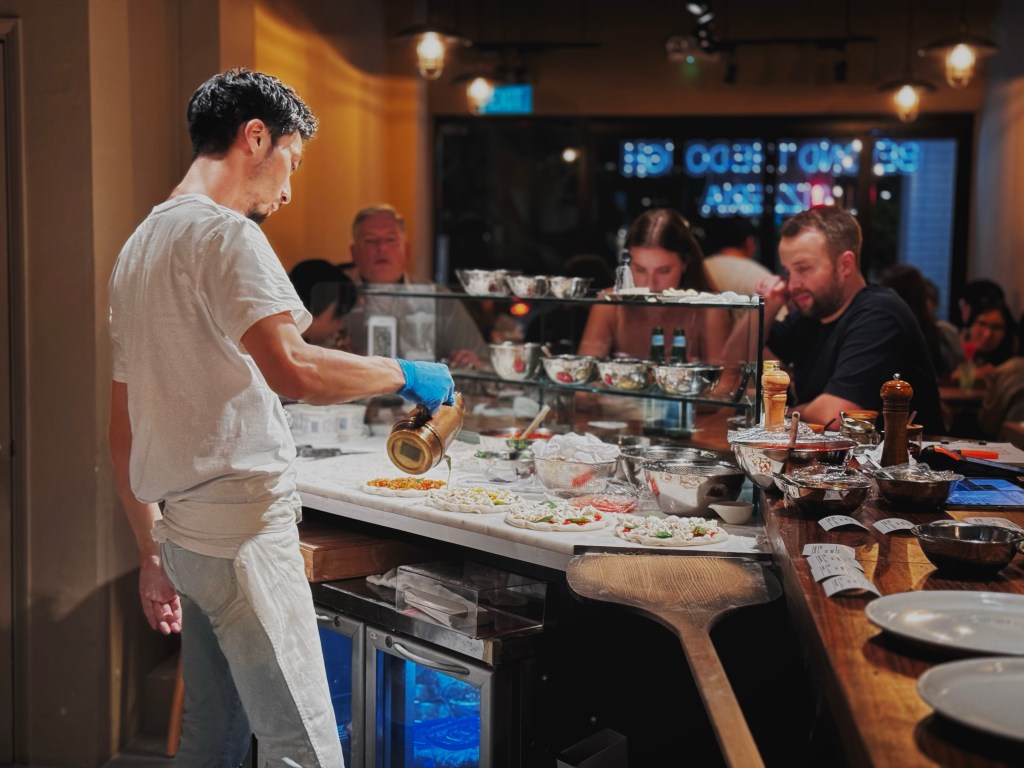
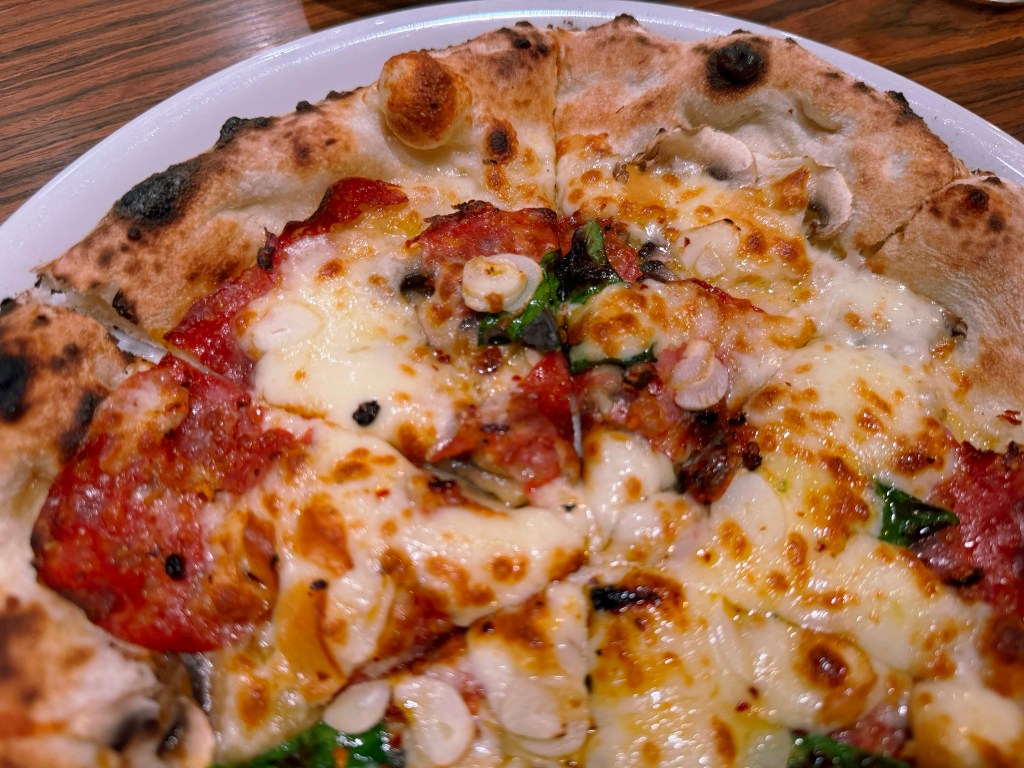
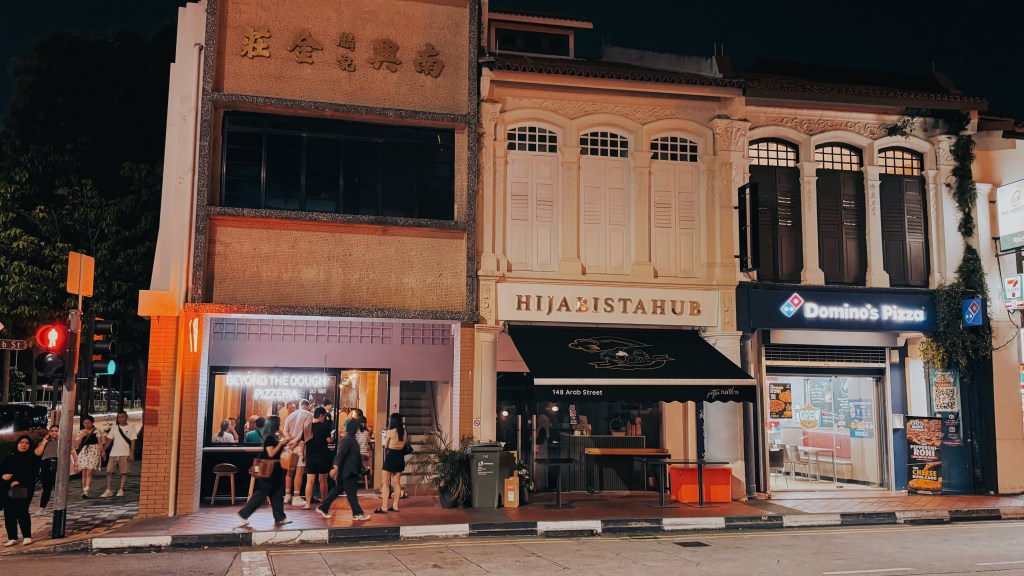
    Featured photo (top): A superb dinner we had at Beyond The Dough on Arab Street. It’s one of those places that brings obsessive Japanese craft to traditional pizza. They are amusingly two doors down from a Domino’s outlet.