Tag: Kobo

  • Fixing freezing and battery drain issues on modern Kobo readers such as the Clara Color

    How to solve a problem where a Kobo ereader will hang or freeze or completely drain to 0% battery life overnight

    I’m posting this in the hopes of helping anyone with the same issue.

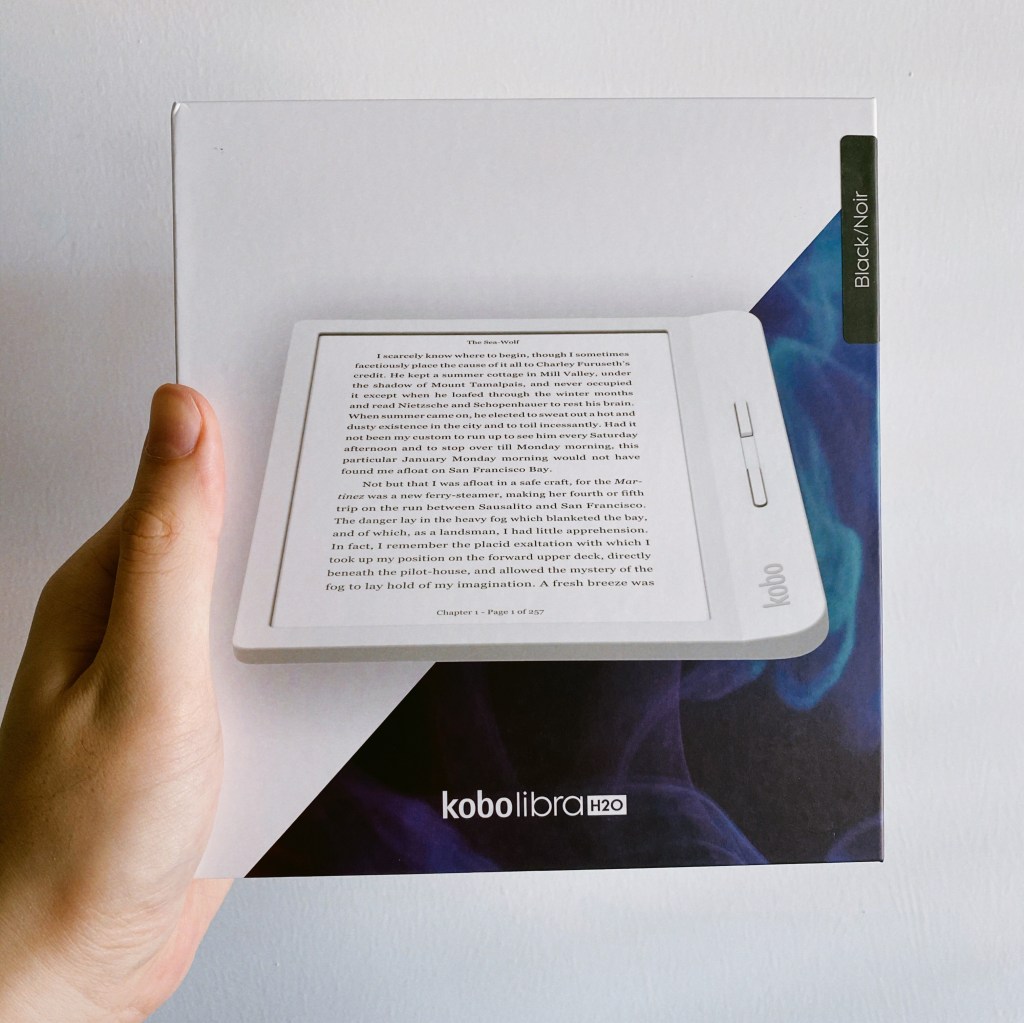
    I own an older Kobo Libra H2O model and never had any problems like this, but it happened often with my new Kobo Clara Color. I would pick it up in the morning and find the battery flat. Or I’d be using it and it would lock up and require a hard reboot. It would also lose my reading position in a book when this happened.

    The reason (at least for me; your mileage may vary) can be traced back to ePub files that contain errors such as improper markup or missing font specifications. This can happen if you’re loading your Kobo with ePub files other than those sold through the Kobo e-store, such as privately authored files or converted documents.

    You can address these errors in the free open source book management app, Calibre. Select a book in the main list, then press “T” or choose the menu option to “Edit Book”. Then look in the toolbar for an icon that looks like a bug, which might be labeled “Run Check”. This will scan the ePub file for errors, and offer to fix them automatically. Most of the time, this will solve all problems. Occasionally, a file may have problems that can’t be fixed, in which case you may have to delete or edit some HTML elements yourself, if you know how. When you’re done, press the equivalent of ‘Cmd-S’ to save the changes, and close the window.

    Finally, you’ll want to use a special Kobo-optimized form of the ePub format called KePub (or Kobo ePub) when transferring the files to your Kobo. This format is apparently fully compatible with all ePub readers, but offers enhanced performance when used with Kobos, so you may notice page turns and searches are faster.

    In Calibre’s settings, go to the Plugins page and find the option to install external plugins. Search for KoboTouchExtended and install that, then configure it to automatically convert books before sending them to your device. You can refer to this Reddit thread and the links within it if you run into any trouble.

    If you don’t use Calibre, there are standalone tools for converting ePub files to KePub such as this web-based one which does everything in your browser — no uploading to servers involved.

    Ever since doing this a couple of weeks ago and transferring all my books over again, I haven’t run into this issue despite using it quite a bit.


    Summary

    Problem Cause: ePub files with errors, such as improper markup or missing font specifications, can cause freezing, battery drain, and reading position loss on Kobo Clara Color.

    Solution: Use Calibre to check and fix ePub file errors, then transfer the files to Kobo using KePub format for enhanced performance.

    Plugin Installation: Install the KoboTouchExtended plugin in Calibre and configure it to automatically convert books to KEPUB format before sending them to your Kobo device.
  • Week 35.24

    Week 35.24

    First, an update on last week’s air conditioning saga. During another service visit, the professionals confirmed what my online research had suggested: a malfunctioning thermistor was the reason for inconsistent cooling. To test it out, they swapped sensors between two indoor units, and now that the cause has been confirmed after a couple of days, they have to come back yet again to replace the broken one (S$161).

    Shortly after, I was coincidentally served this cocky tweet about how “reasonably smart” people with internet access can now challenge an expert about their specific problems, because 1) the information is out there, and 2) the customer has more invested in the outcome than the vendor. For the record I tried hard not to preemptively suggest it to the experts, but when they diagnosed a ‘thermistor problem,’ I wasn’t the least bit surprised.

    New house problem: We found a dead cockroach and it’s been bugging me. I made a poll on Instagram Stories and asked how many people have seen a roach in their homes in the past year, and was surprised the results were pretty much 50-50 (n=29). It might be down to how many people have apartments with integrated rubbish chutes or face open-air corridors. In any case, there’s always something wrong and I need the universe to give me a break or better mental health.

    ===

    I joined my first-ever book club after hearing about it from some folks I met in inSpaze. They meet in the app for an hour every week, and have what I assume is a typical book club discussion if not for the fact that (nearly) everyone is in a Vision Pro.

    They’ve just started on a new book, Guy Immega’s Super-Earth Mother, which I couldn’t find in the library’s catalog and had to buy off the Kobo store. The title is my least favorite part, as it could turn some readers off. I didn’t expect to enjoy it as much as I did, but I ended up finishing it in just a couple of days. I was later chastised for this, as we’re supposed to be reading it together over three weeks.

    It’s about a billionaire’s mission to send an ark of human DNA across the universe in the care of an AI (Mother-9), and how its efforts to colonize other planets goes. That premise immediately reminded me of the back-half of Neal Stephenson’s Seveneves, but this is a very different effort. I think I described it in my Goodreads review as “a compact and accessible space epic”.

    What’s making this extra special is that one participant is a friend of the author’s, and they’ve been filling us in on little Easter eggs and references to real-life experiences. There’s also a chance that Mr. Immega might join us for a short Q&A in a later session.

    This external push to read broke my summer reading block. I had stalled on Neal Stephenson’s Interface for months, but after finishing Super-Earth Mother, I breezed through another hundred pages and am enjoying it immensely.

    Kim’s pretty old Kindle Paperwhite finally died, and I got her a new Kobo Clara BW (she declined the Color model, which I still think was an extra $30 worth spending), which is a very nice and slender reader in person. I am now envious of its USB-C charging and Dark Mode support, and am trying to stop myself from buying a Libra Color to replace my first-gen Libra. At over S$300 dollars, even if I’ve read 100 free books on mine so far (I haven’t), I’d still have paid $3/book for the sheer utility of an e-ink screen, which seems silly to me because one can read perfectly well on an iPhone. Or a Vision Pro, even.

    I tried that, btw. Having giant floating pages in front of you is actually not terrible. And in doing so I hit upon another realization about the Vision Pro. Photographers are always saying that you should print your photos to appreciate them, at as large a size as you can, but how many of us really do? Most photos end up being seen on phones, and maybe laptop-sized screens. But now there’s a way to view our favorite shots at wall size and have a gallery-scale experience at home. And, I suspect, discover more flaws and limitations that will push us towards buying better gear. It’s tragic how much of the last decade we documented in piddly 12mp photos because iPhones were more convenient than dedicated cameras. Ugh!

    ===

    Media activity

    • We caught up on Sunny. This is a show that, on paper, seemed designed to light up my neurons. Robotics, AI, a Japanese setting, a “darkly comedic” mystery, a story about clashing cultures, an A24 production. But it’s not for me at all. I came across the above clip on how causality, consequence, and coherence (my terms) are essential in telling a story people can care about, and sadly Sunny fails to adhere to those rules.
    • But also on Apple TV+ is Pachinko, which has just returned for its second season, and I thoroughly enjoyed the first two episodes out now. I understand that it’s one of the most popular shows on the service, and I hope it finds an even wider audience.
    • The consensus online seems to be that Apple TV+ is full of great shows that people just aren’t discovering, and Bad Monkey is one of them. Again, I think the show’s title is the weakest link here, and you should be giving it a chance. Vince Vaughn does his thing, the dialogue crackles, and things move with causality, consequence, and coherence. It also kicks off with the discovery of a severed body part.
    • We rewatched Twister (1996) and then saw Twisters (2024). The original is an actual classic, directed by Jan de Bont (who also did Speed), and features a team of tornado chasers with actual, palpable camaraderie. You feel like you’re going along on an adventure with them, and part of that happens because the script bakes in ample downtime where they strategize, tell war stories while eating steak and eggs, and hang out in motels overnight. The sequel is almost embarrassing in how it tries to check a series of “mirror the original” boxes — there’s the in-over-their-head outsider whose terror is played for comedy, the traumatic past weighing on the female lead’s motivations, her magical gut feel that can predict weather better than the science-dependent nerds. But despite all that, it can’t reproduce the magic. Still, as a standalone movie, Twisters is not all bad, and Glen Powell is definitely becoming one of the most likable and bankable men in Hollywood. 4 and 3.5 stars respectively.
    • We also watched Office Space (1999), which I realize I’ve never really seen properly at all. It’s an anti-work masterpiece, with many themes and grievances that seem to be reemerging today. Sure, it came out around the time of The Matrix, when rebellion against cubicle offices was at its peak, but I can’t recall many films in the past ten years that have so strongly espoused quitting your dumb job, burning your workplace to the ground, and finding purpose somewhere else. 4 stars.
    • Gregg Araki’s Mysterious Skin (2004) was leaving MUBI, so I decided I’d better see it. Boy, what a downer. I looked at reviews on Letterboxd and here are some excerpts from the positive ones: “This is a flawless film, but don’t watch it.” “This is not a movie I should’ve watched.” “I will never recover from this.” “What if I just walked into oncoming traffic”. 4 stars from me, but I tried not to think about it too hard. It might be a 4.5.
    • Also leaving MUBI was the French film Summer Hours by Olivier Assayas. It’s a quiet and beautiful story about the familial unraveling that happens when a parent dies and there is ‘bric-a-brac’ to be split up and hard discussions to be had. Sad subject matter, but nowhere approaching the rock buttom of Mysterious Skin’s tragedy. Also 4 stars.
    • I tried again to start watching Assayas’s Irma Vep TV series, but various interruptions have stopped me from finishing the first episode. I know it’s not a straightforward remake of the original film, but Alicia Vikander’s character is so different from Maggie Cheung’s that I’m intrigued to see what he’s trying to say about her/them/filmmaking with this new take.

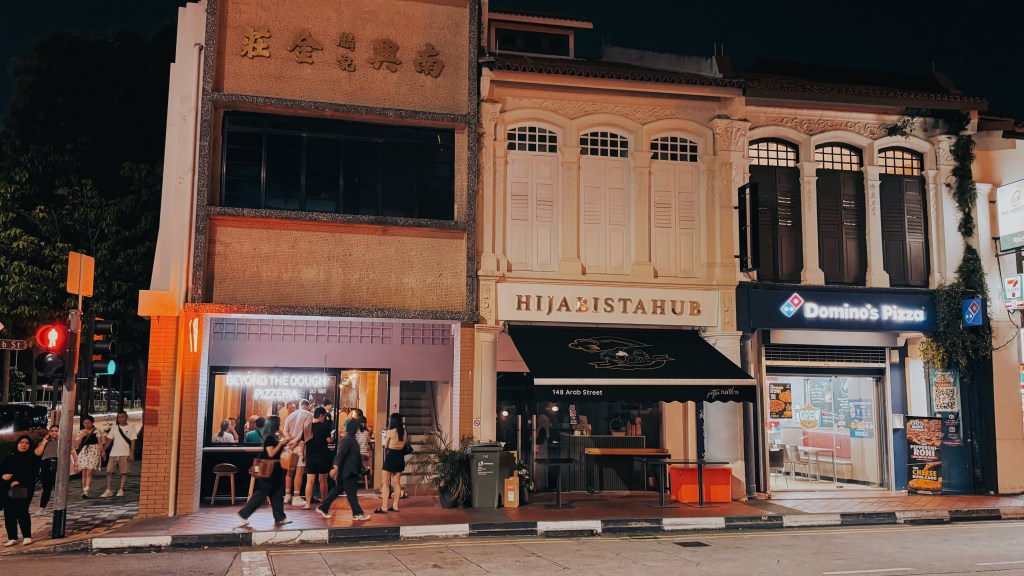
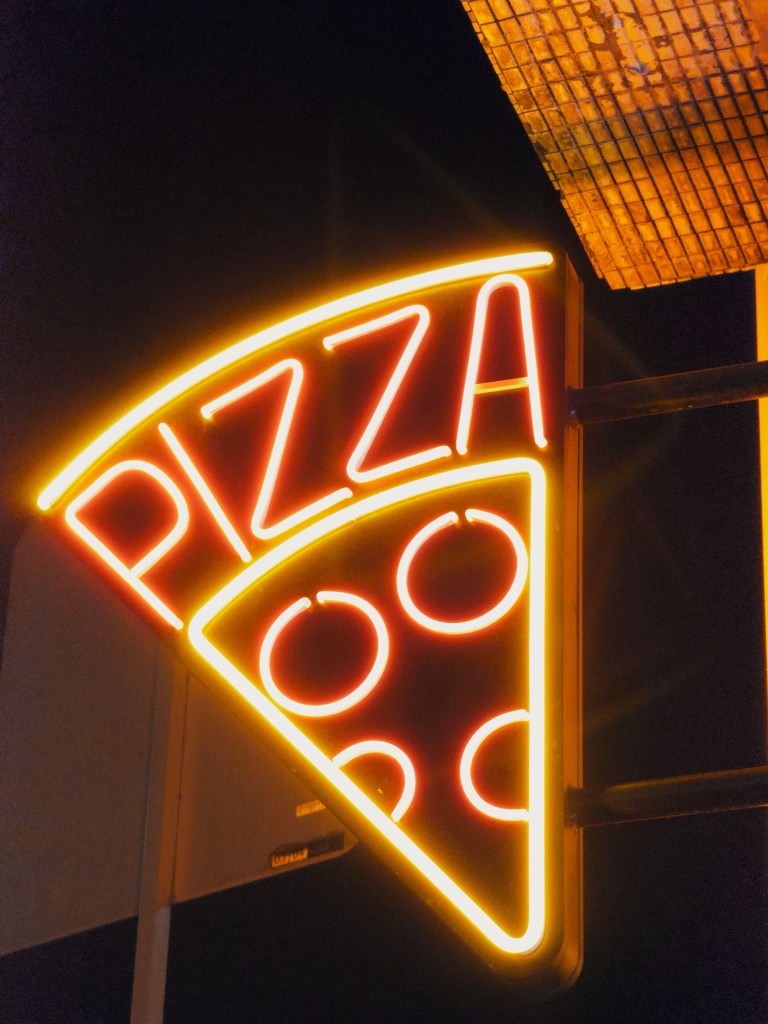
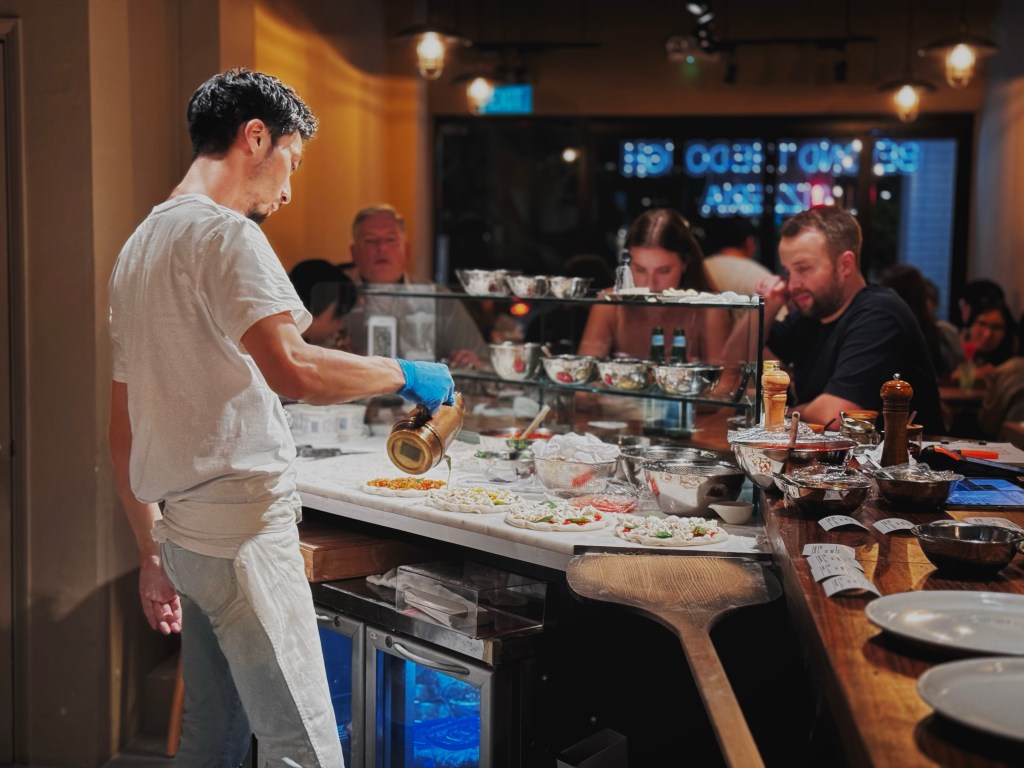
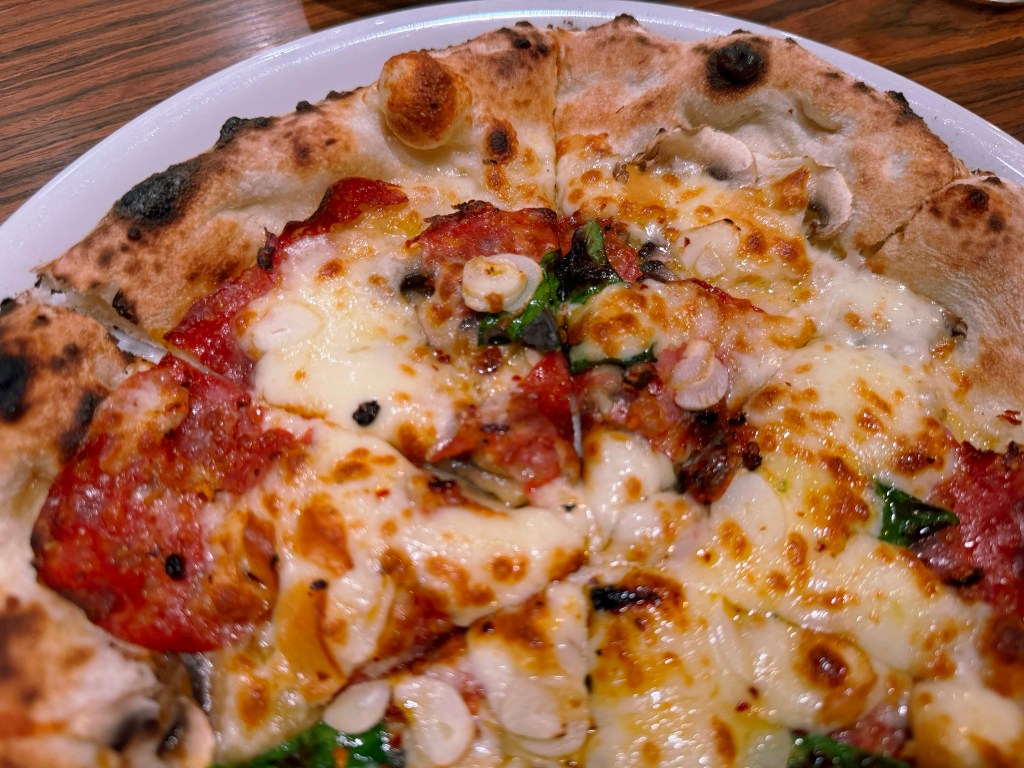
    Featured photo (top): A superb dinner we had at Beyond The Dough on Arab Street. It’s one of those places that brings obsessive Japanese craft to traditional pizza. They are amusingly two doors down from a Domino’s outlet.

  • Homework

    In my last update here, three long months ago, I’d just set up a new WiFi system with enough reach to connect our largely neglected study, which gave me a new place to hang out and play music too loudly.

    Shortly thereafter, I decided the acoustics of that room were too boomy for the Beolit speaker I’d put in, and picked up a little Sonos which can be tuned to suit the space (it’s much better).

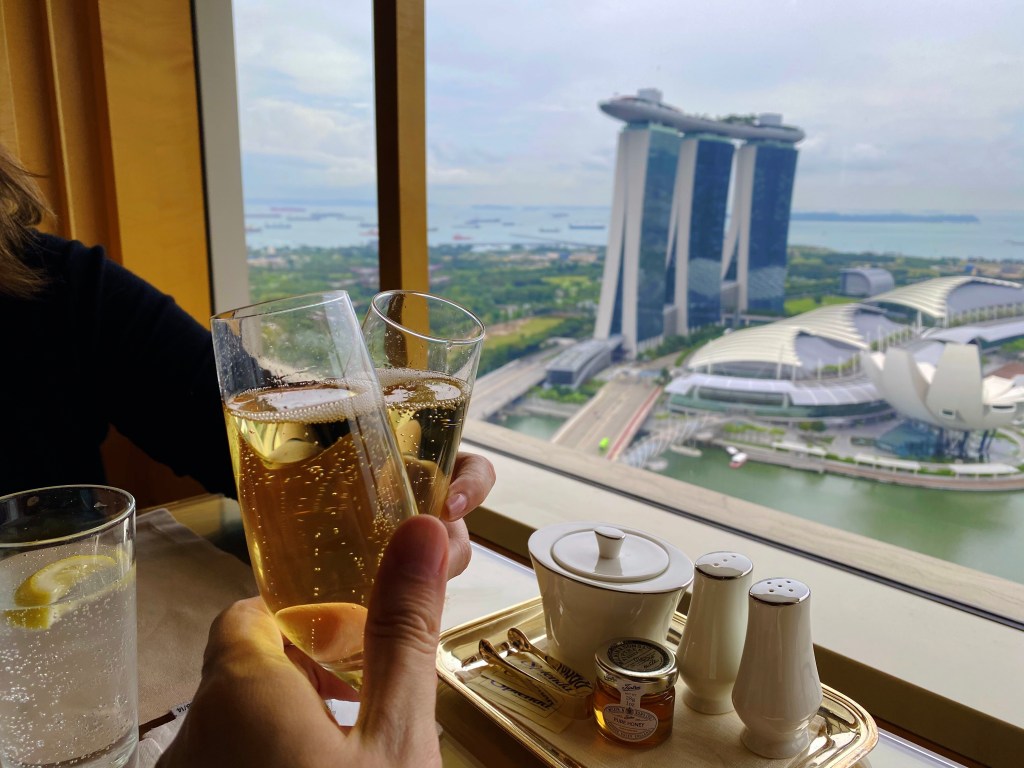
    Shortly thereafter, a measure of hell broke loose everywhere, which I don’t need to explain. In the tiny window before nationwide lockdown was called, my wife and I decided to celebrate our anniversary with a staycation since getting away was impossible. We booked ourselves in for a weekend, visited the buffets, had cocktails in the lounge, and sat by the pool that first day reading more news and feeling something in the wind.

    Literally overnight, we saw the hotel reconfigure their club lounge for social distancing, cutting the capacity in half. With not much else to do but eat canapés and drink while watching the news, I distinctly recall the numbers then: 380,000 infections worldwide. Yesterday, I saw that number in the news again, for global deaths.

    According to the log my teammates have been keeping, we started working from home in the third week of March, later than our other colleagues not attached to client projects at the time. For that period of about a week, showing up at a reduced occupancy office building/mall was surreal, recalling Ling Ma’s novel Severance, where the protagonist keeps going to work at her Manhattan office long after the city stops working, and we were glad when the call was made to not take any more chances.

    That move to make our home study more usable/livable/enjoyable just before this hit, which on hindsight was just down to luck and the High Fidelity TV series, was probably the most well-timed decision I’ll make all year. It’s given me a separate workspace from my wife who’s taken to occupying the living room’s solar-facing counter. Given that we’re both on calls a lot now, if I had to be nearby for WiFi purposes, I think there’d be trouble.

    A lot of what we do with clients and their customers in the business of design used to happen in person. Speaking with people, watching them at work, communicating ideas — it takes a lot of channels to supply the necessary bandwidth, from spoken words and scribblings on a board to body language and moving things around in space. It’s also true for many other professions, and is probably why many fantasize that VR will be the long-term answer in the event that there won’t be a vaccine, if we agree that plexiglass shields in the office aren’t a solution for getting back to work.

    We started working from home on a Wednesday and had to figure out how we’d start interviewing people the very next day; interviews that were originally planned to be in-person conversations. For a bunch of reasons, it wasn’t as easy as sending a Zoom meeting link. We ended up keeping those sessions simple and voice only; better to get the basics right and extract some good data than get fancy and fuck it all up.

    Two months later, between us and other teams across the studio, I think we’re beginning to see how many of the old activities can be done virtually. The next step will be to devise new activities that aren’t constrained by assumptions about how work should be done. Maybe we’ll go back, maybe we won’t. One thing about remote work of this sort, technology constraints (including literacy) have a huge impact on who you can involve and co-create with. Almost anyone can pick up a pen or gesture at a thing. Now try to get them to manipulate content on a Miro or Mural board using an aging laptop. Now try to get them doing it in VR. What’s the equivalent of a Post-It note for virtual work: the simplest, most flexible atom of a tool for thinking aloud with anyone? Texting in a group chat?


    Otherwise, I’ve done some of the usual quarantine things. I’ve tried cutting my own hair (bought some clippers for it). I’ve been making cold brew coffee (bought a Hario bottle for it). We made that dalgona coffee one time but it was foul (already had turns out we actually bought the apocalypse-ready instant coffee for it). I’ve been making more cocktails and drinking IPAs at home instead of at the bar (bought the ingredients and ordered the cases, respectively). I’ve put on weight (bought a lot of takeout for it). I’ve been reading more (bought a Kobo reader for it). I’ve played upwards of 110 hours of Animal Crossing New Horizons (bought the game day one for it). Uh… having made that list, I am a little disgusted. Clearly, if life gives me lemons, I buy a juicer.

    The national lockdown here in Singapore ends in name next Monday, but the cautious re-opening will surely take more than a couple of months. The first people to be allowed back into office buildings at first will be those who haven’t been able to do their jobs from home for legal or technical reasons, and I think it’ll be September before most white-collared types find out what their leaders think about ending the great WFH experiment vs. saving a ton on commercial rent.

    Note: This post contains a couple of Amazon affiliate links, which I’m trying out… again? I have a vague memory of using them on a couple of my sites before.