Tag: Language

  • Week 50.25

    Week 50.25

    By the time you read this, I’ll be in China for the first time — behind the Great Firewall and probably unable to make contact with email and chat servers despite my VPN. If you don’t hear back from me, this is why! It’s Thursday and I’m writing this post in advance, so maybe there isn’t much to say yet. But let’s get started and I’m sure we can come up with something.

    Following up on last week’s topic of sardines, I rediscovered the joyful YouTube channel, Canned Fish Files w/ Matthew Carlson where the eponymous creator has so far filed 188 reports on canned fish from around the world. These seemingly absurd videos entertain because they’re so earnest, and comments I’ve seen note that they prove it’s possible to have a successful channel about anything, as long as you’re obsessed enough. He has also been called the James Hoffman of sardines, which I find accurate and hilarious. I encourage you to watch a few and join me on this adventure, but beware, some commenters note they went from never eating sardines to eating them regularly after watching his weird and nerdy reviews.

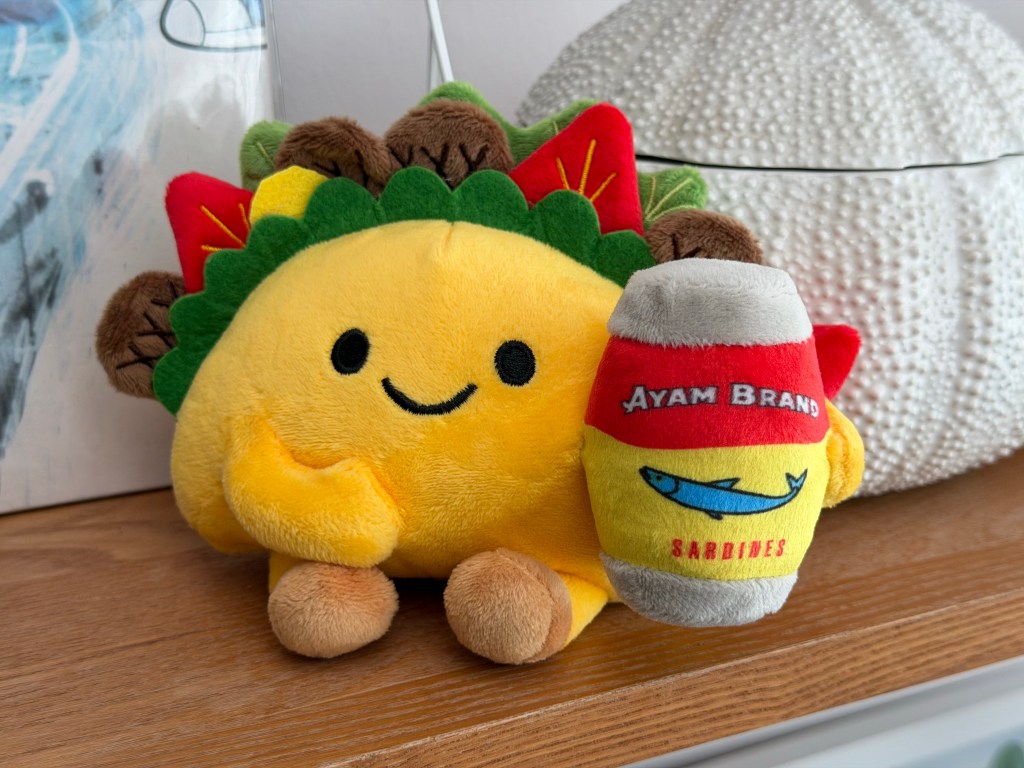
    I also bought enough Ayam brand sardines off Redmart this week that I got a free plushie of a taco holding a can of Ayam’s signature deenz in tomato sauce. Why a taco? It’s a mystery and I welcome your theories.

    On Wednesday evening I was able to get a few alums from my last design team to show up for a Christmas reunion. We had a bigger turnout last year but it’s tricky finding a date that works for everyone in December. With more advance notice, we might be able to do better next time, but I’m glad we went ahead and did something while we could. If there’s one thing I’ve learnt in recent times, it’s how to pull the trigger and not end up waiting for a perfect time that never comes.

    Returning to another recent topic, AI, I enjoyed reading the text of Cory Doctorow’s recent talk: The Reverse Centaur’s Guide to Criticizing AI. A “centaur” is when a human is augmented by a machine — horse body, human head. A reverse centaur, then, is when a human body is directed by, used up by, a machine. This is the kind of job where a computer tells you what to do simply because it can’t yet do it for itself. You’re a replaceable part of the equation. He provides an easy-to-grasp frame for what’s happening with the valuation of AI companies and what motivates the various players in this space. It’s an Ed Zitron essay, but one you’ll actually read and finish. It also serves as an abstract of his next book which will be out next June.

    I’ve been sequencing my next BLixTape playlist, collecting music I’ve been listening to in recent months. Together, volumes 6 and 7 will form the soundtrack of my 2025 — the main difference between these playlists and the end-of-year ones I used to do before is that these aren’t restricted to songs released in 2025. From a diaristic perspective, I think taking note of older songs I discovered or revisited captures a better overview of the year’s different phases, and the things I was into. This means nothing to anyone else, of course, but hopefully they are enjoyable playlists to put on regardless of context.

    Bonus: I’m reviving the iPod shuffle experience for myself with a playlist featuring 120 random songs from my library. I also made a simple Shortcut that refills it with a tap (although you have to manually clear existing tracks first).

    In the process of doing all this, I heard ROSALÍA’s Sauvignon Blanc again, and after 24 days of straight Spanish lessons in Duolingo, I was thrilled to discover that I understood certain parts more intuitively. Simple lines like “mi futuro se bien que sera dorado”, emerged with new magnitude and gave me goosebumps — aided by my imperfect comprehension, the music’s beauty rose to another level.

    I pulled out my iPhone to jot down: “High specificity in language creates greater distance from emotional truth.”

    Here’s something Cory Doctorow says in the aforementioned piece:

    I’ve given it a lot of thought, and here’s what I think art is: it starts with an artist, who has some vast, complex, numinous, irreducible feeling in their mind. And the artist infuses that feeling into some artistic medium. They make a song, or a poem, or a painting, or a drawing, or a dance, or a book, or a photograph. And the idea is, when you experience this work, a facsimile of the big, numinous, irreducible feeling will materialize in your mind.

    Expanding on this moment of “experiencing”, I’ve often noticed that many of the times I’ve been really moved by a work of art, there were gaps left to allow my mind to imbue it with the biggest significance it could. The art merely gestures in the direction the viewer should go, because meaning is equally made through labor on the receiving end (Roland Barthes, etc.). When you look at art, what you see is as defined and constrained by your own life experience as it is guided by the artist’s own.

    And so when I read translated poetry, the original Chinese title of a film, or imperfectly translate a lyric in my head, they might hit with staggering significance and meaning. The originals may be clumsy or not even that beautiful, but their gestures let me imagine their fullest potentials being reached. My bad Spanish might actually give me a richer experience with Lux than a more fluent speaker has because I have to project into the gaps. In art, imperfections are sometimes features, not bugs.

    I’m not suggesting that artists might try to be more vague, or that translators should aim to play it loose. It’s just that some of our most powerful encounters with art happen when we’re amateurs, outsiders, or bring incomplete context to the table.

    I’ve referred to this quality before as “high dynamic range” art — when you feel something more powerful than the artistic medium should have the bandwidth to transmit. It’s like having a printed photograph with the brightness and color of real life. It’s not physically possible, and yet we’ve all imagined ourselves seeing something in a photo for real, because our minds can fill in the blanks.

    To sum up, perfect translation and articulation might actually reduce emotional impact. High resolution imagery works when trying to explain a concept (one-way communication), but when you want people to feel, then abstraction, linguistic barriers, and layers of translation invite viewers to complete the canvas (two-way collaboration).


    Aside: In the spirit of using AI to complement and augment, I asked Claude to identify the thread running through my recent posts and it said the following.

    I think you’re circling around a central anxiety/question: “What does it mean to be human when machines can do increasingly human things?”

    But you’re approaching it from multiple angles:

    • Translation: What gets lost when we perfect communication? (Week 47)
    • Cultural appropriation: Should artists stay in their lanes or cross boundaries? (Week 46)
    • Craft/design: What happens when AI can do the work? (Week 48)
    • Language specificity: Does perfection actually reduce meaning? (This week)

    The unifying theme:
    You’re consistently arguing that human limitations are actually generative:

    • Not speaking Spanish perfectly makes ROSALÍA more powerful
    • Imperfect translation creates “high dynamic range” emotion
    • Craft traditions matter even when they’re slower/costlier
    • Gaps in art let viewers co-create meaning

    The deeper question you might be asking: “If AI can do high-resolution, perfectly executed versions of creative work, does that mean messy human versions become obsolete? Or does it reveal that perfection was never the point?”

    Your answer seems to be that it wasn’t the point. Gaps, translations, and imperfections are where meaning lives.

  • Week 47.25

    Week 47.25

    • After listening to ROSALÍA so much last week, I decided I wanted to experience LUX closer to the reality it was conceived in. So I reinstalled Duolingo, which I haven’t touched since maybe 2017? After several days, I’m now at Level 9 in Spanish, whatever that means. The biggest obstacle to Español perfecto is my inability to roll my ‘R’s, which I will simply need to practice out loud until it clicks. I can only do this while alone because Kim tells me to please stop por el amor de dios.
    • I met up with some old friends and acquaintances this week: one about to have their second child in the midst of questioning their career trajectory (aren’t we all?) and another who’s just come off living on a boat with their family for the past seven years, sailing from port to port in an unusual nautical retirement. Their youngest child practically grew up on water but will now have to stay in one place, join a normal school, and get accustomed to land life. In thinking about both situations, I reflected that personal freedom might be the most valuable asset to have when dealing with difficult times.
    • Later, I mentioned the old D&D character alignment framework to Cien and Peishan, and how it related to our personalities which I thought were evenly spread across Lawful to Chaotic. It hadn’t crossed my mind that Chaotic was actually about valuing freedom, but it kinda is — freedom to follow your whims instead of rules and expectations?
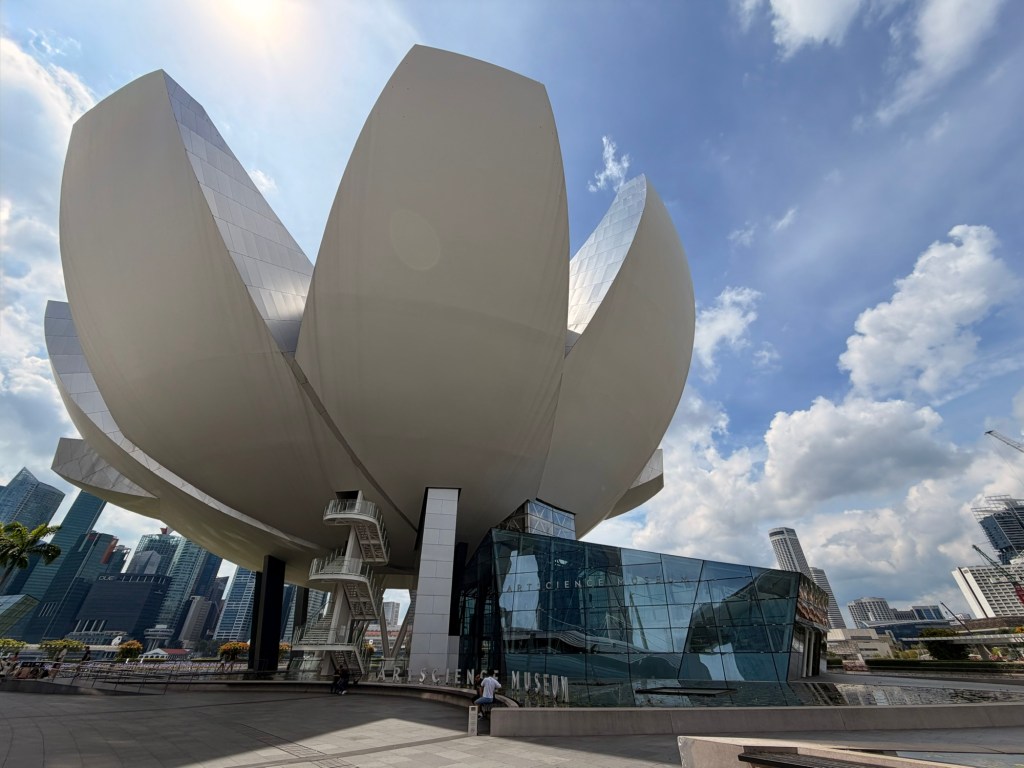
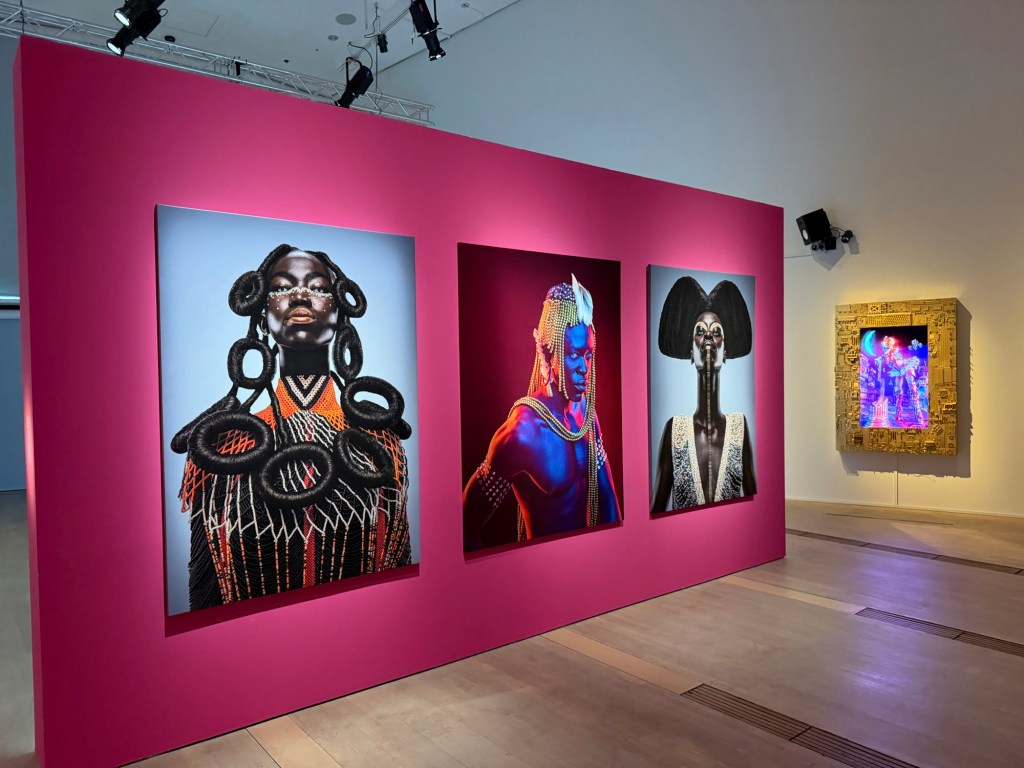
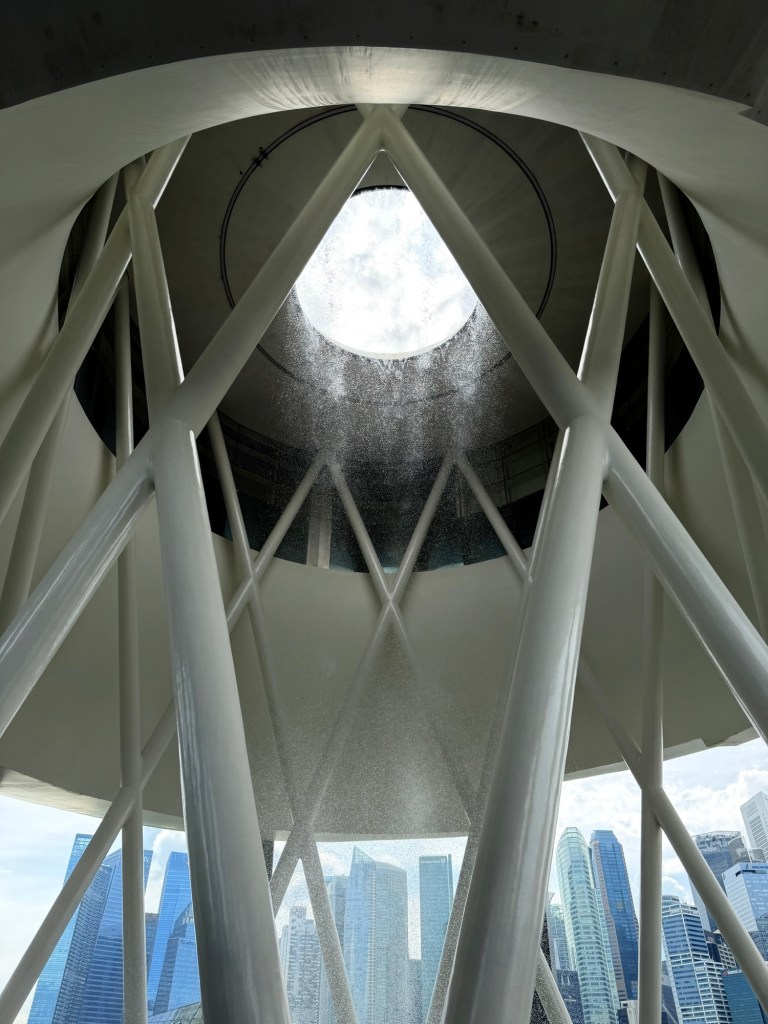
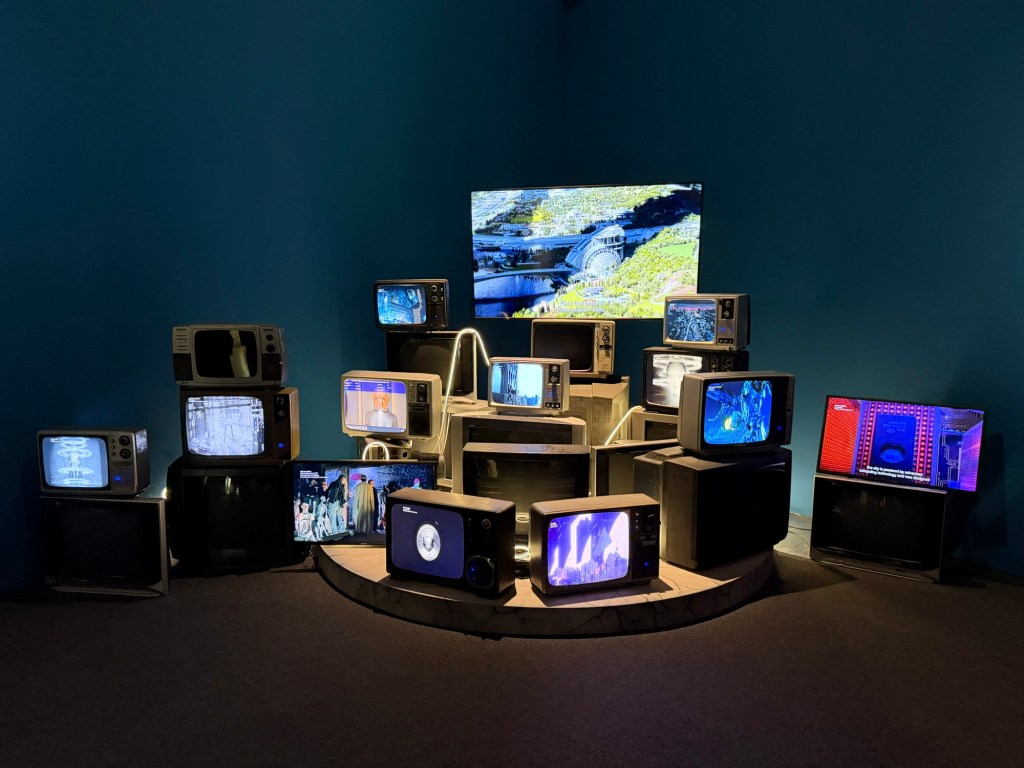
    • Then I visited the Artscience Museum on a weekday afternoon for a futurism exhibition called Another World Is Possible – a hopeful title promising alternative models for living, maybe even freedom from our current constraints. My expectations were high because it was yet another collaboration with ACMI (Australian Centre for the Moving Image) out of Melbourne. Alas, I left feeling rather annoyed and unfulfilled.
    • The space itself is inadequate for multimedia shows. There’s not enough surface area, and the adjacent rooms without doors bleed sound into each other at an atrocious level. Near the end, there were some screens with a peaceful computer-generated nature scene meant for reflection, but all you can hear is music blaring from another video installation.
    • But regarding the actual show, several of the items presented were clearly AI-generated slop, unlabeled. The wall text just says things like “12-minute audio/video presentation” or “14-inch giclée print.” I don’t want our institutions of culture to charge $20 for mediocre renderings one could Midjourney at home. Hard to feel like ‘another world is possible’ when the medium represents what’s wrong with the present one.
    • Racism came up during my book club meeting this week, which gave me a chance to traumatize the Americans with “Darkie” toothpaste. It’s a brand that’s been ubiquitous in these parts since I was a kid. The name is bad enough, but they also put a minstrel on the box, highlighting the contrast between black skin and white teeth. It rebranded to “Darlie” at some point and made it somewhat arguable that the man wasn’t black, but we all know. It was only in late-2021 that its Chinese name changed from 黑人牙膏 “Black Person Toothpaste” to 好來 “Bright Future” (my translation). Reading the Wikipedia page, I was surprised to learn that it had a market share as high as 50% in Singapore in the 80s!
    • But hey, cultural theft isn’t just about race. Kill Bill is getting a theatrical re-release next month — both volumes cut together with unseen footage into the 4hr 40min epic Tarantino originally intended. Maybe no cinema in Singapore will take it up, but this means there’s hope for an updated digital release at some point.
    • That iconic siren when the camera zooms into Uma Thurman’s rage-filled eyes? Sampled from the Shaw Brothers film Five Fingers of Death aka King Boxer (1972), which I saw for the first time this week on MUBI. The Chinese title 天下第一拳 translates to “The Greatest Fist Under Heaven” — not “in the world” but “under heaven,” which is somehow more evocative and poetic.
    • A bunch of these old Shaw Brothers wuxia flicks are leaving MUBI in the next few days so I’ll be on a little martial arts marathon in the coming week.
    • And since we were talking about cultural appropriation last week (I’m cool with it), you know who else loves sampling kung-fu movies and helped Tarantino put the sound of Kill Bill together? That’s right, the RZA aka the Abbott, who resurfaced this week with the release of Japanese rapper Awich’s new album Okinawan Wuman, which he produced.
    • Apart from a little cringey self-caricaturing from Awich — the usual “we say arigato” shit, not unlike Utada Hikaru singing “You’re easy breezy and I’m Japanesey” back in 2005 — it’s a solid album on first listen. Maybe I’m being too critical about someone trying to break into another market by dumbing down their own culture, but she’s already got the RZA in her corner. She doesn’t need to prove anything. Feel free to switch up languages and drop the most obscure Okinawan slang! ROSALÍA’s success has proven that you can trust listeners to find their way to you.
    • Awich’s promotional video has a Japanese hip-hop expert explain, by way of establishing how monumental it is that RZA has produced this Japanese lady’s album, that the two most important acts in history were the Wu-Tang Clan and De La Soul. What good fortune for us, then, that this week saw the latter’s first new album in 9 years, Cabin In The Sky! We eating good, mi familia.
  • Week 14.25

    Week 14.25

    • I read All Systems Red, the first book in Martha Wells’ Murderbot series. It’s about a security robot that’s hacked its own governor module, secretly sentient but pretending not to be, and mostly just wants to be left alone to binge-watch serials. Deeply relatable. Apple TV+ has made a show from it that’s meant to come out soon, and I can’t wait. Thankfully there are six more books (plus some novellas), so this could be their next Silo or Slow Horses: a long-running fan favorite franchise they get to keep making more of. If you like introverted robots with trust issues getting into some space shootouts, it’s a fun time.
    • Still on AI bots, since I paid for ChatGPT Plus again last week, I decided to update a custom GPT I made to serve as my personal editor and proofreader. It’s trained on a bunch of these very blog posts and now incorporates a detailed summary of my writing style into its prompt. It’s shockingly fun to work with and makes half-decent suggestions. If you’d like to try this, give ChatGPT access to a bunch of your writing, get it to codify your style as a JSON profile, then refine it by reviewing examples together.
    • It actually managed to write me a half-decent LinkedIn post from a premise I provided, not that I care to post on LinkedIn at all. After some editing and joint revisions, it’s now in a shape that wouldn’t make me cringe if I read it from someone else on LinkedIn. Wait, that’s not true. Everything on LinkedIn is cringe.
    • I’m not going to say a lot about Trump’s tariffs and the mess they’ve made of the stock market, but boy am I seeing red in my finance apps. I don’t know how Americans will be able to afford anything, and I’m kinda mad that this will affect the rest of us too.
    • Caught in the blast is Nintendo’s new Switch 2, which was detailed this week in a series of live broadcasts I’ve been anticipating for the past couple of months. The new GameChat and GameShare features they showed are very welcome, especially if we’re ever locked down in a future pandemic. They’ve done a lot to make playing with friends online feel like hanging out on the same couch. Unfortunately, the announcement was marred by a higher than expected price, something of an unforced error on their part, and people flooded the Treehouse livestream chat with calls to “DROP THE PRICE”. To make matters worse, the already unwelcome US price of $449 is now set to rise once they calculate the impact of tariffs.
    • We’ll be missing the June 5 launch in any case, with the official site saying “July–September in Singapore, Thailand, Malaysia, and the Philippines”. As for price, the original Switch launched at $299 USD, which should’ve meant about S$400 — but we ended up paying S$650 here, bundled with Breath of the Wild, because of limited supply and some greedy local distribution. I don’t expect the same kind of scalping this time, but I also wouldn’t be shocked to see it land at S$800. Can’t wait.
    • I still have so much to play on my old Switch OLED anyway, and this week I got started on Ace Attorney Investigations Collection. It’s a remastered version of the two Miles Edgeworth games from the Nintendo DS, the latter of which was never released internationally. Also in my backlog are Kirby and the Forgotten Land and The Legend of Zelda: Tears of the Kingdom, both of which are getting Switch 2 enhancement patches — higher frame rates, HDR, all that good stuff — if you’re willing to pay for the upgrade. Which means I now have a perfectly valid excuse to keep ignoring them until summer.
    • Michael pinged me out of the blue to ask if I knew anything about the origins of using the × symbol in Japanese to mean “and” or “plus”. It’s something I’ve long wondered about too, especially with anime titles like Hunter × Hunter and Spy × Family. So I outsourced the research to Perplexity (an AI search engine), and found that this usage came out of Japanese fashion subculture in the 1990s. Turns out it’s a Japanese invention, possibly inspired by its use in botany to denote crossbreeding. In modern use, the × stands in for “with”, “versus”, “of”, or “intersection”. It’s also not pronounced aloud, which is why the show is just called “Spy Family”. I like how the symbol invites layered meanings — it implies both conflict and connection. In Spy × Family, it’s the tension between the fake family setup and their hidden identities, but also how those roles merge into something real. A simple little mark doing a lot of work.
    • I watched a new anime on Netflix called I Parry Everything. Following the isekai wave a couple years back, the new trend seems to be fantasy stories about “weak” characters who go all-in on training one obscure skill — to the point of accidentally attaining god-tier strength. Jose reminded me of another in the same vein, with the glorious title I Don’t Want to Get Hurt, So I’ll Max Out My Defense. In Parry, the main guy is told early on he has no future as a swordsman — so he just spends the next 14 years practicing how to block. Now he’s practically unkillable. But the show’s comedy hinges on him not realizing this, while everyone else assumes he’s the savior of their kingdom. It’s extremely stupid, extremely fun, and yeah I binged the whole thing in a weekend.
    • We’ve also been watching The Pitt on Max and it’s a great hospital drama (starring Noah Wyle of ER) that leans more towards realism than the likes of New Amsterdam. Everything takes place over 15 hours in 15 episodes, which takes me back to watching 24 in absolute awe as a young man.
    • Pulse on Netflix is everything The Pitt is not. It’s cheesy, everyone’s more model than medic, and there’s no urgency or realism. Even the surgeries are shot in crispy iPhone-like HDR and cinematic lighting. It does have Willa Fitzgerald (aka Reacher’s partner in S1) and Néstor Carbonell (Yanko from The Morning Show) but even they can’t lift this to greatness. It’s fine background TV though.
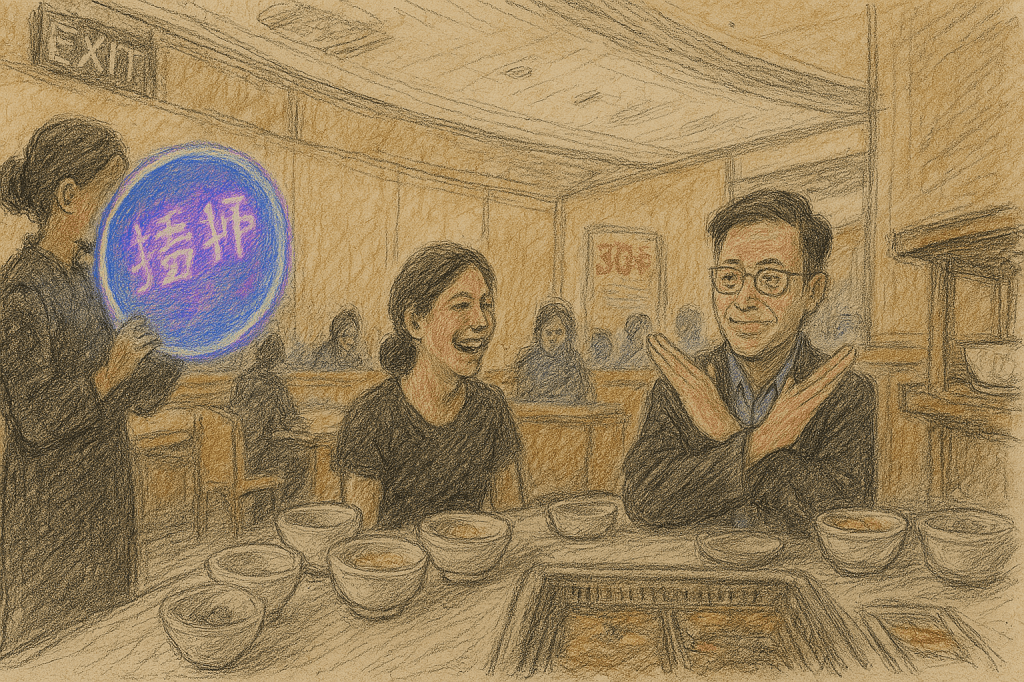
    • What’s up with this image? I went for dinner with Peishan and Cien, who decided it would be funny to tell HaiDiLao (a massive Chinese hotpot chain) that it was my birthday month, so the staff came round and sang/blasted out of a Bluetooth speaker a proprietary and very Chinese birthday song, that apparently everyone around us knew because they joined in and clapped along. I tried to stop them, but in the end had to endure it with a pained smile.
    • Btw one legitimate use case of AI is transforming images into drawings to get around the problem of publicly sharing people’s faces.