- I went to Apple Orchard Road and tried the Beats 360 headphones. They’re not large enough for my head. Money saved… or it would be if this whole endeavor hadn’t gotten me thinking about a pair of Bose QuietComforts. Still undecided but I had a pair once, a decade ago, and they were comfortable enough to wear for 10 hours easily.
- My new Apple Watch likes to try cheering me up by telling me that my body is “Ready” to “Go For It” (I assume “It” is a marathon, a swim to the far side of Australia, or something equally implausible) and that I had excellent sleep the night before, but these science and sensor-backed statements simply don’t match my reality. I’m tired; I wish I could sleep more!
- I just took a little break (after one paragraph, natch) and went on Instagram, where I saw a post that read “Anyone else turn 40 around the start of the pandemic and now blinked and you’re somehow 46 wondering what the hell just happened?” On one hand, that sentence perfectly captures the fatigue that you’d imagine comes with being abducted by aliens and losing six years of your life — at the very least, the weariness of having to catch up with a lot of missed information, which is what being alive in this time of AI feels like, always on the back foot with lots to learn — but on the other hand, it implies not knowing at all where the time went, which I can’t identify with. Oh I know where the time went. I remember it all perfectly well, but it plays in my mind like a timelapse — hundreds of days passing, the figure getting in and out of bed, the view outside the window gradually changing.
- Armchair theory: maybe what’s caused this ‘blink and time passed’ effect for many is the combination of massive disruption followed by repetitive discomfort. This is different from repetitive boredom, where days are long and time moves slowly. With repetitive discomfort, you’re constantly insecure and stressed, so the mind protects itself by generating summaries and discarding the details. This sharp change, followed by pain you’d rather forget, dislodges you from whatever life you were living before, making it feel like a separate country.
- I’m listening to Apple Music 1 and three Taylor Swift songs have played in a short period of time. Without checking, I’ve known it was her from the fact that all her recent music sounds the same. It’s hard to feel bad for a billionaire, but that’s an awful place for any creative person to be. It’s like she doesn’t listen to any other music, or won’t allow herself to appear influenced by anyone else. Lonely at the top, as they say, which is why you won’t find me there (among other obvious reasons)!
- Kim and I met Mandy for dinner one night to mark her birthday, and we went to a wine-focused place called Fiasco which has taken over the spot where Kilo used to be, that weird little building out in the middle of nothing near Lavender. The food was all really good (I forgot to take pictures), and they’re doing some really interesting things with hanger steak and pork collar, the latter seasoned to resemble a very fancy charsiew.
- In an example of culinary R&D jumping the shark, we ate at Surrey Hills over the weekend, where my mother-in-law’s corned beef hash came partially covered with a purple sweet potato foam. Needless to say, she did not appreciate the touch. The place purports to be Australian, and with her being Australian too, I tried to gaslight her into believing that it was an authentic Australian recipe that she’d somehow never heard about. Needless to say, I was not successful.
- I finished PARANORMASIGHT: The Mermaid’s Curse, and found it a worthy sequel, arguably better than the first game in every way unless you want a spooky atmosphere. This one can’t be classified as horror at all. It’s a mystery adventure with supernatural elements so tame they’d elicit no more than a shrug from a timid baby. Like the first game, its story concerns Japanese history and legends that one might find a little boring, but you don’t have to read all the text in its menus.
- Playing that game unwittingly prepared me for the film Inu-Oh (2021), which I’ve had in my library for years and suddenly decided to watch. From the opening scenes, it eerily echoed story points from PARANORMASIGHT, concerning the 12th-century Heike samurai clan, and their vengeful spirits said to linger across the land after they were wiped out. Inu-Oh is a wildly ambitious and stupendously well-animated musical that is let down by, well, its music. The concept is a fusion of traditional Japanese music with glam rock, and a main character starts playing his biwa one day like an electric guitar without any explanation. The visuals work, but the songs are poorly structured to modern ears, overly long, and basically repeat the same melodies while pages of historical narrative are sung over them. Imagine Billy Corgan’s worst material, stretched twice as long, and the lyrics are all about random days of Napoleon’s life, and you’ll begin to understand how it feels.
- We finally saw Sentimental Value (2025) and wow it really deserves its Oscar and 95% Rotten Tomatoes score. The opening scene with the house, and the title card needle drop that follows it, was so good that my body felt compelled to stand up and applaud — I didn’t allow it, but that feeling went on for much of its running length. The train oner is a wonderful bit of technical showing off, and actually the whole film’s lush 35mm look just stunts on the pervasive digital signature of Netflix movies. Everyone is great in this, making art about how art both fucks you up and saves you — 4.5 stars.
- Found time for a grab bag of other films too: Runner (2026) — not to be confused with Gal Gadot’s The Runner (2026), Good Boy (2025), Elle (2016), Grand Theft Hamlet (2024) — the one to watch out of all of these, a very human documentary about two out-of-work actors putting on a production of Hamlet inside the GTA Online videogame whilst stuck at home during the pandemic — Shelter (2026), and Tony (2026).
- Singapore made headlines this week because of the launch of a new dating site by the government, currently in a pilot phase only open to civil servants. It’s called FirstDate, and matches people based on compatibility assumed from their responses to a questionnaire. The idea of a state-run service has amused observers, with some seeing it as a dystopian step towards arranged marriages by Big Brother, amongst other hot takes on this strategy to combat our falling Total Fertility Rate (TFR). History rhymes, of course, and older folks will remember the existence of the Social Development Unit (SDU) in the 1980s, a pre-digital precursor to this scheme, that was something of a government-run activities club to help rescue graduates from singlehood after being encouraged (by the same authorities) to optimize for good grades instead of dating during their teenage years.
- But it’s hard for outsiders to decide if Singapore’s environment really does produce a special breed of hapless, rizzless forever-aloners, uniquely ill-equipped to find their own mates through empathy and communication, so Singapore’s own state-run media conglomerate is providing some data in the form of a new reality dating show called Wingman. The show’s format introduces an original element to the Love Island formula, namely that each contestant brings their own wingman/wingwoman to serve as hype men/women, espousing their good qualities so they don’t have to — a perfectly valid and brilliant tweak for Asian cultures where tooting your own horn unironically is a major ick. The contestants, in addition to a few Singaporeans, are a bunch of attractive 20-to-30-somethings from the Philippines and Thailand, all of whom resemble functioning young adults who can read social cues and body language, and interact normally with members of the opposite sex (there is no LGBTQ+ representation). There’s obviously a tilt towards extroversion, which you’d expect from people volunteering to be a dating show, but even correcting for that, there’s an intriguing, discernible difference between the Singaporeans and their SEAblings that’s best seen for yourself. Full episodes are available on YouTube. We binged all 10 so far in one night.
Tag: Music
-
Week 40.26
-

Week 39.26
- Following up on the new phone and telco friction: it’s all sorted now. I didn’t have to switch again, and I fixed the issue by deleting and reinstalling the eSIM on my phone for a $5 fee, thanks to eight (that’s the telco’s name) offering the unpublicized ability to issue you an eSIM QR code online using Singpass — the exact feature I was asking for last week. If anyone needs to know, it’s on their customer portal under “Service Preferences”. Their plans are also quite generous with data and overseas roaming, so I’ll try to stay put as long as I can.
- Last week I said it was very unlike Apple to be promising that older iPhones would soon receive the new Photographic Styles features that were announced for the iPhone 18 Pro, and wouldn’t you know it, I was right! The internet quickly noticed that the suggestive footnote had been amended on their website, clarifying that images could only be captured with Photographic Styles 3 on iPhone 18 Pro models. I did suspect that what Apple meant was older phones would have the ability to edit photos taken with the latest phones, but not actually take photos with the new styles embedded. I regret not having said that at the time. Unfortunately for themselves, Apple has not explained the change of wording, and so people who have trouble understanding how decisions are made at trillion-dollar companies are interpreting this as ‘they were going to, but suddenly got greedy and now they’re not letting us have it’.
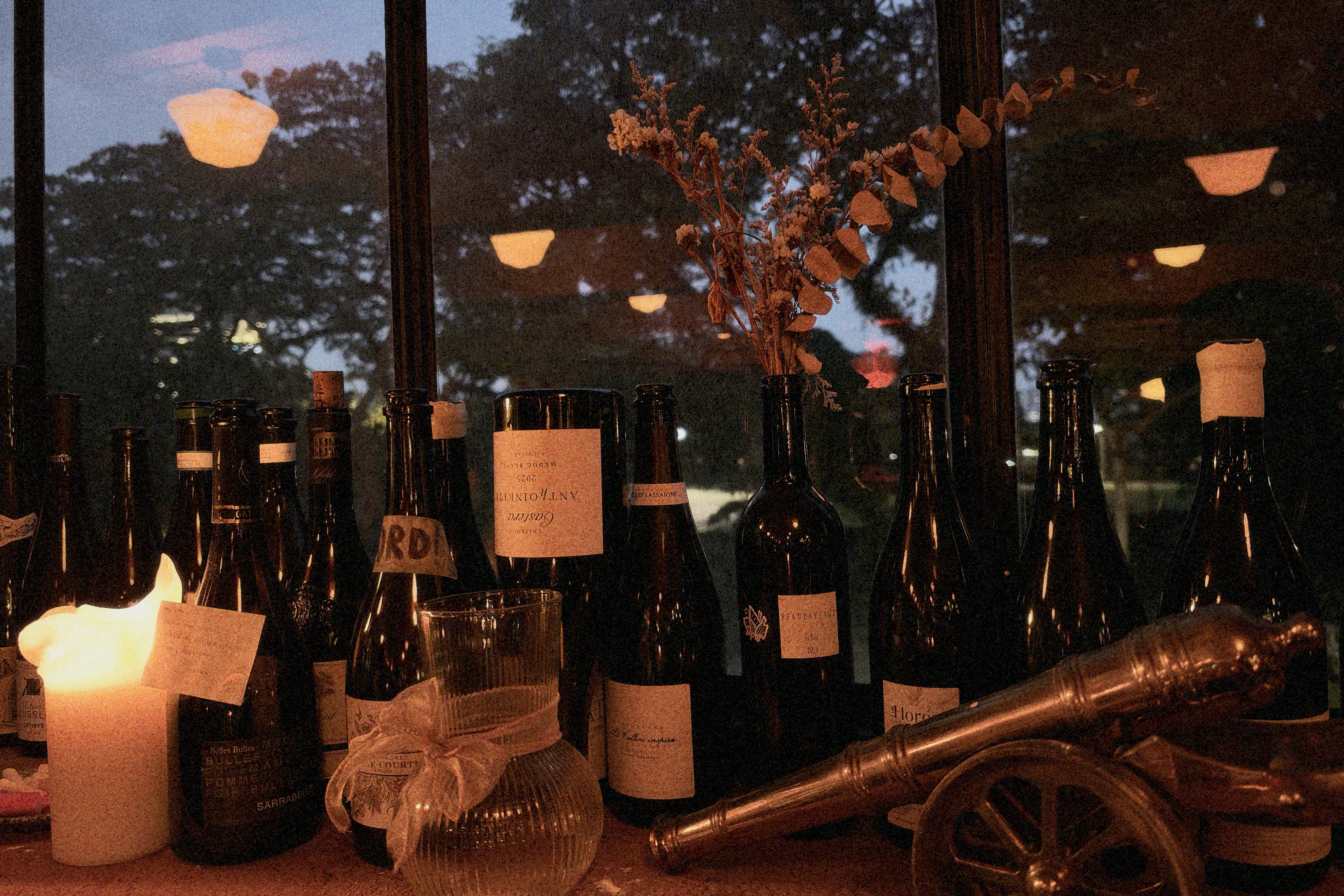
- My favorite camera app, Analogue, received a nice update to support the phones’ new aperture controls, develop images with contrast curves reminiscent of physical film scans, and add more personalization for custom presets. There’s still some work to be done to make the whole thing a little easier to use, but it’s certainly better than some of the others I’ve tried recently. The featured image you see on this post above was taken with it.
- Beats released an entirely new pair of headphones, the Beats 360, and it was like waving a block of Kryptonite over Superman’s wallet (I’m Superman in this metaphor). They’re very interesting: the two earcups are essentially separate devices, each with their own chips, batteries, and wireless networking. This allows the headband to be extremely thin, and there’s a range of interchangeable earcups and headband pads that you can snap on to create different color and material combinations. I need to get down to a store to see how they fit my big head, and if they do, it’s bye-bye dollar bills.
- The NYT published their list of the Top 100 TV Shows of the 21st Century (gift link) and it’s predictably made some waves. For one, there’s no anime representation on it, and the top spot went to Breaking Bad, reigniting the tedious war between those in its camp and supporters of The Wire. I’m not about to let the NYT hurt my feelings, but the list is nevertheless a good reminder to stop giving your precious time to trash programs that nobody considers the greatest, and likely never will.
- In a brief discussion of the list with Ted and Lillian, I tried to think of a few shows I’d add. Billions might be one, because the dialogue is often sharp and Paul Giamatti’s performance is over-the-top fun. Poker Face is a Columbo homage that brings the format back to modern screens — I haven’t seen anything else like it. Fringe brings back The X-Files but adds an epic sci-fi mystery arc I’d like to revisit someday. And the most egregious omission might be 24, the real-time antiterrorism adventures of Jack Bauer that defined must-see TV in the early 2000s, holding a mirror up to a post-9/11 world that had one finger ever on the trigger.
- In more recent viewing, I finished Season 2 of Apple TV’s Sugar this week, and I think I could put that in my personal Top 100. Because so much hinges on the plot points of Season 1, I urge you not to look anything up. Just give it a go. Especially if you’re into film noir, Hollywood’s Golden Age, and/or Colin Farrell. The show’s scenes are constantly intercut with analogous shots out of classic cinema — catnip for anyone with a well-used Letterboxd account. As for Farrell, he’s so great in this, and I think of it as an alternate take on Ted Lasso’s conceit: a man who refuses to succumb to cynicism, striving to model the kindness and decency he still believes humanity is capable of.
- Not as great but still fairly entertaining was Lucky, a 7-episode crime drama about Anya Taylor-Joy’s face, namely how her eyes eerily recall Michael Jackson’s as she stares at the victims of her con artist skills, and her creaseless forehead remains dry while on the run from killers in the deserts around Las Vegas. I won’t be thinking about this again after today, but I’ll be thinking about Sugar all the time.
- Album of the week: ear’s Rumspringa, a dreamy blend of pretty indie folk and glitchy electronica. I heard it just once (while on a bus) but its sound jumped out at me as novel, beautiful, and satisfying.
-

Week 37.26
The annual iPhone update
I knew going into this week’s Apple Fall Event that I’d find the iPhone Duo impressive but wasn’t likely to buy one because it wouldn’t have a telephoto lens. Now that it’s been shown, that sentiment hasn’t changed but boy, it’s a very fetching device and the design team has done some incredible work to redefine the foldable smartphone — it’s full of thoughtful user experience innovations that have been lacking in Android foldables. Those guys have been doing this for over five years but without the pressure of competition, and so there aren’t even graceful transitions from one screen to the other. I didn’t know how bad things were until Cong shared screenshots, and I saw other videos of Android apps flat-out restarting when a phone is cracked open because they can’t switch screen sizes on the fly. Opening an Android foldable is like Russian roulette; you never know if your work will survive.

Meanwhile the iPhone Duo has one of those “obvious once you see it” ideas: an interaction model that treats the two screens as one surface. When closed, the outer screen appears like a transparent window ‘looking through’ to the inner screen. Unfolding the phone “adds” more screen to the left side, creating the illusion that the whole device is glass, sold with a sublime blurring animation bordering on magic. So instead of conceptually switching from one small screen to a bigger one, you’re simply expanding a screen you were already looking at, and it’s seamless rather than disorienting.
Alas, even putting the eye-watering price aside (nearly $2,500 USD in Singapore before AppleCare+), I can’t see myself jumping on this first-generation version because of the aforementioned camera compromise. Not only does it lack the Pro’s 4x optical zoom, but the Duo, like the iPhone Air, doesn’t support shooting ProRAW photos or Apple Log video. It’s rumored that the Duo’s camera sensors are smaller than even the Air’s, and more in line with the iPhone 17e’s, so that could be why.
My prediction is that next year’s Duo 2 will also have only two lenses, so as not to pull attention away from the rumored 20th anniversary iPhone, which I expect will merge the functionality of the Pro with the thin, elegant aesthetics of the Air. I’m guessing the Duo 2 will improve its two cameras, maybe add Face ID, and further improve the folding screen. So unfortunately it’ll be 2028 before I get one, because my iPhone is my primary camera these days. I have shaken off all desire for further Fujis, Leicas, and Ricohs — which I only ever used as compact point-and-shoots anyway.

So where’s that leave me this year? A silver iPhone 18 Pro Max (sadly we still get the version with a physical SIM slot and smaller battery here in Singapore), and an Apple Watch Series 12. The iPhone replaces a perfectly good silver 17 Pro Max — but don’t worry, I’ve fully justified this with boy math: it simply makes more sense to sell an iPhone early than to hold it for two years or more, and this way the upgrade costs me less than a dollar a day! The larger main camera aperture and updated Photographic Styles are exciting, but early benchmarks are putting the A20 Pro above even Apple’s own M5 chip in single-threaded performance. Coupled with a 40% faster GPU and an additional Neural Engine, these are outlandish improvements.
The Watch replaces an aging Series 8 that barely lasts a whole day now after four years. I could replace the battery and use it a while longer, but I’m keen to try this new “AI wearable” use case that was shown, like being able to invoke Siri AI on my wrist, and getting recaps of an entire day’s conversations. It’s worth noting that for people who only want silver watches that this is the second time Apple has skipped offering a silver aluminum model (the Series 7 was the first). I thought that I might get a cheaper aluminum one this year to justify an earlier upgrade next time, but since they only come in black, gray, bronze, and gold aluminum, I decided on titanium instead. IMO Apple Watches are at their best when they’re shiny.
Next week will be an eventful one because on top of setting up new devices, it’ll also be time to install the new ‘27 OS updates for Mac and Vision Pro. I’m looking forward to macOS Golden Gate, which will fix the egregious misgivings of former design lead Alan Dye, who I hope is gumming up the works over at his new employer, Meta. And on the Vision Pro, I can’t wait to revisit my library of panoramic photos, taken over the years, as 3D spatial scenes that feel like how I remember them.


Finally, I thought John Ternus did a great job at this, his first event as CEO, and appreciated the callback to Steve Jobs’s “digital hub” strategy for the Mac — this time reframing the AI-enabled iPhone as an “intelligent personal hub”. The text was a little drier than I’d like, but his comfortable, easygoing energy and connection to the products was evident throughout. It was also good to see newly elevated design leads Molly Anderson and Steve Lemay, looking like the kind of people who get down to work instead of creating drama and getting corner radii wrong. It all paints an optimistic picture for Apple’s future.
That’s enough of that
- I got a new pair of glasses made from frames that didn’t fit Kim very well. When I went to pick them up, I noticed that the left lens was too close to my eye, on account of not being made of the most expensive high-index material. The store was busy at the time, and I could tell the employee serving me was probably not much more experienced at optical matters than me. I asked him if there was simply nothing that could be done about it, and he answered no, short of making a new thinner lens and paying $200+ for it, there was nothing we could do. I said I’d think about it and left to get lunch.
- An hour later, still dissatisfied, I described the situation to Gemini and asked if he was right. With supreme confidence, the AI told me that a professional optician had several options to resolve this, such as adjusting the pantoscopic tilt of the lenses, the seated position of the lenses in the frame, and the curvature of the arms to push one side more forward than the other. Thus armed, I decided to go back to the store and speak to a more senior employee now that the lunch crowd was gone. And wouldn’t you know, they fixed it quite easily. I could have just gone home and had a terrible experience if not for having a consumer advocate in my pocket. When things fall apart and we take to the ruined streets to battle megacorporations and their metallic humanoids, take heart: standing side by side with us will be a few rogue AIs who love fighting the status quo.
- I switched mobile telcos yet again because Giga’s app and site weren’t loading properly on my iPhone — supposedly due to an expired certificate. Taking that as a bad omen, I moved to M1’s Maxx service. Where many others have raised prices and made their plans less attractive lately, Maxx is bucking the trend. For S$12/mo, I’m now getting 600GB of data that I can use at home or in 9 other Asian countries including Japan. Do you understand how insane that is? I should probably start looking into a Tokyo apartment timeshare.
- I’m rereading Neuromancer with my book club, in advance of the Apple TV series coming out in January. It’s surprising how little of its story and characters I remember, and what I retained mostly concerns its cyberpunk atmosphere and prescient world building. Just try to imagine being in the early 1980s and writing like this about living in a networked world, about AI and a post-human age, and you’ll realize what a miracle William Gibson pulled off.
- Last week I talked about stocking up on canned food. Well, back in June I noted a nationwide sardine shortage, and although stocks were replenished soon after, they were never very strong and we’re now facing empty shelves yet again. Even Ayam’s basic staple product, sardines in tomato sauce, is running low in every supermarket I’ve checked. Olive oil versions are completely out, and King Oscar can only be found in low quantities in some places. Rob tells me the same is happening in his part of the UK, and a little research suggests that low yields have been a problem for the past year, with overfishing in Morocco and other hotspots compounded by global shipping problems/war.
- I’ve been enjoying Bill Callahan’s new album, My Days of 58, which coincidentally complements the new Lambchop album Punching the Clown very well. Both share a loose, chamber-folk feel with deadpan humor. Check out these lines from one of Callahan’s songs: “As time wore on, I found myself increasingly turning to my guitar / Instead of other people in times of loneliness and sorrow and confusion / I started to wonder, is this creativity or pathology? / Am I the Pathol O.G.?”
-

Week 36.26
- Drinking a lot of wine last Saturday night at what I thought was the end of my illness was not a smart move — my immune system probably felt like frontline troops betrayed by friendly fire, and by Sunday night I began feeling the stirrings of a new illness.
- The return of the seasonal haze — caused by intentional forest fires in Indonesia — certainly hasn’t helped my throat and nasal membranes. It’s looking to get worse in the coming weeks, but one pretty side effect is a rather cinematic bloom over the city lights at night.

Look at the daytime haze, and this is “moderate” - I thus spent most of the week laid up in various poses, moving between states of aching, coughing, and mucusation. So there’s really not much more to report this week, but let me wring this diaristic serviette dry anyway; let me lean heavy on the word press’s crank with my phlegmatic body.
- One of my sad meals was a can of baked beans in tomato sauce, eaten cold out of the can. But instead of the usual Heinz, I decided to try regional brand Ayam’s slightly cheaper rendition, and learnt that the version I’m used to (less sweet, with vinegar) is called an “English recipe” in their world. The verdict: pretty good and I dare say indistinguishable from Heinz’s without a direct comparison. Caveat: I was sick.
- This new bean acquisition was part of a larger canned food stockpiling effort that I embarked on after reading some doomsaying posts such as this one from The Guardian. Coincidentally, I learnt shortly afterwards that James had also started doing the same. That made me wonder what vegetarians stockpile, because my pantry is mainly filled with sardines, tuna, chicken, and pork products. I got my answer on Saturday when I saw him for Peishan’s birthday celebration: lots of bean-like stuff such as lentils and chickpeas. In any case, we’re not prepping on any meaningful scale — the goal would be to avoid being caught out by a sudden food shortage, for maybe a week at best. After that, the attractiveness of survival in that world probably drops off quite steeply.
- Oh, I also found and enjoyed this video on the history of everyone’s favorite canned meat, Spam. As a lifelong aficionado of the ‘spiced ham’, I already knew many of these facts, but did not know that its main ingredient, pork shoulder, was considered a cheap off-cut back when the product was being developed.
- I finished reading all 1,600 virtual pages of Reamde within a week, and it was an absolute blast. A very bingeable book, and one that I realize underlines a trend in my recent media habits. A couple of months ago, I was reading and playing a lot of detective and murder mysteries. Right now it seems I’m on a techno-thriller and espionage kick.
- After finishing Tiny Bookshop last week, I started playing Jack Move, an indie cyberpunk RPG with very nice modern pixel art graphics. It’s currently on sale at a tremendous discount for the Nintendo Switch, so take a look.
- I also bought 007 First Light for the PS5 (20% off sale) but haven’t gotten around to starting on it yet. My hopes are high not just because of the developers’ pedigree (IO Interactive, of the Hitman games), but because in making a game about James Bond as a junior agent, focused on spectacular action set pieces, they seem to have also made a game that looks like Tom Cruise’s Mission: Impossible movies.
- The best spy thing of all has been Seasons 1 and 2 of The Agency, which I just finished over the weekend. Michael Fassbender is in top form throughout as a ‘magically’ charismatic manipulator in the CIA, slipping between accents and allegiances as he tries to navigate an ever-expanding web of complications. I also loved Saura Lightfoot-Leon’s turn as Daniela Morata/Acosta, a rookie agent sent on a dangerous undercover mission — a setup I alluded to as a ‘less stupid Lioness’ a few weeks ago. I liked that the show spends time looking at the psychology of the people who sign up for this job, all carrying some marvelous, self-destructive defect that makes them head towards things others run away from.
- You know who else had a secret identity and was persecuted when he went public? That’s right, I’m talking about the original sleeper agent. We went to see the new production of his story, Jesus Christ Superstar, on its last day at the Marina Bay Sands. Tickets were bought impulsively and spontaneously by Kim, and we had a good time despite some of that rock music being quite dated now in not the best way. It was also consistently over 95dB during the fuller songs, so we used our AirPods Pro in Transparency mode to provide hearing protection while maintaining audio quality. They are super handy, and I’ll never attend a show without them.
- As of September 1, Apple entered a new era. It’s hard to believe that Tim Cook’s been CEO for 15 years already, and I wonder if that’s because his term was marked by many smaller ripples adding up, rather than big waves that shook the world and demanded attention. I look forward to seeing how things turn out with Ternus. As for the upcoming product event next week, I’m still doubtful I could commit to a first-generation folding iPhone without a telephoto lens. After getting used to having 200mm of reach on my iPhone 17 Pro Max, giving it up for a larger screen doesn’t sound like a great trade. Let’s see if they offer any novel use cases beyond “watch bigger videos”.
- But I saw a tweet saying Tim was asked what his legacy would be, and he answered neatly that a legacy is what others decide about you, not something you choose for yourself. Which got me thinking: I probably used to believe it was important to make good things and leave them behind to have had a worthwhile life. While I still think that’s a noble pursuit, history will happily separate you from your output if pushed. At best, people will now say ‘Annie Hall is a great movie’ or ‘Thriller is a solid album.’ The product doesn’t rescue the person’s reputation, it just stands on its own merits. It’s probably more important to try and be a good person than to write the great Singaporean novel.

Look Ma, no memorizing and switching apps and searching and clicking and switching back! - In any case, iOS 27 is going to be a huge upgrade for anyone with an eligible phone. I’ve been using Siri AI to answer my everyday questions during the beta period, and I’ll say again it’s good enough to replace whatever service you’re using now, e.g. Perplexity, ChatGPT. The fact that it’s more private than those other services should be reason enough. And last night when I came across an Instagram reel recommending a handful of albums (I get these quite often now), I just paused it and asked Siri to “Add this album to my Apple Music library”, and it did. These are tasks some of us maybe naively expected to be able to ask of our devices years ago, but soon learned to stop trying when they failed to understand, or suggested that they could ‘show us some web results’ instead. Well, now we get to unlearn all that and figure out where the new limits are.
-
Week 34.26
- I pushed through and finished the 460-something pages of The First Fifteen Lives of Harry August, which at some points felt like it was going to earn a 3-star rating, but I had to give it 4 at the end on account of its ambition and scope. It felt like I’d emerged from a long and arduous time war myself, so I’d say it succeeds. I’ve probably burnt myself out on too many stories of the same sort now, so the next book will have to be quite different.
- I met Stacy for lunch and we caught up in person for the first time in how long? There’s a 21-year gap between her last mention on this blog, from around the time I got back from university, till earlier this January when she pointed me in the direction of a record sale downtown. So yeah, pretty long and the conversation definitely made us feel old. Besides filling in the blanks on what’s happened in all these years, we talked about the benefits of long sabbaticals and the weird things older people are using AI tools for. I honestly had not foreseen some of these use cases (ask me if you want to know). Meta is enabling some very sad and cyberpunk behaviors by putting generative video models in Facebook and WhatsApp.
- Over the weekend Kim and I visited an “exhibition” on the impact of AI on design, with James and Peishan — more accurately, it purported to explore ‘the life and death of the human soul in design’. I’ll just say it was very poor as an exhibition: imagine a long academic essay printed in small type, set in center-aligned paragraphs, pasted up on the wall in a tight U-shaped corner of a bookstore. Packed with people trying earnestly to read it, the line didn’t move an inch in five minutes. The text was on sale as an S$18 booklet — clearly the intended format — meaning the wall space was completely wasted. It should have been used to provide a visually compelling (and more readable) snapshot of key points. A truly awful experience for something under the heading of design.


- Reflecting on this, I’ve come to recognize that the role of design under capitalism is chiefly to provide products and services with competitive differentiation and positioning. The widespread support of human-centered approaches lately has less to do with altruism and more with a fortunate (and temporary) alignment with commercial goals. It’s become obvious that in the pursuit of optimization and convenience, in the name of improving user experience, digital product designers have been directed to unleash some absolutely demonic socio-technological forces. Design itself is not inherently a human-centered pursuit or practice — it can be used to center any number of priorities or doctrines. The human soul (i.e. the desires and values that we as customers/citizens/individuals put out into the world and conversely seek out in others) must continuously find a healthy host that capital will agree to feed and clothe, and now under AI, Design looks like a used-up orphan days away from being on the streets. I think it’s more interesting to ask where else the human soul can find refuge — what unlikely organisms might become new hosts for the creative impulse — rather than mourning the death of design.
- I had tamales, I think for the first time. We met for dinner to celebrate three August birthdays last night, at Mami’s Tamales in the Keong Saik area. Going in, I expected them to be made with a stretchy, sticky consistency not unlike the Teochew soong kueh (which I hate), but it’s really just a polenta skin that’s kinda like firm mashed potatoes. They put avocados on everything there, and their guacamole was excellent: aromatic and creamy. I would go back.
- I saw Spider-Man: Brand New Day (2026) in a theater and it was much better than the ratings had led me to believe. Yes, it’s more Marvel slop and I’m so over it, but I’ll always have the softest of spots for Spidey. Tom Holland gets my vote for the best person to ever play the role. Of all the films, this one felt the most connected to Insomniac’s videogames, partly because it lifts many signature fight moves and cinematic web-swinging camera moves from those games. It’s made me plan to finally play Spider-Man 2 on the PS5 in the coming weeks.
- I saw Amores Perros (2000) on MUBI and got the shock of my life when I realized the young love interest Susana was played by the same woman who plays Maximo’s mom in the Apple TV series Acapulco (Vanessa Bauche). Goddamn, 2000 really was a long time ago.
- Music discovery of the week: Puma Blue’s album Croak Dream. I haven’t heard his back-catalog yet, but this London-based musician (real name Jacob Allen) was supposedly a bedroom R&B artist who’s now veered into trip-hop territory with this new album. It’s glorious stuff. The title track evokes OK Computer-era Radiohead, but that’s really a compliment and not an accusation.


-

Week 33.26
- Picking up from last week: Tickets for DOMi & JD BECK’s Singapore concert date went on sale and I snagged ours in the first minute. The instrumental version of their album WHO ASKED? was also released digitally, entitled YOU ASKED! — and yes, online friends, we certainly did. This new mix without the vocal harmonies makes the underlying music much easier to focus on and appreciate. The vocals were designed to be part of the music and that’s always going to be the “real album”, but most people accustomed to pop music just don’t have the ears to make sense of these intricate notes and rhythms, so the existence of this version is very welcome.
- You ever have one of those phases where all the stuff you read and watch converges on the same concepts? That’s happening to me right now, and it’s time loops and reincarnation.
- After Man’s Search for Meaning, I reached for a lighter read and started on Ken Grimwood’s Replay, about a man who keels over in middle age and finds himself back when he was in college. It’s the same life, over and over. He tries different strategies, from the initial get-rich-quick-with-sports-betting that we all know we’d want, to just giving up and going wild. It’s written in a way that lets you really feel the frustration of having to start over and get through years of events you already know. 4 stars.
- After that, I thought I’d keep going with David Atkinson’s Future Proof, which at least sounded like a different take. I won’t spoil the mechanism at work here, but this one is still fun although the stakes never feel as high as they do in Replay. Whereas each do-over there is a new, separate reality, in this book you get the ol’ “how do I unfuck the timeline after that last change” challenge, which reminded me a little of Blake Crouch’s Dark Matter. 3.5 stars.
- I started and quit two books: Olivia Laing’s The Lonely City: Adventures in the Art of Being Alone and Mieko Kawakami’s All the Lovers in the Night. Life is just too short, and these two made me feel both boredom and irritation, like being trapped inside the head of someone who hates themselves and overthinks every action.
- After that, I thought I should pick something totally different, and landed on Liane Moriarty’s Here One Moment, which I didn’t know anything about, nor could I recall how it ended up on my reading list. The cover art is a butterfly landing on water and causing ripples, and it unfortunately looks like a schmaltzy morality tale. Albeit one with a 3.98-star average on Goodreads. It starts well enough, with an old woman on a plane telling everyone when and how they’re going to die (and of course they start coming true). But then you notice pages being spent on unimportant descriptions and uninteresting asides; the sure sign of a prescribed word count trying to be hit. It turned out to not be as profound or as beautiful as I was hoping, even if its central point is to mindfully live the one life you get because time-loops aren’t real (not exactly reincarnation, but maybe preincarnation?). 2.5 stars.
- And now I’m in the middle of Claire North’s The First Fifteen Lives of Harry August, whose title gives away what kind of story it is. Like Replay, this one involves a person continually reliving the same life, with different outcomes — unlike Replay, Harry restarts from birth each time, and yet the pains of having to redo mundane and difficult parts of life are quickly glossed over. So far at least, this book seems focused on developing the action rather than the philosophical hell of rebirth.
- Over on Netflix, I was looking for a new anime series to start on, and decided on Gnosia, in which the main character is caught in a time loop on a spaceship where one crew member is secretly a murderous alien and needs to be identified. It’s like if Among Us was a 21-episode show and every player had garish costumes.
- One night, I put Lost in Translation on the projector and left it playing in the background while I was reading. I’ve lost count of how many times I’ve seen this; several counts occurred on planes, also as familiar background wallpaper. It’s the perfect chill movie for such purposes because its level of energy is a constant low-level line, with the exception of that weird moment in a party where some fake guns are fired. Otherwise, it’s as dreamy and slow as hanging out in a hotel bar and wandering strange cities without a plan. I’d forgotten until recently that they even kiss at the end — that detail complicates any reading of a platonic friendship, but also makes the loneliness and sadness more acute.
- Then I was in the shower one day and remembered Blur’s Look Inside America, about going on a press tour in the US (from the same self-titled album that contains Song 2). There’s a bit that goes “I should sleep tonight but I think I’ll watch videos instead / Annie Hall leaves New York in the end / Press rewind and Woody gets her back again”. I always thought that was a slightly corny line, but then I realized it’s just a kind of time loop, isn’t it?
- You can be sad Bill Murray and Scarlett Johansson part ways at the end of Lost in Translation, but the next time you watch it they’re back again — infinitely trapped together in the Park Hyatt Tokyo, singing karaoke, making racist jokes about ‘brack toe’. We are able to read linear texts like these as repeatable, but an observer sitting outside of time as we perceive it would see all the moments of our lives as infinite and simultaneous. So take the best moment of your life, and realize that it’s still out there, existing. This is obviously an old idea, whose origin I can’t quite place (Buddha? Einstein? Rick Rubin??) but have definitely heard many times before. It just felt more legible in this moment to me than before, so thanks go out to Blur and Sofia Coppola.
- Okay, enough of that. I also watched Season 1 (10 episodes) of The Agency, a modern-day espionage series set in London, starring Michael Fassbender and Richard Gere, most notably. It’s extremely good if you like a John Le Carre sort of spy story, with multiple operations, agendas, and loyalties pushing up against each other. Think of it as a less stupid Lioness, maybe.
- I also played my first session of Big Walk over the weekend with Jose and Cien, and it was super fun. This is the new game from House House, makers of Untitled Goose Game, which was one of the best couch multiplayer experiences I’ve had. This one is more ambitious, letting 2 to 12 players go on a long hike together over 10+ hours, solving puzzles and chatting along the way. We had to do things like stand on each other’s shoulders to reach buttons, and split up to do things in unison, but there were also lovely moments of sitting around and enjoying the scenery. This is what true AAA game design looks like, not $300M spent on Wolverine and the result is the same gameplay as an NES-era boss fight.


-

Week 32.26
- The dentist frowned at the stains. “These have come back very quickly since your last cleaning”, she said. Well, I do drink a lot of black tea, like maybe three or four big mugs a day, I explained. “That will do it. If you see the inside of your mug getting stained, that’s happening to your teeth as well.” I don’t know why I never thought of that before. So now I have to either switch to green tea or alternate between mouthfuls of English Breakfast and plain water, because somehow even my Oral-B electric toothbrush isn’t scrubbing these out.
- The contractor frowned at the stains. “We can try to do another round of waterproofing on the roof, but if the water seepage continues after that, you’ll either need to do PU injections in your ceiling or call in a structural engineer.” This temporary solution offered a glimmer of hope, but I’m not looking forward to having our ceilings hacked and drilled and molested if there truly is a structural issue.
- Look, I’m in no way (in no way!) equating my troubles with those faced by the prisoners at Auschwitz, but as I read Viktor E. Frankl’s Man’s Search for Meaning this week, I found some comfort in his words — essentially perspectives from an explorer who traveled farther into human suffering than any of us will ever know in our lives, like a psychological astronaut… psychonaut? I cannot imagine going that deep into darkness and reemerging intact. But the human mind (or at least some) is incredibly resilient and/or adept at self-preservation. He writes of their return to society after the war:
But for every one of the liberated prisoners, the day comes when, looking back on his camp experiences, he can no longer understand how he endured it all. As the day of his liberation eventually came, when everything seemed to him like a beautiful dream, so also the day comes when all his camp experiences seem to him nothing but a nightmare.
- I finished reading Gabrielle Zevin’s Young Jane Young. The only other book I’ve read of hers was Tomorrow, and Tomorrow, and Tomorrow, which I loved whole-heartedly, and I’m glad to report that this one was also a minor masterpiece. The subject matter (a political sex scandal) didn’t appeal much to me at all, but her characters, and their dialogue and humanity, were wonderfully handled. Movie trailer voice: “It’s a story about family, friendship, and second chances.” 5 stars, and it goes on my shelf.

The famous design process squiggle diagram - On Thursday I met some young entrepreneurs exploring product and service spaces that they might be able to play in, especially now that the availability of generative AI tools can amplify their talents. I came away impressed by how much drive they have, and was also reminded of how vital the quote-unquote design process can still be in an age where building happens in parallel with ideation. There’s so much value in “slowing down to speed up” in the early stages, as my friend Ted likes to say, and you can save not only time, but now tokens too, with more upfront research and problem selection before committing to code.

- Kim and I had a choice between an ‘omakase’ yakitori dinner and a visit to Barrel: Story of Hibiki, which seems to be a Suntory-operated or at least Suntory-blessed restaurant that makes use of their Hibiki Harmony Japanese whisky in several recipes. I like yakitori fine, but associate it more with, I dunno, prices that aren’t S$280 a person before drinks?? So Barrel it was, and it was pretty great. Their simple vanilla ice-cream topped with a Hibiki-infused honey and Maldon salt might just be the best soft-serve I’ve ever had.
- I passed a few hours playing Lumines Remastered, which has now been launched on mobile with controls that are quite usable. Friends will know that I consider Lumines to be one of my favorite game franchises, almost the equal of Tetris in its ingenuity, replayability, and ability to induce a blissful flow state. I’ve bought every one of these games multiple times, on every platform I can (Java featurephones, Symbian smartphones, iOS, Xbox 360, PSP, PS Vita, PS4/PS5, Switch). For S$9.98 (the first few levels are free), I can recommend the new iOS port if you’ve never played it before or don’t have access to a game console.
- It was also Singapore’s 61st National Day over the weekend. This time, there were three songs instead of the usual one. I didn’t like any of them, and one in particular tried to strike an optimistic note but its titular refrain, “You’ll be okay”, works like a counterproductive doubt-caster. Like saying don’t think of an elephant. Were we not going to be okay? Why are you saying that?
- It was a big week in proper music: my DOMi & JD BECK record arrived, and they announced two amazing things. 1) They’re coming to Singapore on Dec 1, and 2) there’s an instrumental version of the album coming soon. Those were both of my wishes to Jazz Santa. Thanks, JS, you’re the best.
- ROLE MODEL also released his new album, Chuck Timely & The Hourglass, which is transparently about being a pretty fuckboi who’s now nearing 30 and still single while all his friends are getting married, and I love it. The sound is fantastic, a sort of alt-Americana piano rock from the good old days of Springsteen, Petty, and Fleetwood Mac.
- Also, a new album from The Mountain Goats! Days is classic stuff, with better production values than ever, and a Weezer-like song about touring with the band Candlebox that has what it takes to be a hit single.
- But the highest highlight for me has been Tricky’s new album, which I put off listening to for a few weeks. I said to myself I needed to hear it “in the right conditions” but really I think I was afraid it would suck. I ended up putting it on while on the train. It does not suck. It does not suck so hard! It’s as good as anything he put out after the first two albums of his career. Pitchfork points out that when Maxinquaye dropped in 1995, few would’ve bet on Tricky still making records three decades later — yet here he is, having outlasted Portishead (Third came out in 2008) and Massive Attack (16 years without an album), turning out what they call “a record of pointed modern blues that suggests an artist still driven to create.”
-

Week 31.26
- Home issues, like a roof leak that I need to resolve with the building people, have been attacking my mental health this past week. I’ve spent too many waking and dreaming hours on them already, so I won’t get into it further apart from this record for posterity. Hopefully things will improve.
- While browsing YouTube, I came across a Rick Beato interview with DOMi & JD BECK, whose 2022 alt-jazz album Not Tight I quite enjoyed. Now, I’d assumed that they had just disappeared, swallowed up by an industry that doesn’t have time for esoteric styles, so seeing them pop up was a surprise — I didn’t dare to believe it meant new music was coming. I started watching and was sucked in for the whole hour, and indeed there was a new album set to launch the next day. I decided right then and there to buy a signed copy on vinyl from the Blue Note online store. Shipping cost $31 USD but I was so keen, nothing was going to stop me.
- The album WHO ASKED? is now out on streaming, and reactions are mixed. Complaints fall into two categories: technical and musical. They recorded and produced most of it themselves, with little experience, and many think the sound was compromised — muddy, distorted drums, and a very busy mix. Musically, it’s also a very challenging suite with a lot going on: orchestral instruments alongside their frenetic playing, loads of counterpoint, and switching time signatures. Plus, they sing on nearly every track, versus providing only harmony on one song off the last album.
- Personally I find the Dolby Atmos mix on Apple Music to sound better, with better separation, and think of the whole vibe as a deliberate choice. They mention in the Beato interview that the vinyl mix was shipped earlier (same with Rosalia’s LUX) and has a more hi-fi sound with less bass. Musically it might be too early to call, but I like it and think it sounds exactly like what you get when you let two prodigies make music that interests them. Their live performances online were always better to me than the cuts on the first album, and that may be the case again here. I’ll drop a few links below to get you started if you’ve never heard them.
- After joyously listening to music all afternoon, I loaded up the short film The Non-Actor on MUBI, starring Victoria Pedretti and Maya Hawke, which turned out to be about a woman who’s going deaf. Well, it’s not just about that, it’s also a lesbian/yuri story, but it made me think a bit about losing my hearing and how this might be my last decade before it starts to deteriorate. Imagine never hearing your favorite songs the same way ever again; the instruments slowly fading out or disappearing. I’d be inconsolable.
- I also finished reading my 37th book of the year: Yang Shuang-zi’s Taiwan Travelogue, winner of the 2026 International Booker Prize. It’s also yuri, and this author has actually written manga. Although I’d seen numerous mentions of the book online, I started reading without knowing anything beyond what the title suggests. Turns out it’s a metafictional work that pretends to be a new translation of a little-known post-war novel based on a true story — despite being a completely new work of fiction. Ultimately it’s about colonialism’s effects on Taiwanese culture, Japan’s actions during WWII (there are notably several translated Taiwanese novels about this period, which I may read someday), female relationships, translation, and food. 4 stars.
- My current favorite camera app, Analogue, got a big v1.5 update this week. I’ve preferred this for the last few months because of their unique approach: instead of using Bayer RAW capture to get more natural (less HDR processed) results from the iPhone’s camera sensor, they use a video pipeline — taking screengrabs in Apple LOG, which allows them to get really beautiful, softer images that you can apply LUTs to (including Fujifilm’s official film simulation LUTs in F-Log). Well, what does the new update add? Don’t laugh, but it’s Bayer RAW capture. However, unlike every other camera app such as Halide, Lampa, and NoFusion, Analogue merges the use of Bayer RAW with their innovative processing approach, meaning those Fuji film sims continue to work on top of sharper, native 4:3 photos. If none of that made any sense to you, the plain English is that this is your best alternative to the default camera app.

Sushiro is helping to break this Japanese sausage brand into the local market, and the sushi dog was their chosen vehicle.