
Tag: Products

  • Week 4.26

    Week 4.26

    Trump spoke at the WEF in Davos, and we watched it live despite wanting to turn it off many times. I intermittently tuned into Bloomberg TV over the week to try and keep up with all the repercussions. It’s something I haven’t done in a while, and the memory of watching last year’s Davos coverage came back clearly — has it really been a year? Time flies when you’re watching chaos porn.

    My main accomplishment for the week, in which admittedly little else happened, was acting on an impulse to make a sardine-themed t-shirt. If you were here back in Weeks 49 and 50 of 2025, you’d know they’re kind of my current food obsession.

    How sad I was, then, to discover that canned fish has actually become a trendy thing now. Read this piece on the Taste Cooking site about how it’s hit the mainstream and now faces a backlash. It turns out that Big Sardine has been aggressively courting women. See the pretty illustrated boxes and tins coming out of Portugal and from new brands like Fishwife; they’re perfect for social media. As a result, prices for what was once a humble working man’s lunch are soaring.

    Sidebar: As a man on the internet, you have a non-zero chance of being targeted for red-pill radicalization by algorithms, and it’s something I try to be hyperaware of and on the lookout for on platforms like Twitter. Despite that, at one point this week I was told by friends that I’d said something borderline manosphere-y. It was an observation that dating someone older and wealthier in your 20s could lead to lingering lifestyle inflation (spending above your means, simplistically) after you broke up with them. And seeing how women date older more often than men, I thought it might be another reason for the statistical gap between men and women’s retirement savings (alongside lower wages, caregiving duties, parenting). I just want to record this observation in case you notice me starting to blame women for all of society’s ills.

    But back to the t-shirt I was talking about. I had the idea to draw a sprat, which is a species of fish commonly grouped under the sardine umbrella. I wanted to place it under with its Latin scientific name, Sprattus sprattus, on a black tee. I also had a mental image of what the lettering would look like, and managed to bring it to life with my own two hands (and an iPad). I’ve ordered a couple of shirts from a print-on-demand service for myself and Kim, thinking that maybe if they looked good and I felt like having more problems in life, then I could try selling some online.

    As soon as I had that thought, I got excited and started mocking up a product page. I had a defunct Etsy store for my Misery Men project, so I renamed it “Maison Misery” to serve as a brand for all of this as-yet unrealized merchandise.

    Next, I wrote up some funny copy for the sprat shirt, and then decided to put Gemini through its paces as an assistant copywriter to improve it. I wanted to spend more time with Gemini given this week’s rumor that Apple might not only use Google’s technology for the Apple Foundation Models powering New Siri, but also for an integrated chatbot debuting in this year’s OS updates.

    And yeah, it’s really not looking good for junior copywriters. Five seconds after being given the brief, Gemini came back with three options that made me laugh and then compliment it with “Fuck me, these aren’t bad!” Now, each one wasn’t really usable on its own, but there was enough there that I could cobble together a good result along with what I’d already written. And that’s really all a creative director wants a junior employee to do: produce a range of half-formed ideas to pick through and refine. Unfortunately for humans, the fastest and cheapest LLMs today can already do that for things like product descriptions. And they’ll be running locally on your iPhone by the end of the year. This would be great technology if we had a shortage of copywriters, but instead we have a surplus, all looking for work.

    But since I’m the writer Maison Misery is replacing with AI, it’s okay? Here’s the augmented final writeup that I’ll put next to this t-shirt.
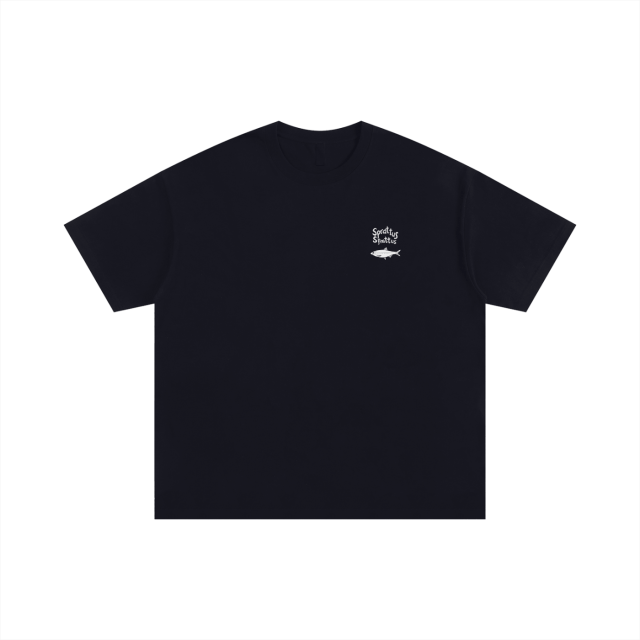
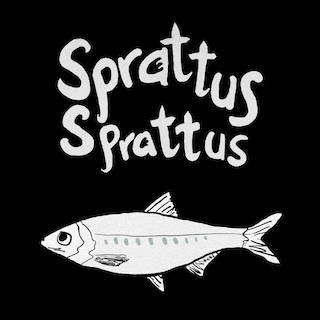
    At Maison Misery, we believe in celebrating the small things — mostly because the big things are too overwhelming to think about. Enter the sprat or brisling: a tiny fish harvested in its delicate youth, then tucked into cozy tins of extra virgin olive oil to dream of the Portuguese coast. These are the fancy ones you bring out to impress a date you’ve just brought home. If they don’t like the ‘deenz’, then that’s a bullet dodged.

    This original tee pays homage to Sprattus sprattus with a hand-illustrated and lettered design placed over the heart, providing a conversation starter for marine biologists and a conversation stopper for everyone else. It’s a way to wear your passion for canned sardines on your sleeve, though technically we put it on the chest because sleeve printing is prohibitively expensive and we have a lifestyle to maintain.


    Media activity

    • Netflix pushed the show His & Hers onto us last week, claiming it was an “addictive” thriller. I say give it a miss, because I can’t remember a damned thing about it today. Instead, their self-declared “top tier” thriller The Beast In Me, starring Claire Danes and Matthew Rhys, is a much better production. We finished it over the weekend, and while it’s no timeless classic, I’d agree it’s what you would find on the upper shelves if Netflix were a Blockbuster.
    • I watched the French animated film, Mars Express (2023) and came away very entertained. It’s a sci-fi story about robot/AI rights, a murder that defies the Three Laws, uploaded consciousness, and so on, borrowing from many existing works while having enough original ideas to justify itself. It premiered at the Cannes Film Festival, and doesn’t seem to have gotten wider attention since. Check it out if you can find it.
    • We also finally saw Brendan Fraser in Rental Family (2025), a Japan-through-American-eyes sort of film that doesn’t come close to capturing Lost In Translation’s magic, but has enough heart to reward your time. Fraser plays a down and out actor living in Tokyo who falls into a job playing stand-ins for people who need to tell white lies. Except some of them are kinda gray. I appreciated how the film leans into the moral ickiness of these assignments and rejects smoothing them over completely.
    • I swore I wouldn’t buy any records this week, and lord it was hard. J Dilla’s Donuts album went on “Limited Time Sale” on Amazon, dropping about $15, but I still didn’t cave! It’s in my cart, though. Instead I played some vintage cuts from my dad’s collection: War’s The World is a Ghetto and Rudolf Serkin’s Beethoven Piano Concerto No.5 with the New York Philharmonic.
    • If you want to know how close AI-generated music is getting to turning out radio-friendly bops, check out this album I came across by Japanese technologist Tom Kawada. I don’t think many people would realize what it was if they heard it in the background of a store, or a movie scene, or their own living rooms.
    • Then, to restore your faith in the messiness of human artistry, watch the new HBO Music Box documentary, Counting Crows: Have You Seen Me Lately? It covers the creation of their first two albums with a focus on Adam Duritz’s struggles with fame and mental illness. AI will probably write a chart-topping hit this decade, but can it ever write A Long December?
  • Week 6.22

    A happy Lunar New Year (previously called Chinese New Year but LNY is more inclusive) was had, as much as was possible under the circumstances. Where once we could have a reunion dinner with 30–40 of my closest relatives (some still unknown), thanks to still burning pandemic fires — we recently hit 13,000 cases in a day — now just immediate family members around one table. Instead of large and raucous household gatherings on Day 1, now intimate sit-togethers. Still, having a spectrum of different LNY experiences in one lifetime is not a terrible thing. Never thought I’d miss those reunion dinners though.

    I got some more samples of Misery Men merch in and made tweaks to improve print and product quality. The recycled cotton “eco tote bags” in particular were not very sturdy, so they’re gone in favor of regular ones with denim handles that can apparently hold 20kg of stuff. Take a look.


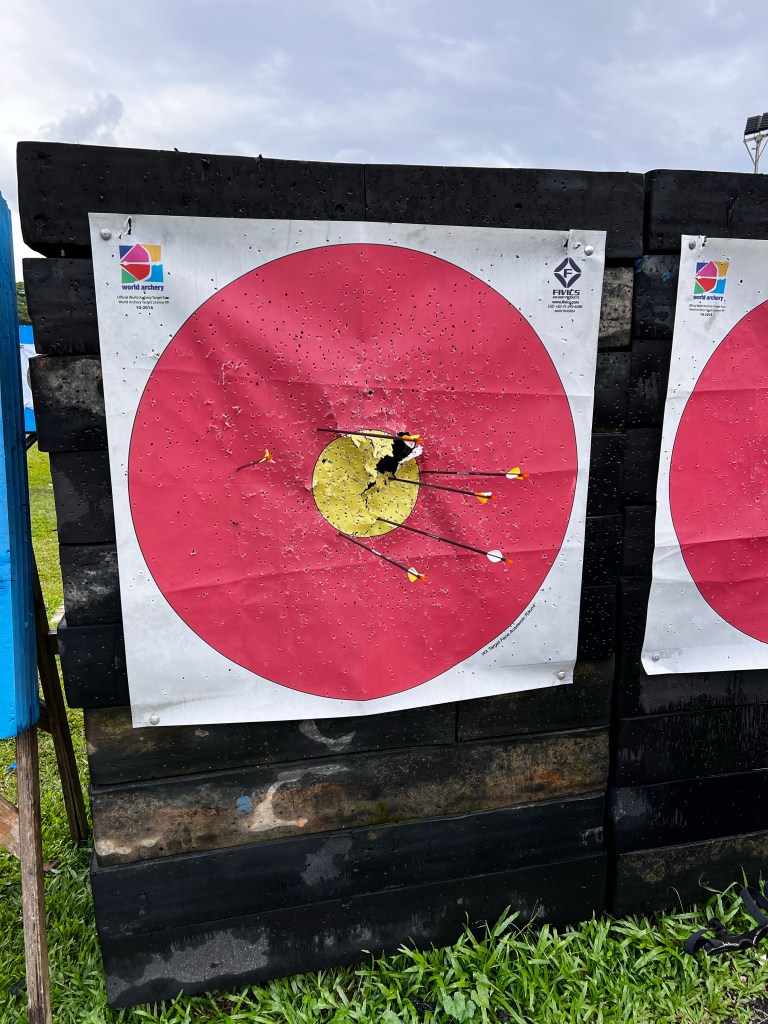
    My shirt was clinging to me in the pre-rain humidity as we trudged out onto the field. I would later find that I’d stepped in literal horseshit. The people running the place wore masks and dark sunglasses under hats and visors, so you really couldn’t see them at all as they looked you over. Were they wondering if I had any prior experience? Why I was so sweaty? No, they’d overlooked our booking and had forgotten we were coming.

    We were bringing our nephew out for an introductory archery experience as part of his Christmas gift. He was running around and excited for it. Kids seem to be impervious to environmental discomfort when they’re having fun. I shot a few arrows. It’s a disturbingly easy weapon to operate. After about half an hour and 20 tries we were markedly better than when we began, hitting the middle of the target often enough. Thanks to our strict gun laws, I never worry about encountering an armed lunatic in everyday life but now I may have to start worrying about bows and arrows in the wild. There were little Korean children, no more than eight years old, practicing beside us and consistently hitting targets maybe 30 meters away. Frightening.


    Media activity:

    • We saw Simon Kinberg’s latest disaster, The 355. I don’t know how the script got approved, or why the actors agreed to be in it. An utter waste of about two hours.
    • Unfortunately, Mamoru Hosoda’s new animated film Belle did not live up to expectations either. In direct contrast to Summer Wars, it spends too much time and exposition establishing the world and not enough on the characters, so I didn’t care at all for the story, which was sadly a mess.
    • I finally finished Plum Rains by Andromeda Romano-Lax, which mashes up elements of Pachinko and I, Robot with a heartbreakingly dry core about the migrant worker experience.
    • As a palate cleanser, I’m now reading Jack Reacher #18: Never Go Back. I’ve been waiting for this one a long time, because a couple of books back, Jack started flirting with an army major over the phone (she’s currently occupying his old job at his old unit), and he’s been making his way across the country to see her, interrupted by several books’ worth of coincidentally encountered wrongdoing that needed setting right along the way. Of course, as soon as he arrives on the army base, she’s missing and he’s being framed. Good times!
    • Still playing Hades, but have started a new visual novel on the Switch: Worldend Syndrome. It was on sale for USD$10 and reviewed well. Positives include nicely animated backgrounds and fully voiced dialogue, while the main negative would be a supernatural horror element that I hope is just misdirection and it’s only a regular ol’ psychotic, murdering schoolgirl that we’re dealing with.
  • Still Living UP

    It’s been a month since I bought my Jawbone UP band, and since then I’ve incorporated a lot more walking into my life, trying to reach my goal of 8,000 steps a day. By my estimates, I probably averaged half of that before, since a lot of my time is spent at a desk, and commuting to and from it in cabs and public transport. Most days now, I do 8,000–10,000 by walking halfway home in the evenings.

    I just weighed myself, and I’m back to the weight I remember being for quite awhile, up until the last couple of years when I’ve felt fatter and slower. The difference is about 3kg, not a lot, and I’d like to lose a few more kilos to get my BMI in the sweet spot.

    What surprises me is how painless it’s all been. No grunting at the gym, or aching all over in the morning. Just being mindful of how much movement I should be making each day, and going out of my way to walk more. Low-impact, sustained exercise. I listen to podcasts, new music on Spotify, or think about things along the way. I get some air, and take the occasional photo (below) if I see an interesting scene. It’s great.

    IMG_7565

    Okay, I guess I’ve also been slightly more mindful of my caloric intake, thanks to the food diary feature of the UP app. I haven’t denied myself anything reasonable, and so there’s no need for “cheat days”. I’d consider my eating habits to be 95% the same. Still, it probably helped?


  • One Week with the Jawbone UP: How its Design Inspires Behavioral Change

    up-by-jawbone-lowres-015

    I bought one of the newly revised Jawbone UP wristbands a week ago. For those not following the rise of wearable activity trackers such as the Nike+ FuelBand, they are essentially pedometers you put on your wrist as you go about your business each day (and wear to sleep at night, in some cases), that connect with your PC or smartphone to give you more insight into your health. The UP was one of the first products on the market, but suffered from design and manufacturing defects that led to a hasty recall and another year on the drawing board before it was finally re-released last Christmas.

    It all started with using the free Moves iPhone app (by the Finnish company ProtoGeo) for about a week, during which I got a taste for recording and quantifying my movements. When I saw the UP on sale locally, it was an easy purchase. It’s only been a week, but it has been a behavior-altering experience for me so far. Along with its companion app, the UP provides a couple of key features.

    • Activity reports
    • Food logging
    • Sleep quality tracking
    • Social network awareness
    • Fiddle-free design
    • Comfort and style

    Activity reports

    carousel-2-3

    Open up the app and you’ll see at a glance how you’re doing against your set objectives. A healthy target is 10,000 steps a day, but few sedentary workers can meet that. Because UP is an internet-connected service, it’s able to tell you what others like you (in age, gender, height, and weight) are averaging. In my case, the average most do is about 5,500 steps a day. I decided to set myself a high but achievable goal of 8,000 steps.

    What’s happened since? I’ve found myself striving to reach that by alighting one bus stop ahead of my destinations, taking the long way around the office, and going for more short walks whenever I can.

    It translates your activity into calories burnt, which it shows you alongside an estimate of how many calories you burn just resting, and a total for each day. Every now and then, the application shows you “Insights”; pre-written facts and advice tailored to your own performance. Examples include deciphering hidden patterns in your behavior and mood, and helping you understand terms like “you walked 8,000 steps” with statements such as “equivalent to walking across the Golden Gate Bridge and back”.

    Food logging

    This part is optional, but you can enter your meals (or just photos of them) to keep a record of what you’ve eaten. If they’re available in the online database, nutritional information is attached. It has the same effect as using an expense tracking app: it makes you acutely aware of every little bit you put into your body, and alerts your conscience to the unnecessary.

    In practice, having a vague idea of how many calories I’m consuming, coupled with the knowledge of how much I’m burning (or NOT burning, on idle days) has been powerful. If I know that I’ve only moved a minimal amount all afternoon, any random urge to snack quickly meets a mental roadblock — “Why would I need more calories?”

    Sleep quality tracking

    Like the popular Sleep Cycle app, the UP band can monitor your movements in the middle of the night, and map out your light vs. deep periods of sleep on a graph. And then at the best possible time close to your intended waking hour, it will silently vibrate in the morning.

    You are asked to set a sleep goal for yourself, and along with all the other data it collects, this is plotted over a timeline of days, weeks, and months, which illustrates how good you’ve been at getting the sleep and exercise you need.

    Social network awareness

    carousel-2-1
    This is easily one of the best features of the UP. Other people can be added as “teammates” and their activities populate your Home screen, turning it into an Instagram of physical activity. You’re encouraged to inspect their details, leave comments, or react with a small selection of emoticons. You might see that a friend had a healthier lunch, or walked far more than you, or slept better than you. These events nudge you into behavior change.

    When I started, one of the only people it found for me to add to my “team” was someone living in Japan that I only follow on Twitter and YouTube. I asked, she said ‘Sure’. I don’t know her personally at all, but I’ve found that reading UP’s activity feed is a unique interaction different from regular status updates. Being able to correlate your own physical state with another person’s through shared metrics, leads to a different sense of awareness; any encouragement you receive resonates that much more. Her most active day blew me away at over 24,000 steps, followed by 11 hours of sleep. It really spurred me on to try and find the time for activity. Multiply that by the number of people you follow, and the social features become an extremely compelling component.

    On my second day, two more people I interact with online bought their own. On the third, my girlfriend joined in.

    Fiddle-free Design

    While the UP is not designed to be worn and forgotten — its constant presence serves to remind you of your goals — it is designed to be worn and left alone. Its long battery life (about 7-10 days) is one of the ways in which this is obvious. Charging via USB only takes about 80 mins, which you can easily do while idle.

    In chasing this long battery life, the UP eschews Bluetooth syncing, which other products like the Fitbit and Nike+ FuelBand have. To sync the UP, one must remove it and plug one end into a smartphone’s headphone jack. Jawbone recommends doing this about twice a day to keep up with your own stats and update your team. On the other wristbands, one only has to start the app, and they sync wirelessly.

    I actually think this omission is a strength.

    Like how shooting on film frees you from constantly checking how the photo came out on the little digital screen, thereby letting you take more photos and experience the scene you’re in, not continuously syncing the UP creates mystery, anticipation, and actually lets you get on with it and not fiddle with tracking apparatus every spare minute.

    In his excellent essay about using a FitBit, Paris and the Data Mind, Craig Mod described looking at the LED display and seeing that he had climbed 96 flights of stairs one day. The next thing he did was walk halfway across the flat town of Palo Alto to the nearest flight of stairs he knew of, so that he could shift that number to read 100. It sounds like great exercise, but I don’t want to obsess over live numbers or end up conducting accuracy tests each day over how many steps it’s counting.

    The UP way, you’re wondering things like “will I break my record today?”, and if you’re extra competitive, “I hope I don’t lose to so-and-so,” as you go about your business. Sometimes, by not knowing, you exceed your targets. And then you sync at the end of the day, and it’s like waiting for lottery numbers to be called out. It’s its own kind of fun.

    Comfort and style

    up-by-jawbone-lowres-016

    The UP is available in 8 colors, of which 3 are available here in Singapore right now. I got the Black (sorry, Onyx), and it’s pretty nondescript and unlikely to draw attention. The brighter colors pop more, and show off a subtle zig-zag texture that identifies it as part of the company’s product range under design chief Yves Béhar. None of them are what you’d expect a “wearable computing device” to look like. The only button is cleverly hidden, looking like an integrated design feature. Two LED lights are embedded beneath the hypoallergenic rubber surface, and only visible when lit. It’s much thinner than the FuelBand, and could easily be mistaken for one of those Livestrong-type charity support wristbands from a few feet away.

    These things help with making the UP an invisible part of daily life, which gives it potential to succeed at being adopted by more. But as the wearer, I always feel its presence (at least in this first week). The routines I’m developing around the app, around thinking about moving more, burning more, eating less, around how my teammates improve themselves, are the very definition of behavior change.

    If having visualized, connected, and actionable data on your own body and movements sounds interesting to you, the UP will probably be a great addition to your life.