Oof, this was a tiring week. Navigating change, physically recovering from a vaccine’s side effects, and having conversations about Christmas gifts, that shit will wear a blogger out. Helping me navigate all this was my astrology GPT, Co—Sign, who would tell me how to deal with challenging situations and to trust in my own nature, even if some decisions felt like bad ideas by other people’s standards.
Of course, the week started off with more twists in the OpenAI management saga, which seems to have ended now with Sam and Greg back at the company, not at Microsoft, and the formation of a new board underway. This pleases me because OpenAI was a company/brand with significant momentum and destroying value of that sort for no good reason doesn’t sit well with me (this may or may not be a reference to something else happening in my life). I’m glad I won’t have to port my collection of GPTs to another product like Poe or whatever.
I used Gen AI to bone up on Silicon Valley mind viruses like EA (effective altruism) and e/acc (effective accelerationism), which I’d kinda grokked in passing but not spent any time specifically reading up on. I have to say I feel myself falling in the accelerationist camp — given current world events, we’re not exactly proving ourselves a worthy species, so we may as well hasten our demise or salvation in every aspect from the upheaval of labor to economic principles. Incidentally bitcoin hit a new high for the year this week, going over $38,000 for a brief period.
I’ve buried the lede, but AI voice recognition and synthesis technology has enabled my favorite gag of the year: this Chinese dubbing of Van Morrison performing Caravan with The Band. It’s sublime; a French chef’s French kiss. It caught me in a moment of weakness and I couldn’t watch the whole thing through because I was dying of laughter. Van shouting “turn your radio up” in Mandarin will live rent free in my head from this week forth. This video is so precious to me I’ve saved a copy on personal cloud storage just in case the tweet goes down.
===
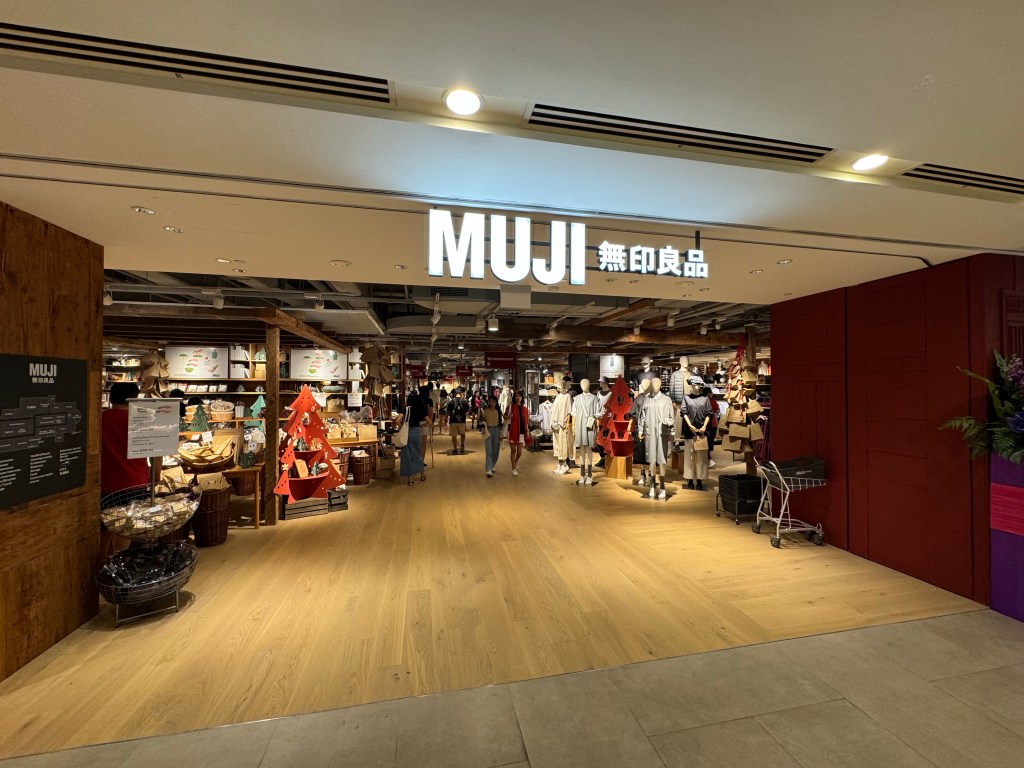
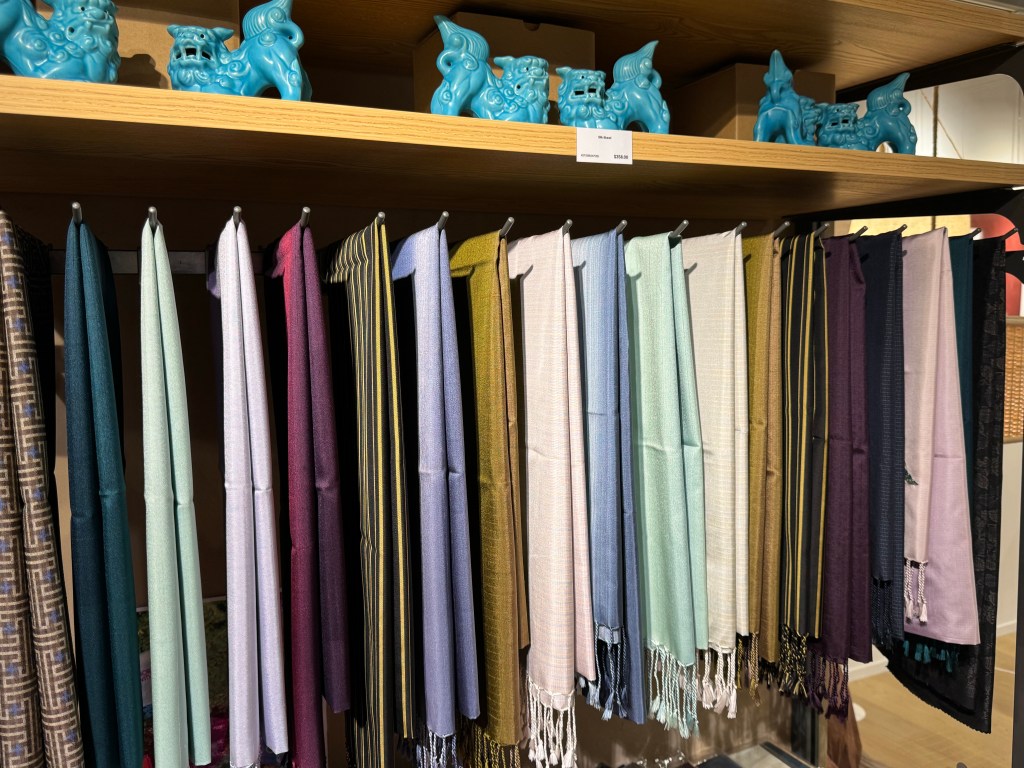
I was excited to hear that the Muji store in Plaza Singapura had reopened after an extensive renovation, now twice its original size and the largest in South-East Asia. We went down on the weekend to take a look, and it had things normally seen only in Japan: plants, bicycles, an embroidery service, renovation services, a wider range of furnishings, frozen food, and regional specialty goods (including $350 silk scarves). Not your average Muji! In fact, it’s billed as a “Global Flagship Store”, and I hope their gamble pays off and Singaporeans vote for more of this with their wallets.
===
Up to episode 4 of Pluto on Netflix now and it’s really the best anime series of the year for me. Just on those late 90s cybernoir SF mystery vibes. This is what the Ghost in the Shell Standalone Complex reboots should have been like.
Also up to episode 4 of Blue Eye Samurai and I’ll admit it’s gotten better. More complexity, somewhat interesting stakes, but the CG anime look with fake low-fps stuttering is getting a little annoying. If I had a modern TV I might actually turn on motion smoothing just to make it a more authentic experience.
I tried real hard to avoid buying a 4K HDR TV during the Black Friday sales and succeeded. Gotta save up funds for the dark days ahead.
Speaking of premonitions, we saw episode 2 of Lessons in Chemistry on Apple TV+ (mild spoiler alert) and let me tell you, my cinematic Spidey sense tingled and I called the event that happens at the end of the episode minutes before it happened. I’m usually quite bad at anticipating TV twists, but something about the atmosphere and pacing and shots just told me what was coming.
We also saw the first two episodes of Monarch: Legacy of Monsters on Apple TV+ and were left impressed. It’s the new series involving Godzilla and other monsters that either belong to Toho or Warner Bros now? Really, the monster custody is unclear to me. But halfway through, as new characters were being introduced in flashbacks, Kim assumed an Asian woman was the mother of a younger Asian woman we’d already seen. And I said, “maybe it’s just an unrelated Asian woman”, to which she laughed, “there are never unrelated Asians”. Which I took to mean in American shows, not the real world, and sadly she’s right.
Many people have been raving about Andre 3000’s new instrumental album with flutes, New Blue Sun, and I’ve tried to get into it, I have. But it’s literally put me to sleep a couple of times, so I’m assuming it’s just not for me.
(This week’s Featured Image is a Dall•E representation of a Chinese Van Morrison impersonator performing in a Muji store.)
Kim was away again for work most of the week. This effectively gave me the gift of freedom from our Beyond Deck addiction, cold turkey. So I played a little Super Mario Wonder, drank too much bourbon, watched Bitcoin YouTube, and lazed around unproductively on my iPhone.
And on the days I decided to work from the office, I was richly rewarded with elevator breakdowns, mall escalator maintenance, and other inconveniences that made me wish I’d stayed home. I don’t think I’ve mentioned my recent obsession with Luckin Coffee, the Chinese chain that’s been expanding nationwide, including an outlet in my office building. Bosses forcing a return to office take note, getting one of their iced coconut lattes in the morning is one of the reasons I head in. I was looking forward to my fix one of these cursed mornings but found the branch closed for upgrading.
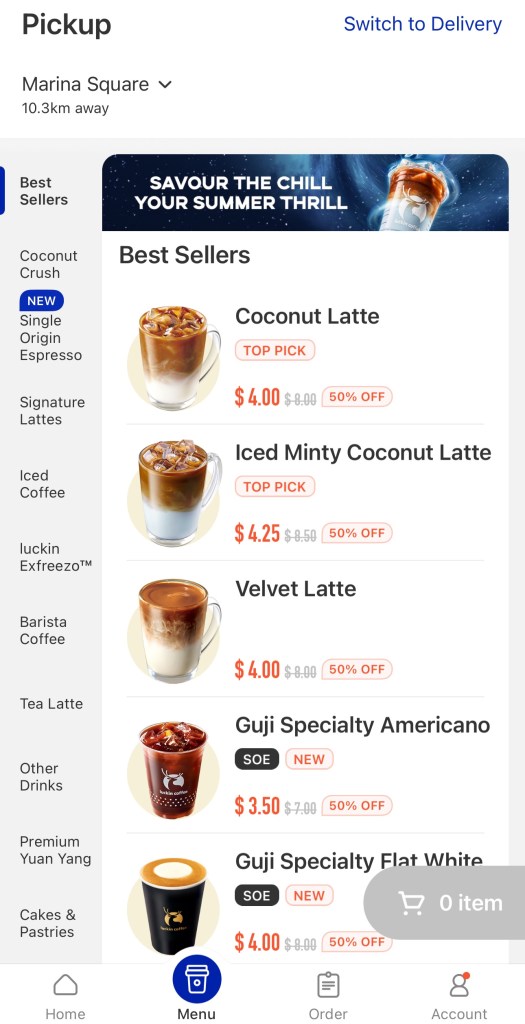
Luckin’s model is fully app-dependent and most branches are just pickup counters, with no seating. You order on your phone, pay via card or Apple Pay, and pick it up by scanning a QR code. You don’t interact with staff, and they don’t handle any filthy cash. For comparison, you can do the same thing with Starbucks’s app, as well as order in person like a boomer. To get you past the friction of downloading the app and setting up an account, your first drink at Luckin is just $0.99. Subsequently, you’ll get hit with a barrage of discount vouchers ranging from 35% to 60% off, so much so that I haven’t paid full price for a coffee yet.
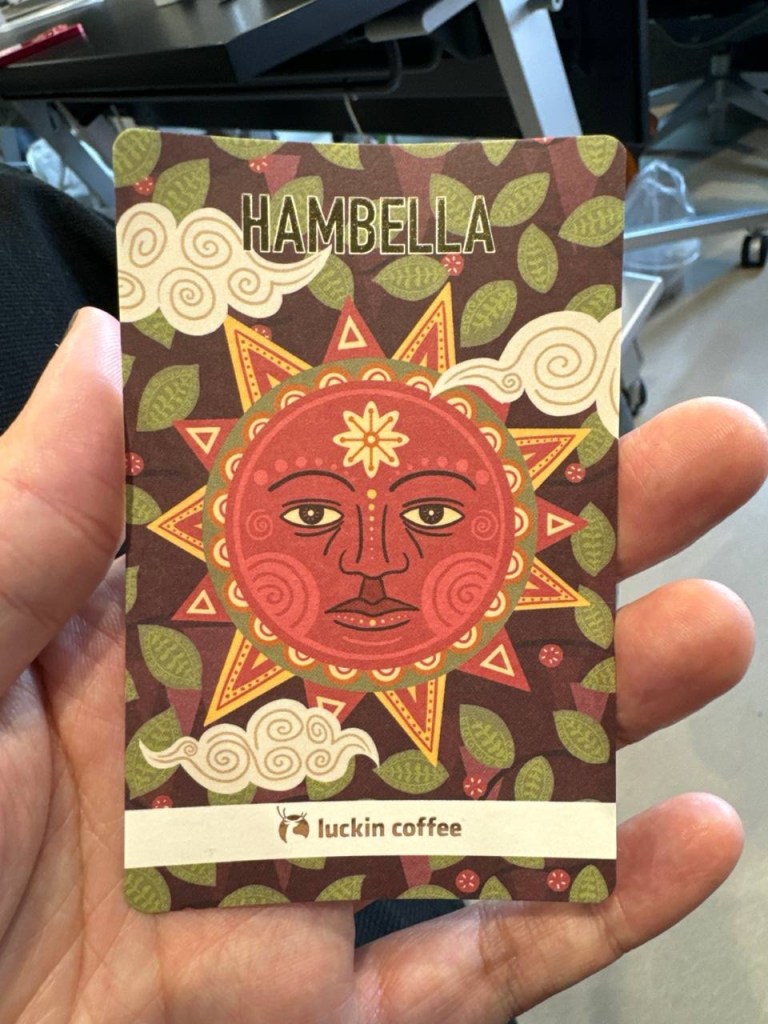
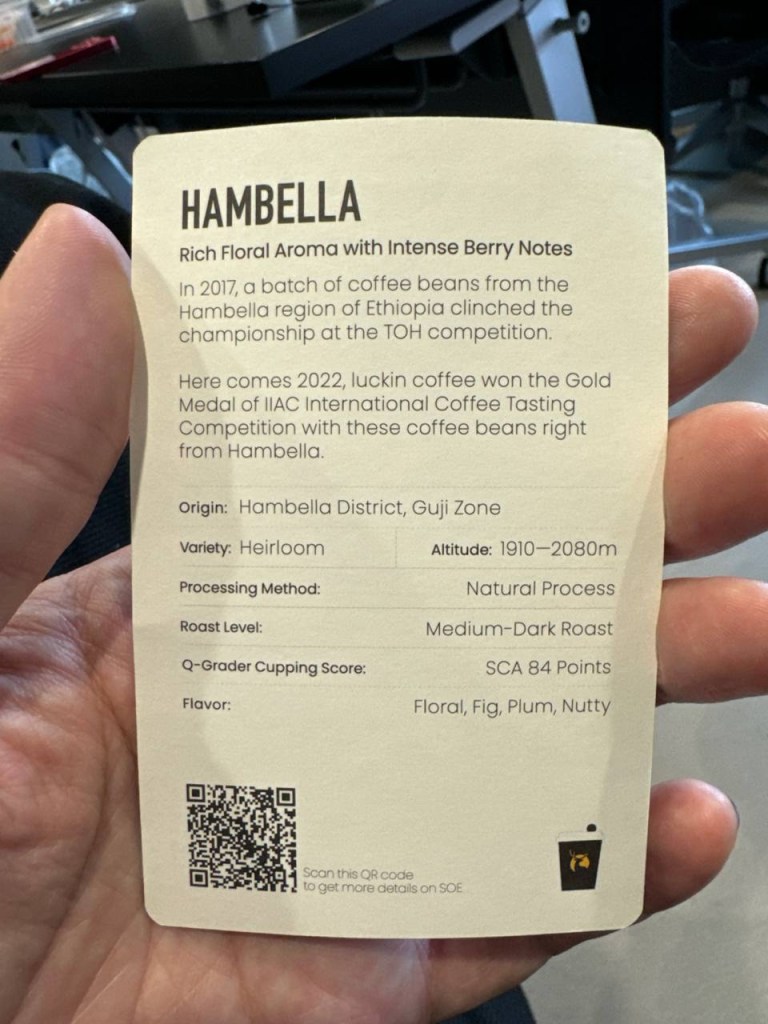
For the record, their drinks are priced around $8 each, and they’re somewhere between a Starbucks tall and grande. The discounting is an aggressive acquisition play, of course, but I’ll take low margin coffees while they last, not least because they’re actually pretty tasty! Like Starbucks Reserve, they offer a range of single-origin specialty coffees, and even give you beautiful little info cards with tasting notes. The absurdity is not lost on me, given their quick-service image it’s like if McDonald’s gave you facts on the cow in your Quarter Pounder. Nevertheless, on that day my Luckin outlet was closed, I went to a Starbucks for the first time in quite a while, and it felt like comparatively much less value.
===
From clicks to chats
I went over a new trend report my company put out, and there’s a large focus on generative AI as one might expect, which led to a couple of interesting conversations about how much work is ahead of us when it comes to overhauling the touch points we use to deal with merchants, service providers, and even governments.
In a way, the graphical interfaces we use today evolved as proxies for “natural” verbal and gestural communication. Similar to how we used mouse cursors because we couldn’t touch displays directly, we have menus and buttons and screens filled with data because we can’t directly ask computers for complex outcomes. The promise of large language models is that now we might.
There have been think pieces this week about how Apple was “caught off guard” by this gen AI wave and is now scrambling to catch up. I think they have plenty of time; here’s why:
What’s at stake isn’t smaller-scale improvements like the transformer-based autocorrect in iOS 17; it’s about whether gen AI can bring a more radical change in how we use computers. You can already see the hunger for this — the dream of J.A.R.V.I.S. — in a dozen half-baked AI-powered product announcements. We’re not far from Humane’s wearable phone alternative, Rewind’s Pendant which will process everything you say or hear, and Meta has great-looking new “smart” Ray-Bans which can put their new AI voice assistant(s) in your ear (US-only).
The basic version of conversing with AI looks like a text chat, and on the other end of the spectrum is a “multimodal” natural chat that takes a user’s body language, tone, and facial expressions into account. Putting aside the fact that such a model hasn’t been trained yet, just the massive amount of personal data this would involve means only a company positioned to put privacy first might get any traction. And then there’s the staggering hardware requirements of doing this in real time. If only someone was working on a new kind of computer equipped with industry leading silicone, and biofeedback sensing that can even predict you’ll tap a button before you do it…
Assuming this is the right thing to do at all, the Apple Vision Pro with its microphones, retina scanners, and hand-tracking cameras should be well positioned for a future where you can simply sit down in front of an AI relationship manager from your bank, have a free-flowing discussion, and see the appropriate figures and charts pop up — instead of poking around a UI to find out how your money is doing. But the stated purpose of the Vision Pro is spatial computing, which is only a step towards natural computing.
So like every other time in history, Apple will wait while others jump the shark first, and hopefully clean up after with a more sensible execution. They have the time; it’s just a shame for impatient people that the hardware looks so ready. But as a wise man once said: technology moves fast, while people change slowly.
===
Pints and pop music
Ex-colleague and friend Bert is back in town for the first time in over four years, so we met up twice to catch up and see some other faces we’ve missed in recent years. This meant many pints of Guinness (if ever I associated a person with one drink only, it’s Bert and Guinness), which compounded with the aforementioned bourbon and a gut-busting, sodium-loaded visit to Coucou hotpot for a physically taxing week. Every organ is straining to detoxify and I really felt the effects all weekend.
We watched half of the third season of Only Murders in the Building and I’m happy to report it’s much better than the second. I think there’s even a self-effacing joke at one point about how the first season of the in-show podcast was more likable than the second. It comes down to a clearer story with fewer detours, the kind I’ll probably remember a year from now unlike, say, season two’s.
Sigrid has a new four-song EP out: The Hype. It is extremely Gen-Z in that it has a shoddy photograph on the cover and looks like it was made in Canva. The music is much better, but she’s just doing more of the same, which I won’t complain about because if Coldplay just kept doing the same thing as in their early albums maybe they wouldn’t be so insufferable today.
Taylor Swift’s 1989 is finally out in (Taylor’s Version) form! I think this was the first album of hers to ditch the country pop style and just go straight pop? Did it have something to do with leaving Nashville for New York? In any case, it was the first album of hers I played for myself, and also the one Ryan Adams liked enough to cover I guess. I’ve been mostly playing both versions this weekend and came across a debate I never knew I needed: is 1989 a beach album about the Hamptons or a city album?
It’s a rare treat for me to be able to visit Japan two years in a row, but that happened last month after we realized my airline miles bank could handle it. Our time was largely planned around meals, exhibitions, and not a great deal else. Looking back, I should have spent a little more time making a good to-do list. As soon as we arrived home, I started hearing and reading about all sorts of other things we could have done. Maybe next year.
It became a bit of a tradition for me to make these konbini snack haul videos every night at the hotel, showing a camera all the native junk food and drinks I bought to eat while lazing around. Unfortunately, I didn’t do any this time around. Why? Leading up to the trip, I started eating less and being healthier so that I could pig out on holiday. Ironically, that had two effects: a smaller appetite, and a habit of reading nutritional info labels.
Once there, I was looking at the calorie counts on everything, and having more than a 400kcal sandwich and 150kcal milk coffee for breakfast seemed irresponsible. In the past, I was probably eating 1000kcals just at breakfast alone. Those colorful, convenient packages are more energy-dense than they look… like how a microwavable spaghetti ready meal from 7-Eleven will easily run you over 900kcals.
This trip will be remembered for having spent (too?) much of it in queues. Nearly straight off the plane, we stood three hours in line at Nakiryu waiting for their Michelin-starred take on Szechuan dan dan noodles. It was amazing but three hours is a little much. I’d do it again at twice the price and half the wait.
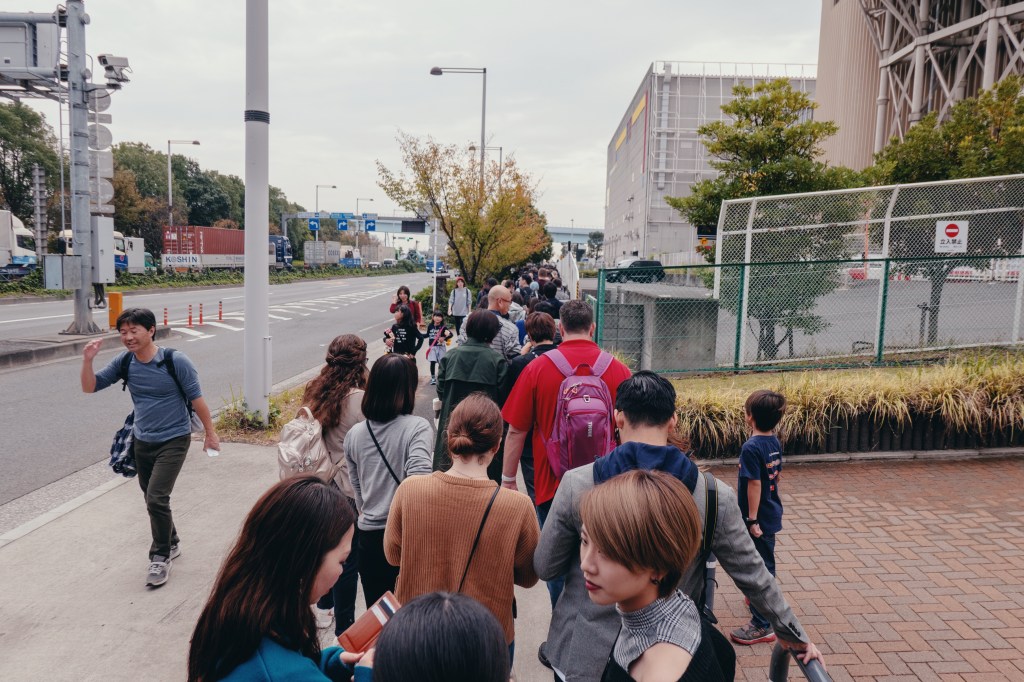
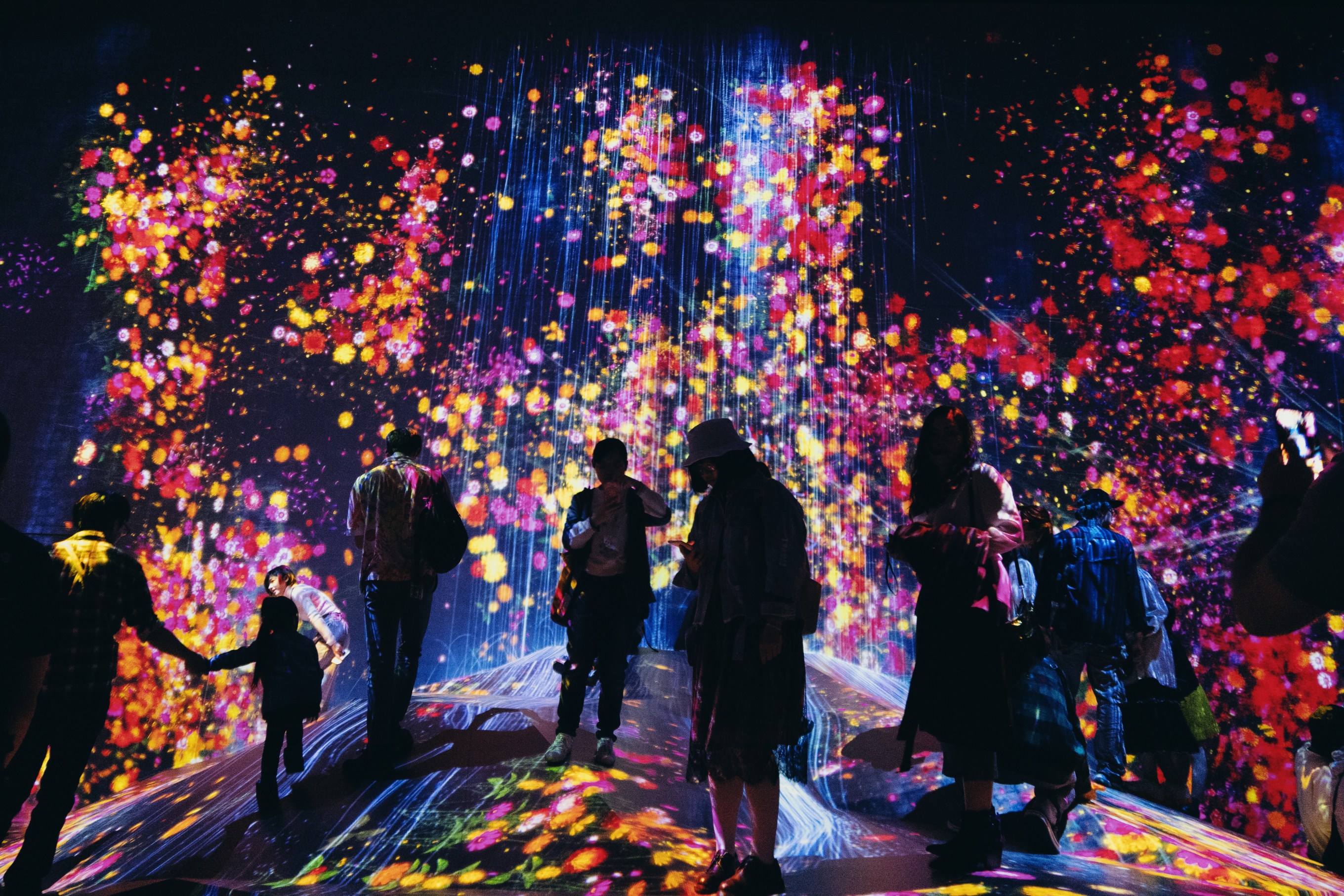
Another epic wait was at the fairly new “Borderless” exhibition by teamLab in Odaiba, where the line stretched as far as one could see, before extending around the corner for another equal length. You approach it from the head of the line, and then walk down the entire way to find the end, and it’s painfully demoralizing. We honestly considered skipping it and going home, but it moved quickly and only took an hour. Once in line, you will be kept entertained by the disbelieving faces of newbs going through the same rite of passage.
Processed with VSCO with ka1 preset
As an experience, I have to recommend it. teamLab pull off some amazing stuff both in terms of technical achievement and sheer conceptual audacity. I don’t know how many members they have, but I’ll bet they’re all overworked. This permanent exhibition is presented in conjunction with Epson, and when you look at the number of high resolution projectors employed to carve these interactive fantasy worlds out of the dark, it makes sense.
We were also fortunate to visit 21_21 DESIGN SIGHT when an exhibition about Naoto Fukusawa’s iconic INFOBAR phone was on in commemoration of its 15th anniversary and the new xv model. The anniversary model runs some severely restricted version of Android to recreate the minimal featurephone experience. It’s a beautiful object that I used to dream about being able to use, back in the pre-smartphone days. We just don’t get this kind of product design anymore now that the screen has become the primary element.
Some observations…
Every time I’m in Japan, I try to notice what games people are playing, the devices they’re using, what’s being advertised and so on, because it’s still quite an insulated cultural environment and many of those things don’t make their way outside or fail to catch on if they do.
Gaming
Last November, a Korean-made mobile game called Destiny Child was being heavily advertised on TV and around the city on billboards. The ads were highly visual, showing off some detailed 2D character animations and no gameplay to speak of, so I had no idea what it was about but I wanted to try it. For a whole year afterwards, I’d periodically do a search for Destiny Child on the App Store to see if it had made it out in English. This year, upon our return after the 10 days or so in Japan, it was finally released globally in English. It’s a kinda ecchi mobile gacha game and not for everyone, but you can find it here: https://itunes.apple.com/sg/app/destiny-child/id1416959016?mt=8
Okay, these aren’t the latest games.
I’m still waiting for Level-9’s The Snack World (3DS) to cross the language divide.
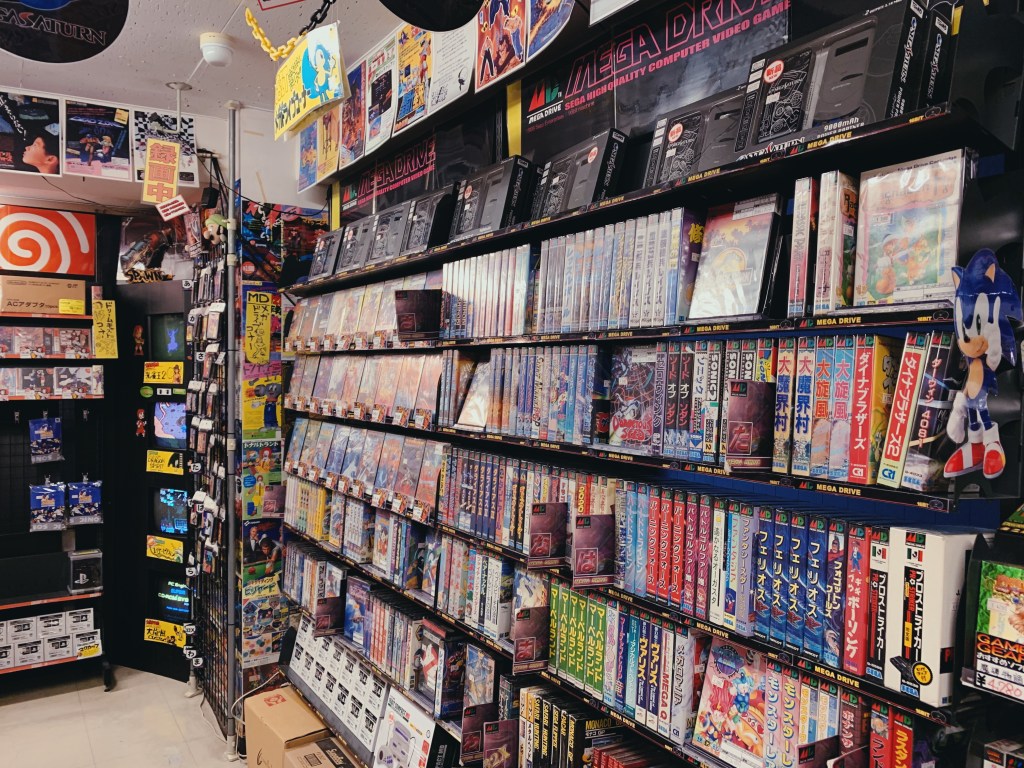
You already know this, but the Switch is killing it. The fact that it’s region-free, and a few games that come out first in Japan include support for English and other European languages, has been seized upon by some retailers who have stuck up notices for tourists about what games they can safely buy home. Sony had some pretty slick in-store displays for Judge Eyes and PSVR, but Nintendo had the crowd-drawing content between Pokémon Let’s Go, Smash Bros. Ultimate, and Mario Party.
Tobacco
Compared to a year ago, smokeless tobacco products seemed to be in decline. I recall seeing people use Marlboro’s IQOS devices everywhere, and in smoking lounges (at the airport, for example), the majority of people were using similar systems.
Now, it seemed like the proportions were reversed. I overheard (mostly inferred from snatches of words I understood, actually) a lady talking to her friend about JT’s Ploom Tech while smoking a regular cigarette, saying how it wasn’t that good. She even pulled the device out of a pouch in her bag to show it off.
Having tried Ploom Tech, I can see why. It’s nothing like a cigarette and really lacks a lot of the experience. IQOS is much closer. I’d be interested to know the reasons behind this pattern, if true. Was it just a fad, or do smokeless products have a future? I think their adoption could do a ton to improve the air in cities, and improve quality of life for smokers as well.
Electronics
A couple of years ago, everyone on the train listened to music with cords hanging from their faces and that was the picture almost everywhere. Riding the Tokyo metro in 2017, I noticed many more making the move to wireless (the same story in Singapore), but the majority of these were neckbuds and the like — sub-$100 Bluetooth headphones connected by a cable.
This year, commuters were noticeably switching to so-called true wireless headphones, including Apple’s AirPods which have exploded in popularity. It’s an overall trend in consumer electronics, helped by the fact that prices have come down and identical OEM buds under a slew of new brand names can be had for very little. Just look in my Instagram ads sometime.
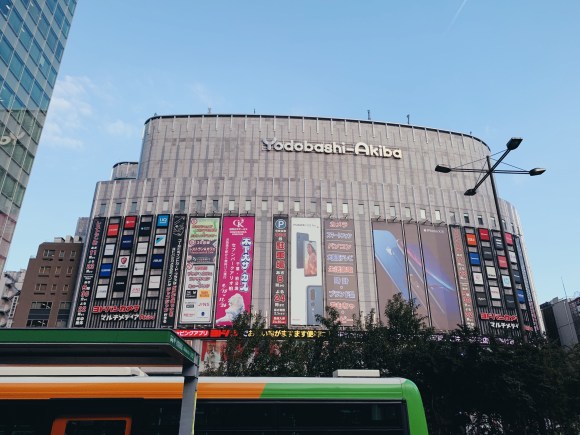
But after looking at tons of them in the big stores like Bic and Yodobashi Camera, I’ve concluded that almost none of them are competitive with the AirPods on battery life or charging case size. The Jabra Elite 65T has probably the smallest case (I bought a pair), and Sony‘s are laughably large. They are like mini coffins, and won’t fit in any pockets. Instant fail. Even after a year, no one has nailed battery life, solid connectivity, and portability like Apple did with AirPods. If only they fit my ears without falling out.
I don’t know if the reports of iPhone XR demand being weaker than expected are true, but you’d never know it from walking the aisles in a store. It had just come out when we were there, but the shelves were already filled with third-party accessories. And stores were pitching them at the front, with iPhone XS and XS Max goods relegated to the rear. Clearly, manufacturers and retailers were ready for it to be the most popular model.
Magazines and retail
I posted about this in an Instagram story, but it bears repeating here. The Japanese publishing industry and its continued survival is an interesting phenomenon I wish someone at Netflix would commission a documentary on. Digital devices are everywhere, and I believe Amazon had some success convincing people to read manga on their Kindles, but paper is still everywhere.
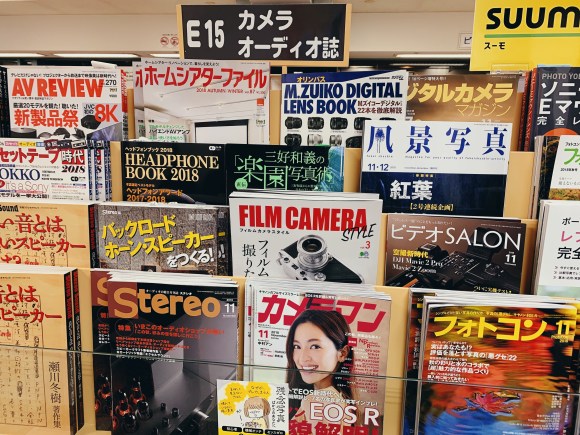
Walk into any magazine section and you’ll see specialist interest publications on niche hobbies: fountain pens, shooting film through vintage lenses, ballet, fabric decoration, birdwatching, and even individual apps and games. None of this is news, but every year I see that companies can keep doing this makes me feel incredibly bittersweet about not being able to read Japanese and live in their world. I’d love to know how close to the line of viability they stray, and whether or not young people are still considering a career in the industry.
Just this month, Bunkitsu, a mammoth new bookstore has opened with over 30,000 titles and a so-crazy-it-might-work business model: visitors have to pay a ¥1500 cover charge.
I’ve wistfully said similar things about their retail landscape in other posts, and how you’re sure to find supplies for (insert odd past time) somewhere. But while you can shop, learn, and find community online from anywhere in the world, it’s different when physical spaces are reserved for this exploration and sharing.
That’s why places like Tsutaya at Daikanyama T-Site (see last post) are so special; they’re like magazines you can walk around in. Feeling out of touch with culture? A quick trip immerses you in what Thom Yorke is up to (writing the score for a remake of Suspira, btw here’s the LP cover and a t-shirt and the movie poster and one of the costumes from the production… wanna hear it on this new pair of headphones?); what the new Pixel 3 feels like to hold; what drinks Starbucks is peddling for Christmas this year; which classic albums are 50 years old today; and a ton of other media about whatever you care about. Yeah it’s all driven by consumerism, but let me have it.
I have no doubt that we will collectively realize what we’ve lost if/when physical retail collapses, and attempt to restore it. Possibly through VR or mixed reality. Some form of socially curating, presenting, and trading is crucial to the creative process, and I think it has to have a tactility and presence to work. Or maybe I’m just old now.
More photos
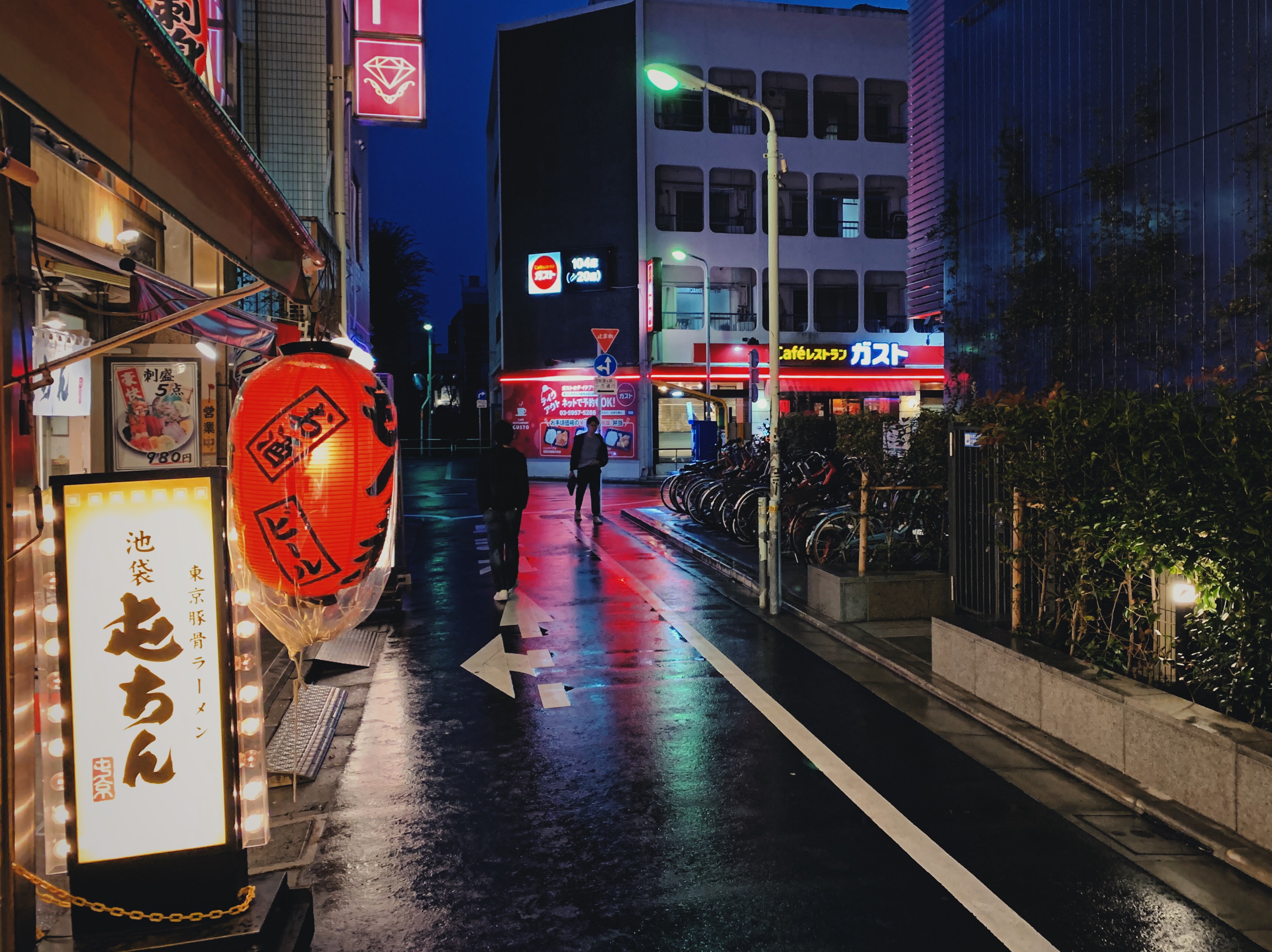
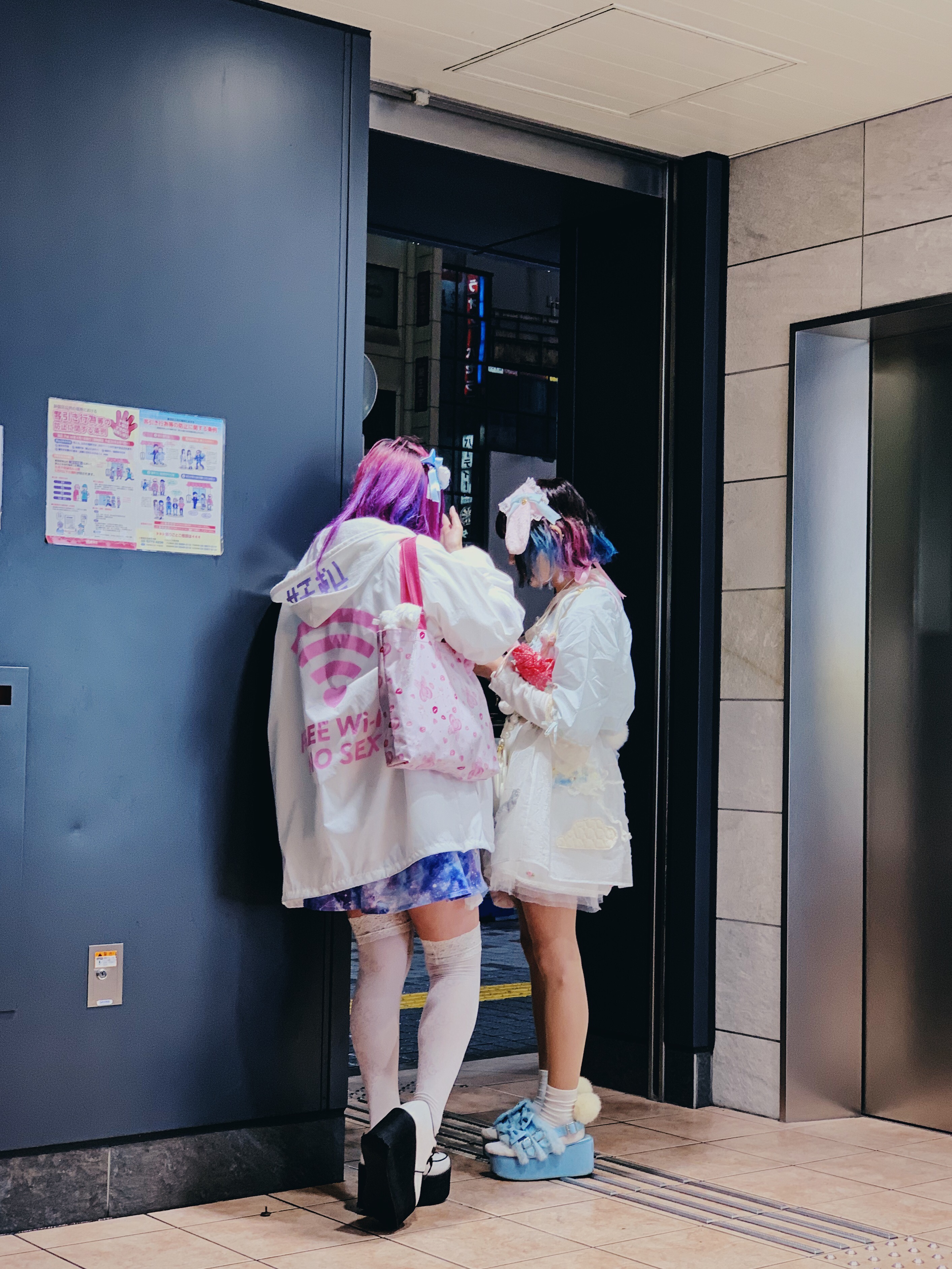
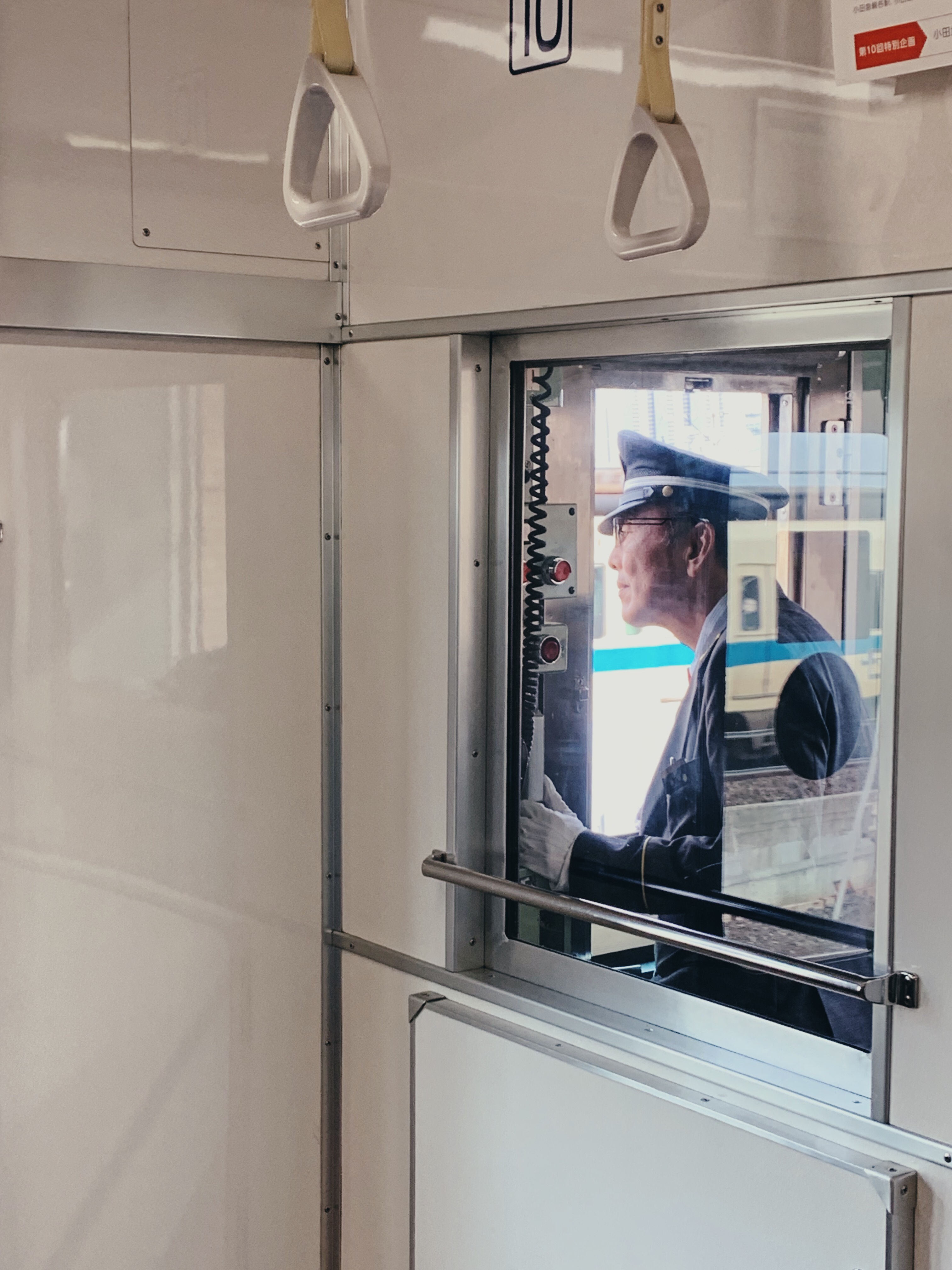
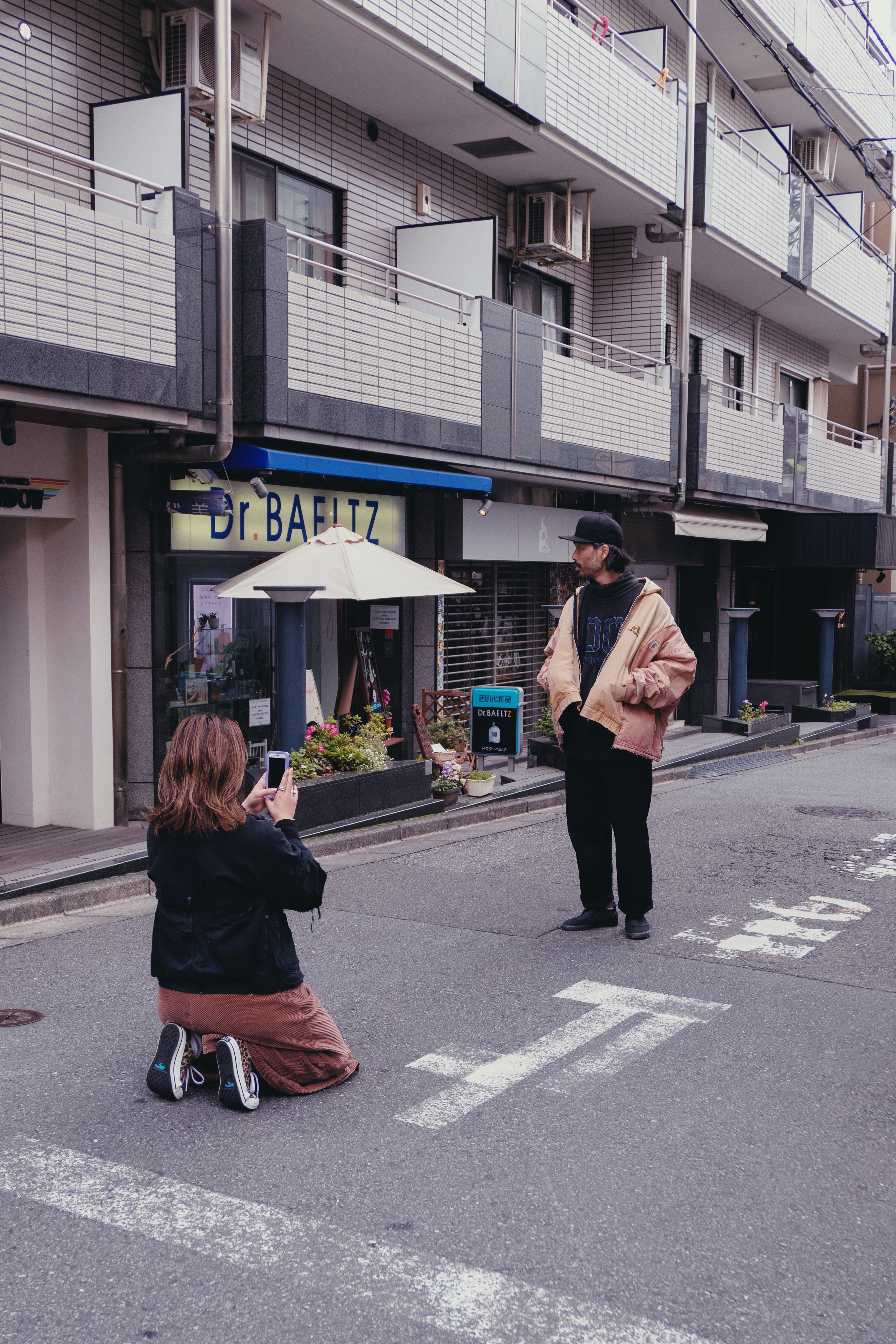
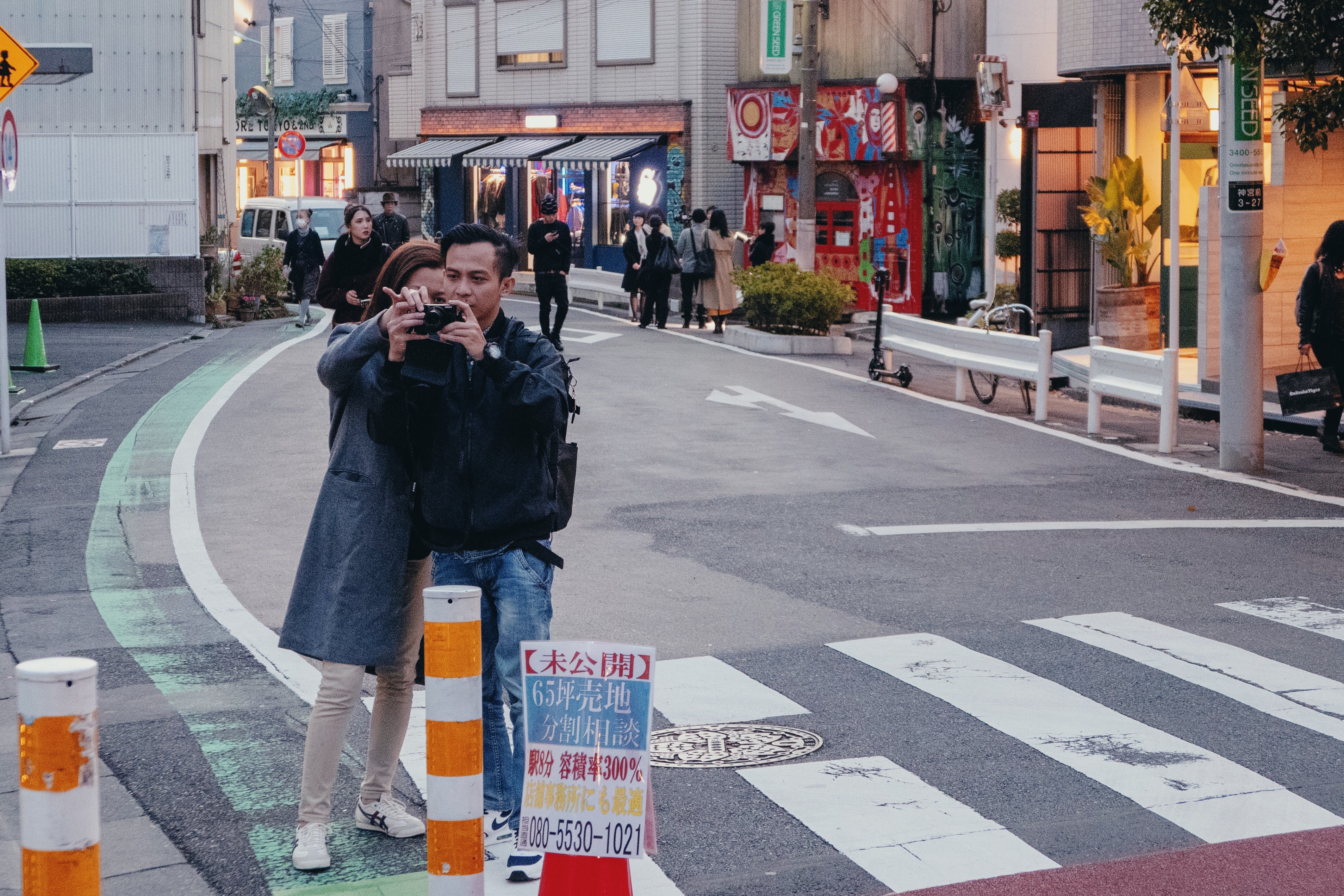
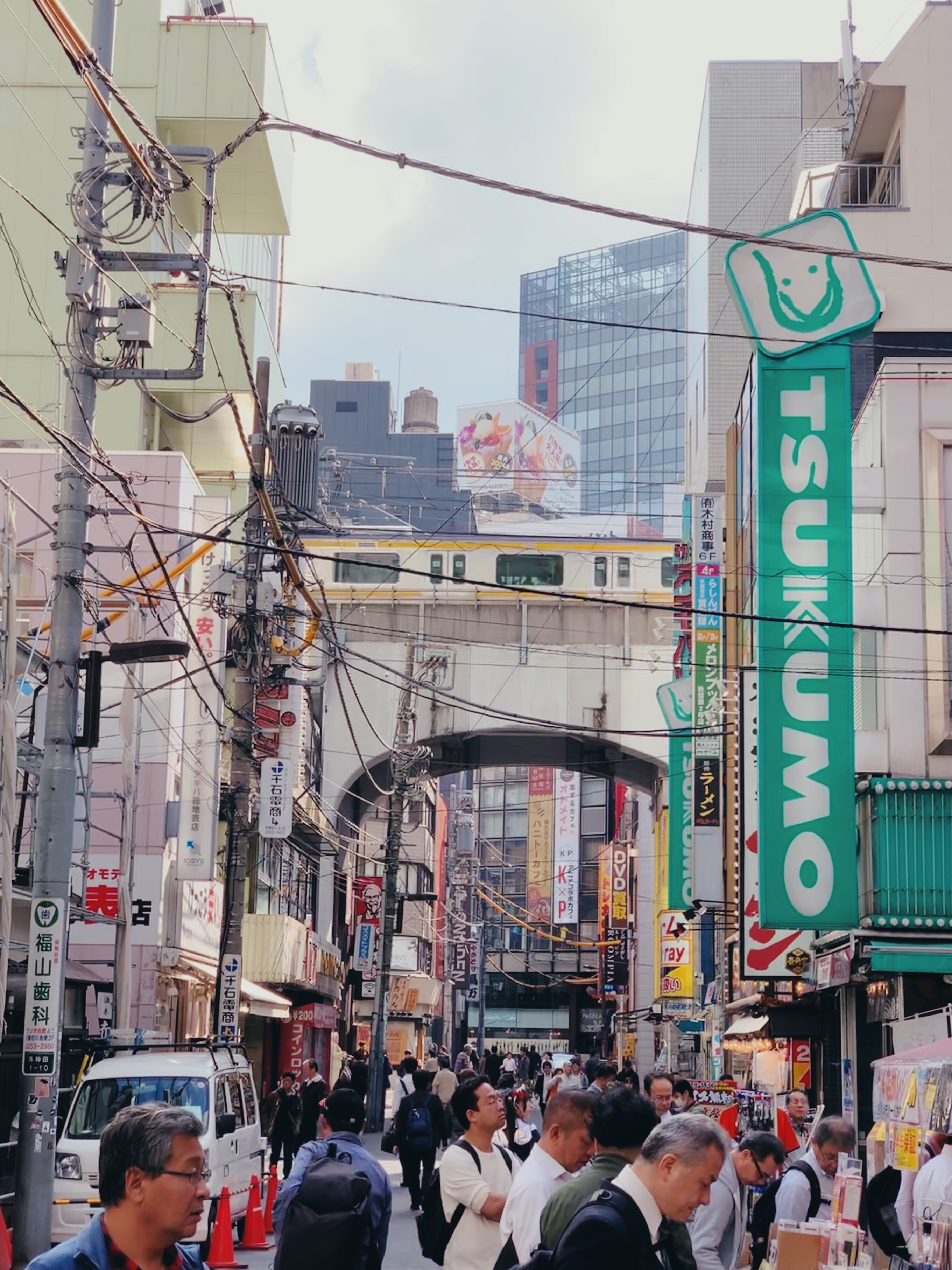
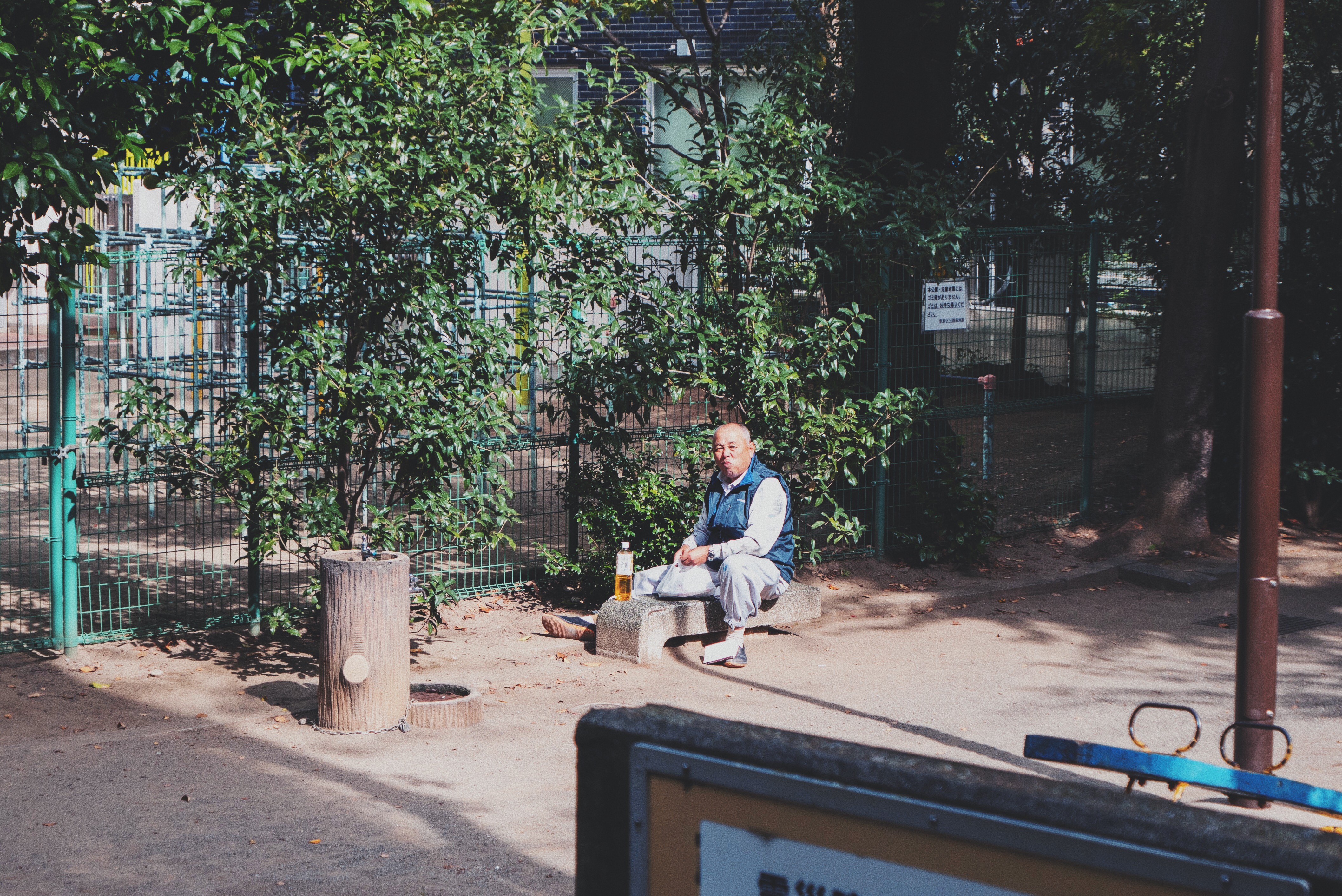
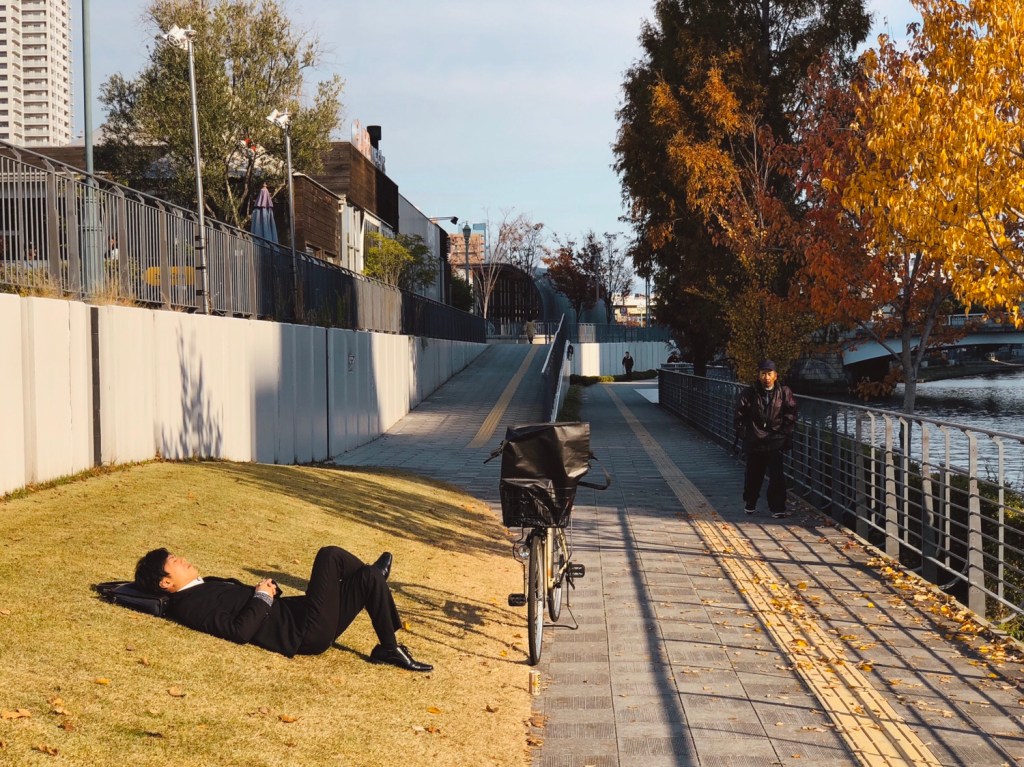
I packed light with just an iPhone XS Max and the Panasonic LX10 I bought earlier in the year, and decided to try something new: processing every color photo with the same filter/film simulation in VSCO. It’s the KA1, aka their recreation of Kodak Ektachrome E100G. Because their Film X filters allow you to adjust “character” and warmth along a spectrum, you can actually make any single film sim work on a variety of photos; contrasty and warm in some, faded and cool in others. The goal was to set a consistent look across the two cameras and one moment in time. I’ll probably look back on these in the future and want to edit them all over again, but this is good for now.
Time flies and we’ve now been here four days. We visited T-Site yesterday; still one of my favorite retail experiences, even though I can’t use half the things they have. It’s a pop culture magazine as physical space: something we all need since the internet killed everything.
We paid Tokyo and Osaka a visit last fall, following up on my life’s goal of visiting Japan at least once every two years, and nothing disappointed — not the food, people, weather, galleries, nor multi-storey complexes designed to make me buy media and electronics. As Craig Mod alluded to recently on Twitter, Tokyo is a place that fulfills the city’s promise as a tool for human life.
The thing I love about its density and intensity is how that translates into support for all manner of subcultures and obscure hobbies. Today, you can barely find a functioning and interesting bookstore in Singapore, while in Tokyo it’s not just bookstores that thrive. One can wander into massive stores selling model train and forest diorama-building supplies, or records curated from a specific period, or vintage camera parts emporiums. We’re not large enough to incubate that kind of diversity, and the city dweller’s life suffers for it.
The retail industry in Singapore is in decline, or so the news outlets tell us every day. I wonder if they ring the same alarm bells in Japan. Online shopping and its infinite inventory can fill the gap a brick & mortar apocalypse would leave behind, but digital ~~replaces~~ overwrites our collective memory of browsing and inspecting these items in a physical space. I think it’s really important we don’t lose that, because, as one of my company’s founders is fond of saying, technology might change fast but people fundamentally don’t.
I thought I was perfectly fine with digital discovery, Spotify-style apps and the iTunes Store, but at the risk of losing the last big retailer in town (HMV), and remembering how one could wander for hours and come out with armfuls of new music, I think I’m going to miss the tactile/spatial experience of old. There’s something about walking in and seeing with your own eyes a handmade display promoting an album you’d never heard of, and becoming curious. A thumbnail doesn’t do that.
Branch is a relatively new startup and service that allows anyone to set up ad-hoc, public discussion spaces. The person who sets the topic (or question) can invite others over Twitter or email, and any other viewer can ask to join in by simply writing what they would say if they were already part of the discussion. After that’s approved, they’re in. It’s an elegant and well-designed system, but still relatively unfriendly to some.*
For my first attempt, I asked the question that came to mind after a late visit to the local HMV last night, after the news broke that their UK offices are now in receivership (broke ass). I’ve already enjoyed the experience immensely, even with just two other participants, and look forward to using this more.
As for the topic of discussion, it’s something I want to think about more. I still believe in the power and value of music discovery outside of clickable lists and webpages. Creating a different sort of physical music retail presence is something I’d love to work on for a future client.
* One friend who I invited balked at the standard Twitter authorization screen that said ‘this app is asking for permission to “See who follows you on Twitter” and “Tweet on your behalf”‘ — pretty standard and harmless stuff that most frequent Twitter users don’t even blink at, but frightening language for others all the same.






















 sangsara.net