Tag: Singapore

  • Week 13.26

    Week 13.26

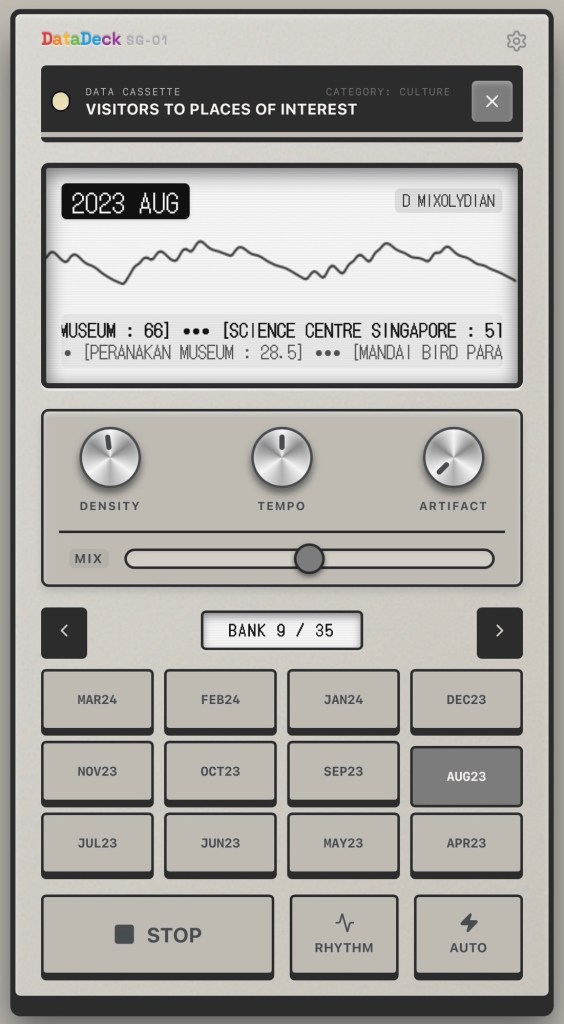
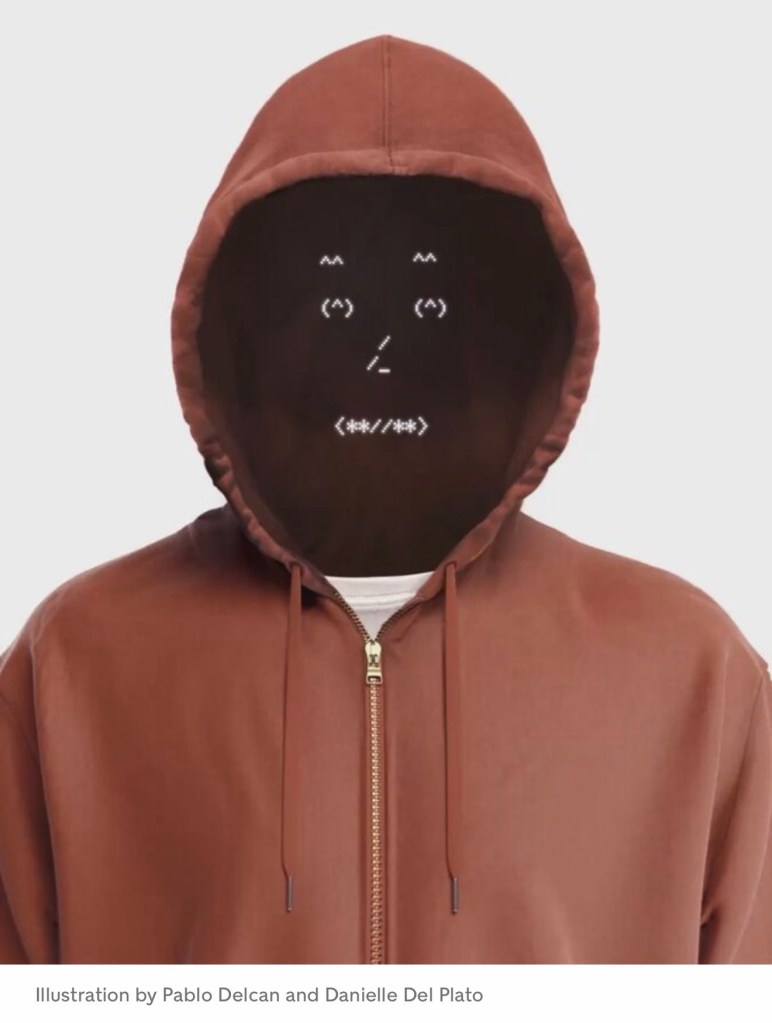
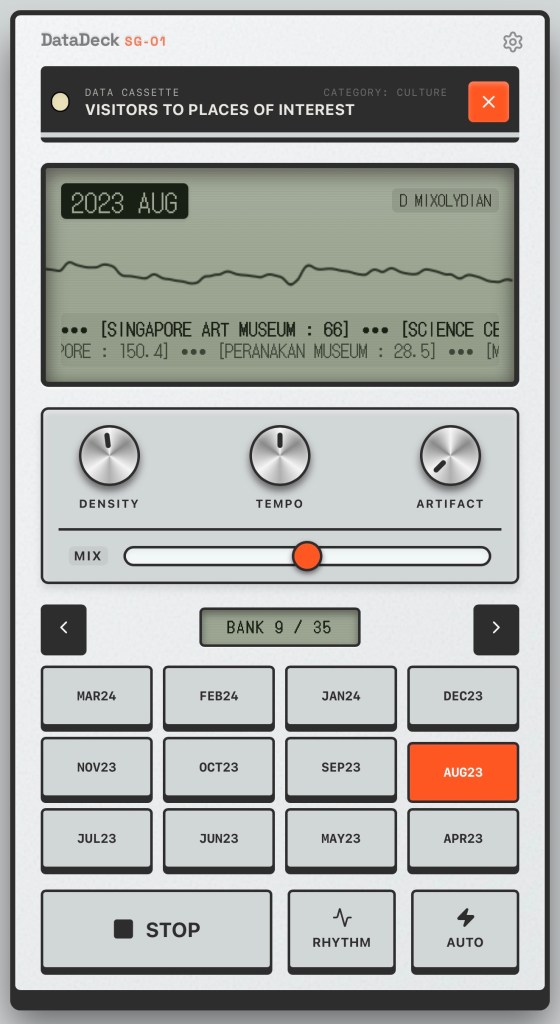
    I finished my sixth app: DataDeck. It simulates a fictional hardware music player called the DataDeck SG-01, or more accurately, a music generator. It reads live, open data feeds from the Singapore government’s data.gov.sg portal and translates them into unique musical compositions.

    My first prototype ingested the tourism stats for International Visitor Arrivals to Singapore since 2008, and when I first experienced the silence of the Covid years, with the beat gradually building back up again after 2022, I knew I was on to something. Data sonification is a cool term for nerds, but hearing the stories stored in the numbers is something anyone can understand and appreciate.

    At about ten days of development time, it’s the biggest project I’ve delivered so far with the help of AI — there’s no saying how long it would have taken me to do on my own. A million years? Instead, in just 10 days: parsers for 10 different datasets, 10 varied musical styles, and 10 switchable themes.
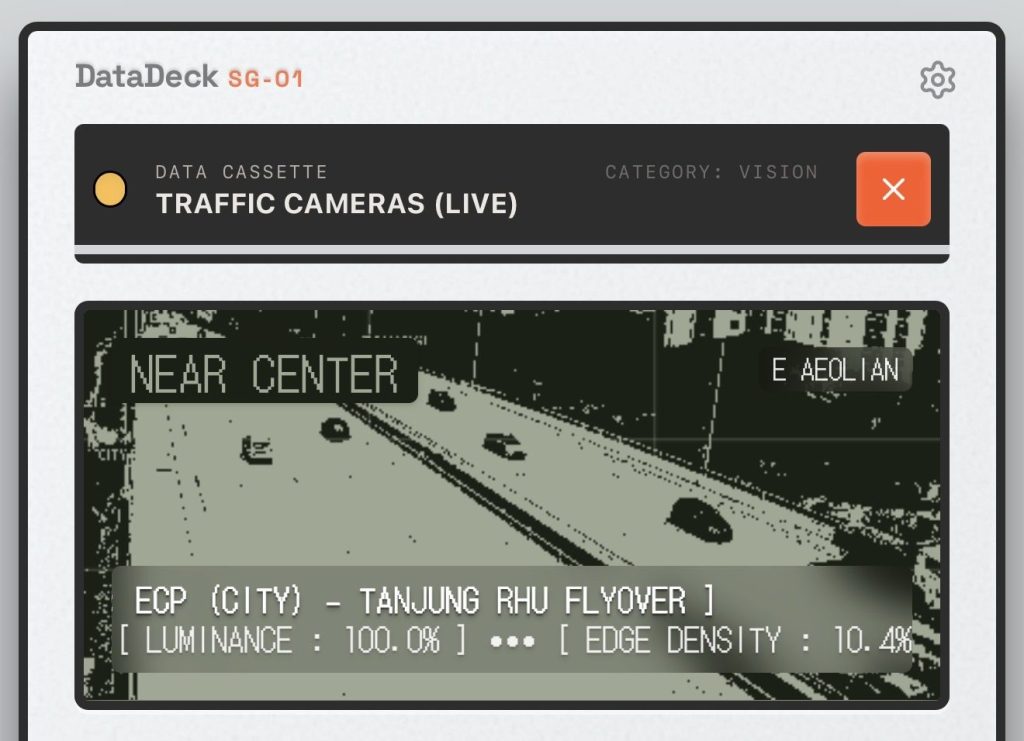
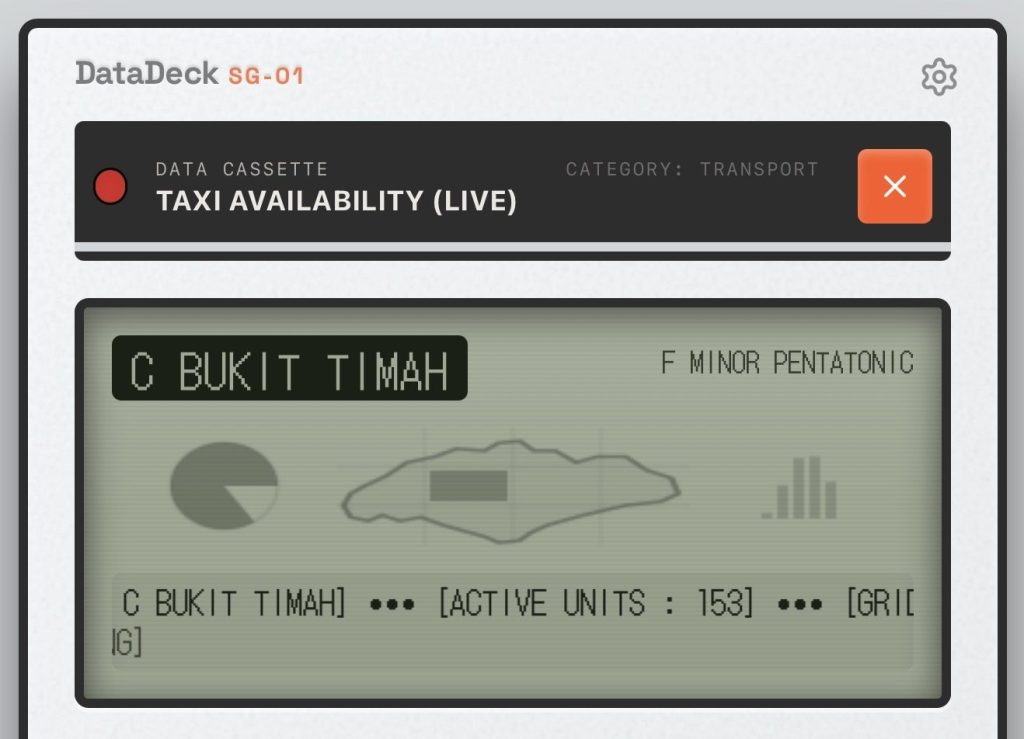
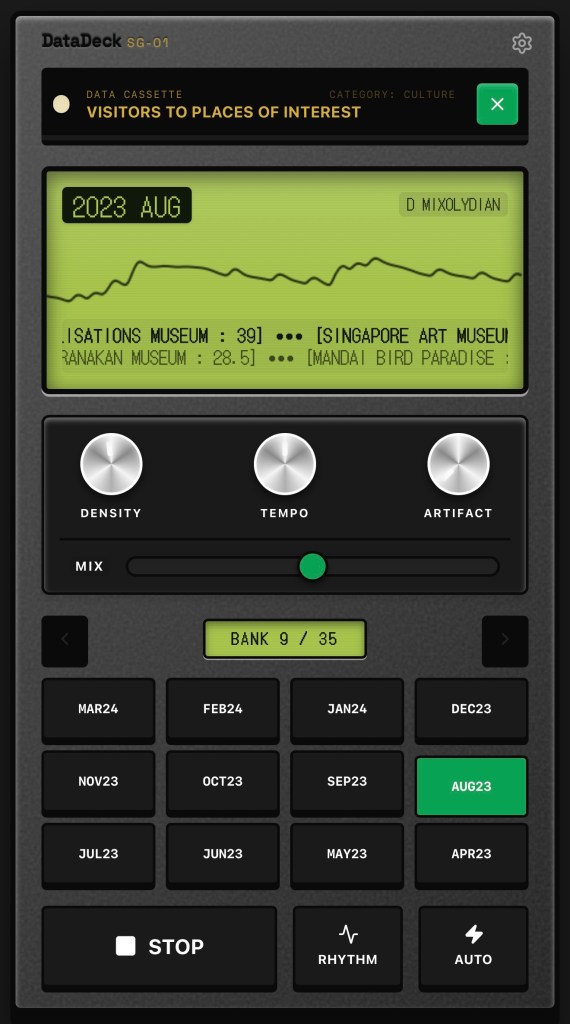
    The inspiration for its interface was the kind of hardware devices my dad had in the 70s and 80s: calculators, microcomputers, and tape decks from companies like Braun, Sharp, Sony, and Texas Instruments. A sort of Rams-ian, Bauhaus-ish modernist school of industrial design. The different color schemes you can choose from evoke specific brands or devices, like Apple’s Snow White-era or the original Nintendo Game Boy (DMG-01) and the Roland TR-808. I especially enjoyed working within the constraints of an imagined hardware UI, so when you switch to a dataset mapped to Singapore’s physical geography, the drum pad buttons get remapped to move a reticle around the map. It makes it feel more real, imo.
    The idea of playing with procedurally generated music using software-synthesized Web Audio was probably seeded years ago when I collected the 0xmusic series of art NFTs, which generated endless musical sequences from code on the Ethereum blockchain. I dare say that DataDeck is more advanced, and with better sounding musical output than those. Plus I’m making it free, and you don’t have to risk social judgement by going anywhere near crypto.

    I’m especially proud of the app’s design and musical qualities. There are a hundred little details in this thing I could mention that were cool to implement, but users don’t have to know or care about. Although it’s an app made for myself by myself, I’m still inordinately satisfied with and impressed by it. I’ve helped deliver a few apps in my career (some of them even won awards), but DataDeck already feels like one of my favorites.

    I think that’s because designing in the real-world is all about the navigation of compromises — technical debt, financial limitations, organizational will, and a lack of time all get in the way of polishing features you know could be great, or fixing annoying bugs that other stakeholders don’t seem to mind. Personal projects are not like that, and acceleration with AI makes them even less so. I made this thing how I wanted, and was able to tweak the mix or rebuild a cassette’s music logic from the ground up twice a day if I wasn’t happy with it.

    I’ve also been thinking about how narrow the term “vibe coding” is. On one hand, one-shotting an app by asking Claude to “build me a kitchen timer” is vibe coding. But using AI to create a complex tool where humans design the screens, sweat the UX, and look after the details is also kinda vibe coding. I talked recently about how the distinction between designing and developing will fade, and making stuff is all that will matter, and so it stands to reason that eventually coding with AI will just be called coding.

    I spent Friday afternoon with Jussi meeting up with two separate friends, both also middle-aged men, who are similarly interested in this evolution of design/development work, and who are working on their own projects with Claude Code, OpenAI Codex, and other tools. We’re all at different levels of familiarity and sophistication, but it was good to meet for a little co-working + Show & Tell time at cafes on a weekday. I think there’s value in forming a little “late boomers’ coding club” for fellow initiates.

    In any case, I’m hella tired, guys. I started on my next app idea but immediately got hit by fatigue on Saturday afternoon and needed a nap. Switching gears from audio generation to working on more visually-oriented functions was too much context switching to do over the weekend. Think I’ll finish reading a couple of books first before getting back to it.

    I know it’s been app-this and app-that around here for the last month and so maybe some readers (or a future me who’s been thrown in ethics jail for AI use) will appreciate hearing about other things. Let’s zoom all the way out then, into outer space.

    The film adaptation of Project Hail Mary is getting such great reviews and most people in my book club have already seen it. Unfortunately, I have to wait because Kim has finally started reading it, about three years after I told her to. Hopefully she’ll finish before the local IMAX run ends, but nothing in this life is guaranteed.

    There’s just something about stories of people in space, either lost or stranded, alone or in a small team, solving problems with limited resources, all the while confronted by the massive universe-facing perspective of being so small and meaningless. Andy Weir’s The Martian really resonated with people, and Project Hail Mary is having its moment too. I also enjoyed Daniel Suarez’s two Delta-V books a few years back. But the ultimate one that has yet to be beaten for me is Neal Stephenson’s Seveneves.
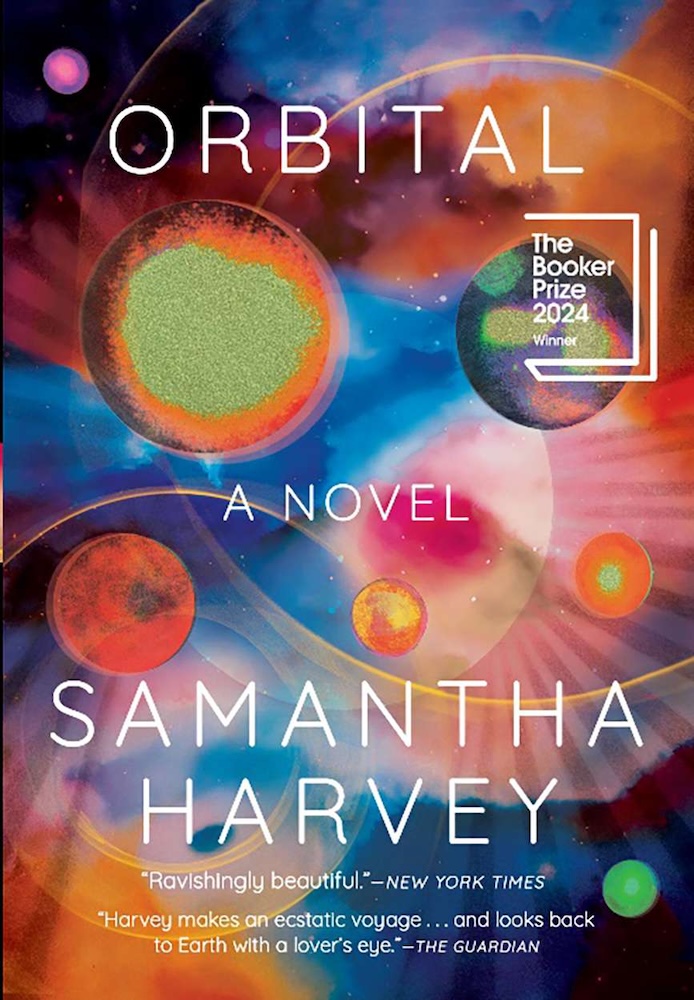
    The book I’m reading now might be a serious contender though. I’ve had Samantha Harvey’s Orbital on my list for the better part of a year, knowing very little about it, except that it’s about astronauts. Now that I’ve started, I don’t want it to end, I want more of everything, more words from this magnificent brain. You’ll know by the end of the first three pages whether this is a book for you. It’s intensely beautiful, unusual writing. It borders on poetry — perhaps too melodramatic for some — actually it steals over the border by moonlight and maps the territory. I don’t know how Harvey knows what it feels like to be in space, and what astronauts think about as they look down on Earth, but she absolutely does. You can’t write like this unless you’ve stowed away on an ISS mission and been through it. It’s a monumental work, and the best book I’ll probably read all year.

    Literally on the other end of that spectrum, the book club has decided to read Michael Crichton’s Sphere, which is set at the bottom of the ocean and probably isn’t very beautiful or philosophical. I read it once, maybe thirty years ago, and thought I only remembered the contours of its plot, plus flashes of the 1998 film adaptation starring Dustin Hoffman. As I read its opening pages, I was shocked at how familiar some of the writing and scenes were. It must have made an impression on me.

    Since the moratorium on spoilers has probably passed, I think it’s okay for me to mention what I recall: it’s about a mysterious ship that a bunch of scientists are trying to study in a deep sea lab. As time passes, they experience unnatural events, and it’s revealed that the titular sphere onboard has been “having an effect on them”. It’s a mashup of The Abyss and Solaris, essentially. I don’t want to rush Orbital, so I’m going to put that aside and work through Sphere as quickly as I can.

    Speaking of space, the deep sea, and being packed into tight metal containers, I picked up a can of my usual Ayam-brand sardines in extra virgin olive oil the other day and felt a weird “thunk” as I turned it over. I’ve handled enough of these cans now to know when something feels off. Opening it, I discovered only two fish instead of the usual three. That sensation was them loosely rolling around in the oil. It wasn’t like these were two large ones and there wasn’t room — someone on the packing line simply neglected to fill the available space and closed it up. At first I was incensed, and then I tried to let it go. We all deserve to make mistakes, and some sardines should get to enjoy a little more personal space. Be good to yourselves, and I’ll see you next week.
  • DataDeck

    DataDeck

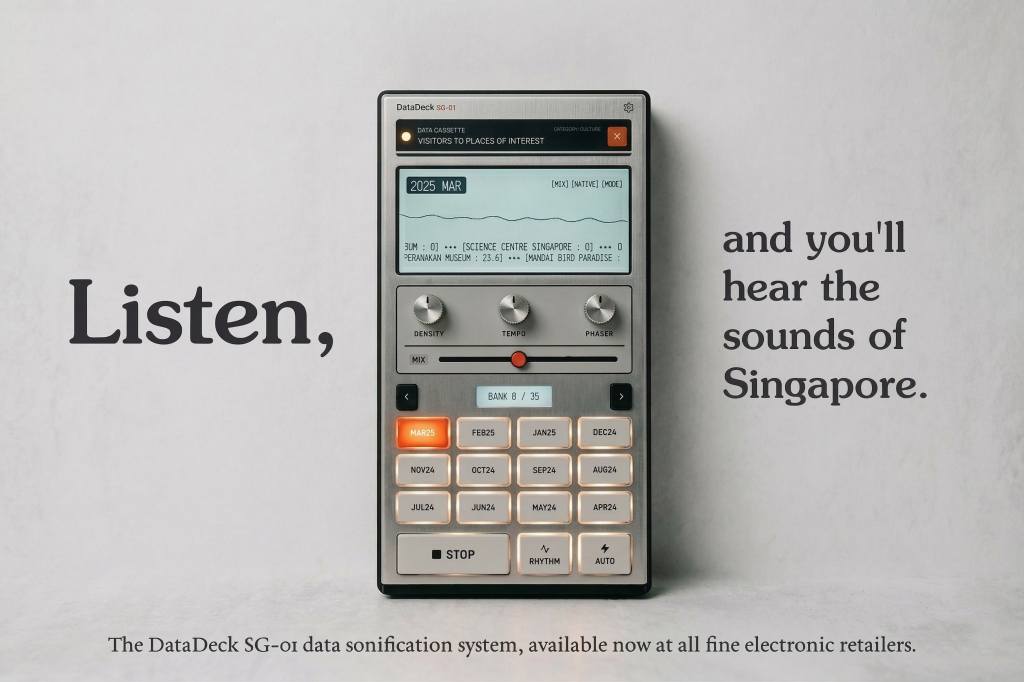
    Introducing the DataDeck SG-01.

    Turn on, tune in, and nerd out at datadeck.app.

    Singapore generates (and publishes) an extraordinary amount of data about itself — temperatures, taxi coordinates, dengue clusters, carpark availability, ticket sales at major attractions. Numbers that civil servants read in spreadsheets and the rest of us ignore entirely. The DataDeck asks, “but what does it sound like?”

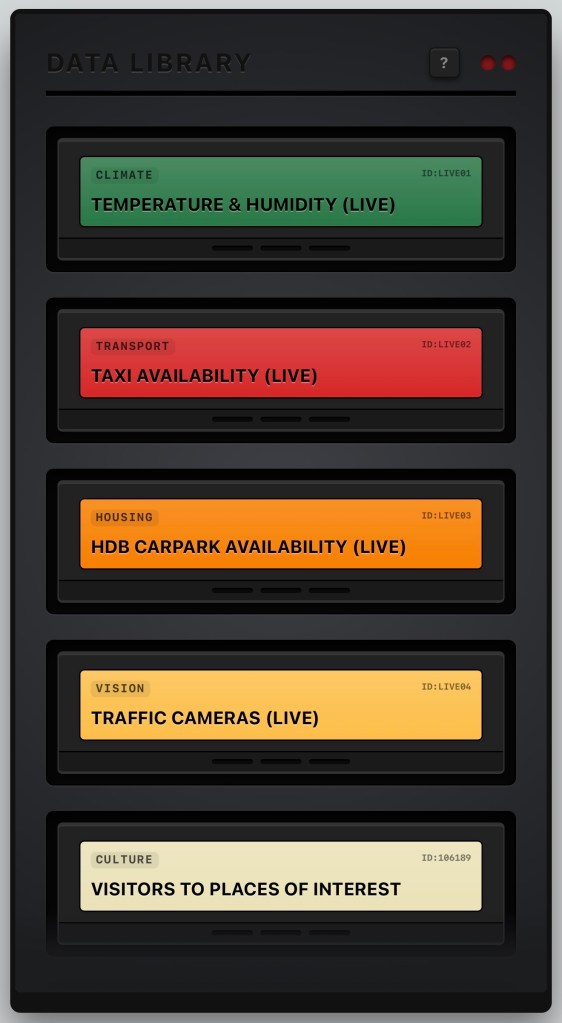
    Each Data Cassette draws live government feeds from data.gov.sg and renders them as distinct genres. There are ten cassettes in all, each with their own acoustic logic and ways of interpreting the city.

    The Climate cassette pulls real-time NEA temperature and humidity readings across 12 geographic sectors and converts them into lo-fi hip-hop — with chords deepening as humidity climbs, and the scale drifting toward Lydian as the heat rises. The Transport cassette tracks unoccupied taxis plying the streets and generates a relentless 303-style midnight techno. HDB carparks become polyrhythmic Afrobeat, and the movements of the stock exchange drive a satisfying hip-hop groove. Get money y’all! Check out the sound of visitor arrivals during the COVID years: like musical crickets.

    The controls? Three knobs shape density, tempo, and atmosphere. A mix fader redistributes the instrument balance. AUTO mode hands navigation back to the machine. There’s a user manual built in, should you get lost.

    It’s a music player with no music files. It’s a data dashboard you can close your eyes to. It’s Singapore, rendered in sound. Put your headphones on, and press play.

    Pro tip: If you really love DataDeck, you can save it to your phone’s Home Screen, which gets you a nice icon and a full-screen mode that shows the whole device at once without distractions.


    Disclaimer: I made this with the help of Gemini 3.1 Pro because I’m just an old designer who hasn’t coded stuff since GeoCities. I take no responsibility for any damage you cause yourself or others with this. Thank you.

    Related blog post: Week 13.26

  • Week 12.26

    Week 12.26

    Another busy week, and I’ve been like a caffeinated creature hunched over its keyboard with bloodshot eyes. You may notice I’ve updated the navigation bar on this site to point to a dedicated page listing all my apps. This takes the place of a page that pointed to all my custom GPTs on ChatGPT (that never really took off, did it?) and before that, my NFT experiments. Those are still around, though!

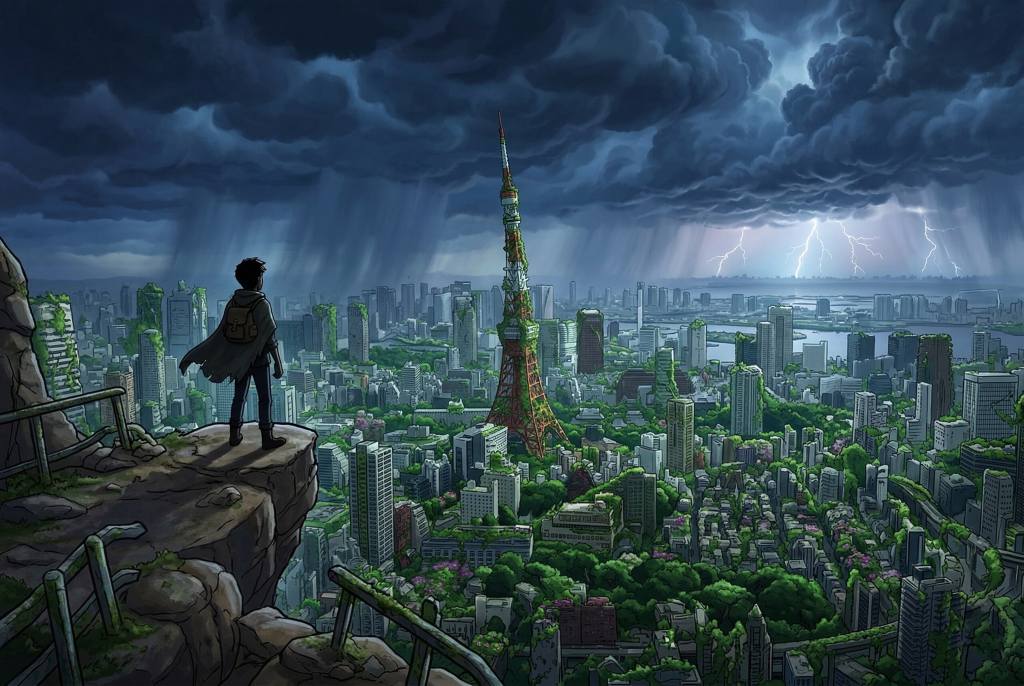
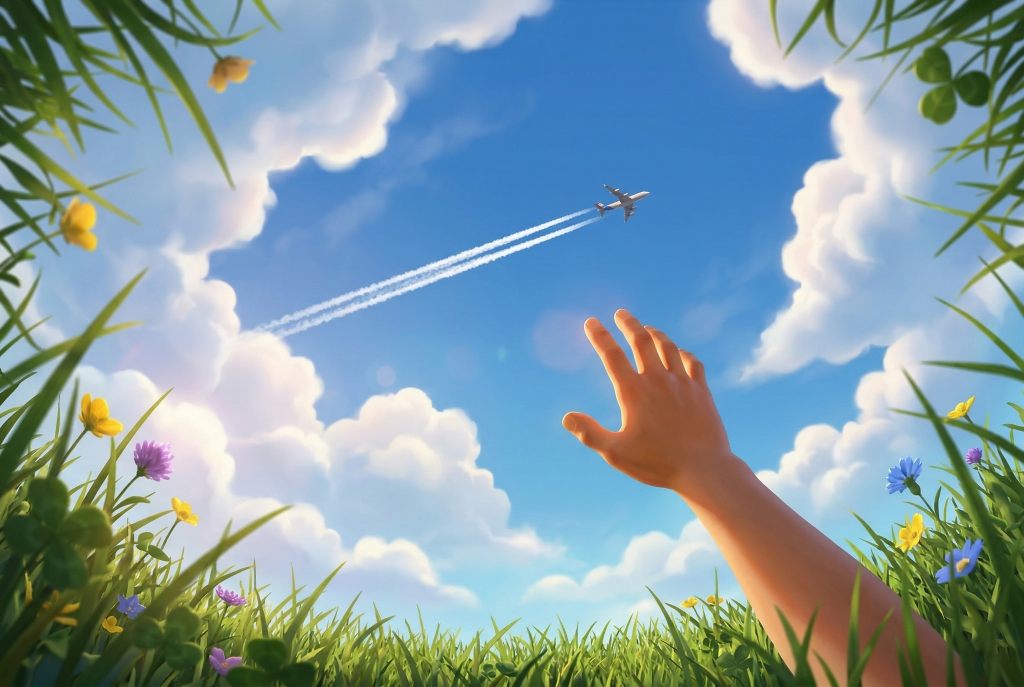
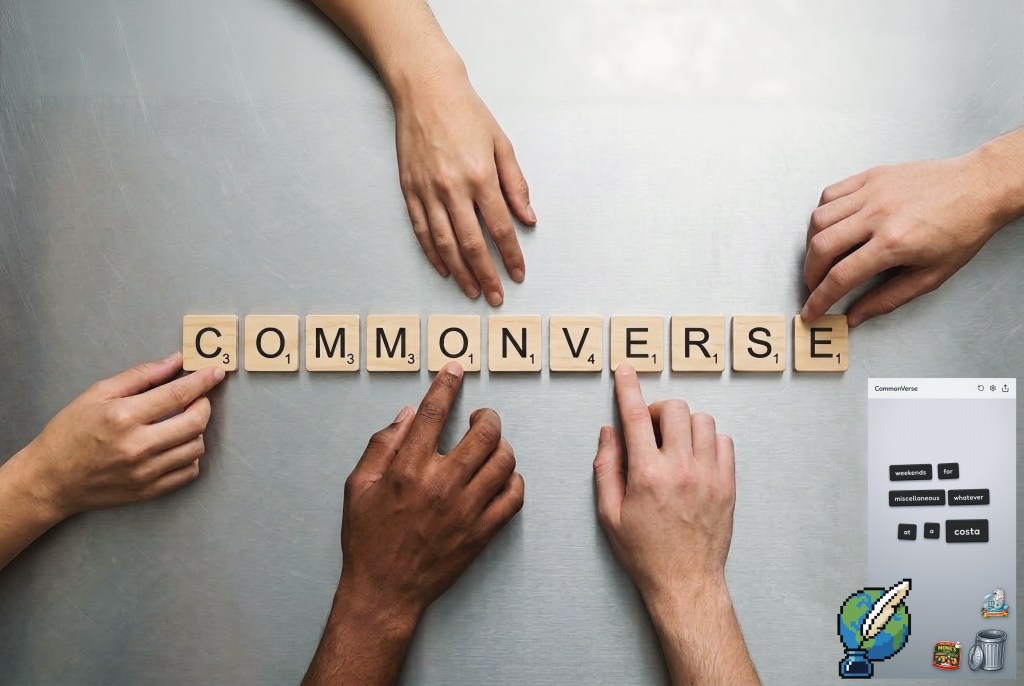
    You may call it AI slop but I’ve generated key images for each of the apps on that page, which I like to think of as analogous to game box cover art, those evocative artistic representations that used to stretch truths to their breaking points, back in the days when games looked like Lego.

    Here they are, just so you can admire them.

    The latest for now is CommonVerse, my daily magnetic poetry app. Give it a go!


    I’m writing this paragraph on Thursday after another failed attempt to stop vibe coding and focus on other pursuits. So far I’ve mostly finished one project and started on another that I meant to leave aside until next week. What is this feeling? This need to actualize a new ability that I’ve always wanted but never had to worry about not having?
    Instead of being able to recognize that I’ve already accomplished a lot, and “taking the rest of the week off” to go watch movies or something, I’m sucked into continually iterating and improving upon these apps like I’m on a deadline. It’s that paradox (mentioned here last May) where new technologies don’t decrease our workloads but only make us busier instead.

    Productivitymaxxers will say this is fine. This is how it’s supposed to be: you can do more, so you work just as hard and get twice as much out of it. Why would you want to work half as much? And they’re not wrong — that’s the engine of progress. But it’s also how you end up making six apps in three weeks and treating it as some kind of baseline rather than a miracle. As predicted, my capability has grown but I got desensitized to the satisfaction.

    The discomfiting shock to the system as I struggle with this resetting of scale, and feeling addicted to realizing more ideas, is an adaptation crisis. Adapting to life at a new speed and learning to balance capability with sensibility. Astronauts and pilots have to train to handle G-forces, in which the G stands for gravitational. I’m suggesting that working with AI has its own G-force, where the G is gratification. You can suddenly manifest many of the things you can think of. That’s a very powerful impulse to get under control. How do you engage with life’s responsibilities, appointments, or your growling stomach, when there’s always just one more prompt and revision to make? After getting home from a few drinks on Friday night, I found myself on my laptop in bed after midnight, fighting with a procedural audio generation engine that wouldn’t trigger drum sounds for any obvious reason.

    The next night I did the same, staying up to 3:30 AM because I had some new ideas that just could not wait. My Apple Watch sleep score is in shambles. But App #6 is certainly shaping up to be my best work. I’m going to sit on it for a whole week and keep polishing, instead of putting it out and moving on to the next one. That’s my strategy for slowing this down — it’s all I’ve got.


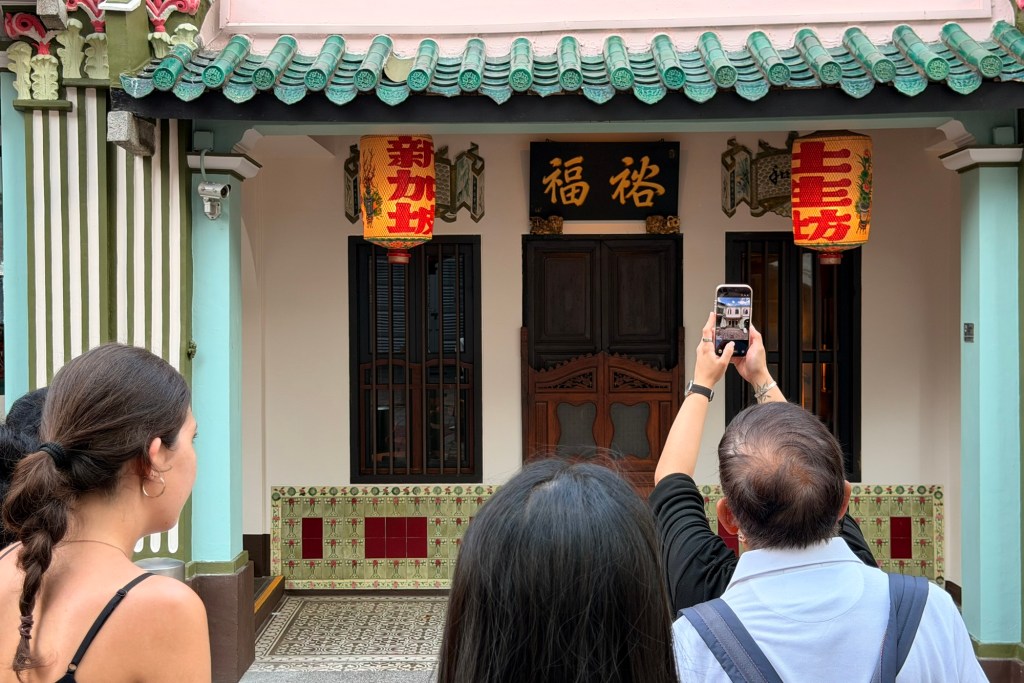
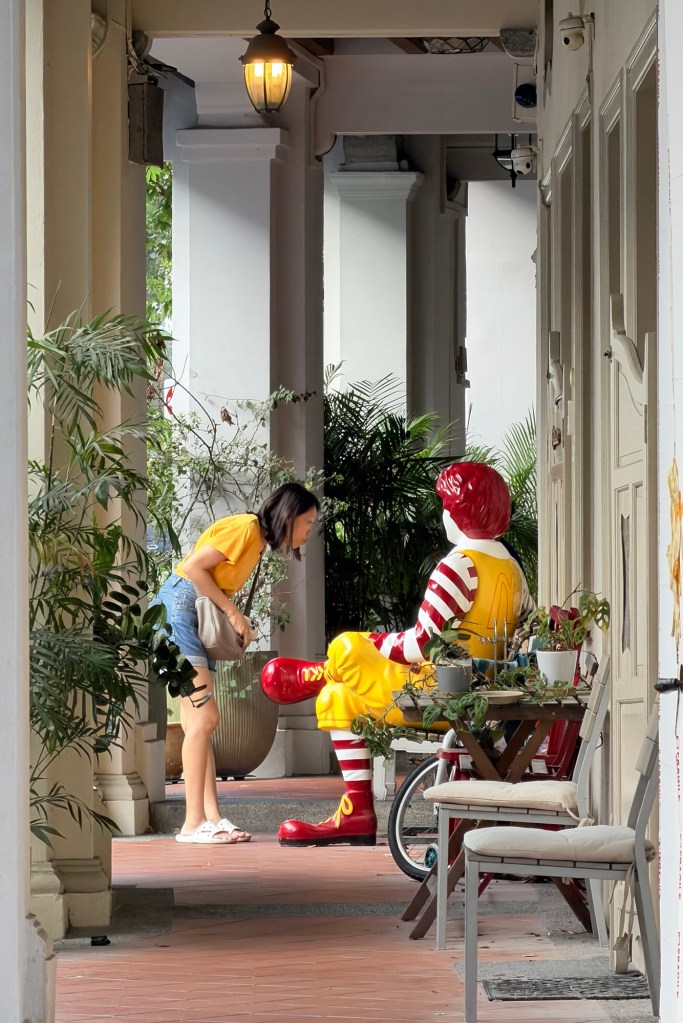
    Over the weekend, I also attended an Apple Store photo walk activity on a sweltering afternoon (up to 36°C next week) with Cien and Peishan. I hadn’t done one of these in years, but always keep meaning to. This one was conducted by the staff at Apple Orchard, and was a walking tour of Emerald Hill — which in reality is just a tiny street off Orchard Road. I’ve been there dozens of times over the years, but never saw the details just sitting there in tiles, old paintwork, and ornamental doorframes. Going to a small area with the intention of taking photos, and giving it more time than you’d normally allocate, can be a really fun and creative exercise.

    There’s no reason one couldn’t do this themselves any time, anywhere, of course. But these free ‘Today At Apple’ sessions are a good excuse to get off the couch. The other two local stores have their own programs, and I might check them out someday: Apple Jewel Changi Airport looks at the indoor waterfall, and Apple Marina Bay Sands has a night photography focus.

    Another nice touch is that they’ll lend you an iPhone 17 or 17 Pro if you don’t have one, and they’re incredibly relaxed about handing them out. No paperwork to fill out or deposits to pay. That’s the great thing about Find My protection, I guess. A comment was made that in the UK, those phones would disappear the instant the group left the store — even if just for parts. But they must do these sessions worldwide, so I’d love to know how it’s dealt with.

  • Week 11.26

    Week 11.26

    If you thought I was going to stop after last week’s two apps, I wouldn’t blame you. I’ve been having poor luck staying focused on new hobbies and pursuits over the past year; they all just seem like too much work for too little payoff and I drift off. Vibe coding seems different so far because it lets me start making weird things that I want to see, without being dependent on anyone else’s time or generosity.

    If you think in terms of music albums/careers, then Collagen was the mixtape that I put together to see if I could be a real musician. Urban Jungles was a big leap forward, the debut album, if you will. It had way more polish and was usable by almost anyone (whereas Collagen had what you might call a niche audience).

    Which brings us to the sophomore curse or slump. The second album tends to be over-ambitious, myopically conceived, and underwhelms audiences looking for more of what made the debut good. There are exceptions to this mythical rule, like Radiohead’s The Bends, Lorde’s Melodrama, and D’Angelo’s Voodoo. By this logic, my next app was statistically going to “fail” by being a harder one to get into.

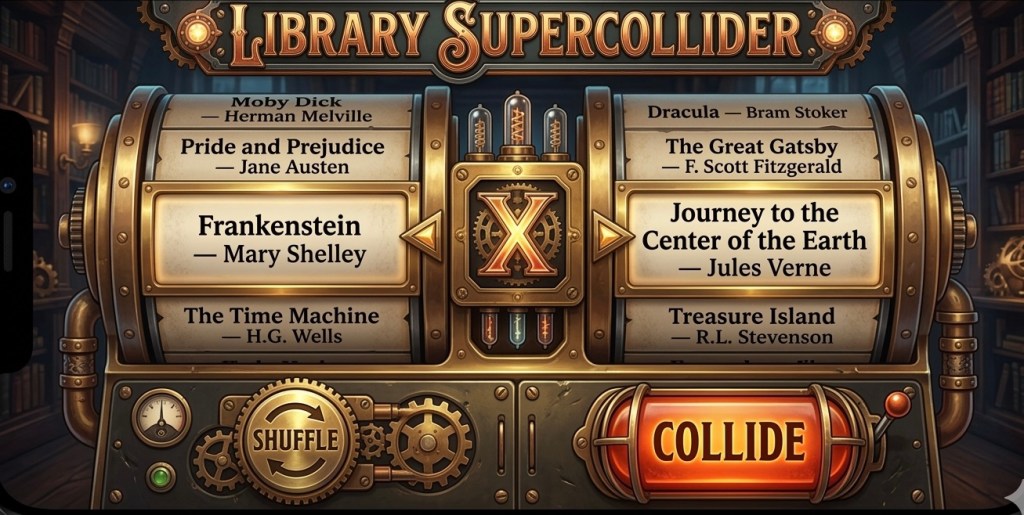
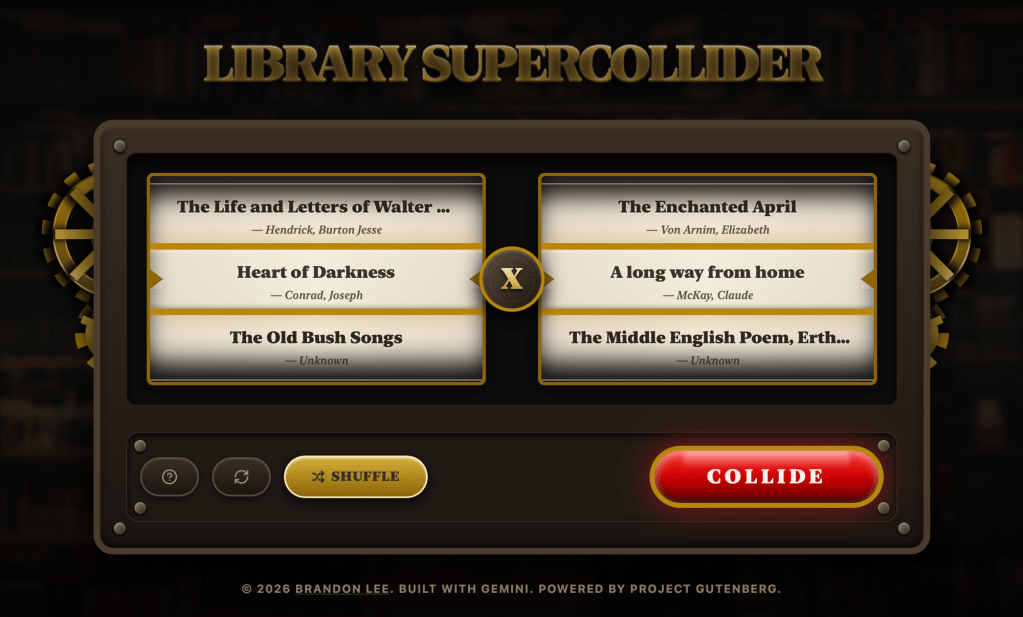
    I ended up making two apps again this week: SkySpotter and Library Supercollider. Each one has a separate page on this site that shows and explains what they are, so you should stop here and go read them before coming back.

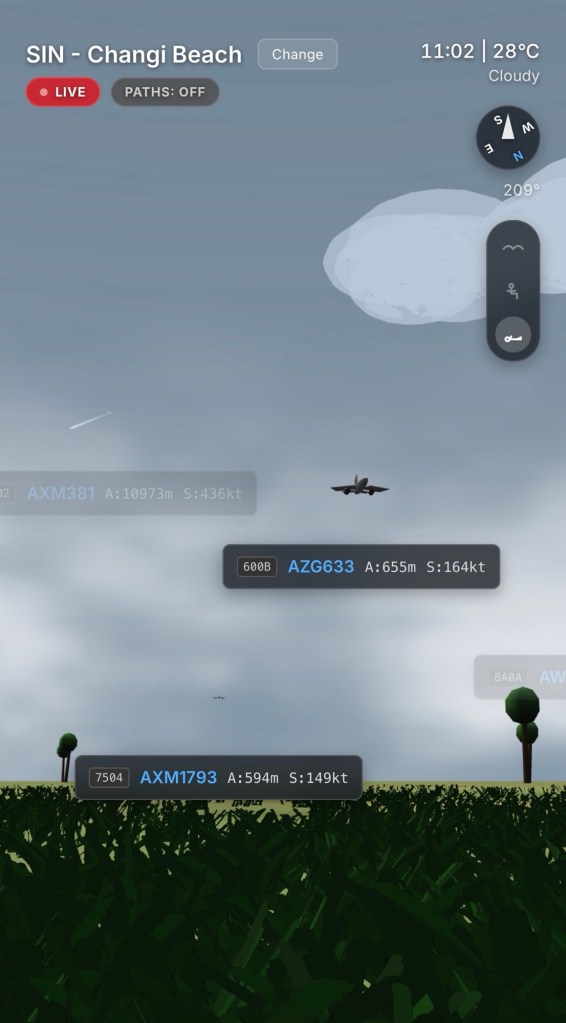
    Like a sophomore album, SkySpotter probably reached a little too far. It took the real-time weather data angle from Urban Jungles, added the more complex dimension of real-time air traffic data, and then threw in rendering a first-person 3D world as a bonus challenge. I started refining the concept and prototyping it on Sunday afternoon, and then worked on it for two full days on Monday and Tuesday. I literally forgot to eat lunch, and was still messing with it at 11pm both nights. It was like a job.

    Gemini 3 struggled. The Canvas chat became so long and convoluted that it won’t even load now in the iOS apps — I have to use the web interface. It hallucinated making changes, and introduced new bugs each time I made an improvement. It built planes with reversed wings and nose cones pointing backwards. Working with bugs in a 3D app was so blood-boilingly frustrating that I wanted to give up.

    I actually did give up… on implementing a VR mode for Apple Vision Pro. We got it to half work but the skybox sphere was too far away and would keep turning black. Rather than risk corrupting the working regular version any further, I decided to cut it.

    I’m proud of SkySpotter because it’s pretty damned cool to lie in the virtual grass and watch real planes go by. Even as someone who doesn’t care about planes more than the average person! But it was a technical challenge first and a passion project second. So if that was my over-produced sophomore studio album the label breathed down my neck for, then the next release would be its opposite: a scrappy, self-funded back-to-roots project recorded directly to tape in a Nashville studio over an inspired couple of days.

    Library Supercollider was an idea that came to me all of a sudden after I’d finished SkySpotter. I’d been interested in the concept of cut-up poetry since I was in university (popularized by Brion Gysin and William Burroughs around the 1960s), and I believe it occurred to me back then that someone could make a computer program to cut up and mash two classic texts. I just didn’t know it would be me, twenty years later.

    I expected it would take me the next couple of days to get working, being that it requires the somewhat complex-sounding downloading and processing of entire ebooks in the background of a web app. I didn’t know if it could even be done. So imagine my surprise when I had a working prototype by lunchtime on Wednesday. But between polishing the experience and overcoming download limits with Project Gutenberg servers, I wouldn’t be done until Saturday morning, making it a longer project with different challenges — comparatively less frustrating, more educational.

    I understand that it’s not an app for everyone — you might read a page and conclude that it’s worthless gibberish. Maybe it takes the sort of person who likes abstract art and free jazz. But personally I’m so pleased with this project that I’ve bought two domain names to go with it: librarysupercollider.com and the superior smashmybooksup.com, which I’ll retain for a year as a ‘marketing URL’.

    In all seriousness, I think this is the finest work of my two-week career as a builder of software! The user experience for remixing and reading the resulting texts is brilliant, if I do say so myself. The steampunk UI and animations are completely unnecessary but bring me joy (notice the moving gears in desktop view). I had to come up with caching and proxy solutions to make the app more reliable under load. I even got a little into the weeds: installing node.js and Vite on my Mac, running scripts in the terminal, trying to compile a macOS port to get around problems (eventually unnecessary).

    Even if I were a skilled and experienced developer, I can’t see how I would have made these apps in two weeks; from writing to designing and coding them up, plus preparing documentation and website copy (plus one very dubious video ad). Deploying Library Supercollider to its own domain made the reality click for me, a feeling kinda like publishing your first thing on the App Store. It says: this thing is now real and can be used by real people.

    Then I came across this article in the NYT Magazine, entitled “Coding After Coders: The End of Computer Programming As we Know It”. It notes an interesting inversion of what we’re seeing in other fields — AI is taking away the drudgery of programming and leaving the human, soulful (and fun) parts.

    “The work of a developer is now more judging than creating.”

    In that way, I may not have magically joined the ranks of coders overnight, but I could probably say I’m developing. At my job, I used to direct the form of apps in a way so removed that I could only claim the role of design, but not the larger making. Part of the handwringing in design circles today is precisely about how designing and developing are merging, and soon only making will remain.

    Not everyone will bother to turn their ideas into reality, and fewer still have the experience and vocabulary to prompt polished apps distinct from the models’ averaged-out defaults, but those who persevere will be bringing tools and toys into existence the likes of which you may have been waiting decades to see.

    What’s next? Well, I might have a couple of ideas…

    One thing all this app-making has done is bring me back to my Mac. I usually spend most of my computing time on my iPhone and iPad, but there’s no substitute for a Mac when it comes to managing local files, running scripts and compiling code. I’ve had coders like Michael make this point to me before, but I never got it because I never needed to sync a local repo with GitHub or anything before.

    So a side effect of spending long stretches of time on my five-year-old and long-neglected M1 MacBook Air is that I’m wondering “Why did I ever stop? This thing is great!”

    It’s worth noting that this week Apple’s newly released MacBook Neo has been getting a ton of praise on my social feeds for being an affordable and all-round capable machine at an unbelievable $599 price point. I got a tear in my eye as I read this essay by Sam Henri Gold: “This Is Not The Computer For You” — it perfectly encapsulates what it was like to grow up on computers and teach yourself things, even on PCs.

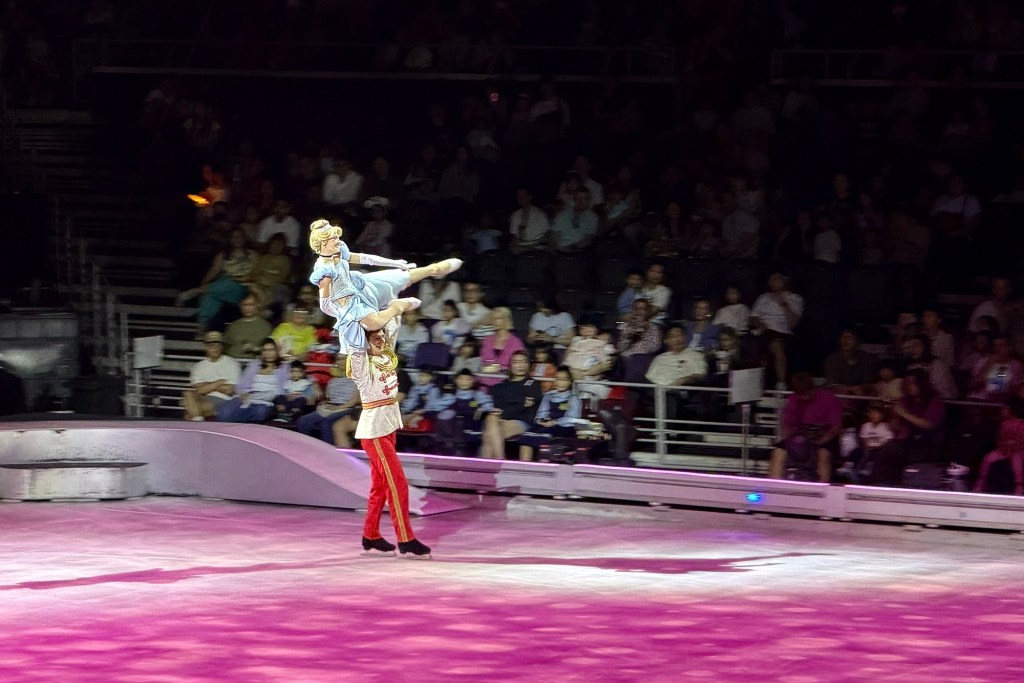
    Too much screen time is awfully bad for you, so on the weekend I touched some metaphorical grass by taking our niece out to Disney on Ice at the Singapore Indoor Stadium. It’s extremely well-timed, with the world still coming down from Alysia Liu’s gold medal, and Singapore being in the midst of a Disney craze — a Disney Cruise offering has launched after delays and is now at the local docks, with fireworks and drone shows along the bay at night.

    These were Live Photos of some stunts

    I have no deep affection for Disney IPs but appreciate the amount of effort and coordination that goes into making magic, and it clearly works with so many adults into this stuff. What’s interesting is that while ice-skating can get pretty boring after awhile — it’s all the same moves over and over, around a static rink — adding a layer of characters and storytelling works to keep it fresh over an hour and a half.

    Oh, and our niece is 9, and by way of introducing her to the MacBook Neo, I asked her what computer she uses. I swear, her response was not far off the punchline in that Apple ad that everyone but me seems to hate, in which a girl who’s been using her iPad all day for creative things is asked what she’s doing on her computer, and she responds “What’s a computer?” Will iPads become open enough to support kids learning to (vibe) code? Or will nature heal in a post-post-PC revival led by the MacBook Neo? In any case, that ad was prescient.

    Bonus: Steve asks the same question in a different context (around 1:30). You must watch this video, it’s breathtaking. He’s 28 at this point. In addition to confidently describing things like Street View, mobile wireless computing, LLM chatbots, and the App Store, there’s a part near the end where he says “What we need to do is get away from programming. People don’t want to learn programming, they want to use computers.” He was talking about providing more finished software products to customers, because writing custom software was the norm then, but it’s an eerily relevant quote!

  • Week 9.26

    Week 9.26

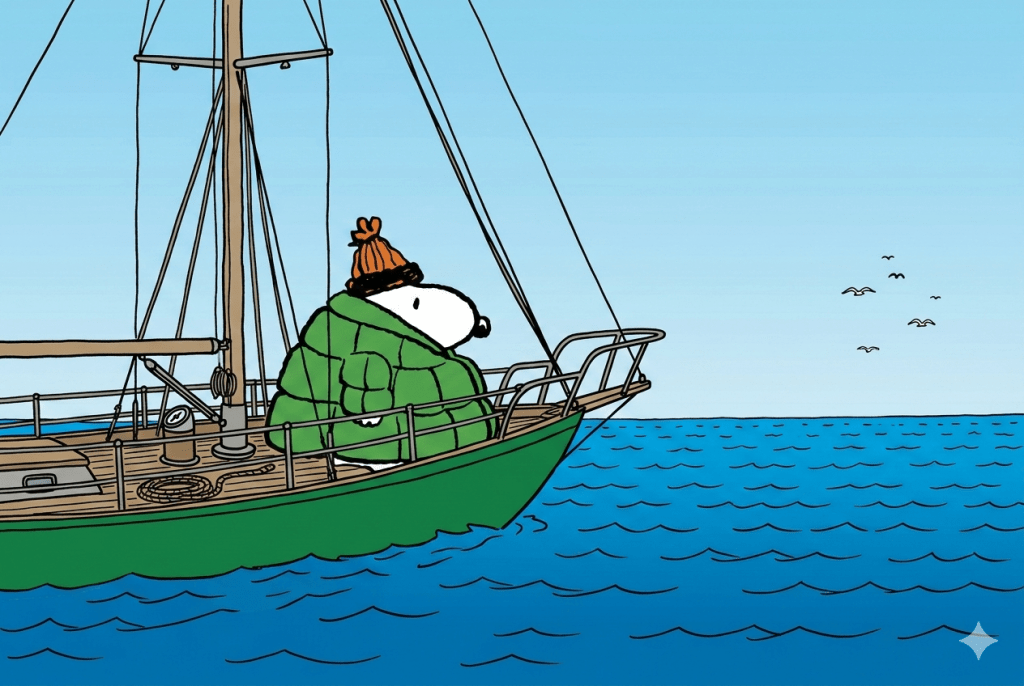
    • The featured image above is the result of having Geese’s Au Pays du Cocaine in my head all day. The line about a sailor in a big green boat and a big green coat made me think of Puffer Jacket Snoopy, and of course I had to realize the joke.
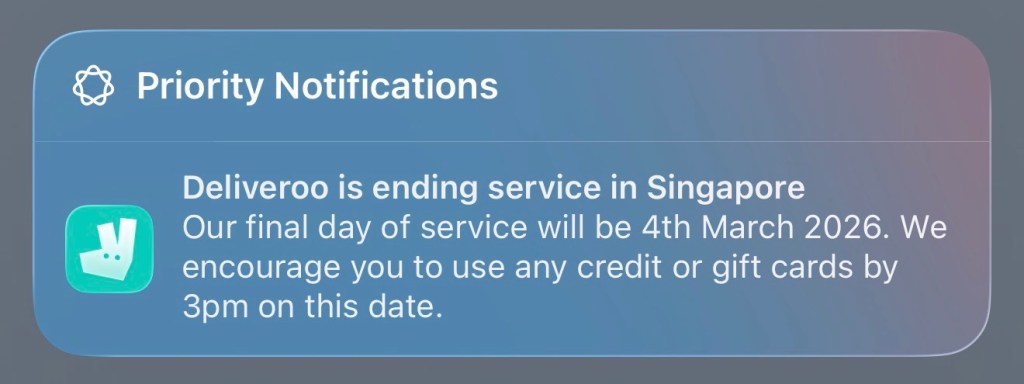
    • We got the sad news that Deliveroo is shutting down operations in Singapore. This comes on the back of an acquisition by DoorDash who must have run the numbers and decided that a 7% share of the local food delivery market after a decade wasn’t worth investing further in. We use it all the time and prefer it over Grab and Foodpanda — it is by far the better app and their subscription service is better value for money, but we’ve seen this movie before. It’s like how Uber lost out to Grab; the market doesn’t always choose efficiently.
    • I will probably switch to Foodpanda because Grab as a brand has the same icky halo as, say, Facebook or Spotify.
    • Google released Nano Banana 2, the new version of their hit image generation model. This one is cheaper to run and kind of almost as good as Nano Banana Pro, so they’re making it the default for everyone. Paid users can still access the Pro model, but it’s hidden behind some menus. It’s a regression in quality, a slight improvement in speed, and most importantly, a boost to Google’s bottom line. Since I only do silly things with these tools, it doesn’t bother me tremendously, but imagine the same happening at an enterprise level for more important work.
    Screen recording of an AI panorama
    • One of the new things Nano Banana 2 can do is generate very wide panoramic images, so I asked it to render some “panoramas taken with an iPhone” in various locations. I then upscaled those and opened them in my Apple Vision Pro. They don’t have the photorealistic quality of images from Nano Banana Pro, and the resolution leaves a lot to be desired, but they’re still immersive and impressive when viewed in this way. You can see where this might go.
    • There’s been a lot of talk lately about how AI vibe coding could upend the SaaS market, if not replacing dependable enterprise tools with individually created ones, then at least giving IT departments a billion more unapproved apps to worry about. A viral essay from last week posited that AI coding could kill DoorDash, though I’d say they did a good job of that themselves out here. The other oft-discussed idea is that AI could replace the App Store, and everyone will just make their own apps instead of buying them from developers. Michael has been blogging about vibe-coding his own to-do list app based on Clear. I’ve been wanting to try this myself, making more little tools of my own to solve niche problems, but the opportunities have been slow to materialize.
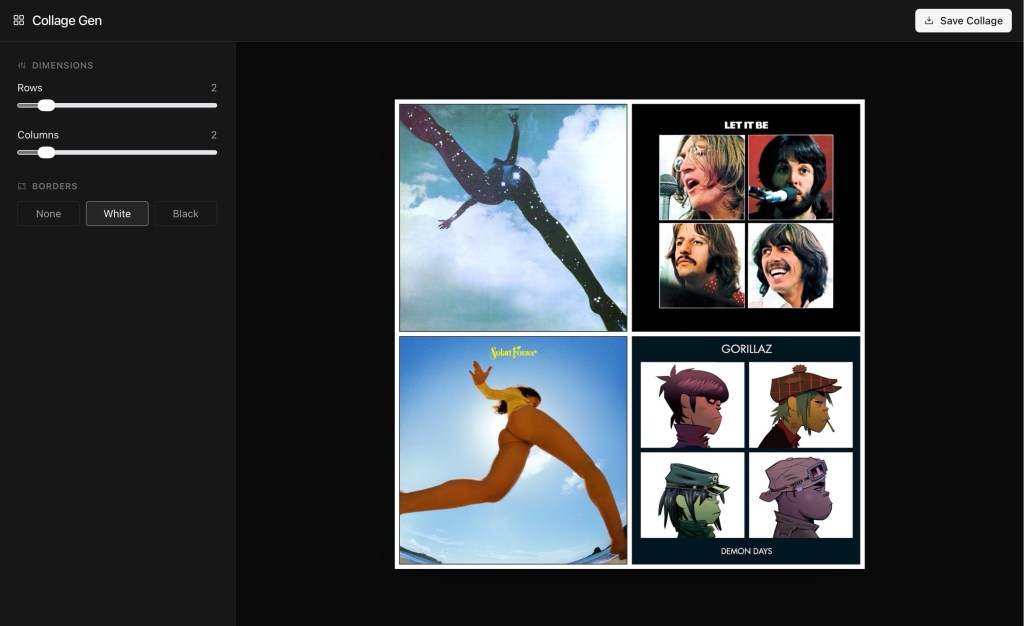
    • This week the right idea presented itself and I made a web app using Gemini: an album cover collage maker that searches for the artwork or lets you upload your own. I’ve looked online for something like this before but only found a few that were quite lacking. Making one to my own specifications took maybe five minutes of prompting and testing. Then I thought it would be nice if you could drag the images to different locations. Gemini added that feature like it was nothing. I’m pretty hyped that even someone like me with zero current coding knowledge could will this into existence. If you’d like to try it, I’ve deployed it at usecollagen.netlify.app.
    • Otherwise it was a sort of decompression week where I just read a lot, listened to the records I bought/ordered last week, and was regrettably glued to my phone watching day trading losses (Chekhov’s gun has fired!) and social media feeds.
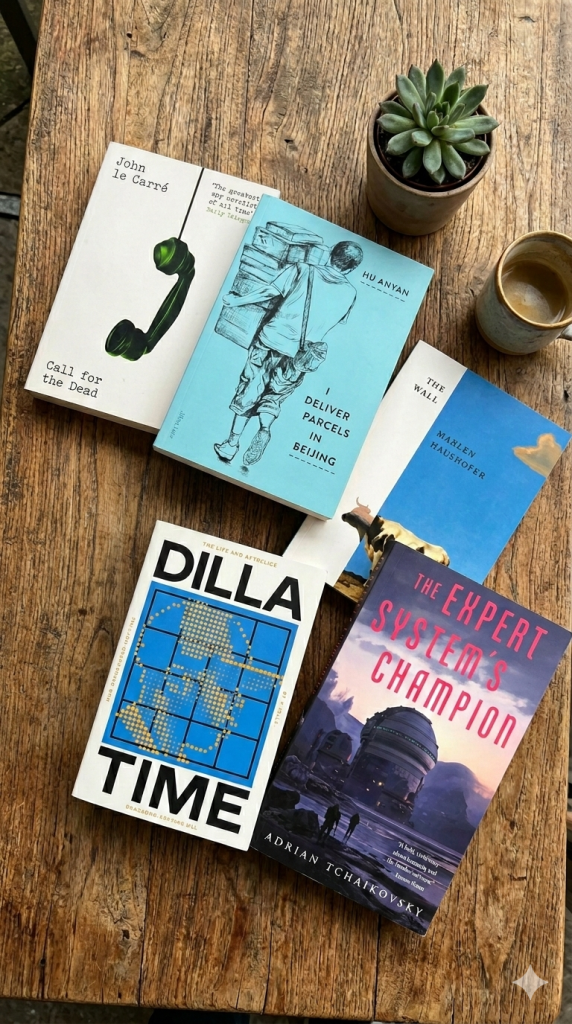
    • It took a couple weeks of dawdling but I finished John Le Carré’s Call for the Dead, his first novel featuring the spy George Smiley. I may continue reading the series, seeing as his son Nick Harkaway (whose work I really enjoy) has decided to continue his father’s legacy and written one more already: Karla’s Choice. This one was a little dated and not particularly thrilling, but a fine introduction and scene setter.
    • It was immediately followed by Adrian Tchaikovsky’s The Expert System’s Champion, sequel to The Expert System’s Brother which I read at the end of last year. I recommend both as examples of sci-fi stories set so far in the future that humanity has looped back around to the beginning. It reminds me of the “middle chapter” in Cloud Atlas, if you remember that.
    • Then I read Hu Anyan’s I Deliver Parcels in Beijing, a modern memoir that reportedly did well in China when it came out in 2022. It details the author’s dual career as a writer and on-and-off gig economy worker, which is made more interesting by also being a portrait of what it’s like to live in the lower brackets of Chinese society today.
    • I also had time to tackle Rob’s recommendation of Marlen Haushofer’s The Wall, which was written in the 1960s but doesn’t feel that way, unlike Le Carré’s spy novels. He called it the best book he read last year, so I could hardly say no. It starts off like an intriguing sci-fi novel: a woman visiting friends in the Austrian alps wakes up one morning in the log cabin to discover she’s alone, and there’s an invisible wall separating her from the outside world. Things then focus on survival and what it means to live and be human in solitude, and in nature. Which, given that I’ll be home alone next week while Kim is away again for work, means I’m already in the appropriate headspace.
    Some of the better books I’ve read this year
  • Week 8.26

    Week 8.26

    • It was a rainy Chinese New Year week, which is a rare occurrence if our collective memory serves correctly. The holiday usually occurs sometime in late January, and my impression is that it’s always scorching when we’re out visiting relatives. The gloominess added to a feeling of intense tiredness, and I was glad to see the end of the week. If social batteries were like lithium-ion ones, I’d say mine is aged and doesn’t hold a charge like it used to (more on this later).
    • While my parents were visiting with my in-laws, the topic of where our dads got their haircuts came up, and I used Gemini’s Nano Banana model to visualize a bunch of alternative styles for them to consider. It was pretty funny to see our old men in dye jobs and top knots, with loud matching outfits like floral jackets. The real reason for this was of course to demonstrate how realistic and easy these deepfakes are in 2026, and hopefully they’ll be a little more wary of scams.
    • There are fewer kids and unmarried young adults to give angpows (red gift envelopes with cash) out to these days, but it still adds up. To try and make up the deficit, I decided to make a return to day trading (really just gambling) directly on my phone while out and about between appointments. I’m glad to report that I not only avoided losing all our money but managed to hit my goal by the weekend!
    • If you were wondering how the showdown between Gemini and Claude has been going since last week, I think Claude is still way ahead in terms of writing and editing. Not just producing output, but being able to understand what makes a piece work and replicate it. Gemini seems to take away the wrong conclusions when analyzing text.
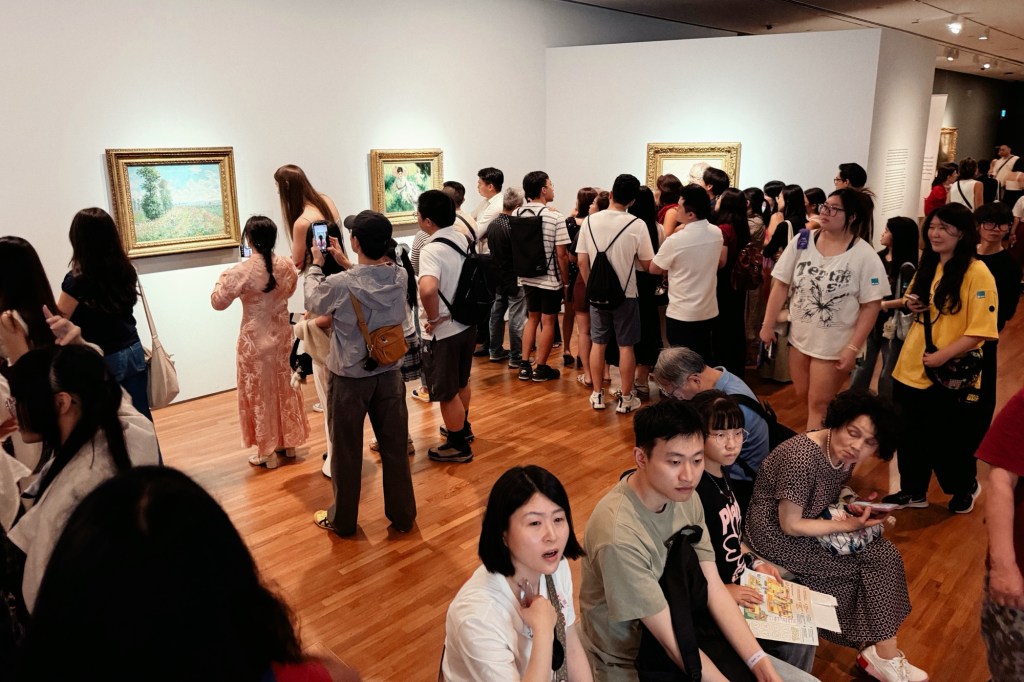
    • I saw Rob a couple more times for beers and a visit to the National Gallery with his kids. We were joined by Aqila and her daughter, which was really nice. The whole outing tanked my social battery again, in part due to the swarms of Chinese tourists in town this week — the gallery was fully packed and some sections of the French Impressionists exhibition were painfully overcrowded despite allocated entry timings.
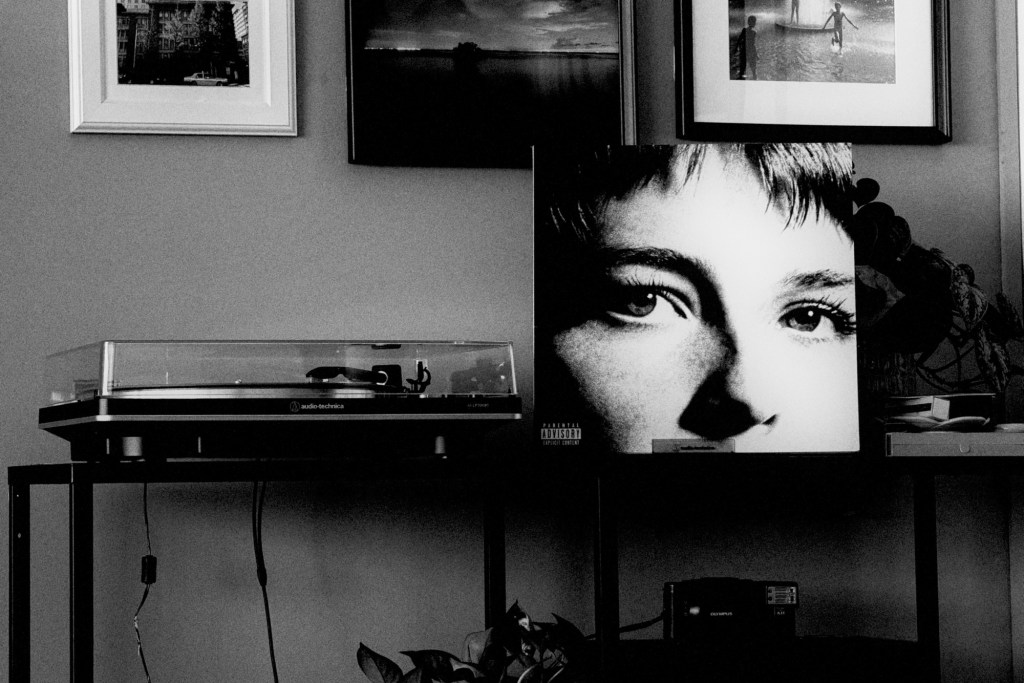
    • On my way home from that, I stopped by the record shops in the basement of The Adelphi and broke my 4-week no-vinyl streak. I picked up The Beatles’ Abbey Road and R.E.M.’s New Adventures in Hi-Fi, telling myself it was fine since these are some of my favorite albums. I should have known that once you open the door just a crack, there’s no shutting it. The next day, I ordered Mac Miller’s Circles and Lorde’s Melodrama off Amazon. Kanye’s My Beautiful Dark Twisted Fantasy is waiting in my cart. These are some of my favorite albums, okay!?
    • We decided that it was time to start on The Pitt, given that seven episodes are out. We binged them immediately and now it’s going to be hard switching to a weekly schedule. It’s more of what we liked about the first season, but I do wonder how they’re going to sustain this over the next few seasons. How many eventful single days is it realistic to have, and how much variety can you get within that constraint? These hospital shows are all built atop the same GSWs, industrial accidents, cancers, and mysterious illnesses, but the relationships and characters usually have time to develop over a season. The Pitt’s real-time concept doesn’t allow for that — the progression happens off-screen between seasons, and the audience puts the pieces together in the first few episodes. You can withhold a few characters’ reappearances until midway through (as in season 2), but that structure is too transparent to keep using every year.
    • I finished playing the first Paranormasight on the Switch, and it’s probably the only game with a branching narrative — as in, the kind where you are literally shown the story map — that I’ve actually enjoyed. These Japanese story-based games with the multiple endings that you have to keep replaying and retrying events to complete are usually a pain in the ass, but this one works because it embraces the meta-game angle completely. You’re an outsider, outside of time and space, and your jumping between the events is what unlocks progress. Characters in one “scene” might be stuck and paused until you motivate some others elsewhere to do something, which changes the circumstances in the first instance.
    • I read George Saunders’ Lincoln in the Bardo, an “experimental novel”, on someone’s recommendation and let me just say I am not passing on this recommendation to you. It didn’t help that I know and care very little about Abraham Lincoln, or that aspect of American history, but it’s not really about him anyway. It’s about his son’s ghost being lost in the graveyard amongst hundreds of other ghosts, and through their archaically written little vignettes you get a sense of what life was like in that era and also how the author is a massive wanker. The New York Times ranked it the 18th-best book of the 21st century. Agree to disagree!
  • Week 6.26

    Week 6.26

    • A quick follow-up on one of last week’s topics: it turns out that some posts on Moltbook may have been faked because there were security holes allowing people to get on there and post directly (instead of being a bot-only place as promised). Doesn’t change the main point that future agents will collaborate not just on one computer, but sync up across wide networks with effects most of us can’t fathom. Look at the crowd that gathered to discuss Clawd a couple of days ago, to see how much excitement there is for this box that says Pandora on it.
    • I’m too tired to dwell on this much more today! Keeping up with the AI space is still a full-time job, and I’m not going to try. But Claude Opus 4.6 was just released, along with demos of what it can do in Cowork mode, which is very impressive if true. Apparently these models are also able to tell when they’re being evaluated by safety/alignment teams, which makes it very hard to know how they’ll really behave in the wild. Look at this example where a model can infer the user’s cultural background with just a few words, owing to the words they choose. These are tools, except other tools don’t do things like this.
    • I read a fantastic sci-fi short story that sort of involves AI: Julia, by Fernando Borretti. If you also enjoy fiction that drops you into a context and makes you swim, and then shows you strange and beautiful ideas as you break above the surface, you’ll love this. Like how China Miéville uses ornate language in The Book of Elsewhere to suggest Keanu Reeves’s… I mean the protagonist’s immortal, mystical otherness, Borretti uses a dense, intellectually dominating host of references here to illustrate the POV of an artificial mind at the end of humanity’s time. I haven’t stopped thinking about it.
    • What will we do when all the jobs are gone? A young entrepreneur in our neighborhood has started a home-based business selling smashburgers, and we bought some for dinner midweek. They were good, and I’m slightly afraid of what this proximity will do to my waistline. For those unaware, this was a bit of a trend last year and local media outlets like ChannelNewsAsia ran stories (example) about how such businesses were springing up as a result of low employment opportunities and rising rents.
    • Retreating further into the virtual world is another option. A bunch of new experiences became available on the Apple Vision Pro recently, and I caught up with some of them. The cutest is an immersive documentary on Apple TV called Top Dogs (two 15-min episodes), which looks at the annual Cruft’s dog show in Birmingham, UK. You get really up close to some of these beautiful animals, and the urge I felt to reach out and pet them was extremely strong. It wouldn’t be the same seeing this on TV. Here you get a sense of their size and presence, see them in incredible detail — everything but smell them. Apparently there are 25,000 dogs at the convention center each year, but I imagine these are all shampooed and much more pleasant than your average wet dog.
    • There’s also Retrocade, a game on Apple Arcade that uh… simulates an arcade. The game is playable on other devices, but on Vision Pro you get life-sized arcade cabinets standing in front of you, playing licensed retro titles like Space Invaders and Bubble Bobble. The only thing that breaks the illusion is of course that you can’t reach out to grab the sticks and mash the buttons. Instead, you have to use a connected game controller.
    • Speaking of emulating old hardware, I played and finished a game on Switch (also available on PC) called The Operator. It’s one of those where the entire UI is a computer’s desktop and you have to chat, look into files, and do hackery stuff to experience the story. I think this can be filed along with the other murder mystery games I’ve played lately. It’s fairly short at under four hours, almost completely linear, and not something you’d play twice. Wait for a sale, I think.
    • You know who else is a hacker? The lead character in Apple TV’s Tehran, a show that came out in 2020 and has since been renewed for a fourth season. We watched Episode 1 back when it came out, liked it enough, but for some reason completely forgot to go back until this year. It’s been topping the charts lately, maybe because of the recent civil unrest in Iran. Having just finished Season 1, I can say it‘s a really good espionage thriller, and we’re keen to keep going.
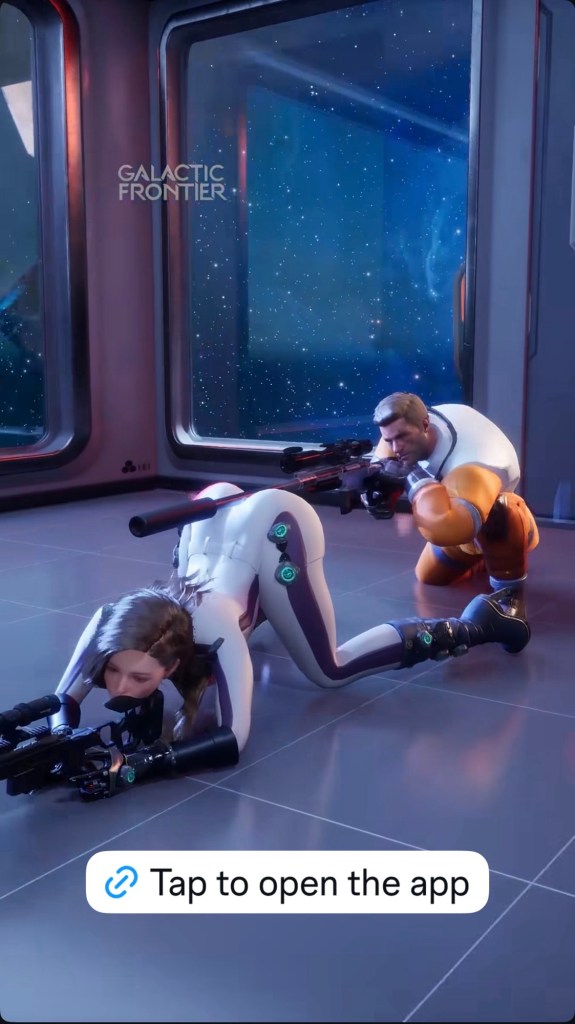
    • Oh and check this out. Someone has managed to license Isaac Asimov’s Foundation series and made a free-to-play (i.e. shitty) mobile game: Foundation: Galactic Frontier. It even has an Apple TV logo appear on startup?! And the next day, I saw this insane animated ad for it pop up on Instagram and couldn’t believe my eyes — I took a screenshot to prove it. In all fairness the actual game isn’t anything like this, it’s just a heinous misrepresentation that probably has Asimov spinning in his grave.
  • Week 1.26

    Week 1.26

    There was no New Year’s Eve hangover and if we’re being honest, there hasn’t been one for many years. We read in bed until midnight with the usual Mediacorp countdown broadcast left on in the background — “Are you readyyyyy Singaporeeeee?” and many more examples of amateur MC energy.

    Last week I should have mentioned that this new buying and enjoying of analog recordings is really related to themes I’ve been touching on over the past year. How imperfect translations (and in this case, physically vulnerable reproductions of music) can carry more emotional value, along with how friction — the thing we spend so much time trying to iron out of our products and services — actually adds tactility and affordances that the human mind kinda likes. When everything works perfectly, when the surfaces are too seamless, the mind only gets bored and seeks trouble.

    Me getting into music ownership again is definitely a form of seeking trouble. I posted a couple of times on Instagram about this new hobby and Stacy pointed me to a record sale going on this weekend in the basement of The Adelphi, an old shopping center mostly known for its hi-fi focus. I stopped by and bought three LPs that already bend the rules I set out for myself last week.
    One of them was Beth Gibbons and Rustin Man’s 2002 masterpiece, Out of Season. I gasped out loud when I came across it in the crate, and immediately pulled it out so no one else could buy it first. That thrill, and the experience of browsing the mall’s other record shops afterwards, was a nostalgic return to the days I would spend hours in CD stores after school. Yesterday was probably the first time in 20 years that I’d set foot in a local music store — after the iPod and streaming quality got good enough, I simply stopped. I’ve definitely missed it, even though it’s logically ridiculous to be buying when I could just tap ‘Add to Library’ in Apple Music instead.
    In one of those stores, I ended up having a long and wide-ranging conversation with the shopkeeper about record collecting, hip-hop, local music stores we patronized in the 1990s, HK films, and the celebrities who’ve now become Singapore citizens. I told him straight out that I was a beginner when it came to vinyl, and that his inventory was too hardcore for me: audiophile collector’s editions starting at $150 and up to $700 for a 90s pop album I saw, but he didn’t seem to mind. When I described my journey back to buying physical music after 20 years, from having the idea a few months ago to getting a turntable for Christmas, he laughed. “Die lah.

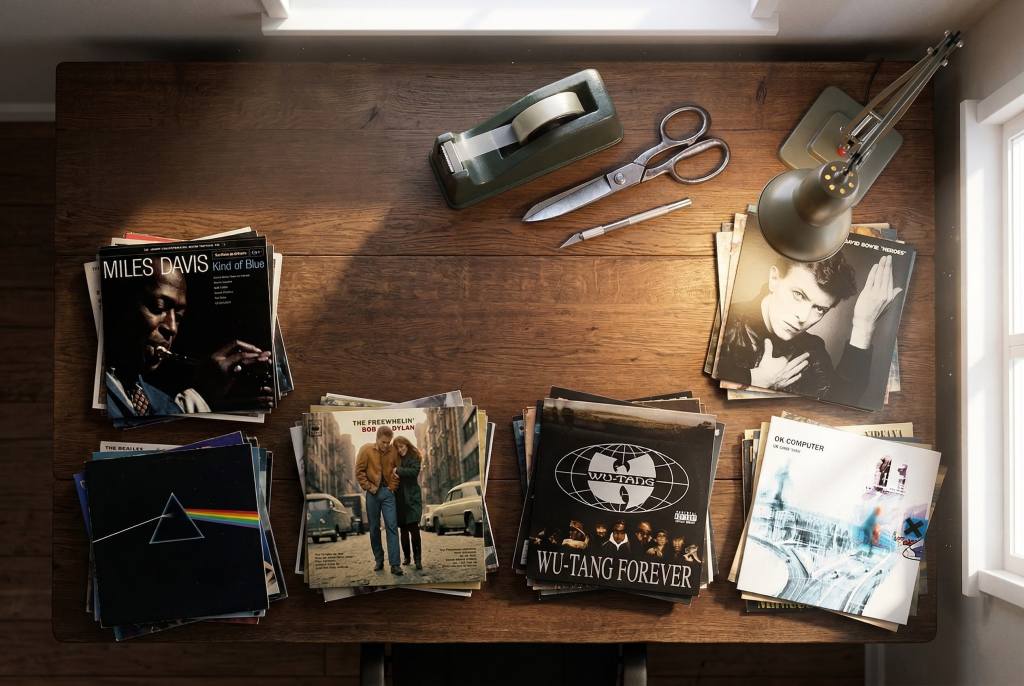
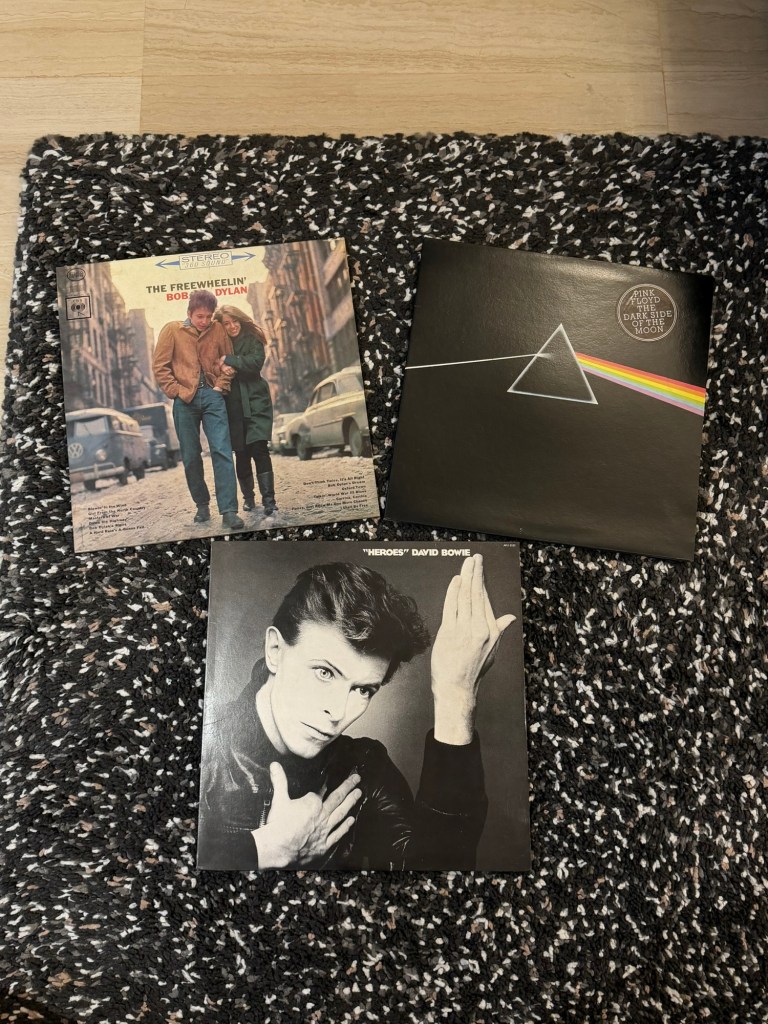
    So where do things stand since last week’s initial purchase of 9 albums? I bought five more records and… inherited around 20 more (!) from my parents. There were some real gems, like Bowie’s Heroes and The Freewheelin’ Bob Dylan. My mom found them in a drawer where they’ve sat untouched since the 1980s, and my dad told us a few stories as he handed them over. One of them is a signed copy of Ralph McTell’s Streets of London, which he got directly from the man in Glasgow one time. He was a sailor then, and one of his shipmates was friends with McTell. They met up with him at a pub when they pulled into town, where McTell got a hero’s welcome and free drinks all night. He wrote my dad an accompanying message on the sleeve, one that would be considered racist by today’s standards, but was meant as a compliment along the lines of “I didn’t know you Chinese guys could drink”.

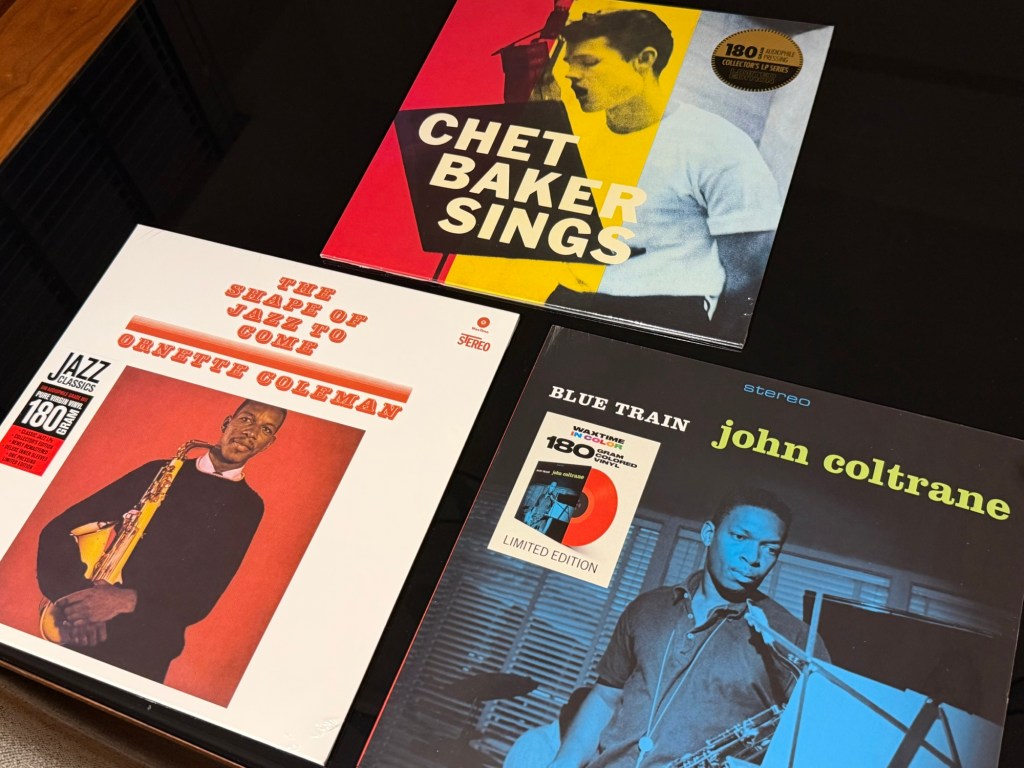
    The others I bought in shops this week: Lorde’s Solar Power, Maggie Rogers’ Surrender, Oscar Peterson At Carnegie, and Eric Dolphy At The Five Spot.

    There’s one more record that I’d love to have someday, and that’s J Dilla’s Donuts. I’ve started reading Dan Charnas’s Dilla Time, a journalistic biography of the late producer and his lasting impact on modern music, and Apple Music’s extensive catalog of his posthumously compiled beats and finished songs is keeping me company while I do. So the vinyl can wait.

    I’m totally stopping here for the time being. It’s a pattern I know too well, getting caught up in the building of a collection and neglecting the part where I actually enjoy it. The collection soon becomes a backlog. An albatross. Don’t call it a new year’s resolution, but I’ll be trying to spend more time with the things I’ve got. Unfortunately, I’m beginning to feel that maybe the B&O speaker isn’t quite good enough…

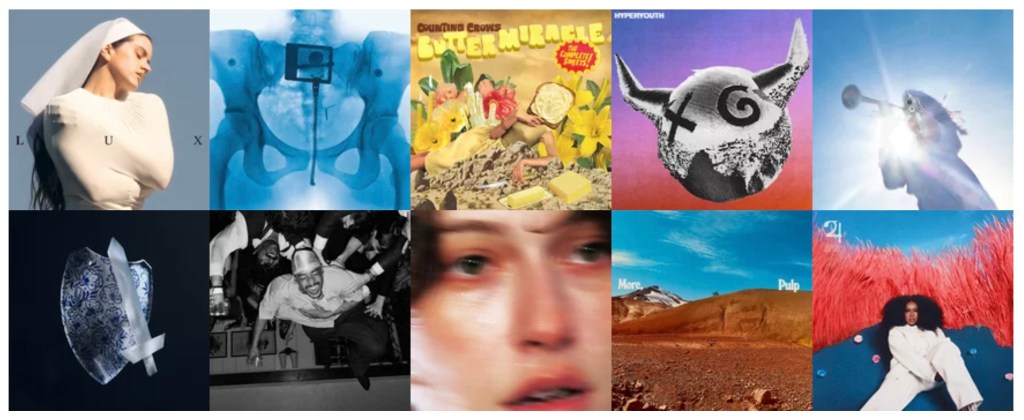
    Anyway, I thought I should list the albums of 2025 that I enjoyed the most, so here are ten picks I can stand behind.


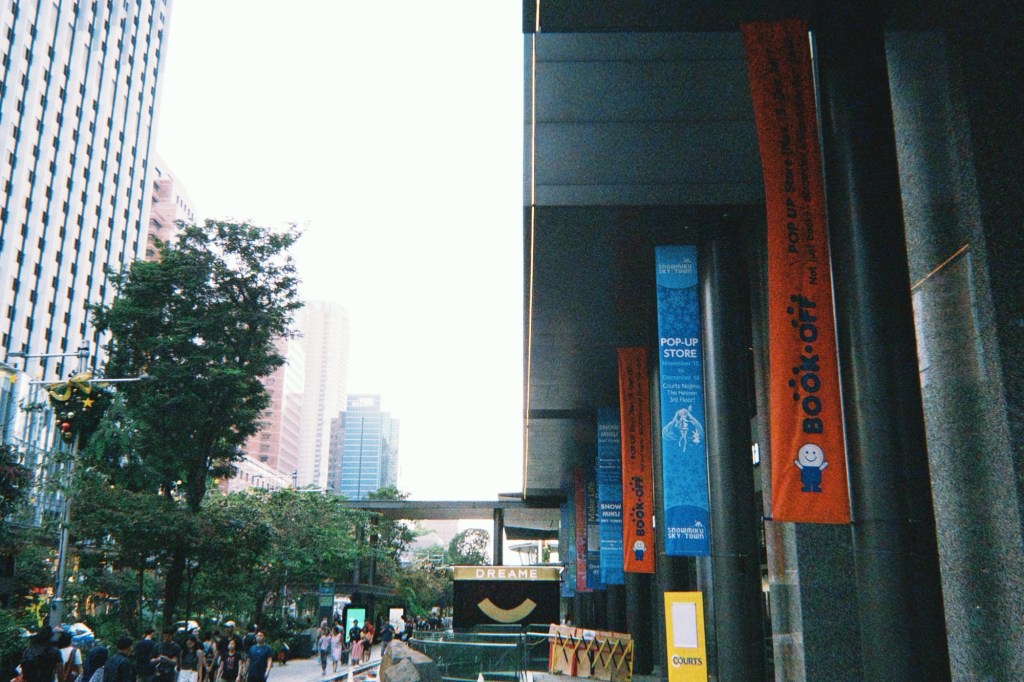
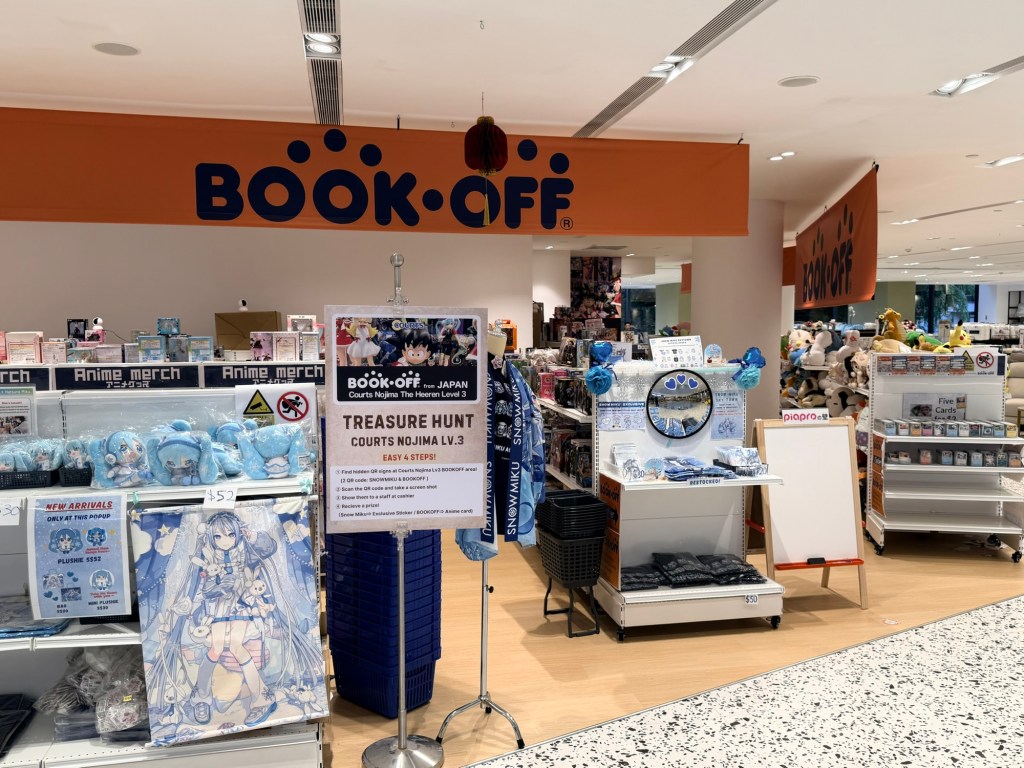
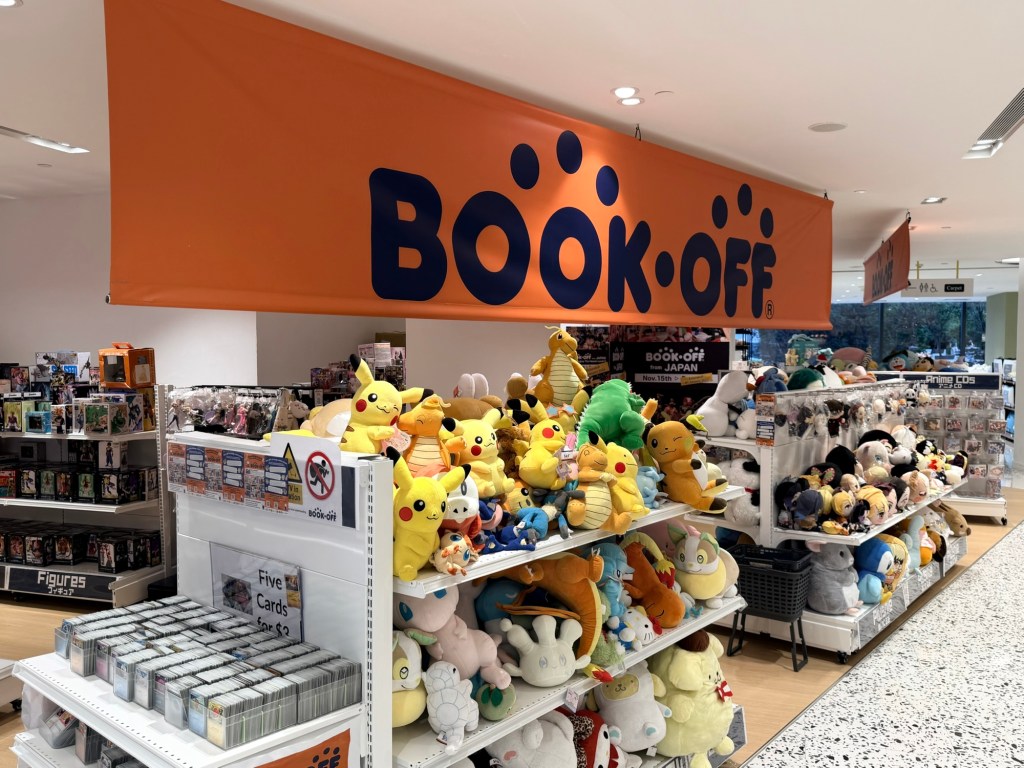
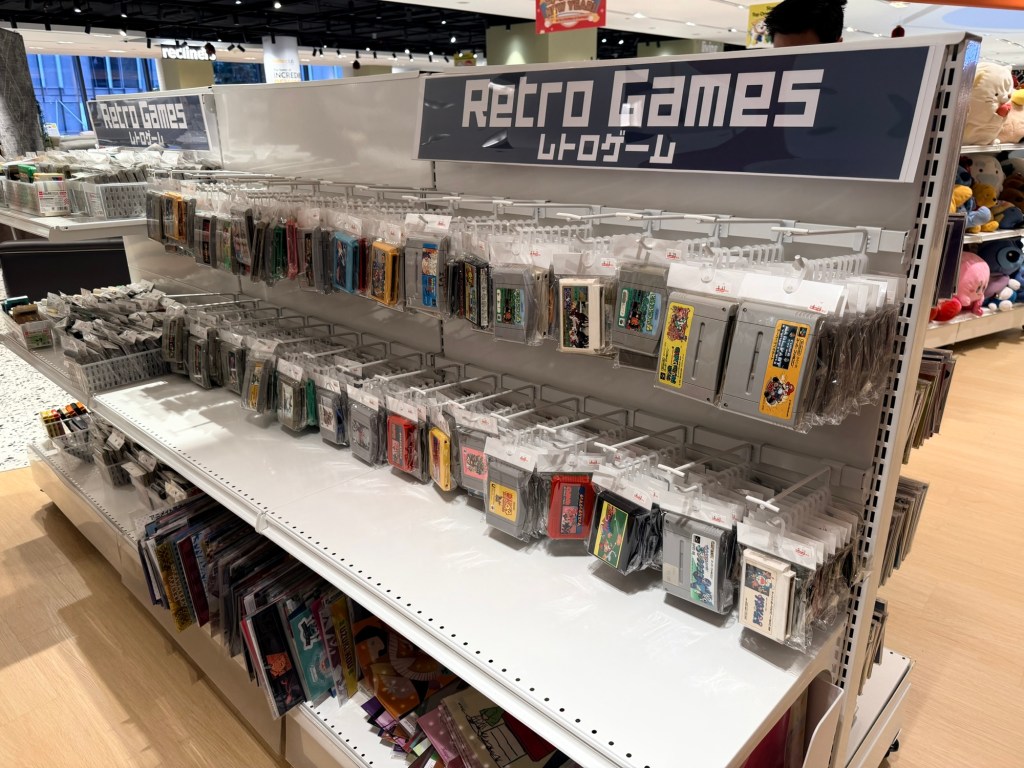
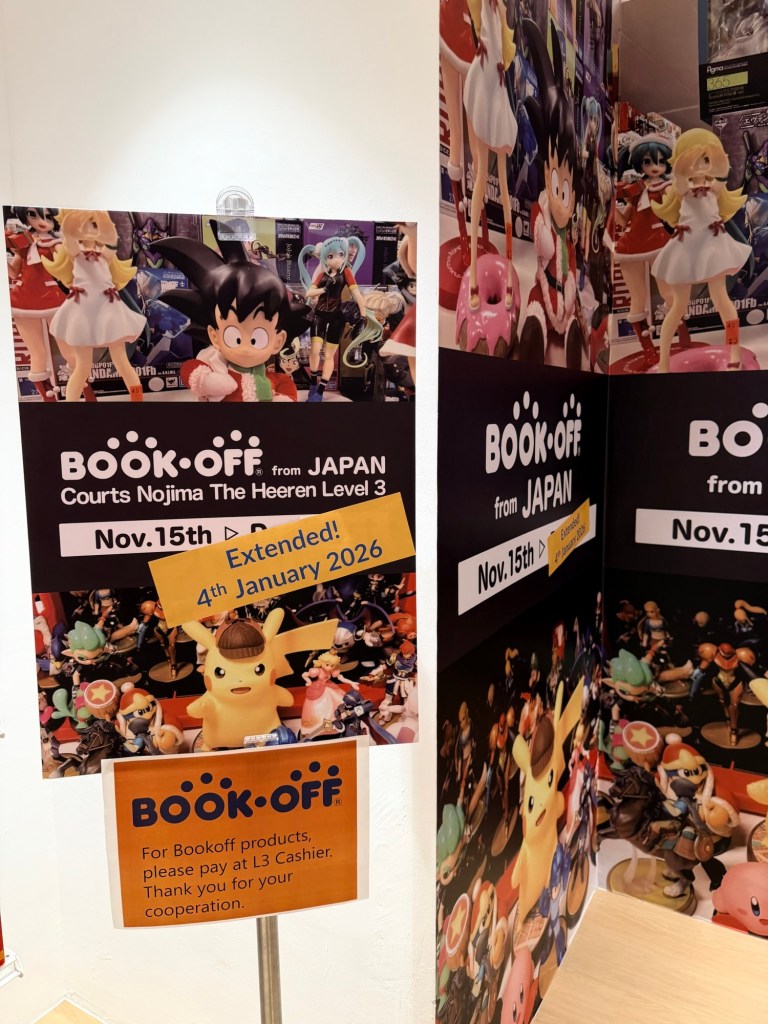
    Ps: We stumbled upon a BOOK•OFF pop-up at The Heeren. I guess they thought to try selling some of the more popular weeb items from Japan at even more inflated prices? Unfortunately nothing much I found interesting. Part of the appeal of the -OFF shops is the crate and junkpile digging, looking for gold in a giant closet. A corner of curated items isn’t the same thing.