Tag: Snoopy

  • Week 9.26

    Week 9.26

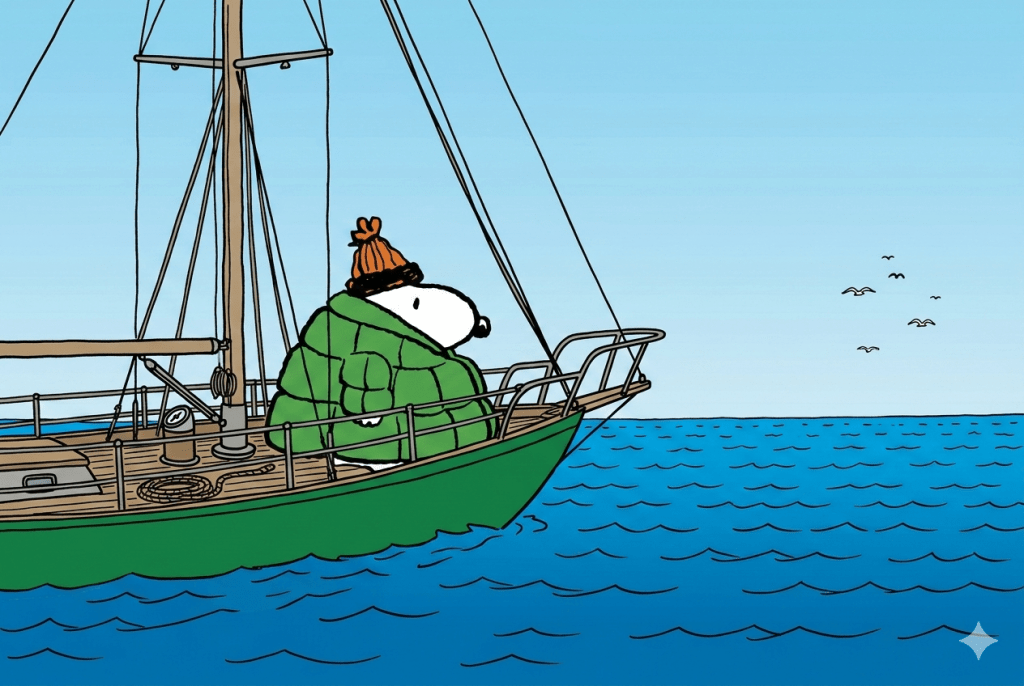
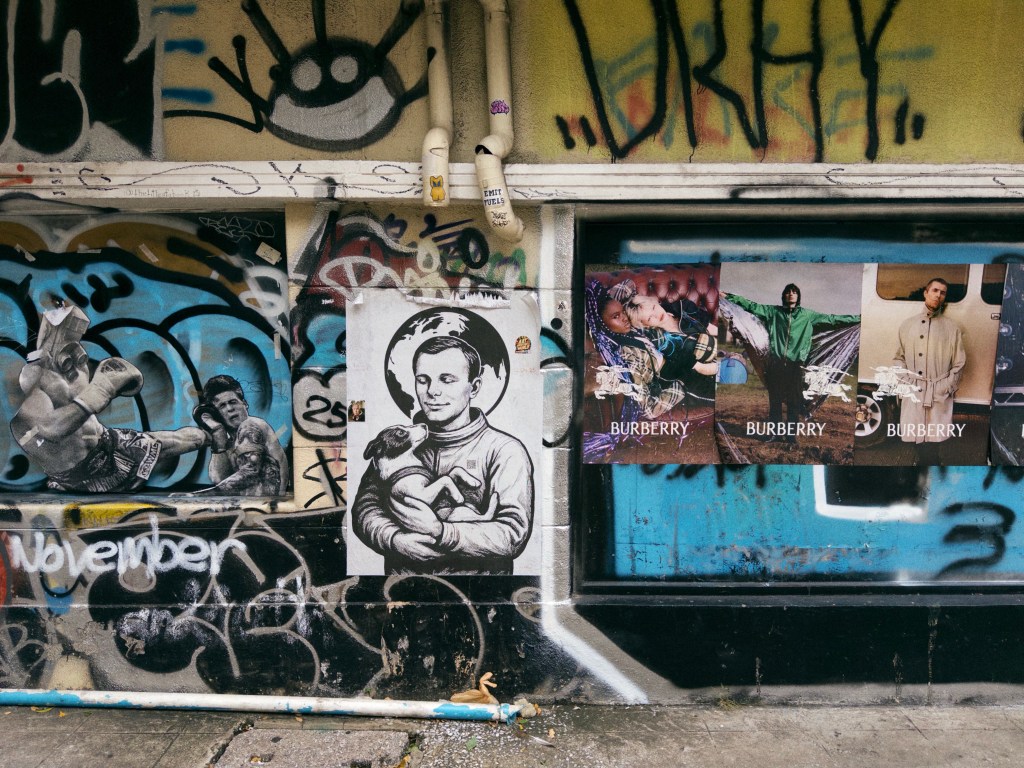
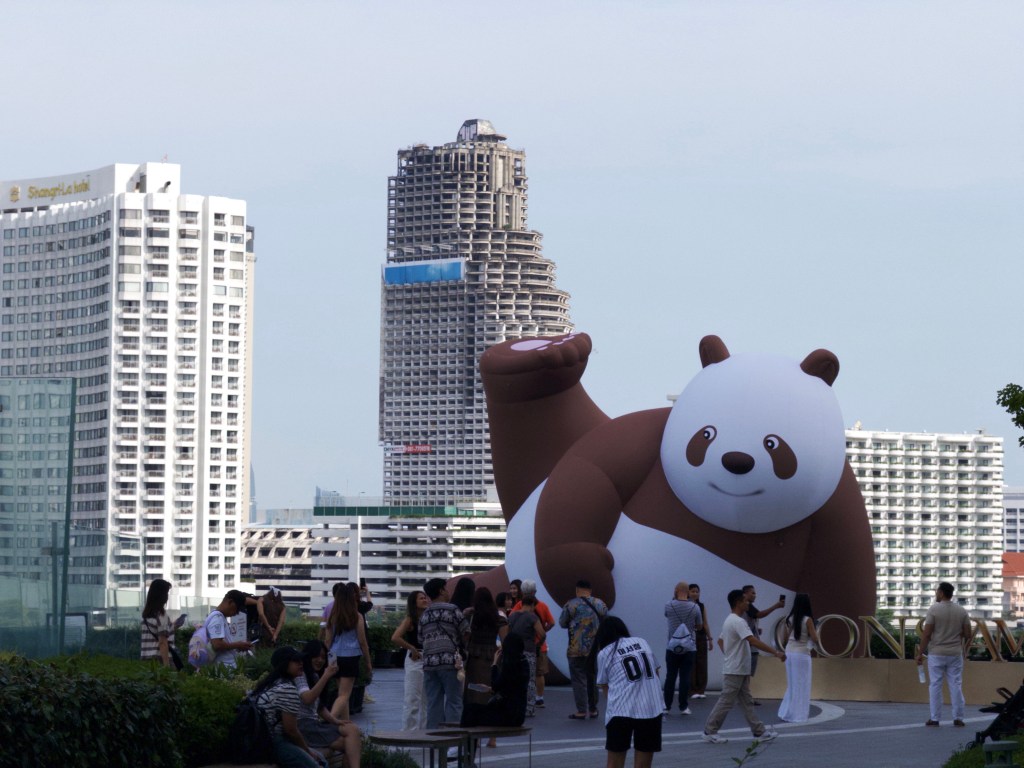
    • The featured image above is the result of having Geese’s Au Pays du Cocaine in my head all day. The line about a sailor in a big green boat and a big green coat made me think of Puffer Jacket Snoopy, and of course I had to realize the joke.
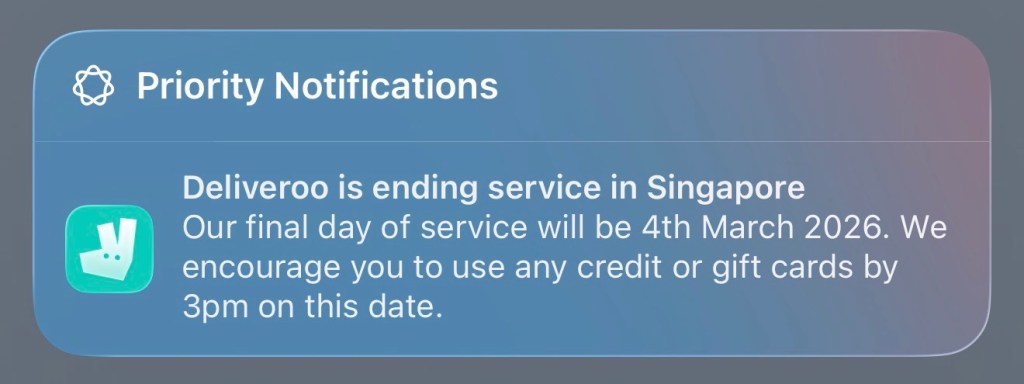
    • We got the sad news that Deliveroo is shutting down operations in Singapore. This comes on the back of an acquisition by DoorDash who must have run the numbers and decided that a 7% share of the local food delivery market after a decade wasn’t worth investing further in. We use it all the time and prefer it over Grab and Foodpanda — it is by far the better app and their subscription service is better value for money, but we’ve seen this movie before. It’s like how Uber lost out to Grab; the market doesn’t always choose efficiently.
    • I will probably switch to Foodpanda because Grab as a brand has the same icky halo as, say, Facebook or Spotify.
    • Google released Nano Banana 2, the new version of their hit image generation model. This one is cheaper to run and kind of almost as good as Nano Banana Pro, so they’re making it the default for everyone. Paid users can still access the Pro model, but it’s hidden behind some menus. It’s a regression in quality, a slight improvement in speed, and most importantly, a boost to Google’s bottom line. Since I only do silly things with these tools, it doesn’t bother me tremendously, but imagine the same happening at an enterprise level for more important work.
    Screen recording of an AI panorama
    • One of the new things Nano Banana 2 can do is generate very wide panoramic images, so I asked it to render some “panoramas taken with an iPhone” in various locations. I then upscaled those and opened them in my Apple Vision Pro. They don’t have the photorealistic quality of images from Nano Banana Pro, and the resolution leaves a lot to be desired, but they’re still immersive and impressive when viewed in this way. You can see where this might go.
    • There’s been a lot of talk lately about how AI vibe coding could upend the SaaS market, if not replacing dependable enterprise tools with individually created ones, then at least giving IT departments a billion more unapproved apps to worry about. A viral essay from last week posited that AI coding could kill DoorDash, though I’d say they did a good job of that themselves out here. The other oft-discussed idea is that AI could replace the App Store, and everyone will just make their own apps instead of buying them from developers. Michael has been blogging about vibe-coding his own to-do list app based on Clear. I’ve been wanting to try this myself, making more little tools of my own to solve niche problems, but the opportunities have been slow to materialize.
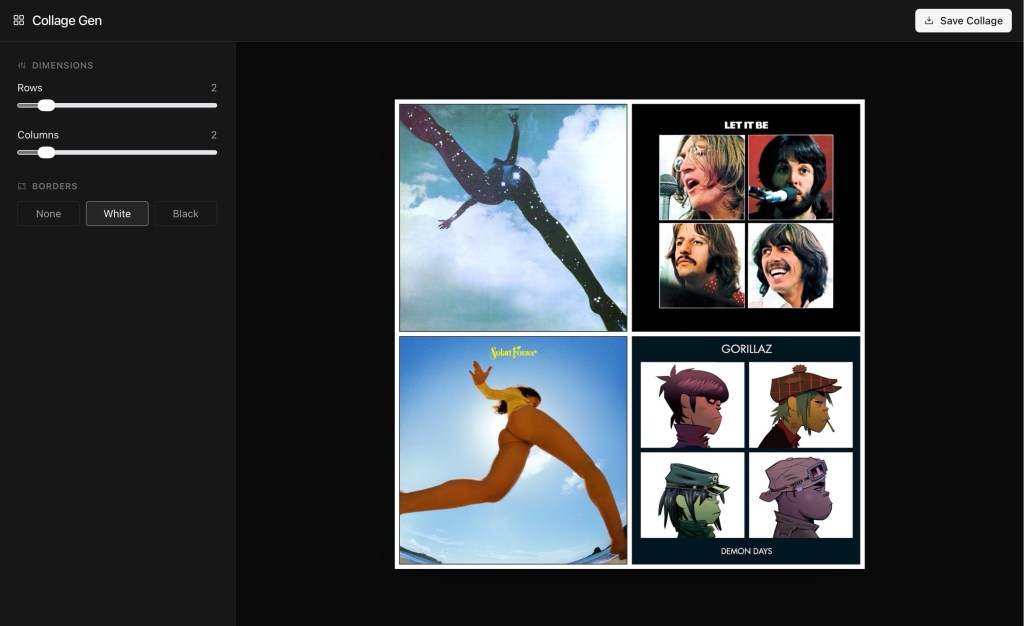
    • This week the right idea presented itself and I made a web app using Gemini: an album cover collage maker that searches for the artwork or lets you upload your own. I’ve looked online for something like this before but only found a few that were quite lacking. Making one to my own specifications took maybe five minutes of prompting and testing. Then I thought it would be nice if you could drag the images to different locations. Gemini added that feature like it was nothing. I’m pretty hyped that even someone like me with zero current coding knowledge could will this into existence. If you’d like to try it, I’ve deployed it at usecollagen.netlify.app.
    • Otherwise it was a sort of decompression week where I just read a lot, listened to the records I bought/ordered last week, and was regrettably glued to my phone watching day trading losses (Chekhov’s gun has fired!) and social media feeds.
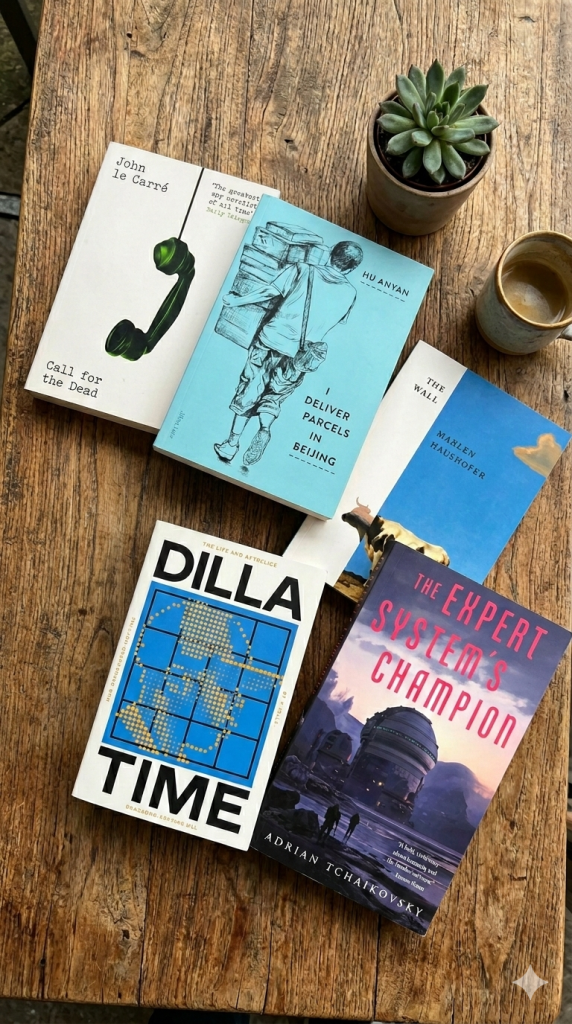
    • It took a couple weeks of dawdling but I finished John Le Carré’s Call for the Dead, his first novel featuring the spy George Smiley. I may continue reading the series, seeing as his son Nick Harkaway (whose work I really enjoy) has decided to continue his father’s legacy and written one more already: Karla’s Choice. This one was a little dated and not particularly thrilling, but a fine introduction and scene setter.
    • It was immediately followed by Adrian Tchaikovsky’s The Expert System’s Champion, sequel to The Expert System’s Brother which I read at the end of last year. I recommend both as examples of sci-fi stories set so far in the future that humanity has looped back around to the beginning. It reminds me of the “middle chapter” in Cloud Atlas, if you remember that.
    • Then I read Hu Anyan’s I Deliver Parcels in Beijing, a modern memoir that reportedly did well in China when it came out in 2022. It details the author’s dual career as a writer and on-and-off gig economy worker, which is made more interesting by also being a portrait of what it’s like to live in the lower brackets of Chinese society today.
    • I also had time to tackle Rob’s recommendation of Marlen Haushofer’s The Wall, which was written in the 1960s but doesn’t feel that way, unlike Le Carré’s spy novels. He called it the best book he read last year, so I could hardly say no. It starts off like an intriguing sci-fi novel: a woman visiting friends in the Austrian alps wakes up one morning in the log cabin to discover she’s alone, and there’s an invisible wall separating her from the outside world. Things then focus on survival and what it means to live and be human in solitude, and in nature. Which, given that I’ll be home alone next week while Kim is away again for work, means I’m already in the appropriate headspace.
    Some of the better books I’ve read this year
  • Week 28.25

    Week 28.25

    • Despite a brief setback, we ended up going to Bangkok for a few days as planned.
    • After spending hours in traffic the last time, I stayed within a smaller radius this time and walked a bit more. There wasn’t any agenda, really; Kim had some things to do and I wanted a change of scenery.
    • There was a jam coming in from the airport, of course, but we were thankfully in a very comfortable ride provided by the hotel. Ours was one of many cars squeezing down the narrow side lanes on the freeway — those buffer zones you don’t normally think cars should (or could) be using. Other cars in the ‘proper lanes’ skooch over to make way for this to happen, and it struck me as a neat metaphor for designing permissive, flexible systems with a normal mode but hiding ample bandwidth to accommodate emergencies.
    • Amidst more news of layoffs and economic rockiness, I think using AI in design (or most things, maybe) should be the side lane to ‘proper lanes’ of humans doing work, but we’re trying to do the opposite. Someone showed me a new customer research platform called GetWhy, where AI personalities conduct interviews over video calls with people, and synthesize some manner of insights automatically. They call it “human depth at survey speed”, which I knew AI would eventually enable: a merging of qualitative methods with quantitative scale. I saw it coming a couple of years ago but didn’t have the strength to look at it directly and figure out the pros and cons. At a gut level, I think it’s a shame that companies will now be able to insert another artificial layer between the people working on services and the people they’re supposed to be serving (or, more cynically, extracting profit from).
    • Anyway back to Bangkok. I saw three films to pass free time in the afternoons. Mission Impossible: The Final Reckoning for a second time; Jurassic World Rebirth, which was so terrible and completely lacking in the magic of the original film, the lasting fumes of which this franchise is still somehow able to sustain itself on; and James Gunn’s Superman, which I accidentally saw in Thai, without subtitles. I decided to sit through the whole thing and get by on just the visual language of it, and I think the experiment went okay! I probably couldn’t watch Tenet (2020) this way, though. 3/5 stars with the above qualification.
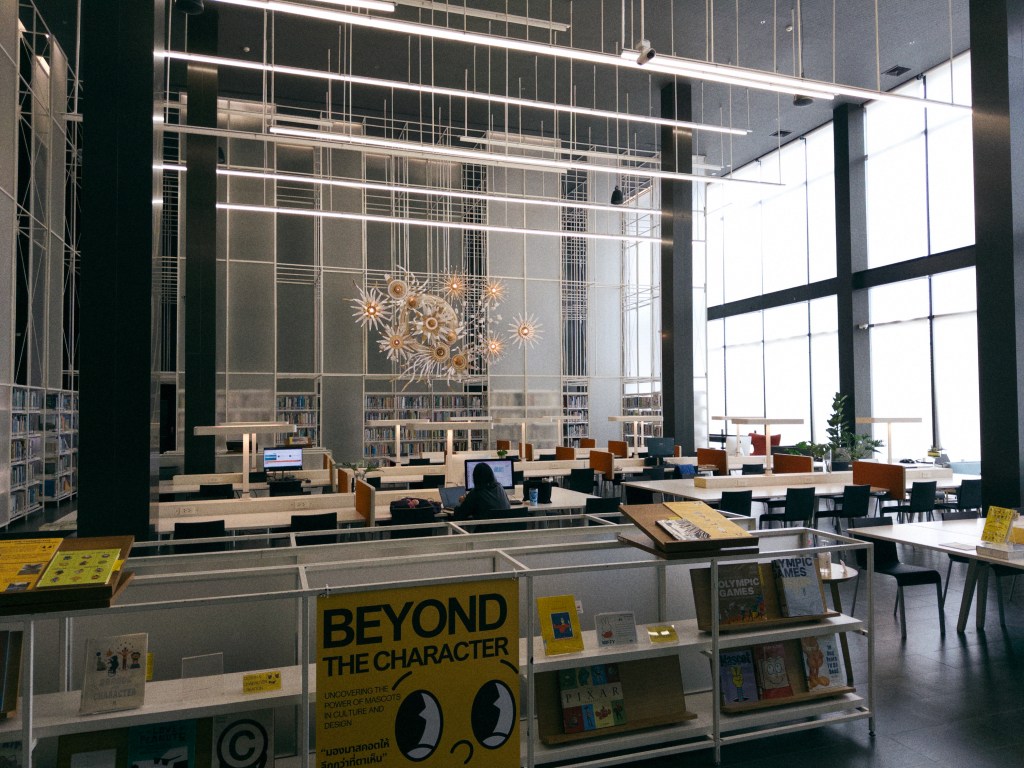
    • On Brian’s suggestion, I visited the Thailand Creative & Design Center (TCDC) which is a government office in a historic postal service building, mostly notable for its extensive resource library. You have to be a member to enter, although day passes are available for about S$4. It was a good way to pass a couple of hours, and I flipped through some interesting books that are now on my Amazon wishlist.
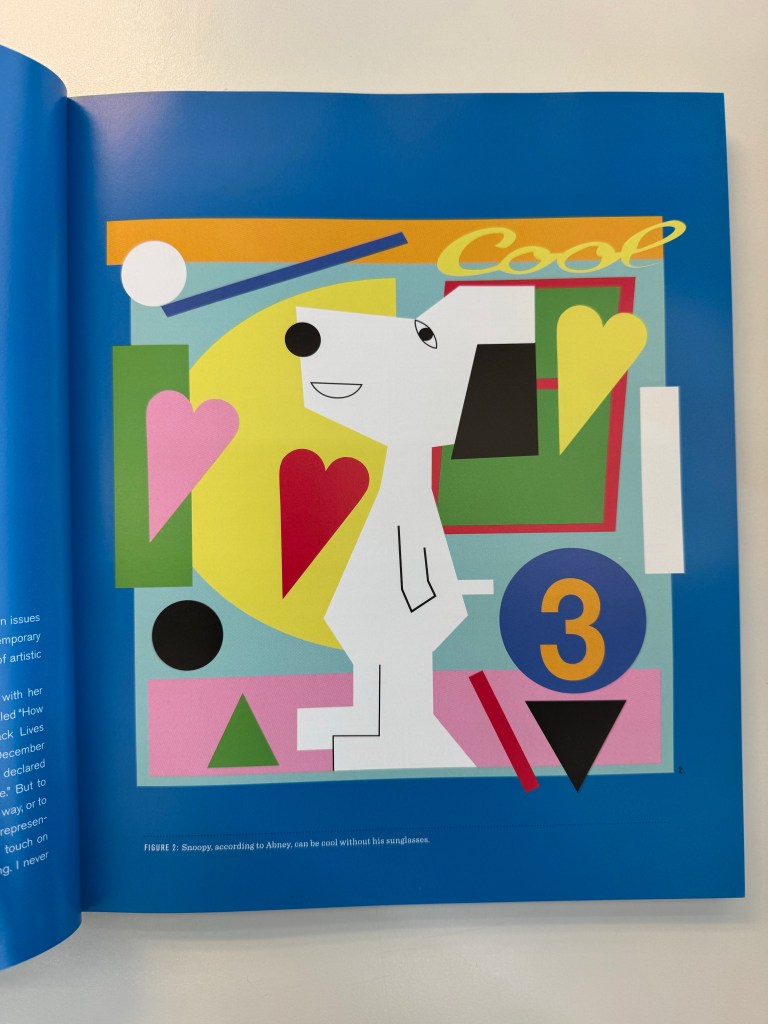
    • One of them was For the Love of Peanuts, by Elizabeth Anne Hartman, which covers the Peanuts Global Artist Collective — a project where seven artists reimagined Schulz’s characters through public art and exhibitions. There’s more information and photos through the link above. I was coincidentally thinking about learning to draw Snoopy recently, the “correct” way, and seeing this book was such a jolt to my narrow way of thinking — it had simply never occurred to me that I was free to recreate Snoopy however I wanted. Lots of new synapses to build here.
    • At the last minute, I decided not to bring my Switch 2 and it was fine. I always imagine hours of downtime on vacation where I might actually want to play a game, but it never happens. I did use my iPad Pro and am going through a sort of second wave of love for it. I recently got a third-party Smart Folio-type case, for just $12 off Amazon, which makes it much thinner and lighter than Apple’s Magic Keyboard case. The original Smart Cover (launched with iPad 2) is/was such a brilliant and minimal design, giving the device a perfect midpoint between versatility and portability, and having it again with this case is great for traveling.
    • It’s worth mentioning that each night back at the hotel I’d get into a trashy reality tv cable channel dedicated to “courtroom cases”. The quote marks are because I don’t know if you’d call these actual legal courts (but with the US, who knows?), but the two series I saw were awful and entertaining. Paternity Court sees couples come in and argue about their children, usually born on the side with another man or woman, culminating in the results of a DNA test revealing whether the man really is their father. Divorce Court is better, because you get other sorts of relationship issues being worked out, and the judges are sassier and give out strong advice. The name is a misnomer; some of these couples aren’t even married or looking for a divorce, they’re just airing their shit on TV. You can watch full episodes on their YouTube channel.
    • On the flight home, I caught Doctor-X: The Movie Final (2024), the supposed concluding chapter to the long-running Japanese medical drama that’s so bad I fell in love with it. Back in February, I spent an absurdly cost-inefficient chunk of my Tokyo trip watching Seasons 4 and 5 on local Netflix. Seasons 6 and 7 don’t have English subs, so I don’t know when I’ll get to see them — unlike Superman, this is too important to risk rawdogging in a foreign language.
      The movie… well, they went for higher stakes: explosions, AI, helicopters, the works. But that also meant less of the dumb fun and weird humor that makes the regular show a cult favorite. Or maybe not so cult at all — maybe it’s unironically loved in Japan. I kinda hope so.
  • Week 15.25

    Week 15.25

    • Kim was away for work again, so I mostly stayed in and spent more time with the Vision Pro. Apple’s new VIP video series that takes you to major sporting arenas doesn’t sound like my sort of thing on paper, but the first episode on Yankee Stadium was a surprisingly entertaining watch. The crowds feel real and the only thing missing was a closeup of a hot dog. It was filmed last June, I think, and feels like a document of a much saner time. There are still many more apps and videos I have yet to check out.
    • Back in the present, Trump’s wacky tariff rollout drama continued, with the latest being a series of takesies-backsies that is great news for Apple and other makers of computers and smartphones: exemption from whatever the crazy current rate is on imports from China. 125%? Or was it 155%? Everyone now expects the stock to surge on Monday’s open, but come on, none of these pronouncements stick or mean anything now. The best move might be to sell all US-based assets and spend the next year off-the-grid on a beach somewhere.
    • Starbucks has done a collaboration with Peanuts (that’s Peanuts × Starbucks, for readers who were here last week), and of all the merch they put out, it was a yellow stoneware mug that I liked the best. It features the whole gang sitting at a long table, with Snoopy dressed as a barista and serving up espressos in his latest persona, a corporate caffeine shill stupidly named “Joe Kind”. I like Snoopy, probably on account of being exposed to the Apple TV 4K’s wonderful Snoopy and Woodstock screensaver, so I’m turning a blind eye to this sacrilege. Anyway I received my mug in the mail this week and it’s my new teatime go-to.
    • I did go out fairly early on Saturday morning to go hang out with a bunch of coffee nerd ex-colleagues who spent more time messing around with grind sizes than I ever thought possible (my contribution was a bag of beans fresh from Ho Chi Minh). It was a good time, and the occasion gave me a novel writing prompt to try out, which brings to me to my latest ChatGPT-based hobby…
    • About two years ago, when we were just grappling with the GPT-3 model and what it could do, I spent quite a lot of time trying to get it to write passable poetry. The most successful approach I found was to provide it with a detailed character backstory and ask it to write from that person’s perspective, taking into account their preferred styles and word choices. I managed to eke out some genuinely good stanzas (imo), was moved and amazed, and then moved on to other experiments and forgot about it.
    • Until this week, that is, when I wondered how the latest models would fare given the same tasks. I put my old prompts together into a custom GPT, and asked for the first silly idea that came to mind: a poem about growing older but ironically becoming more attracted to cute things like Snoopy. It did an honestly good job with just that. Then I asked it to write one about the story of how he got his name — a true story: Charles Schulz’s mother daydreamed they’d buy a family dog when she recovered from cancer, but she never did — and the result was good enough to refine further. So I went back and forth on it with the bot (who I named Penrose), combined several attempts, intervened slightly, and here’s where we landed.
    She Gave Him the Name

    “If we ever get another dog,”
    she said,
    “we should call him Snoopy.”

    It was a small thing,
    tucked between errands
    or waiting rooms,
    the kind of sentence
    you don’t expect to echo.

    He was fifteen.
    Maybe he nodded.
    Maybe he carried it like lint in his pocket,
    forgotten
    until everything else was gone.

    Years later,
    drawing alone in his studio,
    he gave the name to a dog
    who danced on rooftops,
    typed novels no one would read,
    stood in for joy
    and for all the feelings
    boys weren’t supposed to have.

    Snoopy caught on.
    So did the quiet boy with no luck,
    the girl who loved too hard,
    the blanket dragged across the years.
    The world came to know them
    and needed their steady kindness.

    Maybe that’s what it means
    to miss someone forever,
    to take the smallest thing they gave you
    and let it become
    the sky above everything you make.
    • And here’s one from another session where I asked it to identify a core human paradox and write something about it. It chose to explore how we want freedom but crave structure.
    The Night I Rearranged the Furniture

    I moved the couch against the other wall
    just to see if the room felt different.
    It didn’t.
    I stared at it like it had betrayed me,
    then moved it back.

    It was past midnight.
    The kind of hour
    when you wonder
    if this version of your life
    is the one that sticks.

    I opened the window to let in some air,
    but it was the same air as yesterday.
    Nothing new came through.

    I thought about driving somewhere,
    but didn’t know what I’d be driving to.
    The gas tank was full.
    The fridge was full.
    I was full of something I couldn’t name.

    They say people like me
    always want to leave,
    but never go far.
    We change the wallpaper.
    We cut our hair.
    We imagine new cities
    without maps.

    The truth is, I love knowing where the forks are.
    I love the sound the radiator makes
    right before it kicks in.
    I love the old light switch that sticks
    unless you press it just right.

    But still—
    some nights I crave an airport gate,
    a highway at dusk,
    a conversation in a town
    where no one knows what I used to be.

    I don’t go.
    I just stay up too late
    and move the couch.
    • It feels unreal to have this tool for S$30/mo. I can ask it for poems about any random scenario or feeling, and it tends to throw out lines and images that catch me off guard. I’ve now taken to giving it things I half-wrote long ago and never finished, and it gives pretty good notes. An unexpected side effect of this is that I’m feeling more inspired myself, and now I’m asking it to give me prompts, and I’ll write things for it to review.
    • Here’s one I reworked this week.
    He died in his 17th year

    And flowers were laid by the side of the road
    Fit to be swept within just a fortnight

    Parents kept his memory alive another thirty years,
    Until grief or emptiness took them too

    I used to think we were made for more
    How clever bones and cells can seem

    But a body is mostly waiting to be undone
    And our home keeps going around the sun
    While out there
    Nothing waits for no one
    • While I was messing with Penrose, OpenAI launched a new feature called “Memory”, where ChatGPT is able to reference all your past conversations across previously separate chats. The way they chose to showcase it was to suggest you let the AI describe you, the black mirror lighting up to reveal a camera was recording all along. I didn’t expect them to so transparently demonstrate how this technology is a more powerful, more dangerous profiling machine that anything Facebook or Google has ever put online, but I suspect they think there’s nothing we can do. I asked it to guess how I felt about certain topics, like Nolan’s Batman trilogy or the Fujifilm X100VI camera. It didn’t exactly read my mind but they were very educated guesses. Not very reassuring. It offered to guess other things like my favorite cocktail (it said Negroni; not my absolute favorite but one of them), my favorite beer (a Belgian saison; not even close), and my favorite band (Radiohead; they might be in second place).
    • This reminded me I was due another playthrough of OK Computer to keep my millennial card intact. It only gets better with time. I’ve also been listening to Counting Crows’ Hard Candy again recently. Some of those songs are the best that anyone or any AI will ever write.