Tag: UX design

  • Week 24.25

    Week 24.25

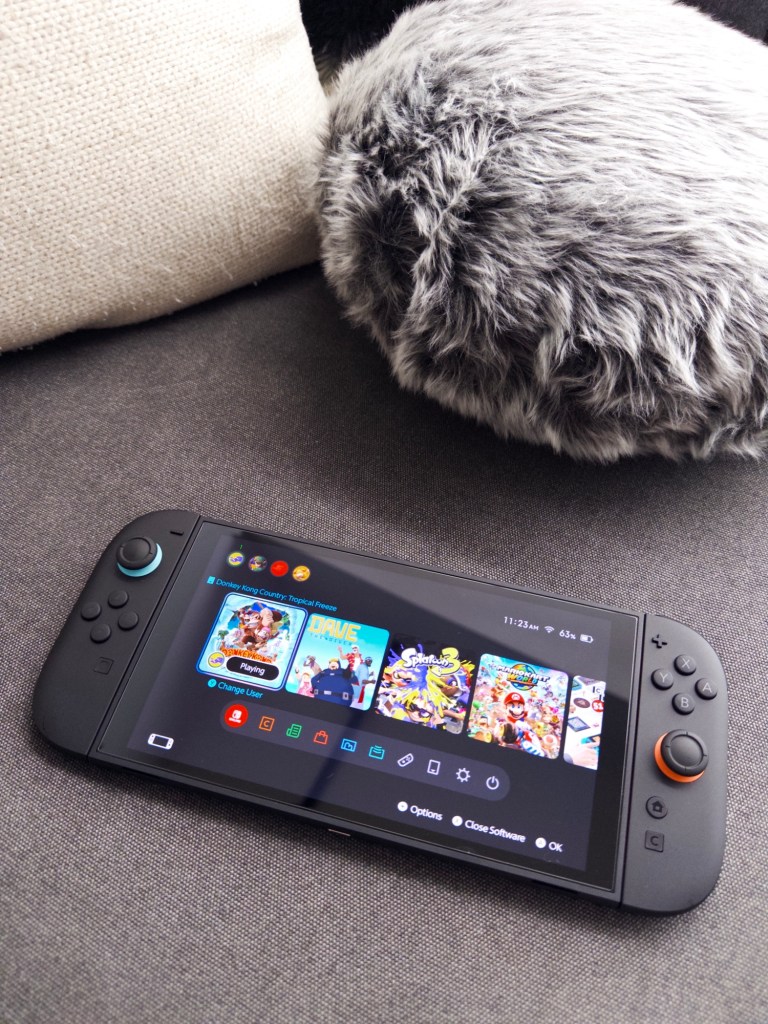
    • My Switch 2 finally arrived on Monday, praise be. It turned out to be an imported European unit, so it has the right kind of power plugs, but the included download code for Mario Kart World would only work with an EU eShop account. It didn’t take long to make one, but it’s yet another needless fragmentation of my digital footprint.
    • It’s a fantastic improvement on the original Switch. It feels more solidly built, and the magnetic Joy-Cons don’t creak and give as much when supporting the console’s weight. The screen is enormous but since the original wasn’t exactly pocketable anyway, who cares? It seems powerful enough to keep up with game requirements for easily another five years. The only regression is battery life, which they’ll surely fix with a new model two years from now.
    • I have yet to play anything on it that graphically pushes into PS5 territory with ray tracing and photorealism; although running Mario Kart World at 60fps in 4K is definitely not something the old Switch could do. That same smoothness extends to Splatoon 3, which got a Switch 2 upgrade patch on Thursday for the franchise’s 10th anniversary, and it feels amazingly fast and fluid on the new hardware. The once painful load times have been reduced to almost nothing, which is nearly worth the price of admission all by itself. At the very least, reviewers agree it’s more powerful than a Steam Deck.
    • Bert was back in town on a last-minute trip, so we met up with some of the old gang for beers and the kind of talk that middle-aged people will get up to if you let them: aging parents, how everything was much better before, and how we’d like to retire voluntarily before AI forces us to. Jussi was once again unable to make it, but he had the acceptable reason of being out of the country.
    • It was WWDC week, and with the comprehensive OS updates that were announced, it wouldn’t be an exaggeration to say that every Apple product experience will be changing this fall. I’ve had several conversations about the new cross-platform design language system they unveiled, which doesn’t have a name but is anchored by a new digital material called Liquid Glass, so people have just been calling it that. I wrote last week that I hoped the new look wouldn’t come with regressions in usability, specifically thinking about legibility and interaction clarity, but those are exactly the issues that everyone has been pointing out in the first developer beta. I’m hopeful that they’ll be able to moderate some of the more extreme decisions before the launch, but there’s no turning back. Like it or not, this is just how things are going to be for us users. What are you going to do, move to Android?
    • While talking to Michael again, one of us offered that Liquid Glass is simply a flex. It’s Apple building a visible moat with their superior silicon. Every iPhone, iPad, and Mac made in the last five years possesses power-efficient cycles to spare, which can’t be said of Android devices, save for a minority of the highest-end flagship phones. So when you look over someone’s shoulder in public and see morphing glass buttons accurately refracting the light coming off other elements on their screen at 60 to 120 fps, you’re looking at the digital equivalent of fine stitched leather. Luxury pixels. Veblen UI. Android manufacturers can’t follow Apple down this road without bifurcating the experience into cheap and premium versions, or forcing tradeoffs like reduced battery life and jankier animation.
    • The iPad got the most extreme makeover of all the platforms, and I’m a mixture of relieved, disappointed, and excited. Relieved that they’ve given up on trying to define some new paradigm for managing multiple apps on a screen; turns out the answer is just the same overlapping windows we’ve had since the first Mac. Mildly disappointed that if they couldn’t crack it after some 15 years, then maybe there just isn’t a better way. The universe might be more constrained than we’d hoped. And excited that the iPad will now be a truer laptop replacement for the majority of people, and with that increase in adoption perhaps we’ll get developers excited to build new kinds of experiences for it.
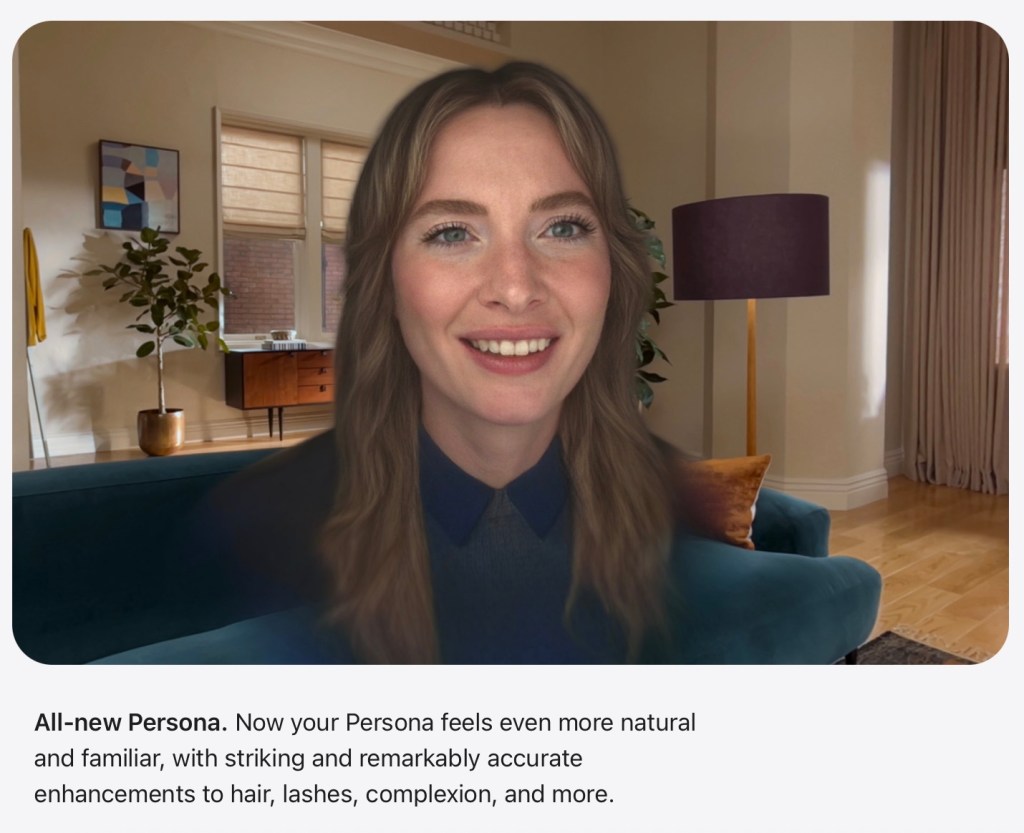
    Screenshot from Apple.com
    • As a Vision Pro owner, I can’t wait for the improved Personas, sharing virtual spaces with people nearby, and the new “spatial scene” rendering from 2D photos. I’ve already spoken to some people in inSpaze who are rocking the new Personas, and they look 10x better and more realistic than the old ones. In fact, it’s given rise to a weird social dilemma that can only exist in this age. I’ve known these people for a while and we’ve talked with each other quite a bit, but suddenly overnight, their faces have changed and it feels like I’m meeting them for the first time — or realizing I never really had. One person in the group chat looked younger now that his Persona got more accurate. Another person looked older and more intense than his previous Pixar-esque Persona suggested he was. They mentioned feeling slightly uncomfortable with how realistically they’re now presenting — the opposite of the safety that I described back in August last year: “the use of Personas creates psychological distance; it’s you, but it’s also more a puppet that looks like you.” Well, now it’s just your real face for everyone to see. I apologize in advance.

    I’ll leave you with two videos from Pulp, whose comeback album More continues to surprise me by being actually good, as if the band hadn’t gone anywhere for the last two decades. The first single has a great video (above) that uses generative AI in the best way possible. The second video below is a live performance of an old favorite, one of many appearances they’ve been making in support of the new stuff.

  • The Trouble with Instagram Stories

    I enjoyed reading this TechCrunch interview with Kevin Systrom where he openly gave credit to Snapchat for their ‘Stories’ feature, and talked about how copying it for Instagram inevitably created something different.

    What I’ve observed matches much of what’s been said: it gives most people a much larger starting audience compared to what a new Snapchat user has, which increases the likelihood of success; it’s really well implemented (I especially like that switching from one user’s Story to the next has a different transition animation than skipping a scene, making it much clearer that you’re on another person now); and it makes Instagram a more complete place to look into the two sides of a person’s life: the imperfect moment and the photograph worth sharing.

    BUT one early side effect has also materialized, and it’s already changing the way I use Instagram. In short: I don’t want to see many of these Stories! I follow a variety of different accounts, from brands, obvious social media influencers/shills, dogs, cats, interesting strangers, and friends. It’s Day 2 since the launch, and many of them have flooded my feed with too much uninteresting stuff. For many of these accounts, I want their photographs worth sharing, but not their imperfect moments. And there doesn’t seem to be a way to only follow one type of content on a per user basis.

    So I’ve started to unfollow people. Which I’m sure Instagram doesn’t want.

    In fact, the last major feature they added (an algorithmically sorted timeline) was probably aimed at getting people to follow more accounts. It let me add people without cluttering up my feed to the point where I’d miss posts from those I really really liked. For example, I could follow Canon cameras’ account for their occasional spectacular photos, but still see more personally interesting updates from my friends first. No problem. This morning, I unfollowed Canon because their chatty video Stories were getting in the way of my seeing life updates from friends.

    There isn’t this problem right now on Snapchat, which makes me think it might eventually win out if people want to keep these separate. I’m not sure how Instagram might resolve this, but there’s definitely a difference here. Namely, not all social content is created equal.


    The one other reason why I’ll continue to use Snapchat is their new Memories feature. Instagram Stories doesn’t let me do the same things.

  • Because we love Twitter

    Randi Harper: Putting out the Twitter trashfire

    8. Fix Tweetdeck. Fix Twitter for Android. Fix Twitter for OSX. Twitter for OSX still has a hard limit on how many blocks it can apply because they didn’t bother updating the API call when they switched to paged requests. It also crashes a lot if you’re receiving a lot of notifications. Tweetdeck doesn’t use server side mutes. The ability to mute users originated from Tweetdeck prior to Twitter buying it. They then added this functionality to Twitter itself, but never updated the client to store these mutes server side.

    What a fantastic to-do list for the people at Twitter. Reading this, what strikes me most is that the product really is a shitheap on fire sailing down a river with passengers onboard. It’s got so much legacy crap; so much inscrutable complexity built up from rounds of careless iteration and business priorities, that it’s really hard for a team still working under said priorities to fix it all within further digging the UX a grave. Same goes for iTunes, really, but so much harder for a real-time social service that people are posting to thousands of times a second.

    The good news is that the most toxic parts of Twitter, the abuse and management of noise, are probably the most within reach for a quick fix without anyone having to relearn anything.