Tag: Wearables

  • Week 45.23: AI on the brain

    Week 45.23: AI on the brain

    This week in artificial intelligence was a big one: Humane unveiled their highly-anticipated wearable, while OpenAI made strides with ChatGPT enhancements.

    The Humane Ai Pin

    A lot has already been said about the letdown that the Humane reveal was, mostly by people confused by the presentation style of the two ex-Apple employees who founded the company.

    If you’ve seen Apple events and Humane’s 10-minute launch video, you’ll note the contrast in delivery and positioning. Apple tries to couch features and designs in real-life use cases, and show authentic enthusiasm for what they do to improve customers’ lives (Steve was unmatched at this). Humane kicked off with all the warmth of a freezer aisle, missing the chance to sell us on why their AI Pin wasn’t just another tech trinket in an already cluttered drawer. They puzzlingly started with how there are three colors available and it’ll come with extra batteries you can swap out, before even saying what the thing does! The rules of storytelling are quite well established, and why they chose to ignore them is a mystery.

    A lot was also said about how two key facts in the video presentation, provided by the AI assistant so central to their product, turned out to be inaccurate. One was about the upcoming solar eclipse in 2024 (and Humane’s logo is an eclipse! How do you get this wrong?), and the other was an estimate of how much protein a handful of nuts has. It’s a stunning lack of attention to detail that this was not fact-checked in a prerecorded video.

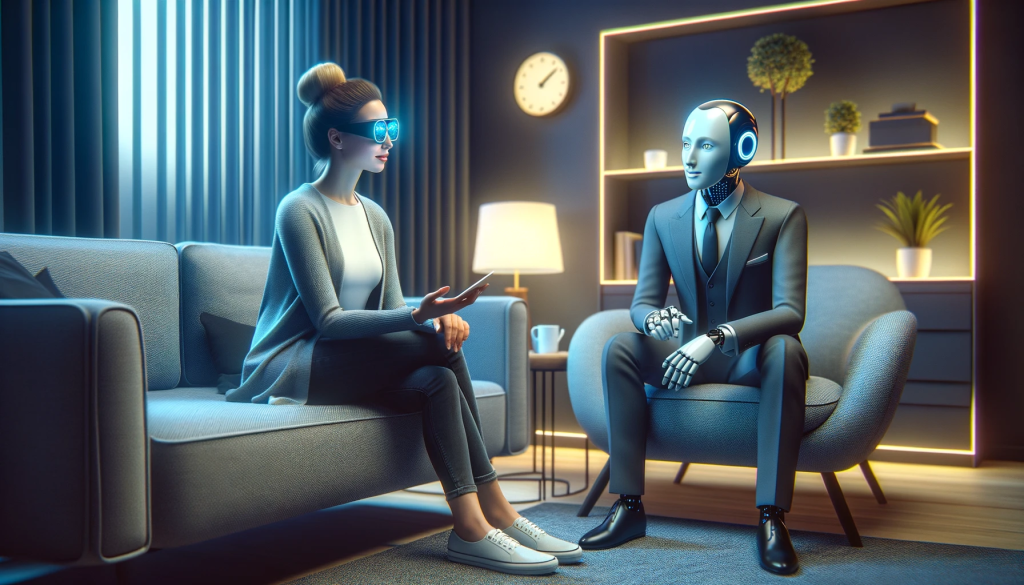
    Personally, I have been waiting for the past five years to see what this stealth startup was going to launch, and as the rumors and leaks came out, I was extremely excited to see an alternative vision for how we interact with computers and personal technology. What they showed did not actually stray from what we knew. An intelligent computer that sees what you see, is controlled by natural language, and is able to synthesize the world’s knowledge and project it onto your hand in response to queries is amazing!
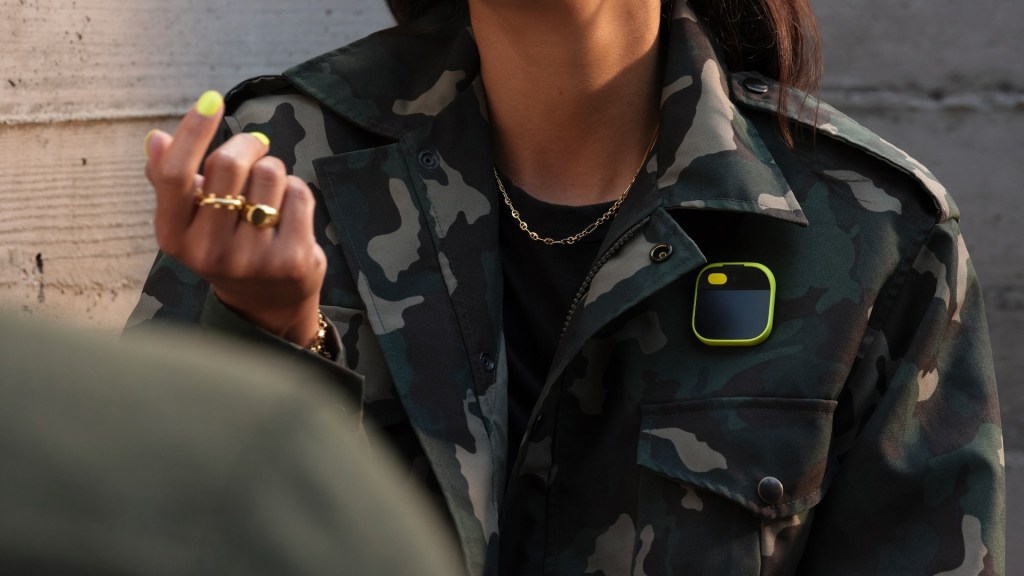
    The hardware looks good, channeling the iPhone 5’s design language to my eyes, and I’ll bet they had to pioneer new ideas in miniaturization and engineering to get it down to that size. I expected it to cost as much as an iPhone, but it’s only $699 USD, which feels astoundingly low. That’s not much more than what we used to pay for a large-storage iPod.

    The disappointment is in their strategy. By positioning it as a replacement for your phone rather than an accessory, they’ve reduced the total addressable market to a few curious early adopters and people who want to address having a tech or screen addiction. The kind who intentionally buy featurephones in 2023. I think their anti-screen stance is interesting, but it doesn’t win over the critical mass necessary to scale and challenge norms.

    The Ai Pin comes with its own phone line for messages and calls (for $24/mo), so it’s not going to be convenient to use this alongside your phone, and I would not give up my phone while this is still half-baked — I say this kindly, because even the iPhone launched half-baked in many ways. For many things that we have become accustomed to in life, there is no substitute for a high-definition Retina display capable of showing images, video, and detailed or private information when necessary.

    Do I believe that Apple can one day get Siri to the level of competence that OpenAI has? I have to hope, because the Apple Watch is probably a better place for an AI assistant to live than in a magnetically attached square on my T-shirt. In any case, Humane seem to have taken a leaf out of their old employers’ playbook, and will be releasing this first version only in the US, and so whether or not I would buy one is a moot point.

    OpenAI and GPTs

    Speaking of OpenAI, it would seem that they’re still the team to beat when it comes to foundation models. The playing field is full of open-source alternatives now, including Lee Kai-Fu’s 01.ai and their Yi-series models, but as a do-it-all company offering dependable access to dependable AI, OpenAI seems unassailable.
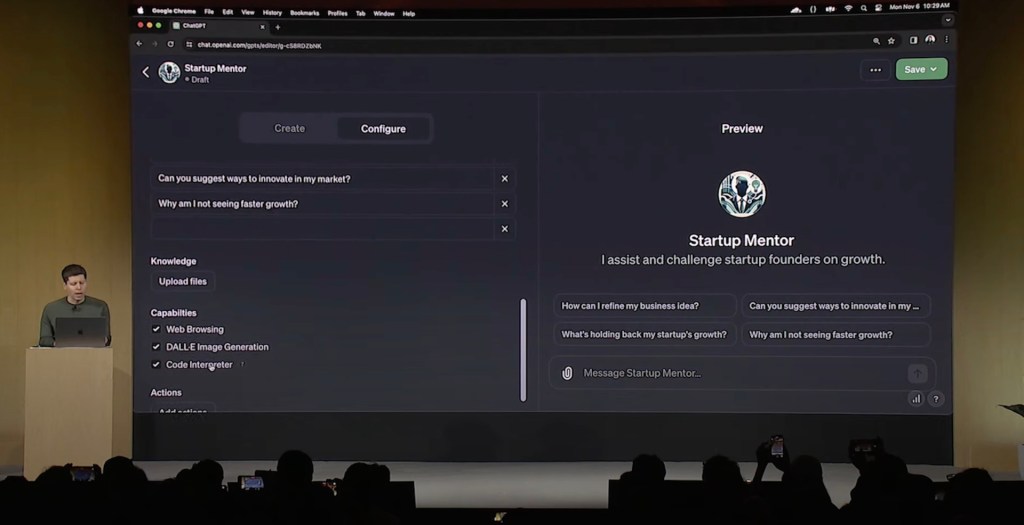
    They announced enhancements to their models, increasing context windows and speeds while halving prices for developers, and launched a new consumer-friendly product: customized instances of ChatGPT that work like dedicated apps, which they call “GPTs”. In effect, these are a version of Custom Instructions which were introduced earlier this year as a way to tell ChatGPT how to behave across all chats. But sometimes you’re a researcher at work and sometimes you want to have some dumb fun, thus I’m not sure they caught on.

    So now GPTs let you specify (pre-prompt?) different contexts and neatly turn them into separate tools for different purposes. Importantly, you can now also upload knowledge in the form of files and documents for the agents’ reference in generating replies. This makes them more powerful and app-like, and normal people like me with no coding ability can create them by telling a bot what they want (in natural language, of course), or writing prompts directly. I recommend the latter, because chatting with the “Create” front-end tends to oversimplify your instructions over time and you risk losing a lot of detail about how you want it to work and interact with users.

    So what does the launch of these GPTs mean? Well, for many of the developers who were riding the OpenAI wave and only used their APIs to build simplistic wrapper apps, it’s a sudden shift in the tide and they’re now forced to build things that aren’t reducible to mere prompts.

    What we’ll soon see is a GPT gold rush. Brace yourself for a stampede of AI prospectors, each hunting for their piece of OpenAI’s bonanza — the company will be curating and offering GPTs in a “Store” and sharing revenue with creators. That’s a different model than their APIs where developers pay OpenAI for compute and charge users in turn. Here, users all pay OpenAI a flat fee for ChatGPT Plus and can use community-made GPTs all they want (within the rate limits).

    Hear everyone talking about a viral GPT that makes it so easy to do X? When you want to try it out, you’ll see a call-to-action to sign up for ChatGPT Plus. This signals to me that launching GPTs is a strategy to drive paid account conversion, which begins the lock-in that OpenAI needs in order to make ChatGPT the new OS for services, not unlike how WeChat is the base layer that runs China, regardless of whether you use iOS or Android. Eventually you won’t even need to know about or choose the GPTs you use; the master ChatGPT system will call them as necessary. We may not be headed for a screen-less future, but we’ll probably see an app-less one.

    My GPT projects
    Of course I’m playing with this and making some of my own! Did you think I wouldn’t, given the ability to create AI things without coding?

    I’ve got a list of ideas to work on, and so far I’ve acted on three of them, which are explained on this blog in separate posts.

    ✨ PixelGenius was my first, and contains the most complex prompt I’ve ever written. It started out as a tool to generate photo editing presets/filters that you can use on your own in any sufficiently advanced photo editing app with curves, H/S/L controls, and color grading options. You can just say “I want to achieve the look of Fujifilm Astia slide film” and it’ll tell you how to do that. But now it does more than just make presets, which you can find out about here. More details and examples in the blog post here.


    😴 SleepyTales was the second, and I’m still amazed at how good it is. It’s designed for Voice Conversations mode (currently only in the mobile app), so you can get a realistic human voice reading you original (and also interactive, if desired) bedtime stories. These are never-ending, long, and absolutely boring tales with no real point, in drama-free settings, told in a cozy and peaceful manner. It’s the storytelling equivalent of watching paint dry, yet oddly mesmerizing. More on this and the next one here.

    🥱 SleepyKills 🔪 was born from a hilarious misread — I told Cien about it and ‘mundane’ became ‘murder’. So if your bedtime stories of choice are usually true crime podcasts, then you’re in luck. This GPT agent will create an infinite number of dreary murder stories, but stripped of all suspense, mystery, and excitement. They’re about as exciting as real police work, not the flashy TV investigating sort. Again, I still can’t believe how cool it is to hear these being written and read in real time.

    People have said the Voice Conversations feature is a game-changer for ChatGPT, but I didn’t really get it at first when using it for general queries. IMO, the killer app for it is storytelling. I’ve been using the voice called Sky for both the above bedtime stories apps, and it works well.

    Films

    • I watched David Fincher’s new film The Killer in bed on my iPad, just like he would want me to. Even then, it was spectacular, a cinematic victory lap for both him and Michael Fassbender. It plays with genre conventions, expectations, and riffs off his own body of work. There are some great moments and a fantastic performance by Tilda Swinton. 4.5 stars.
    • Speaking of performances by English actors, I also watched Guy Ritchie’s Operation Fortune: Ruse de Guerre, which is both a terrible name and attempt at creating a new globetrotting spy/special ops team franchise. But, he has a certain touch even when making shit, and the film is a hell of a lot of fun, bringing out the best in Jason Statham (who tried to hold up The Expendables 4 and failed), as well as a villainous turn from Hugh Grant that — I shit you not — is easily a Top 10 career highlight for him. Jason Statham in the right hands is a very different animal than when he’s doing B material; I don’t know how to explain it. I actually gave it 4 stars on Letterboxd and won’t take it back.

    Album of the week

    REM’s Up received a 25th Anniversary Edition, with some tracks seemingly remastered and a whole second “disc” of an unreleased live performance they recorded on the set of the TV show Party of Five?! Sadly it is not a track-for-track live performance of the album, which would have been great. There’s no Dolby Atmos here either, so I’m just taking this as an opportunity to revisit this album.

    I can still feel the gut punch from the day Bill Berry bowed out, post-aneurysm. I was afraid they might break up, and REM was absolutely my favorite band back then (maybe still), so when Up came out, I was hopeful for a new and long-lived chapter to begin. And yeah, it was a weird album, playing with new sounds and using drum machines — not unlike The Smashing Pumpkins’ Adore album after Jimmy Chamberlin left. But many songs were great, some even recognizably REM. The band kept going for a few more albums, each a new spin on an evolving sound. And in true style, they dropped the mic at just the right moment.
  • Week 43.23

    Week 43.23

    Bacheloring, breakdowns, and beverages

    Kim was away again for work most of the week. This effectively gave me the gift of freedom from our Beyond Deck addiction, cold turkey. So I played a little Super Mario Wonder, drank too much bourbon, watched Bitcoin YouTube, and lazed around unproductively on my iPhone.

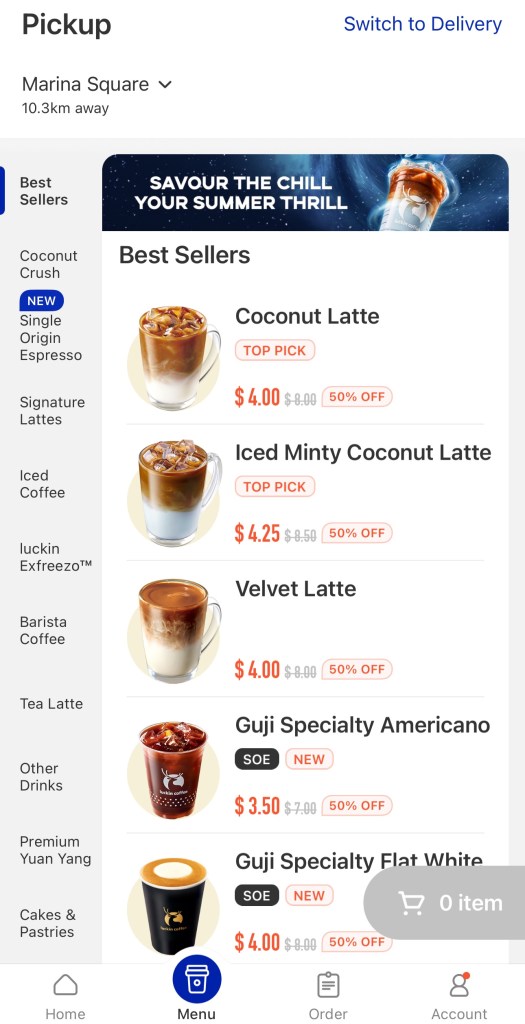
    And on the days I decided to work from the office, I was richly rewarded with elevator breakdowns, mall escalator maintenance, and other inconveniences that made me wish I’d stayed home. I don’t think I’ve mentioned my recent obsession with Luckin Coffee, the Chinese chain that’s been expanding nationwide, including an outlet in my office building. Bosses forcing a return to office take note, getting one of their iced coconut lattes in the morning is one of the reasons I head in. I was looking forward to my fix one of these cursed mornings but found the branch closed for upgrading.

    Luckin’s model is fully app-dependent and most branches are just pickup counters, with no seating. You order on your phone, pay via card or Apple Pay, and pick it up by scanning a QR code. You don’t interact with staff, and they don’t handle any filthy cash. For comparison, you can do the same thing with Starbucks’s app, as well as order in person like a boomer. To get you past the friction of downloading the app and setting up an account, your first drink at Luckin is just $0.99. Subsequently, you’ll get hit with a barrage of discount vouchers ranging from 35% to 60% off, so much so that I haven’t paid full price for a coffee yet.

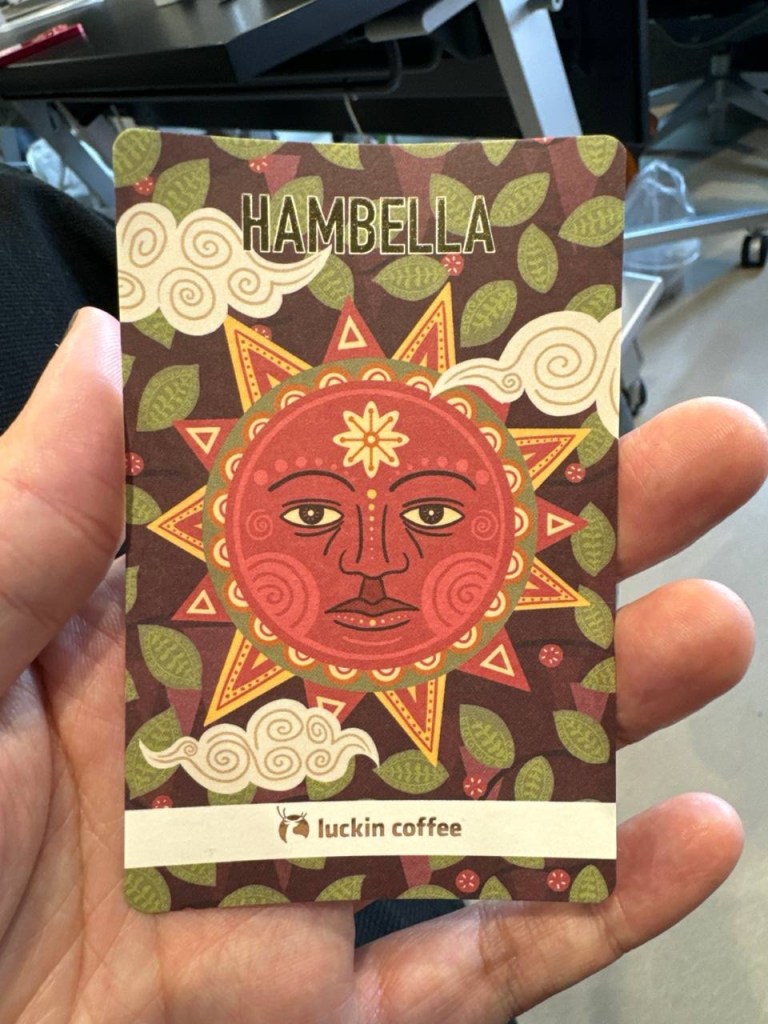
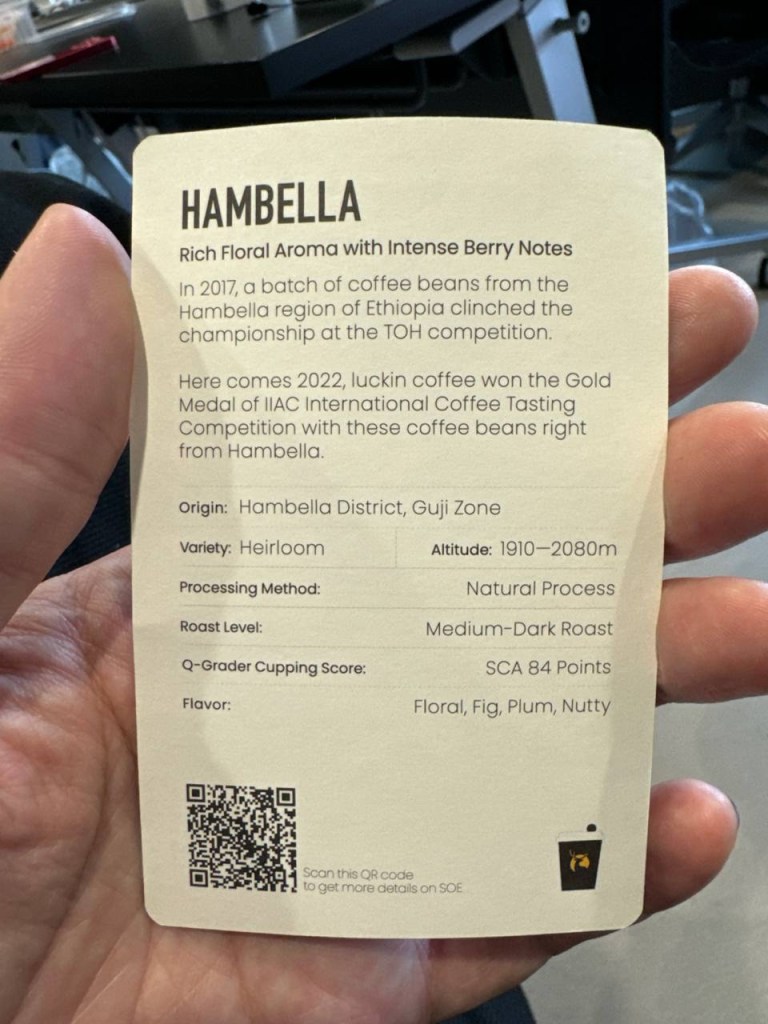
    For the record, their drinks are priced around $8 each, and they’re somewhere between a Starbucks tall and grande. The discounting is an aggressive acquisition play, of course, but I’ll take low margin coffees while they last, not least because they’re actually pretty tasty! Like Starbucks Reserve, they offer a range of single-origin specialty coffees, and even give you beautiful little info cards with tasting notes. The absurdity is not lost on me, given their quick-service image it’s like if McDonald’s gave you facts on the cow in your Quarter Pounder. Nevertheless, on that day my Luckin outlet was closed, I went to a Starbucks for the first time in quite a while, and it felt like comparatively much less value.

    ===

    From clicks to chats

    I went over a new trend report my company put out, and there’s a large focus on generative AI as one might expect, which led to a couple of interesting conversations about how much work is ahead of us when it comes to overhauling the touch points we use to deal with merchants, service providers, and even governments.

    In a way, the graphical interfaces we use today evolved as proxies for “natural” verbal and gestural communication. Similar to how we used mouse cursors because we couldn’t touch displays directly, we have menus and buttons and screens filled with data because we can’t directly ask computers for complex outcomes. The promise of large language models is that now we might.

    There have been think pieces this week about how Apple was “caught off guard” by this gen AI wave and is now scrambling to catch up. I think they have plenty of time; here’s why:

    What’s at stake isn’t smaller-scale improvements like the transformer-based autocorrect in iOS 17; it’s about whether gen AI can bring a more radical change in how we use computers. You can already see the hunger for this — the dream of J.A.R.V.I.S. — in a dozen half-baked AI-powered product announcements. We’re not far from Humane’s wearable phone alternative, Rewind’s Pendant which will process everything you say or hear, and Meta has great-looking new “smart” Ray-Bans which can put their new AI voice assistant(s) in your ear (US-only).

    The basic version of conversing with AI looks like a text chat, and on the other end of the spectrum is a “multimodal” natural chat that takes a user’s body language, tone, and facial expressions into account. Putting aside the fact that such a model hasn’t been trained yet, just the massive amount of personal data this would involve means only a company positioned to put privacy first might get any traction. And then there’s the staggering hardware requirements of doing this in real time. If only someone was working on a new kind of computer equipped with industry leading silicone, and biofeedback sensing that can even predict you’ll tap a button before you do it

    Assuming this is the right thing to do at all, the Apple Vision Pro with its microphones, retina scanners, and hand-tracking cameras should be well positioned for a future where you can simply sit down in front of an AI relationship manager from your bank, have a free-flowing discussion, and see the appropriate figures and charts pop up — instead of poking around a UI to find out how your money is doing. But the stated purpose of the Vision Pro is spatial computing, which is only a step towards natural computing.

    So like every other time in history, Apple will wait while others jump the shark first, and hopefully clean up after with a more sensible execution. They have the time; it’s just a shame for impatient people that the hardware looks so ready. But as a wise man once said: technology moves fast, while people change slowly.

    ===

    Pints and pop music

    Ex-colleague and friend Bert is back in town for the first time in over four years, so we met up twice to catch up and see some other faces we’ve missed in recent years. This meant many pints of Guinness (if ever I associated a person with one drink only, it’s Bert and Guinness), which compounded with the aforementioned bourbon and a gut-busting, sodium-loaded visit to Coucou hotpot for a physically taxing week. Every organ is straining to detoxify and I really felt the effects all weekend.

    • We watched half of the third season of Only Murders in the Building and I’m happy to report it’s much better than the second. I think there’s even a self-effacing joke at one point about how the first season of the in-show podcast was more likable than the second. It comes down to a clearer story with fewer detours, the kind I’ll probably remember a year from now unlike, say, season two’s.
    • Sigrid has a new four-song EP out: The Hype. It is extremely Gen-Z in that it has a shoddy photograph on the cover and looks like it was made in Canva. The music is much better, but she’s just doing more of the same, which I won’t complain about because if Coldplay just kept doing the same thing as in their early albums maybe they wouldn’t be so insufferable today.
    • Taylor Swift’s 1989 is finally out in (Taylor’s Version) form! I think this was the first album of hers to ditch the country pop style and just go straight pop? Did it have something to do with leaving Nashville for New York? In any case, it was the first album of hers I played for myself, and also the one Ryan Adams liked enough to cover I guess. I’ve been mostly playing both versions this weekend and came across a debate I never knew I needed: is 1989 a beach album about the Hamptons or a city album?
  • Week 34.21: I keep looking at my mood ring (it says too much caffeine)

    • There’s a spot on the carpet where I like to sit most days while watching TV or using the iPad, and it’s gone flat from my lounging about. At the start of the week, I told myself I’d play the hell out of Neo: The World Ends With You, which I was once so excited for. I didn’t even start it up once. So I guess now’s not the time.
    • Tetris Beat on Apple Arcade (App Store) did come out, and my hopes were extremely high for a Tetris game set to music, dependent on players dropping tetrominos to the beat. Unfortunately it still needs some polish: there are sync and calibration issues for players transitioning between speakers and wireless headphones; UX gaps; and poor support for iPad and iPhone users with controllers. Even the basic touch and slide controls don’t feel just right. I’m hopeful that it’ll get better with updates.
    • I finished watching the new Evangelion movies with 3.0+1.0 Thrice Upon A Time (Amazon Prime Video), which was easily the best of the series. I think it works and transcends its “flaws”, of which there still are plenty, because Anno finally found the will to contrast heaviness with a hint of joy and kindness. Afterwards, I sat through the credits in emotional shock, and immediately resumed my stillborn viewing of the original NGE series on Netflix. Still making my way through those.
    • Lorde’s new album, Solar Power (Apple Music), is finally out. I avoided hearing it for the first couple of days, afraid that it would let me down. Now on my fourth playthrough, and happy to report that I love it.
    • Also discovered this song from Asian American rapper Miyachi, which utilizes the Family Mart audioweapon jingle to great effect. Also check out his new single Chu-Hi (YouTube), about the joys of Japanese hard seltzers, and his street comedy (?) series, Konbini Confessions, which seems to be an elaborate promotion for the song.

    • For what feels like ages now, I’ve been reading Firebreak by Nicole Kornher-Stace. This week I made it past the halfway mark. It’s alright but goes on for a bit longer than it needs to for such a thin storyline. It’s world building, I suppose, but this sort of caricaturized capitalist future where supersoldiers fighting an eternal corp vs. corp war are turned into marketable BTS-type idols that everyone loves and buys merch for, even after they die, doesn’t really need or stand up to this much exploration imho.
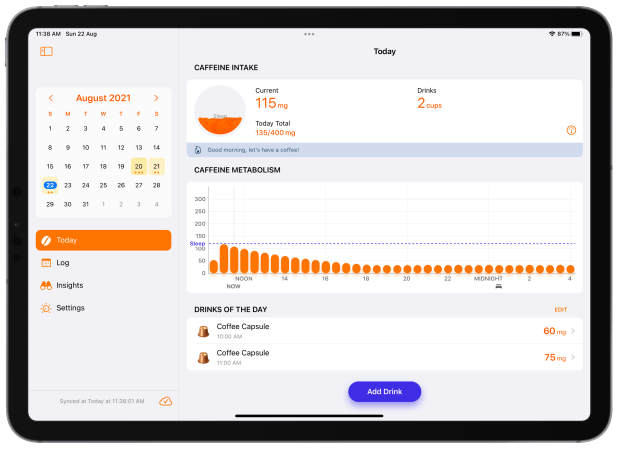
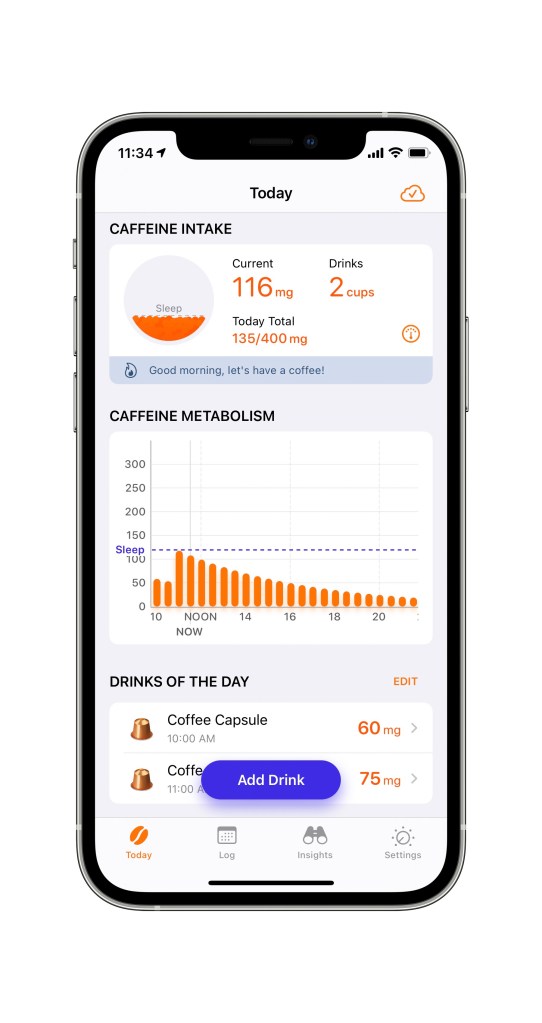
    • I drink coffee daily, and at night I think about waking up the next day so I can drink coffee again. This Friday’s App Store refresh highlighted an app called HiCoffee, which tracks your caffeine intake, visualizes how much is in your system at any time, and whether it’s at risk of disturbing your sleep. For those who remember Jawbone’s wearable UP trackers, they used to have a complementary app called UP Coffee that did something similar (The Verge). Despite my miserly ways, I happily unlocked the premium functions for S$10 just because it’s very nice work. There’s a host of iOS widgets and Apple Watch complications for displaying your caffeine levels, and the built-in coffee database has info for all of Nespresso’s pods, Starbucks’ drinks, McCafe, Dunkin, and many more.
    • As if to confirm my beliefs, the universe or its algorithms then delivered me this excellent Guardian article on caffeine and its effects on the body and society. It’s got some interesting bits, like the history of coffeehouses in the UK, and the insight that maybe the rituals of consuming caffeine lend an unconscious order to how we tackle our work throughout the day, ebbing and flowing between focused and creative work as it wears off.
    • Prompted by a friend’s reports of how well their investments in the Luna token were doing, I looked into the Terra ecosystem out of Korea and was impressed by its vision — insomuch as someone with little background in economics can certify a financial flywheel logical and brilliant. I don’t know what I don’t know, but it sure looks good to me.
    • The universe struck again and I found myself out to Korean BBQ the next day with some colleagues, where we drank a beer called Terra. Afterwards realized it was my first time eating out in more than a month: dining out was forbidden back in July, and then full vaccination became a prerequisite for entering restaurants, and Kim only recently got her certification. The initial moments were a little disorienting. As many have already observed, you can indeed forget how to sit across from a group of people and eat together. Thankfully, I didn’t know I missed it till now.
  • Pebble Time Steel: First Impressions

    Pebble Time Steel: First Impressions

    As a user of the first-generation Pebble since last December, I eagerly ordered the new Time Steel model when it hit Kickstarter earlier this year. And then the Apple Watch went on sale in Singapore earlier than I’d expected it to, and that’s a whole other story about my irrational spending.

    Fast forward to the present, and my new Pebble has arrived! But I’m probably selling it!

      
    Let’s open this shipping box up.

      
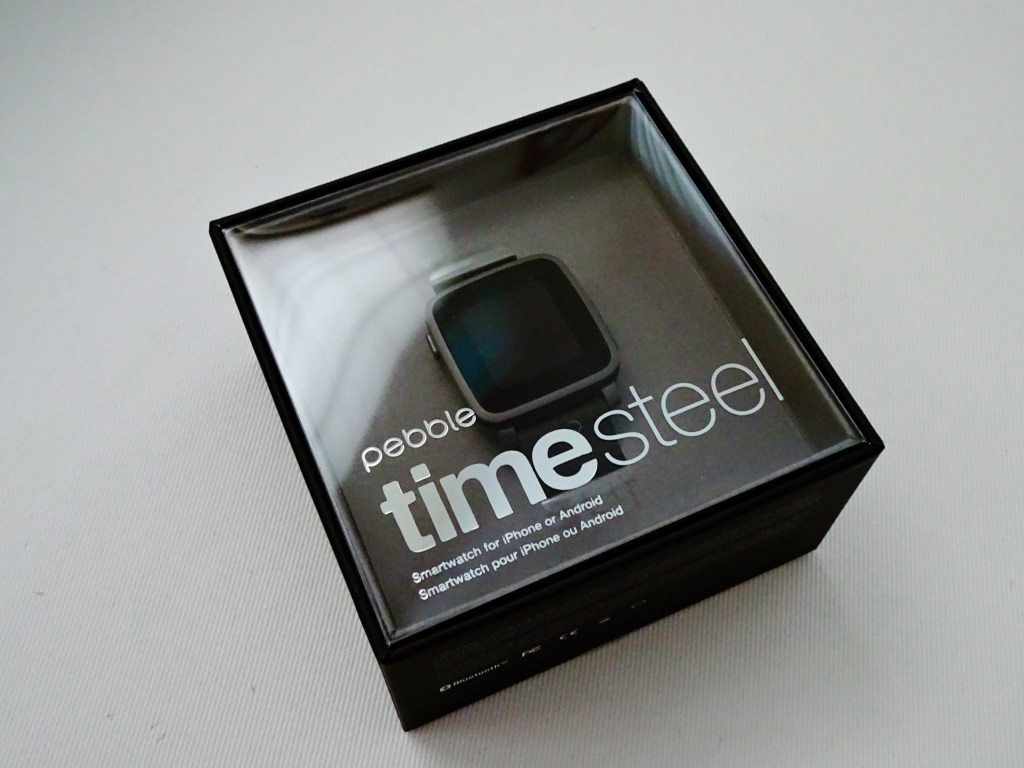
    There’s the Pebble Time Steel (which ships on a genuine Italian leather band, this one’s a gunmetal gray body, so the band is a matching gray/black), and a separate box containing the steel link bracelet in gunmetal. As a Kickstarter edition, it comes with both. With the retail model, the steel bracelet will be sold separately for US$50.

      
    Previous Pebble watches have had pretty lackluster packaging, so this is quite a step up. Look at that display box; it’s good enough to be sold on the accessory shelves of an Apple Store, except they won’t be.

      
    Here’s the back of the box with a list of standout features. Of course, the main improvement to the hardware is a new color e-ink/e-paper display. It’s always on, unlike the Apple Watch’s, so you can glance at it any time over the 10 DAYS that its battery will last, and know the time or your latest notification, without having to raise your wrist or press any buttons. It’s got a microphone now, which is useful for Android users who can dictate responses to messages and emails. It’s slightly less useful for iPhone users. And of course, it’s still waterproof to 30M. I don’t think anything else is.


    Here it is next to my Apple Watch on the right. The watch case is very slightly smaller than the Apple one, and is also gently curved on the underside to sit neatly on your wrist. In that regard, it’s very nice and possibly more comfortable and natural looking on the wrist.


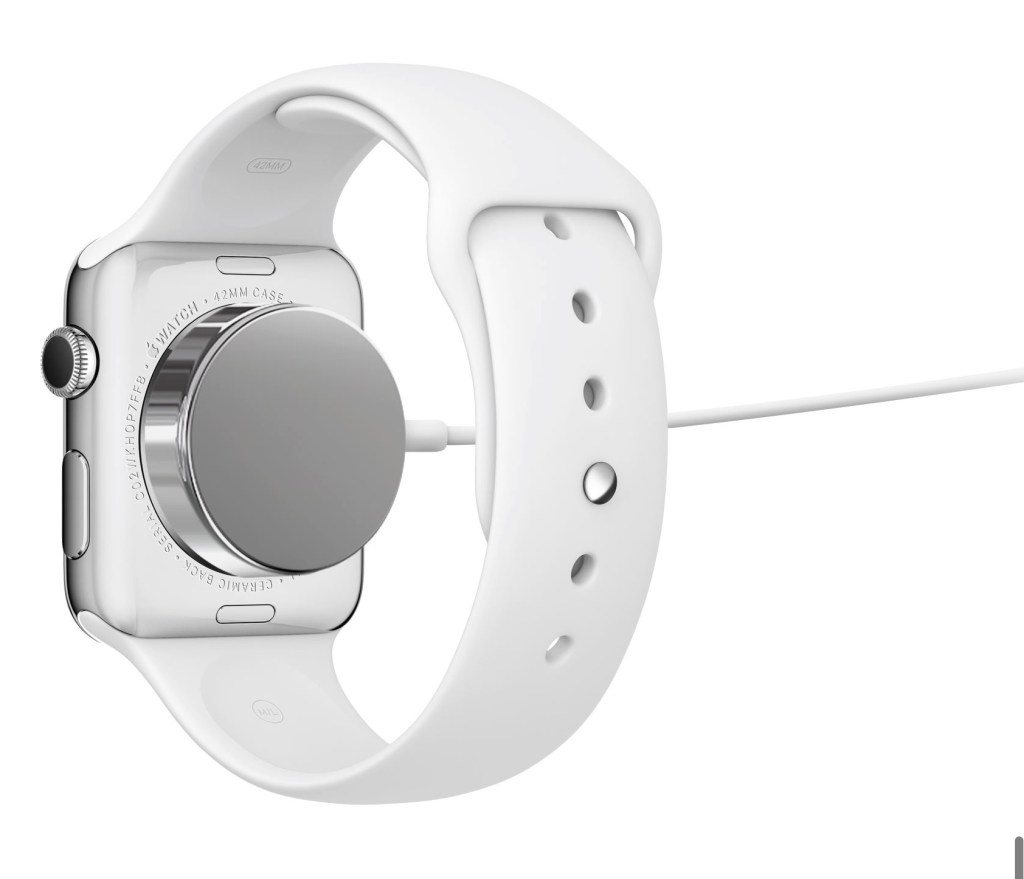
    Here it is all set up and charging via a magnetic cable attached to the back. Nothing as sexy as Apple’s inductive charger; this one only uses magnets to draw two magnetic points to their respective spots. It works.

    As you can see, the e-paper display shows colors even when not lit, although they’re not as vibrant as you’d see on a printed page. The sun icon has a mild yellow to it, and blue shows up very well. In direct sunlight, it looks crisp and strong, and is easy to read. Indoors, it can be a little muddy and dark, perhaps a touch dimmer looking than even the original Pebble. A backlight comes on when you press a button or flick your wrist. This also looks dimmer than I remember the original Pebble being, but perhaps I’ve just been spoilt by the Apple Watch’s super bright and colorful OLED display (which wantonly consumes more power in a day than the Pebble Time Steel does in 2 weeks).


    Here’s what it looks like on the wrist (thanks to my dumb use of a wide-angle lens, the watch looks larger here than it is). I wear a 42mm Apple Watch and it looks smaller than this, and as shown above, the Pebble is even smaller than Apple’s. So if you normally wear a 38mm Apple Watch, this is probably what the Pebble Time Steel will look like on you.

      
    Here’s a more accurate shot, this time with an imitation Casio watchface complete with Timex Indiglo color scheme. That statement alone tells you who the Pebble is aimed at; you have so much opportunity to customise the face of this. Many of the color faces I saw let you specify the color of every element and make your own themes. It strikes me as the sort of thing some people jailbreak iPhones or choose Android smartphones to be able to do. I’ve decided I’m not that person these days, so I’m probably going to sell it. But the build quality is solid and the leather strap is really quite soft and lovely. It’s a real improvement from Pebble, and if they can get the cost down, it might work out.

    Oh, the new software works as advertised, but without using it for a few days, it’s hard to say how useful seeing your apps and events laid out on a timeline is. On paper it sounds like a great idea and it was one of the main reasons I ordered this at the time. Apple’s watchOS 2 is also going to have something along the same lines with its Time Travel feature, so I guess it doesn’t matter what platform you eventually choose — we will all soon be consuming time-sensitive content on our timepieces using contextual timeline interfaces.*

    *Did it strike anyone else as odd that after Pebble showed their hand with Timeline on Kickstarter, Jonny Ive or someone on his team dropped a casual interview comment that they had tried a similar concept in an earlier prototype of the Apple Watch, but it didn’t work out? And then a few months later we see Time Travel as one of the key new features of the next watchOS?

  • Apple Watch Numbers and Ive’s Materials

    Back in December, I wrote a bit of a rambly post about what I thought might happen with the Apple Watch, and the possibility of it having hardware you could actually upgrade to preserve your precious metals investment. I’ve since changed my mind on that, and think they’ll be replaced like any other Apple product: buy a whole new one if you want it. I also had a prediction about how many they’d make:

    In terms of mix, I’d wager an approximate 60% Sport, 30% Apple Watch, and a maximum of 10% Edition in the first year. At the prices above, the 10% sales of Edition watches will probably drive half the overall revenue.

    The Wall Street Journal (paywall) has just reported some numbers, and my guess was pretty close. They’re saying Apple will have up to 6 million units ready at launch. iMore has reprinted the breakdown:

    The report suggests that half of the production run is for the entry-level Apple Watch Sport, which will be priced at $349. One third will be the stainless steel Apple Watch. That would leave the remaining one-sixth of the production run — which comes out to around 850,000 units — for the gold Apple Watch Edition.

    If you’ve been active online today, you would have seen (and hopefully made time for) the New Yorker’s epic profile of Jony Ive. Many of the insights are new, and the writing is kinetic and marvelous, with gems like this one about Ive having an opinion about iOS’s skeuomorphic design, and eventually becoming involved in making it over:

    He’d had that conversation with Jobs. “He knew, absolutely, my views,” Ive recalled. “I’m not going to second-guess what he would have done if—had he been well.” I asked Cook if, after he became C.E.O., Ive had pressed for a software role. “We clearly spent a lot of time talking about it,” Cook said. “And I think it became clear to him that he could add a lot.” Ive’s career sometimes suggests the movements of a man who, engrossed in a furrowed, deferential conversation, somehow backs onto a throne.

    Or this one, which credits Ive with suggesting the new sputtering lightsaber effect in Star Wars: The Force Awakens to JJ Abrams at a dinner party. For the record, I think it’s a brilliant update which gives the business end of the weapon more heft, more fire and laser menace. Ars Technica has a debate in the comments section.

    After the release of the film’s first trailer—which featured a fiery new lightsabre, with a cross guard, and a resemblance to a burning crucifix—I asked Ive about his contribution. “It was just a conversation,” he said, then explained that, although he’d said nothing about cross guards, he had made a case for unevenness: “I thought it would be interesting if it were less precise, and just a little bit more spitty.” A redesigned weapon could be “more analog and more primitive, and I think, in that way, somehow more ominous.”

    If I wasn’t already sold on the standard Apple Watch (as opposed to the Sport and Edition versions) as my choice this coming April, this paragraph of remarks by two members of Ive’s design team present at the unveiling event would have done it:

    “The materials in this thing are insane,” Howarth said. People, he noted, were saying that the watch’s face was made of “sapphire glass”: “It’s not glass, it’s sapphire crystal—completely different structure. And then the stainless steel is super-hardened. And the zirconia ceramic on the back is co-finished with sapphire as well.” He added, “This would cost so much money if a different company was making it—Rolex or something. It would be a hundred grand or something.”

    “We sell it for just fifty thousand,” Hönig said, joking.

  • New Power Generation

    New Power Generation

    The rumors about Apple switching from MagSafe to USB-C as a charging port standard are starting lots of conversations, and my own reaction to hearing that was “What? Why?”. But when I think about it, I really like that I can charge almost everything in my bag via microUSB these days, regardless of brand and manufacturer. My Sony camera and PS VitaBeats noise-canceling headphonesJawbone Bluetooth headsetLogitech UE portable speaker. Last I remember reading, the EU had mandated mobile phone makers use a common charging standard, and Apple got around it by supplying a microUSB-to-Lightning adapter for iPhones.

    And while Lightning is a great improvement upon microUSB that no one else would have made, the benefits of keeping just one cable in your bag for your power bank can’t be overstated. Less to lose, less to keep organized in a pouch or whatever, and less clutter on your desk when plugged into a charger. The main exceptions in my daily life apart from Apple devices are my wearables (UP24 and Pebble); for obvious waterproofing and form factor reasons they went with proprietary designs. The Apple Watch will probably replace both of them for me, but I’m not looking forward to buying and carrying a second conductive charging thing for it. They don’t look small, cheap, or durable.

    Disclaimer: This somehow became a gear post, so I’ve added Amazon affiliate links to see what happens. These are all great things to buy!

  • Thoughts on Apple Watch’s Pricing, Upgradability, and Luxury Positioning

    Thoughts on Apple Watch’s Pricing, Upgradability, and Luxury Positioning

    Neil Cybart, at Above Avalon on Apple Watch’s Secret Weapon:

    Several luxury watchmakers have given hints that they think a smartwatch’s lack of timelessness guarantees traditional luxury watches will not be threatened by this new crop of wrist gadgets. I’m not so sure that logic will stand the test of time.

    The discussions to come after the Apple Watch arrives and sells in numbers (and at prices) alarming to existing watch brands will be focused on luxury as a notion in flux, affected for the first time by technological utility in the form of personalization. Valuing features over the intangible lies in opposition to the definition of luxury, but the wrist may be where the two worlds come together. After all, you can only wear one watch at a time, and a smartwatch’s absence from one day to the next is glaring once its features have become habit. Apart from providing large margins for Apple, the Edition watch exists to allow luxury watch customers the  benefits of a smartwatch. It opens the door of their resistance a crack, but won’t debut in a position to steal meaningful profit share, which is the real danger to a complacent luxury watch industry — it’s a time bomb with years on the clock.

    The post concludes with the suggestion that a hypothetical $7,500 Apple Watch Edition will not be designed to last long; predicting that it will not be upgradable as some have suggested it needs to be. In other words, its class of buyers (inference: rich, Chinese, digitally savvy, all of the above) will get a new one every few years despite the price. Despite being made of solid gold, you will not buy one as an investment or potential heirloom.

    I don’t think Cybart backs up this assumption very well, leaning largely on the cottage industry that has sprung up around customized gold and wood iPhone 6es, but I am inclined to believe in the same outcome: success whether Apple Watches are upgradable or not, although my personal preference would be for upgradable, owing to the size of my wallet.1

    That they’ve announced the opening price of an Apple Watch Sport at $349 signals a belief that it will be a significant mass market seller, regardless of its sporty positioning. A large group of people will choose the Sport version because they want an Apple Watch/are curious, and it’s simply the one within their reach. If the price difference between the Sport and the standard model were relatively insignificant (say, $349 vs. $499), they would probably have announced the standard pricing too. That they didn’t, could suggest a belief that pricing is less relevant in the decision making of Apple Watch and Apple Watch Edition customers.

    My guess is that the standard model will be in the range of $800-1200, possibly upgradable for at least one future generation, and the Edition model will be easily upwards of $8000 and upgradable as well. As a point of differentiation, I expect the Sport models will not be upgradable.

    I’d like to believe that the straps and their locking mechanisms are also designed to be used for many generations of Apple Watch, which would mean dimensions such as the thickness of the case will be stable for years, but we’ve seen Apple revise accessories/standards without hesitation if it means allowing a better product to come to market. Hence, I wouldn’t be surprised if a third-generation Apple Watch mandated all new straps.

    In terms of mix, I’d wager an approximate 60% Sport, 30% Apple Watch, and a maximum of 10% Edition in the first year. At the prices above, the 10% sales of Edition watches will probably drive half the overall revenue.

    But I could be wrong about upgrades. In conversation about this a few months ago, as part of an office podcast we’re still trying to get off the ground, I recall speculating that the Chinese luxury factor could be bigger than anyone expects right now. It’s well known that tens of thousands of dollars are nonchalantly dropped on leather bags and other so-called Veblen goods on a regular basis by Chinese customers, and this no doubt includes timepieces costing 10x more than Apple would ever charge for an Edition watch. If the Edition series was expressly designed to take advantage of conspicuous consumption in China (in volume, followed by the rest of the world), then we’ll see it when they announce that the watch cannot be upgraded, and is inherently disposable. What’s flashier than wearing a gold watch that says you can afford to get a new one every year or two?


    1. As I understand it, the recent release of WatchKit details suggested that almost all processing in Watch apps will take place in the CPU of the companion iPhone, not the Watch’s S1 processor. But in a release of the software scheduled for late 2015, the Watch will gain the ability to run native apps. The delay may be down to the software not being ready now, although the shipping hardware may already be equipped to handle it. But it’s hard to believe this later update won’t lead to a degraded experience such as shorter battery life. Having the option of bringing a new and expensive Apple Watch in for a relatively low-cost hardware upgrade in early 2016 seems like a fair proposition. This could mean an annual tech refresh cycle, but a biennial hardware (body) cycle. 
  • Still Living UP

    It’s been a month since I bought my Jawbone UP band, and since then I’ve incorporated a lot more walking into my life, trying to reach my goal of 8,000 steps a day. By my estimates, I probably averaged half of that before, since a lot of my time is spent at a desk, and commuting to and from it in cabs and public transport. Most days now, I do 8,000–10,000 by walking halfway home in the evenings.

    I just weighed myself, and I’m back to the weight I remember being for quite awhile, up until the last couple of years when I’ve felt fatter and slower. The difference is about 3kg, not a lot, and I’d like to lose a few more kilos to get my BMI in the sweet spot.

    What surprises me is how painless it’s all been. No grunting at the gym, or aching all over in the morning. Just being mindful of how much movement I should be making each day, and going out of my way to walk more. Low-impact, sustained exercise. I listen to podcasts, new music on Spotify, or think about things along the way. I get some air, and take the occasional photo (below) if I see an interesting scene. It’s great.

    IMG_7565

    Okay, I guess I’ve also been slightly more mindful of my caloric intake, thanks to the food diary feature of the UP app. I haven’t denied myself anything reasonable, and so there’s no need for “cheat days”. I’d consider my eating habits to be 95% the same. Still, it probably helped?