
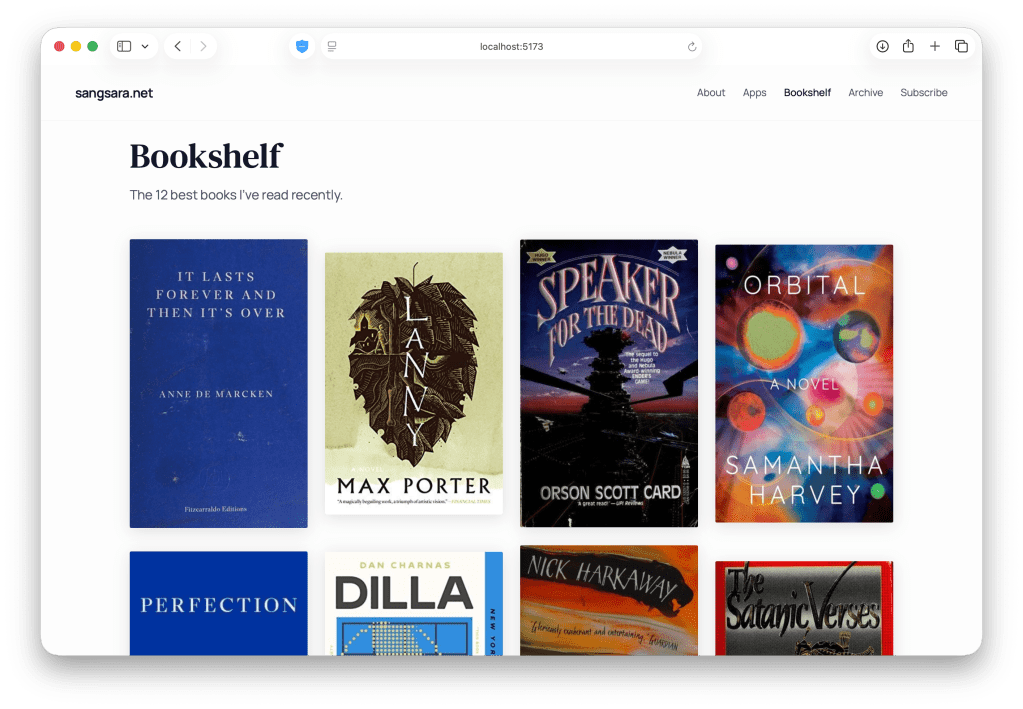
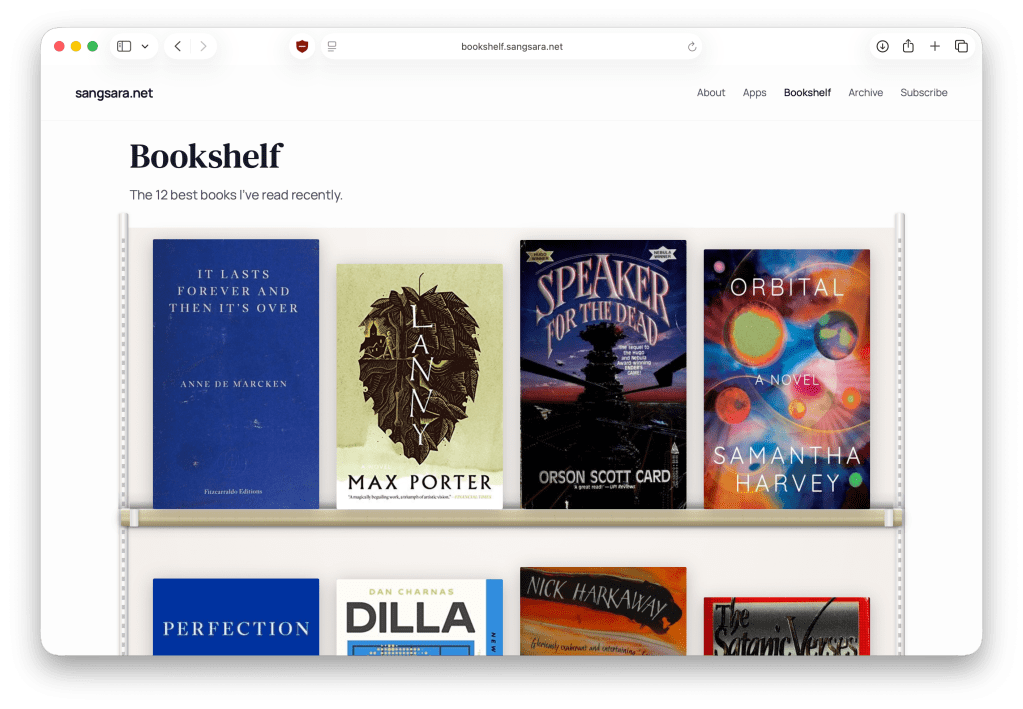
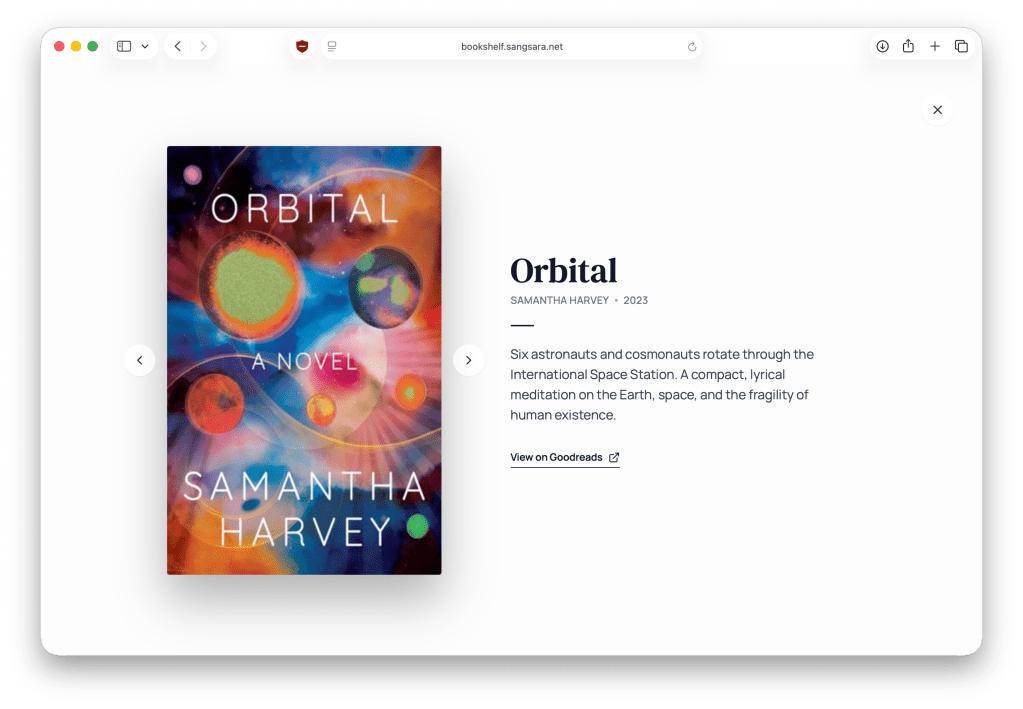
Shelf Expression is the system I use for bookshelf.sangsara.net. It produces a responsive microsite displaying a shelf of up to twenty books, with cover art and synopses automatically pulled from online sources. It supports linking out to Goodreads for more information. It offers a choice of two themes: Minimal, with a simple grid and subtle animations; and Vitsoe, with a skeuomorphic shelf and playful “pick up” animations.
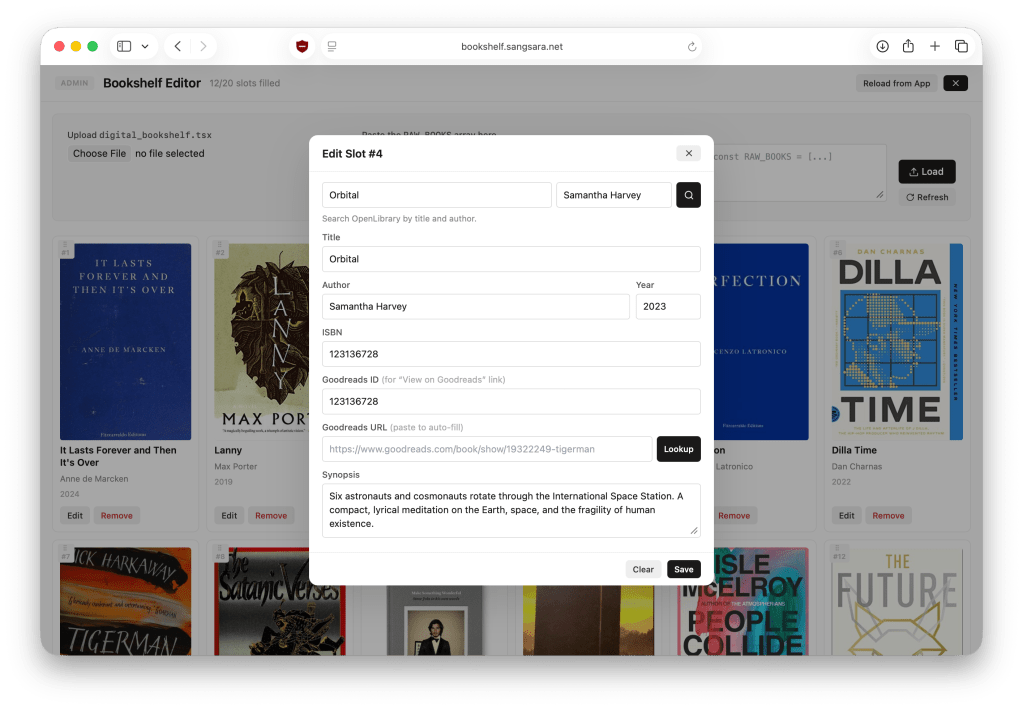
You can use it to add a curated page to your personal site — recommendations for visitors (like I’ve done), a personal bibliography, or maybe a book club’s seasonal reading list. It is ready to fork from GitHub; if you use an agentic coding tool, point it at the repo and have it adapt the header and navigation for your own site. There is also a built-in tool (Shift-Ctrl-U) for updating the book selection without having to write any code.
You may optionally supply Google Books and Gemini API keys to prevent rate limiting and summarize retrieved synopses.
Shelf Expression is free for non-commercial use. Credit is appreciated but not necessary, though I’d love to hear from anyone who uses it.
- Release history is on GitHub
- v1.0.0 to 1.0.6 — Bug fixes, switched from Gemini to OpenRouter for AI summaries, enhancements to asset loading/caching
- v1.0.7 — Sharing feature added to admin tool, which creates social media-ready collages of up to 12 books.
 sangsara.net