Every morning, everyone on the planet wakes up to the same handful of words. Drag them around the canvas. Arrange them into something — a poem, a phrase, a punchline, a prayer. Save it to show your friends, then come back tomorrow.
No scores. No wrong answers. Just you, today’s words, and whatever you make of them.
How it works
New words drop at midnight in your timezone. They’re a mix of nouns, verbs, and adjectives, enough to build something with. There’s a bin in the corner where you can drag unwanted words to, freeing up some space. You’ll also find a few connector words stashed in the bin every day to help you create your masterpiece. Tap words once to make them bigger. When you’re done composing, click the Share icon to save an image with the day’s date.
Three themes
CommonVerse comes dressed for the occasion.
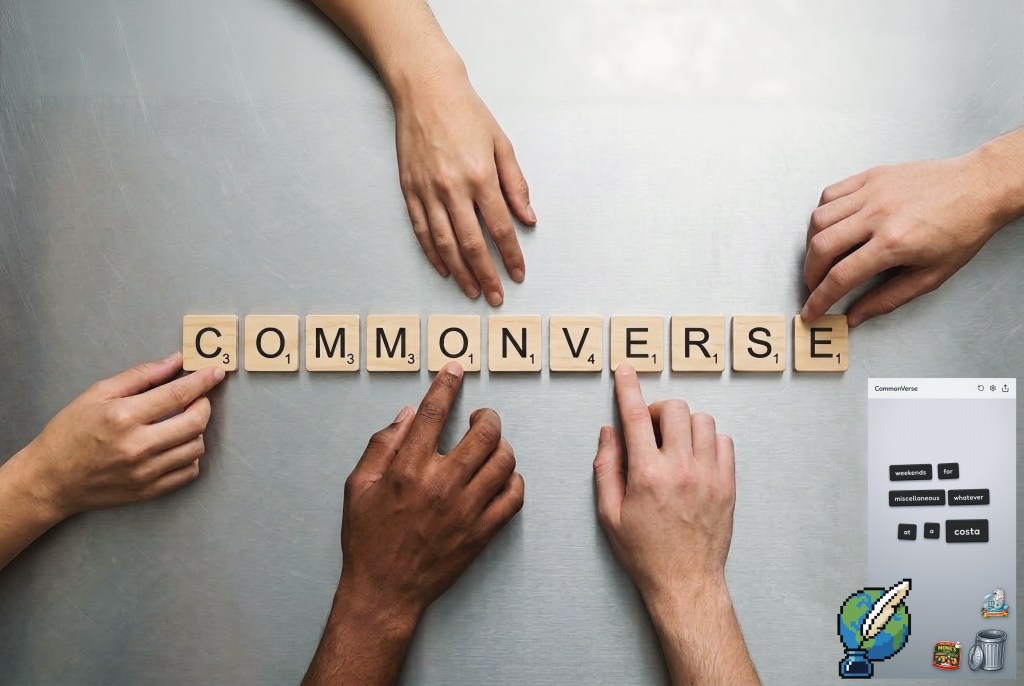
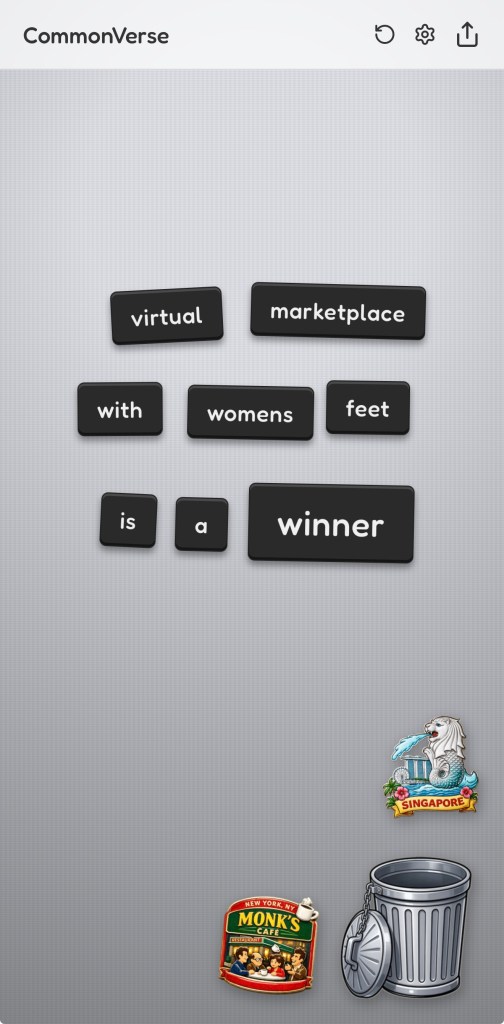
Fridge Magnets puts you in front of a stainless steel door covered in letter magnets and a few decorative surprises.
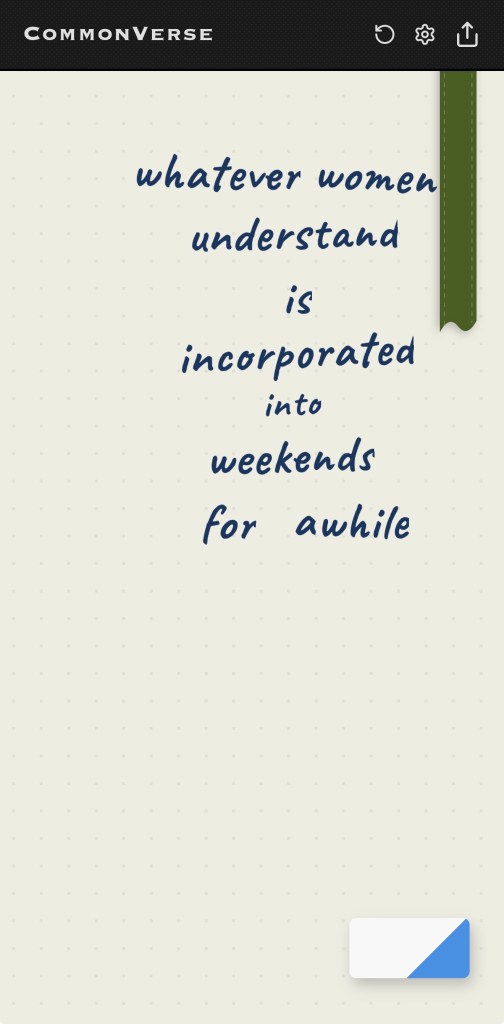
Notebook gives you dot-grid ivory paper, a bookmark ribbon, and a handwriting font.
Typewriter goes analogue all the way — classic typeface, paper bail, wire mesh bin.
Everyone gets the same words each day. What will you do with them?
If you thought I was going to stop after last week’s two apps, I wouldn’t blame you. I’ve been having poor luck staying focused on new hobbies and pursuits over the past year; they all just seem like too much work for too little payoff and I drift off. Vibe coding seems different so far because it lets me start making weird things that I want to see, without being dependent on anyone else’s time or generosity.
If you think in terms of music albums/careers, then Collagen was the mixtape that I put together to see if I could be a real musician. Urban Jungles was a big leap forward, the debut album, if you will. It had way more polish and was usable by almost anyone (whereas Collagen had what you might call a niche audience).
Which brings us to the sophomore curse or slump. The second album tends to be over-ambitious, myopically conceived, and underwhelms audiences looking for more of what made the debut good. There are exceptions to this mythical rule, like Radiohead’s The Bends, Lorde’s Melodrama, and D’Angelo’s Voodoo. By this logic, my next app was statistically going to “fail” by being a harder one to get into.
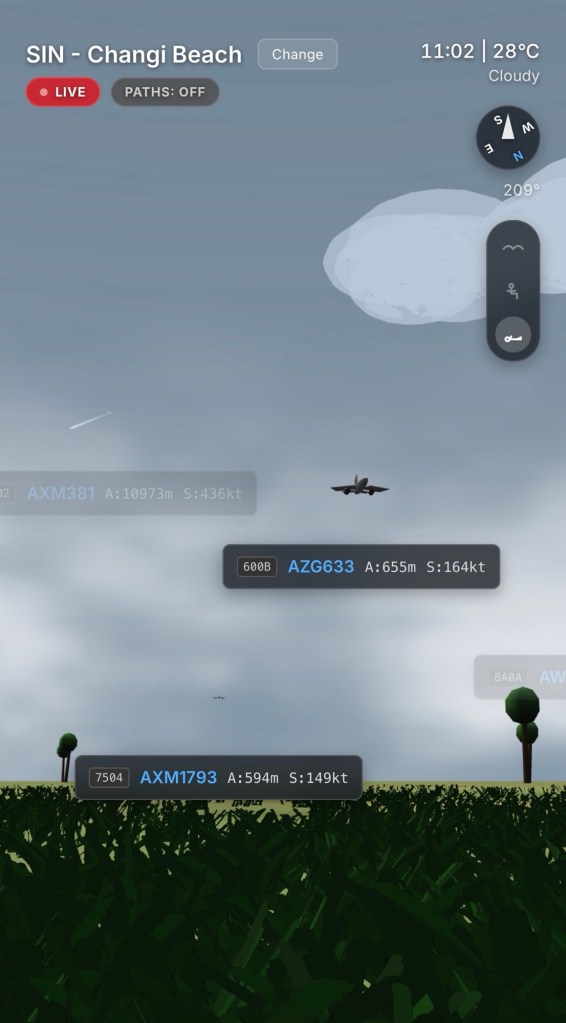
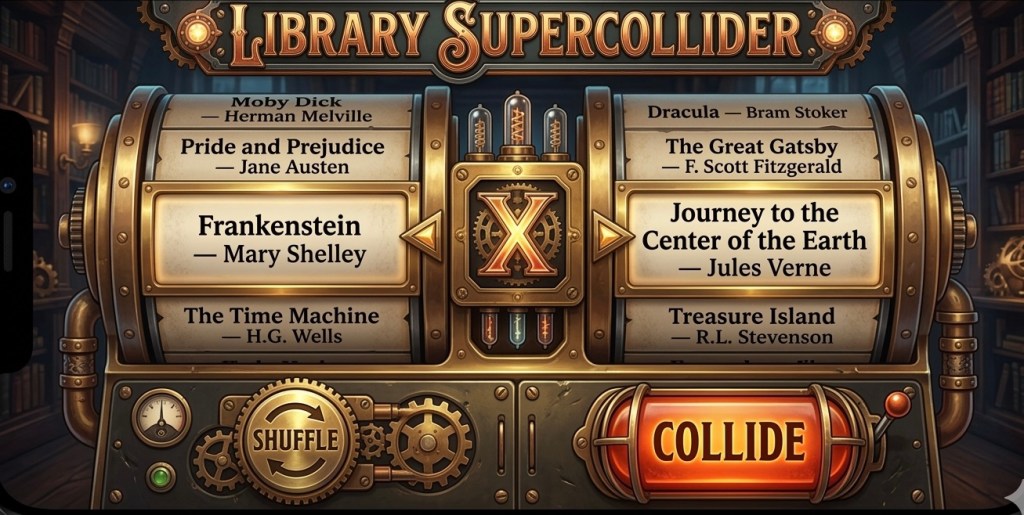
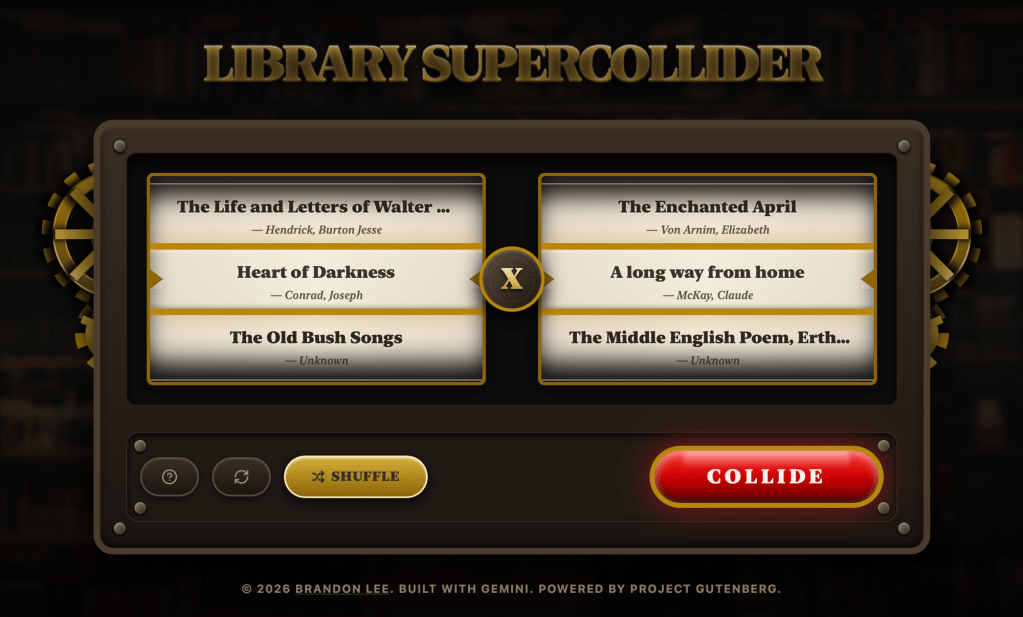
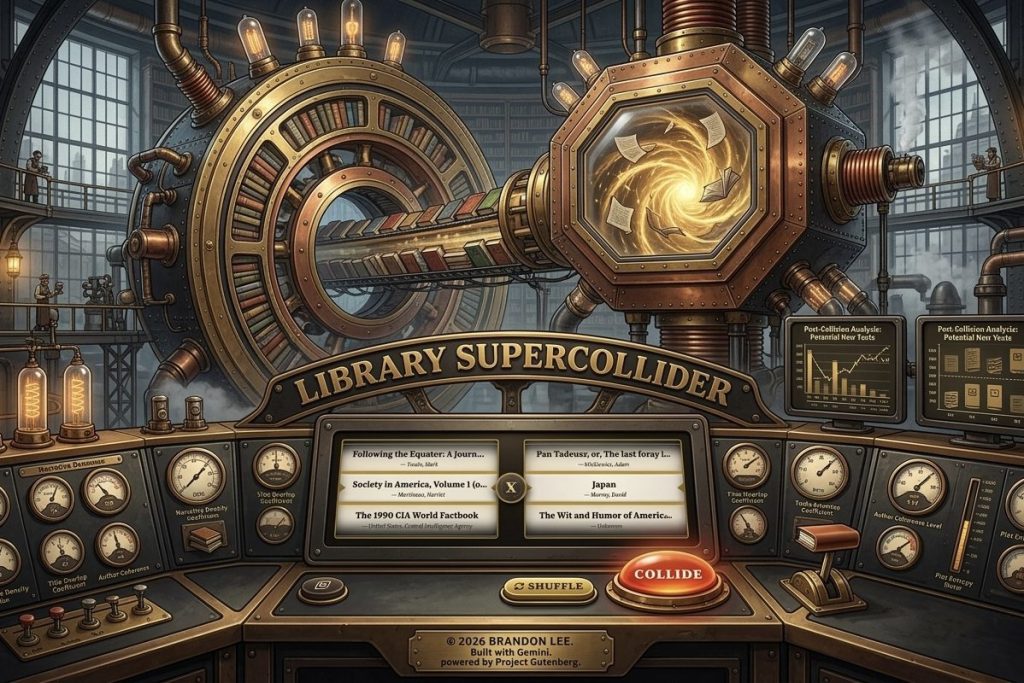
I ended up making two apps again this week: SkySpotter and Library Supercollider. Each one has a separate page on this site that shows and explains what they are, so you should stop here and go read them before coming back.
Concept vs. Product
Like a sophomore album, SkySpotter probably reached a little too far. It took the real-time weather data angle from Urban Jungles, added the more complex dimension of real-time air traffic data, and then threw in rendering a first-person 3D world as a bonus challenge. I started refining the concept and prototyping it on Sunday afternoon, and then worked on it for two full days on Monday and Tuesday. I literally forgot to eat lunch, and was still messing with it at 11pm both nights. It was like a job.
Gemini 3 struggled. The Canvas chat became so long and convoluted that it won’t even load now in the iOS apps — I have to use the web interface. It hallucinated making changes, and introduced new bugs each time I made an improvement. It built planes with reversed wings and nose cones pointing backwards. Working with bugs in a 3D app was so blood-boilingly frustrating that I wanted to give up.
I actually did give up… on implementing a VR mode for Apple Vision Pro. We got it to half work but the skybox sphere was too far away and would keep turning black. Rather than risk corrupting the working regular version any further, I decided to cut it.
I’m proud of SkySpotter because it’s pretty damned cool to lie in the virtual grass and watch real planes go by. Even as someone who doesn’t care about planes more than the average person! But it was a technical challenge first and a passion project second. So if that was my over-produced sophomore studio album the label breathed down my neck for, then the next release would be its opposite: a scrappy, self-funded back-to-roots project recorded directly to tape in a Nashville studio over an inspired couple of days.
Concept vs. Product
Library Supercollider was an idea that came to me all of a sudden after I’d finished SkySpotter. I’d been interested in the concept of cut-up poetry since I was in university (popularized by Brion Gysin and William Burroughs around the 1960s), and I believe it occurred to me back then that someone could make a computer program to cut up and mash two classic texts. I just didn’t know it would be me, twenty years later.
I expected it would take me the next couple of days to get working, being that it requires the somewhat complex-sounding downloading and processing of entire ebooks in the background of a web app. I didn’t know if it could even be done. So imagine my surprise when I had a working prototype by lunchtime on Wednesday. But between polishing the experience and overcoming download limits with Project Gutenberg servers, I wouldn’t be done until Saturday morning, making it a longer project with different challenges — comparatively less frustrating, more educational.
I understand that it’s not an app for everyone — you might read a page and conclude that it’s worthless gibberish. Maybe it takes the sort of person who likes abstract art and free jazz. But personally I’m so pleased with this project that I’ve bought two domain names to go with it: librarysupercollider.com and the superior smashmybooksup.com, which I’ll retain for a year as a ‘marketing URL’.
In all seriousness, I think this is the finest work of my two-week career as a builder of software! The user experience for remixing and reading the resulting texts is brilliant, if I do say so myself. The steampunk UI and animations are completely unnecessary but bring me joy (notice the moving gears in desktop view). I had to come up with caching and proxy solutions to make the app more reliable under load. I even got a little into the weeds: installing node.js and Vite on my Mac, running scripts in the terminal, trying to compile a macOS port to get around problems (eventually unnecessary).
Even if I were a skilled and experienced developer, I can’t see how I would have made these apps in two weeks; from writing to designing and coding them up, plus preparing documentation and website copy (plus one very dubious video ad). Deploying Library Supercollider to its own domain made the reality click for me, a feeling kinda like publishing your first thing on the App Store. It says: this thing is now real and can be used by real people.
Then I came across this article in the NYT Magazine, entitled “Coding After Coders: The End of Computer Programming As we Know It”. It notes an interesting inversion of what we’re seeing in other fields — AI is taking away the drudgery of programming and leaving the human, soulful (and fun) parts.
“The work of a developer is now more judging than creating.”
In that way, I may not have magically joined the ranks of coders overnight, but I could probably say I’m developing. At my job, I used to direct the form of apps in a way so removed that I could only claim the role of design, but not the larger making. Part of the handwringing in design circles today is precisely about how designing and developing are merging, and soon only making will remain.
Not everyone will bother to turn their ideas into reality, and fewer still have the experience and vocabulary to prompt polished apps distinct from the models’ averaged-out defaults, but those who persevere will be bringing tools and toys into existence the likes of which you may have been waiting decades to see.
What’s next? Well, I might have a couple of ideas…
—
One thing all this app-making has done is bring me back to my Mac. I usually spend most of my computing time on my iPhone and iPad, but there’s no substitute for a Mac when it comes to managing local files, running scripts and compiling code. I’ve had coders like Michael make this point to me before, but I never got it because I never needed to sync a local repo with GitHub or anything before.
So a side effect of spending long stretches of time on my five-year-old and long-neglected M1 MacBook Air is that I’m wondering “Why did I ever stop? This thing is great!”
It’s worth noting that this week Apple’s newly released MacBook Neo has been getting a ton of praise on my social feeds for being an affordable and all-round capable machine at an unbelievable $599 price point. I got a tear in my eye as I read this essay by Sam Henri Gold: “This Is Not The Computer For You” — it perfectly encapsulates what it was like to grow up on computers and teach yourself things, even on PCs.
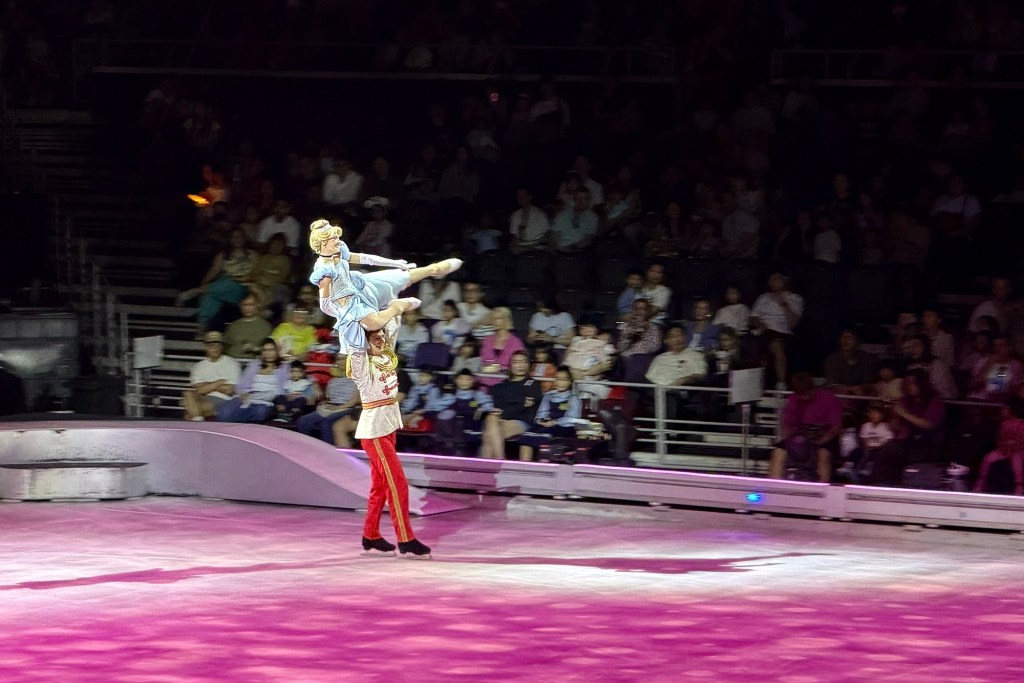
Too much screen time is awfully bad for you, so on the weekend I touched some metaphorical grass by taking our niece out to Disney on Ice at the Singapore Indoor Stadium. It’s extremely well-timed, with the world still coming down from Alysia Liu’s gold medal, and Singapore being in the midst of a Disney craze — a Disney Cruise offering has launched after delays and is now at the local docks, with fireworks and drone shows along the bay at night.
These were Live Photos of some stunts
I have no deep affection for Disney IPs but appreciate the amount of effort and coordination that goes into making magic, and it clearly works with so many adults into this stuff. What’s interesting is that while ice-skating can get pretty boring after awhile — it’s all the same moves over and over, around a static rink — adding a layer of characters and storytelling works to keep it fresh over an hour and a half.
Oh, and our niece is 9, and by way of introducing her to the MacBook Neo, I asked her what computer she uses. I swear, her response was not far off the punchline in that Apple ad that everyone but me seems to hate, in which a girl who’s been using her iPad all day for creative things is asked what she’s doing on her computer, and she responds “What’s a computer?” Will iPads become open enough to support kids learning to (vibe) code? Or will nature heal in a post-post-PC revival led by the MacBook Neo? In any case, that ad was prescient.
Bonus: Steve asks the same question in a different context (around 1:30). You must watch this video, it’s breathtaking. He’s 28 at this point. In addition to confidently describing things like Street View, mobile wireless computing, LLM chatbots, and the App Store, there’s a part near the end where he says “What we need to do is get away from programming. People don’t want to learn programming, they want to use computers.” He was talking about providing more finished software products to customers, because writing custom software was the norm then, but it’s an eerily relevant quote!
In 1959, William S. Burroughs took a pair of scissors to a page of text, rearranged the pieces, and taped them back together. His argument was that linear language was a control system — that by cutting it up, you could slip between the lines and find what was actually being said. Library Supercollider is the logical conclusion of that idea, scaled to over 10,000 books from the Project Gutenberg archives. CERN could never imagine.
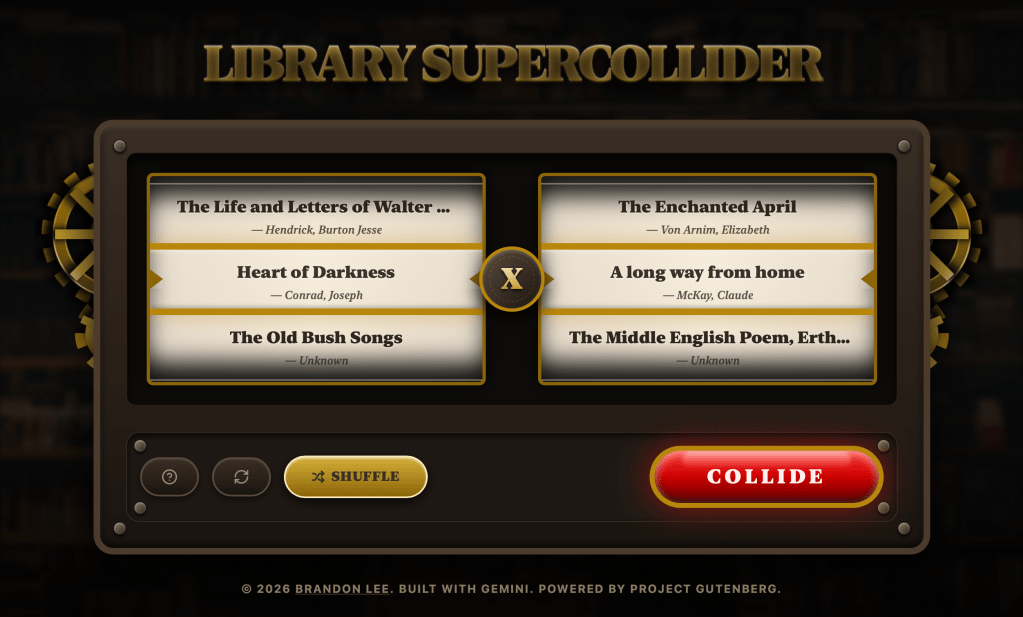
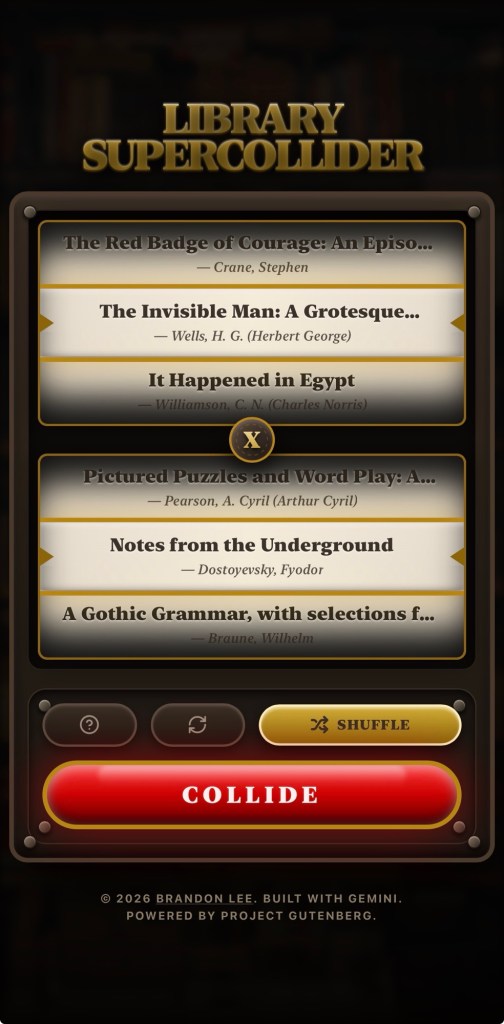
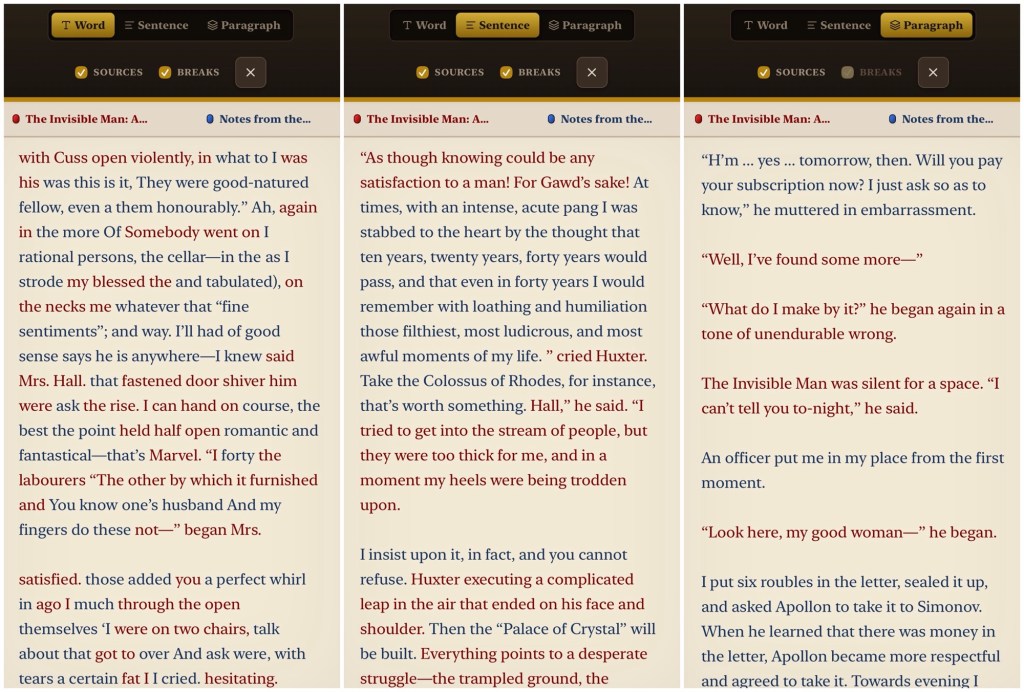
Pick any two public domain texts and collide them. The engine samples a selection of pages and forces two authors who never met into a shared narrative space they never consented to. How it’s taped back together is up to you:
Paragraph level: Preserves some structural dignity.
Sentence level: Grammar survives, but sequence does not.
Word level: Sweet, nonsensical poetry.
A source tracking mode colour-codes the wreckage by origin, in case you need to know who to blame for a particular sentence. The interface is intentionally a slot machine, and what emerges is not literature, exactly. It is also not not literature — which puts it in good company with many award-winning books! Burroughs believed the cut-up revealed hidden structures beneath the surface of language. Library Supercollider gives you the tools to find them for yourself.
Desktop viewMobile viewMobile reading view with three modes
And just because I had some time and Veo credits to spare, I thought I’d try my hand at making an over-the-top video ad to show it in motion on social media. Which meant a portrait video. Definitely stepping out of my comfort zone here.
Disclaimer: I made Library Supercollider with the help of Google’s Gemini 3/3.1 Pro LLM. The authors of Project Gutenberg’s texts were not consulted, but they are hardly in a position to object.
Merry Christmas! For my main gift, I received a turntable, something that I’ve been very conflicted about wanting for awhile. Apart from the fatal hipster embarrassment, I know that the urge to repurchase all my favorite albums on vinyl is a road to financial ruin.
Back in February, I was on the lookout for a CD player to bring home from Tokyo, but decided against it because digital streaming is identical, if not superior in the case of lossless and Spatial Audio, and I couldn’t see many instances where I would bother to get up and pop a CD on instead of just call out a request to my HomePod. And HomePods don’t accept Bluetooth or line-in audio, so I’d have to use my Sony soundbar or buy a third speaker for the living room. Too much hassle!
But vinyl, goddamnit, just barely dodges the killing blow of that logical argument by having a different value proposition. One, the physical LPs are more collectible, more beautiful, more mentally stimulating in a world that wants to turn itself into ephemeral bits. People say that intentionally putting on a record for close listening deepens your connection with the music over just tapping a link. Two, the audio characteristics of an all-analog reproduction chain are surely different from digital. So if you can, why not have both options for home enjoyment? Three, it’s just kinda cool?
So I asked Santa for an Audio-Technica LP70X, which has the option of Bluetooth output. I briefly considered buying one of those Marshall speakers to pair it with, but the idea was so cringe I couldn’t face it. Besides, that would nullify point No. 2 — why bother if you’re going to digitize it? So I hooked it up to an unused B&O Beolit 12 speaker (which has unceremoniously served as a stand for our bedroom HomePod mini for years) via RCA cable instead. Voila, money saved that can be used for buying records!
But first, guardrails were needed. I decided that I would only buy absolute masterpiece, timeless, desert island discs. No new pop/rock stuff that wouldn’t benefit much from the analog format. And that my collection would 95% focus on jazz. The exceptions are things like LUX and J Dilla’s Donuts, maybe.
After some laborious rewiring, we got it set up on Saturday and played some records that Kim bought as souvenirs many years ago. Radiohead’s OK Computer was one of them, and while I suspect much of it is down to the different speakers’ sound profiles, the analog version is bassier and warmer. When the HomePod plays a lossless digital version of the same song, it has an incredible immersive quality, so clear and bright that the band could be in the same room. A film camera versus iPhone’s computational photography. Room for both.
Anyhow, it’s been wayyyy too addictive browsing records on Amazon — and the ones that ship from Japan are usually much cheaper than the US versions. Here’s what’s on the way but please recommend me your faves!
While we’re out here talking about physical artifacts and meaningful rituals, I want to point out that this final post of the year is also the 287th weekly update on this blog. About five and a half years of regular writing — all because I started one week with no idea how long I would keep going, just the hope that it would help me to write more often than a couple of times a year. Today, this weekly blogging of things that captured my attention has become my most meaningful routine, and produces a living artifact that I find quite valuable.
Writing is thinking, and so putting time aside to articulate your feelings and actions, and reflect on the patterns within them, might be the best way to understand and recalibrate your own life. You don’t have to blog in public; journaling works too. Several times a year, I find myself reading an old post that I’d completely forgotten about, and recognize that something happening with me in the present began with something further back.
Mark Curtis, one of the co-founders of Fjord where I once worked, has just started a Substack called Full Moon with a partner, and in their latest post suggest that everyone should start a habit of “externalizing their thinking”, because a personal archive of written thoughts and ideas has new applications with today’s LLMs. Having such a corpus can be an asset, and not just for training a soulless version of yourself who goes to work for the corpos while you stay home and watch vids. One thing generative AIs do well is find patterns across large amounts of data, and so with journal entries they provide a means of browsing your own brain over time.
No stranger to this idea, I assigned Claude to read all 51 posts of the year so far, looking out for trends and threads that I might not have seen while posting in real time. What came back had a hint of that AI voice, but contained a helpful synthesis of several threads. Let me explain in my own words rather than simply paste the results.
There were several recurring themes and obsessions, for instance deaths and funerals earlier on in the year, and it linked those to some musings on age and mortality when I started to feel old around my birthday, and when I recently said I should watch my purine intake for fear of developing gout.
It suggested that I was doing something meaningful by making plans to meet up with people during this sabbatical, and that keeping in touch with ex-colleagues and helping grade college students’ presentations was part of staying connected to design culture and “keeping the ladder down”. There were also many words dedicated to creative experiments; chasing after the beauty in imperfections, from film grain to mistranslations; and of course, AI concerns.
From that overarching theme, I ended up musing about the vulnerability of the junior designer pipeline, the commercial pressure to abandon not only proven methods but our values, and the dissonance caused by being a regular user of AI tools while knowing they come at some unknown but surely high cost.
It also provided some insights into how I spent my time, calling it an attempt at presence over productivity. I certainly didn’t do any work I didn’t care about! I recall saying in Week 26.25, as I revisited my CliftonStrengths profile, that my natural inclination is to hate keeping busy and productive for the sake of it. I recently wrote something down in my notebook that sums up that energy: “I take tremendous joy in being able to do quite a few things extremely well and yet choosing to do none of them.” Perhaps underachieving is my passion.
More acts of presence: I went overseas for about two months out of the year and chose a slow “daily life” approach over hitting up a flurry of tourist attractions. I deleted a bunch of games off my backlog — if it doesn’t spark joy, I decided, then I don’t have to finish it. I fell into a Japanese curry “research” rabbit hole in the first half, and now it’s sardines. I managed to make more time for reading, and am now starting on my 52nd book of the year, which is quite a nice achievement even if some entries were short stories and novellas.
The last book I read was so good that I’m making it recommended reading for everyone who comes by here.* Make Something Wonderful: Steve Jobs in his own words is a free ebook by the Steve Jobs Archive, collecting in chronological order various speeches, emails, and interviews he gave. It’s not so much about Apple the company as it is about his views, spirit, and character that famously evolved between his ouster from that company and his triumphant return.
I read it on the plane back from China, and maybe I was coming off an emotionally taxing time, but I had to stop reading several times because my eyes were tearing up. Don’t discount the beautifully cosmic coincidence of an adopted boy landing in the right family at just the right time in Silicon Valley. The result was that the whole world now enjoys thoughtful personal computers anyone can use. In another universe where the Mac never existed, there’d probably be no Windows either, and likely no smartphones as we know them.
If you’ve ever heard him speak, you’ll hear his voice in all of these snippets. He had a way of keeping the forest in view, and often framed smaller moments (and even human life) against a vast span of time: what we’re doing here as a species, how it matters when we make things for each other, and thereby why we must carefully choose where we spend our time.
*I’ll take this year-end opportunity to say thanks for reading, whether this is your first visit or you’ve been here all along. I get messages sometimes, and it’s always gratifying to hear something was a useful tip or interesting to someone else. Happy new year!
Kim was away for work again, so I mostly stayed in and spent more time with the Vision Pro. Apple’s new VIP video series that takes you to major sporting arenas doesn’t sound like my sort of thing on paper, but the first episode on Yankee Stadium was a surprisingly entertaining watch. The crowds feel real and the only thing missing was a closeup of a hot dog. It was filmed last June, I think, and feels like a document of a much saner time. There are still many more apps and videos I have yet to check out.
Back in the present, Trump’s wacky tariff rollout drama continued, with the latest being a series of takesies-backsies that is great news for Apple and other makers of computers and smartphones: exemption from whatever the crazy current rate is on imports from China. 125%? Or was it 155%? Everyone now expects the stock to surge on Monday’s open, but come on, none of these pronouncements stick or mean anything now. The best move might be to sell all US-based assets and spend the next year off-the-grid on a beach somewhere.
Starbucks has done a collaboration with Peanuts (that’s Peanuts × Starbucks, for readers who were here last week), and of all the merch they put out, it was a yellow stoneware mug that I liked the best. It features the whole gang sitting at a long table, with Snoopy dressed as a barista and serving up espressos in his latest persona, a corporate caffeine shill stupidly named “Joe Kind”. I like Snoopy, probably on account of being exposed to the Apple TV 4K’s wonderful Snoopy and Woodstock screensaver, so I’m turning a blind eye to this sacrilege. Anyway I received my mug in the mail this week and it’s my new teatime go-to.
I did go out fairly early on Saturday morning to go hang out with a bunch of coffee nerd ex-colleagues who spent more time messing around with grind sizes than I ever thought possible (my contribution was a bag of beans fresh from Ho Chi Minh). It was a good time, and the occasion gave me a novel writing prompt to try out, which brings to me to my latest ChatGPT-based hobby…
About two years ago, when we were just grappling with the GPT-3 model and what it could do, I spent quite a lot of time trying to get it to write passable poetry. The most successful approach I found was to provide it with a detailed character backstory and ask it to write from that person’s perspective, taking into account their preferred styles and word choices. I managed to eke out some genuinely good stanzas (imo), was moved and amazed, and then moved on to other experiments and forgot about it.
Until this week, that is, when I wondered how the latest models would fare given the same tasks. I put my old prompts together into a custom GPT, and asked for the first silly idea that came to mind: a poem about growing older but ironically becoming more attracted to cute things like Snoopy. It did an honestly good job with just that. Then I asked it to write one about the story of how he got his name — a true story: Charles Schulz’s mother daydreamed they’d buy a family dog when she recovered from cancer, but she never did — and the result was good enough to refine further. So I went back and forth on it with the bot (who I named Penrose), combined several attempts, intervened slightly, and here’s where we landed.
She Gave Him the Name

“If we ever get another dog,”
she said,
“we should call him Snoopy.”

It was a small thing,
tucked between errands
or waiting rooms,
the kind of sentence
you don’t expect to echo.

He was fifteen.
Maybe he nodded.
Maybe he carried it like lint in his pocket,
forgotten
until everything else was gone.

Years later,
drawing alone in his studio,
he gave the name to a dog
who danced on rooftops,
typed novels no one would read,
stood in for joy
and for all the feelings
boys weren’t supposed to have.

Snoopy caught on.
So did the quiet boy with no luck,
the girl who loved too hard,
the blanket dragged across the years.
The world came to know them
and needed their steady kindness.

Maybe that’s what it means
to miss someone forever,
to take the smallest thing they gave you
and let it become
the sky above everything you make.
And here’s one from another session where I asked it to identify a core human paradox and write something about it. It chose to explore how we want freedom but crave structure.
The Night I Rearranged the Furniture

I moved the couch against the other wall
just to see if the room felt different.
It didn’t.
I stared at it like it had betrayed me,
then moved it back.

It was past midnight.
The kind of hour
when you wonder
if this version of your life
is the one that sticks.

I opened the window to let in some air,
but it was the same air as yesterday.
Nothing new came through.

I thought about driving somewhere,
but didn’t know what I’d be driving to.
The gas tank was full.
The fridge was full.
I was full of something I couldn’t name.

They say people like me
always want to leave,
but never go far.
We change the wallpaper.
We cut our hair.
We imagine new cities
without maps.

The truth is, I love knowing where the forks are.
I love the sound the radiator makes
right before it kicks in.
I love the old light switch that sticks
unless you press it just right.

But still—
some nights I crave an airport gate,
a highway at dusk,
a conversation in a town
where no one knows what I used to be.

I don’t go.
I just stay up too late
and move the couch.
It feels unreal to have this tool for S$30/mo. I can ask it for poems about any random scenario or feeling, and it tends to throw out lines and images that catch me off guard. I’ve now taken to giving it things I half-wrote long ago and never finished, and it gives pretty good notes. An unexpected side effect of this is that I’m feeling more inspired myself, and now I’m asking it to give me prompts, and I’ll write things for it to review.
Here’s one I reworked this week.
He died in his 17th year

And flowers were laid by the side of the road
Fit to be swept within just a fortnight

Parents kept his memory alive another thirty years,
Until grief or emptiness took them too

I used to think we were made for more
How clever bones and cells can seem

But a body is mostly waiting to be undone
And our home keeps going around the sun
While out there
Nothing waits for no one
While I was messing with Penrose, OpenAI launched a new feature called “Memory”, where ChatGPT is able to reference all your past conversations across previously separate chats. The way they chose to showcase it was to suggest you let the AI describe you, the black mirror lighting up to reveal a camera was recording all along. I didn’t expect them to so transparently demonstrate how this technology is a more powerful, more dangerous profiling machine that anything Facebook or Google has ever put online, but I suspect they think there’s nothing we can do. I asked it to guess how I felt about certain topics, like Nolan’s Batman trilogy or the Fujifilm X100VI camera. It didn’t exactly read my mind but they were very educated guesses. Not very reassuring. It offered to guess other things like my favorite cocktail (it said Negroni; not my absolute favorite but one of them), my favorite beer (a Belgian saison; not even close), and my favorite band (Radiohead; they might be in second place).
This reminded me I was due another playthrough of OK Computer to keep my millennial card intact. It only gets better with time. I’ve also been listening to Counting Crows’ Hard Candy again recently. Some of those songs are the best that anyone or any AI will ever write.
I read All Systems Red, the first book in Martha Wells’ Murderbot series. It’s about a security robot that’s hacked its own governor module, secretly sentient but pretending not to be, and mostly just wants to be left alone to binge-watch serials. Deeply relatable. Apple TV+ has made a show from it that’s meant to come out soon, and I can’t wait. Thankfully there are six more books (plus some novellas), so this could be their next Silo or Slow Horses: a long-running fan favorite franchise they get to keep making more of. If you like introverted robots with trust issues getting into some space shootouts, it’s a fun time.
Still on AI bots, since I paid for ChatGPT Plus again last week, I decided to update a custom GPT I made to serve as my personal editor and proofreader. It’s trained on a bunch of these very blog posts and now incorporates a detailed summary of my writing style into its prompt. It’s shockingly fun to work with and makes half-decent suggestions. If you’d like to try this, give ChatGPT access to a bunch of your writing, get it to codify your style as a JSON profile, then refine it by reviewing examples together.
It actually managed to write me a half-decent LinkedIn post from a premise I provided, not that I care to post on LinkedIn at all. After some editing and joint revisions, it’s now in a shape that wouldn’t make me cringe if I read it from someone else on LinkedIn. Wait, that’s not true. Everything on LinkedIn is cringe.
I’m not going to say a lot about Trump’s tariffs and the mess they’ve made of the stock market, but boy am I seeing red in my finance apps. I don’t know how Americans will be able to afford anything, and I’m kinda mad that this will affect the rest of us too.
Caught in the blast is Nintendo’s new Switch 2, which was detailed this week in a series of live broadcasts I’ve been anticipating for the past couple of months. The new GameChat and GameShare features they showed are very welcome, especially if we’re ever locked down in a future pandemic. They’ve done a lot to make playing with friends online feel like hanging out on the same couch. Unfortunately, the announcement was marred by a higher than expected price, something of an unforced error on their part, and people flooded the Treehouse livestream chat with calls to “DROP THE PRICE”. To make matters worse, the already unwelcome US price of $449 is now set to rise once they calculate the impact of tariffs.
We’ll be missing the June 5 launch in any case, with the official site saying “July–September in Singapore, Thailand, Malaysia, and the Philippines”. As for price, the original Switch launched at $299 USD, which should’ve meant about S$400 — but we ended up paying S$650 here, bundled with Breath of the Wild, because of limited supply and some greedy local distribution. I don’t expect the same kind of scalping this time, but I also wouldn’t be shocked to see it land at S$800. Can’t wait.
I still have so much to play on my old Switch OLED anyway, and this week I got started on Ace Attorney Investigations Collection. It’s a remastered version of the two Miles Edgeworth games from the Nintendo DS, the latter of which was never released internationally. Also in my backlog are Kirby and the Forgotten Land and The Legend of Zelda: Tears of the Kingdom, both of which are getting Switch 2 enhancement patches — higher frame rates, HDR, all that good stuff — if you’re willing to pay for the upgrade. Which means I now have a perfectly valid excuse to keep ignoring them until summer.
Michael pinged me out of the blue to ask if I knew anything about the origins of using the × symbol in Japanese to mean “and” or “plus”. It’s something I’ve long wondered about too, especially with anime titles like Hunter × Hunter and Spy × Family. So I outsourced the research to Perplexity (an AI search engine), and found that this usage came out of Japanese fashion subculture in the 1990s. Turns out it’s a Japanese invention, possibly inspired by its use in botany to denote crossbreeding. In modern use, the × stands in for “with”, “versus”, “of”, or “intersection”. It’s also not pronounced aloud, which is why the show is just called “Spy Family”. I like how the symbol invites layered meanings — it implies both conflict and connection. In Spy × Family, it’s the tension between the fake family setup and their hidden identities, but also how those roles merge into something real. A simple little mark doing a lot of work.
I watched a new anime on Netflix called I Parry Everything. Following the isekai wave a couple years back, the new trend seems to be fantasy stories about “weak” characters who go all-in on training one obscure skill — to the point of accidentally attaining god-tier strength. Jose reminded me of another in the same vein, with the glorious title I Don’t Want to Get Hurt, So I’ll Max Out My Defense. In Parry, the main guy is told early on he has no future as a swordsman — so he just spends the next 14 years practicing how to block. Now he’s practically unkillable. But the show’s comedy hinges on him not realizing this, while everyone else assumes he’s the savior of their kingdom. It’s extremely stupid, extremely fun, and yeah I binged the whole thing in a weekend.
We’ve also been watching The Pitt on Max and it’s a great hospital drama (starring Noah Wyle of ER) that leans more towards realism than the likes of New Amsterdam. Everything takes place over 15 hours in 15 episodes, which takes me back to watching 24 in absolute awe as a young man.
Pulse on Netflix is everything The Pitt is not. It’s cheesy, everyone’s more model than medic, and there’s no urgency or realism. Even the surgeries are shot in crispy iPhone-like HDR and cinematic lighting. It does have Willa Fitzgerald (aka Reacher’s partner in S1) and Néstor Carbonell (Yanko from The Morning Show) but even they can’t lift this to greatness. It’s fine background TV though.
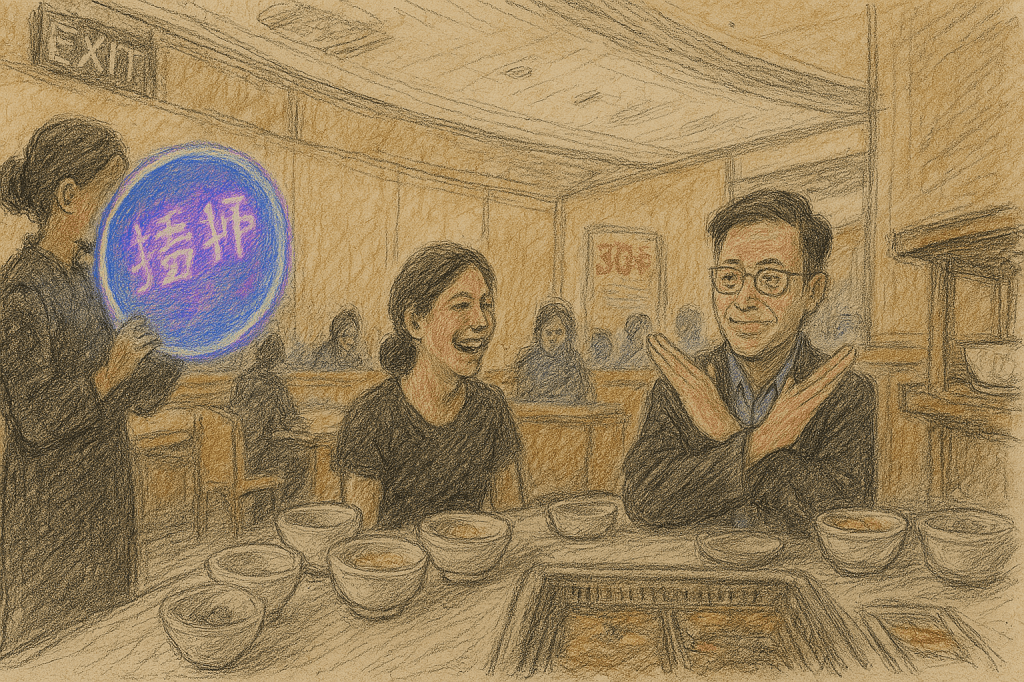
What’s up with this image? I went for dinner with Peishan and Cien, who decided it would be funny to tell HaiDiLao (a massive Chinese hotpot chain) that it was my birthday month, so the staff came round and sang/blasted out of a Bluetooth speaker a proprietary and very Chinese birthday song, that apparently everyone around us knew because they joined in and clapped along. I tried to stop them, but in the end had to endure it with a pained smile.
Btw one legitimate use case of AI is transforming images into drawings to get around the problem of publicly sharing people’s faces.
On Saturday morning there was a circular rainbow across the sky, it’s a circle rainbow all the way, yeah, oh my god. Well officially it was a “sun halo”, and it seems everyone got a photo of it too.
It happened right as we were walking out of a new-ish brunch cafe, where I waited what must have been close to an hour for an expensive plate of scrambled eggs, some kale that was actually edible, plus sausage, mushrooms, tomatoes, and pork belly. I’ll take the heat; going for brunch was my idea, but I don’t know why everyone still does this on weekends. The place was packed and a line was still forming at 1pm.
I went out and met people several times this week, and on Thursday I managed to drop in on the new Maji Curry outlet at the Funan mall with Brian. I’ve mentioned them several times in the past, and they are probably the most authentic and interesting Japanese curry spot in all of Singapore, although (not to take anything away from Maji) there’s practically no competition. I hope they do so well that other brands have no choice but to enter the market or stop slouching (I’m looking at you, Coco Ichibanya).
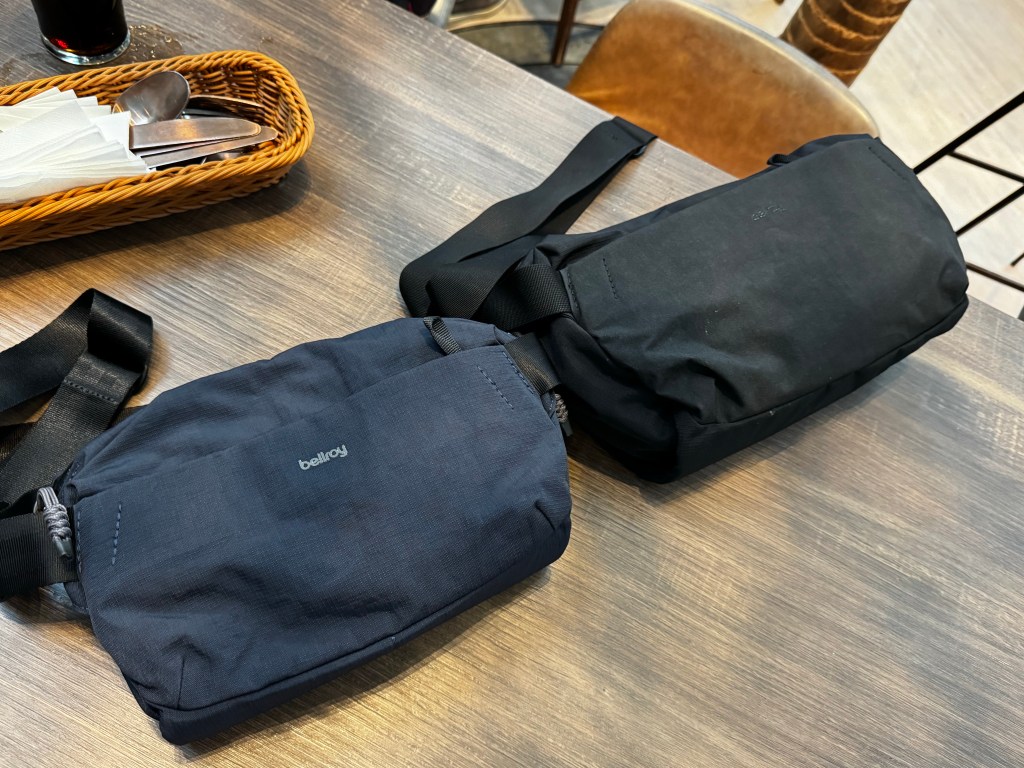
As a group, I think us millennials have been brainwashed to perfection by advertising algorithms because the first thing Brian pointed out when we met was that we were both carrying the same Bellroy sling bag, albeit in different sizes and colors. I said I’d bought mine on a whim very recently because my mother-in-law was after some sort of small pouch, and for reasons I couldn’t explain, I’d recommended we take a look at Bellroy’s offerings. I couldn’t believe it when he said his in-laws were also in town and he’d bought his under the same circumstances. What the hell, man?
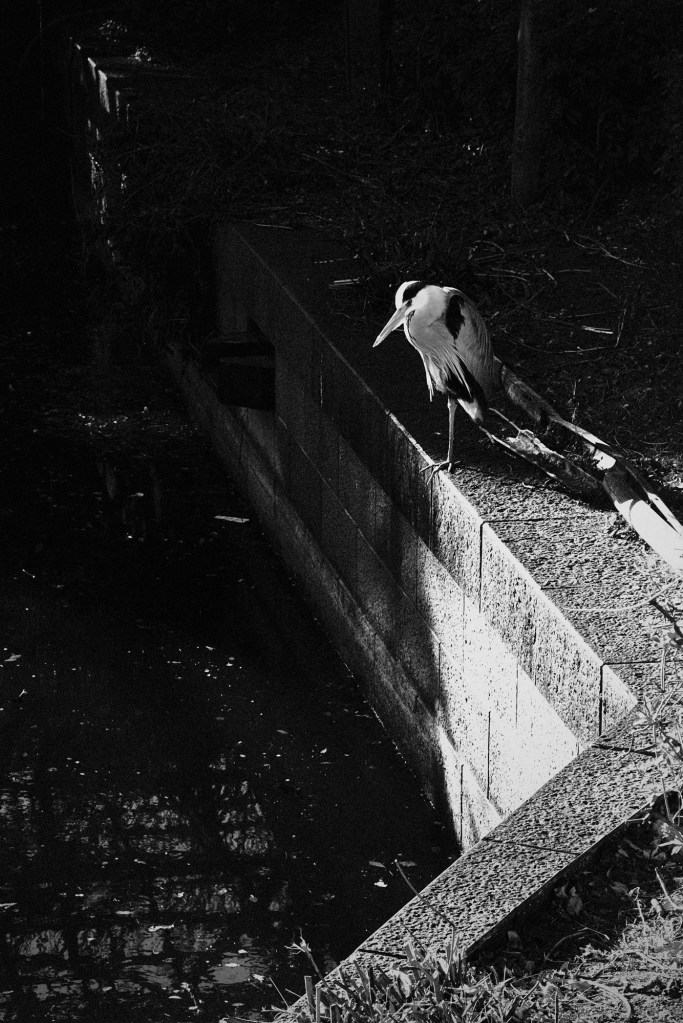
Studio Nuevo.Tokyo & Héliographe launched their long-awaited black & white film simulator app, AgBr, which stands for Silver Bromide, of course. It’s currently 50% off as a launch special (S$14.98, one-time purchase, no subscriptions), and I’d recommend it to any fan of black and white photography. The purchase gets you the app across iPhone, iPad, and Mac, and they’re promising a new film preset every month for the rest of the year. Funnily enough, I think the best way to use AgBr is to pair it with the similarly named Halide app, shooting RAW files in “Process Zero” mode. Sure, you can process a normal iPhone photo with a Fujifilm NEOPAN 400 preset, but the HDR exposure won’t look quite right.
I watched the new Metallica concert video that Apple TV+ put out for the Vision Pro. At 25 minutes, it’s the longest show they’ve put out so far, and I’m ready for more. Don’t make the same mistake as I did: watch it with AirPods. I used only the built-in audio pods, and while they sounded fine, I think the immersion will be even better if you turn things all the way up. They perform three songs, captured from 14 cameras, and it’s a truly new experience in this world to be right up next to each musician doing their thing on stage, in your own home. My main criticism: the crowd is quite low in the audio mix, so you don’t truly get the feeling of being there with all that energy (they could have offered two audio tracks to choose from, maybe).
With this, Apple has tried four immersive presentations of music on the Vision Pro: A traditional music video (The Weeknd), an intimate band rehearsal in the studio (Alicia Keys), a Concert For One where the artist is right there with you (Raye), and now a full-blown, live arena show. Next up is Bono’s full-length documentary on May 30, Stories of Surrender. I personally can’t stand the guy, but if this changes my mind, then that’s really saying something about this new format.
I spotted this familiar Mario statue (?) at the Courts/Nojima/Nittori electronics and homeware frankenstore on Orchard Road, in the old Heeren building. He pops up in the gaming sections of Japanese stores like Yodobashi Camera, and I saw him at least twice last month in Tokyo, so it was a surprise to see him here. It was mostly a sad reminder that our electronics retailers sell junkier crap and aren’t anywhere as fun to browse.
For the past couple of months, I’ve been writing these posts in Apple Notes, solely because of its integration with Apple Intelligence, which does a quick QA check at the end. However, rich text formatting in Apple Notes is quite laborious (having to select text and choose styles from a menu), and often I lose some of it anyway when pasting the text over into WordPress. It became more trouble than it was worth.
I’m now back to using iA Writer, my tried-and-trusted Markdown text editor of choice, where text formatting is simply done with in-line symbols so you can focus on writing. It makes much more sense on mobile devices. This is an excuse to mention Apple Intelligence, which has recently been in the news for falling behind schedule and possibly the rest of the industry. I’m not super reliant on AI to correct my writing, but it has definitely helped catch the odd typo and missing word. By right, I should be able to use it systemwide, in iA Writer and any other app on my iPhone, but the implementation is inconsistent and so the “Proofread” feature can’t walk me through the changes it makes; it just makes them and I can accept ALL the new text or not at all. This is what I would prefer we get in iOS 19: a rigorous cleaning up of bugs and rounding of corners so that what we already have works better than what’s on any other OS. If we have to wait a couple more years for truly agentic edge AI from Apple, that kinda sucks, but we’ve been here before. I remember the days of wanting a bigger screen and having to put up with the iPhone 5 and 5s for two years. 🤷♂️
TV: We finally started on the new season of Reacher now that enough episodes have come out. We also decided to pick up House on Amazon Prime Video from the beginning of season 5, since I’m pretty sure we finished four seasons back when the iPhone first came out or thereabouts. House uses a flip phone. It’s terribly formulaic but also fun, and the perfect kinda show for watching at the end of the night.
It’s Monday, and for the time being, my schedule for writing these updates has shifted out by a day as Monday mornings now find me in a co-working space, and writing this gives me an opportunity to blend in better than, say, watching films or playing games whilst surrounded by people grasping their foreheads, stroking their chins, and sighing loudly. Yes, those things just took place around me.
It’s Monday, after a massive storm, and my feet are soaked from wading through puddles to catch the bus. You’d think this would be a common occurrence in Singapore, where the tropical rain gets heavy, but only a few occasions stick out in memory — those mornings where the office walkways are cluttered with umbrellas opened up to dry, like caltrops or anti-tank barricades; my damp, socked feet perched on top of sneakers I hope will dry before lunch; everyone else’s teeth a-chattering in vicious air-conditioning calibrated for sunny days.
Earlier this week, I shuffled my feet while sitting here and felt something come loose: the right heel of my (only) three-year-old New Balance 990v4 sneakers. So much for ‘Made in the USA’! I borrowed some black plastic tape to conduct unglamorous field surgery, and they lasted till I got home. I have two newer pairs (v5 and v6), and sure hope they hold up longer.
iPads are pretty great, actually
My daily companion over the past four days here has been my 11” M1 iPad Pro with Magic Keyboard, somewhat neglected of late. I’ve found that it does everything I need to pass an entire day, from library books and magazines with the Libby app, to gaming, video, web browsing, chat, and photo editing. My MacBook Air would be better for watching movies, but that’s mainly it. If anything, that only makes me surer that my next iPad will be a 13” model.
Unfortunately the new iPad Pros with M4 chips are priced on par with MacBooks, making the choice between the two much harder (and in favor of MacBooks if I’m being honest). Recall that the original iPad launched for just $499 USD, and its marketing tagline was “A magical and revolutionary product at an unbelievable price”. That’s still how the iPad lives in my mind: a powerful alternative device that does way more than its price suggests. So it occurs to me that the iPad Pro is no longer the right choice for me, and the iPad Air is a truer heir to that original proposition. (Put aside the product now simply called ‘iPad’, because at $349 USD it’s actually even cheaper than the first generation and more like a budget “SE” model.)
We’re seeing Apple push its ‘Pro’ lines further this year, packing them with innovative features that are useful for a small subset of professional users, but which most customers won’t need or appreciate. Things like streaming multiple 4K video feeds from iPhone cameras to a single iPad for production in real time. Or recording LOG-format video to massive ProRes files, including studio-quality audio from four microphones.
Adding these capabilities and pricing accordingly means some current Pro buyers might want to downgrade to the ‘mid’ models. In order to avoid losing them, Apple would need to elevate those products, and avoid artificially holding back features for the sake of differentiation. We’ve seen that happen with this year’s iPhone 16, which packs an OLED display, Dynamic Island, 48mp camera with a 48mm focal length option for the first time (!), Camera Control thingy, and even things like next-generation Photographic Styles and Audio Mix which they could have reserved for the Pro phones. The only thing it needs is a 120hz ProMotion display. I’m expecting next year’s iPad Air and iPhone updates will finally include that.
I love that the iPhone 16 is now a great enough product for almost anyone’s needs, but I’ll likely keep buying the Pro models as long as they offer better camera features. I can entertain switching to an iPad Air because I don’t even know what camera hardware it has and won’t ever use it.
A quick word on cameras and my presets
I mentioned before that I’ve been beta testing an app called Fig Camera. It has two standout features: great “natural” processing options that dial back Apple’s aggressive defaults, much like Halide’s Process Zero mode; and the ability to process photos on-the-fly with your own custom look. As someone who somehow finds it fun to make photo filters/presets, and has fortunately had some success with them, I love that I can now take photos with my favorite styles directly applied. It’s like how Fujifilm cameras’ “Film Simulations” obviate the need for post-processing. I can now snap photos in Fig that look great to me and don’t need any further editing.
Shot on iPhone with Fig Camera and my work-in-progress film LUT
I posted a few recent photos using a film-style sim on IG and Threads and asked something like, ‘should I become one of those preset guys and offer my own as LUT files you can buy?’, to which several kind people said ‘sure’! So I’m thinking about it. This particular look is inspired by the “Positive Film” effect on earlier Ricoh GR cameras (they changed it for the worse with the GRIII), but slightly more “dry” like Fujifilm Classic Chrome. I’ve been using and tweaking it for over a year now, so the trick will be knowing that it’s DONE.
Immersive Video and Submerged
I’m still sitting here and my shoes are still wet. I’ve thought about bringing my Vision Pro to this open-plan space—not for the attention, but because it would be nice to have a huge screen that no one else can see. There are many things in my MUBI backlog that would not be cool to watch in public. And what’s even better than a 13” iPad? How about a thousand inches?
We watched Submerged (2024) over the weekend, Apple’s new Immersive Video release exclusively for Vision Pro. It’s the first film they’ve done that isn’t a documentary or music performance — I guess the right word is fictional? I’m sure I said early on that this new immersive format (a full 180º view) lends itself best to video that puts you somewhere incredible, and wouldn’t be good for movie storytelling, with fast movement (nausea hazard) and quick cuts. I’m here to admit I was wrong.
Submerged, by Academy Award winner Edward Berger, is only 17-minutes long but about a 12GB file when downloaded offline. You can view it as the first experiment in what filmmaking with this new technology could look like.
I wrote on Instagram:
Apple Immersive Video is a new medium. People will be experimenting with how to tell stories with it for years to come.
Submerged is a great first step, the only movie I’ve ever seen that felt like “being inside” of it. More than seeing Avatar in IMAX 3D even.
That’s different from the “being there” of POV video — it’s 100% a film with directorial intent. You experience it like a spirit summoned into the world and held down by a seance, without knowledge of your body. Your consciousness is pure camera.
What I was trying to say was that making films for this format will require inventing a whole new set of techniques. Regular immersive video is easy: plonk a camera down in one static location and let people experience what it feels like to stand there and observe the action. This is the courtside seat at a basketball game, the front row of a performance. It’s amazing to us anyway because the viewpoint is rare, but a film made like this would only be a play.
In the near term, we’ll see directors converging on a few approaches that work. Like how early 3D movies always had things flying directly at your face. The key question for me is how do you make an audience look at the thing you want them to notice, when they can look almost anywhere around the world you’ve built?
Berger answers that in three ways. The first is action; big movements. When something explodes and water gushes out of a pipe a second later, you’re bound to notice it. The second is depth of field; like how I remember Cameron pushing and pulling focus at several points in Avatar (2009) to highlight subjects. This goes against natural vision and is more jarring in a wide-angle format like Apple Immersive Video, since you’re choosing for your viewer what they can and cannot look at, but it’s a filmic device everyone is familiar with.
The third is a combination of Dutch angles and heavy vignetting that produces a novel effect in Immersive Video. When you watch a film like this, you are a disembodied viewer (what I meant above by a summoned spirit), without the ability to see even your own hands. You are severed from the real world. Your viewpoint changes according to the director’s will; sometimes a subject is extremely close and larger than life, other times they are small and distant. Berger often cuts to shots where the edges of your 180º view are shrouded in darkness, and/or where the camera is tilted at an angle, such that you feel yourself almost falling towards the zone of interest. This serves to direct your gaze, as to look in the opposite direction of gravity unconsciously takes more effort.
I can’t wait to see what else emerges as more filmmakers play with this.
Other media activity
I’m watching Lady in the Lake on Apple TV+, a 7-part series starring Natalie Portman that no one seems to be talking about. It’s rather good, but a slow burn and not one to be binged.
Another show that we discovered on a recommendation from Jose, and that no one seems to be talking about, is Ludwig, a 6-part BBC series starring David Mitchell as a reclusive professional puzzle-setter who gets enlisted to help the police solve murders. It’s very good, and sidesteps many of the elements that make other episodic murder-of-the-week procedurals tiresome. Well, it’s short enough that you never reach that point. I’m hoping they renew this.
I read Stolen Focus: Why You Can’t Pay Attention — and How to Think Deeply Again, by Johann Hari. This was inspired by an article in The Atlantic about how American college students today can’t even read an entire book anymore because their attention spans have been destroyed by social media, and book-reading on the whole is in serious decline. Utterly depressing. In order to get better sleep myself, I’m now trying to limit caffeine in the afternoon, alcohol, and phone use before bed. I’ve always detested multitasking—so much so that I avoid using external monitors with my laptop—and I’m now trying to be more mindful of distractions while reading or writing. As I made my way through the book, I was horrified to notice that I was picking up my phone every five minutes to check messages or look up completely unrelated topics.



























 sangsara.net