Back in December, I wrote a bit of a rambly post about what I thought might happen with the Apple Watch, and the possibility of it having hardware you could actually upgrade to preserve your precious metals investment. I’ve since changed my mind on that, and think they’ll be replaced like any other Apple product: buy a whole new one if you want it. I also had a prediction about how many they’d make:
In terms of mix, I’d wager an approximate 60% Sport, 30% Apple Watch, and a maximum of 10% Edition in the first year. At the prices above, the 10% sales of Edition watches will probably drive half the overall revenue.
The Wall Street Journal (paywall) has just reported some numbers, and my guess was pretty close. They’re saying Apple will have up to 6 million units ready at launch. iMore has reprinted the breakdown:
The report suggests that half of the production run is for the entry-level Apple Watch Sport, which will be priced at $349. One third will be the stainless steel Apple Watch. That would leave the remaining one-sixth of the production run — which comes out to around 850,000 units — for the gold Apple Watch Edition.
If you’ve been active online today, you would have seen (and hopefully made time for) the New Yorker’s epic profile of Jony Ive. Many of the insights are new, and the writing is kinetic and marvelous, with gems like this one about Ive having an opinion about iOS’s skeuomorphic design, and eventually becoming involved in making it over:
He’d had that conversation with Jobs. “He knew, absolutely, my views,” Ive recalled. “I’m not going to second-guess what he would have done if—had he been well.” I asked Cook if, after he became C.E.O., Ive had pressed for a software role. “We clearly spent a lot of time talking about it,” Cook said. “And I think it became clear to him that he could add a lot.” Ive’s career sometimes suggests the movements of a man who, engrossed in a furrowed, deferential conversation, somehow backs onto a throne.
Or this one, which credits Ive with suggesting the new sputtering lightsaber effect in Star Wars: The Force Awakens to JJ Abrams at a dinner party. For the record, I think it’s a brilliant update which gives the business end of the weapon more heft, more fire and laser menace. Ars Technica has a debate in the comments section.
After the release of the film’s first trailer—which featured a fiery new lightsabre, with a cross guard, and a resemblance to a burning crucifix—I asked Ive about his contribution. “It was just a conversation,” he said, then explained that, although he’d said nothing about cross guards, he had made a case for unevenness: “I thought it would be interesting if it were less precise, and just a little bit more spitty.” A redesigned weapon could be “more analog and more primitive, and I think, in that way, somehow more ominous.”
If I wasn’t already sold on the standard Apple Watch (as opposed to the Sport and Edition versions) as my choice this coming April, this paragraph of remarks by two members of Ive’s design team present at the unveiling event would have done it:
“The materials in this thing are insane,” Howarth said. People, he noted, were saying that the watch’s face was made of “sapphire glass”: “It’s not glass, it’s sapphire crystal—completely different structure. And then the stainless steel is super-hardened. And the zirconia ceramic on the back is co-finished with sapphire as well.” He added, “This would cost so much money if a different company was making it—Rolex or something. It would be a hundred grand or something.”
“We sell it for just fifty thousand,” Hönig said, joking.



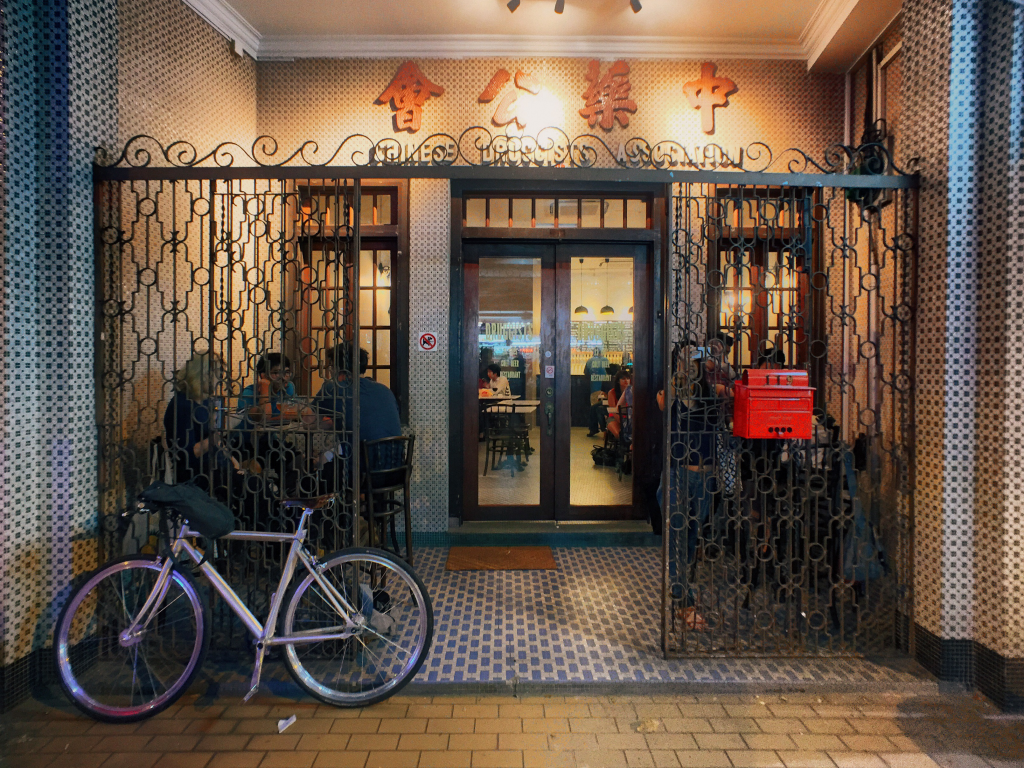
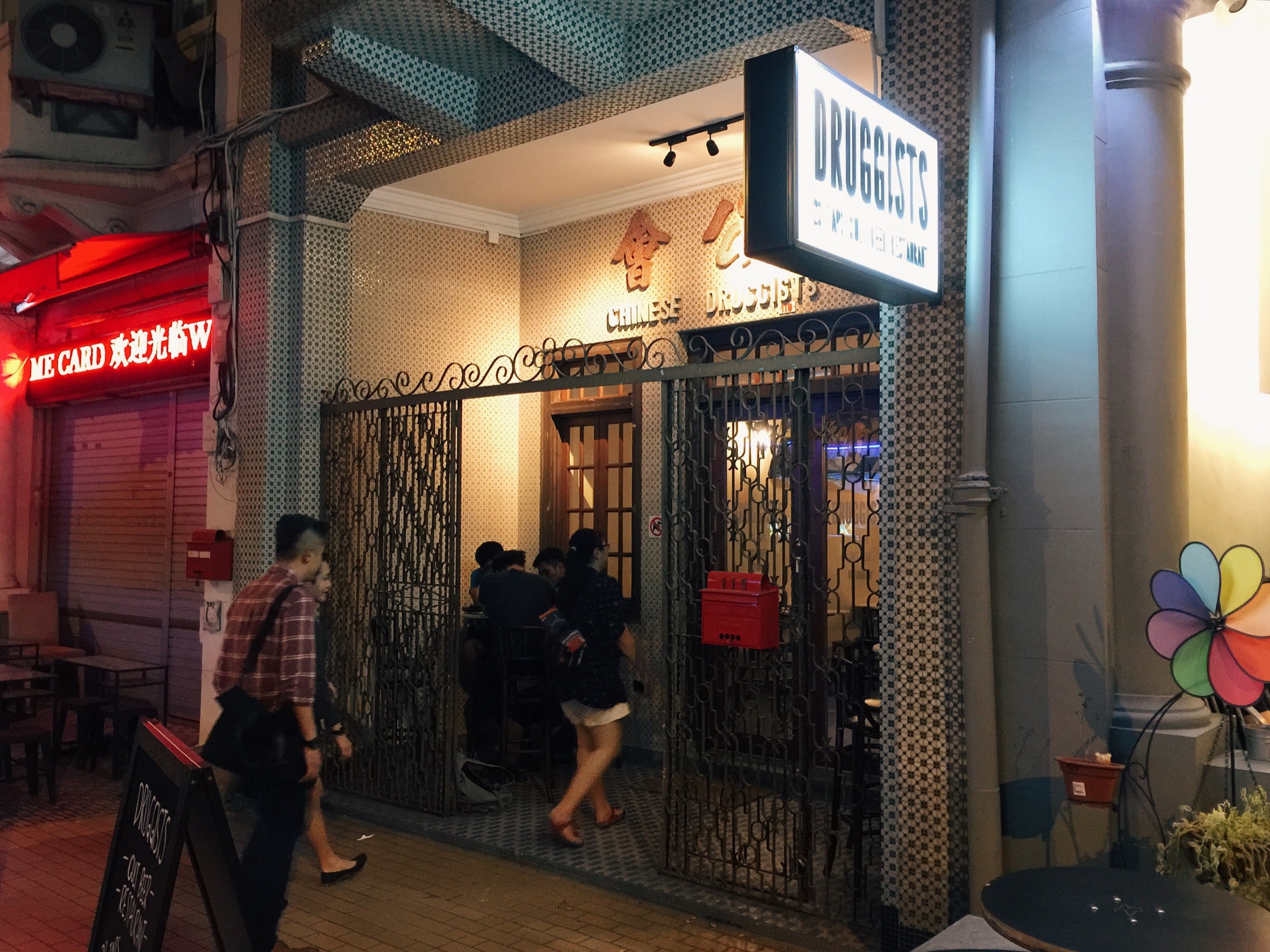 Druggists is one such new factor in the gentrification of an area that houses the undertaking facilities of Singapore Casket, a small stadium, Hong Kong-like shophouses with murky windows through which racks of hanging clothes can be seen, and furniture shops where the products are still made on site and spill out onto the road. It is guilty of all the aforementioned crimes: it’s a craft beer joint with an interior made to look like a traditional Chinese diner, complete with marble tabletops and mosaic flooring; the sign above the front door reads “Chinese Druggists Association”, looking straight out of 60s Chinatown; and a pint will run you up to $21 while bottles of Tiger at the kopitiam across the street can’t be more than $5.
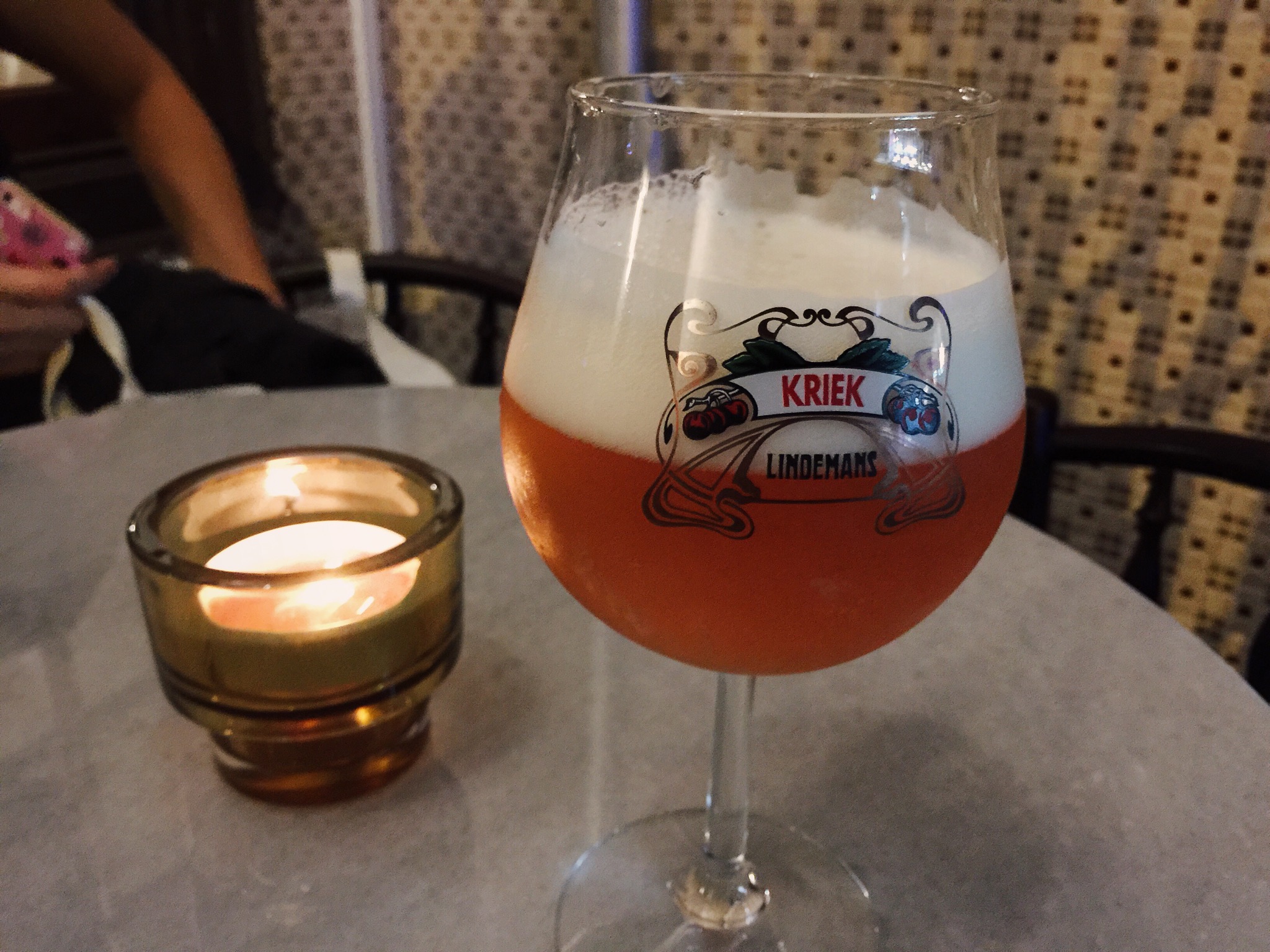 But who cares, because you’re there for 23 taps of craft beers imported from across the globe, and they don’t take your VISA at the hawker centers anyway. There’s no way this stuff was going to come cheap, but I’ll tell you what, they make it easy to try a bunch of them. You can get any beer in a half-pint size that’s reasonably priced at about 53% of a full pint. I never understood those bars where the two sizes are something like $12 and $15, and happily, that’s not a problem at Druggists. (What a name! I can’t stand typing it.)
 If you go to the bathroom, you’ll find the tap over the sink is an actual beer tap, which is a clever touch. The airconditioned interior is enclosed and all hard surfaces, which makes it noisy and difficult to have a conversation, which isn’t so clever. The two tables outside fare much better, and you can enjoy your imported IPAs with the cultural dissonance of a nearby Chinese banner ad (yes, the offline kind) advertising a dodgy sounding sleep/health service for $10-40. It’s delicious.
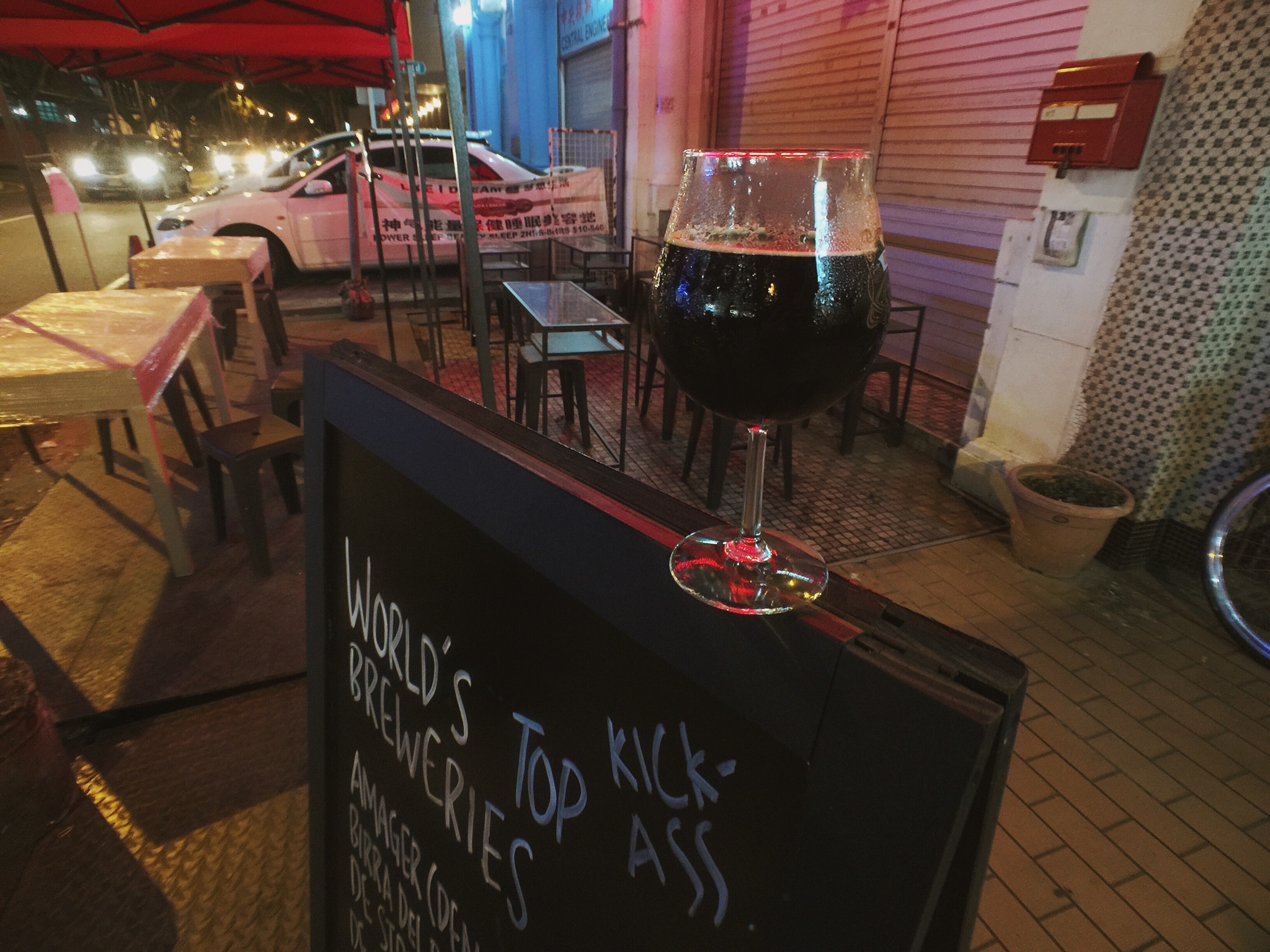 119 Tyrwhitt Road
 sangsara.net