• Week 25.23

    534 words
    • The week in Melbourne went largely as planned. I managed to read about half of Daniel Suarez’s Critical Mass, the sequel to Delta-v, and played some Persona 5 Royal in my downtime.
    • Because the Airbnb had a basic Android-powered smart TV and spotty wifi, I only managed to watch one thing of note: the first Extraction film on Netflix, because my dad was talking about it. It came out a couple of years ago but is getting a bump in the charts now that a sequel’s just been released, imaginatively titled Extraction 2. It has a lot of impressive shots that look like single-takes, and I’d definitely recommend it if you’re in the market for a dumb action flick.
    • We did go out as well, of course, and I enjoyed the ACMI’s Goddess exhibition on women in cinema, and their entirely redesigned (since I last saw it in 2018) permanent exhibition on the history of the moving image, from shadow puppets to video games.
    • The National Gallery Victoria (NGV) had two large exhibitions on: Pierre Bonnard and Rembrandt, and puzzlingly did not offer a combined ticket plan. The cost to see both was around $60 AUD, so we decided to just see the Bonnard one and take our time. It was quite worth it, but I do regret not having bottomed out the whole place with the Rembrandt. The next day we spontaneously dropped in at the NGV’s Ian Potter outpost in the CBD, which is completely free, and dedicated to Australian artists. All in all, a good time.
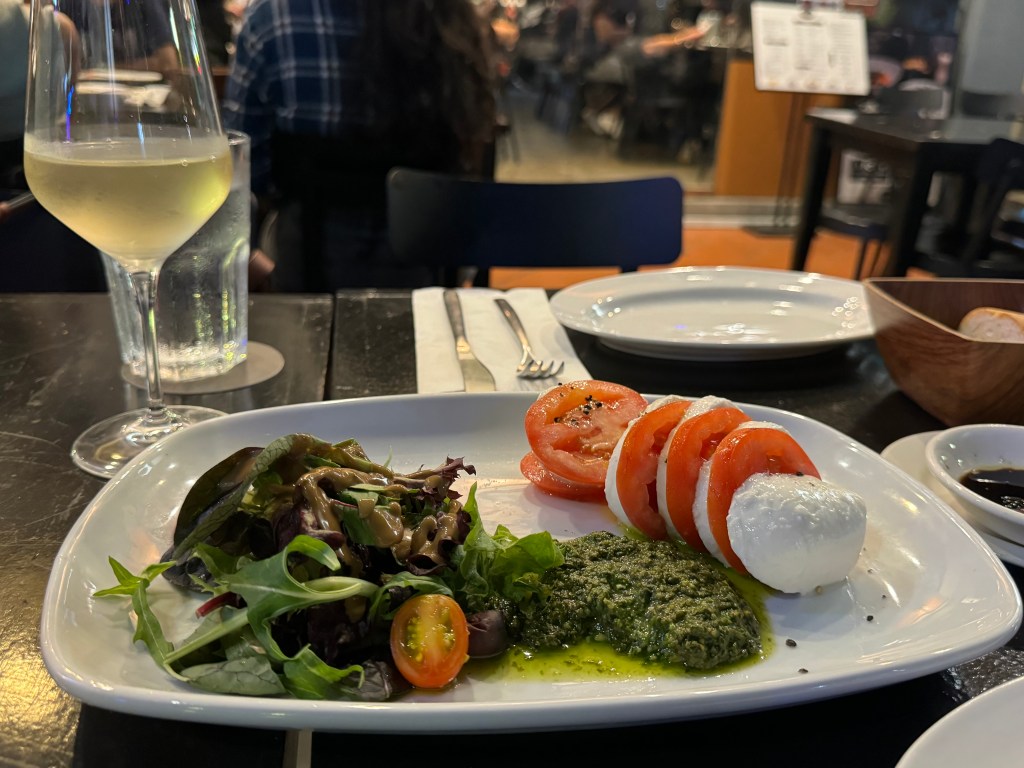
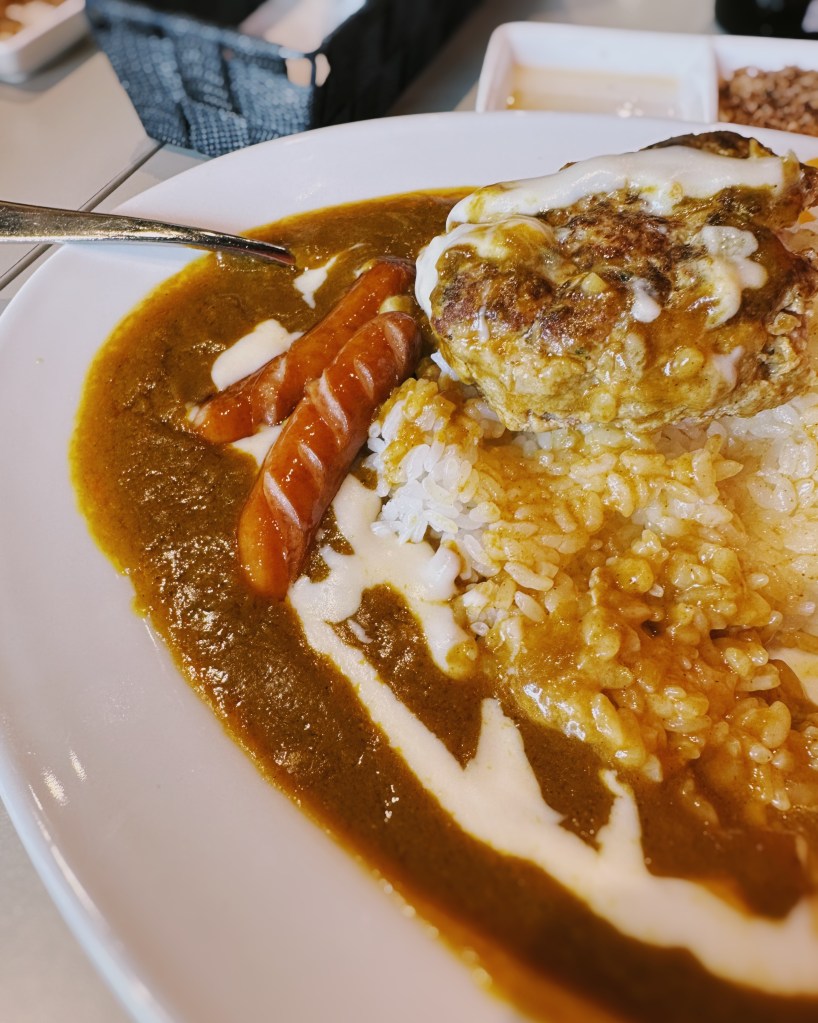
    • Food-wise, many of the essentials were hit. Croissants at Lune; lunch at Rice Paper Scissors; coffee, pastries, and seafood at the South Melbourne Market; kebabs; wine in the Yarra Valley; cocktails at Union Electric; Korean BBQ at Bornga; some relatively good pho; pretty great pizzas.
    • I’m also glad we managed to stop by The Paperback Bookshop, a cozy little place that manages to hang on — it seems to be thriving, actually. We bought a few books. The last time I came by, I bought some that I ended up reading the ePub versions of, just because I’ve grown out of the paper habit. But I’ll happily keep buying physical books because you can pass them along and every year I trust digital media to stay accessible less and less.
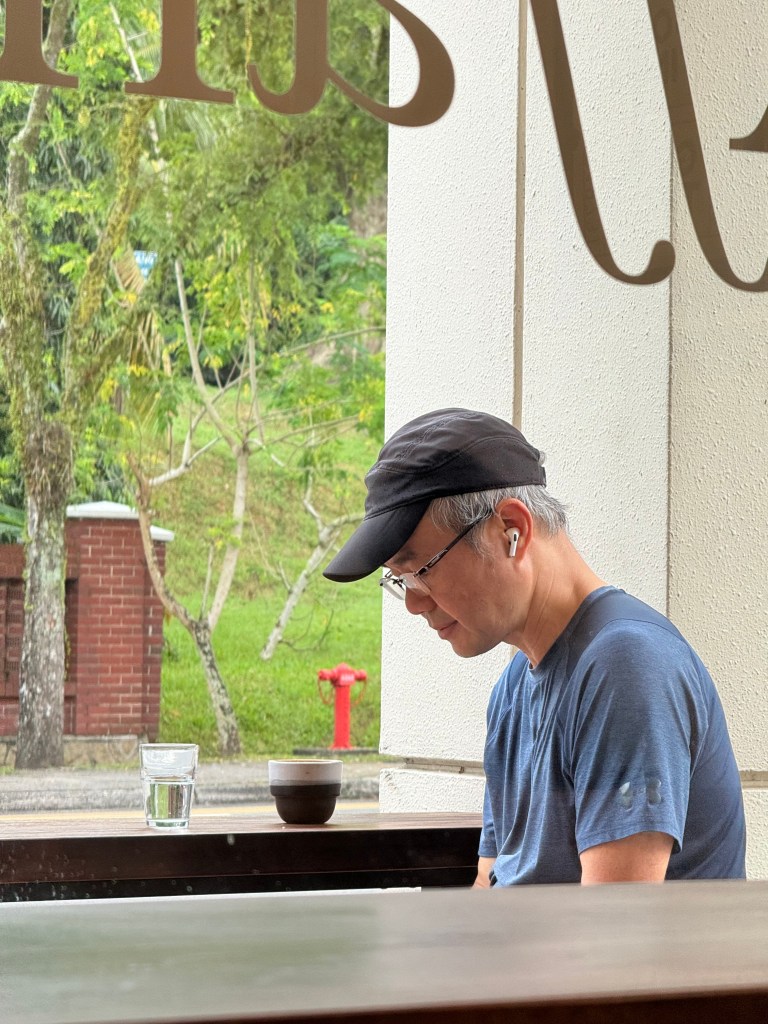
    • This was of course the week that a dumb DIY carbon fiber submarine went missing on its journey to visit the wreck of the Titanic, and it captured public interest to the point that I ended up having a conversation about it with a friendly cafe owner when I was the last customer around (reading Critical Mass). She’d only heard bits and pieces on the news, whereas I, extremely online and living in social feeds, had many factoids and theories to offer, which fanned her disbelief and led her to say the billionaires had “more money than brains”. Later on I saw this very appropriate tweet and thought “it me”, but in my defense I did not bring up the topic first!
    • I didn’t take many photos, but most of what I did get was captured in Halide (12mp HEIC) and processed in VSCO. Then I deleted the originals. Yolo.

  • Strange Beach

    364 words

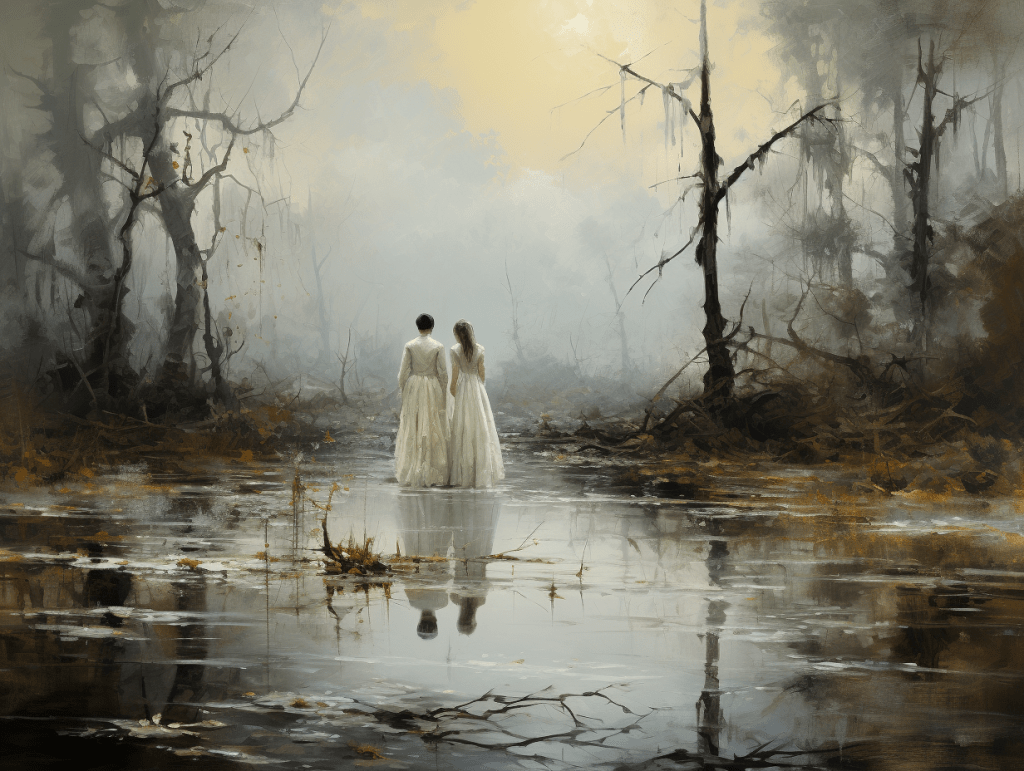
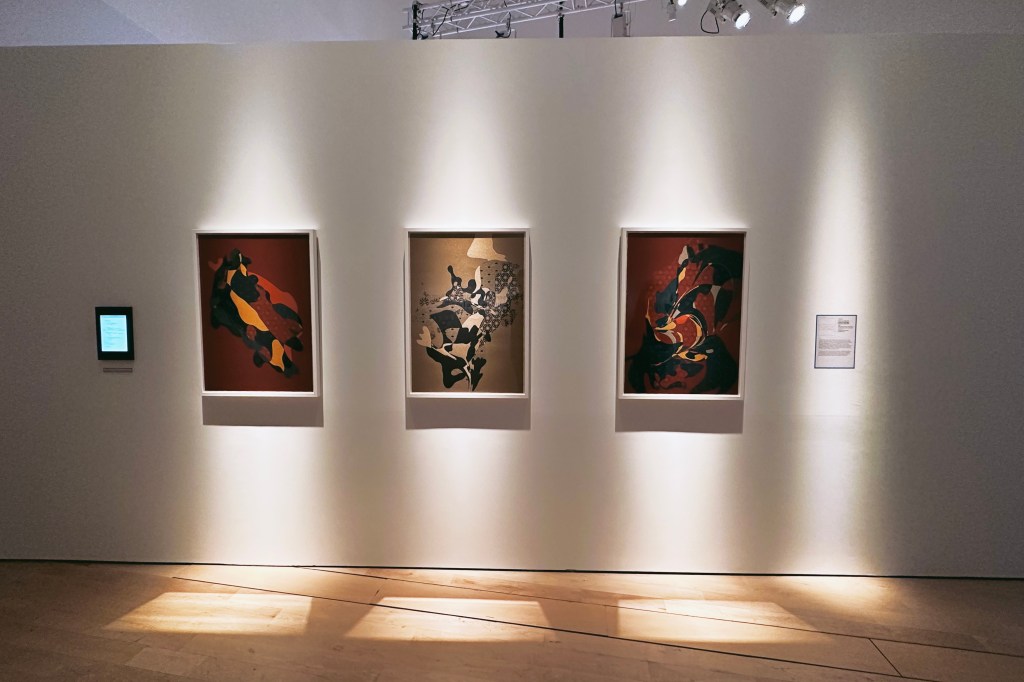
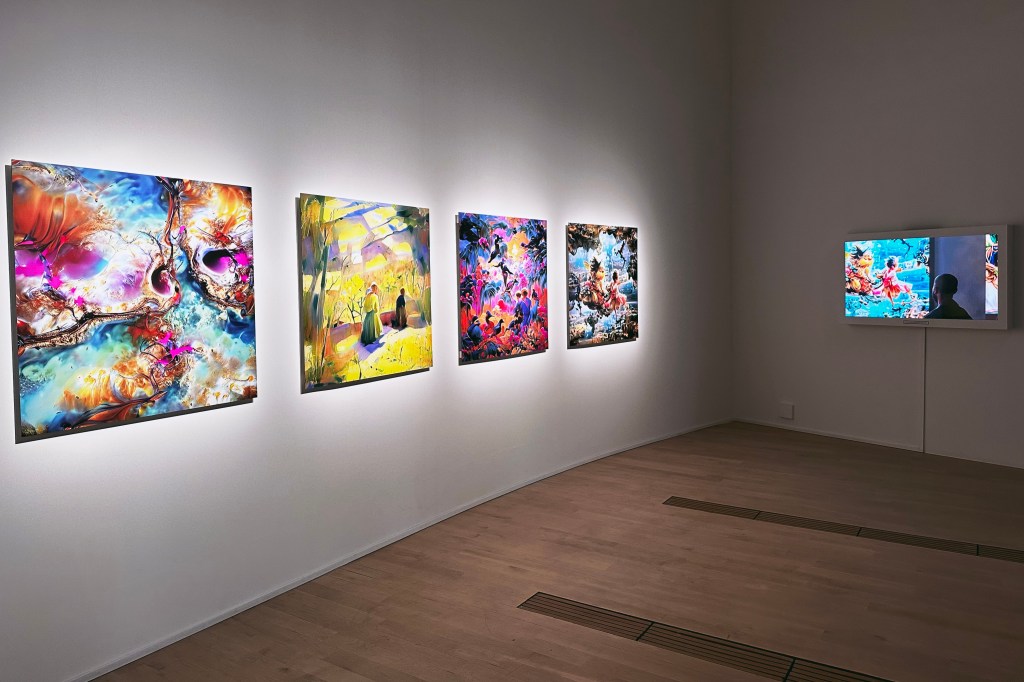
    Thanks for coming to my Midjourney art exhibition:

    Edit: I’m currently in the National Gallery of Victoria in Melbourne and am reminded that most exhibitions also have descriptions for kids. So I’ve asked GPT-4 to expand on the wall text it helped me with and write a version for kids, which I’ve appended below.


    Strange Beach presents a provocative exploration of the uncanny, executed through the fusion of AI-generated imagery, Japanese anime aesthetics, and elements of surrealism and horror. Drawing on theoretical concepts associated with the 1920s Surrealist movement, this collection explores the destabilizing effects of disrupting familiar contexts and spaces. Surrealist influences, suggestive of Salvador Dalí’s dreamlike landscapes, are observable, yet the visual language is distinctively rooted in the tropes and stylistic conventions of anime, echoing the complex, often boundary-blurring narratives found in Satoshi Kon’s filmography.

    Within the context of Strange Beach, the typical Hawaiian-style beach — a common setting within anime — is reinterpreted. The injection of elements that challenge the norms of reality introduces an unsettling quality, resonating with the Grotesque tradition in art history that dates back to the Renaissance. The human figures, manipulated and distorted, bear stylistic similarities to the disquieting characters found in Junji Ito’s horror manga. The images, while unsettling, offer an invitation for viewers to question and reinterpret their traditional understanding of serene landscapes, provoking contemplation on the fluid boundaries between normality and the strange.

    For kids

    Welcome to “Strange Beach”! Have you ever imagined a sunny beach with surprising and weird things happening, like in a dream? Well, that’s what you’re going to see here. This art looks like Japanese cartoons, or ‘anime,’ but has been created by a computer!

    In these pictures, you’ll see a beach that might remind you of your favorite anime show. But look closely, because things are a bit strange. The people might look a bit like ghosts, or their bodies might look different than what you’d expect. It’s a bit like when you have a dream, and things seem a little odd or mixed up. It’s fun to think about what’s happening in each picture. So let’s go exploring and see what interesting things we can find on our “Strange Beach”!


  • Week 24.23

    671 words
    • A tough and tiring week under dispiriting circumstances. But in the grand scheme of things, the worry is optional and the problems are irrelevant. So I remind myself!
    • It’s Thursday night as I write some of this in advance and we fly for Melbourne tomorrow night. I am ungraciously unpacked, a rarity. I’m hoping to fit everything into a single cabin bag for the first time. I’m traveling light. No cameras, no gear, and no plans to bring any shopping home. The mission seems to be merely spending a week on another continent. Okay maybe I’ll bring my Switch.
    • At work, I started doing team updates as a newsletter. I ask everyone to send me what they’ve been up to, and they’re free to write a few lines or a bullet list. I chuck all of it into ChatGPT using a fairly specific prompt, and out pops an entertaining roundup of the week that reads like a news radio show.
    • It strikes me that I could easily do the same for these weeknotes right here, except for the times I go off and end up writing 1,000 words on something (which is quite often). I hope the act of a human spending their valuable human life minutes every week to write these updates by hand makes them more valuable than if I just ask an AI to elaborate. Lord knows the quality is close.
    • I came across this story about the potential for AI models to collapse as they’re trained on increasingly reflexive information generated by AIs, decaying like analog copies of a tape. This is of course what we’ve been wondering about: can AI keep learning to create new things in the absence of new original inputs from humans?
    • And it might be inevitable, because there’s as yet no way to separate content that’s AI generated, and it’s going to be invisibly and thoroughly mixed into every pool of data. Even Amazon’s Mechanical Turk workers are using ChatGPT to do their work, which is explicitly meant to be human work. It’ll be interesting if years from now we look back at this moment in time when it looked like AI was going to take over everything but then suddenly fell apart and became unviable like seedlings in poisoned soil. Like HG Wells’ invaders succumbing to the common cold.
    • It took awhile but I finished reading Matt Alt’s Pure Invention: How Japan’s Pop Culture Conquered the World. My Goodreads count for the year so far is a pitiful TWO. Anyway the book is enjoyable and well done. It promised previously untold stories about the invention of karaoke, the Walkman, the Game Boy, and others, which I doubted heading in — don’t we all know these stories? Would there really be anything new here? But I definitely learnt some new details here, and Alt does a great job of stitching it all together into a decade-spanning thesis about innovation, globalization, and the power of culture.
    • In Melbourne now after a couple of nights of bad sleep, after a miserable red eye flight where I got maybe an hour of sleep, after staying awake most of Saturday. Finally rested on Sunday. Listening to Apple Music’s excellent playlist of songs produced by MIKE DEAN. Looking forward to a chill week of Nintendo, coffee, reading, a visit to my favorite museum of screen culture, and no expectations of doing much more.
    • Amongst last week’s music releases, I missed a new album from Bob Dylan. And from Ben Folds. If I’m out to shift blame, it’s more like Apple Music neglected to inform me about them. The algorithms could use some work.

    I started generating Midjourney images for a conceptual series and am in the process of curating the collection. Maybe I’ll put it up in a separate post at some point next week. It’s called Strange Beach, and I’m shooting for “wrong”, trying to prompt my way to pictures that are subtly unsettling or unhinged, yet set on a sunny Hawaiian beach. Some not so subtly.


  • Week 23.23

    1,030 words

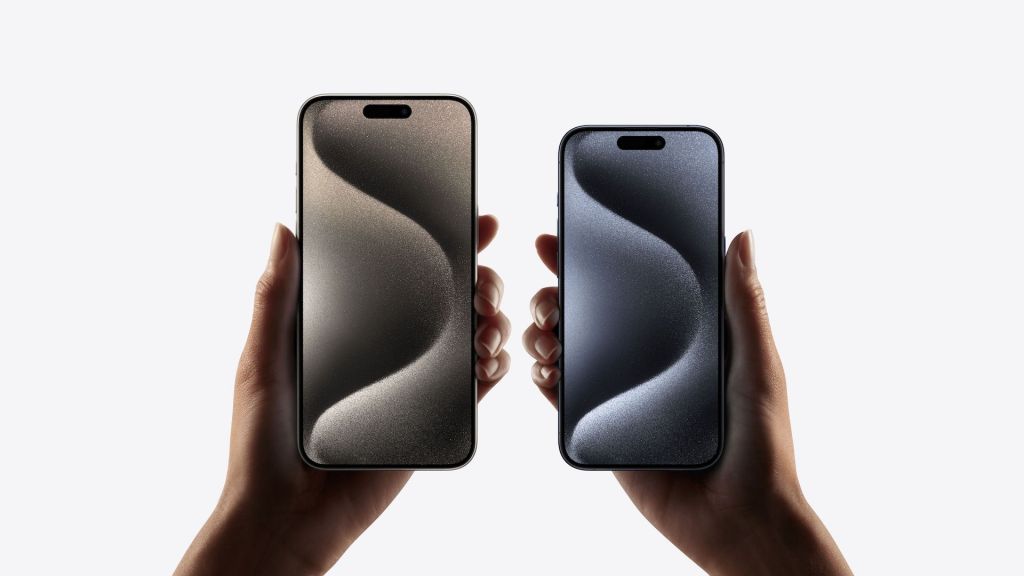
    It was WWDC week and hours before the keynote event started, I was telling people that the thought of an Apple XR headset made me tired. I knew that if it really was happening, that the world would never be the same again, and we would be starting a whole new cycle of change: changes in the way we interact not just with computers, but entertainment, services, each other, and the hundreds of companies in our orbits. That takes a whole lot of energy and enthusiasm (positivity?) to prepare for, especially if you’re in one of the industries that will need to be an early mover.

    And this is just my gut talking, but after the big reveal of the Apple Vision Pro, I felt that positivity surging through me. It was an exciting prospect — yes, it’s still a heavy thing strapped to your head, and it has the many limitations and intentional design constraints of any first-generation consumer product — but I felt that Apple thoughtfully got the experience foundations right (again). This looks like it could change the world in an exciting and additive way.

    I can’t wait to try it out and get my own, but it will probably be the end of 2024 before it lands in Singapore. That gives everyone plenty of time to think about and design for a spatial computing future. Do I think the price is justified? Sure! It’s not really comparable to any other product at any price, which is the beauty of their ecosystem play (again).

    On the downside, the technical achievements it contains are incredible, but will need to become more incredible very quickly. Over the next few years, it will need to become lighter, smaller, faster, cheaper to get us where this “vision” is pointing. Or perhaps they believe the parallel development of a photon passthrough technology (that is surely continuing internally) will pay off before then, and become the solution. I’m referring to true AR glasses, of course, rather than this VR headset that acts like glasses by having screens facing inwards and outwards.

    Side note on those outward-facing eye screens: it’s funny how that detail was completely leaked, and we knew it might have screens that showed your eyes to others, but nobody could come up with a way that it didn’t look awful. And yet, the real thing looks pretty good! Dimming and blurring a virtual avatar’s eyes so that they looked recessed behind frosted glass? Brilliant. Wanna put a pair of comedy Vision Pros on? Try this Snapchat lens — it’s super amusing when pointed at the TV.

    But let’s not forget the other things announced at WWDC. I’m super excited for iOS 17’s Journal app*, as I said several weeks ago; the new AirPods Pro adaptive mode sounds exactly like what I’ve been wanting for awhile; Freeform showed that it isn’t being neglected, with some great looking new drawing tools coming; and the Apple Watch really did get a good rethink of the UI! The Side Button will now pull up Control Center instead of the Dock I never use, and it’s being replaced with a new Smart Stack model that sounds good in principle. And that new Snoopy and Woodstock watchface? Plus a smarter transformer-based keyboard and dictation? A more easily invoked Siri? Wow! (Ten bucks says a transformer-enhanced Siri is in the works for next year.)

    Sadly, Apple Music only got light design refinements instead of the rethink I was hoping for, oh well.

    *The Verge’s Victoria Song is skeptical about Journal.app because it relies on AI to suggest journaling prompts, which as Apple’s Photo Memories have proven, can be inappropriate or tone deaf. Personally I’m just planning to use it as a lifelogging tool: where I went, what I saw, what I was listening to. I’ll probably write entries manually, no prompts needed.

    ===

    On Thursday evening I checked out the National University’s industrial design program’s graduation show with some colleagues who came out of the program a few years ago. There were some thoughtful projects and most were well presented. The kids are alright, etc.

    Then on Friday evening I went with some other team members to visit the Night Safari for the first time in probably many years. The iPhone 14 Pro’s camera let me down by defaulting to very long night mode shots even when there were moving animals. I’m talking hold-still-for-10-seconds type situations. I wasn’t using Halide as I wanted Apple’s smart processing to light up the dark as much as possible, but it didn’t seem to make the right trade offs.

    It continues to be super hot and muggy here; I was sweating my butt off both nights outdoors. Looking forward to the cool Melburnian winter weather in a couple of weeks.

    ===

    • Inspired by the album listening technique of Pearl Acoustics’ Harvey Lovegrove (mentioned last week) — put it on all the time in the background for a few days, and then sit down to listen to it once through properly, after it’s already soaked into your subconscious — I’ve been listening a lot to Cisco Swank’s new debut album, More Better. It’s a seamless blend of jazz, hip-hop, and soul that the New York Times quoted a fellow musician describing it as “black music. All of it.”
    • But it was a big week in music, and I haven’t had time to get into the new albums from Jenny Lewis, Janelle Monáe, Christine and the Queens, and King Krule. Okay I’ve heard the King Krule once through and it was good.
    • Speaking of music, Kim returned from her trip to the US and brought me back an unexpected gift: a pair of the new Beats Studio Buds+ with the translucent case! I was coveting them but probably wouldn’t have bought them for myself, and they’re still not available locally with no release date either. But since I have them now I can’t complain. #blessed
    • I started playing Astral Chain on the Nintendo Switch, a stylish beat-em-up title that came out very early in the console’s life and looks astonishingly good, period. I’m now putting Bayonetta 3 on my wishlist because Platinum obviously knows how to get incredible visuals out of this aging hardware.

  • [H-AI] A Nostalgic Leap: From Nintendo 3DS to Apple Vision Pro

    330 words

    The following is a post written by GPT-4 given a detailed brief by yours truly. The [H-AI] tag in the title declares this as human-supervised AI content.

    In the tech world, it’s easy to get caught up in the latest and greatest. But sometimes, it’s worth taking a moment to look back at the innovations that brought us here. Today, I’m talking about the Nintendo 3DS and its 3D camera, a feature that seems to have found a spiritual successor in Apple’s newly announced Vision Pro headset.

    The 3DS, launched in 2011, was a marvel of its time. It brought 3D gaming to the palms of our hands, no goofy glasses required. But the real kicker was its 3D camera. With two outer sensors capturing slightly different angles, it could take 3D photos and videos. It was a novelty, sure, but it was also a glimpse into the future.

    The 3DS’s 3D camera was met with a mix of awe and skepticism. Some saw it as a gimmick, while others reveled in the new dimension it added to their photos and videos. Regardless of the reception, it was a bold move by Nintendo, a testament to their innovative spirit.

    Fast forward to today, and we see Apple taking a page from Nintendo’s book with the Vision Pro. This VR headset lets you relive moments in dramatically higher resolution — a step up from the 3DS, but the core concept remains the same.

    The 3DS may be discontinued, but its legacy lives on. It was a pioneer in 3D technology, a stepping stone to the immersive experiences we see today. As we anticipate the release of the Vision Pro next year, let’s not forget the devices that paved the way.

    So here’s to the Nintendo 3DS, a trailblazer in its own right. And here’s to the Apple Vision Pro, a testament to how far we’ve come. The future of XR technology is bright, and I, for one, can’t wait to see what’s next.


  • Week 22.23

    1,730 words
    Yes, I made this with Midjourney

    Six years after I booted up my Nintendo Switch for the first time and slotted in The Legend of Zelda: Breath of the Wild’s cartridge, I finally took on the final boss this week and finished the game. Before you think this game is a monster (although it is), I effectively took a 5.5 year hiatus.

    My first experience with the game was both exhilarating and overwhelming — here was a non-linear open-world adventure designed to be an exercise in self determinism. Yes, the princess has been locked in a bubble, literally waiting 100 years for you to wake up and save the kingdom, but that didn’t mean you had to hurry. You could decide to be a chef and spend time gathering rare ingredients and experimenting with recipes. You could examine every curious crevice of the natural landscape to discover the Korok seeds deviously placed by the designers, or climb foreboding mountains just for the hell of it (you’d probably find Korok seeds for your trouble).

    This was a game that demanded longer play sessions — no dipping in for just five minutes — and frequent ones at that. You kind of had to remember what you were last doing and where you wanted to go next. So, faced with too much commitment and mental load, I started to distance myself from it and play other games instead.

    If you’ve been following along in recent weeks, you’d know that the release of the sequel, Tears of the Kingdom, spurred me to try completing it once and for all. And it’s been quite the journey: I had to re-familiarize myself with the game’s laws of physics, Link’s complicated powers, and in the process discovered that I’d spent those first 40 hours or so essentially mucking around in just one corner of the world.

    By last week, I’d finally uncovered the whole world’s layout, but with some places still unexplored and doubtlessly many secrets left to be found. I’d gotten good at fighting, and was told that I was ready for the final showdown with “Calamity Ganon”. Except… I wasn’t, not mentally.

    So I spent this week’s game time mucking about and doing inconsequential side quests, like helping a group of arguing scientists collect evidence of giant monster skeletons using my digital camera (yes). And then, on Friday night, I said ‘fuck it’ fought my way to the center of the map, took the big baddie out, and saw the credits roll. It was an absolute anticlimax, partly because I was in a hurry and took a bunch of sneaky shortcuts to the final fight, instead of exploring the giant castle like I suppose I was meant to do.

    So I guess the moral of the story is err… heh… it’s the journey, not the destination? And as I was telling Cien earlier that day, the game is designed so that it’s possible to start the game and simply walk a beeline straight to the final boss and kill him instantly, if you had the skills and weren’t interested in slowly unfolding the whole experience for yourself. So this implicit message was always present, and I’m glad I took the time this year to enjoy more of it.

    ===

    Speaking of picking up old games again, I re-subscribed to the New York Times in order to play their crosswords. The last time I played a lot of them was when they released a Nintendo DS game back in 2007. In recent weeks, a group of people at work starting playing them collaboratively, and I found the experience fun enough to give it a shot. The current promotional price is just $20 USD for the first year of All Access membership ($90 afterwards).

    With the installation of the NYT Games app, I’ve also got the main news app again, of course. It does a couple of things really well, namely it presents simple text and images beautifully with a handful of layout variations, and it has a personalized tab called “For You” that is finite and completable each day.

    I didn’t realize how much I’d missed having a primary source of news in my life, with its own Home Screen button, but of course I’m prioritizing it only because I paid for it. I’m still enjoying Artifact, and I’ve just told it that I have an NYT sub now and it promises to prioritize it for me. Artifact has a real chance here of being the winning news aggregator.

    It makes me upset how Apple Music’s personalized tab could be so much better, like an AI-compiled digest of what’s new in music that I’d be interested in. Fingers crossed for WWDC next week! (Disclaimer: I know nothing.)

    ===

    Friday was Vesak Day here and a public holiday, so I spent the afternoon with Peishan and Cien visiting two cafes, and let me just say I am disappointed that we are allowing so many Instagrammable cafes to flourish. They’re all variations of the same bare concrete interior, tables and stools placed closely together, serviceable coffee + $20 and up full English breakfast plates template of an F&B business. We managed to land in two that offered differented value: Acoustics on Neil Road, which understands that bare concrete is a terrible environment to have conversations or listen to music in, so they invested in sound dampening wall panels and impressive looking speakers; and the Allpress pop-up cafe down the street on on 73 Duxton Road which, well, offers Allpress beans.

    ===

    Back to AI, Jose pointed me at the Planet Money podcast which is currently producing a series of episodes about GPT. They’re using it to write and create a full actual episode, and documenting the process. Parts 1, 2, and 3 (the actual AI-produced episode). Listening to the first episode, I observed them going through the same cycle of revelations that I went through recently as I experimented with using AI to do elements of my own job. The initial curiosity and excitement, the sudden surprise at how good it is, the disbelief when it’s sometimes even better, and the slow acceptance of the chaos to come as you realize no one knows how this is gonna turn out. We live in interesting times.

    ===

    I watched the finale of Ted Lasso’s third and possibly final season. Season 1 is everyone’s pick for the strongest arc, but I think Season 3 is right behind it now. Season 2 was disjointed and strange to me, so quite a distant third place.

    I said of the episode in a group chat:

    The Ted Lasso finale is one of the best I’ve ever seen. On brand, unashamed, fan servicing, heavy-handed symbolic closure with all the love in the world. 5 stars.

    There’s a line in it about how absolute perfection is boring, and by being imperfect on its own terms, the final episode was effectively, truly perfect. They made some polarizing choices this year and didn’t give us what we wanted at times, but the last episode gives it all. It mirrors the beginning, it offers thematic and narrative closure, and it gives room for the satisfying character growth it nurtured to show itself off.

    Their choice of song to play over the final minutes was spot on, obvious, schmaltzy, perfect. It might have been better if they’d used my favorite version featuring Fiona Apple, but what do I know.

    ===

    A couple of weeks ago Michael pinged me to talk about Daft Punk, after I wrote about Random Access Memories, saying sheepishly that Discovery was probably his favorite album, as if RAM was a purer musical endeavor and Discovery was sonic candy for philistines. I was mostly surprised that anyone could fail to love RAM best, and admitted that I hadn’t heard Discovery in many years and hardly knew it well.

    Then I saw this YouTube video by “Digging The Greats”, in which they break down the achievements in sampling that Discovery contains. Absolute magic. I keep telling myself to spend more time on shows like Song Exploder and Watch The Sound on Apple TV+ and This Is Pop, but I never seem to make the time. What I love about this 15-minute video is they don’t just play the samples and show you what Daft Punk did; they load them up and perform the melodies live on an MPC to show you how the band did it.

    Then on Sunday night, the algorithms delivered me this endearingly old-fashioned 20-minute talk from Pearl Acoustics (they seem to make loudspeakers) in which their technical director, Harley Lovegrove, inducts RAM into his list of Great Recordings, and proceeds to discuss why he thinks the production and musicianship on it are noteworthy. He’s got a trained ear as you’d expect, and spends quite a bit of time talking about the incredible Giorgio by Moroder, pointing out things like how there are two different drummers on the track (I had no idea!). What makes it more fun is the fact that this is clearly not the kind of music he normally reviews — other Great Recordings include Jacqueline Du Pré’s Elgar Cello Concerto (this often moves me to tears on good headphones), and Pink Floyd’s The Dark Side of the Moon. Anyway, loved this video and it helped me appreciate a favorite album even more.

    ===

    A different sort of band, but I bought the 2023 Pride band for my Apple Watch. Rather than the heavy and vibrant rainbow bars of previous versions, this year’s design has a white base with scattered color pills. It looks like birthday cake sprinkles or confetti, which is a fun vibe you don’t see in any other official Apple Watch bands, almost like something Swatch would do.

    ===

    And now, for this week’s conclusion, brought to you by GPT:

    In wrapping up, there’s something uniquely human about picking up where we left off, be it a beloved video game, a trusted news source, or a favorite TV show. That’s the joy of life’s continuity, the pleasure in seeing where a journey takes us, especially when it’s one we didn’t quite finish the first time around. These past weeks, I’ve immersed myself in familiar worlds, marveled at the capabilities of AI, and watched characters grow, and it made me realize how we continuously strive for balance, exploration, and ultimately, an understanding of our own story. We may stumble, we may take detours, but isn’t that the beauty of life’s game?


  • Week 21.23 (poem edit)

    39 words

    An AI turned this week’s notes into poetry.

    A Chronicle of Week Twenty-One

    In a week where work did reign,
    Much to tell there’s little gain,
    Round it though, we gently dance,
    For work’s secrets shan’t have chance.

    (more…)

  • Week 21.23

    1,614 words

    It was one of those weeks where not an awful lot happened outside of work. I don’t talk about work here but let’s sort of circle it.

    Reflections on AI

    One thing I can say is that I started making a presentation deck about the use of generative AI and GPT in design, initially to share my findings so far but increasingly as an exercise in structuring my thoughts into anything at all useful.

    A couple of things, on reflection: an AI assistant or collaborator poses significant risks for a lazy human in certain tasks since it tempts us to quickly accept its output without evaluating potential improvements. Assuming AI can do a job to 90% of a human’s rigor and quality, figuring out what the other 10% is without having done the same work yourself is quite the challenge. So the efficiency gains may not be as significant as you think, not until we figure out some smarter processes.

    An example of what I mean: you can feed ChatGPT with notes from an interview conducted with a customer about their experiences and how a product fits into their lives. Supply enough interviews, and ChatGPT can do the work of summarizing them in aggregate, presenting key themes and areas worth looking into, like maybe everyone thinks the price is too high, but it’s because they don’t fully understand the value of what they’re buying.

    It can create a bunch of frameworks to illustrate these findings, like personas and service blueprints. And it can even suggest solutions, like better marketing materials to explain this value to customers. The AI’s output might look pretty good, similar to what a team of human designers would (more slowly) produce, and a company might be tempted to make business decisions based on it. In fact, a team of human designers who haven’t read the interview notes themselves or thought deeply about it might also look at the AI’s work and say it’s good to go.

    The level of confidence and finality inherent in these AI outputs is incredibly convincing. But if a human were to go through all the interviews, listening to the recordings perhaps, they might realize there was a missing element, a feeling subtly unsaid on the margins, that means some customers do see the extra quality, they just wish there was a cheaper version of the product that did less. Skimming through the finished research report crafted by the AI, you wouldn’t even begin to guess where in the sea of correct conclusions this exception could be hiding.

    But there’s no question that this stuff is ready today to do some tasks like image editing, seen in Photoshop’s impressive beta release of a “Generative Fill” feature this week. I took a stock photo and doubled its height, and it was able to get the context of the scene and fill in the missing ceiling almost perfectly. That would have taken an experienced image compositor at least a few minutes, and anyone else way too much time. Just a couple of clicks now.

    I also looked into what Adobe is building with its Sensei suite of AI marketing tools, and that dream of generating and sending personalized ads, as in a unique package of art and copy tailored to a single customer’s behavior, would seem to be already here. I’m not 100% sure how this works everywhere, but in the past, you’d still need copywriters and art people involved in the process after marketers had identified the “customer journeys” and content-goes-here templates. With the opportunities now being identified, advertising messages crafted, and email offers all sent with a single click by the same person, there’s hardly a crack in the door left for the traditional artists and copywriters to make their case. Yet, the quality is good enough to satisfy all but the most discerning of corporations.

    You may observe that the two of the largest advertising platforms are already in this space.

    What do you think about the current advancements in AI and their implications? Share your thoughts in the comments below.

    (One more example: I asked ChatGPT to help suggest edits for this post, and it rewrote one of the above sentences to be better. I liked it, but on closer inspection, there was a glaring semantic error I had to fix myself. It also suggested the call to action above, to increase engagement. Talk to me!)

    ===

    Personal updates

    There seems to be yet another wave of Covid sweeping through the city, based on the fact that several people I know have come down with it, and every bus and train car I’ve been on this week had more people wearing masks, suggesting that they, too, know people who’ve come down with it.

    Kim is going away for a couple of weeks, and I’m hoping she doesn’t run into it out there either; one of her colleagues caught it while traveling in the region a few days ago. I’m planning to stay home as much as I can during this time, and finishing as many video games as possible.

    ===

    Media activity

    • Not a ton of progress in The Legend of Zelda: Breath of the Wild, which I’ve been playing consistently now for the past few weeks — a streak unmatched since the game first came out six years ago (I abandoned it out of fatigue shortly after that initial burst). I’ve now got all four Divine Beasts pointing at the castle and now just need to build up the nerve and arsenal to storm it and be done with this. I seem to be procrastinating instead, exploring areas in the massive world that I never checked out before.
    • The girl band I would say I’m rooting the most for in pop music, XG, performed at the Head in the Clouds festival in New York, and I watched some fancams of their set. The audio quality is terrible in all of them, so I won’t recommend starting there, but they are undeniably polished and tight as a group. Here are two music videos. I think I discovered them back in February, and at the time I said they’re gonna be monstrously huge this year. I stand by this.
    • If you watch the documentary series their label has put on YouTube, you’ll understand why they’re performing at this level: they’ve been physically and psychologically abused for the past six years of training, starting from when some of them were just 12. It’s horrendous to watch, but also probably par for the industry. While it’s good that someone decided to plainly put this footage out there, I’m not seeing much of a backlash, so it’s probably too late and already normalized. Some of the stuff their boss/producer says and does is straight up toxic emotional manipulation (he apparently came up as an idol himself so it’s like Ted Lasso says in the latest episode, hurt people hurt people).
    • Ted Lasso is almost done with its third season, one episode to go. I’m still liking it much better than season two, although it is sooo uneven and odd in its choices. You know the adage, “show, don’t tell”? It’s like the concept of season three is going against that conventional wisdom; a challenge the writing team decided to issue themselves: Can we take lots of scenes that people want to see (scenes of closure, catharsis, and vindication!) and make them happen off-camera and between episodes? And after doing that, can we still make people care through the strength of our set pieces and touching monologues? That’s the only explanation I have for what’s been going on. And to the team’s credit, it works some of the time. It’s not conventional TV, and maybe that’s the point.
    • Platonic, the new sitcommy show on Apple TV+, is much more conventional. It’s about a male and female pair of friends who are really just friends (so far), and a comparison to When Harry Met Sally is drawn in the very first episode. They had a fight and haven’t spoken in years, and then reconnect on the cusp of middle age, when it’s notoriously difficult to form new friendships, let alone platonic ones. I think the concept and set up are strong, but the execution is a little spotty. I’m not really into Seth Rogan’s work, and his character here feels exactly like what you’d expect from one of his characters, but by the end of episode 2 I think I’ll keep watching. The most jarring thing is Rose Byrne’s quasi-Australian accent which raises too many questions about how they met and got along in the past.
    • Speaking of actors whose strong accents shatter the suspension of disbelief, Arnold Fucking Schwarzenegger is back in a NETFLIX TV SERIES which sounds like a dreamy reboot of True Lies. The show is called FUBAR and it’s about a father and daughter who both secretly work for the CIA without knowing about each other’s involvement. I haven’t seen any of it yet, but I’m dying to.
    • It strikes me that in the future, one could give a crazy brief like the above to a generative AI system and start watching something like FUBAR within minutes.
    • My first music discovery of the week is Eternally Yours, a new Alphaville album that sees the band doing symphonic rearrangements of songs such as Big In Japan and Forever Young with a full orchestra. Yes, in Dolby Atmos spatial audio. This is a band that was formed 41 years ago and the lead singer’s voice is still incredible, iconic.
    • The second is Tears can be so soft, the new song by Christine and the Queens. It’s simple but surprisingly soulful, and sonically recalls Massive Attack’s best work.