• Photo: Hong Kong Lingerie Shop

    DSC00102

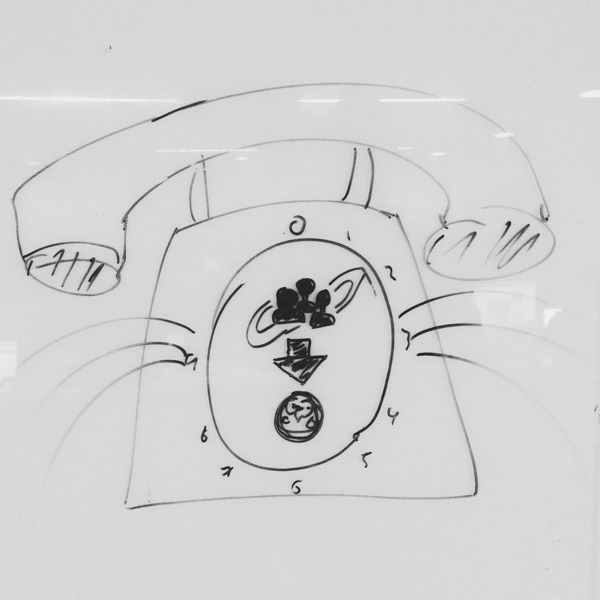
    A quick word about the Sony RX100 I bought on vacation: best camera I’ve ever owned. Small enough to put in a jeans pocket, amazing quality output, and fast enough to grab shots like this one — I saw it across the street just as Kim managed to hail a taxi; had literally two seconds to shoot blindly while getting in; pleased beyond words that it turned out sharp and captured the look of the lady in the shop. I don’t think you can buy a better compact right now except maybe the larger RX1 which costs five times more.


  • Still Living UP

    It’s been a month since I bought my Jawbone UP band, and since then I’ve incorporated a lot more walking into my life, trying to reach my goal of 8,000 steps a day. By my estimates, I probably averaged half of that before, since a lot of my time is spent at a desk, and commuting to and from it in cabs and public transport. Most days now, I do 8,000–10,000 by walking halfway home in the evenings.

    I just weighed myself, and I’m back to the weight I remember being for quite awhile, up until the last couple of years when I’ve felt fatter and slower. The difference is about 3kg, not a lot, and I’d like to lose a few more kilos to get my BMI in the sweet spot.

    What surprises me is how painless it’s all been. No grunting at the gym, or aching all over in the morning. Just being mindful of how much movement I should be making each day, and going out of my way to walk more. Low-impact, sustained exercise. I listen to podcasts, new music on Spotify, or think about things along the way. I get some air, and take the occasional photo (below) if I see an interesting scene. It’s great.

    IMG_7565

    Okay, I guess I’ve also been slightly more mindful of my caloric intake, thanks to the food diary feature of the UP app. I haven’t denied myself anything reasonable, and so there’s no need for “cheat days”. I’d consider my eating habits to be 95% the same. Still, it probably helped?



  • Random Access Memories

    The new Daft Punk is incredible. The more I hear it, the more it unpacks waves of hidden melody. I was underwhelmed the first time, listening while walking home (on bass-weak Etymotic headphones), but now it’s like a whole other record.

    iTunes Link


  • Some Recent Games And Storytelling

    I’ve had the luxury of some console gaming time these past few months, and managed to complete Metal Gear Rising, BioShock Infinite, and the rebooted Tomb Raider, while making progress in Devil May Cry, Luigi’s Mansion 2: Dark Moon, and Super Mario 3D Land.

    The observation here is that in my advanced age, the definition of fun has changed. I used to be excited for sandbox experiences, building/business simulations, and multiplayer combat. I think if Minecraft and LittleBigPlanet existed when I was younger, I’d totally see the point of building a giant robot’s head in a mountainside. Now, the thought of spending hours on that kind of play instead of catching up on reading or working on other projects is out of the question.

    Open-world games are in a precarious position. Five years ago, I could spend hours collecting Crackdown’s Agility Orbs. I’d mess about in Assassin’s Creed and forget the main quest entirely, writing my own inner narrative about Altair being a medieval pickpocketing Batman. When life next comes collecting, these games will be the first to go.

    So when the nights are short, what games make the cut? The aforementioned games on Xbox360 (Metal Gear Rising, BioShock Infinite, Tomb Raider, Devil May Cry) are marked by strong, cinematic narratives, or at least entertaining ones in the case of MGR and DMC. The remaining Nintendo 3DS titles succeed on pure mechanics, where joy is extracted purely from the timing of button presses, helped by exuberant character animations and inventive set pieces.

    LuigisMansionDarkMoonReview_Pic2

    Luigi’s Mansion 2 might be one of the most charming games I’ve ever seen, and like most portable titles, it satisfies in a different way than a blockbuster console title. Each level is polished and detailed to the point that it vibrates. From one minute to the next, you’re constantly having your assumptions challenged by experimental level designs, new enemies, and ingenious puzzles. There’s a simple set-up about why the ghosts are loose, but the game’s real Story is located in the way that these parts interoperate, and in how the characters react, much like how design was famously said by Steve Jobs to be the craft of how things work, not how they look.

    Stories are perhaps the best reason to engage with any entertainment medium; often they function perfectly being the only reason, but videogames call for a balance between play and involvement to be fully realized.

    Take BioShock Infinite, one of the year’s most highly rated games, if not the highest. To experience a playthrough is to see an ambitious, first-person SF story with many smart things to say about games, politics, gender, religion, and whatever else people want to see in it. As a game, mechanically, it’s mediocre for a lack of innovation. Fights play out in the usual fashion, with a few superficial gimmicks. When the supporting character, Elizabeth, throws you a health pack mid-firefight with a press of your "X" button, it’s an Auto Heal/Use Potion action in disguise. Much like how artists can throw new textures atop a game engine to create an expansion pack, BioShock’s gameplay designers have reskinned a generic FPS using emotion and worldcraft.

    bioshock-infinite-20121207035233984-000

    Finding the combat somewhat boring, I started to cynically see places where narrative paint was employed to make the shooting gallery journey seem shinier than it was. It’s sad that a week after finishing the game, I mostly remembered its central conceit and frankly awesome ending sequence. This doesn’t happen in Luigi’s Mansion 2, because the gameplay itself is what you think about when not playing.

    Why is BioShock Infinite so overloaded on the story side of things, constantly trying to shove more story in your face with voice recordings, environmental artwork, snatches of conversation, meaning-laden anachronistic pop song covers, in-game exposition cutscenes, etc., but so underdeveloped as an action game? I’m pretty sure the experience of watching someone play the game is >90% as satisfying as playing it yourself. It doesn’t have to be your hands on the wheel. I’ve played games where after a momentous moment unfolded on screen, I was left acutely aware of a lingering sensation under my thumb where things had been set in motion. The button press echoed through flesh and time. Triumph seemed to reside directly in my actions. Because of how little I cared for and enjoyed the gameplay, BioShock felt like pressing Play on a rented movie.

    The-Village-with-Radio-Tower-in-Backgroung_620x350

    Tomb Raider is more successful in several of these places. While well-written, the story isn’t mind-blowing in the way BioShock’s is, but it has its own surprises and is superbly paced: you always feel like the game’s climax is drawing near, and then the story horizon stretches out in front of you again like a challenge, taunt, and gift all at once. Traversing the world, hunting with a bow & arrow, scouting for hidden objects… did I just get tricked into playing an open-world game I said I didn’t have time for? As a combination of story and fun, and critically, by allowing enough freedom for its player to feel a sense of grace and mastery of the world, it succeeds.

    Although progression is linear, how you navigate Tomb Raider’s world feels under your control. Lara is continuously gaining new abilities that open up previously impassable areas. It’s the old Metroid design, and a sound one. You could argue that the superpower-granting Vigors in BioShock play a similar role, but they are few, and the fun is taken out of them by the ammo limits. Tomb Raider doesn’t charge you for the joy of shooting a rope arrow across a chasm and zipping down it. Incidentally, where the ropes go is largely predetermined, but because the player personally installs them, the feeling is completely different from BioShock’s steel skyline cables, which herd you heavy-handedly around the map like the rails they literally are. A minor difference, design-wise, but one with an outsized impact on the experience.


  • Trophies as a Gift Idea

    This is a bit of a long shot, but if you live in Singapore and need a unique gift, or just so happen to actually need an unironic, non-jokey trophy, consider Alpha Plus at Queensway Shopping Center.

    We needed a silly trophy made for our departing colleague and creative partner, Christian, and they were able to turn it around in about 2 days for a fair price. You could probably make yourself one, just for kicks.

    All manner of trophies and bludgeoning objects
    All manner of trophies and bludgeoning objects
    Several inside jokes involved
    Several inside jokes involved here

  • Tricks & Cider

    About two weeks ago, I kinda realized that two people I knew online were in a band together, and preparing to put out their first EP. I visited their website, bought the record when it came out, and ended up seeing them live at the Esplanade last Friday. Hear for yourself through the embedded player below.

    In addition to Bandcamp, you can get the 5-song collection on iTunes and Spotify.

    IMG_7333
    At the Esplanade Outdoor Theater

    IMG_7530

    IMG_7516
    Lunchtime concert on Raffles Green

  • Link: Jawbone’s Greater Ambitions for the UP

    This Wristband Could Change Healthcare | Monday Note

    The corpus of medical observations is based on classic clinical tests of a small number of patients. On the other hand, Jawbone thinks of the UP wristband — to be worn 24/7 by millions of people — in a Big Data frame of mind. Hosain Rahman is or will soon be right when he says his UP endeavor contributes to the largest sleep study ever done.

    Monday Note examines the Jawbone UP, which I’ve enjoyed using these past two weeks, and explores its implications for the healthcare industry — the real potential of the device — and why Jawbone has received over $200m in funding from investors to date. You might not like where it’s going: giving corporations more data and insight, quite granular at that, into our lives and health statuses, but the potential for good here is also strong.

    As for me, my use is still going strong; I enjoy the knowledge and statistics, and feel motivated to reach my daily activity goal of 8,000 steps (last night, I walked almost the whole way back home from the office and exceeded it by 50%).

    End of Day Update: Jawbone has just announced a new API for connecting the UP smartphone app with other services such as My Fitness Pal, Sleepio, Withings (Wi-Fi weighing scale), and the very popular Runkeeper. With the latest 2.5 update, you’ll be able to log runs and other data in UP just by using these other apps the way you already do. Big news, as My Fitness Pal instantly improves the food/calorie database, and Runkeeper should bolster the wristband’s sensors with GPS accuracy.

    Jawbone launches an ecosystem for Up | The Verge


  • One Week with the Jawbone UP: How its Design Inspires Behavioral Change

    up-by-jawbone-lowres-015

    I bought one of the newly revised Jawbone UP wristbands a week ago. For those not following the rise of wearable activity trackers such as the Nike+ FuelBand, they are essentially pedometers you put on your wrist as you go about your business each day (and wear to sleep at night, in some cases), that connect with your PC or smartphone to give you more insight into your health. The UP was one of the first products on the market, but suffered from design and manufacturing defects that led to a hasty recall and another year on the drawing board before it was finally re-released last Christmas.

    It all started with using the free Moves iPhone app (by the Finnish company ProtoGeo) for about a week, during which I got a taste for recording and quantifying my movements. When I saw the UP on sale locally, it was an easy purchase. It’s only been a week, but it has been a behavior-altering experience for me so far. Along with its companion app, the UP provides a couple of key features.

    • Activity reports
    • Food logging
    • Sleep quality tracking
    • Social network awareness
    • Fiddle-free design
    • Comfort and style

    Activity reports

    carousel-2-3

    Open up the app and you’ll see at a glance how you’re doing against your set objectives. A healthy target is 10,000 steps a day, but few sedentary workers can meet that. Because UP is an internet-connected service, it’s able to tell you what others like you (in age, gender, height, and weight) are averaging. In my case, the average most do is about 5,500 steps a day. I decided to set myself a high but achievable goal of 8,000 steps.

    What’s happened since? I’ve found myself striving to reach that by alighting one bus stop ahead of my destinations, taking the long way around the office, and going for more short walks whenever I can.

    It translates your activity into calories burnt, which it shows you alongside an estimate of how many calories you burn just resting, and a total for each day. Every now and then, the application shows you “Insights”; pre-written facts and advice tailored to your own performance. Examples include deciphering hidden patterns in your behavior and mood, and helping you understand terms like “you walked 8,000 steps” with statements such as “equivalent to walking across the Golden Gate Bridge and back”.

    Food logging

    This part is optional, but you can enter your meals (or just photos of them) to keep a record of what you’ve eaten. If they’re available in the online database, nutritional information is attached. It has the same effect as using an expense tracking app: it makes you acutely aware of every little bit you put into your body, and alerts your conscience to the unnecessary.

    In practice, having a vague idea of how many calories I’m consuming, coupled with the knowledge of how much I’m burning (or NOT burning, on idle days) has been powerful. If I know that I’ve only moved a minimal amount all afternoon, any random urge to snack quickly meets a mental roadblock — “Why would I need more calories?”

    Sleep quality tracking

    Like the popular Sleep Cycle app, the UP band can monitor your movements in the middle of the night, and map out your light vs. deep periods of sleep on a graph. And then at the best possible time close to your intended waking hour, it will silently vibrate in the morning.

    You are asked to set a sleep goal for yourself, and along with all the other data it collects, this is plotted over a timeline of days, weeks, and months, which illustrates how good you’ve been at getting the sleep and exercise you need.

    Social network awareness

    carousel-2-1
    This is easily one of the best features of the UP. Other people can be added as “teammates” and their activities populate your Home screen, turning it into an Instagram of physical activity. You’re encouraged to inspect their details, leave comments, or react with a small selection of emoticons. You might see that a friend had a healthier lunch, or walked far more than you, or slept better than you. These events nudge you into behavior change.

    When I started, one of the only people it found for me to add to my “team” was someone living in Japan that I only follow on Twitter and YouTube. I asked, she said ‘Sure’. I don’t know her personally at all, but I’ve found that reading UP’s activity feed is a unique interaction different from regular status updates. Being able to correlate your own physical state with another person’s through shared metrics, leads to a different sense of awareness; any encouragement you receive resonates that much more. Her most active day blew me away at over 24,000 steps, followed by 11 hours of sleep. It really spurred me on to try and find the time for activity. Multiply that by the number of people you follow, and the social features become an extremely compelling component.

    On my second day, two more people I interact with online bought their own. On the third, my girlfriend joined in.

    Fiddle-free Design

    While the UP is not designed to be worn and forgotten — its constant presence serves to remind you of your goals — it is designed to be worn and left alone. Its long battery life (about 7-10 days) is one of the ways in which this is obvious. Charging via USB only takes about 80 mins, which you can easily do while idle.

    In chasing this long battery life, the UP eschews Bluetooth syncing, which other products like the Fitbit and Nike+ FuelBand have. To sync the UP, one must remove it and plug one end into a smartphone’s headphone jack. Jawbone recommends doing this about twice a day to keep up with your own stats and update your team. On the other wristbands, one only has to start the app, and they sync wirelessly.

    I actually think this omission is a strength.

    Like how shooting on film frees you from constantly checking how the photo came out on the little digital screen, thereby letting you take more photos and experience the scene you’re in, not continuously syncing the UP creates mystery, anticipation, and actually lets you get on with it and not fiddle with tracking apparatus every spare minute.

    In his excellent essay about using a FitBit, Paris and the Data Mind, Craig Mod described looking at the LED display and seeing that he had climbed 96 flights of stairs one day. The next thing he did was walk halfway across the flat town of Palo Alto to the nearest flight of stairs he knew of, so that he could shift that number to read 100. It sounds like great exercise, but I don’t want to obsess over live numbers or end up conducting accuracy tests each day over how many steps it’s counting.

    The UP way, you’re wondering things like “will I break my record today?”, and if you’re extra competitive, “I hope I don’t lose to so-and-so,” as you go about your business. Sometimes, by not knowing, you exceed your targets. And then you sync at the end of the day, and it’s like waiting for lottery numbers to be called out. It’s its own kind of fun.

    Comfort and style

    up-by-jawbone-lowres-016

    The UP is available in 8 colors, of which 3 are available here in Singapore right now. I got the Black (sorry, Onyx), and it’s pretty nondescript and unlikely to draw attention. The brighter colors pop more, and show off a subtle zig-zag texture that identifies it as part of the company’s product range under design chief Yves Béhar. None of them are what you’d expect a “wearable computing device” to look like. The only button is cleverly hidden, looking like an integrated design feature. Two LED lights are embedded beneath the hypoallergenic rubber surface, and only visible when lit. It’s much thinner than the FuelBand, and could easily be mistaken for one of those Livestrong-type charity support wristbands from a few feet away.

    These things help with making the UP an invisible part of daily life, which gives it potential to succeed at being adopted by more. But as the wearer, I always feel its presence (at least in this first week). The routines I’m developing around the app, around thinking about moving more, burning more, eating less, around how my teammates improve themselves, are the very definition of behavior change.

    If having visualized, connected, and actionable data on your own body and movements sounds interesting to you, the UP will probably be a great addition to your life.