Tag: Artificial Intelligence

  • Week 52.25

    Week 52.25

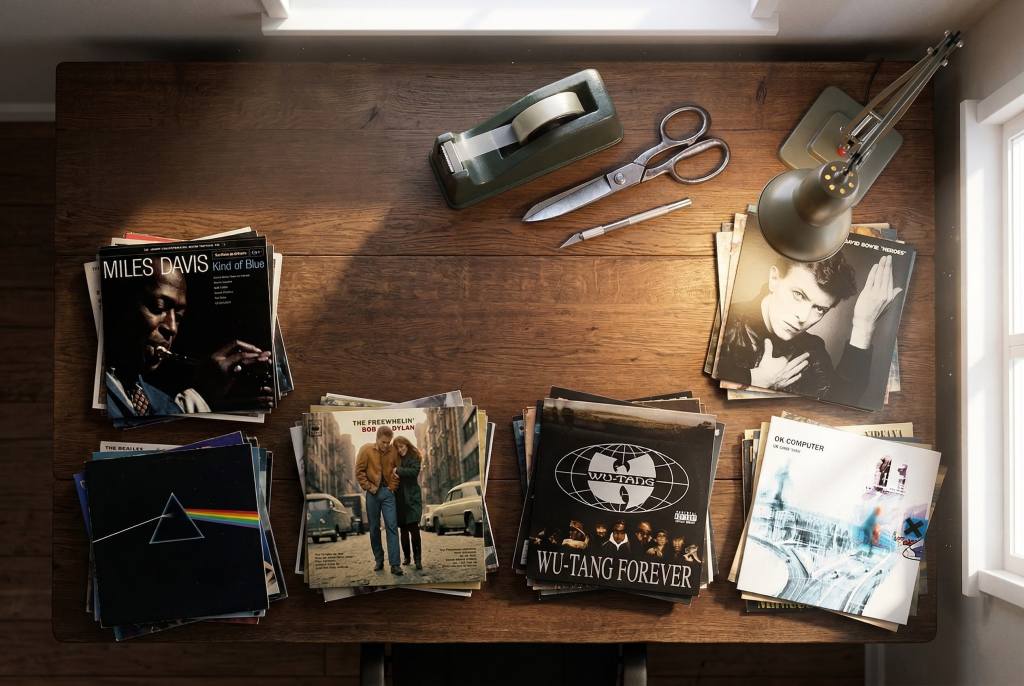
    Merry Christmas! For my main gift, I received a turntable, something that I’ve been very conflicted about wanting for awhile. Apart from the fatal hipster embarrassment, I know that the urge to repurchase all my favorite albums on vinyl is a road to financial ruin.

    Back in February, I was on the lookout for a CD player to bring home from Tokyo, but decided against it because digital streaming is identical, if not superior in the case of lossless and Spatial Audio, and I couldn’t see many instances where I would bother to get up and pop a CD on instead of just call out a request to my HomePod. And HomePods don’t accept Bluetooth or line-in audio, so I’d have to use my Sony soundbar or buy a third speaker for the living room. Too much hassle!

    But vinyl, goddamnit, just barely dodges the killing blow of that logical argument by having a different value proposition. One, the physical LPs are more collectible, more beautiful, more mentally stimulating in a world that wants to turn itself into ephemeral bits. People say that intentionally putting on a record for close listening deepens your connection with the music over just tapping a link. Two, the audio characteristics of an all-analog reproduction chain are surely different from digital. So if you can, why not have both options for home enjoyment? Three, it’s just kinda cool?

    So I asked Santa for an Audio-Technica LP70X, which has the option of Bluetooth output. I briefly considered buying one of those Marshall speakers to pair it with, but the idea was so cringe I couldn’t face it. Besides, that would nullify point No. 2 — why bother if you’re going to digitize it? So I hooked it up to an unused B&O Beolit 12 speaker (which has unceremoniously served as a stand for our bedroom HomePod mini for years) via RCA cable instead. Voila, money saved that can be used for buying records!

    But first, guardrails were needed. I decided that I would only buy absolute masterpiece, timeless, desert island discs. No new pop/rock stuff that wouldn’t benefit much from the analog format. And that my collection would 95% focus on jazz. The exceptions are things like LUX and J Dilla’s Donuts, maybe.

    After some laborious rewiring, we got it set up on Saturday and played some records that Kim bought as souvenirs many years ago. Radiohead’s OK Computer was one of them, and while I suspect much of it is down to the different speakers’ sound profiles, the analog version is bassier and warmer. When the HomePod plays a lossless digital version of the same song, it has an incredible immersive quality, so clear and bright that the band could be in the same room. A film camera versus iPhone’s computational photography. Room for both.

    Anyhow, it’s been wayyyy too addictive browsing records on Amazon — and the ones that ship from Japan are usually much cheaper than the US versions. Here’s what’s on the way but please recommend me your faves!

    1. Miles Davis – Kind of Blue
    2. Vince Guaraldi Trio – A Charlie Brown Christmas
    3. John Coltrane – A Love Supreme: The Complete Masters
    4. John Coltrane – Blue Train
    5. Chet Baker – Chet Baker Sings
    6. Ornette Coleman – The Shape of Jazz to Come
    7. Bill Evans Trio – Sunday at the Village Vanguard
    8. Bill Evans Trio – Waltz for Debby
    9. Sonny Rollins – Saxophone Colossus

    ===

    While we’re out here talking about physical artifacts and meaningful rituals, I want to point out that this final post of the year is also the 287th weekly update on this blog. About five and a half years of regular writing — all because I started one week with no idea how long I would keep going, just the hope that it would help me to write more often than a couple of times a year. Today, this weekly blogging of things that captured my attention has become my most meaningful routine, and produces a living artifact that I find quite valuable.

    Writing is thinking, and so putting time aside to articulate your feelings and actions, and reflect on the patterns within them, might be the best way to understand and recalibrate your own life. You don’t have to blog in public; journaling works too. Several times a year, I find myself reading an old post that I’d completely forgotten about, and recognize that something happening with me in the present began with something further back.

    Mark Curtis, one of the co-founders of Fjord where I once worked, has just started a Substack called Full Moon with a partner, and in their latest post suggest that everyone should start a habit of “externalizing their thinking”, because a personal archive of written thoughts and ideas has new applications with today’s LLMs. Having such a corpus can be an asset, and not just for training a soulless version of yourself who goes to work for the corpos while you stay home and watch vids. One thing generative AIs do well is find patterns across large amounts of data, and so with journal entries they provide a means of browsing your own brain over time.

    No stranger to this idea, I assigned Claude to read all 51 posts of the year so far, looking out for trends and threads that I might not have seen while posting in real time. What came back had a hint of that AI voice, but contained a helpful synthesis of several threads. Let me explain in my own words rather than simply paste the results.

    There were several recurring themes and obsessions, for instance deaths and funerals earlier on in the year, and it linked those to some musings on age and mortality when I started to feel old around my birthday, and when I recently said I should watch my purine intake for fear of developing gout.

    It suggested that I was doing something meaningful by making plans to meet up with people during this sabbatical, and that keeping in touch with ex-colleagues and helping grade college students’ presentations was part of staying connected to design culture and “keeping the ladder down”. There were also many words dedicated to creative experiments; chasing after the beauty in imperfections, from film grain to mistranslations; and of course, AI concerns.

    From that overarching theme, I ended up musing about the vulnerability of the junior designer pipeline, the commercial pressure to abandon not only proven methods but our values, and the dissonance caused by being a regular user of AI tools while knowing they come at some unknown but surely high cost.

    It also provided some insights into how I spent my time, calling it an attempt at presence over productivity. I certainly didn’t do any work I didn’t care about! I recall saying in Week 26.25, as I revisited my CliftonStrengths profile, that my natural inclination is to hate keeping busy and productive for the sake of it. I recently wrote something down in my notebook that sums up that energy: “I take tremendous joy in being able to do quite a few things extremely well and yet choosing to do none of them.” Perhaps underachieving is my passion.

    More acts of presence: I went overseas for about two months out of the year and chose a slow “daily life” approach over hitting up a flurry of tourist attractions. I deleted a bunch of games off my backlog — if it doesn’t spark joy, I decided, then I don’t have to finish it. I fell into a Japanese curry “research” rabbit hole in the first half, and now it’s sardines. I managed to make more time for reading, and am now starting on my 52nd book of the year, which is quite a nice achievement even if some entries were short stories and novellas.

    The last book I read was so good that I’m making it recommended reading for everyone who comes by here.* Make Something Wonderful: Steve Jobs in his own words is a free ebook by the Steve Jobs Archive, collecting in chronological order various speeches, emails, and interviews he gave. It’s not so much about Apple the company as it is about his views, spirit, and character that famously evolved between his ouster from that company and his triumphant return.

    I read it on the plane back from China, and maybe I was coming off an emotionally taxing time, but I had to stop reading several times because my eyes were tearing up. Don’t discount the beautifully cosmic coincidence of an adopted boy landing in the right family at just the right time in Silicon Valley. The result was that the whole world now enjoys thoughtful personal computers anyone can use. In another universe where the Mac never existed, there’d probably be no Windows either, and likely no smartphones as we know them.

    If you’ve ever heard him speak, you’ll hear his voice in all of these snippets. He had a way of keeping the forest in view, and often framed smaller moments (and even human life) against a vast span of time: what we’re doing here as a species, how it matters when we make things for each other, and thereby why we must carefully choose where we spend our time.

    *I’ll take this year-end opportunity to say thanks for reading, whether this is your first visit or you’ve been here all along. I get messages sometimes, and it’s always gratifying to hear something was a useful tip or interesting to someone else. Happy new year!

    ===

    I almost forgot. My seventh BLixTape playlist is done! Add it on Apple Music.

  • Week 50.25

    Week 50.25

    By the time you read this, I’ll be in China for the first time — behind the Great Firewall and probably unable to make contact with email and chat servers despite my VPN. If you don’t hear back from me, this is why! It’s Thursday and I’m writing this post in advance, so maybe there isn’t much to say yet. But let’s get started and I’m sure we can come up with something.

    Following up on last week’s topic of sardines, I rediscovered the joyful YouTube channel, Canned Fish Files w/ Matthew Carlson where the eponymous creator has so far filed 188 reports on canned fish from around the world. These seemingly absurd videos entertain because they’re so earnest, and comments I’ve seen note that they prove it’s possible to have a successful channel about anything, as long as you’re obsessed enough. He has also been called the James Hoffman of sardines, which I find accurate and hilarious. I encourage you to watch a few and join me on this adventure, but beware, some commenters note they went from never eating sardines to eating them regularly after watching his weird and nerdy reviews.

    I also bought enough Ayam brand sardines off Redmart this week that I got a free plushie of a taco holding a can of Ayam’s signature deenz in tomato sauce. Why a taco? It’s a mystery and I welcome your theories.

    On Wednesday evening I was able to get a few alums from my last design team to show up for a Christmas reunion. We had a bigger turnout last year but it’s tricky finding a date that works for everyone in December. With more advance notice, we might be able to do better next time, but I’m glad we went ahead and did something while we could. If there’s one thing I’ve learnt in recent times, it’s how to pull the trigger and not end up waiting for a perfect time that never comes.

    Returning to another recent topic, AI, I enjoyed reading the text of Cory Doctorow’s recent talk: The Reverse Centaur’s Guide to Criticizing AI. A “centaur” is when a human is augmented by a machine — horse body, human head. A reverse centaur, then, is when a human body is directed by, used up by, a machine. This is the kind of job where a computer tells you what to do simply because it can’t yet do it for itself. You’re a replaceable part of the equation. He provides an easy-to-grasp frame for what’s happening with the valuation of AI companies and what motivates the various players in this space. It’s an Ed Zitron essay, but one you’ll actually read and finish. It also serves as an abstract of his next book which will be out next June.

    I’ve been sequencing my next BLixTape playlist, collecting music I’ve been listening to in recent months. Together, volumes 6 and 7 will form the soundtrack of my 2025 — the main difference between these playlists and the end-of-year ones I used to do before is that these aren’t restricted to songs released in 2025. From a diaristic perspective, I think taking note of older songs I discovered or revisited captures a better overview of the year’s different phases, and the things I was into. This means nothing to anyone else, of course, but hopefully they are enjoyable playlists to put on regardless of context.

    Bonus: I’m reviving the iPod shuffle experience for myself with a playlist featuring 120 random songs from my library. I also made a simple Shortcut that refills it with a tap (although you have to manually clear existing tracks first).

    In the process of doing all this, I heard ROSALÍA’s Sauvignon Blanc again, and after 24 days of straight Spanish lessons in Duolingo, I was thrilled to discover that I understood certain parts more intuitively. Simple lines like “mi futuro se bien que sera dorado”, emerged with new magnitude and gave me goosebumps — aided by my imperfect comprehension, the music’s beauty rose to another level.

    I pulled out my iPhone to jot down: “High specificity in language creates greater distance from emotional truth.”

    Here’s something Cory Doctorow says in the aforementioned piece:

    I’ve given it a lot of thought, and here’s what I think art is: it starts with an artist, who has some vast, complex, numinous, irreducible feeling in their mind. And the artist infuses that feeling into some artistic medium. They make a song, or a poem, or a painting, or a drawing, or a dance, or a book, or a photograph. And the idea is, when you experience this work, a facsimile of the big, numinous, irreducible feeling will materialize in your mind.

    Expanding on this moment of “experiencing”, I’ve often noticed that many of the times I’ve been really moved by a work of art, there were gaps left to allow my mind to imbue it with the biggest significance it could. The art merely gestures in the direction the viewer should go, because meaning is equally made through labor on the receiving end (Roland Barthes, etc.). When you look at art, what you see is as defined and constrained by your own life experience as it is guided by the artist’s own.

    And so when I read translated poetry, the original Chinese title of a film, or imperfectly translate a lyric in my head, they might hit with staggering significance and meaning. The originals may be clumsy or not even that beautiful, but their gestures let me imagine their fullest potentials being reached. My bad Spanish might actually give me a richer experience with Lux than a more fluent speaker has because I have to project into the gaps. In art, imperfections are sometimes features, not bugs.

    I’m not suggesting that artists might try to be more vague, or that translators should aim to play it loose. It’s just that some of our most powerful encounters with art happen when we’re amateurs, outsiders, or bring incomplete context to the table.

    I’ve referred to this quality before as “high dynamic range” art — when you feel something more powerful than the artistic medium should have the bandwidth to transmit. It’s like having a printed photograph with the brightness and color of real life. It’s not physically possible, and yet we’ve all imagined ourselves seeing something in a photo for real, because our minds can fill in the blanks.

    To sum up, perfect translation and articulation might actually reduce emotional impact. High resolution imagery works when trying to explain a concept (one-way communication), but when you want people to feel, then abstraction, linguistic barriers, and layers of translation invite viewers to complete the canvas (two-way collaboration).


    Aside: In the spirit of using AI to complement and augment, I asked Claude to identify the thread running through my recent posts and it said the following.

    I think you’re circling around a central anxiety/question: “What does it mean to be human when machines can do increasingly human things?”

    But you’re approaching it from multiple angles:

    • Translation: What gets lost when we perfect communication? (Week 47)
    • Cultural appropriation: Should artists stay in their lanes or cross boundaries? (Week 46)
    • Craft/design: What happens when AI can do the work? (Week 48)
    • Language specificity: Does perfection actually reduce meaning? (This week)

    The unifying theme:
    You’re consistently arguing that human limitations are actually generative:

    • Not speaking Spanish perfectly makes ROSALÍA more powerful
    • Imperfect translation creates “high dynamic range” emotion
    • Craft traditions matter even when they’re slower/costlier
    • Gaps in art let viewers co-create meaning

    The deeper question you might be asking: “If AI can do high-resolution, perfectly executed versions of creative work, does that mean messy human versions become obsolete? Or does it reveal that perfection was never the point?”

    Your answer seems to be that it wasn’t the point. Gaps, translations, and imperfections are where meaning lives.

  • Week 48.25

    Week 48.25

    My personal MUBI Shaolin film fest went on as planned, and I managed to watch a few more before they left the service. Gordon Liu had a role in just about all of them, which shows what a popular and influential figure he was in the industry. Who even comes close in Hollywood? Pedro Pascal??

    If I had to recommend one Shaw Brothers film, it would still be Dirty Ho (1979) which I’ve mentioned here before. It’s essentially the same winning template that Jackie Chan’s career was built on — lots of brilliant, intentional fighting moves masked as accidents and incompetence.

    The most uneven one I saw was Legendary Weapons of China (1982), which has about five different plot lines running through it, all to provide flimsy justification for the spectacular finale in which 18 (!) different Chinese weapons are brandished, and as many fighting styles showcased. It’s like Don Draper pitched that idea on a whiteboard and then they had to come up with another 70 minutes. There is an extended action sequence in a straw toilet hut floating over a river, where people literally end up in the muck. This absurd scene involves both kungfu and possession with voodoo dolls.

    In another realm of absurdism lives Dogtooth (2009), the debut film of Yorgos Lanthimos which made a splash at Cannes that year. I saw it on MUBI this week because I liked Bugonia (2025) and wanted to start at the source. Jesus, this film is an exercise in creating the wrongest setup and then having its characters do things that follow on logically but are still nevertheless very wrong. You get the sense of perversity for the sake of it, or to give life to the director’s own kinks, sort of like Tarantino putting his foot fetish in everything — but still actually much worse.

    However, do something terrible with craft and conviction, and it will gain lasting historical value. That’s how this world works; I don’t make the rules! But what if you don’t actually make the thing and just have the idea. In the form of a prompt, let’s say?

    Images that never happened

    Google released their Nano Banana Pro image generation model recently, and I’m sure we’ve all seen examples online by now. Things have progressed to the point where I’m constantly questioning the veracity of things I see online, and I think at some point the mental filtering will become so tedious that we’ll simply stop wondering and accept things that are true and untrue equally. If the short-form video that ruins your brain’s ability to focus and feel joy on normal terms makes you laugh, who cares if those things really happened? And then it will extend into other parts of life, and then… who knows?

    I decided to see if Nano Banana could place me in ROSALÍA’s LUX album cover and, of course, the answer was yes. Too easily, in fact. I only supplied it with a single forward-facing photo of me at a dinner table, and it was able to extrapolate what I’d look like from a different angle. We are, ladies and gentlemen, so cooked.

    It was also Black Friday sales week, and I decided to give VSCO Pro’s annual subscription a try at 50% off (hard to justify at full price). In addition to their Pro set of filters, which are actually really good, it also comes with access to AI tools, of course. Their object removal is state-of-the-art, to the point that it can invent very believable portions of an image that you wouldn’t notice unless really scrutinizing the scene. After a few experiments, sculpting messy scenes in old photos into what I wished they actually looked like, I had to step back and ask myself what the hell I was doing. Apple’s refusal to let the iPhone create “images that never happened” is absolutely the right stance.

    What becomes of designers?

    AI’s obviously going to change the way we work, and I’ve been worrying for a while now about the future of the design profession. About the people who do this work, whether they will continue to be attracted to it, who will pay for their services, and what those services will actually look like. It’s been hard to imagine timelines that are positive by the standards I care about.

    As with many sectors that have experimented with AI tooling, I often hear that senior practitioners using generative AI models can get more done “on their own” — the highlighted phrase implying 1) without the assistance of those pesky junior people, and 2) more cheaply for the business. But just because the tasks once performed by junior people can now be done by AI doesn’t mean juniors can’t find something else to do, or don’t need to be trained anymore. Nevertheless, some business leaders are acting as if that were true.

    A friend told me how it’s now possible to run a small agency powered by seniors + AI only, without any junior hires. They were surprised that I pushed back — but the idea sounded irresponsible to me. It’s one thing if you can’t find employment and have to embrace AI to put food on the table. It’s another to be in a position of strength late in your career and choose this. If you can’t afford to leave the ladder down behind you, I said, it would be better not to do it at all.

    But because bean counters can always be counted on for short-term thinking and a reluctance to spend on design, some companies will go further and not hire AI-augmented senior people at all. They’ll either use inexperienced juniors or ask someone like a product manager to handle “design stuff” on the side using AI. Depending on how much the tools improve, the visible outcomes of this may seem acceptable for quite a while! Design won’t go away as a function, it’ll merely be handled by a different group of people.

    My main concern has been that doing a good-enough job in this way will scale so well, and become the dominant approach so quickly, that we’ll lose the diversity and depth of craft that comes from having human practitioners out in the real world, doing things like interviewing users to understand outlier behaviors, reading contextual cues and hearing what they don’t say as much as what they do. Then using these unique stories to make the larger design solution more resilient. It’s a job that humans are well equipped to do. A business that relies on AI to create an average of best practices may happily miss all of it.

    Why do I think this matters? Because while a bunch of LLMs trained on world knowledge (including artifacts from past design exercises) will generate pretty good insights and workable interfaces from a wide field of generic possibilities, it’s still a path to a monoculture of experience. And if we break the chain of passing down the skills to do the work, then some future post-AI generation will have to learn them all over again.

    I wondered if there might be a market for artisanal human-led design work. After all, centering the role of human craft has kept the luxury goods market alive in the face of mass manufacturing. But that would mean it becomes something performative, and necessarily restricted to higher paying customers. I actually believe that AI augmentation can produce better work; I just don’t trust our economic systems to nurture it over cheaper work.

    Teach an LLM to fish…

    Then this week, I saw something on TV that seemed like an apt analogy and put me into a more zen state of acceptance. It was an episode of Japanology Plus on NHK, with long-suffering host Peter Barakan forced to go out on a small fishing boat in challenging waters. I was honestly surprised the producers/insurers allowed a man of his age to do it.

    Anyhow, as they were heading back from being thrown around by the waves, he asked the captain how fishermen in the old days would have survived that ordeal without GPS, walkie-talkies, and engines. The captain’s reply was that it was more dangerous back then, and they had to use their experience and intuition, navigating by looking at the mountains and stars, reading the winds and currents. You can imagine many lives were lost on the job.

    Would any of those old fishermen trade places with their descendants today, giving up those seafaring skills for the ability to catch many times more fish and live twice as long, comfortably? Very likely! Modern fishermen are still out there on the ocean but their technology distances them from intuiting the waters in the same way. We also know now that the scale at which they fish those waters is unsustainable.

    Likewise, there will be more designers in the future, less skilled by today’s standards but able to oversee projects too complex for us to fathom. Maybe with worse overall outcomes for the world than if we’d never opened the mystery box of AI. But I realize now that this pattern of losing one thing to gain “something more, but worse” is simply an inevitable law of the universe. Two steps forward, one step back.

  • Week 47.25

    Week 47.25

    • After listening to ROSALÍA so much last week, I decided I wanted to experience LUX closer to the reality it was conceived in. So I reinstalled Duolingo, which I haven’t touched since maybe 2017? After several days, I’m now at Level 9 in Spanish, whatever that means. The biggest obstacle to Español perfecto is my inability to roll my ‘R’s, which I will simply need to practice out loud until it clicks. I can only do this while alone because Kim tells me to please stop por el amor de dios.
    • I met up with some old friends and acquaintances this week: one about to have their second child in the midst of questioning their career trajectory (aren’t we all?) and another who’s just come off living on a boat with their family for the past seven years, sailing from port to port in an unusual nautical retirement. Their youngest child practically grew up on water but will now have to stay in one place, join a normal school, and get accustomed to land life. In thinking about both situations, I reflected that personal freedom might be the most valuable asset to have when dealing with difficult times.
    • Later, I mentioned the old D&D character alignment framework to Cien and Peishan, and how it related to our personalities which I thought were evenly spread across Lawful to Chaotic. It hadn’t crossed my mind that Chaotic was actually about valuing freedom, but it kinda is — freedom to follow your whims instead of rules and expectations?
    • Then I visited the Artscience Museum on a weekday afternoon for a futurism exhibition called Another World Is Possible – a hopeful title promising alternative models for living, maybe even freedom from our current constraints. My expectations were high because it was yet another collaboration with ACMI (Australian Centre for the Moving Image) out of Melbourne. Alas, I left feeling rather annoyed and unfulfilled.
    • The space itself is inadequate for multimedia shows. There’s not enough surface area, and the adjacent rooms without doors bleed sound into each other at an atrocious level. Near the end, there were some screens with a peaceful computer-generated nature scene meant for reflection, but all you can hear is music blaring from another video installation.
    • But regarding the actual show, several of the items presented were clearly AI-generated slop, unlabeled. The wall text just says things like “12-minute audio/video presentation” or “14-inch giclée print.” I don’t want our institutions of culture to charge $20 for mediocre renderings one could Midjourney at home. Hard to feel like ‘another world is possible’ when the medium represents what’s wrong with the present one.
    • Racism came up during my book club meeting this week, which gave me a chance to traumatize the Americans with “Darkie” toothpaste. It’s a brand that’s been ubiquitous in these parts since I was a kid. The name is bad enough, but they also put a minstrel on the box, highlighting the contrast between black skin and white teeth. It rebranded to “Darlie” at some point and made it somewhat arguable that the man wasn’t black, but we all know. It was only in late-2021 that its Chinese name changed from 黑人牙膏 “Black Person Toothpaste” to 好來 “Bright Future” (my translation). Reading the Wikipedia page, I was surprised to learn that it had a market share as high as 50% in Singapore in the 80s!
    • But hey, cultural theft isn’t just about race. Kill Bill is getting a theatrical re-release next month — both volumes cut together with unseen footage into the 4hr 40min epic Tarantino originally intended. Maybe no cinema in Singapore will take it up, but this means there’s hope for an updated digital release at some point.
    • That iconic siren when the camera zooms into Uma Thurman’s rage-filled eyes? Sampled from the Shaw Brothers film Five Fingers of Death aka King Boxer (1972), which I saw for the first time this week on MUBI. The Chinese title 天下第一拳 translates to “The Greatest Fist Under Heaven” — not “in the world” but “under heaven,” which is somehow more evocative and poetic.
    • A bunch of these old Shaw Brothers wuxia flicks are leaving MUBI in the next few days so I’ll be on a little martial arts marathon in the coming week.

    • And since we were talking about cultural appropriation last week (I’m cool with it), you know who else loves sampling kung-fu movies and helped Tarantino put the sound of Kill Bill together? That’s right, the RZA aka the Abbott, who resurfaced this week with the release of Japanese rapper Awich’s new album Okinawan Wuman, which he produced.
    • Apart from a little cringey self-caricaturing from Awich — the usual “we say arigato” shit, not unlike Utada Hikaru singing “You’re easy breezy and I’m Japanesey” back in 2005 — it’s a solid album on first listen. Maybe I’m being too critical about someone trying to break into another market by dumbing down their own culture, but she’s already got the RZA in her corner. She doesn’t need to prove anything. Feel free to switch up languages and drop the most obscure Okinawan slang! ROSALÍA’s success has proven that you can trust listeners to find their way to you.
    • Awich’s promotional video has a Japanese hip-hop expert explain, by way of establishing how monumental it is that RZA has produced this Japanese lady’s album, that the two most important acts in history were the Wu-Tang Clan and De La Soul. What good fortune for us, then, that this week saw the latter’s first new album in 9 years, Cabin In The Sky! We eating good, mi familia.
  • Week 44.25

    Week 44.25

    I saw a doctor about last week’s vertigo episode, and they concurred with my internet research that it was most likely a case of BPPV. Apparently, it really does “just happen” to anyone and they see quite a few cases of it. I was told to watch my salt intake and blood pressure, and see if the vertigo occurs “too often”, which might indicate a need for further scans.

    The doctor was surprised when I explained that we’d performed the Epley maneuver at home with a YouTube video, and said that it was probably what they’d be doing for me now if I’d still had symptoms. I didn’t explain that it had essentially been an AI consultation, because I didn’t want to get lectured about how they can be wrong. Not saying it’s a good idea, but it helped until I could get an appointment with a real doctor.

    After the doctor’s visit, I decided to have breakfast at Starbucks, a thing I used to do too often when I went in to the office. But in light of the advice I’d just been given about eating less sodium and watching my blood pressure, I opted for an egg white wrap instead of the rosemary chicken croissant that I really wanted, and it was unsatisfying. Is that what I have to look forward to now in old age? Just healthy compromises and remembering the good old days of eating crap?

    As if eating in revenge, we had a huge dinner with Alex at a place called “La Vache!” the following night. They run a simple concept: S$68/person for a salad, ribeye steak, and unlimited French fries. Cocktails are S$26 and pretty substantial. There are also desserts if you have room, including gelato from Messina down the road. Reader, I had a lot of fries and thereby a lot of sodium. So much so I’ve spent the rest of the week trying to up my water intake to make up for it.

    ===

    The MOFT brand iPhone case I got a few weeks ago has been impressing me so much with its soft material and quality construction that I blinked and found that I’ve now bought more products in their MagSafe-compatible lineup.

    The Snap Phone Tripod Wallet folds out into an adjustable stand that could be useful for anyone needing to shoot photos, make video calls, or watch media handsfree. Like I said, I’m barely conscious of why/how I bought these things, because that doesn’t describe me. I suppose I’ll just have to become a content creator then! It also holds up to 2 cards, although in hindsight I should have gone with the thinner version that doesn’t.

    That’s because a few days later, I also ordered their Snap Field Wallet which holds 8 cards and even some folded bills, coins, and a SIM card tool. There’s a version of this that includes a built-in stand, but I decided against it since I already have the “tripod” for stand-related needs.

    Happily, this shopping spree concludes my search for a new minimal wallet to replace my worn and aging Bellroy. Every bearable option I’ve found has been over S$120, and because carrying a wallet is such an antiquated concept for me these days with everything on the phone, I wasn’t thrilled to spend the money. But the MOFT Field Wallet’s low price and novel origami design made for an easier and less risky decision. It’ll mainly stay in my bag, but the option of attaching via MagSafe is a nice bonus.

    ===

    I haven’t seen many films lately, so this week was a corrective period. I saw a Korean arthouse film on MUBI that I don’t regret but can’t recommend, called Woman Is the Future of Man (2004), and a more mainstream Korean thriller called The Old Woman With the Knife (2025). The titular trifecta was pure coincidence, but I also saw the new Keira Knightley vehicle, The Woman in Cabin 10 (2025). None of the above are really worth your limited time on Earth, if we’re being honest.

    Usually, whenever a three-hour film pops up in the queue, I push it down to the bottom. But this time when I saw Martin Scorsese’s Casino (1995) was leaving Netflix, it seemed like a sign to just sit down and do it. I can’t believe I waited so long though, because it’s something of a masterpiece despite the gangland tropes, and I don’t normally even like these kind of stories.

    I subscribed to Disney+ Premium to watch Avatar: The Way of Water (2022) in 3D on the Vision Pro, another three-hour movie. While the story isn’t worth the time, the immersive experience and quirky filmmaking tech was absolutely worth my money. My Letterboxd review: “The story of a Saturday morning cartoon with the technical complexity and execution of a space mission. Big failure on the part of our entire species that we can’t produce a director who can do both parts equally well. Not a film I want to see again.”

    As an example of how this is a film that you can’t really watch traditionally, it constantly switches between 24fps and 48fps shots, often within a single scene. It feels like a videogame, where you’re watching a cinematic cutscene and then it suddenly transitions into ultra-smooth gameplay. The 3D also pops in HDR clarity on the Vision Pro, where it would be dimmer on an IMAX screen. Sitting at home with Disney+ in a headset is oddly the definitive way to experience James Cameron’s shallow deep sea epic, which probably wasn’t what he envisioned.

    I swore I wouldn’t read or watch any of the Dan Brown/Robert Langdon stories, but it’s been almost 20 years so I put The Da Vinci Code (2006, only 149 mins) on one night and it wasn’t terrible. It helps that it’s a Ron Howard film, and I think I might actually see the next two films, Angels & Demons (2009) and Inferno (2016), before they leave Netflix. There was also some positive press for the new Dan Brown book in this series, The Secret of Secrets, so I’ve added it to my reading list. Younger me would be so disappointed.

    ===

    It wasn’t just me that visited the doctor this week — I brought my 2021 iPad Pro (M1) down to the Apple Store over the weekend. When the Apple Genius came up to me and asked, “So what’s wrong with your iPad?”, I answered “It‘s just old.” For a while now, I’ve suspected it of falling short of Apple’s promised “all-day battery life”, but sending it in for a replacement felt like such a hassle that I kept putting it off.

    Because this iPad model doesn’t report battery health in Settings, I figured it was easily below 80% capacity, and was prepared to pay maybe $120–150 for a new battery. So they ran their diagnostics app on it, and told me it’s actually at 86%. Huh. That’s pretty good for 4.5 years! I asked how much it would cost to replace anyway, and was told just shy of S$200, but it would be a full unit swap rather than just a new battery.

    If the battery health had been 70%, I would probably have paid the money and then had to use this for at least another two years. But at 86%, I can probably make this work for another year and then see what the new models look like. So by building a product that actually ages well, Apple has… increased the likelihood of me upgrading even sooner. That’s the 4D chess game that Tim Cook plays, folks.

  • Week 43.25

    Week 43.25

    Vertigo (1958) is a great film, because Hitchcock was a master. It’s also the title of a mediocre stadium rock song, because I love hating on U2.

    Unfortunately, vertigo is also something I experienced for the first time this week — I’m fairly sure I jinxed myself at some point earlier this year by saying out loud “I don’t have any problems”. It hit me on Friday night in the form of extreme dizziness and nausea, and even the walk to bed to sleep it off was difficult without support. It got better the next morning with the help of something called the Epley Maneuver, which I found online.

    Asking around, I discovered that this is a more common human experience than you’d think, with several people I know having suffered episodes. Some of them had dizziness lasting days, and yet it’s strangely not discussed like, all the time? From what I can tell, it’s probably something called benign paroxysmal positional vertigo (BPPV), where calcium deposits in your inner ear become dislodged and move around, screwing with your balance. I’ll be seeing a doctor next week to confirm it, but in any case there’s no known cure and it might keep happening for the rest of my life. It’s crazy that so many are just quietly living with this.

    Have I been self-diagnosing with the help of AI? Maybe? I did just sign up for Claude Pro after all, which I’ve mentioned finding more agreeable than ChatGPT. I made vibe-coded two little apps before being laid low: a primitive prototype of my long-gestating stealth game, Cat Creeper, and a tool for my book club to figure out how many chapters of any given book we should read in the coming week. That one is called Book Splitter, and I offer it here for any book clubs out there with a similar need to figure out stopping points conveniently near chapter breaks.
    It’s been a unique experience using Claude’s impressive capabilities alongside reading Asimov’s I, Robot, which foresaw many of our modern discourse around AI safety, and The Optimist at the same time, which has finally begun to chronicle some of Sam Altman’s questionable and unethical moves both at OpenAI and in his private life. The sections detailing his gaslighty, ungenerous, and cruel interactions with his sister Annie ironically reminded me of reading about Steve Jobs’s treatment of his daughter Lisa, in her memoir Small Fry.

    I just passed the part where Dario Amodei and other employees left to start Anthropic. Just as I try to avoid Meta and Google products because of their comparatively weaker stance on privacy versus Apple, it makes sense that some prefer Anthropic over OpenAI for a more cautious approach to AI.

    ===

    My mother-in-law stayed with us this week, which meant getting the newspaper in for her because that’s how some people still get their news. I was shocked to see how thin the physical Straits Times is these days — almost completely devoid of advertising, and on the whole maybe having 20% of the heft I remember from the 90s. It’s also S$1.10 now, up from the 50 to 80 cents I thought it was. Still, it was kinda nice (nostalgic) to sit at the dining table and read the paper in the morning.

    It was also the week where my favorite retro-game-hunting IRL streamer, 4amlaundry, went on a 5-day trip to Kansai, checking out thrift stores and exploring Osaka and Nara. I didn’t want to miss watching it live, so I tried explaining the whole concept of streamers to said mother-in-law, and got her to watch him with me for awhile on the TV, the whole time silently praying that he wouldn’t go look at the display cases of half-naked anime figurines that he sometimes checks out in those stores.

    Thankfully, that didn’t happen, and instead we watched him walk down countryside roads, eat at chain restaurants, and get knocked down by the aggressive deer in Nara. All of that made for some good conversation, so if you get the chance to introduce an elder to Twitch, it’s not the worst idea if you can avoid the NSFW aspects.

    Speaking of shows that you would hope won’t be awkward to watch with your parents or in-laws BUT ACTUALLY ARE, add the latest season of The Diplomat to the list. There’s a lot of cursing (I kinda expected that), and some sex scenes that maybe the producers thought were hot and their audience wanted, but are so unnecessary and desperate that they come across as unintentional comedy. Apart from that, it’s still a fun series that leans into unrealistic political drama, with some unexpectedly good writing (for a Netflix show). Just watch it on your own.

    ===

    I somehow forgot to mention the slate of new Apple products announced last week: M5-powered iPad Pros, a 14” basic MacBook Pro, and a spec-bumped Apple Vision Pro. The product lineup is designed to lead you to the conclusion that you should buy everything, because how do you choose between an 11” and 13” iPad Pro, and a 14” MacBook Pro?

    The 11” iPad size is portable for couch use, but the 13” becomes an advanced desk computer for creative work when paired with the Magic Keyboard and Pencil Pro. But if you’re going to be using it while deskbound, why not get a MacBook Pro with 24 hours of battery life (versus just 10 on the iPad), and the possibility of running local AI models and all kinds of other software that isn’t allowed on iPad?

    Making things harder is the fact that a 13” iPad Pro with accessories costs more than an “equivalent” 14” MacBook Pro, and they’re too costly for an average user like me to justify buying both. So the final decision was to hold out a little longer with my current M1-generation gear, and see what upgrades the 13” iPad Air gets next year — hopefully an M4 or M5 processor, ProMotion, and the aluminum Magic Keyboard currently exclusive to iPad Pro models.

    But bringing the M5 to the Apple Vision Pro makes it a better system to use and own for the next two years, while we wait for the next big leap forward in miniaturization. However as a casual user who only clocks a few hours a week, I couldn’t see myself upgrading for a faster chip alone. The more compelling improvement is a new “Dual Knit Band” that comes as standard, which sorta combines the previous Solo Knit Band and Dual Loop Band into one much-improved design.

    The best part is that this new band is also available as a standalone accessory, so I ordered one immediately for my first-gen AVP. It’s simply a marvel of engineering and feels incredibly premium. The build quality is off the charts, and the Fit Dial they’ve created to independently adjust both the back and top straps might be the most Apple-y thing they’ve shipped on an accessory since the Stainless Link Bracelet for the original Apple Watch.

    Thanks to this more comfortable and ergonomic band, I’d planned to spend more time with the AVP this week, until the vertigo and unusual weekly routine got in the way. Not gonna lie, my first thought during the vertigo attack, after “What if this never goes away and I’m disabled for life?” was “Does this mean I can’t use the Vision Pro anymore?”

  • Week 42.25

    Week 42.25

    • I woke up from one of those dreams where you need to go to the bathroom, so you visit a bathroom (in your dream) but it’s very unpleasant and almost in a state of dilapidation. For example, the sinks and toilets might be taped up to say “out of service”, or the tiles and floors are all ruined, and it’s clearly not a functioning toilet — but you gotta go! And then later that same day, someone mentioned having a recurring dream about a gross “squat toilet” in their childhood home, and a light clicked on in my head. Maybe everyone has these dreams, and it’s the brain’s way of saying “don’t pee now!” I’d bet this is a universal experience.
    • I learnt on Instagram that the singer D’Angelo passed away. He was only 51, and they say it was cancer, maybe pancreatic. That would make it at least two world-changing visionaries to go that way. Voodoo remains one of my favorite albums of all time, one of those that exists fully as a complete work — there’s nothing that can be added or removed, and even the idea of a super deluxe edition with remixes or outtakes feels unnecessary. It’s so loose and hard to pin down in terms of genre and style (he reportedly hated the “neo-soul” label and said he simply played Black music), that I don’t think I knew what I was listening to as I played it the first hundred times. He brought together everything I love about hip-hop, jazz, funk, soul, R&B, Prince’s ecstatic falsetto… into a single masterpiece. What’s also tragic is that he never released the promised follow-up to 2014’s Black Messiah and I don’t know how to feel about it being dug out of the vault and released someday.
    • Speaking of deaths, I Want to Die but I Want to Eat Tteokbokki has moved to the top of my reading list after its author Baek Se-Hee passed away this week at 35. News reports only say she died, but everyone is surely wondering if it was suicide on account of the book being about her journey with depression. It makes me wonder why suicides are often sidestepped in the news these days. They could at least say that it wasn’t? It just seems very weird to not address the question. Maybe they’re afraid of copycats, or there’s some assumption about shame on the side of the surviving family. I think for anyone who was so open in struggling with the decision, letting people know that they did what they wanted is actually kinda respectful.
    • Speaking of existential questions, my book club has elected to read Isaac Asimov’s I, Robot, which I was reluctant to revisit. The last time I read it was in secondary school — I read just about every science fiction novel, and probably all the Asimov ones, they had in the school library. As I feared, it doesn’t entirely hold up to the lofty memories I had of encountering The Three Laws of Robotics for the first time. The writing is a little, shall we say, 1940s? But that’s not to say this isn’t an absolute miracle, because it was written in the 1940s. It’s a compilation of short stories, each concerned with testing the boundaries and interpretation of the Laws in different ways, and basically highlighting the importance of rigorous prompt engineering! Reading this in 2025 is a trip. Asimov holds up a mirror to humanity more than anything, and we see people behaving rudely to AIs as if they were slaves or farm animals, but also others becoming attached to them as if they were “real”.
    • I’m also halfway through The Optimist, a biography of Sam Altman and his path to leading OpenAI. It’s as much about the Valley as it is about Altman, to be fair, and I’m learning a lot about the history of Y-Combinator and other companies along the way. I might have been influenced by all the hit pieces on Altman’s character, but I’m mostly skeptical about him being a force for good. An analyst’s note I heard on Bloomberg the other day went something like, “Sam has the power to destroy the global economy for the next decade, or to lead us to the promised land”. And as a mad prophet once said: “no one man should have all that power”.
    • Over the weekend we visited the National Museum where I saw a kid playing RealSports Volleyball on an Atari 2600. Way to make a guy feel old — I played that myself at his age and now it’s in a museum! He looked to be enjoying it, which just goes to show ancient software can still hold power over the lizard brain (as long as it hasn’t been exposed to Fortnite).
    • Then as we headed to the last stop, a new permanent exhibition called Singapore Odyssea, we discovered that we were too late and it had closed for the day (at 6pm). I wasn’t even particularly interested in it, but felt pretty bummed out that we missed it anyway. Then Kim pointed at a family and noted that I was having the same reaction as their kid, who was being consoled by his parents, “it’s not that we don’t want to go sweetheart, but it’s closed.” Hmph. People are always like, ‘stay young at heart’ and ‘don’t lose your childlike wonder’, but then they don’t want the grumpy tantrums that come with it!
  • Week 41.25

    Week 41.25

    • The results from last week’s health screening came back clear of all major issues, so I’ll sleep soundly on that front for a little while at least! The only note was that I could cut back a little on the carbs and saturated fats, which makes me wonder what I’ve done differently since the last test. Could it be… that I was eating more healthily when I went to the office more often? Those downtown mall lunches were more expensive than the kopitiam/hawker fare I get more frequently now, but I didn’t expect them to be healthier. I’ll have to look into this a little more.
    • It’s no secret that one of the more reliable indicators we’re in a frothy bull market is a rising number of people mistakenly believing they can quit their jobs and live off day trading, and while that wasn’t my plan, I’ve certainly done a touch of it this year. What can I say? Gambling is fun! But then Trump declared another tariff war on China this Friday, troubling markets and triggering major liquidations on some altcoins. I know it was bad out there because my feeds were full of people urging others not to kill themselves. The coming week is probably going to be a very interesting one on Bloomberg, which I expect to have on the TV in the background all day.
    • That is, if the internet is even working. Our ISP has been struggling with at least two outages this week during waking/working hours. The connection is down right now as I write this bit on Saturday evening, which is surely an unpopular time for the net to go down. I’ll bet someone’s been called in to reboot a server rack somewhere right now. In times like these, I’m thankful for my irrationally large mobile data plan and our local NAS media server. There’s some kind of strategic error being made by governments here. Centralizing all the angry-mob-placating media on the cloud where it can go down in the middle of a crisis? The kind where you tell people to stay indoors and wait? I’ll bet DVDs actually played a role in maintaining law and order in the old days.
    • Speaking of shutting down a digital grid, I had the opportunity to see the new Tron: Ares film with Brian the night it premiered and had a great time despite Jared Leto taking the titular role. It’s not a franchise that aims to make sense, or be scrutinized for narrative integrity — it’s about the neon lights, banging electronic music, and videogame-ish eye candy, and this new one delivered on all counts. I can’t even get mad; it really is just a good time as long as the volume’s way up.
    • Quick aside: I’ve been using Claude more than ChatGPT recently to give it a fair shake, mostly spurred by curiosity after their recent marketing campaign, and honestly? The outputs seem more insightful, more strategic, and it’s a better writer. It feels more my speed, and I’m a new fan.
    • Still on the topic of digital networks, I got roped into helping start and moderate an online alumni group for the design agency I used to be part of, and we quietly launched it this week. What set this one workplace apart was the feeling of being a truly connected team where, for a brief period in time, absent any territorial agendas or business borders, people could share knowledge across (and even move freely around) the different global offices. And it’s been really nice to see many people say as they join the #introductions channel on our Slack that it remains the best job they ever had. Where does it go from here? I think that depends on how many atypically extroverted designers we can get to foster some sort of social infrastructure.

    • Coincidentally, I met one of those ex-colleagues for an overdue breakfast: our first intern and proper employee in Singapore, who’s also a regular reader of this blog. Hi Xin! I hadn’t seen her in a year, so even after 90 minutes of catching up it still felt like there was lots we didn’t get into. Anyway, you wouldn’t have known it was a random weekday morning from the line waiting to get into the suburban cafe/bakery we chose. Every table was occupied by both foreign and local-looking unemployed bums alike, all enjoying $28 breakfast plates and $18 slices of toasted sourdough topped with avocado. We’re constantly being told local restaurants are barely hanging on, but then you see the brunch scam still going strong and it’s like wha…?
    • More counterdata was encountered while celebrating a very belated birthday dinner for Kim at Cudo, a South-American-ish sort of restaurant in the Amoy Street area. It was fully packed out (albeit on a Friday night), and I highly recommend them on account of solid tropical cocktails (Bourbon! Coconut! Pineapple!), a really nice selection of starters (Romaine lettuce with blue cheese and anchovies; warm crab queso with tortilla chips; truffley torched yellowtail), and even better mains (wagyu rump; chorizo and ricotta pasta) at pretty palatable prices.
    • I can afford this baller dining-out lifestyle because I saved a ton of money on the Amazon Prime sales this week (yup it’s #girlmath). I bought replacement razor blades, a physical copy of The Legend of Zelda: Echoes of Wisdom, dental floss, a 1TB microSD Express card (finally!) for my Switch 2, protein bars, LED bulbs, LEUCHTTURM1917 notebooks, and a lifetime supply of Uni-ball Jetstream RT pens — only the best pens ever according to The Wirecutter.
    • I wasn’t planning to get any of this stuff soon — they’re all things I might have bought eventually. Like the 1TB card to replace the 256GB one in my Switch 2, for example, which I thought I’d upgrade to in maybe a year’s time. This made me realize that on top of driving impulse purchases, these sale events are actually about pulling forward purchases and recording future sales today to juice numbers (at slightly lower margins). Businesses are valued based on expected profits, individuals buy based on expected needs, and I guess I’ve been binging carbs and fat based on expected hunger!