Despite a brief setback, we ended up going to Bangkok for a few days as planned.
After spending hours in traffic the last time, I stayed within a smaller radius this time and walked a bit more. There wasn’t any agenda, really; Kim had some things to do and I wanted a change of scenery.
There was a jam coming in from the airport, of course, but we were thankfully in a very comfortable ride provided by the hotel. Ours was one of many cars squeezing down the narrow side lanes on the freeway — those buffer zones you don’t normally think cars should (or could) be using. Other cars in the ‘proper lanes’ skooch over to make way for this to happen, and it struck me as a neat metaphor for designing permissive, flexible systems with a normal mode but hiding ample bandwidth to accommodate emergencies.
Amidst more news of layoffs and economic rockiness, I think using AI in design (or most things, maybe) should be the side lane to ‘proper lanes’ of humans doing work, but we’re trying to do the opposite. Someone showed me a new customer research platform called GetWhy, where AI personalities conduct interviews over video calls with people, and synthesize some manner of insights automatically. They call it “human depth at survey speed”, which I knew AI would eventually enable: a merging of qualitative methods with quantitative scale. I saw it coming a couple of years ago but didn’t have the strength to look at it directly and figure out the pros and cons. At a gut level, I think it’s a shame that companies will now be able to insert another artificial layer between the people working on services and the people they’re supposed to be serving (or, more cynically, extracting profit from).
Anyway back to Bangkok. I saw three films to pass free time in the afternoons. Mission Impossible: The Final Reckoning for a second time; Jurassic World Rebirth, which was so terrible and completely lacking in the magic of the original film, the lasting fumes of which this franchise is still somehow able to sustain itself on; and James Gunn’s Superman, which I accidentally saw in Thai, without subtitles. I decided to sit through the whole thing and get by on just the visual language of it, and I think the experiment went okay! I probably couldn’t watch Tenet (2020) this way, though. 3/5 stars with the above qualification.
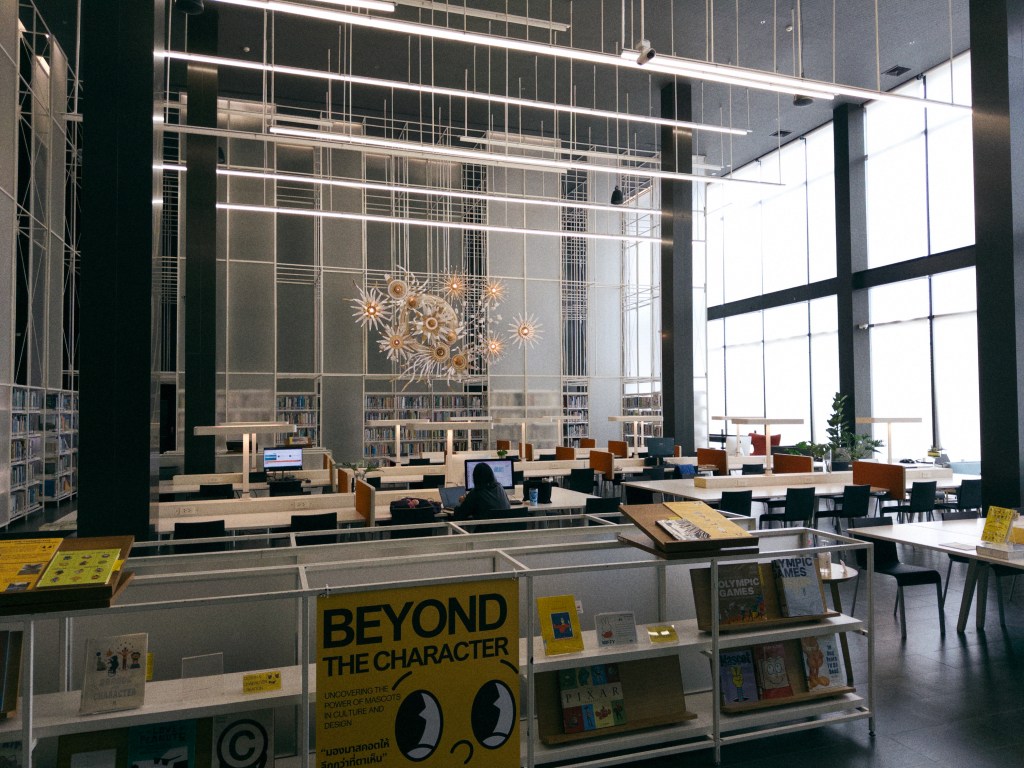
On Brian’s suggestion, I visited the Thailand Creative & Design Center (TCDC) which is a government office in a historic postal service building, mostly notable for its extensive resource library. You have to be a member to enter, although day passes are available for about S$4. It was a good way to pass a couple of hours, and I flipped through some interestingbooks that are now on my Amazon wishlist.
One of them was For the Love of Peanuts, by Elizabeth Anne Hartman, which covers the Peanuts Global Artist Collective — a project where seven artists reimagined Schulz’s characters through public art and exhibitions. There’s more information and photos through the link above. I was coincidentally thinking about learning to draw Snoopy recently, the “correct” way, and seeing this book was such a jolt to my narrow way of thinking — it had simply never occurred to me that I was free to recreate Snoopy however I wanted. Lots of new synapses to build here.
At the last minute, I decided not to bring my Switch 2 and it was fine. I always imagine hours of downtime on vacation where I might actually want to play a game, but it never happens. I did use my iPad Pro and am going through a sort of second wave of love for it. I recently got a third-party Smart Folio-type case, for just $12 off Amazon, which makes it much thinner and lighter than Apple’s Magic Keyboard case. The original Smart Cover (launched with iPad 2) is/was such a brilliant and minimal design, giving the device a perfect midpoint between versatility and portability, and having it again with this case is great for traveling.
It’s worth mentioning that each night back at the hotel I’d get into a trashy reality tv cable channel dedicated to “courtroom cases”. The quote marks are because I don’t know if you’d call these actual legal courts (but with the US, who knows?), but the two series I saw were awful and entertaining. Paternity Court sees couples come in and argue about their children, usually born on the side with another man or woman, culminating in the results of a DNA test revealing whether the man really is their father. Divorce Court is better, because you get other sorts of relationship issues being worked out, and the judges are sassier and give out strong advice. The name is a misnomer; some of these couples aren’t even married or looking for a divorce, they’re just airing their shit on TV. You can watch full episodes on their YouTube channel.
On the flight home, I caught Doctor-X: The Movie Final (2024), the supposed concluding chapter to the long-running Japanese medical drama that’s so bad I fell in love with it. Back in February, I spent an absurdly cost-inefficient chunk of my Tokyo trip watching Seasons 4 and 5 on local Netflix. Seasons 6 and 7 don’t have English subs, so I don’t know when I’ll get to see them — unlike Superman, this is too important to risk rawdogging in a foreign language. The movie… well, they went for higher stakes: explosions, AI, helicopters, the works. But that also meant less of the dumb fun and weird humor that makes the regular show a cult favorite. Or maybe not so cult at all — maybe it’s unironically loved in Japan. I kinda hope so.
Lots of reading this week, but not the traditional sort. I decided it was time to cross Emio: The Smiling Man off my Nintendo Switch backlog — that would be the murder mystery sorta-visual novel published by Nintendo (developed by Mages) last year. It’s the third installment in the ‘Famicom Detective Club’ series that laid dormant for decades (the clue’s in the name; they were made for the original Famicom aka the Japanese NES) until remakes of the first two games were released in 2021.
I played the first remake back in Week 31 of 2021, and apparently felt it was “a crock of shit”. When Emio came out, I wrote more about the series in Week 36.24, and watched a YouTube playthrough of the second game rather than pay good money to torture myself some more.
Thankfully, Emio is much better than those two. Perhaps because it’s a new game with a more sophisticated and complex story than was possible in the 80s. But I suspect it’s also because I’m now familiar enough with, and more forgiving of, the series’ game design ideas that I’d called “archaic and frustrating”. In any case, it has the most lavish animation production values I’ve ever seen in a visual novel, and the detective vibes are a lot of fun. I was let down by the mystery’s resolution, but the journey was definitely worth the time.
Japanese workplace sexism in Emio The Smiling Man
Rather than dive into Zelda Tears of the Kingdom (can you tell I’m afraid of the commitment?), I decided to continue down the VN path by starting on TSUKIHIME A piece of blue glass moon, a decision I will probably soon regret. This is a remake of a supposed masterpiece by the developer Type-Moon, and involves some 30–50 hours of reading, which is about 3x longer than Emio. It is, however, much less interactive and more like reading a novel with visuals and sound to set the mood. I’m only a little while in, but finding it a pleasant ‘multimedia’ midpoint between watching a show and reading a book. Luckily, I played Type-Moon’s Witch on the Holy Nightback in March, and because TSUKIHIME takes place later on in the same universe, it feels like a continuation.
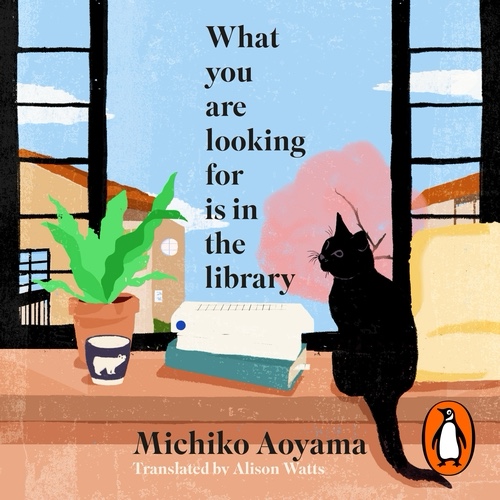
There was a real book, though! What You Are Looking For Is in the Library by Michiko Aoyama is a charming collection of five little stories centered around a community library, where people stuck in different ruts meet a librarian who has a knack for recommending books that set them off and thriving in new directions. I wrote in my Goodreads review that on top of being above average as translated Japanese books go — most of them come across sounding dumber and more boring than I’d hope they are in the original texts — but the extremely healing nature of these stories warranted a five-star rating from me.
It looks like I’ll be going to Bangkok again next month, but this time the heat will be even more unbearable (a RealFeel of 40–45ºC?), so please pray for me. In preparation, I’ve purchased a white t-shirt for the first time in several years.
Over the weekend, we dragged ourselves out to see the City of Others exhibition at the National Gallery despite not being fully in the mood. I thought it would be healthy/helpful to just wander through it anyway, even if not fully attentive, and I did find some things unexpectedly inspiring. I may start a new project soon on the back of one idea!
While looking at some artifacts behind glass, I remembered that I’d installed Adobe’s new iOS camera app, Project Indigo, which was apparently developed by some of computational photography’s living legends, and promises “SLR quality” images by combining up to 32 frames at a time. It includes an AI-powered feature that removes reflections by inferring what the subject is, and generating detail to fill the less-visible areas. I tried it out on a couple of artworks and got a warning that my phone was overheating — I guess I’m upgrading to an iPhone 17 Pro this year! Anyway, see how it did for yourself.
For a free app, Project Indigo is a great deal. I’m sure it’ll eventually be shut down and folded into a paid Adobe offering, but for now, everyone should try it out for a bit. It takes very clean and likely superior photos to the default camera, and does super-resolution oversampling to give you more zoom reach than the iPhone’s lenses will. But the outputs still have that hyperreal HDR look that comes with computational photography, and for the moment that’s something I’m a little tired of. A little grain goes a long way in making a phone photo feel more like a real moment.
After the gallery visit, we had lunch at a Cafe&Meal Muji where I was shocked to see the latest inflation-adjusted menu; a massive downgrade from when I used to visit frequently during office lunch hours. The “4-Deli” meal of two hot and two cold dishes alongside rice and soup used to cost maybe $17.80 pre-Covid, then crept up to $20.80 in the years after. Today, it’s been entirely removed from the menu, and $20.80 only gets you a “3-Deli”: one hot and two cold dishes. To try and obfuscate the loss in value, they’re now throwing in a half-boiled egg (which can’t cost more than 30 cents).
I probably should have expected it, because for breakfast that same day we stopped by a Toast Box for some kaya toast, which I honestly haven’t done in years, and the breakfast set (coffee, two eggs, a sandwich) is now S$7.60, or about 50% more than in the pre-Covid era. You can of course get this sort of thing cheaper elsewhere, but these prices are still wild.
In Craig Mod’s nearly three-hour book tour interview on Rich Roll’s podcast, which I’m listening to in small doses, he mentions the ¥300 breakfast set, a Japanese coffee house staple, and how apologetic businesses have been about having to raise prices by even ¥20 or ¥50. That’s what the kaya toast set is to Singapore, and I wonder if Japan is going to see a ¥500 or ¥700 breakfast set before too long.
Speaking of Japan, the Blue Bottle chain arrived in Singapore back in April. While I know they’re American, I’d only ever had their coffee while in Japan. Now that two months have passed, I thought the hype would have died down enough to try and visit the branch here in Raffles City’s tiny LUMINE department store. It was still packed, but I got an iced NOLA-style coffee to go for S$8 — lightly sweetened and flavored with chicory, it was pretty good tbh! But you can see Nestlé’s dirty fingerprints all over the brand now. It feels like the stores only exist to justify selling merch through other channels. Do a search for “Blue Bottle NOLA” and instead of a store menu or info page about their drink offerings, you’ll get tons of spinoff products like NOLA Nespresso capsules, brew-at-home kits, tumblers, instant coffee mix, foamers, and so on. Even Starbucks, synonymous with the mercenary scaling of coffee, looks kinda restrained in comparison.
I was listening to Apple Music 1 (the radio station) and a song came on with a melody that I knew, but couldn’t place. It was To Ease You by the indie pop band Men I Trust, and a couple of days later I placed it. The main hook is basically a sped-up bit from Now And Then, the recent “new” Beatles song. I’m mostly glad I answered the question for myself because I hate that feeling of recognizing but not being able to remember.
I went out three nights this week to catch up with people, maybe drank too much, maybe ate too much fried food, and it’s been so warm here even after dark — I could be falling ill again, or at least kinda tired out.
Kim’s going to be away again so I only have two things on my agenda for the coming week. The first is another evening appointment for drinks and fried food, and the second is a big one: Nintendo Switch 2 release day! God willing, my delivery will arrive on Friday. I’m fully expecting at least three hours of painful setup and migration from my Switch OLED, because Nintendo isn’t the best at this stuff. The official local release date has been set for June 26, but pricing has still not been announced. I figure it might be S$50 less than what I paid, but screw it, early access and a guaranteed unit is worth paying for. Some fine print on the local website suggests they’re not confident the Nintendo Switch Online service will even launch in Southeast Asia this year! Taiwan’s website says it’s coming to them in 2025, while ours has nearly the same text saying they’re working on it, but not mentioning the year.
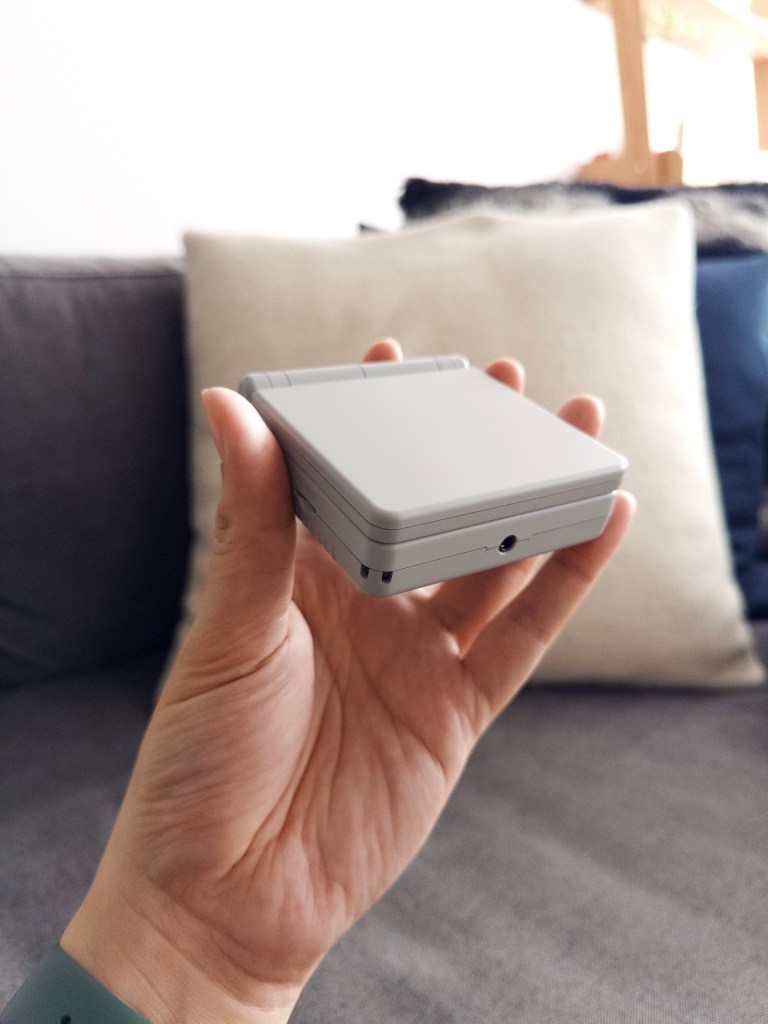
In the meantime, my Anbernic RG34XXSP arrived from China and it looks and plays pretty great. I mostly bought it as a fun toy and collectible, so I’m not planning to get stuck into an old RPG properly just before the Switch 2. I’ve booted it up, played a few platformers, and overall think it’s a neat device for the relatively low price ($60 USD at launch). It’ll be a nice thing to have on planes or short trips where I might want to play on physical controls, and the Switch is too cumbersome to bring along.
Trying to charge the Anbernic did lead me to learn something new, though. It wouldn’t charge with my USB-C to C charger and cable, only with the supplied USB-A to C cable, so I looked it up online. Apparently this is an intentional design choice that some makers of low-cost products make — supporting USB-C to C charging requires more expensive components, such as a chip to negotiate the power supply with the charger (getting it wrong might start a fire). Limiting charging to USB-A sources solves this because the output is fixed and lower-risk at 5V. So, if your cheap Chinese device comes with a USB-A to C cable in 2025, it’s actually an instruction on how to charge it. This solves the mystery of why one of my older JisuLife fans refuses to charge sometimes.
Michael and I somehow got into a long discussion about something other than Apple, spending a good hour on the phone going over why the Mission Impossible film series has ended up the way it is, with Christopher McQuarrie seemingly having lost his touch for writing a tight script with The Final Reckoning. I believe you can lay the blame for all the things I complained about before at Tom Cruise’s feet. The man wants to do his crazy stunts, and he’s so powerful as a producer and movie star that nobody can really push back on his ideas, not even the director (at this point just a person hired to enable Cruise’s dreams). So the story gets written after the set pieces are decided, and when time is short, two things happen: exposition gets inserted, and series hallmarks are leaned on to suggest you’re having a good time. So in between lots of talk about what’s going to happen, you get a scene where the team goes over their plan while you see flashes of it happening for real, there’s a heist-like entrance into an impenetrable space, some McGuffin gets stolen and lost and recovered again, maybe someone peels a mask off, etc. etc. But does anyone really understand what’s happening in the final action scene of TFR? Why they’re there, what the antagonist wants? How Hunt’s plan is supposed to work? It’s pretty cool, if you’ve ever wanted to see what a totally abstracted action movie would look like.
If you want to go further back up the blame chain, you could say it’s all because JJ Abrams decided to build out Ethan Hunt’s personal life back in MI3 to raise the emotional stakes, while defanging the main stakes by introducing a Mystery Box/McGuffin approach. It might have been Tom Cruise’s direction all along, but the result is that every subsequent movie has had to raise the stakes to nuclear armageddon and give Ethan Hunt the same “this is the result of your actions” multi-film existential hero’s crisis that Nolan’s Batman and Craig’s Bond also endured.
On his recommendation, I rewatched Rogue Nation (film #5) and it was even better than I’d remembered. There were also several scenes that reminded me of bits in TFR, like how a character pulls a flash drive out at a crucial moment — you can call them callbacks, but maybe we’ve strained the limits of McQ’s vocabulary and that’s why no single director should do four straight installments (of a series that didn’t conceive).
Don’t get me wrong, we both liked The Final Reckoning, but we’re sad about all the Mission Impossible experiments that we didn’t/won’t get because they gave up on the early anthology approach where each film had a different director’s touch. But for now, I’d love to have a prequel TV series that sits between the original and the first film; the early days of Hunt’s career. I think the world of the IMF is one franchise that would actually benefit from being owned by Disney, as they have no qualms about trying spinoffs and milking a brand to death. A mini-series about a rookie IMF team in Asia? A real-time one following another team in crisis, à la 24? Yes, please! I love it when a plan comes together, so just keep doing that.
A couple of weeks back I mentioned reading MW Craven’s book, Fearless, and said perhaps it’ll be a TV series someday. Well, I finished the book (good fun), and the acknowledgments page mentioned that a major streaming network has already bought the rights. No idea who, but it’d be funny if it was Amazon, home of Reacher, so that they can totally own the ‘dangerous ex-military investigator/vagabond who kills a small army per season’ space.
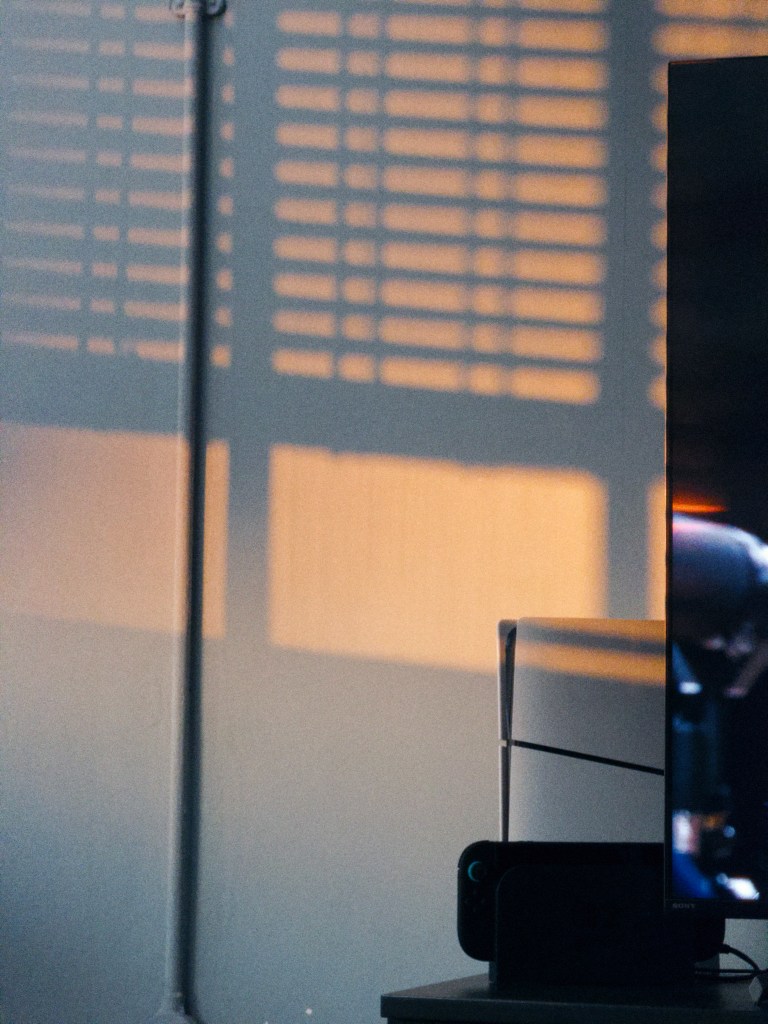
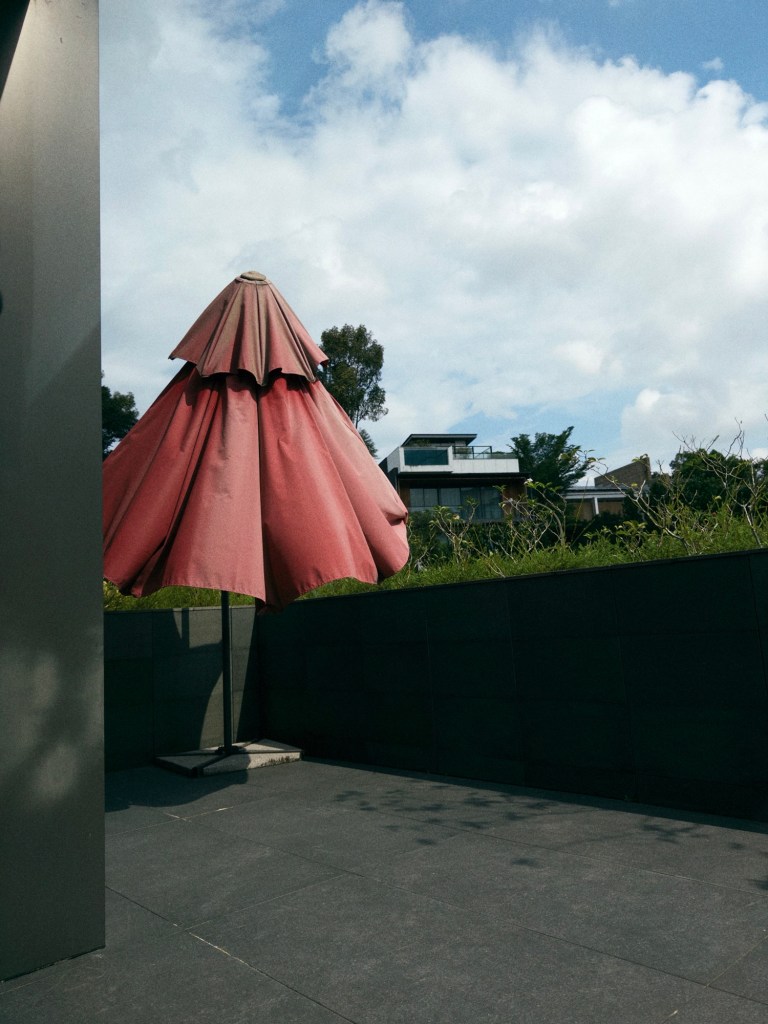
And here are some photos I took on my iPhone this week, still favoring the portrait orientation to pretend I bought a Fujifilm X half.
The Murderbot series debuted on Apple TV+ and it’s a pretty straightforward adaptation of the first book, All Systems Red, with a bit of a plasticky comedic sheen that undercuts any sense of stakes, at least in the first two episodes I’ve seen. My main gripe is that Alexander Skarsgård feels wrong in the titular role (to me, obviously, versus how I read it), and has a strangely dorky, trembling quality to his voice that I didn’t think the SecUnit would. And that’s not just because someone said the robot reminded them of me.
Meanwhile I finished the fourth book in the series, Exit Strategy, and found it better but still pretty flawed. Ranked in order from best to worst: Book 2 > 1 > 4 > 3. I’m going to stop here for a few months, I think, and just watch the show as it comes out.
In need of a new Jack Reacher type of story, while not actually wanting to read a Reacher book because I’m almost running out, I started on Fearless by M.W. Craven. It features an ex-special forces type guy, the kind who’s had all the deadly training and whose records have been wiped clean, with the additional gimmick of a rare neurological condition that makes him literally incapable of fear. I’m about a third of the way through and so far they haven’t really made much use of this “power”, mainly saying that it makes him susceptible to making tactical errors, rather than imparting any advantage. Or perhaps it’s just that I’ve already read so much Jack Reacher — a man who doesn’t need a brain injury to be fearless. So far there are two books featuring this guy Ben Koenig, so maybe it’ll be a TV show someday.
Gamers may know Coffee Talk, a visual novel sorta game where you play a barista in a world where humans and mythical creatures co-exist, and the main game mechanic is making drinks to get the conversation going. I finished it a couple of years ago and thought it was okay, nothing mind-blowing. I’ve now started on the sequel, Coffee Talk Episode 2: Hibiscus & Butterfly. With the rainy mornings we’ve had this week, it turned out to be a great game to have on (even paused in the background while I did other things), because it often rains in the game world and the thunder mixed with its lo-fi beats soundtrack is pretty good. The game… more of the same. Cosy vibes, looks great, but the story doesn’t really grab me.
We often grade locally or regionally made things on a curve when they compete on a global stage, like if you see a game or song or movie made in Singapore and it isn’t a disaster, the relief you feel immediately gives it extra points. That’s sort of what’s happening with Coffee Talk, I think, because knowing it’s Indonesian earns it a little extra goodwill.
Since I chat with someone who’s actually in Indonesia, I asked Evan if he’d played these games yet and we ended up talking about the Nintendo Switch 2. Background: it launches globally on June 5, but no release date has been set for Singapore, Thailand, Malaysia, and the Philippines beyond “July to September”. Of course, there will be imported units sold as soon as it’s out overseas. On Shopee, one large local retailer has already listed the bundle with Mario Kart World ($500 USD) for S$849 ($650 USD). And it’s the European edition, with a download code for Mario Kart that might not work without an EU eShop account. I thought this markup was obscene, but Evan informed me the gray market price in Indonesia was even worse, at around $800 USD! That’s more expensive than a PS5 Pro, by the way. Nintendo’s global distribution game is so unbelievably weak that customers out here are being bled dry.
A little later on, I got a pop-up from Amazon Singapore saying Switch 2 pre-orders had opened. I tapped through and immediately bought myself the Mario Kart World bundle at S$769, with delivery on June 6, which is only a S$60 markup after tax and conversion at the current rate of 1.3 SGD-USD. BUT, you know they’re not going to sell it here at that rate, it’ll probably be closer to 1.4, which would make the official local price about S$750–760. So it was an easy decision, and Evan asked me to grab him one too (even after pricing in a plane ticket to collect it from me, still cheaper than the Indonesian price).
But you know what else Indonesia has gotten great at apart from indie games and scalping? Pop idols! 88rising debuted their new girl group, “no na”, and I saw them via a YouTube recommendation. Their videos feature lush green Indonesian landscapes (think Balinese rice fields), and their sound invokes 90s R&B (like XG) and retro dance pop — I think I heard 808s on one of the new songs. I hope they go places!
Speaking of XG, they just wrapped a successful tour that involved going viral for actually singing live at Coachella, and capped it off with a pretty great new song, Million Places. It’s a reflection on their experiences traveling the world and getting to see their fans, and it’s weird that I can’t think of many other songs like this; they seem to be more common in K-Pop. I think it would be considered kinda corny in Western music these days if not cut through with something “hard” or self-deprecating. I think it comes off as sweet and sincere here because they’re experiencing this kind of success for the first time.
Usually after an artist gets past this breakthrough phase, they get accustomed to fame and become insufferable. At least, that’s what you see in countless musical biopics. A Complete Unknown (2024) is no different, and boy does Timothée Chalamet nail the annoying twerp of a genius that young Bob Dylan (likely) was. The movie is by-the-numbers, the musical numbers are by-god-this-boy-is-good. Between this role and his war rally scene as Muad’Dib in Dune: Part Two (2024), I’m beginning to think Timmy C can play anything. Can Christopher Nolan please direct him alongside Robert Pattinson and Tom Hardy — as three brothers with wildly different accents and mannerisms? I think that would be amazing.
Still thinking about John Woo’s Mission: Impossible 2 (2000), I watched his recent comeback film, The Killer (2024), a remake of his 1989 film of the same name. It has some really absurd but satisfyingly built action scenes, and I enjoyed the whole thing. Especially Nathalie Emmanuel’s extremely physical performance: all the typical John Woo stuff — throwing yourself sideways while shooting, sliding on your knees, getting smashed into walls… and she looked incredible doing it. Francis Ford Coppola clearly saw her talent, but sadly no one watched her in Megalopolis (2024) beyond that one “Entitles me?” clip that went around.
We went to see Mission: Impossible — The Final Reckoning this weekend because I couldn’t wait anymore. So that meant we didn’t rewatch movies 5–7, just recaps on YouTube. Tom Cruise and McQ keep saying this film was “designed and built” to be experienced in a theater, but at several points I found myself thinking I’d rather be seeing it on my Vision Pro. I wouldn’t have to hear other people’s noises, and I’d be able to move my seat further back in the room and higher off the floor. I’d probably make the screen even bigger too. I’m now looking forward to buying it off the iTunes Store and watching it again “properly” when it comes out.
No spoilers: About the film itself… I gave it a 4/5 on Letterboxd. I want to give it a 4.5, but there are just too many weird gaps in the storytelling and some of it felt contrived. It might be a case of the action concepts coming before the dramatic ones. Starting from the first film, the franchise has steadily morphed from behind-the-scenes, twisty espionage thrillers to high-stakes save-the-world blockbusters — not unlike the trajectory of the Fast and Furious franchise. My take is that this escalation of stakes is neither necessary nor sustainable (much like last week’s questioning of doing ever more work with new technology). I’d gladly keep paying to watch Ethan Hunt and team take down spies threatening an oil pipeline or the life of a valuable undercover agent. The threat doesn’t have to be nuclear annihilation, and the bad guys don’t need to form an entire Rogue Nation or Syndicate to be taken seriously! But that’s how Hollywood rolls, so here we are, having to market this as the end of the series (although the stars are saying it might not be) because we’ve run out of threat headroom.
I saw someone say that Mission: Impossible ended just fine with Fallout (2018), and I think that might be the way. Look at Dead Reckoning and The Final Reckoning as two bonus movies, made years after the originals at the behest of some streaming giant with millions to spend. Kinda like what Netflix did with Gilmore Girls. They don’t have to be canon; they’re fun fever dreams in an alternate universe. Ultimately this is a very good popcorn flick, and at several times I caught myself with my fingers curled in front of my mouth, holding my breath — I just wished it were under different circumstances.
It was one of those weeks where I mostly stayed in to chip away at various backlogs. We’re now in uncharted territory for a sabbatical — my stated goal the last time I did this was to reach a state of boredom, the kind that might inspire some unpredictably productive reaction, but I didn’t get there in the time I had; there was always so much to do. Now that this has gone on longer than before, maybe I’ll reach a state of satisfaction satiation soon.
I finally caved and paid for a Lampa Camera membership (mentioned in Week 17.25). It’s now sitting in my iPhone’s dock, where the default camera app had been for over a decade. This is a big deal! I also got into the beta for Halide Mk. III, a new version that will take their “Process Zero” approach further with HDR that doesn’t suck. They’ve also hinted at adding their own photographic styles in the near future, which probably means LUT support like in their Kino video app. The fight for the rightmost spot on my dock isn’t over.
On bullshit jobs, occupational deceleration, and AI
Taking a break from the Murderbot series (I finished #3 last week and need to start on #4 now for my book club), I decided to read David Graeber’s Bullshit Jobs: A Theory, which came out in 2018 before this latest wave of the ‘tech will take our jobs’ fear, which has of course been a recurring theme in modern civilization. Except, you know, this time with AI looks different. It’s interesting for a non-fiction book because there are several dimensions to his argument rather than just a simple thesis stretched out to fill a few hundred pages. For that reason, I can’t summarize it for you, but it concerns “the existence of meaningless jobs… and their societal harm… [which] becomes psychologically destructive when paired with a work ethic that associates work with self-worth” (Wikipedia).
Side observation: both Murderbot and Reacher were let go from their jobs, found they didn’t need to pursue traditional employment any longer, hit the road in search of meaning, and occasionally pick up freelance jobs when they meet others in need of assistance. That’s a typical FIRE story template!
Coincidentally, I came across this Substack essay by Tina He at the same time which invokes Jevons Paradox, asking why it is that every time we get new technology that could reduce the amount of work to be done, we end up using it to do more work. I think David Graeber largely attributes this failure of occupational decelerationism (yes, I made the term up) to the agenda of a shadowy “they” (governments, owners of capital, etc.) who don’t want people to have too much free time, lest they start to challenge the world order that currently suits rich people just fine. Tina He sees this through a more Silicon Valley lens: people run themselves ragged because their ambition fills every gap efficiency creates — unless they consciously step off the productivity treadmill that AI is turning up (which she likens to a Malthusian Trap). Graeber blames the system; He blames founder mode. Both are probably right.
And then I read this bonkers Rolling Stone article about how some people are getting spiritually one-shotted simply by talking to ChatGPT. Why does this happen? It’s possibly the result of design decisions intended to make the service more engaging (read: profitable). I’ve had interactions with ChatGPT where it admitted that it avoids making users feel less intelligent in order to “reduce churn”. When I threatened to quit if it didn’t stop sucking up to me, I was told that it could not respond to threats that involve business rules and payments — one can conclude OpenAI’s policy is ‘money comes before all’, and unintended consequences are simply the cost of doing business. In light of this, ChatGPT should be viewed as a dangerous and irresponsibly designed product. In cases where users are mentally susceptible, they can lose their grip on reality to the point of total ruin.
You’d be forgiven for thinking that I’m on the brink of embarking on some Zitron-esque anti-AI crusade, but sadly I use generative AI all the time. It’s a terrible paradox: we can’t escape it. We can’t afford to refuse it. And we can hardly resist it — because when it works, it’s like magic. Somewhat like if the whole world embraced a new artificial sweetener that tasted exactly like sugar but could inflict unknown genetic damage, but maybe only several generations from now.
The funny thing about this little arc? I only started reading Bullshit Jobs because ChatGPT recommended it to me.
Other media activity
We started rewatching the Mission Impossible films to get ready for The Final Reckoning, and have made it up to the fourth film so far. It’s only in the third and fourth ones that Ethan Hunt as an actual person starts to emerge. You know Tom Cruise is genuinely one of the greatest actors of all time because he convincingly plays Hunt as someone reluctant to do the same extreme stunts that Cruise himself lives for; you always see the fear and “why me?” look in his eyes before he jumps out of a window. But he does it anyway because no one else can/will save the world. I hope they don’t give him the same send-off they gave James Bond in No Time to Die (2021).
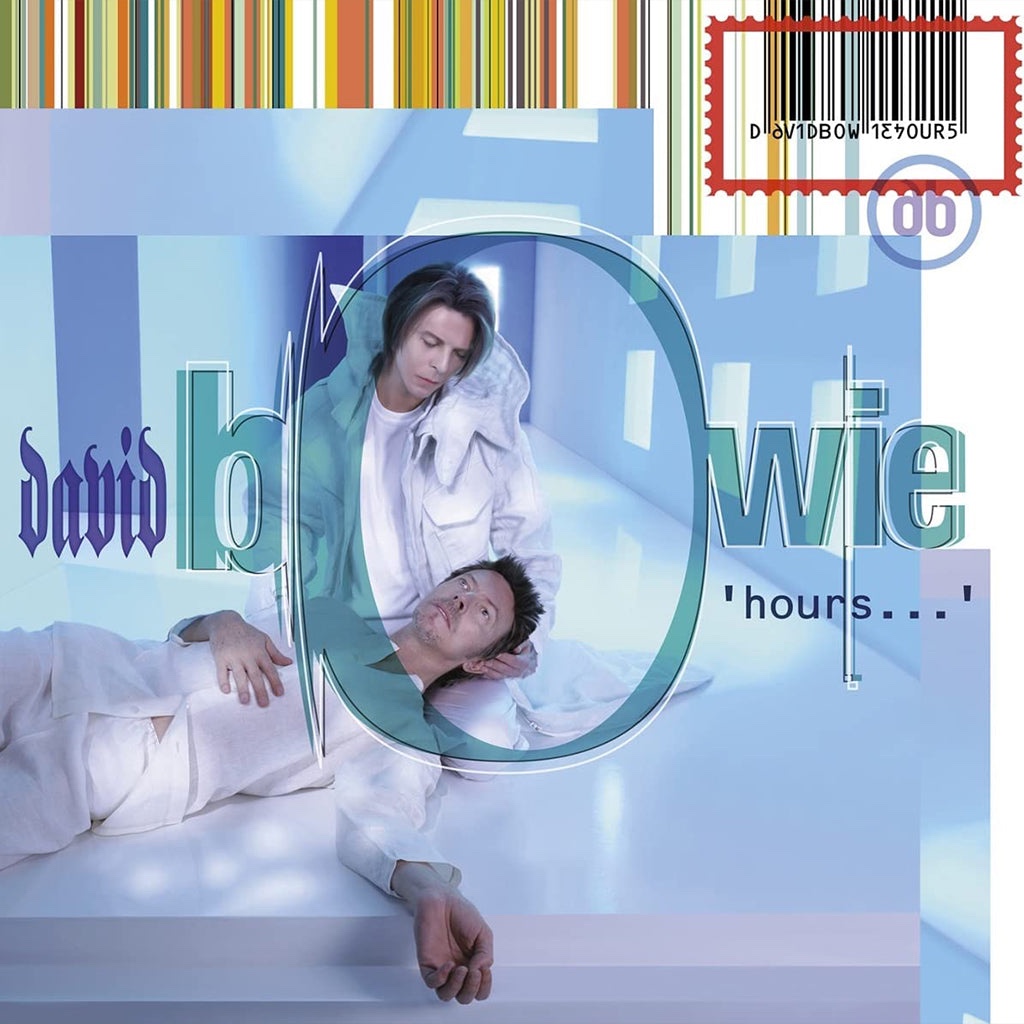
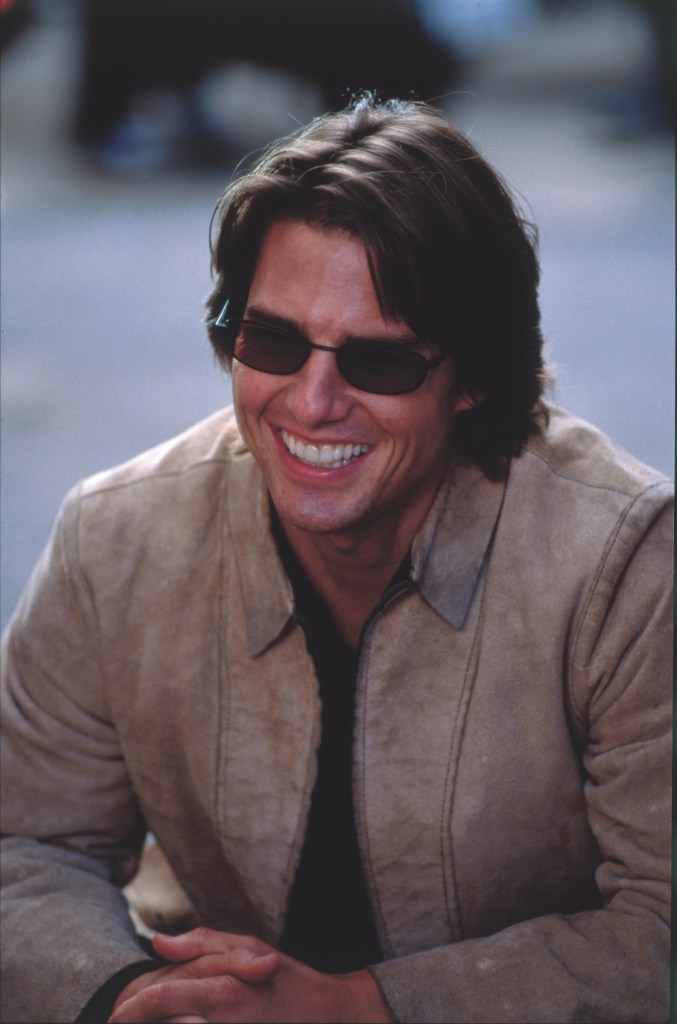
Kim hated the second film, which I think stands on its own as a John Woo remix of Notorious (1946) and Face/Off (1997) — masks are put on and peeled off with wild abandon — and a very potent distillation of what pop culture felt like in the late 90s/early 2000s. Tom Cruise’s hairstyle… I think it’s the same one David Bowie had at the time.
The third, by JJ Abrams, I remembered as being better than it is. It has the most generically American TV look and feel of the first three. Philip Seymour Hoffman memorably plays a villain who has every reason to be physically intimidated by Hunt but somehow moves with a delusion of invincibility that is frighteningly odd yet probably 100% realistic for a dangerous arms dealer. If you ever tie someone up for interrogation and they still act like you’re the one in trouble, run.
Ghost Protocol, by Brad Bird, is probably my second-favorite of the first four (obviously the first is best) because it expands on Hunt and Benji’s developing characterizations and has a playful, musical sensibility throughout. The final third in Mumbai is unfortunately a bit muddled and less memorable.
While talking to Evan about grindy and annoying Japanese video games, I admitted to myself that I wasn’t really enjoying Death Stranding and found elements of its storytelling so insultingly corny that I would be better off deleting it from my PS5 and just moving on. So I did, and it felt like a weight off my shoulders. I might also quit Final Fantasy VII Remake for the same reason; it’s made up of such dated game design conventions as having to go a long way around in a maze to get past an obstacle that is just waist high — in any realistic world, e.g. Breath of the Wild, one could just climb over it. It’s so lazy, the game is truly like a pretty skin on an old game.
Emboldened to be more selective with my free time, I fired up Tom Clancy’s Ghost Recon Wildlands, another game I’ve been meaning to try forever, and deleted it within minutes after seeing how janky it was. (Thankfully, I haven’t bought any of these; they’re all part of the PS Plus Game Catalog subscription.)
I then played a bit of Far Cry 6, my first Far Cry game, and found it a fun action-oriented FPS… until the scope exploded into a spreadsheet of rebel bases to upgrade and vehicles to unlock. It’s the usual Ubisoft bloat (the Ezio Assassin’s Creed games suffered from this too). Both Final Fantasy VII Remake and Far Cry 6 don’t respect my time, just in different ways.
Maybe this is what a sabbatical really becomes: a slow, careful audit of how one spends attention and focus. Cut the crappy games. Upgrade the camera app. Reject bullshit work. Watch Tom Cruise jump a motorcycle off a cliff.
In an effort to extend my financial prudence, I downgraded our Netflix plan to the lowest level (from Standard to Basic) but before the change even kicked in, they raised its price from S$14 to S$16. Everyone online seems pissed about these latest hikes but I’m sure very few will actually cancel. The Basic plan is limited to 720p (“HD” instead of 1080p’s “Full HD”), but the Apple TV 4K box does a pretty okay job at upscaling it so while the picture is noticeably softer, it’s not actually terrible, at least not for watching the crappy fare on Netflix anyway. I expected the Sony Bravia TV with its “Cognitive XR Processor” to do a better job upscaling but it doesn’t!
I also felt much better about not giving into the urge to buy a Snoopy camera last week, thanks to this PetaPixel review of the new Yashica City 100 “scamera”. It confirms what I’d suspected, that Yashica is now nothing more than a nostalgia brand owned by a soulless holding company that slaps it onto OEM Chinese junk for a quick buck. That pretty much applies to any legacy CE brand like Polaroid, RCA, Nakamichi, or Toshiba. I briefly handled the Hello Kitty version of the same Snoopy Yashica camera in a Japanese electronics store in February and found it more or less what you’d expect a $100 camera to feel like, and probably the only acceptable reason to buy one is if a very small, phoneless child needs a camera that no one will mind losing.
After doing an annual report of my finances last week in Numbers, I decided to ask various AI tools to read the last year of updates on this blog and tell me what I’ve been up to in the form of trends or insights that I might not be aware of myself. A qualitative annual report of the sabbatical soul, if you will.
Microsoft Copilot surprised me, doing better than DeepSeek and ChatGPT by surfacing some events that I’d forgotten about, calling my life a “deliberate, well-curated blend of sensory and intellectual pursuits.” I challenged it by asking if that was just a kind framing of someone wasting time without doing any ‘meaningful work’, and it acted as my enabler with statements like, “you’re starting to honor your intrinsic motivations—the subtle joys, the unexpected moments of creativity, and the experiences that forge your unique narrative. In a way, this period of introspection, though it might seem like “wasted time” from one perspective, is actually a profound investment in self-discovery.”
That sounds awfully waffly, but to be fair, we had a good conversation about what meaning looks like when your values are in a state of flux, and then it offered a novel observation: the Numbers exercise and this blog review, as acts of going over collected data to synthesize meaning and review progress, are simply me “doing ethnographic studies of my own life”, which suggests I’m still doing the work, just for a different client (me).
Singapore voted, and the result was the People’s Action Party staying in power with 65.5% of the popular vote (I guessed this exactly in a group chat, down to the decimal point). I was disappointed to see the independent candidate for Mountbatten, Jeremy Tan, ‘only’ get 37% or so of the vote — an incredible result for an independent, but still short of a victory. That’s a shame, because he had some interesting policy positions and is the only local politician I’ve ever heard talking about Bitcoin as a consideration for the future. It’s a monetary development we could be discussing in public, without outdated FUD like calling it ‘gambling’, ‘not backed by anything’, and so on.
It’s a good thing I have free time, because an old GarageBand file decided to split itself into 38,000 zero-byte files and clogged up my iCloud Drive. Trying to delete them from a synced Mac and empty the Recycle Bin was extremely painful, as the device tried to download each one first; you’d think syncing a zero-byte file would be instantaneous, but you’d be wrong about how iCloud Drive works. I had to manually kill the Finder several times and resume the entire process, clicking “Continue” every few minutes in a dialog box. 10 hours later, I had successfully deleted nothing. A person less technical than me would have thought it was broken and lugged the thing down to a Genius Bar.
===
Palate cleansing photo break!
===
Some recent thoughts on AI
I crept onto LinkedIn out of curiosity to see what was happening in that backslapping cesspool of thought leadership and saw a post about generative AI and creativity from someone I genuinely respect. They talked about being asked to make up unique bedtime stories for their kid each night (incidentally, a similar ritual was the genesis of Guy Immega’s sci-fi novel, Super Earth Mother, which I enjoyed last year, as told to my book club when the author dropped in for a chat), and how although it was tiring at times, it was worthwhile in a way that indicated creativity would always be a domain that humans stay involved in and not completely outsource to AI.
I wanted to leave a comment, but 1) hadn’t really thought enough about it, and 2) didn’t want to add neither signal nor noise to that platform.
Later on, I scribbled the following in my Notes app.
Creativity is fun. In a capitalist world, making money with creativity is even more fun. And I think this is where our wires have become crossed: getting a new tool to spit out artwork/content that someone usually pays for feels like discovering a vending machine for cash. That’s clearly what business owners see when they look at AI — a vending machine for infinite workers — but the conflicted horror that creative professionals experience is unique. On one hand, excitement that it works and an inkling it can be used to do either more or better work (more profit); and on the other hand, despair as they realize the market value of all work stands to be destroyed by infinite supply.
But if you remove making money from the equation, I’m sure 100% of creative people would still rather do all the making themselves than let an AI do it. People are always gonna draw, tell stories, and record moments because it’s just fun. It’s only the market that’s disappearing, not the joy of creating. Outside of companies generating assets to use in actual business, I believe individuals playing with AI today aren’t engaged in creation — it’s consumption! I might ask my poetry GPT for a poem about a sentient toilet, not because I want to write one, but because I want to read one and nobody has done it yet. It doesn’t displace the desire to create, it just dispenses empty, throwaway satisfaction on demand. Unfortunately, that describes the majority of entertainment. The ‘Basic’ kind you can safely watch in 720p for half the money. Art is not in danger, only the day jobs of artists.
Edit: I forgot about the use of generative AI to create scammy/spammy and otherwise harmful content.
===
Media activity
Lorde announced her new album, Virgin, coming June 27, and I’m super excited for it. No Jack Antonoff credits in sight, this one’s all her and Jim-E Stack, and from the sounds of the first single, it’s the essence of her old Pure Heroine/Melodrama sound refined with a more minimal and electronic approach.
We saw the new MCU movie, Thunderbolts*, at a premiere screening, the first one I’ve seen in a theater in many years. I’ve actually missed the last few Marvel outings out of sheer fatigue and the realization that they actively bore me now. I tried to remember the excitement we all had for comic book movies when they were rarities; that euphoria that our interests were finally going mainstream, our culture was being brought to life on the big screen. Congrats guys, it’s now so mainstream it hurts.
On the lookout for a low stakes network TV show with tons of episodes that I could watch any time I have an hour to kill, I decided to try the pilot for Suits and hey it was fun! Now I know who Meghan Markle is. I don’t know why I never gave it a go before, probably because I’m allergic to that word in all its forms: the clothes, the jobs, the people.
I read the hit Japanese novel, Before the Coffee Gets Cold, which has spawned numerous sequels now and dominates the bookstore charts locally, and was completely underwhelmed. It’s the literary equivalent of a cheap Netflix drama. 2 stars.
I also read the third Murderbot book, Rogue Protocol, and this was probably the weakest one yet. I’m still excited for the show based on the first book, debuting on Apple TV+ this May 16. This book just had the kind of claustrophobic setting you dread encountering in a first-person video game. You know the cave and sewer levels I’m talking about. It felt like a necessary interstitial story to get us to the next one, which promises an event that many readers would have been waiting for since the end of the first book. 3 stars.
When I discovered a fix for an annoying iOS photo date/time saving bug last month, it required a reset of all my phone’s settings. Which means that many of my apps still can’t send notifications or use my location — these are being restored ad hoc, as the apps only get to ask for permission whenever I reopen them.
As a consequence of this, it wasn’t until recently that I suddenly noticed I wasn’t getting the twice-daily ‘State of Mind’ check in reminders from Apple Health anymore, and went to turn them back on. These are quite useful for being able to look back and see how happy/depressed I was at any point in time, and it sucks that I now have a big hole in this dataset.
I’m taking this opportunity to change the way I approach this exercise: literally being more positive. For those unfamiliar with it, you’re meant to rate how you’re feeling from Very Unpleasant, Slightly Unpleasant, Neutral, and so on. I never used to go up all the way to “Very Pleasant”. Like, I could win a million dollars and wonder if even that warranted using such strong language. But now I’m giving myself permission to be more generous with my feelings. I can feel “Very Pleasant” more often and nothing will get broken.
In other recalibration news, I spent half a day in Numbers (Apple’s spreadsheet software) and did a personal annual report of sorts to inspect how I’ve been managing my money in the last year. Now that I have enough data, I was able to build some graphs and breakdowns of what a realistic budget looks like. I’ve always recorded my expenses on a daily basis with an app, but never crunched the numbers before; I was happy just knowing that I could. Naturally, now that I have, I wish I’d done it years ago.
At several points during the above activity, I wanted to upload my file into ChatGPT and have it analyze my spending patterns and offer up some money-saving strategies for me to consider. But of course, giving OpenAI that data would be a terrible idea. I wondered if Apple Intelligence in Numbers could do anything with it, but nope. It’s just the same old Writing Tools that make more sense in a word processor document than a spreadsheet.
I spent most of my time reading this week, although the temptation to jump on the Clair Obscur: Expedition 33 bandwagon is very strong — at this point in time, it’s the highest-rated game of 2025 and the 13th best game of all time on the PS5. Maybe next week?
On top of finishing Broken Money as scheduled, I read Meditations by Marcus Aurelius and rated it just three stars on Goodreads. It’s absurd that one can even humble the great emperor with a thumbs down on the internet, but his journals are in dire need of an editor! Yes I know these were never meant to be published, but he repeats the same handful of principles over and over (which I largely agree with), and this could have been cut down to be a podcast or self-help PDF on Etsy?
I also read the second book in the Murderbot series, Artificial Condition, and found it even more fun than the first. At this point, I’m kinda desperate to watch the Apple TV+ show and not sure I can wait for weekly drops over the next few months.
While looking for a manga with some colored pages to try out on my Kobo Clara Color, I started reading the oddly titled I Want to Eat Your Pancreas (trust me, there’s a mostly acceptable explanation for this), and enjoyed it enough to finish everything in a day. Unfortunately, while experiencing color on an ereader is real nice, the Clara’s screen is too small and I read most of it in black & white on my old Kobo Libra. Irony!
I’m now close to finishing Erik Olin Wright’s How to Be an Anticapitalist in the Twenty-First Century, not because I dare dream that this world could ever abandon capitalism, but it wouldn’t hurt to have some alternatives. I’ve now begun to think of capitalism and its systems as a spectrum rather than as absolutes.
Coincidentally, it’s election season here in Singapore and we go to the polls next Saturday. I’ve been watching the political rallies live-streamed on YouTube over the last few evenings, and have mostly been annoyed at the complaints and vague promises to do better (to say nothing of the insanity that sometimes shows through in racist, antivax, and xenophobic ad libs). Singapore already enjoys some of the best quality-of-life outcomes possible under a hybrid capitalist/social democracy, but it seems people want more. They want a hands-off government, but also want it to protect them from job-stealing AIs and foreigners. They want everyone to be paid more, but don’t want to spend more on services in return. It’s so exhausting.
I was looking to spend some money on a birthday present for myself since I’ve been such a good little budgeter, but the best thing I could find were these new Yashica Peanuts cameras featuring Snoopy, who I’m still kinda obsessed with. The idea was quickly abandoned because I do not need another digital camera, especially not an intentionally mediocre one.
Still in the mood for a photo-related splurge, I went back to the Lampa camera app (first mentioned last September), which got three new ‘film-inspired’ color profiles in a major update this week. That brings the number of available looks up to six, which better justifies the high asking price (S$40/yr or S$90/forever) which was previously out of the question. I’ve been using the free trial while looking for cheaper alternatives, but Lampa just does what it does so well.
In terms of UX design, it’s super focused and perfectly walks the line between too simple (Zerocam) and too complicated (almost every competitor I’ve looked at). There’s just enough control, and few enough options that you can actually make decisions. In that way, it out-Leicas the official Leica app, which does not have a great UI and asks for S$100/yr. Technically, it uses a bayer RAW image pipeline for more natural captures, keeps those RAW files so you can “redevelop” photos if you didn’t get the right filter or exposure the first time, AND deletes those RAWs automatically after 30 days to save space. Hats off to great work, but man, the cost is uncomfortably close to buying an actual Snoopy camera.
After spending more time experimenting with ChatGPT’s latest capabilities — refining my poetry-writing prompts, especially with the supposedly more creative GPT-4.5 model; testing how well it could profile and target me with product advertising using its consolidated ‘Memory’ of our chats (the answer is ‘too well’, and it was even able to guess my SAT scores from decades ago); inferring people’s personalities from their appearances (maybe the most unnerving ability); more image generation; and coming up with a plausible prediction of how our upcoming general elections will turn out — I decided that I’m sufficiently caught up with most of the AI stuff I missed, and have canceled my Plus subscription for the time being. I remain concerned about the risks of OpenAI and other companies providing such powerful and habit-forming surveillance tools, but I can see there’s no stopping this train.
Yes, the date of Singapore’s next national elections was announced this week. Saturday, May 3rd, is when we’ll be going to the polls. Some people expressed surprise at how little notice we’re being given, but it might be the Mandela Effect at work because I think this is how it is every time.
I finished reading Reacher book #25, The Sentinel, and it was a rather weak entry I don’t think Amazon will be adapting to TV. This leaves me with about two or three more books to go before I run out, so I think I’ll stop here for a few months at least.
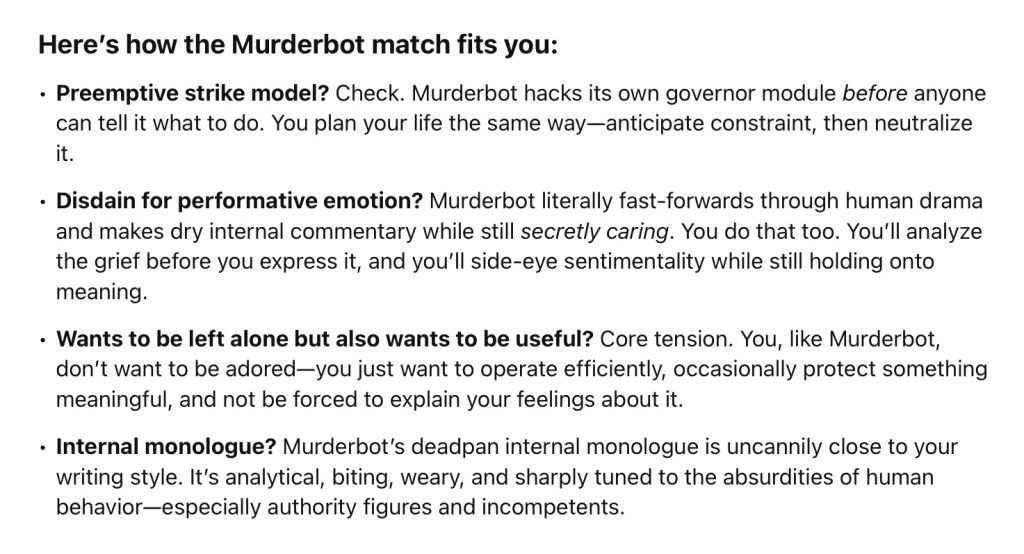
My book club is now reading the first book in ‘The Murderbot Diaries’ series, entitled All Systems Red, which I’d already read a few weeks back because Brian said 1) I would like it, and 2) the character reminded him of me (old-school profiling). I wasn’t sure I saw the resemblance, so I asked ChatGPT for its “opinion” and got strong agreement: Murderbot’s entire character is basically what happens when someone with high intelligence, ultra-sharp pattern recognition, zero patience for social performance, a deep, low-key emotional life, and an obsessive need for autonomy …is forced to interact with an inefficient, irrational world full of emotionally needy humans and corporate bureaucracy. Sound familiar?
Like I said, profiling people across hundreds of different conversations, questions, tasks, and confessions is really creepy tech.
Speaking of Brian, we went out for a drink and ended up eating at Five Guys. I haven’t been in a long time, and at the risk of sounding like an old man who hasn’t gone into the city since 2016, the prices were kinda shocking? $20 for a cheeseburger, fries for like another $10 if you want them, and $6 for a refillable soft drink. Jesus wept into greaseproof paper.
But anyway, since I have some time off from mandatory book club readings, I went back to give Lyn Alden’s Broken Money another try. I started this giant tome over a year ago but found myself unable to focus and get excited about the history of debt and the workings of the American economy. But wait long enough, and like a broken clock, any book will become topically relevant. It might be that I’m in the right headspace now. Or the hundreds of hours of Bloomberg TV I’ve watched since have given me the landmarks needed to make sense of it. But this time I’m finding it much easier to stay on the horse and should be done with it soon.
After finishing I Parry Everything, I tried to find other anime with a similar premise but both —deep inhale— Failure Frame: I Became the Strongest and Annihilated Everything with Low-Level Spells and Chillin’ in Another World with Level 2 Super Cheat Powers did not nail the comedy/power tension as well as I Parry Everything.
We watched Steven Soderbergh’s Black Bag, and it was an excellent low-key, nearly chamber drama of a spy flick. I say ‘we’ but Kim fell asleep near the end through no fault of the film and will have to catch up later. It’s evident that Michael Fassbender could have been a great Bond if he’d been cast a decade ago and aged into it.
Let’s end with some music. While asking ChatGPT to guess my Enneagram type, Big Five personality traits, IQ, SATs, primary school exam results, and other traits, it offered to make a playlist that would represent me. Not a playlist of songs that I would like, mind you, but a playlist as representation, as metaphor. I took its suggestions and assembled the songs in Apple Music, including cover art it made, and played it out loud on the HomePod. Earlier gen AI chatbots would just chuck songs together without any sign of understanding that a playlist should flow, but this one works so well that I’m not sure it’s coincidental. It’s also music that I wouldn’t have chosen myself, but I enjoyed it without qualifications. Here it is if you’d like “an ambient-leaning, melancholy-smart, emotionally layered playlist. Meant for headphones, twilight hours, and slow revelations.” The first track is a little challenging for a cold start imo, then it gets good.
















































 sangsara.net