Tag: Books

  • Week 41.24

    Week 41.24

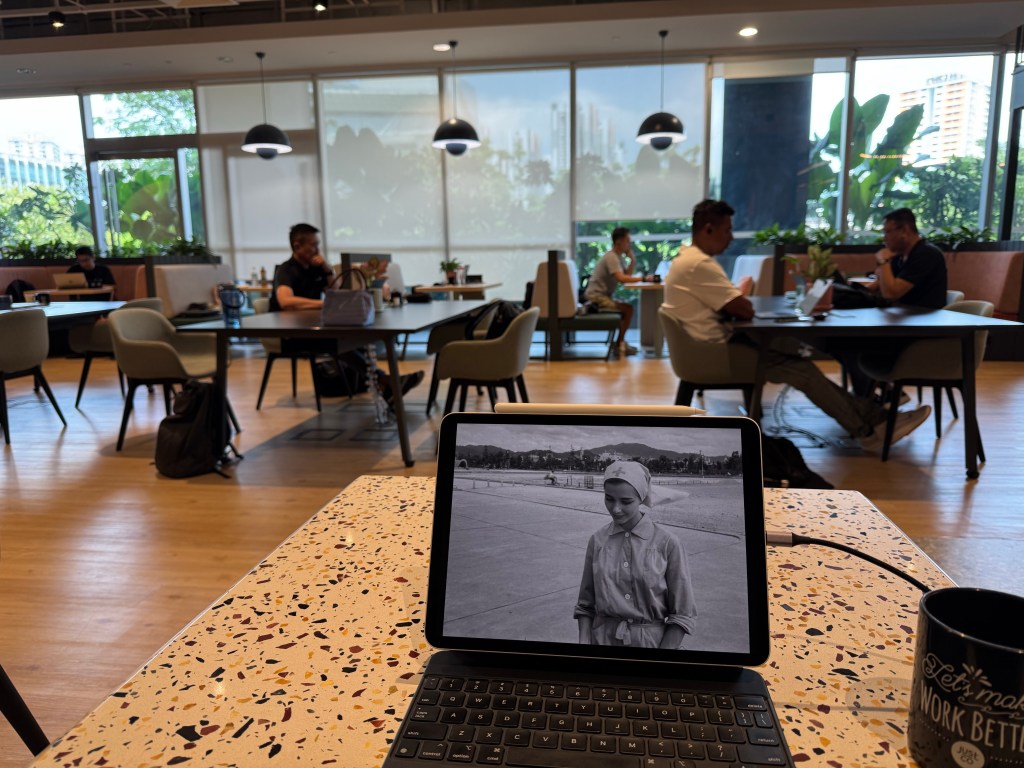
    It’s Monday, and for the time being, my schedule for writing these updates has shifted out by a day as Monday mornings now find me in a co-working space, and writing this gives me an opportunity to blend in better than, say, watching films or playing games whilst surrounded by people grasping their foreheads, stroking their chins, and sighing loudly. Yes, those things just took place around me.

    It’s Monday, after a massive storm, and my feet are soaked from wading through puddles to catch the bus. You’d think this would be a common occurrence in Singapore, where the tropical rain gets heavy, but only a few occasions stick out in memory — those mornings where the office walkways are cluttered with umbrellas opened up to dry, like caltrops or anti-tank barricades; my damp, socked feet perched on top of sneakers I hope will dry before lunch; everyone else’s teeth a-chattering in vicious air-conditioning calibrated for sunny days.

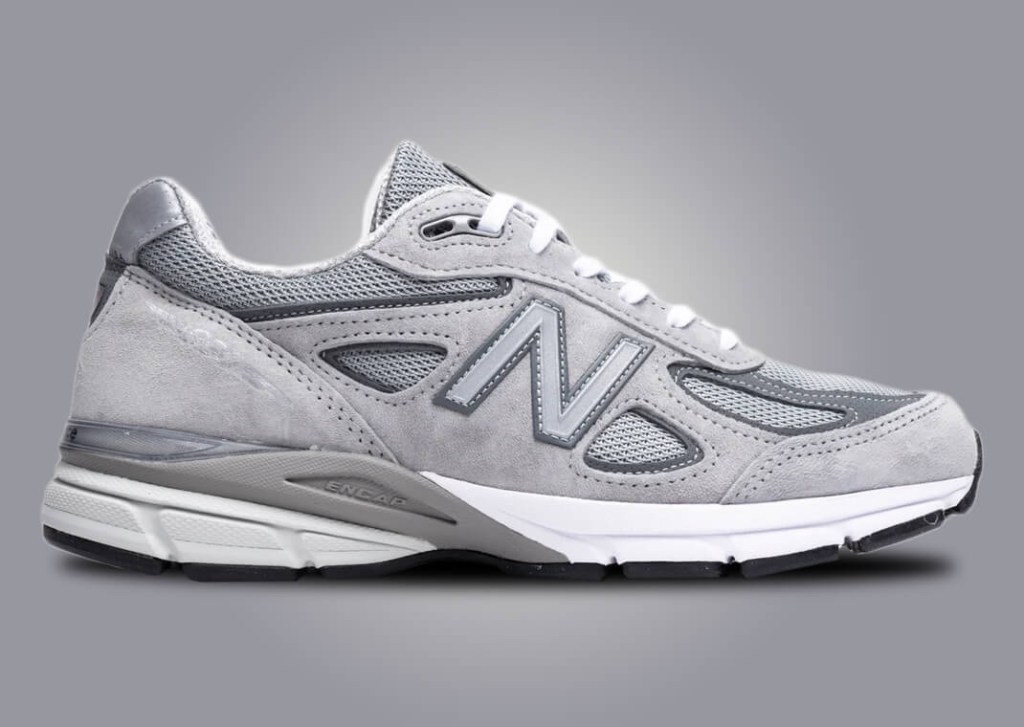
    Earlier this week, I shuffled my feet while sitting here and felt something come loose: the right heel of my (only) three-year-old New Balance 990v4 sneakers. So much for ‘Made in the USA’! I borrowed some black plastic tape to conduct unglamorous field surgery, and they lasted till I got home. I have two newer pairs (v5 and v6), and sure hope they hold up longer.

    iPads are pretty great, actually

    My daily companion over the past four days here has been my 11” M1 iPad Pro with Magic Keyboard, somewhat neglected of late. I’ve found that it does everything I need to pass an entire day, from library books and magazines with the Libby app, to gaming, video, web browsing, chat, and photo editing. My MacBook Air would be better for watching movies, but that’s mainly it. If anything, that only makes me surer that my next iPad will be a 13” model.

    Unfortunately the new iPad Pros with M4 chips are priced on par with MacBooks, making the choice between the two much harder (and in favor of MacBooks if I’m being honest). Recall that the original iPad launched for just $499 USD, and its marketing tagline was “A magical and revolutionary product at an unbelievable price”. That’s still how the iPad lives in my mind: a powerful alternative device that does way more than its price suggests. So it occurs to me that the iPad Pro is no longer the right choice for me, and the iPad Air is a truer heir to that original proposition. (Put aside the product now simply called ‘iPad’, because at $349 USD it’s actually even cheaper than the first generation and more like a budget “SE” model.)

    We’re seeing Apple push its ‘Pro’ lines further this year, packing them with innovative features that are useful for a small subset of professional users, but which most customers won’t need or appreciate. Things like streaming multiple 4K video feeds from iPhone cameras to a single iPad for production in real time. Or recording LOG-format video to massive ProRes files, including studio-quality audio from four microphones.

    Adding these capabilities and pricing accordingly means some current Pro buyers might want to downgrade to the ‘mid’ models. In order to avoid losing them, Apple would need to elevate those products, and avoid artificially holding back features for the sake of differentiation. We’ve seen that happen with this year’s iPhone 16, which packs an OLED display, Dynamic Island, 48mp camera with a 48mm focal length option for the first time (!), Camera Control thingy, and even things like next-generation Photographic Styles and Audio Mix which they could have reserved for the Pro phones. The only thing it needs is a 120hz ProMotion display. I’m expecting next year’s iPad Air and iPhone updates will finally include that.

    I love that the iPhone 16 is now a great enough product for almost anyone’s needs, but I’ll likely keep buying the Pro models as long as they offer better camera features. I can entertain switching to an iPad Air because I don’t even know what camera hardware it has and won’t ever use it.

    A quick word on cameras and my presets

    I mentioned before that I’ve been beta testing an app called Fig Camera. It has two standout features: great “natural” processing options that dial back Apple’s aggressive defaults, much like Halide’s Process Zero mode; and the ability to process photos on-the-fly with your own custom look. As someone who somehow finds it fun to make photo filters/presets, and has fortunately had some success with them, I love that I can now take photos with my favorite styles directly applied. It’s like how Fujifilm cameras’ “Film Simulations” obviate the need for post-processing. I can now snap photos in Fig that look great to me and don’t need any further editing.

    I posted a few recent photos using a film-style sim on IG and Threads and asked something like, ‘should I become one of those preset guys and offer my own as LUT files you can buy?’, to which several kind people said ‘sure’! So I’m thinking about it. This particular look is inspired by the “Positive Film” effect on earlier Ricoh GR cameras (they changed it for the worse with the GRIII), but slightly more “dry” like Fujifilm Classic Chrome. I’ve been using and tweaking it for over a year now, so the trick will be knowing that it’s DONE.

    Immersive Video and Submerged

    I’m still sitting here and my shoes are still wet. I’ve thought about bringing my Vision Pro to this open-plan space—not for the attention, but because it would be nice to have a huge screen that no one else can see. There are many things in my MUBI backlog that would not be cool to watch in public. And what’s even better than a 13” iPad? How about a thousand inches?

    We watched Submerged (2024) over the weekend, Apple’s new Immersive Video release exclusively for Vision Pro. It’s the first film they’ve done that isn’t a documentary or music performance — I guess the right word is fictional? I’m sure I said early on that this new immersive format (a full 180º view) lends itself best to video that puts you somewhere incredible, and wouldn’t be good for movie storytelling, with fast movement (nausea hazard) and quick cuts. I’m here to admit I was wrong.

    Submerged, by Academy Award winner Edward Berger, is only 17-minutes long but about a 12GB file when downloaded offline. You can view it as the first experiment in what filmmaking with this new technology could look like.

    I wrote on Instagram:

    Apple Immersive Video is a new medium. People will be experimenting with how to tell stories with it for years to come.

    Submerged is a great first step, the only movie I’ve ever seen that felt like “being inside” of it. More than seeing Avatar in IMAX 3D even.

    That’s different from the “being there” of POV video — it’s 100% a film with directorial intent. You experience it like a spirit summoned into the world and held down by a seance, without knowledge of your body. Your consciousness is pure camera.

    What I was trying to say was that making films for this format will require inventing a whole new set of techniques. Regular immersive video is easy: plonk a camera down in one static location and let people experience what it feels like to stand there and observe the action. This is the courtside seat at a basketball game, the front row of a performance. It’s amazing to us anyway because the viewpoint is rare, but a film made like this would only be a play.

    In the near term, we’ll see directors converging on a few approaches that work. Like how early 3D movies always had things flying directly at your face. The key question for me is how do you make an audience look at the thing you want them to notice, when they can look almost anywhere around the world you’ve built?

    Berger answers that in three ways. The first is action; big movements. When something explodes and water gushes out of a pipe a second later, you’re bound to notice it. The second is depth of field; like how I remember Cameron pushing and pulling focus at several points in Avatar (2009) to highlight subjects. This goes against natural vision and is more jarring in a wide-angle format like Apple Immersive Video, since you’re choosing for your viewer what they can and cannot look at, but it’s a filmic device everyone is familiar with.

    The third is a combination of Dutch angles and heavy vignetting that produces a novel effect in Immersive Video. When you watch a film like this, you are a disembodied viewer (what I meant above by a summoned spirit), without the ability to see even your own hands. You are severed from the real world. Your viewpoint changes according to the director’s will; sometimes a subject is extremely close and larger than life, other times they are small and distant. Berger often cuts to shots where the edges of your 180º view are shrouded in darkness, and/or where the camera is tilted at an angle, such that you feel yourself almost falling towards the zone of interest. This serves to direct your gaze, as to look in the opposite direction of gravity unconsciously takes more effort.

    I can’t wait to see what else emerges as more filmmakers play with this.

    Other media activity

    • I’m watching Lady in the Lake on Apple TV+, a 7-part series starring Natalie Portman that no one seems to be talking about. It’s rather good, but a slow burn and not one to be binged.
    • Another show that we discovered on a recommendation from Jose, and that no one seems to be talking about, is Ludwig, a 6-part BBC series starring David Mitchell as a reclusive professional puzzle-setter who gets enlisted to help the police solve murders. It’s very good, and sidesteps many of the elements that make other episodic murder-of-the-week procedurals tiresome. Well, it’s short enough that you never reach that point. I’m hoping they renew this.
    • I read Stolen Focus: Why You Can’t Pay Attention — and How to Think Deeply Again, by Johann Hari. This was inspired by an article in The Atlantic about how American college students today can’t even read an entire book anymore because their attention spans have been destroyed by social media, and book-reading on the whole is in serious decline. Utterly depressing. In order to get better sleep myself, I’m now trying to limit caffeine in the afternoon, alcohol, and phone use before bed. I’ve always detested multitasking—so much so that I avoid using external monitors with my laptop—and I’m now trying to be more mindful of distractions while reading or writing. As I made my way through the book, I was horrified to notice that I was picking up my phone every five minutes to check messages or look up completely unrelated topics.
  • Week 40.24: Singapore Design Week

    Week 40.24: Singapore Design Week

    “You’re really in your outdoor cat era”, said Nicolette, in response to my frequent excursions this week (I posted on IG Stories more this week than I have all year, because I realized they’re a convenient way to remind people that you’re alive). I also spent more time out of the apartment than I have in the past few months. I’ve had the freedom to go out early in the morning and do things all this while, but it took the threat of being deafened and annoyed by a neighbor’s renovations to actually make it happen. As it ticked closer to 9am each morning, I sensed the stirrings of men and machines on the other side of the wall, got my bag^ together and headed for the front door — see ya!

    ^ A quick word about said bag: I took the opportunity to get a new one for my upcoming sojourns in the out-there, and found this updated “2Way Utility Bag” from Uniqlo as part of their new lineup with creative director Clare Waight Keller (Givenchy, Chloé). It’s big enough for the stuff one needs to survive in a cafe, co-working space, or library all day: a laptop/iPad, umbrella, water bottle, power bank, camera, book, handheld fan, sunglasses^^, Nintendo Switch, or any of the things I’ve mentioned in recent weeks.

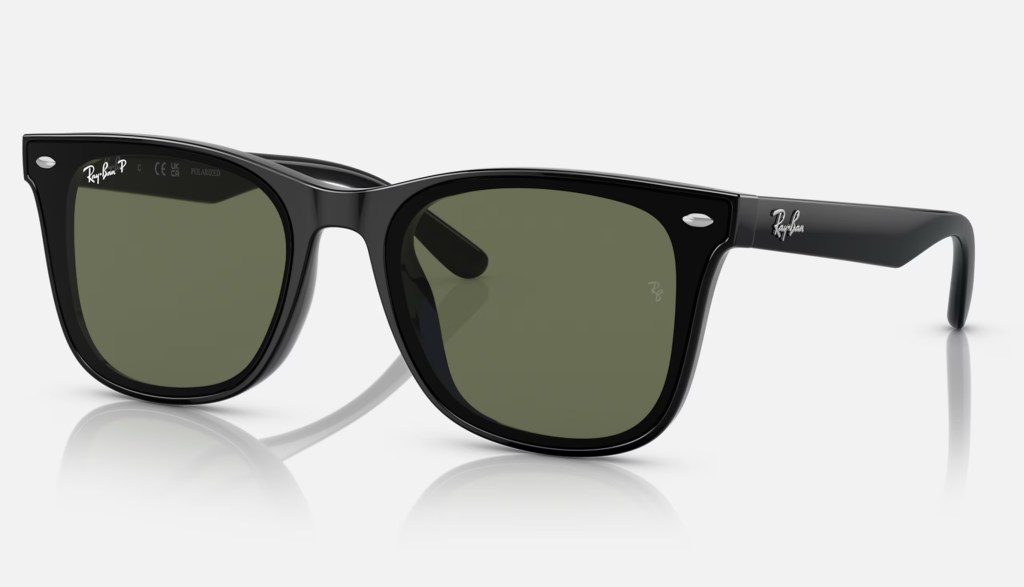
    ^^ A quick word about said sunglasses: I finally found a pair that fits my wide face and doesn’t slide down my low nose bridge. Admittedly I hadn’t tried Ray-Bans because the last pair I bought in Italy like, a decade ago, didn’t do so well on those two fronts and have gathered dust in a drawer. But Ray-Ban has since expanded their product catalog with inclusive new variants and I found some that fit. They resemble the classic Wayfarer model, but with some changes like flat lenses, and so are given a terrible product number (RB4391D) instead of a cool name. Oh and they’re made in China.

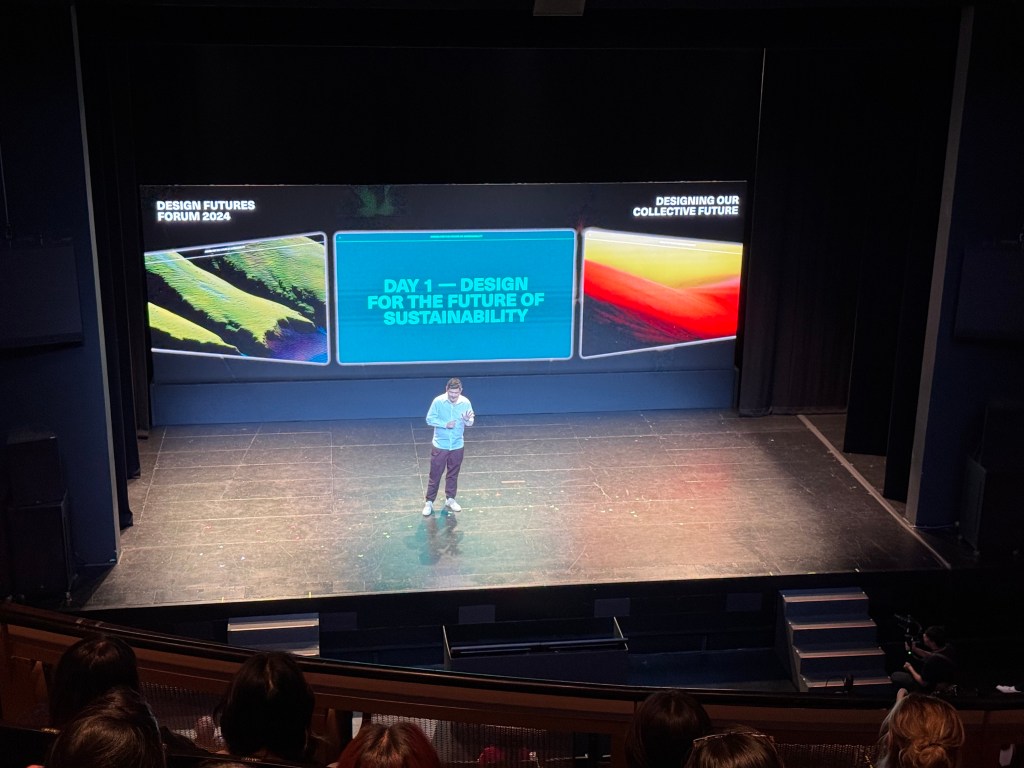
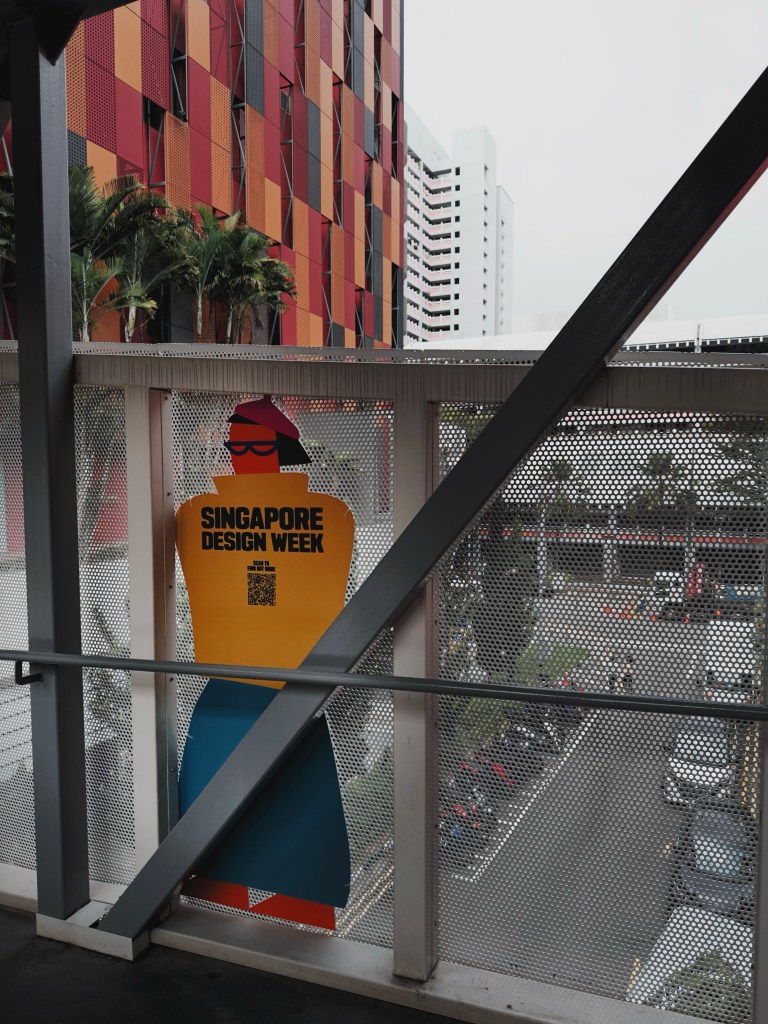
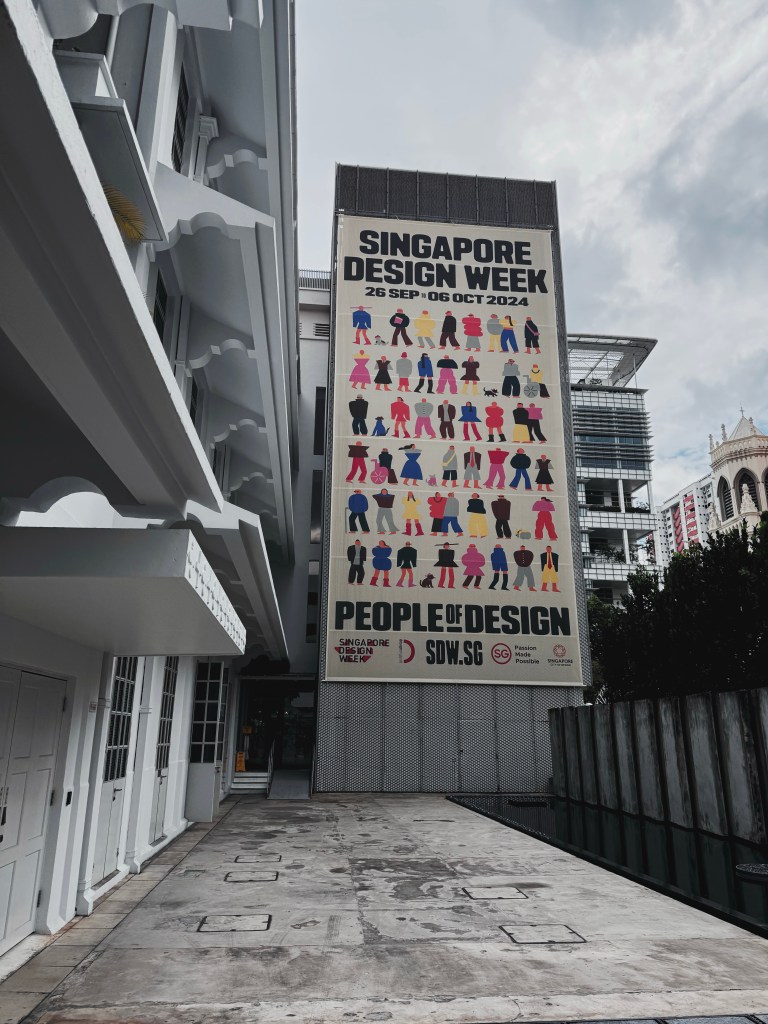
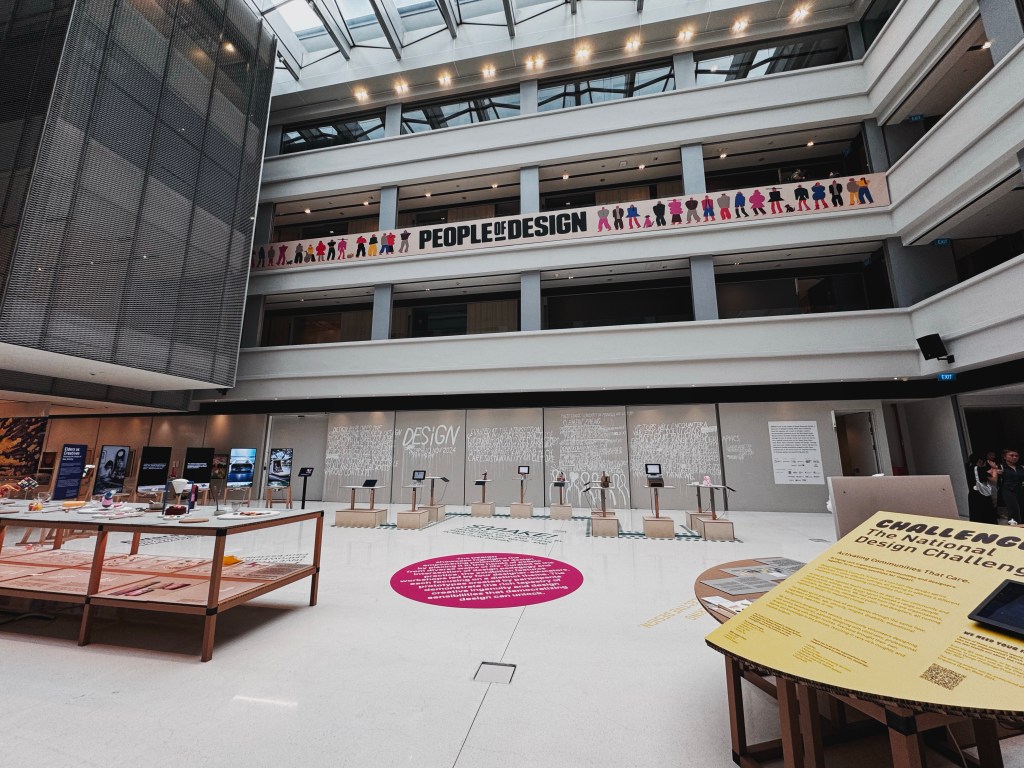
    As mentioned before, this period of domestic exile coincided with Singapore Design Week, which gave me enough things to do and see. On Tuesday, I paid S$130 to attend Day 1 of what was called the Design Futures Forum, which was noted by other attendees to have very little to do with futures exploration (many things discussed were of the present moment), and disappointingly never unpacked the business/social/political challenges that an audience of designers would be thinking about. I overheard someone say, “I could have read this in a designboom article.”

    For example, AI was a key topic as you’d expect in 2024, but presented with the breathlessness of a Forbes contributor piece from over a year ago; without offering contrarian viewpoints, sufficient interrogation of its costs and consequences, or thoughts on how its widespread use might be steered into balance with sustainable creative employment. The AI hype was pervasive, and if the audience played a drinking game triggered by every mention of it, the theater would have seen more vomit than the local ByteDance office. Some of the better speakers seemed to feel some responsibility to subvert the theme, and took genial pot shots at AI whenever they could. But I get it. We’re probably not the real audience for these events, and who knows what purposes they serve anyway? Me, I was only there to pass the time and meet old friends.

    The next day, I visited the Enabling Village, which is described as “the first inclusive community space in Singapore dedicated to integrating persons with disabilities in society”. On top of just wanting to see the place, I attended a series of presentations on projects with inclusive design elements, including some interesting work from Sony. They’ve made prototype musical instruments such as a finger-free saxophone that can be played by humming into a mouthpiece. Your voice gets turned into synthesized sax tones. I wish I could buy one, then my neighbors would be paid back in spades (j/k).

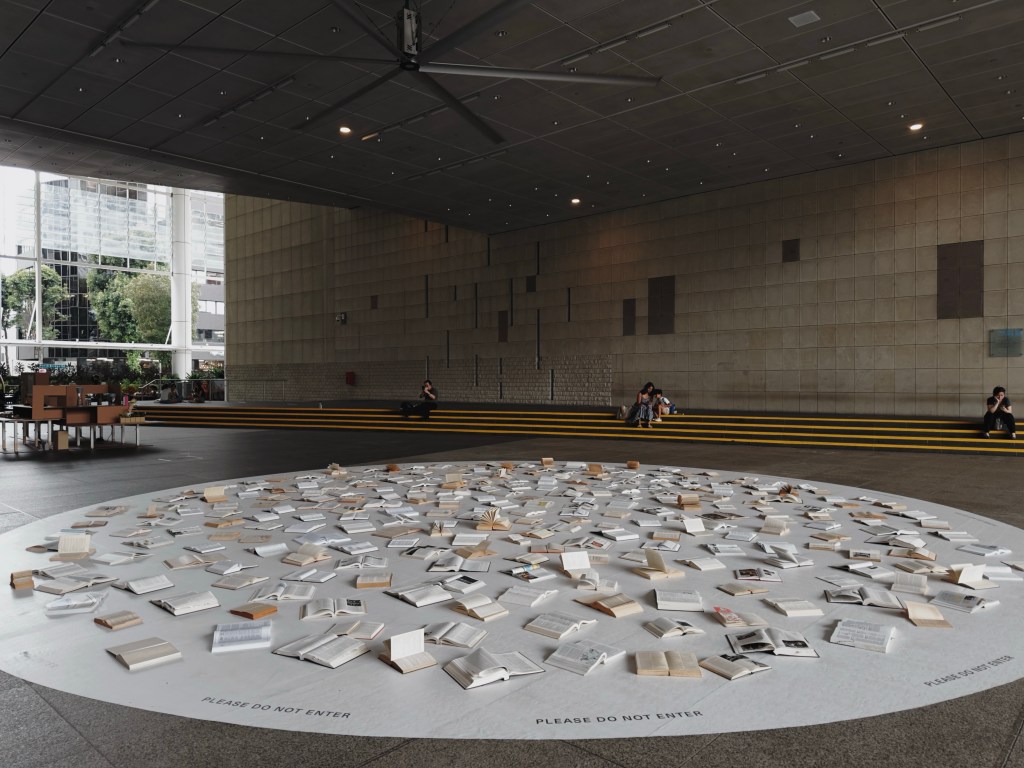
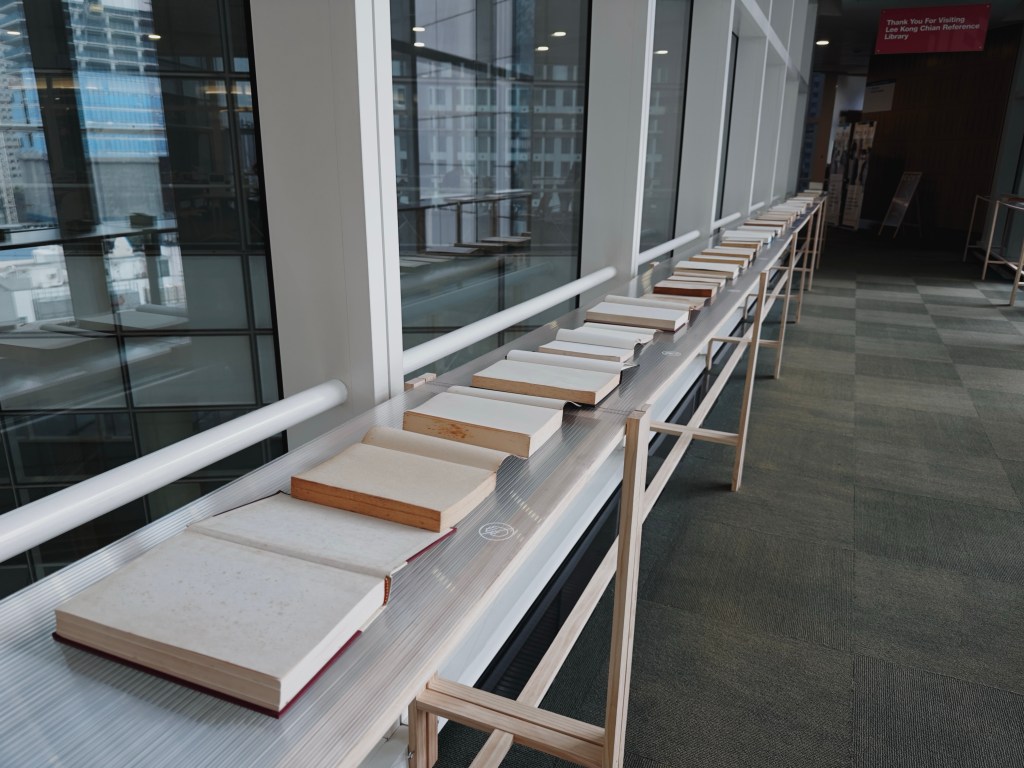
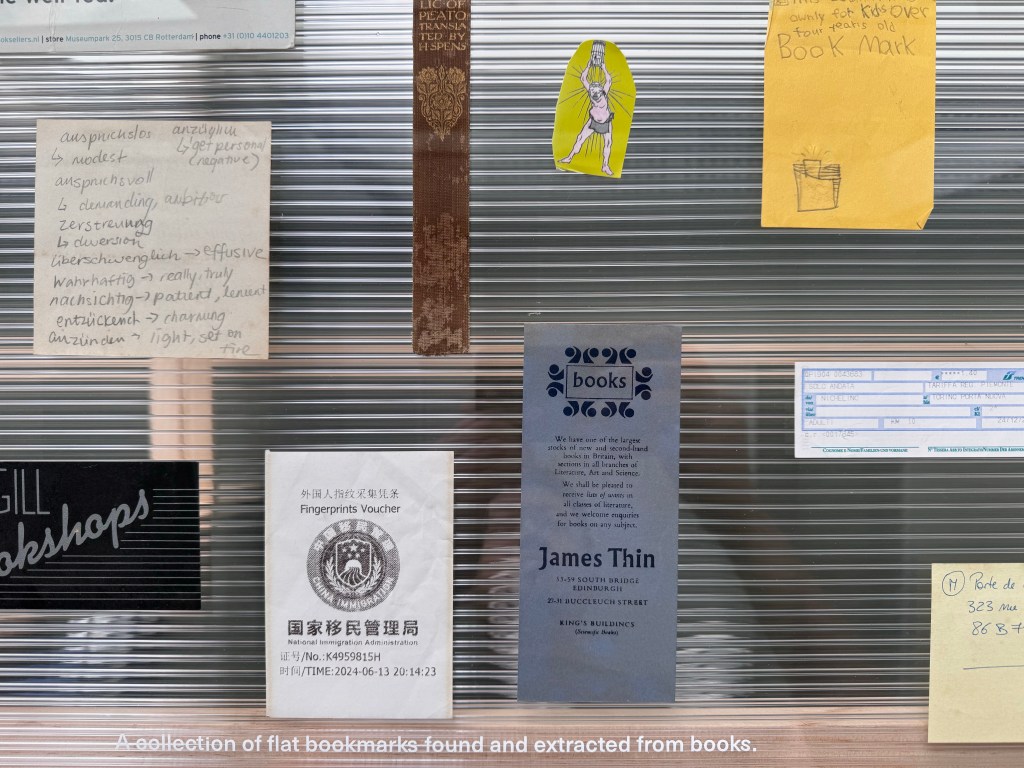
    There were also many free events and exhibits across town, and I filled pockets of time by dropping in on the ones around Orchard Road and the Bugis district. My favorite location was probably the Central National Library building which hosted some thoughtful and playful meditations on books and reading: from the physical aspects of holding spines and flipping pages, to sensorial explorations like how smelling different types of paper can evoke long-buried memories.

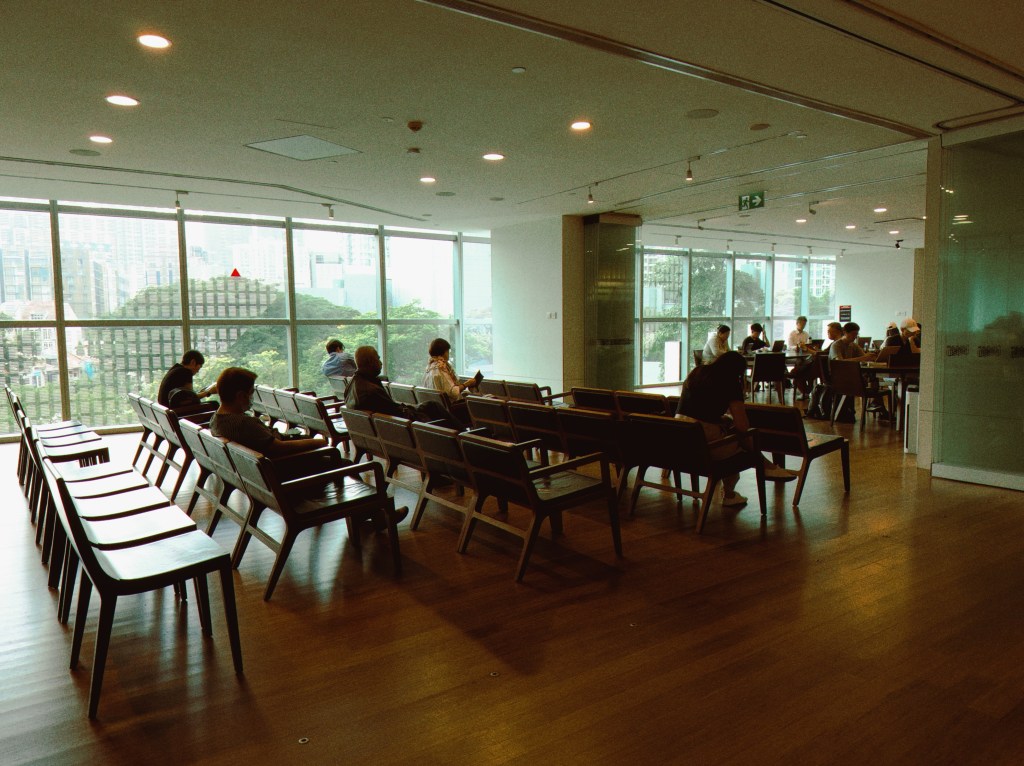
    It was my first time really checking out the Central Library, and it’s quite impressive. The reference section spans some five levels (from 7 to 11, I think), with the public lending library in the basement. Nearly every free seat was taken on a weekday afternoon, many by students of all ages who were… doing homework? I spotted someone doing math on the Humanities floor, so I guess it’s just an air-conditioned spot for some, nothing to do with the materials available.

    I wanted to read some poetry, and found a copy of the collected works of Philip Larkin, in the exact same paperback edition I had as a student. I sat with that for half an hour, next to some senior citizens who looked very much at home.

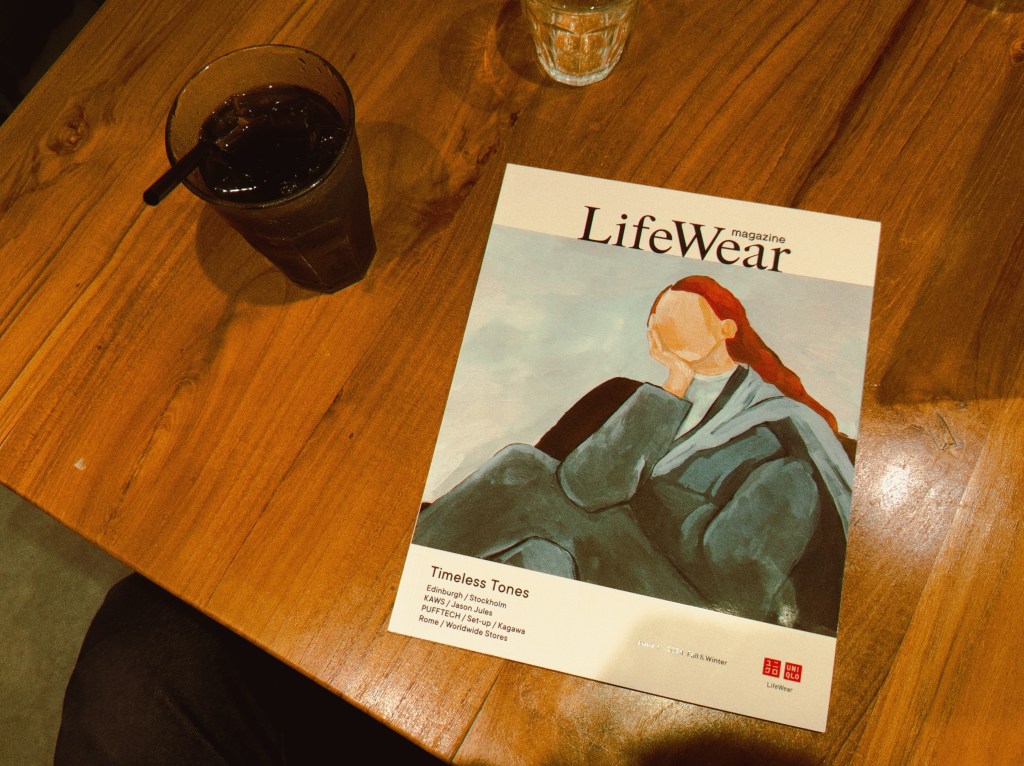
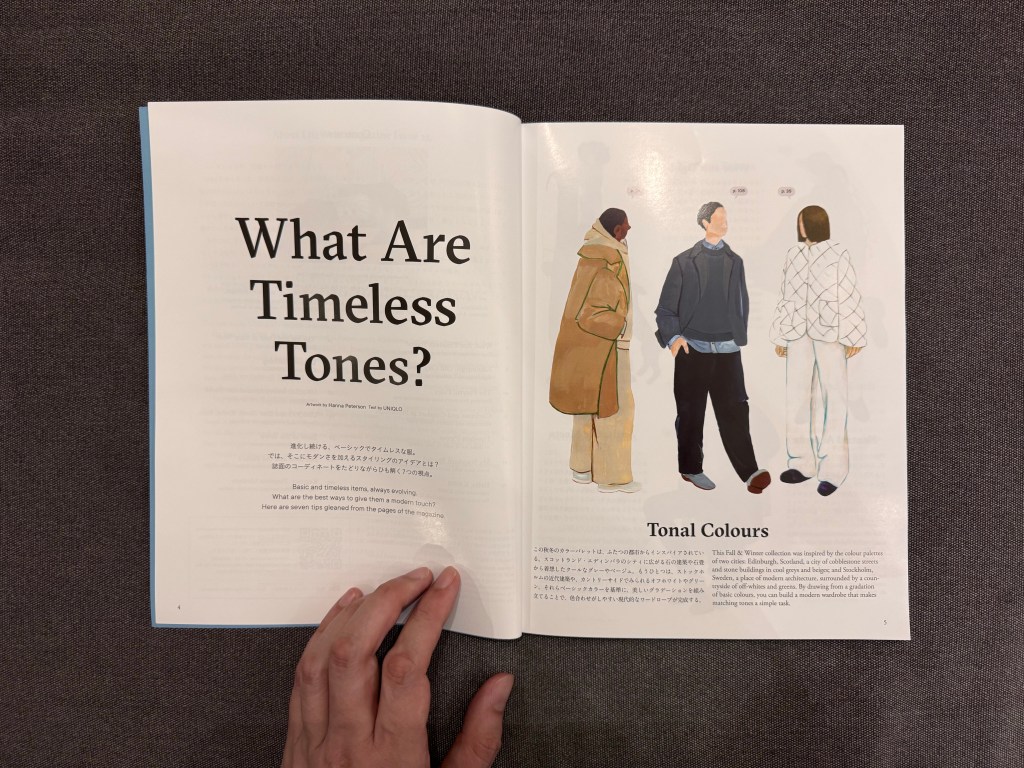
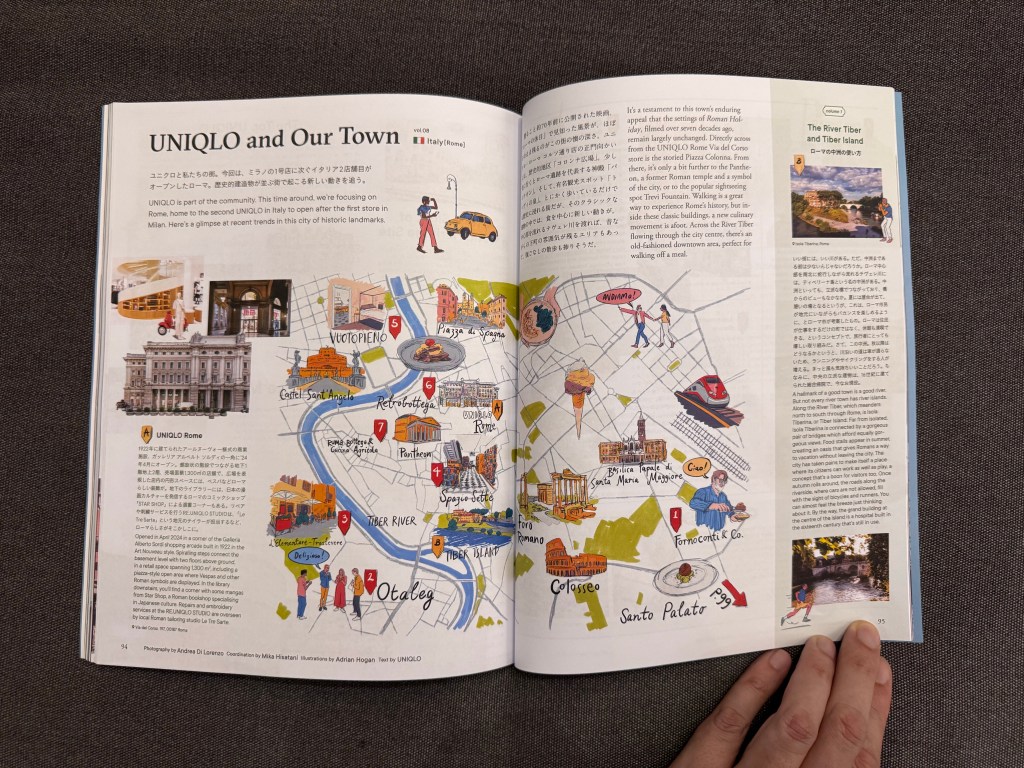
    Let’s loop back to Uniqlo: I half-joked on Instagram that one of the best design artifacts I saw whilst out exploring Singapore Design Week ‘24 was in fact Issue #11 of the free Uniqlo LifeWear magazine they give out in stores. It’s in both Japanese and English, with elements of Japanese editorial design and whimsical Monocle-esque illustrations. In addition to the expected fashion spreads of their products on models, there are also recipes, features about their global stores and the cities they’re in, and profiles of artists they collaborate with. I wish we had more brand publications like this, where there’s no distinction between making something nice for customers and trying to sell things. You can also read it online.


    On Thursday morning with some time to kill, I decided I’d best drop by the library@orchard to have a quick look before it closes down at the end of October for a lengthy renovation. It won’t be back until 2026, and the cynic in me thinks it won’t come back at all, much like how the Singapore Art Museum is now seemingly trapped in shipping port limbo, unable to return to its original downtown location because the land is now too valuable to allocate to the arts or whatever. I mentioned this before.

    Then I spent the afternoon with Peishan and Cien at an odd cafe that identifies as a co-working space — essentially you are welcome to sit there all day and leech off their power and WiFi, with no stated minimum purchase amount or anything. I don’t get the business model, but they’ve survived for years somehow. Perhaps it’s guilt based, because I ended spending twice as much in food and drink than the cost of a hot desk would be for an entire day.

    Media Activity

    I presume the other two got some work done, but I spent my cafe time clearing email newsletters and watching an episode of The Old Man, a 7-part TV series from 2021 that I didn’t know existed until recently. It stars Jeff Bridges as an aged CIA agent in hiding whose past catches up with him (I know, I know! But I’ll always make time for a set up like this), and the first two episodes were directed by Jon Watts (Wolfs, Spider-Man: Homecoming). The whole thing is so well executed that I wish it was longer. I’m told the second season, running now, has lost the plot. But trust me, if you like spy stories at all, you’ll want to see the first.

    Wolfs (2024) is now out on Apple TV+ and I enjoyed it just fine. For me, seeing George Clooney play a spiritual reboot of Winston Wolf, the fixer from Pulp Fiction (1994), is such a treat that it overrides other parts of the film being predictable or “small scale”. There’s also undeniable chemistry between him and Brad Pitt, who does that thing where he goes from smug, unlikable asshole to an alright guy after all, right before your eyes. Too bad he can’t do that with his real family. 4 stars.

    I finished The Book of Elsewhere, a sci-fi/fantasy (really, I think it’s both) novel by China Mieville and Keanu Reeves. It was extremely enjoyable while sounding in many places like a thesaurus was devoured in the writing of it. Once you get past some of the “awkward” use of big words when smaller ones would do, the rest of the writing is good, and occasionally becomes deliciously unhinged. Phrases literally collide with one another and tumble down pages like experimental poetry in some places. Elsewhere, Mieville (I assume) manages to replicate the dreamlike quality of visual storytelling — this story first appeared in a comicbook series entitled BRZRKR, by Reeves and Matt Kindt — and narrates the immortal protagonist’s violent fugue states and how he experiences passing from death to rebirth with some of the most Class-A, Colombian-grade stream-of-consciousness I’ve ever seen.

  • Week 38.24

    Week 38.24

    I didn’t fall ill after all, but Kim’s flu evolved into what looks like a chest infection, leading to coughs all night and poor sleep for both of us. I bought a pair of Loop Quiet 2 earplugs in anticipation of a neighbor’s renovation, and they were somewhat useful under these circumstances too. She finally saw a doctor after several days of nagging, and is now on antibiotics and there’s been some improvement in the last day.

    On Tuesday, I opened the front door to discover a swarm of mosquitoes hovering over my black sneakers — later on I discovered they love hiding on black objects, as a form of camouflage — and took to them with an insecticide spray. In the process, quite a few made it into the apartment. I clapped a dozen to death and confirmed from their squashed bodies that they were Aedes mosquitoes: the species that spreads malaria and dengue fever.

    The red light came on in my head: a new crisis just dropped! Why were there so many? How the heck was I supposed to hunt down all the ones that came in? Fortunately, a neighbor happened by, and when I mentioned them to him, he assured me that they were infertile male mosquitoes (males don’t bite or spread diseases) intentionally released as part of a national anti-dengue campaign called “Project Wolbachia”. They’re meant to breed with females and decrease mosquito numbers by wasting their time, because the eggs don’t ever hatch.

    I’d heard of this program over the years, but didn’t share his confidence that MY mosquitoes could be explained by this. He said “oh yeah, they (the government) release them here all the time”, which led me to check the official website in disbelief. It was true. According to a published schedule, officers of the National Environment Agency release these genetically engineered mosquitoes twice a week, probably by the thousands, around public housing blocks in my district. I waited to see if I would be bitten, and sure enough, I never was. The males only live about a week, but it’s still insane to me that someone is deliberately releasing a ton of insects that look exactly like the ones we know can be dangerous. What am I supposed to do, ask their pronouns before trying to kill them?

    ===

    My new old iPhone arrived, and I ran into some issues during the phone-to-phone transfer process. It failed a couple of times, and I finally gave up and went the ‘restore from iCloud backup’ route. It took several hours, and then I had to check every app to see if I’d gotten logged out. It was the same frustrating dance I do every year I upgrade iPhones, but without the reward of actually upgrading.

    Happily, iOS 18 looks visually fresh and brings a bunch of welcome features. It’s the first OS update in awhile that actually makes your phone feel new. I’m using the new Home Screen mode that lets you have big icons without text labels, and there’s a new dynamic background that shifts colors throughout the day. You can also use a dynamic rainbow gradient on the Lock Screen’s clock, which looks great against black when the always-on display is set to sleep without showing your wallpaper.

    The customization that’s possible with the new Control Center shortcuts and resizable widgets is pretty deep, and something I would not have expected Apple to provide if you’d asked me a couple of years ago. I’ve mapped the Lock Screen camera shortcut to launch Halide, and my Action Button to launch a Google shortcut that does a visual lookup of whatever is showing on your screen. I’ve also put a new button in Control Center that starts my personal radio station on Apple Music.

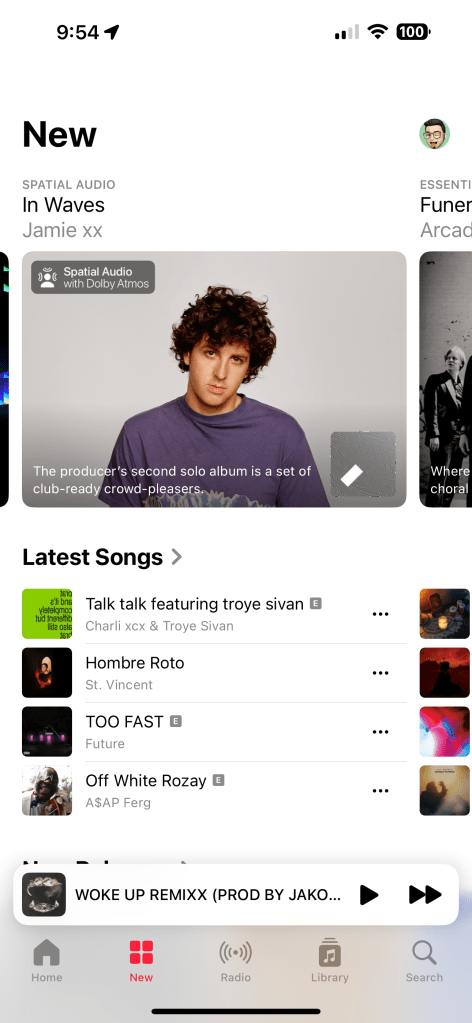
    Apple Music has also received a significant, if not immediately apparent, change in iOS 18. The “Browse” page has been renamed “New”, and where every user would previously see the same curated selection of new releases, popular songs, and recommended playlists, this content is now personalized based on your listening behavior. The initial impression is positive: I’m no longer being pushed Thai music, or Mandopop, or the local bands I don’t care about. But longer term, I’m worried about the lack of serendipity that might result from this. I discovered some of my favorite music through accidents and unexpected tangents, as I’m sure is the same for anyone reading this.

    <Smooth segue into Media Activity>

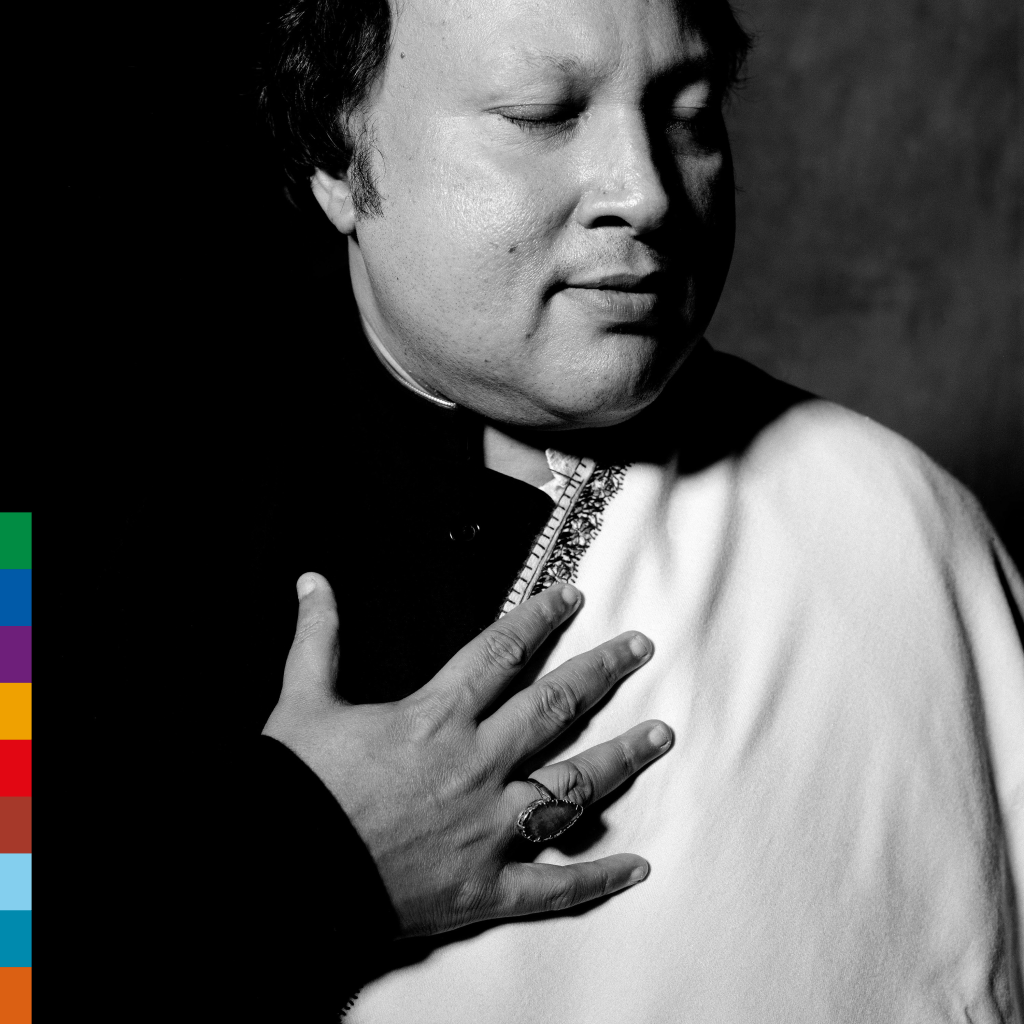
    I don’t recall when I first heard the qawwali music of Nusrat Fateh Ali Khan, for example, but boy did it make an impact on me some 30 years ago. I never understood a single word, but you don’t have to in order to feel touched by something divine in his voice. So I was super pleased this week to see in the New York Times that an unreleased album had been discovered in the vaults of Peter Gabriel’s record label. They even produced a making-of video to tell the story of its discovery and restoration.

    The new old album, Chain of Light, is more in the traditional style so each of the four songs runs about 10 minutes. It may not be an ideal starting point for most; so I still recommend beginning with Mustt Mustt or Night Song, two ‘Westernized’ albums he made with Michael Brook to be more globally accessible.

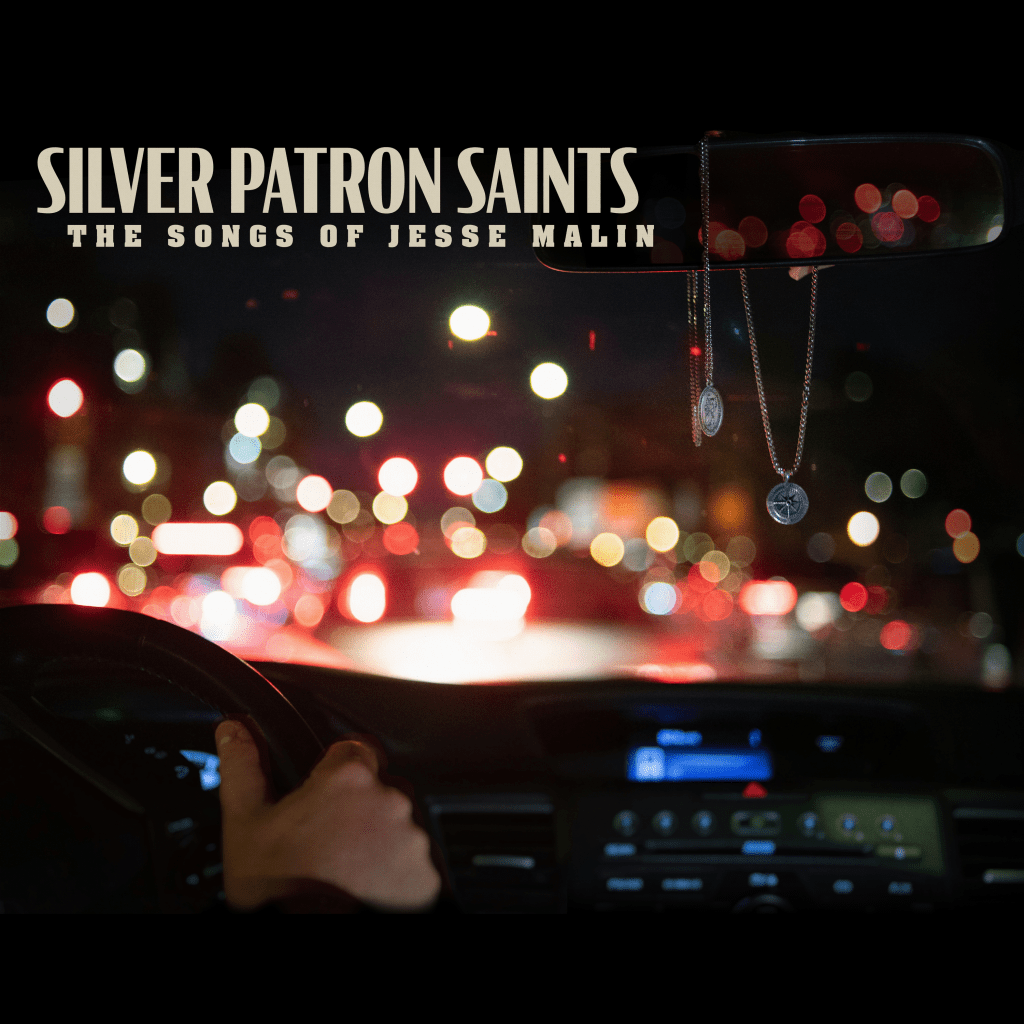
    The Jesse Malin tribute album, Silver Patron Saints, is now out too, with covers by Bruce Springsteen, Counting Crows, The Wallflowers, Elvis Costello, and many more greats. Back when you had to buy CDs on faith in a physical store, I liked getting these tribute albums and would decide based on the artists doing the covers, even if I didn’t know the musician being celebrated. If some of my favorite artists were involved, then the odds were pretty good that I was about to discover someone fantastic. Sweet Relief II: Gravity of the Situation — The Songs of Vic Chesnutt was one such album (unfortunately the album is incomplete on Apple Music for me, maybe a regional licensing thing).

    Will algorithms ever be smart enough to replicate that sort of discovery?

    This week in reading, I hit my Goodreads challenge of 12 books by finishing Kyla Scanlon’s In This Economy? How Money & Markets Really Work. It was an admittedly low target, so I’m confident I’ll be able to finish a few more before the year ends.

    We watched Sam Mendes’s 1917 (2019) and it was riveting, beautiful cinema. The single-take gimmick was probably unnecessary but made the action immediate and every movement of the camera threatened to reveal a hidden threat suddenly behind our heroes, which I thought effectively mimicked the tension of real conflict. A deliberately edited film shows you danger on its own schedule, but real time action is real time dread. Someone I follow on Letterboxd also observed that this felt like watching cutscenes in games like Call of Duty, a cinematic style that I think emerged because devs were showing off what their game engines could easily do that Hollywood could not. But the battlefield is pretty flat now, and movies are essentially made with the tools of game development, so we can’t stop these two mediums converging.

    [I didn’t take any shots for the Featured Photo this week, so I’m relying on WordPress’s ability to automatically generate some AI slop based on the post’s content.]

  • Week 37.24

    Week 37.24

    Kim got back from her trip with a flu, thankfully it doesn’t seem like Covid and should pass in a couple of days. Jet lag and illness are terrible partners: she spent about two whole days in bed sleeping it off and missing meals. I’m hoping to avoid it, but you shouldn’t place any bets on my famously weak immune system (putting aside the fact that it can fight off chickenpox).

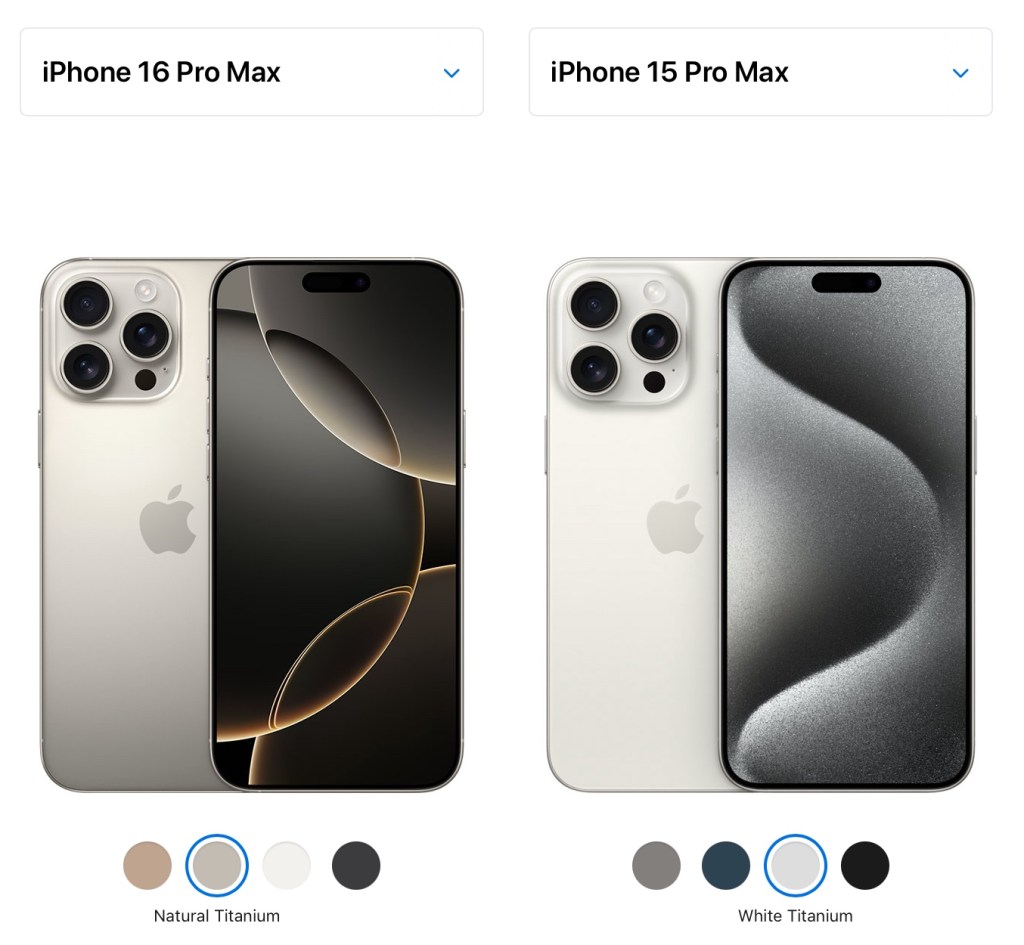
    It was iPhone launch week again — where did the last year go? As usual, many key details had already leaked thanks to Mark Gurman’s sources. The Pro phones are slightly larger, the 5x zoom length is now across both models, and there’s a new “camera control” area along the right side; both a button and a ‘Touch Bar’. The regular iPhones 16 get all the great colors, while the Pro ones only get dull metallics. One of these years, we’ll get to have some fun too.

    The only things on my wishlist that hit were improved battery life and performance, which aren’t surprising — the real question is how significant are they? Apple says the CPU is 15% faster, the GPU is 20% faster, ray-tracing is 2x faster (though I can’t name a single game dying for it), and the 16 Pro Max gets 4 hours more video playback for a total of 33 hours. That’s a 14% increase over the iPhone 15 Pro Max.

    So to summarize, it’s a 15% better iPhone than the one I have, the AI features will release slowly over the next year, and there’s a camera button that I do want (but only serves to do things you can already do on the touchscreen). Given the fact that I already got a Vision Pro and could use some financial prudence during this sabbatical, pre-order Friday came and went without me buying a new iPhone for the first time in 16 consecutive years. Nobody believed I could do it!

    >> For future reference, my battery health is at 88% and 310+ cycles after a year. Coming off the regular Pro size for my iPhones 12 through 14, moving back up to the Pro Max form factor felt perfectly fine, and I think the lightness of titanium was a big factor. I never felt like I’d chosen the wrong size. Caveat: I did change out all my jeans to have roomier pockets.

    I decided to go caseless for this next year, and was quickly reminded that my iPhone came with an annoying defect: a slight misalignment of back cover glass and titanium frame, leaving a rough, kinda sharp edge that you can feel pressing into your palm. I wanted to get a replacement as soon as I took it out of the box because all the marketing talked about ‘comfortable rounded edges’ on the new design, and I was missing out. But replacement units are hard to come by the first few weeks after a launch, so I decided to wait and just popped it into a case and never got back to it.

    This week, nearly a full year later, I called up Apple Support and tried to explain this admittedly minor issue. They suggested I visit an authorized repair partner who could assess it in person, which gave me a good excuse to get Shake Shack for lunch (after Michael’s recent quest for “hot chips” — just French fries for us outside the UK and Australia — I had a craving that wouldn’t go away).

    All in, I had to sheepishly explain my problem to three different support people, two on the phone and one in person, but everyone was very nice about it? I think acknowledging upfront that you are about to sound like a crazy person (in a friendly, non-crazy way) is generally a good strategy for these situations. I’ve now got a replacement phone on the way, and think I’m happily set up for the harrowing year ahead of Not Having The Best iPhone.

    ===

    My friend and ex-colleague Bert was back in town for a visit, and a bunch of us from the old team met up with him in a configuration that hasn’t been together for maybe six years. It was great to see everyone looking no worse for wear, and arguably with more hair, muscles, and iron (from medical implants and drinking too much Guinness) than ever before.

    One thing he mentioned was how warm it is here these days, and how he’s lost all acclimatization. I’ve personally never felt acclimatized to the heat, and am always looking for solutions — see this recent post where I got the Sony Reon Pocket 5. That gadget has been plenty helpful, and I still use it whenever I’m heading outdoors for any meaningful length of time, but it’s not enough on its own. So now I’ve gone and got myself a portable handheld fan after seeing bts videos of K-pop idols holding them all the time. Edit: on second thought, I might have seen them in an episode of Irma Vep.
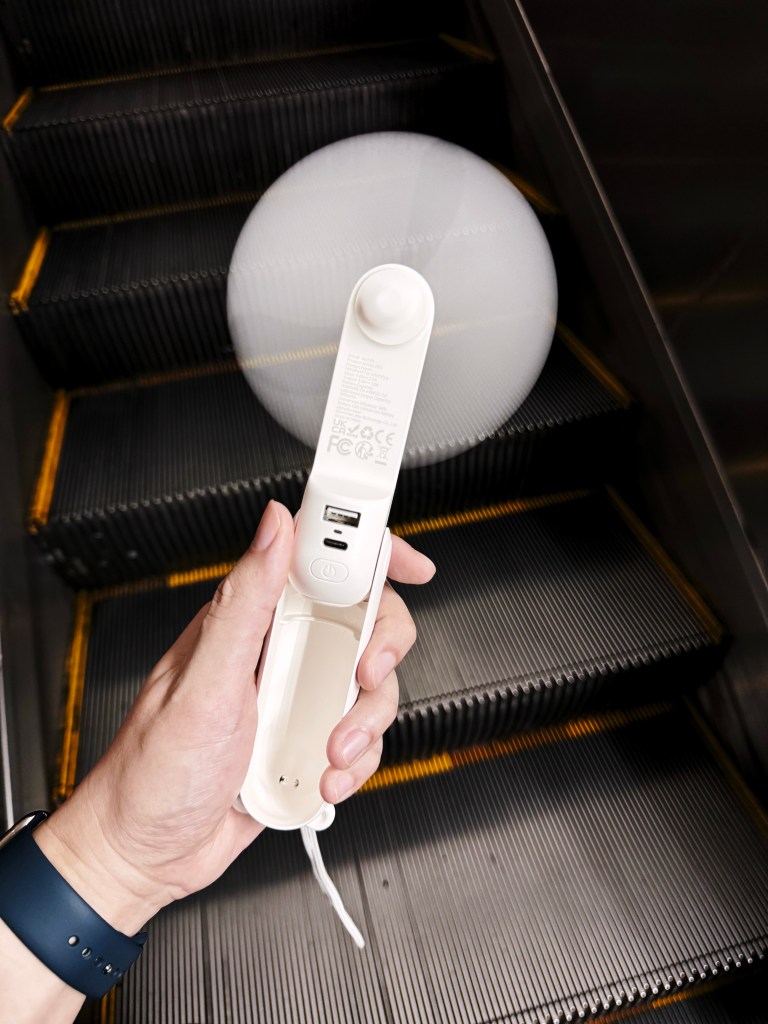
    This brand, JisuLife, claims to be the world’s number 1 portable fan manufacturer. Who knows if they are? But they had a bunch of products on sale during the recent 9.9 event on Shopee, so I got one of these clever folding designs that collapses into a cylinder much smaller than the umbrella I carry around in my bag. It even doubles as a flashlight.

    A couple of days later, whilst browsing the shelves at a Harvey Norman, I came upon a shelf of JisuLife products and got instant fomo when I tried another model out. The Life9 is even smaller, and eschews big visible blades for an internal turbine design that works like a hairdryer. The result is a much stronger, albeit narrowly focused and noisier stream of air. So now I have er… two fans.

    Both charge via USB-C, but the former model (Life8) uses some non-standard spec and won’t work with my usual cables, only the USB-A to USB-C one it came with. The Life9 charges normally as expected. They’re both cheaper on Shopee than on the official site, and you might catch them for lower on occasional flash or live sales.

    ===

    Media activity

    • Two current streaming movies over the weekend: The Instigators on Apple TV+ and Rebel Ridge on Netflix. The former is o-k with some amusing moments, a heist movie that subverts the usual joys of a heist: the brilliant plan coming together, the thwarting of smug antagonists. No, these guys are morons, but sorta lovable. Matt Damon is often lovable. 3 stars.
    • The latter film is more entertaining fodder, a Reacher-esque tale of small town corruption and sadism meeting a particularly skilled outsider. They messed with the wrong guy, etc. It drags a little long, however, and doesn’t quite strike the comeuppance note as satisfyingly as a Lee Child joint. 3.5 stars.
    • I know, because I read two of them this week. I finished The Midnight Line (Reacher #22) in a day or two. It’s a pretty chill story as the series goes, with a slight mystery that won’t keep you dying of suspense or anything. Almost no danger for our hero. 3 stars.
    • I immediately went onto Past Tense (Reacher #23) and found that much more entertaining because there are actual stakes involved. Part of the problem with Jack Reacher is that he’s Superman, and you never worry that he’ll make it out okay. This book introduces a few vulnerable characters that you can actually worry about. 4 stars.
    • After that, I read Rebecca F. Kuang’s Yellowface, a book that everyone was raving about a little while ago. I preferred Babel, but this is a fine little bit of meta narrative about the publishing industry, being Asian, and being Asian in the publishing industry, or just pretending to be!
    • Listened to a lot of Waxahatchee for the first time since discovering her back in May. Her latest album Tigers Blood, and 2021’s Saint Cloud, in particular. There’s something I just love about the Alabamian accent.
  • Week 36.24

    Week 36.24

    I was able to visit my parents for dinner for the first time in over a month. The long delay was on account of my dad developing a painful case of shingles, which, if you don’t know much about (like me), is a reemergence of a dormant chickenpox virus in one’s body, often after the age of 50. In other words, if you’ve had chickenpox before, you’re at risk of shingles — a nastier, localized version of the same virus.

    Unlike the regular childhood version, it doesn’t usually take over your entire body, just specific areas. In my dad’s case, it affected his back and one side of his torso, leaving the skin painfully sensitive for weeks — nerve pain that, for some, can linger for years. Thankfully, he’s making a quicker recovery.

    I had to stay away because I have never gotten chickenpox, and you can catch it from someone with shingles. I was urged to get the vaccine, because adult cpox is reportedly awful (like shingles, maybe worse), but my doctor suggested doing some blood work first to test for immunity — mostly because he didn’t believe I could make it this far in life without getting chickenpox. But it’s true! My mother swears it, and I have two traits: pretty good memory of my childhood years, and an outsized tendency to complain of ailments. There is no way that I could have gotten chickenpox as a child and everyone just forgot.

    The test results came back, and apparently I’m immune. The only theory I have traces back to this one time in kindergarten, when the boy sitting next to me in class developed cpox and had to leave school early. I recall living in fear that I would be next, and pus-filled bubbles would soon show. I remember checking myself fastidiously for a week or more, but it never came. Perhaps the glancing exposure was just enough to let my immune system prepare itself, but not enough to result in an infection? Or maybe, as my recent run-in with a car suggests, I’m actually Unbreakable like Bruce Willis in that M. Night Shyamalan movie.
    ===

    Kim is away again for work (13,600km away to be precise), and my having to deal with our pest situation alone has been a whole saga too boring to recount in detail. Tl;dr I’ve deployed a fleet of poison/bait traps, struggled with anxious insomnia, taped up a bunch of possible entry points, cleaned up a lot of lizard poop, sprayed insecticide down drains…

    More happily, the morning she left for the airport, I was up early and decided around 7:30 AM that I might go for a walk before it got too warm. This was inspired by Cien’s recent revelation that she’s been taking hour-long morning walks nearly every day. Just to get it out of the way: that’s a bit much for me, but I might go once a week. Spontaneously, this particular morning’s resolution ended in Peishan and me ‘virtually’ joining her for a walk at the same time, in our respective neighborhoods, sending photos along the way. This is actually a pretty fun thing to do!

    It was, however, warm despite the early hour. And it’s been hot and humid all week out here. I had to walk 10 minutes from an MRT station to a restaurant yesterday evening in very still air, and I could feel the sweat on my back not evaporating at all, merely pooling. Even my Sony Reon Pocket 5 brought little relief; I barely perceived that the metal contact point was cooler, or it can’t do much to dispel the mugginess of high humidity.

    ===

    I couldn’t take the wait any longer and upgraded to the visionOS 2 beta. I won’t upgrade any other devices, but I wanted any improvements in eye/hand tracking that I could get. So far, it’s been perfectly stable. I could talk about the new gestures and features, but the single most impressive thing has been the ability to view old 2D photos as 3D spatial scenes.

    What this looks like is simply layers of depth. You obviously can’t look around corners, and it’s not doing anything crazy like building 3D models you can move around in. But it’s like going from looking at a scene with one eye to two eyes. They suddenly have a liveliness to them because your brain can not only see that one object is in front of another, but perceive it too. Sadly, this is not something that can be demonstrated with a photo or video. The only way is to see it for yourself.

    The AI-powered segmentation of objects is somehow flawless, even better than on Portrait Mode (blurred background) photos taken with an iPhone. In one shot I had of a vineyard, every individual plant and leaf stretching to the horizon line was distinctly separated in space from the others. You can also blow them up to life-size with an “immersive” viewing mode, which puts you right in the space.

    Going through photos from the past two decades, of people who’ve passed on, and places I may never see again, has been profoundly moving. Documenting your experiences in photos has always been like building a time capsule, but this approaches time travel. It makes me so glad for every moment I thought to capture at the time, and the fact that the Vision Pro can do this retroactively for normal photos feels like the most unexpected gift I never knew I wanted. That’s what Apple does best, I suppose.


    Before the annual fall event tomorrow night, I’ll go on record again that I don’t think I’ll be upgrading my iPhone or anything else this year (but this time I really mean it!). So far I’ve had 16 iPhones and lost this bet with myself every year, but I can’t justify an incremental tech purchase in the same year as the AVP.

    Things that are unlikely to be announced but might make me reconsider my ‘no upgrade’ vow:

    For iPhone 16 Pro (Max):

    • No camera bump
    • New image processing pipeline that walks back the aggressive AI/HDR look and brings back natural looking photos à la Halide’s Process Zero (but with 24–48mp HEIC/JPEG XL files)
    • Bold, saturated colors like on the old iPod nanos
    • Untextured, grippy back glass
    • Significantly faster or exclusive Apple Intelligence features compared to iPhone 15 Pro
    • Completely new battery chemistry that means I won’t be sub-90% battery health in under a year

    For Apple Watch Series 10:

    • 2x battery life
    • Blood glucose monitoring
    • New body design that shames the old ones so bad you can’t wear them out in public anymore

    For AirPods Max:

    • Redesigned headband that either replaces the mesh or improves its comfort and durability
    • Significant weight reduction and/or new materials (comfort and durability)
    • A great protective case
    • Addition of a power button

    ===

    Media activity

    Recent reading momentum led me to finish reading Neal Stephenson’s Interface after two months. It’s a highly entertaining sci-fi story about contemporary American politics, media culture, and using brain implants to reverse a presidential candidate’s stroke damage. Nearly the entire time I was reading it, I visualized the main character as Robert F. Kennedy, and his VP pick as Kamala Harris.

    For my next book, I’m taking it easy with Jack Reacher #22, The Midnight Line.

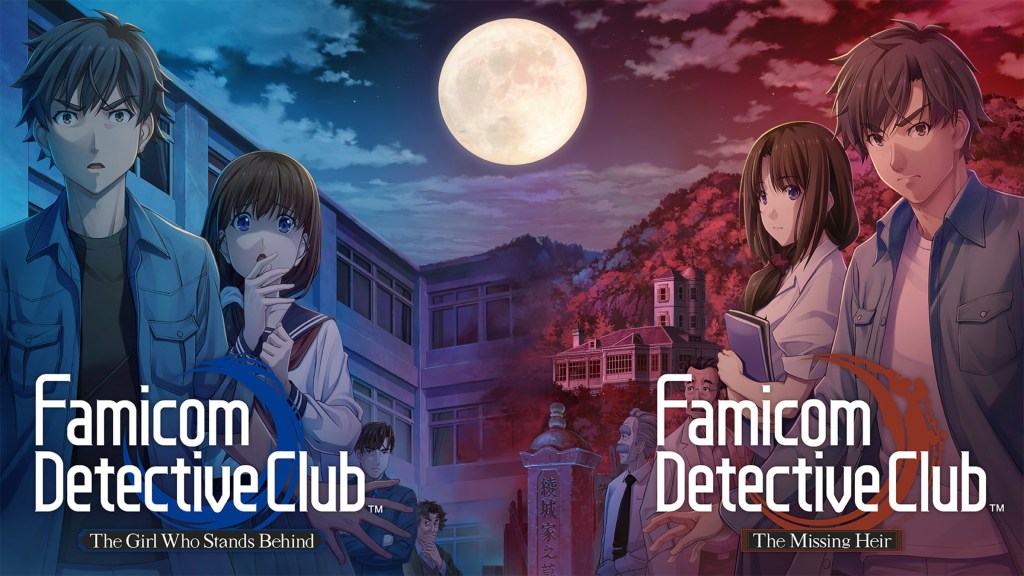
    A few years ago, Nintendo remade two classic ‘80s visual novel-style adventure games under the “Famicom Detective Club” banner. This week, they released a wholly new third entry in the series, Emio: The Smiling Man, which got greenlit because of the warm reception that the remakes received. The history of these games is pretty interesting, and I watched this whole video essay on them.

    I bought and played the first remake, The Missing Heir, back around 2022, and found its authentically ancient gameplay archaic and frustrating. For example, in most such games, when questioning someone about a topic, you will reach a point where their answer starts to repeat itself — a sign that you’ve heard all you’re going to hear. In the first two Famicom Detective Club games, this is not the case (pun unintended).

    You: [Ask about the car]
    Suspect: There was a car seen at the time, I heard.
    You: [Ask about the car]
    Suspect: Hmm, that’s about all I remember.
    You: [Ask about the car]
    Suspect: Hmm, that’s about all I remember.
    You: [Ask about the car]
    Suspect: Hmm, that’s about all I remember.
    You: [Ask about the car]
    Suspect: Oh! I just remembered something. It was a black sedan.

    This is such incredibly bad game design, because someone repeating themselves like that is unnatural in the real world, so it appears as a limitation of the game (not having AI to generate different versions of “I dunno”). So of course a player isn’t going to keep pressing, because the suspect’s response isn’t an invitation to keep trying. It’s the equivalent of a brick wall in the game’s interaction model. But no, you’re meant to kick every solid object multiple times in case it comes loose.

    I ended up finishing the game using a walkthrough, and declined to buy the second game, The Girl Who Stands Behind. I’m guessing that Emio, being a new game, will be an improvement in this regard and so I intend to play it someday. But it doesn’t feel right doing that unless I also play the second game (there is no real need, they are not connected).

    Rather than pay $30 USD to frustrate myself, I watched a 7-hour video of someone else playing through the entire game — at 1.5x speed, of course. The first video I found was actually 10 hours long because the player was blundering through some of the aforementioned game design quirks, so I gave up on him and found this better one instead.


    Oh, and there’s another kinda new game that concludes something that started in my childhood, and I finished it this week. That game is of course Return to Monkey Island, which I played on the Switch. If you subscribe to Apple Arcade, you can also play it there. I don’t know how I feel about it; the original two games were the pinnacle of LucasArts’ point-and-click adventures and I probably remember them most fondly of all. The new sequel brings the story to a close, but with a new art style and an acknowledgment that a long time has passed (both in story terms and the authors’ perspectives). There was no way the ending could have satisfied every question and loose end, so they just went for something that felt true enough to its roots, but kinda comes out of nowhere. I was honestly surprised when the credits rolled. But that’s life!

  • Week 35.24

    Week 35.24

    First, an update on last week’s air conditioning saga. During another service visit, the professionals confirmed what my online research had suggested: a malfunctioning thermistor was the reason for inconsistent cooling. To test it out, they swapped sensors between two indoor units, and now that the cause has been confirmed after a couple of days, they have to come back yet again to replace the broken one (S$161).

    Shortly after, I was coincidentally served this cocky tweet about how “reasonably smart” people with internet access can now challenge an expert about their specific problems, because 1) the information is out there, and 2) the customer has more invested in the outcome than the vendor. For the record I tried hard not to preemptively suggest it to the experts, but when they diagnosed a ‘thermistor problem,’ I wasn’t the least bit surprised.

    New house problem: We found a dead cockroach and it’s been bugging me. I made a poll on Instagram Stories and asked how many people have seen a roach in their homes in the past year, and was surprised the results were pretty much 50-50 (n=29). It might be down to how many people have apartments with integrated rubbish chutes or face open-air corridors. In any case, there’s always something wrong and I need the universe to give me a break or better mental health.

    ===

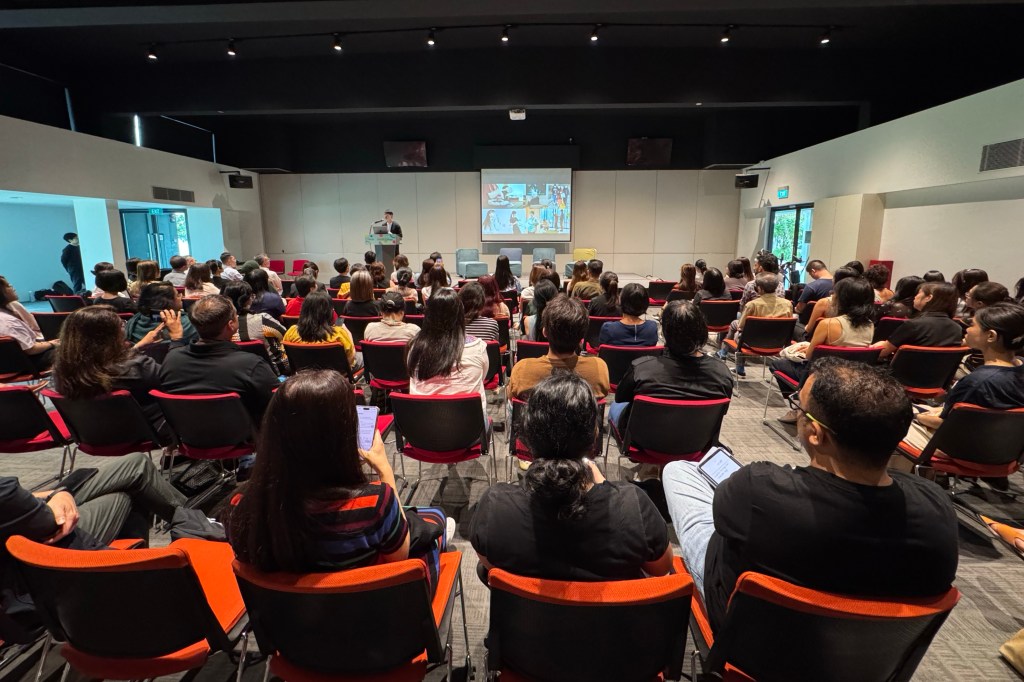
    I joined my first-ever book club after hearing about it from some folks I met in inSpaze. They meet in the app for an hour every week, and have what I assume is a typical book club discussion if not for the fact that (nearly) everyone is in a Vision Pro.

    They’ve just started on a new book, Guy Immega’s Super-Earth Mother, which I couldn’t find in the library’s catalog and had to buy off the Kobo store. The title is my least favorite part, as it could turn some readers off. I didn’t expect to enjoy it as much as I did, but I ended up finishing it in just a couple of days. I was later chastised for this, as we’re supposed to be reading it together over three weeks.

    It’s about a billionaire’s mission to send an ark of human DNA across the universe in the care of an AI (Mother-9), and how its efforts to colonize other planets goes. That premise immediately reminded me of the back-half of Neal Stephenson’s Seveneves, but this is a very different effort. I think I described it in my Goodreads review as “a compact and accessible space epic”.

    What’s making this extra special is that one participant is a friend of the author’s, and they’ve been filling us in on little Easter eggs and references to real-life experiences. There’s also a chance that Mr. Immega might join us for a short Q&A in a later session.

    This external push to read broke my summer reading block. I had stalled on Neal Stephenson’s Interface for months, but after finishing Super-Earth Mother, I breezed through another hundred pages and am enjoying it immensely.

    Kim’s pretty old Kindle Paperwhite finally died, and I got her a new Kobo Clara BW (she declined the Color model, which I still think was an extra $30 worth spending), which is a very nice and slender reader in person. I am now envious of its USB-C charging and Dark Mode support, and am trying to stop myself from buying a Libra Color to replace my first-gen Libra. At over S$300 dollars, even if I’ve read 100 free books on mine so far (I haven’t), I’d still have paid $3/book for the sheer utility of an e-ink screen, which seems silly to me because one can read perfectly well on an iPhone. Or a Vision Pro, even.

    I tried that, btw. Having giant floating pages in front of you is actually not terrible. And in doing so I hit upon another realization about the Vision Pro. Photographers are always saying that you should print your photos to appreciate them, at as large a size as you can, but how many of us really do? Most photos end up being seen on phones, and maybe laptop-sized screens. But now there’s a way to view our favorite shots at wall size and have a gallery-scale experience at home. And, I suspect, discover more flaws and limitations that will push us towards buying better gear. It’s tragic how much of the last decade we documented in piddly 12mp photos because iPhones were more convenient than dedicated cameras. Ugh!

    ===

    Media activity

    • We caught up on Sunny. This is a show that, on paper, seemed designed to light up my neurons. Robotics, AI, a Japanese setting, a “darkly comedic” mystery, a story about clashing cultures, an A24 production. But it’s not for me at all. I came across the above clip on how causality, consequence, and coherence (my terms) are essential in telling a story people can care about, and sadly Sunny fails to adhere to those rules.
    • But also on Apple TV+ is Pachinko, which has just returned for its second season, and I thoroughly enjoyed the first two episodes out now. I understand that it’s one of the most popular shows on the service, and I hope it finds an even wider audience.
    • The consensus online seems to be that Apple TV+ is full of great shows that people just aren’t discovering, and Bad Monkey is one of them. Again, I think the show’s title is the weakest link here, and you should be giving it a chance. Vince Vaughn does his thing, the dialogue crackles, and things move with causality, consequence, and coherence. It also kicks off with the discovery of a severed body part.
    • We rewatched Twister (1996) and then saw Twisters (2024). The original is an actual classic, directed by Jan de Bont (who also did Speed), and features a team of tornado chasers with actual, palpable camaraderie. You feel like you’re going along on an adventure with them, and part of that happens because the script bakes in ample downtime where they strategize, tell war stories while eating steak and eggs, and hang out in motels overnight. The sequel is almost embarrassing in how it tries to check a series of “mirror the original” boxes — there’s the in-over-their-head outsider whose terror is played for comedy, the traumatic past weighing on the female lead’s motivations, her magical gut feel that can predict weather better than the science-dependent nerds. But despite all that, it can’t reproduce the magic. Still, as a standalone movie, Twisters is not all bad, and Glen Powell is definitely becoming one of the most likable and bankable men in Hollywood. 4 and 3.5 stars respectively.
    • We also watched Office Space (1999), which I realize I’ve never really seen properly at all. It’s an anti-work masterpiece, with many themes and grievances that seem to be reemerging today. Sure, it came out around the time of The Matrix, when rebellion against cubicle offices was at its peak, but I can’t recall many films in the past ten years that have so strongly espoused quitting your dumb job, burning your workplace to the ground, and finding purpose somewhere else. 4 stars.
    • Gregg Araki’s Mysterious Skin (2004) was leaving MUBI, so I decided I’d better see it. Boy, what a downer. I looked at reviews on Letterboxd and here are some excerpts from the positive ones: “This is a flawless film, but don’t watch it.” “This is not a movie I should’ve watched.” “I will never recover from this.” “What if I just walked into oncoming traffic”. 4 stars from me, but I tried not to think about it too hard. It might be a 4.5.
    • Also leaving MUBI was the French film Summer Hours by Olivier Assayas. It’s a quiet and beautiful story about the familial unraveling that happens when a parent dies and there is ‘bric-a-brac’ to be split up and hard discussions to be had. Sad subject matter, but nowhere approaching the rock buttom of Mysterious Skin’s tragedy. Also 4 stars.
    • I tried again to start watching Assayas’s Irma Vep TV series, but various interruptions have stopped me from finishing the first episode. I know it’s not a straightforward remake of the original film, but Alicia Vikander’s character is so different from Maggie Cheung’s that I’m intrigued to see what he’s trying to say about her/them/filmmaking with this new take.

    Featured photo (top): A superb dinner we had at Beyond The Dough on Arab Street. It’s one of those places that brings obsessive Japanese craft to traditional pizza. They are amusingly two doors down from a Domino’s outlet.

  • Week 24.24

    Week 24.24

    ✅ Saw Seinfeld live

    His 2024 tour had just one Asian stop, here, before heading to several Australian cities. We decided to splurge on S$300 tickets late last year for the one-night-only show on June 14. After all, when are you ever going to see Jerry Seinfeld again? It’s a once-in-a-lifetime, bucket list opportunity.

    And he was pretty good! I can’t believe he’s 70 and still working the circuit. Although the face says he’s aged, the material suggests he’s still the same unserious, childish complainer we love. Some bits on modern subjects like AI and smartphone addiction screamed ‘boomer!’, but his timeless takes on marriage, the lack of innovation at the Sun-Maid Raisin Company, and putting old dish sponges out of their misery, were solid gold.

    ===

    I attended an inspiring memorial service for my uncle, who passed away a few weeks ago. It was a large and well-attended affair, on account of him having been a prominent member of the local medical community.

    Relatives are usually these distant figures we only see during Chinese New Year reunions. But under the surface, there’s a lifetime of stories we never hear, and it’s a pity. If not for the history lesson and stories that his son shared, I would never have known about how he was born in China 90 years ago, arrived in Singapore at the age of 10, suffered tragedy at the hands of the Japanese, and became an award-winning multihyphenate equally accomplished in matters of art and science. That generation really was built different; the risks they took seem unreal when compared to our modern lives (but tbh they couldn’t handle a zillion social notifications destroying their mental health either).

    ===

    It was WWDC week and while I don’t have to comment on Apple stuff, I kinda always do, so let’s keep traditions alive. They unveiled a slew of software features coming to every platform, and I was most excited to see that Journal, Notes, and Freeform are still being improved and haven’t become forgotten hobbies. As a word-centric computer user, they’re the ones I rely on most — the Math Notes demo on iPad was super cool but I couldn’t begin to use it.

    I’m not convinced the Photos app redesign was necessary or an improvement for most users. Its single-page design seems like a conceptual simplification that might add more complexity in real-life use. I haven’t lived with it yet, so I hope I’m wrong.

    I’m convinced Messages will continue to absorb all popular chat features until it eventually catches up to where Telegram was about four years ago. And that’s all it needs to do, really.

    They announced that Apple Vision Pro will finally be sold outside the US, with Singapore as one of the first countries to get it, alongside Japan and China. Wow, that’s a hell of an upgrade to our starting lineup position. Back in Week 5, I correctly predicted that the global rollout would start in June, but I also said that the product would see annual updates — the consensus on tech Twitter now is that there won’t be a new model until 2026. Which… makes me think that I could get one after all? Getting two years of use out of a S$5,500 device is a lot more palatable than getting just one. Once you add the cost of AppleCare+ (S$749), a travel case (S$299), and prescription inserts/contact lenses though. Hmm.

    On Apple Intelligence: I was happy to see them begin by laying out their design principles (we do this on a lot of my projects, but they are rarely communicated to the public), which are critical for this particularly suspicious and misunderstood technology, for which Apple needs to differentiate their approach and model. Some, like Google, already have access to your data but can’t be trusted not to monetize it with ad targeting. Others, like OpenAI, may only have what data you choose to share but can’t be trusted not to train their models on it. Apple is unique in that it doesn’t seem to want to do either.

    Finally, we’re getting a smarter Siri that’s an actual agent, i.e. able to string together various tasks in pursuit of a goal, and take action on behalf of users. So much for the Rabbit and all that bullshit. Doing as much locally as possible is the only responsible way to do AI agents. And Apple’s private cloud compute solution, which looks to be yet another privacy engineering breakthrough, is probably the second-best way.

    The image generation stuff was probably the most contentious part. I’ve seen upset takes from artists but no one can put this stuff back in the bottle. The only way to stop AI art is a full-scale public revolt, and that requires everyone getting a good look at it first. It’s the four packs of cigarettes your dad forces you to smoke after he catches you sneaking one. When we’re all tired of seeing gross AI styles, human-created art might be appropriately valued.

    But I don’t think Apple is on this exact mission, so I was surprised at the examples they chose to showcase. The Genmoji of a surfing dinosaur looked terribly similar to Meta’s own AI chat stickers in style and quality (cheap). But being able to create Genmojis and illustration-style images for documents all across the OS, for free, is no doubt a big deal. I think many people will generate their first AI images with Apple Intelligence.

    ===

    Media activity:

    • I just finished R.F. Kuang’s Babel and loved every page. If you’re into university-set adventures, deep dives into language and literature, the aftershocks of British colonialism, and tales of the Chinese diaspora, this one’s for you. I had no idea that she also wrote Yellowface, which I’ve heard many people rave about. Props to Kuang, she gets a lot more out of being Chinese than me. 5/5 stars.
    • Bought Like a Dragon Gaiden: The Man Who Erased His Name for S$31 on PlayStation’s summer sale, and immediately started playing it. I thought I’d had enough of this series for awhile, but I’m six hours in and having so much more fun than in the preceding game. Part of it is even set in the same Yokohama map as Yakuza: Like a Dragon, but running around here is so much better without the annoying turn-based combat. Recommended if you like absurd storylines played with the straightest of faces.
    • Started watching Constellations on Apple TV+, which has sadly been canceled after one season. The first two episodes lean into a space horror vibe which had me seriously tense, but it’s lightened up a bit now in episode three. Recommended for fans of Noomi Rapace, Dead Space, sci-fi mysteries.
    • Watched A Quiet Place Part II and was let down because I remember enjoying the first one, but this sequel is a much lesser use of mostly the same ingredients. Plus that annoying post-apocalyptic trope about how the human survivors are worse than the monsters. PUHLEASE. 1.5/5 stars.
    • Watched Hit Man on Netflix, the first Richard Linklater film I’ve caught in years. It kept me guessing (and I had a lot of wrong guesses where it was heading), and has a lot of fun with the concept. Glen Powell is going to be a huge star, isn’t he? 4/5 stars.
    • Alex Garland’s Civil War was like most of his films: plenty to look at, not much to say. It shows what a civil war in the US might look like, but doesn’t care to fill anything in, mirroring the photojournalists it follows. Early on, Kirsten Dunst says “we just shoot the pictures, others can ask why”, or something to that effect. Well, isn’t that convenient for you, Alex Garland. 2.5/5 stars.
    • Discovered the band Fantastic Cat after seeing a vertical video somewhere of them inviting Adam Duritz of Counting Crows to be on their new song. It may have been a clip of the video for the song, actually. Following that I checked out Now That’s What I Call Fantastic Cat and really enjoy its pre-my-birth country rock sound. A quick internet search revealed that they’re a supergroup of four singer-songwriters that I unfortunately have never heard of.
    • Am listening to Charli XCX’s very popular new album, BRAT, and it might be her best work yet. I’m also listening to A.G. Cook’s new Britpop album and since he produced half of her album, it can get confusing.
    • Have also been following the drama of Taylor Swift allegedly releasing numerous editions of her albums on the eve of other female artists’ album releases to block them from the top spot on charts. She apparently tried it with Billie Eilish’s album, and now she’s done it to Charli with a UK-only release of two new editions of The Tortured Poets Department, each with different demos or live versions tacked on. She’s free to defend the throne but there are apparently 34 different versions of that album out now. Even The Guardian has weighed in and declared Charli the winner on artistic grounds. This releasing of multiple variants to milk fans feels gross to me. Back in my day, musicians just released one version of an album (okay, plus maybe a Japan-only one with bonus tracks) and it had to fend for itself on the charts for years!
  • Week 22.24

    Week 22.24

    I used to drink 3–4 coffees a day, measured in espresso shots, usually from our home Nespresso machine or the office’s barista. At Starbucks prices, that would cost $10 a day or more, depending on the drink formulations. At home, about $3.20 in Nespresso pods.

    While looking at where I could trim unnecessary expenses (which has resulted in pausing Netflix for the past month, I’ve barely missed it; and canceling YouTube Premium, much more painful because of how frequent the bad ads are, so perhaps a necessary expense after all), I thought perhaps I could drink more tea. After all, I like tea! It’s just a bit more bother, waiting for the water to boil and then standing there for 4–5 minutes while it brews, or at least having to remember to come back in time — I usually don’t, and then it stands there on the counter for 20 minutes becoming cold and uncommonly strong.

    So I got some UK supermarket brand teabags in, because local supermarkets don’t do tea much cheaper and can’t do it much better, I assume. And boy are they ridiculously cheap. A box of 80 Sainsbury’s gold label teabags runs about S$5–6 (and less than S$2 in the UK), making each hit of caffeine about 10x cheaper than Nespresso. If you do the math, simply switching to tea will save me enough to buy a new iPhone Pro every two years.

    Starbucks revenue is down, coincidence?

    ===

    I finally got the third and final dose of my hepatitis vaccine after recovering enough from Covid — that cough is still around though. For reasons too hard to explain here, I ran into YJ immediately after, and we managed to chat for about half an hour. It was my first time seeing him in years; I think the last time was a noisy fast-food lunch just before Covid happened.

    He runs a bunch of coding classes for kids and I got to sit in for a little bit of one. What I want to mention here is how astounding it is to actually watch young teens use their computers in a classroom in 2024. They swipe between desktop spaces on macOS: they’ve got windows for Discord, Telegram, YouTube, Figma, oh and some multiplayer FPS they’re killing their classmates in, casually multitasking between all of it while still participating in the lesson.

    I said to YJ either we’re really old and slow, or this generation’s brains are cooked. I assume the former. We were premature in calling millennials “digital natives” because the world they and Gen Zs grew up in were not sufficiently digital. I think these kids are there now.


    Media activity

    • I know I said I was committed to finishing Astral Chain on the Switch, but I lied. The graphics are good for the aging platform, but the story is not engaging, the levels waste my time, and the combat is over complicated for no reason. Cutting my losses.
    • Likewise, after 24 hours invested, I’m ready to call Yakuza: Like A Dragon the worst installment I’ve played in an otherwise brilliant series. Perhaps it’s the decision to make it more of a JRPG, with all the tedious combat and level grinding that comes with it. The city of Yokohama where you spend most of your time is so much blander than it is in Lost Judgment — just compare the maps and you’ll see Yakuza’s version is a barren wasteland where Judgment’s pops with shops and activities on every block. I’m at a stage where the game is telling me to level up before the next chapter begins, and I’m saying no to hours more of pointless street fights.
    • I went back to Lost Judgment to finish the add-on DLC adventure, The Kaito Files, which took about four hours. And then I deleted it along with the two games above. Clean slate and it feels good.
    • I decided to see more films each week, and to cut down on the decision paralysis, they don’t have to be great.
    • Firestarter (2022) was terrible. I was actually excited for it because I saw the original 80s film several times as a kid; it had horror vibes and terrified me. It was based on a Stephen King story and starred a child Drew Barrymore as a girl with the power to set things on fire with her mind. This new one has Zac Efron playing her dad, and there are nearly no redeeming qualities. 1/5.
    • I rewatched David Fincher’s The Girl with the Dragon Tattoo over two days and loved it more than I probably did when it came out. Although it wasn’t as successful, it made me want to rewatch The Girl in the Spider’s Web too, but had to confirm my vague recollection that it was a new standalone story written after Stieg Larsson’s death ended the trilogy. Turns out there are now SEVEN books in the Lisbeth Salander series, and Spider’s Web is book #4. I’ll probably read the new books first to see if they’re any good.
    • In the Heights was a fun musical with Lin Manuel-Miranda’s fingerprints all over it. The songs were satisfying, with the occasional clever bars that make you go ‘ooooh!’, and Jon Chu (of the Step Up films) is obviously the guy you call to direct big dance sequences. Perfect Sunday afternoon viewing. 4/5.
    • Completely without meaning to, I saw an Anya Taylor-Joy triple feature this week: The Northman: I was prepared for a mid-budget Viking tale, but had no idea it would be a star-studded, intensely violent, artistic triumph (4/5); The Menu: I was prepared for cannibalism and risked watching it before dinner anyway, but instead it was an absurd black comedy wrapped in layers of detestfulness — it attacks pretension with a blunt weapon forged from pretentiousness itself (3/5); and Furiosa: Jesus Christ, George Miller has action cinema running in his veins, you can’t take your eyes off the screen for a minute. Anya is incredible in all three, a victim with hidden strength. I’d like to see her do some lighter comedic material. Maybe I’ll watch Emma next week.
    • YouTube recommended me a music video by Kenshi Yonezu and I want to know why no one told me about this guy. I’ve seen three of his recent videos now and they’re brilliant! They make use of practical effects, clever editing, and great art direction to keep you engaged throughout the songs. Take a look: