Tag: Camera Apps

  • Week 33.24: A close call

    Week 33.24: A close call

    The last update almost became my final one, because I nearly died this week!

    We got the tragic news that a good friend’s dad had passed away (there have been so many cases of this lately), and as Kim is out of town, I was about to go down to the funeral wake for the both of us. I booked a Grab (local Uber-like) ride around a quarter-to-six, and headed down to meet him when it looked like he was close enough.

    As I approached the pick-up point, I saw the car approaching and waved at him, walking continuously down the stairs to the road as I watched him do a three-point turnaround to come at me from the right direction. But suddenly, instead of slowing down for me to get in, the car suddenly lurched forward at full speed. At this point, I was maybe at the very last step down, and the car was coming directly towards me instead of parallel, like you would when picking a passenger up.

    In that moment, my first thought was “is he trying to scare me, as some sort of joke?” This was followed by alarm as he was clearly not slowing down, and then a last-minute instinct to back away. The next thing I saw was the car slamming into the short wall beside the step I was just on, as I fell back on my ass. And then I was covered in debris, missing both shoes, and feeling pain beginning to spread through my legs as shock began setting in.
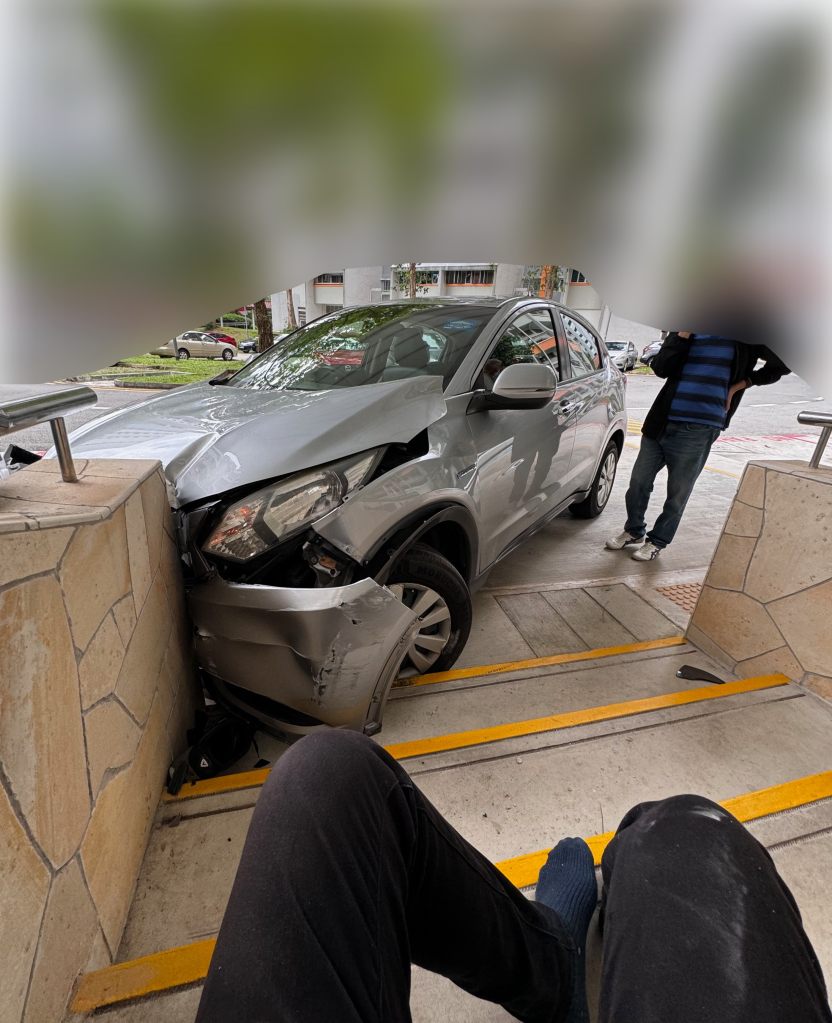
    I’m quite sure I was hit in the right knee at some point — there’s silver car paint on my jeans to prove it. I recall feeling my left foot being squeezed inside my shoe for just a fraction of a second before it slipped out, as my weight shifted backwards as I fell. Both shoes were later recovered underneath either side of the car. I was there at the point of impact, and then I wasn’t.

    Afterwards, an alternate memory emerged: the car may have hit the wall on the other side first, changing its trajectory towards me, but this initial impact would have dampened its speed. Perhaps my knee was only clipped by a part that was already damaged, explaining how I got a paint transfer without a broken kneecap.

    I remember people nearby running over after hearing the crash, yelling for an ambulance and the police to be called, telling me to stop trying to get up (I backed away from the car on my hands and tried to see if my legs were still unbroken), and to wait for help to arrive. A very kind man took off and came back with a cold can of Pocari Sweat for me; a neighbor I know came and kept me calm by talking things through; and the driver called for help.

    After trying unsuccessfully to call Kim, I took some photos and figured out that my legs were still attached, although moving my left ankle and right knee hurt. The police and paramedics arrived in about 10 minutes and checked me out. I was still shaking from the adrenaline and giving them too much detail, like apologizing that my feet were very sweaty right now as they peeled my socks off. They decided that I might have some fractures and would need to go to the hospital for scans as this was going to be in a police accident report.

    Side note: I don’t really know what happened yet. The driver claims he was trying to brake but the car didn’t respond. I overheard the police interviewing him and asking if there was any chance he mistook the pedals and accelerated instead. I suppose there will be an investigation.

    As I was being loaded into the ambulance, I heard the ominous approach of cars and imagined them crashing into us, and realized that this episode might end with a lasting, debilitating fear of going outside after I’d recovered. I anticipated PTSD, nightmares, and other new items to put in my therapy cart.

    What followed was a couple of hours waiting in the A&E/ER department of a general hospital, trying to joke with the orderlies, and getting x-rayed by about five young people at once who might have never done it before? But no complaints for me, everyone was incredibly nice and got me through it. The verdict, no major fractures (time will tell if there are hairline fractures, specifically two weeks of observation time), and I was lucky to get away with bruises and sprained ligaments.
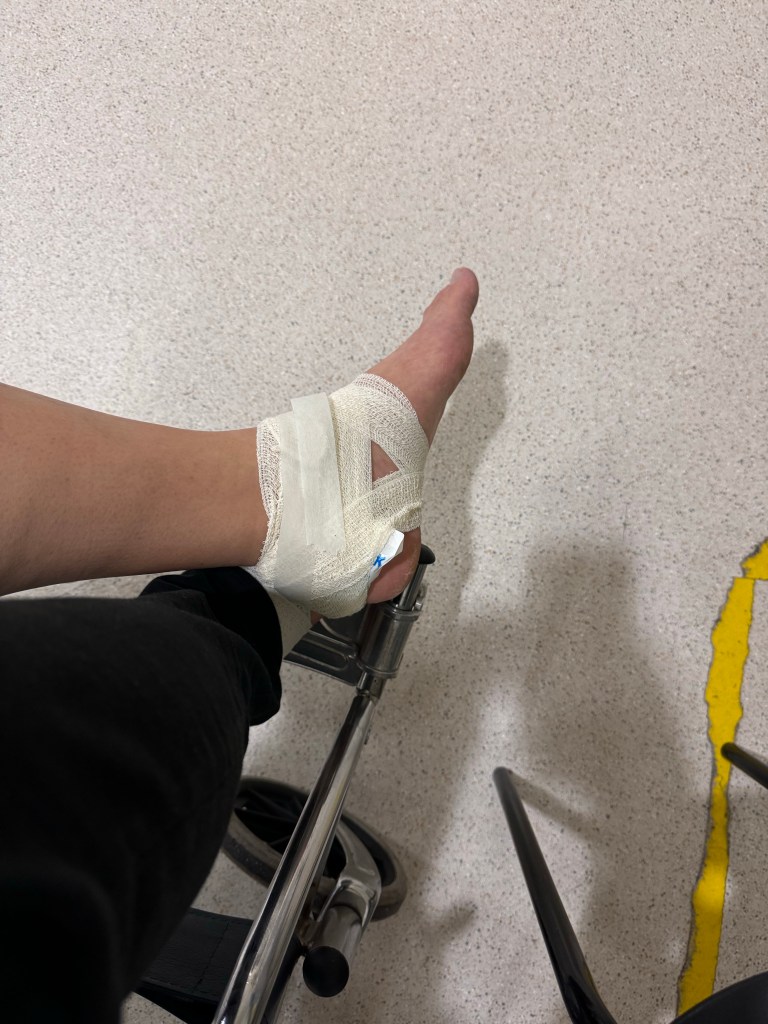
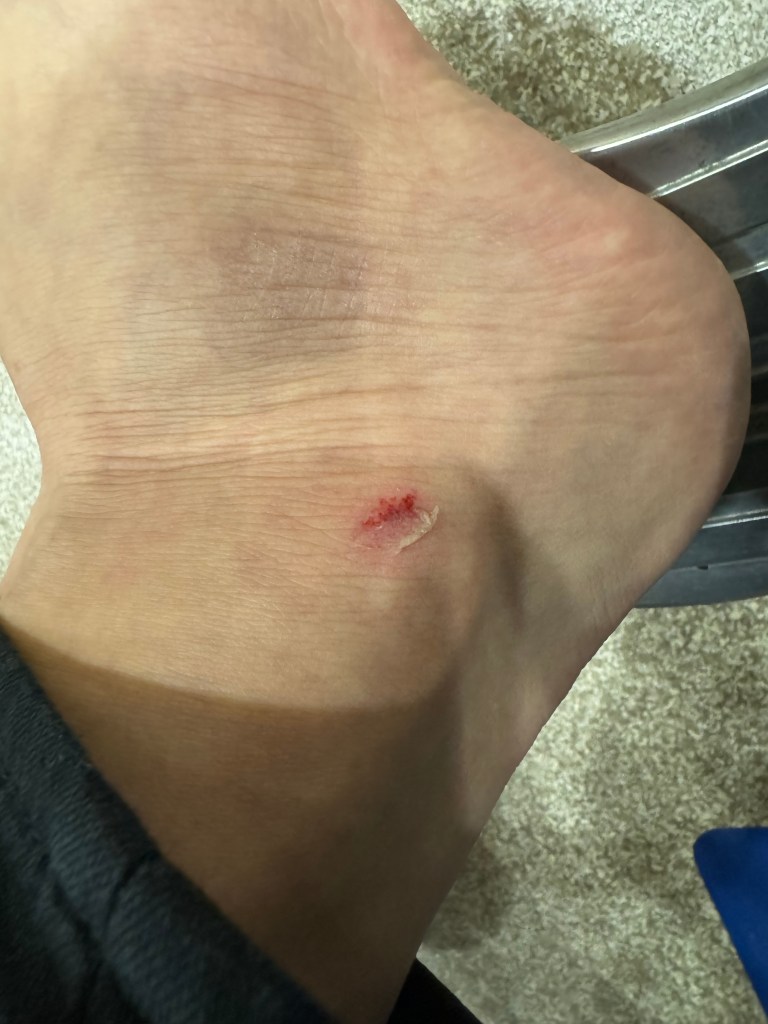
    Amusingly, this care even extended to a small nick on my right ankle that was noted by the doctors. Although the pain was concentrated elsewhere, they promised they’d clean that “wound” and dress it for me before leaving. They did so fastidiously, washing it in antiseptic fluid and applying an antibiotic gel and bandage. Then I was also given a supply of said antiseptics and antibiotics to care for it at home. The bandage fell off after my shower and, despite being a delicate hypochondriac, I was happy to just slap a band-aid on it.
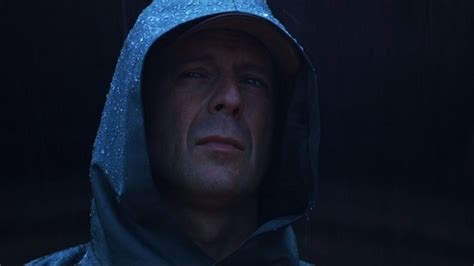
    The whole time, from when I was in the ambulance (intrusive thoughts wanting to say “amberlamps” out loud), until the next day, I kept hearing Kanye’s “Through The Wire” in my head, specifically the line “Look at how death missed his ass / Unbreakable, what you thought they’d call me Mr. Glass?” I really want to see M. Night Shyamalan’s Trap (2024), by the way.
    Forty-eight hours later, the reality that I almost didn’t make it still feels surreal. I joked around a bit on Instagram and repeated the story to people who asked, but I don’t know what it means yet. The only nightmare I’ve had was about my malfunctioning air-conditioning unit at home—a small-potato problem in comparison. Part of me expected to emerge like Jeff Bridges in Fearless (1993), recklessly putting myself in risky situations with a newfound sense of invincibility. But then I remembered Final Destination (2000), where death stalks its survivors, biding its time for another strike. That thought put me off from celebrating my good fortune, and I’ve just been sitting on these thoughts since.

    I know that if I had arrived downstairs just a couple of seconds earlier, I would have made it down to the road level and been directly in the car’s path, with no wall beside me to stop it. All I had to do was take another step forward, and both legs and my pelvis would have been crushed between the car and the wall (which stands unscathed today). Bones would have shattered beyond repair, blood would be everywhere, everyone nearby would have passed out from the gore. If I survived that at all, the next few years would still be passed in immeasurable pain and I doubt I’d have the strength or will to keep going.

    What does it really mean to miss that outcome by half a meter? Probably nothing, right? Because we’re surrounded by chaos and death is always just a coin toss away? So I guess it might be back to normal life for me, sans new epiphanies. At least I hope, but when my foot feels better and I finally leave the house, I might find myself paralyzed with fear just trying to cross the street. I guess we’ll see.

    But I have come out of this with some practical advice, which I will now share with you.

    1. Always carry a power bank: When they said I’d have to go to the hospital and might only be discharged the next day, I wasn’t worried because I had my phone and enough power to get through a whole day. I used my phone for so much during this time: updating people, notifying Grab about the accident (1 star), paying the bill. You don’t want to worry about battery life. Bring a power bank with you everywhere. This tiny Anker one has an integrated USB-C port, supports fast charging, and a 5,000mAh capacity.
    2. Wear your shoes loose: It might not help if you’re hanging upside down by your sneakers, but my loose laces might have saved at least one foot from being crushed in the moment. I hope to one day see the dash cam footage of the crash, because how I ended up jumping back and leaving both shoes behind is a bit of a mystery.
    3. Play more video games: Let your kids play them too, because everyone should train their reflexes. When the moment comes, you don’t want to be the person who freezes up. You want jumping, running, dodging, and picking up gold coins to be second nature. Somebody asked me, “Why not sports instead of video games?” Hey, I’m trying to be inclusive here. Not everyone likes sports!
    4. Take more photos: Another thing you want to come naturally at moments like these is taking photos. As evidence, for later reference, or just for sharing a story. You can’t tell yourself to remember this only when something big happens. Just train the muscle so you’re always capturing.
    5. Don’t assume anything about cars: I really got complacent around cars, and you don’t appreciate how heavy and powerful and dangerous they are until one comes at you fast. I’m never jaywalking again with a car “safely in the distance”. Be alert more. You don’t need music in your ears all the time, either.

    ===

    I had some other stuff I wanted to talk about before this happened, but they seem small now so I’ll just mention two things.
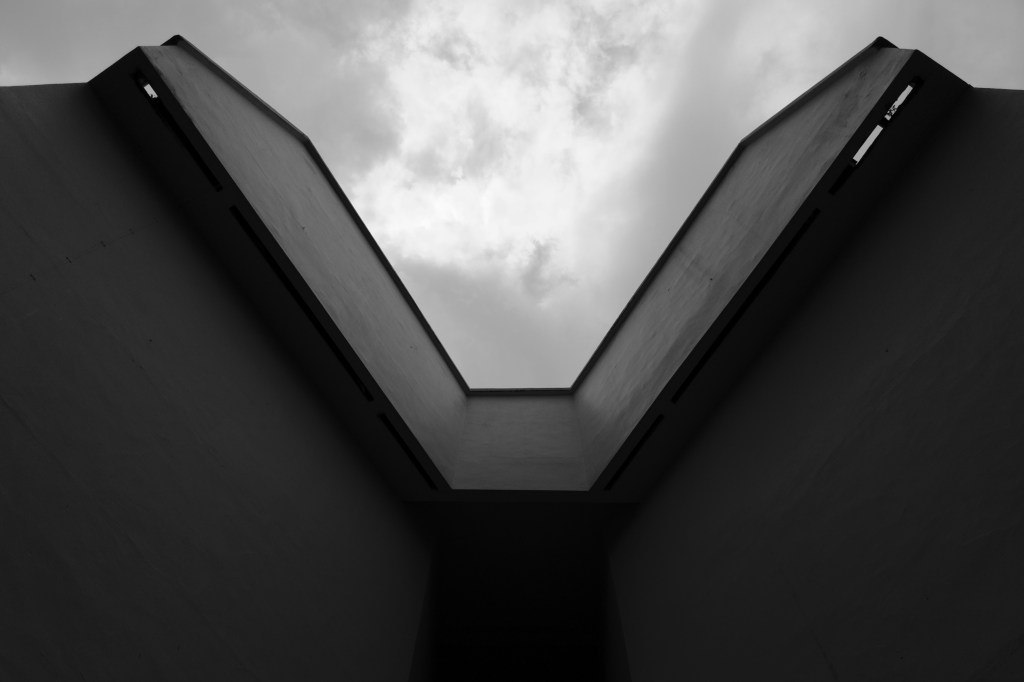
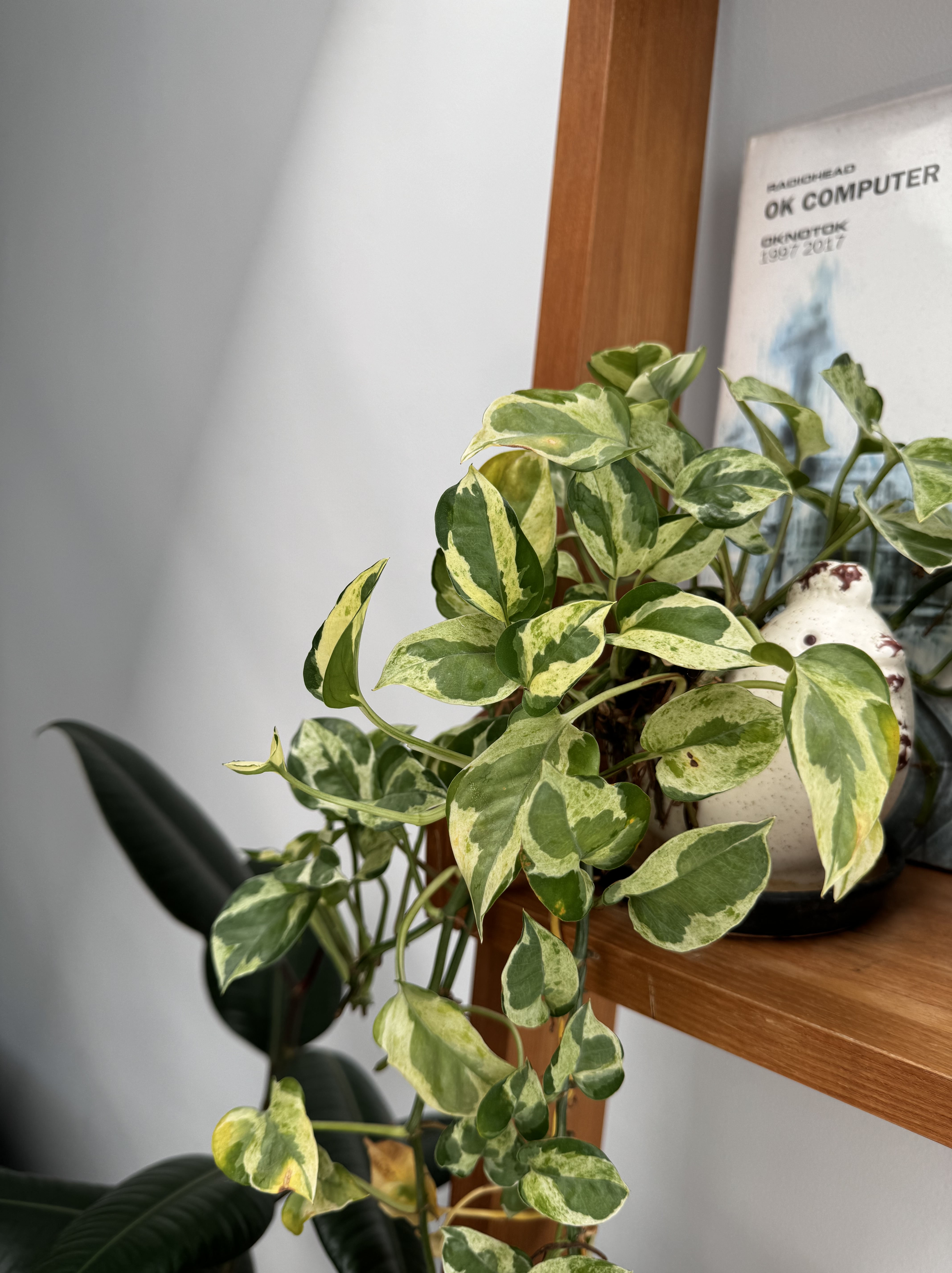
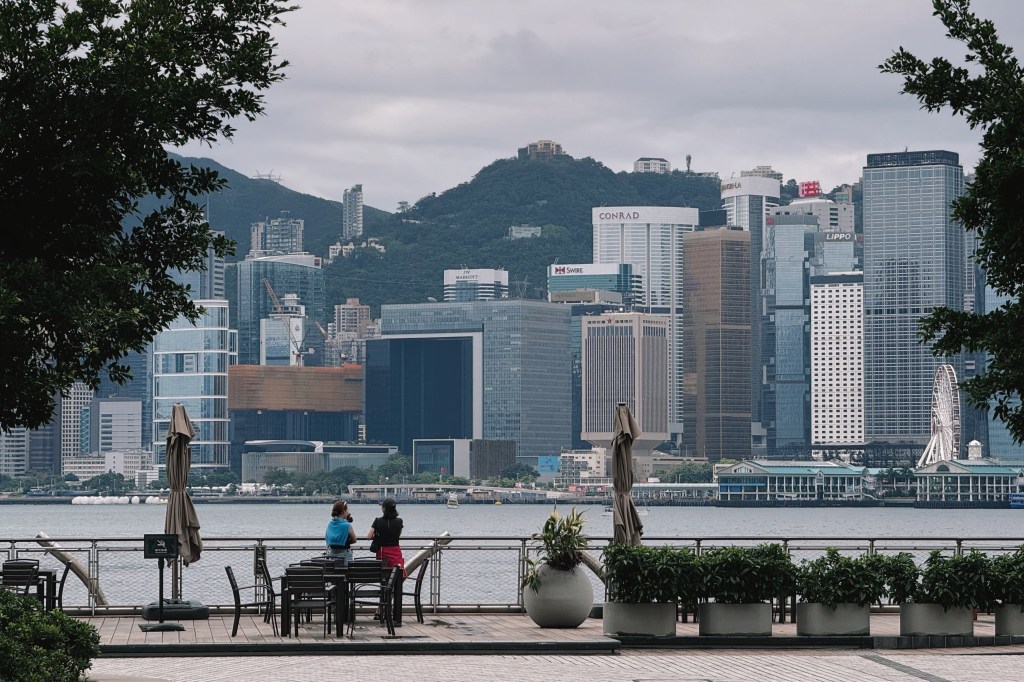
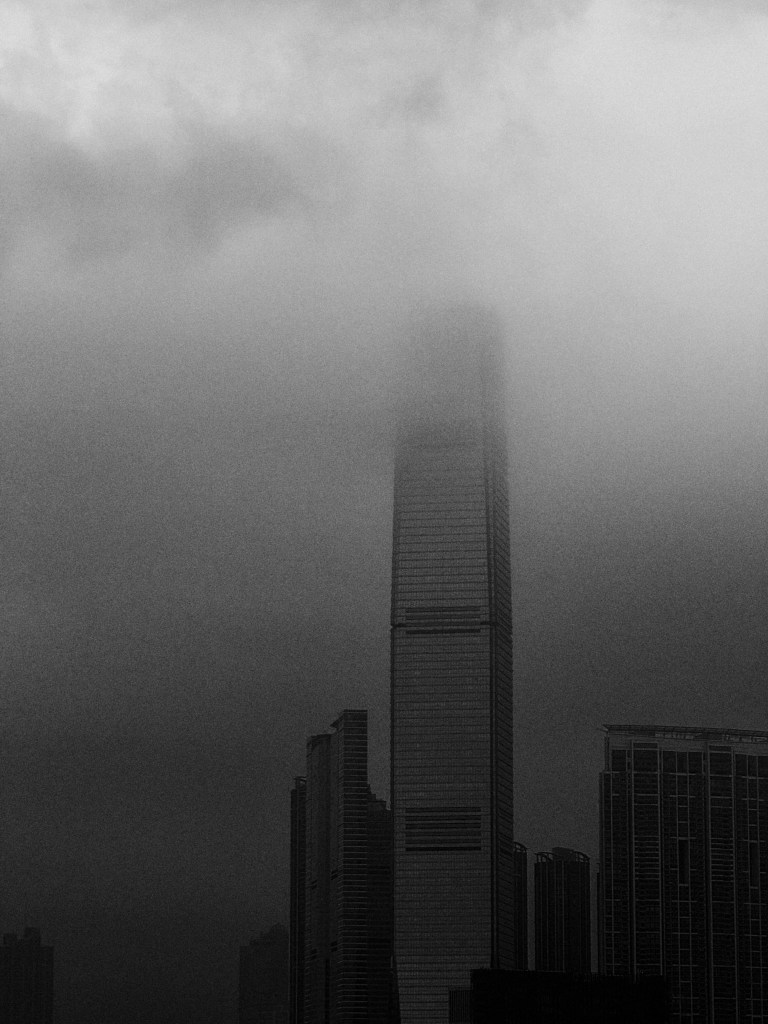
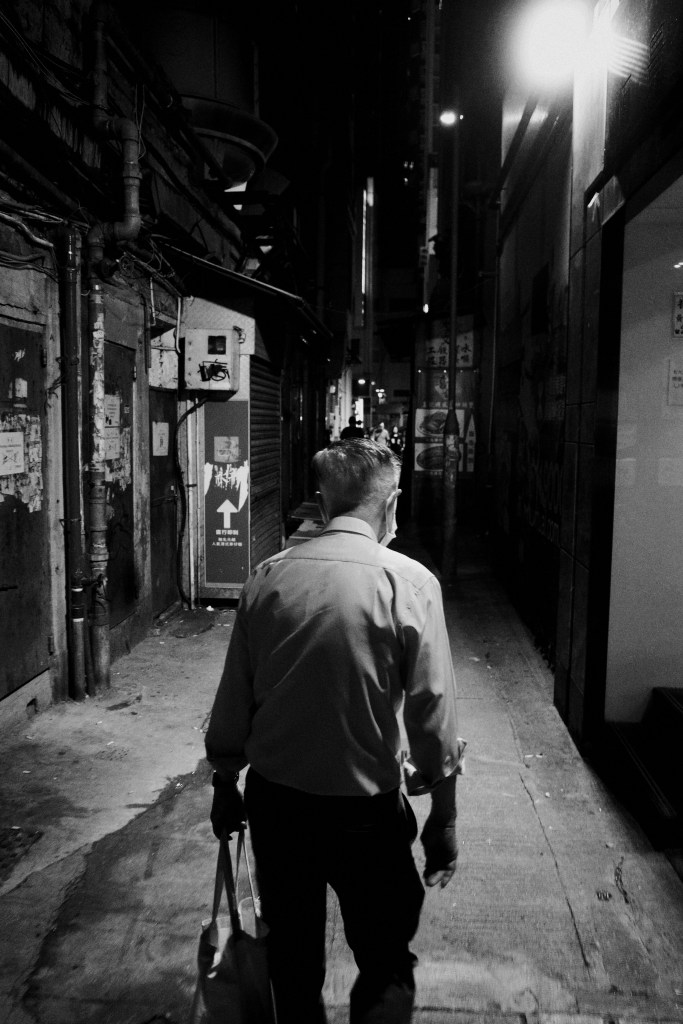
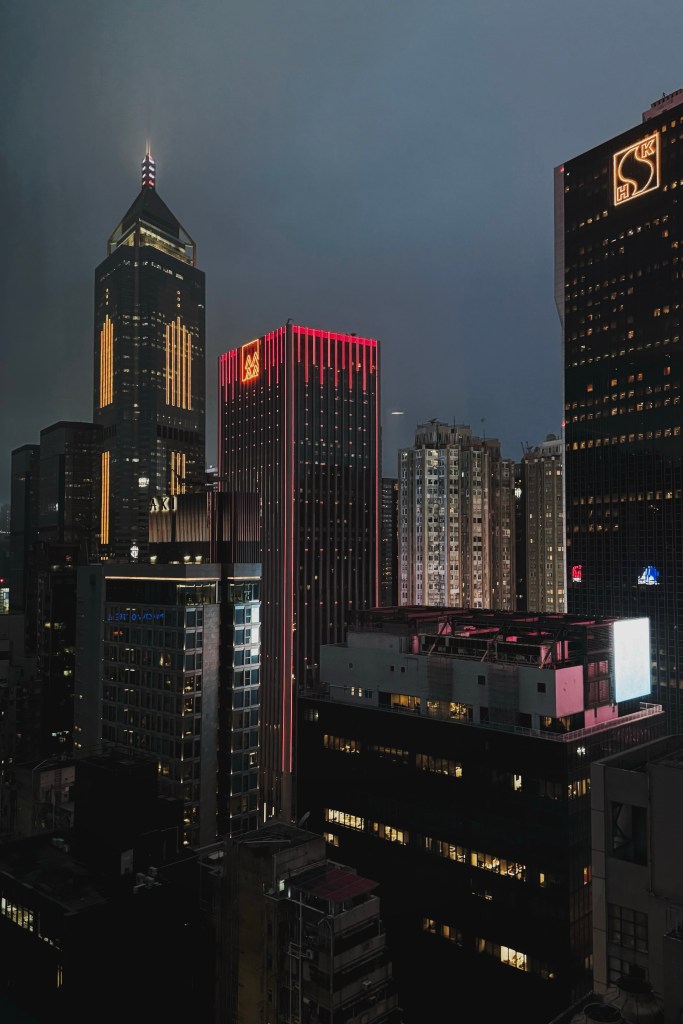
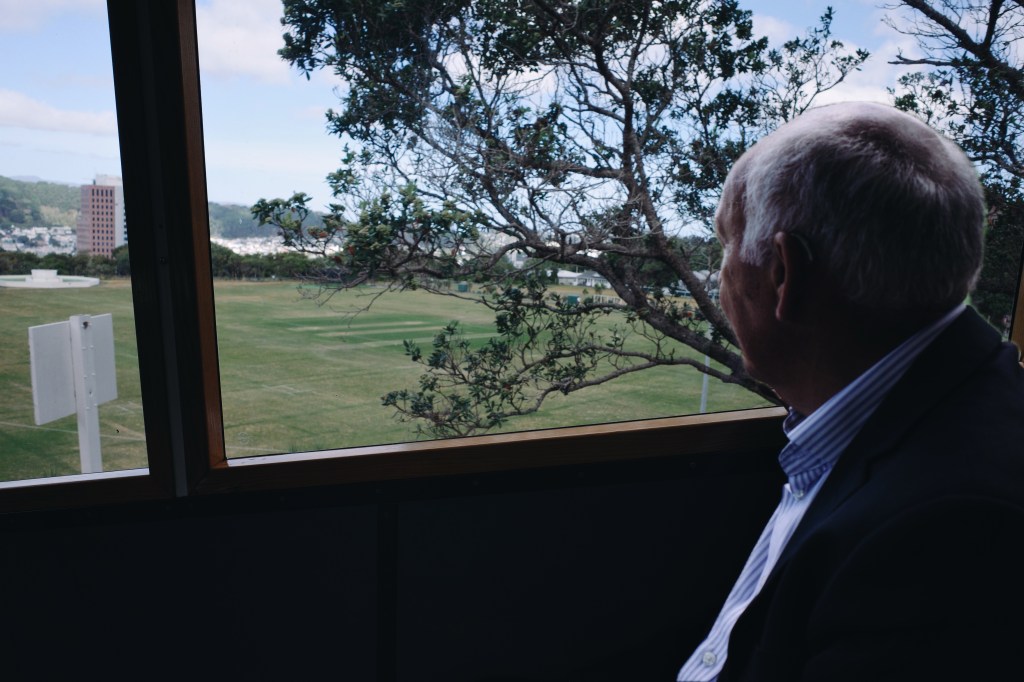
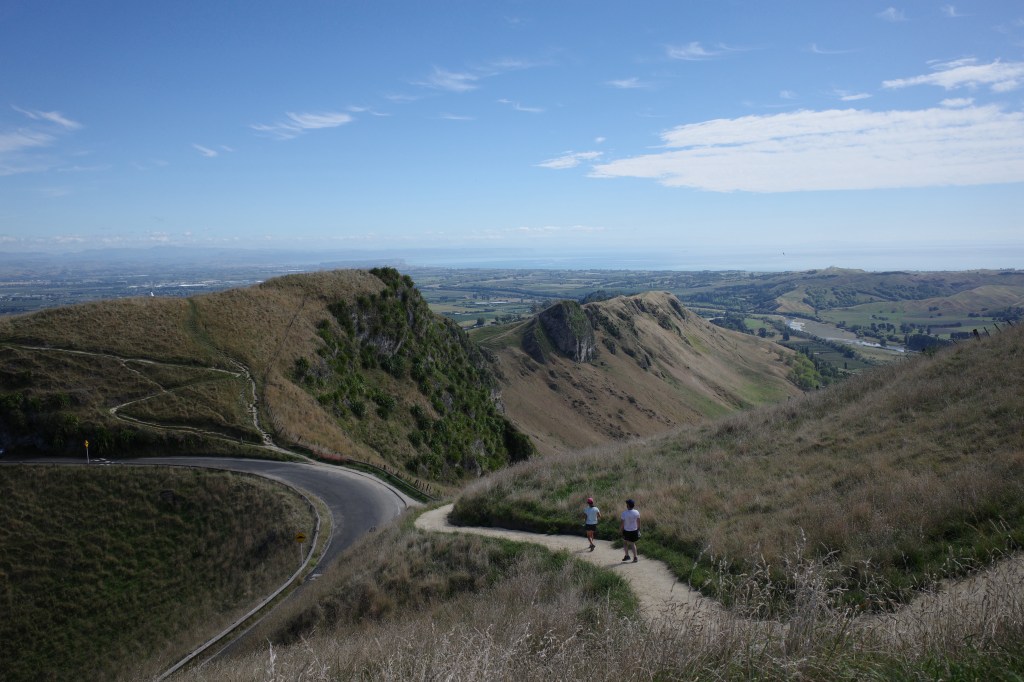
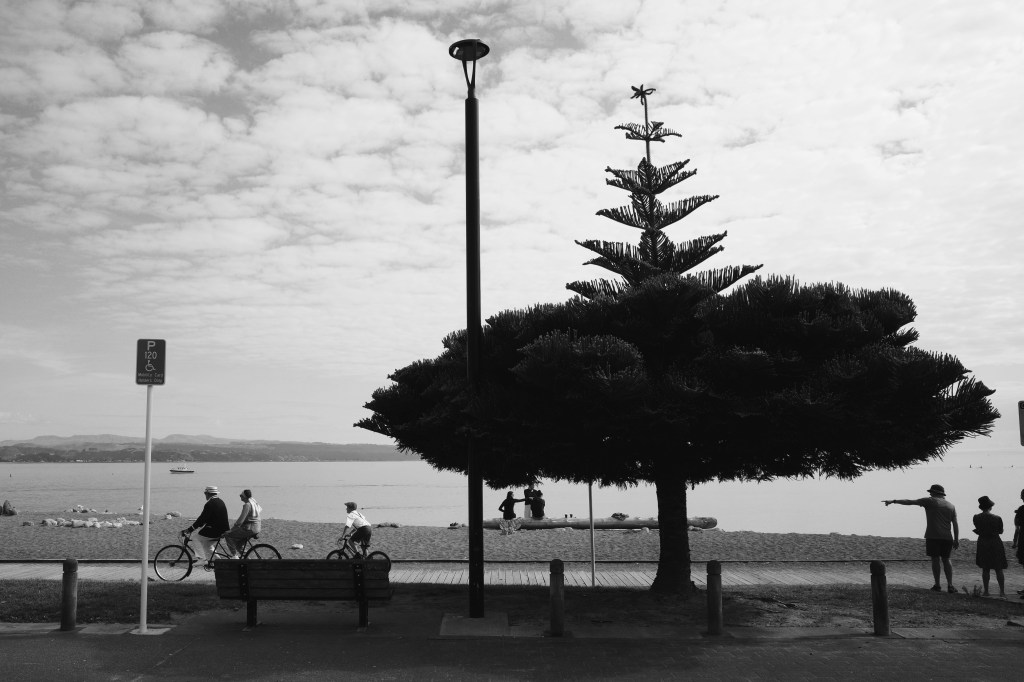
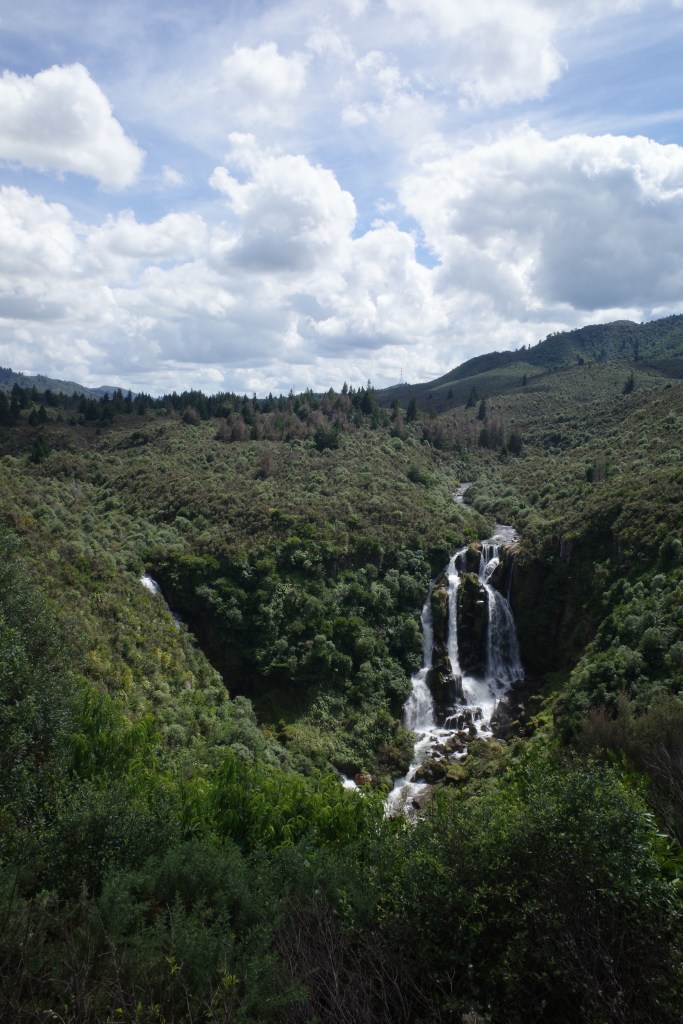
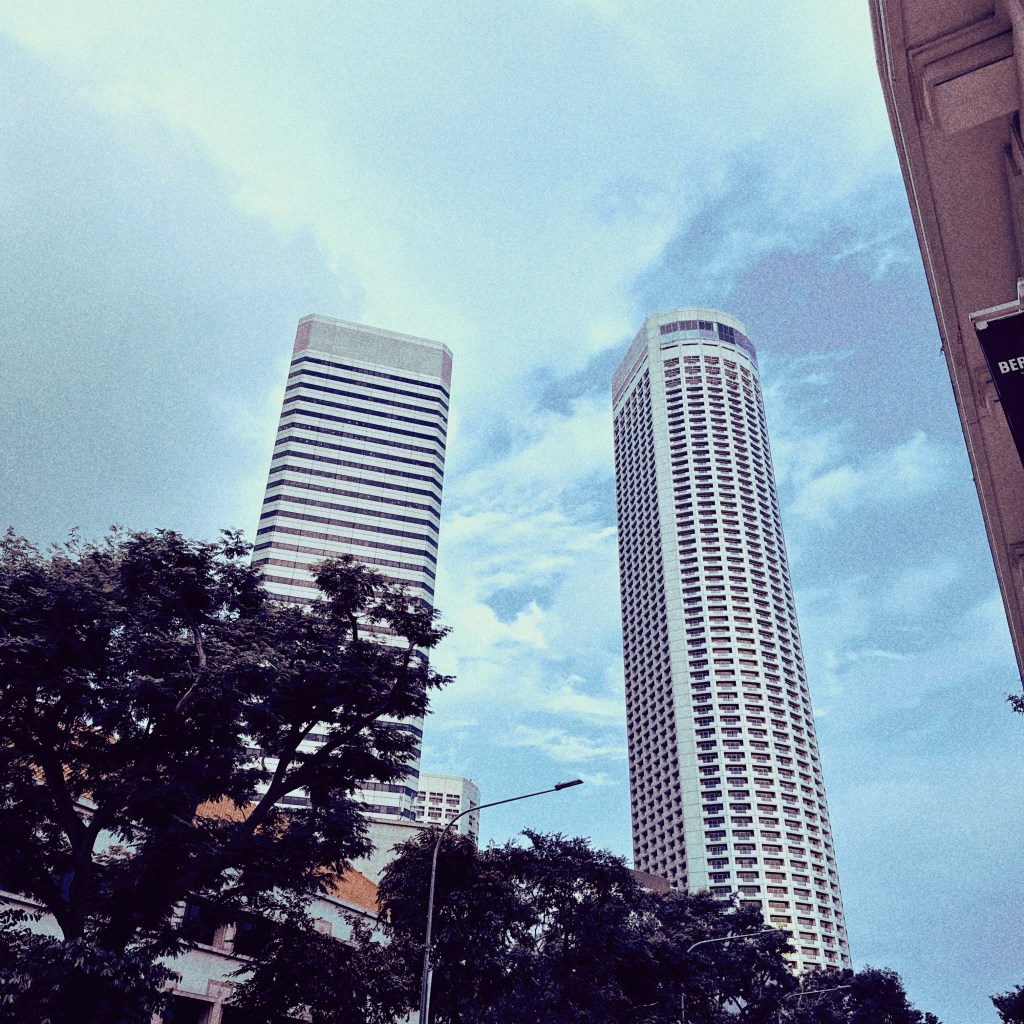
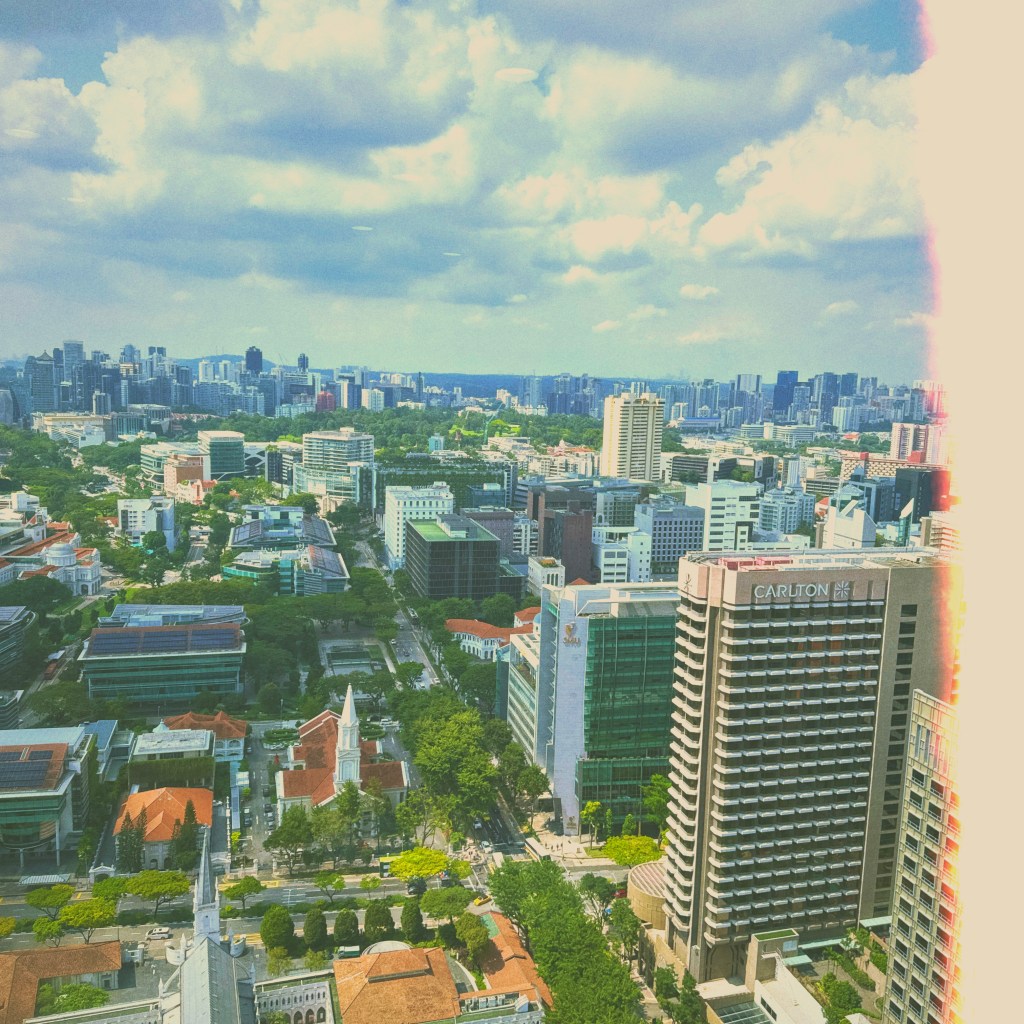
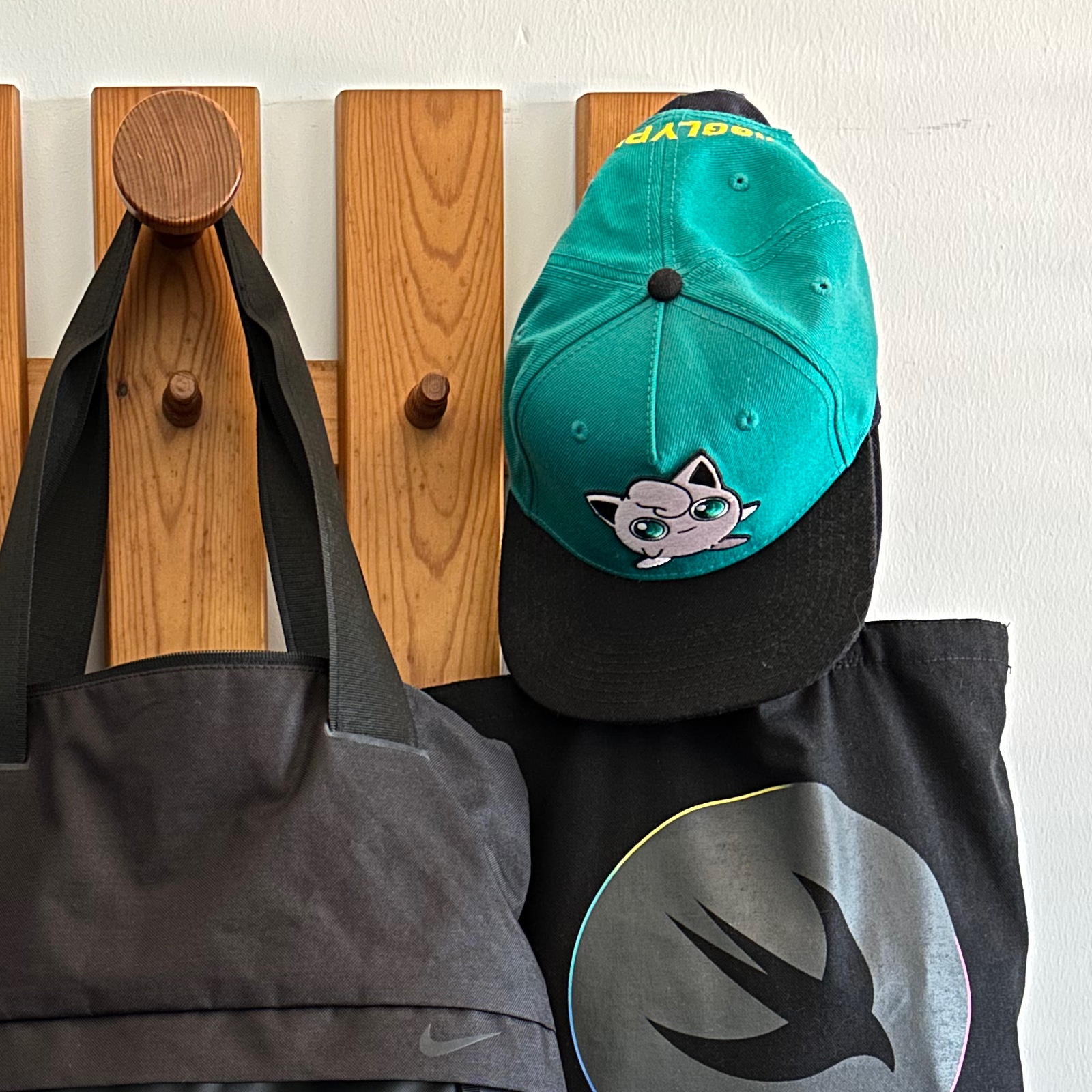
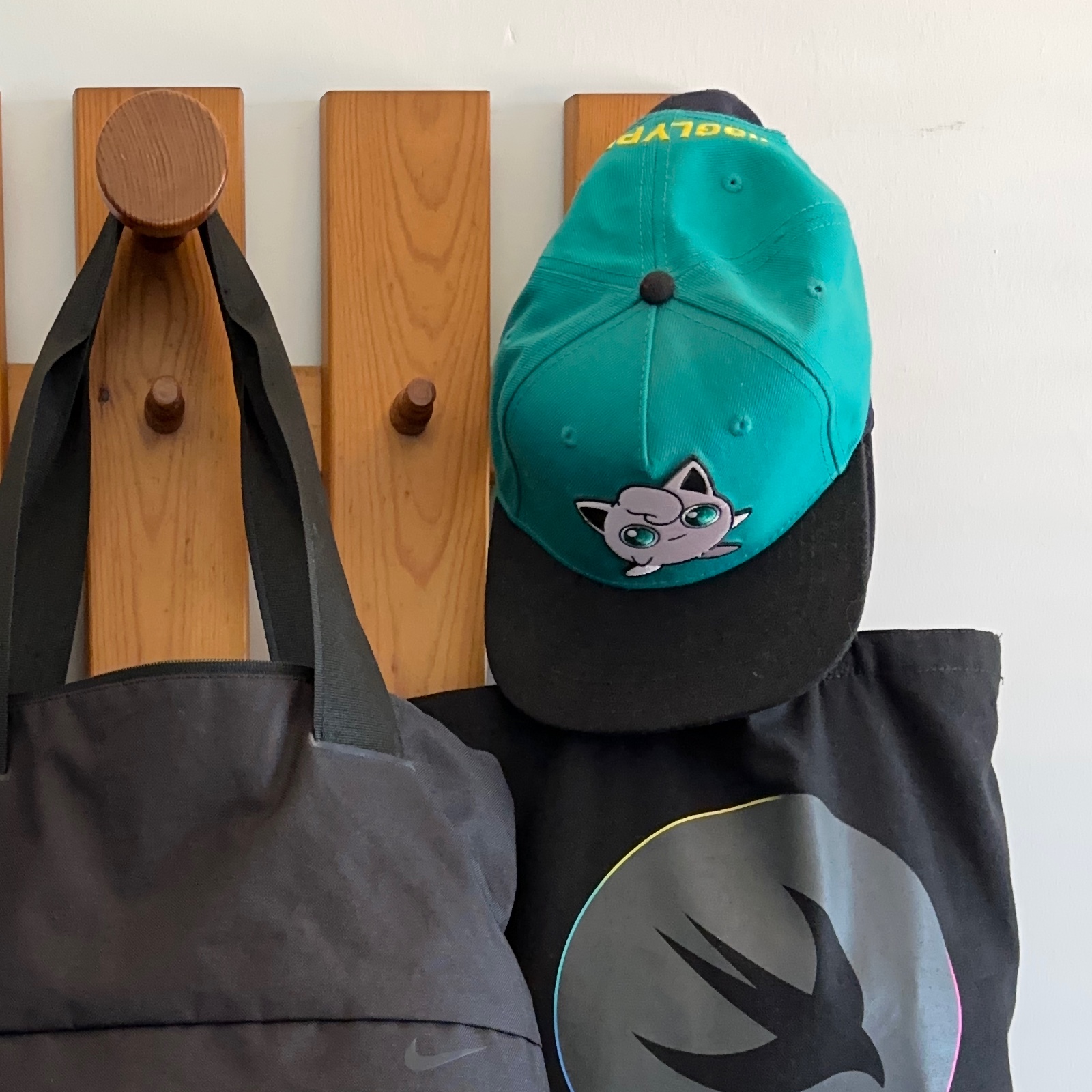
    The Halide iPhone camera app got an update that shoots photos without any AI-ish processing. They call it “Process Zero“. The resulting aesthetic is much more in line with regular cameras, and how iPhone photos used to look years ago. We’ve flown too close to the sun now, and everything is too bright, so this nostalgic return to the limits of physical lenses and sensors comes with a welcome, natural look. The above and this post’s Featured Image at the top were taken with this mode, plus editing of the underlying RAW file.

    Our home internet speed was suffering, so I did some troubleshooting and discovered the thin fiber optic cable between modem and wall access point had been coiled too tightly, and was even bent in one spot. After straightening it out, speed tests jumped noticeably. I even got a full gigabit up and down to my iPhone on WiFi 6, not even 6E.

    Stay safe out there. With any luck, I’ll see you next week!
  • Week 23.24: Chilling with Sony’s Reon Pocket 5, New Camera Apps, and a Playlist

    Week 23.24: Chilling with Sony’s Reon Pocket 5, New Camera Apps, and a Playlist

    Sony Reon Pocket 5

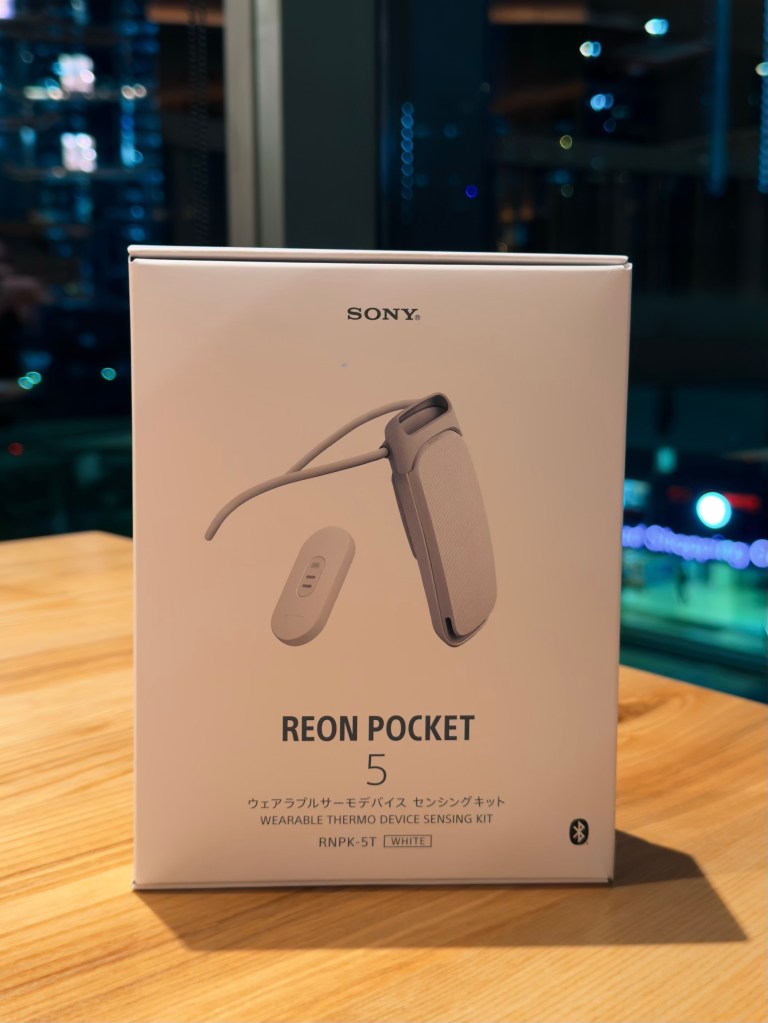
    I discovered the existence of a cool new device this week when a Sony catalog wound up in my trad-mail inbox. After some online research, I visited the nearest Sony store for a demo of the Reon Pocket 5 device and ended up buying one for S$249. Okay, what is a “Reon Pocket” and why is this the fifth version? The four previous iterations were only sold in Japan, but the tech is now mature enough that Sony is launching it in the UK, Hong Kong, Singapore, and Thailand this year.

    It’s best described as a wearable gadget for helping you feel more comfortable by fooling suggesting to your body that the temperature is more bearable than it thinks. It does that by cooling or heating a small metal plate pressed against your skin (in this case, at the base of your neck), which contrasts with the environment and changes your perception of it. Surprisingly, it works with just a difference of a few degrees.

    I first learnt about this effect a decade ago from a Wired article about an MIT prototype and have been eagerly awaiting a commercial product ever since. I had no idea until after buying the Sony version that the researchers mentioned in that article have actually shipped their own wrist-worn product called the Embr Wave. It resembles a smartwatch and is more discreet than the bulkier Reon Pocket 5 which sticks out from beneath your shirt collar like some kind of life support system. However, since I already wear an Apple Watch, I don’t know if I’d wear an Embr Wave too.

    In some ways, I seriously see this device as a “life support” technology. I think I’ve struggled with heat regulation all my life — always feeling warmer and sweatier than everyone else; most days you can hold your hand over my head and feel the heat radiating off it. I read that our bodies’ core temperature doesn’t actually change much (when it does, that’s hypothermia or heatstroke), so how comfortable we feel is all down to skin temperature, which this sort of thing hacks.

    After a couple days of testing, I’ve found the Reon Pocket 5 doesn’t perform miracles but offers a different sort of relief than a handheld fan (though one could use both). But it’s like constantly holding a cool can of soda against your neck in hot weather, which is welcome! It’s a glass of ice water for someone in hell. Even when the temperature isn’t that high but it’s stuffy and humid, this takes the edge off. If you’re the sort who’s always feeling cold in Singapore’s air-conditioned spaces, it also heats up and offers the opposite effect.
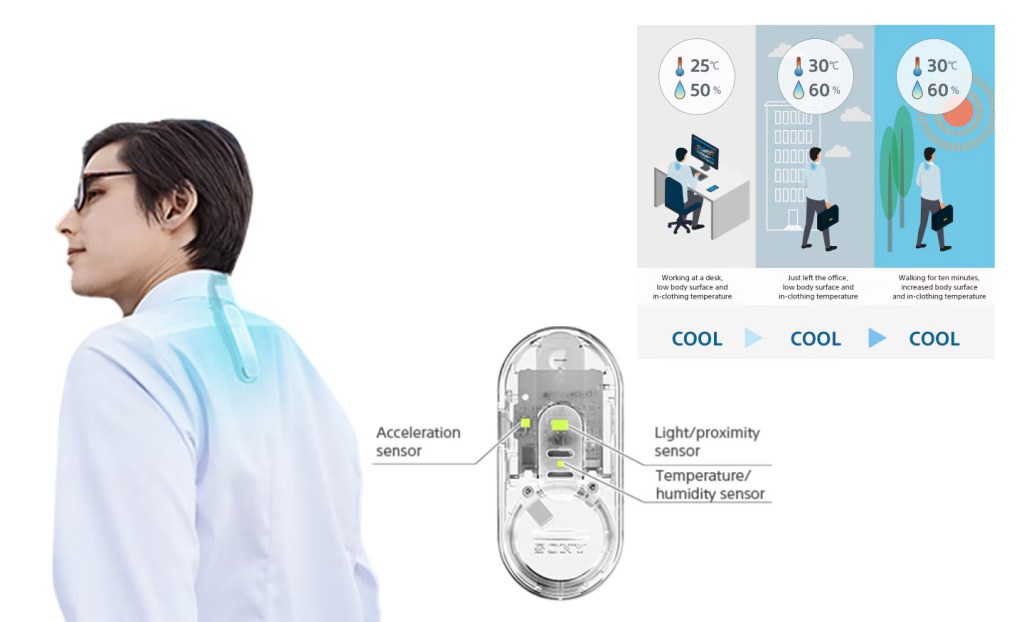
    There’s a lot I could say about the app, and how it’s another example of Sony’s generally poor UX design, but once you figure out what settings you like, you can lock them in and operate the device without it. It also comes with a separate “tag” that you can attach elsewhere on your body, which monitors the external temperature and humidity so the device can automatically switch modes, but I haven’t bothered to take it out of the box at all. All they needed to do was put a button on the thing to switch between hot and cold, just like the Embr Wave does.

    Building a separate piece of hardware instead… reminds me of how Sony headphones try to “intelligently” adjust noise cancellation levels by guessing whether you’re commuting, or working, or lazing about, by using GPS location and accelerometer data from the smartphone app — an absolutely mental and roundabout solution to replace the user pressing a button. Incidentally, Apple’s Adaptive Audio mode on AirPods Pro is a much better take: they dynamically adjust the balance between noise canceling and transparency based on environmental noise, letting you be aware but not annoyed.

    The battery, if you’re wondering, should last an entire day out. At Level 1 cooling power it’s rated at 17 hours; at Level 3, 10 hours; and at Level 5, 4 hours. Operating on Smart Cool mode, it switches between them as necessary. There’s also a “wave” feature that I recommend turning on, which follows the same core principle as Embr’s device where cooling power fluctuates so you don’t become desensitized to it. If you need even longer performance, you can plug it into a power bank and it will work on direct power without charging. Imagine using it at the same time as Apple Vision Pro, with two power banks in your back pockets. That’s living in the future, baby.

    In conclusion, wearing the Reon Pocket 5 around your neck makes you look dorky or hooked up to some medical device, but when it’s over 30ºC in the shade, who gives a damn?!

    ===

    New camera apps

    I’ve been using two new camera apps: Kino, from Lux Optics who also make the Halide app, and Leica LUX (no relation).

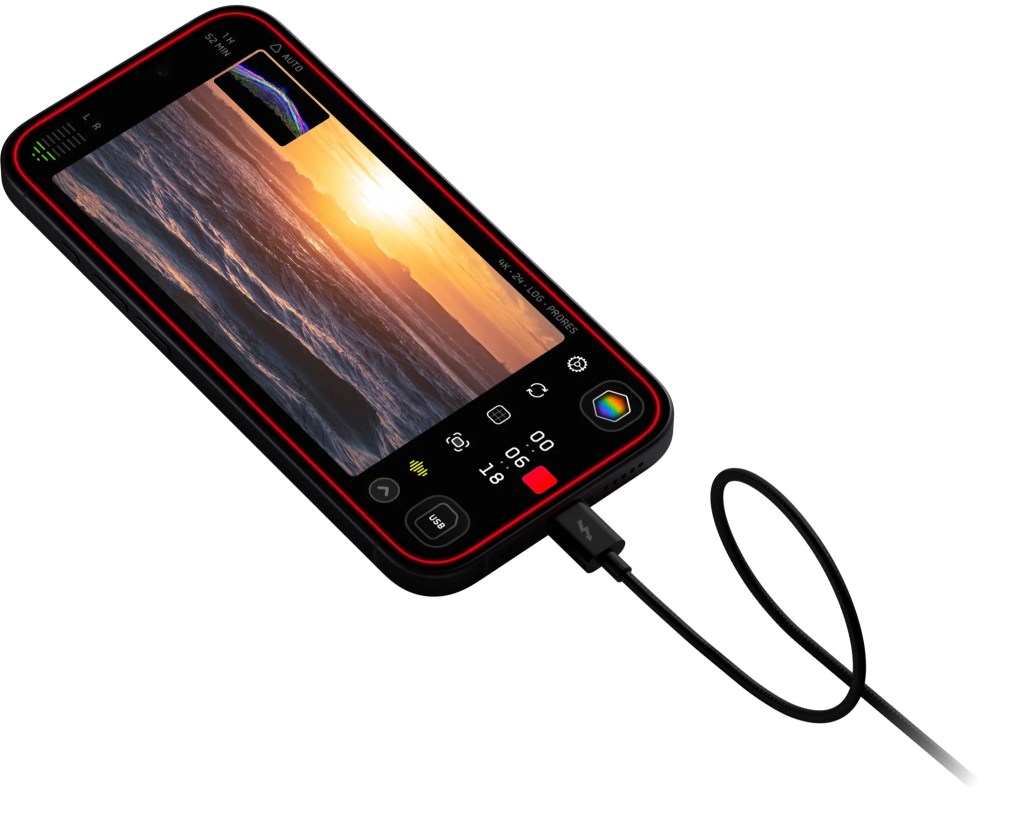
    Kino is a logical move. Halide was a “pro” app focused on bringing intuitive manual controls for still photography. Kino does the same for video. Unlike Halide, it’s a one-time purchase ($20 USD) and a big part of its functionality is the ability to apply different looks (color grading via LUTs). I’ve always wished Halide would do something similar, to help lazy shooters get the most out of RAW captures. I hardly shoot any video but I thought Kino was worth buying, especially since I’ve let my Halide subscription lapse for lack of use.

    One of the best things Kino does is allow the system to shoot in Apple LOG but write the files in HEVC format instead of ProRes, which saves a lot of space but still conveys some of the benefits. You can also shoot in LOG, apply a color grade preset in real time, and save the baked file in HEVC. That’s awesome.

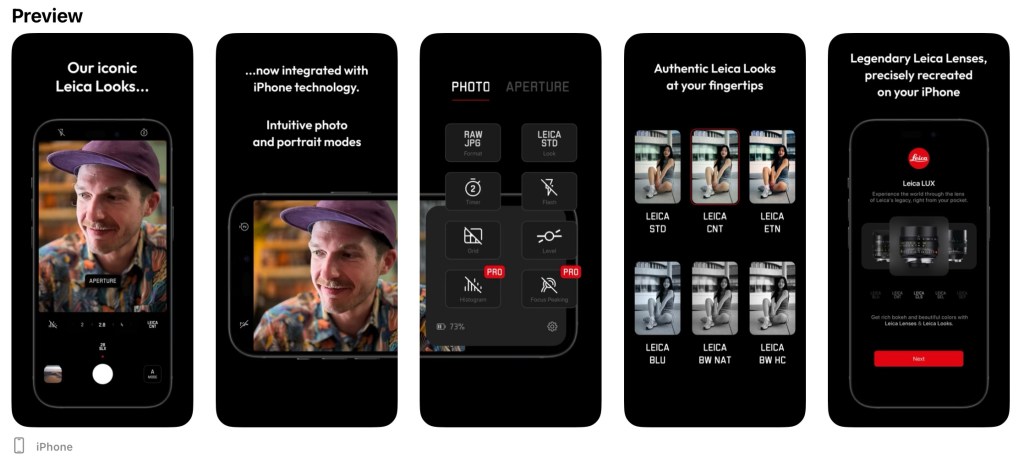
    Leica LUX is not so logical and I’ve been puzzling over why a company with their luxury brand equity would take a risk like this. On the page linked above, they’re saying the app “lets you capture the iconic Leica Look with your iPhone” using their “deep color science” and digital simulations of “legendary lenses”, like the Noctilux-M 50mm f/1.2 ($7,895 USD), and claiming it “reproduces” its “signature aesthetic bokeh”.

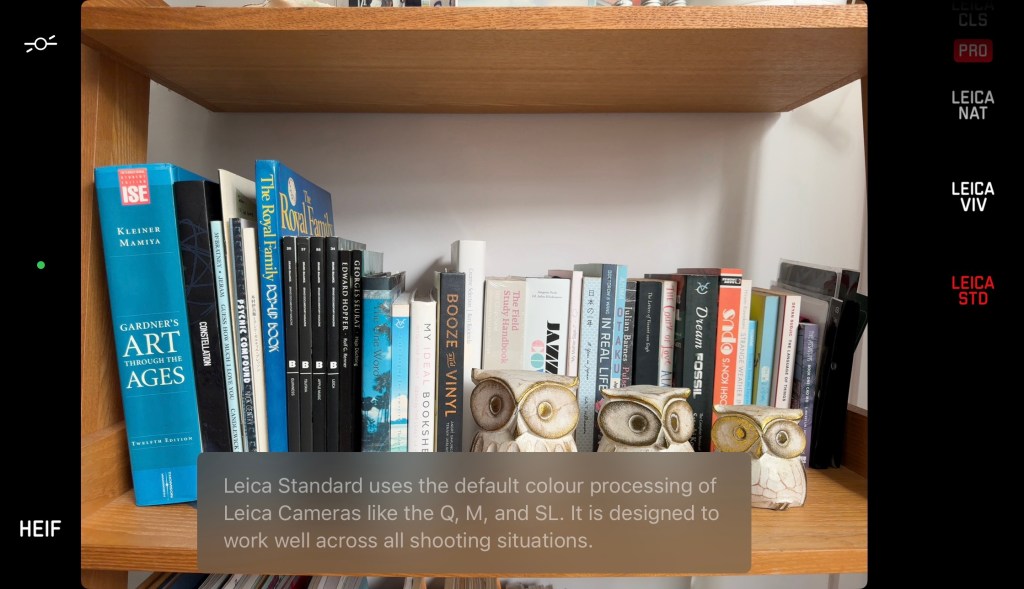
    I present two exhibits. The first (below) is what you see when selecting the “Leica Standard” profile: a statement that it handles color the same way as their cameras that cost upwards of $6,000 USD do, using your iPhone’s sensor. Whether it’s true or not is beside the point; Leica is saying you can enter their world with a free app and the phone you already own. To my eyes, it’s not far off from the iPhone’s default color handling, and looks like some gentle H/S/L shifts. The other Leica Looks are a mixed bag: I like the Leica Natural one, but some others are heavy and feel like “filters”. I’d hoped these would be more like Fuji’s in-camera film simulations, which are more like “color profiles”.

    The secret sauce is leaking out!

    The second shows how their implementation of a depth effect is inferior to Apple’s own Portrait Mode, with rough edge artifacts, despite the hyperbolic claims of giving your iPhone the “unique aesthetic of Leica’s legendary M-lenses” with their “distinctive look and beautiful bokeh”. If it did, that dark shot of my Misery Men mug would look like it came from a 28mm Summilux f/1.4 lens, and I can assure you it does not. Moreover, their digital depth effect only adds background blur, not foreground blur, which makes for a less realistic result that Apple’s own Portrait Mode which your iPhone already does for free.

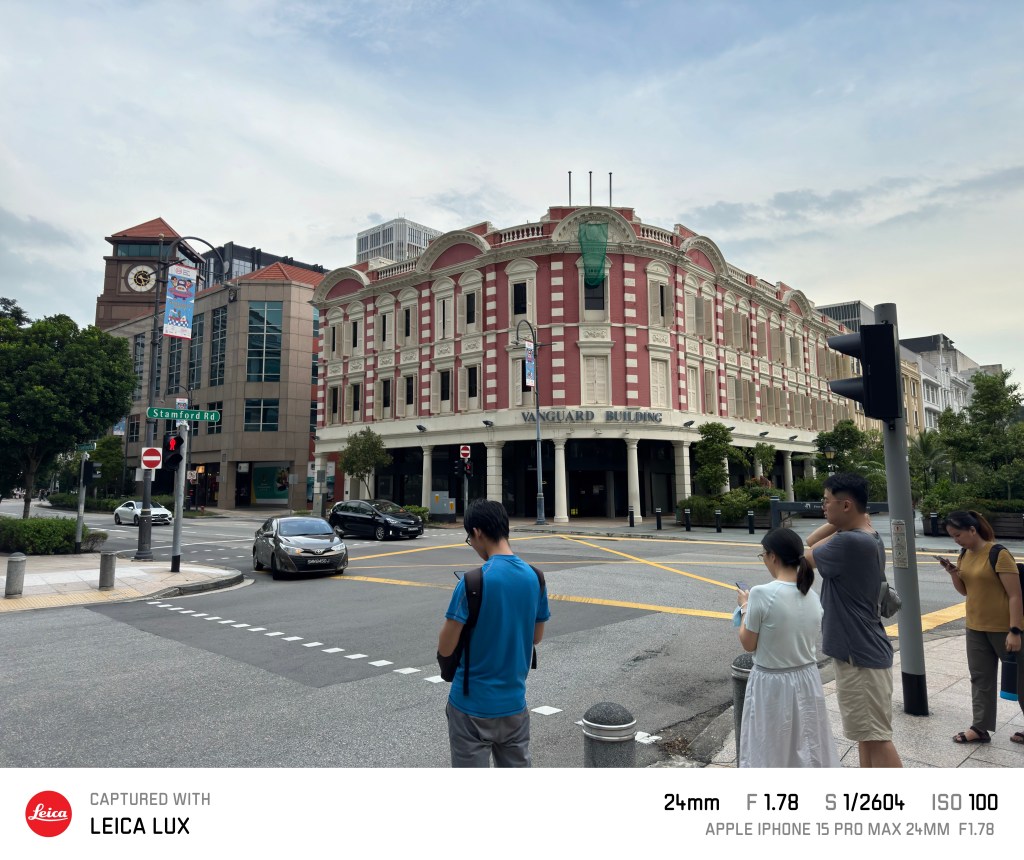
    One nice feature is the photo library viewer they’ve built into it, which lets you switch between seeing All photos and Leica photos only, including ones taken with your Leica cameras. And photos taken with this app sit alongside them as equals! In the field where the camera model is specified, it simply shows “Leica LUX”.

    What are they getting out of this brand dilution? Well, the app is subscription-based and asks for S$99.98/yr to unlock more Leica Looks and lenses. They claim new ones will be added monthly. I think perhaps anyone who owns or intends to own a physical Leica camera will not bother with this, and it’s a move to grab all the aspirational customers who want to touch the brand — including a bit of overlap with the market they tried to target with their Huawei and Xiaomi smartphone collaborations. The question is whether this will do any significant reputational damage, and so far all the comments I’ve seen on Leica blogs and communities have been negative. Could they stand to make more on app subscriptions than they’d lose from upset camera buyers? Maybe! Is that capitalization model the right way to run a company? Maybe not?

    I’m still optimistic because I’m not emotionally or financially invested enough in the brand to care how they destroy themselves, and will wait to see if they update the app to improve edge detection and add some better Leica Looks. If it ever gets good enough to be my primary iPhone camera app, a hundred bucks a year is steep but not out of the question.

    Before: iPhone defaults. After: Custom Photographic Style

    Meanwhile, I’ve found the following settings get me calmer and more natural photos out of the default iPhone camera app. First, go to Settings > Camera and make sure you turn on “Exposure Adjustment” under the “Preserve Settings” section. Then in the camera app, set exposure to -0.3ev, and using one of the Photographic Styles as a base, change its values to -20 Tone and +5 Warmth. Note: If you have a 14 Pro, the only way you’re getting less crispy shots is to use an app like Zerocam or Halide and disabling smart processing.

    ===

    Media activity

    • Started playing Spider-Man: Miles Morales on the PS5. It feels just like the first game I played on the PS4 years ago and I can’t say I’m getting next-gen from this, but it’s good fun.
    • Finally got Balatro on the Switch, the highly acclaimed indie poker roguelike game. It reminds me so much of Solitairica, the indie solitaire roguelike game on iOS. That’s a good thing. It’s the kind of game you can play for a few minutes, or hours on end.
    • Started watching season 2 of Link Click, a Chinese-made “anime” series with a cool ‘catch a serial killer through time’ kinda story. I saw season 1 a couple of years ago and was impressed by how well executed it was.
    • Saw Still of the Night (1982), starring a young Meryl Streep and Roy Scheider. It’s a Hitchcock-inspired psychological thriller with Fatal Attraction vibes. 3/5
    • Saw The Ministry of Ungentlemanly Warfare, a Guy Ritchie WWII joint that feels like if Inglourious Basterds was a Jason Statham vehicle. Except he’s not in this, Henry Cavill is, as well as Alan Ritchson (of Reacher fame) who plays a gay Dane (Swede?) who loves killing Nazis almost a little too much. Quite a bit of fun. 3/5
    • Saw The Fall Guy, a movie I’ve been anticipating for a long time on the strength of its trailer and what little I’d assumed about its story. I didn’t know it was based on an old TV show. But it was a messy, empty disappointment of a blockbuster that even Ryan Gosling and Emily Blunt couldn’t save. 2/5
    • Saw Carnival of Souls (1962), a cult classic surrealist quasi-horror film on Kanopy, a video streaming service that’s free if you connect your library account. It’s got Ed Wood B-movie vibes and special effects, a lot of rough edges, but still manages to be a compelling work that I’ll probably remember for a long time. 3.5/5
    • Saw To Have and Have Not (1944) in which Lauren Bacall plays a character who is stated as being 22 years old, to which I thought “she’s gotta be a lot older than that”. I looked it up and she was probably 19 💀. So that’s proof that people really used to look older, and you’d be forgiven for assuming it was the copious smoking (on display in this film). It’s a weird one, almost a musical showcase for Hoagy Carmichael who shows up as the hotel bar’s piano man. Doesn’t quite have that Casablanca magic yet. 3/5
    • Saw Dream Scenario in which Nicolas Cage convincingly plays a loser who suddenly becomes famous due to an unexplained phenomenon (he starts appearing in people’s dreams). Towards the end, it pivots from uneasy mystery to comical cultural commentary. That’s not a complaint though. 3/5

    A playlist for you

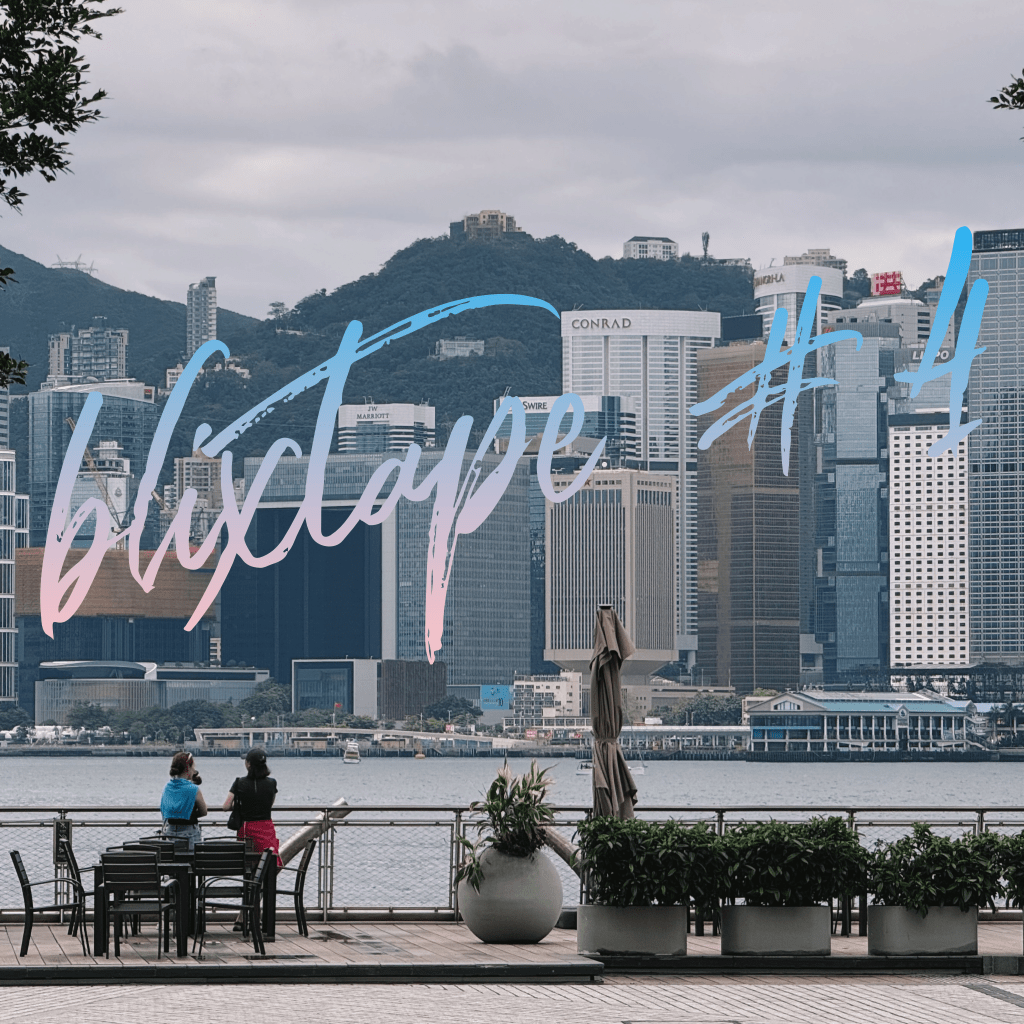
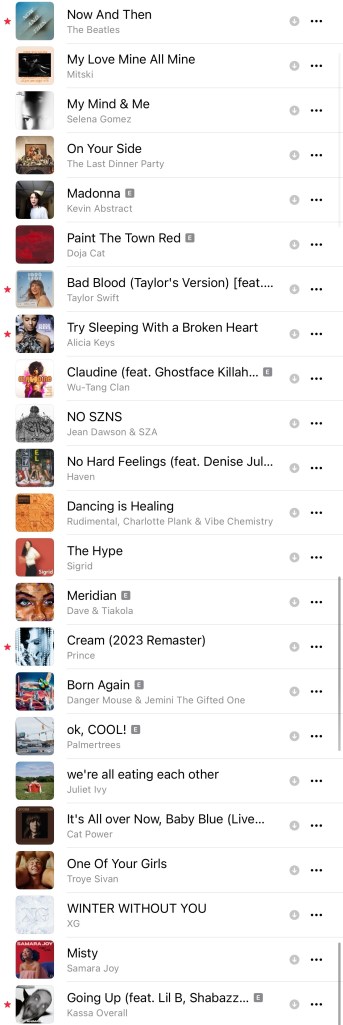
    As reward for making it this far, here’s the next installment in my Blixtape playlist series, covering music I listened to from January to May this year. Hope you find something to like.

    Add BLixTape #4 on Apple Music

    The tracklist:

  • Week 18.24

    Week 18.24

    Last week marked the 200th installment of a blogging rhythm I wasn’t sure I could keep up for a year, let alone nearly four. I thank any readers I have, the makers of iA Writer, WordPress, and of course, my wife for graciously giving me space on Sunday mornings to engage in this act of reflection and blabbering.

    Except I’m not writing this on Sunday, no it’s currently Thursday and I’m getting a head start with some structure because we’ll be in Hong Kong for the weekend. It was a last-minute idea, driven by a primal craving for Chinese roast goose, a desire to escape the summer heatwave currently roasting all of SE Asia, and the realization that we won’t have a pocket of clear calendar space like this again for several months.

    I haven’t been back in the territory since May 2019, and so much has obviously happened since. Did you know that this very site was once blocked by the great Chinese firewall? I have no idea why, but I hope I don’t find myself unwelcome upon arrival. Anecdotally, I’ve heard the city doesn’t quite feel the same these days, and we’ve seen the numerous ChannelNewsAsia documentary features about people looking for fresh starts, emigrating to the UK and so on. But as an infrequent visitor with only superficial interactions to speak of, I don’t expect to sense any changes at all.

    What’s changed is that while I used to be excited about Hong Kong’s lack of sales tax and abundance of electronics and camera emporiums, not to mention official Apple Stores, those things are less interesting these days. I’ve got nothing on my shopping list (plus I’m in low-cost mode — see previous entries), I’m content with snapping photos on my iPhone and Ricoh GR III, and Singapore has so many Apple Stores these days I’ve started taking them for granted.

    (CW: some camera nerdery ahead)

    I am looking forward to photographing the city a little with Dmitri Novikov’s new camera app, Zerocam (in beta). The concept is an extremely simplified camera with one button; there’s not even a way to quickly look at the last photo you took. When you hit the shutter, a RAW image is captured with as little of the iPhone’s intelligent processing as possible, plus some specific settings that Novikov prefers (-0.5ev and some very light touch color grading, as far as I can tell), and then saved directly to a HEIF file.

    Unfortunately it only gives you photos at 12mp size, probably because third-party apps don’t have the option of 24mp and 24mp is a result of the computational photography processes that Zerocam avoids anyway. And while you can use Halide to capture similarly unprocessed photos (turn off “Enable Smartest Processing” in its settings), you can’t make it remember a lowered exposure setting between sessions.

    The intermediate solution I’ve landed on to retain 24mp files while getting better everyday photos is to set Apple’s stock camera app to remember a -0.7ev exposure, and tune Photographic Styles to -20 Tone and -7 Warmth. I really like the look of this “recipe” on iPhone 15, and it’s kinda like shooting with Highlight Priority exposure and the Negative Film effect on a Ricoh GR III (which I’ll also be doing).

    Actually in HK now:

    We’ve chosen a wet and gloomy weekend to stop by. Our flight was delayed by 2.5 hours, I suspect because of turbulent conditions at HK International Airport around our original arrival time. Just two days earlier, some Cathay Pacific passengers were tossed around and couldn’t land for six hours, with the descriptions of a vomit and scream-filled cabin in the news fulfilling the conditions of a personal nightmare.

    I take back a little of what I said — things do feel somewhat different. The city is grubbier than I remember; prices are higher and some people must be struggling to get by (well, HK isn’t alone in this); and there’s a hint of economic decline in the many empty shop units with ‘For Lease’ signs up.

    One tool that’s been super helpful all week has been the Arc Search app on iOS, which added a voice mode that you can assign to the Action Button on iPhone 15 Pros. When the app launched with an AI feature that summarizes search queries on custom-generated webpages, I was wary of this “browser that browses for you” concept, which gives users few reasons to visit the underlying pages being mined (thereby ruining the web), but maybe they’ve made some changes since. It’s easier to click through to the sources.

    I’ve been using it to answer questions like “what interesting art exhibitions are on in HK right now?” and it performs some light research, and I do end up visiting the linked websites for further details like location and pricing. It’s effectively a better way to present search results (albeit with the same bias and ranking concerns as search results). I hope iOS 18’s AI overhaul will see similar utility coming to Siri and Safari. Perhaps this is where the rumored Gemini partnership with Google comes in.

    ===

    Media activity:

    • I started on a new Jack Reacher book: Night School. It’s what I do when I can’t decide what to read next.
    • I’ve been watching the new-ish MF Ghost anime, which is a sort of sequel to Initial D. Some people seem to think it’s an insult to the original show, but I wouldn’t know — I might watch it after this? It’s got a funny premise: in a future Japan, electric vehicles are the norm and gas-powered cars are only allowed in a special racing tournament called MFG. But drifting has become a lost art! Enter Kanata Rivington, a hafu born in England who trained under a master who I presume is the main protagonist of Initial D, returning to Japan for the first time to find his lost father and school a nation on how to burn rubber while chucking a uey.
    • The Japanese saxophonist Sadao Watanabe is back with a new album at the insane age of 91. It’s called Peace, and I’m digging it. Speaking of, I first heard him as a child digging through my dad’s music collection.
    • I’m also loving Tigers Blood, by Waxahatchee, which I discovered on Pitchfork’s list of The Best Music of 2024 So Far. I’m aware that Anna Wintour fired a bunch of people from Pitchfork and it’s supposedly not the site it used to be, but this is a great pick. They say: “Recommended if you like — Indie-country; Sheryl Crow; Gillian Welch; that Brad Cook Sound; MJ Lenderman showing up; catchin’ skinks down by the creek; ice cream stand off the highway; letting your legs dangle off a pier”.
    • What a week in rap battle history! The beef between Drake and Kendrick Lamar has been giving us explosive drama and incredible diss tracks, sometimes more than one a day, and Kendrick’s the winner in my book but honestly I’m afraid just watching it unfold. It feels like someone’s going to get shot or jailed as a result of this.

    Oh one more thing! The Cannes Lions Festival announced the shortlisting juries for 2024’s awards, and I’m pleased to share that I’m on the panel for the Brand Experience & Activation Lions. That should keep me occupied for the next few weeks.

  • Week 7.24

    Week 7.24

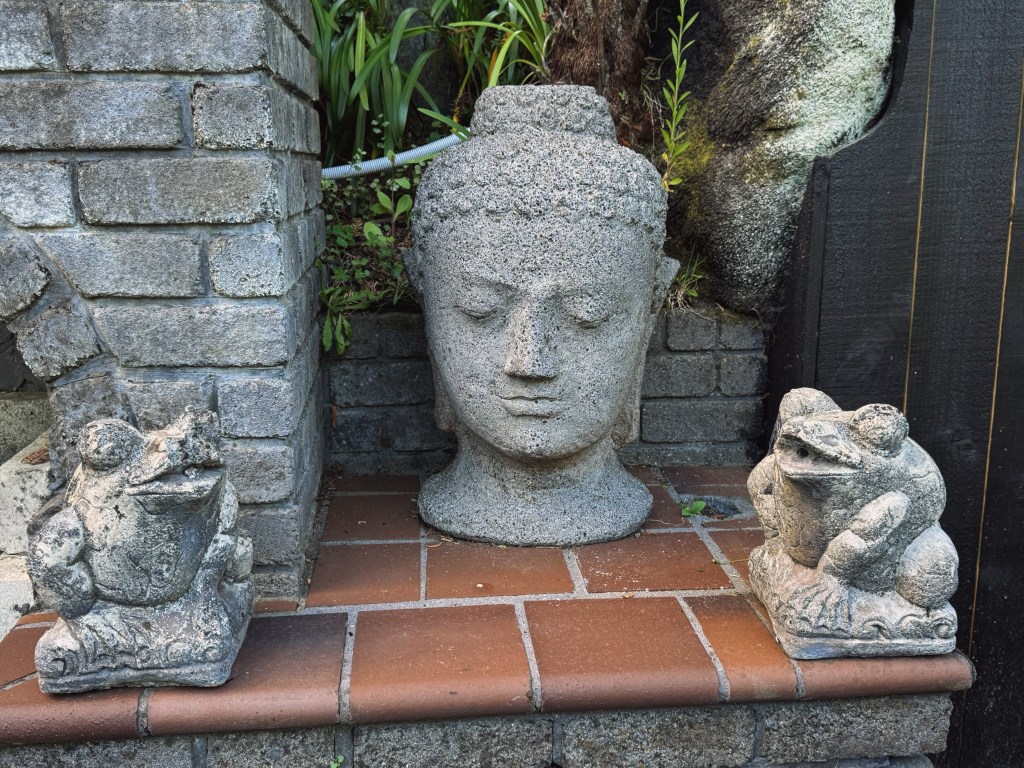
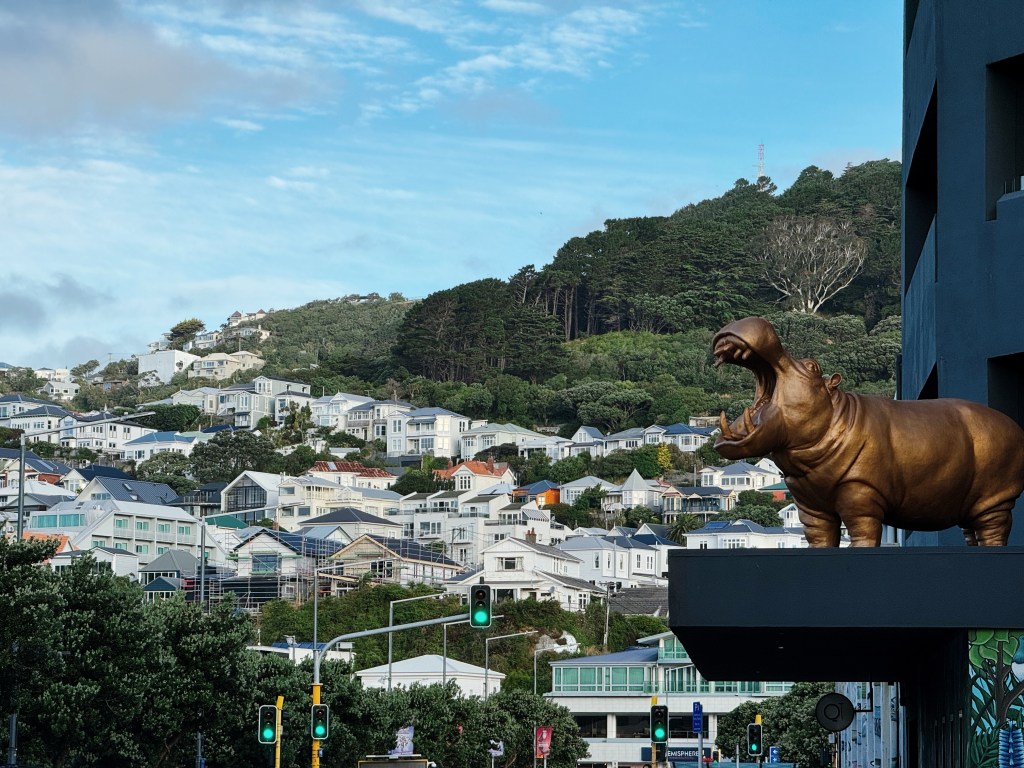
    We landed in Auckland, New Zealand Monday morning and immediately flew down to Wellington, and we’ve been driving our way back north for the past few days. I’m currently writing this while sitting beside a Buddha’s head in a poolside garden, in a small new hotel outside of Rotorua.

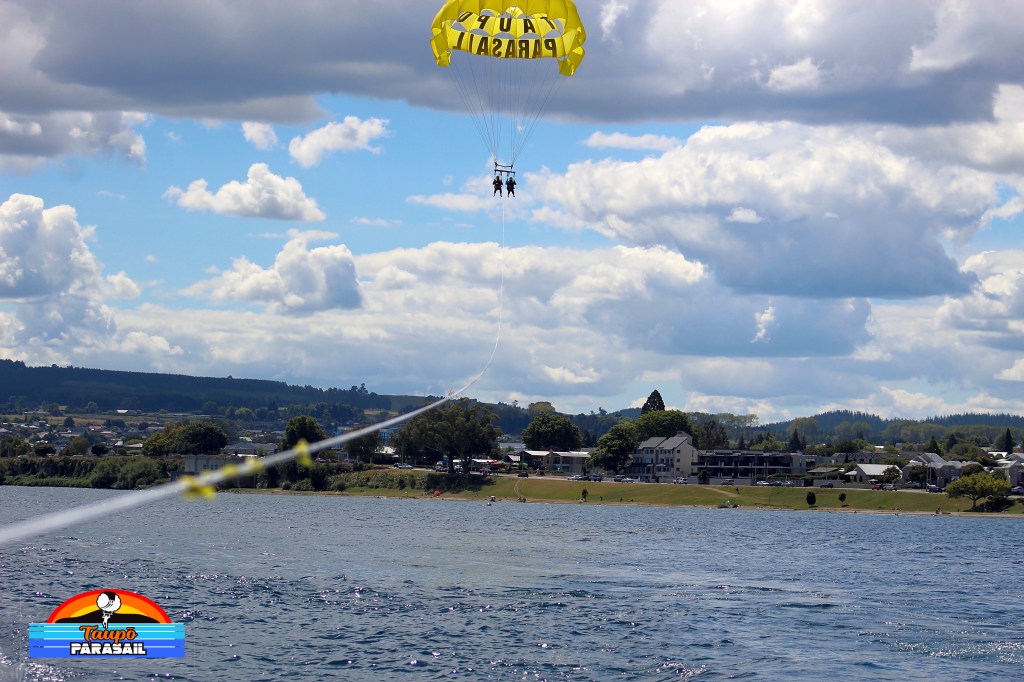
    Four hours ago, I was parasailing above Lake Taupō in my usual urban uniform of jeans and a t-shirt — if you know me, you’ll know that I don’t sign up for even remotely dangerous things, especially over large bodies of water; in the cringey words of Below Deck repeat charter guest, Dean Slover, I said “homie don’t play that!” But Kim convinced me to, and we survived. They played Maroon 5 songs on the boat going out, and so by the time we were lifted some 50 meters in the air to float in blissful silence high above the town, I was having a good time. Lake Taupō is a volcanic caldera that’s nearly the same size as Singapore, but because it’s all flat you can just about see from one end to the other from up there. New Zealand challenges the city dweller’s sense of scale like all good nature vacations.

    Since leaving Wellington, the road trip portion of the trip so far has been mostly measured in burgers, fish and chips, and winery stops, specifically in the Martinborough and Hawke’s Bay areas where the tastings have been revealing of each company’s nature: some overly commercial and strictly scripted, versus others more informal, just going on vibes the only way they know. I think the difference shows up in the wine, with wineries in the latter category being more playful with flavor, more likely to put better stuff in a low-priced lineup. But I would say that, as someone who’s now had a crash course in holding up his glass against the light to observe the color.

    I’m now lying in bed on Sunday evening having just finished the last leg of our driving tour, which took us to the famous Whangamata Beach bordering the Bay of Plenty, and Hunua Falls, where we did another little nature walk and met a nice dog and helped its owners get a photo together with their iPad. Old people really carry full-sized iPads around on hikes to use as large-screened cameras. Mind blown.

    A couple of observations on this road trip. So much roadkill! Easily a hundred little bundles of fur spotted spread across tarmac just today alone. Some decayed and washed away, little more than stains. Some still fresh, bloating, bleeding. We avoided making contact with all but a couple. A ritual evolved, mainly to stay alert but also out of pity for these bunnies or squirrels(?): upon spotting one, I would put my palms together and say “rest in peace”, and Kim would follow with “in all your pieces”.

    FM radio is still not a great experience; it’s a wonder how people survived on it for so long. Fortunately I had a lot of downloaded music on my iPhone, which also navigated us with offline maps. CarPlay is excellent, and Apple Maps was good enough for nearly every leg of the journey. We listened to Lorde’s albums, of course, as well as the Sunkissed Summer playlist she compiled on Apple Music, and other New Zealand legends like Bic Runga and Crowded House. At one point I put on some J Dilla but learnt that rhythmic music you can sort of nod and zone out to is NOT what a driver wants over long winding roads.

    As I mentioned last week, this itinerary was drawn up with ChatGPT and my custom GPT, AI-tinerary, but we had to fact-check everything and plot the route on a map before making bookings. It’s held up well so far, with a couple of impromptu detours and chance discoveries along the way. For one, we did not realize that while passing through Napier for one night that we’d be there for the Art Deco-obsessed city’s annual Art Deco Festival, the first one they’ve been able to hold since 2020. Vintage cars were out in force, there was a Warbirds air show, and a free concert on the beach. It was packed, every restaurant was booked out. We ended up eating dinner out of a food truck by the sea. I asked ChatGPT “what’s happening in Napier tonight?” and it confidently replied, “I couldn’t find any events tonight.” At the risk of sounding like a broken record, these tools truly are starting points and aids right now, and you must resist the idea that they are final answers.

    I’ll post the final version of our itinerary next week when we’re done, in case it helps anyone looking to do the same.

    All photos were taken by either a Ricoh GR III or iPhone 15 Pro Max. The extra 120mm equivalent reach of the iPhone came in very handy, but there’s no beating the image quality of the GR when it comes to landscapes. The light was so good that some photos taken with the Standard color profile, straight to JPEG, were surprisingly “finished” out of the camera. This year’s iPhone still wants to make everything bright and sharp, which fails to capture atmosphere and preserve highlights. I edited photos daily as quickly and lazily as possible, using RNI Films for most of it — at some point they added the ability to save edits on top of original files (non-destructively), which is a key consideration I look for in photo apps. I’ve also started using RAW Power again late in the trip, which is making me want to go back and redo some edits. Maybe on the flight home.

  • Week 50.23

    Week 50.23

    Christmas is creeping closer, but the Goodreads Challenge angel won’t be darkening my doorstep as I’ve redeemed myself with two weeks to go! James Hogan’s Thrice Upon A Time was the twelfth book of my year, and definitely one of the better ones. It’s a 1980s time travel story where no time travel takes place, but it grapples with ideas about how timelines are rewritten, plus some other global topics that seem quite prescient when read today. Stylistically, it’s aged, but in that classic sci-fi way I love, which takes me back to reading books in the library after school. I think those hours, that precious access back then to a ton of books I couldn’t wait to read, were the part of going to school I looked forward to most. Anyway I’ve started a dumb new book that I should be finishing this year for bonus credit: The Paris Apartment by Lucy Foley.

    If you’re looking for reading material, it may interest you to hear that I somehow managed to finish B’Fast, the AI-generated breakfast zine project I mentioned last week. The InstaZine GPT I made to create the content is also available through the same link (I updated the page with some additional usage tips today). Now that it’s done, I’m planning to make a companion breakfast-themed zine called “B’Fast (Brandon’s Version)” which will be made entirely by me, in a way that an AI presumably would not. But probably not straight away.

    ===

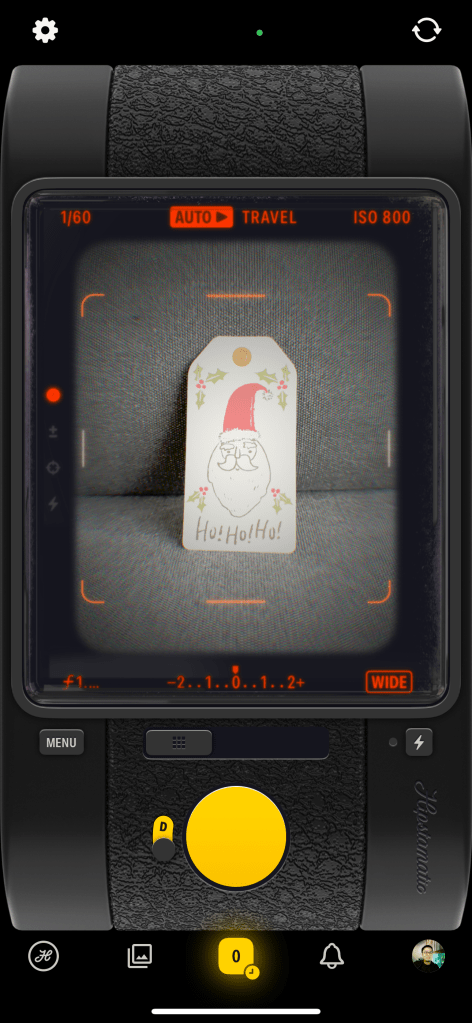
    Earlier this year, Hipstamatic redesigned and relaunched their Hipstamatic X app. The “X” was dropped, and they added a new social feed. It was the official replacement for their original app which became Hipstamatic Classic. Where the original was funded by in-app purchases for new filters (at a pace of roughly one new 99c release each month), the new Hipstamatic charges a $30/year subscription, doubling their income from faithful fans.

    I used the new app for some photos during my trip to Japan and mostly enjoyed the experience, but it was too buggy and the UI was still too cluttered and confusing (a longstanding problem with the original Hipstamatic app as well) for me to consider continuing with a paid subscription.

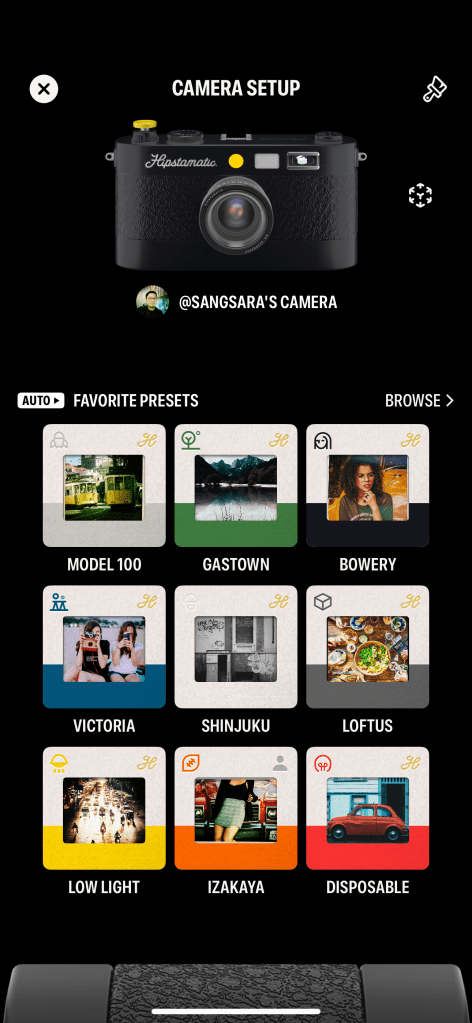
    Their main problem is that there are now over 300 filters in the forms of “films” and “lenses” and “flashes” that you can combine to make infinite looks, and no good way to make the attractive human-curated combinations they recommend accessible and discoverable. In the last version, they tried to give a few of these combinations the tangible metaphor of being unique “cameras”, each one with a different skeuomorphic body you picked off a shelf, but essentially they were presets you could call up. But you can keep, what, ten of these aside in a little drawer before you couldn’t tell them apart? And so many of the other combinations were left out of sight and out of mind.

    Now, after a week of teasing social media posts, wherein a “physical camera” was shown in videos — quite obviously a 3D model rendered in AR, but some people believed they were going to release a hardware product anyway — they’ve released a major update (v10) that tries to untangle the Gordian knot of their UX issues.

    In this new version, they’ve tried to marry what worked in the original app with a new info architecture and set of metaphors to manage the library of looks they’ve accumulated over the last 14 years. You get just ONE skeuomorphic camera to call your own and customize the look of, and this camera is capable of loading up many presets. You can either let the camera detect the scene and choose a suitable preset for it (Auto mode), or specify the preset yourself (Manual mode). There are 9 possible scenes, such as Travel, People, and Still Life, but in a puzzling and unfortunate move, when you start using the app, each of these scenes has just one or two associated presets. That means you’re going to see the same looks over and over, when there are over a hundred more hidden away in a long list. This was presumably done to allow you, the user, to customize your experience and assign your favorite presets to the scenes.

    There are two major problems at this point. One: leaving it up to the user to gain their own understanding of all the pre-existing “good combos” and assign them to 9 scene categories is insane. It’s a lot of work to hand off to a customer you hope will pay you money. The team should be doing the work of tagging each preset combo with a recommended use case, AND making it easy to assign them. It’s not currently easy. I had to move back and forth between two sections of the app looking at presets and memorizing their names to go assign to a scene, because these things aren’t placed together. Off the top of my head, it just needs an in-line list of suggested presets (from the aforementioned tagging exercise) on the same screen where you customize a scene’s presets. Perhaps this is coming. I’d argue it should have been in the MVP release of such a big redesign.

    Two: as I mentioned, there are infinite possible presets given the number of ingredients they’ve accumulated. You can make your own combos, but there’s no great way to experiment and do this — there should be a sandbox where you can explore each lens/film/flash’s characteristics and try them out in real time to find a good combo. There used to be a section of the app called the “Hipstamatic Supply Catalog” where you could browse all these effects (it was only like a static magazine, but they could have made it interactive), and this now seems to be gone or I can’t find it anymore in the maze of menus and buttons. Perhaps they’re okay with most users just using the curated “good presets” and never making their own, but it seems like a missed opportunity.

    I was feeling a mix of optimistic and bored, so I paid for an annual subscription anyway and will be trying to take lots of everyday silly snaps with this, and maybe even use it on my upcoming trip to Thailand. But if you know someone who works at Hipstamatic, please talk to them about taking on some external advice.

    ===

    • I finished watching Pluto on Netflix. It’s still a strong recommendation for me; a modern anime made with classic sensibilities and a story that really keeps you guessing. It’s also a very different Astro Boy story, suitable for people who hear “Astro Boy” and think it’s stuff for kids.
    • We started watching A Murder at the End of the World and I’m really liking it so far. Especially its star, Emma Corrin, who I’ve never seen in anything else before. They’ve got the most strikingly similar face to Jodie Foster, I was sure they were related.
    • New playlist! BLixTape #3 is done, made up of mostly new songs that I’ve been listening to since mid-October. Add it here on Apple Music.
  • Week 30.23

    Week 30.23

    In the early years of mobile connectivity, we counted ourselves lucky to get 1GB of data per month. Fifty bucks bought you a plan, a phone, and a two-year leash. These days? I’m sitting on an 88GB, 5G mountain for half the price. Thank you, technological progress. But since COVID and working from home, I’m only using a fraction of my allowance.

    Yet, like any good consumer, I want more. So I switched providers from Circles to M1, lured by a plan that comes with 150GB at the same price. But there’s a catch, M1’s a little disorganized and provided me no updates on when my number would be ported. Right now I have two eSIMs jostling for control in my phone.

    Their checkout process also insisted on a “delivery” date. Delivery of what exactly? I’d already gotten the QR code for my eSIM over email. Assumed it was just a holdover from the old physical SIM days, too much bother to scrub from the website. But no, someone actually turned up to my doorstep at the appointed time, just to verify I’d activated my eSIM, then had me sign off on it.

    Let me repeat: M1 sends a flesh-and-blood human to confirm I got an email, but can’t drop me a line to say when my number would switch over. I had to spend 10 minutes on a support call to find out that it’s scheduled for next week. Will the data bonanza make up for this frustration? We’ll see.

    ===

    On a mellower note, I started to make use of my dormant brain.fm account again, to provide background music while I read and work. Is it pseudo-science? Beats me. But I like most of the tunes and it seems to work. The app has been significantly upgraded since I last saw it, with many more genres of music to choose from, and the option to vary the intensity of their brainwave-enhancing signals (which sound like wobbles).

    I get absolutely nothing out of referring you, but if you use my referral link you’ll get your first month for $1.

    With a little help from brain.fm and last week’s recommended music from Alice Sara Ott, I finished Sayaka Murata’s Life Ceremony, and also Hervé Le Tellier’s The Anomaly, and Lee Child’s 20th Jack Reacher novel, Make Me. Of all those, I can recommend The Anomaly most wholeheartedly. It’s a book you probably shouldn’t know anything about going in. If you really must know, it has science and mystery elements, but that’s all I’ll say. I’m now reading real-life astronaut Chris Hadfield’s The Apollo Murders.

    Not bad for a guy who’d only finished one book two months ago, now 8 out of 12 down on his Goodreads Challenge.

    ===

    I’ve been listening to Tessa Violet’s new album, MY GOD!, and it’s a playful catchy affair. Incredibly, Blur have reunited with a new album, The Ballad of Darren, and I couldn’t find much wrong with it after one playthrough. Maybe it’s the halo of how good the last Gorillaz album was after a decade of underwhelming me, but I think Damon Albarn is back.

    I made a commitment to use my AirPods Max more — they’ve been neglected because they’re somewhat of a pain, both literally and figuratively: the headband’s a little tight for me and the Smart Case remains a questionable design, adding friction to the simple act of turning a pair of headphones on and off.

    Two things have improved the experience for me. First, a dubious Reddit post from another big-headed owner who suggested bending the metal frame open, briefly straightening them open to form a 180º line, to ease the squeeze. This could obviously damage them, so do it at your own risk. But I think it’s made a difference. This is something you can’t do with the plastic Beats Studio Pros, sadly.

    Secondly, an updated audiogram from the free Mimi hearing test app. The last time I did the test was 2021, and I got slightly different results this time. I highly recommend everyone does this if they’re old enough to worry about losing some hearing. Thankfully my ears are still pretty good.

    Saving your test results as an audiogram effectively personalizes your listening experience on AirPods and supported headphones, applying an EQ profile that compensates for the frequencies you’ve become less sensitive to. You’ll hear music the way you used to, once you dive deep into the iOS Settings menu and find the section on Audio Accessibility, and turn on “Headphone Accommodations”.

    ===

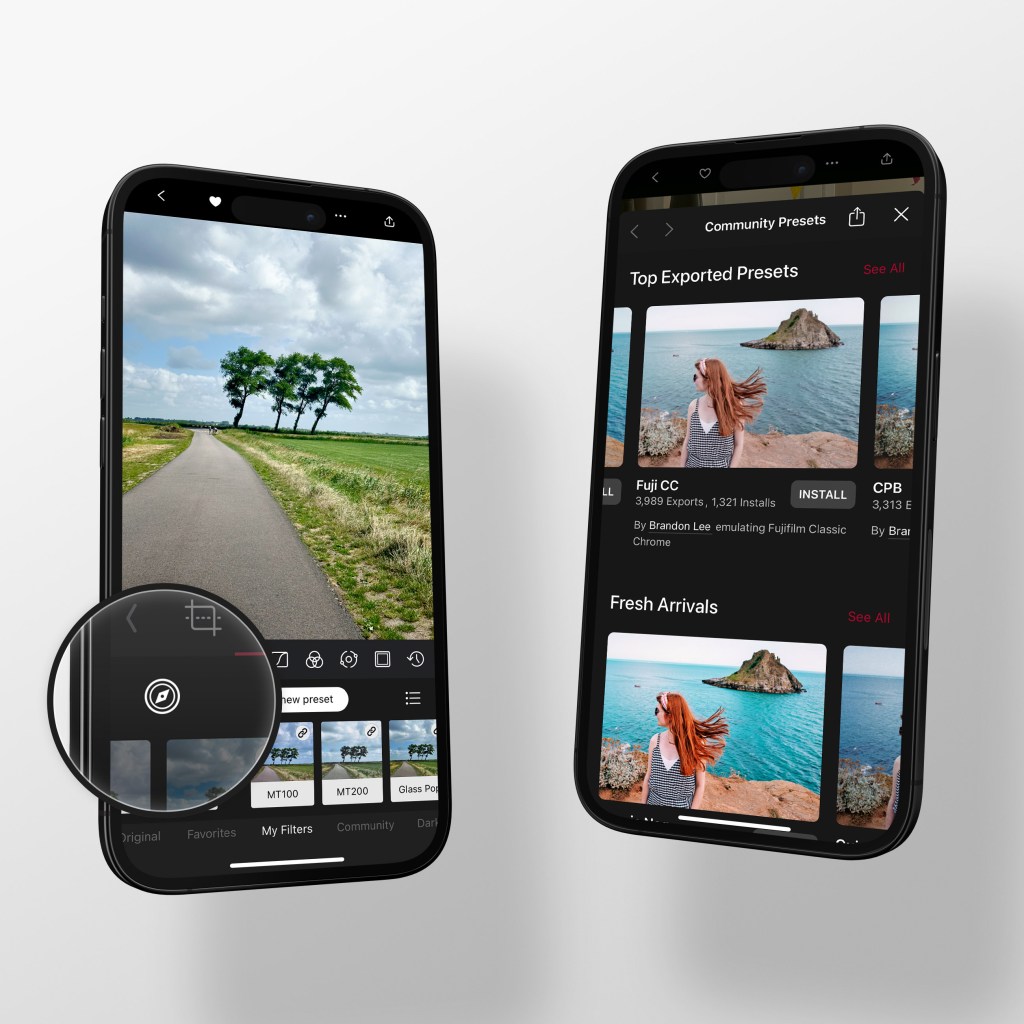
    Another app that played a part in this week is Darkroom, the photo editor for iOS and Mac that I’ve mentioned a few times. They launched a portal to showcase presets made by community members, and kindly put a spotlight on some of the ones I’ve made and shared. You can access this catalog through a new button in the app, too.

    As Twitter is living on borrowed time (this was the week their petulant man-child owner pushed out a hasty, clumsy rebrand to “X”), I decided to republish my thread of Darkroom presets to… Threads. Annoyingly, it’s still buggy and messed up the chronological order of my posts. Nevertheless, I think they’re all still there, and I’ll post future presets to the same link.

    New ones I shared to celebrate being on the presets portal:

    E1: This is my reproduction of the popular E1 filter in VSCO. I wrote that it adds warmth, color, and film vibes in a single tap, and it truly is quite a versatile everyday effect.

    MEM3: This is another strong effect from my nostalgia-forward MEM series. It lightens and fades images with a blue-magenta cross-processed wash. You pretty much lose all highlight detail, but it’s a good look for certain scenes.

    MEM4: I said that this creates a warm and dusty sunset feel, but it’s really also great for low-light scenes. Check out the last photo sample through the link. Again, you do stand to lose detail in contrast areas, so vary the strength to taste.

    ===

    Growing up in the 80s, I caught reruns of Takeshi’s Castle on Chinese TV channels with no context, and no ability to understand what was said. On reflection, I grew up watching a lot of shows visually rather than verbally, which continues to this day whenever I choose to watch movies on planes without headphones.

    Anyway, Takeshi’s Castle, for the uninitiated, was a long-running Japanese game show (?) featuring normal people tackling an obstacle course of heinous physical challenges that would make insurance men squeamish. It was a precursor of Ninja Warrior, American Gladiators, and yet a different beast: whimsical, insane, hilarious. Why the name? It was hosted by the infamous Takeshi “Beat” Kitano, who played the err… lord of the castle that 100 contestants each week tried to storm. Here’s the Wikipedia article.

    I’m pretty sure you all know this, anyway. It’s a cornerstone of modern media culture! Turn in your TV licenses if you don’t.

    So imagine my elation while browsing Amazon Prime Video in bed and suddenly seeing a new Takeshi’s Castle, a 2023 reboot! We’ve seen two of the eight available episodes, and it’s still gloriously fun. It’s still not rolled out globally, as some markets will get English voiceovers (the UK one will have comedian Romesh Ranganathan as one commentator), but I wouldn’t watch it any other way than in the original Japanese, and maybe even with the subtitles off for old times’ sake.

    ===

    On Sunday we visited the Illustration Arts Fest where some talented friends were showing their work. It was packed, and probably the most crowded place I’ve been in since Tokyo. Let’s hope I don’t get COVID again.

    The most common theme was cute cartoon cats. On stickers, posters, keyrings, enamel pins, you name it. Some other artists were out there, scratching their own freaky itches and looking for kindred spirits in the crowd. We bought a couple of things for the apartment, including these little guys below from our friend Reg at Ocio Ceramics. A dumpling and a frog. Cuteness sells.

  • Week 19.23

    The new Legend of Zelda game, Tears of the Kingdom, launched this week about five or six years after the last one, which I never finished. I pre-ordered the new game, of course, planning to join the rest of the world on launch day, exploring together and participating in conversations online, collectively figuring out unique solutions using the game’s open-ended physics engine. For those who haven’t seen it, the new game is sort of a sandboxy, Minecrafty affair where you can weld stuff together and build novel mechanical solutions to obstacles, almost certainly in a different manner than your friends. Think rudimentary cars from planks of wood, or hovercrafts, or the forest booby traps from Rambo First Blood.

    But the guilt of never fully playing Breath of the Wild was getting to me, and I’ve been trying to get back into it over the last few weeks. Despite memories to the contrary, I’d made shockingly little progress in my 40+ hours of gameplay, spending most of my time bumbling about the countryside and climbing mountains, instead of conquering the Divine Beasts (1 out of 4) and collecting quality stuff. It seemed wrong to jump ahead to the sequel while I’m finally seeing what the last one had to offer.

    So in this past week I’ve made more progress than in the previous four years: conquered two more Divine Beasts, got the Master Sword at last, and uncovered most of the world map (two more areas to go).

    ===

    Craig Mod tweeted and tooted about having had enough of the iPhone’s (14 Pro, I assume) overprocessed look, and said he was making Halide his default camera app. Huh? But how does that help, I thought, unless he means to shoot in non-ProRAW RAW all the time (which is a thing Halide does: shoot in traditional RAW files which don’t involve the “Photonic Engine” processing pipeline). After some poking about, I realized something I should have ages ago: by turning off “Enable Smartest Processing” in Halide’s settings and choosing HEIC as the output format, you can actually take regular old (non-RAW) photos that look more natural and have more editing latitude! This effectively cancels out the iPhone 14 Pro’s image quality regressions.

    The overstimulated look of the default camera is one of the main reasons I hardly took any phone photos on my recent vacation to Japan, but if only I’d known… I could have! So with that, Halide won an instant annual subscription from me, and I now have a complication on my Lock Screen that launches straight into it.

    My toot about this was boosted by Mod, making it my most “engaging” Mastodon post ever, at 44 likes and 12 boosts.

    You have to see a comparison to understand how obnoxiously oversharpened and artificial the Photonic Engine is on the 14 Pro’s 48mp sensor for some reason. It increases local contrast and highlights texture “detail” that does not look like what you see in real life. It’s a Clarity slider turned all the way up, and I’m not a fan of Clarity sliders. The example below is a corner crop from two larger photos, not edited in any other way.

    Left: iPhone 14 Pro’s default processing | Right: Halide’s “dumb” processing is loads better

    ===

    My AI experiments this week have been around trying to teach ChatGPT to write better poetry. I posted a few days ago about getting it to do a critical reading of a poem, wherein I was completely stunned by its comprehension skills. But writing good poetry, not just gimmicky rhyming lines, that should be a different thing.

    I semi-accidentally discovered that asking a “persona” (that I’d established in another chat instance to test the idea of using an AI prompted with a human backstory as a customer research proxy) to write poetry yielded subjectively better results than when I asked a brand new ChatGPT instance. The mere suggestion that the bot’s point of view should draw references from vaguely described life experiences and preferences seemed to make a difference to what it spat out. Which is why many SF stories have AIs that don’t know they’re AIs, I guess, and they have memories of childhoods that never happened.

    Here’s a poem that “Frank” (quite a salaryman-type personality) wrote about retirement:

    A lifetime spent in labor’s thrall,
    In structured days and office halls.
    Oh, to retire, to end the grind,
    To leave the corporate world behind.

    The dawn of leisure’s quiet grace,
    In this new, unhurried pace.
    Days unbound by ticking clocks,
    Unfettered as the wandering fox.

    Yet in this expanse so vast,
    Shadows of the past are cast.
    Habits of a lifetime past,
    In this new role, steadfast.

    A time of freedom, yet confined,
    By boundaries of the seasoned mind.
    Retirement’s paradox, I find,
    Is having time, yet being time-blind.

    Wow! No? It was coming up with absolute drivel before I handed the job over to Frank in another window. Side note: I started paying for ChatGPT Plus, just to have access to GPT-4; it’s a much better poet than the default GPT 3.5 model.

    So lately I’ve been working on giving feedback to an poetry-writing AI that I named Penrose and instructed to believe in itself as a 50-year-old professor of creative writing and philosophy, who’s bad with money, had two failed “great loves” because of their selfish acts, grew up in Boston, now works in London, and so on.

    Here’s one of the first things it wrote:

    In the chilled reflection of a London morn,
    I see a face, lines etched by yesterday’s turmoil.
    Cracks, not of frailty but life, loud in their silent form,
    That’s you, mate, and it’s all right.

    Witness the march of years, the dance of decades,
    In the ceaseless play of ambition and regret.
    Weaknesses? They’re the worn pennies in your pocket,
    The unpaid bills of your character, yet, not your debt.

    They’re the stumbles on cobblestones,
    The missteps in Milan’s echo-filled alleys.
    Not a damning verdict, but life’s hasty loans,
    A ledger, not of losses, but of rallies.

    In this world where even stone yields to rain,
    We’re all apprentices to time, chiseling away in vain.
    We’re all works, works under the master’s patient hand,
    Unfinished, flawed, yet, in that, something grand.

    ===

    • I haven’t been able to bring myself to watch more of Amazon Prime Video’s Citadel beyond the first two episodes. A colleague said he quit after 10 minutes. It’s reportedly one of the most expensive TV shows ever made, at an average of $50M per episode.
    • Silo on Apple TV+ has been very good so far. It’s a little bit YA sci-fi, a little Hunger Gamey, a little Snowpiercey (but better).
    • I saw a segment on NHK about how this iconic street corner featured in Slam Dunk has been inundated by tourists now that Japan is open again. They interviewed pilgrims from S. Korea, China, and Taiwan who said they just had to come down and see it — “if you love anime at all, this place is a must”. So I decided to get started on the ancient anime, which Netflix has 8 seasons of. The day after seeing episode 1, I ended up standing behind a guy on the train watching the show on his phone.
    • The 10th Anniversary Edition of Daft Punk’s Random Access Memories is out, and the album still holds up extremely well for me. If only they’d come back to remix it in Spatial Audio, that would have been incredible.
  • Week 15.23

    • As the last AI-written post mentioned, the post-vacation photo deluge is real. Looking through them again to make a shortlist for showing family and maybe printing out on Instax, I’ve rediscovered some good shots I could share… but do I want to? And where? And why? Our current task is just to build a shared album with some of the better ones between the two of us. That, and remembering that this is the fun and meaningful part of taking photographs; the journey, not the neat photo library.
    • The price of Instax Mini film has risen since my last purchase (inflation?) going from maybe 75 cents a shot to 91 cents, and that’s if you buy a hundred at a time. It makes the price of Instax Wide (larger prints) seem reasonable at about $1.40 a shot, and I’m trying to tell myself not to buy an Instax Wide printer or camera.
    • It was a busy work week, and I had to make an overnight trip to Malaysia for a meeting — my first time back in the country in nearly two decades, if I’m remembering correctly. This is something that shocks other Singaporeans, like when I say I’ve never been to Bangkok. But dudes, if I’m going on a holiday, I’m getting away from this oppressive heat and humidity! What isn’t shocking is how Malaysians will take every opportunity to make fun of Singapore’s food.
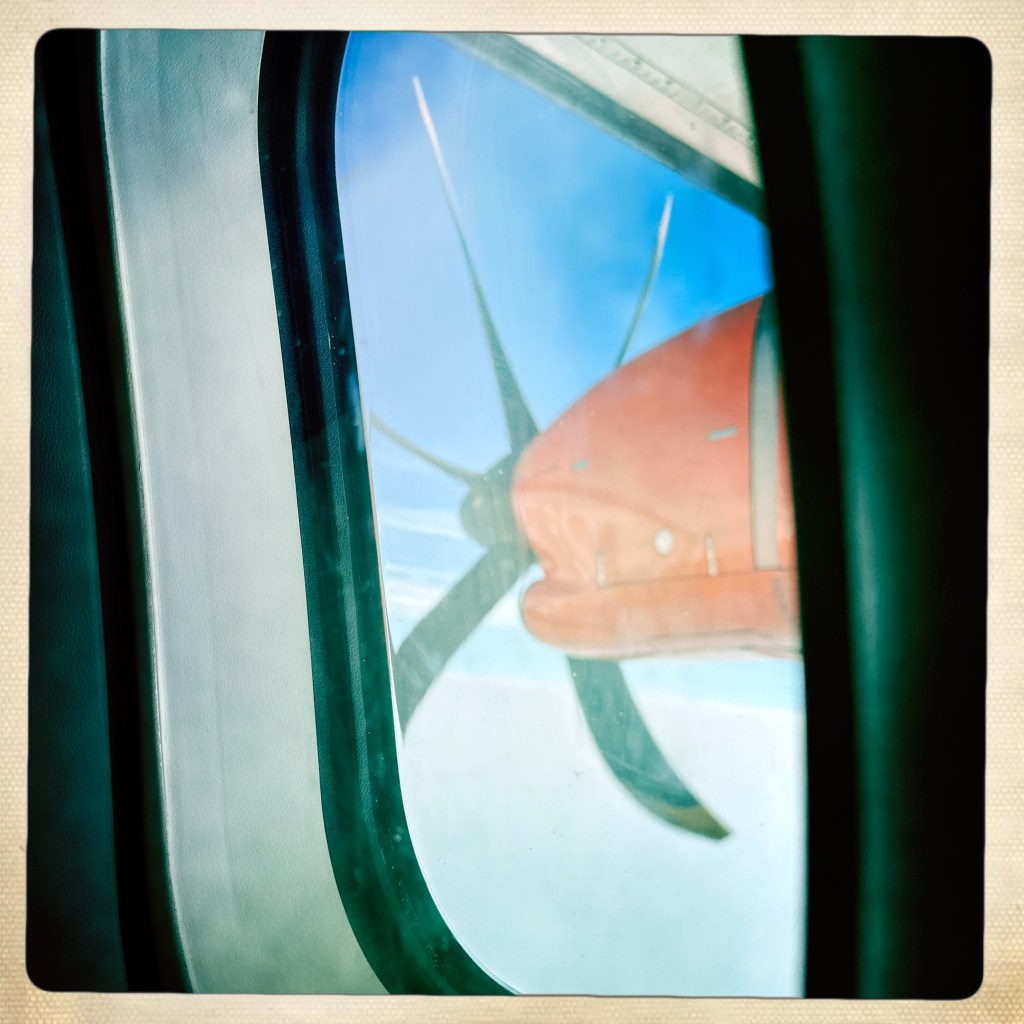
    • The trip involved flying 1.5 hours in a propeller plane operated by Firefly, out of the two alternative airports: Seletar and Subang. The planes are small, with just 4 seats across each row, and the propellers are louder than jet engines. Definitely take your AirPods Pro. But small airports mean less hassle — you can arrive an hour or less before your flight — and more convenient access to parts of Kuala Lumpur than if you fly into KL International.
    • In a case of wishful thinking, I brought my Switch along anticipating an evening alone in the hotel room to get some gaming in. In reality, it was late by the time I checked in and needed dinner, and maybe I played Lumines for 15 minutes the next morning.
    • We had a small dinner over the weekend for a couple of us with April birthdays, and James mentioned playing a new game out on Switch that I’d somehow missed: Dredge. It looks like a delightful Lovecraftian fishing/adventure game, and one I will definitely get when I’m ready. At the moment I’ve just started on Super Mario 3D World and am loving its compact little puzzle worlds. If the rumors are true and a follow up to the Switch is coming this Christmas, I have limited time to clear my games backlog. Maybe another sabbatical is in order?
    • I finally finished watching the Cyberpunk: Edgerunners anime on Netflix and while I enjoyed aspects of the clearly expensive production, like some of the character designs, I can’t recommend it. Mostly because it’s a cynical, derivative dystopian downer with lots of gory body modification (personal turn-off) to make it gritty?
    • We finally started watching Beef on Netflix which has been getting a ton of praise for tackling, like, every issue? Asian-American identity, class divides, mental health, imposter syndrome, work-life balance, and so on. It’s good! Wild, but good.
    • Ryan Adams put out yet another cover album, as in a cover of an entire album, this time for Oasis’s What’s The Story Morning Glory? and while it should be a home run given how well he pulled off that cover of Wonderwall years ago, the whole thing is a bit disappointing. Changing key melodies for worse ones for no good reason, inconsistent production from song to song, and kinda turning a fun album into a drag.
    • I’ve decided, like several people I follow, that I will probably not be paying for a Hipstamatic subscription after my free trial ends. The social network suffers from technical and UX issues, from as small as how slow the gratuitous card flipping animation makes it to browse your feed, to the broken friend-finding functionality — to say nothing of how low quality many of the photos being shared are, for which some blame must be laid at the feet of the garish filters which were supposed to be the whole point. I fear there isn’t really a revival of interest in many of these early era looks, just a desire on Hipstamatic’s part that one happens. That said, I love some of the classic ones, like the “Model 100” (the original John S + Ina’s 1969 lens + film combo from Hipstamatic circa 2009), but too many of them make good photos worse. And you can actually use some of the best ones with the free plan — which is what I’ll continue to do.