Tag: Design

  • Week 21.23

    It was one of those weeks where not an awful lot happened outside of work. I don’t talk about work here but let’s sort of circle it.

    Reflections on AI

    One thing I can say is that I started making a presentation deck about the use of generative AI and GPT in design, initially to share my findings so far but increasingly as an exercise in structuring my thoughts into anything at all useful.

    A couple of things, on reflection: an AI assistant or collaborator poses significant risks for a lazy human in certain tasks since it tempts us to quickly accept its output without evaluating potential improvements. Assuming AI can do a job to 90% of a human’s rigor and quality, figuring out what the other 10% is without having done the same work yourself is quite the challenge. So the efficiency gains may not be as significant as you think, not until we figure out some smarter processes.

    An example of what I mean: you can feed ChatGPT with notes from an interview conducted with a customer about their experiences and how a product fits into their lives. Supply enough interviews, and ChatGPT can do the work of summarizing them in aggregate, presenting key themes and areas worth looking into, like maybe everyone thinks the price is too high, but it’s because they don’t fully understand the value of what they’re buying.

    It can create a bunch of frameworks to illustrate these findings, like personas and service blueprints. And it can even suggest solutions, like better marketing materials to explain this value to customers. The AI’s output might look pretty good, similar to what a team of human designers would (more slowly) produce, and a company might be tempted to make business decisions based on it. In fact, a team of human designers who haven’t read the interview notes themselves or thought deeply about it might also look at the AI’s work and say it’s good to go.

    The level of confidence and finality inherent in these AI outputs is incredibly convincing. But if a human were to go through all the interviews, listening to the recordings perhaps, they might realize there was a missing element, a feeling subtly unsaid on the margins, that means some customers do see the extra quality, they just wish there was a cheaper version of the product that did less. Skimming through the finished research report crafted by the AI, you wouldn’t even begin to guess where in the sea of correct conclusions this exception could be hiding.

    But there’s no question that this stuff is ready today to do some tasks like image editing, seen in Photoshop’s impressive beta release of a “Generative Fill” feature this week. I took a stock photo and doubled its height, and it was able to get the context of the scene and fill in the missing ceiling almost perfectly. That would have taken an experienced image compositor at least a few minutes, and anyone else way too much time. Just a couple of clicks now.

    I also looked into what Adobe is building with its Sensei suite of AI marketing tools, and that dream of generating and sending personalized ads, as in a unique package of art and copy tailored to a single customer’s behavior, would seem to be already here. I’m not 100% sure how this works everywhere, but in the past, you’d still need copywriters and art people involved in the process after marketers had identified the “customer journeys” and content-goes-here templates. With the opportunities now being identified, advertising messages crafted, and email offers all sent with a single click by the same person, there’s hardly a crack in the door left for the traditional artists and copywriters to make their case. Yet, the quality is good enough to satisfy all but the most discerning of corporations.

    You may observe that the two of the largest advertising platforms are already in this space.

    What do you think about the current advancements in AI and their implications? Share your thoughts in the comments below.

    (One more example: I asked ChatGPT to help suggest edits for this post, and it rewrote one of the above sentences to be better. I liked it, but on closer inspection, there was a glaring semantic error I had to fix myself. It also suggested the call to action above, to increase engagement. Talk to me!)
    ===

    Personal updates

    There seems to be yet another wave of Covid sweeping through the city, based on the fact that several people I know have come down with it, and every bus and train car I’ve been on this week had more people wearing masks, suggesting that they, too, know people who’ve come down with it.

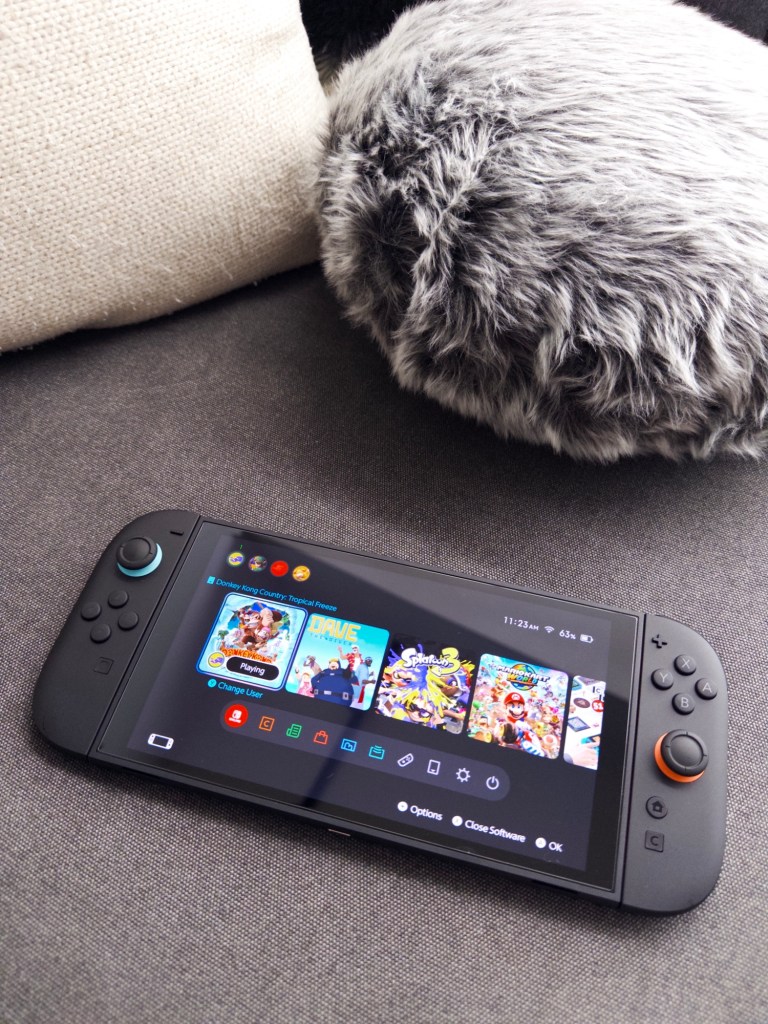
    Kim is going away for a couple of weeks, and I’m hoping she doesn’t run into it out there either; one of her colleagues caught it while traveling in the region a few days ago. I’m planning to stay home as much as I can during this time, and finishing as many video games as possible.

    ===

    Media activity

    • Not a ton of progress in The Legend of Zelda: Breath of the Wild, which I’ve been playing consistently now for the past few weeks — a streak unmatched since the game first came out six years ago (I abandoned it out of fatigue shortly after that initial burst). I’ve now got all four Divine Beasts pointing at the castle and now just need to build up the nerve and arsenal to storm it and be done with this. I seem to be procrastinating instead, exploring areas in the massive world that I never checked out before.
    • The girl band I would say I’m rooting the most for in pop music, XG, performed at the Head in the Clouds festival in New York, and I watched some fancams of their set. The audio quality is terrible in all of them, so I won’t recommend starting there, but they are undeniably polished and tight as a group. Here are two music videos. I think I discovered them back in February, and at the time I said they’re gonna be monstrously huge this year. I stand by this.
    • If you watch the documentary series their label has put on YouTube, you’ll understand why they’re performing at this level: they’ve been physically and psychologically abused for the past six years of training, starting from when some of them were just 12. It’s horrendous to watch, but also probably par for the industry. While it’s good that someone decided to plainly put this footage out there, I’m not seeing much of a backlash, so it’s probably too late and already normalized. Some of the stuff their boss/producer says and does is straight up toxic emotional manipulation (he apparently came up as an idol himself so it’s like Ted Lasso says in the latest episode, hurt people hurt people).
    • Ted Lasso is almost done with its third season, one episode to go. I’m still liking it much better than season two, although it is sooo uneven and odd in its choices. You know the adage, “show, don’t tell”? It’s like the concept of season three is going against that conventional wisdom; a challenge the writing team decided to issue themselves: Can we take lots of scenes that people want to see (scenes of closure, catharsis, and vindication!) and make them happen off-camera and between episodes? And after doing that, can we still make people care through the strength of our set pieces and touching monologues? That’s the only explanation I have for what’s been going on. And to the team’s credit, it works some of the time. It’s not conventional TV, and maybe that’s the point.
    • Platonic, the new sitcommy show on Apple TV+, is much more conventional. It’s about a male and female pair of friends who are really just friends (so far), and a comparison to When Harry Met Sally is drawn in the very first episode. They had a fight and haven’t spoken in years, and then reconnect on the cusp of middle age, when it’s notoriously difficult to form new friendships, let alone platonic ones. I think the concept and set up are strong, but the execution is a little spotty. I’m not really into Seth Rogan’s work, and his character here feels exactly like what you’d expect from one of his characters, but by the end of episode 2 I think I’ll keep watching. The most jarring thing is Rose Byrne’s quasi-Australian accent which raises too many questions about how they met and got along in the past.
    • Speaking of actors whose strong accents shatter the suspension of disbelief, Arnold Fucking Schwarzenegger is back in a NETFLIX TV SERIES which sounds like a dreamy reboot of True Lies. The show is called FUBAR and it’s about a father and daughter who both secretly work for the CIA without knowing about each other’s involvement. I haven’t seen any of it yet, but I’m dying to.
    • It strikes me that in the future, one could give a crazy brief like the above to a generative AI system and start watching something like FUBAR within minutes.
    • My first music discovery of the week is Eternally Yours, a new Alphaville album that sees the band doing symphonic rearrangements of songs such as Big In Japan and Forever Young with a full orchestra. Yes, in Dolby Atmos spatial audio. This is a band that was formed 41 years ago and the lead singer’s voice is still incredible, iconic.
    • The second is Tears can be so soft, the new song by Christine and the Queens. It’s simple but surprisingly soulful, and sonically recalls Massive Attack’s best work.
  • Bing Blogs #3: On the edges (of iPhones)

    I used to write my own iPhone content but now I can just brief an AI to do it! I asked for a funny explanation of why Apple keeps changing the design language and is rumored to be doing it yet again with the iPhone 15 series.


    The iPhone Design Flip-Flop: Why Apple Can’t Make Up Its Mind

    If you’re an iPhone fan, you might have noticed a curious pattern in Apple’s design choices over the years. The company seems to have a hard time deciding whether it likes rounded edges or straight edges for its flagship smartphone. Let’s take a look at how the iPhone has changed its shape since its debut in 2007 .

    The Original iPhone: Round and Proud

    The first iPhone was introduced by Steve Jobs as a combination of the iPod, a revolutionary mobile phone and a breakthrough Internet communicator. It featured a 3.5-inch screen, a multi-touch touchscreen display, microphone, headset controls and specs that the modern smartphone user takes for granted today. It also had a sleek design with rounded edges that made it comfortable to hold and easy to slip into your pocket.

    The iPhone 4: Straight Outta Cupertino

    In 2010, Apple unveiled the iPhone 4, which marked a radical departure from the previous models. The iPhone 4 had a flat glass front and back with an aluminum frame that created straight edges around the device. It also had a smaller 3.5-inch screen with higher resolution and introduced features like FaceTime video calling and Retina display. The iPhone 4 was praised for its elegant design and performance, but also criticized for its antenna issues that caused signal loss when held in certain ways.

    The iPhone 6: Back to Basics

    After four generations of straight-edged iPhones (including the iPhone 4S, 5 and 5S), Apple decided to go back to its roots with the iPhone 6 in 2014. The iPhone 6 had a larger 4.7-inch screen with curved edges that followed the contour of the device. It also had a thinner body and improved camera capabilities. The iPhone 6 was well-received by consumers who appreciated its bigger size and smoother design.

    The iPhone 12: Straight Up Stunning

    In 2020, Apple surprised everyone by bringing back the straight edges with the iPhone 12 series. The iPhone 12 had a flat glass front and back with an aluminum frame that created sharp edges around the device. It also had a larger 6.1-inch screen with higher resolution and introduced features like MagSafe wireless charging and Ceramic Shield protection. The iPhone 12 was hailed as one of the best iPhones ever made, combining beauty and power in one package.

    The Rumored iPhone 15: Round Again?

    Now, here’s where things get interesting. According to some leaks and rumors, Apple might be planning to switch back to rounded edges for its next-generation iPhones in late-2023 or early-2024. This would mean that Apple would once again abandon its straight-edged design after only three iterations (including the current iPhone-13 series). Why would Apple do this? What’s wrong with straight edges? Are they too edgy for Apple?

    Conclusion: What’s Next for Apple?

    It’s hard to say what motivates Apple’s design decisions when it comes to its iPhones. Maybe it’s just trying to keep things fresh and exciting for consumers who crave novelty and variety. Maybe it’s following market trends or responding to customer feedback. Maybe it’s just experimenting with different styles until it finds one that sticks.

    Whatever the reason, one thing is clear: Apple can’t seem to make up its mind about whether it likes rounded edges or straight edges for its iPhones. And as long as it keeps flip-flopping between them, we’ll keep buying them anyway.


    I then asked for a poem on the same subject and got this:


    Apple loves to make its iPhones sleek and smooth
    But can’t decide on how to shape their sides
    Sometimes they’re round, sometimes they’re straight like brooms
    And every year they change their minds and guides

    The customers are puzzled by this trend
    They wonder why they need a new design
    They think that Apple just wants them to spend
    More money on a phone that’s not refined

    But maybe Apple has a deeper plan
    To test the limits of aesthetics and art
    To see how far they can push the demand
    For beauty over function and be smart

    Or maybe they’re just bored and out of touch
    And don’t know how to make their phones too much

  • Week 4.22

    First, some bad news. The Shake Salad vending machine that was meant to propel me back to better health… has vanished from the neighborhood. I suppose it didn’t make enough money to pass the trial, despite my best efforts at propping it up. Back to hot dogs and fried chicken, then.

    And speaking of food in the neighborhood, one of the best restaurants near us is closing down, so that’s another option gone, although it was always on the pricier end and more of a nice night out kinda place. We paid it a final visit earlier in the week and it was full (on a weekday). A shame they couldn’t make it work.


    I sold a couple more Misery Men NFTs and decided to get slightly more serious about the project. I’d started off playing with NFTs as a technological format, but needed to draw stuff to make it happen. Eventually that’s led to me becoming more invested in the drawing part, and now it seems a shame if that’s all these are. I know some people who don’t know anything about crypto but like the characters anyway. Since I’m having fun larping as an artist, it seemed time to expand horizons.

    The first step was to stop posting on my own Instagram account, which led to setting up a new dedicated account which you may now follow at @misery.men.

    Wondering what the next step should be, I thought it would be great to make some real-world merchandise. The last time I did this was back in my university days, offering some questionable t-shirt designs off CafePress. Obviously the dropshipping landscape has exploded since then, so I should be able to start pretty quickly, right?

    I looked into it on Thursday and went with Printful, one of the larger operations. However, they don’t actually offer you a storefront; they’re just the backend fulfilling your orders, although they can interface with your platform of choice e.g. Shopify or Squarespace. Since those come with regular monthly costs, I decided to go with Etsy, which I always thought was a sort of handicraft eBay. Turns out you can sell anything there, and Printful will handle the heavy lifting (and shipping).

    The Misery World™ Etsy shop was up and running by the end of the day with a handful of products I’d put together using the existing artwork. Oh wait, that’s not accurate. Logotype needed producing, and a couple of art-inclined friends/colleagues kindly reached out to give feedback. Unsolicited, if that gives you any idea of how disquieting the initial version must have looked to professional eyes.

    On Friday, in need of a URL to point both the new Instagram and Shop to, and a site to hold it all together (this domain didn’t seem like the right place), I bought the MiseryMen.com domain and set up a landing page and blog. That’s practically a new brand and sales channel set up in 48 hours with just a double-digit capital outlay. What a world we live in.

    I’ve made one product sale so far, and hey, as a struggling and unknown creator, that’s nearly made the whole exercise worth it! 🥲


    On Saturday, we popped over to the Keppel Distripark area to take in S.E.A. Focus, an exhibition that was part of Singapore Art Week 2022. There was an NFT gallery sponsored by Tezos, how à la mode. I took some pictures so I wouldn’t have to talk about my feelings.


    Media activity:

    • Not a whole lot! I guess it was more of a creative week than a consumptive one.
    • Some more Disco Elysium…
    • A few episodes of a TV show that I’ll talk more about when I can…
    • A British crime drama on Netflix called Paranoid that’s just okay…
    • And listening to Utada Hikaru’s new album Bad Mode, which has greatly exceeded my cautiously lowered expectations. It’s good to see them continue to work and put out what they want.
  • Week 33.21

    Am not really in the mood to write a post this week and have been playing music and shuffling around the room for half an hour to avoid it. I say this as acknowledgement that it’s not always fun or easy to keep traditions up, but we often do anyway. Even if nobody cares whether we succeed or not. We’re simply accountable to our own past decisions and future retrospectives.

    ~

    Rather than continue reading Firebreak this week, I looked into a few topics I’ve been feeling ignorant of: what’s going on with social tokens? What do people mean exactly when they say “metaverse”, since they can’t literally imagine it’s Snow Crash, (insert Princess Amidala face) right? And how exactly do NFTs and proprietary platforms fit into the theory of a unified metaverse? I’ve still got lots to learn about both, but I found this account of large European football clubs participating in Socios very surprising; I had no idea the tokenization of entertainment franchises was already a reality for some football fans, and it makes sense that this would be a much smoother gateway to digital assets for most people than cartoon animals trading for thousands millions of dollars. On the metaverse topic, I found this 9-part essay by Matthew Ball that was recommended by many to be an enjoyable and very helpful read.

    Twitter updated their design language, changing the font I look at for hours each day. I think I’m already used to it. To the chagrin of many users on my timeline, they also flipped the logic behind displaying buttons as either filled or outlined. It personally didn’t bother me past the first 30 seconds.

    I then had a brief conversation with some colleagues who build out design language systems for digital products. It occurred to me that teams today already have their hands full managing 2D screen-based designs, and the transition to an XR spatial future will probably explode the complexity of design systems as they are currently defined, and call for the further melding of multiple domains like branding, architecture, industrial/interface/interaction design, accessibility, visual communications. It might be an opportunity to tear up much of the bland, homogenous work we see now. I see this as a challenge for anyone recruiting to do design for enterprise/late-stage products. Who’d want to keep fiddling with round rects when the most interesting work is just around the corner?

    ~

    Now that some Beatles’ remasters are available on Apple Music with Dolby Atmos, I listened to Abbey Road and Sergeant Pepper’s on my AirPods Max. Never mind if it’s wrong; they sound so right. The spatial separation of each instrument helps you better appreciate what they did on those albums.

    Amazon Prime Video somehow got worldwide rights for all four Rebuild of Evangelion films, including the newest installment which never got a chance to screen here. I’ve been eager to see it, but there’s just so much homework to do first. I wouldn’t call myself a fan, but I saw all three previous Rebuild films in cinemas starting in 2007. They are now just an ancient, jumbled mess in my memory. Online guides recommend watching the entire 26-episode TV series on Netflix first, followed by the original movie, and THEN the four new films which are do-overs (but also maybe part of a meta-textual narrative on repetition and iteration?!) I decided to jump straight into the new films first, and pick up with the series on Netflix where I left it midway later, maybe.

    I’ve now seen the first three. What a depressing and senseless and infuriating but beautiful journey so far. One left to go, and it’s supposedly the best one. I’m lost half the bloody time. 3.0 in particular is a cautionary tale of what can go wrong if you don’t get crisis comms to survivors right, and they end up becoming your enemy. It’s PR training in pretentious anime clothes.

    You can’t be watching sci-fi biomech bible allegories all the time, so I also saw two Liam Neeson action films this week: The Commuter and Non-Stop. The former is about an ex-cop who has to play a bit of sleuthing on a train, and the latter is about an ex-cop who has to stop murders on a plane. They’re both by director Jaume Collet-Sera (who’s just done Disney’s Jungle Cruise) and I find their existence fascinating. He’s done two other films with Neeson, Unknown and Run All Night and I don’t think life would be complete without seeing them too.

  • Hold up, HEY

    Hold up, HEY

    The debut of HEY email has been an interesting case study in launching a new service, in part because it took place on social media — a two-way street that led to them getting public feedback that’s already led to significant changes. As others have done in recent years, the launch was a staggered rollout with invite codes and a waitlist, and the resulting members-only feel and scarcity drove tens of thousands more to join the waitlist. Some say this is intentional marketing, but it’s also legitimately done to manage the experience when someone isn’t sure how much interest there will be.

    I took notes on my hands-on experience in a previous post, and have spent a week now getting to grips with it, trying to picture it as my primary email service for the foreseeable future. The commitment isn’t just a new email address to inform people about; it’s also paying a perpetual premium service fee. After 16 years of “free” Gmail, that’s a big decision. Yes, you’re free to leave any time and they’ll forward all emails sent to you anywhere else you’d like, but I wouldn’t use a @hey.com address if I wasn’t actually using HEY.

    Everybody’s got opinions

    But before the details of my decision (like, who cares, right?), I wanted to comment on the fascinating public launch of HEY that we’ve been spectators to, and how its creators have had to walk back some of their design decisions after product met reality.

    As my friend YJ says above, Basecamp and HEY are heavily opinionated products by opinionated people; it’s what allows them to take a well-established thing like email, with its standard organizing paradigms of Inbox, Outbox, Sent, Spam, and Trash folders, and try something new. It’s only meant to satisfy a certain type of user with certain needs and preferences.

    It’s not easy building something out of new ideas, at huge scale, and making sure it’s robust enough to carry the personal and business correspondence of paying customers who’ll depend on it for time-sensitive messages. By Basecamp’s account, they’ve been working quietly on HEY for two years before this month’s semi-public launch. I think they deserve a tremendous amount of credit both for attempting it and for how stable it has been.

    When we design services, we know we won’t catch everything or get it right the first time. It’s about having priorities and principles, and optimizing against them every step of the way. If you’ve defined and studied your target audience, and care about pleasing them to the exception of everyone else, then you can make decisions based on their needs. If you put in the work to develop a core experience that will set your business apart, then that becomes the thing you protect even if Apple or anyone else tries to make you change it. Some companies famously put speed over certainty, and while it dazzled a lot of CIOs and inspired them to try and do the same, its pitfalls are now well known.

    We don’t know what HEY’s development process looked like, or what they prioritized, and so we can only guess from what they actually shipped and what they’ve done since. Upon contact with the wider marketplace, some of those opinionated ideas are now being challenged as problematic or discriminatory. Could more user research and testing have caught them before launch? Probably. Was catching them before launch a priority for the team, or did they intend to test them in public and fix unintended consequences as they were discovered? To their credit again, they’ve fixed a lot of things very fast in the past week. From adding disposable functionality suggested by Apple to dumping fully built, non-trivial features… their responsiveness has been impressive.


    Things that came broken

    Let’s look at a couple of Twitter exchanges and changes I’ve spotted. On my first day with HEY, I noticed an unusual option in the “More” menu on every email thread. It was a button labeled something like “Generate Public Link”. This actually published the entire email conversation thread to a public webpage, allowing any third party to read and follow the exchange. I used it to help share a problem I was seeing with their support team, which is a nice way of enabling them to help customers without giving full access to all mail. And while you could always share private emails to a third party with copy/paste, screenshots, PDFs, etc. there was something unsettling about this. None of the other people would receive any notification that they were being “listened in on”, and anyone with the link would be able to see not just all previous emails, but any new ones added to the thread for as long as it was publicly shared.

    You could be in a conversation with 20 people and not know if any one of them had generated a link and leaked it. When I explained this in a group chat, there was some disbelief. One person called it a “built-in whistleblower feature”. After others complained on Twitter about the potential for abuse, this feature was completely removed.

    (more…)
  • Homework

    In my last update here, three long months ago, I’d just set up a new WiFi system with enough reach to connect our largely neglected study, which gave me a new place to hang out and play music too loudly.

    Shortly thereafter, I decided the acoustics of that room were too boomy for the Beolit speaker I’d put in, and picked up a little Sonos which can be tuned to suit the space (it’s much better).

    Shortly thereafter, a measure of hell broke loose everywhere, which I don’t need to explain. In the tiny window before nationwide lockdown was called, my wife and I decided to celebrate our anniversary with a staycation since getting away was impossible. We booked ourselves in for a weekend, visited the buffets, had cocktails in the lounge, and sat by the pool that first day reading more news and feeling something in the wind.

    Literally overnight, we saw the hotel reconfigure their club lounge for social distancing, cutting the capacity in half. With not much else to do but eat canapés and drink while watching the news, I distinctly recall the numbers then: 380,000 infections worldwide. Yesterday, I saw that number in the news again, for global deaths.

    According to the log my teammates have been keeping, we started working from home in the third week of March, later than our other colleagues not attached to client projects at the time. For that period of about a week, showing up at a reduced occupancy office building/mall was surreal, recalling Ling Ma’s novel Severance, where the protagonist keeps going to work at her Manhattan office long after the city stops working, and we were glad when the call was made to not take any more chances.

    That move to make our home study more usable/livable/enjoyable just before this hit, which on hindsight was just down to luck and the High Fidelity TV series, was probably the most well-timed decision I’ll make all year. It’s given me a separate workspace from my wife who’s taken to occupying the living room’s solar-facing counter. Given that we’re both on calls a lot now, if I had to be nearby for WiFi purposes, I think there’d be trouble.

    A lot of what we do with clients and their customers in the business of design used to happen in person. Speaking with people, watching them at work, communicating ideas — it takes a lot of channels to supply the necessary bandwidth, from spoken words and scribblings on a board to body language and moving things around in space. It’s also true for many other professions, and is probably why many fantasize that VR will be the long-term answer in the event that there won’t be a vaccine, if we agree that plexiglass shields in the office aren’t a solution for getting back to work.

    We started working from home on a Wednesday and had to figure out how we’d start interviewing people the very next day; interviews that were originally planned to be in-person conversations. For a bunch of reasons, it wasn’t as easy as sending a Zoom meeting link. We ended up keeping those sessions simple and voice only; better to get the basics right and extract some good data than get fancy and fuck it all up.

    Two months later, between us and other teams across the studio, I think we’re beginning to see how many of the old activities can be done virtually. The next step will be to devise new activities that aren’t constrained by assumptions about how work should be done. Maybe we’ll go back, maybe we won’t. One thing about remote work of this sort, technology constraints (including literacy) have a huge impact on who you can involve and co-create with. Almost anyone can pick up a pen or gesture at a thing. Now try to get them to manipulate content on a Miro or Mural board using an aging laptop. Now try to get them doing it in VR. What’s the equivalent of a Post-It note for virtual work: the simplest, most flexible atom of a tool for thinking aloud with anyone? Texting in a group chat?


    Otherwise, I’ve done some of the usual quarantine things. I’ve tried cutting my own hair (bought some clippers for it). I’ve been making cold brew coffee (bought a Hario bottle for it). We made that dalgona coffee one time but it was foul (already had turns out we actually bought the apocalypse-ready instant coffee for it). I’ve been making more cocktails and drinking IPAs at home instead of at the bar (bought the ingredients and ordered the cases, respectively). I’ve put on weight (bought a lot of takeout for it). I’ve been reading more (bought a Kobo reader for it). I’ve played upwards of 110 hours of Animal Crossing New Horizons (bought the game day one for it). Uh… having made that list, I am a little disgusted. Clearly, if life gives me lemons, I buy a juicer.

    The national lockdown here in Singapore ends in name next Monday, but the cautious re-opening will surely take more than a couple of months. The first people to be allowed back into office buildings at first will be those who haven’t been able to do their jobs from home for legal or technical reasons, and I think it’ll be September before most white-collared types find out what their leaders think about ending the great WFH experiment vs. saving a ton on commercial rent.

    Note: This post contains a couple of Amazon affiliate links, which I’m trying out… again? I have a vague memory of using them on a couple of my sites before.

  • Vintage Poster Exhibition at ION Orchard

    Vintage Poster Exhibition at ION Orchard

    Came across an exhibition of beautiful vintage posters at ION Orchard last night. It’s on till tomorrow (Level 4, ION Art), and presented by a gallery from HK. If you want to own any of them, they’re between $1500-3000 from what I saw.

    Picture This gallery

    IMG_8086.JPG

    IMG_8087.JPG

    IMG_8089.JPG

    IMG_8088.JPG

    IMG_8090.JPG

    IMG_8091.JPG

  • ➟ Turning Paper to Pixels with a New Game Design Tool

    From Paper to iPad, Pixel Press Turns Drawings Into Videogames
    Bonnie Cha, recode.net

    I loved play­ing videogames as a kid, but I can’t say that I ever spent any time sketch­ing out ideas for my own games like my broth­er and his friends did. (My doo­dles usu­al­ly involved cute ani­mals or spelling out my crush’s name in bub­ble…

    The core concept is every kid’s dream: designing their own games for friends to play through, or just for the heck of it. But without some serious inspiration, what you can do in a short platformer level is very limited. I remember a D&D game maker tool for PCs in the 90s; that was infinitely better because you could create a STORY, and set up narrative funnels for your players. 20 years later, our idea of imaginative play can’t be restricted to letting kids carve out crude worlds in 3D chunks and 2D lines.