Tag: Gemini

  • Week 21.26

    Week 21.26

    Someone suggested that maybe I’ve got ADHD because of how I tend to (over)do things in big phases and then move on to something else. Case in point, this week I focused on reading, and somehow got through about six and a half books. It was Speaker for the Dead that unclogged the system, it was so engrossing that I didn’t feel the usual distractions: the urge to scroll a feed, or switch to a TV show, or check the chat apps. The ability to focus on long-form writing is like a muscle that loses its strength really fast if you’re not constantly training it.

    Here are this week’s books.

    This last book is a fairly academic sort of essay + research project on how modern life is unhealthily tilted towards work — has been colonized by it, even. How work dominates our worldviews, is seen as a source of virtue, and supposedly gives life meaning. It references some incredible antiwork bangers from Bertrand Russell and others, and made a good case way back in 2015 for how we as a (presumably Marxist-leaning) society could make life better for everyone if we just stopped centering work and thought about what else we could do. And that was before generative AI.

    Viewed through the lens of today’s technologies, it’s hard not to see the chance that AI offers for us to rethink society: we could sustain current economic outputs while letting everyone spend less time earning, giving more people the freedom to pursue other things. It’s a Charlie Brown football that’s been offered and yanked away by capitalism many times before, but we can still hope. You may think you have a life today, he writes, but aren’t you really spending that time recovering from work? Are you really able to do the things you want, or have you already been limited to the options that fit neatly into evenings and weekends?

    I plugged this into Claude and it pointed out that I’ve been on sabbatical for months and made a dozen apps, which might be the echoes of work ringing through my bones, a ritual I can’t unremember. I disagree. Work may have been the first to put the tools in my hands, but what I do with them now is self-expression, possible because work isn’t at the center of my thoughts and time.

    It was with this in mind that I attended a talk on Thursday organized by my friend QQ, featuring my former boss, Olof, and a guy named Phil who heads up an innovation office in the government.

    The event’s topic was “Human-Centered AI” — broad enough to go in many directions. Olof gave a preview of the book he’s working on, which argues that play is the future of work: something humans do naturally and joyfully, and therefore a genuine creative advantage over AI. But he remained firmly focused on work as an indispensable part of life, which made Phil’s contribution useful as a counterweight — he suggested to the audience that AI could help them in creative pursuits outside of work.

    I ran into a lot of people that I knew at the event. Many were ex-colleagues from the last couple of companies I was at. It’s times like these that Singapore makes you feel how small (or perhaps how tightly knit) its communities are. Quite a few of them have gone on to work with each other elsewhere, and a significant number have now landed in roles at the Government Technology Agency of Singapore (GovTech). As if to underline the point, one of the people I met at the post-event drinks was someone that YJ told me — just three days prior! — that he wanted me to meet. He was right; I enjoyed our chat and there might be an opportunity to do some fun stuff in AI together.


    If you thought that all that reading meant less vibe coding, you’d be partly right. The bigger constraint was self-imposed: I’m currently not paying for any AI subscriptions, and have made it my mission to see how much I can do with free models. It’s like completing Doom with just the basic pistol, or Jason Bourne beating a guy to death with a book (I tell myself). Any idiot can ship an app with Claude Opus — but can they do it with DeepSeek V4 Flash?!?

    (I’ll probably last another week before caving and resubscribing.)

    Using only free access to Qwen 3.6 Plus, I managed to update Window Box with a slew of upgrades: transition animations between locations, better caching of assets for performance, accurate daylight timings, realistic sunlight movements from dawn to dusk (correctly oriented to the camera angles in each city!), and better handling of wind effects and sounds.

    I also updated a maze, a maze, a maze to address a request I’ve gotten several times: the ability to see your path and the calculated optimal route after solving the puzzle.

    During this time, Google released their new Gemini Flash 3.5 model and made some outrageous claims, such as how it rivals their own 3.1 Pro model in coding ability. After putting it through its paces and wasting quite a bit of time, I can say it’s currently nowhere as smart or reliable (at least when working in chat).

    I wanted to add a page to this site containing a curated “bookshelf” of the best books I’ve read recently. I first made the page using a basic WordPress template, just a gallery of book covers that linked to Goodreads, but found it depressingly old-fashioned. Then I tried to use Gemini Flash 3.5 and DeepSeek V4 Flash to build a modern web app, with a stack of 3D books you could pull out to inspect, and ended up losing an entire afternoon’s work due to hallucinations and corruption.

    The next day, I restarted the project from scratch and got something I was happy with. Only to test it with Cien, who gave me the feedback I knew in my heart but didn’t want to admit — all this faffing around with a fake 3D bookshelf wasn’t any better than simply seeing a grid of book covers. It was actually more annoying. So I redesigned it again, and you can see the results through the Bookshelf link in the site’s navigation.

    Or at bookshelf.sangsara.net.

    And because I didn’t want to wade into code or ask an AI agent each time I need to update the list of books, I built in a visual tool to generate the very code it needs! I’ve named this project Shelf Expression, and will open-source the code on GitHub once it’s sufficiently kink-free. Other people should then be able to just point their AI agents at it and repurpose this to add bookshelves to their own sites.

    It’s becoming hard to remain satisfied with traditional, restrictive CMS systems like WordPress.com when you can vibe code custom pages like this, but I’ll stick with them for now on the basis of boring = stable. I’ve got too much history here to risk a migration at this point, but the day will come, so this really is an existential risk for many companies unless they update their services.

  • Week 20.26

    Week 20.26

    • On Tuesday and Wednesday I acted as a facilitator for an AI vibe coding class that YJ teaches. It’s been a minute since I’ve been in that sort of workshop environment helping participants through activities, but it was fun and I enjoyed meeting the rest of his team. I was happy to join for several reasons: I thought I might learn something new, I was curious to see how “real people” engage with these tools, and he said I could come in a t-shirt and jeans (this is my real non-negotiable).
    • Incredibly, Jose works in the same building (I did not know this) and spotted me through the closing doors of an elevator. So we met up for breakfast the next day and he told me about how he’s been using Zo Computer — a new-ish AI tool that I think struggles to define its value proposition to normies beyond “personal cloud computer”. For the most part, it’s doing what you can do with your own computer, an AI agent, and a web host. I signed up and have been playing around but it still feels like a bunch of features duct-taped together in search of a problem.
    • Coincidentally, the team behind it was in town for a series of AI conferences happening this week. I watched a recording of one of the Zo team’s presentations at one event, and basically, instead of subscribing to a bunch of services like Linktree or Squarespace or Buffer for personal or business needs, you can use Zo to vibe code your own versions which will run on their servers… or sorry, your computer in the cloud. I’ll admit the automation story is useful: paid users can keep services running continuously, so you can script triggers and schedule operations. It’s kinda sorta like having your own OpenClaw setup, they say. I wish I had a need for this, but like I said to someone, I actually like doing some stuff myself and don’t want to automate everything away.
    • While tuning into the livestream of Day 2 of the AI Engineer Singapore conference, I heard a talk by the designer Josh Newton that articulated things I’ve been upset about for the past couple of months. About how AI enables creative and curious people to make great things, but also impatient and lazy people to make soulless things at scale (not his exact words). We need more craft, more intent, more muscle for individual expression so we can have nicer things. The design community is very fond of saying ‘design matters now more than ever’ at moments of existential crisis, but for once I think it’s actually a critical imperative rather than a defensive posture. I’m tired of so many “builders” building for the sake of it. I want to see a piece of the creators in everything that gets pushed out.

    Aside: I’ve been talking to a couple of people about the need for more apps to be created under a “benevolent benefactor” model, i.e. delightful, useful, deeply personal software created by people with no profit incentive, no dreams of a big exit, and no need to surveil users or blast them with ads. Just made for the love of the game, and maybe to give back to society. Michael’s Listless and YJ’s JustNow are two examples. The newly revived Friendster might be another. I think AI can get more of this out into the world. I don’t want to hear about monetization — how boring! How déclassé!

    • My Gemini subscription was ending, and so I got pulled back in for one last job. I thought I would simply update Window Box with a new Tokyo location, but that wound up bringing on a bunch of significant changes. Snow, for one, which I’d intentionally avoided before by choosing Singapore and Hawaii as initial locations. I solved the aesthetic problem of dead plants by introducing the Japanese camellia, which blooms in winter, and the nandina (Heavenly Bamboo) which goes from green to red tones in the cold. But once I added snow and seasons, I started revising the way cloud cover and precipitation were determined, and ended up tuning the environmental sounds, and the animations of rain, leaves blowing in the wind…
    Window Box — Tokyo with a light dusting of snow
    • After seeing how the basic GPT-mini model in Zo Computer managed to code me a simple web app, I started to rethink what free models can do today. So after my Gemini subscription lapsed, I tried adding a transition animation when switching between cities in Window Box, and was absolutely stunned that Gemini Flash (the ‘dumb’ model you can use for free) managed to help me get it done. It certainly wasn’t one shot or perfect, but wow. Very soon we’ll be locally generating (streaming?) live app code on our mobile devices.
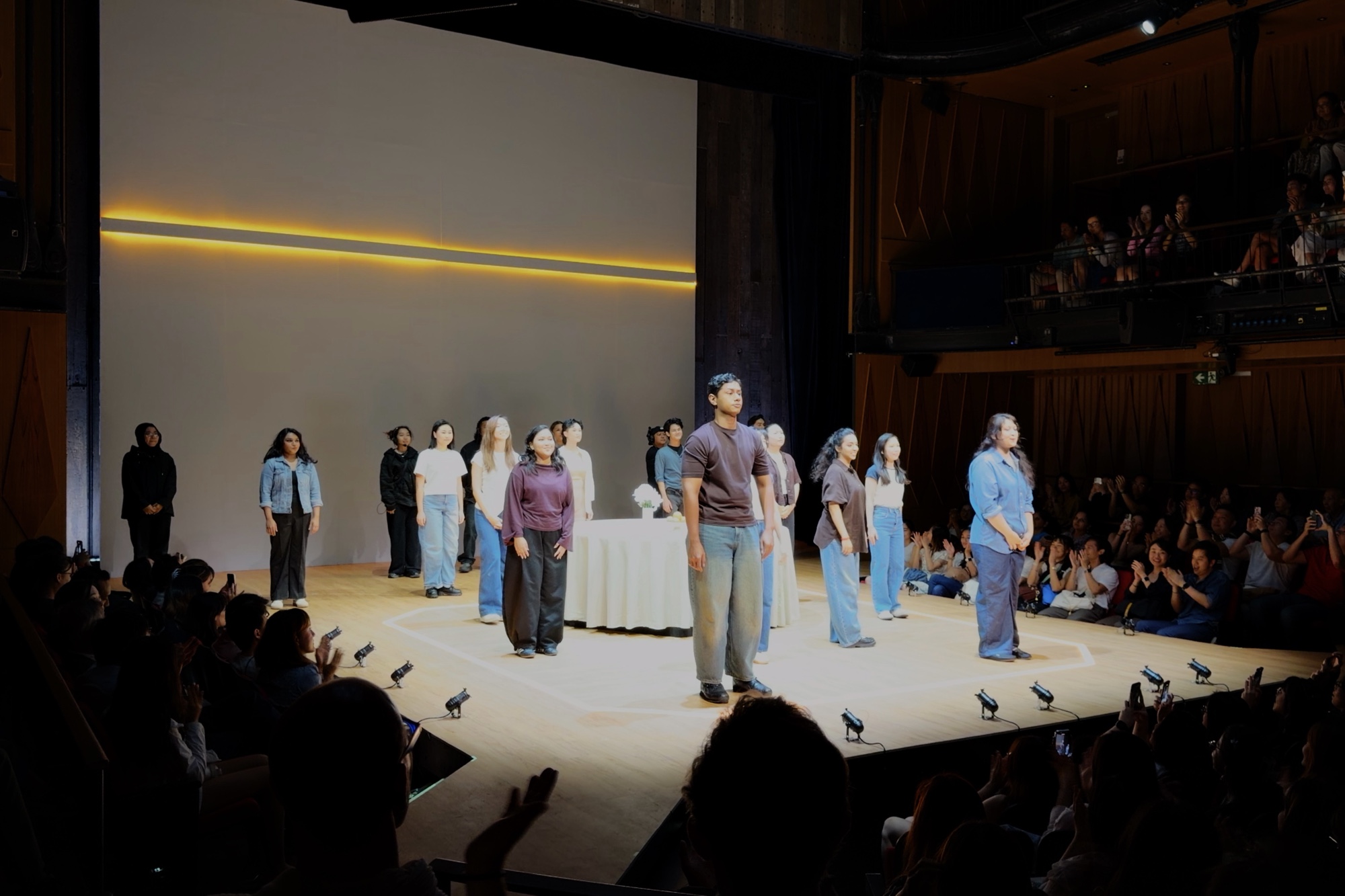
    • On Friday night, I met up with Jose (again) and Reg to attend a production of 8 short food-related plays at Wild Rice, chiefly to support our friend Munz who is one of the performers. It’s the culmination of a year-long theatrical incubator program she’s been in, and we came away very proud of her, impressed with all the actors, and some of the writers.
    • It became a bit of a slog near the end, but I’ve finally finished Donkey Kong Bananza on the Switch 2. For a game that’s partly about the power of music, I found the soundtrack pretty mediocre, and for a game that’s partly about a great singer, the vocals in the songs are sadly weak and buried in the mix. It’s not one I think I’ll ever revisit.
    • My book club is reading Speaker for the Dead, the second book in Orson Scott Card’s Ender series (as in, Ender’s Game). I’ve long heard that this book is like the Dune and Foundation sequels: not worth reading because they spin off into weird territory and lack the tight purpose that made the first books great. I’ve finished it and can say that while it does go in a very different direction, it’s undoubtedly worth reading. You don’t even need to remember very much from Ender’s Game, scanning a quick synopsis online will suffice. I’ve been very sleep deprived all week, and even then (!) easily stayed up wide awake past 2 AM in order to finish it.
    • I had to make this stupid House of the Dead image after I had the idea in the shower and couldn’t shake it. In the past, that would mean way too much time in Photoshop for not that great a payoff. Now it’s just a quick prompt to Nano Banana 2.
  • Week 19.26

    Week 19.26

    Brian was kind enough to think of me when he had an extra ticket to see Kraftwerk at their one-night-only local show on Friday. I was not even aware they were still alive, let alone touring. Turns out it’s just one co-founder left holding the project together, Ralf Hütter. After some drama with the tickets — for a moment it seemed like we might not get in — we were treated to an hour and a half of classic electronica.

    One effect of having a discography that spans five decades is that the music varies to an extreme degree. Their early material is rigid, with an almost classical approach to using synthesizers. Everything builds without resolving. This was electronic music before The Drop was invented. But Kraftwerk are necessarily more important than they are fun, which I mean as a compliment. Seeing where the structures and traditions originated helps you understand why what came after sounded so liberating. Their newer material has more swing, more layers and polyrhythms. I think Computer Love and the stuff from that era was my favorite of the night. As Brian said, it was a once-in-a-lifetime experience to see these OGs in action, and when I listened to Daft Punk’s Discovery on the way home I heard it differently.

    The week was also marked by a dentist appointment I’d been dreading for awhile. It was just to get a filling done, but I was told there’d be an injection and drilling involved. The visit was a rollercoaster: it started with an x-ray and the suggestion that the cavity might be in a difficult to reach location, and ended with a closer inspection (in which an injection and drilling were sadly involved) that found… no apparent cavity after all. The tooth has now been sealed with some material that will surely leak microplastics into my mouth, and we’ll monitor it over future x-rays to ensure there wasn’t really anything going on in there. Fingers crossed.

    In other sad news, Amazon Singapore has decided to sunset their Amazon Fresh grocery delivery service. It’s not my main source, but I appreciated their “free” (with Prime) next-day delivery and used it maybe every 4–6 weeks. Lately, they’ve been a primary source for sardines, pasta, and ice cream, if you wanted to know how balanced my diet is. The evil multinational corporation giveth and taketh away.

    I’ll still keep subscribing to Prime though, because it’s letting me do terribly wasteful things like see English language editions of Brutus magazine while in a Tokyo bookstore last week, decide that I don’t want to carry them around all day and get creased, and so order them online for delivery to my home a week later — for virtually the same price. High off the Snoopy Museum visit, I also ordered these two big, lovely Made-in-Japan mugs that will be my daily tea delivery vessels.

    Kim got me a copy of My Beautiful Dark Twisted Fantasy on vinyl for my birthday but it’s only just arrived. I have yet to play it, but the artifact is heavy, substantial, important. It’s no exaggeration to call it one of the best albums of all time, and I think it’s consistently raised my goosebumps for the last 15 years.

    Peishan and James also got me a couple of records, and one of them was a Record Store Day ‘preview’ of two tracks from some upcoming John Coltrane releases that were not on my radar. The Tiberi Tapes are a legendary collection of secretly recorded live sessions of Coltrane in the 1960s, made by saxophonist Frank Tiberi. The recordings were imperfect, but new digital technology has made them fit for release, and Impulse Records is set to unleash a bunch of them soon (it’s Coltrane’s centennial year).

    A few weeks ago, I released Orchids, Once. and several people independently told me that the procedurally generated music was good for having on in the background while they worked. That gave me the idea to make something designed to sit in a browser window on a second screen (or in the background) keeping you company throughout the work day with music and visuals.

    My first idea turned out to be too ambitious — way beyond my current abilities in terms of graphics and animation. I got a prototype working but it wasn’t worth going further. So I pivoted to a new idea yet again leveraging the orchid models I’d already made to get started quickly.

    Window Box is the result. It simulates looking out the window of an apartment, seeing a planter box of flowers set outside the windowsill. I’ve never actually seen one of these in real life; I think I first encountered them on Sesame Street as a kid and thought they were cool.

    You can currently choose to be in Singapore or Honolulu. There’s dynamic real-time weather and lighting pulled from the Open-Meteo API, to reflect current conditions in either location. There’s an incredibly beautiful (if I do say so myself) rain animation system, along with environmental sounds. I also came up with a neat blending technique to transform the photographic backgrounds to reflect time of day and weather.

    Instead of doing more procedurally generated music, I decided people would want real music, so there’s a radio tuner with a handful of curated stations. That includes Apple Music Radio just because I think more people should listen to their shows! There’s also a great Hawaiian station, KAPA-FM, which is a treat when you’re using the Honolulu location.

    And just for you readers of the regular blog, here’s a hidden feature: click the app title in the top left 20 times and it’ll unlock bird sounds to complete the scene.


    Media activity

    • We watched Season 2 of Beef on Netflix. I was primarily excited for the casting of Carey Mulligan, Cailee Spaeny, and Oscar Isaac, but wasn’t keen to see more of the same petty adversarial conflict from the first season. Well, be careful what you wish for — my chief complaint is that it has so little connection to the first season and the concept of beefing, that I think it should just have been a different show. This one raises the class warfare stakes tremendously, goes much darker, and then ends in a tonally unexpected way. Maybe the best Netflix Original in awhile.
    • I’ve been playing more Path of Mystery: A Brush with Death, the new Japanese murder mystery adventure game on Switch that I mentioned back in January. It’s an above average game for the genre, and I’d readily recommend it. The chapters are structured and presented like television episodes, which makes it perfect for playing in a couple of short sessions. Each one opens and ends with (skippable) animated credits, and there’s a short “next time on…” video afterwards to give you a preview of the following episode. I haven’t seen this done before, and it adds to the enjoyment of the story that is both interesting and occasionally funny.
    • Speaking of episodic anime, I got back into Frieren to try and finish the first season now that a second season is out. Previous episodes were pretty easy to space out across large spans of time, but the final arc with the First Mage exams is surprisingly addictive and bingable. I watched the last 11 episodes in 24 hours. I’m not one for fantasy settings but Frieren is brilliant — especially how it explores the perspective that comes with a longer lifespan and outliving all your friends.
  • Window Box

    Window Box

    Your browser window with a view.


    Open up at windowbox.sangsara.net

    Some apps demand your attention, but Window Box just sits in a corner, keeping you company.

    It simulates a flower planter box on a high-rise window sill, with a blurred city view behind it — the way your eyes naturally see when focusing on something close. The plants are procedurally generated, so no two are exactly alike. The weather is real. When it rains in Singapore, rain runs down the glass. When the sun sets in Honolulu, the light shifts warm and the city outside drops into shadow while the flowers stay lit from inside.

    It is designed to live in your browser across a long work day, maybe on a second screen — something to glance at between tasks, the way you might look out an actual window if you had a great view. Because most people like to work to a little music on the radio, a tuner with curated stations including Apple Music Radio and Monocle Radio is built in. For fuller immersion, turn up the audio generator for wind and rain sounds that match what’s happening on screen. It’s inadvertently a fantastic rainy mood machine.

    Two locations are available: Singapore and Honolulu. Each brings its own botanical palette and skyline. If you live in one of these cities, it functions as a virtual window. If you don’t, it’s a portal into a part of the world where it’s always warm.

    New! Added Tokyo, with winter effects and botanical changes (13/05/26)


    Related blog post: Week 19.26

  • Week 16.26

    Week 16.26

    We attended my aunt’s funeral on Tuesday. My complaints about the Mandai Crematorium mostly still stand, but they’ve at least moved the ugly signs printed on office paper away from the viewing windows so you can see the casket on its way to the… furnace?

    As I said last week, she was 93 and the family was mostly prepared for this. But there were tears, and some meaningful words were said, and despite my irritation with the undignified air of the Crematorium’s processes, I was struck at a mostly subconscious level with a sense of loss. Because a couple of days later I was thinking about orchids.

    Since I was a child, I’ve known orchids to be a part of my family’s story. My paternal grandparents were enthusiastic orchid breeders as well as co-founders of the Mandai Orchid Garden, where they helped raise the profile of Singapore’s orchids at home and abroad. I was surprised to learn while writing this that orchids are still an instrument of Singaporean diplomacy. Although I never had any interest in them myself, my late grandmother is defined in my memory by her fondness of them, and several other relatives (including the aunt who just passed) had hybrids named after them, created by my grandfather.

    As mentioned last week, I have been experimenting with generative art and it entered my mind that I could try to simulate orchids — creating infinitely unique flowers and plants in code. Now, this is nothing new. Humans have been trying to reproduce natural processes like botany with algorithms almost as long as we’ve had computers. But the more I thought about bringing millions of digital orchids to life, the more I thought about where they would go after. To create a beginning is to guarantee an end. The result is a digital artwork I’ve called Orchids, Once. and it’s a sort of meditation on impermanence.

    You can summon a new orchid into existence, but know that you’ll be the only one who ever sees it. When you leave or reload the page, it’ll be gone. Does the fact that there are potentially billions more make it less special? Or that it cost nothing? Or that it’s not technically “alive”? In any case, I hope people will cherish the brief amount of time they spend with each flower. I didn’t design a “retry” or “new orchid” button because the responsibility of ending a session should rest with the viewer.

    Orchids, Once. also stems from the generative music experience I gained while making DataDeck, and features an ambient soundtrack that’s created in real time as the orchids turn and sway in the digital wind, as unique and unrepeatable as the flowers themselves.

    I had to work with both Gemini and Claude to get this thing in shape. I didn’t save enough screenshots of the development process, but here are two from the prototyping phase that AI would have you believe were good enough to ship, and that look like orchids.

    Many hours of refinement later and I had models that could pass for plants, but had a nasty habit of growing backwards into themselves, or occasionally mutating into unholy jagged messes. I thought they were finally getting somewhere, but then we took a trip to a plant nursery nearby for a little field research. I spent some time looking at dozens of real orchids and taking pictures, and came home with lots of changes to make. I have learnt more about orchid anatomy this week than I had from decades of being in an orchid-breeding family.

    I also can’t help but reflect on the past few weeks of making things in code with AI — this only started on March 1, but it feels like months ago. Orchids, Once. is my 10th “app” (but the 9th released).

    The first few toyed with pulling data from online sources: Collagen pulled album art from iTunes, Urban Jungles pulled weather data from Open-Meteo, SkySpotter pulled air traffic data from OpenSky.

    Then the next few pulled data from online sources and tried to make something new out of them: Library Supercollider mashed up texts from Project Gutenberg, CommonVerse let you play with words from a dictionary, DataDeck generated music from public Singapore data feeds, and Crumbs let you build your own “maps” with location data.

    The most recent ones? They’ve been about generating their own assets out of nothing, without drawing on external data: the GenArt wallpaper/image maker I’m still working on, daily 3D mazes to escape from, and these orchids. These shifts weren’t conscious or planned, but it’s curious to look back and notice it.

    I’ll stop at 10 for a while, and maybe pick things up again after I get back from my holiday.


    One bit of housekeeping: I found the time to revisit my first app, Collagen, and make some improvements I’ve been wanting to see for a while. You can now use images in different aspect ratios, not just squares. And each image can be zoomed and cropped really easily with a new editing overlay. You no longer lose images if you change the grid size, text cells can be edited, and the UI has been given a mild glow up. I feel like I’ve learnt a lot since then, and this v2.0 brings things up to date.


    Media activity

    My book club finally finished reading Michael Crichton’s Sphere and I gave it three stars on Goodreads. In the end, my vague recollections from reading it as a teenager mostly held, although a slightly racist and sexist worldview permeates the text, and I’m sensitive to how much that would not fly today. I’m eager to see how the film adaptation handles that when we watch it together next week, as it was made a decade later.

    The second season of The Pitt ended after 15 episodes and damn I’m going to miss it. This is a show that alerts me to how ignorant I am of certain (most?) social dynamics and other signs people tend to give off.

    Speaking of the series in general so I hope this doesn’t spoil anything for anyone, but suicidal ideation is a recurring theme that I didn’t take very seriously — which is the whole point of the show’s handling of it.

    I go on Threads after every week’s episode to read people’s takes and interpretations, and I’m always learning something. This week some people got mad that men don’t take this suicide stuff seriously, or can’t see it at all and can’t talk to their friends, and I guess I’m a little guilty of that. I didn’t know the character on the show was thaaaat serious, and thought “eh, they’ll walk it off. It’s no big deal, everyone imagines it sometimes.” Apparently not.

    Unintentional death theme continuing: I watched a Japanese film on MUBI: Super Happy Forever (2024). It’s about a widower who goes back to the seaside town where he and his wife met on holiday. It jumps back and forth in time and does a few other things that should yield more emotional impact than it does. I wrote on Letterboxd: I think the ingredients of a proper 4-star movie, the kind you rewatch every five years, are here but not properly assembled. Nairu Yamamoto is so lovely, so magnetic in all of her scenes that she redeems her supremely annoying partner like the best of people do. Shame.

  • Orchids, Once.

    Orchids, Once.

    A meditation on impermanence.


    View the digital artwork at https://orchidsonce.xyz

    Almost every orchid you’ve ever seen was intentionally bred — a slow accumulation of crossings, selections, and genetic accidents that produced something new. This is the same process, compressed into a digital instant. Every visit generates a unique specimen: structure, colors, and proportions assembled from code the way a real orchid is assembled from DNA. No two will ever be alike.

    As it turns in the light, you’ll hear music shaped by the flower’s appearance — the soundtrack itself is a one-time miracle, as unique as the visuals on your screen. Its presence completes the meditation.

    When you close the window, the orchid dies. There is no save state, no gallery, no record of what you saw. Each plant lives only as long as you stay. If you weren’t there, it wouldn’t exist at all.

    There is always another one waiting to grow — but not that one. Never again that one.


    Disclaimer: I made Orchids, Once. with the help of Gemini and Claude LLMs, and take no responsibility for any allergies or other harms.

    Related blog post: Week 16.26

  • a maze, a maze, a maze…

    a maze, a maze, a maze…

    A new maze every day, for everyone.


    Play a maze, a maze, a maze… at amaze3.app

    Every day, a new maze appears. Everyone in the world gets the same one.

    There’s something cozy and comforting about knowing that right now, somewhere, another person is navigating the same corridors, hitting the same dead ends, and having the same moment of doubt about whether they just walked in a complete circle. Some days the maze is generous and you are out in twenty seconds. Other days it will make you work for it, and you will feel the exit before you see it.

    Each maze has a target time based on the shortest possible path. Finish close to it and you’ll earn an S-rank celebration and a shareable stats message. Go slower and you’ll land somewhere between a laudable A and a sad D — either way, there is always the group chat to prove you showed up and tried.

    Three modes: Standard comes with breadcrumbs showing where you have been; Hard Mode removes them and trusts you to hold the map entirely in your head; Chill Mode turns the timer off for people who just want to wander. Themes range from an outdoor garden maze to a retro game dungeon, so you can get lost in a way that feels right for you.

    A new one tomorrow. And the day after. A maze, a maze, a maze.


    Disclaimer: I made a maze, a maze, a maze… with the help of Google’s Gemini 3 Pro LLM. No responsibility taken for wrong turns or damaged self-esteem.

    Related blog post: Week 15.26

  • Week 15.26

    Week 15.26

    I’m looking through my camera roll to remember what happened this week and it’s mostly a bunch of “artworks” I’ve been making. Wait, let me step back: I’ve had an interest in procedurally generated graphics (GenArt) for awhile, and it peaked with the NFT boom of 2021–22, where I spent a relatively obscene amount of money minting and collecting artworks I really liked (not the monkeys). I’m mostly drawn to the idea of mathematically rigid routines producing organic beauty — the contrasts in that, and the unpredictability of what you get when you roll the RNG dice.

    So after my recent experiments in making apps, I wondered if I could get AI to write me code that would generate images based on concepts I described. The answer is, of course, yes! It’s important to note this isn’t prompting for images (like when you use Midjourney or DALL-E), it’s prompting for the math behind making images. And once you’ve created the rules by which it draws different art styles, you can create a nearly infinite number of unique artworks by dialing different variables up and down.

    One example is a “style” I made called Labyrinth, which produces actual, solvable mazes. Depending on the variables you adjust, you can make mazes ranging from tiny to massive, with just one solution, or many. If you asked an image generation AI to draw a maze, it would likely lack the coherence of a real maze, because of the way it operates — focusing on the superficial appearance and not the integrity of its paths. But an AI model can make the math to draw a maze.

    I start most of these by thinking up an artistic production approach, say “take sheets of colored cardboard or acrylic, and punch holes of varying shapes into them, then layer them on top of each other so the holes line up (or not), and randomly spray contrast-colored paint on some of them”. Then I describe the possible variations and variables I want to control to the AI, such as the density of shapes, the thickness of the borders, the ratio between angular and organic lines, and we iterate after seeing some of the results. Just think of all the methods and ideas you might want to play with, and how this lets any old idiot model them on their computers!

    The meta project is that I’ve made a modular app that handles all these different styles for me, whether they require a 2D canvas or WebGL. The app provides a common UI layer that all “styles” can plug into, which allows me to control them. Now that it’s done, I can just focus on experimenting and having fun making new artworks. I daresay a few of these are executed as well as any of those I spent money on.

    I’ll probably release it as a wallpaper generator once I have enough styles built in, if anyone’s interested. But mostly I love having this as a background project that I can dip into, on and off. It allows me to take on other app ideas as momentary “side quests”.

    While making Labyrinth, I showed a maze to Cong, who said “You should do a puzzle maker”. To which I said, “Nah.” And then a minute later… “Although, a daily maze game. Hmm.” It made sense that I could save time by taking CommonVerse’s daily random generation mechanic and combining it with Labyrinth’s logic to make a daily maze challenge. But would it even be fun to trace a 2D maze with your finger and try to solve it? No… so what if it was a 3D maze you had to escape?

    The first prototype took a couple of hours, and I’ve been polishing it for the last few days. I think it’s coming along nicely. I’ll put it out soon, once I balance the difficulty and get more feedback from testing.

    The development of a maze, a maze, a maze… was hampered by a rare bar crawl with Howard and Jussi on Thursday night that gave me a massive hangover lasting into Friday afternoon. When I got home, I was too plastered to care that my vinyl copy of J Dilla’s Donuts had arrived from Amazon US protected by nothing more than a flimsy paper envelope. By the clear light of day I was amazed that they would even do such a thing. The discs are intact, but the sleeve has a bent corner. If I’d ordered from Amazon Japan, I would bet a major internal organ that it would come wrapped in four layers of stiff cardboard, bubble wrap, and a handwritten apology for their carelessness.

    Did I mention we’re going to Japan again? It’ll be a short vacation, in a couple of weeks’ time. Not much on the agenda, just checking in on the state of curry rice and egg sandwiches. Maybe see some nice art. Take some photos.

    Which brings me to the latest betas of Halide MkIII, which I’m very much looking forward to using on the trip. They’ve been progressing the app nicely, and it might be enabling the Holy Grail of iPhone photography workflows for me. Ironically it involves using Halide not as a camera app, but just as a photo editor. You can shoot compact (lossy, JPEG-XL compressed) ProRAW photos up to 48mp with the default camera app, then edit them in Halide to have the same look as their Process Zero photos! What this means: you get all the benefits of computational photography at time of capture, including noise reduction and night mode, but you’re also free to dial it back and get natural, “real camera” photos in post if the scene calls for it.

    As much as I like these side quests, I think making my own photo editor would be biting off entirely too much to chew, so I’m still rooting for these guys to crack it.

    While writing this post, I got the news that an elderly aunt passed away at the age of 93. She had been in reduced health since the Covid years, but by all accounts she went very peacefully and I guess you can’t ask for much more than that after a long life. The extended family’s Chinese New Year routines fell apart in recent years after she pulled back from organizing them, so it was fitting that some of us got to reconnect at her wake on Sunday evening.

    See you next week.