Tag: Japan

  • Week 18.26

    Week 18.26

    We had a pretty good week in Tokyo and are now back with painful foot and leg muscles that haven’t been worked this hard in a while. There was one notable moment of weakness where a decision was made to take a taxi back to Ginza from Meguro, rather than deal with the evening crush in the train system. Surprisingly, it was only about S$30 — one more sign of prices equalizing between Singapore and Japan. You may have seen the same reports I have on the rising cost of living there, and how convenience store onigiri now starts around the ¥200 mark, nearly twice what it was a few years ago. But while the onigiri in Japan may soon cost nearly as much as the versions we get in Singapore 7-Elevens, the two are still incomparable in terms of quality.

    No surprises here, but alcohol continues to be significantly more affordable than in Singapore. I posted a picture on my Instagram of Buffalo Trace bourbon (750ml) going for about S$25 in Meidi-Ya, a nice supermarket. That’s about a third of the price you’ll find in Singapore, if you can even find Buffalo Trace at retail. I’m beginning to form an alcohol and lifestyle arbitrage theory that says if one earns in dollars AND drinks enough, it may make financial sense to live half of each year in Japan.

    Maybe one could sell an apartment in Singapore and fund two small apartments, one in Tokyo and the other in Thailand or Australia (depending on said value of initial apartment). Australia’s reverse seasons might make it possible to live in a perpetual fall/winter state, with an occasional summer when you get too depressed.

    Or when your skin gets too dry. I’m no good at moisturizing, so after just a week I’m beginning to feel my skin noticeably drier. However I’d take lotion any day over the stifling >80% humidity and gloominess that greeted us upon return. Apparently it rained most of the week we were gone; the kind of tropical heat that makes you feel sweaty in every crevice. “Why do we live here again?”, I asked Kim on the way home. Oh right, zero capital gains tax and responsible governance.

    It’s also been a week since I touched my MacBook so I may have broken the app development habit. I just have one tiny improvement I need to make to Crumbs now that I’ve used it to log my locations on this trip…


    Some things I remember doing:

    • I met Michael for lunch on Monday, and like a good friend he brought me to a Sapporo soup curry joint in Yotsuya. There’s always the risk of splashing and curry stains with soup curry, but I think he exaggerated the mess he made because I’ve seen people come into the office with far worse. I think we ended up talking for two hours, and we didn’t even get around to John Ternus and rumors about upcoming products.
    • Kim came out to meet me later and since we were already in the area, we decided to walk down to see the iconic steps featured in Your Name (2016). I cannot believe it’s been 10 years, by the way.
    • At the National Film Archive of Japan, which I might be visiting for the third time, we saw a small showing of Japanese film poster art. It was excellent, and just ¥250 including the permanent exhibition. I instantly recognized two of the earlier posters: Philip Glass’s score for Koyaanisqatsi (1984) was the inspiration for some of the music in my DataDeck project, and I just watched Cleo from 5 to 7 (1962) last week on MUBI.
    • We bought advance tickets to the Ron Mueck show at Mori Art Museum, his first showing in Japan in over 15 years iirc, which was a refreshingly tight collection of 11 sculptures. Some of his work is massive, like In Bed, and the level of detail is so astounding you can easily spend over an hour just looking at them.
    • I say refreshingly because there’s a tendency for exhibitions to pack so much in that your mind just goes numb. That’s what tends to happen when I visit the National Art Center in Roppongi. Still, I love the idea of a building with massive exhibition halls that are regularly rented out by “amateur” art and photography groups showing off their members’ works. I think having such a venue fertilizes the hobbyist landscape and reinforces the value of art. Singapore would do well to have more such places and encourage a forward-looking, arts-attuned society instead of, say, building yet another temple to our origin story.
    • The Tokyo Photographic Art Museum in Meguro is still one of the best. I’ve missed it the past few times we were in town, but there’s nothing like looking at great photos after too many paintings. The free exhibits at Fujifilm Square in Roppongi are also consistently excellent, even as their product lineup becomes more ossified and oversold.
    • We also visited the Snoopy Museum Tokyo in Machida which I will freely admit was a highlight for me. It’s the only official one outside of the Charles M. Schulz Museum in Santa Rosa, CA, and a very well-designed facility — exactly the right size, with something for all ages. When I told Michael we were going, he remarked that it was interesting how relevant and popular Peanuts remains, compared to the likes of Garfield (no shade). I said it was because of how much storytelling latitude it has built in, in no small part thanks to Snoopy’s flights of fancy. Whereas Garfield is reducible to a few things, like a love of lasagna and a hatred of Mondays. To which he observed how it’s weird Garfield hates Mondays at all, because he’s a cat without a job. He just says he hates them to be relatable!
    • Did you know that it was only after 20 years of the Peanuts comic strip that Snoopy stopped walking on all fours like a normal dog and started becoming the odd character he is? I learnt that off a little fact card at the museum, where Schulz is quoted as saying “It was one of the best things I ever did.”
    • I’m more of a cold shower and cold anything kinda guy, and my heat tolerance is very poor. Like some of the hotels we’ve stayed at before, the one we booked this time had a sento, a hot public bath, and after being urged to by Kim I thought I might as well try it. It was fine. Going by how it appears in film, I thought maybe people stayed in the water for quite awhile, but I was ready to get out after 10 minutes, and it seemed the same for other people. Funnily, one guy said goodbye to his wife as she went to the women’s side, and then spent 15 minutes washing himself in the stalls and never even got into the water. Maybe he was another anti-hot tub guy who just got tired of saying no and pretended to do it. Like those salarymen who get fired but don’t tell their families and sit in parks all day with their briefcases.
    • Speaking of the hotel, I’d initially booked us into the same hotel I stayed at back in 2012 when I went with a couple of colleagues from Sweden and the US. The day before our trip, we looked at recent photos online and decided it was probably not sufficiently well maintained, and booked a nicer place nearby. Free cancellations on Hotels.com are a fantastic feature. The new hotel was great, and although our corner room was billed as having 30 sqm of space — an almost suspicious amount for central Tokyo — a lot of it was used for a hallway area. Nevertheless, it was useful for keeping our suitcases out of the way and for the drying of umbrellas. I would definitely stay there again.
    • We had a nice walk through Yoyogi park and Kim used one of the famous transparent toilets. Despite having already conquered public nudity with the sento, I did not experience them myself (there was someone waiting and I didn’t need to go).
    • We were on our way to a coffee shop in Ginza one morning when we spied a line of people waiting to get into a tendon restaurant when it was due to open at 11am. Following the Singaporean/Lemming instinct of letting social signals decide what to eat, we abandoned our plan and joined the crowd. It was very good, foreigner friendly, and great value. ¥1,600 for a large bowl with conger eel, two shrimp, a squid/clam mix, half-cooked egg, shishito pepper, and seaweed.
    • Will told me about the Creative Museum Tokyo in Kyobashi, so we stopped by for the Sorayama retrospective that’s currently on. You may know him through his work designing the first Sony AIBO, and the cover art for Aerosmith’s Just Push Play. His work isn’t for everyone, but I loved how this guy just loved drawing naked female robots, did it all his life to the point of mastery, and now brands like Dior are just dying to collaborate with him. No selling out on his part, the dude just loves his gynoids.
    • At the above venue, I noticed the same phenomenon I saw many times over the week: a lot of people employed to do mindless, redundant work. Like standing at an obvious door to point you in a very obvious direction, or posted near a small bump telling you to mind your step. I hope that this is just what extra labor is deployed to do during downtimes, and that they actually have more to do most of the time, but I’m skeptical. Still, AI can’t take your job if your job wasn’t necessary in the first place!
    • Some time was spent revisiting shops I tend to drop by every few years, like the Nintendo Store in Shibuya, or Village Vanguard in Shimokitazawa, or Tsutaya books at Daikanyama T-Site. The latter two are always fun because there’s so much stuff I would buy if I could teleport them home immediately. If I ever buy that Japanese apartment someday, I fear it might be filled to the edges with magazines and useless tchotchkes.
  • Week 17.26

    Week 17.26

    By the time this goes live, I should be in Tokyo. We picked this week to go because Kim thought that there would be a lull at work. That did not turn out to be true, nor is it particularly good timing by any measure: it will be Japan’s Golden Week holidays, a notoriously busy and crowded domestic tourism season, plus there was just a massive 7.7 magnitude earthquake off the northeast coast this week. I believe the Japanglish phrase would be Ohwellganai.

    24 hours until take off and I still haven’t packed a single item. That’s either a sign I’m becoming a seasoned traveler (not likely) or that I’m taking this trip more casually than usual. Maybe it’s the fact that the weather is pretty mild and won’t require a different wardrobe than what I usually wear. I hope Tokyo is ready for my basic-ass black t-shirt and baggy jeans look. Compared to last year’s month-long stay, stopping by for a week this time feels really breezy.

    I’ll often obsess over what camera to bring on a trip, but this time the decision is much easier. For one thing my top pick, the Ricoh GR III, has decided to completely lock up, physically. All its critical buttons are stuck and gummed up either with dust or crystallized substances — not for the first time, but worse than ever. This doesn’t happen to any other line of camera I’ve owned. The GRs are brilliant little things but their build quality and reliability has sadly been a weak spot.

    Secondly, the cameras in the iPhone 17 series are the best they’ve been in years. I’m okay just shooting with the native app in HEIC and editing photos with its “next-generation Photographic Styles”. Or I could shoot ProRAW and edit them in Halide Mk3 too, but it’s mostly extra work and not essential like it was a couple of years ago when Apple’s Smart HDR lost the plot.

    This week was also a birthday week so there was altogether too much eating and that’s never a great idea before a holiday where you’re already destined to put on a few kilos. This week has involved too many curry puffs, pizzas, roast lamb, pastas, and patés. I didn’t buy myself anything more than a 10th anniversary copy of To Pimp A Butterfly on vinyl. I decided that since I’m managing to get a lot done with my M1 MacBook Air, upgrading to an M5 isn’t something that would really excite me at all. Making the most of this five-year-old machine is more satisfying, so I could conceivably wait for the M6 model.

    This week I once again repurposed existing parts to make more new things. Last week’s work on the orchids was too intricate to use only once (pun unintended). So I ported the math to my procedural artwork generator to create a new style called Orchids Forever, where I can stage them with different lighting conditions and make wallpapers.

    Because Cien said she enjoyed having the music from Orchids, Once. in the background as she worked, I started to think about making a thing that was designed to sit in the background of a workday. The first idea that came to mind was sadly too complex for me to pull off (for now), so I started on another that places a few orchids in a flower box outside a window, looking out over the Singapore skyline. The idea is that it lets people anywhere pretend they’re in Singapore, looking out over a scene that changes with the time of day and actual weather.

    The day after I made it, my ex-colleague Tobi over in Germany said he misses Singapore, so I sent this over to help. Rather than reuse the procedurally generated music from Orchids, Once., which would be completely stripping that work for parts, I integrated a free Apple Music Radio player, which makes me happy because more people should hear their live stations.

    While reflecting on all this, I’ve started to think there are three camps of people making things with AI. The first, like me, wants to design experiences and outsource the coding. The second wants to code and outsource the design. The third just wants to see things made and don’t care much about either.

    This is an enthusiast market, and people are even buying curated Markdown prompt files that promise to enforce design and/or development “best practices,” trying to compensate for not knowing what good looks like. But I’m still skeptical that the general public will want to generate their own custom apps. Most people might create a widget or two to solve a personal problem, but that’s it.

    The real unlock for wider consumer vibe coding will be raising the quality of AI-generated UX design. Nobody scrutinizes generated code, but bad design can be felt instantly. Better design defaults might increase the numbers in camps two and three: the people who just want a thing made and don’t particularly have an idea how it should look or work, but would still notice if it was ugly or confusing.

    Claude Design, released this week, might be a trojan horse for exactly this. Although seemingly positioned as the anti-Claude Code, with a focus on front-end design and visual prototyping rather than coding (making it a tool for the first camp), it’s still going to make design more accessible for all makers, even the code-oriented ones. It’s worth noting Figma’s stock fell 7% after the announcement.

    The secondary effect — already playing out in layoffs I keep hearing about — is a devaluation of designers for common production tasks. This drum is being banged by every dimwit on LinkedIn so you know it’s well underway. Most designers will have needed to start burrowing deeper into their organizations yesterday, into strategy and human-centered decision making roles. Service and business designers should have had a head start, but this is a game of musical chairs and someone’s taking out half the chairs.


    • I watched the Sphere (1998) movie with my book club and while I expected it to be possibly racist or sexist, I didn’t think it would be as offensive as it was. It’s godawful. I didn’t hesitate to give it 1 star on Letterboxd. There must be an interesting story behind how Barry Levinson came to direct an undersea horror film based on a sci-fi hit novel by Michael Crichton, starring Dustin Hoffman and Sharon Stone among others, and have it come out so unwatchable and incoherent. The effects, both practical and computer generated, are laughable. And this was just a year before The Matrix.
    • We finished Company Retreat, the new hidden camera show from the makers of Jury Duty. The premise is that a normal person is chosen to temp at a company that’s going on their annual team-building retreat, except everyone else is an actor. They put him through absurd situations that test his character, and like in the first show, the mark turns out to be an unbelievably good human being. The scale of the con is much larger this time, and the behind the scenes content is as interesting as the main story (if not more so). I think they went just a little too far with some of the characters this time, to the point where you think he must have known this wasn’t normal.
    • I’m currently reading another goddamned Japanese cozy novel, except this one seems to be worth the paper it’s printed on. Letters from the Ginza Shihodo Stationery Shop seemed like an appropriate choice given that district is where we’ll be staying. Like some of these other trash tomes, it’s a bunch of intersecting short stories centered around a titular shop. This time, the stories are actually kinda interesting and have emotional cores that work — stories of everyday people trying to write letters to resolve personal issues. Rob asked if it was appropriate for his 12-year-old (that’s about the reading grade for these books), and I said yes, as long as you can explain the concept of a hostess club to him.
    • I’ve also begun reading Oliver Burkeman’s Four Thousand Weeks, a book that appeared on my radar awhile back but whose apparent premise — life is only 4,000 weeks long, so what are you going to do about it? — scared me off. Then Ted mentioned it when we met up a couple of weeks ago and thought that I’d find its concepts familiar, and in line with how I’m already living. I took that as a tremendous compliment and permission to get started. I read the intro and first chapter on the plane, and they deal with the idea that you should embrace that life has time limits, and accept you’ll never be able to do everything. Not only is that okay, it’s how all people lived before our clock-watching, productivity-obsessed era. I couldn’t help but wonder if I was taking away the wrong conclusions, though, because when I think about how short life is, I think of how Whose Line Is It Anyway? is played. You may recall it’s the show “where everything is made up and the points don’t matter”.
    • It’s Sunday night in Tokyo and I’m in bed rewatching Lost In Translation (2003) on local TV.
  • Week 15.26

    Week 15.26

    I’m looking through my camera roll to remember what happened this week and it’s mostly a bunch of “artworks” I’ve been making. Wait, let me step back: I’ve had an interest in procedurally generated graphics (GenArt) for awhile, and it peaked with the NFT boom of 2021–22, where I spent a relatively obscene amount of money minting and collecting artworks I really liked (not the monkeys). I’m mostly drawn to the idea of mathematically rigid routines producing organic beauty — the contrasts in that, and the unpredictability of what you get when you roll the RNG dice.

    So after my recent experiments in making apps, I wondered if I could get AI to write me code that would generate images based on concepts I described. The answer is, of course, yes! It’s important to note this isn’t prompting for images (like when you use Midjourney or DALL-E), it’s prompting for the math behind making images. And once you’ve created the rules by which it draws different art styles, you can create a nearly infinite number of unique artworks by dialing different variables up and down.

    One example is a “style” I made called Labyrinth, which produces actual, solvable mazes. Depending on the variables you adjust, you can make mazes ranging from tiny to massive, with just one solution, or many. If you asked an image generation AI to draw a maze, it would likely lack the coherence of a real maze, because of the way it operates — focusing on the superficial appearance and not the integrity of its paths. But an AI model can make the math to draw a maze.

    I start most of these by thinking up an artistic production approach, say “take sheets of colored cardboard or acrylic, and punch holes of varying shapes into them, then layer them on top of each other so the holes line up (or not), and randomly spray contrast-colored paint on some of them”. Then I describe the possible variations and variables I want to control to the AI, such as the density of shapes, the thickness of the borders, the ratio between angular and organic lines, and we iterate after seeing some of the results. Just think of all the methods and ideas you might want to play with, and how this lets any old idiot model them on their computers!

    The meta project is that I’ve made a modular app that handles all these different styles for me, whether they require a 2D canvas or WebGL. The app provides a common UI layer that all “styles” can plug into, which allows me to control them. Now that it’s done, I can just focus on experimenting and having fun making new artworks. I daresay a few of these are executed as well as any of those I spent money on.

    I’ll probably release it as a wallpaper generator once I have enough styles built in, if anyone’s interested. But mostly I love having this as a background project that I can dip into, on and off. It allows me to take on other app ideas as momentary “side quests”.

    While making Labyrinth, I showed a maze to Cong, who said “You should do a puzzle maker”. To which I said, “Nah.” And then a minute later… “Although, a daily maze game. Hmm.” It made sense that I could save time by taking CommonVerse’s daily random generation mechanic and combining it with Labyrinth’s logic to make a daily maze challenge. But would it even be fun to trace a 2D maze with your finger and try to solve it? No… so what if it was a 3D maze you had to escape?

    The first prototype took a couple of hours, and I’ve been polishing it for the last few days. I think it’s coming along nicely. I’ll put it out soon, once I balance the difficulty and get more feedback from testing.

    The development of a maze, a maze, a maze… was hampered by a rare bar crawl with Howard and Jussi on Thursday night that gave me a massive hangover lasting into Friday afternoon. When I got home, I was too plastered to care that my vinyl copy of J Dilla’s Donuts had arrived from Amazon US protected by nothing more than a flimsy paper envelope. By the clear light of day I was amazed that they would even do such a thing. The discs are intact, but the sleeve has a bent corner. If I’d ordered from Amazon Japan, I would bet a major internal organ that it would come wrapped in four layers of stiff cardboard, bubble wrap, and a handwritten apology for their carelessness.

    Did I mention we’re going to Japan again? It’ll be a short vacation, in a couple of weeks’ time. Not much on the agenda, just checking in on the state of curry rice and egg sandwiches. Maybe see some nice art. Take some photos.

    Which brings me to the latest betas of Halide MkIII, which I’m very much looking forward to using on the trip. They’ve been progressing the app nicely, and it might be enabling the Holy Grail of iPhone photography workflows for me. Ironically it involves using Halide not as a camera app, but just as a photo editor. You can shoot compact (lossy, JPEG-XL compressed) ProRAW photos up to 48mp with the default camera app, then edit them in Halide to have the same look as their Process Zero photos! What this means: you get all the benefits of computational photography at time of capture, including noise reduction and night mode, but you’re also free to dial it back and get natural, “real camera” photos in post if the scene calls for it.

    As much as I like these side quests, I think making my own photo editor would be biting off entirely too much to chew, so I’m still rooting for these guys to crack it.

    While writing this post, I got the news that an elderly aunt passed away at the age of 93. She had been in reduced health since the Covid years, but by all accounts she went very peacefully and I guess you can’t ask for much more than that after a long life. The extended family’s Chinese New Year routines fell apart in recent years after she pulled back from organizing them, so it was fitting that some of us got to reconnect at her wake on Sunday evening.

    See you next week.

  • Week 7.26

    Week 7.26

    One of my irrational fears that hasn’t gone away with growing older is that of going to the dentist. I’ve put it off over and over, and was pretty sure I’d make it last year but didn’t. I’ve done my best to handle things at home, even flossing daily which they always say you should do but I’m convinced no one actually does. This week I finally made an appointment to go, and it wasn’t as bad as I feared. They did find a cavity that needs patching up, but the appointment for that is only in a couple of months.

    One thing that felt off was a recommendation that I get a certain procedure done — not only because I’d like to avoid pain wherever possible, but because it was prescribed before they’d even looked in my mouth. I’d only just said that it was my first visit in a while, and they said ‘okay you should get this done’.

    Because it’s 2026, I uploaded my x-rays to Gemini 3 Pro for a second opinion. It analyzed the scans confidently (but of course) and told me the same things, but in even greater detail. It did not think the procedure was necessary, and gave me clarifying questions to ask the dentist next time. When it comes to a nervous person like me, it provided a better experience than a human dentist could because it was available to answer my many more follow-up questions, at all hours. This longer “consultation” made me feel better, although I’m well aware that taking medical advice from a machine that just says things isn’t the smartest move. But I know people do and will because it’s really easy, and so once again I’m saying this is really dangerous territory.

    Why am I using Gemini so much, and what happened to Claude? Google decided to play dirty, I guess. They’re offering three months of their Pro AI plan (essentially Google One with 2TB of storage + access to Gemini Pro, Nano Banana Pro, and Veo) at a 90% discount. That’s about S$2.80 a month. These models are all so incredibly close in raw performance, that for someone like me who’s not using them for coding, the main differences are down to tone, character, and perhaps ethical alignment. I’m already sold on Claude for text-based work, but I thought I should spend some time getting a feel for how Gemini differs. Especially since it’s going to be at the heart of Apple’s AI features at some point this year.


    Friend and former colleague Rob is back in town for Chinese New Year. I thought I’d last seen him maybe two or three years ago, but it’s actually somehow been closer to four. The quickening pace of time’s slipping through the fingers at this age is alarming. The last time he was around, I’d just printed off some stickers of my Misery Men drawings and given him one. I had just gone back to work after my brief sabbatical. We were still wearing masks indoors (as seen in the linked post’s featured photo). Is there a German word for how relationships can pause and park themselves outside of regular time, so that four years feels like so much less?

    A few of us met up for craft beers and Thai food on Sunday, with the reminiscing and catching up going past midnight. Here’s a privacy-preserving photo-turned-courtroom sketch made with Gemini’s help.


    Media activity

    • I finished watching all 48 episodes of The Apothecary Diaries anime series on Netflix. It’s about an unusually educated girl, raised in a red light district, who gets kidnapped and sold to the imperial palace as an indentured maid where she gets to flex her skill with poisons and medicines. It’s set in a fictional country resembling China in the Tang Dynasty. Nothing about this should appeal to me, but it was one of the more enjoyable low-stakes shows I’ve seen recently.
    • I still haven’t finished reading Sleeping Dogs. But I did finish playing The Hokkaido Serial Murder Case a few weeks ago but forgot to say so. As a faithful remake of a retro game, it can’t be blamed for some of the dated gameplay. The art could definitely be better though — it would be a fine game for $20, but unfortunately is priced at $44.99.
    • It’s been a year since we were in Tokyo and I bought the Japanese supernatural murder mystery game Paranormasight, largely because it was set in the Ryogoku/Sumida district where our apartment was. In last week’s Nintendo Direct, a sequel was announced and so I decided it was finally time to get started on the original. It’s turned out to be quite good, with a dynamic visual presentation that goes beyond the usual VN style of talking figures in front of different backgrounds. The gameplay is constantly breaking the fourth wall as well: one challenge where you die after hearing a cursed sound is solved by going into settings and turning the volume down.
    • While feeling stressed out about the dentist, I played Jusant on the PS5. It’s a beautiful, dialogue-free game where you slowly climb a massive mountain and put together what happened to the people who used to live on it. It was fairly quick to finish and now I’m curious about Cairn, another game about scaling a mountain, albeit more realistic about the physical difficulties involved. Jusant’s nameless hero is practically superhuman and his arms are way too skinny for the insane amount of climbing he has to do.
  • Week 3.26

    Week 3.26

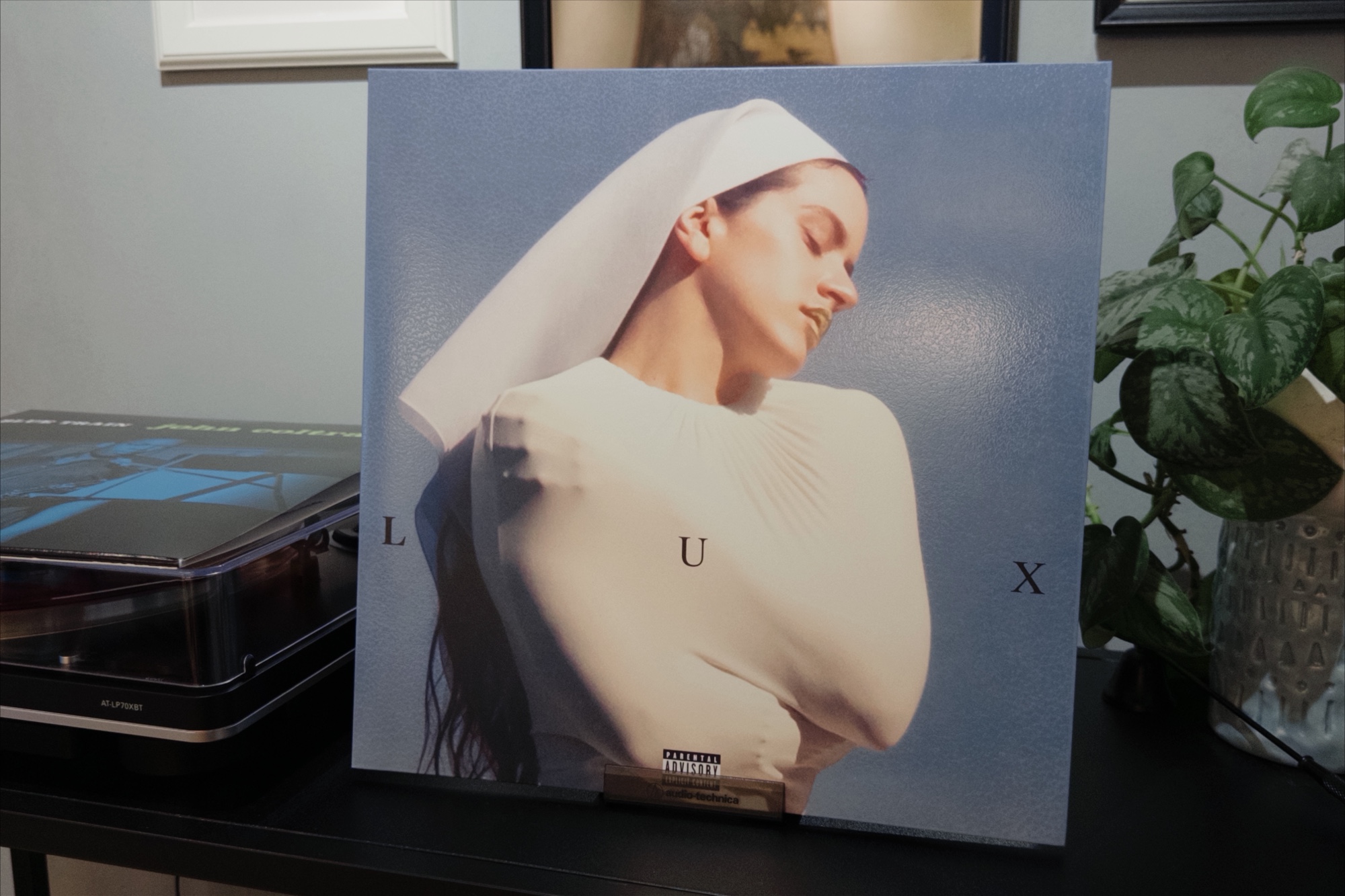
    This week’s vinyl purchase was the album that restarted the whole idea of buying physical music again for me at the end of last year: Rosalía’s LUX. The digital/streaming version is intentionally incomplete, with 15 tracks instead of 18. Purportedly because she wanted to highlight the importance of ownership. The first thing I did after hearing that fact was to hunt down an MP3 rip of the CD and upload it to my Apple Music library. But it never felt right, and so I wanted to buy the CD, which led me to look at CD players, and then… you know the story. That’s it, no more. For real this time.


    You know which company or live service does the best Wrapped/Replay/Year-in-review thing? It’s Nintendo, because they actually wait for the entire year to be over before sending theirs out. I think Apple Music gives out the Artist of the Year award in November. As a borderline OCD pedant, that shit doesn’t sit right with me.

    So my Nintendo 2025 report says I played just 172 hours, spread across 43 games. I believe the first number but the second seems high. Maybe it erroneously counted some games I reinstalled after getting my Switch 2. In any case, that’s an average of half an hour per day, which is kind of a sweet spot: not high enough to be called a good-for-nothing bum, and not low enough that I’d question my life choices. My top game was The Legend of Zelda: Tears of the Kingdom, which I likely won’t return to and finish for another couple of years, if the previous game was anything to go by.

    I started on a new game this week and discovered that an old-school adventure game was just what I’ve been needing. The kind where you don’t have to physically walk a character around, but instead choose options from menus to prod at scenes and investigate murders. This is its actual full name, btw: The Hokkaido Serial Murder Case: The Okhotsk Disappearance ~Memories in Ice, Tearful Figurine~.

    If you remember the Famicom Detective Club games, this is similar in that it’s a remake of a classic NES-era Japanese adventure game, with updated graphics and music — albeit nowhere as lavish as the treatment that Nintendo and MAGES gave to their versions. Where the Hokkaido murder game justifies its asking price is in its scope. It’s actually two games in one; the original story set in the 80s, and a new sequel set in 2024 where your character returns to wrap up loose ends.

    Ah that reminds me, when I was in Japan around this time last year, I saw a similar Switch game for sale that I didn’t recognize. I took a photo of the cover to follow up on later, and found out it’s my kind of murder mystery but hadn’t been translated for global release.

    Then a few months ago, I remembered to look it up again. This is where that new feature in iOS that lets you tap and select text in a photo comes in super useful, especially when it’s a language you can’t read. I discovered that it’s been given a new title Path of Mystery (originally Mystery Walk in Japan) and a global release date: Feb 26, 2026.

    This one has a unique feature that I’m excited for: while the story unfolds in both the past and present (similar to the Hokkaido game I’m playing), there are two separate UIs and gameplay styles. The past has retro pixel art graphics, menu-based commands, and outmoded gameplay conventions; while the present portion looks like a new game with modern controls.

    Let’s round up all this game talk by making a list of the other titles I bought on sale over this holiday season. I fear there were quite a few, but I won’t know how many until I do this, and maybe this will keep me honest.

    Okay, maybe I do have a problem! It’s going to take me all year to get through these alone — this is who you’re asking to get a regular job, by the way.


    I read Network Effect, Book #5 in the Murderbot series for our book club, and I think this will be the last one I waste my time on. The writing is artless, soulless, and mainly serves to perfunctorily describe actions that the characters take. Surely reading this blog already gives you your recommended weekly allowance of that. Making matters worse is this installment being ‘normal novel length’ where the rest up to this point have been relatively short little stories. It’s definitely overstayed its thinly premised welcome.

    One of the fun things my book club does is watch film adaptations whenever a book we’ve read has one, and they recently read Ready Player One. I already read the book once when it came out, so I skipped this one, but joined for the movie watch party. Most of us rented the 3D version for Vision Pro from iTunes/Apple TV, which was worth the six bucks.

    The 3D presentation is spectacular, helped a lot by the fact that no one blocks action sequences like Steven Spielberg. Even when almost everything is CGI with billions of particle effects flying on screen, he’s an absolute master at keeping the eye focused on what matters. But time and growing up in general has not been kind to Ernest Cline’s writing.

    The dialogue was so cringe, the heroes have zero aura, and honestly I’d forgotten the story and was convinced the genius game developer god Halliday was a bad guy because of how toxically narcissistic he was. I mean, he built a library of his own life story for “scholars” searching for clues to win the in-game prize he left behind. And in one scene, he actually says the words “I’m a dreamer” to the co-founder who wants him to take more responsibility for the online world he created. If I’ve learnt anything in this life, it’s not to trust any douchebag who calls themselves a ‘dreamer’ or ‘visionary’, especially if they’re involved with a metaverse project.

  • Week 1.26

    Week 1.26

    There was no New Year’s Eve hangover and if we’re being honest, there hasn’t been one for many years. We read in bed until midnight with the usual Mediacorp countdown broadcast left on in the background — “Are you readyyyyy Singaporeeeee?” and many more examples of amateur MC energy.

    Last week I should have mentioned that this new buying and enjoying of analog recordings is really related to themes I’ve been touching on over the past year. How imperfect translations (and in this case, physically vulnerable reproductions of music) can carry more emotional value, along with how friction — the thing we spend so much time trying to iron out of our products and services — actually adds tactility and affordances that the human mind kinda likes. When everything works perfectly, when the surfaces are too seamless, the mind only gets bored and seeks trouble.

    Me getting into music ownership again is definitely a form of seeking trouble. I posted a couple of times on Instagram about this new hobby and Stacy pointed me to a record sale going on this weekend in the basement of The Adelphi, an old shopping center mostly known for its hi-fi focus. I stopped by and bought three LPs that already bend the rules I set out for myself last week.

    One of them was Beth Gibbons and Rustin Man’s 2002 masterpiece, Out of Season. I gasped out loud when I came across it in the crate, and immediately pulled it out so no one else could buy it first. That thrill, and the experience of browsing the mall’s other record shops afterwards, was a nostalgic return to the days I would spend hours in CD stores after school. Yesterday was probably the first time in 20 years that I’d set foot in a local music store — after the iPod and streaming quality got good enough, I simply stopped. I’ve definitely missed it, even though it’s logically ridiculous to be buying when I could just tap ‘Add to Library’ in Apple Music instead.

    In one of those stores, I ended up having a long and wide-ranging conversation with the shopkeeper about record collecting, hip-hop, local music stores we patronized in the 1990s, HK films, and the celebrities who’ve now become Singapore citizens. I told him straight out that I was a beginner when it came to vinyl, and that his inventory was too hardcore for me: audiophile collector’s editions starting at $150 and up to $700 for a 90s pop album I saw, but he didn’t seem to mind. When I described my journey back to buying physical music after 20 years, from having the idea a few months ago to getting a turntable for Christmas, he laughed. “Die lah.

    So where do things stand since last week’s initial purchase of 9 albums? I bought five more records and… inherited around 20 more (!) from my parents. There were some real gems, like Bowie’s Heroes and The Freewheelin’ Bob Dylan. My mom found them in a drawer where they’ve sat untouched since the 1980s, and my dad told us a few stories as he handed them over. One of them is a signed copy of Ralph McTell’s Streets of London, which he got directly from the man in Glasgow one time. He was a sailor then, and one of his shipmates was friends with McTell. They met up with him at a pub when they pulled into town, where McTell got a hero’s welcome and free drinks all night. He wrote my dad an accompanying message on the sleeve, one that would be considered racist by today’s standards, but was meant as a compliment along the lines of “I didn’t know you Chinese guys could drink”.

    The others I bought in shops this week: Lorde’s Solar Power, Maggie Rogers’ Surrender, Oscar Peterson At Carnegie, and Eric Dolphy At The Five Spot.

    There’s one more record that I’d love to have someday, and that’s J Dilla’s Donuts. I’ve started reading Dan Charnas’s Dilla Time, a journalistic biography of the late producer and his lasting impact on modern music, and Apple Music’s extensive catalog of his posthumously compiled beats and finished songs is keeping me company while I do. So the vinyl can wait.

    I’m totally stopping here for the time being. It’s a pattern I know too well, getting caught up in the building of a collection and neglecting the part where I actually enjoy it. The collection soon becomes a backlog. An albatross. Don’t call it a new year’s resolution, but I’ll be trying to spend more time with the things I’ve got. Unfortunately, I’m beginning to feel that maybe the B&O speaker isn’t quite good enough…

    Anyway, I thought I should list the albums of 2025 that I enjoyed the most, so here are ten picks I can stand behind.


    Ps: We stumbled upon a BOOK•OFF pop-up at The Heeren. I guess they thought to try selling some of the more popular weeb items from Japan at even more inflated prices? Unfortunately nothing much I found interesting. Part of the appeal of the -OFF shops is the crate and junkpile digging, looking for gold in a giant closet. A corner of curated items isn’t the same thing.

  • Week 52.25

    Week 52.25

    Merry Christmas! For my main gift, I received a turntable, something that I’ve been very conflicted about wanting for awhile. Apart from the fatal hipster embarrassment, I know that the urge to repurchase all my favorite albums on vinyl is a road to financial ruin.

    Back in February, I was on the lookout for a CD player to bring home from Tokyo, but decided against it because digital streaming is identical, if not superior in the case of lossless and Spatial Audio, and I couldn’t see many instances where I would bother to get up and pop a CD on instead of just call out a request to my HomePod. And HomePods don’t accept Bluetooth or line-in audio, so I’d have to use my Sony soundbar or buy a third speaker for the living room. Too much hassle!

    But vinyl, goddamnit, just barely dodges the killing blow of that logical argument by having a different value proposition. One, the physical LPs are more collectible, more beautiful, more mentally stimulating in a world that wants to turn itself into ephemeral bits. People say that intentionally putting on a record for close listening deepens your connection with the music over just tapping a link. Two, the audio characteristics of an all-analog reproduction chain are surely different from digital. So if you can, why not have both options for home enjoyment? Three, it’s just kinda cool?

    So I asked Santa for an Audio-Technica LP70X, which has the option of Bluetooth output. I briefly considered buying one of those Marshall speakers to pair it with, but the idea was so cringe I couldn’t face it. Besides, that would nullify point No. 2 — why bother if you’re going to digitize it? So I hooked it up to an unused B&O Beolit 12 speaker (which has unceremoniously served as a stand for our bedroom HomePod mini for years) via RCA cable instead. Voila, money saved that can be used for buying records!

    But first, guardrails were needed. I decided that I would only buy absolute masterpiece, timeless, desert island discs. No new pop/rock stuff that wouldn’t benefit much from the analog format. And that my collection would 95% focus on jazz. The exceptions are things like LUX and J Dilla’s Donuts, maybe.

    After some laborious rewiring, we got it set up on Saturday and played some records that Kim bought as souvenirs many years ago. Radiohead’s OK Computer was one of them, and while I suspect much of it is down to the different speakers’ sound profiles, the analog version is bassier and warmer. When the HomePod plays a lossless digital version of the same song, it has an incredible immersive quality, so clear and bright that the band could be in the same room. A film camera versus iPhone’s computational photography. Room for both.

    Anyhow, it’s been wayyyy too addictive browsing records on Amazon — and the ones that ship from Japan are usually much cheaper than the US versions. Here’s what’s on the way but please recommend me your faves!

    1. Miles Davis – Kind of Blue
    2. Vince Guaraldi Trio – A Charlie Brown Christmas
    3. John Coltrane – A Love Supreme: The Complete Masters
    4. John Coltrane – Blue Train
    5. Chet Baker – Chet Baker Sings
    6. Ornette Coleman – The Shape of Jazz to Come
    7. Bill Evans Trio – Sunday at the Village Vanguard
    8. Bill Evans Trio – Waltz for Debby
    9. Sonny Rollins – Saxophone Colossus

    ===

    While we’re out here talking about physical artifacts and meaningful rituals, I want to point out that this final post of the year is also the 287th weekly update on this blog. About five and a half years of regular writing — all because I started one week with no idea how long I would keep going, just the hope that it would help me to write more often than a couple of times a year. Today, this weekly blogging of things that captured my attention has become my most meaningful routine, and produces a living artifact that I find quite valuable.

    Writing is thinking, and so putting time aside to articulate your feelings and actions, and reflect on the patterns within them, might be the best way to understand and recalibrate your own life. You don’t have to blog in public; journaling works too. Several times a year, I find myself reading an old post that I’d completely forgotten about, and recognize that something happening with me in the present began with something further back.

    Mark Curtis, one of the co-founders of Fjord where I once worked, has just started a Substack called Full Moon with a partner, and in their latest post suggest that everyone should start a habit of “externalizing their thinking”, because a personal archive of written thoughts and ideas has new applications with today’s LLMs. Having such a corpus can be an asset, and not just for training a soulless version of yourself who goes to work for the corpos while you stay home and watch vids. One thing generative AIs do well is find patterns across large amounts of data, and so with journal entries they provide a means of browsing your own brain over time.

    No stranger to this idea, I assigned Claude to read all 51 posts of the year so far, looking out for trends and threads that I might not have seen while posting in real time. What came back had a hint of that AI voice, but contained a helpful synthesis of several threads. Let me explain in my own words rather than simply paste the results.

    There were several recurring themes and obsessions, for instance deaths and funerals earlier on in the year, and it linked those to some musings on age and mortality when I started to feel old around my birthday, and when I recently said I should watch my purine intake for fear of developing gout.

    It suggested that I was doing something meaningful by making plans to meet up with people during this sabbatical, and that keeping in touch with ex-colleagues and helping grade college students’ presentations was part of staying connected to design culture and “keeping the ladder down”. There were also many words dedicated to creative experiments; chasing after the beauty in imperfections, from film grain to mistranslations; and of course, AI concerns.

    From that overarching theme, I ended up musing about the vulnerability of the junior designer pipeline, the commercial pressure to abandon not only proven methods but our values, and the dissonance caused by being a regular user of AI tools while knowing they come at some unknown but surely high cost.

    It also provided some insights into how I spent my time, calling it an attempt at presence over productivity. I certainly didn’t do any work I didn’t care about! I recall saying in Week 26.25, as I revisited my CliftonStrengths profile, that my natural inclination is to hate keeping busy and productive for the sake of it. I recently wrote something down in my notebook that sums up that energy: “I take tremendous joy in being able to do quite a few things extremely well and yet choosing to do none of them.” Perhaps underachieving is my passion.

    More acts of presence: I went overseas for about two months out of the year and chose a slow “daily life” approach over hitting up a flurry of tourist attractions. I deleted a bunch of games off my backlog — if it doesn’t spark joy, I decided, then I don’t have to finish it. I fell into a Japanese curry “research” rabbit hole in the first half, and now it’s sardines. I managed to make more time for reading, and am now starting on my 52nd book of the year, which is quite a nice achievement even if some entries were short stories and novellas.

    The last book I read was so good that I’m making it recommended reading for everyone who comes by here.* Make Something Wonderful: Steve Jobs in his own words is a free ebook by the Steve Jobs Archive, collecting in chronological order various speeches, emails, and interviews he gave. It’s not so much about Apple the company as it is about his views, spirit, and character that famously evolved between his ouster from that company and his triumphant return.

    I read it on the plane back from China, and maybe I was coming off an emotionally taxing time, but I had to stop reading several times because my eyes were tearing up. Don’t discount the beautifully cosmic coincidence of an adopted boy landing in the right family at just the right time in Silicon Valley. The result was that the whole world now enjoys thoughtful personal computers anyone can use. In another universe where the Mac never existed, there’d probably be no Windows either, and likely no smartphones as we know them.

    If you’ve ever heard him speak, you’ll hear his voice in all of these snippets. He had a way of keeping the forest in view, and often framed smaller moments (and even human life) against a vast span of time: what we’re doing here as a species, how it matters when we make things for each other, and thereby why we must carefully choose where we spend our time.

    *I’ll take this year-end opportunity to say thanks for reading, whether this is your first visit or you’ve been here all along. I get messages sometimes, and it’s always gratifying to hear something was a useful tip or interesting to someone else. Happy new year!

    ===

    I almost forgot. My seventh BLixTape playlist is done! Add it on Apple Music.

  • Week 49.25

    Week 49.25

    • Canned sardines are my latest obsession. Before you imagine those fancy imported ones from Portugal with the beautifully illustrated tins, costing $20, no — not yet. And honestly, even the $10 ones in the photo are aspirational. But you know how you’re meant to eat two servings of oily fish a week for the Omega-3 heart health benefits? I thought I’d try to do a better job of that, and ended up falling in love with the convenience and versatility of little fish in tomato sauce or extra virgin olive oil. I’ve been having them on their own, on toast, with pasta and a little pesto, whatever. I even joined the r/cannedsardines subreddit, where other weirdos discuss them all day.
    • It was during a chance conversation with my parents that I learnt these healthy fish (including kippers and mackerel) are very high in purine and can lead to gout flare ups. Sure enough, search Reddit and you’ll find many canned fish enjoyers suddenly finding themselves in excruciating foot pain after eating three tins a day. To stay on the safe side, I’ve sadly started to restrict myself to two, maybe three servings a week.
    • Japan-based writer and walking influencer Craig Mod occasionally does “pop-up newsletters” to accompany his projects — say, a cross-country trek. He walks and takes photos during the day, then writes and posts these thoughtful, downright literary journal entries at night. Once the walk is over, the newsletter ends. I sign up for them but don’t read them as they come in because, like delicious sardines you savor, they’re too good to have to rush or get through. This week I finally read his last series from back in October, titled Between Two Mountains. Because it’s now over, the only ways to find them are his members-only archives, or having someone forward you the emails. I recommend subscribing to one of his more regular newsletters anyway, and you’ll be notified the next time a pop-up begins.
    • I read Morgan Housel’s The Psychology of Money which is notable for being a personal finance book that doesn’t belabor its points. There are 20 individual “learnings” that he wants to pass on, and some take up as little as a couple of pages. His latest book, The Art of Spending Money looks to fill a gap in a market where many pages are devoted to helping people build good saving habits, but not as many on what healthy spending looks like. Unfortunately, it’s fully booked out at the library and I’m 1,110th in line.
    • It’s taken me from Week 31.25 till now to go from owning a copy of Donkey Kong Bananza to playing it. It’s supposedly by the same team that made Super Mario Odyssey, and like that game it’s charming, delightful, and perfectly tuned for fun over frustration. I’m surprised at how easy it is, but that’s not a complaint at all. There are no 30-minute boss fights here. Nothing overstays its welcome, much like the book I just mentioned. I was alone on Sunday afternoon and started playing at 2pm — it was 6pm before I managed to tear myself away.
    • Bugonia is out for home viewing and I watched its ending sequence again because I loved it so much. No spoilers, but it utilizes Marlene Dietrich’s cover of Where Have All The Flowers Gone to brilliant and satisfying effect. I’ve known the song for a while (since Massive Attack referenced it on their Mezzanine album, probably) but never thought about what it says until this particular incarnation. It’s been in my head all week.
    • Did you know Norah Jones has a podcast called Playing Along (YouTube)? It’s a simple concept: she has different musical guests come in each week (recently Sarah McLachlan, Alessia Cara, Sam Smith) and they chat and play together in the studio. The conversations are super interesting for anyone who loves music because you get to hear discussions about technique and inspiration from people at the highest levels of their craft. This is what every artist has had the opportunity to do with the internet for the past two decades, but I can’t think of many who have! Apple Music artist-hosted shows are probably the closest thing, but they’re very radio like.
    • Speaking of people at the highest levels, I hereby record for posterity that two interesting executive departures from Apple were announced this week, John Giannandrea and Alan Dye, which prompted Michael and I to hop on a call and yap about it for a couple of hours.
    • So it’s beginning to feel a lot like Christmas! The Vince Guaraldi Trio’s A Charlie Brown Christmas album has been pinned to the top of my Apple Music list where I can play it on every HomePod across the apartment — all is well.