I woke up from one of those dreams where you need to go to the bathroom, so you visit a bathroom (in your dream) but it’s very unpleasant and almost in a state of dilapidation. For example, the sinks and toilets might be taped up to say “out of service”, or the tiles and floors are all ruined, and it’s clearly not a functioning toilet — but you gotta go! And then later that same day, someone mentioned having a recurring dream about a gross “squat toilet” in their childhood home, and a light clicked on in my head. Maybe everyone has these dreams, and it’s the brain’s way of saying “don’t pee now!” I’d bet this is a universal experience.
I learnt on Instagram that the singer D’Angelo passed away. He was only 51, and they say it was cancer, maybe pancreatic. That would make it at least two world-changing visionaries to go that way. Voodoo remains one of my favorite albums of all time, one of those that exists fully as a complete work — there’s nothing that can be added or removed, and even the idea of a super deluxe edition with remixes or outtakes feels unnecessary. It’s so loose and hard to pin down in terms of genre and style (he reportedly hated the “neo-soul” label and said he simply played Black music), that I don’t think I knew what I was listening to as I played it the first hundred times. He brought together everything I love about hip-hop, jazz, funk, soul, R&B, Prince’s ecstatic falsetto… into a single masterpiece. What’s also tragic is that he never released the promised follow-up to 2014’s Black Messiah and I don’t know how to feel about it being dug out of the vault and released someday.
Speaking of deaths, I Want to Die but I Want to Eat Tteokbokki has moved to the top of my reading list after its author Baek Se-Hee passed away this week at 35. News reports only say she died, but everyone is surely wondering if it was suicide on account of the book being about her journey with depression. It makes me wonder why suicides are often sidestepped in the news these days. They could at least say that it wasn’t? It just seems very weird to not address the question. Maybe they’re afraid of copycats, or there’s some assumption about shame on the side of the surviving family. I think for anyone who was so open in struggling with the decision, letting people know that they did what they wanted is actually kinda respectful.
Speaking of existential questions, my book club has elected to read Isaac Asimov’s I, Robot, which I was reluctant to revisit. The last time I read it was in secondary school — I read just about every science fiction novel, and probably all the Asimov ones, they had in the school library. As I feared, it doesn’t entirely hold up to the lofty memories I had of encountering The Three Laws of Robotics for the first time. The writing is a little, shall we say, 1940s? But that’s not to say this isn’t an absolute miracle, because it was written in the 1940s. It’s a compilation of short stories, each concerned with testing the boundaries and interpretation of the Laws in different ways, and basically highlighting the importance of rigorous prompt engineering! Reading this in 2025 is a trip. Asimov holds up a mirror to humanity more than anything, and we see people behaving rudely to AIs as if they were slaves or farm animals, but also others becoming attached to them as if they were “real”.
I’m also halfway through The Optimist, a biography of Sam Altman and his path to leading OpenAI. It’s as much about the Valley as it is about Altman, to be fair, and I’m learning a lot about the history of Y-Combinator and other companies along the way. I might have been influenced by all the hit pieces on Altman’s character, but I’m mostly skeptical about him being a force for good. An analyst’s note I heard on Bloomberg the other day went something like, “Sam has the power to destroy the global economy for the next decade, or to lead us to the promised land”. And as a mad prophet once said: “no one man should have all that power”.
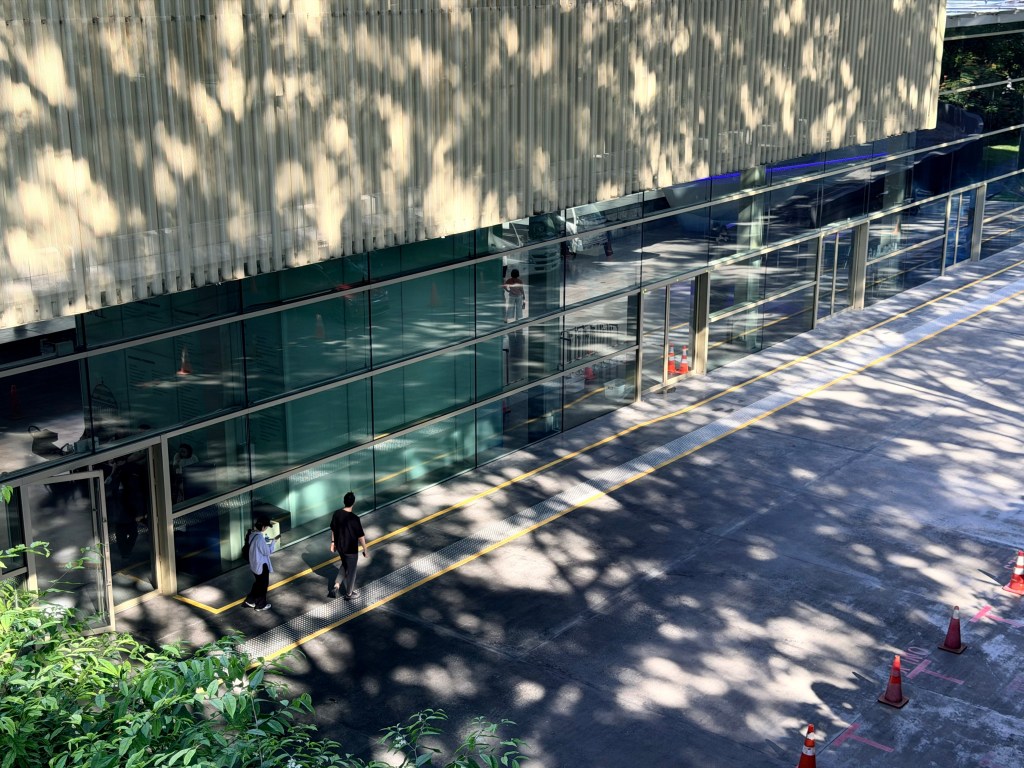
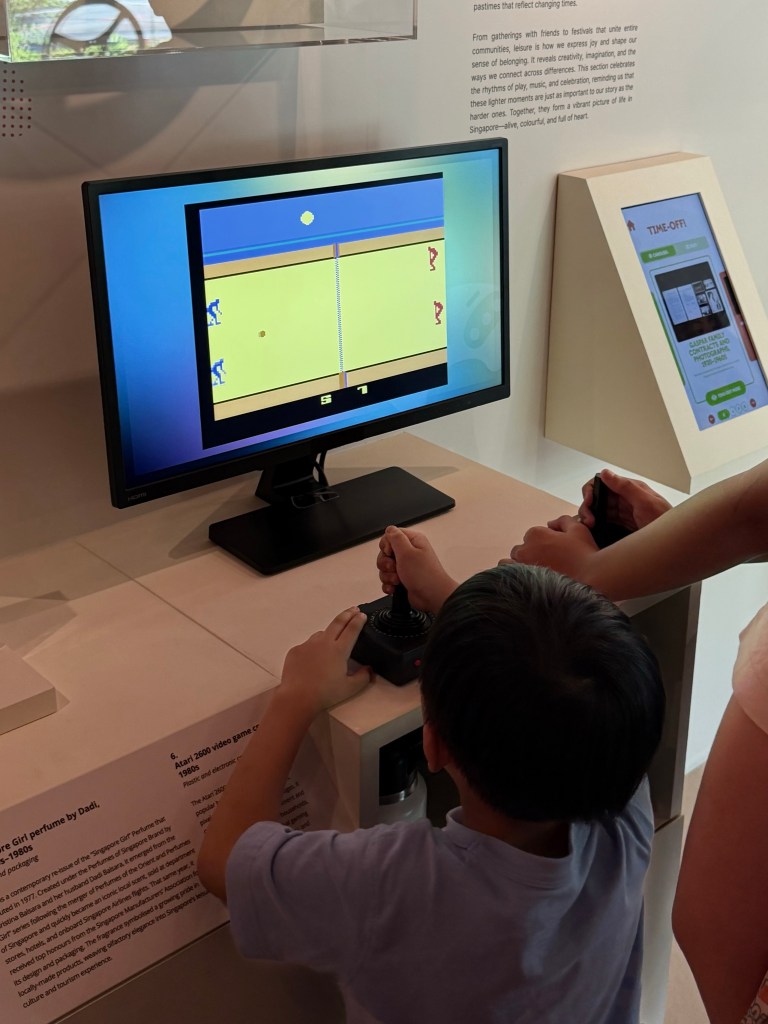
Over the weekend we visited the National Museum where I saw a kid playing RealSports Volleyball on an Atari 2600. Way to make a guy feel old — I played that myself at his age and now it’s in a museum! He looked to be enjoying it, which just goes to show ancient software can still hold power over the lizard brain (as long as it hasn’t been exposed to Fortnite).
Then as we headed to the last stop, a new permanent exhibition called Singapore Odyssea, we discovered that we were too late and it had closed for the day (at 6pm). I wasn’t even particularly interested in it, but felt pretty bummed out that we missed it anyway. Then Kim pointed at a family and noted that I was having the same reaction as their kid, who was being consoled by his parents, “it’s not that we don’t want to go sweetheart, but it’s closed.” Hmph. People are always like, ‘stay young at heart’ and ‘don’t lose your childlike wonder’, but then they don’t want the grumpy tantrums that come with it!
When I discovered a fix for an annoying iOS photo date/time saving bug last month, it required a reset of all my phone’s settings. Which means that many of my apps still can’t send notifications or use my location — these are being restored ad hoc, as the apps only get to ask for permission whenever I reopen them.
As a consequence of this, it wasn’t until recently that I suddenly noticed I wasn’t getting the twice-daily ‘State of Mind’ check in reminders from Apple Health anymore, and went to turn them back on. These are quite useful for being able to look back and see how happy/depressed I was at any point in time, and it sucks that I now have a big hole in this dataset.
I’m taking this opportunity to change the way I approach this exercise: literally being more positive. For those unfamiliar with it, you’re meant to rate how you’re feeling from Very Unpleasant, Slightly Unpleasant, Neutral, and so on. I never used to go up all the way to “Very Pleasant”. Like, I could win a million dollars and wonder if even that warranted using such strong language. But now I’m giving myself permission to be more generous with my feelings. I can feel “Very Pleasant” more often and nothing will get broken.
In other recalibration news, I spent half a day in Numbers (Apple’s spreadsheet software) and did a personal annual report of sorts to inspect how I’ve been managing my money in the last year. Now that I have enough data, I was able to build some graphs and breakdowns of what a realistic budget looks like. I’ve always recorded my expenses on a daily basis with an app, but never crunched the numbers before; I was happy just knowing that I could. Naturally, now that I have, I wish I’d done it years ago.
At several points during the above activity, I wanted to upload my file into ChatGPT and have it analyze my spending patterns and offer up some money-saving strategies for me to consider. But of course, giving OpenAI that data would be a terrible idea. I wondered if Apple Intelligence in Numbers could do anything with it, but nope. It’s just the same old Writing Tools that make more sense in a word processor document than a spreadsheet.
I spent most of my time reading this week, although the temptation to jump on the Clair Obscur: Expedition 33 bandwagon is very strong — at this point in time, it’s the highest-rated game of 2025 and the 13th best game of all time on the PS5. Maybe next week?
On top of finishing Broken Money as scheduled, I read Meditations by Marcus Aurelius and rated it just three stars on Goodreads. It’s absurd that one can even humble the great emperor with a thumbs down on the internet, but his journals are in dire need of an editor! Yes I know these were never meant to be published, but he repeats the same handful of principles over and over (which I largely agree with), and this could have been cut down to be a podcast or self-help PDF on Etsy?
I also read the second book in the Murderbot series, Artificial Condition, and found it even more fun than the first. At this point, I’m kinda desperate to watch the Apple TV+ show and not sure I can wait for weekly drops over the next few months.
While looking for a manga with some colored pages to try out on my Kobo Clara Color, I started reading the oddly titled I Want to Eat Your Pancreas (trust me, there’s a mostly acceptable explanation for this), and enjoyed it enough to finish everything in a day. Unfortunately, while experiencing color on an ereader is real nice, the Clara’s screen is too small and I read most of it in black & white on my old Kobo Libra. Irony!
I’m now close to finishing Erik Olin Wright’s How to Be an Anticapitalist in the Twenty-First Century, not because I dare dream that this world could ever abandon capitalism, but it wouldn’t hurt to have some alternatives. I’ve now begun to think of capitalism and its systems as a spectrum rather than as absolutes.
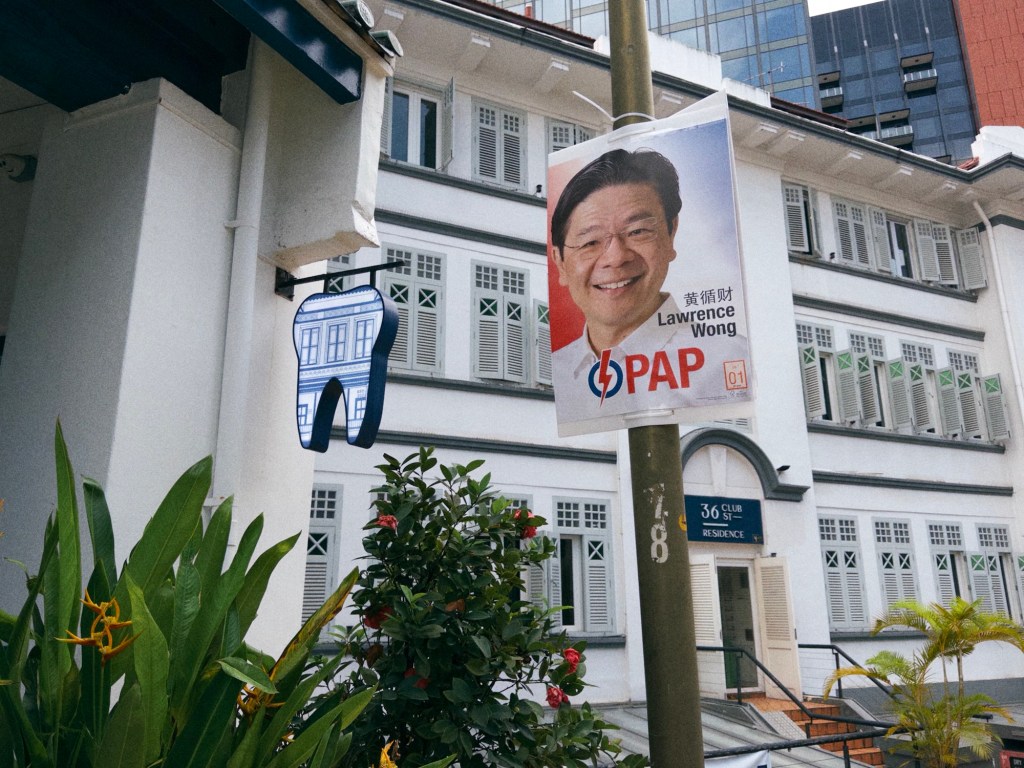
Coincidentally, it’s election season here in Singapore and we go to the polls next Saturday. I’ve been watching the political rallies live-streamed on YouTube over the last few evenings, and have mostly been annoyed at the complaints and vague promises to do better (to say nothing of the insanity that sometimes shows through in racist, antivax, and xenophobic ad libs). Singapore already enjoys some of the best quality-of-life outcomes possible under a hybrid capitalist/social democracy, but it seems people want more. They want a hands-off government, but also want it to protect them from job-stealing AIs and foreigners. They want everyone to be paid more, but don’t want to spend more on services in return. It’s so exhausting.
I was looking to spend some money on a birthday present for myself since I’ve been such a good little budgeter, but the best thing I could find were these new Yashica Peanuts cameras featuring Snoopy, who I’m still kinda obsessed with. The idea was quickly abandoned because I do not need another digital camera, especially not an intentionally mediocre one.
Still in the mood for a photo-related splurge, I went back to the Lampa camera app (first mentioned last September), which got three new ‘film-inspired’ color profiles in a major update this week. That brings the number of available looks up to six, which better justifies the high asking price (S$40/yr or S$90/forever) which was previously out of the question. I’ve been using the free trial while looking for cheaper alternatives, but Lampa just does what it does so well.
In terms of UX design, it’s super focused and perfectly walks the line between too simple (Zerocam) and too complicated (almost every competitor I’ve looked at). There’s just enough control, and few enough options that you can actually make decisions. In that way, it out-Leicas the official Leica app, which does not have a great UI and asks for S$100/yr. Technically, it uses a bayer RAW image pipeline for more natural captures, keeps those RAW files so you can “redevelop” photos if you didn’t get the right filter or exposure the first time, AND deletes those RAWs automatically after 30 days to save space. Hats off to great work, but man, the cost is uncomfortably close to buying an actual Snoopy camera.
I used to (sporadically) log my mood and mental state in a great free app called How We Feel, but ever since iOS 17 came out with a similar feature in the Health.app, I’ve been doing it there. It’s nowhere as good, though, and the act of recording how you feel is (surprise!) so much better in How We Feel. Apple’s version makes you scroll a list of feelings like Anxious, Content, and Sad, sorted in alphabetical order.
The other app arranges feelings in a colorful 2×2 grid, from high to low energy, from unpleasant to pleasant. An example of a high-energy unpleasant feeling is Terrified, while a low-energy pleasant feeling might be Serene. This grid is a much more logical and visual way to find the right word and quickly record your feelings throughout the day. Anyway, the rumor is that iOS 17.1 will be out next week, and I’m hoping the new Journal app is part of it, because I want better ways to record and look back on my state of mind.
===
We attended the local premiere of Martin Scorsese’s new film that everyone’s talking about online: Killers of the Flower Moon. In a theater, no less! It’s an Apple Original Film, and will be coming to Apple TV+ after this irl run is over. I can’t remember the last 3.5 hour film I saw under such circumstances, unable to take a break, forced to focus. If I’d seen it at home I’d probably have paused it no less than five times, and so I’m glad that I couldn’t, because it’s the kind of film that quietly spends its budget building a world so absolutely intact and complete that you’re left to focus on the people, the time, and the weight of its historical crimes. As a true story, it’s devastating. “People are the worst” is pretty much my 4-star Letterboxd review.
On the flip side, we saw disgraced filmmaker Woody Allen’s 2019 film, A Rainy Day in New York, which has pretty poor ratings online, and really enjoyed it. I’m aware that he has approximately, oh… one style? And a hallmark of it is neurotic, pretentious characters in awkward romantic situations who spout smart alecky jokes in an artificial, stage performance cadence… but I like it. It’s also amusing to see current generation stars like Timothée Chalamet and Elle Fanning as his stars, but playing their roles exactly like Woody. Is it because they’ve seen his old films and think they have to? Or do the scripts just demand that delivery? Also, Selena Gomez is in it, and I can’t help but see this performance as a superior version of what she does in Only Murders in the Building.
===
I got jabbed for Hepatitis A & B on Friday, and it was a doozy. I felt lightheaded and weird all afternoon afterwards, and I have to go back for two more boosters over the next few months.
Contributing to the feeling all weekend has been my new contact lenses, the first ones I’ve worn in maybe 8 years? The right eye prescription is a little underpowered and so I’m suffering with blurry images that are driving me crazy. I’ll need to try and get them exchanged next week.
Why am I wearing them at all? I got an annoying pimple/scratch behind one ear, exactly where the arm of my glasses sit, and so I decided on some disposable dailies while it heals. On one hand, the feeling of freedom is amazing — I really miss this about wearing contacts, which I did regularly in my younger days. Just things like being able to do a spontaneous facepalm! But now everyone has learnt that “my look” is “guy with glasses”, and suddenly my normal face looks weird, even to me gazing in the mirror, and I don’t need to freak people out any more than necessary.
The blurriness has had a slight impact on my enjoyment of Super Mario Wonder, the latest and greatest Mario game which just came out. I wasn’t planning to buy it, because I wasn’t planning to play it any time soon, being still in the middle of another old Mario game on the Switch, Super Mario 3D World + Bowser’s Revenge. But peer pressure got to me, and talking to Jussi got me justifying it to myself that playing a 2D and 3D Mario game at the same time isn’t a problem — it’s like reading a fiction and non-fiction book at the same time!
Super Mario Wonder is the 2D one, for the uninitiated. It’s a modern take on the classic Mario games, far more inventive and deep-reaching than even the New Super Mario Bros. series of games that tried to breathe new life into the side-scrolling platforming formula. Wonder has incredibly detailed and expressive animations all throughout: Mario and friends move and react to things like characters in a proper animated movie (was this planned to coincide with this year’s film? I don’t know), bursting with character, while the levels and events are literally psychedelic festivals of invention. This is a blockbuster game that spends its budget conspicuously, gleefully.
===
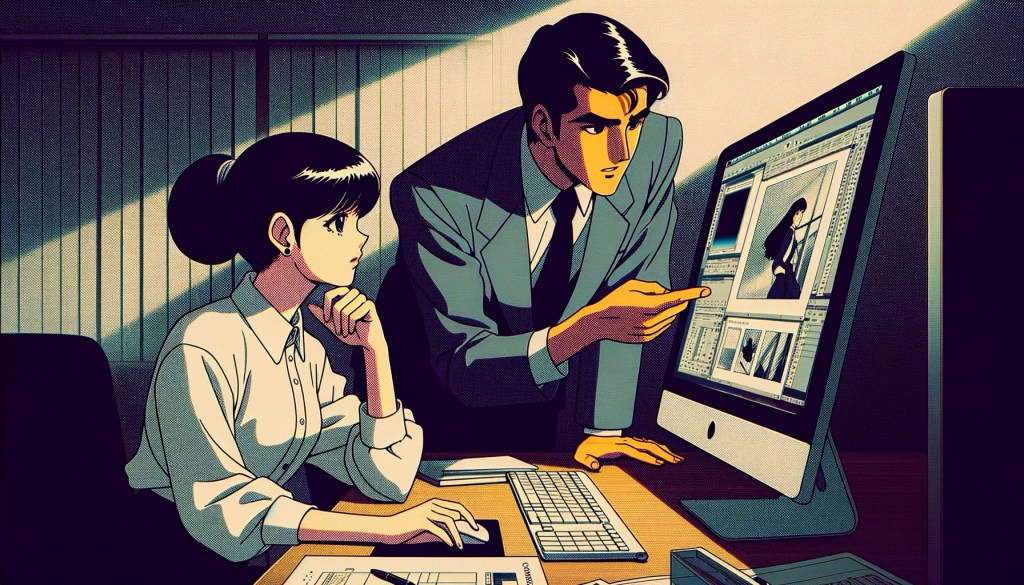
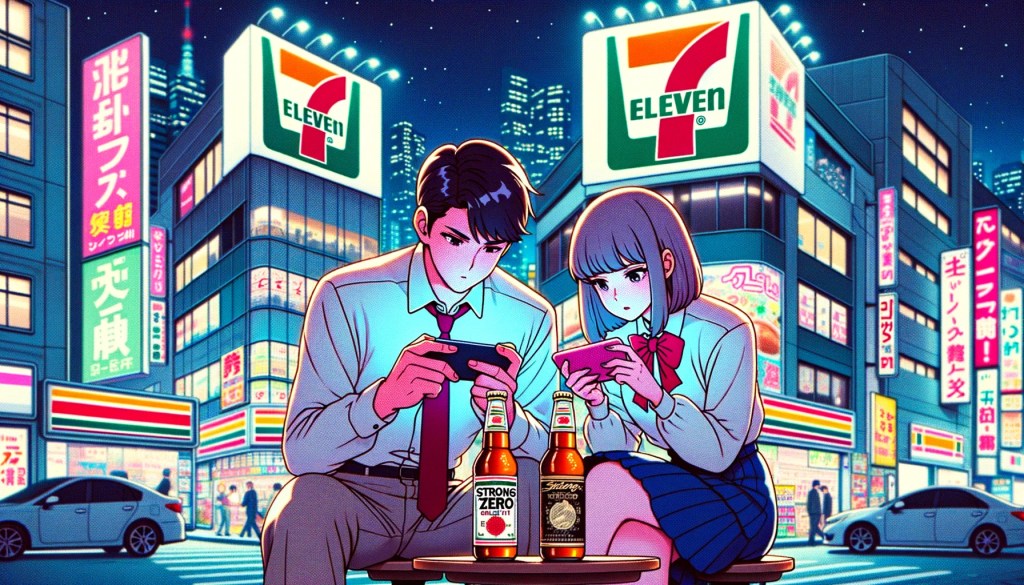
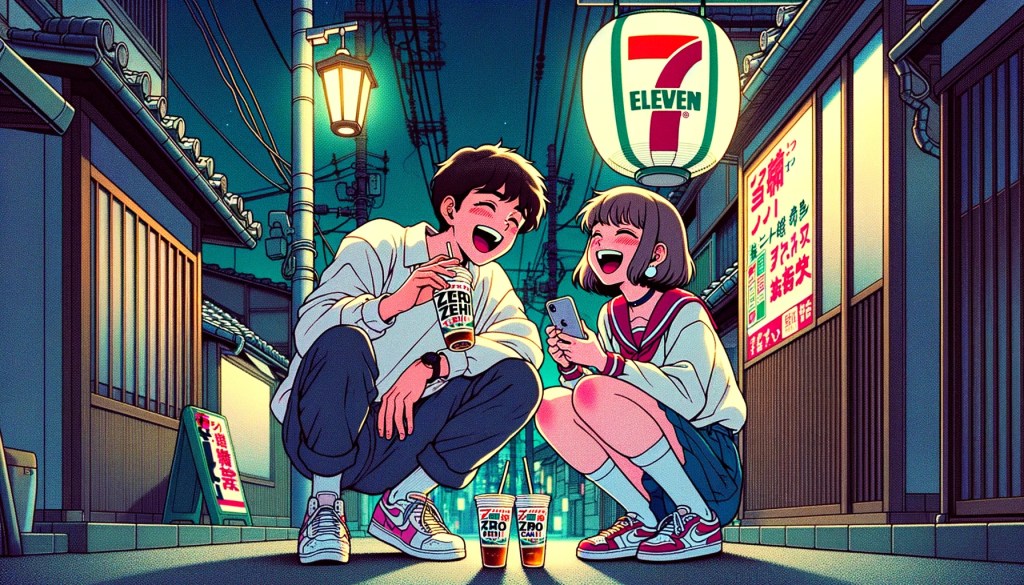
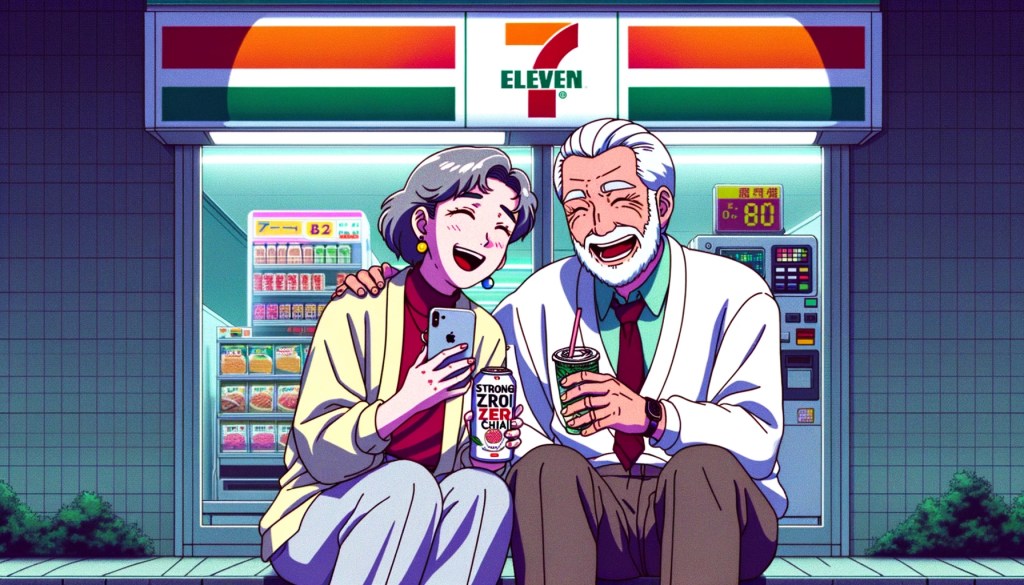
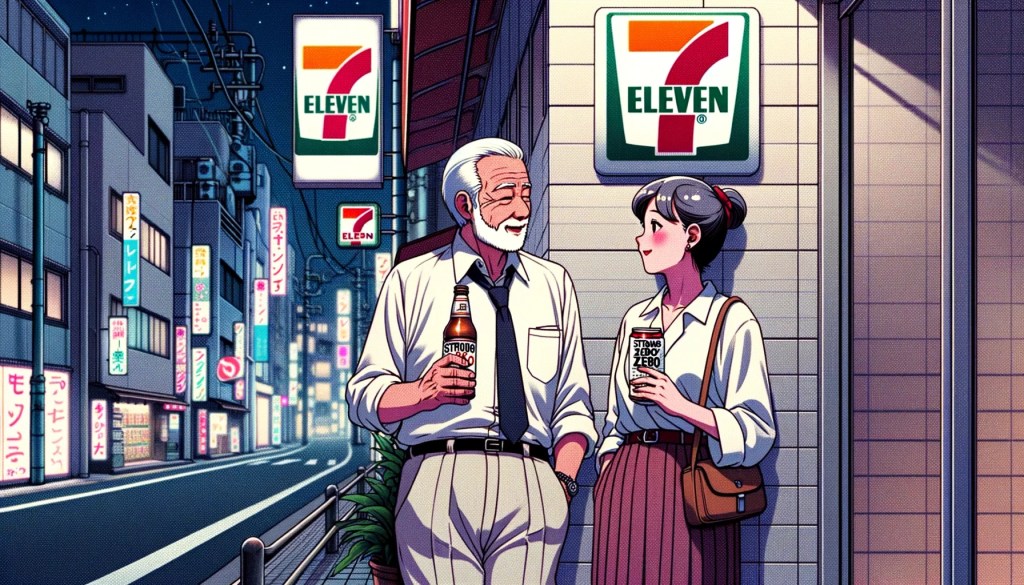
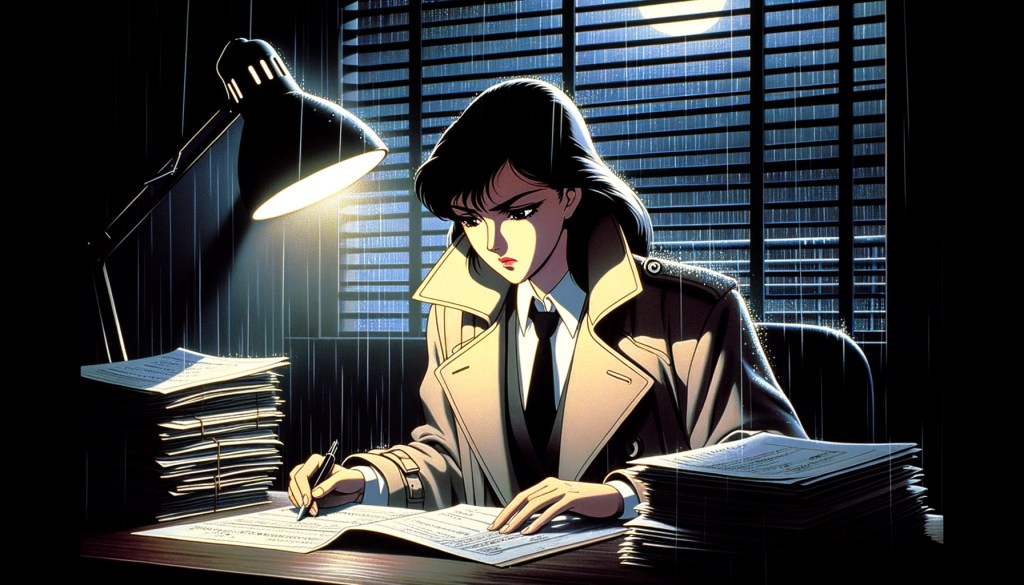
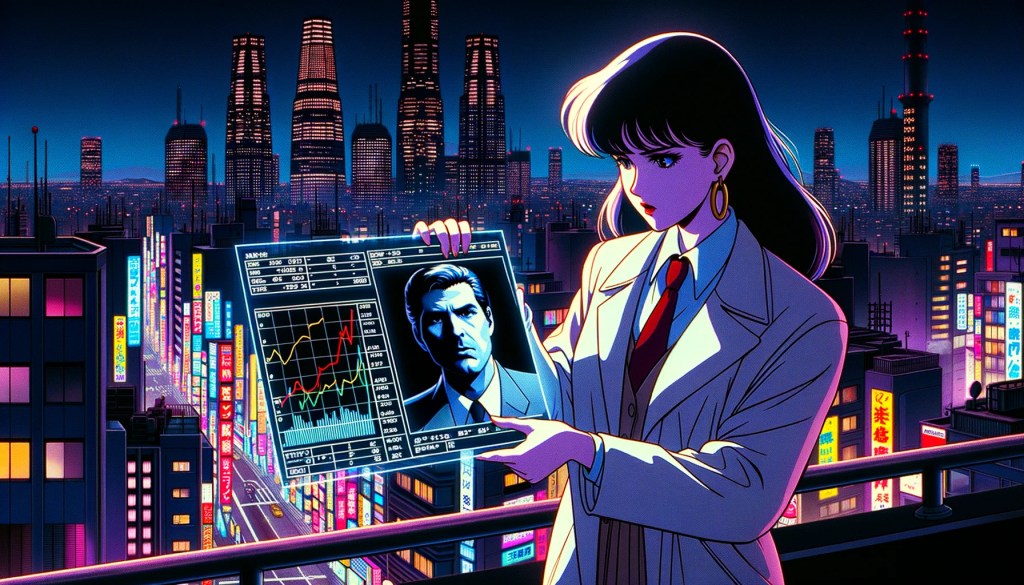
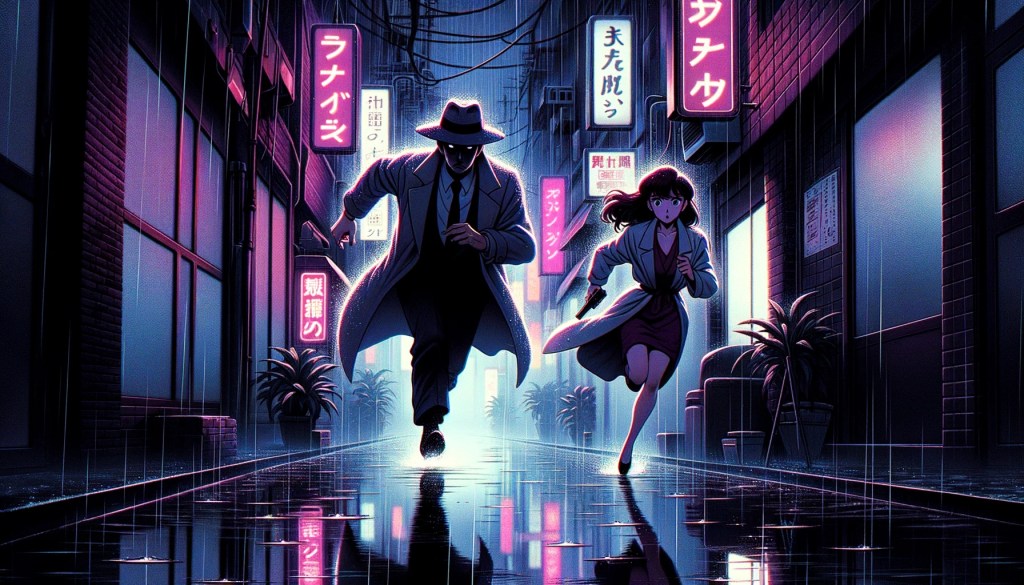
In playing with DALL•E 3 some more (within ChatGPT Plus), I discovered that it goes a great job of replicating the look of classic 80s anime. You literally just have to ask it for that. I tried some classic scenes, and then asked for couples hanging out near a 7-Eleven drinking Strong Zero, and then for screenshots from a movie about a female detective investigating a case of financial fraud, and it’s that last one that made me think this thing is a new milestone in tools for visualizing stories.
There was a period about a year ago when quite a few new moms all had ideas for children’s books, and wanted to use DALL•E or Midjourney to illustrate them. I got questions about whether it was feasible to do this, and if you’ve been talking everyone’s head off about this stuff too, you probably had the same conversations.
I think this level of natural language interface with GPT-4 and DALL•E 3 coming together is finally making it possible for anyone to direct images with consistent settings and characters. I read somewhere that Midjourney v6 is going to make prompting easier as well, so perhaps we’ll get a flood of storybooks next year.
There was also a thing going around on Threads that basically asked participants to “paste your Threads bio into an AI art tool” and see what comes out. I saw a few people doing this, all floored by the accuracy of the people they saw gazing back through the black mirror, I suspect afraid of how accurately they were seen from just a few keywords — one lady said “I own all of those tops”.
I think this is a pretty strong signal for the mainstreaming of generative AI, that a meme like this can spread without instructions attached. Everyone who is online enough knows what it means to invoke an electronic genie that grants image wishes, knows very well how to go find one and get the deed done. Next year is going to be wild.
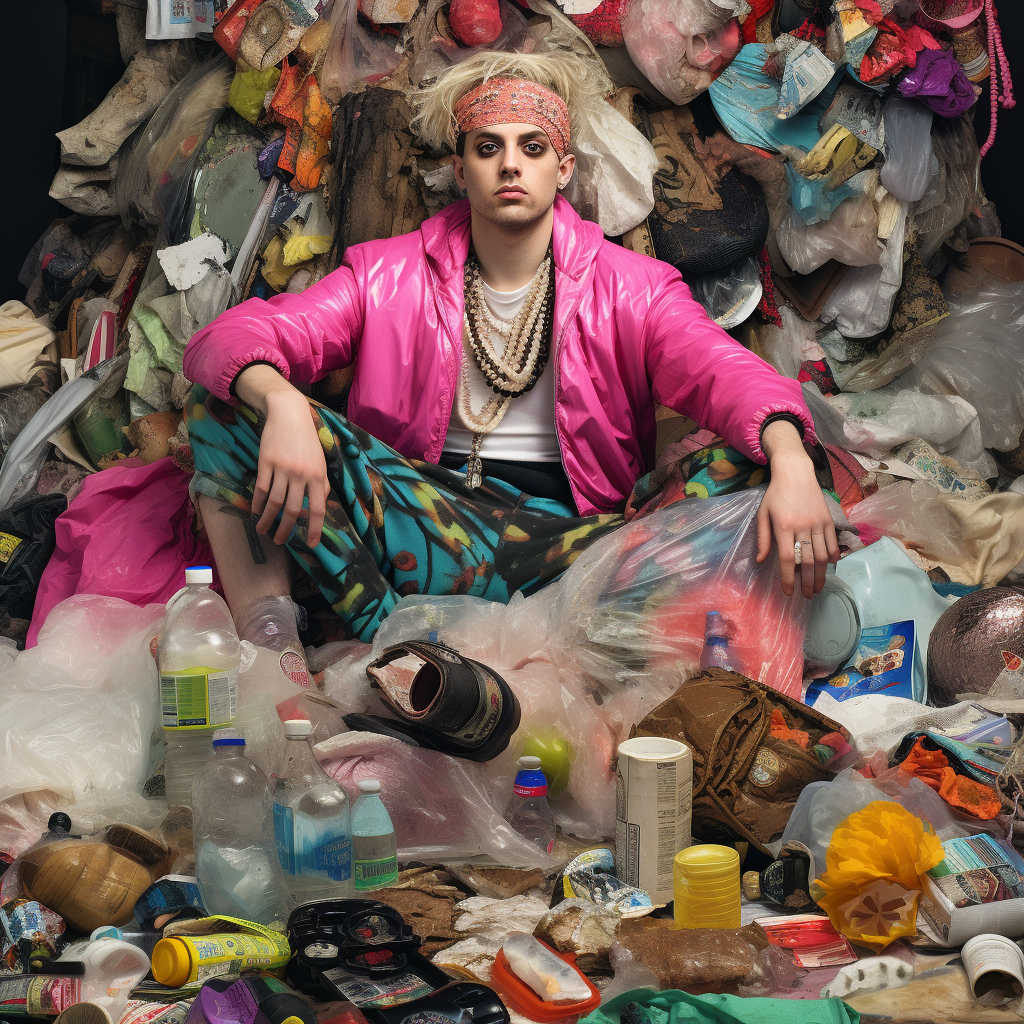
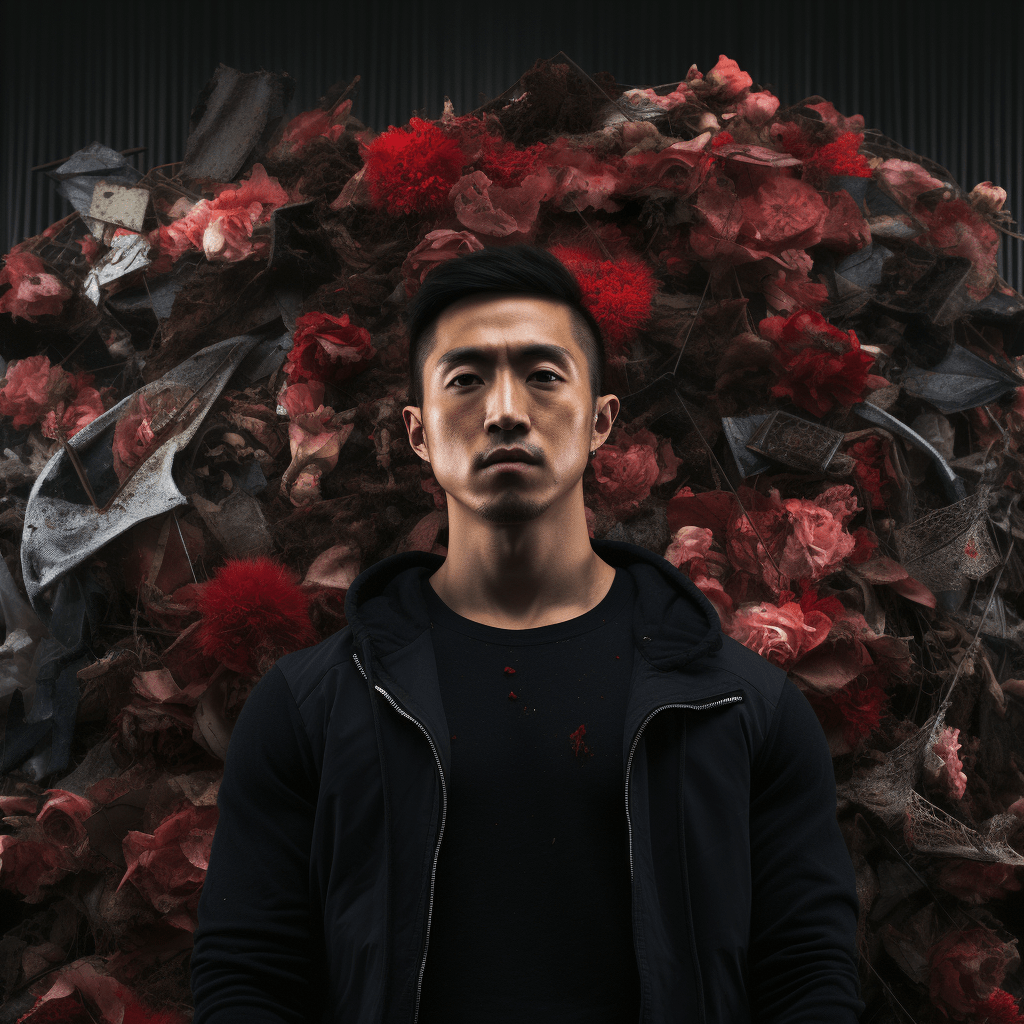
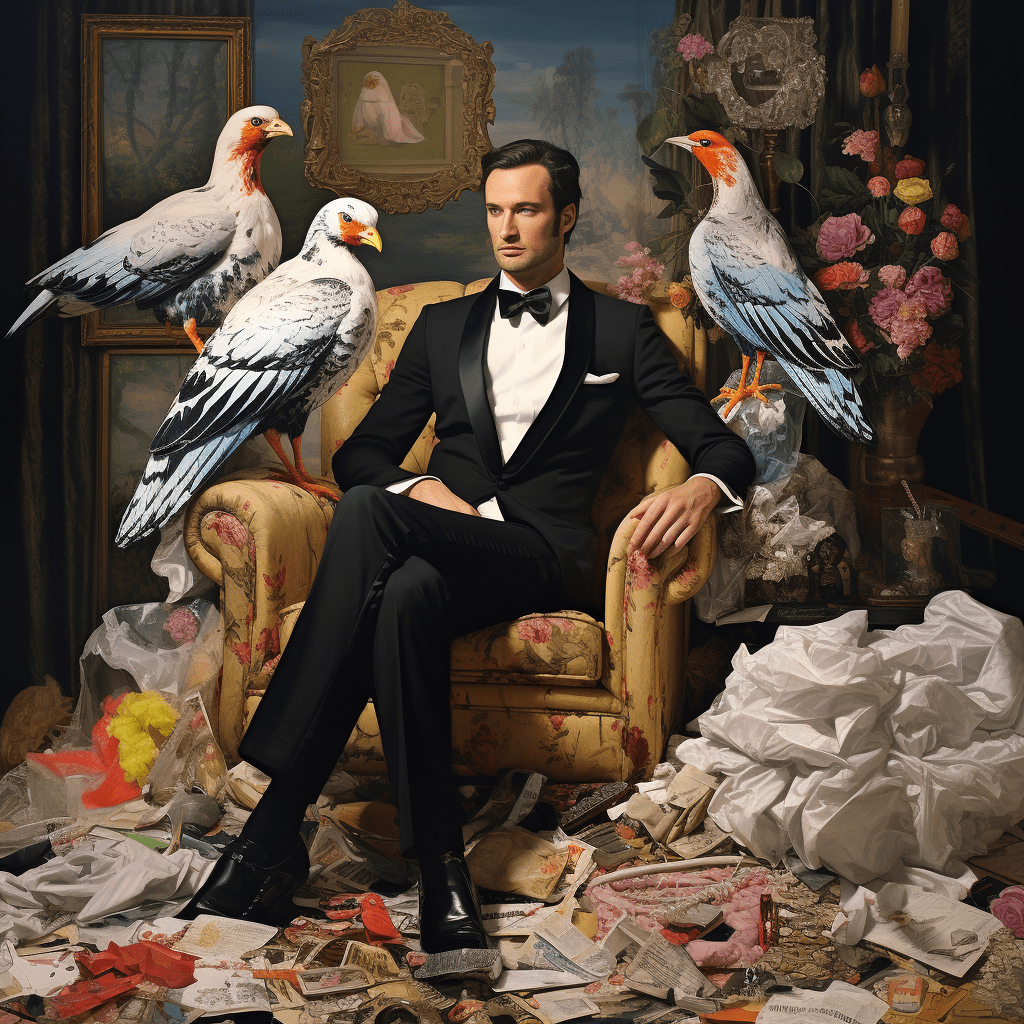
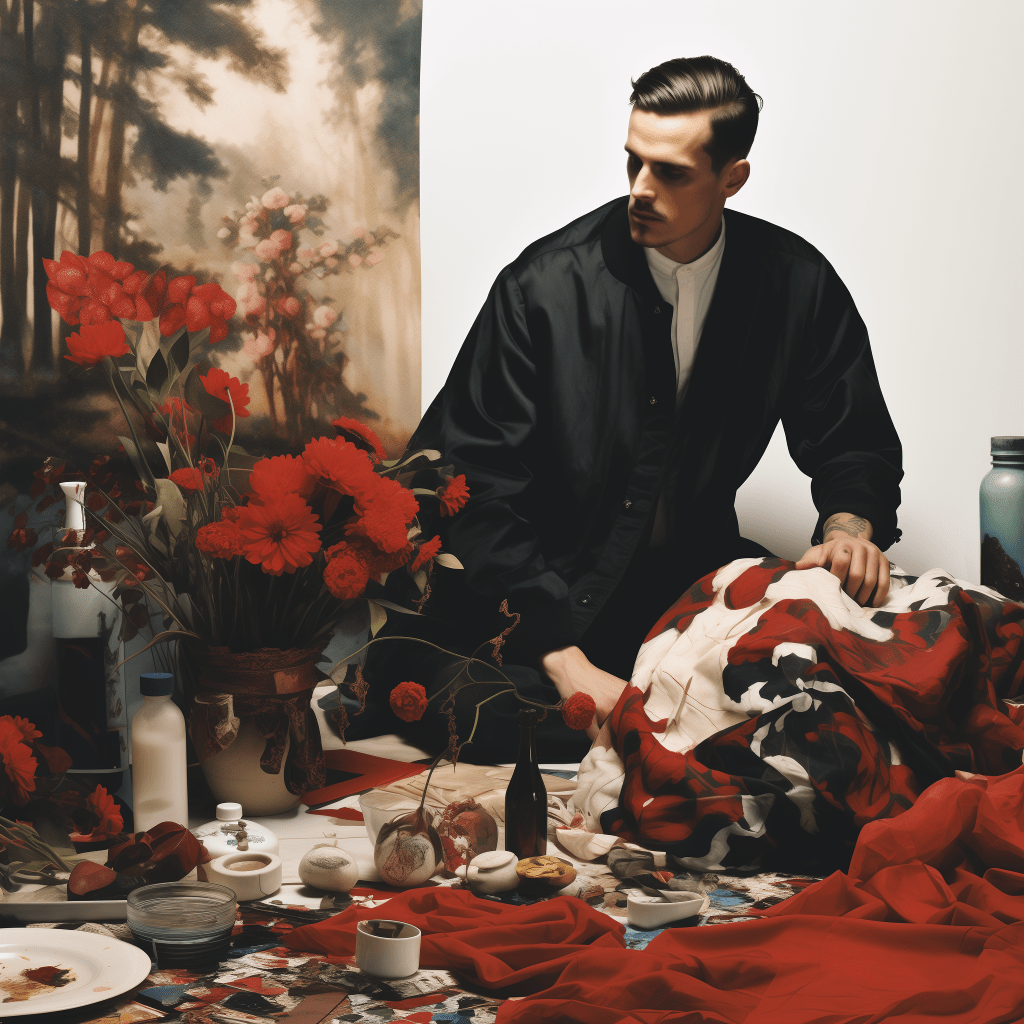
But anyway I wanted to try it out, although my bio isn’t like “Founder/CEO (he/him), hustling 24/7 🇸🇬, new book out 20/12, always up for coffee ☕️ and meetups 🤝”; it’s currently “Designer, sense-maker, aesthete, imposter, garbage, scum.” which gives you results like this:
Our fridge is dying. After some eight years of dutifully cooling and freezing our food reserves, it’s losing its mind. Like a soldier left to survive too long in the jungle, it can’t tell right from wrong anymore, and it’s probably a threat to someone’s life. It started midweek when I decided to get some ice-cream and found the unopened tub mushy and soft to the touch. Ditto blocks of frozen salmon — uh oh, not a good sign.
I’ve realized in recent years that I get disproportionately upset when things go wrong in the household. They’re like waves rattling loose the stones in my psychological seawall; things at home simply need to be predictable, dependable, safe. Maybe it’s the result of some trauma. Maybe the outside world is just too much sometimes.
A new fridge has been viewed and paid for now, it will be roused from its Korean factory-induced slumber this Monday and loaded up with every surviving vegetable and condiment. I get images of them as war refugees lining up to get on a boat. They’re the tough ones, made of more shelf stable stuff. Pour one out for their fallen brothers: the spoils of war.
Do you know what new fridges cost these days? I certainly did not. I’m pretty sure our last one was under S$1,000, but they cost more now. Blame inflation, the chip shortage, whatever, but the ones under a grand now are the brands that probably don’t come to mind when you think refrigerators: Whirlpool, Electrolux, Sharp, and local OEM brands you wouldn’t think of at all. So now we’ll have our very first Samsung product, if you don’t count the displays and components they make for others.
Coupled with the so-called seasonal downturn in the markets now underway (supposedly the August and September months before a US election year tend to see significant corrections), there have been quite a few conversations about everyone feeling poor and worried. More than usual, anyway. I know one has to take a long view of these things, but the lack of bright spots is a little daunting.
CNA put out a two-part documentary on Singapore’s fiscal reserves, promising unprecedented access and interviews, which I found quite enlightening. There was a visit to a secret warehouse literally filled with tons of gold, and stories about how this war chest came into being from the early days of our independence. It had not occurred to me before that our reserves were used to weather the 2008 finance crisis and Covid without issuing more debt, a luxury most countries did not have. Nor that one of the reasons we’re able to enjoy such a low tax rate is that annual income from invested assets helps to offset spending on public infrastructure.
Here are the episodes on YouTube:
===
I had fun this week with TikTok’s “Aged” filter, which is certainly not a new concept as far as apps are concerned, but it’s probably the most advanced execution yet. Through a blend of machine learning with harvested personal data from millions of non-consenting people and regular ol’ voodoo, it shows you what you’ll look like as a pensioner (should pension funds survive the financial end times). Some people have tested it on photos of celebrities when they were younger, and the aged photos reflect how they really look now, so… this is probably how you’ll turn out! Might as well get comfortable with it.
It turns out that old me will look kinda like one of my uncles, and I’ve been having fun recording aged videos in a wheezing voice and sending them to friends and colleagues.
Some of the other trending filters on TikTok are pretty sophisticated mini apps that involve a prompt box for generative AI. It takes a photo of you and will restyle it as a bronze statue, an anime girl, or whatever you ask it to do. They are also incredibly fast, compared to other generative AI image tools, which suggests Bytedance is burning some serious cash to power these models and gain AI mindshare.
I also came across a new product called BeFake that will try to take this one feature and turn it into an entire social media network based on posting creative generative AI selfies. It makes some sense — you don’t have to be camera ready (already a low bar with some of the beauty filters now available), and you can showcase wild ideas. Will this sweep the world only for people to get tired of unreality and swing back to finding “boring” posts interesting? Stranger things have happened.
===
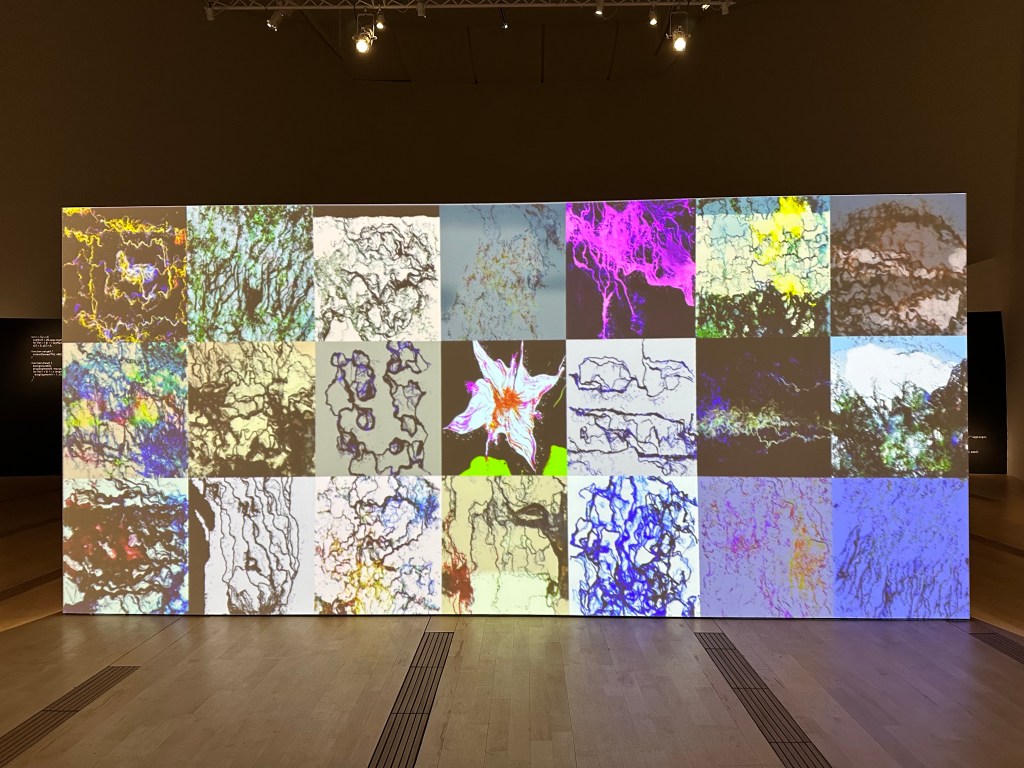
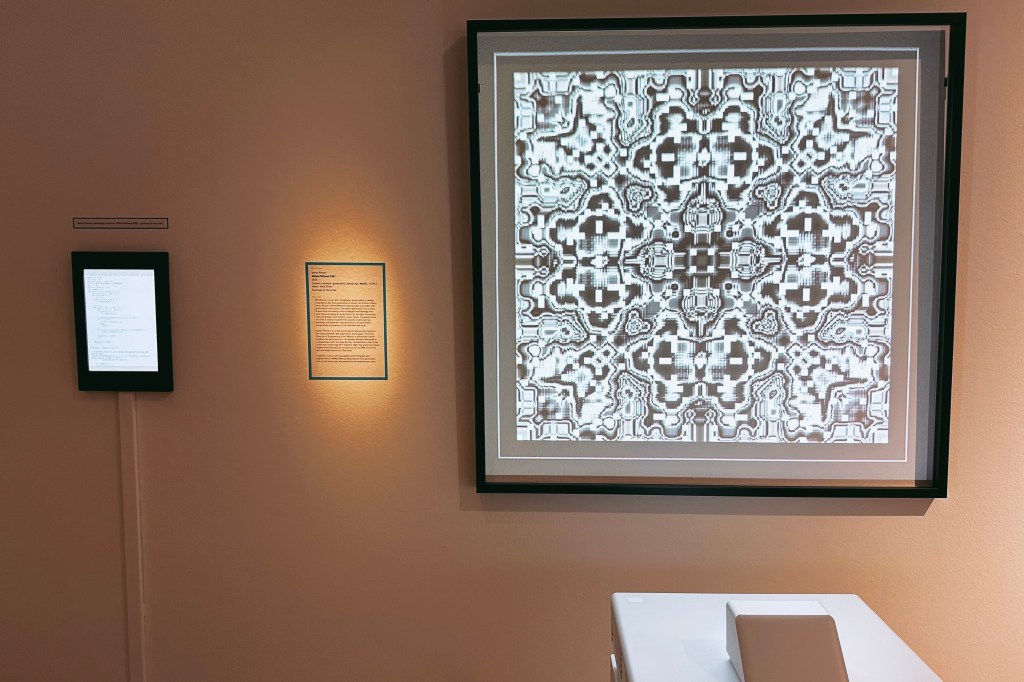
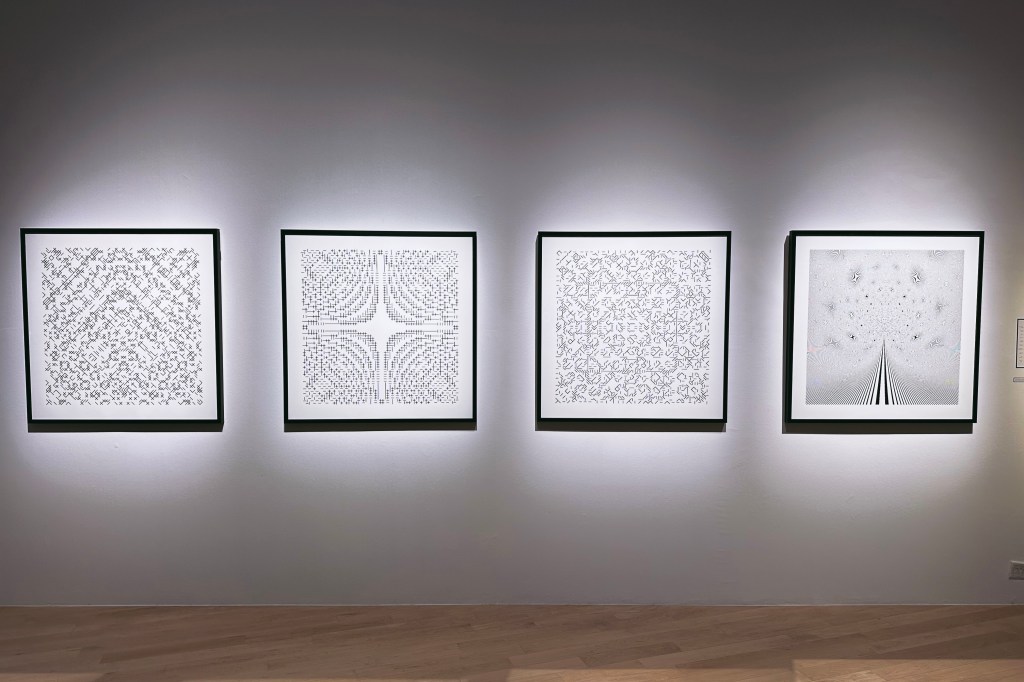
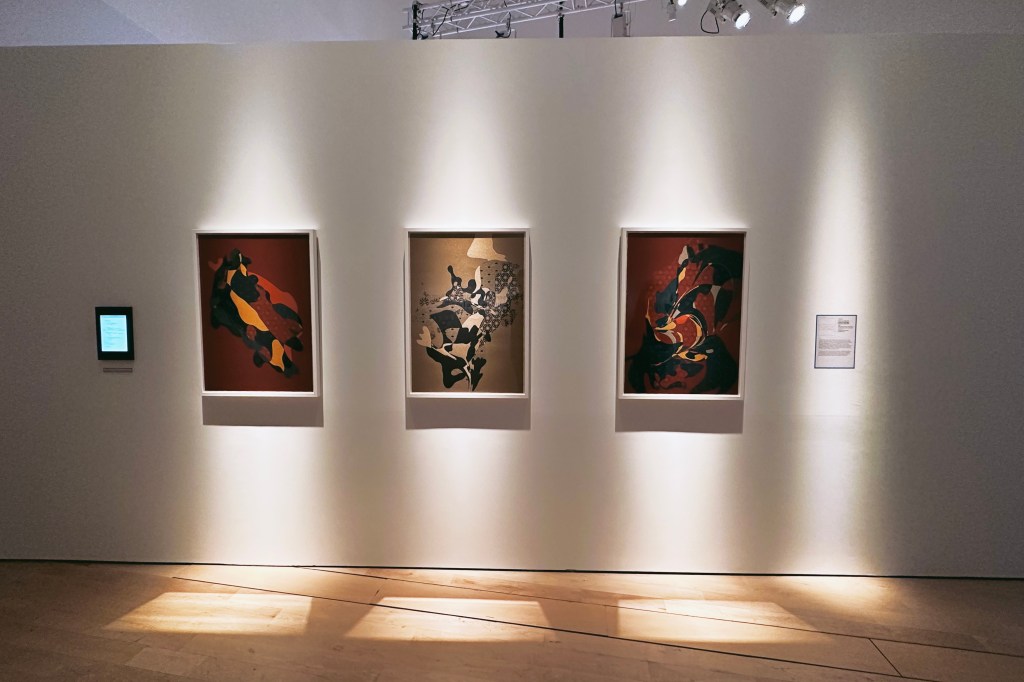
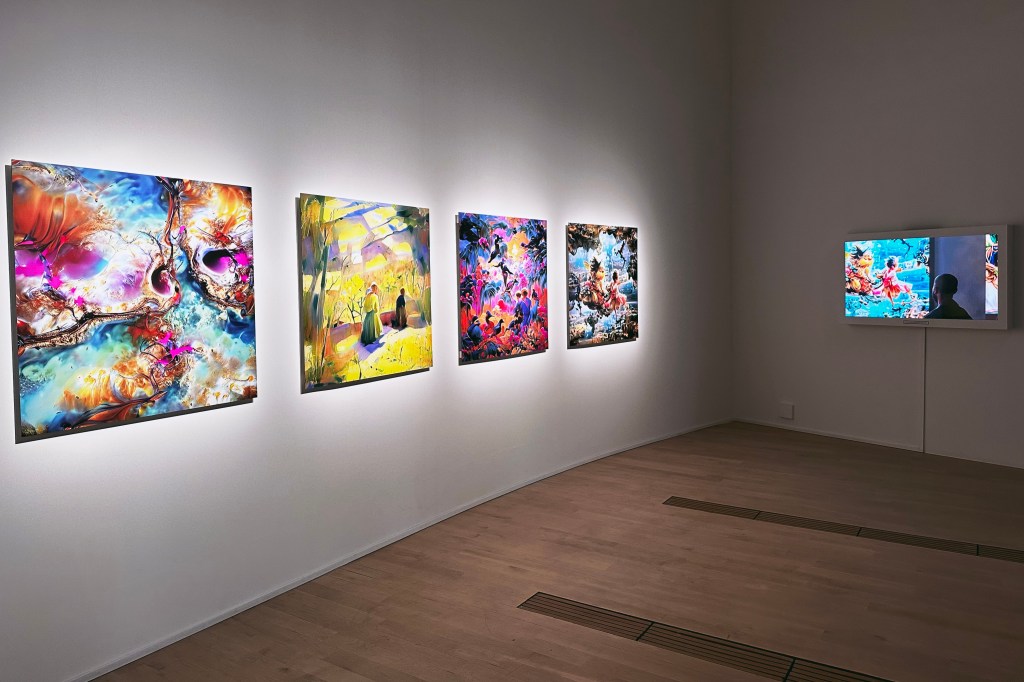
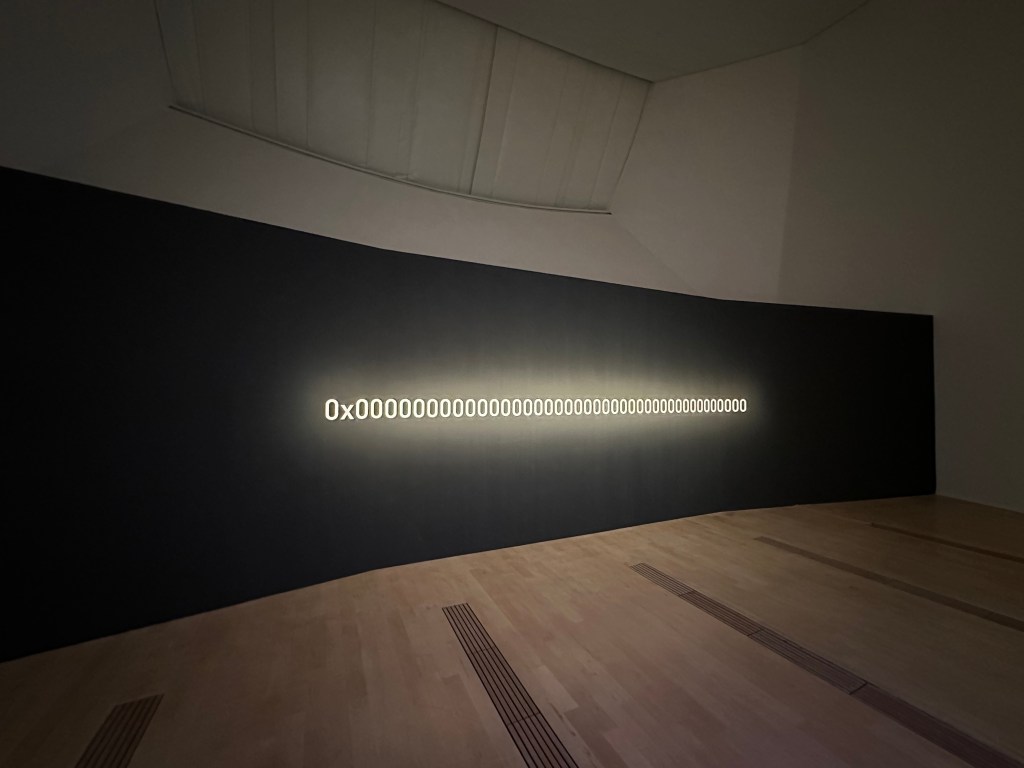
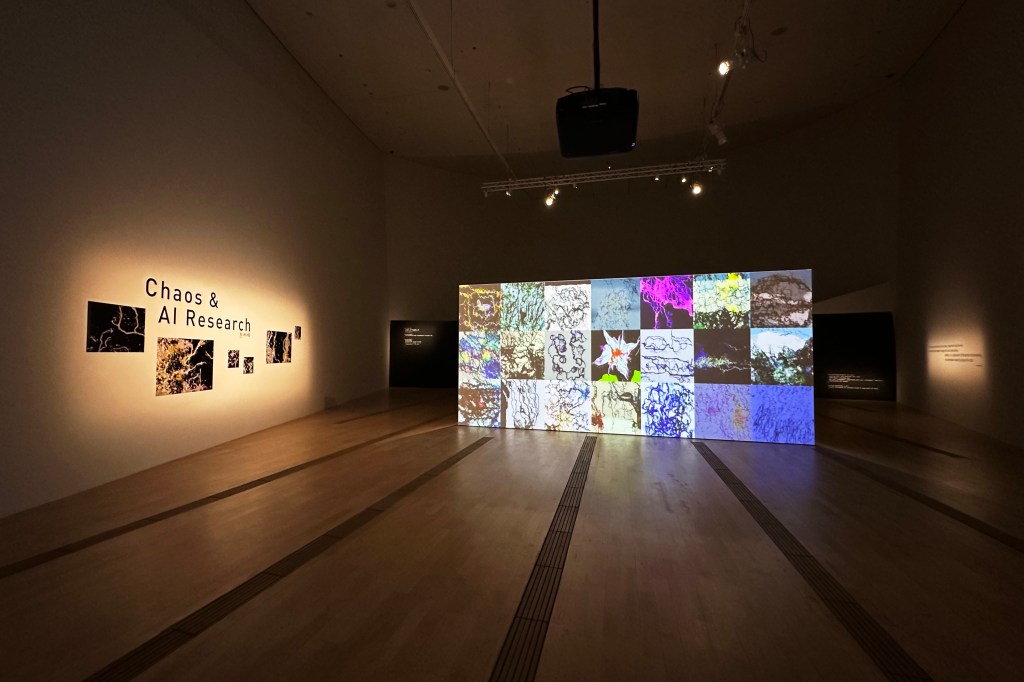
On Sunday we went to the ArtScience Museum (at the Marina Bay Sands) for a rare high-profile exhibition of digital art. Notes from the Ether says it’s focused on NFTs and AI, but it’s also got a lot of generative art that just happens to be encoded on blockchains. I was especially excited to see the inclusion of work by DEAFBEEF and Emily Xie (Memories of Qilin), and Tyler Hobbs and Dandelion Wist’s QQL project was also presented for anyone to play with.
Obviously this movement is in a weird sort of place at the moment. Valuations for most projects are as volatile as shitcoins, and a few “blue chip” projects like the ones displayed are more stable, but only about as much as bitcoin. Because NFT art is defined in large part by the medium, which is currently inseparable from talk of price and value, it’s hard to have a viewing experience divorced from these considerations. You don’t really visit a Monet exhibition and think about how much everything costs. Which is why the Open Editions I mentioned last week are interesting, and likewise with this event, which offers you a free NFT at the end. You get to co-create an artwork with an AI engine by uploading a photo of your own to be transformed, and it’s minted as a Tezos NFT if you’d like. I thought it was a very cool collectible to remember our visit by.
I don’t think I’ve ever seen more affordable tickets at this museum, just S$6 with a further 30% off if you sign up for a free “Sands Lifestyle” account, so there’s little excuse not to go if you’re remotely interested in this stuff.
Since we were already there, we also hopped into Sensory Odyssey: Into the Heart of Our Living World which pairs 8K video projections of natural scenes with immersive sounds and scents. In one space you’re smelling fresh air and damp earth in a rainforest, and in the next you’re underground with mole rats. It’s very cool, but ruined by small children being allowed to run loose in front of screens (can’t really be helped), and elderly museum staff loudly declaring that “this is a night savannah, very dark, no need to be scared!” (can be helped with training) in such a way that any illusion of being in a savannah is totally pierced — unless you’ve gone on a safari tour with a gaggle of Singaporean aunties, of course.
It’s alarming how that number suddenly jumped to 49 and we’re nearly at the end of another year.
This week was another tough one, and and our cat isn’t feeling well. Next week will probably continue to be challenging.
The Apple App Awards were announced and this mental health How We Feel is an easy recommendation. It allows you to log and analyze your emotions over time. You just need to quickly check in by picking a word that describes your mood in the moment.
We did go out and have an incredible dinner experience on Friday, however, at a home-based private dining set up called The Estate & Co. — a labor of love by two brothers and their families, telling the story of the Arab community in Singapore of which they’re a part, through the recreation of inherited recipes and a beautiful home that serves as a museum of their culture’s storied past. They only do it once or twice a month, as it takes days to prepare. The amount of food you get is easily double what’s required, as is apparently the tradition when hosting guests. I can’t recommend it enough if you can gather a group of 8–10 people.








 sangsara.net