Greetings from beautiful Chiang Mai on this last day of the year. It’s my first time here, and I’m sure it won’t be my last. If anything, I’m kicking myself for not coming sooner — it’s currently a very cool and walkable 25°C at 11am, and temperatures go below 20°C in the evenings; Microsoft Copilot with Bing tells me it’s the safest city in SE Asia (wha?); and the food and coffee have been top notch so far.
We’ve also been to a cool cocktail bar with live jazz in a basement speakeasy-like space, and another “live house” with a mix of bands playing each night. Coming from Singapore where jazz clubs are a rarity, and almost exclusively the domain of old people, it’s been surprising to see many young people in attendance, although I can’t be sure they enjoy the bands. They seem to pay more attention and clap louder for the pop cover bands.
One amazing performer I heard was Joshua Lebofsky, originally from Canada, who sang and played a straight hour of jazz standards and pop interpretations on piano at The A Ter (theater). They were fantastically musical and soulful variations, and I was glad to be able to tell him so afterwards; sadly he hasn’t got a social media presence, but there’s an album from 2006 on Apple Music: Play A Little Prayer.
If we lived here, I would be a regular patron at these places for sure (especially at prices roughly half those back home). The non-existence of a vibrant jazz scene is such a shame for Singapore, because we have quite a few talented jazz players who end up being session musicians for mandopop performers most of the time, probably due to the economics of the music scene. I guess these are the third-order consequences of necessarily narrow education policies in our early years.
We also went on a walking street food tour and a cooking class at a small organic farm and school (where I was snapped in a farmer’s hat looking glum at having been dragged along, but ultimately it was a good time and the food was, like all of it, quite excellent). An intriguing culinary detail here is how Hainanese immigrants created their own localized chicken rice combining the steamed chicken with deep fried chicken cutlets and an entirely different chilli that’s dark and savory, with fermented soybeans and fish sauce?
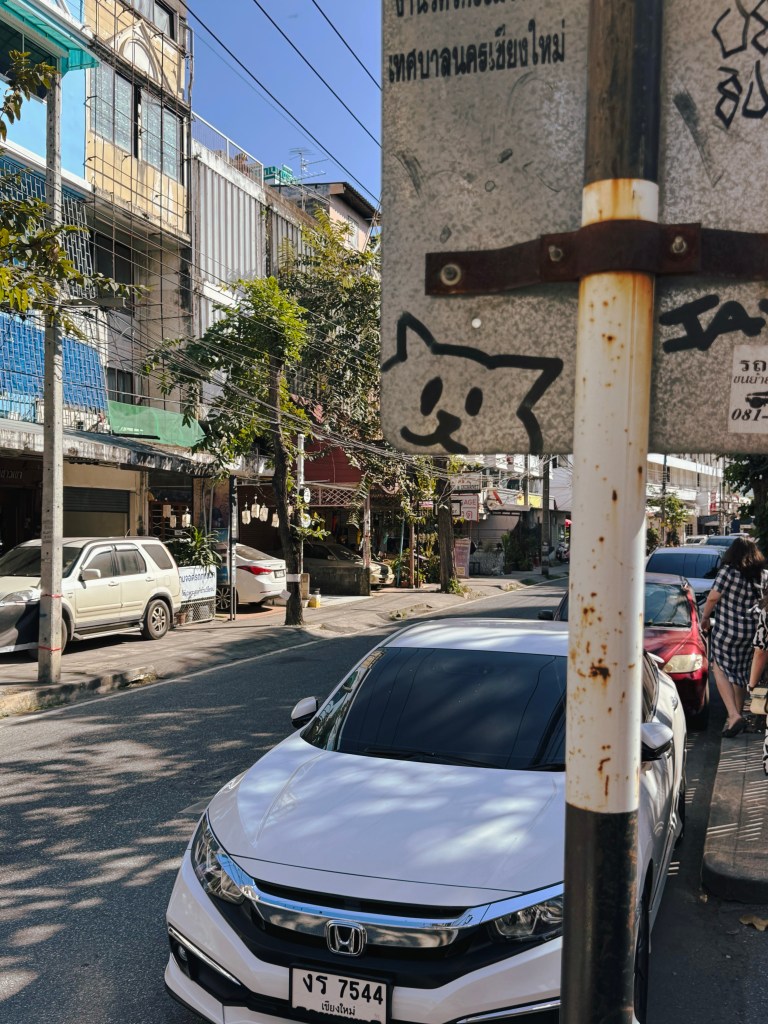
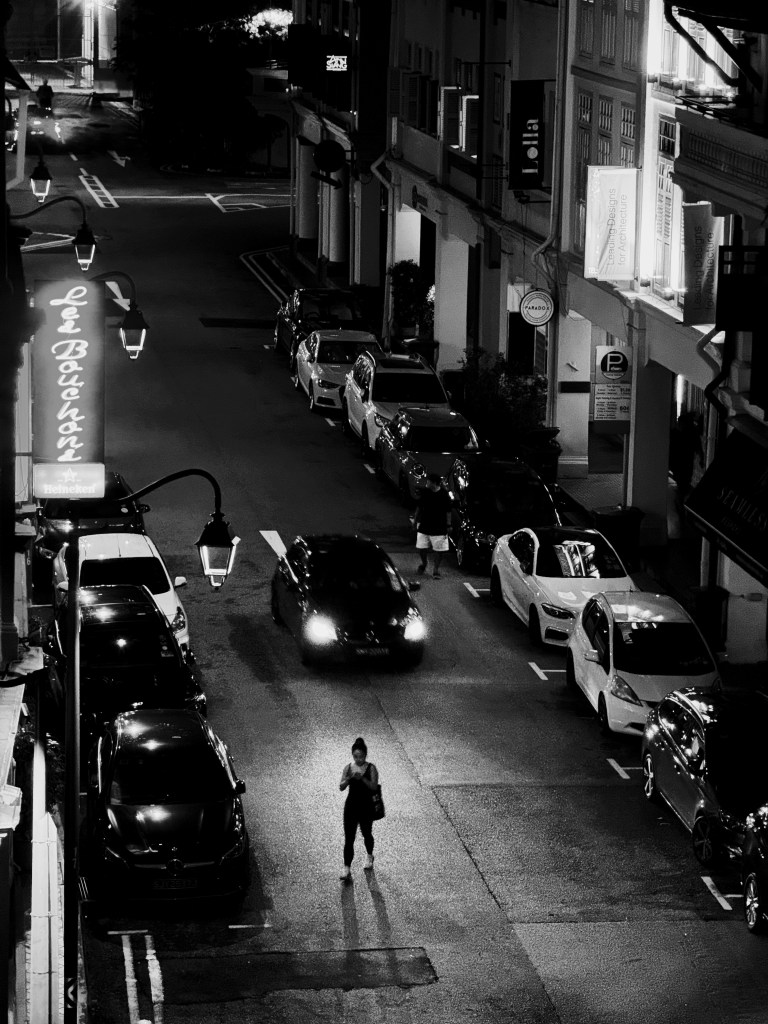
Here are some photos, all from my iPhone 15 Pro Max. I made a new Darkroom preset to handle the light and scenery here, and I think it’s a versatile look I’ll probably be using for a long while. I’ll probably share it here next year after some fine tuning!
Anyway, Chiang Mai. Come by, it’s lovely enough to consider buying an apartment in, but I’ve only been here a couple of days.
===
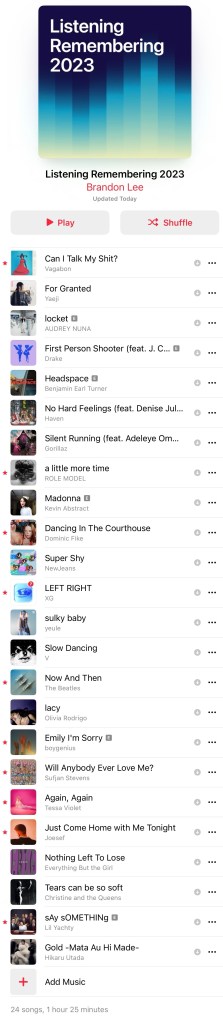
On the 45-minute minibus ride back from the farm last night, I managed to throw together my end-of-year playlist with some not-too-shabby transitions (I recommend turning crossfading on; 3 seconds). This is partly a diary of associated memories and partly what I’ll remember as the year’s best songs. This process usually takes much longer but everything came together on a stomach full of coconut curries and fresh herbs and spices they had us pound in a mortar ourselves.
Merry Christmas! Let’s talk about music this week.
I received the Beats Studio Pro headphones as an early present, in the Sandstone color, only 22 weeks after I wrote about how I thought they were set to be a fantastic update to the aged/obsolete/frankly embarrassing Beats Studio3 Wireless model. In that post, I said I would not be buying them for myself on account of having enough headphones. No promises have been broken, and I can confirm that they sound really good and are comfortable even with my big head. If you’ve found others like the B&O H95 or B&W PX7 too small to fully enclose the bottom of your earlobes, these may do the trick.
I often try to convince myself that a pair of AirPods Pro should suffice for my/anyone’s needs, that a pocketable pair of smart, well-engineered buds are more than enough. Who needs HomePods or other home speakers, over-ear headphones, soundbars, etc.? But just as you can feel the bass from a towering set of speakers in your chest, a pair of big drivers blasting air into your ears do feel something different.
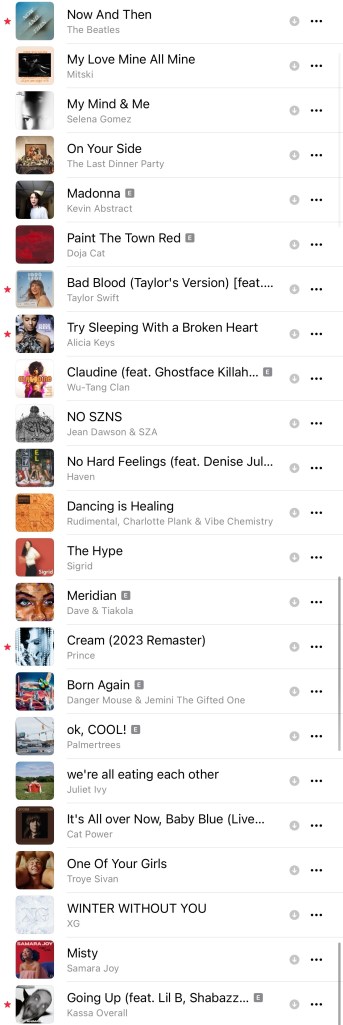
Since I had the week off, I spent hours testing them out, thinking about what music I enjoyed the most this year. I sometimes do an annual wrap-up playlist with all my favorites, in lieu of making playlists throughout the year like I should. But this year I’ve made three: BLixTapes 1, 2, and 3, so I’ll see if I feel like it next week.
In the meantime, I think I’ll name some personal “winners”!
2023 sangsara.net music awards
Best comeback: Damon Albarn (Blur, Gorillaz)
Please note these are personal picks, and I’m not saying Albarn disappeared, but for a long time I’d written him off completely — a remnant of the 90s and mid 00s who still puts out funny tuneless projects every few years that I play through once then delete from my library. When that time came around again with this year’s The Ballad of Darren and Cracker Island from his Blur and Gorillaz bands respectively, I played the albums and was stunned. Did he get his mojo back?! The jams get your feet tapping, the lyrics are somewhere between conceptual backstory and dadaist poetry as usual, and the pretty moments are so pretty they just pop into my head some mornings as I brush my teeth.
Honorable mentions:
Everything But The Girl, Fuse: How often do you hear from a band after 24 years of hanging up the name, and the new stuff is up there with their best work? Sure, Tracey Thorn and Ben Watt kept busy with other projects but I never expected them to release new music together. This coming out of the pandemic was one of its silver linings.
Bob Dylan, Shadow Kingdom: Revisiting one’s old material with the benefit of age and experience made Joni Mitchell’s Both Sides Now (2000) a revelation for me when it came out, and while I still don’t know Dylan’s work well enough after all these years to appreciate every nuance of these new versions, I’m planning to put in the work.
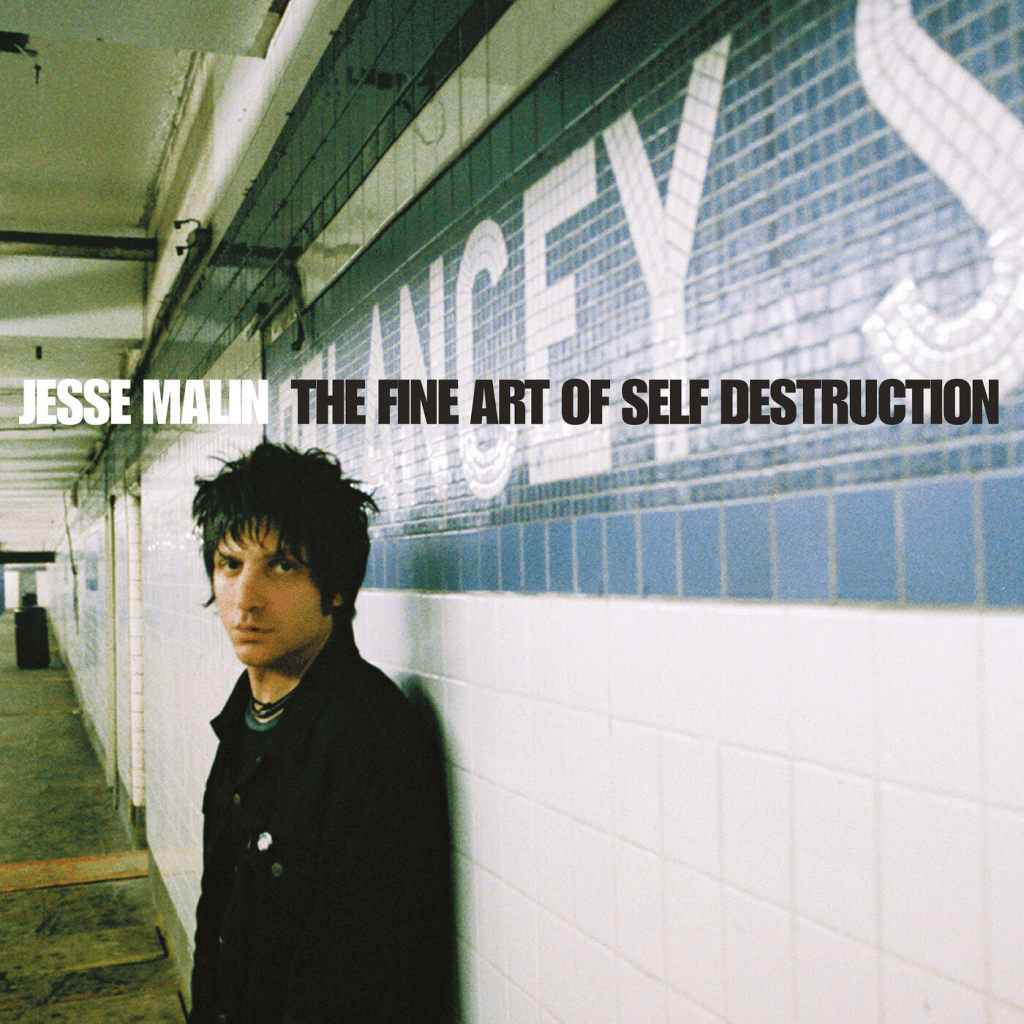
Best reissue: Jesse Malin — The Fine Art of Self Destruction
The 20th Anniversary Edition of this seminal album sadly took on a different meaning a couple of months after it was released. Jesse Malin suffered a freak “spinal stroke” in New York and became paralyzed from the waist down (an update in December revealed an unfortunate lack of progress, with him now seeking stem cell treatments in Argentina). The Fine Art was somehow a formative album for me, although I had no reason to identify with its East Coast bohemian city life vignettes. I suppose it’s universal the same way Springsteen is. This new edition includes 2022 versions of key songs, and although Malin’s voice is virtually unchanged, you can hear the years on his shoulders in these slower, introspective readings.
Honorable mentions:
Portishead, Roseland NYC Live 25: This came out of nowhere, a remastered 25th anniversary edition of an insanely historic performance, and now with three tracks that were previously only in the film. I remember buying it on VCDs (remember those?) from the local HMV. If only they’d remixed it in Spatial Audio… I would die to experience this like a real concert.
R.E.M., Up (25th Anniversary Edition): I already mentioned this one in Week 45.23. As I noticed these last two albums with 25th anniversaries, I thought “huh, 1998 sure was a special year”. And thanks to Apple Music showing other playlists where a song is included, I discovered this one: At Home With Jack Antonoff, which is entirely dedicated to the magical moment that was 1998. Check it, The Smashing Pumpkins put out Adore, Neutral Milk Hotel made In The Airplane Over The Sea, and Natalie Imbruglia sang Torn?! What was in the air?
I’m down to click out you hoes and make a crime scene I click the trigger on the stick like a high beam Man, I was Bentley wheel whippin’ when I was nineteen She call my number, leave her hangin’, she got dry-cleaned She got a Android, her messages is lime green I search one name, and end up seein’ twenty tings Nadine, Christine, Justine, Kathleen, Charlene, Pauline, Claudine Man, I pack ‘em in this phone like some sardines. — First Person Shooter, Drake feat. J. Cole
Best new (to me) artist: yeule
I racked my brain trying to think of another Singaporean-born artist who has achieved critical acclaim overseas singing in English (we have quite a few who make it in Mandopop, in Taiwan and so on), but couldn’t think of another besides yeule, a London-based non-binary 25ish self-taught musician who studied fashion but also paints and streams and has a way with theatrical makeup. Their latest album, softscars, got an 8.5 from Pitchfork, and the last one got 8.3. That’s a hometown hero medallion as far as I’m concerned, and for the record I really like these records. There are interviews online that suggest a tumultuous childhood, and looking at how they’re covered in tattoos and generally act and look like someone who would give an Asian parent a coronary, I can imagine the difficulties faced growing up here were potent inputs for artistry. They also have an extremely-online underground idol type of presence, with a community distributed across platforms — I’d never joined a musician’s Discord server before this one, but why isn’t more of a thing?
One of the things I realized this year was how the ways we as fans connect with artists we love have crossed a line, and the tools and channels we use seem to be encouraging the development of parasocial relationships. This is something that maybe evolved from Asian pop and idols, e.g. handshake events, but I believe is going to become very mainstream from here.
Honorable mentions:
Kassa Overall: A super talented drummer who performs a funky modern mashup of hip-hop and jazz. An indie Anderson .Pakk? Btw I discovered the Seattle radio station KEXP while looking for yeule’s performances, and discovered a wealth of great music on their YouTube channel, as well as a ton of new bands to look into. Fortunately, Kassa Overall also played a set for KEXP and it’s — to use a term Scott Forstall once tried to make happen — absolutely blow away. And that logo with his name on all the band’s hoodies!
Samara Joy: Another jazzy discovery from late in the year, and possessor of an incredible vocal instrument you need to hear. Here’s her album Linger Awhile on Verve Records.
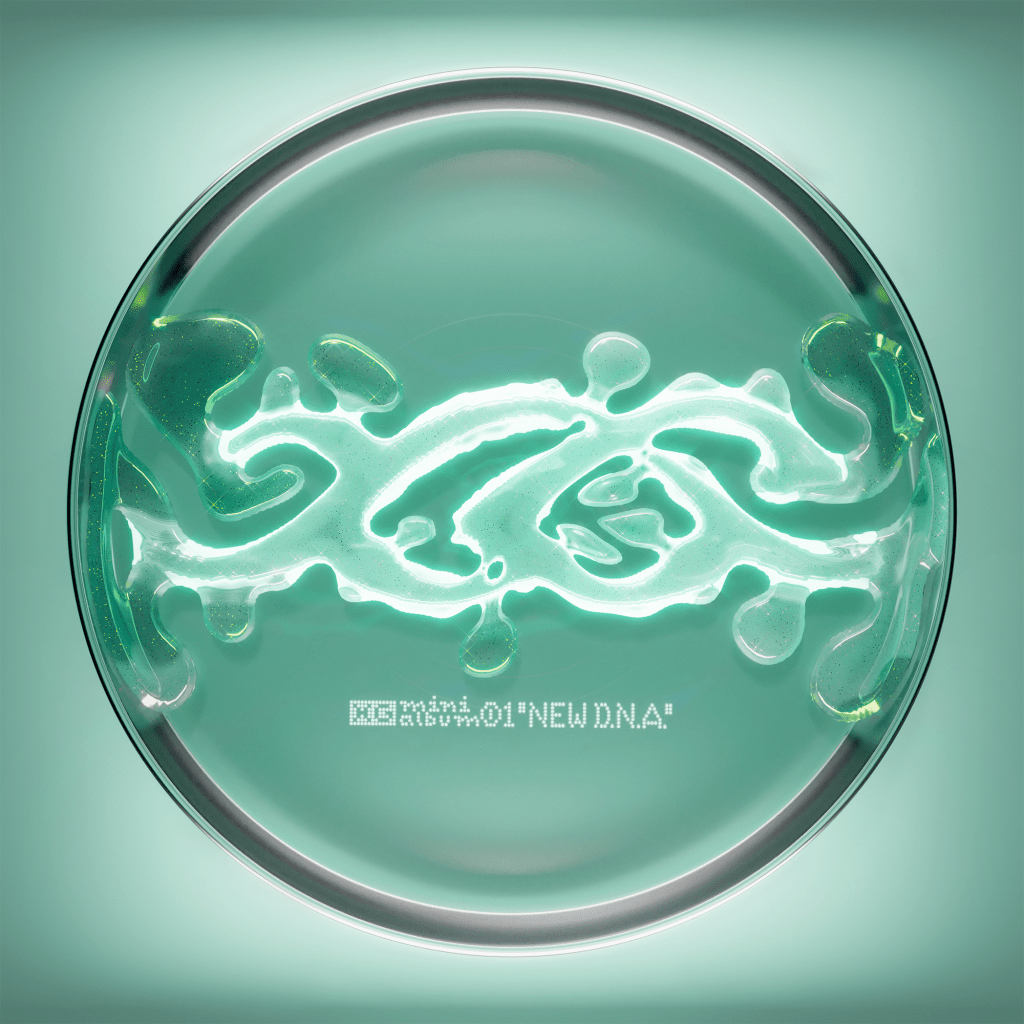
Best album: XG — New DNA
I waited months for the New DNA mini-album. I watched hours and hours of “documentary footage” on YouTube, following the members as they struggled through five years of frankly brutal and manipulative training under their manager Simon’s direction. I learnt all seven of their names. I watched each new single and video drop, and then watched reaction videos. I watched fancams and BTS specials (but drew the line at braving a heatstroke at their Formula 1 concert here). From the moment I first heard them in February, I knew they were different. They’ve doubled their following on YouTube since (currently with 2.41M subscribers), but I think they’re still being slept on. J-Pop groups are never this polished, and K-Pop ones are never this accessible. With every song in English and a style that effortlessly unites hip-hop, electronic, and 90s R&B, these girls deserve to be massive in 2024. I wish New DNA contained all their previously released singles, which would have made a beefier release and maybe helped them break out, but I suspect that’s just the millennial in me talking. Everyone knows nobody listens to whole albums anymore, which makes this category very sad.
Honorable mentions:
Sufjan Stevens, Javelin: It was close, I wanted to call this the album of the year. Deeply moving, and kinda makes up for not having any new music from Joanna Newsom.
Kevin Abstract, Blanket: I never listened to Brockhampton, of which Abstract is a member, and I don’t remember his previous album ARIZONA BABY doing anything for me. But Blanket is something else. Like yeule’s softscars, it draws on 90s alt-rock to create a new sound that goes beyond labels.
Vagabon, Sorry I Haven’t Called: I really need to play this more often. It’s a soulful, elastic collection of ingenious songs and the opener, Can I Talk My Shit?, is one of my favorites of the year.
===
Other media activity:
I finished reading The Paris Apartment and gave it two stars on Goodreads. Please don’t.
We binged the Dead Ringers TV miniseries on Amazon Prime Video. Wow. Rachel Weisz does that incredible thing actors do when they’re bored of playing one character and want to play a set of twins. You literally forget they’re not two people. Also the bloodiest show of the year, not for the squeamish.
Slow Horses is back, and we’re nearly done with Season 3. It’s still very very good, and even better than the last season. I’ve only just discovered they’re based on a series of novels by Mick Herron, of which there are eight, so that’s my 2024 reading challenge sorted.
Christmas is creeping closer, but the Goodreads Challenge angel won’t be darkening my doorstep as I’ve redeemed myself with two weeks to go! James Hogan’s Thrice Upon A Time was the twelfth book of my year, and definitely one of the better ones. It’s a 1980s time travel story where no time travel takes place, but it grapples with ideas about how timelines are rewritten, plus some other global topics that seem quite prescient when read today. Stylistically, it’s aged, but in that classic sci-fi way I love, which takes me back to reading books in the library after school. I think those hours, that precious access back then to a ton of books I couldn’t wait to read, were the part of going to school I looked forward to most. Anyway I’ve started a dumb new book that I should be finishing this year for bonus credit: The Paris Apartment by Lucy Foley.
If you’re looking for reading material, it may interest you to hear that I somehow managed to finish B’Fast, the AI-generated breakfast zine project I mentioned last week. The InstaZine GPT I made to create the content is also available through the same link (I updated the page with some additional usage tips today). Now that it’s done, I’m planning to make a companion breakfast-themed zine called “B’Fast (Brandon’s Version)” which will be made entirely by me, in a way that an AI presumably would not. But probably not straight away.
===
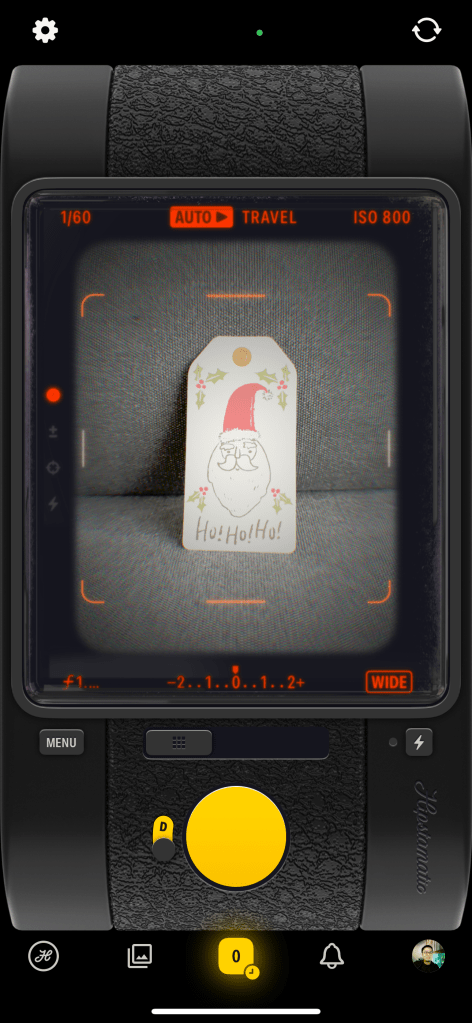
Earlier this year, Hipstamatic redesigned and relaunched their Hipstamatic X app. The “X” was dropped, and they added a new social feed. It was the official replacement for their original app which became Hipstamatic Classic. Where the original was funded by in-app purchases for new filters (at a pace of roughly one new 99c release each month), the new Hipstamatic charges a $30/year subscription, doubling their income from faithful fans.
I used the new app for some photos during my trip to Japan and mostly enjoyed the experience, but it was too buggy and the UI was still too cluttered and confusing (a longstanding problem with the original Hipstamatic app as well) for me to consider continuing with a paid subscription.
Their main problem is that there are now over 300 filters in the forms of “films” and “lenses” and “flashes” that you can combine to make infinite looks, and no good way to make the attractive human-curated combinations they recommend accessible and discoverable. In the last version, they tried to give a few of these combinations the tangible metaphor of being unique “cameras”, each one with a different skeuomorphic body you picked off a shelf, but essentially they were presets you could call up. But you can keep, what, ten of these aside in a little drawer before you couldn’t tell them apart? And so many of the other combinations were left out of sight and out of mind.
Now, after a week of teasing social media posts, wherein a “physical camera” was shown in videos — quite obviously a 3D model rendered in AR, but some people believed they were going to release a hardware product anyway — they’ve released a major update (v10) that tries to untangle the Gordian knot of their UX issues.
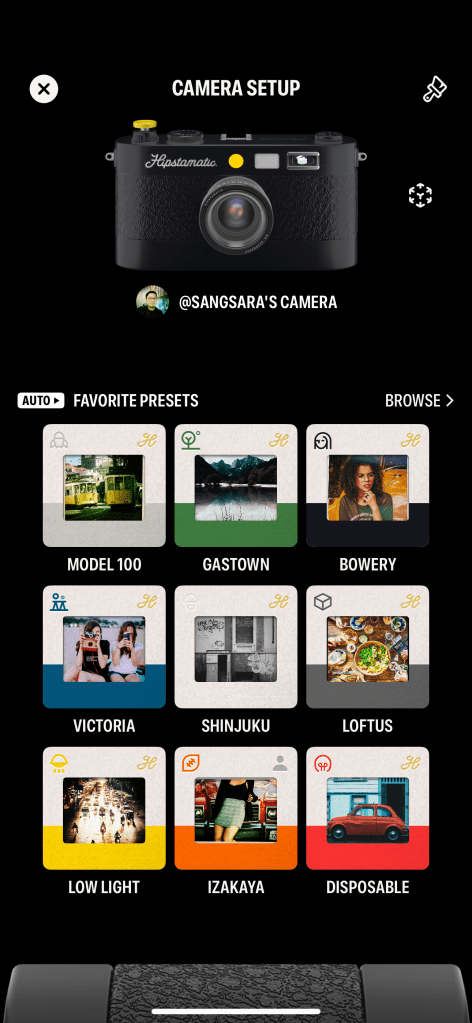
In this new version, they’ve tried to marry what worked in the original app with a new info architecture and set of metaphors to manage the library of looks they’ve accumulated over the last 14 years. You get just ONE skeuomorphic camera to call your own and customize the look of, and this camera is capable of loading up many presets. You can either let the camera detect the scene and choose a suitable preset for it (Auto mode), or specify the preset yourself (Manual mode). There are 9 possible scenes, such as Travel, People, and Still Life, but in a puzzling and unfortunate move, when you start using the app, each of these scenes has just one or two associated presets. That means you’re going to see the same looks over and over, when there are over a hundred more hidden away in a long list. This was presumably done to allow you, the user, to customize your experience and assign your favorite presets to the scenes.
There are two major problems at this point. One: leaving it up to the user to gain their own understanding of all the pre-existing “good combos” and assign them to 9 scene categories is insane. It’s a lot of work to hand off to a customer you hope will pay you money. The team should be doing the work of tagging each preset combo with a recommended use case, AND making it easy to assign them. It’s not currently easy. I had to move back and forth between two sections of the app looking at presets and memorizing their names to go assign to a scene, because these things aren’t placed together. Off the top of my head, it just needs an in-line list of suggested presets (from the aforementioned tagging exercise) on the same screen where you customize a scene’s presets. Perhaps this is coming. I’d argue it should have been in the MVP release of such a big redesign.
Two: as I mentioned, there are infinite possible presets given the number of ingredients they’ve accumulated. You can make your own combos, but there’s no great way to experiment and do this — there should be a sandbox where you can explore each lens/film/flash’s characteristics and try them out in real time to find a good combo. There used to be a section of the app called the “Hipstamatic Supply Catalog” where you could browse all these effects (it was only like a static magazine, but they could have made it interactive), and this now seems to be gone or I can’t find it anymore in the maze of menus and buttons. Perhaps they’re okay with most users just using the curated “good presets” and never making their own, but it seems like a missed opportunity.
I was feeling a mix of optimistic and bored, so I paid for an annual subscription anyway and will be trying to take lots of everyday silly snaps with this, and maybe even use it on my upcoming trip to Thailand. But if you know someone who works at Hipstamatic, please talk to them about taking on some external advice.
===
I finished watching Pluto on Netflix. It’s still a strong recommendation for me; a modern anime made with classic sensibilities and a story that really keeps you guessing. It’s also a very different Astro Boy story, suitable for people who hear “Astro Boy” and think it’s stuff for kids.
We started watching A Murder at the End of the World and I’m really liking it so far. Especially its star, Emma Corrin, who I’ve never seen in anything else before. They’ve got the most strikingly similar face to Jodie Foster, I was sure they were related.
New playlist! BLixTape #3 is done, made up of mostly new songs that I’ve been listening to since mid-October. Add it here on Apple Music.
Why do people never rinse their mouths out after brushing their teeth in the movies?
Isn’t it misleading and bad for oral hygiene education if directors leave it out for pacing reasons?
What’s the recipe for a Vesper martini?
How might a wealthy Indonesian put their billions of IDR to work beyond investing? (asking for a friend, I swear)
Aside: ‘Asking the internet’ used to be our go-to phrase, but in an era where AI might be the one answering, does the term need revising? We used to be able to say ‘asking the internet’ but what about when you’re really asking an AI? They live on the internet and were certainly trained on internet content, but the old definition meant looking up content and new replies created by people; what do we call it when the answers AI generated? Keeping in mind that these answers may well be wrong, and in ways different from how a human might be wrong, it doesn’t feel like we should use the same terms. Or maybe we’ll keep referring to any hive mind as the internet?
Can I go a week without talking about AI? I think those days may be behind us.
Even iA Writer, the Markdown text editor I use for these updates, released a new update with an AI-related feature. No, it’s not automatically finishing your sentences or summarizing your essays. They’re all about the writing experience and process, and so they’re embracing how people use ChatGPT as a writing assistant, but helping them to preserve their own authentic voices. Text pasted from ChatGPT can be visually differentiated from text you wrote yourself, so you can see the Frankensteinian stitches on your monster. It also saves this info in the metadata for provenance.
This suggests that many users send text back and forth to ChatGPT so often that they end up forgetting which bits they wrote themselves, which isn’t a problem I’ve had so far, but going forward, who knows? It’s a good idea and one I’m glad they’re testing, but iA Writer has always been a niche tool for a certain kind of user. I thnk word processors with integrated AI are going to be so widely used and loved by the end of 2024 that no one will care about who did what part.
===
I made and released a new GPT, a game called Chrono Quest where you go back in time to improve humanity’s chances of beating an alien invasion. You can read more about it in my post here, but there are many ways to succeed, limited only by your imagination and problem solving inclinations. As a kid playing text adventure games, I never thought I’d see the day they could write themselves as you played. It even creates illustrations along the way, although those aren’t strictly necessary.
I’ve got some other game ideas I’ll probably get on soon over the Christmas break. OpenAI announced yesterday that the GPT “App Store” meant to open in November was being delayed until early 2024. I guess that gives me more time to learn.
===
It’s not accurate to say I didn’t get anything during the Black Friday/Cyber Monday sales. Pixelmator Pro for Mac was 50% off, and I thought it was time I upgraded to it from regular ol’ Pixelmator, which I must have bought over ten years ago for personal use as a substitute for Photoshop. Those were the days of per-once, use-forever software. To the developers’ credit, Pixelmator Pro is still offered through that model, although their newest app, Photomator, prefers a subscription pricing plan. The latter just won Apple’s Mac App of the Year award, by the way.
Pixelmator Pro is more than just a Photoshop-type editor now, it’s also a video and vector image editor, and comes with lots of templates for creating posters, logos, and so on. And like Photomator, it has useful ML-based features for correcting color, removing noise, and increasingly resolution of photos. These are pretty old-school and conservative by the standards of generative AI — see the recent development of Magnific AI, a tool confusingly billed as “upscaling” when it’s really closer to hallucination. It can subjectively improve the quality of photos by generating plausible (but inaccurate) pixels.
Check out this “upscaling” of Tomb Raider 1.
⚡ OK, this is impressive 🤯
I also wanted to try upscaling Lara Croft from PS1 to super high resolution! Mini step by step tutorial 👇
Stumbling into the New York jazz scene by accident, I found two jazz artists I’d like to recommend: Brandee Younger and Samara Joy. Both already have a couple of albums out.
Younger is a harpist who blends genres and leans modern. You’ll hear some hip-hop production, and it’s really not what you think when you hear the word “harp”. Her new album is Brand New Life, and is apparently based on and inspired the work of legendary harpist Dorothy Ashby, who I was also ignorant of. This is a weird observation, but hear me out. The opening track, the previously unrecorded, Ashby-written piece You’re A Girl For One Man Only, has a haunting melodic fragment that I think I recognize from… the soundtrack of the Japanese game/anime Steins;Gate of all things?!
Samara Joy is a much more traditional vocalist, but what an incredible instrument her voice is. I’ll leave a video of her covering Lush Life below and you’ll see what I mean. I’m about to put her Christmas EP, A Joyful Holiday, on and get some lunch. See y’all later.
(This week’s featured image was taken at a new mall that’s sprung up in Holland Village this weekend. It’s disconcerting; the massive development has been hidden behind hoardings for the past few years, and now revealed, it’s an unexpected contrast to the other old buildings and shopfronts, like a bionic arm of mediocre high street brands slapped onto an aging body.)
Oof, this was a tiring week. Navigating change, physically recovering from a vaccine’s side effects, and having conversations about Christmas gifts, that shit will wear a blogger out. Helping me navigate all this was my astrology GPT, Co—Sign, who would tell me how to deal with challenging situations and to trust in my own nature, even if some decisions felt like bad ideas by other people’s standards.
Of course, the week started off with more twists in the OpenAI management saga, which seems to have ended now with Sam and Greg back at the company, not at Microsoft, and the formation of a new board underway. This pleases me because OpenAI was a company/brand with significant momentum and destroying value of that sort for no good reason doesn’t sit well with me (this may or may not be a reference to something else happening in my life). I’m glad I won’t have to port my collection of GPTs to another product like Poe or whatever.
I used Gen AI to bone up on Silicon Valley mind viruses like EA (effective altruism) and e/acc (effective accelerationism), which I’d kinda grokked in passing but not spent any time specifically reading up on. I have to say I feel myself falling in the accelerationist camp — given current world events, we’re not exactly proving ourselves a worthy species, so we may as well hasten our demise or salvation in every aspect from the upheaval of labor to economic principles. Incidentally bitcoin hit a new high for the year this week, going over $38,000 for a brief period.
I’ve buried the lede, but AI voice recognition and synthesis technology has enabled my favorite gag of the year: this Chinese dubbing of Van Morrison performing Caravan with The Band. It’s sublime; a French chef’s French kiss. It caught me in a moment of weakness and I couldn’t watch the whole thing through because I was dying of laughter. Van shouting “turn your radio up” in Mandarin will live rent free in my head from this week forth. This video is so precious to me I’ve saved a copy on personal cloud storage just in case the tweet goes down.
===
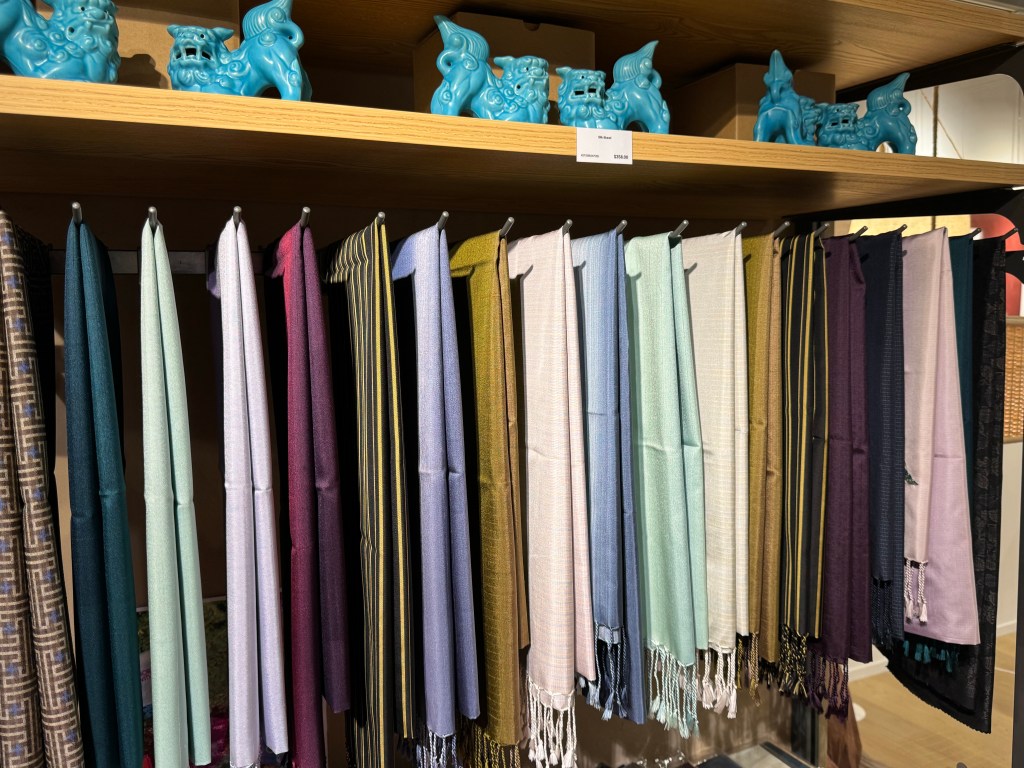
I was excited to hear that the Muji store in Plaza Singapura had reopened after an extensive renovation, now twice its original size and the largest in South-East Asia. We went down on the weekend to take a look, and it had things normally seen only in Japan: plants, bicycles, an embroidery service, renovation services, a wider range of furnishings, frozen food, and regional specialty goods (including $350 silk scarves). Not your average Muji! In fact, it’s billed as a “Global Flagship Store”, and I hope their gamble pays off and Singaporeans vote for more of this with their wallets.
===
Up to episode 4 of Pluto on Netflix now and it’s really the best anime series of the year for me. Just on those late 90s cybernoir SF mystery vibes. This is what the Ghost in the Shell Standalone Complex reboots should have been like.
Also up to episode 4 of Blue Eye Samurai and I’ll admit it’s gotten better. More complexity, somewhat interesting stakes, but the CG anime look with fake low-fps stuttering is getting a little annoying. If I had a modern TV I might actually turn on motion smoothing just to make it a more authentic experience.
I tried real hard to avoid buying a 4K HDR TV during the Black Friday sales and succeeded. Gotta save up funds for the dark days ahead.
Speaking of premonitions, we saw episode 2 of Lessons in Chemistry on Apple TV+ (mild spoiler alert) and let me tell you, my cinematic Spidey sense tingled and I called the event that happens at the end of the episode minutes before it happened. I’m usually quite bad at anticipating TV twists, but something about the atmosphere and pacing and shots just told me what was coming.
We also saw the first two episodes of Monarch: Legacy of Monsters on Apple TV+ and were left impressed. It’s the new series involving Godzilla and other monsters that either belong to Toho or Warner Bros now? Really, the monster custody is unclear to me. But halfway through, as new characters were being introduced in flashbacks, Kim assumed an Asian woman was the mother of a younger Asian woman we’d already seen. And I said, “maybe it’s just an unrelated Asian woman”, to which she laughed, “there are never unrelated Asians”. Which I took to mean in American shows, not the real world, and sadly she’s right.
Many people have been raving about Andre 3000’s new instrumental album with flutes, New Blue Sun, and I’ve tried to get into it, I have. But it’s literally put me to sleep a couple of times, so I’m assuming it’s just not for me.
(This week’s Featured Image is a Dall•E representation of a Chinese Van Morrison impersonator performing in a Muji store.)
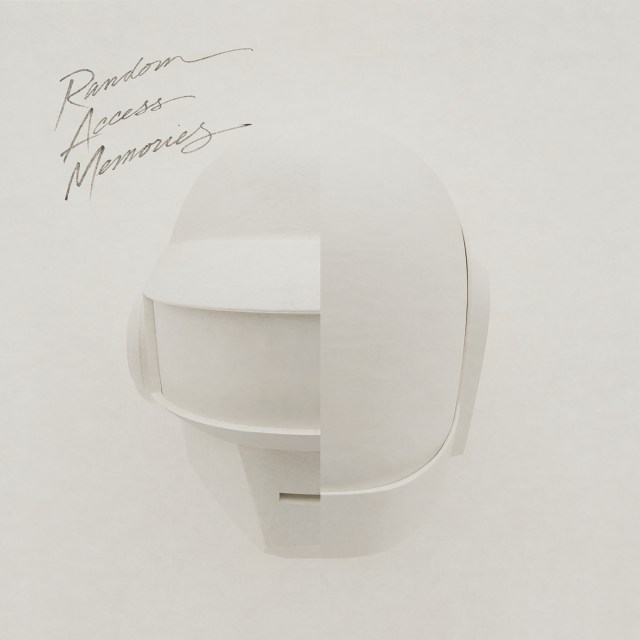
Album of the week: Daft Punk released a “drumless” edition of Random Access Memories and the simple act of removing elements adds an unexpected amount of value. The album strikes a delicate balance between novelty and nostalgia. By removing the drum tracks, it reveals intricate instrumental interplays once masked by robust beats, offering new perspective on familiar melodies. Within minutes, you’ll be surprised at how different this feels. I don’t know how many other albums have been rereleased like this, but it’s a great idea — one made less cynical by the streaming model, as Michael observed in a chat. In the old days, this would just look like trying to sell you a CD you already bought.
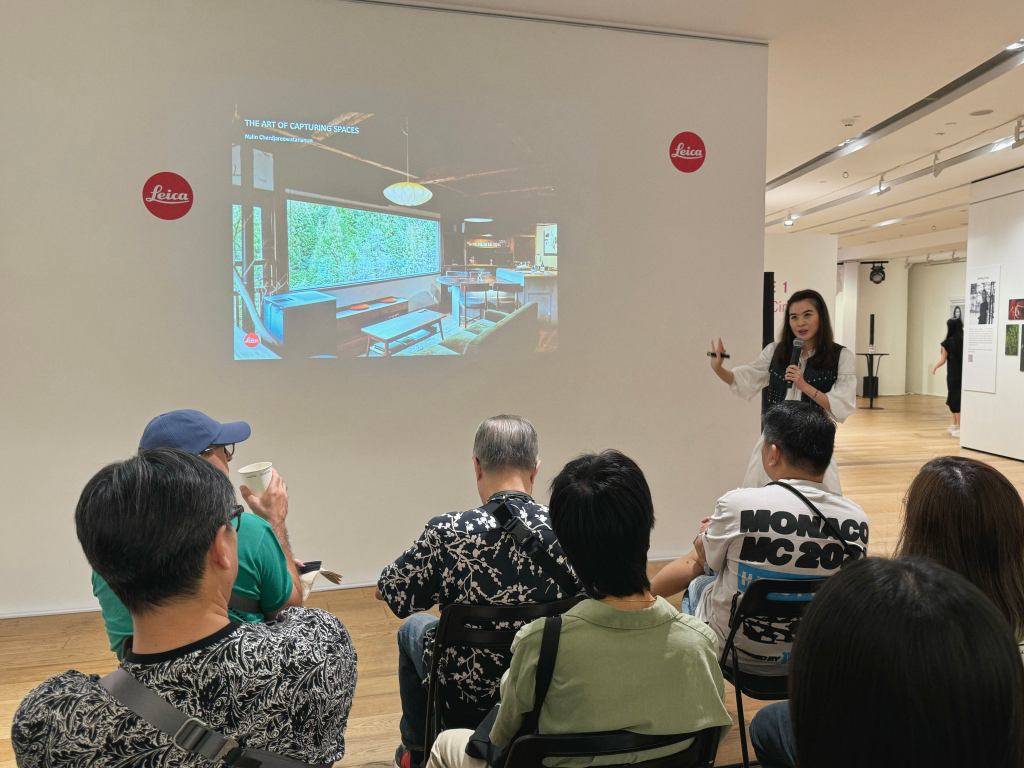
Speaking of cynical purchases avoided, I saw and held the Leica Sofort 2 in person this weekend while attending a talk and exhibition at their annual Celebration of Photography event. The glossy front plastic was not as fingerprint prone as I’d feared, and overall build quality felt a touch better than on the Fujifilm Instax mini Evo: the rocker button on the back panel had more click resistance, the “film advance” lever that prints photos was sturdier and more satisfying to activate, and the flimsy USB port cover on the bottom was slightly firmer and seemed to stay in place. For me, those were the top 3 basic problems that needed to be addressed. The software menus were simply reskinned and not redesigned, as expected. All in all, Leica did the minimum they had to do to make the Fujifilm product a little more premium, but without improvements to image quality, it’s still a very odd product to bear a red dot. I did not feel the urge to replace my mini Evo on the spot.
With Leica’s latest attempt at opening my wallet rejected, my week was free to absorb excesses of a different kind when I met up with Jianjia for a farewell lunch. She decided we would eat Mala at some place called YGF. It turns out that she schedules every meet-up she can there, because she’s addicted to their high sodium spice blend. When I pointed out how salty it was (after she had drunk all her soup, and for the record I couldn’t finish my massive bowl), she was like “huh, maybe that’s why I like it so much. I never had much salt in my food growing up”.
We are all the products of our childhoods, each messed up in our own special ways, which is something I was discussing with a colleague in a work-related conversation one day when I thought, “ooh, I should make a GPT therapist!” Which I called Doctor Talkabout, and tried to bias it towards exploring barriers to happiness that originated in childhood. On the whole, the unlicensed doctor is now quite good at discussing all manner of problems, and I hope it gives better perspectives than vanilla ChatGPT. And just in case psychology and psychoanalysis are a little too… “real” for you? I also made a GPT therapist based on astrology, inspired by Co—Star. I honestly get a kick out of both, and discussing my problems with them has been more effective at managing my feelings than just going in circles on my own.
The number of GPTs I’ve made this past week is now in the double digits (including one for work and a private one for editing text), and so I’ve had to make a category page to see them all on this site. Please check them out.
And yes, some shit is afoot at OpenAI, after CEO Sam Altman was ousted early Saturday morning. Too early to say why, but ChatGPT has noticeably struggled to perform quickly of late, and they’ve both turned off new signups for ChatGPT Plus AND reduced the rate for paying members from 50 to 40 messages every three hours. I have a feeling they might renege on their commitment to open a GPT App Store and share revenue with creators. Time will tell. I wasn’t going to quit my day job for this anyway. And as of Sunday afternoon, he’s supposedly been asked to come back and the board of directors will resign? Pure insanity.
I watched the first episode of Netflix’s acclaimed Blue Eye Samurai Western anime series, and it felt like something an AI wrote. I don’t get the rave reviews just yet; two people described it to me using Kill Bill as a reference point, and you’ll see why in the super derivative first episode. It even uses the same Tomoyasu Hotei song, Battle Without Honor or Humanity, in a cliche sword-forging and training montage sequence. I mean, Kill Bill itself was a pastiche of samurai movie tropes, but this warms them over without any shame. It also has a dash of Afro Samurai to it, however both of these are examples of how to do homage without feeling like copies. Netflix shows are like cloud kitchen-brand versions of fast food items that were inspired by restaurant dishes.
Somehow the show has some talent signed up to it: George Takei, Ming Na-Wen, and Kenneth Branagh provide voices. Its writer and co-creator, Michael Green, was involved in Blade Runner 2049 (but also Branagh’s trilogy of Hercule Poirot films which I do not love). But I’ll give it a second chance anyway; there may be other themes at play here beyond the Othered protagonist seeking revenge. But having seen this, I feel like I have a pretty good idea of what AI-generated mass entertainment would look like, and I’m not down for it anymore. I’d like for AGI to come and take away all the other jobs in the world, leaving us humans free to come up with new and more creative ways to show sword fights.
So imagine my surprise when I started up Pluto (also on Netflix) after two episodes of Blue Eye Samurai, and found it the total opposite in terms of quality. You don’t know where the story is going even if some ideas, like androids that grapple with unexplained dreams from a past life, are familiar and were explored before in other works. It takes its time with characterizations, and aims for a timeless beauty that goes beyond slow-motion action scenes. Polygon has a nice piece about it, but don’t read anything before you’ve seen the first episode, just trust me on that.
This week in artificial intelligence was a big one: Humane unveiled their highly-anticipated wearable, while OpenAI made strides with ChatGPT enhancements.
The Humane Ai Pin
A lot has already been said about the letdown that the Humane reveal was, mostly by people confused by the presentation style of the two ex-Apple employees who founded the company.
If you’ve seen Apple events and Humane’s 10-minute launch video, you’ll note the contrast in delivery and positioning. Apple tries to couch features and designs in real-life use cases, and show authentic enthusiasm for what they do to improve customers’ lives (Steve was unmatched at this). Humane kicked off with all the warmth of a freezer aisle, missing the chance to sell us on why their AI Pin wasn’t just another tech trinket in an already cluttered drawer. They puzzlingly started with how there are three colors available and it’ll come with extra batteries you can swap out, before even saying what the thing does! The rules of storytelling are quite well established, and why they chose to ignore them is a mystery.
A lot was also said about how two key facts in the video presentation, provided by the AI assistant so central to their product, turned out to be inaccurate. One was about the upcoming solar eclipse in 2024 (and Humane’s logo is an eclipse! How do you get this wrong?), and the other was an estimate of how much protein a handful of nuts has. It’s a stunning lack of attention to detail that this was not fact-checked in a prerecorded video.
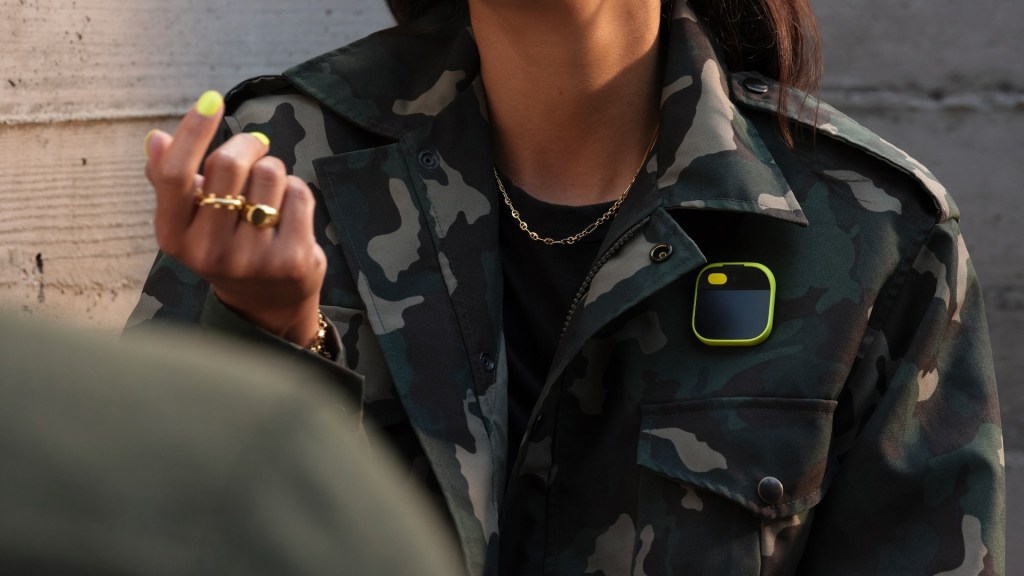
Personally, I have been waiting for the past five years to see what this stealth startup was going to launch, and as the rumors and leaks came out, I was extremely excited to see an alternative vision for how we interact with computers and personal technology. What they showed did not actually stray from what we knew. An intelligent computer that sees what you see, is controlled by natural language, and is able to synthesize the world’s knowledge and project it onto your hand in response to queries is amazing!
The hardware looks good, channeling the iPhone 5’s design language to my eyes, and I’ll bet they had to pioneer new ideas in miniaturization and engineering to get it down to that size. I expected it to cost as much as an iPhone, but it’s only $699 USD, which feels astoundingly low. That’s not much more than what we used to pay for a large-storage iPod.
The disappointment is in their strategy. By positioning it as a replacement for your phone rather than an accessory, they’ve reduced the total addressable market to a few curious early adopters and people who want to address having a tech or screen addiction. The kind who intentionally buy featurephones in 2023. I think their anti-screen stance is interesting, but it doesn’t win over the critical mass necessary to scale and challenge norms.
The Ai Pin comes with its own phone line for messages and calls (for $24/mo), so it’s not going to be convenient to use this alongside your phone, and I would not give up my phone while this is still half-baked — I say this kindly, because even the iPhone launched half-baked in many ways. For many things that we have become accustomed to in life, there is no substitute for a high-definition Retina display capable of showing images, video, and detailed or private information when necessary.
Do I believe that Apple can one day get Siri to the level of competence that OpenAI has? I have to hope, because the Apple Watch is probably a better place for an AI assistant to live than in a magnetically attached square on my T-shirt. In any case, Humane seem to have taken a leaf out of their old employers’ playbook, and will be releasing this first version only in the US, and so whether or not I would buy one is a moot point.
OpenAI and GPTs
Speaking of OpenAI, it would seem that they’re still the team to beat when it comes to foundation models. The playing field is full of open-source alternatives now, including Lee Kai-Fu’s 01.ai and their Yi-series models, but as a do-it-all company offering dependable access to dependable AI, OpenAI seems unassailable.
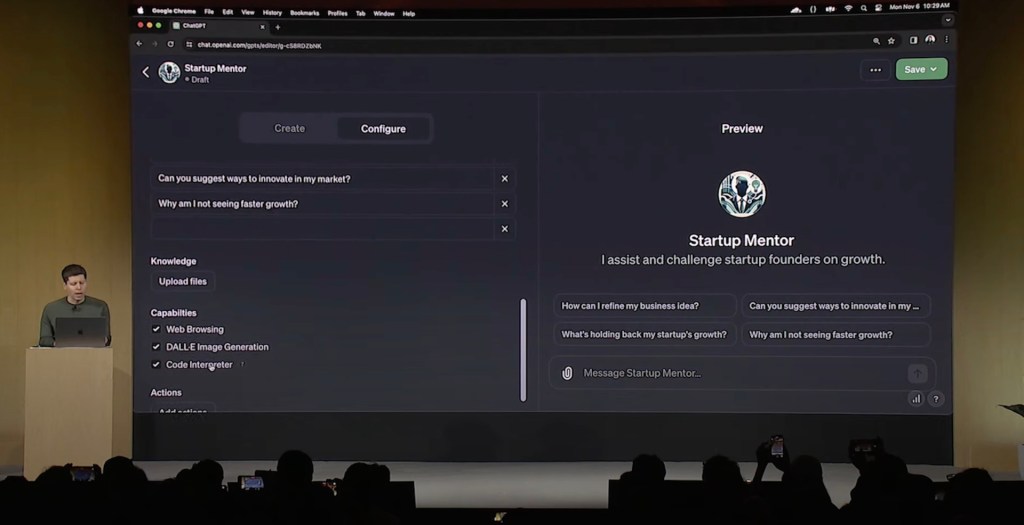
They announced enhancements to their models, increasing context windows and speeds while halving prices for developers, and launched a new consumer-friendly product: customized instances of ChatGPT that work like dedicated apps, which they call “GPTs”. In effect, these are a version of Custom Instructions which were introduced earlier this year as a way to tell ChatGPT how to behave across all chats. But sometimes you’re a researcher at work and sometimes you want to have some dumb fun, thus I’m not sure they caught on.
So now GPTs let you specify (pre-prompt?) different contexts and neatly turn them into separate tools for different purposes. Importantly, you can now also upload knowledge in the form of files and documents for the agents’ reference in generating replies. This makes them more powerful and app-like, and normal people like me with no coding ability can create them by telling a bot what they want (in natural language, of course), or writing prompts directly. I recommend the latter, because chatting with the “Create” front-end tends to oversimplify your instructions over time and you risk losing a lot of detail about how you want it to work and interact with users.
So what does the launch of these GPTs mean? Well, for many of the developers who were riding the OpenAI wave and only used their APIs to build simplistic wrapper apps, it’s a sudden shift in the tide and they’re now forced to build things that aren’t reducible to mere prompts.
What we’ll soon see is a GPT gold rush. Brace yourself for a stampede of AI prospectors, each hunting for their piece of OpenAI’s bonanza — the company will be curating and offering GPTs in a “Store” and sharing revenue with creators. That’s a different model than their APIs where developers pay OpenAI for compute and charge users in turn. Here, users all pay OpenAI a flat fee for ChatGPT Plus and can use community-made GPTs all they want (within the rate limits).
Hear everyone talking about a viral GPT that makes it so easy to do X? When you want to try it out, you’ll see a call-to-action to sign up for ChatGPT Plus. This signals to me that launching GPTs is a strategy to drive paid account conversion, which begins the lock-in that OpenAI needs in order to make ChatGPT the new OS for services, not unlike how WeChat is the base layer that runs China, regardless of whether you use iOS or Android. Eventually you won’t even need to know about or choose the GPTs you use; the master ChatGPT system will call them as necessary. We may not be headed for a screen-less future, but we’ll probably see an app-less one.
My GPT projects
Of course I’m playing with this and making some of my own! Did you think I wouldn’t, given the ability to create AI things without coding?
I’ve got a list of ideas to work on, and so far I’ve acted on three of them, which are explained on this blog in separate posts.
✨ PixelGenius was my first, and contains the most complex prompt I’ve ever written. It started out as a tool to generate photo editing presets/filters that you can use on your own in any sufficiently advanced photo editing app with curves, H/S/L controls, and color grading options. You can just say “I want to achieve the look of Fujifilm Astia slide film” and it’ll tell you how to do that. But now it does more than just make presets, which you can find out about here. More details and examples in the blog post here.
SleepyTalesSleepyKills
😴 SleepyTales was the second, and I’m still amazed at how good it is. It’s designed for Voice Conversations mode (currently only in the mobile app), so you can get a realistic human voice reading you original (and also interactive, if desired) bedtime stories. These are never-ending, long, and absolutely boring tales with no real point, in drama-free settings, told in a cozy and peaceful manner. It’s the storytelling equivalent of watching paint dry, yet oddly mesmerizing. More on this and the next one here.
🥱 SleepyKills 🔪 was born from a hilarious misread — I told Cien about it and ‘mundane’ became ‘murder’. So if your bedtime stories of choice are usually true crime podcasts, then you’re in luck. This GPT agent will create an infinite number of dreary murder stories, but stripped of all suspense, mystery, and excitement. They’re about as exciting as real police work, not the flashy TV investigating sort. Again, I still can’t believe how cool it is to hear these being written and read in real time.
People have said the Voice Conversations feature is a game-changer for ChatGPT, but I didn’t really get it at first when using it for general queries. IMO, the killer app for it is storytelling. I’ve been using the voice called Sky for both the above bedtime stories apps, and it works well.
Films
I watched David Fincher’s new film The Killer in bed on my iPad, just like he would want me to. Even then, it was spectacular, a cinematic victory lap for both him and Michael Fassbender. It plays with genre conventions, expectations, and riffs off his own body of work. There are some great moments and a fantastic performance by Tilda Swinton. 4.5 stars.
Speaking of performances by English actors, I also watched Guy Ritchie’s Operation Fortune: Ruse de Guerre, which is both a terrible name and attempt at creating a new globetrotting spy/special ops team franchise. But, he has a certain touch even when making shit, and the film is a hell of a lot of fun, bringing out the best in Jason Statham (who tried to hold up The Expendables 4 and failed), as well as a villainous turn from Hugh Grant that — I shit you not — is easily a Top 10 career highlight for him. Jason Statham in the right hands is a very different animal than when he’s doing B material; I don’t know how to explain it. I actually gave it 4 stars on Letterboxd and won’t take it back.
Album of the week
REM’s Up received a 25th Anniversary Edition, with some tracks seemingly remastered and a whole second “disc” of an unreleased live performance they recorded on the set of the TV show Party of Five?! Sadly it is not a track-for-track live performance of the album, which would have been great. There’s no Dolby Atmos here either, so I’m just taking this as an opportunity to revisit this album.
I can still feel the gut punch from the day Bill Berry bowed out, post-aneurysm. I was afraid they might break up, and REM was absolutely my favorite band back then (maybe still), so when Up came out, I was hopeful for a new and long-lived chapter to begin. And yeah, it was a weird album, playing with new sounds and using drum machines — not unlike The Smashing Pumpkins’ Adore album after Jimmy Chamberlin left. But many songs were great, some even recognizably REM. The band kept going for a few more albums, each a new spin on an evolving sound. And in true style, they dropped the mic at just the right moment.
I’ve been on the edge of a flu, with intermittent fatigue and headaches and a warm scratchy feeling at the back of my throat that makes me remember being ill and nauseous, but it hasn’t gone full blown. Maybe I’ve actually got the flu, but the vaccine I got a few weeks ago has inspired my immune system to resist and now my body is locked in a hundred-year war. I write this on Saturday with a full-day social test (wedding party) to attend tomorrow that will probably push me over if this doesn’t get better.
While on the subject of health: I suppose you’re officially old when you buy yourself a blood pressure monitor. It was a conversation about strokes that got me on it, and it was a very quick impulse purchase that went from idea to research to purchase in under half an hour.
I think this is the Omron model I got. I didn’t know they made them this small nowadays, not to mention that you can measure BP from a wrist! It connects to your phone via Bluetooth, and the Omron Connect app also syncs with the Apple Health app — which was the selling point for me. Omron’s app looks overly complicated and isn’t very pleasant to use, but it doesn’t matter since you can just overanalyze and freak out over your data more comfortably in Apple Health alongside your other health metrics.
===
The only music news of the week that mattered was the release of the final Beatles song, Now and Then. This was the third and last John Lennon demo on the tape that gave us Free as a Bird and Real Love back in 1995. The audio quality on this one wasn’t good enough for it to be finished back then, but now it’s relatively trivial to separate vocals from instruments using tools built on machine learning — one music YouTuber reviewing the song literally demonstrates it himself using an online service — and so Paul and Ringo were finally able to complete the song using guitar bits George recorded in the ’95 sessions, making it probably the last song we’ll ever get with all four Beatles on it.
It’s a lovely song and I’m glad we’re around to enjoy this historic moment of celebration and closure. I don’t mind posthumous vault releases as long as they’re done with love, care, and good intentions, and the short film above goes to lengths to assure everyone that John would have gotten a kick out of this. Real Love is one of my all-time favorites, just for the beautiful melody in its chorus and refrain, and the existence of these three songs together are like a treasure from a parallel universe where the Beatles never broke up (a scenario that the Apple TV+ show For All Mankind tantalizingly visualizes for a moment in one episode). It’s extra heartbreaking that all three songs read to me like products of John’s regret and wish for reconciliation.
The incredible clarity they were able to get out of the tape recording, though, makes me want new versions of Free as a Bird and Real Love, remastered with modern technology. I don’t care who complains about opportunism or George Lucas-ism, it should just be done to close the chapter off neatly and in the best possible way for fans. Get it done, money men!
===
Other bits:
Normally when you see too many sequels and the drawing out of stories, it comes with lowered quality, formulaic laziness, and/or the jumping of sharks, but Only Murders in the Building topped itself with the third season and now I can’t wait for a fourth. (Spoiler) I didn’t expect them to really go down the musical route with proper abandon, but they did and that bloody Pickwick Triplets patter song was stuck in my head for days. And they only got bloody Meryl Streep to be part of it, Christ.
Okay, but you know what IS a scummy money grab? The Backbone controller company pushing their old designed-for-Android USB-C models at the launch of the new iPhone last month, telling early adopters to step right up and get them (and then messing up the release so many of us received ones without the iPhone-supporting firmware), KNOWING FULL WELL they had a 2nd-generation model waiting in the wings that would support the new iPhones even better! Old inventory cleared at full price, the new model then quietly dropped, with redesigned dimensions that mean the camera bump no longer presses up against the chassis, bending it, and even supports being used with a case on. I was a big supporter of their work, but no longer. They’ve apparently been deleting critical posts from their subreddit, if you can believe such foolishness.
Three months ago I switched mobile telcos from Circles to M1, lured by a bigger data package for the same price. Shortly after that, M1 migrated many users to new plans (it was not a very smooth process either, fraught with confusion and poor communications), and sort of reneged on a basic tenet of my “contract” (technically it’s a contract-free plan): once free, 5G would now be a paid add-on after six months. Fudge that, I said, and now I’m back with Circles for (yet again) even more data and a lower monthly price to boot. The porting process was also flawless compared to my experience moving to M1.
While looking for the above link to my own recent post, I chanced upon older entries talking about local telcos and got sucked into reading notes from my younger self. It’s one of the greatest joys of keeping a blog, and yet I rarely take the time to. I’ll post a few links now.
As the iPhone and Android wars heated up, I asked in 2015 what telcos could possibly be thinking by advertising Xiaomi devices alongside iPhones in their weekly newspaper advertising spreads. I said they were legitimizing cheaper Chinese devices that customers could easily buy through other retail channels for a couple hundred bucks, which would come back around to hurt telcos by dispelling the idea that one should sign a two-year contract (with high margins baked in) to get a good phone. I think I was right? Who gets a phone with a contract these days?
Back in 2006, I noted the opening of the Fifth Avenue Apple Store in New York and called it the most beautiful storefront I’d ever seen and wanted to visit someday — it would be 10 years before I did. And then there was this post from 2017 when Singapore finally got our first Apple Store.
Reader, I was even there when the fresh and ultra-luxe ION Orchard mall opened its doors in July 2009 — a fact that seems mindboggling today; hasn’t that building been there forever? At the recent team barbecue at a colleague’s condo overlooking Orchard Road, we were discussing some of the visible buildings and I discovered that our youngest team members are so young they don’t remember how the site of ION Orchard used to be a grassy mound of park-like open space. They were rightfully incensed when told that it used to be a popular picnic spot for Singapore’s domestic helpers until ION’s construction drove them away.
That just reminded me of the famous murder case where a bag of body parts was found dumped near that park.
In a 2016 post, I said that the future of gaming looked like cloud saves, cross-platform compatibility, and game designs that allowed you to play for both hours on a console or minutes on mobile. Back then, my signal was universal binary games on Apple TV that also ran on your iPhone. In 2019, Apple Arcade launched and that model was a core requirement for developers: all games had to support Mac, Apple TV, and iOS. And this week, Resident Evil Village launched for iPhone 15 Pro, as well as Macs and iPads with M1 chips or newer, the first in a new wave of console-quality titles you can both play at home and on-the-go. I think it’s a direct threat to whatever the Switch’s successor will offer, but the picture won’t be complete for a few more years.
Reading my posts from the year of living well (on sabbatical) is so bittersweet. On one hand, I was a bum reading books, watching films, and drawing all day. On the other, it was not unfulfilling? The little bit at the end of this weekly update from Jan 2022 reminded me how great a game Disco Elysium was and that I should replay it someday soon.
(This week’s featured image was created by DALL•E from the idea of “The Beatles Resurrections”)





































 sangsara.net