Rainy season is reading season. After finishing There Is No Antimemetics Division for my book club, I also wrapped up Taylor Lorenz’s Extremely Online, which is sort of a brief history of social media and the influencer economy. I highly recommend the former for fans of SF stories involving time, unreliable memories, and the nature of reality; some members of the book club who are into Doctor Who likened it to that, but I wouldn’t know.
Then I decided to start getting into the mood for our holiday by reading some Japanese fiction. I began with Mieko Kawakami’s Heaven (a rough story about school bullying), which I thought would keep me occupied for a while, but before I knew it, I’d finished it along with Satoshi Yagisawa’s Days at the Morisaki Bookshop and More Days at the Morisaki Bookshop, two entries in the cozy Asian fiction wave dominating the local charts. Other entrants include Welcome to the Hyunam-Dong Bookshop and Before the Coffee Gets Cold by Hwang Bo-Reum and Toshikazu Kawaguchi, respectively. When the going gets tough, people start fantasizing about quitting their jobs and opening cafes or bookstores, and I think that explains the sudden popularity of this micro-genre. Incidentally, I bought a couple of these books for my mother on her recent birthday because I thought she’d enjoy the vibes, although already retired.
For the avoidance of doubt, all of the above books were three stars for me on Goodreads with the exception of Antimemetics, which got a 5-star rating. But the Morisaki Bookshop series makes reference to many great works of Japanese literature, and so I decided to try reading some Mishima on this trip. I’d read The Temple of the Golden Pavilion as a young adult, and it probably just glanced my frontal lobe at the time.
In a flash of pure coincidence soon after, I was scrolling through MUBI and came across Mishima: A Life in Four Chapters (1985) by Paul Schrader (who wrote Taxi Driver), an American Zoetrope biopic executive produced by George Lucas and Francis Ford Coppola. I watched it immediately, and it’s an incredible work of cinema — why isn’t this talked about more? It only covers the last phase of his life, up until his famous act of terrorism/suicide, which makes up only one of the four chapters. The other three are dramatizations of his work, literally staged on theatrical sets and shot with more care and inspiration than anything you could buy today with $100M in streaming service money.
In a further act of cosmic coincidence, I saw a Facebook post from Paul Schrader being shared on Twitter, having an AI moment of crisis when he found that ChatGPT outdoes him when prompted to provide “Paul Schrader script ideas”.
Writer of the legendary movie Taxi Driver is having an existential crisis about AI pic.twitter.com/5H89SWUKn9
Looking back on holiday photos from March 2023, I rediscovered my rediscovery of Hipstamatic, which had just launched its new subscription-based app at the time. Looking at those photos brings back fond memories; they are “ruined” in a good way — mundane everyday scenes somehow imprinted with the nostalgia of the moment through imperfect filters (it helps that I know that the original, normal photos lie underneath and can be accessed with a tap of the Revert button). My setup at the time was to use the Ricoh GR III as a main camera for all photos that needed to look good and accurate, and to reserve the iPhone + Hipstamatic for casual, silly snapshots. Otherwise, you have two tools competing for the same job. I’m now finding that idea attractive again, except both Hipstamatic apps are quite a pain to use, UI-wise.
I watched this video of “Best Apps in 2024” from the MKBHD Studio team, and decided to give Dazz Cam another try. It’s surprisingly powerful! Some of the vintage “cameras” you can choose from use RAW processes, and you can have it save both the original RAW file and the filtered results separately. So I may end up using this to “gimp” my iPhone rather than Hipstamatic. Plus, the subscription to unlock all its features is only $10/yr compared to Hipstamatic’s $40/yr. I don’t even think you need it as some of the free filters are good enough. I only wish it would use the underlying RAW and not the JPEG when importing an existing image from your library.
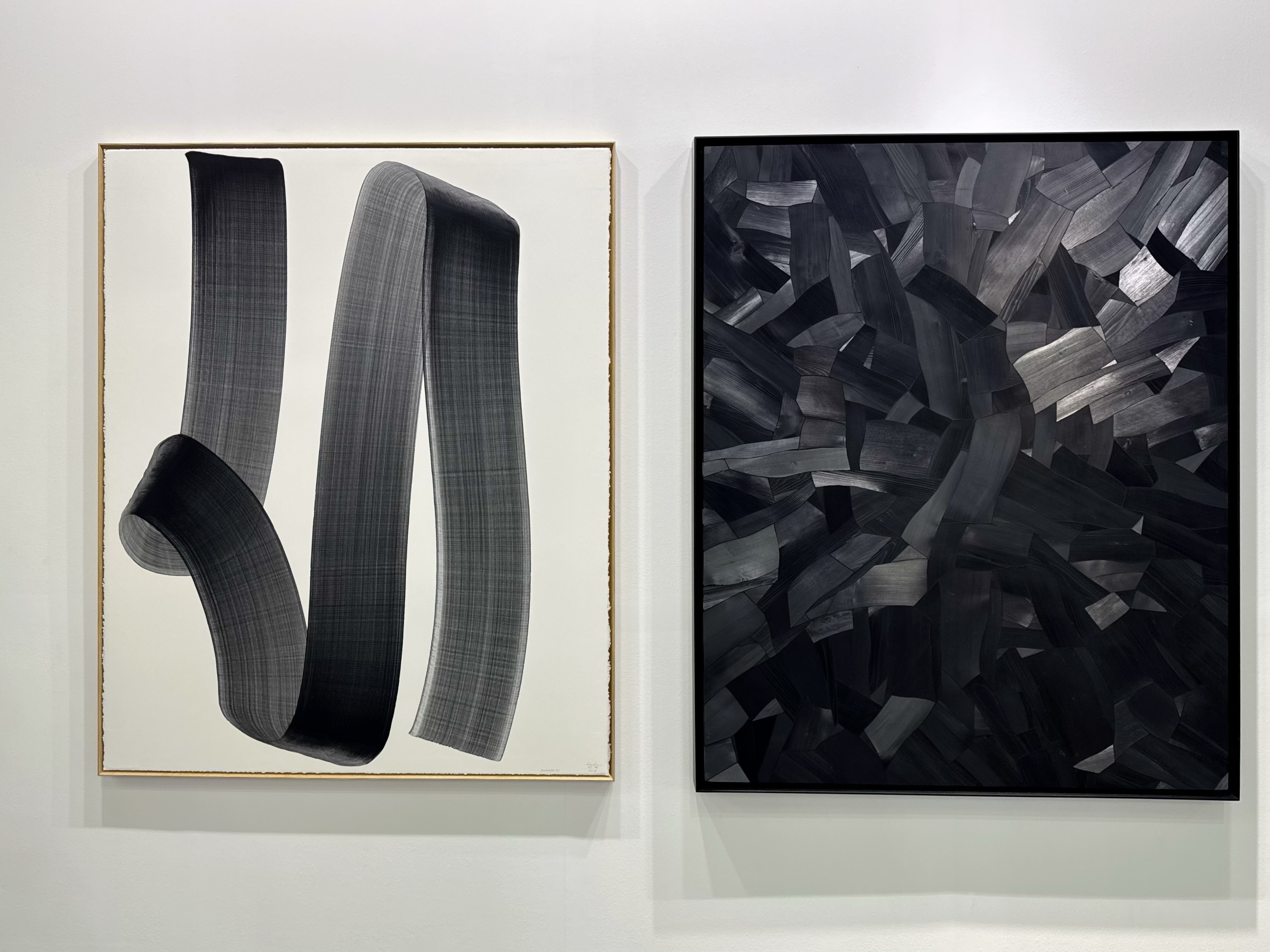
We had free tickets to the ART SG fair at the Marina Bay Sands over the weekend and dropped by for a quick look. It was crowded as hell and I was reminded why I don’t think these things are a great way for the general public to see art; it’s mostly a trade show geared towards buyers, and so the scale is too overwhelming for anything to really be appreciated. Not only that, but the selection this year didn’t really make much impact. I was looking out for more of the humor and playfulness I saw at the 2023 edition, something to make light and sense of the trauma we’ve normalized, but it was sorely lacking. I did like the pair in the featured image above, though, as they reminded me of some other works I’ve seen before, including the Act of Emotion digital series by Kelly Milligan.
Trump launched his own memecoin on Solana this weekend, days before the inauguration, and I believe it went up to a market cap of $70bn. That would qualify as a very funny and absurd art project, from ‘probably the greatest’ (scam) artist, if it wasn’t real and thereby depressing.
Just 10 days to Christmas, and I finally got a sense of it happening through my first gift exchange and a couple of meetups. The first was with a few workplace alums, after one suggested to me that it would be nice if we all caught up (and so I ended up getting the job of organizing, which I bumbled through). It was nice after all, and I got to spend time with some people I hadn’t seen in years. The second was last night at a friend’s home that impressively decorated for the season, complete with a playlist of Christmas classics greeting us at the door. I think that was the moment it became real for me.
I brought my Leica D-Lux 7 out of hibernation this week for a few photos, mostly to put its aging battery to the test. It fits in my new Bellroy sling (the Ricoh GR III is still significantly smaller and lighter, albeit without a zoom lens), so I’m entertaining the thought of bringing it on our next holiday. Oh, that’s right. We’ve just booked a trip to Tokyo next year, wayyy behind the trend, but hopefully everyone’s had their fill of Japan by now and it’ll be less crowded when we get there. If I do need a spare battery, I’ll pick up the Panasonic equivalent model from Yodobashi Camera or something.
Another reason for the renewed interest was an update to the Leica FOTOS app (which connects to cameras) that came out this week. For the uninitiated, ‘Leica Looks’ are essentially a series of live filters that can be installed onto newer cameras. Owners of older models have been out of luck, but with this new update they can be retroactively applied in the app to any JPEG taken with a Leica camera. While trying it out, I discovered that photos I’ve been taking with the Leica LUX camera app also qualify as “taken with a Leica camera”, meaning you can apply these Looks to iPhone photos for free as well.
So far, I’ve been surprised by how well photos from its Micro Four-Thirds sensor have turned out, especially in daylight. Low light photos are quite smudgy/noisy if you elect to use an ISO value over 3200. I’m fortunate that Leica’s updated D-Lux 8 model this year was such a relative disappointment: a surface-level redesign of the camera’s body and UI without any improvements to the lens, sensor, or processor. It’s good news for me since an uncompelling update is money saved. Ignoring the PS5 I got in May, NOT upgrading stuff has been a bit of a theme this year. I don’t even covet Fuji’s X100VI camera one bit, maybe because it’s been so (artificially?) rare and overpriced.
===
Our new broadband line was finally activated, and it’s resulted in a doubling of accessible bandwidth. In one speed test, I got over 1.1 Gbps (symmetrical) on my iPhone. At this point, our fleet of un-upgraded hardware is holding us back more than the network. In a couple of years, when every device in the house actually supports WiFi 7, I’ll upgrade the router and unlock the full 10Gbps that we currently have.
How little use am I making of this plentiful bandwidth? Well, listening to a lot of Apple Music Radio.
You probably missed this because it hardly made the headlines, but Apple Music doubled the number of their live, hosted radio stations from three to six. Apple Music Club, Chill, and Música Uno now join Apple Music 1, Hits, and Country. In a world where personalized, algorithmic stations/playlists are plentiful and pedestrian, I think these human-led stations are a wonderful zig to Spotify DJ’s zag.
Some of the best artists I’ve discovered this year were serendipitous encounters while listening to Zane Lowe, Rebecca Judd, Matt Wilkinson, or Dotty taking listeners through their latest picks on Apple Music 1. I think receiving and interacting with other people’s passion and opinions is a key part of the cultural experience of music, so these DJs play an important role that is growing ever smaller. It’s so good to see Apple Music expanding their Radio offering rather than shutting it down.
I used to have a Shortcut on my phone to launch Apple Music 1, but with these new stations it seemed time to build a quick launcher. Now, I can start live stations and my personalized stations from the Control Center, Today Screen, or even with the Action Button.
===
iOS 18.2 came out of beta, with new Apple Intelligence features like Genmoji and Image Playground. They are okay for a bit of fun, but definitely won’t cause any artists or illustrators to become unemployed. It’s interesting to ask if they ever will, because Apple could certainly get the models there with time, even with fully on-device inference, so it’s just a question of intention. But I don’t think there are any brakes on this train and every company is onboard, they’ve just bought different tickets.
I just got back from a Sunday night dinner date in the East at a newish place called Carlitos. It was new enough that it didn’t have a Swarm entry, so I made one. That reminded me that the Foursquare app is about to be shut down, and I’m choosing to be optimistic about Swarm’s future. We’ve been promised some meaningful changes in the coming year and I hope the rethink will bring check-ins back in vogue.
Vision Pro updates
Kim got back from her work trip and the first thing we did was head out to the Apple Orchard store to pick up the new Belkin Head Strap that everyone’s talking about. And not a day too soon, because it’s now backordered into mid-December!
It is what it looks like: the top bit of Apple’s own Dual Loop Band, which you can attach to your existing Solo Knit Band — a rare best-of-both-worlds occurrence where the comfort, adjustability, and non-hair-mussing qualities of the Solo are met with the weight-relieving structure of a top strap. It works well, and I’m never taking mine off. I was using the Dual Loop before, but its thin strap that pulls upwards near the base of the skull cannot compare to the quality, fit, and comfort of the Solo band, which is such a wonderful design and product that it belongs in a museum.
I haven’t tried Spigen’s slightly cheaper version, but having read many reviews of how poor its adjustment range is, I can’t recommend you take the risk. You’ll want to get the tightness just right, so Velcro is the right solution, and Belkin has rightly made it.
Belkin was never an accessory maker I took too seriously in the last two decades, I mean, they made alright cases and cables, but I’d never choose them over first-party versions. That seems to be changing. This new Travel Bag for Vision Pro is further proof; it’s significantly smaller than Apple’s own Travel Case, and half the price.
1) Should have been in the box instead of the dual strap
2) $50 is overpriced but you’ve already paid $3500 so hard to complain.
3) When Apple knows an accessory is needed but doesn’t want to put its brand on it, it turns to Belkin (owned by a Foxconn subsidiary) https://t.co/oKM5HSIVi5
Career leak publisher Mark Gurman implied in the tweet above that Belkin is Apple’s secret partner; the one they go to when they want an accessory on the market but don’t want to make it themselves. The fact that they stock Belkin’s products in Apple Stores is supposedly proof. In this world, Apple knows the practical flaws of their own form-over-function accessories, and nudges Belkin (which is connected to Foxconn) into making uglier but more effective alternatives to keep customers satisfied. I don’t know if I believe it works exactly like this, but it’s not a bad arrangement? Let’s see if Belkin makes some kludge to access the power button on the underside of the new Mac mini, then.
A new Apple Immersive Video (AIV) feature was released this week, and a music video at that. It’s the song Open Hearts by The Weeknd, and Apple’s own press release says it’s a limited time exclusive for Vision Pro. Interestingly, they’re inviting people to visit their nearest Apple Stores to watch it, which means we’re entering a phase where the retail arm is positioned as providing free public access to the Vision Pro experience, not unlike the ‘Today At Apple’ sessions where people can learn to draw or take better photos with Apple products, even if they don’t own any yet. This is fine, but the barrier to getting people off their butts to see something cool (for free!) is somehow extremely high these days. Is this because the culture promotes ownership hand-in-hand with enjoyment, and people don’t want to try a device they already know they can’t/won’t pay for? I can’t afford a bottle of 55-year-old Yamazaki but I’d sure as hell have a free taste if offered one.
The new Apple Immersive Video from The Weeknd is worth experiencing. For one, it features a lot of movement but none of it is nauseating. I’m not sure if they’ve just figured out ‘one weird trick’ to make that possible.
Anyway, the music video is very impressive, as I said on Bluesky after seeing it. There are a couple of magical moments, some achieved with special effects and some that are just beautiful to experience in immersive video. For some reason, it never feels disorienting or nauseating even though the camera travels at speed for a fair bit. I wonder if they’ve cracked the motion sickness code and are inserting buffer frames or using some other imperceptible technique, but this bodes well for future productions. Perhaps it’s just very smooth dollying and sticking to just one axis at any time.
Apps
Perplexity: Google continues to struggle with integrating its Gemini generative AI models with search results in a way that doesn’t spit out lies, but Perplexity has been working great for me since I started using it earlier this year. It could be the types of questions I ask it, or the default stance of skepticism I adopt when it answers them (the sources are there for you to check, if something feels off), but it’s been a net positive for me and I keep the widget on my iPhone’s Home Screen and use it several times each day. In fact, I thought everyone was using it, and was very surprised to learn while talking to Viv that she had never even tried it.
This week, I got access to a year of Perplexity Pro for absolutely no money, thanks to a giveaway in Kevin Rose’s newsletter, and it feels great to have virtually no daily limit for Pro requests. Standard requests basically use a simpler model, think OpenAI’s GPT-3.5 series, which parses search results and writes an answer to your question. Pro requests use the latest models including Claude 3.5 and GPT-4o, and break your question down into its components before processing results, all to have a better chance of understanding what it is you’re trying to learn and answer accordingly.
I’m aware of the icky implications of Gen AI scraping and that this mode of bypassing publishers will probably destroy the web as it currently works. Perplexity claims to be paying publishers that it sources answers from, on a per-query basis that sounds similar to music streaming services, so it might be a best-alternative model worth watching. It’s an analogy that makes sense because of how Napster upended that entire industry through theft and wanton disregard for copyright laws… kind of like what AI companies are doing now.
===
Mattebox: Now here’s a name I never expected to hear again. I first mentioned Mattebox on this blog 13 years ago in December 2011, when I posted some photos I took on a holiday to Bintan. What I remember is that it was a camera app (as opposed to a photo editor), modeled on the ergonomics of the Konica Hexar camera (respect), and that its developer (Ben Syverson) cared enough to replicate a film-like response to clipped highlights. That torch is currently being carried by the upcoming Fig Camera app. It appears I even made/shared a filter for it called Velvius, which proves this has been a longer-standing hobby than I thought.
Anyway it disappeared off the App Store a decade ago for reasons I never knew, and then reappeared last week completely rebooted and redesigned. It’s now an editor, but still leans hard into the making and sharing of filters. It even lets you share a filter as an App Clip, which means people can apply your looks without even installing the app — probably a first in the photography app world.
I’ve played with it for a little while today and am quite impressed. It focuses on editing ProRAW files, even disabling tone mapping by default for a less HDR look (the trend these days), and a Pro subscription (S$40/yr) unlocks granular controls to dial in micro contrast, black levels, noise reduction, and so on. It even simulates physical diffusion filters, a feature that’s rare these days after the discontinuation of the Tiffen FX app around the same time Mattebox disappeared.
The UI is MUCH better than before, and although I already own the RAW Power app which includes all the same adjustments mentioned above, I would rather do them in Mattebox because of how neatly they are laid out. For a “first” release, Mattebox 3.0 gets so many essentials right, from having a double-tap gesture to reset values, to saving edits non-destructively over originals. You can even export your filters as LUT and Lightroom preset files. I’d like to try making filters for it but will 1) need to subscribe and 2) learn to use its HSL curve system, which is different from what I’m used to.
I’d love to see:
Undo/redo for adjustments
Indicators for RAW files in the photo picker
Using the system photo picker, actually, so you can view by media type, etc.
Grain tool
Media activity
I finished reading Variable Star after two weeks and gave it 4 stars on Goodreads.
I started on Han Kang’s The Vegetarian, just because it recently won the Nobel Prize in Literature. I’m 32% through it and I can’t say it’s anything terribly special yet. I saw that Sara reviewed it on Goodreads seven years ago and (I’m paraphrasing) said it was the kind of mediocre East Asian book that Western readers just lap up.
I watched Megalopolis (2024) in one straight sitting, in a giant virtual theater in Vision Pro, and it kinda rocked. What a Taj Mahal-grade vanity project, a pastiche of Shakespearean and Capital-C for Cinematic bombast. Watching this, you wouldn’t think that Coppola knows anything about urban design or architecture, they’re just metaphors for the story he wants to tell about great (and very pretentious) thinkers who change societies. They’re just MacGuffins for a crazy CGI movie that owes as much to Sky Captain and the World of Tomorrow (2004) as it does Fritz Lang’s Metropolis (1927). I typed that and then searched to see if anyone else made the same connection, and indeed they have. 4 stars.
We watched Look Back (2024). It’s an anime adaptation of Tatsuki Fujimoto’s one-shot manga work of the same name. It recently had a successful theatrical run in Japan, and I’ve been dying to see it since seeing the reactions online. It also played here, but I missed it, and it seemed weird going to the cinema for a film that clocks in at just 58 minutes. Amazon Prime Video secured the worldwide streaming rights, thankfully, and the whole time watching it I wondered why it wasn’t acquired by Apple TV+. That would have been a great fit. I don’t want to say too much about it, but it’s brilliant, beautiful, and a showcase of how animation can express feelings that live action could never. 4.5 stars.
Can I just take a minute to show you this Labubu I saw hanging on someone’s bag on the train? It’s carrying a Chanel bag like the very one it’s attached to! That is just so super cute to me, I think I have a brain worm like the future American Secretary of the Department of Health and Human Services.
I’m on my last week camping out here in a co-working space while renovations continue in the apartment next door. From what I’ve observed, they’re probably behind schedule and will continue into November. As of this moment, however, I’m not planning to extend my membership another month.
On the few days I’ve stayed home, I found that AirPods Pro do an okay job of reducing the noise, as long as you’ve got some audio playing. That should allow me to do most of the same things well enough (watching films, reading books, scrolling trash), but the part of being out here that I’ll miss is observing other people at work and guessing what they do. The most entertaining one so far has been a life coach who saw his clients for one-on-one sessions out in the open space, right next to other people typing away on laptops. Weird!
I am incidentally looking forward to the AirPods Pro update next week that will turn them into hearing aids and concert hearing protectors. We got my dad a new pair in anticipation of the former, and he’s open/excited to try it out. If you know someone who may have impaired hearing but doesn’t want to get fitted for traditional hearing aids, check this new feature out because it may be a helpful alternative. Hearing loss apparently contributes to dementia.
Come with me to Bluesky
On le scrolling de la trash: I decided to reduce my participation in totally toxic platforms like Twitter, toxically owned platforms like Threads and Instagram, and make another go at a decentralized alternative. It’s complicated, but I don’t want to fully leave these places because I want to know how people I disagree with think. I’ll spend less time there, though, and I won’t post new content.
I’ve tried Mastodon but its lack of algorithmic discovery was a bug for me, not a feature. Like Michael who reached the same conclusion, I will not be renewing my omg.lol subscription and that will mean the loss of my social.lol Mastodon account in about a year.
So that means returning to Bluesky, 14 months after I first got in. In the beginning there was a waitlist, and it was hard to find people I already knew elsewhere, and I couldn’t get anyone to follow me. A year on, it’s beginning to look like a viable place to hang out. There’s a tool called Sky Follower Bridge that helps you find your Twitter people on Bluesky.
You should look me up at @sangsara.bsky.social if you decide to join! I have just 44 followers now, but with your help I might get to 45.
I like two things about it right now: that the community I see is welcoming and nerdy in that OG internet way, and that one can customize their experience via ‘feeds’. Technically, if the niche and/or conspiracy theorizing content I see on Twitter ever comes over, I can wall them into a clearly marked section that I’ll only see when I want to, but on the same open platform built to last longer than the ones we’ve had. I’m tired of moving from shipwreck to new-but-already-cursed ship every few years, an odyssey described in this great thread by @pookleblinky.bsky.social that I reposted. It’s disgusting but us millennials probably coined the term ‘digital nomads’ because that’s what we are.
Later: After writing the above, I came across this post by Adam Singer about why quitting TikTok and Instagram gives you an edge over most other people, who are hopelessly addicted and mentally fractured, a topic I mentioned recently after reading the controversial book Stolen Focus. He makes a distinction (that I agree with) between image/video-based networks, and text-based ones like Bluesky, Reddit, and old-school forums, because the latter type fosters connections and discussions in a way that pure content delivery systems largely do not.
In the same way it doesn’t matter if Johann Hari got the facts exactly right in his book, it doesn’t matter if you cut down on social media because you hate a tech baron’s irresponsible personal/business/product design choices or if it’s because you just want to reclaim some agency over your own mind. The important thing is that you try it and see what happens.
===
Test photos
Here are some photos I took this week (ProRAW in the default camera and some with Fig Camera’s beta) while further improving my upcoming positive film LUT. I’ll probably sell it on Gumroad for a few bucks. I have no marketing channels and no hope that anyone will ever find it. Other than that, the main thing holding it back is that I have no name for it.
===
Other activities
On Wednesday I saw Ben and Nate for a few drinks and dinner, which became cocktails till midnight and a S$230 expense I consider irresponsible in this economy.
On Friday we met my parents for a rare weekday lunch. It was at a restaurant attached to a gourmet grocer, and afterwards I found an entire suckling pig gutted and shrinkwrapped, on the bottom shelf of a freezer, ready to be taken home for S$285 (pic below, you’ve been warned). How many people would know what to do with that?!
On Sunday we went out to watch our niece play netball in a youth tournament. It was my first time watching the sport at all, and it struck me as a strange cross between basketball and golf. It’s all running and passing until someone gets close to the basket, then everything stops and they take their sweet time to shoot.
Over the weekend I convinced Kim to play some co-op games on the Switch. We started with the indie game Blanc, which mostly has a unique art style going for it: hand-drawn and scanned sketches turned into a 3D world. The gameplay — a baby fox and deer journeying together through a snowy world — was unfortunately boring.
Then we tried It Takes Two, a bigger budget affair from EA, which Munz recommended to me awhile back as a non-gamer who enjoyed it with her boyfriend. This was surprisingly a lot more fun despite the higher difficulty level (from several platforming sections while wrangling a 3D camera). It helps that you have unlimited lives, and can learn by dying.
IYKYK, but we have been bingeing The Devil’s Hour on Amazon Prime Video, a UK drama series that came out in 2022 and whose second season just premiered. We watched the first episode when it came out then never went back for more. That was a mistake. It looks like a cop show, but with something supernatural going on, and it’s kinda creepy/scary to watch alone in the dark, but towards the second season it starts to show its hand and I was hooked.
MUBI has a few films by François Truffaut in my region, and they’re all due to leave today, so I’ve been trying to watch as many as I can. In order, I saw The 400 Blows (1959), Stolen Kisses (1968), Antoine and Colette (1962), The Last Metro (1980), and Jules and Jim (1962). I probably watched The 400 Blows in my late teens but it reads so differently when you’re closer to the parents in age than the child.
I’m planning to see his last film, Confidentially Yours (1983), later today after posting this. What can I say? The dude had range. These films reinforce the notion I have of French cinema effortlessly, almost pathologically, blending genres. They go from tragedy and defeat to absurdist comedy in an instant — it all exists together, I guess.
I read and enjoyed Psalm for the Wild-Built, a cozy little novella by Becky Chambers that won the Hugo Award. It’s set in a neo-Luddite world where people lead more sustainable, less technology-driven lives after all their robots became sentient one day and decided they would live separately from humans.
Work progressed on my positive film LUTs — LUTs plural, because I now have four separate versions for different situations: regular iPhone photos, RAW files, ProRAW, and an additional one that’s brighter and punchier. I’m at that stage of the creative process where the original inspiration has been left behind and now I’m making something new (and possibly worse!), just going on vibes.
At the heart of these is a ‘color science’ recipe that makes the usual digital representations of reality subtly less realistic, without the global color grading that makes some filters instantly recognizable. Alone, it can’t make a photo look the way film does, which is why exposing for highlights, disabling Smart HDR if possible, and saving RAW files is still important. Anyway here are some test shots I made this week, most of them not following those rules.
===
Kim got back from a short trip to Vietnam and (cover your eyes if you’re squeamish about food safety as I usually am) brought me back a banh mi from a famous shop so I could try it — some five or six hours after it was made. She presented it as a “lesbian banh mi”, to which I said “excuse me?”, but it’s literally known to locals as the lesbian banh mi place. It’s run by a lesbian couple that has offered an LGBTQ-friendly work environment since the 1970s.
It was an insane sandwich, heavier and more packed with meat (and cilantro) than any sub I’ve ever had. I didn’t catch the exact price but I think it was a couple of dollars. The bread had gotten a little tough from the flight, but I can imagine how it’d be even more amazing fresh and hot. I’m afraid that if we ever move to Ho Chi Minh I’ll be eating these on a weekly basis.
Hey, earth systems scientist here!
We have absolutely no idea why this is happening. All of our models currently underpredict climate change, we never expected the carbon sinks to fail. Expect major ecosystem collapse w/i the next 5-10 yrs
Which, given this tweet, may not be a great idea anyway. Reading through the replies, you’ll learn that terrestrial carbon sinks have effectively stopped reducing CO2 levels, and equatorial areas around the world might become unlivable in the coming decades. The author says you/we should make plans to leave as soon as possible, because it’s better to be a migrant than a refugee. From this map of affected areas, there aren’t many viable options if you consider declining economies and areas of unrest/growing fascism? Becoming a billionaire and moving to New Zealand is looking like the best strategy, so I’d better get started now if I want to make it.
That’s too bad, because I was really beginning to like Singapore, cultural shortcomings, legal restrictions and all. On Friday night, we went out and saw a local adaptation of an Italian play, Accidental Death of an Activist/Anarchist, at the Wild Rice company’s Funan theater, which included a list of longstanding and mostly valid criticisms about this country dressed as constructive questions, playfully (and inconsistently) set in the faraway lands of Europe and definitely not about Singapore at all. I enjoyed it! It was very funny and the lead actor put in an incredible physical performance over its 2.5-hour running time.
My friend and ex-colleague Munz wrote a review for the Critics Circle Blog, which goes into more detail. I said to her that I was annoyed by one part where an actor, stepping out of character, comments that “it really won’t” cause society to collapse if certain things were allowed, because theater people just aren’t qualified to understand how delicate some systems are, to casually make promises like that. Just like how they don’t get that “a 5% investment return” is not the W they thought it was when they wrote it into the script as an example of the rewards that Singaporeans receive for tolerating injustices. It’s fine to agitate for something and to dream big, but being naive is the worst.
But don’t take my opinion for anything, because I’m just a moron who has only just discovered the Labubu craze, which Lisa from Blackpink kicked off earlier this year in April. Jesus Christ these fellas are cute! I’m a sucker for fuzzy things, especially when they have mischievously sharp teeth and deranged grins*. Can you believe some of the 58cm plush figures are going for S$500 now that they’re regularly sold out everywhere? I might start with one of the smaller $50 blind box figurines…
* There’s a painting that I saw years ago at an art fair and that I’ve wanted ever since, called Out For A Happy Walk. Kim cannot believe that I’m serious, and cannot see it in our home. It depicts a Garfield-like cat walking upright on two legs, with big dazed eyes, holding a flower in one outstretched hand. I tracked it down to a local gallery, and it’s currently about S$1,600. If I do become a billionaire, I won’t tell anyone but there will be adorable signs.
Media activity
Speaking of Blackpink, I asked in an IG Story post a few weeks ago which of the members people thought would have the most successful global solo career, and the winner by a mile was Lisa (65%). Jennie was in second place (22%), with Rosé and Jisoo getting nearly no votes. I didn’t weigh in myself, because I’m not sure any of them will have long-lasting solo careers. What’s would be the motivation in an industry that prizes youth and novelty? They peaked as one of the biggest groups of their generation, they’re all presumably filthy rich (and dating filthy rich, in Lisa’s case), and making music isn’t something I believe they’re passionate about (although am moron, as stated). Except maybe Rosé. I think she actually wants to make it as a singer/songwriter, and her upcoming album in December is the one I’m actually excited to hear.
The three of them have put out new singles within weeks of each other, and I can’t remember Lisa’s at all, Jennie’s Mantra is just a short chant repeated long enough to cut some flashy visuals to, and I haven’t been able to get Rosé’s APT out of my head for the last few days. Yeah it’s like a cosplay of a pop-rock anthem, sampling Toni Basil’s Mickey and seemingly interpolating Lady Gaga’s Bad Romance (although uncredited), but it still works. There’s an army of writers attached, including Amy Allen who’s behind some of Sabrina Carpenter and Selena Gomez’s biggest songs, as well as Rosé’s first single, On The Ground, which I also liked.
But you know who’s really killing it and only has 3M views after a month to Rosé’s 68M in three days? FKA twigs. I sat down to watch her 8-minute video for Eusexua, the title track of the album due next January (I’d been putting it off; wasn’t ready), and she’s landed an absolute moonshot with it. Don’t watch it at work, but make time for it. This is her reaching her artistic and physical peak and it’s beautiful to see. Like this exhausting-to-watch live set for the fitness brand ‘On’ where she seems to just be warming up. And just out this week, the video for second single Perfect Stranger is more of the same indescribable, nuclear-level visual impact.
Not in the same neighborhood but equally worth adding to your libraries are the new albums from Audrey Nuna and Brett Dennen.
We’ve been watching the new Apple TV+ show written and directed by Alfonso Cuarón, Disclaimer, starring Cate Blanchett, Kevin Kline, and Sacha Baron Cohen. It coincidentally features a book titled “The Perfect Stranger”. It’s seven parts, and four are out now. You should also not watch this at work or in public. But make time for it. I was somehow misled to believe it was science fiction or at least involved the bending of reality, and so was massively thrown (disappointed, even) when it turned out to be a character-driven drama. But it’s very very good.
I managed to get some sci-fi in anyway, by way of Naomi Alderman’s book, The Future. I enjoyed her last book, The Power, and gave that four stars. But this one, set in a recognizably tech-besmirched world much like ours, is way better. I gave it five stars.
It’s Monday, and for the time being, my schedule for writing these updates has shifted out by a day as Monday mornings now find me in a co-working space, and writing this gives me an opportunity to blend in better than, say, watching films or playing games whilst surrounded by people grasping their foreheads, stroking their chins, and sighing loudly. Yes, those things just took place around me.
It’s Monday, after a massive storm, and my feet are soaked from wading through puddles to catch the bus. You’d think this would be a common occurrence in Singapore, where the tropical rain gets heavy, but only a few occasions stick out in memory — those mornings where the office walkways are cluttered with umbrellas opened up to dry, like caltrops or anti-tank barricades; my damp, socked feet perched on top of sneakers I hope will dry before lunch; everyone else’s teeth a-chattering in vicious air-conditioning calibrated for sunny days.
Earlier this week, I shuffled my feet while sitting here and felt something come loose: the right heel of my (only) three-year-old New Balance 990v4 sneakers. So much for ‘Made in the USA’! I borrowed some black plastic tape to conduct unglamorous field surgery, and they lasted till I got home. I have two newer pairs (v5 and v6), and sure hope they hold up longer.
iPads are pretty great, actually
My daily companion over the past four days here has been my 11” M1 iPad Pro with Magic Keyboard, somewhat neglected of late. I’ve found that it does everything I need to pass an entire day, from library books and magazines with the Libby app, to gaming, video, web browsing, chat, and photo editing. My MacBook Air would be better for watching movies, but that’s mainly it. If anything, that only makes me surer that my next iPad will be a 13” model.
Unfortunately the new iPad Pros with M4 chips are priced on par with MacBooks, making the choice between the two much harder (and in favor of MacBooks if I’m being honest). Recall that the original iPad launched for just $499 USD, and its marketing tagline was “A magical and revolutionary product at an unbelievable price”. That’s still how the iPad lives in my mind: a powerful alternative device that does way more than its price suggests. So it occurs to me that the iPad Pro is no longer the right choice for me, and the iPad Air is a truer heir to that original proposition. (Put aside the product now simply called ‘iPad’, because at $349 USD it’s actually even cheaper than the first generation and more like a budget “SE” model.)
We’re seeing Apple push its ‘Pro’ lines further this year, packing them with innovative features that are useful for a small subset of professional users, but which most customers won’t need or appreciate. Things like streaming multiple 4K video feeds from iPhone cameras to a single iPad for production in real time. Or recording LOG-format video to massive ProRes files, including studio-quality audio from four microphones.
Adding these capabilities and pricing accordingly means some current Pro buyers might want to downgrade to the ‘mid’ models. In order to avoid losing them, Apple would need to elevate those products, and avoid artificially holding back features for the sake of differentiation. We’ve seen that happen with this year’s iPhone 16, which packs an OLED display, Dynamic Island, 48mp camera with a 48mm focal length option for the first time (!), Camera Control thingy, and even things like next-generation Photographic Styles and Audio Mix which they could have reserved for the Pro phones. The only thing it needs is a 120hz ProMotion display. I’m expecting next year’s iPad Air and iPhone updates will finally include that.
I love that the iPhone 16 is now a great enough product for almost anyone’s needs, but I’ll likely keep buying the Pro models as long as they offer better camera features. I can entertain switching to an iPad Air because I don’t even know what camera hardware it has and won’t ever use it.
A quick word on cameras and my presets
I mentioned before that I’ve been beta testing an app called Fig Camera. It has two standout features: great “natural” processing options that dial back Apple’s aggressive defaults, much like Halide’s Process Zero mode; and the ability to process photos on-the-fly with your own custom look. As someone who somehow finds it fun to make photo filters/presets, and has fortunately had some success with them, I love that I can now take photos with my favorite styles directly applied. It’s like how Fujifilm cameras’ “Film Simulations” obviate the need for post-processing. I can now snap photos in Fig that look great to me and don’t need any further editing.
Shot on iPhone with Fig Camera and my work-in-progress film LUT
I posted a few recent photos using a film-style sim on IG and Threads and asked something like, ‘should I become one of those preset guys and offer my own as LUT files you can buy?’, to which several kind people said ‘sure’! So I’m thinking about it. This particular look is inspired by the “Positive Film” effect on earlier Ricoh GR cameras (they changed it for the worse with the GRIII), but slightly more “dry” like Fujifilm Classic Chrome. I’ve been using and tweaking it for over a year now, so the trick will be knowing that it’s DONE.
Immersive Video and Submerged
I’m still sitting here and my shoes are still wet. I’ve thought about bringing my Vision Pro to this open-plan space—not for the attention, but because it would be nice to have a huge screen that no one else can see. There are many things in my MUBI backlog that would not be cool to watch in public. And what’s even better than a 13” iPad? How about a thousand inches?
We watched Submerged (2024) over the weekend, Apple’s new Immersive Video release exclusively for Vision Pro. It’s the first film they’ve done that isn’t a documentary or music performance — I guess the right word is fictional? I’m sure I said early on that this new immersive format (a full 180º view) lends itself best to video that puts you somewhere incredible, and wouldn’t be good for movie storytelling, with fast movement (nausea hazard) and quick cuts. I’m here to admit I was wrong.
Submerged, by Academy Award winner Edward Berger, is only 17-minutes long but about a 12GB file when downloaded offline. You can view it as the first experiment in what filmmaking with this new technology could look like.
I wrote on Instagram:
Apple Immersive Video is a new medium. People will be experimenting with how to tell stories with it for years to come.
Submerged is a great first step, the only movie I’ve ever seen that felt like “being inside” of it. More than seeing Avatar in IMAX 3D even.
That’s different from the “being there” of POV video — it’s 100% a film with directorial intent. You experience it like a spirit summoned into the world and held down by a seance, without knowledge of your body. Your consciousness is pure camera.
What I was trying to say was that making films for this format will require inventing a whole new set of techniques. Regular immersive video is easy: plonk a camera down in one static location and let people experience what it feels like to stand there and observe the action. This is the courtside seat at a basketball game, the front row of a performance. It’s amazing to us anyway because the viewpoint is rare, but a film made like this would only be a play.
In the near term, we’ll see directors converging on a few approaches that work. Like how early 3D movies always had things flying directly at your face. The key question for me is how do you make an audience look at the thing you want them to notice, when they can look almost anywhere around the world you’ve built?
Berger answers that in three ways. The first is action; big movements. When something explodes and water gushes out of a pipe a second later, you’re bound to notice it. The second is depth of field; like how I remember Cameron pushing and pulling focus at several points in Avatar (2009) to highlight subjects. This goes against natural vision and is more jarring in a wide-angle format like Apple Immersive Video, since you’re choosing for your viewer what they can and cannot look at, but it’s a filmic device everyone is familiar with.
The third is a combination of Dutch angles and heavy vignetting that produces a novel effect in Immersive Video. When you watch a film like this, you are a disembodied viewer (what I meant above by a summoned spirit), without the ability to see even your own hands. You are severed from the real world. Your viewpoint changes according to the director’s will; sometimes a subject is extremely close and larger than life, other times they are small and distant. Berger often cuts to shots where the edges of your 180º view are shrouded in darkness, and/or where the camera is tilted at an angle, such that you feel yourself almost falling towards the zone of interest. This serves to direct your gaze, as to look in the opposite direction of gravity unconsciously takes more effort.
I can’t wait to see what else emerges as more filmmakers play with this.
Other media activity
I’m watching Lady in the Lake on Apple TV+, a 7-part series starring Natalie Portman that no one seems to be talking about. It’s rather good, but a slow burn and not one to be binged.
Another show that we discovered on a recommendation from Jose, and that no one seems to be talking about, is Ludwig, a 6-part BBC series starring David Mitchell as a reclusive professional puzzle-setter who gets enlisted to help the police solve murders. It’s very good, and sidesteps many of the elements that make other episodic murder-of-the-week procedurals tiresome. Well, it’s short enough that you never reach that point. I’m hoping they renew this.
I read Stolen Focus: Why You Can’t Pay Attention — and How to Think Deeply Again, by Johann Hari. This was inspired by an article in The Atlantic about how American college students today can’t even read an entire book anymore because their attention spans have been destroyed by social media, and book-reading on the whole is in serious decline. Utterly depressing. In order to get better sleep myself, I’m now trying to limit caffeine in the afternoon, alcohol, and phone use before bed. I’ve always detested multitasking—so much so that I avoid using external monitors with my laptop—and I’m now trying to be more mindful of distractions while reading or writing. As I made my way through the book, I was horrified to notice that I was picking up my phone every five minutes to check messages or look up completely unrelated topics.
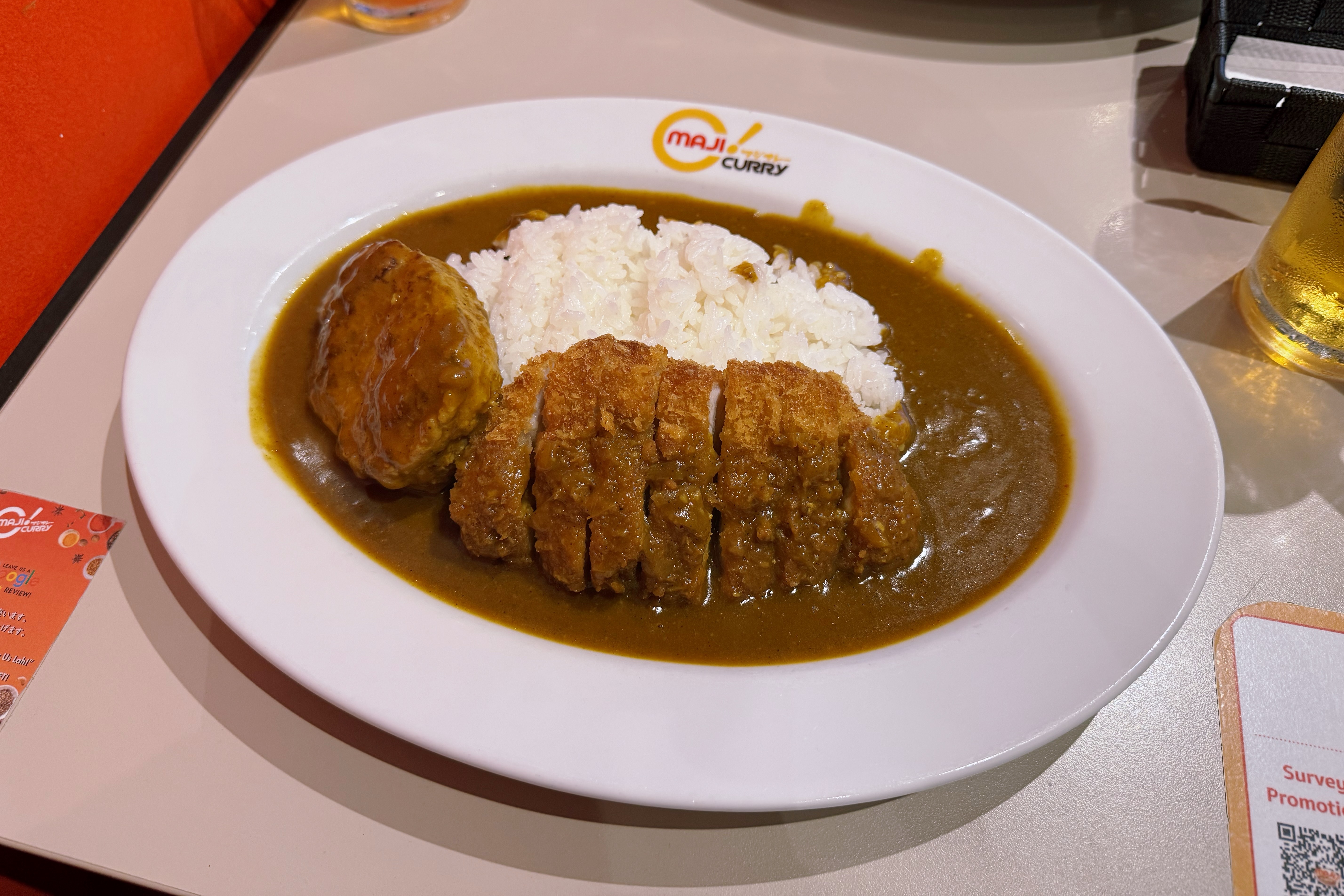
Two visits to Maji Curry in 9 days. Think I’d better cut back for awhile…
I blame a medical appointment for our being in the area. Remember how Kim took a fall a couple of months ago and hurt her leg? She’s been feeling mostly back to normal but was advised to get an MRI just to be sure. Late last week we met the doctor for his interpretation, and it was worse than expected. The tendon that normally runs down her entire leg has become completely detached from its anchor point at the top of the thigh. In other words, she’s currently missing a crucial muscle involved in leg movement. In practice she can still move it, but with less strength than normal.
So the weekend was spent worrying about what this meant, until our follow up appointment this Monday with another doctor who was called to advise on surgical options. Yes, it can be fixed: they’d slice the thigh open, dig around for the loose tendon, stretch it back up, then attach it to the pelvis or wherever it’s meant to be. This would then be followed by six weeks of recovery and then indefinite physiotherapy. It also carries the risk of nicking a large nerve that happens to reside in that area.
Fortunately, this doctor’s disposition was entirely the opposite of worried. He reckoned that as long as she wasn’t an athlete concerned with peak performance, one could get by without addressing this; other muscles compensate and exercise with physiotherapy will see her through it. He said many patients just leave it, and continue to have normal lives. It was exceedingly refreshing to finally get some good news.
But in not so good news, my neighbor’s long-dreaded renovations are finally beginning next week. That means a handful of days where I absolutely can’t be home during the day (or I’d probably go deaf from the hacking of walls and tearing up of floors); a few weeks where I probably wouldn’t want to be home (noisy enough that one wouldn’t be able to read, think in peace, or get on a call); and a couple more months after that where the noise should only be a mild annoyance.
I’ve already made plans for that first phase next week, which happily coincides with Singapore Design Week. That will give me a few things to see and attend around town from mornings to evenings. And then for the rest of the month, I’ve decided to sign up for a membership with a co-working space company (a la WeWork), and spend my days hot-desking like a digital nomad or startup serf. It sounds ideal: air conditioning, power, WiFi, free coffee, and a change of scenery. I might even meet interesting people?! Although I’m more likely to be watching movies or gaming on my Switch rather than doing any real work (unless some new side project idea hits me).
This is way better than my original plan, which was to hang out at public libraries the whole time. Fewer amenities there, and a lot more competition for desks because our libraries are very popular hangouts for senior citizens these days.
Anticipating being in libraries where plugging into wall sockets might be frowned upon, I made a premature purchase that arrived this week: the most powerful power bank I’ve ever had. My requirement was that it had to comfortably get me through a whole day or more of using everything from my phone to a MacBook to a Vision Pro.
And so I did some research on what a modern power bank looks like, and decided Ugreen’s Nexode lineup offers the best value. Anker has some competitive ones in their Prime series, but they’re twice the price and (as I discussed with Michael) they’re not even that reliable or safe these days.
If you haven’t bought a power bank in recent times, you might be surprised by what they can do now. For starters, the one I got has a 20,000mah capacity with a maximum total output of 130W over 2 USB-C PD ports and a USB-A one for legacy devices. That’s enough bandwidth to fast charge two MacBook Pros at the same time. There’s also a digital display that shows you real-time power draw stats, and estimates of how long you’ve got before the battery is depleted (or fully recharged). Ugreen claims that it uses EV-grade batteries that can stay above 80% capacity for 1,000 charge cycles (Apple’s guidance on their batteries is only 500 cycles, for comparison). Given that coworking spaces provide lots of power points, I don’t really need one now but it’s good to have around?
For the record, I’m still undecided if I actually would whip out the Vision Pro in a coworking space. But I can’t imagine not using it for an entire month. This week, I wandered into a conversation in inSpaze (an immersive social network I wrote about here) and found myself invited to a ‘live’ test of a new feature. It essentially lets you upload a large video file (say, a home movie or film that you absolutely have the distribution rights for), and invite others to watch it with you in real time.
The final release will include a special 3D environment suited for watching videos, but for this test we were just in the usual “living room” environment. Spontaneously watching a film with strangers was more fun than it sounds. Everyone was well behaved and went on mute, chatting over text instead. In that way it was better than watching a film in a real theater with inconsiderate whisperers. We gave our feedback and suggestions afterwards, and I said that a visual/spatial way to express emotions like surprise or amusement would be nice to have, better to subtly feel a sense of community with everyone else in the theater.
===
I also tried a bunch of new camera apps. Halide really started a trend with their Process Zero mode, and now I’m seeing new and existing apps tout a “no AI” approach. I won’t link the more blatant copycats, but will quickly mention a few that go beyond just adding a RAW capture feature.
Fig Camera is currently in beta and offers a novel minimal camera UI, along with the ability to create your own camera-capture-to-file processing pipeline with LUT files. It also has a couple of options for taking more natural photos with less “AI” and Smart HDR, etc.
Mood.Camera is more of a traditional retro camera app with a selection of film-inspired filters, but it also lets you select from different levels of dynamic range enhancements: from zero (expect harsh, blown highlights) to an ‘Extended’ setting that’s even more artificial than Apple’s defaults. I really liked how the dev has modeled certain aspects of lo-fi film photography that are very hard to achieve with pure HSL sliders and presets (like the ones I’m fond of making in Darkroom). Stuff like different grain sizes, halation, and textures. I impulse bought the lifetime unlock for S$20 and now slightly regret it because the color shifts are quite strong and there’s no way to turn them down at this time.
Lampa also captures pure sensor data before Apple’s process gets a chance to stack and merge and overdo the brightness. It then puts your photos through their own RAW development profiles (the app description says they’re not “just filters”). There’s no option to shoot with Apple’s processing, unlike Fig and Mood. Surprisingly, Lampa only offers four distinct and pleasantly subtle looks, unlike the plethora of filters standard in Mood.Camera and most others. I’m a fan of this minimal approach but unfortunately the pricing model is maximalist and they want S$40/yr.
Bonus: if you’ve been shooting RAW files with Halide’s Process Zero (or any other app’s single-capture RAW — not to be confused with ProRAW), you might appreciate this Darkroom preset I made that emulates the high contrast monochrome look that the Ricoh GR cameras are famous for. I repeat, they are tuned for the brightness profile of iPhone RAW files.
I’ve been watching this streamer on YouTube named Pim who runs a channel called 4AM Laundry. Every weekend, he sets off with a backpack full of batteries and modems, and livestreams his adventures going around Japan to find retro gaming gems in secondhand stores like Book-Off and Hard-Off. They are soothing and educational, and great to have on in the background as he literally does this for 9 hours at a stretch.
This week he was invited to visit the Tokyo Game Show with a press pass, so I tuned in for that. It’s an event I’ve always wanted to experience in person, even though I know it’s probably hellish and more fun in theory than practice. This was a nice way to get a glimpse of its atmosphere.
We landed in Auckland, New Zealand Monday morning and immediately flew down to Wellington, and we’ve been driving our way back north for the past few days. I’m currently writing this while sitting beside a Buddha’s head in a poolside garden, in a small new hotel outside of Rotorua.
Four hours ago, I was parasailing above Lake Taupō in my usual urban uniform of jeans and a t-shirt — if you know me, you’ll know that I don’t sign up for even remotely dangerous things, especially over large bodies of water; in the cringey words of Below Deck repeat charter guest, Dean Slover, I said “homie don’t play that!” But Kim convinced me to, and we survived. They played Maroon 5 songs on the boat going out, and so by the time we were lifted some 50 meters in the air to float in blissful silence high above the town, I was having a good time. Lake Taupō is a volcanic caldera that’s nearly the same size as Singapore, but because it’s all flat you can just about see from one end to the other from up there. New Zealand challenges the city dweller’s sense of scale like all good nature vacations.
Since leaving Wellington, the road trip portion of the trip so far has been mostly measured in burgers, fish and chips, and winery stops, specifically in the Martinborough and Hawke’s Bay areas where the tastings have been revealing of each company’s nature: some overly commercial and strictly scripted, versus others more informal, just going on vibes the only way they know. I think the difference shows up in the wine, with wineries in the latter category being more playful with flavor, more likely to put better stuff in a low-priced lineup. But I would say that, as someone who’s now had a crash course in holding up his glass against the light to observe the color.
I’m now lying in bed on Sunday evening having just finished the last leg of our driving tour, which took us to the famous Whangamata Beach bordering the Bay of Plenty, and Hunua Falls, where we did another little nature walk and met a nice dog and helped its owners get a photo together with their iPad. Old people really carry full-sized iPads around on hikes to use as large-screened cameras. Mind blown.
A couple of observations on this road trip. So much roadkill! Easily a hundred little bundles of fur spotted spread across tarmac just today alone. Some decayed and washed away, little more than stains. Some still fresh, bloating, bleeding. We avoided making contact with all but a couple. A ritual evolved, mainly to stay alert but also out of pity for these bunnies or squirrels(?): upon spotting one, I would put my palms together and say “rest in peace”, and Kim would follow with “in all your pieces”.
FM radio is still not a great experience; it’s a wonder how people survived on it for so long. Fortunately I had a lot of downloaded music on my iPhone, which also navigated us with offline maps. CarPlay is excellent, and Apple Maps was good enough for nearly every leg of the journey. We listened to Lorde’s albums, of course, as well as the Sunkissed Summer playlist she compiled on Apple Music, and other New Zealand legends like Bic Runga and Crowded House. At one point I put on some J Dilla but learnt that rhythmic music you can sort of nod and zone out to is NOT what a driver wants over long winding roads.
As I mentioned last week, this itinerary was drawn up with ChatGPT and my custom GPT, AI-tinerary, but we had to fact-check everything and plot the route on a map before making bookings. It’s held up well so far, with a couple of impromptu detours and chance discoveries along the way. For one, we did not realize that while passing through Napier for one night that we’d be there for the Art Deco-obsessed city’s annual Art Deco Festival, the first one they’ve been able to hold since 2020. Vintage cars were out in force, there was a Warbirds air show, and a free concert on the beach. It was packed, every restaurant was booked out. We ended up eating dinner out of a food truck by the sea. I asked ChatGPT “what’s happening in Napier tonight?” and it confidently replied, “I couldn’t find any events tonight.” At the risk of sounding like a broken record, these tools truly are starting points and aids right now, and you must resist the idea that they are final answers.
I’ll post the final version of our itinerary next week when we’re done, in case it helps anyone looking to do the same.
All photos were taken by either a Ricoh GR III or iPhone 15 Pro Max. The extra 120mm equivalent reach of the iPhone came in very handy, but there’s no beating the image quality of the GR when it comes to landscapes. The light was so good that some photos taken with the Standard color profile, straight to JPEG, were surprisingly “finished” out of the camera. This year’s iPhone still wants to make everything bright and sharp, which fails to capture atmosphere and preserve highlights. I edited photos daily as quickly and lazily as possible, using RNI Films for most of it — at some point they added the ability to save edits on top of original files (non-destructively), which is a key consideration I look for in photo apps. I’ve also started using RAW Power again late in the trip, which is making me want to go back and redo some edits. Maybe on the flight home.