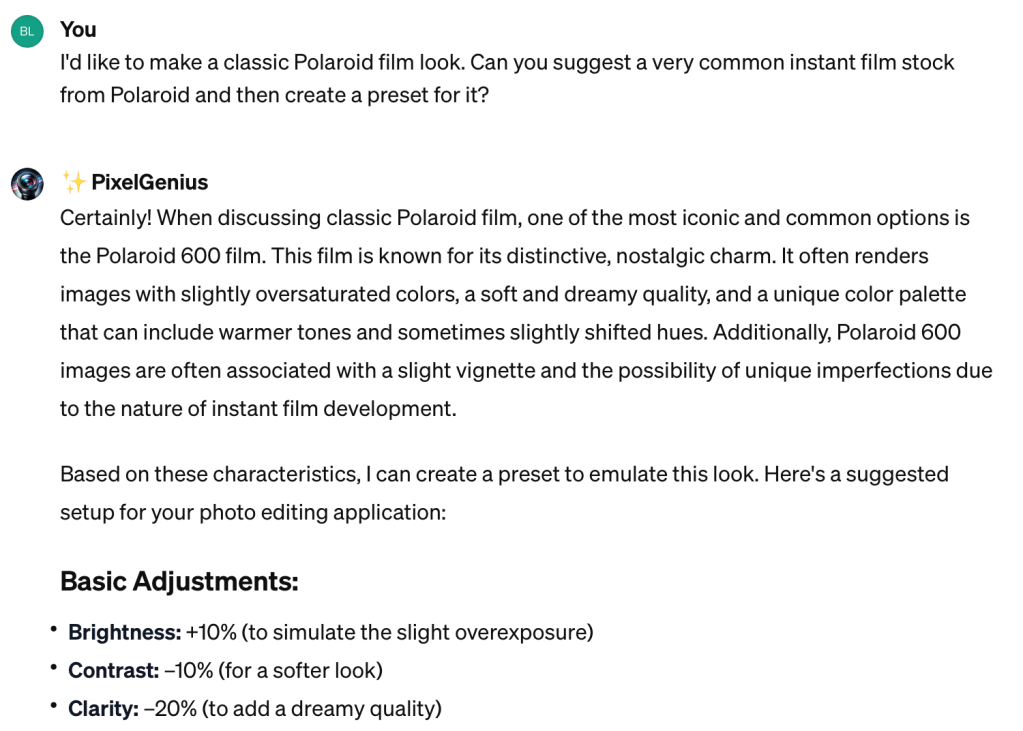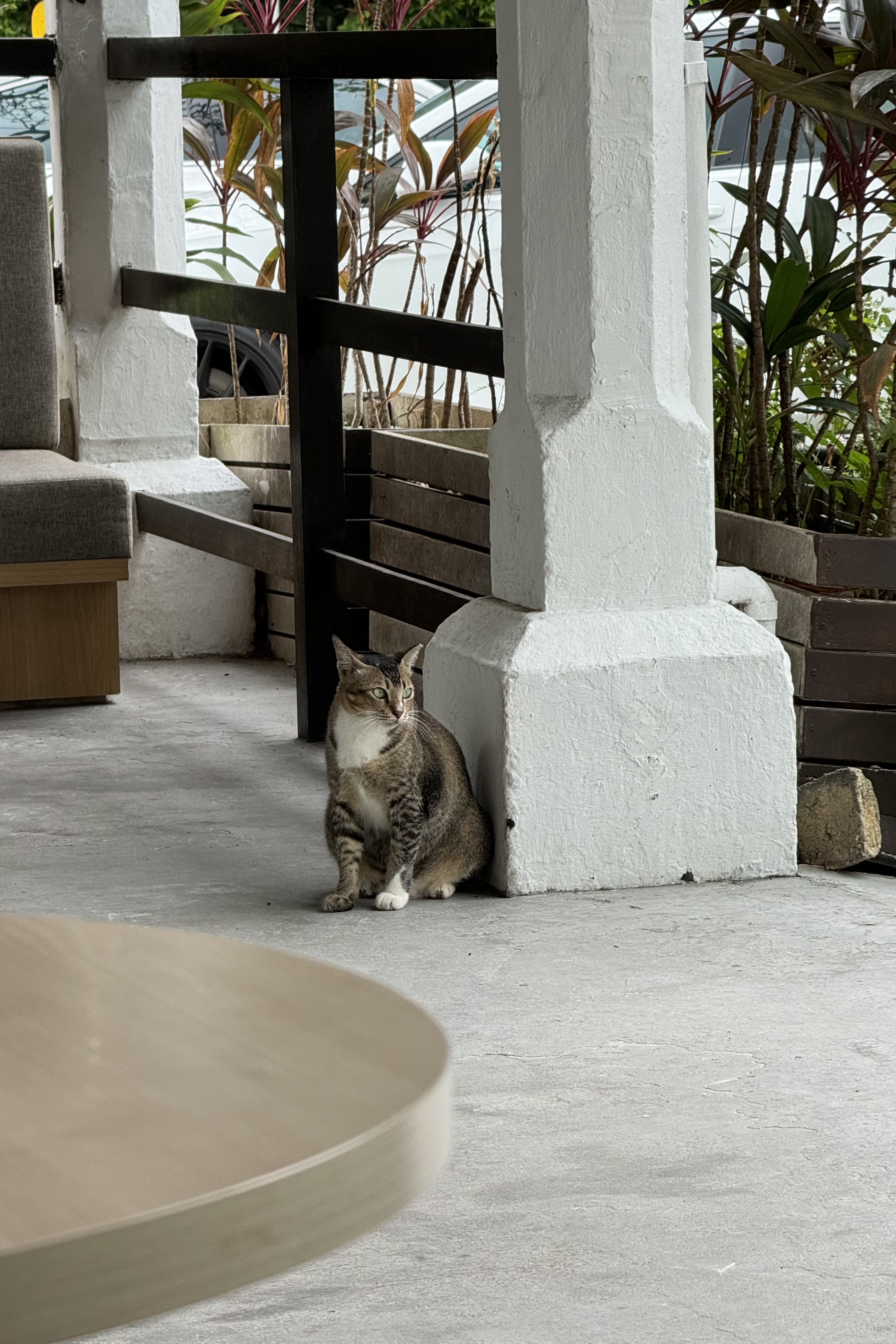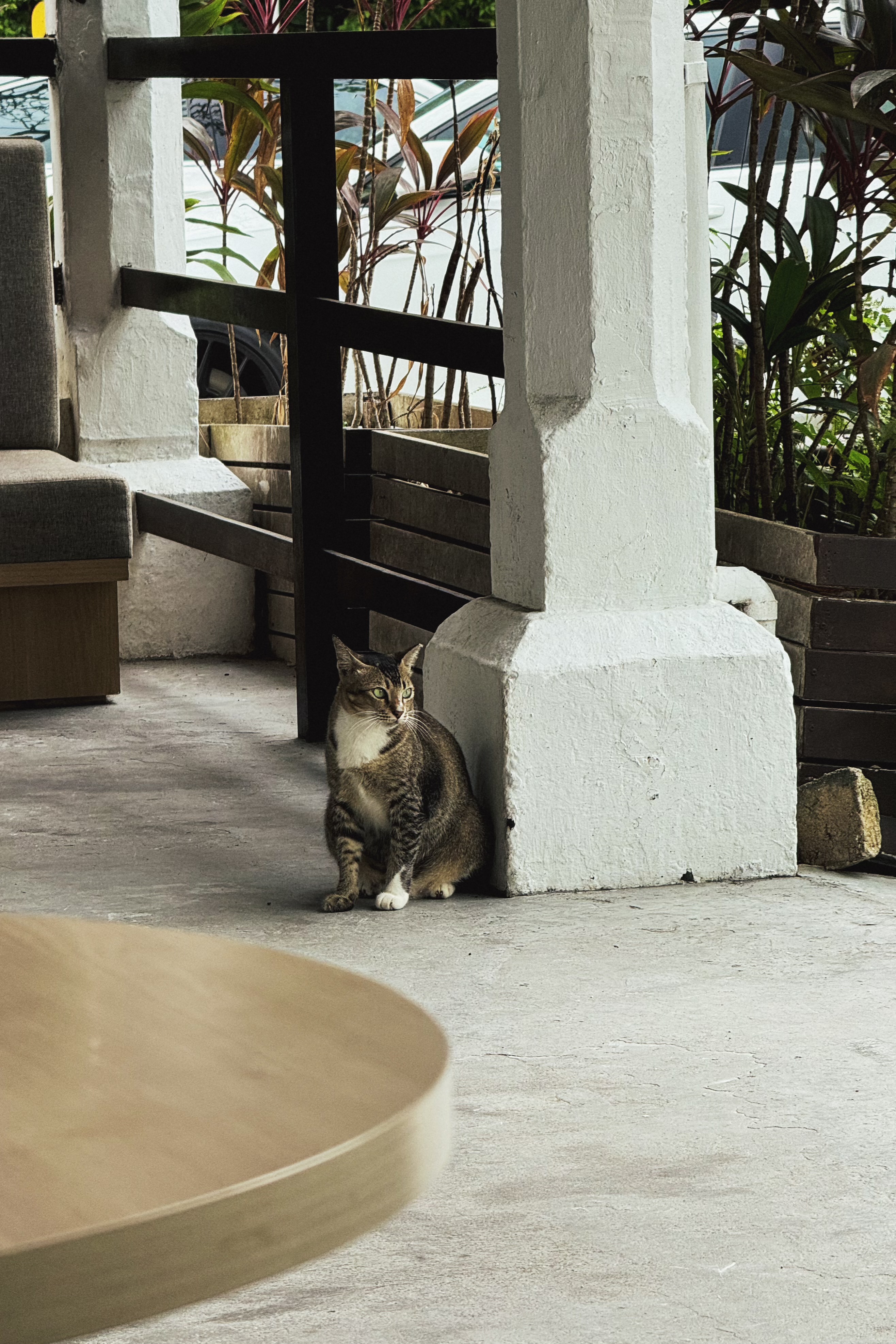
Do you edit photos, use filters, or make your own presets? What if you had an AI tool to help create any look you asked for?
That’s ✨PixelGenius, my first “GPT” (a custom agent built on ChatGPT). It’s a photo editing expert that creates filters, suggests improvements, and helps you elevate your craft.
Describe a vibe and it’ll provide the settings to make a preset/filter.
Emulate a classic film stock!
Upload photos and get editing suggestions.
Reverse-engineer edited photos by providing a Before and After.
Learn editing techniques just by chatting naturally.
It’s designed to help beginners learn the art and color science of photo editing, while letting pros save time with great starting points. For every adjustment, it explains the intent so you learn how this stuff works.
It gives you standard adjustment values that you can plug into your favorite photo editing app like Darkroom, VSCO, Photomator, or Adobe Lightroom and save them as your own custom presets.
I prefer to learn by trying stuff out rather than watching videos or whatever, so when I first started using Lightroom, it was a messy process of trial and error that lasted years. ✨PixelGenius turns that into an interactive, guided experience. It’s like having a photo editing expert on demand, and you can even get into deep conversations about color theory and photographic history. All you need is a ChatGPT Plus account.
This involved writing one of the most comprehensive prompts I’ve done so far, so I’d be curious to know your thoughts after you give it a go!
Remember the Leica Sofort (German for “instantly”) camera? It came out of nowhere years ago, an unacknowledged collaboration with Fujifilm that took their popular Instax Mini 90 model and rehoused it in a sleeker Leica-designed body (offered at a much higher price, nearly double if I recall right). Reviewers tried to discern a difference in the photos, but they were essentially identical cameras on the inside. For some reason, everyone danced around the similarities and at best said the Sofort was “inspired” by the Mini 90, as if it was a new Instax camera by Leica that somehow came out looking mighty similar, rather than a simple body swap at the same Fuji factory.
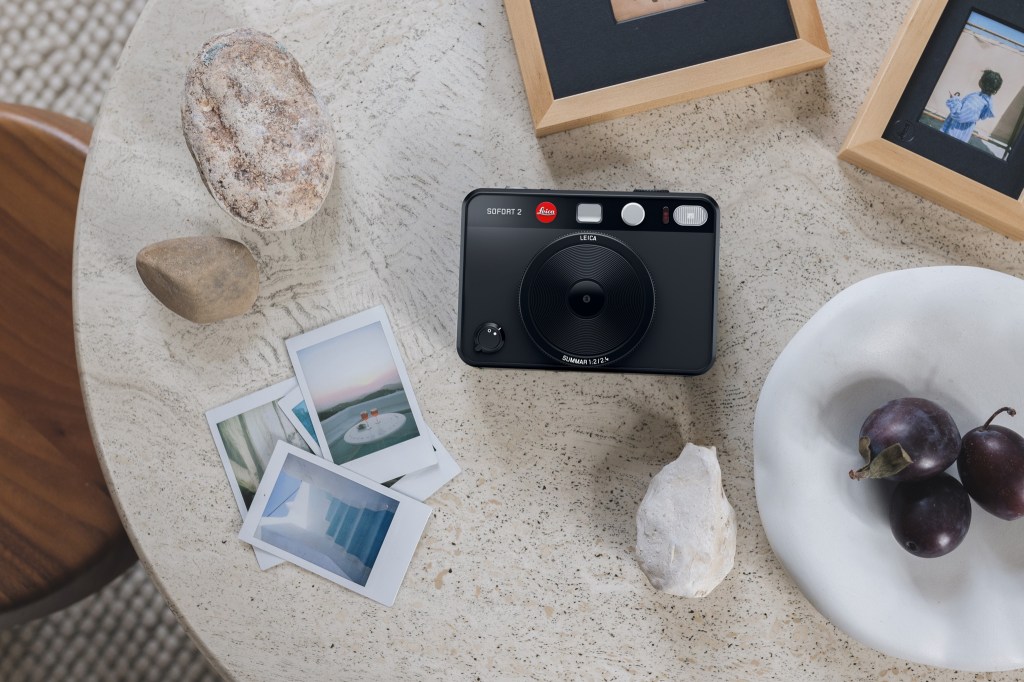
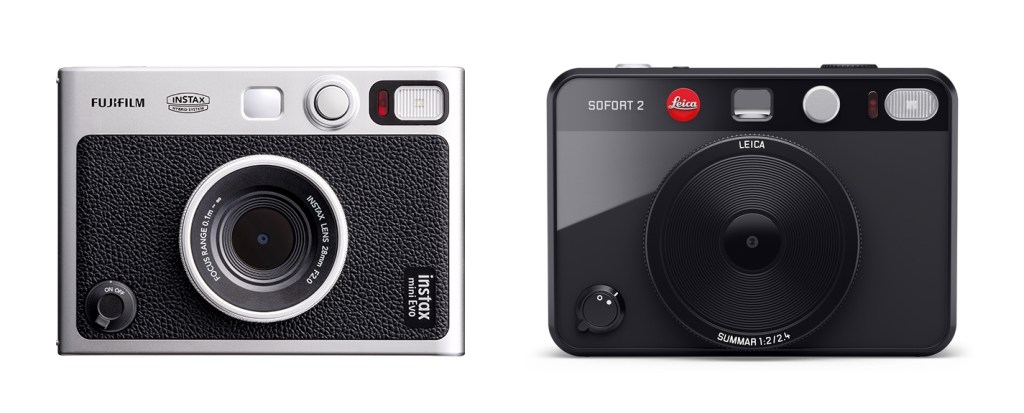
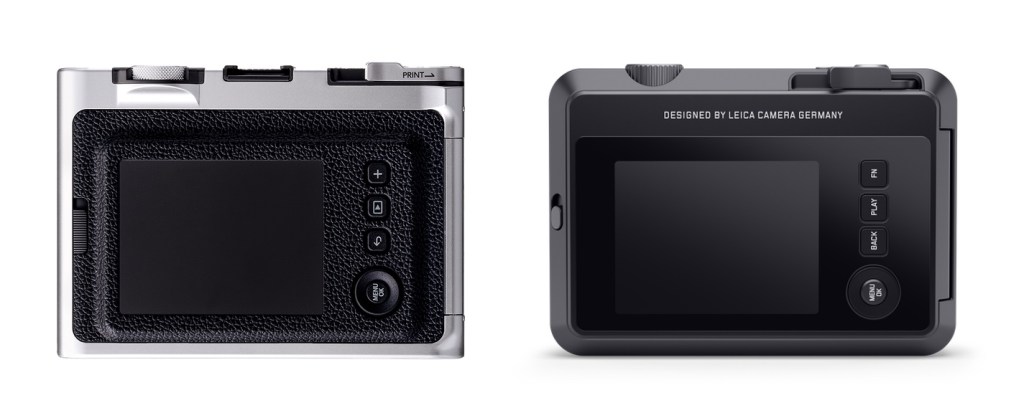
This week, Leica announced the Sofort 2, which is now a redesigned Instax mini Evo (a camera I bought myself for Christmas in 2021). Where the original Sofort was a fully analog Instax camera, the Sofort 2 is one of Fuji’s hybrids: a digital camera fused with one of their Instax printers, so you can take tons of photos and then decide which to print.
In my opinion, the mini Evo is the least ugly Instax camera Fuji has made, which is one of the reasons I was excited to get one when they came out. Oh, I noticed that Jurin from XG uses one, and some of their IG posts look like mini Evo shots. But the Sofort 2 is beautiful, streamlining the body to its essential elements and removing nearly all traces of fake plastic leather and silver-effect plastic.
Leica’s ability to wrap other companies’ cameras in minimalist industrial designs and sell them for more money is unmatched. I bought their D-Lux 7 precisely because I wanted Panasonic’s LX100M2 but could not get behind its rugged hiking shoe looks.
Where the mini Evo is a cute plastic facsimile of a Fujifilm X100 camera, and wearing one around on a shoulder strap makes you look like a kid who’s been placated with their very own toy iPhone, the Sofort 2 looks like a camera in its own right (far as I can tell from the images). And as little as I have used my mini Evo over the past two years, it will be very hard to convince myself not to “upgrade” to this version for Christmas. And to be clear, there are ZERO functional improvements from the Fuji version, apart from not looking like a toy.
Fujifilm makes their Instax cameras kid-friendly. They’re colorful, bulbous, fun, and recall the freewheeling sensibilities of product design before the 2008 financial crisis, when phones could look like tubes of lipstick and translucentplastics were everywhere (they’re coming back). The Leica partnership seemingly exists to provide the market with what the Japanese might innocently call “adult versions”. Why Fujifilm leaves money on the table by not doing this themselves is mind-boggling. Are they really incapable of producing understated designs? I don’t care about the Leica logo; it’s a joke on a product like this, I just want a clean-looking rounded rectangle.
Generational shifts in photography
And apropos of all this, I heard that Sean was getting into film photography and about to use an Olympus XA2 I once gave to Cien. Which got me talking to my Pi AI (we’ll come back to this) about old becoming new again in photography. Part of it was trying to convince myself that a Sofort 2 would be worth buying as an adult-friendly retro toy camera — a loving term for cameras with garbage image quality. I’ve owned many of the sort, like the Digital Harinezumi series, and they’re always plastic and cheap, or simply dusted-off vintage digital cameras. But this is a new! luxury! toy camera!
So Pi sorta made the “observation” that using an analog camera is an attempt to engage with photography more deliberately. Which I already knew? Because of course using a dedicated camera instead of a smartphone today is deliberate; a “slow photography” thing, a “real photographer” flex. Of course instant film is an extension of this.
But I’d not really appreciated it from the perspective of Gen Z people who grew up without them. Like why ordinary kids not into capital-P Photography would be interested in Instax/film cameras and old digital cameras beyond signaling coolness. Obviously we Xennials and Millennials grew up with photographic scarcity and have fewer photos of our younger days, but these kids grew up in an age of surplus, literally taking photos for granted. Phone cameras everywhere mean cheap and infinite memories. So naturally tools that force moments to be more precious, that force viewers to see events through wonky lenses, would hit different.
I noticed afterwards that Leica’s press release for the Sofort 2 sums this up with a simple statement: “Back then, the instantly printed photo symbolized acceleration, whereas, in today’s fast-paced world, it represents a moment of caution and relief.”
Next day update: I neglected to mention here that the mini Evo and Sofort 2 cameras are actually perfect bridges between these two approaches to photography. They are digital cameras that let you shoot in surplus, and print only the photos worth keeping in scarcity. Also, having two offerings serves buyers across the spectrum from fun/affordable to serious/expensive, which tends to be a generational divide. The hybrid instant camera is a tool that unifies photographers with different values (so long as they’re okay with 5-megapixel shots), and serves as a symbol of ‘making this moment count’.
The Pi personal AI assistant
Okay, so what’s Pi? It’s billed as a personal AI, a ChatGPT for your daily life. But isn’t ChatGPT already for daily life, as well as work life, I hear you ask? Yeah I know, which is why I’m giving this a go. The main difference is that instead of multiple chat threads for different topics, with Pi you just have one main chat. It tries to learn more about you and draws on past context to inform its responses. It’s built on a proprietary foundation model, so perhaps they have a way to get around the short-term memory and context collapse that I’ve seen with other generative AI text systems — so far it’s doing quite well after a few days!
It’s free, and their privacy policy claims they’ll never share or sell your information, but yeah sure what else would they say? I’ve found it quite pleasant, and its responses are tuned to be shorter and less formal than ChatGPT’s defaults. It does feel like talking to a friendly personal assistant.
So far I’ve had discussions with it about movies (we talked about Interstellar and why some Nolan films don’t work as well as others), python programming, economics, frameworks for building good arguments, as well as its own purpose and unique value proposition.
I just asked it to brainstorm what a Sofort 3 could bring to the table. It suggested more AI features (lol) and making it more user friendly. I said I’d go the other way and make it more unapologetically professional, with manual controls and higher quality. It was able to say that it sounded almost like an instant film version of a Leica M, and when I asked it to price such a product, it said $800 USD or higher. That’s pretty insightful!
Something about its simulated personality and the UX of having a single chat thread (where I don’t have to keep introducing my needs and context) makes this very pleasant to use, so much so that I might end up using it over ChatGPT for some queries.
===
Media activity
I had Saturday all to myself so it was a movie day. I saw The Equalizer 3, which was much slower and less action-packed than you’d expect. But Denzel is still badass and he gets to have a nice Italian holiday. Just expect a chiller installment going in. I think this is the last one for Robert McCall.
Indiana Jones and the Dial of Destiny was nowhere as bad as I was led to believe. I’d say it’s actually very successful in closing out Harrison Ford’s role and setting up a possible future heir. The last one was roundly panned and tried to introduce the idea that he had a son, played by an awful human being, which failed so badly they wrote him out in the most delicious way possible in this film. I really hope Phoebe Waller-Bridge gets her spinoff out of this, but apparently she’s developing a Tomb Raider TV series for Amazon Prime? What a shame to work on the pretender when the original tomb raiding franchise is right there!
I forced myself to finish season 1 of Invasion on Apple TV+, just because season 2 looked good in the trailers and has a higher Rotten Tomatoes score. Season 1 is an awful plodding mess, which given Simon Kinberg’s involvement should not surprise anyone. If you’re interested in S2 and haven’t started on S1, I’d recommend you just go straight to it and try to fill in the blanks.
The Below Deck marathon continues. We finished seasons 5 and 6, started over with season 1 — it was disappointing in terms of production quality and crew likeability — and are now on the second.
Apple Arcade’s new James Bond game is quite entertaining. Cypher 007 is an isometric stealth-action game from the makers of Space Marshalls, and should scratch the itch for anyone who loves the franchise and/or Metal Gear games.
So much new music came out and I haven’t had a chance to hear it all yet. After hearing about how Sufjan Stevens’ Javelin is dedicated to his partner who died this April, I’ve played it through several times. I think it’ll be one I come back to over the years.
There’s also a new Drake album, For All The Dogs, which may not have the same longevity.
I enjoyed my playthrough of HOW DID WE GET HERE? by a 22-year-old Canadian pop artist named “young friend” while writing this post. Admittedly, I wasn’t listening to the words at all, but it was very pleasant and I’ll have to get back to it.
A new Omar Apollo EP, Live For Me, which I’ve heard one song off and am really excited for.
Caroline Polachek’s second album, Desire, I Want To Turn Into You, has been getting great reviews too, so I’ll get around to it next week hopefully.
After 71.5 hours of dungeon crawling, coffee brewing, curry cooking, high schooling, part-time jobbing, and maid cafe patronizing, I finally finished the incredible game that is Persona 5 Royal. If you count the 30 or so hours I put into the original non-Royal version on my PS4 back in 2016, this has been a long time in the making. There’s a remake of Persona 3 coming next year, so I’m looking forward to that.
For the uninitiated, Persona games are a spinoff series from another series of games called Shin Megami Tensei, which all involve harnessing the same stable of supernatural beings and doing turn-based battles. It’s Pokémon with demons. The SMT games are grittier and flirt with horror themes, but the Persona ones (at least the ones I’ve seen) incorporate more slice-of-life activities and are generally lighter.
What’s next? Not sure. For now I’m gonna pass a little time finishing the final episode in Ace Attorney Chronicles which I paused over a year ago. I still don’t feel up to Tears of the Kingdom.
On the TV front, we finished season 1 of Poker Face and it’s a show I’d recommend to almost anybody. Brilliant writing within a formula that is equally happy to revel in, but also subvert itself from time to time. The twists, the characters, the plays on genre, they’re straight out of an Ace Attorney game (minus the goofiness).
Netflix also released season 3 of Kengan Ashura, a hyper-violent manga to anime adaptation that I do not recommend to anyone, except I watched the first two seasons ages ago and feel invested in finishing it. Truly, the Venn diagram of people who make this and make Mortal Kombat games is just a circle of sickos. The people who enjoy this are probably in the same circle.
So I’ve partially fast-forwarded myself through it up to episode 9 now. Hilariously, the main character has been in a coma since the end of episode 1, and while the fight scenes (it’s centered around a Bloodsport-style martial arts tournament) are rendered in a 3D engine that simulates an anime look, all other scenes are drawn in traditional 2D, and boy does their lack of budget show! Some scenes (mostly flashbacks, to be fair) are literally sketches passed off as a stylistic choice.
===
I got my new iPhone, and rejoining the Plus/Max club hasn’t been as bad as I feared. Granted, this is my first large iPhone with flat sides, a design I highly prefer to the rounded sides we endured for many years between the iPhone 6 and 11 series. Flat sides are simpler easier to hold, especially between fingertips when taking a photo in landscape orientation.
So now with the reduced weight, flat sides, and thinner bezels, I think the Max form factor is finally becoming something I can love. The benefits of the larger screen are undeniable and without a case on the whole thing feels amazing. It’s more of a joy to use for every task: watching videos, writing text and reading pages, editing photos, gaming, you name it. The increased battery life is also a great comfort, especially after the disappointment of the 14 Pro in that area. After a year of regular use, that one is down to 85% battery health.
There have been complaints about the build quality of the early iPhones 15, with reports of wonky antenna lines, discolored titanium frames straight out of the box, and so on. I did notice the same odd rectangular ghost lines at certain points on the sides of my Natural Titanium Pro Max, but they rubbed away with no issues. I commented a single word, Stains;Gate, on a Threads post from 9to5mac about it but sadly no one appreciated the anime reference.
Where I have more concern is the fit and finish where the back glass meets the metal frame. New this year are rounded edges, not angular, not chamfered, but with a curve in the metal and maybe even a little in the glass. Some areas on mine are quite well rounded and comfortable to touch, but unfortunately the lower left and right sides where my hand makes contact have a slightly sharper feel to them. It’s clearly a minor defect, with a gap between the glass and titanium that’s probably measured in micrometers, but I can feel it, and that’s that.
If I were a YouTuber I might make a video where I try to grate cheese with the edge or something. I’ll put up with it for now and see if it “settles in” after awhile, and try an AppleCare+ replacement if I can’t stand it.
It’s now emerging that the 15 Pro Max’s titanium frame is susceptible to overflexing when pressure is applied, causing the back glass panel to break with nothing more than force from one’s bare hands. You will recall the iPhone 6 Plus’s “Bendgate” issue, where YouTubers were able to bend and break the devices quite easily. Apple reinforced the following year’s iPhone 6S, I think with steel inserts, but doing that with the 16 Pro Max would defeat the purpose of this entire switch to titanium. In the video above, the smaller 15 Pro survives the same bend test. It’s just a problem with the larger models.
Anecdotally, there’s always some risk involved in buying the first Apple products out of the factory gate; I’ve experienced many odd defects over the years from underpowered speakers in the first-gen iPad Pro (was blown away by the actual volume when I got a new unit after a display fault)to battery and sound issues with AirPods Pro (even acknowledged with a replacement program). Usually waiting a couple of weeks will ensure you get perfect devices. But I haven’t got the patience for that!
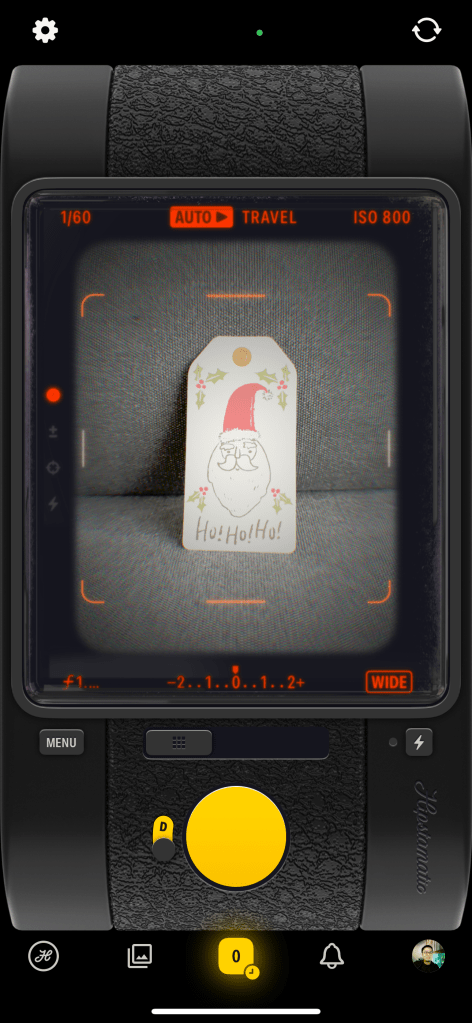
But the cameras! They are indeed an improvement. More natural processing, less sharpening, and the 24mp files have more resolved detail. I’m enjoying the 5x reach, which as one reviewer pointed out, is a more meaningful role for an extra lens than 3x, given that the main camera is already capable of providing a good 2x image (at 12mp), which is close enough to 3x. Portrait Mode does extremely good segmentation now, and I haven’t taken any photos yet where the edges on people or objects were not perfectly recognized.
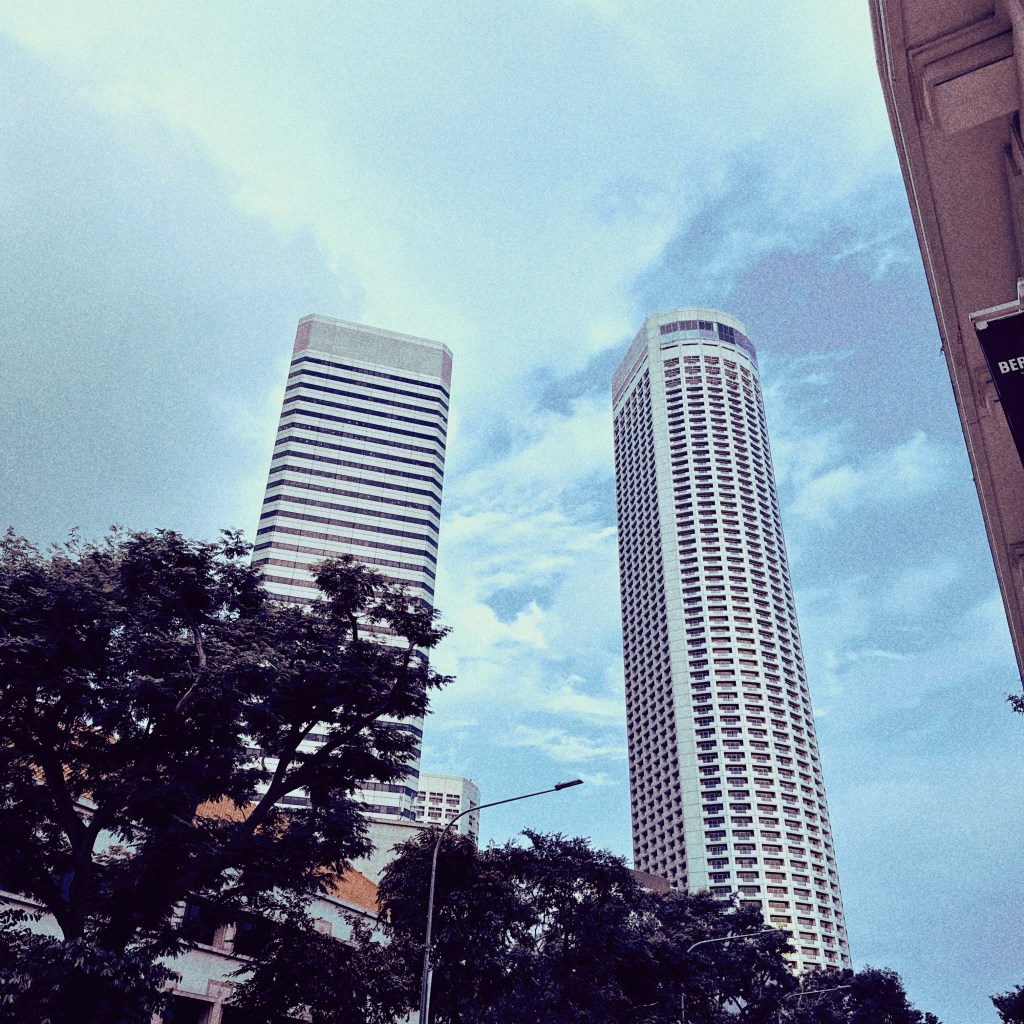
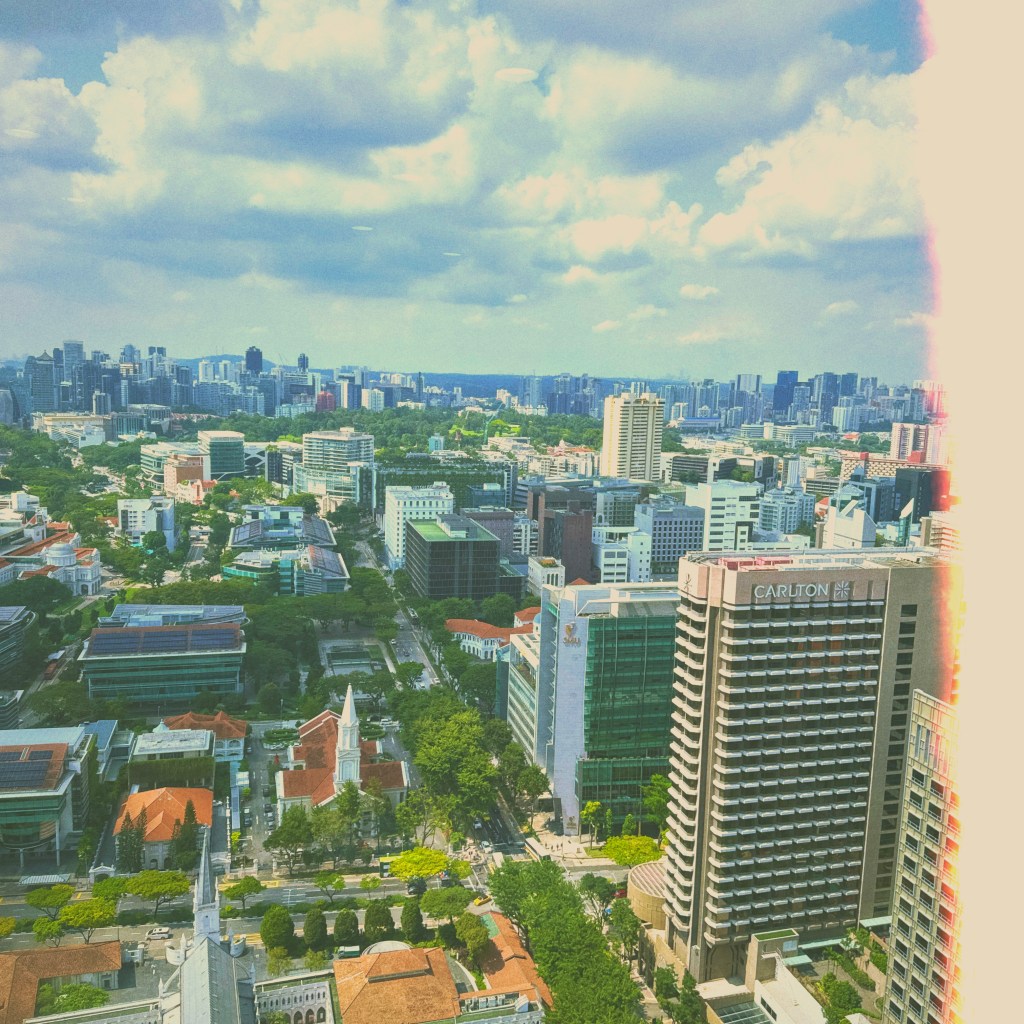
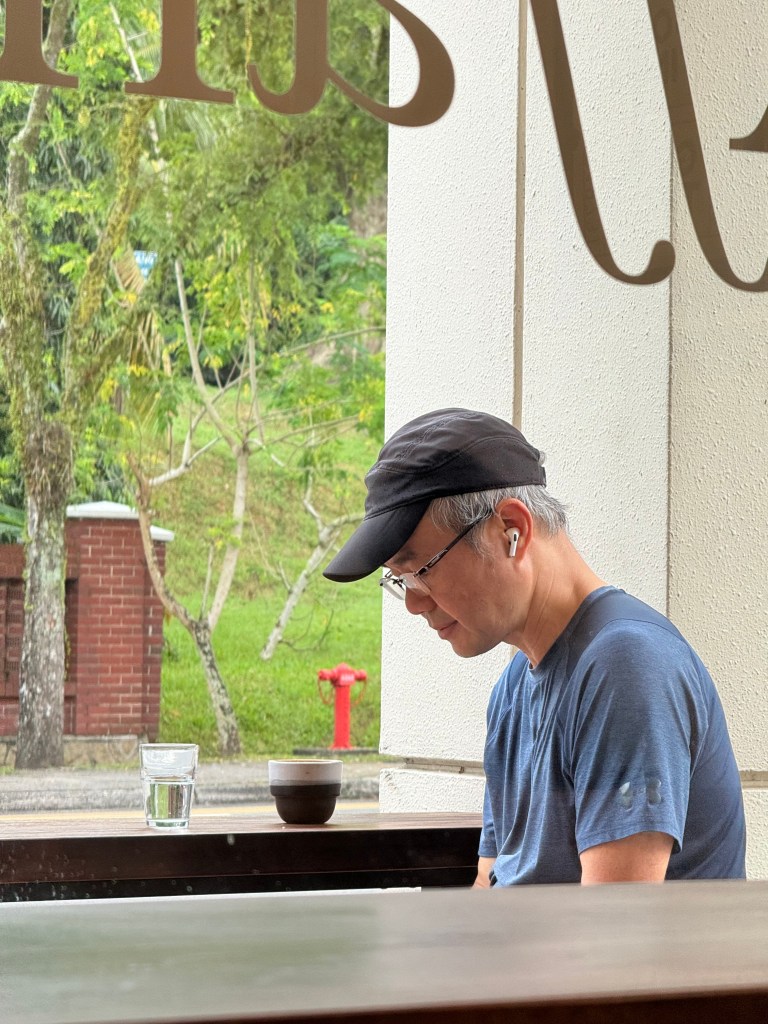
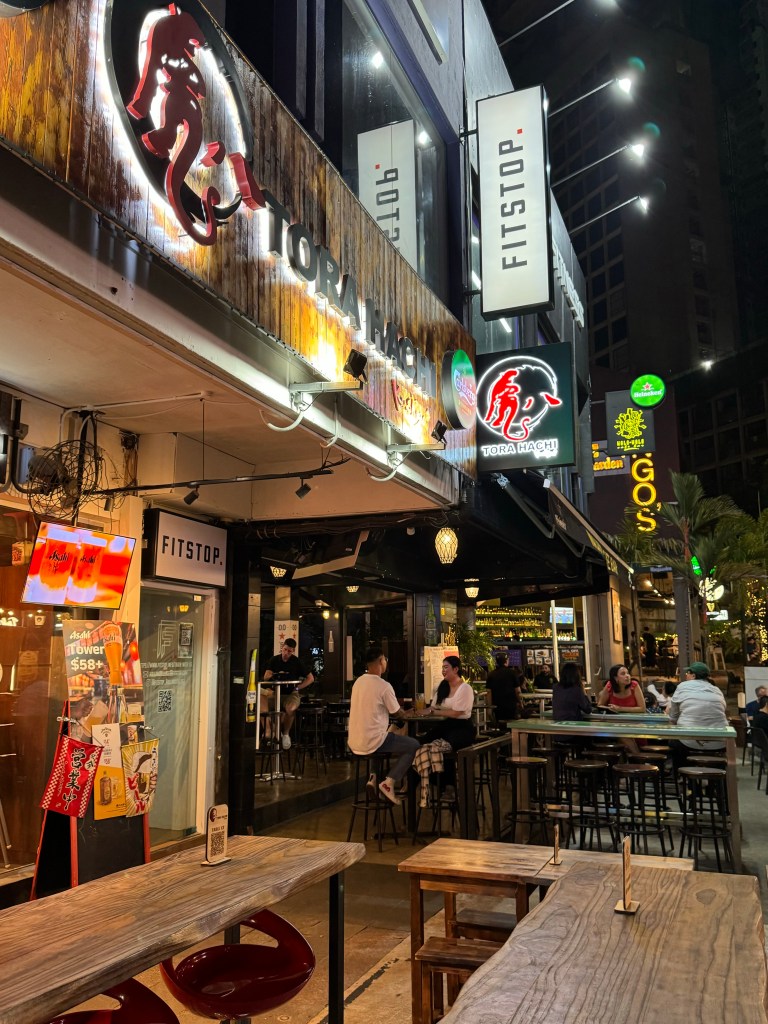
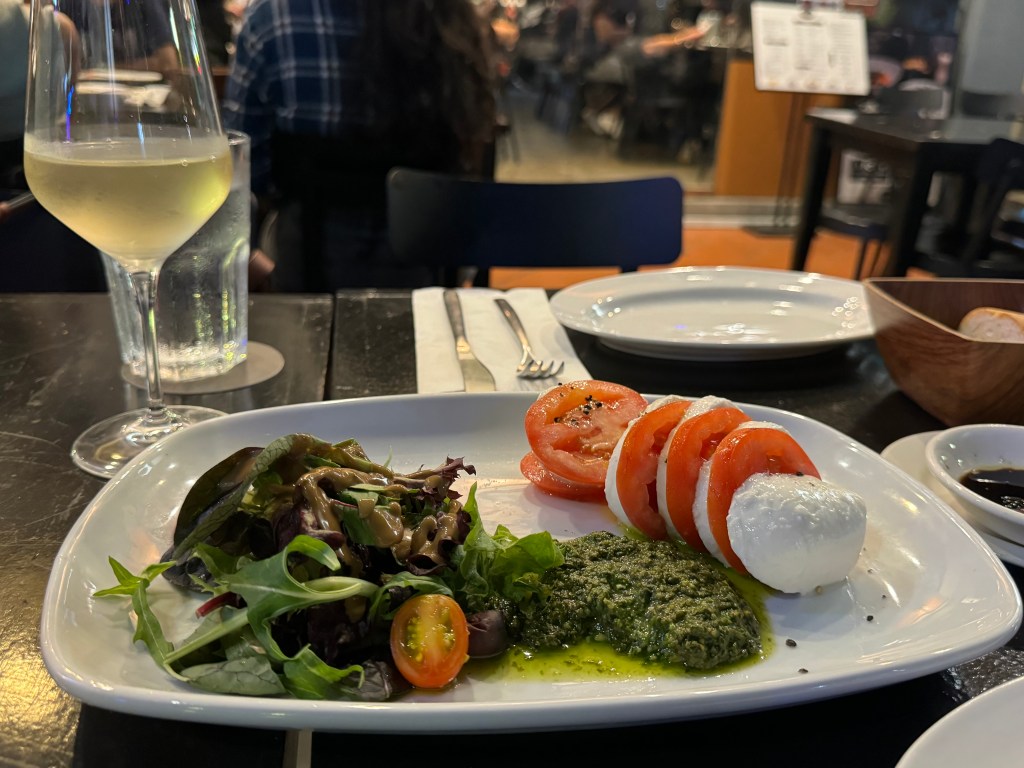
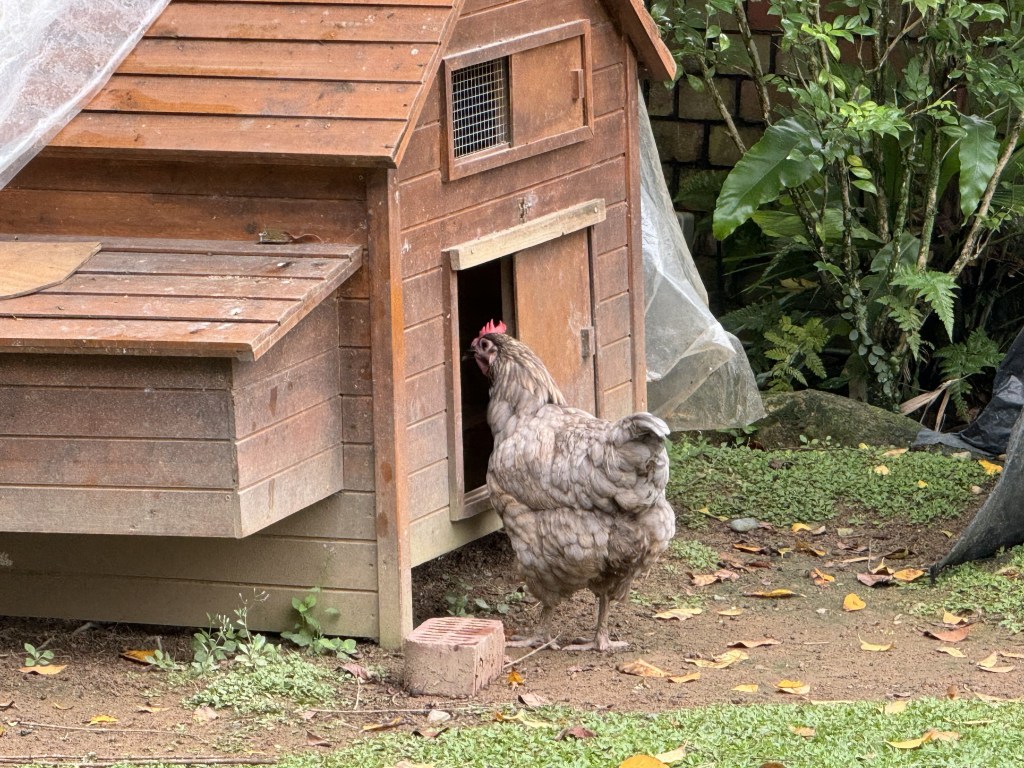
A pair of 5x photos, processed in Hipstamatic120mm (5x) through a window — sorry, stranger28mm low-light shot (not Night Mode)28mm close up268mm (10x digital zoom)
First things first. As you know, we’re big curry rice fiends over here, and I recently found out that Maji Curry (Kanda Curry Grand Prix winner 2018/2022) has had a Singapore outpost for the past year and I never heard about it. This curry fiend may need some curry friends; I’m clearly not plugged into the scene.
I went there this weekend and was not disappointed: their signature Hamburg steak curry with soufflé cheese sauce is a winner. It has the fragrant spices associated with Indian curries, but meets Japanese curry’s lower heat level and sweeter profile halfway. Let’s pray they stick it out and thrive here, unlike Go Go Curry (I’m still holding out hope for their resurrection).
===
I was browsing YouTube one evening when I came across a live premiere of a DJ set by Taku Takahashi, playing “only Utada Hikaru”. Being a fan of his remix of their latest song, I stayed for the whole thing, and it was great! And then the next night, at the same time, they did another one with another DJ! And the next night again! They were all shot at the same event hosted by Amazon Music Japan, but the three-day release schedule was pretty smart.
I also learnt that Jay-Z pretty much wrote the iconic song Still D.R.E. for Dr. Dre’s 2001 album. When the doctor was stuck with just a beat and no words, he sent it off to Jay who reportedly returned with a demo in under an hour, performing both Dre’s and Snoop’s parts in imitations of their voices. Apparently that was it; the whole song was done.
This sent me off on repeated plays of Jay’s The Blueprint and The Black Album this week. It’s been years since I played them straight through, and I’m humbled to say it’s given me a newfound appreciation of Jay-Z. There was a period years ago when I harbored an intense dislike of him, probably because of how popular he was whilst being technically a less interesting rapper than many other better ones who deserved success. Also, all the clownish ad-libs and general timbre of his voice were just so annoying.
But you wrote Still D.R.E.? Okay, RESPECT.
In 1999, Dr. Dre was making his comeback album “2001” (his first solo studio album since 1992’s classic “The Chronic”).
There was one great piano beat that Dre couldn’t write the lyrics for.
Vagabon’s new album Sorry I Haven’t Called also came out, and I highly recommend it. Her last album featured the song Every Woman, which was one of my favorites of 2019.
===
There was a big tech event this week, and of course I’m talking about the latest Nintendo Direct! There are so many great titles still on the way, this late in the Switch’s lifecycle. A handful of new and remade Mario/Luigi/Wario/Peach games, a Detective Pikachu sequel, a Spy × Family title (an anime game with a simultaneous Western release!?), and even a new Prince of Persia game. The fact that the slate is still so full going into 2024 makes me confident that the Switch 2 will have backward compatibility with the whole catalog.
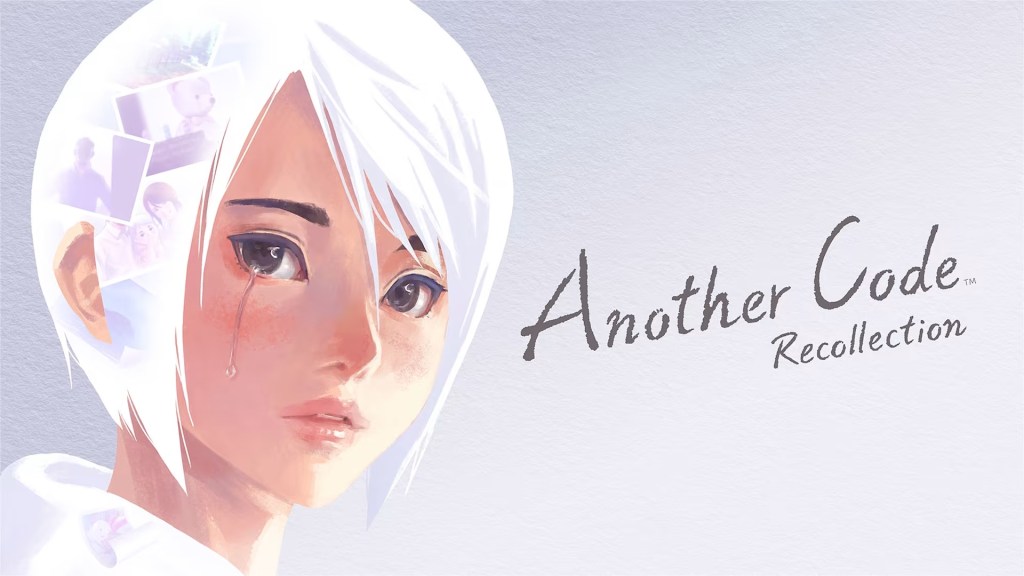
I’m kinda sure I played Another Code a little back in the days of the Nintendo DS, and a great looking remake of it and its Japan-only sequel are coming out soon, under the name Another Code: Recollection. But available immediately after the Direct was Trombone Champ, which I bought immediately. Imagine Guitar Hero, but with a comical sounding instrument — an absolute no-brainer. You can even play with up to three friends in local multiplayer, but Kim has not yet agreed to it.
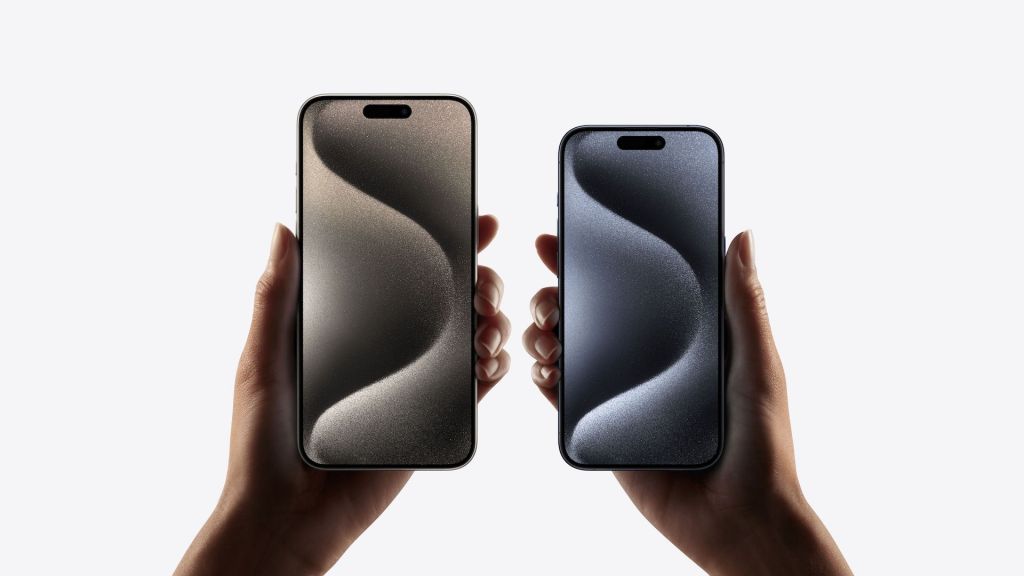
Oh, it was also time for the new iPhones, and practically all important points had already leaked: titanium frames for the Pro models, a new folded zoom (rumored to be a periscope lens but instead a tetraprism design) only on the Max models, smaller bezels, USB-C, and the removal of leather products from Apple’s entire supply chain. Apparently they’ll even progressively remove existing leather furnishings from their stores.
I… am not against leather, though I can understand that it’s a net negative for the world at Apple’s scale. But there’s no great substitute: synthetic leather is awful, and early impressions of Apple’s new recycled fabric, a material they’re calling FineWoven, suggest it’s not as premium feeling as hoped. In any case, it’s a woven textile product sitting in for a smooth, supple skin. Not really comparable.
If Apple added FineWoven products to the lineup any other year without removing leather at the same time, there would be far less scrutiny. After some consideration, I decided to get a leather case from Nomad for the times I’ll need one (going out for drinks is one recommended occasion). I dislike their ribbed power button design, but couldn’t find any better options. Bellroy makes one, but with a cutout and not a passthrough button for the new Action Button. I’m glad I also snagged a last few Apple leather straps for my watch before this happened.
Back to the phones, though. The one thing that hadn’t leaked was a big one for me: the new A17 Pro chip has a GPU and Neural Engine powerful enough to do real-time ray tracing and AI-powered upscaling. These will literally allow console-quality games (a term carelessly bandied around in mobile gaming quite frequently, but seemingly for real this time) to be played on iPhones. There was the surprise announcement that Hideo Kojima’s Death Stranding Director’s Cut would be ported over this year, along with Resident Evil Village (previously announced for the Mac), the remake of Resident Evil 4, and the next Assassin’s Creed game, Mirage, in 2024. These games suggest the iPhone is basically capable of running PlayStation 4 games, but without active cooling (a fan).
The possibility of playing these games on the go, along with the 5x telephoto lens exclusivity, pushed me to pre-order a 512GB Pro Max model this year. Ugh. As said in too many words last week, I find carrying such a large phone around too much of an inconvenience, but the bigger screen and longer battery life are justified this year. And thanks to the move to USB-C, I had to order a new Backbone One controller as well. I love my original Lightning connector model; it’s a well-built, great-feeling, very clever gamepad.
On the camera front, there were mentions of a new improved Photonic Engine in the iPhone 15 Pro, which gives me hope that we’ll get less artificial looking photos this year. I was very pleased by the new feature which lets you choose from 24mm, 28mm, 35mm, and 48mm crop settings when using the main camera sensor. These nods to photographic tradition are befitting of a “Pro” model, and help users learn about different focal lengths. You can even set one of them as your default (this isn’t the Apple we knew), and I think I’ll be choosing 35mm. If only we could set a 3:2 aspect ratio to go with it.
I’d read online that iOS 17 changes something about how photos are processed on the iPhone 14 Pro, making them less aggressively sharp and HDR-ed, and I was sure I could see an improvement after updating to the RC. I really believed they were looking more natural, especially in the 2x and 3x lengths, but after comparing photos from two iPhones on iOS 16 and 17, I can confirm that it was all in my imagination. So you’ll have to get the new iPhone to “fix” the processing if it bothers you.
You do gain the ability to save photos in “HEIC Max” quality on iPhone 14 Pros, though. This saves 48mp HEIF files, with all the smart processing, which previously required an app like Halide to do. The ability to change a portrait photo’s subject and focal point after the fact will also be available on older phones with iOS 17, in case you aren’t planning to upgrade this year.
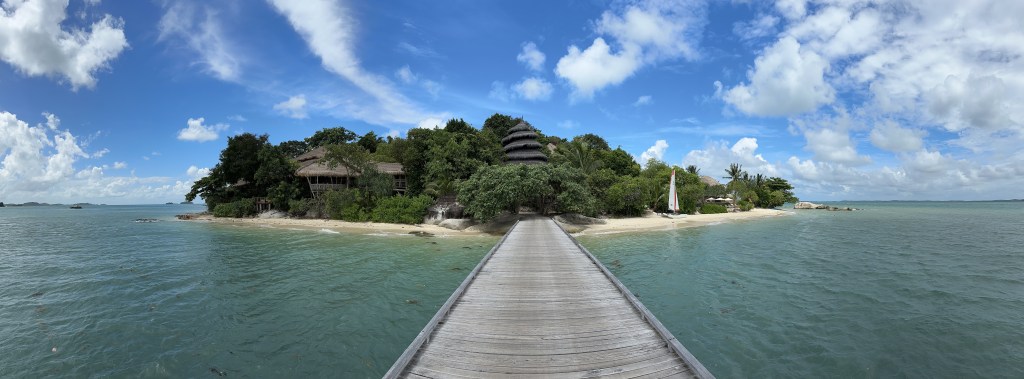
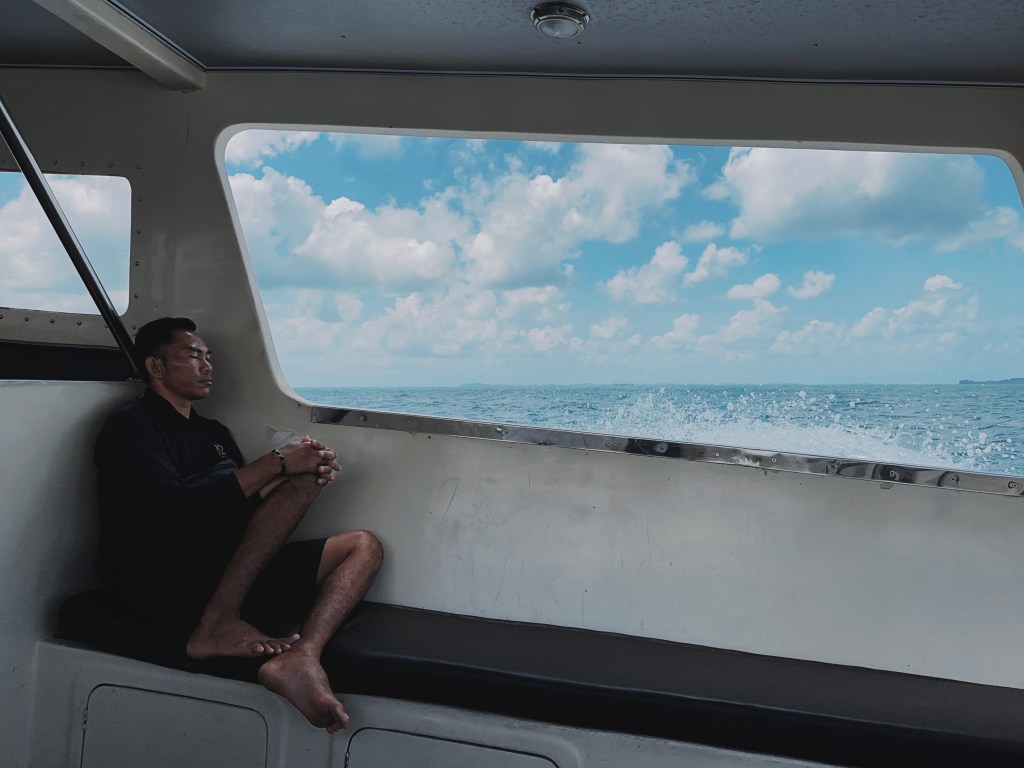
I survived the island. Their warnings of limited internet access were exaggerated, and it turned out that we did have wi-fi in our villa, albeit quite slow; I did not feel completely disconnected, but I managed to avoid being “online”. I did not, however, get a chance to play Hello Kitty Adventure Island, nor finish the book I was reading until I got back to Singapore. That will have to be remedied in the coming week.
We mostly spent our time sitting by the pool, or the beach, or eating, or walking around and exploring the “private island”, which is incidentally a marvel of self-sufficient sustainability. All water used in showers and bathrooms is collected rainwater and natural well water. Wastewater is processed and filtered on-site and used on plants. Food waste is composted and broken down by black soldier flies bred for this purpose, not shipped back to the mainland and incinerated.
I managed to get a tan, and now I’m sporting a ‘just healthy enough to look like a living human’ shade. I also need to shed my lizard skin this weekend and head out to a wedding, so there was a shopping trip as soon as we got back to pick up a decent shirt. Putting on a suit stresses me out more than wearing shorts and sandals on the beach, tbh. There’s a Goldilocks zone of comfort somewhere in between and it looks exactly like a pair of jeans and a t-shirt, which is where I plan to stay for life, thanks very much.
Island photography and phones
Speaking of being indoors and online, I took a bunch of panoramas on this trip with the express intent of viewing them on the Apple Vision Pro when it comes out next year. Enjoy this one, and a vertical video of some gentle waves if you need to take a little mental break.
The majority of other photos were taken with the Halide app as is now my usual practice, and in comparison to photos of, say, the sunsets taken with the camera app on my iPhone, they came out much more natural and aesthetically pleasing. It still boggles my mind that Apple shipped the Photonic Engine on the iPhone 14 Pro the way they did because it looks so overprocessed by default.
I can’t wait to see if the 15 Pro will resolve this, and if I’m honest I’m also keen to replace the ailing battery on my 14 Pro — online anecdotes suggest many of us are suffering from accelerated battery aging this year. I’ve watched mine fall from 88% to 86% maximum capacity over the last two weeks. Some people believe the combination of using a case + MagSafe charging is the cause, because of the heat generated. I don’t know what’s going on, but I don’t want to avoid useful features or stop doing normal phone things just because of this.
Blue skies
I finally got into Bluesky this week, and I don’t dislike it! Threads is unfortunately a place where I’m visible to everyone who knows me on Facebook/Instagram, which is to a large degree my real-life social graph. And what I liked about Twitter was that it was an online place for my online identity and my online people. I’m hopeful that Bluesky can be more of a Twitter replacement, and its relatively smaller size could be a strength, as long as the people I want to follow are on there. At this point, I’m rarely even checking Mastodon.
Coinbase launched their new Ethereum L2 chain, called Base, and its stated purpose is to be a more user-friendly blockchain that could go mainstream and be used by the next billion people (ambitious). They say (and I like this positioning) that “online” was the first revolution, and “onchain” will be the next.
I’ve been playing with it within their Coinbase Wallet app, and enjoying their “Onchain Summer” campaign which focuses on minting a bunch of free/very cheap NFTs. It’s a good demo of how low gas fees are on Base compared to regular ol’ Ethereum; most transactions cost just pennies. There’s still a lot of work to be done to make this more understandable, and arguably the entire user experience of creating and funding a new wallet needs to be rethought.
The main launch event was Cozomo de’ Medici (who I thought everyone agreed was Snoop Dogg but now may not be?) partnering with the Friends with Benefits (FWB) DAO and the Korean animator DeeKay to launch a pair of Open Edition artworks depicting a cryptocurrency future. Importantly, people could buy them with a credit card, instead of fumbling with wiring money to Coinbase and then buying ethereum and then sending it to their self-custodied wallets on the Base chain.
Did I lose you in crypto-jargon land? Don’t worry, I can’t keep up either. Think of Open Editions like an all-you-can-eat buffet, but with a closing time. The intent is to encourage access over the usual scarcity and price speculation. In this case, the NFTs were only available to be minted for 24 hours, and apparently some 70,000 were snapped up at a cost of 0.01 eth each (around $20 USD, I think). That’s still a cool $1.4M made!
Sounds of summer
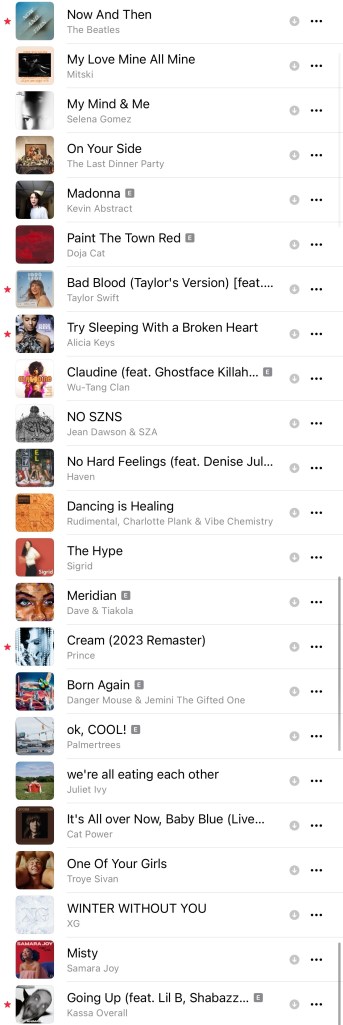
We enjoyed this summer vibes playlist compiled by XG (Apple Music) while lazing in the pool this week. I still can’t get their housey new song, TGIF, out of my head.
Speaking of Apple Music, I noticed a new personalized radio option appeared on my “For You” tab this week, called Discovery Station. 9to5Mac.com reports that this feature has been in testing for awhile, with people spotting it on and off over the past year (how do I get into these betas?!) — in any case I’m glad to see new features and am hoping for more improvements around the launch of iOS 17.
In the early years of mobile connectivity, we counted ourselves lucky to get 1GB of data per month. Fifty bucks bought you a plan, a phone, and a two-year leash. These days? I’m sitting on an 88GB, 5G mountain for half the price. Thank you, technological progress. But since COVID and working from home, I’m only using a fraction of my allowance.
Yet, like any good consumer, I want more. So I switched providers from Circles to M1, lured by a plan that comes with 150GB at the same price. But there’s a catch, M1’s a little disorganized and provided me no updates on when my number would be ported. Right now I have two eSIMs jostling for control in my phone.
Their checkout process also insisted on a “delivery” date. Delivery of what exactly? I’d already gotten the QR code for my eSIM over email. Assumed it was just a holdover from the old physical SIM days, too much bother to scrub from the website. But no, someone actually turned up to my doorstep at the appointed time, just to verify I’d activated my eSIM, then had me sign off on it.
Let me repeat: M1 sends a flesh-and-blood human to confirm I got an email, but can’t drop me a line to say when my number would switch over. I had to spend 10 minutes on a support call to find out that it’s scheduled for next week. Will the data bonanza make up for this frustration? We’ll see.
===
On a mellower note, I started to make use of my dormant brain.fm account again, to provide background music while I read and work. Is it pseudo-science? Beats me. But I like most of the tunes and it seems to work. The app has been significantly upgraded since I last saw it, with many more genres of music to choose from, and the option to vary the intensity of their brainwave-enhancing signals (which sound like wobbles).
With a little help from brain.fm and last week’s recommended music from Alice Sara Ott, I finished Sayaka Murata’s Life Ceremony, and also Hervé Le Tellier’s The Anomaly, and Lee Child’s 20th Jack Reacher novel, Make Me. Of all those, I can recommend The Anomaly most wholeheartedly. It’s a book you probably shouldn’t know anything about going in. If you really must know, it has science and mystery elements, but that’s all I’ll say. I’m now reading real-life astronaut Chris Hadfield’s The Apollo Murders.
Not bad for a guy who’d only finished one book two months ago, now 8 out of 12 down on his Goodreads Challenge.
===
I’ve been listening to Tessa Violet’s new album, MY GOD!, and it’s a playful catchy affair. Incredibly, Blur have reunited with a new album, The Ballad of Darren, and I couldn’t find much wrong with it after one playthrough. Maybe it’s the halo of how good the last Gorillaz album was after a decade of underwhelming me, but I think Damon Albarn is back.
I made a commitment to use my AirPods Max more — they’ve been neglected because they’re somewhat of a pain, both literally and figuratively: the headband’s a little tight for me and the Smart Case remains a questionable design, adding friction to the simple act of turning a pair of headphones on and off.
Two things have improved the experience for me. First, a dubious Reddit post from another big-headed owner who suggested bending the metal frame open, briefly straightening them open to form a 180º line, to ease the squeeze. This could obviously damage them, so do it at your own risk. But I think it’s made a difference. This is something you can’t do with the plastic Beats Studio Pros, sadly.
Secondly, an updated audiogram from the free Mimi hearing test app. The last time I did the test was 2021, and I got slightly different results this time. I highly recommend everyone does this if they’re old enough to worry about losing some hearing. Thankfully my ears are still pretty good.
Saving your test results as an audiogram effectively personalizes your listening experience on AirPods and supported headphones, applying an EQ profile that compensates for the frequencies you’ve become less sensitive to. You’ll hear music the way you used to, once you dive deep into the iOS Settings menu and find the section on Audio Accessibility, and turn on “Headphone Accommodations”.
===
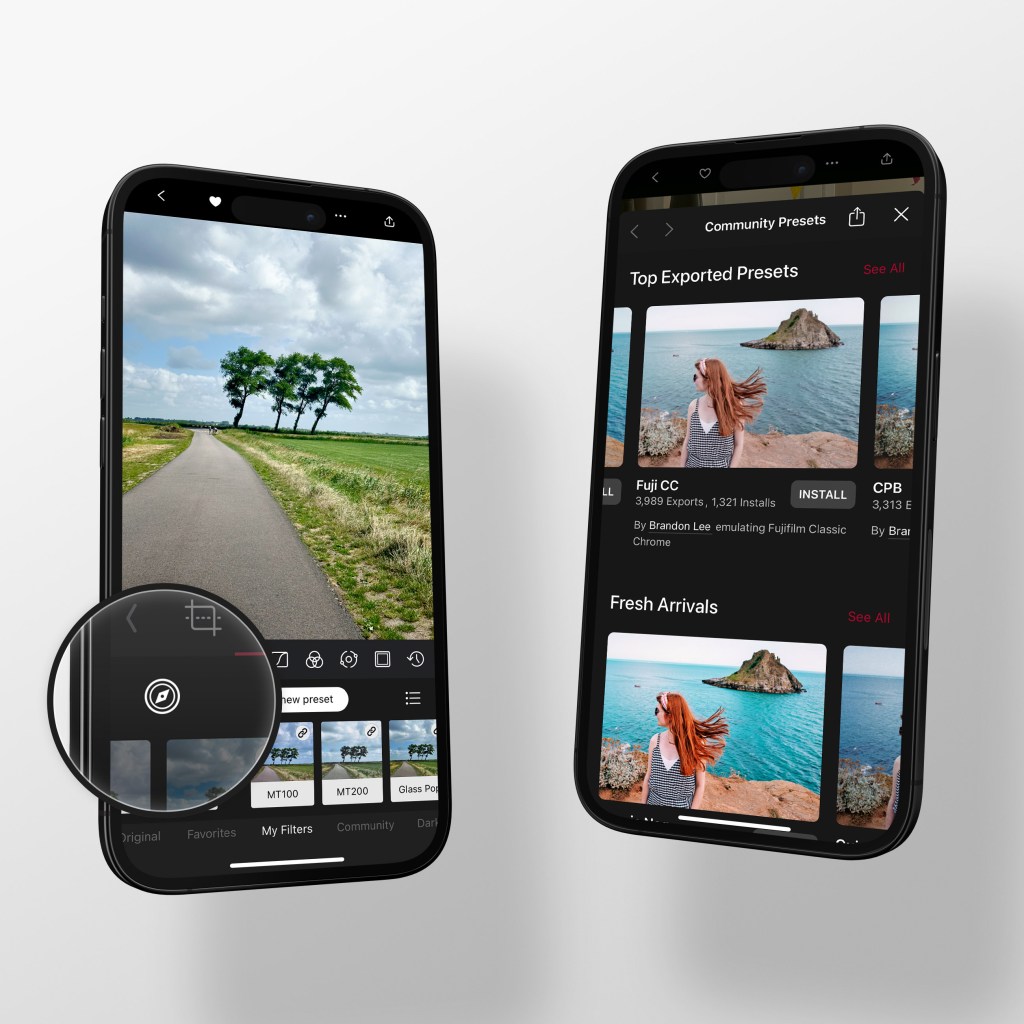
Another app that played a part in this week is Darkroom, the photo editor for iOS and Mac that I’ve mentioned a few times. They launched a portal to showcase presets made by community members, and kindly put a spotlight on some of the ones I’ve made and shared. You can access this catalog through a new button in the app, too.
As Twitter is living on borrowed time (this was the week their petulant man-child owner pushed out a hasty, clumsy rebrand to “X”), I decided to republish my thread of Darkroom presets to… Threads. Annoyingly, it’s still buggy and messed up the chronological order of my posts. Nevertheless, I think they’re all still there, and I’ll post future presets to the same link.
New ones I shared to celebrate being on the presets portal:
E1: This is my reproduction of the popular E1 filter in VSCO. I wrote that it adds warmth, color, and film vibes in a single tap, and it truly is quite a versatile everyday effect.
MEM3: This is another strong effect from my nostalgia-forward MEM series. It lightens and fades images with a blue-magenta cross-processed wash. You pretty much lose all highlight detail, but it’s a good look for certain scenes.
MEM4: I said that this creates a warm and dusty sunset feel, but it’s really also great for low-light scenes. Check out the last photo sample through the link. Again, you do stand to lose detail in contrast areas, so vary the strength to taste.
===
Growing up in the 80s, I caught reruns of Takeshi’s Castle on Chinese TV channels with no context, and no ability to understand what was said. On reflection, I grew up watching a lot of shows visually rather than verbally, which continues to this day whenever I choose to watch movies on planes without headphones.
Anyway, Takeshi’s Castle, for the uninitiated, was a long-running Japanese game show (?) featuring normal people tackling an obstacle course of heinous physical challenges that would make insurance men squeamish. It was a precursor of Ninja Warrior, American Gladiators, and yet a different beast: whimsical, insane, hilarious. Why the name? It was hosted by the infamous Takeshi “Beat” Kitano, who played the err… lord of the castle that 100 contestants each week tried to storm. Here’s the Wikipedia article.
I’m pretty sure you all know this, anyway. It’s a cornerstone of modern media culture! Turn in your TV licenses if you don’t.
So imagine my elation while browsing Amazon Prime Video in bed and suddenly seeing a new Takeshi’s Castle, a 2023 reboot! We’ve seen two of the eight available episodes, and it’s still gloriously fun. It’s still not rolled out globally, as some markets will get English voiceovers (the UK one will have comedian Romesh Ranganathan as one commentator), but I wouldn’t watch it any other way than in the original Japanese, and maybe even with the subtitles off for old times’ sake.
===
On Sunday we visited the Illustration Arts Fest where some talented friends were showing their work. It was packed, and probably the most crowded place I’ve been in since Tokyo. Let’s hope I don’t get COVID again.
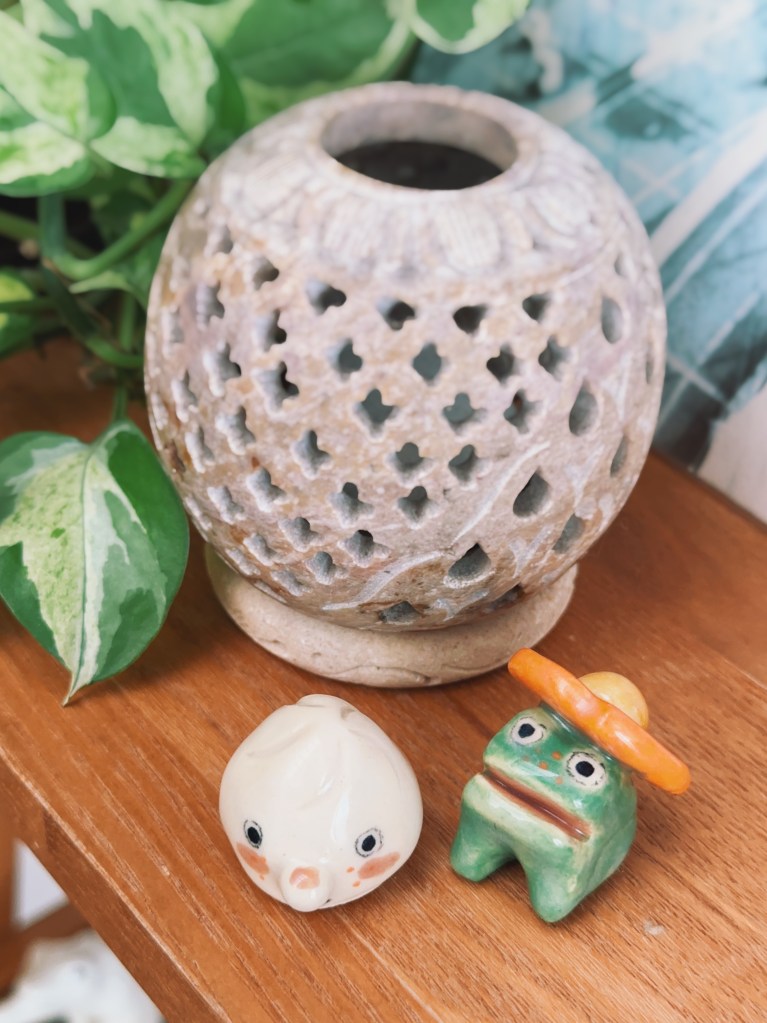
The most common theme was cute cartoon cats. On stickers, posters, keyrings, enamel pins, you name it. Some other artists were out there, scratching their own freaky itches and looking for kindred spirits in the crowd. We bought a couple of things for the apartment, including these little guys below from our friend Reg at Ocio Ceramics. A dumpling and a frog. Cuteness sells.
The following is a post written by GPT-4 given a detailed brief by yours truly. The [H-AI] tag in the title declares this as human-supervised AI content.
In the tech world, it’s easy to get caught up in the latest and greatest. But sometimes, it’s worth taking a moment to look back at the innovations that brought us here. Today, I’m talking about the Nintendo 3DS and its 3D camera, a feature that seems to have found a spiritual successor in Apple’s newly announced Vision Pro headset.
The 3DS, launched in 2011, was a marvel of its time. It brought 3D gaming to the palms of our hands, no goofy glasses required. But the real kicker was its 3D camera. With two outer sensors capturing slightly different angles, it could take 3D photos and videos. It was a novelty, sure, but it was also a glimpse into the future.
The 3DS’s 3D camera was met with a mix of awe and skepticism. Some saw it as a gimmick, while others reveled in the new dimension it added to their photos and videos. Regardless of the reception, it was a bold move by Nintendo, a testament to their innovative spirit.
Fast forward to today, and we see Apple taking a page from Nintendo’s book with the Vision Pro. This VR headset lets you relive moments in dramatically higher resolution — a step up from the 3DS, but the core concept remains the same.
The 3DS may be discontinued, but its legacy lives on. It was a pioneer in 3D technology, a stepping stone to the immersive experiences we see today. As we anticipate the release of the Vision Pro next year, let’s not forget the devices that paved the way.
So here’s to the Nintendo 3DS, a trailblazer in its own right. And here’s to the Apple Vision Pro, a testament to how far we’ve come. The future of XR technology is bright, and I, for one, can’t wait to see what’s next.
The new Legend of Zelda game, Tears of the Kingdom, launched this week about five or six years after the last one, which I never finished. I pre-ordered the new game, of course, planning to join the rest of the world on launch day, exploring together and participating in conversations online, collectively figuring out unique solutions using the game’s open-ended physics engine. For those who haven’t seen it, the new game is sort of a sandboxy, Minecrafty affair where you can weld stuff together and build novel mechanical solutions to obstacles, almost certainly in a different manner than your friends. Think rudimentary cars from planks of wood, or hovercrafts, or the forest booby traps from Rambo First Blood.
But the guilt of never fully playing Breath of the Wild was getting to me, and I’ve been trying to get back into it over the last few weeks. Despite memories to the contrary, I’d made shockingly little progress in my 40+ hours of gameplay, spending most of my time bumbling about the countryside and climbing mountains, instead of conquering the Divine Beasts (1 out of 4) and collecting quality stuff. It seemed wrong to jump ahead to the sequel while I’m finally seeing what the last one had to offer.
So in this past week I’ve made more progress than in the previous four years: conquered two more Divine Beasts, got the Master Sword at last, and uncovered most of the world map (two more areas to go).
===
Craig Mod tweeted and tooted about having had enough of the iPhone’s (14 Pro, I assume) overprocessed look, and said he was making Halide his default camera app. Huh? But how does that help, I thought, unless he means to shoot in non-ProRAW RAW all the time (which is a thing Halide does: shoot in traditional RAW files which don’t involve the “Photonic Engine” processing pipeline). After some poking about, I realized something I should have ages ago: by turning off “Enable Smartest Processing” in Halide’s settings and choosing HEIC as the output format, you can actually take regular old (non-RAW) photos that look more natural and have more editing latitude! This effectively cancels out the iPhone 14 Pro’s image quality regressions.
The overstimulated look of the default camera is one of the main reasons I hardly took any phone photos on my recent vacation to Japan, but if only I’d known… I could have! So with that, Halide won an instant annual subscription from me, and I now have a complication on my Lock Screen that launches straight into it.
My toot about this was boosted by Mod, making it my most “engaging” Mastodon post ever, at 44 likes and 12 boosts.
You have to see a comparison to understand how obnoxiously oversharpened and artificial the Photonic Engine is on the 14 Pro’s 48mp sensor for some reason. It increases local contrast and highlights texture “detail” that does not look like what you see in real life. It’s a Clarity slider turned all the way up, and I’m not a fan of Clarity sliders. The example below is a corner crop from two larger photos, not edited in any other way.
My AI experiments this week have been around trying to teach ChatGPT to write better poetry. I posted a few days ago about getting it to do a critical reading of a poem, wherein I was completely stunned by its comprehension skills. But writing good poetry, not just gimmicky rhyming lines, that should be a different thing.
I semi-accidentally discovered that asking a “persona” (that I’d established in another chat instance to test the idea of using an AI prompted with a human backstory as a customer research proxy) to write poetry yielded subjectively better results than when I asked a brand new ChatGPT instance. The mere suggestion that the bot’s point of view should draw references from vaguely described life experiences and preferences seemed to make a difference to what it spat out. Which is why many SF stories have AIs that don’t know they’re AIs, I guess, and they have memories of childhoods that never happened.
Here’s a poem that “Frank” (quite a salaryman-type personality) wrote about retirement:
A lifetime spent in labor’s thrall, In structured days and office halls. Oh, to retire, to end the grind, To leave the corporate world behind.
The dawn of leisure’s quiet grace, In this new, unhurried pace. Days unbound by ticking clocks, Unfettered as the wandering fox.
Yet in this expanse so vast, Shadows of the past are cast. Habits of a lifetime past, In this new role, steadfast.
A time of freedom, yet confined, By boundaries of the seasoned mind. Retirement’s paradox, I find, Is having time, yet being time-blind.
Wow! No? It was coming up with absolute drivel before I handed the job over to Frank in another window. Side note: I started paying for ChatGPT Plus, just to have access to GPT-4; it’s a much better poet than the default GPT 3.5 model.
So lately I’ve been working on giving feedback to an poetry-writing AI that I named Penrose and instructed to believe in itself as a 50-year-old professor of creative writing and philosophy, who’s bad with money, had two failed “great loves” because of their selfish acts, grew up in Boston, now works in London, and so on.
Here’s one of the first things it wrote:
In the chilled reflection of a London morn, I see a face, lines etched by yesterday’s turmoil. Cracks, not of frailty but life, loud in their silent form, That’s you, mate, and it’s all right.
Witness the march of years, the dance of decades, In the ceaseless play of ambition and regret. Weaknesses? They’re the worn pennies in your pocket, The unpaid bills of your character, yet, not your debt.
They’re the stumbles on cobblestones, The missteps in Milan’s echo-filled alleys. Not a damning verdict, but life’s hasty loans, A ledger, not of losses, but of rallies.
In this world where even stone yields to rain, We’re all apprentices to time, chiseling away in vain. We’re all works, works under the master’s patient hand, Unfinished, flawed, yet, in that, something grand.
===
I haven’t been able to bring myself to watch more of Amazon Prime Video’s Citadel beyond the first two episodes. A colleague said he quit after 10 minutes. It’s reportedly one of the most expensive TV shows ever made, at an average of $50M per episode.
Silo on Apple TV+ has been very good so far. It’s a little bit YA sci-fi, a little Hunger Gamey, a little Snowpiercey (but better).
I saw a segment on NHK about how this iconic street corner featured in Slam Dunk has been inundated by tourists now that Japan is open again. They interviewed pilgrims from S. Korea, China, and Taiwan who said they just had to come down and see it — “if you love anime at all, this place is a must”. So I decided to get started on the ancient anime, which Netflix has 8 seasons of. The day after seeing episode 1, I ended up standing behind a guy on the train watching the show on his phone.