Tag: Photography

  • Week 15.26

    Week 15.26

    I’m looking through my camera roll to remember what happened this week and it’s mostly a bunch of “artworks” I’ve been making. Wait, let me step back: I’ve had an interest in procedurally generated graphics (GenArt) for awhile, and it peaked with the NFT boom of 2021–22, where I spent a relatively obscene amount of money minting and collecting artworks I really liked (not the monkeys). I’m mostly drawn to the idea of mathematically rigid routines producing organic beauty — the contrasts in that, and the unpredictability of what you get when you roll the RNG dice.

    So after my recent experiments in making apps, I wondered if I could get AI to write me code that would generate images based on concepts I described. The answer is, of course, yes! It’s important to note this isn’t prompting for images (like when you use Midjourney or DALL-E), it’s prompting for the math behind making images. And once you’ve created the rules by which it draws different art styles, you can create a nearly infinite number of unique artworks by dialing different variables up and down.

    One example is a “style” I made called Labyrinth, which produces actual, solvable mazes. Depending on the variables you adjust, you can make mazes ranging from tiny to massive, with just one solution, or many. If you asked an image generation AI to draw a maze, it would likely lack the coherence of a real maze, because of the way it operates — focusing on the superficial appearance and not the integrity of its paths. But an AI model can make the math to draw a maze.

    I start most of these by thinking up an artistic production approach, say “take sheets of colored cardboard or acrylic, and punch holes of varying shapes into them, then layer them on top of each other so the holes line up (or not), and randomly spray contrast-colored paint on some of them”. Then I describe the possible variations and variables I want to control to the AI, such as the density of shapes, the thickness of the borders, the ratio between angular and organic lines, and we iterate after seeing some of the results. Just think of all the methods and ideas you might want to play with, and how this lets any old idiot model them on their computers!

    The meta project is that I’ve made a modular app that handles all these different styles for me, whether they require a 2D canvas or WebGL. The app provides a common UI layer that all “styles” can plug into, which allows me to control them. Now that it’s done, I can just focus on experimenting and having fun making new artworks. I daresay a few of these are executed as well as any of those I spent money on.

    I’ll probably release it as a wallpaper generator once I have enough styles built in, if anyone’s interested. But mostly I love having this as a background project that I can dip into, on and off. It allows me to take on other app ideas as momentary “side quests”.

    While making Labyrinth, I showed a maze to Cong, who said “You should do a puzzle maker”. To which I said, “Nah.” And then a minute later… “Although, a daily maze game. Hmm.” It made sense that I could save time by taking CommonVerse’s daily random generation mechanic and combining it with Labyrinth’s logic to make a daily maze challenge. But would it even be fun to trace a 2D maze with your finger and try to solve it? No… so what if it was a 3D maze you had to escape?

    The first prototype took a couple of hours, and I’ve been polishing it for the last few days. I think it’s coming along nicely. I’ll put it out soon, once I balance the difficulty and get more feedback from testing.

    The development of a maze, a maze, a maze… was hampered by a rare bar crawl with Howard and Jussi on Thursday night that gave me a massive hangover lasting into Friday afternoon. When I got home, I was too plastered to care that my vinyl copy of J Dilla’s Donuts had arrived from Amazon US protected by nothing more than a flimsy paper envelope. By the clear light of day I was amazed that they would even do such a thing. The discs are intact, but the sleeve has a bent corner. If I’d ordered from Amazon Japan, I would bet a major internal organ that it would come wrapped in four layers of stiff cardboard, bubble wrap, and a handwritten apology for their carelessness.

    Did I mention we’re going to Japan again? It’ll be a short vacation, in a couple of weeks’ time. Not much on the agenda, just checking in on the state of curry rice and egg sandwiches. Maybe see some nice art. Take some photos.

    Which brings me to the latest betas of Halide MkIII, which I’m very much looking forward to using on the trip. They’ve been progressing the app nicely, and it might be enabling the Holy Grail of iPhone photography workflows for me. Ironically it involves using Halide not as a camera app, but just as a photo editor. You can shoot compact (lossy, JPEG-XL compressed) ProRAW photos up to 48mp with the default camera app, then edit them in Halide to have the same look as their Process Zero photos! What this means: you get all the benefits of computational photography at time of capture, including noise reduction and night mode, but you’re also free to dial it back and get natural, “real camera” photos in post if the scene calls for it.

    As much as I like these side quests, I think making my own photo editor would be biting off entirely too much to chew, so I’m still rooting for these guys to crack it.

    While writing this post, I got the news that an elderly aunt passed away at the age of 93. She had been in reduced health since the Covid years, but by all accounts she went very peacefully and I guess you can’t ask for much more than that after a long life. The extended family’s Chinese New Year routines fell apart in recent years after she pulled back from organizing them, so it was fitting that some of us got to reconnect at her wake on Sunday evening.

    See you next week.

  • Week 14.26

    Week 14.26

    An update on my app addiction

    On Wednesday morning I woke up and saw that my last app DataDeck was getting a bunch of likes and reposts on Bluesky, which was a nice surprise. If ever there was a place where people would appreciate a wacky, nerdy idea, I guess that would be it.

    My Instagram Story on Wednesday

    I made a couple of post-release updates to my magnetic poetry non-game, CommonVerse. There are now two new themes, one called Label Maker that resembles those little Dymo stickers we used to make, and another called Zine which is like a random note of cutout words. The UX has also been improved in subtle ways that might make it easier to manage making sentences.

    My “main” app project now is one that I can keep noodling on in the background, with no real endpoint — it’s done when I think it’s done — and the idea was that would help me slow down and spend less time with this vibe coding stuff. Guess what happened? That’s right, if you design something that can sit on the back burner, it will sit on the back burner. I started work on another app instead.

    Defying time and gravity

    I’ve known that the next step was to play with agentic coding tools like Codex or Google’s Antigravity. These are code editors with integrated AI that can look across all your project files and manage multiple agents working on simultaneous tasks. It’s a far cry from the way I’d been working: getting advice and instructions from a single chat, and then doing everything myself in a code editor. So I finally got started with Antigravity, and it blew my mind.

    The productivity increase is hard to describe. I could just describe stuff and it would get done without further work on my part. The tool can use the system’s terminal and Chrome browser to install packages, click around and test the app, figure out why things aren’t working, and fix it while you watch. Stuff that took me days over the last month could have been done in hours. It was automating so much of what little I, the non-programming human, was doing and considered my job, that it made me feel kinda redundant, to say nothing of real programmers.

    With Antigravity, the MVP of my app concept was done in three hours on a Friday. The good/bad news was that it blew through most of my token allocation for the week. So I went back to the “old” way of working and made subsequent changes manually. What I discovered was that I much prefer getting hands on with the project files, looking through the code to understand what was going on and what went where. I think I’ll use these agentic tools to get started fast and figure out a working architecture. After that, it’s more fun to get involved and make improvements slowly.

    Ate and left the Crumbs

    So the new app is called Crumbs, as in breadcrumbs, as in leaving a trail of them so you know where you’ve been. It’s a private location journal that lets you mark where you are on a map with a single button push. Over time, you can see the path of your journey(s).

    I made this because I’ve always wanted something like this for logging holidays, and no app really does what I want. Foursquare’s Swarm is based on Places, so you have to find the business listing or entry in order to check in. If you’re in the middle of a national park, or in a country where no one has created Places, or you can’t read the names, you’re out of luck. Google Maps has a Timeline, but it tracks your location all the time, and it only shows your trail on a day-by-day basis. Your data is also locked in their app and you can’t get it out to visualize in other ways.

    Crumbs is private, and you can take the data out in JSON format. It logs the time and weather along with your location, and you can write little notes. You can save an image of your map, or export a PDF of your journal.

    A big breakthrough (for me)

    Unfortunately, because it’s a web app and not a native iOS app, it can’t permanently store data on your device. The OS may decide to purge all your data if you haven’t used it in a week. That’s a dealbreaker for any app intended to be a life-logging tool. That really bummed me out, and I thought it would just have to be a personal tool that I couldn’t distribute to anyone else — since remembering to do manual backups/restores of the JSON file would be a massive PITA for any user.

    And then I had a Eureka moment! I thought of a possible solution and asked Gemini if it was feasible, to which it answered “Yes, this is an ideal solution”. I wanted to scream “Well, then why didn’t you suggest it all this time we’ve been discussing how to get around the problem!?”

    The answer was Dropbox integration. I can’t make a web app read/write files locally, but I can do it in the cloud. So now Crumbs is as useful as a “real app”, provided you connect a Dropbox account.

    As of Monday morning this post is late and I think Crumbs is ready, so here it is.


    Other thoughts

    • Here’s a free idea: I was inspired by this stamp journal that went semi-viral, and wanted to make some sort of digital Instax photo album. It’d be kinda nice to keep a virtual scrapbook of interesting images, right? Well, turns out you can just use Apple’s Freeform app and Dazz Cam. It’s as simple as making a board and dropping in images, then arranging them however you want. All stored locally and synced to iCloud, easy peasy. Just because you can vibe code it doesn’t mean you should.
    • My iPhone’s MOFT Snap Case developed a cut/tear in its faux leather surface, and so had to be replaced after just six months. Its replacement is a Caudabe Sheath, which fits my requirements of being neither silicone nor slippery, with full edge coverage and a Camera Control passthrough button. It’s a hard plastic material with a rough, pebbled texture that makes it feel secure when held. It also came in second in MobileReviewsEh’s roundup of the year’s best cases. I got the version with the ‘open’ cutout for the 17 Pro Max’s camera island, not the ‘precise’ covered design.
    • Kim managed to finish reading Project Hail Mary and we went to see the film on Sunday (non-IMAX). Apparently there’s a longer cut, nearly four hours, which will be released on streaming in August when it comes to Amazon Prime Video. Yes, this is billed as an Amazon original film from the very first frame, coming even before the MGM logo (which they own), and I don’t think that will ever stop being weird. The film is good, a mostly faithful adaptation of a fun but slightly flawed book. I just think they glossed over a lot of detail in the final act, which lowered the stakes and made it less exciting and rewarding than it could have been. Hopefully the extended cut’s extra run time is concentrated at the end.
  • Week 12.26

    Week 12.26

    Another busy week, and I’ve been like a caffeinated creature hunched over its keyboard with bloodshot eyes. You may notice I’ve updated the navigation bar on this site to point to a dedicated page listing all my apps. This takes the place of a page that pointed to all my custom GPTs on ChatGPT (that never really took off, did it?) and before that, my NFT experiments. Those are still around, though!

    You may call it AI slop but I’ve generated key images for each of the apps on that page, which I like to think of as analogous to game box cover art, those evocative artistic representations that used to stretch truths to their breaking points, back in the days when games looked like Lego.

    Here they are, just so you can admire them.

    The latest for now is CommonVerse, my daily magnetic poetry app. Give it a go!


    I’m writing this paragraph on Thursday after another failed attempt to stop vibe coding and focus on other pursuits. So far I’ve mostly finished one project and started on another that I meant to leave aside until next week. What is this feeling? This need to actualize a new ability that I’ve always wanted but never had to worry about not having?

    Instead of being able to recognize that I’ve already accomplished a lot, and “taking the rest of the week off” to go watch movies or something, I’m sucked into continually iterating and improving upon these apps like I’m on a deadline. It’s that paradox (mentioned here last May) where new technologies don’t decrease our workloads but only make us busier instead.

    Productivitymaxxers will say this is fine. This is how it’s supposed to be: you can do more, so you work just as hard and get twice as much out of it. Why would you want to work half as much? And they’re not wrong — that’s the engine of progress. But it’s also how you end up making six apps in three weeks and treating it as some kind of baseline rather than a miracle. As predicted, my capability has grown but I got desensitized to the satisfaction.

    The discomfiting shock to the system as I struggle with this resetting of scale, and feeling addicted to realizing more ideas, is an adaptation crisis. Adapting to life at a new speed and learning to balance capability with sensibility. Astronauts and pilots have to train to handle G-forces, in which the G stands for gravitational. I’m suggesting that working with AI has its own G-force, where the G is gratification. You can suddenly manifest many of the things you can think of. That’s a very powerful impulse to get under control. How do you engage with life’s responsibilities, appointments, or your growling stomach, when there’s always just one more prompt and revision to make? After getting home from a few drinks on Friday night, I found myself on my laptop in bed after midnight, fighting with a procedural audio generation engine that wouldn’t trigger drum sounds for any obvious reason.

    The next night I did the same, staying up to 3:30 AM because I had some new ideas that just could not wait. My Apple Watch sleep score is in shambles. But App #6 is certainly shaping up to be my best work. I’m going to sit on it for a whole week and keep polishing, instead of putting it out and moving on to the next one. That’s my strategy for slowing this down — it’s all I’ve got.


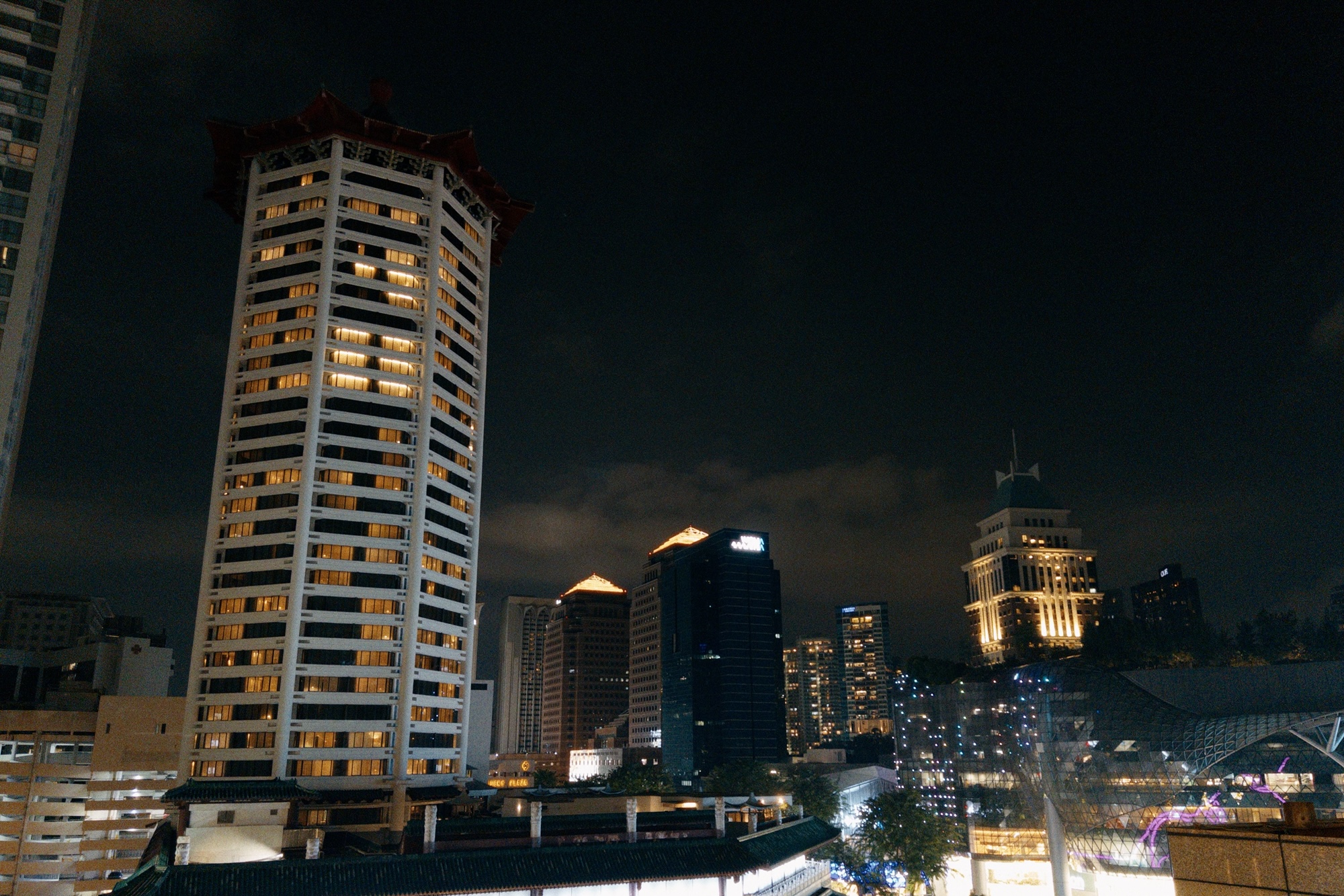
    Over the weekend, I also attended an Apple Store photo walk activity on a sweltering afternoon (up to 36°C next week) with Cien and Peishan. I hadn’t done one of these in years, but always keep meaning to. This one was conducted by the staff at Apple Orchard, and was a walking tour of Emerald Hill — which in reality is just a tiny street off Orchard Road. I’ve been there dozens of times over the years, but never saw the details just sitting there in tiles, old paintwork, and ornamental doorframes. Going to a small area with the intention of taking photos, and giving it more time than you’d normally allocate, can be a really fun and creative exercise.

    There’s no reason one couldn’t do this themselves any time, anywhere, of course. But these free ‘Today At Apple’ sessions are a good excuse to get off the couch. The other two local stores have their own programs, and I might check them out someday: Apple Jewel Changi Airport looks at the indoor waterfall, and Apple Marina Bay Sands has a night photography focus.

    Another nice touch is that they’ll lend you an iPhone 17 or 17 Pro if you don’t have one, and they’re incredibly relaxed about handing them out. No paperwork to fill out or deposits to pay. That’s the great thing about Find My protection, I guess. A comment was made that in the UK, those phones would disappear the instant the group left the store — even if just for parts. But they must do these sessions worldwide, so I’d love to know how it’s dealt with.

  • Week 9.26

    Week 9.26

    • The featured image above is the result of having Geese’s Au Pays du Cocaine in my head all day. The line about a sailor in a big green boat and a big green coat made me think of Puffer Jacket Snoopy, and of course I had to realize the joke.
    • We got the sad news that Deliveroo is shutting down operations in Singapore. This comes on the back of an acquisition by DoorDash who must have run the numbers and decided that a 7% share of the local food delivery market after a decade wasn’t worth investing further in. We use it all the time and prefer it over Grab and Foodpanda — it is by far the better app and their subscription service is better value for money, but we’ve seen this movie before. It’s like how Uber lost out to Grab; the market doesn’t always choose efficiently.
    • I will probably switch to Foodpanda because Grab as a brand has the same icky halo as, say, Facebook or Spotify.
    • Google released Nano Banana 2, the new version of their hit image generation model. This one is cheaper to run and kind of almost as good as Nano Banana Pro, so they’re making it the default for everyone. Paid users can still access the Pro model, but it’s hidden behind some menus. It’s a regression in quality, a slight improvement in speed, and most importantly, a boost to Google’s bottom line. Since I only do silly things with these tools, it doesn’t bother me tremendously, but imagine the same happening at an enterprise level for more important work.
    Screen recording of an AI panorama
    • One of the new things Nano Banana 2 can do is generate very wide panoramic images, so I asked it to render some “panoramas taken with an iPhone” in various locations. I then upscaled those and opened them in my Apple Vision Pro. They don’t have the photorealistic quality of images from Nano Banana Pro, and the resolution leaves a lot to be desired, but they’re still immersive and impressive when viewed in this way. You can see where this might go.
    • There’s been a lot of talk lately about how AI vibe coding could upend the SaaS market, if not replacing dependable enterprise tools with individually created ones, then at least giving IT departments a billion more unapproved apps to worry about. A viral essay from last week posited that AI coding could kill DoorDash, though I’d say they did a good job of that themselves out here. The other oft-discussed idea is that AI could replace the App Store, and everyone will just make their own apps instead of buying them from developers. Michael has been blogging about vibe-coding his own to-do list app based on Clear. I’ve been wanting to try this myself, making more little tools of my own to solve niche problems, but the opportunities have been slow to materialize.
    • This week the right idea presented itself and I made a web app using Gemini: an album cover collage maker that searches for the artwork or lets you upload your own. I’ve looked online for something like this before but only found a few that were quite lacking. Making one to my own specifications took maybe five minutes of prompting and testing. Then I thought it would be nice if you could drag the images to different locations. Gemini added that feature like it was nothing. I’m pretty hyped that even someone like me with zero current coding knowledge could will this into existence. If you’d like to try it, I’ve deployed it at usecollagen.netlify.app.
    • Otherwise it was a sort of decompression week where I just read a lot, listened to the records I bought/ordered last week, and was regrettably glued to my phone watching day trading losses (Chekhov’s gun has fired!) and social media feeds.
    • It took a couple weeks of dawdling but I finished John Le Carré’s Call for the Dead, his first novel featuring the spy George Smiley. I may continue reading the series, seeing as his son Nick Harkaway (whose work I really enjoy) has decided to continue his father’s legacy and written one more already: Karla’s Choice. This one was a little dated and not particularly thrilling, but a fine introduction and scene setter.
    • It was immediately followed by Adrian Tchaikovsky’s The Expert System’s Champion, sequel to The Expert System’s Brother which I read at the end of last year. I recommend both as examples of sci-fi stories set so far in the future that humanity has looped back around to the beginning. It reminds me of the “middle chapter” in Cloud Atlas, if you remember that.
    • Then I read Hu Anyan’s I Deliver Parcels in Beijing, a modern memoir that reportedly did well in China when it came out in 2022. It details the author’s dual career as a writer and on-and-off gig economy worker, which is made more interesting by also being a portrait of what it’s like to live in the lower brackets of Chinese society today.
    • I also had time to tackle Rob’s recommendation of Marlen Haushofer’s The Wall, which was written in the 1960s but doesn’t feel that way, unlike Le Carré’s spy novels. He called it the best book he read last year, so I could hardly say no. It starts off like an intriguing sci-fi novel: a woman visiting friends in the Austrian alps wakes up one morning in the log cabin to discover she’s alone, and there’s an invisible wall separating her from the outside world. Things then focus on survival and what it means to live and be human in solitude, and in nature. Which, given that I’ll be home alone next week while Kim is away again for work, means I’m already in the appropriate headspace.
    Some of the better books I’ve read this year
  • Week 51.25

    Week 51.25

    I shot these photos on an iPhone 17 Pro Max and emulated three classic Chinese B&W film stocks with AgBr: Lucky SHD 100, Friendship 100 Pan Film, and Shanghai GP3 100. The idea was to get the look of road trip snapshots from the 1990s that a traveler then might have taken.

    11 greatly biased observations from a first trip to China

    • The Great Firewall does indeed block the majority of household internet names in the west. Imagine testing if you’re online, what would you type in the address bar of your browser? Google? Nope. Any Facebook property? All social networks and chat platforms don’t work, with the exception of iMessage. However, this only applies to hotel WiFi networks and those provided by local ISPs. If you’re roaming on a cell network while using a foreign provider’s SIM, things work as expected (albeit routed through Chinese servers). I decided not to bother with VPNs and just trusted in HTTPS 😬
    • Powerbank rental machines are ubiquitous, even in places where you should never leave a box full of lithium-ion batteries, like out on the street in direct sunlight. You pay a few cents per hour (via QR code), and because they’ve landed on a common battery design between the many operating brands, it seems you can return one anywhere else after you’re done charging your devices. It’s great not having to carry your own around, but even given a high degree of civic integrity, I think getting adoption in a country where everyone already has their own (like Singapore today) would be tough.
    (more…)
  • Week 38.25

    Week 38.25

    I type this while listening to Sam Fender’s last album, People Watching. I’ve been meaning to hear this through for awhile, but it got buried in my ever-growing library of new music. Thankfully, with the latest update to Apple Music in the OS26 series, you can now pin up to six albums or playlists to the top of your screen. I’ve wanted this sort of ‘Now Playing’ or ‘Heavy Rotation’ virtual shelf for the longest time — it’s the first feature I’d add if designing a music player app. So this album and five other neglected ones are now sitting up there, and I can give them the attention I want.

    I’ve been listening on both my new AirPods Pro 3 and an original pair of AirPods Pro, and dare I say the difference is quite obvious. Louanne asked me what I do with old pairs of headphones when I get new ones, and the answer was “put them in different rooms!”, of course. I’m fast running out of rooms. The new model sounds much more Beats-like than ever (modern Beats, not OG Monster Beats). That is to say, a bass-forward sound with a very clear, almost sparkling high end. It’s a fun sound, and I think they’ll be very popular for all kinds of music, if not audiophile-grade neutral. They appear to fit better than before too, and the difference in body shape will strike longtime AirPods users as soon as they pick them up.

    Then my new iPhone arrived, and before you judge, the old one is being returned to Apple’s Trade In partner in a few days, where it will hopefully be responsibly refurbished or at worst recycled. They’ve suggested that I’m likely to get nearly half the original cost back, which is an astounding deal for a two-year-old model! I’ll believe it when the deposit lands in my bank account.

    I’m very happy I decided to stick with the Pro Max size instead of switching to a Pro. The slight increases in height and width are visible if you put them together, but isn’t really noticeable in the hand. The increase in thickness IS, but combined with the new gentler corners on the seamless aluminum body, I think thicker is actually better? This might be the best feeling iPhone ever.

    I’ve yet to put the new camera system through its paces, but I’m excited and very pleased after a couple of days with it. Images look cleaner, and the redesigned front-facing camera is a revelation. I took a test selfie and could scarcely believe how presentable I looked. Coming from the iPhone 15 series, I’m also new to the new Photographic Styles that were introduced last year, and am getting a lot out of them. I compared photos shot in RAW with Halide and in HEIC with the default camera using a tweaked “Natural” style, and they’re extremely close in both SDR and HDR. This is a big deal! Along with the revised Photonic Engine this year, the dark days of overprocessed iPhone photos may be behind us.

    When reviews get creative

    One thing I’ve noticed this year is how bland and predictable the video reviews from the usual tech YouTubers and influencers have been. They go through the spec sheets while speaking to the camera, do a few test shots, and end without any thoughts you couldn’t have pulled out of ChatGPT. But then I saw a couple of videos from the Chinese-speaking side of the internet, and that’s when I realized Western civilization is well and truly finished.

    Take a look at these and tell me you’re not duly impressed by the storytelling creativity, production skill, points of view, and passion on display — even if you can’t understand a word (but most of them have English subtitles you can enable). They could just shoot the phones on a stand while swinging a light overhead, but they instead they go hard with CGI, costumes, sets, comedic sketches, and cinematic editing. And they do these in the WEEK they’ve given between the phones being revealed and launching.


    We visited a local art sales event for works based on the Ghost in the Shell: Stand Alone Complex franchise, just to have a look. The metal-printed pieces were going for upwards of S$4,000, so there was never any chance we’d buy one — but I got a little acrylic plate standee for my desk (S$25). Above are some snaps straight from the iPhone 17 Pro Max, using only Photographic Styles.

    Afterwards, we visited the SG60 Heart&Soul Experience which is being housed at the site of the old library@orchard. Supposedly it will be renovated and return as a downtown library next year, which is great news. From what I can gather, it’s meant to inspire people about what Singapore’s future might look like, and what place they’d have in it (employing lots of tech to personalize the journey). Criticisms I’ve heard are that it doesn’t go far enough, and the future shown looks kinda like the present: delivery drones, working in VR headsets, greenery everywhere. Visit and see for yourself. Bookings are required, but the tickets are free. It’s quite an involved production with each visitor being given a guide device (an encased Xiaomi smartphone) to wear around their necks, and human facilitators bringing them through the stations.

    Oh, speaking of cases, we went by Apple Orchard Road after the show to have a look at the iPhone Air, and I haven’t seen that store so packed in years. I picked up a rather loud Beats case in “Pebble Pink”, mostly because I really wanted a Beats case last year but they only made them for the iPhone 16 series. It’s hard plastic with a matte finish that’s slippery when your hands are dry but tacky enough if there’s a bit of moisture.

    Check out my reel with the Pink Panther theme:

    And while we’re on the subject of great directors, I finally sat down with Bernardo Bertolucci’s The Dreamers (2003) on MUBI. More explicit than I expected, it’s easy to see why people call it pretentious with its heavy callbacks to classic cinema, but it’s never boring and it sure knows how to use mirrors. I gave it 3.5 stars on Letterboxd, mostly because there’s “altogether too much time spent lying on floors for my liking”. There’s also one truly revolting moment where, out of money, they raid the apartment building’s trash for scraps of food and assemble the world’s grossest bento.

    Spike Lee’s Highest 2 Lowest (2025), now on Apple TV+, is a remake of Kurosawa’s High and Low (1963), which I’ll embarrassingly only get around to watching after this homage. But this is a fine film that stands on its own: a sharp, sometimes experimental exploration of class and morality, constantly playing on the gulf between generations — Motown vs. modern rap, film vs. digital, Kurosawa vs. Lee.

  • Week 25.25

    Week 25.25

    • Lots of reading this week, but not the traditional sort. I decided it was time to cross Emio: The Smiling Man off my Nintendo Switch backlog — that would be the murder mystery sorta-visual novel published by Nintendo (developed by Mages) last year. It’s the third installment in the ‘Famicom Detective Club’ series that laid dormant for decades (the clue’s in the name; they were made for the original Famicom aka the Japanese NES) until remakes of the first two games were released in 2021.
    • I played the first remake back in Week 31 of 2021, and apparently felt it was “a crock of shit”. When Emio came out, I wrote more about the series in Week 36.24, and watched a YouTube playthrough of the second game rather than pay good money to torture myself some more.
    • Thankfully, Emio is much better than those two. Perhaps because it’s a new game with a more sophisticated and complex story than was possible in the 80s. But I suspect it’s also because I’m now familiar enough with, and more forgiving of, the series’ game design ideas that I’d called “archaic and frustrating”. In any case, it has the most lavish animation production values I’ve ever seen in a visual novel, and the detective vibes are a lot of fun. I was let down by the mystery’s resolution, but the journey was definitely worth the time.
    Japanese workplace sexism in Emio The Smiling Man
    • Rather than dive into Zelda Tears of the Kingdom (can you tell I’m afraid of the commitment?), I decided to continue down the VN path by starting on TSUKIHIME A piece of blue glass moon, a decision I will probably soon regret. This is a remake of a supposed masterpiece by the developer Type-Moon, and involves some 30–50 hours of reading, which is about 3x longer than Emio. It is, however, much less interactive and more like reading a novel with visuals and sound to set the mood. I’m only a little while in, but finding it a pleasant ‘multimedia’ midpoint between watching a show and reading a book. Luckily, I played Type-Moon’s Witch on the Holy Night back in March, and because TSUKIHIME takes place later on in the same universe, it feels like a continuation.
    • There was a real book, though! What You Are Looking For Is in the Library by Michiko Aoyama is a charming collection of five little stories centered around a community library, where people stuck in different ruts meet a librarian who has a knack for recommending books that set them off and thriving in new directions. I wrote in my Goodreads review that on top of being above average as translated Japanese books go — most of them come across sounding dumber and more boring than I’d hope they are in the original texts — but the extremely healing nature of these stories warranted a five-star rating from me.
    • It looks like I’ll be going to Bangkok again next month, but this time the heat will be even more unbearable (a RealFeel of 40–45ºC?), so please pray for me. In preparation, I’ve purchased a white t-shirt for the first time in several years.
    • Over the weekend, we dragged ourselves out to see the City of Others exhibition at the National Gallery despite not being fully in the mood. I thought it would be healthy/helpful to just wander through it anyway, even if not fully attentive, and I did find some things unexpectedly inspiring. I may start a new project soon on the back of one idea!
    • While looking at some artifacts behind glass, I remembered that I’d installed Adobe’s new iOS camera app, Project Indigo, which was apparently developed by some of computational photography’s living legends, and promises “SLR quality” images by combining up to 32 frames at a time. It includes an AI-powered feature that removes reflections by inferring what the subject is, and generating detail to fill the less-visible areas. I tried it out on a couple of artworks and got a warning that my phone was overheating — I guess I’m upgrading to an iPhone 17 Pro this year! Anyway, see how it did for yourself.
    • For a free app, Project Indigo is a great deal. I’m sure it’ll eventually be shut down and folded into a paid Adobe offering, but for now, everyone should try it out for a bit. It takes very clean and likely superior photos to the default camera, and does super-resolution oversampling to give you more zoom reach than the iPhone’s lenses will. But the outputs still have that hyperreal HDR look that comes with computational photography, and for the moment that’s something I’m a little tired of. A little grain goes a long way in making a phone photo feel more like a real moment.
    • After the gallery visit, we had lunch at a Cafe&Meal Muji where I was shocked to see the latest inflation-adjusted menu; a massive downgrade from when I used to visit frequently during office lunch hours. The “4-Deli” meal of two hot and two cold dishes alongside rice and soup used to cost maybe $17.80 pre-Covid, then crept up to $20.80 in the years after. Today, it’s been entirely removed from the menu, and $20.80 only gets you a “3-Deli”: one hot and two cold dishes. To try and obfuscate the loss in value, they’re now throwing in a half-boiled egg (which can’t cost more than 30 cents).
    • I probably should have expected it, because for breakfast that same day we stopped by a Toast Box for some kaya toast, which I honestly haven’t done in years, and the breakfast set (coffee, two eggs, a sandwich) is now S$7.60, or about 50% more than in the pre-Covid era. You can of course get this sort of thing cheaper elsewhere, but these prices are still wild.
    • In Craig Mod’s nearly three-hour book tour interview on Rich Roll’s podcast, which I’m listening to in small doses, he mentions the ¥300 breakfast set, a Japanese coffee house staple, and how apologetic businesses have been about having to raise prices by even ¥20 or ¥50. That’s what the kaya toast set is to Singapore, and I wonder if Japan is going to see a ¥500 or ¥700 breakfast set before too long.
    • Speaking of Japan, the Blue Bottle chain arrived in Singapore back in April. While I know they’re American, I’d only ever had their coffee while in Japan. Now that two months have passed, I thought the hype would have died down enough to try and visit the branch here in Raffles City’s tiny LUMINE department store. It was still packed, but I got an iced NOLA-style coffee to go for S$8 — lightly sweetened and flavored with chicory, it was pretty good tbh! But you can see Nestlé’s dirty fingerprints all over the brand now. It feels like the stores only exist to justify selling merch through other channels. Do a search for “Blue Bottle NOLA” and instead of a store menu or info page about their drink offerings, you’ll get tons of spinoff products like NOLA Nespresso capsules, brew-at-home kits, tumblers, instant coffee mix, foamers, and so on. Even Starbucks, synonymous with the mercenary scaling of coffee, looks kinda restrained in comparison.
  • Week 6.25

    Week 6.25

    • We spent Monday strolling around Jimbocho, an area permeated by three of my favorite smells: books, coffee, and curry. I don’t know how many of the district’s 140~ bookstores we managed to see, but it’s something else. So nice to see the reading and collecting of printed material still alive, although you have to wonder where these used books and magazines (e.g. an issue of GQ with Jerry Seinfeld from when he was just getting famous) came from — the personal libraries of dead or dying hoarders?
    • There were also more stores selling CDs and vinyls, and I saw new models of portable players for sale at an electronics store. There are DiscMan-like devices that output Bluetooth to your headphones and speakers (alas, no AirPlay), and even a cassette player with Bluetooth. They look pretty cheap and plasticky though; nothing you’d put in a nice spot on a shelf to form a modern hi-fi unit.
    • We had lunch at the original Maji Curry restaurant in Jimbocho, and I’m pleased to report that the outlet in Singapore is pretty much the real deal. The fondue cheese sauce here is better, but that’s really nitpicking. Well done to the franchisee/team for bringing it over authentically, unlike Coco Ichibanya’s!
    • I’ve been on the lookout for cool gachapon miniature items to hang on my bag. So far, I’ve gotten Ricoh GR1 cameras (two of the same silver model), a MiniDisc, a wooden bird call, an Evangelion VHS episode tape with Rei Ayanami on the cover, a Nissin Cup Noodle, and a Johnsonville sausage pack (that I lost when the chain broke off somewhere). It’s quite a millennial weeb collection.
    • We intended to start each day early to make the most of the limited sunlight. We also underestimated our laziness/tiredness and how hard it would be to get out of bed on a cold day.
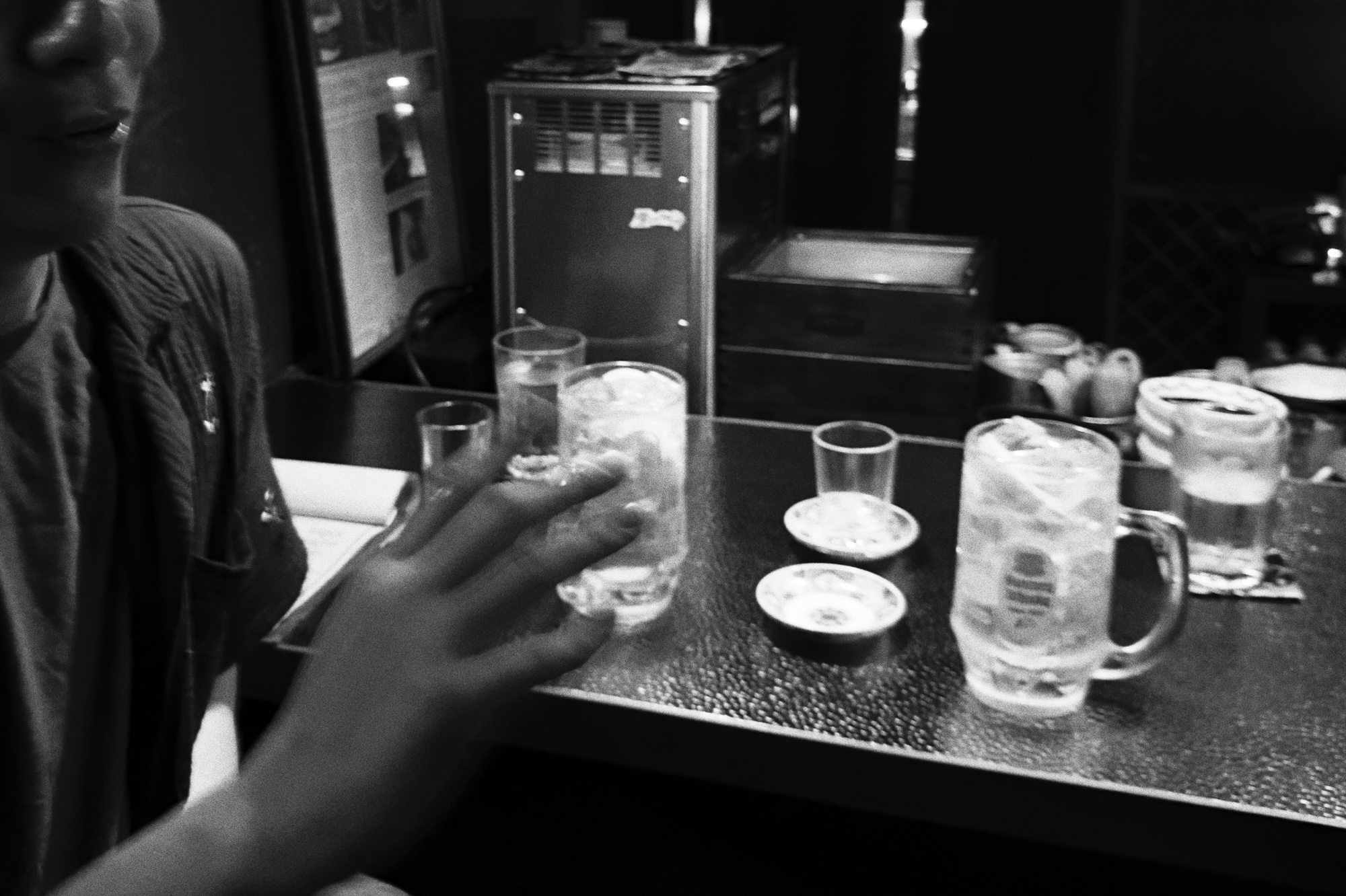
    • On Tuesday, we were forced up at sunrise for a sake brewery tour that was booked weeks ago. We met our guide at Shinjuku station before 9 a.m. — just imagine the crowds — and discovered it was a private tour for just the two of us. It was a nice day of “countryside” day drinking and not-at-all forced conversation with our guide, a 24-year veteran of Japan (originally from Britain via Zimbabwe).
    • We’ve just visited the Advertising Museum Tokyo, near the Dentsu headquarters and almost certainly funded/run by them. Outside, there’s a free-use space with chairs and tables, and while many seats are occupied by people working on laptops, there are more than a few salarymen sleeping with their heads down. It’s a tough life. Joni Mitchell’s Carey is playing from some speaker nearby.
    • At my beloved Go Go Curry for lunch now, and it’s the best of the three Japanese curries we’ve had so far (Maji is close behind; CoCo had a poor showing at the Asakusa-eki branch, but I’m confident they’ll deliver next time). But the price of the “Grand Slam” plate with everything on it has shockingly gone up to ¥1700. It was originally ¥1000, and when we came after Covid, it was maybe ¥1200. Inflation is hitting hard here.
    Go Go Curry’s Singapore menu
    • Come to think of it, when Go Go Curry opened in Singapore in 2009, the cost of the equivalent menu item was S$18.50, or about ¥2000. It’s taken Japan 15 years to catch up to that price.
    • Leica launched a new iPhone accessory: the Leica LUX Grip. It’s a new design for the camera grip made by Fjorden, which was acquired by Leica recently and which has been responsible for the LUX app. It attaches to the iPhone via MagSafe and adds a two-stage shutter button, a control dial, and two programmable function buttons. It honestly looks pretty good, and if the LUX app improves its photo processing to get rid of the iPhone’s Smart HDR look, it will make a pretty nice “camera”.
    • It’s available now in Singapore for S$450, and when I stopped in at a Leica store here in Tokyo and asked if they had one to look at, the salesman actually laughed, saying no dates for a Japanese launch have yet been announced. What the heck?
    • I was super excited to see the new Ricoh GR Space in Shibuya, as I used to love their old RING CUBE museum/gallery in Ginza that closed down in 2020. The staff were super friendly and (I found this odd) thanked me sincerely when they learnt that I’ve been a supporter of the series from the GRD days. I was hoping to buy a little finger strap like the one that came with the GR III Diary Edition, but they don’t sell those piecemeal. Oh well. It was well worth the visit.
    • Still on the lookout for nice souvenirs and Japan-exclusive gadgets, but it seems those days are long gone and generally the global electronics market is extremely flat now with online shopping and Chinese e-commerce platforms like AliExpress. But! While at Beams (clothing retailer), I discovered this Bluetooth speaker that is the exact shape and size as a cassette tape for $50. Despite not expecting it to sound any better than my iPhone’s built-in speakers, I bought it on sight. An hour later, I found a non-Beams branded version at Hands for about $10 less. That’s… fine, I guess.
    • There are great PSA ads here warning against perverts who take upskirt photos and molest people on trains. I’ve been collecting a few (ads, not perverts).