After listening to ROSALÍA so much last week, I decided I wanted to experience LUX closer to the reality it was conceived in. So I reinstalled Duolingo, which I haven’t touched since maybe 2017? After several days, I’m now at Level 9 in Spanish, whatever that means. The biggest obstacle to Español perfecto is my inability to roll my ‘R’s, which I will simply need to practice out loud until it clicks. I can only do this while alone because Kim tells me to please stop por el amor de dios.
I met up with some old friends and acquaintances this week: one about to have their second child in the midst of questioning their career trajectory (aren’t we all?) and another who’s just come off living on a boat with their family for the past seven years, sailing from port to port in an unusual nautical retirement. Their youngest child practically grew up on water but will now have to stay in one place, join a normal school, and get accustomed to land life. In thinking about both situations, I reflected that personal freedom might be the most valuable asset to have when dealing with difficult times.
Later, I mentioned the old D&D character alignment framework to Cien and Peishan, and how it related to our personalities which I thought were evenly spread across Lawful to Chaotic. It hadn’t crossed my mind that Chaotic was actually about valuing freedom, but it kinda is — freedom to follow your whims instead of rules and expectations?
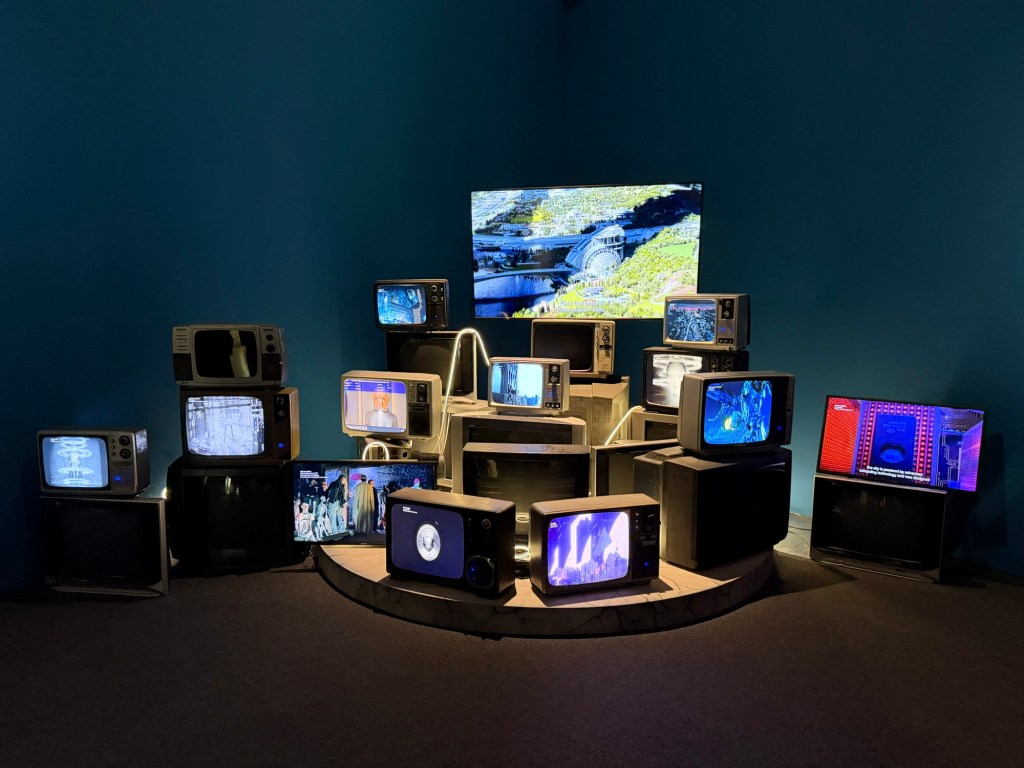
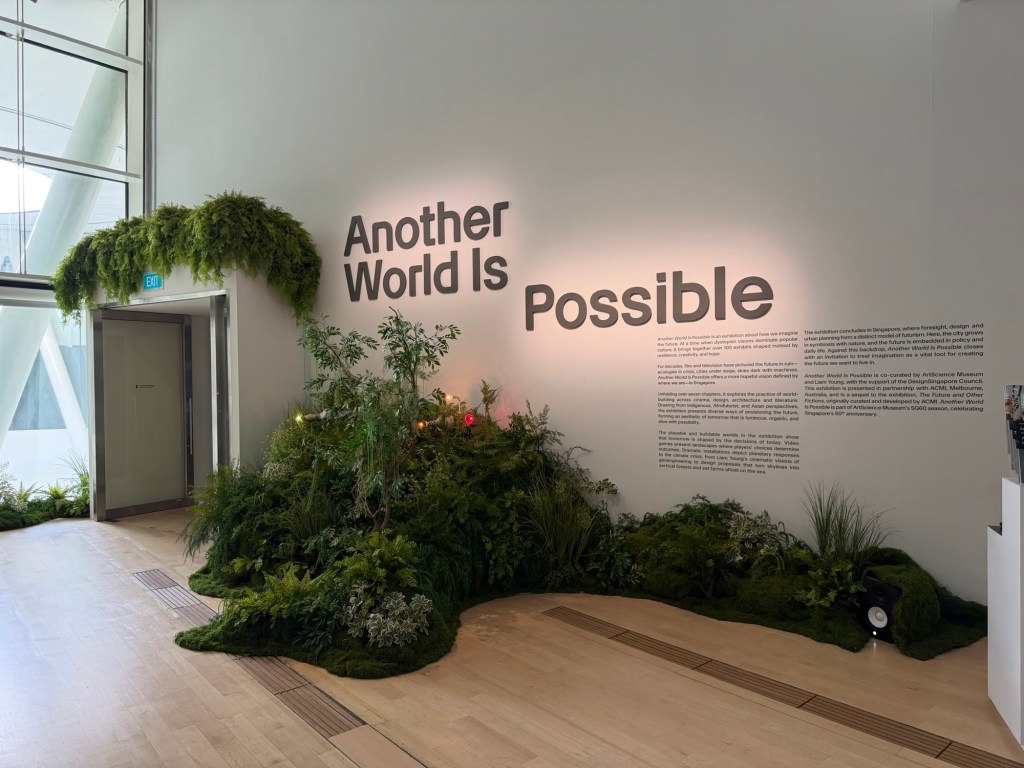
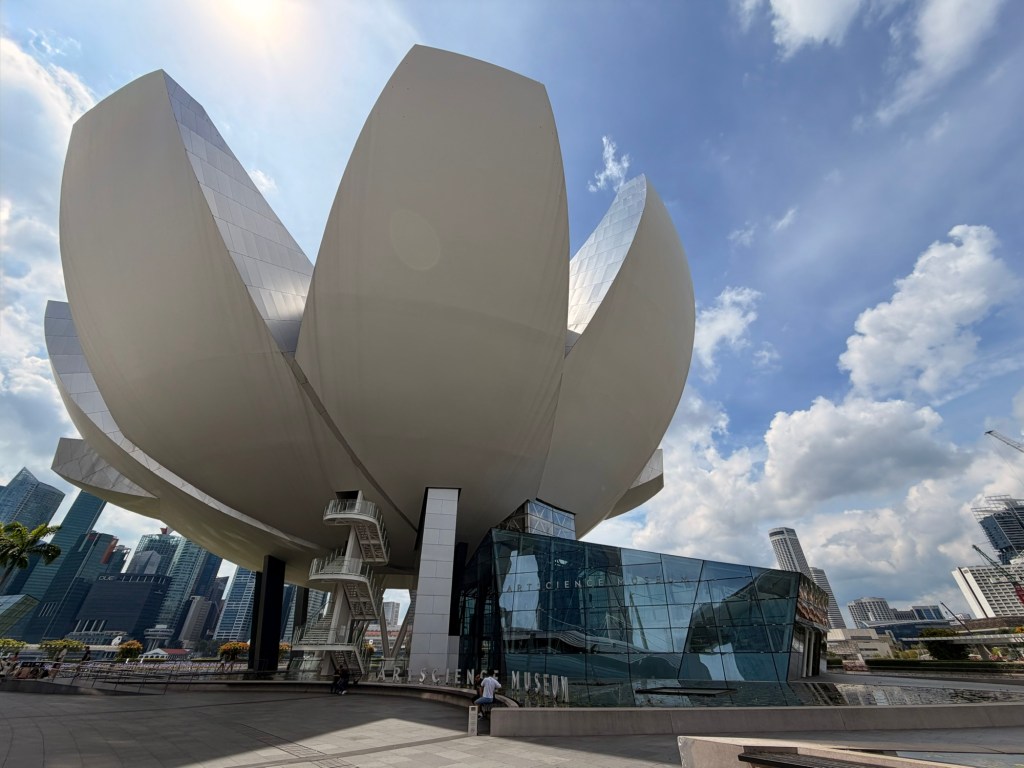
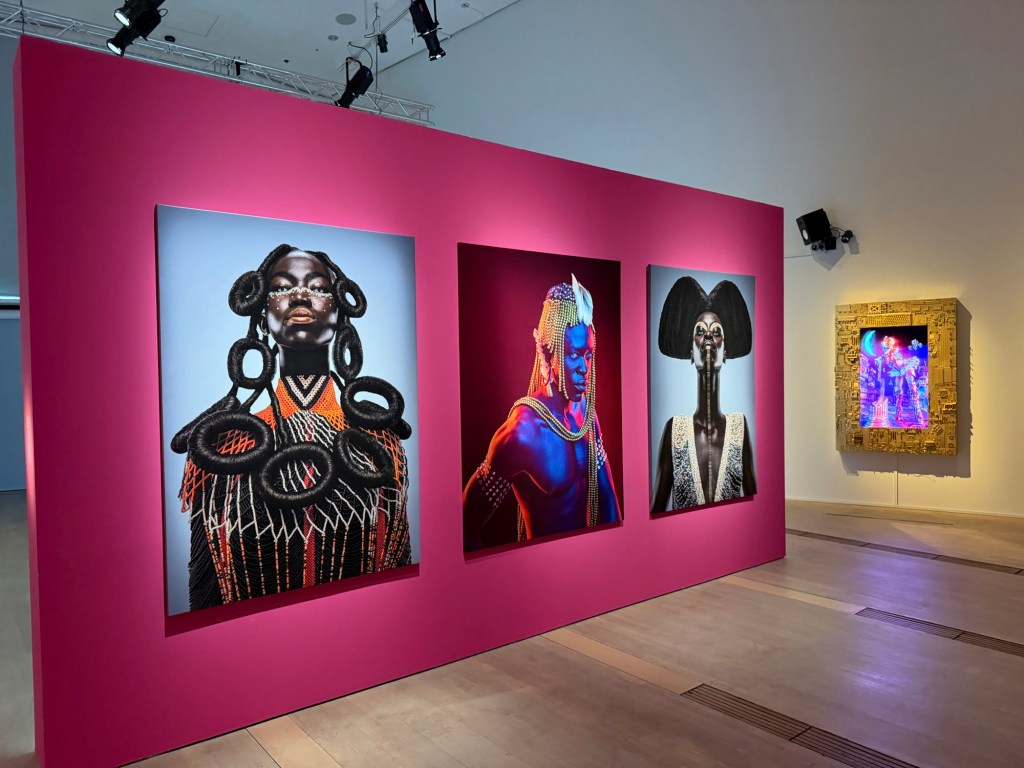
Then I visited the Artscience Museum on a weekday afternoon for a futurism exhibition called Another World Is Possible – a hopeful title promising alternative models for living, maybe even freedom from our current constraints. My expectations were high because it was yet another collaboration with ACMI (Australian Centre for the Moving Image) out of Melbourne. Alas, I left feeling rather annoyed and unfulfilled.
The space itself is inadequate for multimedia shows. There’s not enough surface area, and the adjacent rooms without doors bleed sound into each other at an atrocious level. Near the end, there were some screens with a peaceful computer-generated nature scene meant for reflection, but all you can hear is music blaring from another video installation.
But regarding the actual show, several of the items presented were clearly AI-generated slop, unlabeled. The wall text just says things like “12-minute audio/video presentation” or “14-inch giclée print.” I don’t want our institutions of culture to charge $20 for mediocre renderings one could Midjourney at home. Hard to feel like ‘another world is possible’ when the medium represents what’s wrong with the present one.
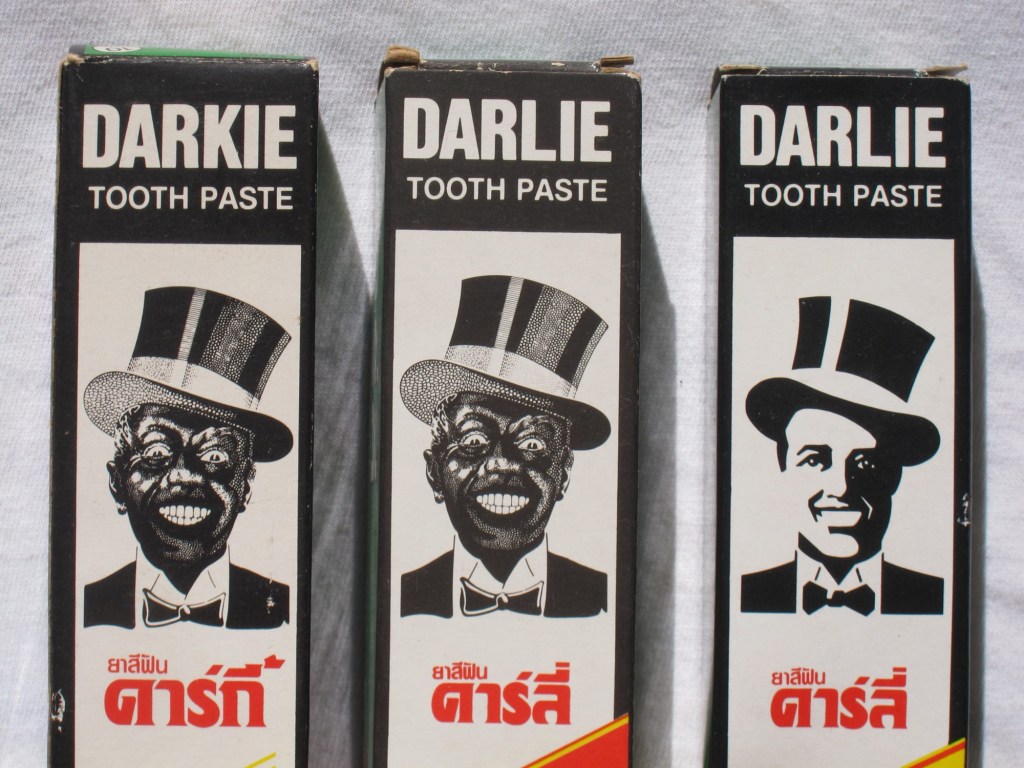
Racism came up during my book club meeting this week, which gave me a chance to traumatize the Americans with “Darkie” toothpaste. It’s a brand that’s been ubiquitous in these parts since I was a kid. The name is bad enough, but they also put a minstrel on the box, highlighting the contrast between black skin and white teeth. It rebranded to “Darlie” at some point and made it somewhat arguable that the man wasn’t black, but we all know. It was only in late-2021 that its Chinese name changed from 黑人牙膏 “Black Person Toothpaste” to 好來 “Bright Future” (my translation). Reading the Wikipedia page, I was surprised to learn that it had a market share as high as 50% in Singapore in the 80s!
But hey, cultural theft isn’t just about race. Kill Bill is getting a theatrical re-release next month — both volumes cut together with unseen footage into the 4hr 40min epic Tarantino originally intended. Maybe no cinema in Singapore will take it up, but this means there’s hope for an updated digital release at some point.
That iconic siren when the camera zooms into Uma Thurman’s rage-filled eyes? Sampled from the Shaw Brothers film Five Fingers of Death aka King Boxer (1972), which I saw for the first time this week on MUBI. The Chinese title 天下第一拳 translates to “The Greatest Fist Under Heaven” — not “in the world” but “under heaven,” which is somehow more evocative and poetic.
A bunch of these old Shaw Brothers wuxia flicks are leaving MUBI in the next few days so I’ll be on a little martial arts marathon in the coming week.
And since we were talking about cultural appropriation last week (I’m cool with it), you know who else loves sampling kung-fu movies and helped Tarantino put the sound of Kill Bill together? That’s right, the RZA aka the Abbott, who resurfaced this week with the release of Japanese rapper Awich’s new album Okinawan Wuman, which he produced.
Apart from a little cringey self-caricaturing from Awich — the usual “we say arigato” shit, not unlike Utada Hikaru singing “You’re easy breezy and I’m Japanesey” back in 2005 — it’s a solid album on first listen. Maybe I’m being too critical about someone trying to break into another market by dumbing down their own culture, but she’s already got the RZA in her corner. She doesn’t need to prove anything. Feel free to switch up languages and drop the most obscure Okinawan slang! ROSALÍA’s success has proven that you can trust listeners to find their way to you.
Awich’s promotional video has a Japanese hip-hop expert explain, by way of establishing how monumental it is that RZA has produced this Japanese lady’s album, that the two most important acts in history were the Wu-Tang Clan and De La Soul. What good fortune for us, then, that this week saw the latter’s first new album in 9 years, Cabin In The Sky! We eating good, mi familia.
I spoke too soon. Jinxed it. Stupidly counted my chicks. By which I mean I had another vertigo episode out of nowhere after thinking I was safe. It came just from tilting my head down to look at something, and suddenly it felt like the floor fell out from under me. I immediately put my head back, and it only lasted like half a minute, but it was enough to burst my bubble of security that maybe the earlier incident was a one-off.
According to the online literature, recurrences are common with BPPV, and it’s just something you have to learn to live with and manage. Some lingering unsteadiness followed for the next couple of days, which is annoying but survivable. I’m mostly worried that I’ll get a bad case of it on a plane at some point, because pressure changes can apparently trigger it.
PSA if you also have this: it seems people with vitamin D deficiencies are more susceptible. So I’m going to be more religious about taking supplements and see if that helps.
===
For the second time in two weeks, I decided to break my weekday lunch routine by going further out to a Sushiro, followed by a little cafe reading time. Eating alone in a walled-off solo dining booth sounds sad and lonely but is surprisingly cozy; just ask Japan.
Later, I came across a Reddit thread discussing local restaurants and when Sushiro came up, someone replied “if you’re in Bangkok, try it there — it’s a world of difference in quality, price, and size.” Well then! That’s something I’ll be in a position to verify next week because I’m actually going to be in Bangkok for several days (hence the airplane vertigo worries, pray for me).
My itinerary as a traveling husband is still quite open — while Kim’s at work I’m planning to check out this new mall with a rooftop park, visit some exhibitions, and watch Predator: Badlands in a cinema superior to anything we have in Singapore. And depending on how I feel, maybe even stay in with my iPad and enjoy the very nice hotel for a bit.
===
Speaking of touchscreen devices, I’ve been waiting for the full reveal of the Anbernic DS handheld emulation console, and now that it’s up for pre-order, my excitement has been considerably reduced. Enthusiasts online have been disappointed by the choice of a weak processor which, when paired with an Android OS, means it’ll struggle to run any 3DS games and maybe even some DS games. I’m not up to speed on DS emulation, but I’ll take their word for it that things could be much better here.
The original DS Lite was my favorite handheld of all time because of its minimal clamshell design, which also housed its tiny stylus. The Anbernic DS does not include that critical feature. What’s the point of recreating the DS if you have a separate, chunky stylus to carry about and lose?
Anbernic has also earned a reputation for releasing improved variants shortly after launching new products. So I’m hoping we’ll see a faster, more polished version out in six months. Wake me up when that comes out.
===
Media activity:
I’m reading Wraith, which is Book 1 in the Convergence War series. It’s shaping up to be a fun if not-so-elegant “assemble a team and go on a big space adventure” action story. I’d recommend it if you’re looking for a palate cleanser in between more challenging fare.
I started watching the popular Apothecary Diaries anime series that Netflix has been aggressively pushing, and it’s not bad! Essentially a medical procedural set in ancient China, with other dramatic hooks like a super-competent main character who wants to stay invisible but can’t help stepping in to fix things, plus royal court politics.
After watching The Woman in Cabin 10 last week, we looked for more murder stories on boats and started on Death and Other Details (a murder on a cruise ship) before finding out it was canceled after one season. Still, it’s been okay and stars Mandy Patinkin as the detective.
If you’d asked me about Death and Other Details a few days ago, I might have said it was “pretty good”. But after watching the first two episodes of Apple TV’s new tentpole series, Pluribus, the bar is now insanely high. Don’t read anything about it, not even Hideo Kojima’s reaction tweet, just go straight into watching it on the nicest screen you can find. Based on what I’ve seen so far, this is looking like the kind of show I’ll think about long after it’s over.
I woke up from one of those dreams where you need to go to the bathroom, so you visit a bathroom (in your dream) but it’s very unpleasant and almost in a state of dilapidation. For example, the sinks and toilets might be taped up to say “out of service”, or the tiles and floors are all ruined, and it’s clearly not a functioning toilet — but you gotta go! And then later that same day, someone mentioned having a recurring dream about a gross “squat toilet” in their childhood home, and a light clicked on in my head. Maybe everyone has these dreams, and it’s the brain’s way of saying “don’t pee now!” I’d bet this is a universal experience.
I learnt on Instagram that the singer D’Angelo passed away. He was only 51, and they say it was cancer, maybe pancreatic. That would make it at least two world-changing visionaries to go that way. Voodoo remains one of my favorite albums of all time, one of those that exists fully as a complete work — there’s nothing that can be added or removed, and even the idea of a super deluxe edition with remixes or outtakes feels unnecessary. It’s so loose and hard to pin down in terms of genre and style (he reportedly hated the “neo-soul” label and said he simply played Black music), that I don’t think I knew what I was listening to as I played it the first hundred times. He brought together everything I love about hip-hop, jazz, funk, soul, R&B, Prince’s ecstatic falsetto… into a single masterpiece. What’s also tragic is that he never released the promised follow-up to 2014’s Black Messiah and I don’t know how to feel about it being dug out of the vault and released someday.
Speaking of deaths, I Want to Die but I Want to Eat Tteokbokki has moved to the top of my reading list after its author Baek Se-Hee passed away this week at 35. News reports only say she died, but everyone is surely wondering if it was suicide on account of the book being about her journey with depression. It makes me wonder why suicides are often sidestepped in the news these days. They could at least say that it wasn’t? It just seems very weird to not address the question. Maybe they’re afraid of copycats, or there’s some assumption about shame on the side of the surviving family. I think for anyone who was so open in struggling with the decision, letting people know that they did what they wanted is actually kinda respectful.
Speaking of existential questions, my book club has elected to read Isaac Asimov’s I, Robot, which I was reluctant to revisit. The last time I read it was in secondary school — I read just about every science fiction novel, and probably all the Asimov ones, they had in the school library. As I feared, it doesn’t entirely hold up to the lofty memories I had of encountering The Three Laws of Robotics for the first time. The writing is a little, shall we say, 1940s? But that’s not to say this isn’t an absolute miracle, because it was written in the 1940s. It’s a compilation of short stories, each concerned with testing the boundaries and interpretation of the Laws in different ways, and basically highlighting the importance of rigorous prompt engineering! Reading this in 2025 is a trip. Asimov holds up a mirror to humanity more than anything, and we see people behaving rudely to AIs as if they were slaves or farm animals, but also others becoming attached to them as if they were “real”.
I’m also halfway through The Optimist, a biography of Sam Altman and his path to leading OpenAI. It’s as much about the Valley as it is about Altman, to be fair, and I’m learning a lot about the history of Y-Combinator and other companies along the way. I might have been influenced by all the hit pieces on Altman’s character, but I’m mostly skeptical about him being a force for good. An analyst’s note I heard on Bloomberg the other day went something like, “Sam has the power to destroy the global economy for the next decade, or to lead us to the promised land”. And as a mad prophet once said: “no one man should have all that power”.
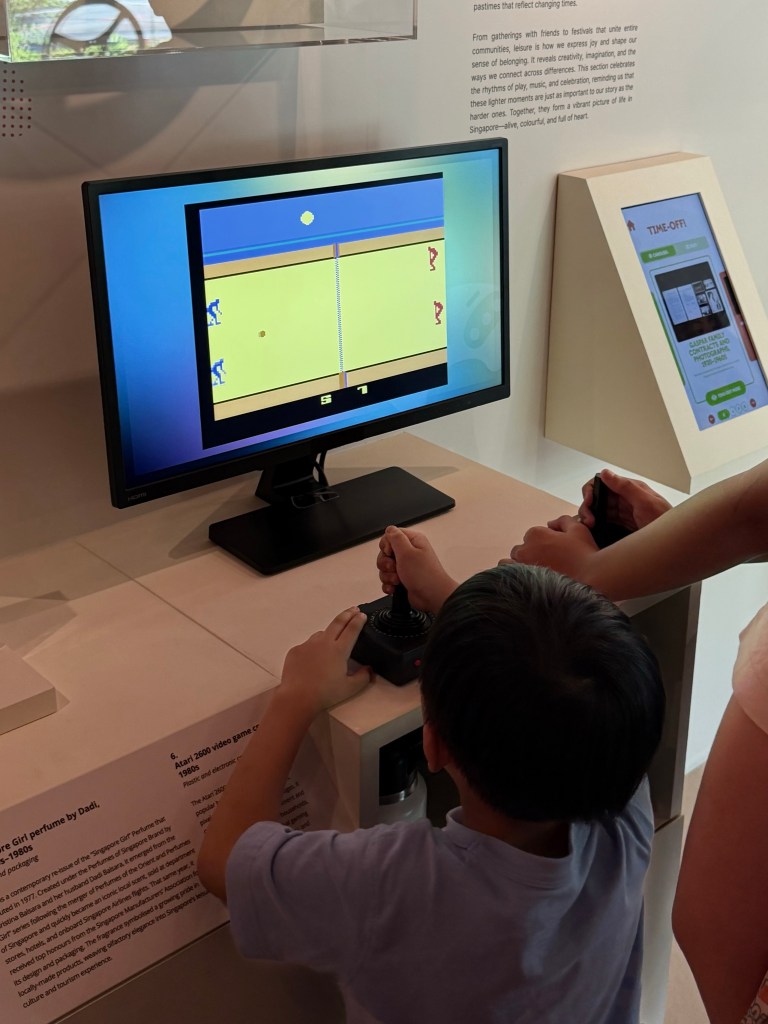
Over the weekend we visited the National Museum where I saw a kid playing RealSports Volleyball on an Atari 2600. Way to make a guy feel old — I played that myself at his age and now it’s in a museum! He looked to be enjoying it, which just goes to show ancient software can still hold power over the lizard brain (as long as it hasn’t been exposed to Fortnite).
Then as we headed to the last stop, a new permanent exhibition called Singapore Odyssea, we discovered that we were too late and it had closed for the day (at 6pm). I wasn’t even particularly interested in it, but felt pretty bummed out that we missed it anyway. Then Kim pointed at a family and noted that I was having the same reaction as their kid, who was being consoled by his parents, “it’s not that we don’t want to go sweetheart, but it’s closed.” Hmph. People are always like, ‘stay young at heart’ and ‘don’t lose your childlike wonder’, but then they don’t want the grumpy tantrums that come with it!
The results from last week’s health screening came back clear of all major issues, so I’ll sleep soundly on that front for a little while at least! The only note was that I could cut back a little on the carbs and saturated fats, which makes me wonder what I’ve done differently since the last test. Could it be… that I was eating more healthily when I went to the office more often? Those downtown mall lunches were more expensive than the kopitiam/hawker fare I get more frequently now, but I didn’t expect them to be healthier. I’ll have to look into this a little more.
It’s no secret that one of the more reliable indicators we’re in a frothy bull market is a rising number of people mistakenly believing they can quit their jobs and live off day trading, and while that wasn’t my plan, I’ve certainly done a touch of it this year. What can I say? Gambling is fun! But then Trump declared another tariff war on China this Friday, troubling markets and triggering major liquidations on some altcoins. I know it was bad out there because my feeds were full of people urging others not to kill themselves. The coming week is probably going to be a very interesting one on Bloomberg, which I expect to have on the TV in the background all day.
That is, if the internet is even working. Our ISP has been struggling with at least two outages this week during waking/working hours. The connection is down right now as I write this bit on Saturday evening, which is surely an unpopular time for the net to go down. I’ll bet someone’s been called in to reboot a server rack somewhere right now. In times like these, I’m thankful for my irrationally large mobile data plan and our local NAS media server. There’s some kind of strategic error being made by governments here. Centralizing all the angry-mob-placating media on the cloud where it can go down in the middle of a crisis? The kind where you tell people to stay indoors and wait? I’ll bet DVDs actually played a role in maintaining law and order in the old days.
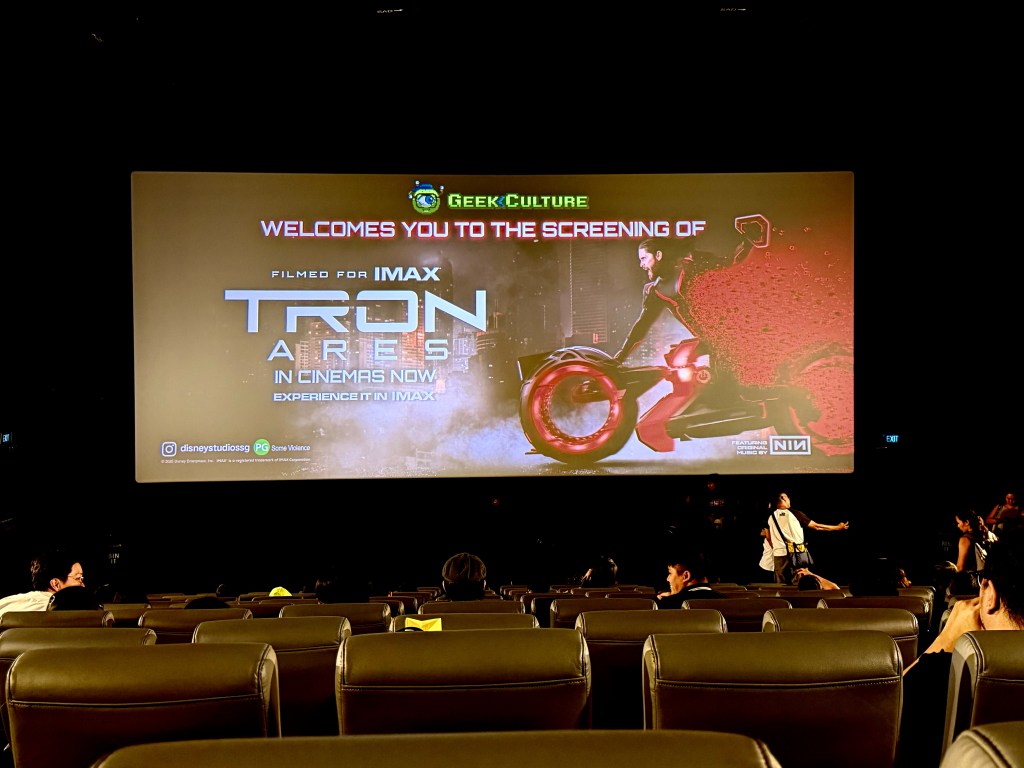
Speaking of shutting down a digital grid, I had the opportunity to see the new Tron: Ares film with Brian the night it premiered and had a great time despite Jared Leto taking the titular role. It’s not a franchise that aims to make sense, or be scrutinized for narrative integrity — it’s about the neon lights, banging electronic music, and videogame-ish eye candy, and this new one delivered on all counts. I can’t even get mad; it really is just a good time as long as the volume’s way up.
Quick aside: I’ve been using Claude more than ChatGPT recently to give it a fair shake, mostly spurred by curiosity after their recent marketing campaign, and honestly? The outputs seem more insightful, more strategic, and it’s a better writer. It feels more my speed, and I’m a new fan.
Still on the topic of digital networks, I got roped into helping start and moderate an online alumni group for the design agency I used to be part of, and we quietly launched it this week. What set this one workplace apart was the feeling of being a truly connected team where, for a brief period in time, absent any territorial agendas or business borders, people could share knowledge across (and even move freely around) the different global offices. And it’s been really nice to see many people say as they join the #introductions channel on our Slack that it remains the best job they ever had. Where does it go from here? I think that depends on how many atypically extroverted designers we can get to foster some sort of social infrastructure.
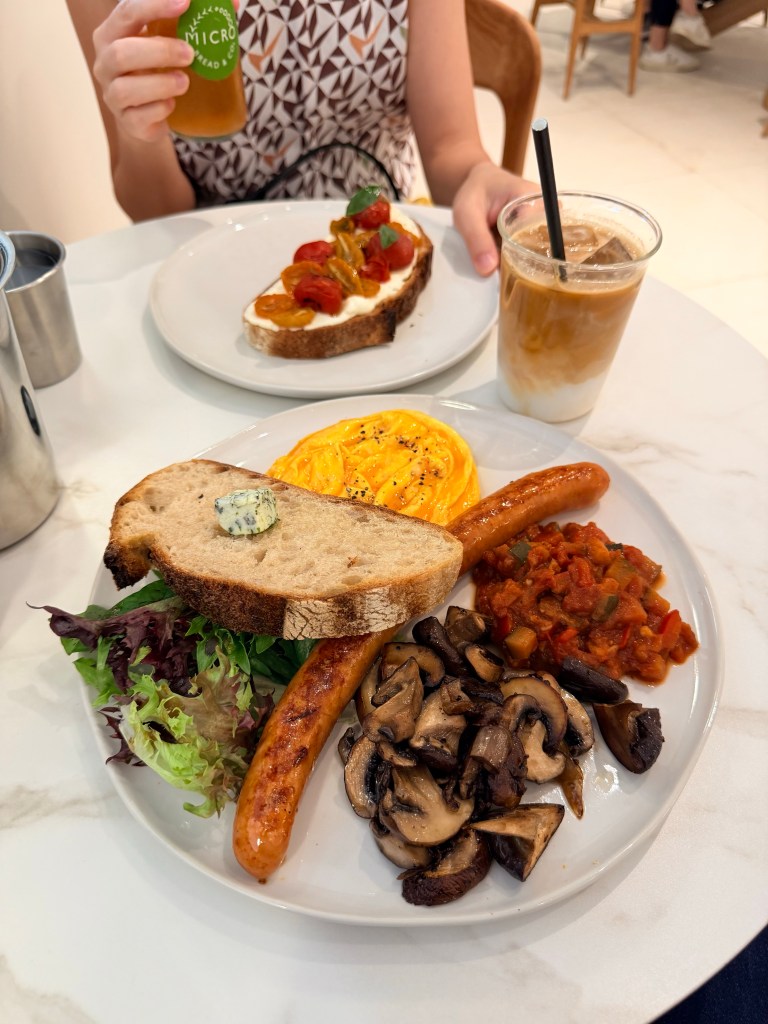
Coincidentally, I met one of those ex-colleagues for an overdue breakfast: our first intern and proper employee in Singapore, who’s also a regular reader of this blog. Hi Xin! I hadn’t seen her in a year, so even after 90 minutes of catching up it still felt like there was lots we didn’t get into. Anyway, you wouldn’t have known it was a random weekday morning from the line waiting to get into the suburban cafe/bakery we chose. Every table was occupied by both foreign and local-looking unemployed bums alike, all enjoying $28 breakfast plates and $18 slices of toasted sourdough topped with avocado. We’re constantly being told local restaurants are barely hanging on, but then you see the brunch scam still going strong and it’s like wha…?
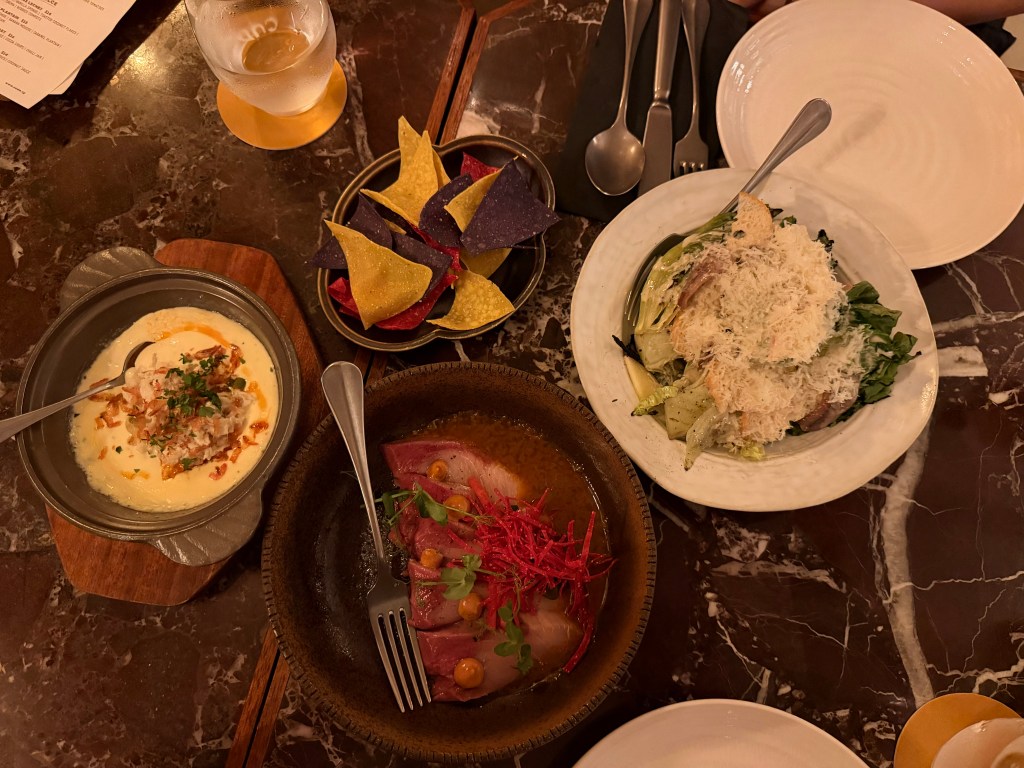
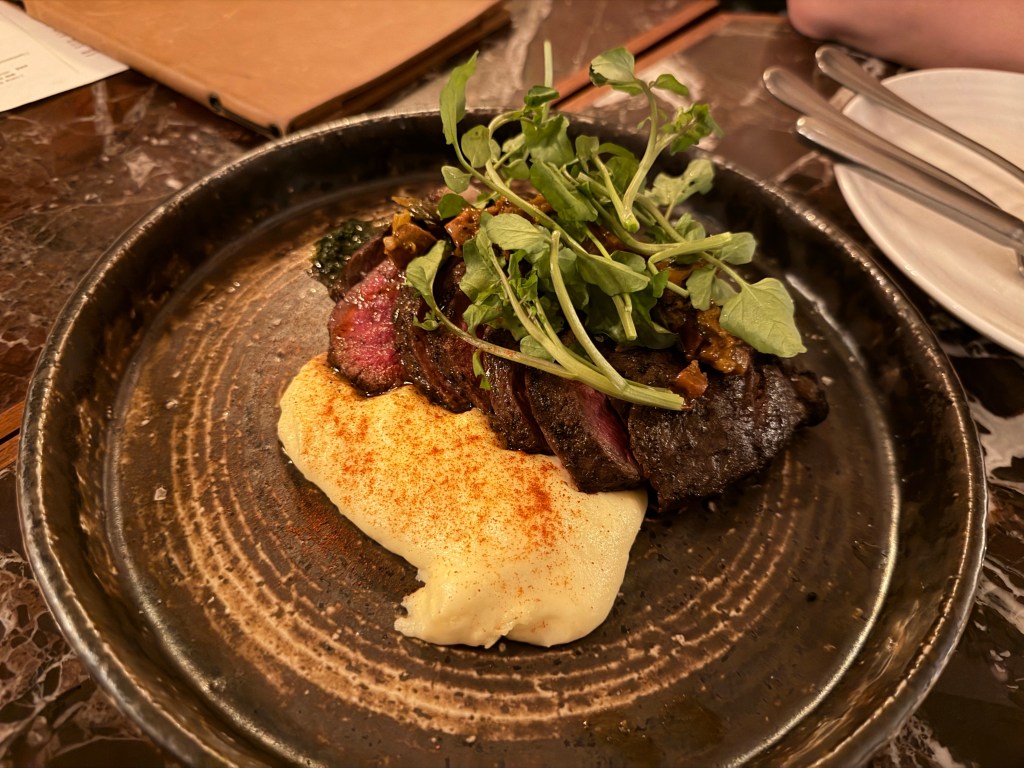
More counterdata was encountered while celebrating a very belated birthday dinner for Kim at Cudo, a South-American-ish sort of restaurant in the Amoy Street area. It was fully packed out (albeit on a Friday night), and I highly recommend them on account of solid tropical cocktails (Bourbon! Coconut! Pineapple!), a really nice selection of starters (Romaine lettuce with blue cheese and anchovies; warm crab queso with tortilla chips; truffley torched yellowtail), and even better mains (wagyu rump; chorizo and ricotta pasta) at pretty palatable prices.
I can afford this baller dining-out lifestyle because I saved a ton of money on the Amazon Prime sales this week (yup it’s #girlmath). I bought replacement razor blades, a physical copy of The Legend of Zelda: Echoes of Wisdom, dental floss, a 1TB microSD Express card (finally!) for my Switch 2, protein bars, LED bulbs, LEUCHTTURM1917 notebooks, and a lifetime supply of Uni-ball Jetstream RT pens — only the best pens ever according to The Wirecutter.
I wasn’t planning to get any of this stuff soon — they’re all things I might have bought eventually. Like the 1TB card to replace the 256GB one in my Switch 2, for example, which I thought I’d upgrade to in maybe a year’s time. This made me realize that on top of driving impulse purchases, these sale events are actually about pulling forward purchases and recording future sales today to juice numbers (at slightly lower margins). Businesses are valued based on expected profits, individuals buy based on expected needs, and I guess I’ve been binging carbs and fat based on expected hunger!
I’m now at the age where annual medical exams are strongly advised. Everyone around me knows someone whose life’s been upended (or worse) by a serious health issue. As much as it sucks to find out, finding out too late is worse. We went for ours this week and are waiting for results, fingers crossed.
I’m now also at the age where lame jokes come naturally, so when the nurse asked, “You have about five drinks on average a week? What do you like to drink?”, I replied, “What do you have?” The nurse laughed harder than expected so I’m guessing the clinic doesn’t get many patients masking anxiety with comedy.
They’ll probably come back and tell me I’ve got hypertension, because I definitely felt my blood pressure spiking on Saturday when Kim agreed to give It Takes Two another go on the Switch. For the uninitiated, it’s a co-op game where a married couple on the verge of divorce magically get turned into a pair of their daughter’s wooden dolls in the shed, and need to make their way back into the main house to get her help. But in order to make the journey, they’ll need to — you guessed it — work together. As a couples conflict simulator, it’s super effective. There are many videos online showing one player (usually male) getting frustrated as their partners (usually female) struggle with the hand-eye coordination required to get through the platforming sections, dying over and over. Don’t get me wrong, it’s a lot of fun, and we surprisingly played for about three hours before calling it a day.
Speaking of things women do differently, I watched this video essay on the rise of gambling-related activities and industries, and learnt that blind box sales are overwhelmingly driven by female buyers. Supposedly, the data bears out that women prefer to get their dopamine fixes from such lower-risk, collection-and-completion-oriented activities with a community element. I definitely have never felt especially compelled to buy more than a couple of any given gacha or blind box toy. It says men prefer higher-stakes competitive play, “go big or go home” style, or what you’d recognize as traditional gambling. The point is, businesses really know our buttons and they are pushing them every minute in the modern world.
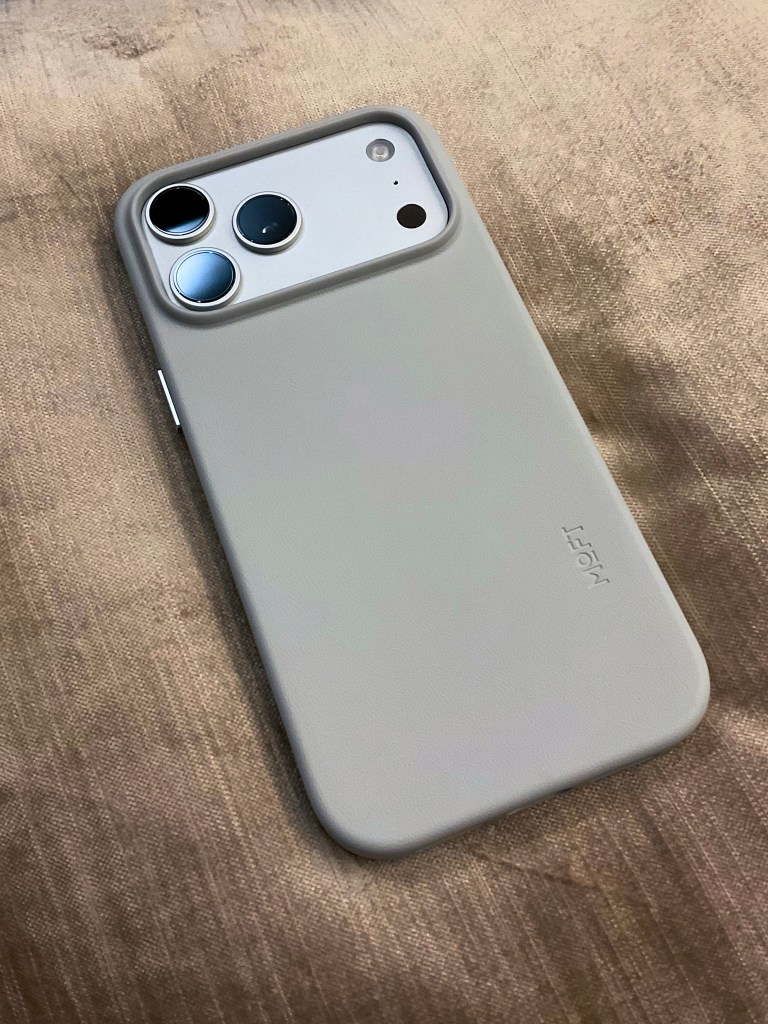
Speaking of wasting money, it didn’t take long to realize that my plastic Beats case wasn’t suited to everyday use — not because it’s candy pink but because, like the iPhone it protects, it’s too smooth and hard to hold. It’s now my occasional fun case, but for other days when I want to use one at all, I’ve got the MOFT Snap Case MOVAS™ in “Misty Cove” colored “vegan leather”. Nevertheless, it feels significantly nicer: soft, textured, grippy, yet smooth enough to slide out of a pocket without turning it inside out. One additional benefit of vegan leather over the murdery kind is that it’s more stain/patina resistant. I would never have been able to risk this color with a cowhide case; it’d turn blue-black from my jeans in no time. Btw, when did we all agree to start calling PVC vegan leather? That’s quite the PR masterstroke by Big Plastic.
Last week, the Twitch streamer 4amlaundry once again attended the Tokyo Game Show and streamed hours of walking around the show floor. I missed it then, but watched some of the recording this week on YouTube. I was more excited when he decided to visit the Extinct Media Museum in Tokyo on Wednesday. It’s a private collection of old cameras, laptops, phones, and media devices like the Walkman/Discman, MP3 players and so on. This was on my list to visit back in February, but on the day I was meant to go, it got too cold and dark for the 15-minute walk over from Tokyo station and I decided to head home. Watching the POV stream felt like being there — except he was happy to touch all of those beautiful tech artifacts where I, the germophobe, would have declined.
I read a couple of books. Flowers for Algernon by Daniel Keyes is one of those titles you always hear about, but I never actually knew what it was about. I thought it was some inspirational crap like ‘Hey God, it’s Whoever, Are You Listening’, or ‘The Five People You Meet in Purgatory’ or whatever. It turned out to be about an intellectually disabled man who’s turned into a genius in a science experiment. It was also more powerful than I expected because it’s presented entirely as journal entries by the man himself, so the reader experiences his increasing intelligence and widening awareness of his position firsthand.
Another book was Perfection by Vincenzo Latronico, which has been getting mentioned a lot on account of being nominated for the Booker Prize this year and for being too painfully truthful a look at millennials, and our devotion to living through trends, cool hunting, digital nomadism, performative wokeness, and mediocre aesthetics. Here’s the New Yorker’s article about Perfection, which makes me want to read the Georges Perec book that inspired it. Me? I loved it, but if I’d taken a few different turns — say, moved to Berlin — I’d probably feel personally attacked.
I type this while listening to Sam Fender’s last album, People Watching. I’ve been meaning to hear this through for awhile, but it got buried in my ever-growing library of new music. Thankfully, with the latest update to Apple Music in the OS26 series, you can now pin up to six albums or playlists to the top of your screen. I’ve wanted this sort of ‘Now Playing’ or ‘Heavy Rotation’ virtual shelf for the longest time — it’s the first feature I’d add if designing a music player app. So this album and five other neglected ones are now sitting up there, and I can give them the attention I want.
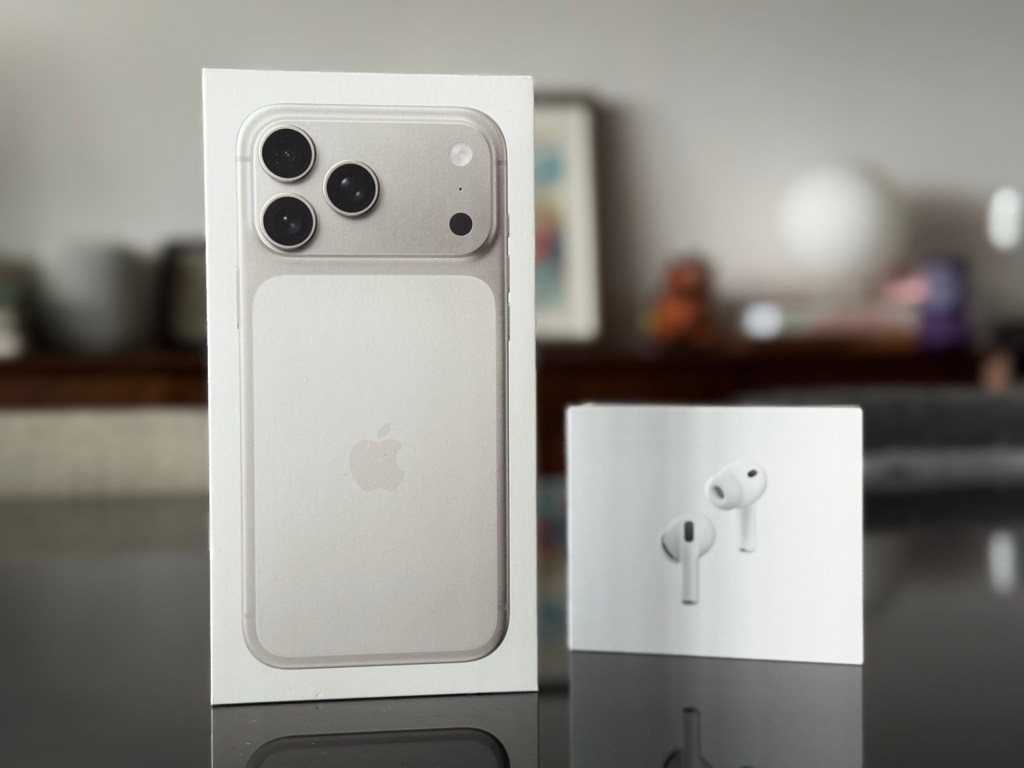
I’ve been listening on both my new AirPods Pro 3 and an original pair of AirPods Pro, and dare I say the difference is quite obvious. Louanne asked me what I do with old pairs of headphones when I get new ones, and the answer was “put them in different rooms!”, of course. I’m fast running out of rooms. The new model sounds much more Beats-like than ever (modern Beats, not OG Monster Beats). That is to say, a bass-forward sound with a very clear, almost sparkling high end. It’s a fun sound, and I think they’ll be very popular for all kinds of music, if not audiophile-grade neutral. They appear to fit better than before too, and the difference in body shape will strike longtime AirPods users as soon as they pick them up.
Then my new iPhone arrived, and before you judge, the old one is being returned to Apple’s Trade In partner in a few days, where it will hopefully be responsibly refurbished or at worst recycled. They’ve suggested that I’m likely to get nearly half the original cost back, which is an astounding deal for a two-year-old model! I’ll believe it when the deposit lands in my bank account.
I’m very happy I decided to stick with the Pro Max size instead of switching to a Pro. The slight increases in height and width are visible if you put them together, but isn’t really noticeable in the hand. The increase in thickness IS, but combined with the new gentler corners on the seamless aluminum body, I think thicker is actually better? This might be the best feeling iPhone ever.
I’ve yet to put the new camera system through its paces, but I’m excited and very pleased after a couple of days with it. Images look cleaner, and the redesigned front-facing camera is a revelation. I took a test selfie and could scarcely believe how presentable I looked. Coming from the iPhone 15 series, I’m also new to the new Photographic Styles that were introduced last year, and am getting a lot out of them. I compared photos shot in RAW with Halide and in HEIC with the default camera using a tweaked “Natural” style, and they’re extremely close in both SDR and HDR. This is a big deal! Along with the revised Photonic Engine this year, the dark days of overprocessed iPhone photos may be behind us.
When reviews get creative
One thing I’ve noticed this year is how bland and predictable the video reviews from the usual tech YouTubers and influencers have been. They go through the spec sheets while speaking to the camera, do a few test shots, and end without any thoughts you couldn’t have pulled out of ChatGPT. But then I saw a couple of videos from the Chinese-speaking side of the internet, and that’s when I realized Western civilization is well and truly finished.
Take a look at these and tell me you’re not duly impressed by the storytelling creativity, production skill, points of view, and passion on display — even if you can’t understand a word (but most of them have English subtitles you can enable). They could just shoot the phones on a stand while swinging a light overhead, but they instead they go hard with CGI, costumes, sets, comedic sketches, and cinematic editing. And they do these in the WEEK they’ve given between the phones being revealed and launching.
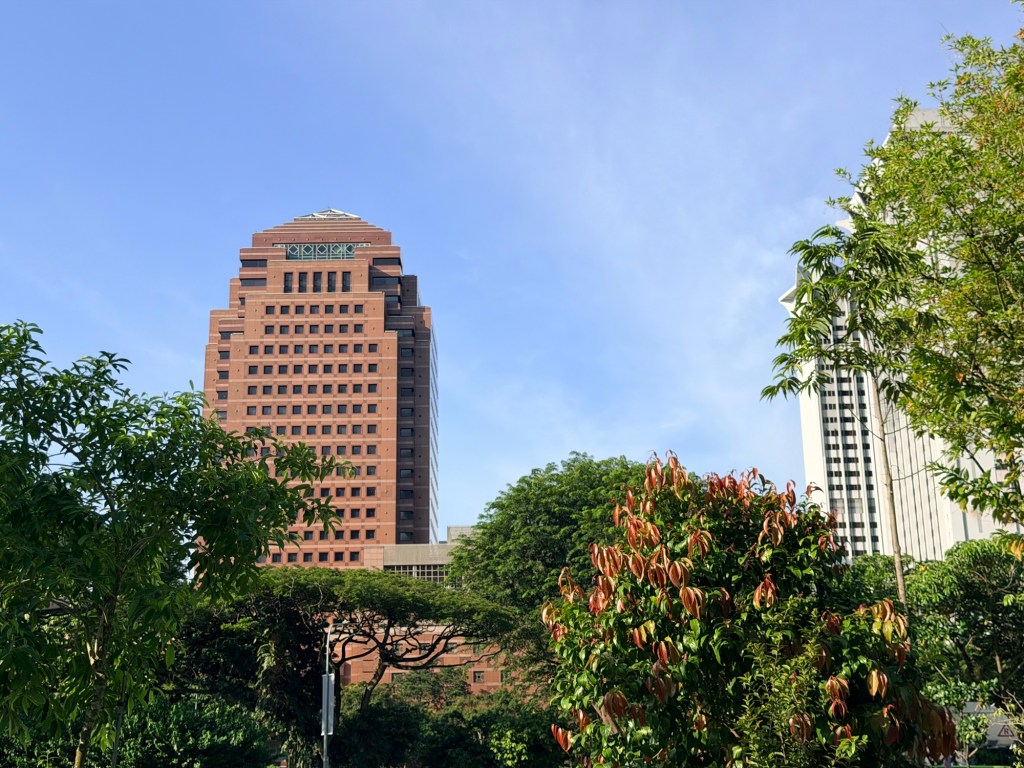
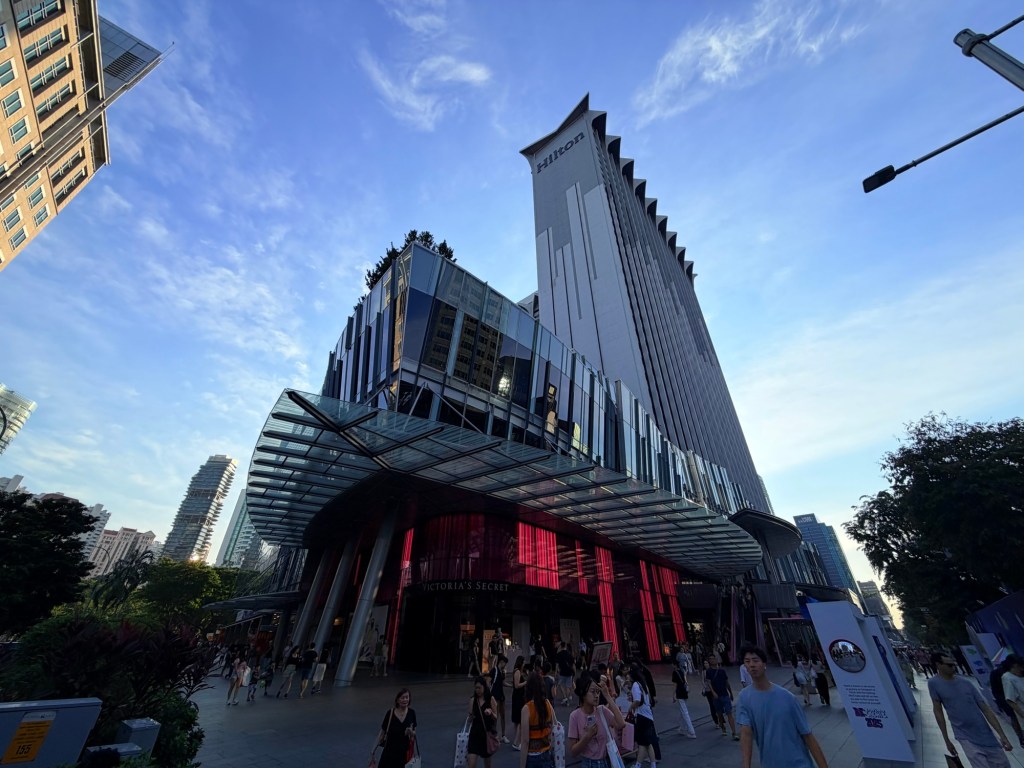
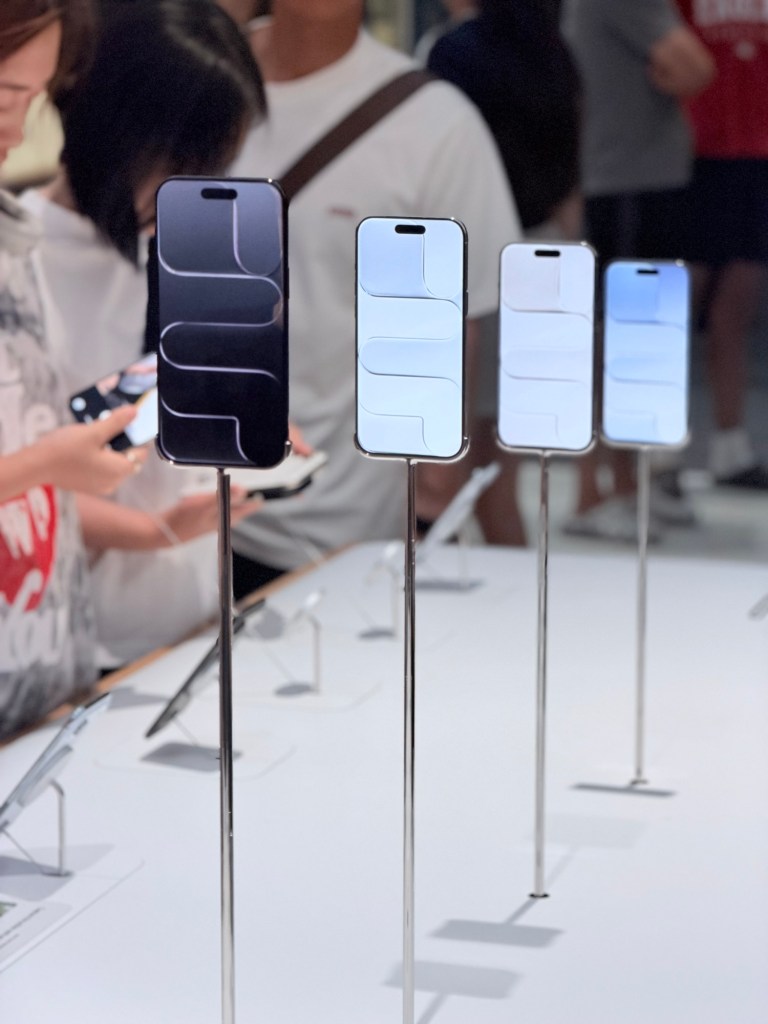
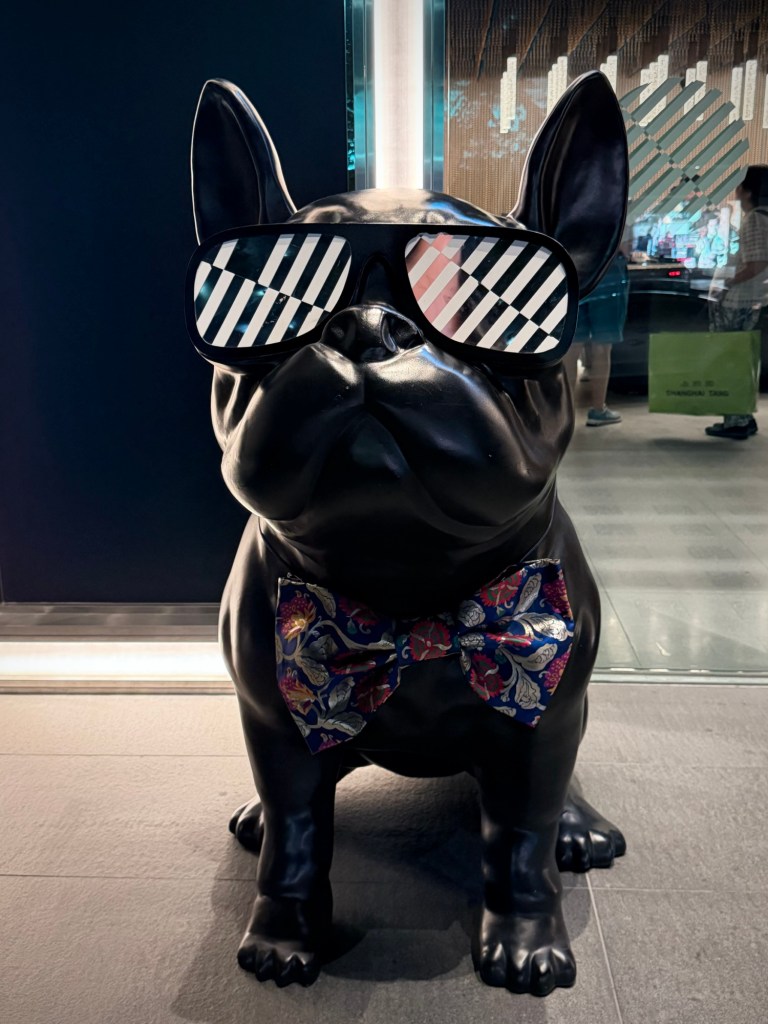
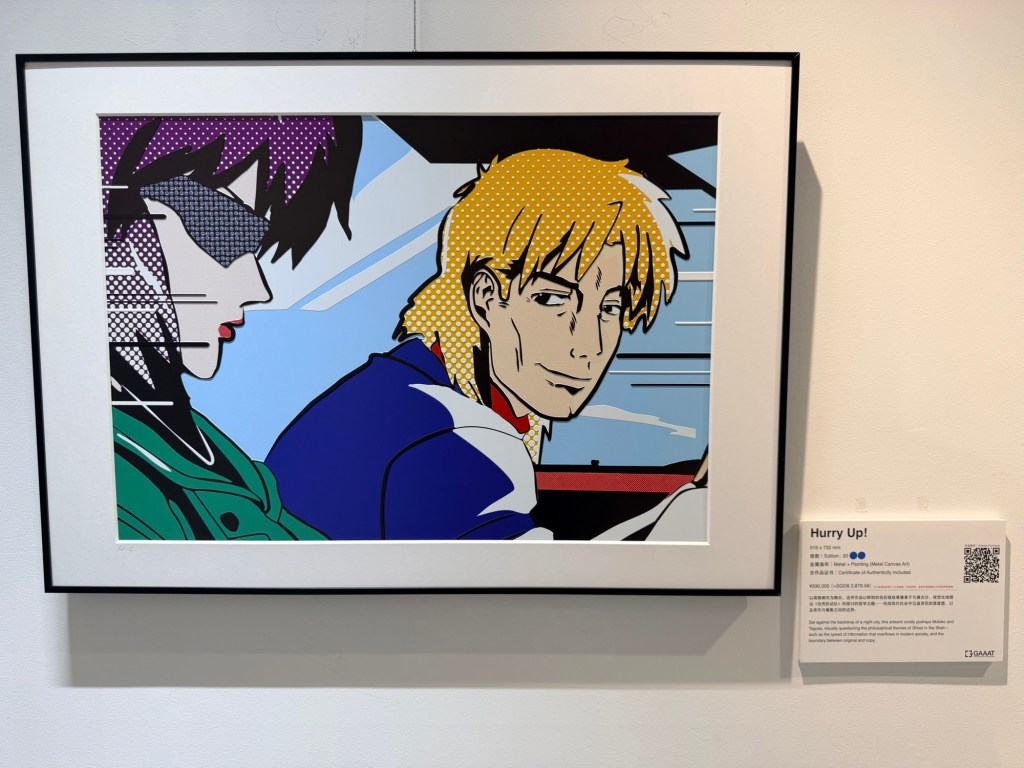
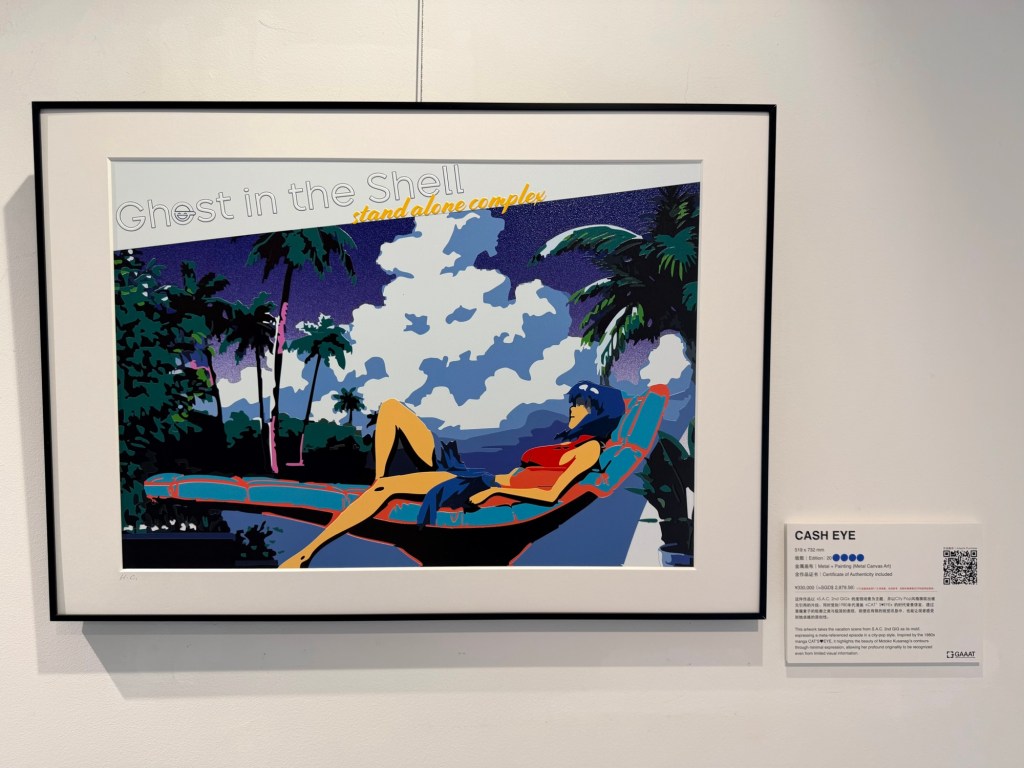
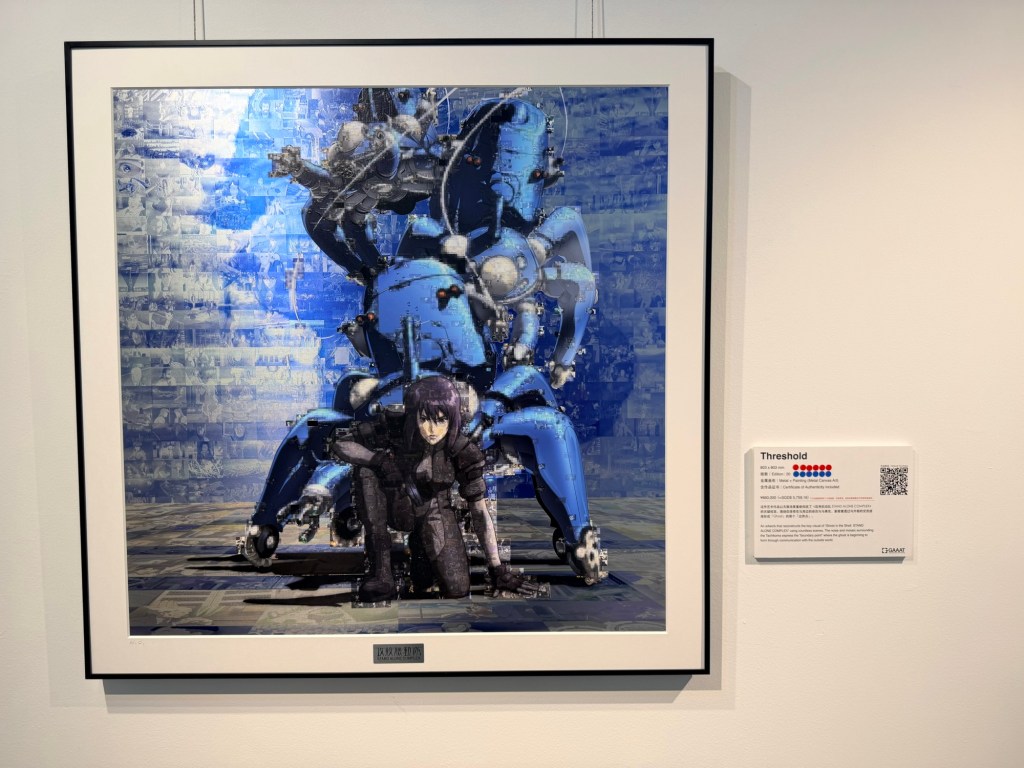
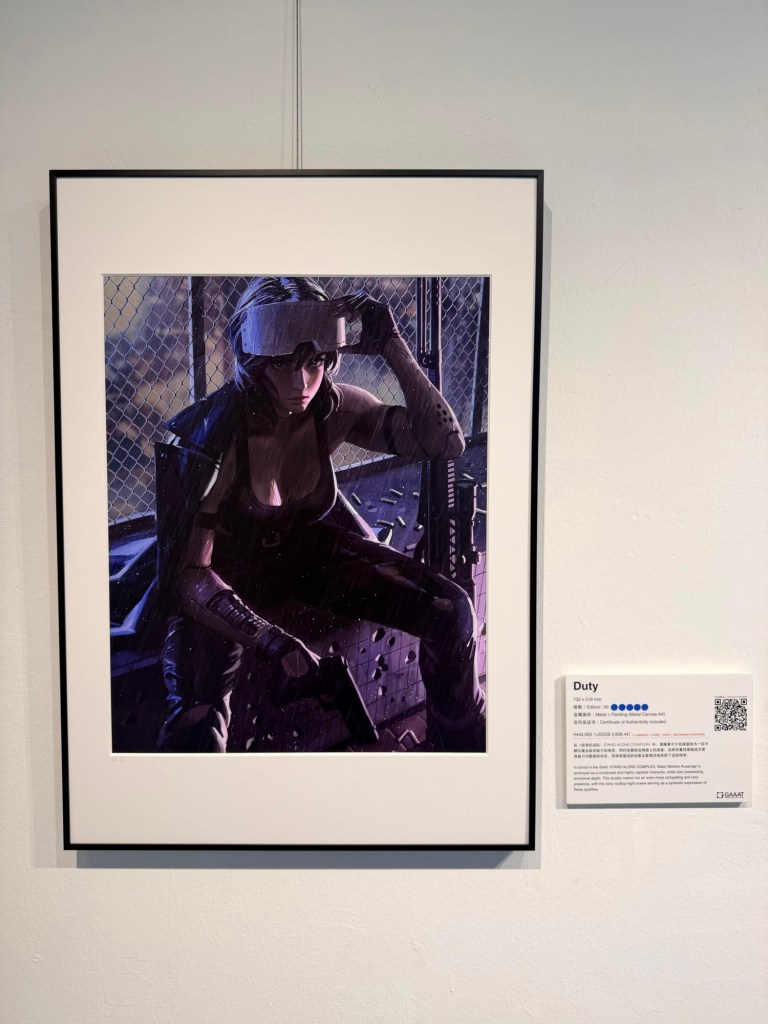
We visited a local art sales event for works based on the Ghost in the Shell: Stand Alone Complex franchise, just to have a look. The metal-printed pieces were going for upwards of S$4,000, so there was never any chance we’d buy one — but I got a little acrylic plate standee for my desk (S$25). Above are some snaps straight from the iPhone 17 Pro Max, using only Photographic Styles.
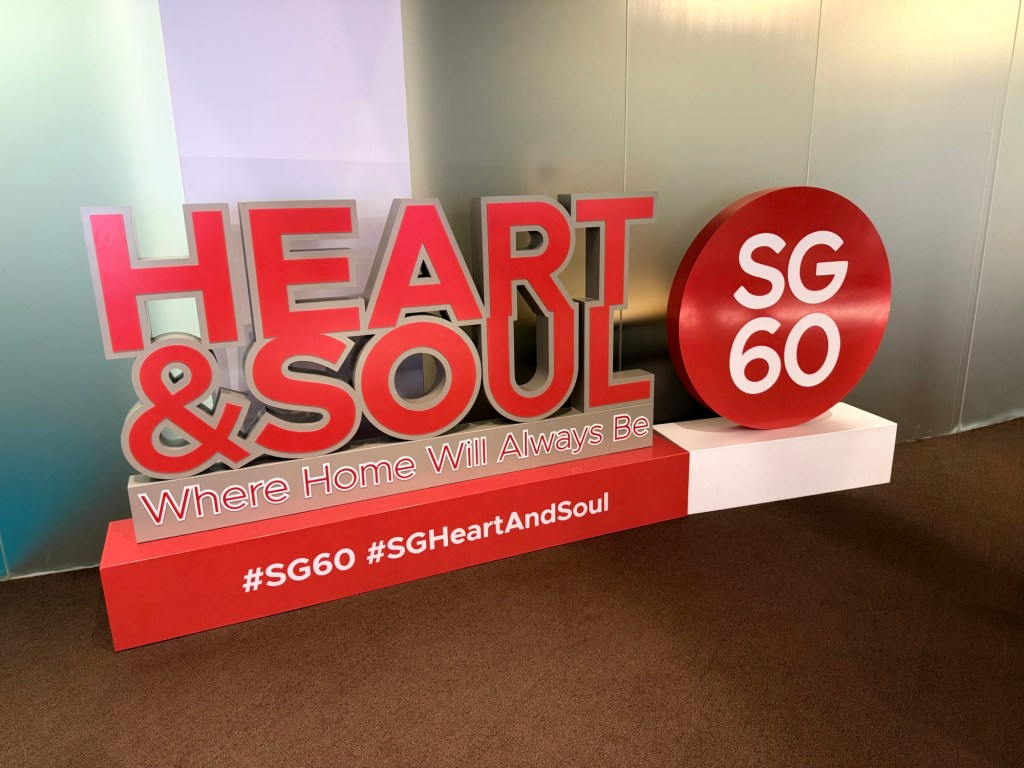
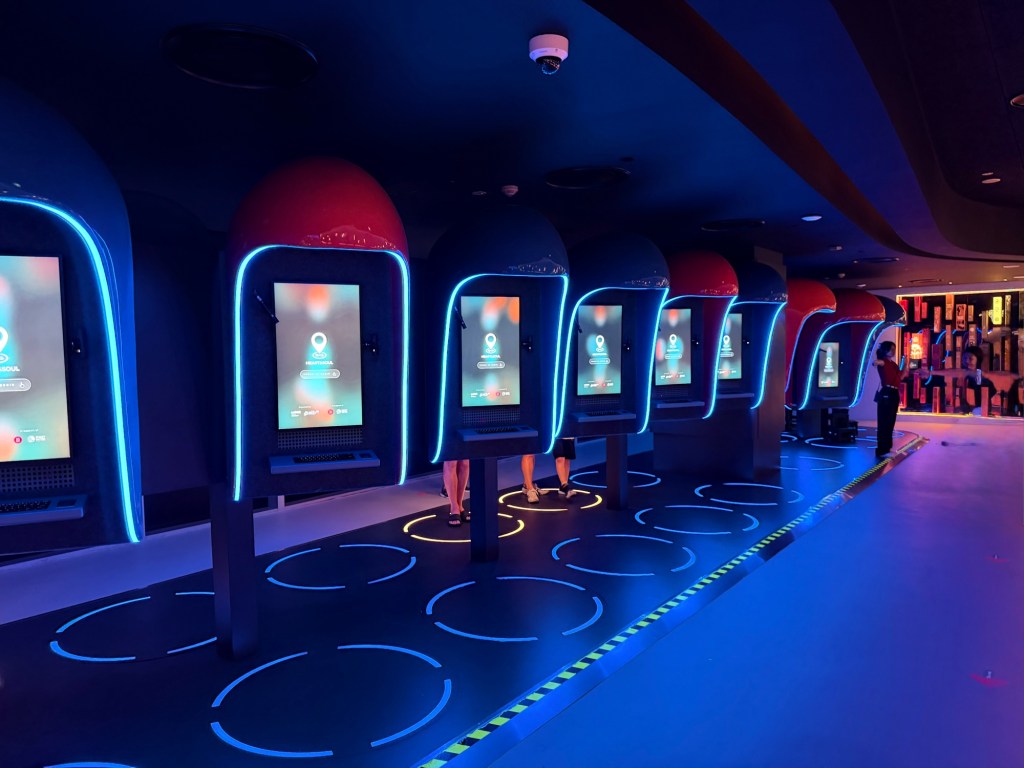
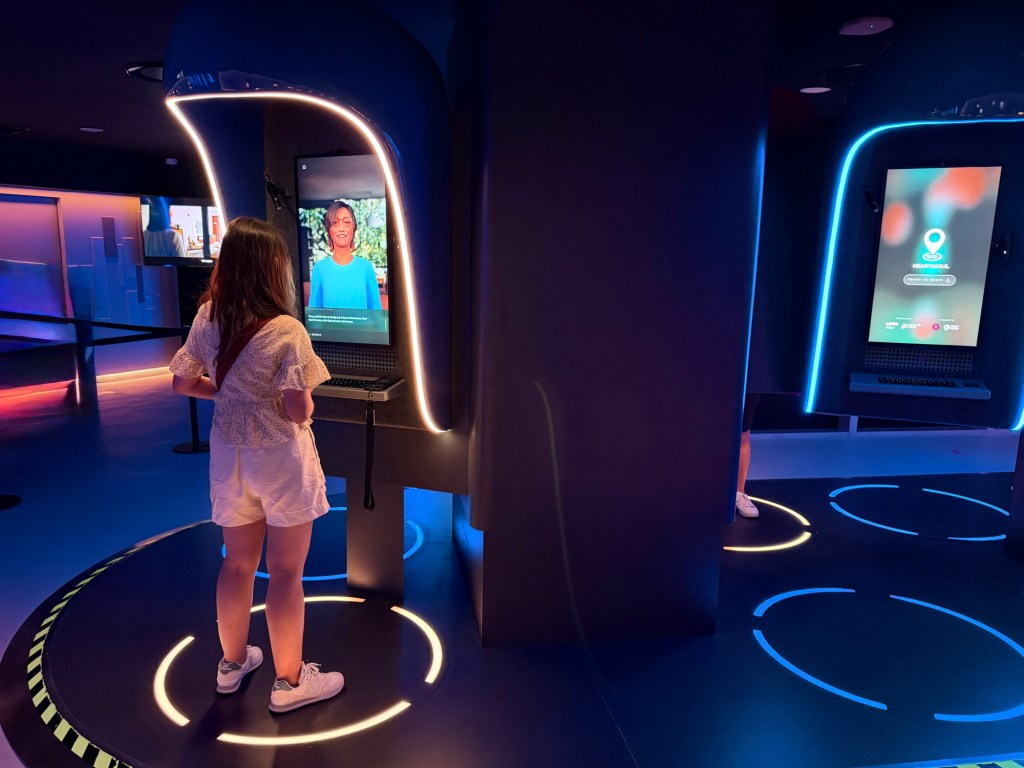
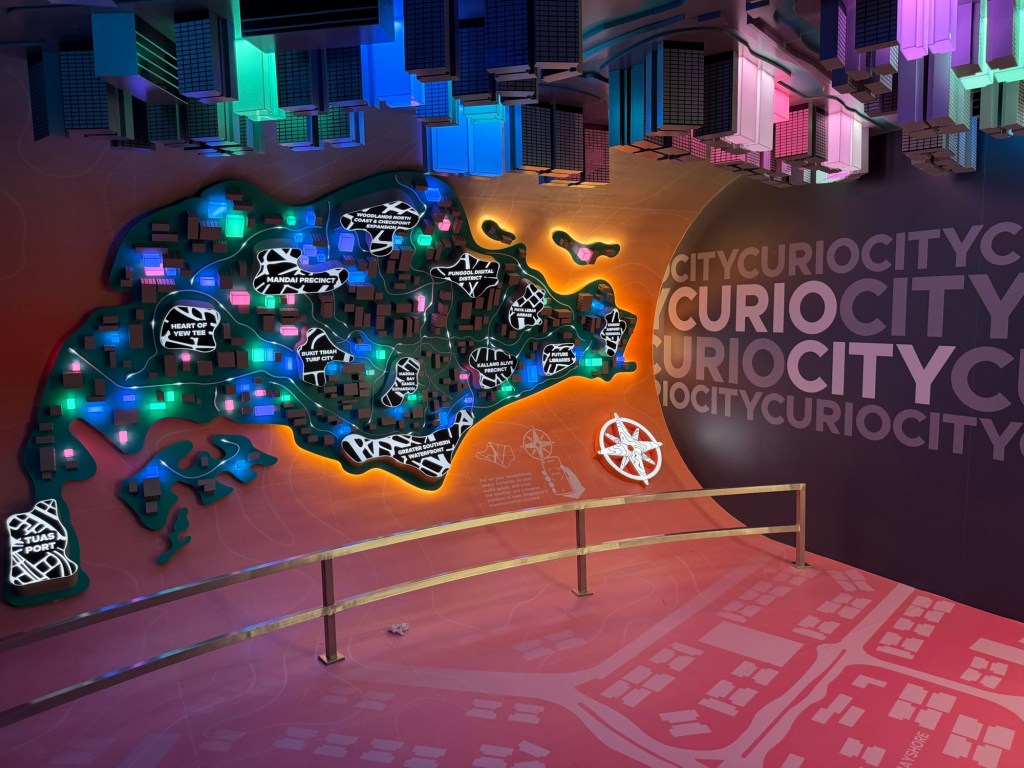
Afterwards, we visited the SG60 Heart&Soul Experience which is being housed at the site of the old library@orchard. Supposedly it will be renovated and return as a downtown library next year, which is great news. From what I can gather, it’s meant to inspire people about what Singapore’s future might look like, and what place they’d have in it (employing lots of tech to personalize the journey). Criticisms I’ve heard are that it doesn’t go far enough, and the future shown looks kinda like the present: delivery drones, working in VR headsets, greenery everywhere. Visit and see for yourself. Bookings are required, but the tickets are free. It’s quite an involved production with each visitor being given a guide device (an encased Xiaomi smartphone) to wear around their necks, and human facilitators bringing them through the stations.
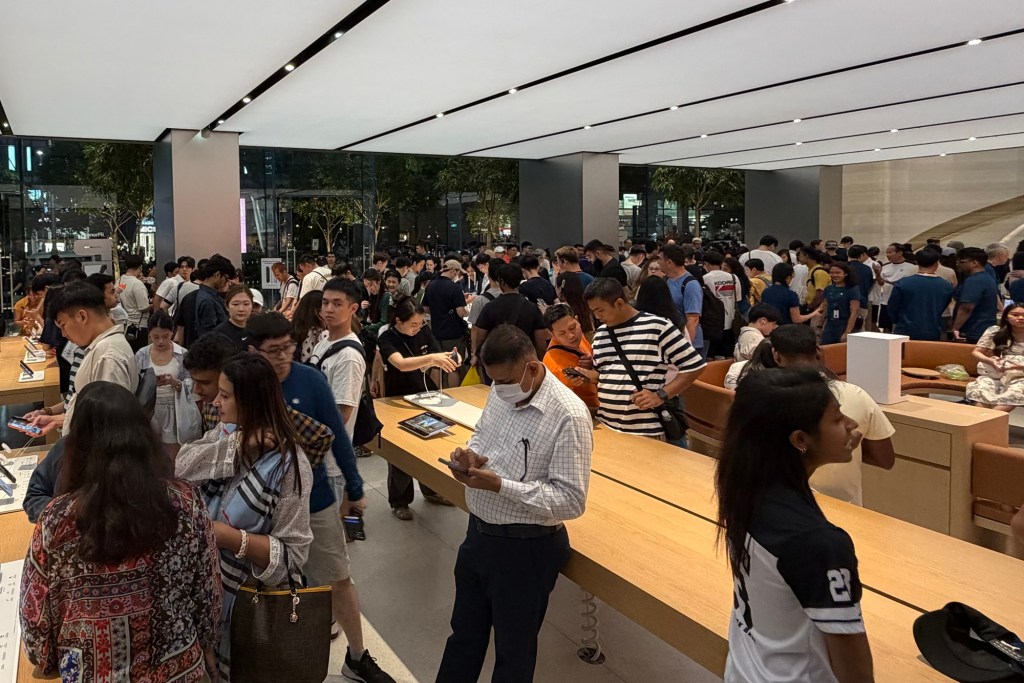
Oh, speaking of cases, we went by Apple Orchard Road after the show to have a look at the iPhone Air, and I haven’t seen that store so packed in years. I picked up a rather loud Beats case in “Pebble Pink”, mostly because I really wanted a Beats case last year but they only made them for the iPhone 16 series. It’s hard plastic with a matte finish that’s slippery when your hands are dry but tacky enough if there’s a bit of moisture.
Check out my reel with the Pink Panther theme:
And while we’re on the subject of great directors, I finally sat down with Bernardo Bertolucci’s The Dreamers (2003) on MUBI. More explicit than I expected, it’s easy to see why people call it pretentious with its heavy callbacks to classic cinema, but it’s never boring and it sure knows how to use mirrors. I gave it 3.5 stars on Letterboxd, mostly because there’s “altogether too much time spent lying on floors for my liking”. There’s also one truly revolting moment where, out of money, they raid the apartment building’s trash for scraps of food and assemble the world’s grossest bento.
Spike Lee’s Highest 2 Lowest (2025), now on Apple TV+, is a remake of Kurosawa’s High and Low (1963), which I’ll embarrassingly only get around to watching after this homage. But this is a fine film that stands on its own: a sharp, sometimes experimental exploration of class and morality, constantly playing on the gulf between generations — Motown vs. modern rap, film vs. digital, Kurosawa vs. Lee.
Happy iPhone week aka Tech Christmas to all who celebrate! I wrote up my thoughts (below) after the event on Wednesday, and since then I’ve seen the same sentiments echoed throughout YouTube videos, podcasts, and articles, so I at least know I’m not reading these things entirely wrong. All in all, one of the best iPhone lineups ever. They went all out, with very few compromises or artificial impairments to make the expensive models more attractive — they are all seriously good value, extremely capable-sounding devices.
On Tuesday, we went over to my parents’ place for dinner, and spurred by a question someone had last week after seeing a photo of their living room, I asked after some family history and got some new information. The accuracy and completeness of Singaporean family stories must vary widely; after all most families here only arrived in the last century. My dad only knows where his grandfather came from in China, and a suspicion of his occupation (ask me and I’ll tell you), but not why or how they made their way down to Southeast Asia. Apparently no one ever said. I’d say that was weird, but then I’ve waited this many decades to even ask.
You know what else I’ve waited forever to do? Start The Legend of Zelda: Tears of the Kingdom. I finished Breath of the Wildin the summer of 2023 — I could have sworn it was last year, oh my — after letting it languish uncompleted for about six years. Since both games are set in the same world of Hyrule, albeit expanded in TotK, many recommend taking a break in between. Now that the Switch 2 edition is out, with modern luxuries like running at 4K 60fps, it was time. And because this is a game where skills also accrue in the player rather than purely in the character, jumping back in feels great. I’m better at combat and finding my way around than I was at the beginning of BotW, which makes sense for a sequel: Link has been here and done this before. It’s marvelous game design all around.
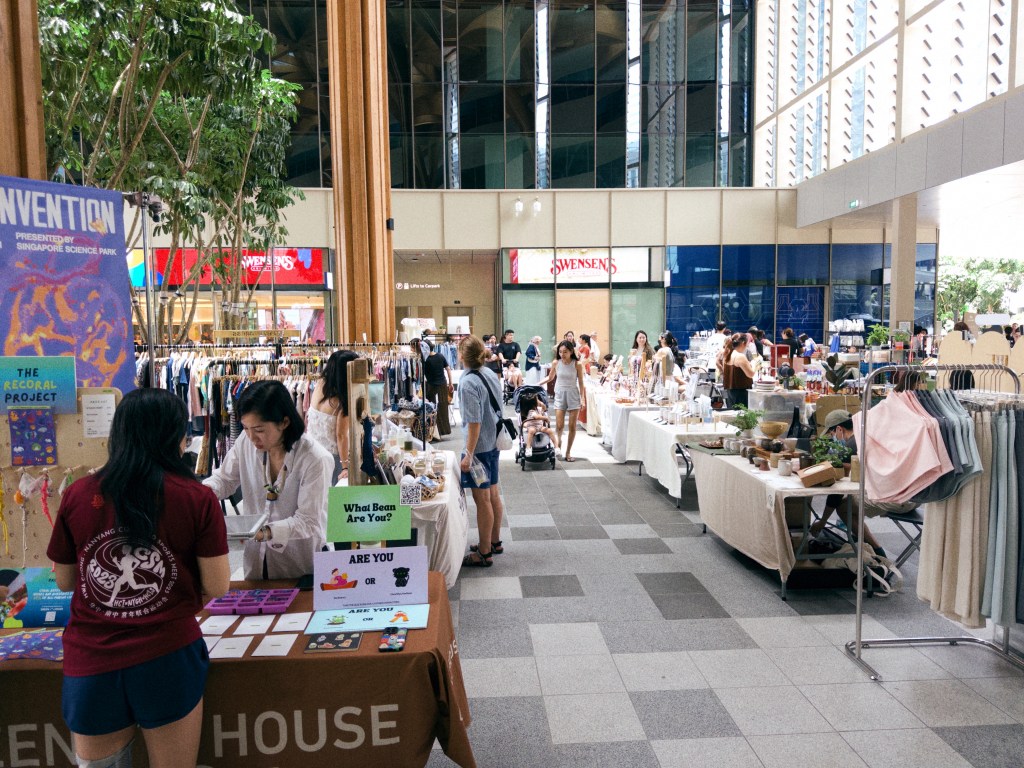
Speaking of capital-D Design, Singapore Design Week is back again, but I’m less inclined to explore every venue and event after seeing that last year’s slipshod execution probably hasn’t been rectified. The website and program directory are still confusing and missing key visitor info.
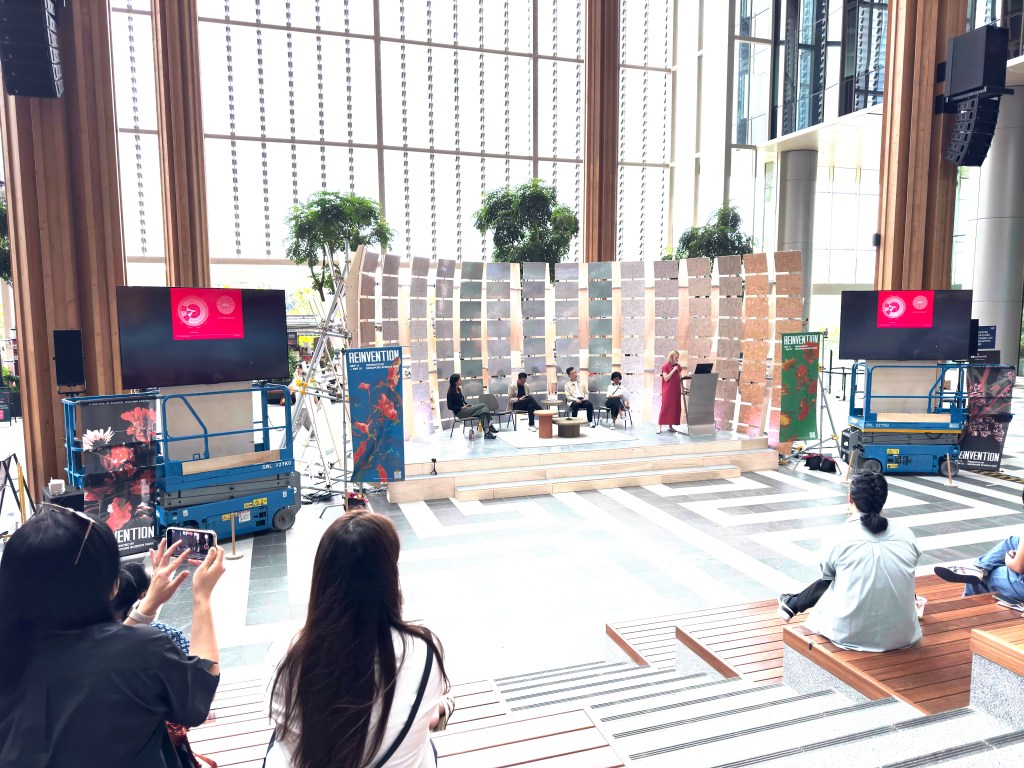
Case in point: On Sunday we went down to the Science Park district for a talk I’d signed up for, only to find that no one in the stated venue (a building lobby) knew where it was happening. It turned out to be in an open space outside instead. I’m not sure the speakers knew either, given that several used packed slides unreadable on the small screens provided. To make matters worse, some presenters’ slides weren’t even fit to the full screen size. When informed by the audience, they said “sorry, we can’t fix it. We can send you the deck!”
Nearby, one of the robotics exhibitions had info cards printed in such tiny type you’d literally have to crouch on the floor to read them. I don’t know why we can’t get these things right for a design week.
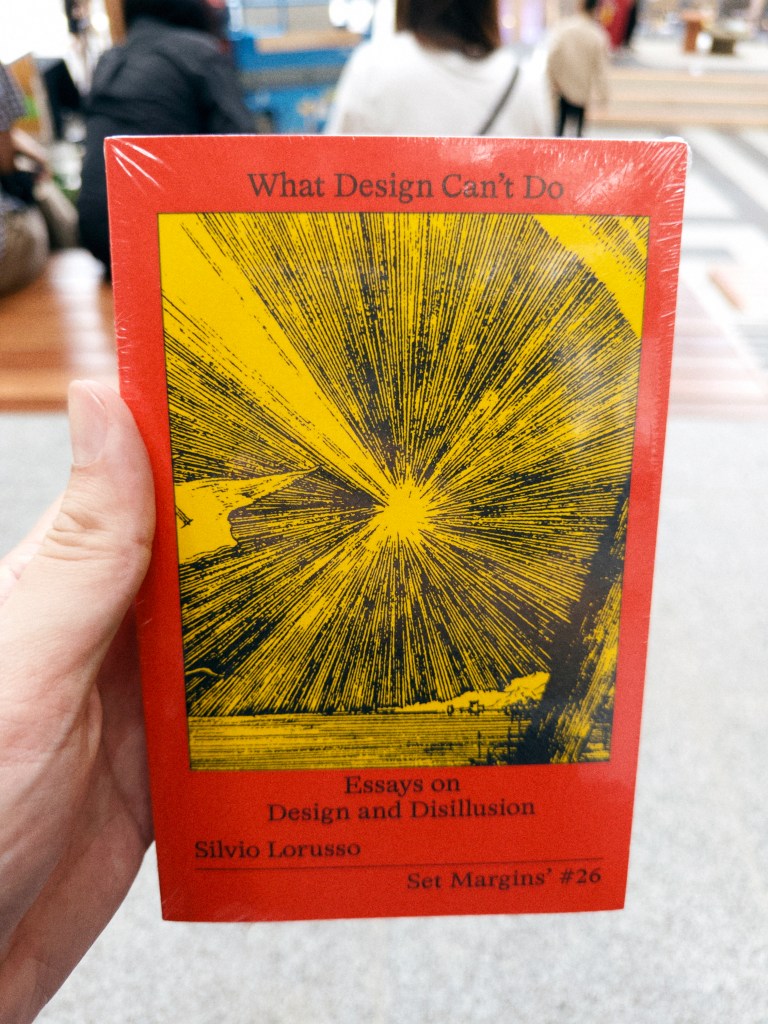
But there was a high point! Local graphic and art book seller Basheer had a small stand at the fair, and I found a copy of Silvio Lorusso’s What Design Can’t Do: Essays on Design and Disillusion, which Jose recommended ages ago. It was S$37 for future reference.
If you follow me on Goodreads and were shocked at the amount of reading I suddenly got done, calm down. Those were not five separate books, but short sci-fi stories in something called The Forward Collection, published by Amazon, and curated by Blake Crouch of Dark Matter fame. For some reason, each story has its own entry on Goodreads instead of just one for the compilation. I recommend them!
===
Apple Fall Event
The annual Apple fall event took place as it always does in early September (I love that it’s been over 15 years but some people still ask “When do the new iPhones come out?”). This year was of particular interest to me because 1) I didn’t upgrade my iPhone for once last year, mostly content with my iPhone 15 Pro Max and even wondering if I could stretch it out to three years. 2) If I can save any money somewhere in my annual budget, I’d be open to it! Alas, my Apple Watch is three years old, and my AirPods Pro 2 are the Lightning version that don’t do lossless audio with Vision Pro. So as the livestream began, I started praying that none of the announcements would make me feel like I needed to buy stuff.
Right out of the gate, the new AirPods Pro 3 were shown and I was like “goddamnit!” These mostly look the same, but have been subtly refined to fit better in your ears and yup, I need that as they’ve always been a little loose on one side. They supposedly sound better, thanks to a new acoustic port design. The active noise cancellation is now 2x better, and battery life has gone up about a third, to 8 hours. There’s also heart rate monitoring but I don’t give a crap about that. Nevertheless, a very hard purchase to resist.
Then, the Apple Watch Series 11 and Ultra 3 were shown, but thankfully I’m not sporty enough so the bulk of their workout/outdoors adventure-centric improvements bounced off my consumer armor. I mainly use my Series 8 as a timepiece, with occasional notifications and stock prices that I read when waking up in the middle of the night, and all it needs is a new battery. Lighter, smaller, more health sensors, faster charging — these are all nice to have but not when a new titanium model comes to over S$1,200 with AppleCare+. What’s that? Buy aluminum? Oh no, darling.
I was excited to see the iPhone 17 get a ProMotion display (variable refresh rates up to 120hz), because it suggests that the iPad Air might get one next year too. Overall, this is a truly great phone to offer as the base model. With better battery life, 256GB starting storage, and very capable cameras (including a smart new multi-aspect selfie camera), there are no compromises to be seen here and most people will be fully satisfied with one. It stands up well beside the Pro phone for everyday use in nearly all aspects.
When rumors of the the iPhone Air leaked, I didn’t believe a thinner phone with less battery life made any sense. And including only a single camera with no ultrawide lens? That excludes most Gen Z buyers! But I think I was wrong. The new wider front-facing camera might handle the Gen Z selfie use case. In truth, this is a phone that matches or exceeds the specs of last year’s iPhone 16, but is way more desirable. With its unique and recognizable design, glossy titanium frame, and premium semi-pro price positioning, this is the peacocking model. It’s literally the shiny new object. And that place in the lineup is made possible by a welcome pivot in the Pro line.
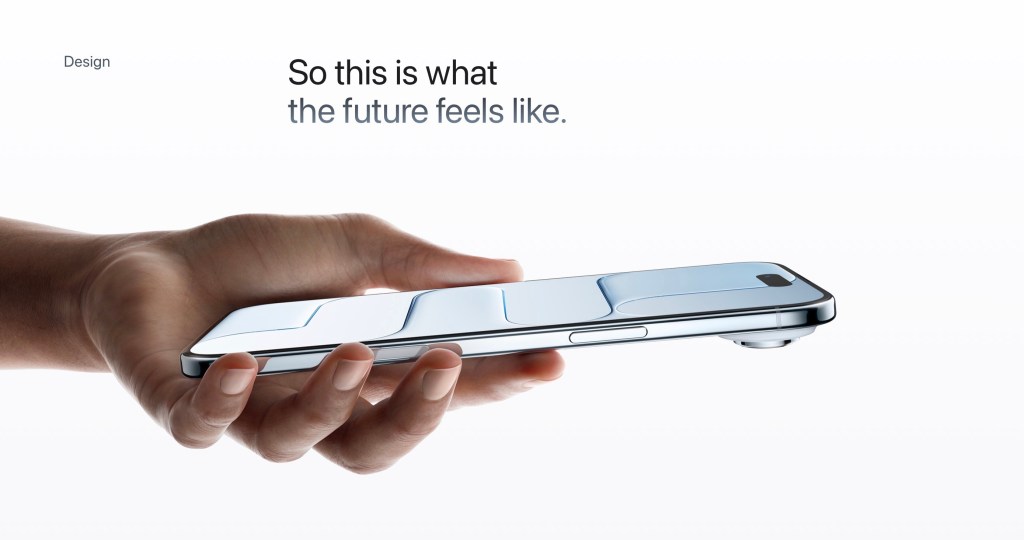
The iPhone 17 Pro and Pro Max are now freed from their jobs of pushing up iPhone ARPU by appealing to customers with a little more money to spend, and who want something better than the base model. That’s the Air now. The Pro models have now transitioned to powerful professional tools with features that most people won’t even have heard of (e.g. GenLock for video), let alone know how to use. Which means they can ditch premium/luxury materials like stainless steel and titanium, for a more pragmatic forged aluminum that’s lighter and better for thermal management. They can also withstand weirder/uglier industrial designs (emphasis on industrial) like the new camera plateau that houses bigger sensors and makes room elsewhere for massive batteries. These models can now be thicker and heavier than most consumers would like because the Air exists.
The Air, by the way, looks like they got halfway through the development of next year’s rumored foldable iPhone and decided to ship one half as a product. Which is probably not entirely untrue; many niche Apple products are test beds for scaling ideas that will later appear elsewhere. The Air’s remarkable miniaturization and the Pro’s new vapor chamber cooling system will probably be echoed in a future Apple Vision Pro.
It’s also worth noting the ever-changing definition of “Air” in Apple parlance. It usually means either cheaper or lighter, and never premium/luxury. The MacBook Air is both the cheapest and lightest laptop, at least for now. The iPad Air is a Goldilocks model, sitting between the basic iPad and the Pro (which is the thinnest and lightest). But while the iPhone Air is cheaper than the Pro, it’s the thinnest, lightest, and also nicest. It’s elegant where the Pro is beastly, and I think this is their main design direction for the future.
Even if it doesn’t sell well this year, I don’t see this being canceled like the Plus phones. If anything, the Pro Max might be the one to go next. Its role is now to simply be the biggest screen, which a certain folding device might take the place of. So 12 months from now, we may be talking about iPhone 18, iPhone 18 Pro, iPhone Air 2, and an iPhone DS or whatever.
So it’s decision time. By the time this gets posted, I would have chosen a phone, size, and color. The Air is very tempting, except I couldn’t live without macro and telephoto photos. I do think its 6.5” screen size is in the sweet spot. The Pro’s 6.3” is too small and according to myself in 2023, going back to a bigger Pro Max after three years of Pro was worth the pocket bulge and hand strain. The new Cosmic Orange is striking as hell, but will it look tired after two years? Or two weeks? Brian called it reminiscent of “80s anime” and I think he’s onto something with that bit of free association. It also reminds me of some Sony MP3 players and phones.
Update: Pro Max in Silver. Big, heavy, and expensive. I’ll have to tighten my belt now in more ways than one.
We lost a grand aunt at the close of last week, and attended her funeral and cremation on Tuesday. It got me thinking about qing ming, which is a day in early April (I had to look this up) where Chinese families traditionally visit their ancestors’ graves and do some neatening up. I have vague memories of being dragged along to do this as a kid, and even being allowed by my parents to skip school for it. I mostly remember the smell of burning joss sticks mixed with the dewy morning air and damp soil. For some reason we stopped going by the time I was a teen.
I talked about this with Cien and Peishan and they seemed to still be in touch with the practice of visiting graves, or in these days of diminishing real estate, a columbarium. If you asked me where my family members are buried or stored as ashes, I wouldn’t be able to tell you. I assume many of them have been scattered, either into local waters or some faraway favorite destination. Honestly, I like the idea of not being tethered to a single spot. If your spouse is still alive, maybe they’d like to keep you near, in some vessel at home. But if too many, or too few, people are sharing you then it’s better to be everywhere. A memory triggered by some food, place, or figure of speech. An algorithmically assembled photo collage tossed up by a personal computing companion one morning. A mention in some dusty book on a top shelf in a library, waiting to be seen by a future student or recycled into a supermarket receipt. I’d be fine with any of that.
Back to the funeral: it was held at the Mandai Crematorium and Columbarium, one of only three cremation facilities serving the whole of Singapore, and I was upset by how much it is in need of some design intervention. I wonder if any of the people managing the place have tried to look at the process with fresh eyes, or at least through the tired and grieving eyes of the people passing through it. Because they’d see so many moments that could be made kinder, more understanding, more dignified. The script could use a rewrite. Playing ‘Amazing Grace’ out of tinny $40 Bluetooth speakers in the final viewing halls is not it. For Chrissakes, please also remove the ugly MS Word-designed notices plastered on the viewing room windows, they obstruct the view of the caskets as they’re delivered (by industrial forklifts!) into the flames. I’m not exaggerating.
My shoes fell apart. They were the second pair of New Balance 990s to do so, doing nothing more strenuous than supporting my occasional walking about town. The last pair lasted three years; these only made it to two. At around S$300, these are supposed to be the best shoes that NB makes, but I’m beginning to think their ‘Made in the USA’ label is more a statement of liability than superiority these days. The Chinese-made models could probably survive a decade. Alas, with my big feet and aversion to swooshes, the 990s are some of the only shoes I’m comfortable in, so I’ll be buying yet another pair — online, too, since they stopped local distribution of the wide sizes.
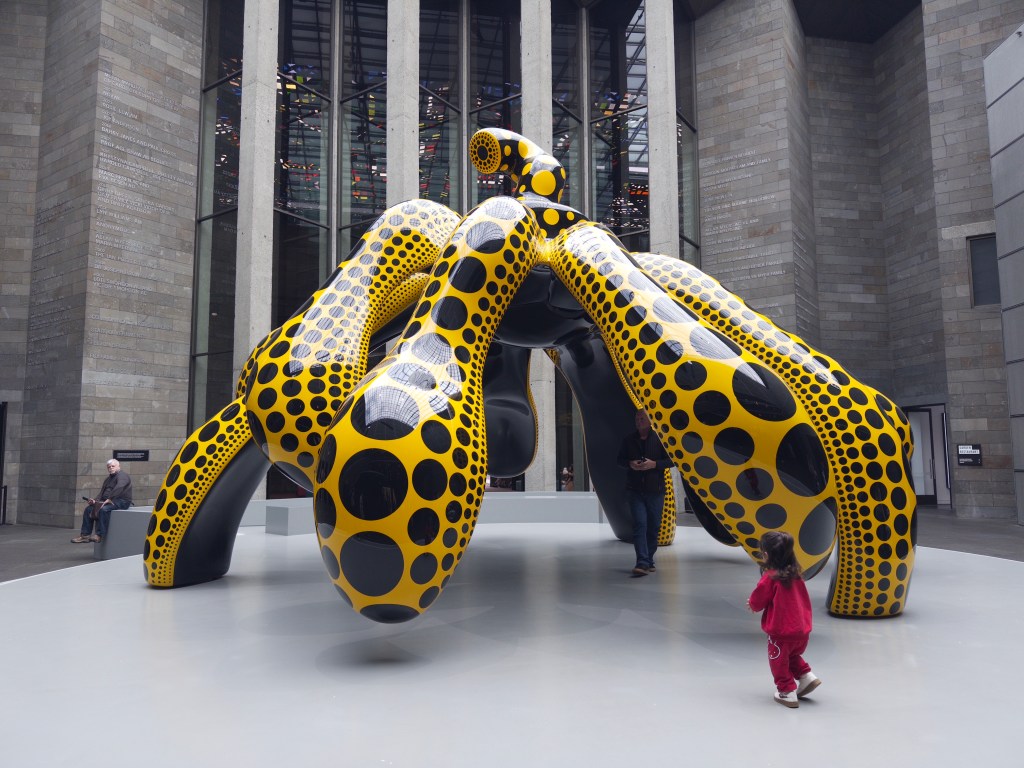
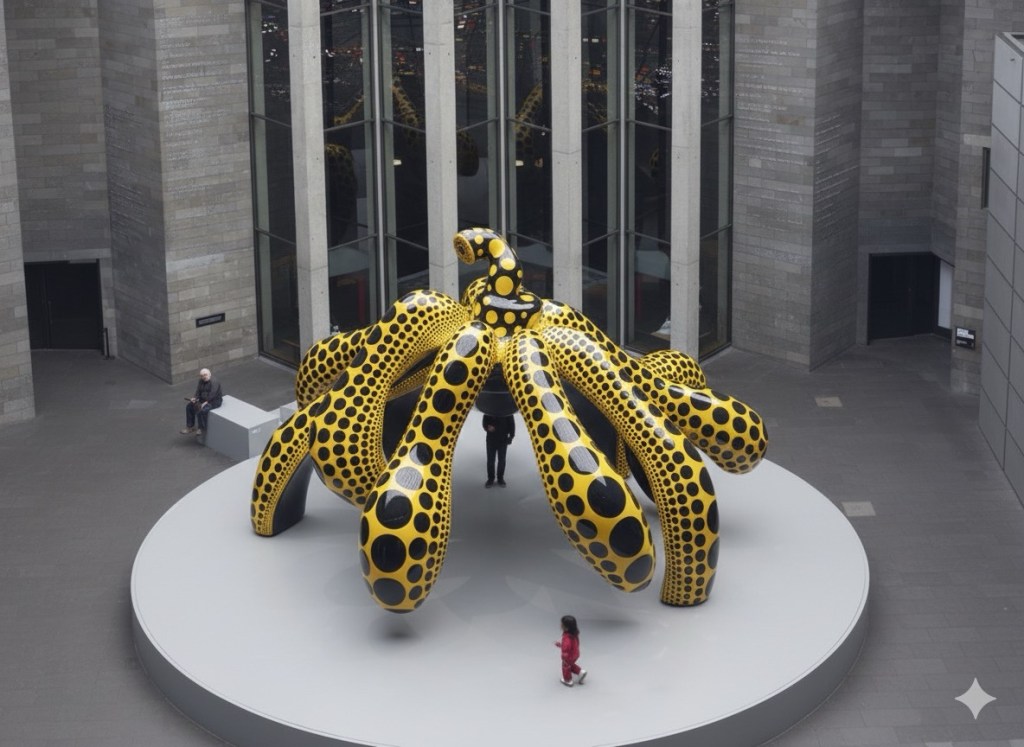
Google upgraded Gemini with the Nano Banana image model that’s been trending on Twitter, and the bar for impressive generative AI has been raised again. It’s extraordinarily capable (and fast) at combining images with accuracy, as well as reimagining them in different styles and from different perspectives. A few months ago, Gemini was an also-ran, but maybe something’s shifted at Google and they’re an actual contender again. As much as I try to avoid Google services, I suppose I find them preferable to OpenAI and Meta. Take a look at the example above where I asked it to redraw a scene I photographed last month in Melbourne, but from above.
On Thursday I met two friend-couples, who I’ll call Mong and Jogina because it sounds amusing, for a rare weekday afternoon lunch where it was made abundantly clear that I’m behind the times for not having seen K-Pop Demon Hunters yet. Circumstantially, we’ve all got the time and flexibility to do these weekday catchups more often than once or twice a year, and maybe we should.
Aside: I did see the movie later, and it’s really good! My main gripe is the use of stuttering frames for the character animation, which worked fine in Sony’s Spiderverse films but break immersion here. The frame rates also seem uneven from scene to scene? Speaking of Sony, I’d hate to be the person who decided to sell this to Netflix for just $100M.
Afterwards, some of us went on to check out a nearby Crocs store (hear me out!) because a new collaboration had just launched: Animal Crossing! I just tagged along for a look, but became increasingly afraid as we got nearer that I would end up buying a pair. Kinda like how I bought the first iPad at Funan mall in 2010, that I absolutely wasn’t interested in… until I joined the line. Thankfully, my senses returned, and they only carried the smaller women’s sizes. God bless my big feet!
The book club is still reading Cloud Atlas, and at one point, a character mentions Carole King’s Tapestry album playing at a low volume in the background. I realized that I’ve known about this album forever but never heard it. So I put it on while reading. And boy did I know half the songs on this. I was beginning to wonder if it was a covers album, that’s how familiar they were. Incredible work, and a deserving #38 on Apple Music’s Top 100 Best Albums list.
And finally, a little gaming episode:
As previously mentioned, I’ve been playing the first Shinchan game on Nintendo Switch as a way of marking the summer — never mind that it’s always summer here in Singapore. It started well but I found it increasingly repetitive and uninteresting, and have been trying to just get it over with. The game features a time loop, where you replay the same week over. I spoke to Evan about it while I was on the second week, and he told me to hang on until the fourth week.
>> I was like, “there’s four fucking weeks??”
>> He said, “the real game BEGINS after week four!”
>> “How is that possible?”
Reader, I’ll tell you, I was ready to delete the game then. At the end of the third week, it seemed that I had all but completed the game. All my tasks were done. Then as the credits rolled, I texted him back:
>> “Dude, I’ve finished the game, what’s going on?”
>> And he says, “You haven’t, that’s just the beginning, get ready.”
>> “I don’t believe you, don’t mess with me!”
By this point, I had put in about 7.5 hours and couldn’t take it any more if this was just an extended prologue. There was just no way. The game was surely done! Then he asks me if I’ve done a certain thing yet, and I’m like:
>> “Uh yeah… long ago? In the first week?!”
Suddenly, I realized he’d spent the first three weeks mucking around and not doing any of the main game’s tasks, and only got started on the story just before time ran out. So yes, I had finished the game. Thank fuck for that.










 sangsara.net