Tag: Switch

  • Week 46.26

    Week 46.26

    Since I mentioned the increase in cyberattacks and system failures last week, things have not exactly improved. Microsoft systems like Outlook and Teams went down in 70+ countries on Friday, and the US FAA grounded all flights for four hours on Saturday due to some sort of communications issue. I should mention for posterity that Jensen Huang has resigned from Nvidia, aka the company propping up the stock market via the AI industry (with no succession plan in place), just as Anthropic prepares to go public next week. It’s been nice knowing all of you.

    But let’s focus on happier things. The Apple HomeView has gone on sale, and having had a unit at home for a little while now, let me admit that I was wrong about this device. I was underwhelmed when it was first shown — partly because I don’t put much stock in the whole Smart Home idea, where every appliance and light has an internet connection and can be controlled remotely (see above); and also because the launch video showed an American family scene where people were inexplicably using a HomeView for tasks like messaging instead of their own phones. It wasn’t clear from that vision why this product needed to exist in my home.

    The answer: forget all the other stuff, it’s simply a better HomePod. We’ve had four HomePods around the house ever since they went on sale locally, and they’ve mostly been speakers. You can control them with voice commands in a limited fashion using old Siri, but unless you know exactly what you want, a secondary device like an iPhone or iPad is how you’ll be browsing and putting music on.

    The HomeView, with its touchscreen almost the exact size of a CD booklet, is a fantastic standalone music player. Maybe the easiest to use on the market. Its sound quality is midway between the HomePod mini and the full-sized HomePod — rich, and way better than you’d expect from its size. You can link it with another HomePod to fill larger spaces.

    But as a music player, it works so well because it replicates an old-school, Dumb Home experience: a dedicated hi-fi system you can walk up to and operate to play music. You browse albums visually, and tap buttons to start playing. The album art of what’s on can be seen across the room. I don’t think about my phone, or streaming, or anything like that. It’s just where my music collection lives, and the screen gives the content physical presence. So much so that putting it beside our record player doesn’t create any dissonance at all.

    Oh, I gave Olivia Dean’s album another spin after she was named Apple Music’s Artist of the Year. It’s better than I remembered, and she and her producers do the thing that’s very hard with a distinctive voice: make every song feel different enough that it never gets monotonous and same-y, the way the last three or four Taylor Swift albums do. It’s a shame about the song that allegedly interpolates Bill Withers without giving credit. To my ears, it absolutely sounds like infringement, and I don’t know how her record label didn’t flag it.

    It’s also worth mentioning the disparity in packaging quality between the HomeView device and the Fujifilm X half I just bought. The Apple product comes in a typical Apple box: sturdy, minimal, and so flawless you take it for granted until you encounter something like the Fujifilm camera’s flimsy cardboard shell, which looks like it protects a soap dish from IKEA.

    Consider the bill of materials for these two. The product from one of Japan’s most important camera manufacturers has a plastic and metal body, a 1-inch sensor, a tiny and sadly mediocre touchscreen, and a processor that can barely handle its own image processing. I got it for S$530 on sale (current RRP S$749). Meanwhile, the all-metal and glass HomeView packs a high-resolution 7-inch touchscreen, a 3nm A18 processor capable of powering a full computer, powerful speakers, AND a 12MP wide-angle camera of its own for video calls and face recognition. Yet it’s priced at S$399 and comes in a box befitting a Leica that costs 20x more.

    If not for this comparison, I would never have thought there was anything wrong with the Fujifilm camera at S$530. The camera is fine to use — better than a toy, worse than an iPhone — and I expect to take lots of everyday snapshots on it (below). This is more a comment on what Apple can accomplish with its scale and supply chain operations. HomeView is a steal.


    • Monday was a public holiday on account of Deepavali on Sunday, so we decided we’d go out for lunch and landed at Plaza Singapura. Which, semi-coincidentally, is where the National Library Board has set up a Snoopy pop-up library for children. I… I just wanted to see it, okay?! It was very busy, with a long line to go in, so hopefully reading is doing okay. The other day I met Peishan and she was wearing a t-shirt that said “Great Taste in Books”, which she found at Zara. If anything, reading may soon become too mainstream to be cool.
    • We ate at Café&Meal MUJI, where prices have inflated tremendously since my last visit over a year ago. It’s now about S$27 for what used to be S$17 when I ate there regularly in the pre-Covid years. After Covid, it crept up to S$20.90, but this is kinda crazy. I’d do it again, sure, but it’s no longer in the acceptable range for a workday lunch.
    • You know what else has changed in the last seven years? My non-completion of Luigi’s Mansion 3! That’s right, I finally finished the game that I started back in 2019. If I had to explain myself, it’s that the whole adventure is spiritually exhausting. Luigi’s no hero like Mario, and he’s in a spooky haunted house — the poor guy is trembling all the time, in absolute hell, and you’re the one pushing him to keep going. I couldn’t do it for more than a couple of hours each year. That said, it’s a brilliant game that looks as good as a Switch 2 title. I don’t know how they managed to get graphics this good out of the original Switch. Oh wait, I do. In the end credits, there’s a special thanks to the Nvidia Corporation. Look who it is:
    • I finished three more books. Ray Nayler’s The Mountain in the Sea was excellent, a 5-star speculative fiction novel about discovering other forms of intelligence on Earth. It has some stunning ideas about AI and the nature of consciousness (it’s also about octopuses) that are well worth any reader’s time. I’ve put it on my shelf as one of the best things this year.
    • Emily St. John Mandel’s Exit Party was not so good. I wasn’t impressed by Station Eleven either, but everybody seemed to love it a decade ago, and I thought maybe I was missing something. Well, fool me twice. This will be the last book of hers I give my time to. It’s just a hodgepodge of tropes and characters with unexplained advantages (like superhuman intuition), which felt tacked on to try and make the going more fun. It lacks interesting ideas, and the human drama didn’t land for me or make up for it.
    • After that, I thought I deserved something authentically, trashily bad, and settled on another cozy book set in a bookshop: Kazumasa Hayami’s How Can My Manager Be So Stupid? The funny thing is, it wasn’t that bad. Certainly not among the worst of these translated Japanese stories I’ve read — that honor might go to Atsuhiro Yoshida’s Goodnight Tokyo — and actually, it may be a better book than Exit Party because it achieves what little it sets out to do.
  • Week 43.26

    Week 43.26

    • No new vibe-coded apps this week. What I’ve done instead is gone back to some of my older projects and given them a degree of polish I wasn’t able to before when using low-cost AI like DeepSeek Flash. What a difference a frontier model makes!
    • I did a ton of work on RetroVista, tweaking sounds and improving the authenticity of its classic game console graphics. I also added incidental animations (astral events, animals walking by, planes/trains/watermobiles) to make each of the seven scene types more lively. It looks really great now, if I do say so myself. Most of all, I’m super jazzed about the fact that the City scene now generates jazzy musical themes.
    • While working on RetroVista, I discovered a way for web apps to play audio without having to unmute your iPhone, a change that also allows them to play in the background while your phone is locked — just like a real music player! That technique has now been added to DataDeck, which was designed as a music player to begin with. That app has also been given a tune-up under the hood, with loads of bug fixes and performance improvements.
    • Orchids, Once. also received attention: the same audio behavior as above, and a major upgrade to the plant rendering system. The original code had major bugs that led to the GPU not rendering some intended effects at all, such as leaf textures. Flowers used to be assembled from parts floating in mid-air, so you’d see gaps and clipping. Not anymore. Now each piece grows out of the last and moves out of the others’ way. The graphical fidelity is at an all-time high. As an ‘art project’, I had previously considered the experience complete and never expected to make any changes, but I’m now really pleased about being able to bring it closer to perfection. Is this the same illness that afflicted George Lucas when he added CGI rocks to A New Hope??
    • But maybe the biggest glow-up was given to Shelf Expression, the software that powers my Bookshelf page on this site. On the frontend, new shelves have been installed, animations have been refined, books show physical wear & tear, and you can place decorations to liven things up. On the backend, it’s almost entirely new. I won’t bore you with the details, but the original was little more than a tool that helped spit out some HTML code you then had to paste into a file in order to update the page. The new setup is like a mini CMS in its own right! You can log in and update the bookshelf from anywhere with just your phone. The ‘Share Studio’ that creates social media-ready images and collages to show off your favorite books is now a powerful app in its own right.
    • The best part is it’s easier than ever for non-technical users to configure; it can even detect and install new updates from GitHub with a tap. Now it behaves more like a live service rather than an ad hoc webpage. I cleaned up the GitHub repository and the source code is now up for anyone to grab and set up bookshelf sites of their own in minutes. If they don’t want to run the full app on a server (Vercel and Netlify are supported), they can simply export a static site that’s ready to be hosted anywhere.
    • And finally, my first app Collagen got a Liquid Glass UI and an infusion of new collage-editing code from Shelf Expression’s Share Studio, making it more reliable and nicer to use than ever.
    • On the home front, I’ve had my sleep disturbed by an incessant dripping sound from inside our bedroom AC unit. I had a guy come by to fix it by unclogging the drainage pipe, but he somehow didn’t finish the job and the sound returned a few hours after he left. Isn’t that the worst? Now I have to wait till next week for him to try again.
    • We watched the latest season of Netflix’s The Diplomat, a show that I’d be happy to see continue indefinitely, along with Slow Horses. I think what I like about it is that something is always happening, and someone is always talking. The dialogue is good, and things move fast. That’s not to say I can’t appreciate slow-burn atmosphere, but too many prestige shows nowadays are just stretching a feature film’s worth of plot across eight hours by having characters walk slowly between locations, stare intensely at computer screens, and then realize things the audience figured out three episodes ago. I’m looking at you, Silo and Neagley.
    • I finished reading Electric Dreams, a collection of 10 short stories by Philip K. Dick that were adapted into a TV anthology series by Amazon Prime. Except it’s not on Amazon Prime in Singapore for some reason. The stories are prescient for having been written in the 1950s; many of their darkly humorous extrapolations still ring true today. In one Cold War story, people are urged to upgrade to the latest life-saving shelters each year, and the people who won’t or can’t afford to keep up are social pariahs. More notably, almost all involve a heavy serving of paranoid atmosphere — either fucked-up things are really happening to the protagonists, or maybe it’s all in the mind of someone having a psychotic break. That dissociated POV, earned through his own mental struggles, was maybe PKD’s real gift to the world.
    • I’ve heard before that people were able to buy electronics with their SG60/CDC vouchers (essentially our local government stimulus checks) by spending them at NTUC hypermarts, but I’d never been to one before this week’s visit to Vivocity. I’m pleased to share that I picked up two Nintendo Switch 2 games for free: Splatoon Raiders and Nintendo Switch Sports Resort. If you have vouchers expiring this December, it’s worth checking out; they’ve got household appliances and a small toy selection too.
    • We were at Vivocity to try the first Singapore outpost of the cheap and cheerful Japanese yakitori izakaya, Torikizoku. It was sadly not very good. The executional faults aren’t worth getting into but I’ll sum it up by saying it’s so important to hire people who can identify the factors that make something what it is, and tell you how to replicate or translate it. Singaporeans go to Japan probably more than any other country save for Malaysia, and if they’re coming to eat here, it’s to access an experience they already know. I’m not saying localization is always bad, but you don’t see Apple opening a new store and asking “Hey what if we doubled the prices here and ran it like a Turkish souk where everyone has to haggle? And played really loud dance music?”
    • Music video of the week: The Rolling Stones’ Mr. Charm starring Alexander Skarsgård, who’s looking more like his dad than ever (ameliorative).

  • Week 42.26

    Week 42.26

    • Local haze levels continued to climb and reached a ‘Very Unhealthy’ state in the middle of the week. My haze app, SecondHand, continued to see active use and added about 10,000 visits. I’ve heard that some people at the National Environment Agency (NEA) are aware of it and like it, which warms the smoky, congested cockles of my heart. For the record, Sunday brought some relief, with PM2.5 falling to near normal in some parts of the country.
    • It’s frankly been like an echo of those COVID days — staying home with the windows shut; that feeling of hunkering down under attack. And just like with COVID, restaurants are experiencing difficulties, so says the Straits Times. I’ve taken to walking on the treadmill as often as I can, usually for an hour while watching some insubstantial drama program I normally wouldn’t sit still for. This week, that’s been NHK’s Eat, Sleep, then Wait for Happiness on Amazon Prime.
    • But the real time suck has been provided by a return to vibe coding after a three-month hiatus. This has been thanks to Hark, which fulfills the promise of OpenClaw but without requiring the nerdery and foolhardiness of letting an AI take over your own computer. Hark’s computer runs in the cloud, and it’s intelligent enough to manage its own files and applications and capabilities — dare I say it? — so much so that it’s like handling a remote employee over chat. It sends me updates and artifacts, I give it problem-solving suggestions and creative input, and it comes back with the work. I spent so much time earlier this year with the self-imposed challenge of trying to squeeze water out of the rocks that are low-cost Flash-style models, that I completely missed experiencing what the very best frontier models can do. In retrospect, that was a little dumb, but the upside is I’m filled with so much wonder right now.
    • I’ve mainly been working on the procedural art generator tool that I mentioned back in April. Then, I described it as a never-ending background project for me to dip in and out of, due to each ‘style’ being modular, which has made it easy to jump back in this week. Using modern technology, I overhauled the rendering engines and revisited every individual style, as well as the app’s own UI and foundations (images above). It’s hard to explain how much better it is now, how much closer it is to what I wanted. It even has freaking Apple-style Liquid Glass effects on the toolbar! In a web app! I don’t know if I’ll ever release it or just keep messing around forever making wallpapers for my own amusement.
    • But I do have something to release today, something that came out of building one of those styles. Similar to how making a maze artwork generator led to making a maze game (a maze, a maze, a maze)in the April post above, I was making a pixel art landscape engine for the wallpaper tool and realized it would make a very nice desktop toy — in the vein of my earlier Window Box project.
    • It’s called RetroVista! Leave it open in a spare window or second screen while you work, and its lush natural scenes and chiptune sounds might relax you, if you’re a millennial who grew up playing games that have somehow, seemingly overnight, become retro and vintage. You can read more about it in this separate post.
    • Speaking of old videogames, Street Fighter (2026) is out and we went to see it with Peishan and James. Watching every movie adaptation of games from my childhood, even if I know they’re going to be terrible, is a weak spot I probably share with many my age. One time, I went to see Street Fighter: The Legend of Chun-Li (2009) with Peishan, and followed that up with Snake Eyes: G.I. Joe Origins (2021), and now she thinks we have a bad movie watching tradition. But it’s not. It’s a specific ‘bad movies cashing in on nostalgia’ watching tradition.
    • To get in the mood for it, I fired up the Street Fighter 30th Anniversary Collection on Nintendo Switch the day before. I got my ass handed to me by the CPU in like, the second-round match of SF2 Turbo Edition. When did the game get so hard? When did a Dragon Uppercut become impossible to pull off when you need it?
    • The good news is that the new Street Fighter film understood the assignment. It’s aimed squarely at people who are now dealing with mortgages, perimenopause, reading glasses, and other mid-life crises. They’ve set it in the 90s, packed it with 90s chart-toppers like 4 Non Blondes’ What’s Up?, and exposition is handled with MTV-style video clips passed through faux-VHS filters. For two hours, it puts you in superposition between being a kid on Saturday morning and an adult watching their dream come true. The live action is broken up by anime sequences that are good enough they should be their own feature film. It’s flawed and stupid as hell, but I loved it. A very strong 3.5 stars.
  • Week 40.26

    Week 40.26

    • I went to Apple Orchard Road and tried the Beats 360 headphones. They’re not large enough for my head; case closed. Money saved.
    • My new Apple Watch likes to try cheering me up by telling me that my body is “Ready” to “Go For It” (I assume “It” is a marathon, a swim to the far side of Australia, or something equally implausible) and that I had excellent sleep the night before, but these science and sensor-backed statements simply don’t match my reality. I’m tired; I wish I could sleep more!
    • I just took a little break (after one paragraph, natch) and went on Instagram, where I saw a post that read “Anyone else turn 40 around the start of the pandemic and now blinked and you’re somehow 46 wondering what the hell just happened?” On one hand, that sentence perfectly captures the fatigue that you’d imagine comes with being abducted by aliens and losing six years of your life — at the very least, the weariness of having to catch up with a lot of missed information, which is what being alive in this time of AI feels like, always on the back foot with lots to learn — but on the other hand, it implies not knowing at all where the time went, which I can’t identify with. Oh I know where the time went. I remember it all perfectly well, but it plays in my mind like a timelapse — hundreds of days passing, the figure getting in and out of bed, the view outside the window gradually changing.
    • Armchair theory: maybe what’s caused this ‘blink and time passed’ effect for many is the combination of massive disruption followed by repetitive discomfort. This is different from repetitive boredom, where days are long and time moves slowly. With repetitive discomfort, you’re constantly insecure and stressed, so the mind protects itself by generating summaries and discarding the details. This sharp change, followed by pain you’d rather forget, dislodges you from whatever life you were living before, making it feel like a separate country.
    • I’m listening to Apple Music 1 and three Taylor Swift songs have played in a short period of time. Without checking, I’ve known it was her from the fact that all her recent music sounds the same. It’s hard to feel bad for a billionaire, but that’s an awful place for any creative person to be. It’s like she doesn’t listen to any other music, or won’t allow herself to appear influenced by anyone else. Lonely at the top, as they say, which is why you won’t find me there (among other obvious reasons)!
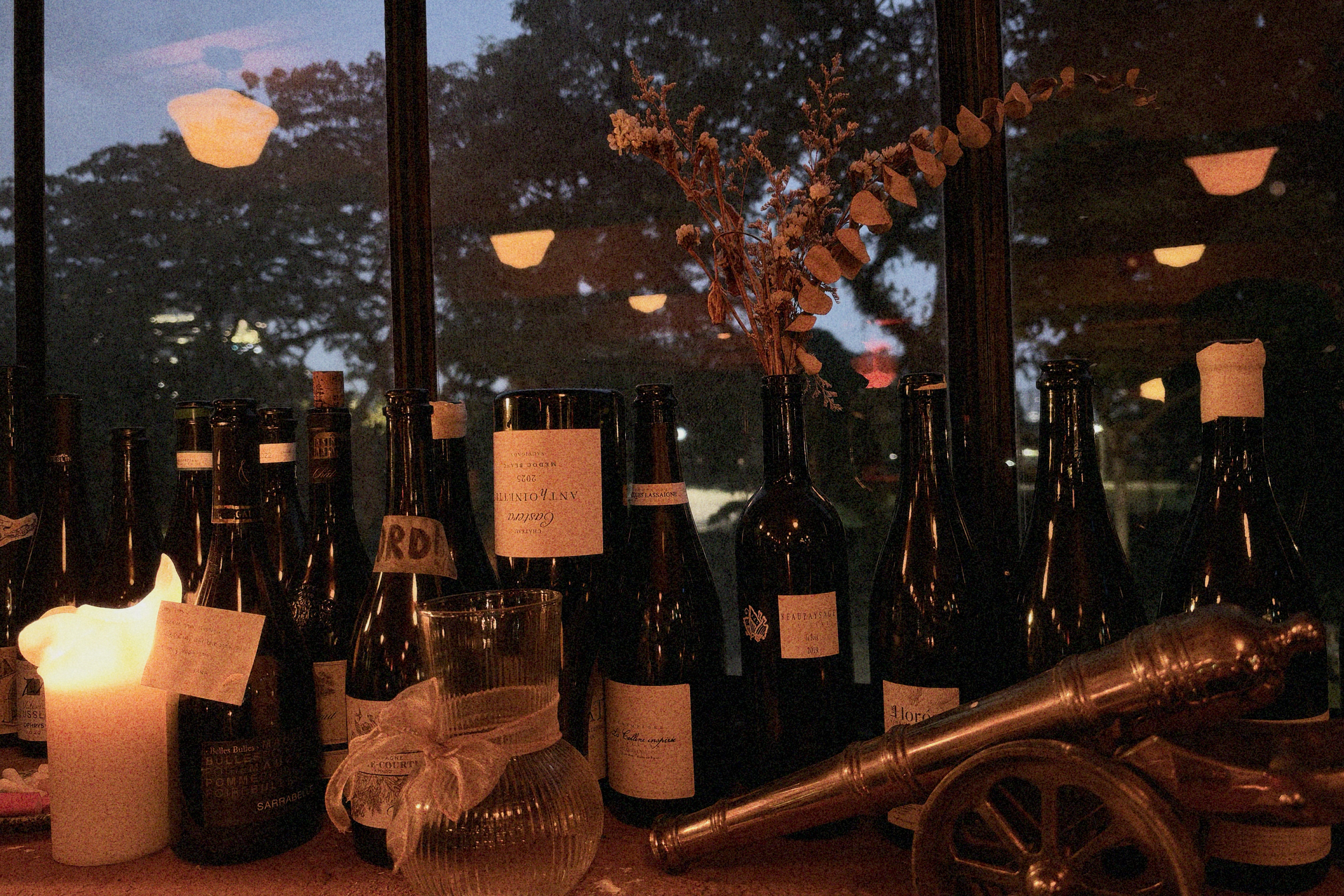
    • Kim and I met Mandy for dinner one night to mark her birthday, and we went to a wine-focused place called Fiasco which has taken over the spot where Kilo used to be, that weird little building out in the middle of nothing near Lavender. The food was all really good (I forgot to take pictures), and they’re doing some really interesting things with hanger steak and pork collar, the latter seasoned to resemble a very fancy charsiew.
    • In an example of culinary R&D jumping the shark, we ate at Surrey Hills over the weekend, where my mother-in-law’s corned beef hash came partially covered with a purple sweet potato foam. Needless to say, she did not appreciate the touch. The place purports to be Australian, and with her being Australian too, I tried to gaslight her into believing that it was an authentic Australian recipe that she’d somehow never heard about. Needless to say, I was not successful.
    • I finished PARANORMASIGHT: The Mermaid’s Curse, and found it a worthy sequel, arguably better than the first game in every way unless you want a spooky atmosphere. This one can’t be classified as horror at all. It’s a mystery adventure with supernatural elements so tame they’d elicit no more than a shrug from a timid baby. Like the first game, its story concerns Japanese history and legends that one might find a little boring, but you don’t have to read all the text in its menus.
    • Playing that game unwittingly prepared me for the film Inu-Oh (2021), which I’ve had in my library for years and suddenly decided to watch. From the opening scenes, it eerily echoed story points from PARANORMASIGHT, concerning the 12th-century Heike samurai clan, and their vengeful spirits said to linger across the land after they were wiped out. Inu-Oh is a wildly ambitious and stupendously well-animated musical that is let down by, well, its music. The concept is a fusion of traditional Japanese music with glam rock, and a main character starts playing his biwa one day like an electric guitar without any explanation. The visuals work, but the songs are poorly structured to modern ears, overly long, and basically repeat the same melodies while pages of historical narrative are sung over them. Imagine Billy Corgan’s worst material, stretched twice as long, and the lyrics are all about random days of Napoleon’s life, and you’ll begin to understand how it feels.
    • We finally saw Sentimental Value (2025) and wow it really deserves its Oscar and 95% Rotten Tomatoes score. The opening scene with the house, and the title card needle drop that follows it, was so good that my body felt compelled to stand up and applaud — I didn’t allow it, but that feeling went on for much of its running length. The train oner is a wonderful bit of technical showing off, and actually the whole film’s lush 35mm look just stunts on the pervasive digital signature of Netflix movies. Everyone is great in this, making art about how art both fucks you up and saves you — 4.5 stars.
    • Found time for a grab bag of other films too: Runner (2026) — not to be confused with Gal Gadot’s The Runner (2026), Good Boy (2025), Elle (2016), Grand Theft Hamlet (2024) — the one to watch out of all of these, a very human documentary about two out-of-work actors putting on a production of Hamlet inside the GTA Online videogame whilst stuck at home during the pandemic — Shelter (2026), and Tony (2026).
    • Singapore made headlines this week because of the launch of a new dating site by the government, currently in a pilot phase only open to civil servants. It’s called FirstDate, and matches people based on compatibility assumed from their responses to a questionnaire. The idea of a state-run service has amused observers, with some seeing it as a dystopian step towards arranged marriages by Big Brother, amongst other hot takes on this strategy to combat our falling Total Fertility Rate (TFR). History rhymes, of course, and older folks will remember the existence of the Social Development Unit (SDU) in the 1980s, a pre-digital precursor to this scheme, that was something of a government-run activities club to help rescue graduates from singlehood after being encouraged (by the same authorities) to optimize for good grades instead of dating during their teenage years.
    • But it’s hard for outsiders to decide if Singapore’s environment really does produce a special breed of hapless, rizzless forever-aloners, uniquely ill-equipped to find their own mates through empathy and communication, so Singapore’s own state-run media conglomerate is providing some data in the form of a new reality dating show called Wingman. The show’s format introduces an original element to the Love Island formula, namely that each contestant brings their own wingman/wingwoman to serve as hype men/women, espousing their good qualities so they don’t have to — a perfectly valid and brilliant tweak for Asian cultures where tooting your own horn unironically is a major ick. The contestants, in addition to a few Singaporeans, are a bunch of attractive 20-to-30-somethings from the Philippines and Thailand, all of whom resemble functioning young adults who can read social cues and body language, and interact normally with members of the opposite sex (there is no LGBTQ+ representation). There’s obviously a tilt towards extroversion, which you’d expect from people volunteering to be a dating show, but even correcting for that, there’s an intriguing, discernible difference between the Singaporeans and their SEAblings that’s best seen for yourself. Full episodes are available on YouTube. We binged all 10 so far in one night.
  • Week 35.26

    Week 35.26

    • The week started in a healthy fashion: Kim took a day off and we went out to play a game of not-tennis, aka padel. It is not a cheap pastime, and that’s taking the discounted rate we got from going at noon into account. It was not in the least bit overcast and I don’t think I’ll be risking heatstroke like that again. Indoors, maybe; the less strenuous variety (pickleball), maybe. Honestly, the more I think about padel, the more upset I get. It’s clearly a lazy attempt at making tennis slightly easier, and the added walls feel like an afterthought to create differentiation for the sake of it. If you want a more accessible tennis where your strategic game isn’t held up by your poor physique, go straight to pickleball; embrace the unsexiness. If you want to hit a tennis ball hard and run around, just play actual tennis.
    • Suitably sweaty already, we then went to the Botanic Gardens for an afternoon walk and lunch at the outdoor restaurant, Park Side. I had a gussied-up luncheon meat sandwich and liked the look of the menu fine — it is after all an affiliated brand of P.S. Cafe, which I frequent a lot — but Xin disliked her own experience there enough to reach out and tell me it was underwhelming. Well, I for one was whelmed. Lmk what you think.
    • A couple of days later, I fell sick with a mild flu. Was it the sun exposure, or the mall crowds we braved that evening on the way to see The End of Oak Street? I put the odds at 50-50. The movie was a lot of fun to see in the theater, and stylistically called to mind Spielberg’s best work of the 1980s.
    • Laid up at home the next few days, I got a lot of couch business done. Nintendo Switch visual novel Iwakura Aria? All endings completed. It boasts some unique artwork, and the writing isn’t too bad apart from some elements clearly contrived to add shock value. I’d rate it a cautious recommendation: if you’re into Mages’s work and are happy with a quasi-horror story, go ahead. I went in knowing nothing!
    • It was a big week in game teasers: I mean GTA VI, obvs, which I’ll probably have to buy when it comes out. It’s like being alive when the Beatles released Abbey Road and deciding you weren’t going to listen to it. This game is going to be the entire culture for at least a fortnight in November. I was also excited to see The Witcher 3 Remastered get announced, especially since I’ll be getting it as a free upgrade for the Switch 2. This is a game I bought with the highest of delusions — a massive 300-hour fantasy RPG is not my jam at all — and ended up quitting because of how ass it looked on the original Switch. Now that it’s receiving a lush graphical upgrade, I’ll finally get to be disappointed by the realization that I don’t actually want to ride around fighting monsters on horseback.
    • I also spent more time on Tiny Bookshop after hearing from Cien that she’d finished the game. For one thing, I didn’t even know it had an ending. I took it for an infinite business simulation with a fairly repetitive gameplay loop, made palatable by the fact that you were recommending real book titles for customers to buy out of your mobile caravan store. I thought I’d seen enough of what it had to offer after 10 hours, but I was wrong. (Spoiler warning) I’m now nearing the end, which ironically involves clearing a bunch of tasks so that you can… take over a not-so-tiny bookshop? What’s left for the sequel, sell out to Barnes & Noble and stock board games and blind boxes?
    • Playing that game always puts me in the mood to read more, and so I decided to start on a lengthy Neal Stephenson one, the kind that I don’t dare attempt until after I’ve completed my Goodreads annual challenge. I think Goodreads needs to make it about the number of pages you read, not books. Reamde, for instance, is about 1,600 pages on my Kobo, versus 300–400 for most other novels. So if someone committed to 12 books a year, then choosing Reamde effectively ups it to 15.
    • Anyway, I’m about 38% through it now and having some of the most fun I’ve had reading a book since… the last Neal Stephenson, maybe. I’m literally laughing out loud and shaking my head at his ability to imbue standard paragraphs with comic timing. Its globetrotting adventure core involves MMORPGs, ransomware, Chinese gold farming, and Russian mobs. Although the 2010-ish setting is quaintly anachronistic — with mentions of characters using WAP, Flickr, Facebook, and encountering problems that could be solved with cryptocurrencies and generative AI — it holds up perfectly and I never want it to end. In that regard, its length is a feature rather than a bug.
    • I’ve been listening to the new CZARFACE album featuring Tom Hardy aka Frankie Pulitzer and while he’s not a bad rapper at all (many people say he’s great but I don’t know how much is because it’s Tom Hardy doing something unexpected), I think he’s outclassed here next to the likes of Inspectah Deck; his flow is never as crisp and satisfying, and by flattening his accent to a neutral delivery, it lacks the character of, say, a Staten Island native. The beats are fire, though.
  • Week 24.26

    Week 24.26

    It was WWDC week. Apple made good on their promise of a smarter, generative AI-powered Siri two years after first describing the concept. Enough has been said about that slipped deadline, but the verdict on social media this time is that they’ve actually delivered. I was tempted by all the reports of how stable the first developer beta is, and installed it on my M1 iPad Pro. I hope I don’t regret it, but so far so good.

    It’s no surprise that the first beta is in good shape, because this year’s OS updates are looking to repeat the feat of Mac OS X Snow Leopard, where effort was expended on optimizing performance and fixing longstanding issues rather than adding new features. There’s a list of nearly 300 improvements, and I’m looking forward to many of them, especially the faster loading of items in Apple Music. There are also very welcome refinements to the controversial new unified design language system colloquially known as Liquid Glass. Steve Lemay, may this life bless you and yours with happiness and good health.

    There was so much to discuss and dissect this week that Michael and I spent over four hours across two FaceTime calls. Okay, some of that time was spent talking about his new collaborative crossword puzzle game, Crossmate. I’ve played a couple of games and it’s a lot of fun, like how we used to play the NYT crosswords at the office on a big screen. It’ll be on TestFlight soon for wider testing and I’m excited to see how people like it.

    But the next generation of Apple Intelligence was the headliner and the thing most people will hear about. While I expected most of the things announced, there were a few I didn’t. The new Spatial Reframing capability, for one, is a brilliant use of image generation to enhance an existing photo beyond the removal of objects — one that treads very close to contradicting Apple’s earlier stand that photos should be documents of things that did happen. This new take technically does ‘respect’ a real moment in time, with the exception of the camera’s position in space. I wonder if this is as far as they’ll go, or if the line will continue to be redrawn over time (turning a photo into a video, for example).

    I also did not expect Apple’s AI to offer text generation from scratch, helping you to fill a blank page, much like what ChatGPT or any other consumer chatbot has done since the beginning. I thought their initial approach of only proofreading or editing existing text was the right one, but it’s clear that market forces are guiding their hand and features like this and photorealistic generation in Image Playground are simply table stakes now.

    After the presentation, I thought it was super obvious that the new Siri AI will make ChatGPT, Claude, Perplexity, etc. unnecessary for many casual users of AI, and many commentators on Twitter have also since shared this opinion. For people using chat interfaces to look up quick answers, do a spot of online research, brainstorm ideas, and generate text documents and images, there’ll be no quicker or more cost-effective way than to ask Siri on one of their Apple devices. On an iPhone, just swipe down from the Dynamic Island and the prompt field appears. Or hold down the power button and speak.

    It appears that the combination of on-device and cloud models will handle a normal amount of requests for no charge, and subscribers to iCloud+ storage will get more generous limits. Why would anyone pay USD$20 a month for third-party AI unless they also needed it for coding? And that’s before you even add in the advantages of having all your personal context available for Siri to work with, privately. I’ve long held off on connecting my email, Dropbox, and other services to ChatGPT and Claude, even if it would make them more useful. Once you open the gates for data to flow out, there’s no getting it back in. Apple is the only company I’d trust with all of it, precisely because their approach doesn’t require me to trust them.


    • Remember how I complained a few weeks ago that Amazon Fresh was ceasing local operations? One positive side effect of that emerged this week, in the form of a push notification arriving around 9:30 AM saying that some alcohol products were on 60% clearance sale. I jumped on that with a quickness, and received 20 bottles of wine later the same afternoon. If we lived in Australia, we’d be paying those prices on an everyday basis, but we don’t. I should have gotten twice as much.
    • Japanese konbini inspire all sorts of media, and I’ve read the books Convenience Store Woman and The Convenience Store by the Sea (which is now a live-action series). They’re… okay. This week I played the game InKonbini on Switch 2, which simulates a week of running a countryside store in 1993. I’ve had this indie game on my radar for a couple of years, but initially resigned myself to never playing it because they’d only planned to release for PC/Windows. It’s now on every major platform, and a very chill and cozy game, albeit short enough to finish in a couple of days. I spent a lot of my time straightening out the shelves and making sure every can, bottle, and sandwich faced outwards.
    • John Scalzi’s “Old Man’s War” series of books continues to be a very fun sci-fi adventure. I’ve finished Book 4: Zoe’s Tale, and it pulls off a rare Rashomon move across two installments. It essentially retells the entire story of Book 3, but from another character’s (Zoe’s) perspective, while somehow managing to be additive rather than repetitive. That’s quite a feat.
    • If you’d asked me what films I’m looking forward to this year, Disclosure Day would have topped the list. I’ll watch Nolan’s The Odyssey but I’m not in any hurry. We saw DD this weekend and I had a good time throughout. Nobody puts a scene together like Spielberg; everything is dynamically shot and immersive. But I was left afterwards with the feeling of too many plot holes, and too much exposition of the film’s values through monologues rather than action. Wait, I forgot that I would have also put The Drama on that list, and I’d been dying to know what the awful “secret” alluded to in the trailer was. We also saw that this weekend and had a lot of fun, even if it didn’t fully live up to my high expectations either. Both films get 3.5 stars.
    • I watched Empire Records (1995) for the first time, because Netflix said it was leaving their catalog soon. This was a film I’d always sort of believed I’d seen, but it turns out that I just knew the soundtrack really well and seen a couple of scenes. What a glorious document of its time. Immaculate vibes, and probably more entertaining today than it was at the time because of how much there is to appreciate — not just the lighting, set design, and music, but the whole nostalgic idea that a giant, two-storey record store could be the cultural center of a community, and that people would fight to protect it. Killing them was a tragic error.
    • While talking about it, Cien said the film dates itself by virtue of its message that selling out is bad and uncool, which I didn’t quite understand. Isn’t selling out still uncool!? And then Michael said the same thing on an unrelated topic — that selling out was something only us senior millennials and Gen Xers shunned. Everyone after sees it as a sign you’ve made it. I think they meant this on an individual level, which is jarring enough. But the film is about independent spaces being consumed by soulless chains, and I worry even that’s an alien idea to younger generations raised on influencer culture and brand collaborations. I haven’t been the same since.
  • Week 20.26

    Week 20.26

    • On Tuesday and Wednesday I acted as a facilitator for an AI vibe coding class that YJ teaches. It’s been a minute since I’ve been in that sort of workshop environment helping participants through activities, but it was fun and I enjoyed meeting the rest of his team. I was happy to join for several reasons: I thought I might learn something new, I was curious to see how “real people” engage with these tools, and he said I could come in a t-shirt and jeans (this is my real non-negotiable).
    • Incredibly, Jose works in the same building (I did not know this) and spotted me through the closing doors of an elevator. So we met up for breakfast the next day and he told me about how he’s been using Zo Computer — a new-ish AI tool that I think struggles to define its value proposition to normies beyond “personal cloud computer”. For the most part, it’s doing what you can do with your own computer, an AI agent, and a web host. I signed up and have been playing around but it still feels like a bunch of features duct-taped together in search of a problem.
    • Coincidentally, the team behind it was in town for a series of AI conferences happening this week. I watched a recording of one of the Zo team’s presentations at one event, and basically, instead of subscribing to a bunch of services like Linktree or Squarespace or Buffer for personal or business needs, you can use Zo to vibe code your own versions which will run on their servers… or sorry, your computer in the cloud. I’ll admit the automation story is useful: paid users can keep services running continuously, so you can script triggers and schedule operations. It’s kinda sorta like having your own OpenClaw setup, they say. I wish I had a need for this, but like I said to someone, I actually like doing some stuff myself and don’t want to automate everything away.
    • While tuning into the livestream of Day 2 of the AI Engineer Singapore conference, I heard a talk by the designer Josh Newton that articulated things I’ve been upset about for the past couple of months. About how AI enables creative and curious people to make great things, but also impatient and lazy people to make soulless things at scale (not his exact words). We need more craft, more intent, more muscle for individual expression so we can have nicer things. The design community is very fond of saying ‘design matters now more than ever’ at moments of existential crisis, but for once I think it’s actually a critical imperative rather than a defensive posture. I’m tired of so many “builders” building for the sake of it. I want to see a piece of the creators in everything that gets pushed out.

    Aside: I’ve been talking to a couple of people about the need for more apps to be created under a “benevolent benefactor” model, i.e. delightful, useful, deeply personal software created by people with no profit incentive, no dreams of a big exit, and no need to surveil users or blast them with ads. Just made for the love of the game, and maybe to give back to society. Michael’s Listless and YJ’s JustNow are two examples. The newly revived Friendster might be another. I think AI can get more of this out into the world. I don’t want to hear about monetization — how boring! How déclassé!

    • My Gemini subscription was ending, and so I got pulled back in for one last job. I thought I would simply update Window Box with a new Tokyo location, but that wound up bringing on a bunch of significant changes. Snow, for one, which I’d intentionally avoided before by choosing Singapore and Hawaii as initial locations. I solved the aesthetic problem of dead plants by introducing the Japanese camellia, which blooms in winter, and the nandina (Heavenly Bamboo) which goes from green to red tones in the cold. But once I added snow and seasons, I started revising the way cloud cover and precipitation were determined, and ended up tuning the environmental sounds, and the animations of rain, leaves blowing in the wind…
    Window Box — Tokyo with a light dusting of snow
    • After seeing how the basic GPT-mini model in Zo Computer managed to code me a simple web app, I started to rethink what free models can do today. So after my Gemini subscription lapsed, I tried adding a transition animation when switching between cities in Window Box, and was absolutely stunned that Gemini Flash (the ‘dumb’ model you can use for free) managed to help me get it done. It certainly wasn’t one shot or perfect, but wow. Very soon we’ll be locally generating (streaming?) live app code on our mobile devices.
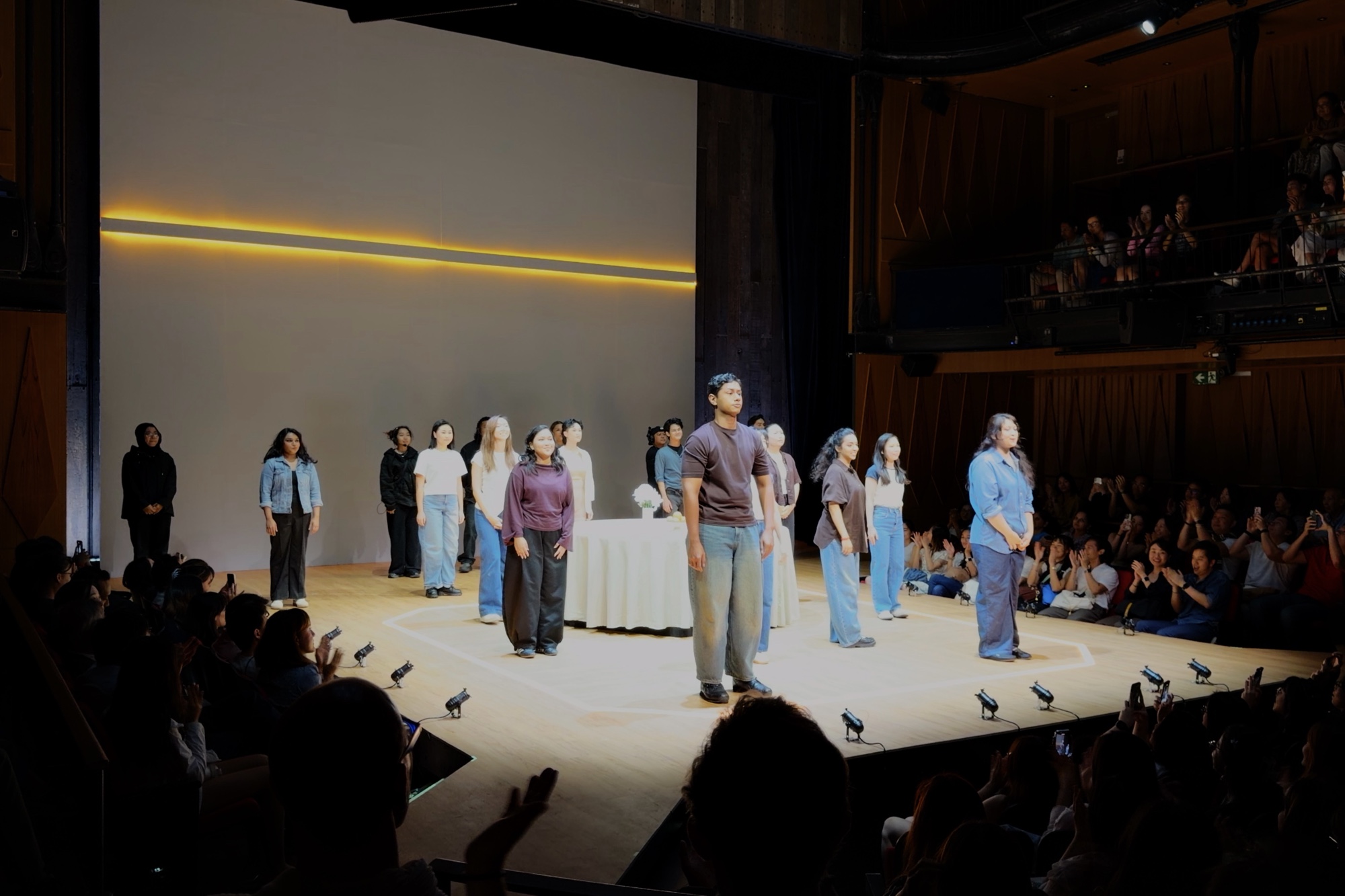
    • On Friday night, I met up with Jose (again) and Reg to attend a production of 8 short food-related plays at Wild Rice, chiefly to support our friend Munz who is one of the performers. It’s the culmination of a year-long theatrical incubator program she’s been in, and we came away very proud of her, impressed with all the actors, and some of the writers.
    • It became a bit of a slog near the end, but I’ve finally finished Donkey Kong Bananza on the Switch 2. For a game that’s partly about the power of music, I found the soundtrack pretty mediocre, and for a game that’s partly about a great singer, the vocals in the songs are sadly weak and buried in the mix. It’s not one I think I’ll ever revisit.
    • My book club is reading Speaker for the Dead, the second book in Orson Scott Card’s Ender series (as in, Ender’s Game). I’ve long heard that this book is like the Dune and Foundation sequels: not worth reading because they spin off into weird territory and lack the tight purpose that made the first books great. I’ve finished it and can say that while it does go in a very different direction, it’s undoubtedly worth reading. You don’t even need to remember very much from Ender’s Game, scanning a quick synopsis online will suffice. I’ve been very sleep deprived all week, and even then (!) easily stayed up wide awake past 2 AM in order to finish it.
    • I had to make this stupid House of the Dead image after I had the idea in the shower and couldn’t shake it. In the past, that would mean way too much time in Photoshop for not that great a payoff. Now it’s just a quick prompt to Nano Banana 2.
  • Week 19.26

    Week 19.26

    Brian was kind enough to think of me when he had an extra ticket to see Kraftwerk at their one-night-only local show on Friday. I was not even aware they were still alive, let alone touring. Turns out it’s just one co-founder left holding the project together, Ralf Hütter. After some drama with the tickets — for a moment it seemed like we might not get in — we were treated to an hour and a half of classic electronica.

    One effect of having a discography that spans five decades is that the music varies to an extreme degree. Their early material is rigid, with an almost classical approach to using synthesizers. Everything builds without resolving. This was electronic music before The Drop was invented. But Kraftwerk are necessarily more important than they are fun, which I mean as a compliment. Seeing where the structures and traditions originated helps you understand why what came after sounded so liberating. Their newer material has more swing, more layers and polyrhythms. I think Computer Love and the stuff from that era was my favorite of the night. As Brian said, it was a once-in-a-lifetime experience to see these OGs in action, and when I listened to Daft Punk’s Discovery on the way home I heard it differently.

    The week was also marked by a dentist appointment I’d been dreading for awhile. It was just to get a filling done, but I was told there’d be an injection and drilling involved. The visit was a rollercoaster: it started with an x-ray and the suggestion that the cavity might be in a difficult to reach location, and ended with a closer inspection (in which an injection and drilling were sadly involved) that found… no apparent cavity after all. The tooth has now been sealed with some material that will surely leak microplastics into my mouth, and we’ll monitor it over future x-rays to ensure there wasn’t really anything going on in there. Fingers crossed.

    In other sad news, Amazon Singapore has decided to sunset their Amazon Fresh grocery delivery service. It’s not my main source, but I appreciated their “free” (with Prime) next-day delivery and used it maybe every 4–6 weeks. Lately, they’ve been a primary source for sardines, pasta, and ice cream, if you wanted to know how balanced my diet is. The evil multinational corporation giveth and taketh away.

    I’ll still keep subscribing to Prime though, because it’s letting me do terribly wasteful things like see English language editions of Brutus magazine while in a Tokyo bookstore last week, decide that I don’t want to carry them around all day and get creased, and so order them online for delivery to my home a week later — for virtually the same price. High off the Snoopy Museum visit, I also ordered these two big, lovely Made-in-Japan mugs that will be my daily tea delivery vessels.

    Kim got me a copy of My Beautiful Dark Twisted Fantasy on vinyl for my birthday but it’s only just arrived. I have yet to play it, but the artifact is heavy, substantial, important. It’s no exaggeration to call it one of the best albums of all time, and I think it’s consistently raised my goosebumps for the last 15 years.

    Peishan and James also got me a couple of records, and one of them was a Record Store Day ‘preview’ of two tracks from some upcoming John Coltrane releases that were not on my radar. The Tiberi Tapes are a legendary collection of secretly recorded live sessions of Coltrane in the 1960s, made by saxophonist Frank Tiberi. The recordings were imperfect, but new digital technology has made them fit for release, and Impulse Records is set to unleash a bunch of them soon (it’s Coltrane’s centennial year).

    A few weeks ago, I released Orchids, Once. and several people independently told me that the procedurally generated music was good for having on in the background while they worked. That gave me the idea to make something designed to sit in a browser window on a second screen (or in the background) keeping you company throughout the work day with music and visuals.

    My first idea turned out to be too ambitious — way beyond my current abilities in terms of graphics and animation. I got a prototype working but it wasn’t worth going further. So I pivoted to a new idea yet again leveraging the orchid models I’d already made to get started quickly.

    Window Box is the result. It simulates looking out the window of an apartment, seeing a planter box of flowers set outside the windowsill. I’ve never actually seen one of these in real life; I think I first encountered them on Sesame Street as a kid and thought they were cool.

    You can currently choose to be in Singapore or Honolulu. There’s dynamic real-time weather and lighting pulled from the Open-Meteo API, to reflect current conditions in either location. There’s an incredibly beautiful (if I do say so myself) rain animation system, along with environmental sounds. I also came up with a neat blending technique to transform the photographic backgrounds to reflect time of day and weather.

    Instead of doing more procedurally generated music, I decided people would want real music, so there’s a radio tuner with a handful of curated stations. That includes Apple Music Radio just because I think more people should listen to their shows! There’s also a great Hawaiian station, KAPA-FM, which is a treat when you’re using the Honolulu location.

    And just for you readers of the regular blog, here’s a hidden feature: click the app title in the top left 20 times and it’ll unlock bird sounds to complete the scene.


    Media activity

    • We watched Season 2 of Beef on Netflix. I was primarily excited for the casting of Carey Mulligan, Cailee Spaeny, and Oscar Isaac, but wasn’t keen to see more of the same petty adversarial conflict from the first season. Well, be careful what you wish for — my chief complaint is that it has so little connection to the first season and the concept of beefing, that I think it should just have been a different show. This one raises the class warfare stakes tremendously, goes much darker, and then ends in a tonally unexpected way. Maybe the best Netflix Original in awhile.
    • I’ve been playing more Path of Mystery: A Brush with Death, the new Japanese murder mystery adventure game on Switch that I mentioned back in January. It’s an above average game for the genre, and I’d readily recommend it. The chapters are structured and presented like television episodes, which makes it perfect for playing in a couple of short sessions. Each one opens and ends with (skippable) animated credits, and there’s a short “next time on…” video afterwards to give you a preview of the following episode. I haven’t seen this done before, and it adds to the enjoyment of the story that is both interesting and occasionally funny.
    • Speaking of episodic anime, I got back into Frieren to try and finish the first season now that a second season is out. Previous episodes were pretty easy to space out across large spans of time, but the final arc with the First Mage exams is surprisingly addictive and bingable. I watched the last 11 episodes in 24 hours. I’m not one for fantasy settings but Frieren is brilliant — especially how it explores the perspective that comes with a longer lifespan and outliving all your friends.