Tag: Technology

  • Week 32.24

    Week 32.24

    It was Kim’s birthday and to celebrate, we went out for some great yakiniku at a place called Yakiniquest (the name gets points for trying, I guess) where the service was great but the food was incredible. It was probably one of my Top 3 wagyu experiences, along with Matsusaka beef in Kyoto (we walked into an acclaimed, booked-out restaurant and were given a table that had just no-showed), and of course, Kobe beef in the delightful, jazz-adopting city of the same name.

    As an extra surprise, I orchestrated Cameo shoutouts from celebrities on two of the reality shows we unapologetically enjoy bingeing together: Below Deck Down Under, and Gogglebox. I put them on our media server and turned the TV on in the morning, telling her new special episodes had just dropped overnight. She bought it, and it was a fun moment.

    The rest of the week was spent in the tight embrace of the Apple Vision Pro’s dual loop band. One of the things I hoped to get out of being an early adopter of the AVP (both the product and the platform) was a closeness to this new spatial computing form as it germinates, to have a sense of “spatial nativeness” develop in my brain. A sense of its conventions and limits that would help me intuit how to navigate and create new experiences for it, should I ever want to. Which means always being on the lookout for new apps (both programs and applications) and trying them out.

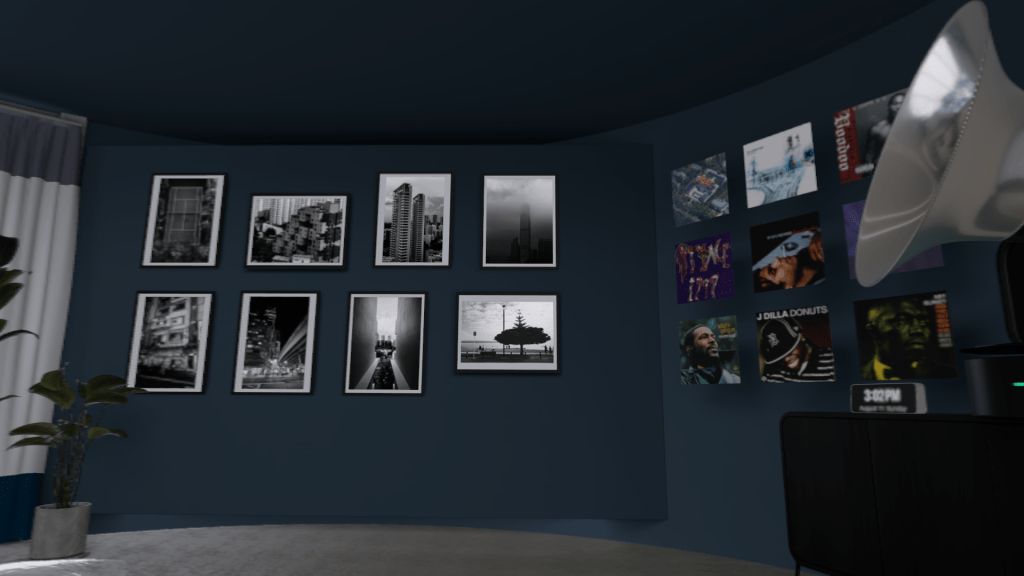
    This week I spent time in a social app called inSpaze, built exclusively for the Vision Pro. As a result of that positioning, and the lack of current competition on the App Store, it’s become the de facto place to hang out and meet other Vision Pro owners to swap stories and recommendations. Try to imagine a cuter, visual Clubhouse, where you spend time in virtual living rooms you can decorate and personalize. In addition to chatting, you can look at photos and 3D models together, listen to music, and play card/board games.

    It’s worth pointing out that you don’t get a normal webcam view of each person, because you’re all wearing Vision Pros. So like all videoconferencing apps on the system, it uses Apple’s Personas: photorealistic avatars based on face scans you do when setting up your Vision Pro, that use its many sensors and cameras to mirror what your real eyes and face are doing.

    If joining a roomful of random strangers from around the world and jumping into whatever conversations they’ve got going on sounds like an introvert’s worst nightmare, that’s because it probably is. I did it anyway, and found it slightly thrilling but also chiller than expected. For one, the use of Personas creates psychological distance; it’s you, but it’s also more a puppet that looks like you. I commented on this and others agreed it made them feel safer.

    What struck me most, though, was how nice and welcoming the community feels, because we’re all early adopter nerds enthused to be sharing this novel experience. It reminds me of the internet when I was a teenager, where the thrill of meeting someone from across the world was pure and untainted by the danger and cynicism that later crept into online spaces. And of course, there’s the fact that a community gated behind a S$5,299 purchase is more likely to be well behaved.

    One nice touch that allows truly cross-border communications is the real-time translation that puts subtitles under each person speaking. In the daytime here, I’ve met a lot of Chinese speakers, and this feature has helped me to follow some conversations I otherwise wouldn’t have.

    It was during one of these afternoon sessions that I met one of the key people behind the app, and we got to talking about their opportunity, business model, and product that got me thinking more about the challenges that smaller developers are facing with this new platform. It’s a well-reported fact by now that AVP sales are low by Apple’s standards. While that’s easily explained by the steep entry price and the challenge of defining a new product category, it still poses a chicken/egg dilemma for creators.

    Solo developers and very small teams doing this on the side can probably justify toying with small apps and selling them for a few dollars, but anyone building something ambitious on the level of a social network or massively multiplayer game, for a total addressable market in the low six-figures — AND having to bankroll it for the next couple of years while Apple works on the cheaper model and second generation Pro — is being asked to take on more risk.

    I have no doubt that Apple will persevere and iterate until this category succeeds, like they always do, so it’s not a question of whether Apple Vision has a future. It just needs to convince developers and their investors to stay faithful, and seed the demand. It’s going to be tricky, and I’d like to see Apple advertising hard for the next 18 months to keep spatial computing visible and galvanize the ecosystem. Even if people can’t find the means to buy the product, they should want to.

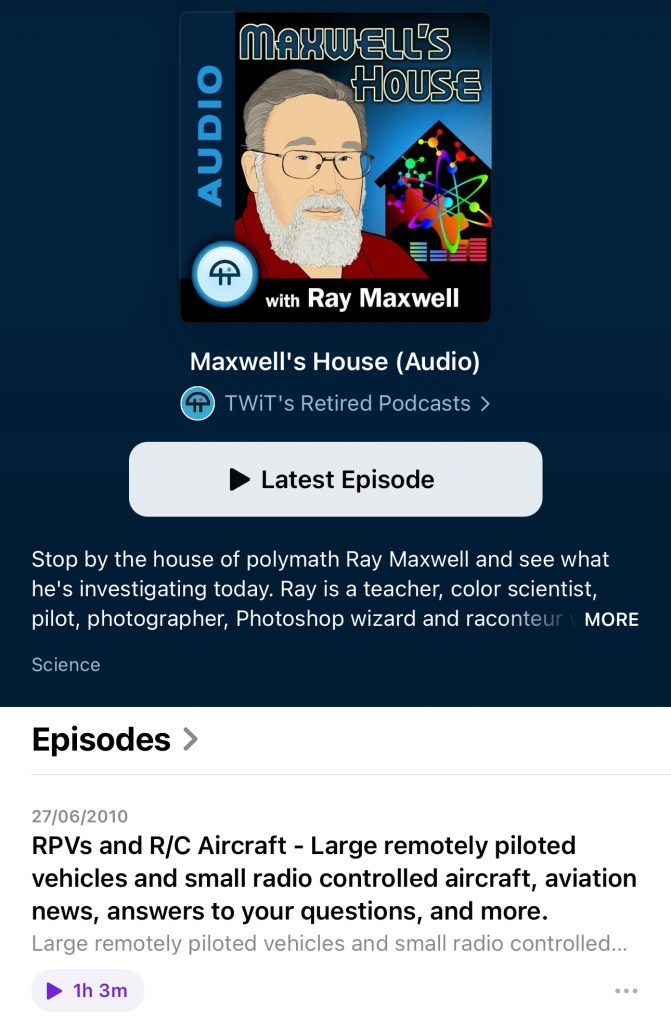
    As further proof of the magical, early-internet vibe, I logged into inSpaze early one morning and met a varied group of American users, including a hospital administrator and VR-obsessed truck driver. After many in the room logged off, I found myself speaking with a Canadian man who casually mentioned working with tech podcasting luminary Leo Laporte over a decade ago. As he continued, it dawned on me that he was Ray Maxwell, an 80-year-old polymath whose name I would often hear on Leo’s This Week in Tech (TWiT) network, where he once had his own podcast about aviation and various science topics.

    As a one-time avid listener of TWiT, I can’t overstate how starstruck I felt as Ray told me stories from his expansive career: time spent at McDonnell Aircraft in the 60s, adjacent to where the Gemini space capsules were being built; color science engineering at a company later acquired by Kodak, recommending SF stories by his friend (two-time Hugo award-winning author!?!?) Spider Robinson; and how he’s recently been into capturing spatial video for the Vision Pro.

    I recognize that the early days of any new frontier, team, or relationship are a special thrill that can’t be expected to last, so it’s up to us to maximize and enjoy every moment. Feel free to reach out if you’re getting into spatial computing and want to swap notes!

    ===

    Music

    It must be the peak of the summer release schedule, because so much new music has come out this week.

    The new Glass Animals album is one of those that starts with a banger and keeps the energy going until you’re five songs in and picking up your phone to check the tracklist in disbelief. It’s called I Love You So F*ing Much and it’s soaked through with space beats, vocoders, and addictive melodies.

    I knew they had a cult following before 2020’s Dreamland introduced them to everyone, but I foolishly never got deep into it because the phenomenally successful Heat Waves overshadowed every other song. On hindsight, that tune would have done the same on 99% of albums — it’s the longest charting song in the history of the Billboard Hot 100. Now I’m excited to soon experience their two older albums for the first time, ZABA and How to Be a Human Being.

    ROLE MODEL is back and he’s shed his hipster-emo guise for a cowboy hat after breaking up with Emma Chamberlain (I just found out). Kansas Anymore is filled with the same lite and lovable pop earworms that I enjoyed on his last album, just a lil’ bit twangier.

    beabadoobee’s This Is How Tomorrow Moves is finally out, and I’ll admit that while I’ve liked all her past releases, none of them have ever made it into heavy rotation for me. I think this will be the one that does it. Early singles Ever Seen and Take A Bite were strong songs in her usual nostalgic 90s alt-rock style (with charming videos by her boyfriend, Jake Erland), but the newest one Beaches is perfect! In any of the last three decades, Beaches would have been an instant classic. She made it while working with Rick Rubin at his ‘Shangri-La’ studio in Malibu.

    Rick Rubin continues to fascinate me as a kind of guru or shaman of the music industry, somehow wielding enormous influence without any formal musical ability himself. He’s somehow able to hypnotize or imbue artists with the confidence to create their best work, just by sitting with them and giving feedback. He wrote a book about his creative process that some reviews call an essential bible, while others say it’s a collection of trite cliches. I suppose I’ll have to read it for myself soon.

    I also found myself enthusiastically nodding along to Killer Mike’s new album, entitled Songs For Sinners And Saints by “Michael & The Mighty Midnight Revival”. It’s loaded with funky beats, soulful playing, gospel choirs, and some very sharp rapping.

    It’s safe to come out now. The Smashing Pumpkins have finished releasing their three-part concept rock opera, whatever it was called. They’re now back with a proper album that promises the good old guitar-driven songs they were loved for back in the day. It’s called… er, Aghori Mhori Mei, a title that doesn’t inspire any confidence that Billy Corgan is back on his meds. My god, the edgelordism is only accelerating with age! Here are some lyrics chosen at random: “Milk such blood / To fare thee lost from all but way / And awaken the sea I light / Our slumbers save the sleep / Wherefore we climb…” Kerrang has given it 4/5, at least. I kinda enjoyed it on a musical level but wasn’t listening closely. I’ll keep trying.
    Vultures 2 came out and I didn’t even know. I think I tapped through to Kanye’s artist page in Apple Music just on a whim and was surprised to see it at the top. Nobody wants to support him anymore with all the shit he pulls, but he’s probably better off with no one knowing about this album, if my two playthroughs so far are any indication. It’s a shoddy mess, with some songs having the seeds of greatness in them, but just withered and stunted on the vine. North West features on one song again: the awful “Bomb”, which has her repeating level 1 Duolingo Japanese phrases like “ohaiyo gozaimasu, konnichiwa” over a truly busted beat. According to one recent IG post, he’s still ‘updating it daily’ on streaming platforms so maybe check back in a few months to hear the album’s final form. Or don’t.

  • Week 31.24

    Week 31.24

    It’s been about three months since I embarked on a break from full-time employment, but my subconscious seems determined to remind me of what I left behind. I’ve had about a half-dozen dreams about work: either I’m being called back to help fix something “for just a few days” and finding I can’t leave, or I’m being given some “urgent” problem that is really a big overreaction — I must stress none of them were actually based on real situations or people, which is the weirdest part. Each time, I wake up and realize it’s not just that the problems aren’t real, but I haven’t got ANY problems like them at all, and it makes the whole thing worth it despite opportunity costs.

    With Kim’s leg injury improving, my focus shifted from caregiver to caretaker of my own neglected digital life. The first task was reviewing my digital security practices: passwords were reset, new tools deployed, and unlikely edge cases considered and guarded against. Take this as your reminder to please sort this stuff out for yourself! You must get a password manager. Use 2FA and unique passwords for every website, no exceptions. Protect yourself with a Recovery Key for your iCloud account, and add some trusted people as Account Recovery contacts and Legacy Contacts so you/they can access your data in the event of a hack or your demise.
    Next: email migration! Whoo!

    Four years ago, I switched from Gmail to Hey.com, a $99/yr email service that offered an opinionated user experience which meant leaving behind nearly two decades of history for a fresh start. They don’t support you bringing your email archives along. They don’t even let you use your own choice of email app; their web app and hybrid apps are all you get. I wrote two posts about it back then, saying I would probably not continue with my free trial. But I ended up doing it anyway, and for the most part I’ve really enjoyed trying a new approach to such an ancient, core component of online life.

    For one thing, I never got spam in my inbox. Hey unfortunately lets a lot of spam through, but they land in a separate zone called “The Screener”, along with any mail from an unknown address mailing you for the first time. From here, you can either let them in or block them. It’s a small difference, reviewing a bunch of possible spam on a separate page versus seeing them mixed in with all your legit mail, but feels huge because your inbox becomes a serene, protected space. Admittedly, taking care of “The Screener” has become daily work because spam always gets in.

    From what I’ve seen of Gmail in the past four years whenever I log in for a peek, it’s a post-spam apocalyptic wasteland. It looks like Google has just given up on detecting and filtering spam because some data-driven PM decided it won’t hurt their bottom line.

    Since my current Hey subscription ends in September, I looked into whether it might be time to switch again. Three key reasons: Apple Intelligence, performance, and $99/yr is money I don’t need to spend on email right now.

    Apple Intelligence: I’ve never liked the Apple Mail app on iOS. It felt a little underdeveloped for handling the different needs of modern email — without the tagging and search filters of Gmail, or the segregation of personal mail, newsletters, and receipts that Hey.com built their UX around.

    But the new AI-powered Mail app in iOS 18 looks exactly like what I want, and I’ve decided to embrace the power of defaults. I’m bearish on some aspects of generative AI, but this stuff is where it shines. Because Apple Intelligence will be able to understand what emails are about, it can summarize and prioritize messages while sorting them into categories like “Updates” and “Invoices”, so you can tackle them with different mental modes. I’m hoping that AI will also bring spam filtering that really works. Sadly, because Hey.com intentionally won’t support IMAP and SMTP, I can’t use them with Apple’s new app and have no choice but to leave. The Hey manifesto also contains strong wording that suggests they won’t be adding any AI features soon.

    Hey.com’s performance: It was never blazing fast to use their apps because they’re hybrids with seemingly little caching, and it annoyed me to death every time I ‘backed out’ of a link to find that the whole thread of newsletters I was reading had refreshed and I was back at the top again, but lately things have gotten even worse. About a year ago, the Basecamp/Hey founders went on a crusade against cloud hosting services and decided that they could self-host their services and save millions. I have to assume their infrastructure is extremely Western world or US-centric, because speeds have become terrible for me here in Singapore. I’m talking about noticeably slow performance waiting for EMAILS TO LOAD. I got even more confirmation of this when I tried downloading my 1.6GB .mbox archive to move elsewhere: it was capped at 100kb/s and took me over five hours. I can normally download a file of that size in maybe a minute?

    Ninety Nine United States Dollars A Year: Yeah, I can’t justify paying this much to have my email load slowly AND miss out on exciting AI features. I’m already paying for iCloud+ with tons of storage, so it seems logical to just use iCloud Mail as well. Bless Hey though, they let you keep your @hey.com email address for life even if you leave, so I’ll continue using mine and forward everything to my Apple address.

    A note about concentration risk: I’m aware there are risks in letting one company handle your entire digital life. All it takes is one successful hack locking you out of your iCloud account and it’s game over. For that reason, I would recommend NOT using the new Apple Passwords app coming in iOS 18 if you know how to select and use a third-party one. It’s a great default for people who wouldn’t use a password manager otherwise, but if you can have another basket for that egg, do it. Email is particularly important to keep separate, as most of your account passwords can be reset in the event of a hack if you still control your email address.

    But like I said about the Vision Pro and its integration with Apple Services like Arcade and TV+, I’m finding myself getting even deeper into their ecosystem and liking it fine. Where I once subscribed to differentiated, prosumer-serving alternatives to Apple’s ‘good enough’ apps, these days I prefer their simplicity and constraints.

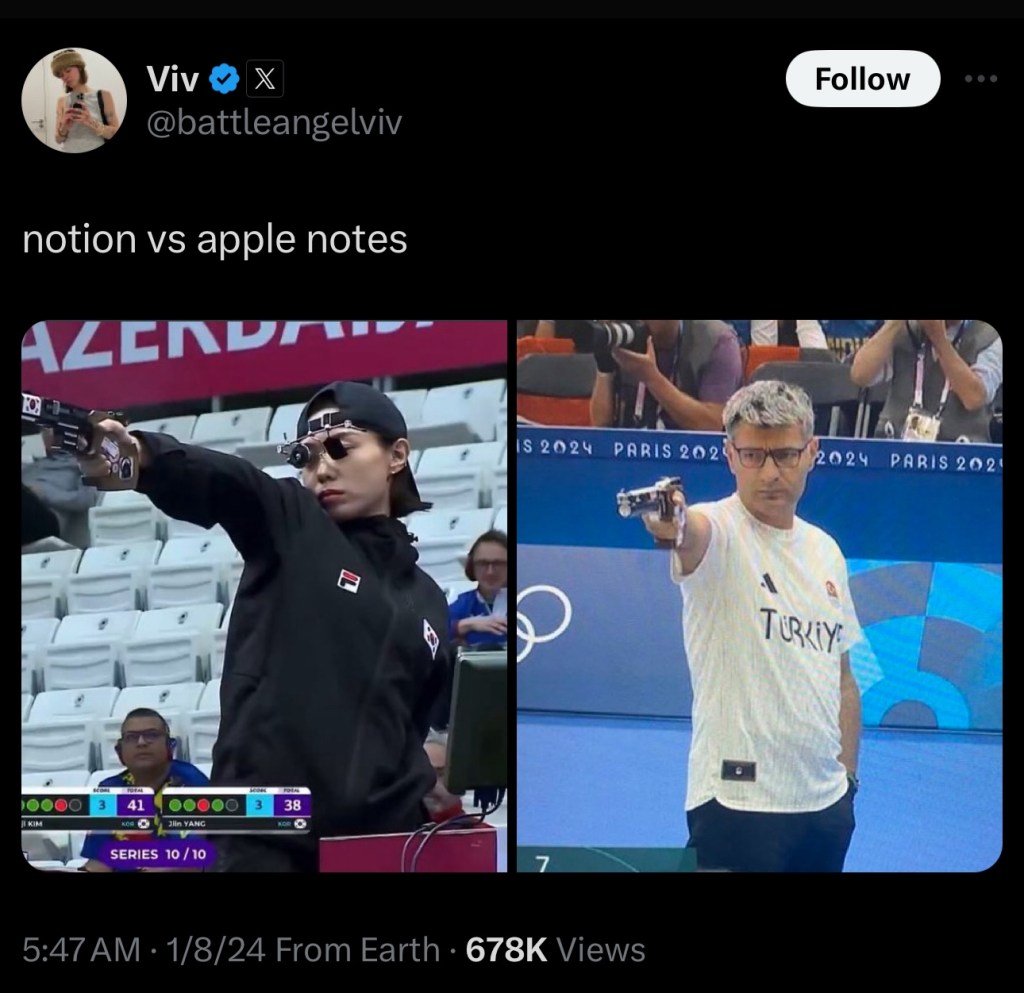
    I switched from Evernote to Apple Notes several years ago and haven’t looked back. Side note: I’ve been on an anti-Notion campaign ever since I saw an unsuccessful rollout in my last team; it’s another overpowered tool for fiddly people who like to overcomplicate their tasks. I’ve used iCloud Calendar since leaving Gmail. I’ve even ported a lot of ancient files from Google Drive and Dropbox to iCloud Drive. And now email, arguably the most crucial service of all.

    “Hang on, Apple Intelligence in the Mail app isn’t out yet and might not be until the end of the year! How will you live until then?”

    Thanks, little imaginary reader, I’m glad you asked! I’m using Spark Mail in the meantime, which I’ve dabbled with in the past using my Gmail account. It’s a mail client with a bunch of smart, AI features (for a price) that are pretty close to what Apple promises. For one, a smart inbox that works quite well at sorting your different mail types, and a feature called “Gatekeeper” that works just like Hey’s “The Screener”. Their asking price is less than Hey’s, but more than Apple’s (free, if you already pay for iCloud+).

    Just a couple of days into using Spark with iCloud Mail, and two things stand out: One, it’s so nice to use a native email app, and two, I’m actually reading my newsletters again. In Hey, newsletters are collected on a a separate, infinite-scroll page called “The Feed” which suffers from an ‘out of sight, out of mind’ problem. In Spark, received newsletters sit inside the main inbox, just collapsed into a single line. This seems to make a difference. It’s a visible nudge to check them out, and because they load and react instantly, you can actively triage them and unsubscribe/block/delete if you find yourself asking why you ever signed up for one. Where Hey’s endless stream of newsletters can get overwhelming, Spark’s (and I assume Apple’s) approach is more like a physical magazine or newspaper with a finite amount of content, which most people prefer.

    I should have taken my own advice in 2020 — it turns out Spark’s approach was always the better fit for me. I even made visual aids to explain it!

    This diagram above is how HEY is laid out, if you think of each column as a screen. In the Imbox and Paper Trail, each email is a single line item, while they are larger previews in The Feed, which is designed to give a peek into newsletters so you can decide if you want to expand and read them. This doesn’t work for me because I don’t want to keep all of Graniph’s new product announcements, but I do want to see them.

    And this is an illustration of how I’d prefer to handle my email. A single inbox view encompassing important emails and personal letters, newsletters, and updates/receipts/notifications from other services. Spark … is the closest thing I’ve found to this.

    All in, it’s been a week of fiddling with things that seemed to work just fine, but hopefully I’ve simplified and improved them for the future and not introduced more things to maintain.

    ===

    Media Activity

    • Before I could move off Hey Email, I had to finish my backlog of favorite newsletters. One of them was Craig Mod’s “Return to Pachinko Road” series from earlier this year. Over 18 days, he walked 694,942 steps and wrote close to 50,000 words in daily email updates. I read them while waiting those five hours for my mail archives to download. He’s such a good writer, and I can’t recommend enough that you sign up for his newsletters and/or membership if you can spare the money (regretfully, I can’t right now as a member of the unemployed class).
    • MUBI’s collection of films by Abbas Kiarostami is leaving the service over the next couple of weeks, so I prioritized watching them, starting with the Palme d’Or-winning Taste of Cherry (1997). God, I was not prepared for it on a Monday afternoon and fell to pieces during the old man’s monologue in the final third. Fortunately, I watched it on the TV because I don’t think Vision Pros have an IP rating. 5 stars.
    • Next was Through the Olive Trees (1994) which was very charming — the Iranian actors’ performances are fantastic, and perfectly naturalistic in keeping with the cinematography. I initially score this a 4, but it’s now a 4.5-star film for me.
    • The Wind Will Carry Us (1999) shares some landscapes and in-car camera angles with Taste of Cherry, but where the latter is heavy with life’s troubles, this one centers hope and rebellion against the narratives we find ourselves in. One could even read it as an anti-work parable: forced on a business trip of indefinite length, neglecting his family’s pleas to return home for a funeral, summoned to give gravely inconvenient (hur hur) updates to his boss at all hours, a workaholic asshole learns to relax, enjoy the local milk, and finally give his assignment the finger. 4.5 stars.
    • Fresh off Presumed Innocent, we were looking for another legal thriller to watch and discovered neither of us had seen The Firm (1993) starring Tom Cruise. Welp, it turns out there are no courtroom scenes in the film at all, and he’s a tax lawyer. Still, a very enjoyable 3.5 stars.
    • The Paris Olympics are on, and despite not caring much for sports I’ve found myself unable to resist watching competition on a global scale. Mostly tennis, but also archery, shooting, diving, gymnastics, and some athletics.

  • Week 28.24

    Week 28.24

    My weekly ‘Going to the Apple Store’ streak continued on Monday when I accompanied my dad for his demo of the Vision Pro. Rather than use my unit with an imprecise fit, I thought it’d be better for him to get the proper experience, and sure enough, he had completely different strap and light seal sizes from mine. He’s had some experience with immersive headsets, mainly from flying his FPV drone and other vehicles, but in terms of interacting with spatial UIs and XR objects this was a first. He came away very impressed, apart from the usual complaints (weight, price). He wasn’t planning to buy one going in, but I wonder if he’s thinking about it now.

    Aside: One hobby I’ve been meaning to play around with in the Vision Pro is sculpture, which is much more intuitive (read: idiot friendly) to do in 3D space with your hands than on an iPad with a Pencil. There’s just not a great app for it that I’ve found yet, although it’s possible at a blobby sort of level in AirDraw — Finger Paint, so I’m starting there.

    If Apple still made their AirPort wireless networking hubs (many smart people still say to this day that discontinuing them was a strategic error), I might have had cause to visit a store again next week. Since they don’t, I bought a set of TP-Link WiFi mesh routers instead and set them up over the weekend. One of the power adapters was faulty out of the box, but fortunately our old system’s were compatible, so that’s sorted.

    Aside: There was a tense moment on Friday night when a ‘pop’ was heard just before the power cut out in one section of the home. It turned out a wall-connected USB charging hub had burnt out, fortunately without damaging anything. It was a Lencent brand 65W GaN thing that I bought off Amazon Prime last October, with a 4.6-star rating. I was complacent to attribute trust based on its Amazon profile rather than my own knowledge — I’d never heard of Lencent and haven’t since — and won’t be making that mistake again. It’s only slightly more reputable Chinese brands from here on out!

    FWIW I’ve had mixed experiences with Anker, but they’re probably the best/safest from a brand equity perspective. I’ve also seen a lot of people using Ugreen products. I have a charger and a couple of cables from them, but their website has typos like you’d find in a phishing email.

    Our old pre-COVID system was WiFi 5, and we had nearly 30 internet-enabled devices on it, which I think might have contributed to recent connectivity issues. I have bored Kim to tears with explanations and theories all week, so I’ll spare you. In short, I spent $400 I hadn’t budgeted for to upgrade us to a WiFi 6E mesh that claims to have self-learning AI and support for 200 devices. The app is miles better than our old Netgear Orbi’s, letting you configure nearly everything from your phone — it’s bizarro world over at TP-Link because the web-based admin panel has nearly no settings. Anyway, we’re future ready and could move up to 2Gbps internet when our current contract expires.

    ===

    • 🎮 I’m still checking into Zenless Zone Zero daily to claim log-in rewards and farm materials. I’m observing that this routine is actually a barrier to getting more stuck into proper games. Devious.
    • 🎮 Nevertheless, started on a charming and well-written visual novel about the afterlife called Ghostpia: Season 1, on the Nintendo Switch. I saw launch ads for it during our last trip to Japan and bought the global release late last year, but I’m only starting it now. I think it’s pronounced Ghost-o-pia in Japan, and the name implies “ghost town”, like the Latin topos for place, as in utopia. It’s the rare visual novel that doesn’t ever feel like it’s wasting time or insulting your intelligence.
    • 📺 Started watching Sunny, Apple TV+’s new show starring Rashida Jones and a robot that kinda looks like a Pepper 2.0. It’s an A24 production, set in a surreal other-universe Japan that feels like a variant of the world in Severance. Such an odd vibe, which I suppose adds to the “nothing is what it seems” mystery here. She’s an American expat whose Japanese engineer husband and son supposedly died in an accident, leaving her an advanced AI robot to figure things out with.
    • 📺 Absolutely thrilled that Jinny’s Kitchen has returned for a second season on Amazon Prime Video, sending Korean celebrities to run a restaurant in Iceland this time. Like before, each episode is essentially a two-hour movie, and there’s something about this formula that makes even the most mundane moments (restocking a fridge, taking orders, dicing vegetables) so watchable. Other reality shows can only dream of including this much detail on a weekly basis without losing an audience.
    • 🎬 Saw In the Realm of the Senses (1976) on MUBI despite warnings from Nic not to watch it. Is it uncomfortably, unbelievably graphic? Yes. It’s also a very powerful and competently made film based on a bananas true story. 3.5 stars.
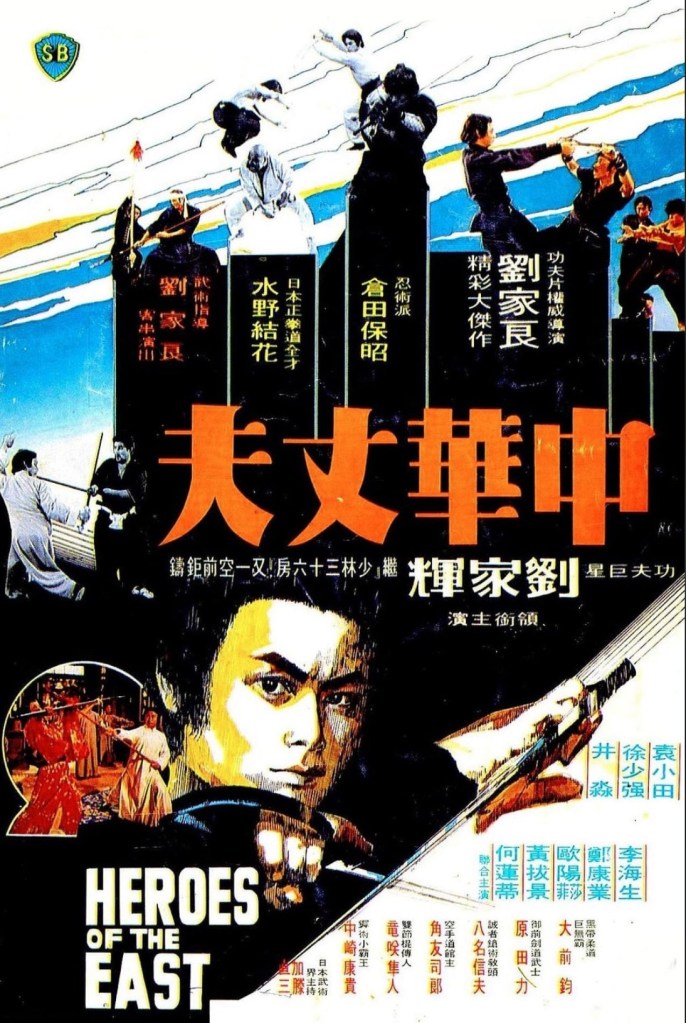
    • 🎬 Saw Heroes of the East (1978) next, a classic Shaw Brothers kungfu flick by Lau Kar-Leung starring Gordon Liu, both in top form. It’s actually a cross-cultural martial arts romcom, with action scenes so good I don’t think we know how to do them anymore. One of the best I’ve seen, up there with Dirty Ho (1979). 4.5 stars.
    • 🎬 Saw Friends and Strangers (2021), a very enjoyable indie Australian film. Gorgeous photography, care evident in every shot. The story meanders and discharges detail wherever it feels like it, leaving so much off screen, and the result is “dreamy”? Aside from the Australian identity crises, I was surprised it felt a bit like Singapore, where everyone knows someone you know, and nobody has figured out what life’s about. I much preferred the first half with Emma Diaz in it; the second felt like a portrait of bumbling male incompetence that no one needs to see more of, really. 4 stars.
    • 🎬 Saw Beverly Hills Cop: Axel F (2024) and wasn’t as disappointed as I expected to be! It took a little warming up to, but Eddie Murphy looks like he’s having fun again and that’s enough for me. 3 stars.
    • 🎬 If you’re in the mood for a mellow drama shot entirely on an actual luxury cruise ship on an actual voyage, Steven Soderbergh’s Let Them All Talk (2020) has got you. Meryl Streep, Gemma Chan, Candice Bergen! Oh it’s about a writer trying to write a sequel to her best work, and catching up with two old friends she hasn’t seen in decades. 3.5 stars.
    • 🎬 I also really enjoyed Upgraded (2024), an Amazon Prime Video original romcom about the art world starring Camila Mendes, Marisa Tomei, and Giles from Buffy The Vampire Slayer (Anthony Head). It’s derivative AND fun! 3.5 stars.
    • 🎧 Tons of new music this week but I haven’t had time to hear Eminem, Cigarettes After Sex, Tori Amos, or Travis yet. I’ve heard Griff’s debut album, Vertigo (polished pop from Sigrid’s side of the aisle), and Clairo’s Charm (a lush, beautiful vintage sound).
  • Week 26.24

    Week 26.24

    The week seemed to slip by with not too much to show for it until Friday, as I waited for the delivery of my Apple Vision Pro. I watched a couple of films, subscribed to the New York Times again, and made some plans for a personal creative project.

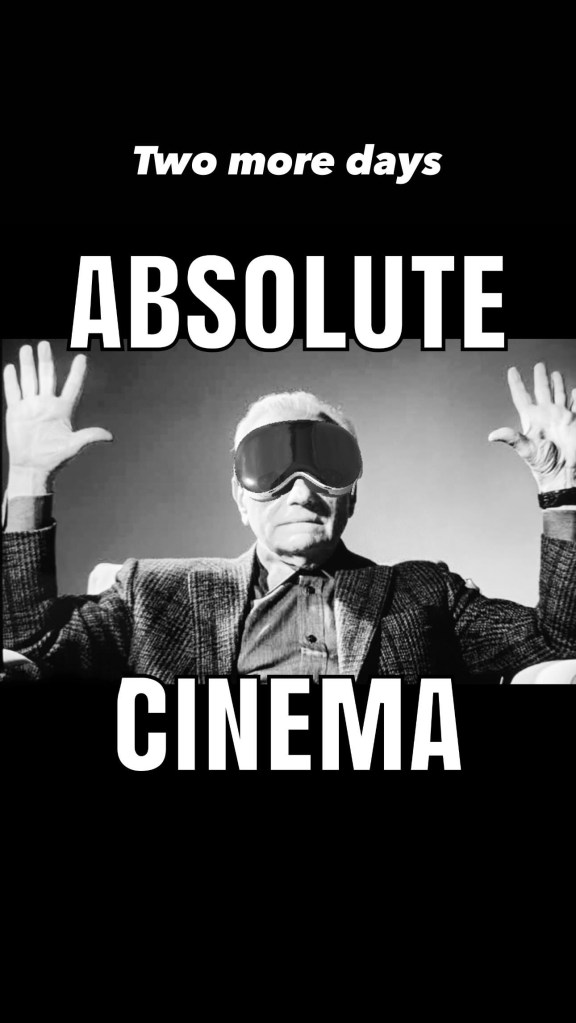
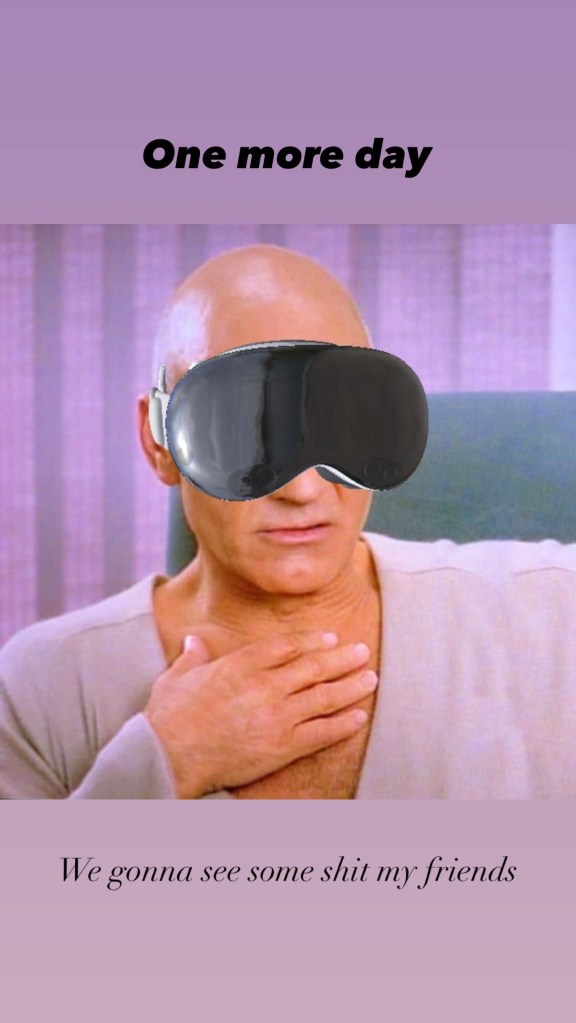
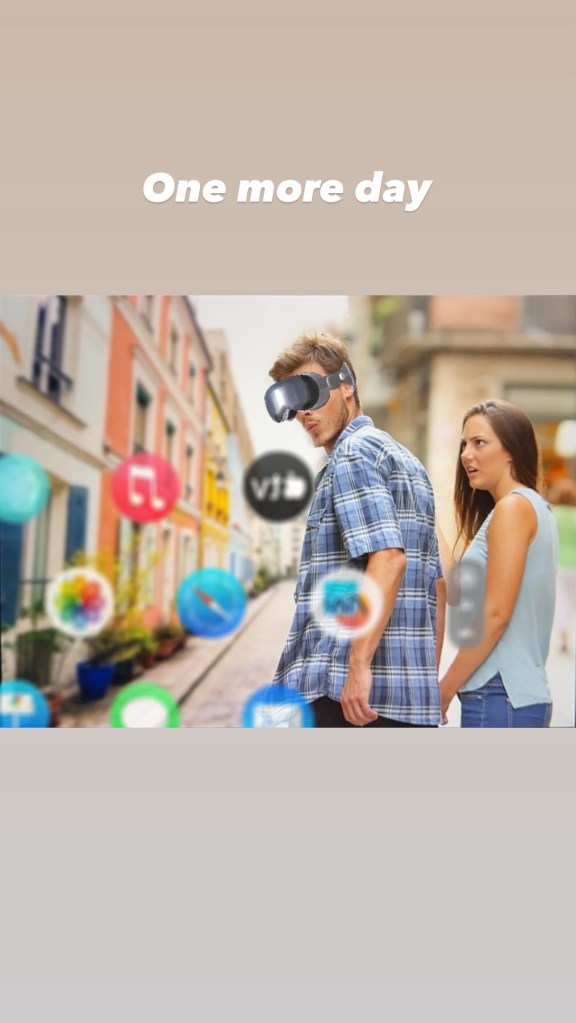
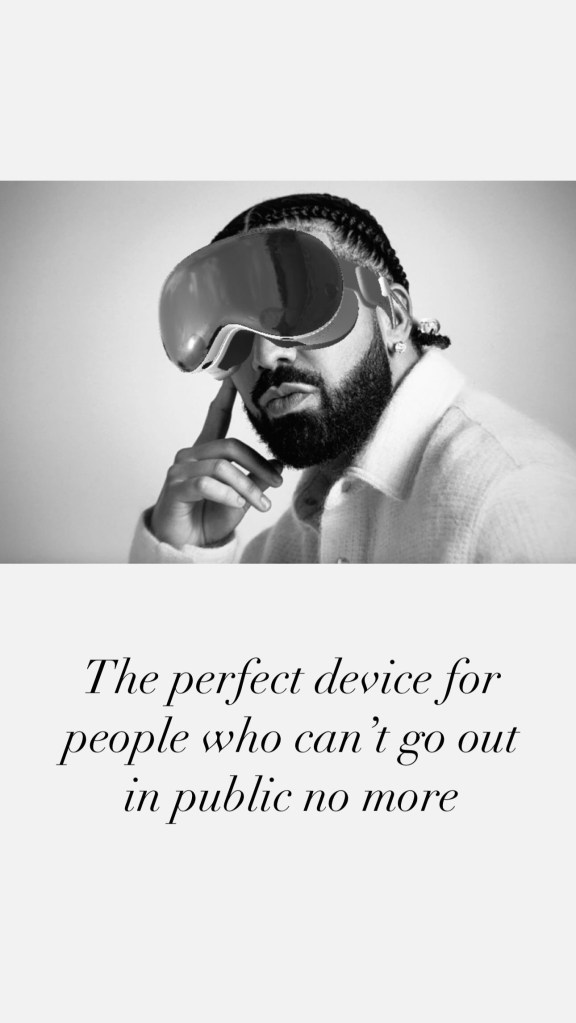
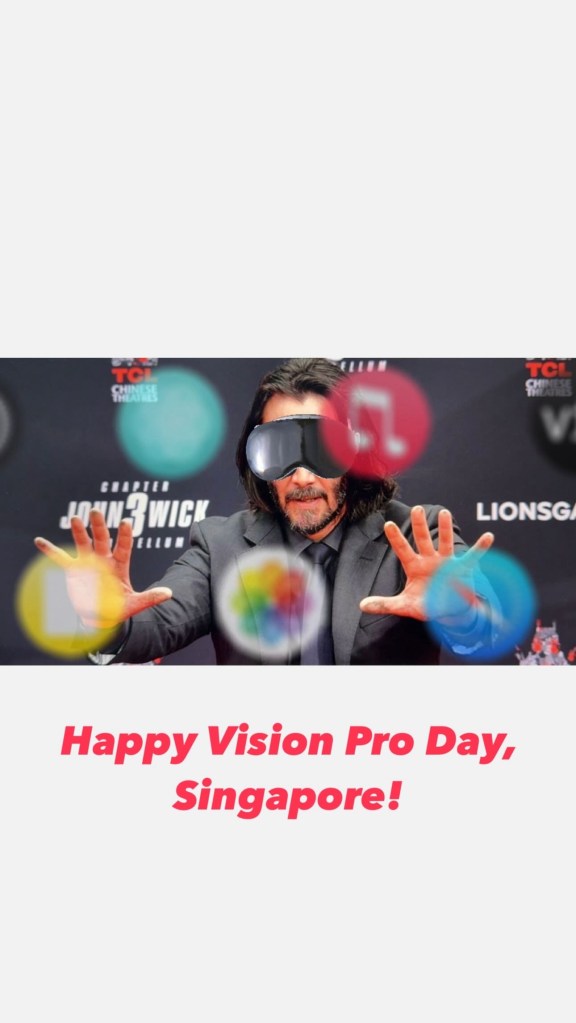
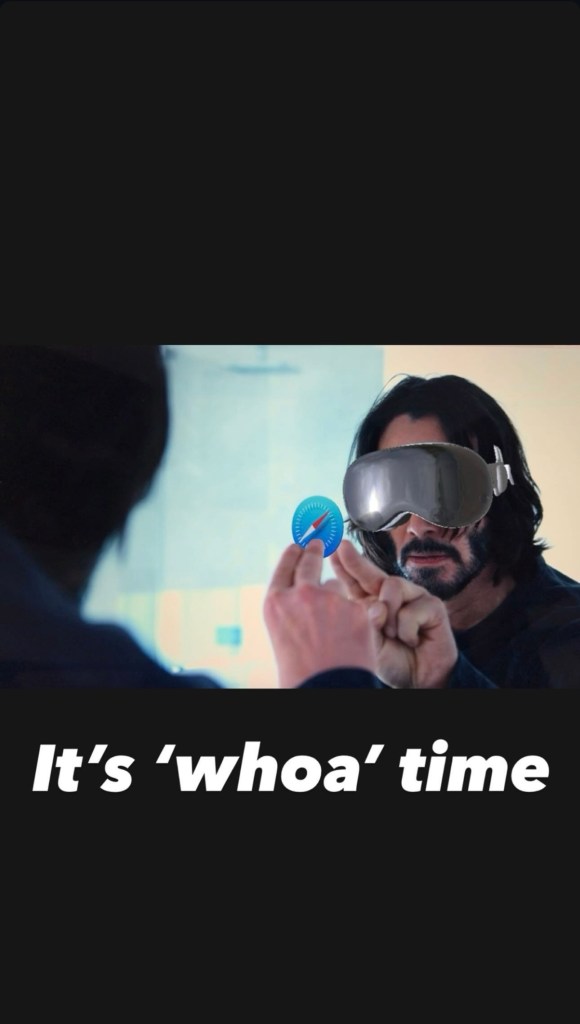
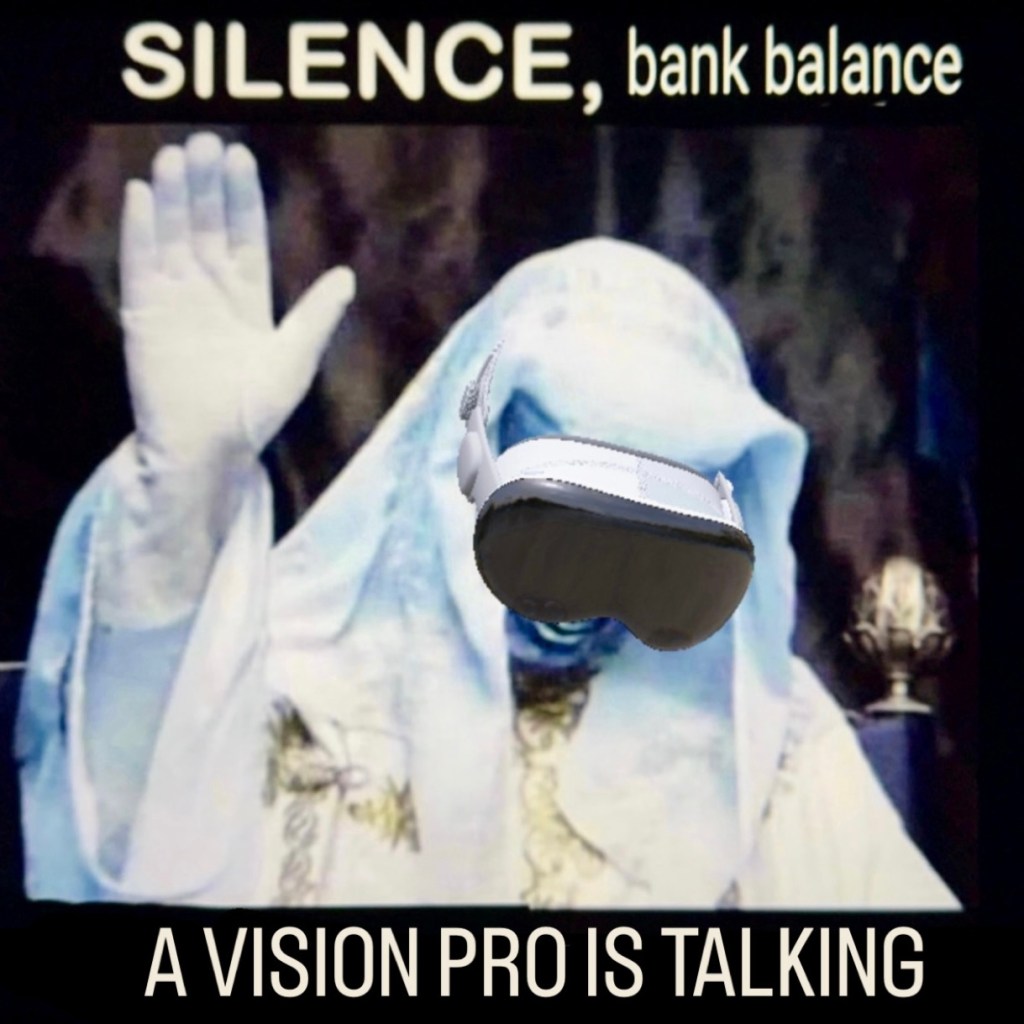
    In the meantime, I also made some memes for Instagram.

    I also resumed wearing contact lenses daily after years of relying on glasses, because I didn’t want the Zeiss lens inserts for Vison Pro. It will take a little adjustment; I definitely don’t miss the end-of-day dryness and irritation.

    Okay, so!

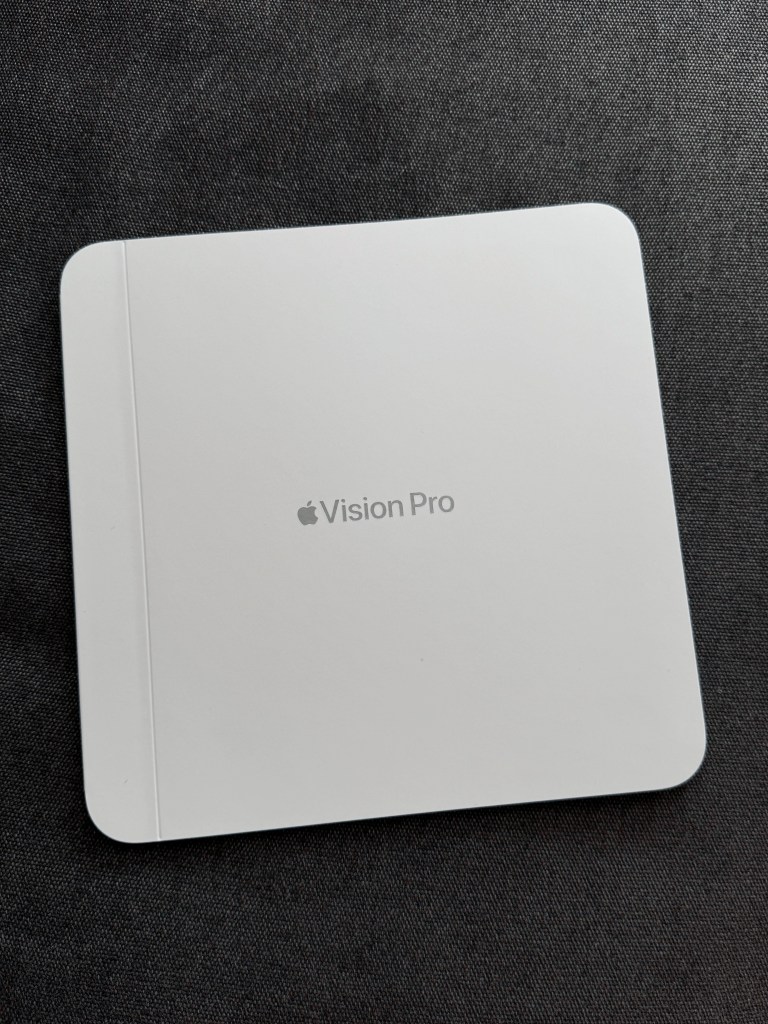
    The unboxing experience for this high-end device is suitably premium, despite being made from predominantly recyclable paper materials. You lift the cover — it releases with the usual deliberate, satisfying motion — and there it is, positioned as if on display in a museum, supported by a molded rest. All the accessories are neatly organized in a compartment underneath. There is an indulgent amount of unused space in this box; no squashing of the Vision Pro into egg carton cutouts like with some Sony products!

    Side note: I think I may have gotten measured for the wrong size of light seal (21W) as the sides feel narrower and less comfortable than 33W for me. I have an appointment at the Apple Store next week to hopefully get it swapped.

    First encounters

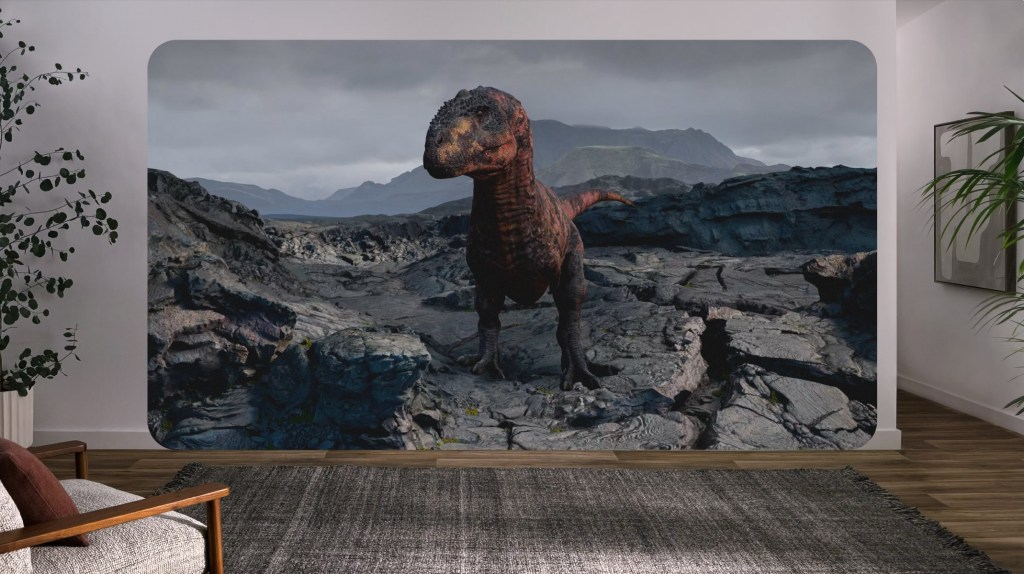
    I’ve already mentioned the magical and immersive experience of using it. Knowing that, it was still a shock when I ran the pre-installed Encounter Dinosaurs app (directed by Jon Favreau) for the first time.

    Some U.S. reviewers reported actually feeling the virtual butterfly land on their outstretched fingers at the start of the experience, to which I thought, “no way”. And yet when it happened to me, I swear I felt four distinct little pricks on my skin as its little legs shifted. That unfortunately primed me to feel what happened next even more acutely. The dinosaurs appeared on screen, with a fluidity and resolution that was greater than I expected, making the PS5 look like “video games”. I don’t think it’s an overstatement to say they were lifelike.

    You are warned at the start that the animals can “see you” and will react to your actions. As the largest dinosaur stepped out of its frame and stalked towards me, towered over my seated body, then stared me in the face while exhaling through its nostrils, I felt my body go into a fight-or-flight mode. No joke. I started to sweat. I avoided making eye contact, and turned my head away hoping it would back off. The presence you feel is unbelievably tangible, and I know I will NOT be attempting any horror games in the future.

    Art of the future

    A much calmer experience I can recommend is Museas, which is a completely free journey through art history made by a single person (Miguel Garcia Gonzalez, who calls himself “a supply chain professional by day and spatial computing engineer by night”). You can see landmark artworks at phenomenal scale right in your home, or in “immersive environments”. These suddenly float your body in massive virtual spaces, surrounded by complementary imagery, with the original artwork in front of you. Think of them as frames, just 360º ones. For example, when viewing Hokusai’s The Great Wave Off Kanagawa, you see a florid Japanese garden scene all around, while a narrator explains the artwork.

    I suspect they’ve used generative AI to create these descriptions of the artworks’ history and meaning, the voice that reads them (it sounds to me like the actor Jared Harris, who plays Hari Seldon in Foundation), as well as the 360º immersive scenes. If so, the technology has clearly allowed a single person to achieve something that feels professional beyond their means. The voice is natural and doesn’t feel off to me at all. The immersive environments aren’t perfect, but they’re for your peripheral vision — you’re meant to focus on the original art. The wall text is accurate as far as I can tell. Was this labor that could have paid the salaries of a few more people? In theory, but it’s more likely this project wouldn’t have gotten made at all without AI.

    When I think about you I shush myself

    Apart from these new experiences that weren’t possible before, I think the primary application of the Vision Pro for me will be a personal cinema hall. I sat down with the Theater app to watch Adam Lisagor’s 3D recording of John Gruber interviewing Apple executives Joz, Craig, and J.G. at WWDC (regular 2D recording here), and for nearly two hours I was immersed and focused in its virtual space, surrounded by faintly illuminated empty seats and aisles. I felt notifications come in on my wrist, my phone was across the room, and I ignored all of it the same way I would watching a film in a real theater.

    I think the Vision Pro is the antidote to the iPhone that some thought the Apple Watch would be. Turns out the answer to destroyed attention spans, multi-screening, and screen addiction wasn’t to make it easier to leave your phone in your pocket by redirecting things to a watch, it was the skeuomorphic recreation of a giant screen in a dark room. I think this is the ideal way to watch Important Films. And as nice as our new TV is, I don’t think it compares in visceral terms. Tradeoff: focus and immersion vs. comfort and the ability to drink beverages.


    Media activity

    • Finished watching Constellations starring Noomi Rapace on Apple TV+. Mild spoiler: I complained on Threads about the way it handled a plot device thusly: “Sci-fi shows where science-literate people find themselves trapped in parallel universes, and literally don’t know the words “parallel universe” to explain to other people what’s happening, please gtfo”
    • Season 3 of The Bear is out this weekend and like most people (I did a poll on Instagram), we’re getting through it. That first episode? Wow, really special television.
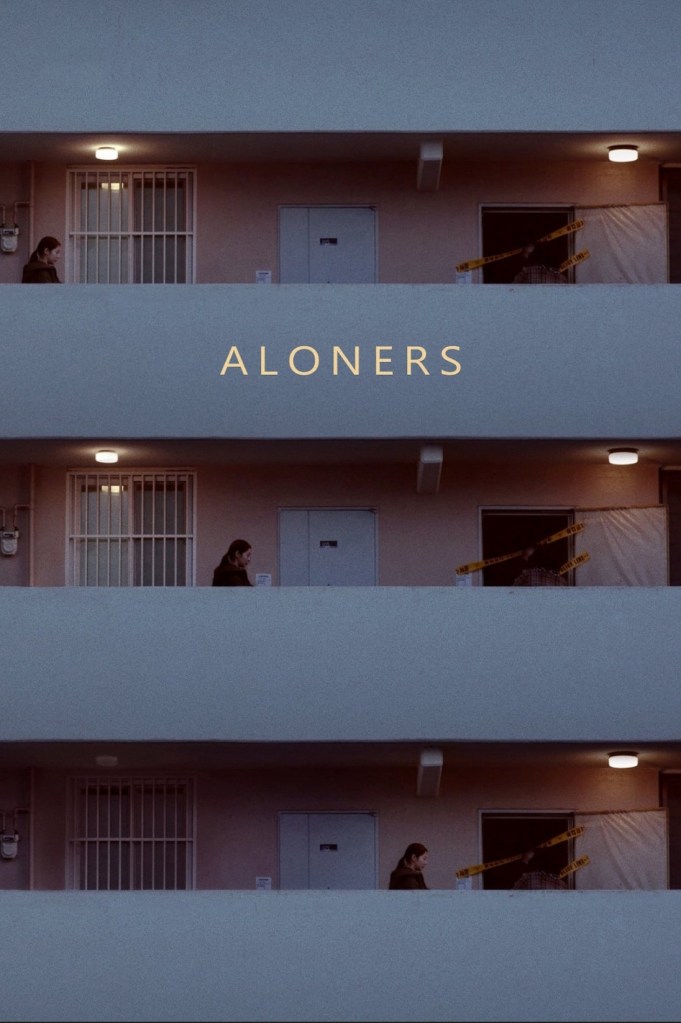
    • Saw Aloners (2021), a film that tackles modern nowhere lives built around go-nowhere jobs, where even if you meet people worth connecting with, your social muscles may already have atrophied too far. Starts strong but doesn’t land the character development at the end for me. Also: is this a chaotic opposite world version of Perfect Days? I said on Letterboxd: “Say less” is the unofficial motto of Korean arthouse cinema. 3/5 stars.
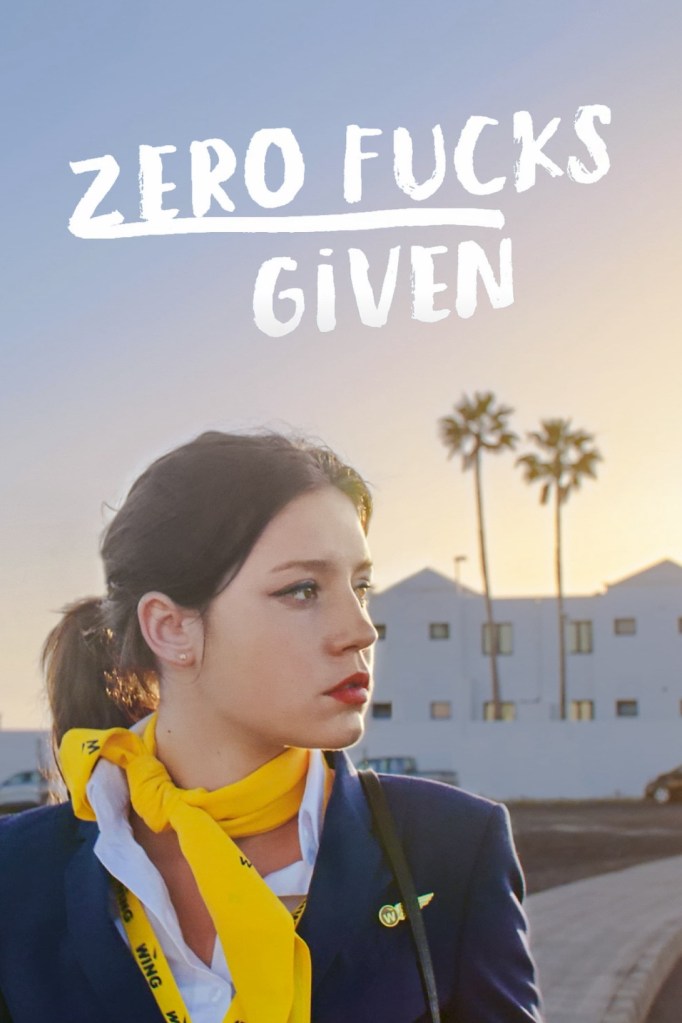
    • Saw Zero Fucks Given (2021). It follows a young woman escaping grief and complexity by going headfirst into the soul-sucking worker bee life of a budget airline attendant, taking each day as it comes, never looking a day ahead as much as she can help it. Lovely work, and Adele Exarchopoulos is a talent. 3.5 stars.
    • Saw Uncle Boonmee Who Can Recall His Oast Lives (2010) through MUBI’s visionOS app, and I chose to watch it on the dark side of the moon. It was incredible to look up and see stars, look around and see a desolate rocky surface, and then at a giant floating screen ahead of me. The movie was also strange, unreal, and disorienting like being on the moon — it won a Palme d’Or when it came out, cynically I think because a Thai film like this was exotique. I enjoyed its atmosphere and ideas a lot, just not the stilted acting. 3.5 stars.
    • I don’t know where else to mention that I fulfilled a personal goal by minting a McDonalds Singapore NFT after Jose alerted me (with two hours to spare) that they were releasing a new Chicken McNuggets series. Their first release last year was of Grimace, and holders enjoy a stream of special perks. Interestingly, they are ‘soulbound’ NFTs, meaning they cannot be sold or transferred from the initial wallet that received them. Don’t ask me why McDonald’s Singapore is doing this (I doubt they do either), but I want it and I got it.
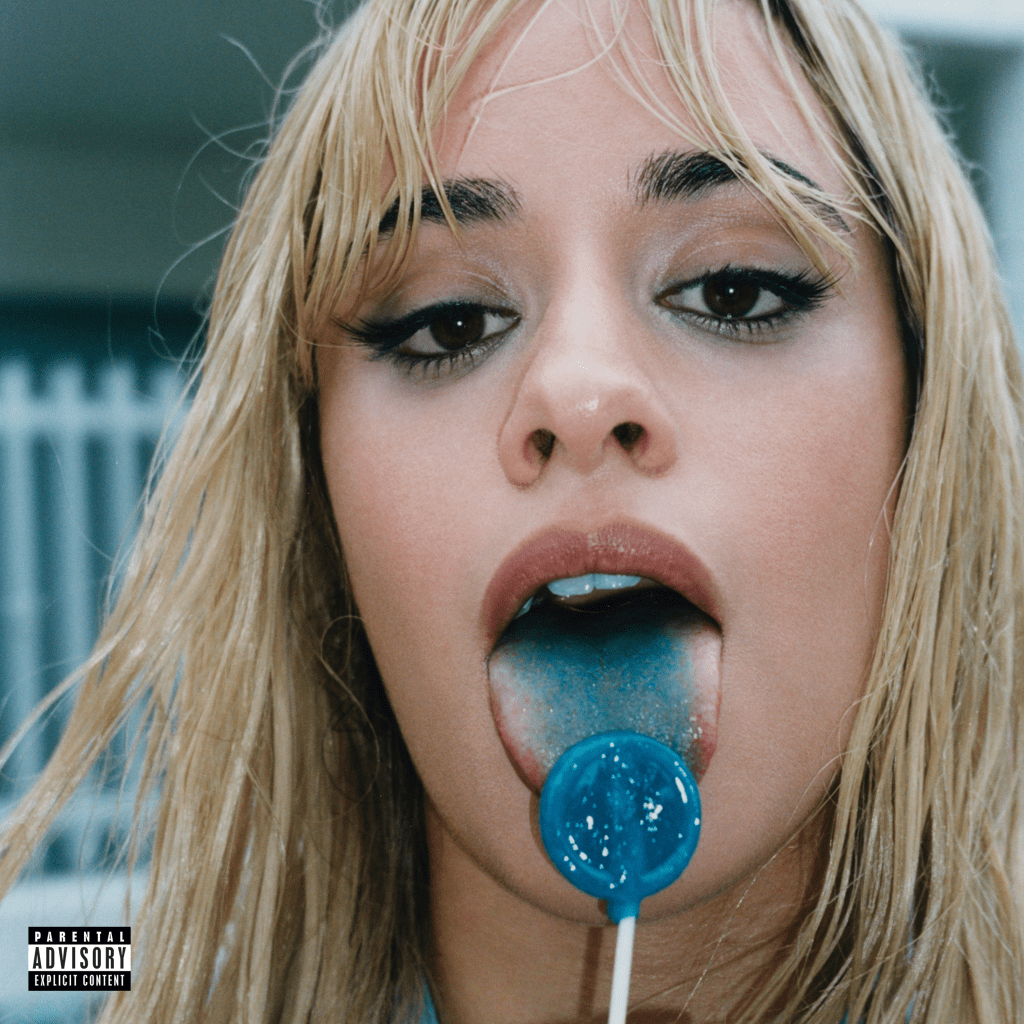
    • I’ve been long Camila Cabello since 2019 when I called her “possibly the most competent pop star and the new Rihanna”, but I have to admit I was nervous about her new album C,XOXO after recent racism accusations and piggybacking on Charli XCX’s party girl image and Brat aesthetic on social media. Thankfully, I’m on my third listen and it’s an enjoyable record apart from Drake appearing on two tracks (putting on his Jamaican accent, for chrissakes). She’s a big Drake defender, but even if she wanted to cut him after recent events, the album is only 32 minutes long and wouldn’t have survived it.
  • Week 25.24

    Week 25.24

    Monday was Hari Raya Haji, a public holiday, and we took an early walk along the nearby ‘park connector’, which I guess is the local government term for “paths beside rivers and canals linking the city’s green spaces”. I must admit, I prefer evening walks over morning ones.

    Mornings are best spent slowly booting up with a hot cup of tea and maybe exploring some new music. Although I started drinking black tea as a way to save money and smooth out the coffee jitters, it’s become my preferred drink throughout the day. Seinfeld’s new set includes a bit where he dismisses tea as weak and tasteless (“I hate it!”), claiming coffee is the only drink that understands “they’re trying to kill me out there!” Inspired by the insight, I tried reintroducing coffee into my routine: one cup in the morning, followed by tea for the rest of the day. It didn’t take. I didn’t need it! Maybe my tastes have changed, or maybe life doesn’t feel so painful right now. #blessed.

    One more thing about saving money to establish that I am trying, before we get to the next part where I might appear to not be: Kim found out that the restaurants under the Little Farms grocery brand offer wine at prices that seem like misprints in the menu. They’re essentially sold at the same retail prices you’ll find in the store. So we had a nice Malbec from Australia’s Gill Estate along with our dinner for S$35. That’s S$35 for the BOTTLE, not a glass. I think we’re going to be eating there a lot. (For comparison, I think the cheapest ones here typically start around S$60).

    I actually made this

    I pre-ordered an Apple Vision Pro for launch day. I wish I could call it a casual treat but it’s a fairly large purchase; certainly the most I’ve spent on a single computer in my adult life, and probably equivalent in inflation-adjusted terms to the 33mhz 386-DX my parents bought us in the late 80s. This thing probably has a trillion times the processing power of that PC, not to mention 30x the display resolution, in each eye. It’s amazing the difference three decades makes!

    I’ll save further thoughts for when I get it, but right now I’m planning to use it primarily as a personal theater, perhaps as a larger display for my Mac, and am very excited to try new spatial applications and games as they come out. So many of the things coming to visionOS 2 feel like essential launch features that I may even install the beta.

    If you’re looking to justify one to yourself, feel free to copy my notes.

    1. It’s the first VR/XR headset I’ll be owning, and Apple’s entry into the category is a sign that it’s nearly ready for mainstream adoption. This is probably the moment to start paying attention to new experience possibilities, new interaction conventions, and new consequences for behavior and preferences. Any later might be too late.
    2. These early days of a new platform are the most exciting. Hopefully, we’ll see creators trying out new ideas and innovating in the app space. If Apple made cheaper development units available to select indie studios, this might be helped along. Maybe they are?
    3. The unconfirmed cheaper and lighter model is rumored to be targeting a late-2025 release, and a second-generation Pro model perhaps a year after. That’s at least 18 months where this will have no competition. And if waiting means missing out on two years of watching this potential revolution unfold, then it’s clear to me I don’t want to.
    4. I’ve got the time on my hands now to make plentiful use of it.
    5. As a paying subscriber to all Apple services currently available in my country, I’d be leaving value on the table if I DIDN’T have access to all the exclusive Apple Vision content that’s coming. There are spatially enabled games in Apple Arcade, and Immersive Video features on Apple TV+. It’s not a stretch that Apple Music might add 3D video content in the future. I know it was Amazon Music that hosted Kendrick’s ‘Pop Out’ live event this week, but imagine being in the front row for something like that on a pay-per-view livestream!
    6. I had the opportunity to see a little of Alicia Keys’ Rehearsal Room feature for Apple Vision and it sold me. Maybe people who’ve dabbled in VR for awhile won’t find it as impressive as I did, but the feeling of her presence five feet away was magical. Just like with the Nintendo 3DS, it’s one of those things you have to see to believe.

    Speaking of Alicia Keys, I came across the cast recording for Hell’s Kitchen, a new Broadway musical she’s created, loosely based on her life. It features many of her hits and has been nominated for 13 Tony Awards this year. All that, and yet the album on Apple Music was how I found out about it. Now I wish I could painlessly fly to New York to see it. And while actually being there would be best, I’d love a world where I could buy or rent a front-row seat recording with a double-tap of my fingers in Vision Pro.

    Check out these videos of the cast performing the reimagined versions of No One and If I Ain’t Got You.

    ===

    Media Activity:

    • I signed up for MUBI at last, so the quality and/or pretentiousness of my film viewing is about to go up. If you’d like a free 30-day membership, please use my referral link.
    • I started posting post-film impressions on Threads throughout the week as I go, but don’t worry, I’m pasting and expanding on them here on my own platform.
    • Saw Baby Assassins (2021) because Hideo Kojima raved about the movie series in a tweet, and I found it a fun take on the ol’ high school assassin girls trope; more about their friendship and trying to cope with adult life than the (well-executed) fighting. 4/5 stars.
    • I then saw Baby Assassins 2 Babies (2023) the next day and it was a perfect sequel. The best thing it does is develop the girls’ relationship with more unserious conversational set pieces that feel like Quentin Tarantino took a course in Japanese comedy. Can’t wait for the third one out this year. 4/5 stars.
    • Saw The First Slam Dunk (2022), which is an animated film based on the long-running series. I’ve only seen the first episode of the original anime on Netflix, and it looked like it was made in the early 90s. This film takes the quality bar up a million times with some of the best 3D CG anime I’ve seen. 3.5/5 stars.
    • Saw Tom Cruise’s The Mummy (2017), thinking that his star power would make it okay despite the negative things I’ve heard. It started quite strong but was so so bad. 1.5/5 stars.
    • Saw The Breakfast Club (1985) all the way through for the first time and enjoyed it! It clearly influenced many other films, memes, and popular culture’s depictions of that entire retro/80s-era of American high school life. 4/5 stars.
    • Caught The Scent of Green Papaya (1993) on its last day on MUBI, which is a real shame because more people should see it. Hardly wasting a single frame of its gorgeous, luminous 100-min runtime, this immersive drama set in 1950s Vietnam is simply a masterpiece. Yes, there’s workplace harassment and ant cruelty, but that attitude is why they don’t make them like this anymore! 4.5/5 stars.
    • We are enjoying Presumed Innocent on Apple TV+, where Jake Gyllenhaal plays the kind of creepy protagonist you don’t know whether to trust that he does so well.
    • My song of the week has to be the Lorde remix of Charli XCX’s girl, so confusing. It’s amazing to hear them communicating through a song, and Ella’s verse is probably the most vulnerable from a superstar in recent memory; in a league of its own compared to ahem generic confessional love songs by some people.
  • Week 24.24

    Week 24.24

    ✅ Saw Seinfeld live

    His 2024 tour had just one Asian stop, here, before heading to several Australian cities. We decided to splurge on S$300 tickets late last year for the one-night-only show on June 14. After all, when are you ever going to see Jerry Seinfeld again? It’s a once-in-a-lifetime, bucket list opportunity.

    And he was pretty good! I can’t believe he’s 70 and still working the circuit. Although the face says he’s aged, the material suggests he’s still the same unserious, childish complainer we love. Some bits on modern subjects like AI and smartphone addiction screamed ‘boomer!’, but his timeless takes on marriage, the lack of innovation at the Sun-Maid Raisin Company, and putting old dish sponges out of their misery, were solid gold.

    ===

    I attended an inspiring memorial service for my uncle, who passed away a few weeks ago. It was a large and well-attended affair, on account of him having been a prominent member of the local medical community.

    Relatives are usually these distant figures we only see during Chinese New Year reunions. But under the surface, there’s a lifetime of stories we never hear, and it’s a pity. If not for the history lesson and stories that his son shared, I would never have known about how he was born in China 90 years ago, arrived in Singapore at the age of 10, suffered tragedy at the hands of the Japanese, and became an award-winning multihyphenate equally accomplished in matters of art and science. That generation really was built different; the risks they took seem unreal when compared to our modern lives (but tbh they couldn’t handle a zillion social notifications destroying their mental health either).

    ===

    It was WWDC week and while I don’t have to comment on Apple stuff, I kinda always do, so let’s keep traditions alive. They unveiled a slew of software features coming to every platform, and I was most excited to see that Journal, Notes, and Freeform are still being improved and haven’t become forgotten hobbies. As a word-centric computer user, they’re the ones I rely on most — the Math Notes demo on iPad was super cool but I couldn’t begin to use it.

    I’m not convinced the Photos app redesign was necessary or an improvement for most users. Its single-page design seems like a conceptual simplification that might add more complexity in real-life use. I haven’t lived with it yet, so I hope I’m wrong.

    I’m convinced Messages will continue to absorb all popular chat features until it eventually catches up to where Telegram was about four years ago. And that’s all it needs to do, really.

    They announced that Apple Vision Pro will finally be sold outside the US, with Singapore as one of the first countries to get it, alongside Japan and China. Wow, that’s a hell of an upgrade to our starting lineup position. Back in Week 5, I correctly predicted that the global rollout would start in June, but I also said that the product would see annual updates — the consensus on tech Twitter now is that there won’t be a new model until 2026. Which… makes me think that I could get one after all? Getting two years of use out of a S$5,500 device is a lot more palatable than getting just one. Once you add the cost of AppleCare+ (S$749), a travel case (S$299), and prescription inserts/contact lenses though. Hmm.

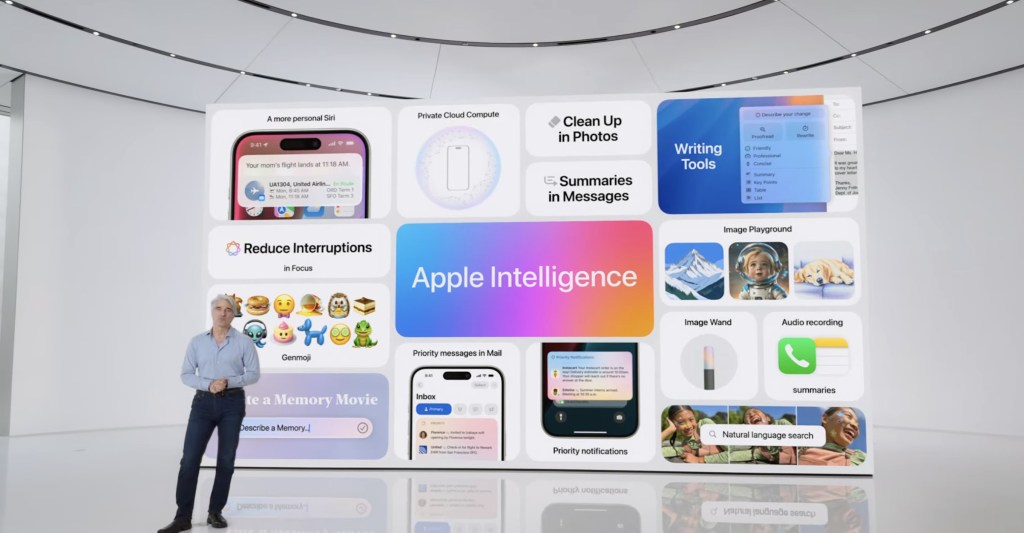
    On Apple Intelligence: I was happy to see them begin by laying out their design principles (we do this on a lot of my projects, but they are rarely communicated to the public), which are critical for this particularly suspicious and misunderstood technology, for which Apple needs to differentiate their approach and model. Some, like Google, already have access to your data but can’t be trusted not to monetize it with ad targeting. Others, like OpenAI, may only have what data you choose to share but can’t be trusted not to train their models on it. Apple is unique in that it doesn’t seem to want to do either.

    Finally, we’re getting a smarter Siri that’s an actual agent, i.e. able to string together various tasks in pursuit of a goal, and take action on behalf of users. So much for the Rabbit and all that bullshit. Doing as much locally as possible is the only responsible way to do AI agents. And Apple’s private cloud compute solution, which looks to be yet another privacy engineering breakthrough, is probably the second-best way.

    The image generation stuff was probably the most contentious part. I’ve seen upset takes from artists but no one can put this stuff back in the bottle. The only way to stop AI art is a full-scale public revolt, and that requires everyone getting a good look at it first. It’s the four packs of cigarettes your dad forces you to smoke after he catches you sneaking one. When we’re all tired of seeing gross AI styles, human-created art might be appropriately valued.

    But I don’t think Apple is on this exact mission, so I was surprised at the examples they chose to showcase. The Genmoji of a surfing dinosaur looked terribly similar to Meta’s own AI chat stickers in style and quality (cheap). But being able to create Genmojis and illustration-style images for documents all across the OS, for free, is no doubt a big deal. I think many people will generate their first AI images with Apple Intelligence.

    ===

    Media activity:

    • I just finished R.F. Kuang’s Babel and loved every page. If you’re into university-set adventures, deep dives into language and literature, the aftershocks of British colonialism, and tales of the Chinese diaspora, this one’s for you. I had no idea that she also wrote Yellowface, which I’ve heard many people rave about. Props to Kuang, she gets a lot more out of being Chinese than me. 5/5 stars.
    • Bought Like a Dragon Gaiden: The Man Who Erased His Name for S$31 on PlayStation’s summer sale, and immediately started playing it. I thought I’d had enough of this series for awhile, but I’m six hours in and having so much more fun than in the preceding game. Part of it is even set in the same Yokohama map as Yakuza: Like a Dragon, but running around here is so much better without the annoying turn-based combat. Recommended if you like absurd storylines played with the straightest of faces.
    • Started watching Constellations on Apple TV+, which has sadly been canceled after one season. The first two episodes lean into a space horror vibe which had me seriously tense, but it’s lightened up a bit now in episode three. Recommended for fans of Noomi Rapace, Dead Space, sci-fi mysteries.
    • Watched A Quiet Place Part II and was let down because I remember enjoying the first one, but this sequel is a much lesser use of mostly the same ingredients. Plus that annoying post-apocalyptic trope about how the human survivors are worse than the monsters. PUHLEASE. 1.5/5 stars.
    • Watched Hit Man on Netflix, the first Richard Linklater film I’ve caught in years. It kept me guessing (and I had a lot of wrong guesses where it was heading), and has a lot of fun with the concept. Glen Powell is going to be a huge star, isn’t he? 4/5 stars.
    • Alex Garland’s Civil War was like most of his films: plenty to look at, not much to say. It shows what a civil war in the US might look like, but doesn’t care to fill anything in, mirroring the photojournalists it follows. Early on, Kirsten Dunst says “we just shoot the pictures, others can ask why”, or something to that effect. Well, isn’t that convenient for you, Alex Garland. 2.5/5 stars.
    • Discovered the band Fantastic Cat after seeing a vertical video somewhere of them inviting Adam Duritz of Counting Crows to be on their new song. It may have been a clip of the video for the song, actually. Following that I checked out Now That’s What I Call Fantastic Cat and really enjoy its pre-my-birth country rock sound. A quick internet search revealed that they’re a supergroup of four singer-songwriters that I unfortunately have never heard of.
    • Am listening to Charli XCX’s very popular new album, BRAT, and it might be her best work yet. I’m also listening to A.G. Cook’s new Britpop album and since he produced half of her album, it can get confusing.
    • Have also been following the drama of Taylor Swift allegedly releasing numerous editions of her albums on the eve of other female artists’ album releases to block them from the top spot on charts. She apparently tried it with Billie Eilish’s album, and now she’s done it to Charli with a UK-only release of two new editions of The Tortured Poets Department, each with different demos or live versions tacked on. She’s free to defend the throne but there are apparently 34 different versions of that album out now. Even The Guardian has weighed in and declared Charli the winner on artistic grounds. This releasing of multiple variants to milk fans feels gross to me. Back in my day, musicians just released one version of an album (okay, plus maybe a Japan-only one with bonus tracks) and it had to fend for itself on the charts for years!
  • Week 23.24: Chilling with Sony’s Reon Pocket 5, New Camera Apps, and a Playlist

    Week 23.24: Chilling with Sony’s Reon Pocket 5, New Camera Apps, and a Playlist

    Sony Reon Pocket 5

    I discovered the existence of a cool new device this week when a Sony catalog wound up in my trad-mail inbox. After some online research, I visited the nearest Sony store for a demo of the Reon Pocket 5 device and ended up buying one for S$249. Okay, what is a “Reon Pocket” and why is this the fifth version? The four previous iterations were only sold in Japan, but the tech is now mature enough that Sony is launching it in the UK, Hong Kong, Singapore, and Thailand this year.

    It’s best described as a wearable gadget for helping you feel more comfortable by fooling suggesting to your body that the temperature is more bearable than it thinks. It does that by cooling or heating a small metal plate pressed against your skin (in this case, at the base of your neck), which contrasts with the environment and changes your perception of it. Surprisingly, it works with just a difference of a few degrees.

    I first learnt about this effect a decade ago from a Wired article about an MIT prototype and have been eagerly awaiting a commercial product ever since. I had no idea until after buying the Sony version that the researchers mentioned in that article have actually shipped their own wrist-worn product called the Embr Wave. It resembles a smartwatch and is more discreet than the bulkier Reon Pocket 5 which sticks out from beneath your shirt collar like some kind of life support system. However, since I already wear an Apple Watch, I don’t know if I’d wear an Embr Wave too.

    In some ways, I seriously see this device as a “life support” technology. I think I’ve struggled with heat regulation all my life — always feeling warmer and sweatier than everyone else; most days you can hold your hand over my head and feel the heat radiating off it. I read that our bodies’ core temperature doesn’t actually change much (when it does, that’s hypothermia or heatstroke), so how comfortable we feel is all down to skin temperature, which this sort of thing hacks.

    After a couple days of testing, I’ve found the Reon Pocket 5 doesn’t perform miracles but offers a different sort of relief than a handheld fan (though one could use both). But it’s like constantly holding a cool can of soda against your neck in hot weather, which is welcome! It’s a glass of ice water for someone in hell. Even when the temperature isn’t that high but it’s stuffy and humid, this takes the edge off. If you’re the sort who’s always feeling cold in Singapore’s air-conditioned spaces, it also heats up and offers the opposite effect.

    There’s a lot I could say about the app, and how it’s another example of Sony’s generally poor UX design, but once you figure out what settings you like, you can lock them in and operate the device without it. It also comes with a separate “tag” that you can attach elsewhere on your body, which monitors the external temperature and humidity so the device can automatically switch modes, but I haven’t bothered to take it out of the box at all. All they needed to do was put a button on the thing to switch between hot and cold, just like the Embr Wave does.

    Building a separate piece of hardware instead… reminds me of how Sony headphones try to “intelligently” adjust noise cancellation levels by guessing whether you’re commuting, or working, or lazing about, by using GPS location and accelerometer data from the smartphone app — an absolutely mental and roundabout solution to replace the user pressing a button. Incidentally, Apple’s Adaptive Audio mode on AirPods Pro is a much better take: they dynamically adjust the balance between noise canceling and transparency based on environmental noise, letting you be aware but not annoyed.

    The battery, if you’re wondering, should last an entire day out. At Level 1 cooling power it’s rated at 17 hours; at Level 3, 10 hours; and at Level 5, 4 hours. Operating on Smart Cool mode, it switches between them as necessary. There’s also a “wave” feature that I recommend turning on, which follows the same core principle as Embr’s device where cooling power fluctuates so you don’t become desensitized to it. If you need even longer performance, you can plug it into a power bank and it will work on direct power without charging. Imagine using it at the same time as Apple Vision Pro, with two power banks in your back pockets. That’s living in the future, baby.

    In conclusion, wearing the Reon Pocket 5 around your neck makes you look dorky or hooked up to some medical device, but when it’s over 30ºC in the shade, who gives a damn?!

    ===

    New camera apps

    I’ve been using two new camera apps: Kino, from Lux Optics who also make the Halide app, and Leica LUX (no relation).

    Kino is a logical move. Halide was a “pro” app focused on bringing intuitive manual controls for still photography. Kino does the same for video. Unlike Halide, it’s a one-time purchase ($20 USD) and a big part of its functionality is the ability to apply different looks (color grading via LUTs). I’ve always wished Halide would do something similar, to help lazy shooters get the most out of RAW captures. I hardly shoot any video but I thought Kino was worth buying, especially since I’ve let my Halide subscription lapse for lack of use.

    One of the best things Kino does is allow the system to shoot in Apple LOG but write the files in HEVC format instead of ProRes, which saves a lot of space but still conveys some of the benefits. You can also shoot in LOG, apply a color grade preset in real time, and save the baked file in HEVC. That’s awesome.

    Leica LUX is not so logical and I’ve been puzzling over why a company with their luxury brand equity would take a risk like this. On the page linked above, they’re saying the app “lets you capture the iconic Leica Look with your iPhone” using their “deep color science” and digital simulations of “legendary lenses”, like the Noctilux-M 50mm f/1.2 ($7,895 USD), and claiming it “reproduces” its “signature aesthetic bokeh”.

    I present two exhibits. The first (below) is what you see when selecting the “Leica Standard” profile: a statement that it handles color the same way as their cameras that cost upwards of $6,000 USD do, using your iPhone’s sensor. Whether it’s true or not is beside the point; Leica is saying you can enter their world with a free app and the phone you already own. To my eyes, it’s not far off from the iPhone’s default color handling, and looks like some gentle H/S/L shifts. The other Leica Looks are a mixed bag: I like the Leica Natural one, but some others are heavy and feel like “filters”. I’d hoped these would be more like Fuji’s in-camera film simulations, which are more like “color profiles”.

    The secret sauce is leaking out!

    The second shows how their implementation of a depth effect is inferior to Apple’s own Portrait Mode, with rough edge artifacts, despite the hyperbolic claims of giving your iPhone the “unique aesthetic of Leica’s legendary M-lenses” with their “distinctive look and beautiful bokeh”. If it did, that dark shot of my Misery Men mug would look like it came from a 28mm Summilux f/1.4 lens, and I can assure you it does not. Moreover, their digital depth effect only adds background blur, not foreground blur, which makes for a less realistic result that Apple’s own Portrait Mode which your iPhone already does for free.

    One nice feature is the photo library viewer they’ve built into it, which lets you switch between seeing All photos and Leica photos only, including ones taken with your Leica cameras. And photos taken with this app sit alongside them as equals! In the field where the camera model is specified, it simply shows “Leica LUX”.

    What are they getting out of this brand dilution? Well, the app is subscription-based and asks for S$99.98/yr to unlock more Leica Looks and lenses. They claim new ones will be added monthly. I think perhaps anyone who owns or intends to own a physical Leica camera will not bother with this, and it’s a move to grab all the aspirational customers who want to touch the brand — including a bit of overlap with the market they tried to target with their Huawei and Xiaomi smartphone collaborations. The question is whether this will do any significant reputational damage, and so far all the comments I’ve seen on Leica blogs and communities have been negative. Could they stand to make more on app subscriptions than they’d lose from upset camera buyers? Maybe! Is that capitalization model the right way to run a company? Maybe not?

    I’m still optimistic because I’m not emotionally or financially invested enough in the brand to care how they destroy themselves, and will wait to see if they update the app to improve edge detection and add some better Leica Looks. If it ever gets good enough to be my primary iPhone camera app, a hundred bucks a year is steep but not out of the question.

    Before: iPhone defaults. After: Custom Photographic Style

    Meanwhile, I’ve found the following settings get me calmer and more natural photos out of the default iPhone camera app. First, go to Settings > Camera and make sure you turn on “Exposure Adjustment” under the “Preserve Settings” section. Then in the camera app, set exposure to -0.3ev, and using one of the Photographic Styles as a base, change its values to -20 Tone and +5 Warmth. Note: If you have a 14 Pro, the only way you’re getting less crispy shots is to use an app like Zerocam or Halide and disabling smart processing.

    ===

    Media activity

    • Started playing Spider-Man: Miles Morales on the PS5. It feels just like the first game I played on the PS4 years ago and I can’t say I’m getting next-gen from this, but it’s good fun.
    • Finally got Balatro on the Switch, the highly acclaimed indie poker roguelike game. It reminds me so much of Solitairica, the indie solitaire roguelike game on iOS. That’s a good thing. It’s the kind of game you can play for a few minutes, or hours on end.
    • Started watching season 2 of Link Click, a Chinese-made “anime” series with a cool ‘catch a serial killer through time’ kinda story. I saw season 1 a couple of years ago and was impressed by how well executed it was.
    • Saw Still of the Night (1982), starring a young Meryl Streep and Roy Scheider. It’s a Hitchcock-inspired psychological thriller with Fatal Attraction vibes. 3/5
    • Saw The Ministry of Ungentlemanly Warfare, a Guy Ritchie WWII joint that feels like if Inglourious Basterds was a Jason Statham vehicle. Except he’s not in this, Henry Cavill is, as well as Alan Ritchson (of Reacher fame) who plays a gay Dane (Swede?) who loves killing Nazis almost a little too much. Quite a bit of fun. 3/5
    • Saw The Fall Guy, a movie I’ve been anticipating for a long time on the strength of its trailer and what little I’d assumed about its story. I didn’t know it was based on an old TV show. But it was a messy, empty disappointment of a blockbuster that even Ryan Gosling and Emily Blunt couldn’t save. 2/5
    • Saw Carnival of Souls (1962), a cult classic surrealist quasi-horror film on Kanopy, a video streaming service that’s free if you connect your library account. It’s got Ed Wood B-movie vibes and special effects, a lot of rough edges, but still manages to be a compelling work that I’ll probably remember for a long time. 3.5/5
    • Saw To Have and Have Not (1944) in which Lauren Bacall plays a character who is stated as being 22 years old, to which I thought “she’s gotta be a lot older than that”. I looked it up and she was probably 19 💀. So that’s proof that people really used to look older, and you’d be forgiven for assuming it was the copious smoking (on display in this film). It’s a weird one, almost a musical showcase for Hoagy Carmichael who shows up as the hotel bar’s piano man. Doesn’t quite have that Casablanca magic yet. 3/5
    • Saw Dream Scenario in which Nicolas Cage convincingly plays a loser who suddenly becomes famous due to an unexplained phenomenon (he starts appearing in people’s dreams). Towards the end, it pivots from uneasy mystery to comical cultural commentary. That’s not a complaint though. 3/5

    A playlist for you

    As reward for making it this far, here’s the next installment in my Blixtape playlist series, covering music I listened to from January to May this year. Hope you find something to like.

    Add BLixTape #4 on Apple Music

    The tracklist:

  • Week 19.24

    Week 19.24

    I’ve been sick for days, probably a bug I picked up coming back from Hong Kong. There were quite a few coughing people in the airport and on the plane. It started with a sore throat, moved to a crushing headache and tiredness, and is now in the final stage (I hope) with a phlegmy cough.

    The ongoing headaches are the worst part, making it hard to do anything that involves looking at screens, so I’ve had to listen to podcasts to pass time outside of trying to sleep, which incidentally has been one fever dream after another soundtracked by the latest Kendrick Lamar songs. I dreamt of eating fried rice at New Ho King. My brain won’t shut up and keeps playing the BBL Drizzy refrain on repeat.

    I surprisingly made it through a three-hour episode of the Accidental Tech Podcast talking about the new iPads, which I would normally never have the patience for. I think I learnt just one new thing: the 256GB version of the iPad Pro has only a single RAM bank, resulting in slower performance compared to the other models. Three hours is pushing it for me, I think an hour is an ideal length for a regular podcast. But I’m really impressed they’ve kept the show going for so long. Editing it weekly must be a bitch.

    I also mostly enjoyed an episode of a show I’d never heard before, Normal Gossip, which tells/stretches out banal real-life stories submitted by listeners. It was an episode about “the joy of being a hater” which obviously spoke to me. And in the spirit of hating, I need to say that I find the host annoyingly chirpy and fake, but she was offset by the dour and acerbic guest she happened to have this week. At times the storytelling and incredulous laughing of the listener felt a bit like Reply All, which I used to enjoy when I listened to podcasts more.

    A better thing I brought home from Hong Kong was a brand new PS5 of the Slim variety! When the original PS5 came out, I was disgusted by its form factor and massive footprint. It was more like a PC that went under your desk than a console that sat on your, er, TV console. So I’ve been waiting patiently for years with my PS4 Pro (barely touching it in favor of the Switch tbh), for the inevitable slimmer and smaller edition to be announced. Which happened earlier this year.

    It retails for about S$650 here on average, so I hadn’t rushed out to get one given my deep Switch backlog — a whole other platform of games wasn’t exactly urgent. But on our last morning in Causeway Bay, we stopped by the Times Square mall and found that they go for about S$520 in Hong Kong. Wtf?! It was an instabuy followed by a brisk walk back to the hotel to repack our luggage.

    Our new Sony TV automatically detects the PS5 and configures itself to work with it, which is nice! It also supports all the fancy stuff like 120hz variable refresh rate, but the games I’ve got to play first are kinda last-gen ones that have been ported with some PS5 support: Lost Judgment and Like A Dragon 7, both from the series formerly known as Yakuza in the West.

    The best feature of the PS5 so far? Incredibly quick loading times, nearly instantaneous, such that moving from one area to another in Lost Judgment doesn’t break the immersion like it would when I played it on PS4. With a single “Resume” command from the system’s Home Screen, you can even cold start up a game, load the last save, and get back to it in under 10 seconds. Compare this to last-gen consoles where you’d have to do all that manually, waiting, pressing buttons, and waiting some more — probably for up to a minute.

    You can tell the Panadol has shut my headache down now because I’m rambling far more than I thought I would. This was supposed to be a quick two-paragraph update! See you next time.