Tag: Television

  • Week 42.24

    Week 42.24

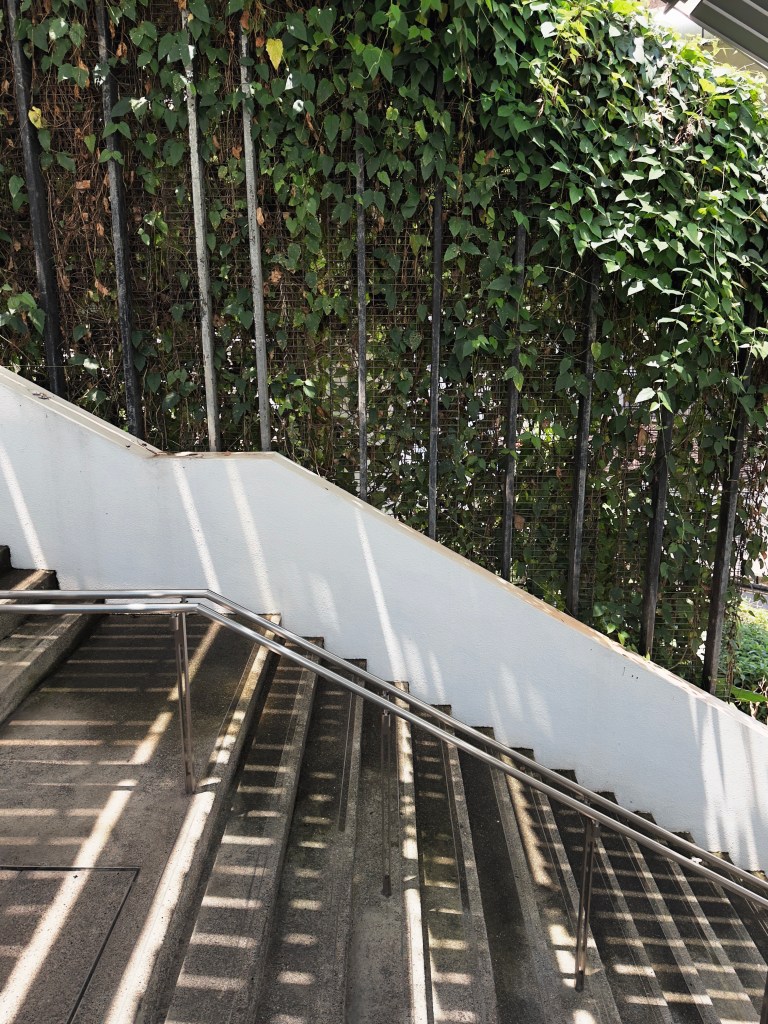
    Work progressed on my positive film LUTs — LUTs plural, because I now have four separate versions for different situations: regular iPhone photos, RAW files, ProRAW, and an additional one that’s brighter and punchier. I’m at that stage of the creative process where the original inspiration has been left behind and now I’m making something new (and possibly worse!), just going on vibes.

    At the heart of these is a ‘color science’ recipe that makes the usual digital representations of reality subtly less realistic, without the global color grading that makes some filters instantly recognizable. Alone, it can’t make a photo look the way film does, which is why exposing for highlights, disabling Smart HDR if possible, and saving RAW files is still important. Anyway here are some test shots I made this week, most of them not following those rules.

    ===

    Kim got back from a short trip to Vietnam and (cover your eyes if you’re squeamish about food safety as I usually am) brought me back a banh mi from a famous shop so I could try it — some five or six hours after it was made. She presented it as a “lesbian banh mi”, to which I said “excuse me?”, but it’s literally known to locals as the lesbian banh mi place. It’s run by a lesbian couple that has offered an LGBTQ-friendly work environment since the 1970s.

    It was an insane sandwich, heavier and more packed with meat (and cilantro) than any sub I’ve ever had. I didn’t catch the exact price but I think it was a couple of dollars. The bread had gotten a little tough from the flight, but I can imagine how it’d be even more amazing fresh and hot. I’m afraid that if we ever move to Ho Chi Minh I’ll be eating these on a weekly basis.

    Which, given this tweet, may not be a great idea anyway. Reading through the replies, you’ll learn that terrestrial carbon sinks have effectively stopped reducing CO2 levels, and equatorial areas around the world might become unlivable in the coming decades. The author says you/we should make plans to leave as soon as possible, because it’s better to be a migrant than a refugee. From this map of affected areas, there aren’t many viable options if you consider declining economies and areas of unrest/growing fascism? Becoming a billionaire and moving to New Zealand is looking like the best strategy, so I’d better get started now if I want to make it.

    That’s too bad, because I was really beginning to like Singapore, cultural shortcomings, legal restrictions and all. On Friday night, we went out and saw a local adaptation of an Italian play, Accidental Death of an Activist/Anarchist, at the Wild Rice company’s Funan theater, which included a list of longstanding and mostly valid criticisms about this country dressed as constructive questions, playfully (and inconsistently) set in the faraway lands of Europe and definitely not about Singapore at all. I enjoyed it! It was very funny and the lead actor put in an incredible physical performance over its 2.5-hour running time.

    My friend and ex-colleague Munz wrote a review for the Critics Circle Blog, which goes into more detail. I said to her that I was annoyed by one part where an actor, stepping out of character, comments that “it really won’t” cause society to collapse if certain things were allowed, because theater people just aren’t qualified to understand how delicate some systems are, to casually make promises like that. Just like how they don’t get that “a 5% investment return” is not the W they thought it was when they wrote it into the script as an example of the rewards that Singaporeans receive for tolerating injustices. It’s fine to agitate for something and to dream big, but being naive is the worst.

    But don’t take my opinion for anything, because I’m just a moron who has only just discovered the Labubu craze, which Lisa from Blackpink kicked off earlier this year in April. Jesus Christ these fellas are cute! I’m a sucker for fuzzy things, especially when they have mischievously sharp teeth and deranged grins*. Can you believe some of the 58cm plush figures are going for S$500 now that they’re regularly sold out everywhere? I might start with one of the smaller $50 blind box figurines…

    * There’s a painting that I saw years ago at an art fair and that I’ve wanted ever since, called Out For A Happy Walk. Kim cannot believe that I’m serious, and cannot see it in our home. It depicts a Garfield-like cat walking upright on two legs, with big dazed eyes, holding a flower in one outstretched hand. I tracked it down to a local gallery, and it’s currently about S$1,600. If I do become a billionaire, I won’t tell anyone but there will be adorable signs.

    Media activity

    Speaking of Blackpink, I asked in an IG Story post a few weeks ago which of the members people thought would have the most successful global solo career, and the winner by a mile was Lisa (65%). Jennie was in second place (22%), with Rosé and Jisoo getting nearly no votes. I didn’t weigh in myself, because I’m not sure any of them will have long-lasting solo careers. What’s would be the motivation in an industry that prizes youth and novelty? They peaked as one of the biggest groups of their generation, they’re all presumably filthy rich (and dating filthy rich, in Lisa’s case), and making music isn’t something I believe they’re passionate about (although am moron, as stated). Except maybe Rosé. I think she actually wants to make it as a singer/songwriter, and her upcoming album in December is the one I’m actually excited to hear.

    The three of them have put out new singles within weeks of each other, and I can’t remember Lisa’s at all, Jennie’s Mantra is just a short chant repeated long enough to cut some flashy visuals to, and I haven’t been able to get Rosé’s APT out of my head for the last few days. Yeah it’s like a cosplay of a pop-rock anthem, sampling Toni Basil’s Mickey and seemingly interpolating Lady Gaga’s Bad Romance (although uncredited), but it still works. There’s an army of writers attached, including Amy Allen who’s behind some of Sabrina Carpenter and Selena Gomez’s biggest songs, as well as Rosé’s first single, On The Ground, which I also liked.

    But you know who’s really killing it and only has 3M views after a month to Rosé’s 68M in three days? FKA twigs. I sat down to watch her 8-minute video for Eusexua, the title track of the album due next January (I’d been putting it off; wasn’t ready), and she’s landed an absolute moonshot with it. Don’t watch it at work, but make time for it. This is her reaching her artistic and physical peak and it’s beautiful to see. Like this exhausting-to-watch live set for the fitness brand ‘On’ where she seems to just be warming up. And just out this week, the video for second single Perfect Stranger is more of the same indescribable, nuclear-level visual impact.

    Not in the same neighborhood but equally worth adding to your libraries are the new albums from Audrey Nuna and Brett Dennen.

    We’ve been watching the new Apple TV+ show written and directed by Alfonso Cuarón, Disclaimer, starring Cate Blanchett, Kevin Kline, and Sacha Baron Cohen. It coincidentally features a book titled “The Perfect Stranger”. It’s seven parts, and four are out now. You should also not watch this at work or in public. But make time for it. I was somehow misled to believe it was science fiction or at least involved the bending of reality, and so was massively thrown (disappointed, even) when it turned out to be a character-driven drama. But it’s very very good.

    I managed to get some sci-fi in anyway, by way of Naomi Alderman’s book, The Future. I enjoyed her last book, The Power, and gave that four stars. But this one, set in a recognizably tech-besmirched world much like ours, is way better. I gave it five stars.
  • Week 41.24

    Week 41.24

    It’s Monday, and for the time being, my schedule for writing these updates has shifted out by a day as Monday mornings now find me in a co-working space, and writing this gives me an opportunity to blend in better than, say, watching films or playing games whilst surrounded by people grasping their foreheads, stroking their chins, and sighing loudly. Yes, those things just took place around me.

    It’s Monday, after a massive storm, and my feet are soaked from wading through puddles to catch the bus. You’d think this would be a common occurrence in Singapore, where the tropical rain gets heavy, but only a few occasions stick out in memory — those mornings where the office walkways are cluttered with umbrellas opened up to dry, like caltrops or anti-tank barricades; my damp, socked feet perched on top of sneakers I hope will dry before lunch; everyone else’s teeth a-chattering in vicious air-conditioning calibrated for sunny days.

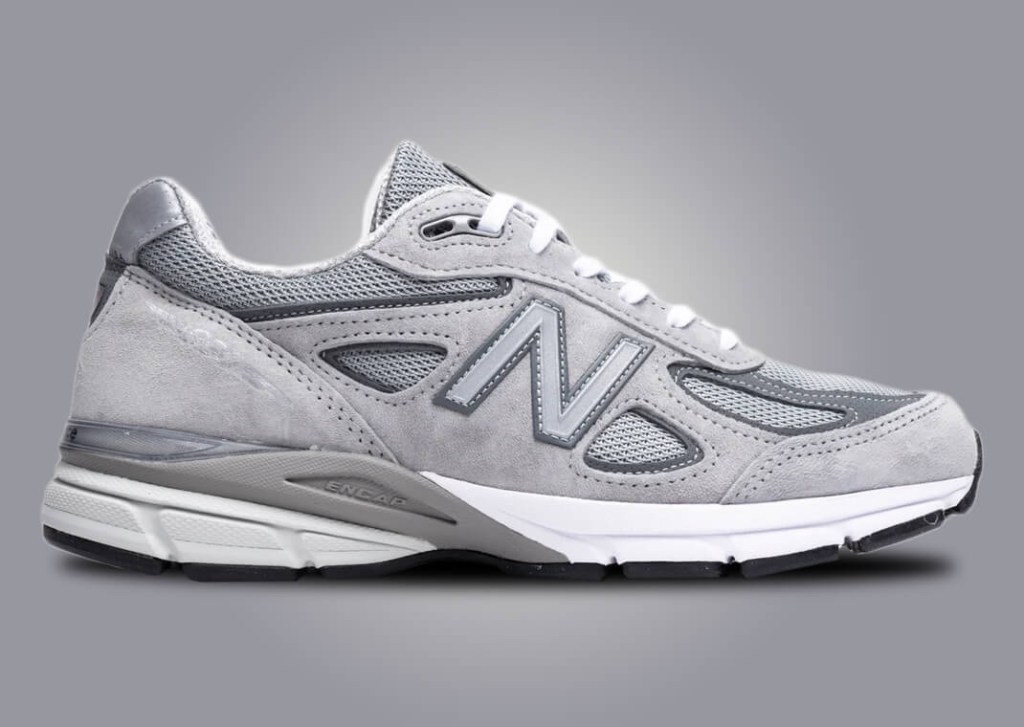
    Earlier this week, I shuffled my feet while sitting here and felt something come loose: the right heel of my (only) three-year-old New Balance 990v4 sneakers. So much for ‘Made in the USA’! I borrowed some black plastic tape to conduct unglamorous field surgery, and they lasted till I got home. I have two newer pairs (v5 and v6), and sure hope they hold up longer.

    iPads are pretty great, actually

    My daily companion over the past four days here has been my 11” M1 iPad Pro with Magic Keyboard, somewhat neglected of late. I’ve found that it does everything I need to pass an entire day, from library books and magazines with the Libby app, to gaming, video, web browsing, chat, and photo editing. My MacBook Air would be better for watching movies, but that’s mainly it. If anything, that only makes me surer that my next iPad will be a 13” model.

    Unfortunately the new iPad Pros with M4 chips are priced on par with MacBooks, making the choice between the two much harder (and in favor of MacBooks if I’m being honest). Recall that the original iPad launched for just $499 USD, and its marketing tagline was “A magical and revolutionary product at an unbelievable price”. That’s still how the iPad lives in my mind: a powerful alternative device that does way more than its price suggests. So it occurs to me that the iPad Pro is no longer the right choice for me, and the iPad Air is a truer heir to that original proposition. (Put aside the product now simply called ‘iPad’, because at $349 USD it’s actually even cheaper than the first generation and more like a budget “SE” model.)

    We’re seeing Apple push its ‘Pro’ lines further this year, packing them with innovative features that are useful for a small subset of professional users, but which most customers won’t need or appreciate. Things like streaming multiple 4K video feeds from iPhone cameras to a single iPad for production in real time. Or recording LOG-format video to massive ProRes files, including studio-quality audio from four microphones.

    Adding these capabilities and pricing accordingly means some current Pro buyers might want to downgrade to the ‘mid’ models. In order to avoid losing them, Apple would need to elevate those products, and avoid artificially holding back features for the sake of differentiation. We’ve seen that happen with this year’s iPhone 16, which packs an OLED display, Dynamic Island, 48mp camera with a 48mm focal length option for the first time (!), Camera Control thingy, and even things like next-generation Photographic Styles and Audio Mix which they could have reserved for the Pro phones. The only thing it needs is a 120hz ProMotion display. I’m expecting next year’s iPad Air and iPhone updates will finally include that.

    I love that the iPhone 16 is now a great enough product for almost anyone’s needs, but I’ll likely keep buying the Pro models as long as they offer better camera features. I can entertain switching to an iPad Air because I don’t even know what camera hardware it has and won’t ever use it.

    A quick word on cameras and my presets

    I mentioned before that I’ve been beta testing an app called Fig Camera. It has two standout features: great “natural” processing options that dial back Apple’s aggressive defaults, much like Halide’s Process Zero mode; and the ability to process photos on-the-fly with your own custom look. As someone who somehow finds it fun to make photo filters/presets, and has fortunately had some success with them, I love that I can now take photos with my favorite styles directly applied. It’s like how Fujifilm cameras’ “Film Simulations” obviate the need for post-processing. I can now snap photos in Fig that look great to me and don’t need any further editing.

    I posted a few recent photos using a film-style sim on IG and Threads and asked something like, ‘should I become one of those preset guys and offer my own as LUT files you can buy?’, to which several kind people said ‘sure’! So I’m thinking about it. This particular look is inspired by the “Positive Film” effect on earlier Ricoh GR cameras (they changed it for the worse with the GRIII), but slightly more “dry” like Fujifilm Classic Chrome. I’ve been using and tweaking it for over a year now, so the trick will be knowing that it’s DONE.

    Immersive Video and Submerged

    I’m still sitting here and my shoes are still wet. I’ve thought about bringing my Vision Pro to this open-plan space—not for the attention, but because it would be nice to have a huge screen that no one else can see. There are many things in my MUBI backlog that would not be cool to watch in public. And what’s even better than a 13” iPad? How about a thousand inches?

    We watched Submerged (2024) over the weekend, Apple’s new Immersive Video release exclusively for Vision Pro. It’s the first film they’ve done that isn’t a documentary or music performance — I guess the right word is fictional? I’m sure I said early on that this new immersive format (a full 180º view) lends itself best to video that puts you somewhere incredible, and wouldn’t be good for movie storytelling, with fast movement (nausea hazard) and quick cuts. I’m here to admit I was wrong.

    Submerged, by Academy Award winner Edward Berger, is only 17-minutes long but about a 12GB file when downloaded offline. You can view it as the first experiment in what filmmaking with this new technology could look like.

    I wrote on Instagram:

    Apple Immersive Video is a new medium. People will be experimenting with how to tell stories with it for years to come.

    Submerged is a great first step, the only movie I’ve ever seen that felt like “being inside” of it. More than seeing Avatar in IMAX 3D even.

    That’s different from the “being there” of POV video — it’s 100% a film with directorial intent. You experience it like a spirit summoned into the world and held down by a seance, without knowledge of your body. Your consciousness is pure camera.

    What I was trying to say was that making films for this format will require inventing a whole new set of techniques. Regular immersive video is easy: plonk a camera down in one static location and let people experience what it feels like to stand there and observe the action. This is the courtside seat at a basketball game, the front row of a performance. It’s amazing to us anyway because the viewpoint is rare, but a film made like this would only be a play.

    In the near term, we’ll see directors converging on a few approaches that work. Like how early 3D movies always had things flying directly at your face. The key question for me is how do you make an audience look at the thing you want them to notice, when they can look almost anywhere around the world you’ve built?

    Berger answers that in three ways. The first is action; big movements. When something explodes and water gushes out of a pipe a second later, you’re bound to notice it. The second is depth of field; like how I remember Cameron pushing and pulling focus at several points in Avatar (2009) to highlight subjects. This goes against natural vision and is more jarring in a wide-angle format like Apple Immersive Video, since you’re choosing for your viewer what they can and cannot look at, but it’s a filmic device everyone is familiar with.

    The third is a combination of Dutch angles and heavy vignetting that produces a novel effect in Immersive Video. When you watch a film like this, you are a disembodied viewer (what I meant above by a summoned spirit), without the ability to see even your own hands. You are severed from the real world. Your viewpoint changes according to the director’s will; sometimes a subject is extremely close and larger than life, other times they are small and distant. Berger often cuts to shots where the edges of your 180º view are shrouded in darkness, and/or where the camera is tilted at an angle, such that you feel yourself almost falling towards the zone of interest. This serves to direct your gaze, as to look in the opposite direction of gravity unconsciously takes more effort.

    I can’t wait to see what else emerges as more filmmakers play with this.

    Other media activity

    • I’m watching Lady in the Lake on Apple TV+, a 7-part series starring Natalie Portman that no one seems to be talking about. It’s rather good, but a slow burn and not one to be binged.
    • Another show that we discovered on a recommendation from Jose, and that no one seems to be talking about, is Ludwig, a 6-part BBC series starring David Mitchell as a reclusive professional puzzle-setter who gets enlisted to help the police solve murders. It’s very good, and sidesteps many of the elements that make other episodic murder-of-the-week procedurals tiresome. Well, it’s short enough that you never reach that point. I’m hoping they renew this.
    • I read Stolen Focus: Why You Can’t Pay Attention — and How to Think Deeply Again, by Johann Hari. This was inspired by an article in The Atlantic about how American college students today can’t even read an entire book anymore because their attention spans have been destroyed by social media, and book-reading on the whole is in serious decline. Utterly depressing. In order to get better sleep myself, I’m now trying to limit caffeine in the afternoon, alcohol, and phone use before bed. I’ve always detested multitasking—so much so that I avoid using external monitors with my laptop—and I’m now trying to be more mindful of distractions while reading or writing. As I made my way through the book, I was horrified to notice that I was picking up my phone every five minutes to check messages or look up completely unrelated topics.
  • Week 40.24: Singapore Design Week

    Week 40.24: Singapore Design Week

    “You’re really in your outdoor cat era”, said Nicolette, in response to my frequent excursions this week (I posted on IG Stories more this week than I have all year, because I realized they’re a convenient way to remind people that you’re alive). I also spent more time out of the apartment than I have in the past few months. I’ve had the freedom to go out early in the morning and do things all this while, but it took the threat of being deafened and annoyed by a neighbor’s renovations to actually make it happen. As it ticked closer to 9am each morning, I sensed the stirrings of men and machines on the other side of the wall, got my bag^ together and headed for the front door — see ya!

    ^ A quick word about said bag: I took the opportunity to get a new one for my upcoming sojourns in the out-there, and found this updated “2Way Utility Bag” from Uniqlo as part of their new lineup with creative director Clare Waight Keller (Givenchy, Chloé). It’s big enough for the stuff one needs to survive in a cafe, co-working space, or library all day: a laptop/iPad, umbrella, water bottle, power bank, camera, book, handheld fan, sunglasses^^, Nintendo Switch, or any of the things I’ve mentioned in recent weeks.

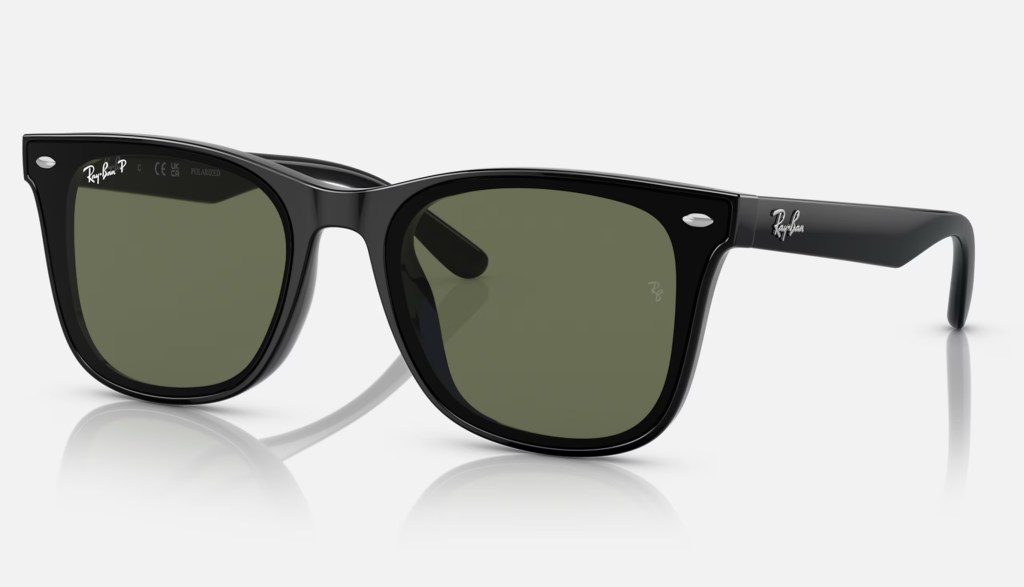
    ^^ A quick word about said sunglasses: I finally found a pair that fits my wide face and doesn’t slide down my low nose bridge. Admittedly I hadn’t tried Ray-Bans because the last pair I bought in Italy like, a decade ago, didn’t do so well on those two fronts and have gathered dust in a drawer. But Ray-Ban has since expanded their product catalog with inclusive new variants and I found some that fit. They resemble the classic Wayfarer model, but with some changes like flat lenses, and so are given a terrible product number (RB4391D) instead of a cool name. Oh and they’re made in China.

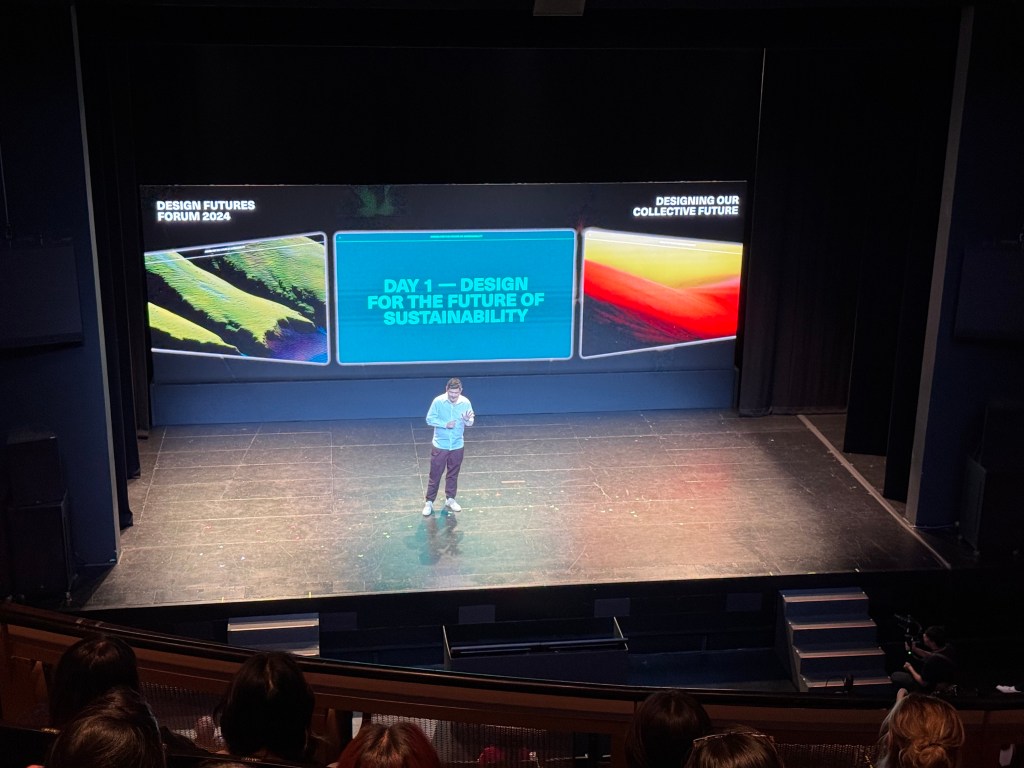
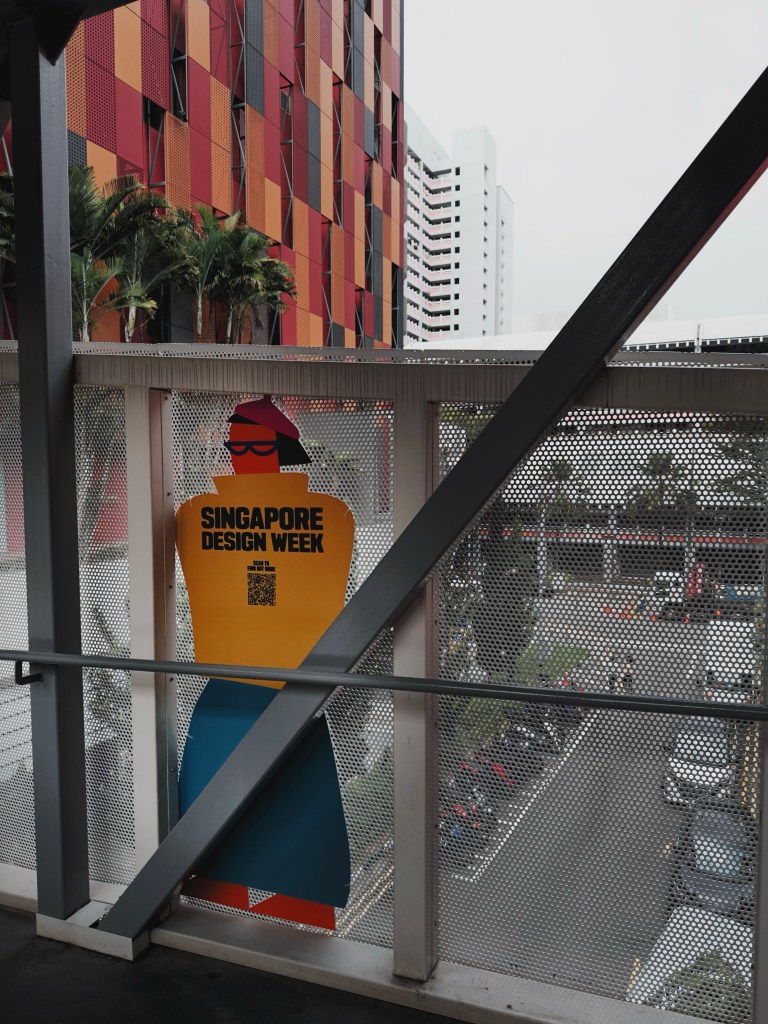
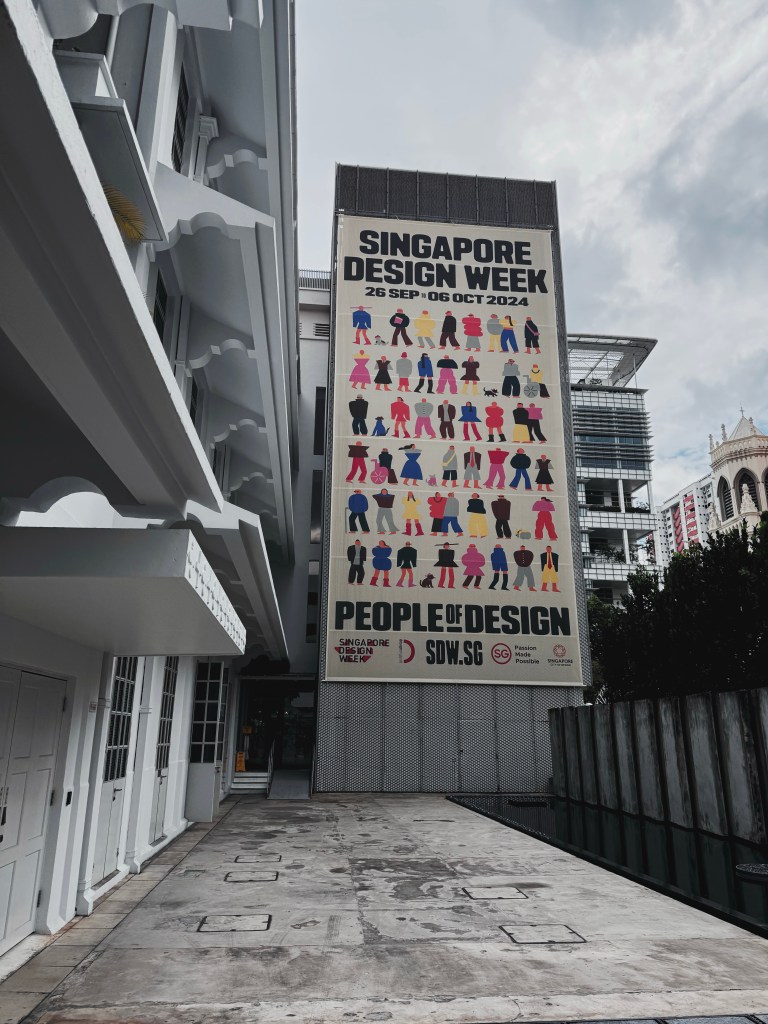
    As mentioned before, this period of domestic exile coincided with Singapore Design Week, which gave me enough things to do and see. On Tuesday, I paid S$130 to attend Day 1 of what was called the Design Futures Forum, which was noted by other attendees to have very little to do with futures exploration (many things discussed were of the present moment), and disappointingly never unpacked the business/social/political challenges that an audience of designers would be thinking about. I overheard someone say, “I could have read this in a designboom article.”

    For example, AI was a key topic as you’d expect in 2024, but presented with the breathlessness of a Forbes contributor piece from over a year ago; without offering contrarian viewpoints, sufficient interrogation of its costs and consequences, or thoughts on how its widespread use might be steered into balance with sustainable creative employment. The AI hype was pervasive, and if the audience played a drinking game triggered by every mention of it, the theater would have seen more vomit than the local ByteDance office. Some of the better speakers seemed to feel some responsibility to subvert the theme, and took genial pot shots at AI whenever they could. But I get it. We’re probably not the real audience for these events, and who knows what purposes they serve anyway? Me, I was only there to pass the time and meet old friends.

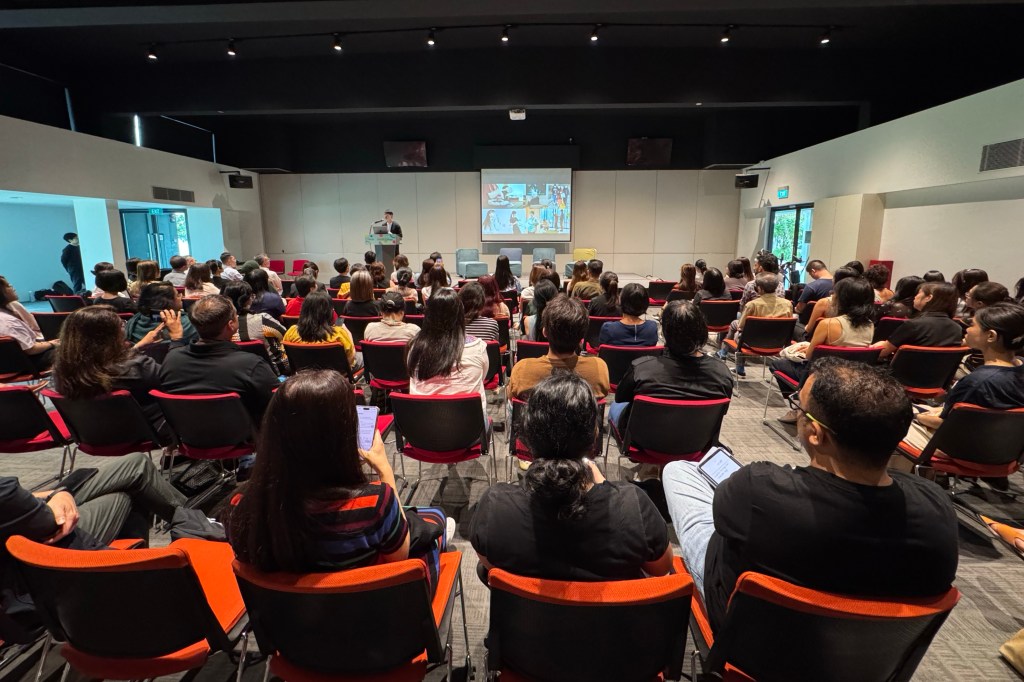
    The next day, I visited the Enabling Village, which is described as “the first inclusive community space in Singapore dedicated to integrating persons with disabilities in society”. On top of just wanting to see the place, I attended a series of presentations on projects with inclusive design elements, including some interesting work from Sony. They’ve made prototype musical instruments such as a finger-free saxophone that can be played by humming into a mouthpiece. Your voice gets turned into synthesized sax tones. I wish I could buy one, then my neighbors would be paid back in spades (j/k).

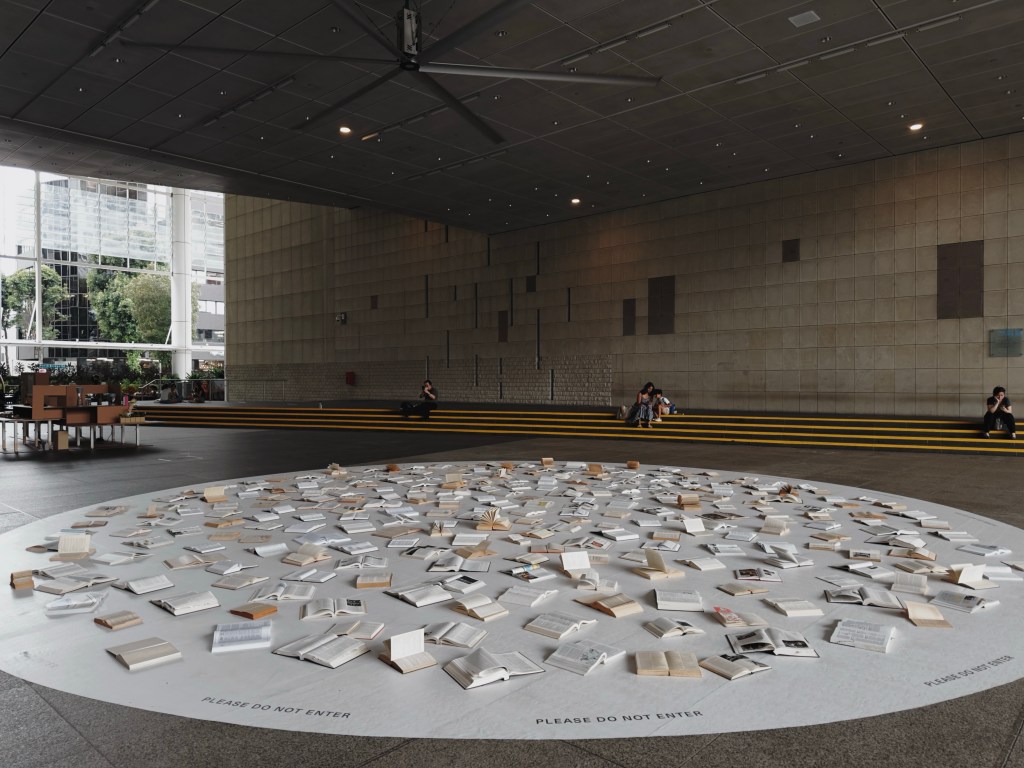
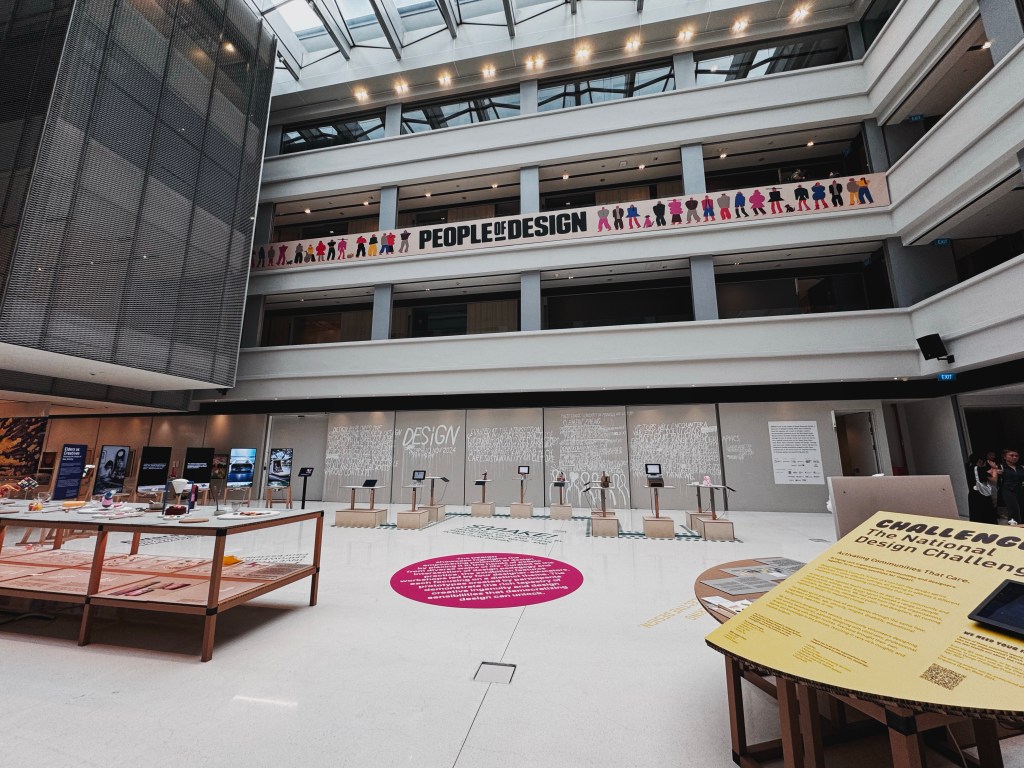
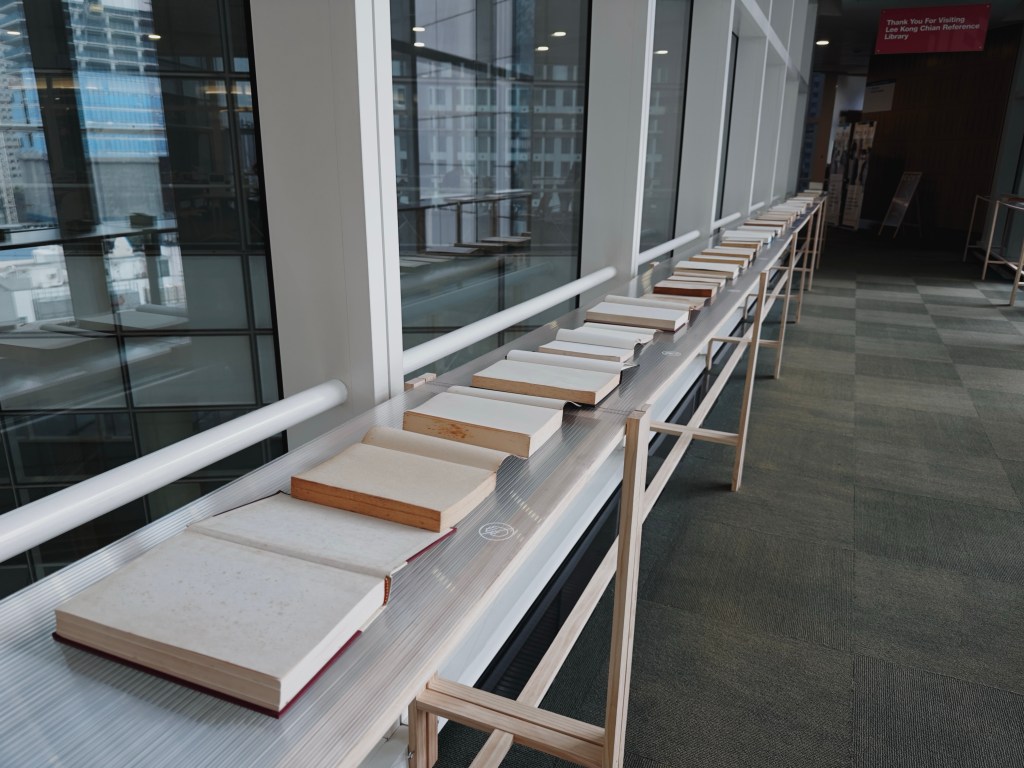
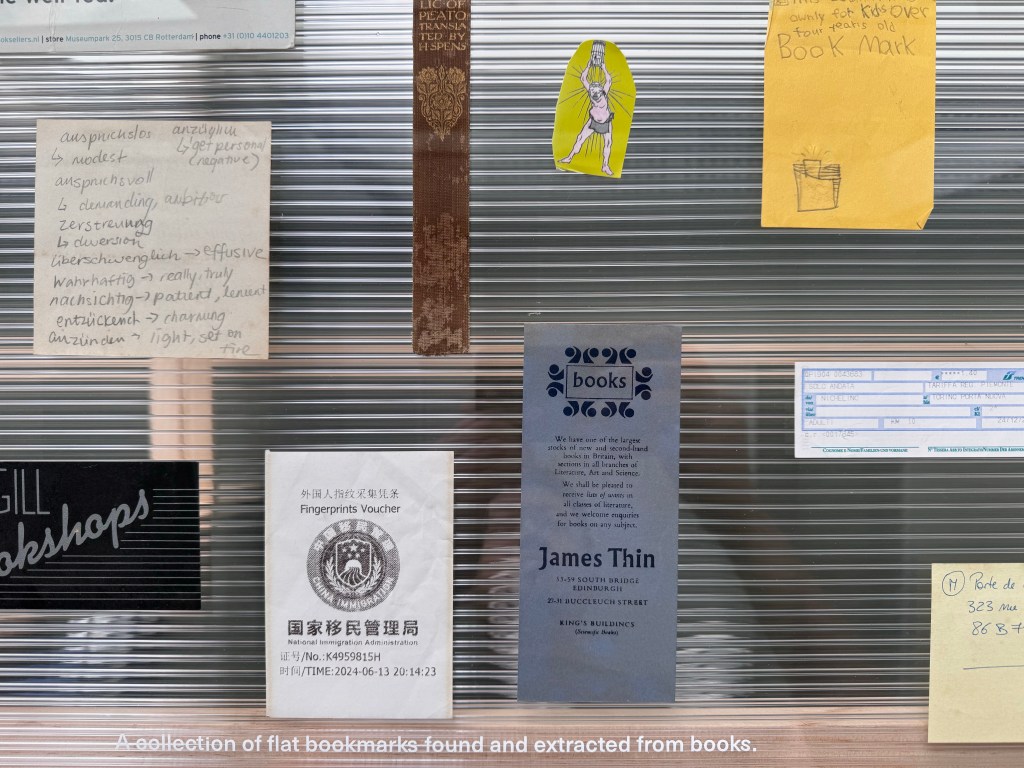
    There were also many free events and exhibits across town, and I filled pockets of time by dropping in on the ones around Orchard Road and the Bugis district. My favorite location was probably the Central National Library building which hosted some thoughtful and playful meditations on books and reading: from the physical aspects of holding spines and flipping pages, to sensorial explorations like how smelling different types of paper can evoke long-buried memories.

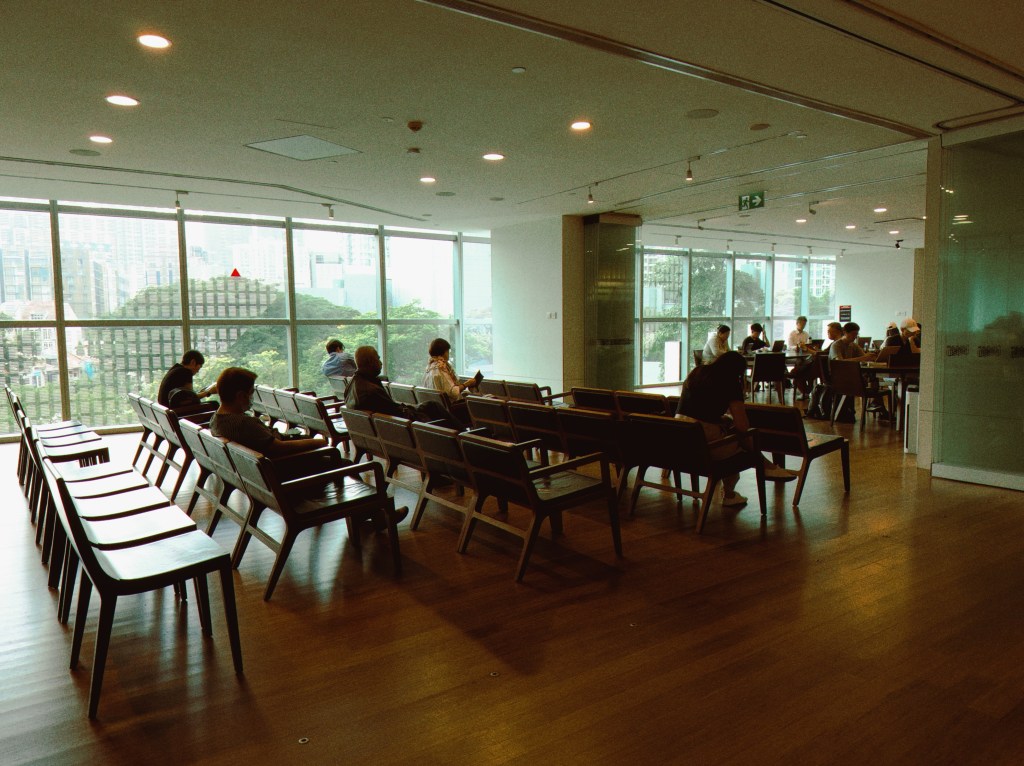
    It was my first time really checking out the Central Library, and it’s quite impressive. The reference section spans some five levels (from 7 to 11, I think), with the public lending library in the basement. Nearly every free seat was taken on a weekday afternoon, many by students of all ages who were… doing homework? I spotted someone doing math on the Humanities floor, so I guess it’s just an air-conditioned spot for some, nothing to do with the materials available.

    I wanted to read some poetry, and found a copy of the collected works of Philip Larkin, in the exact same paperback edition I had as a student. I sat with that for half an hour, next to some senior citizens who looked very much at home.

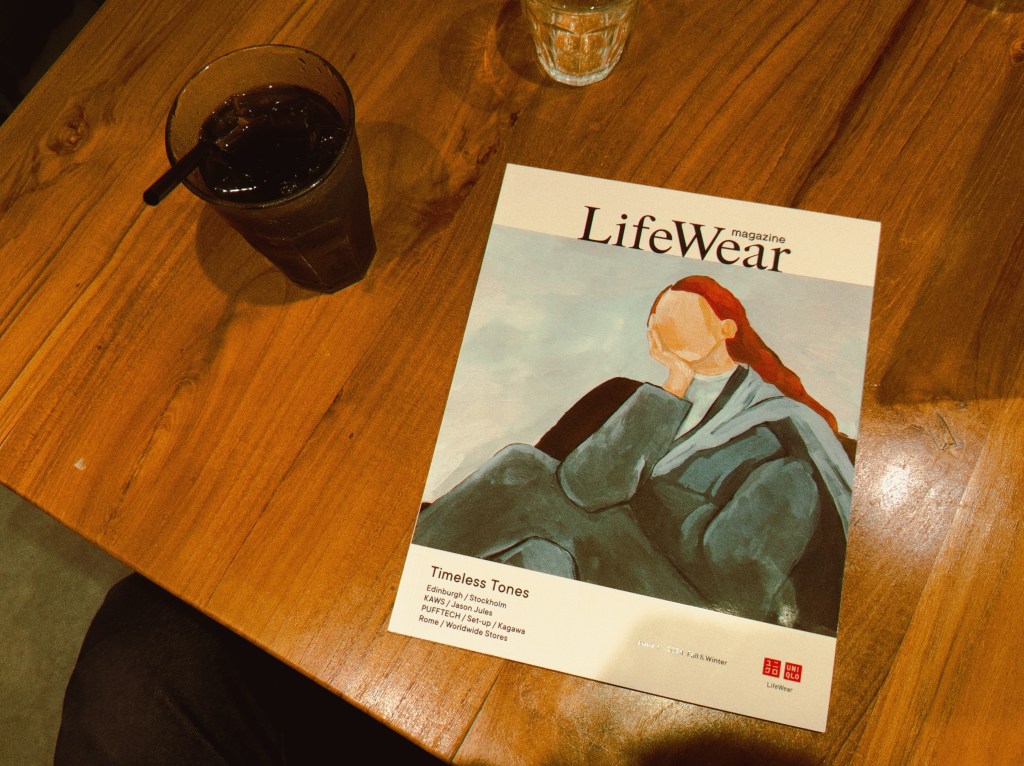
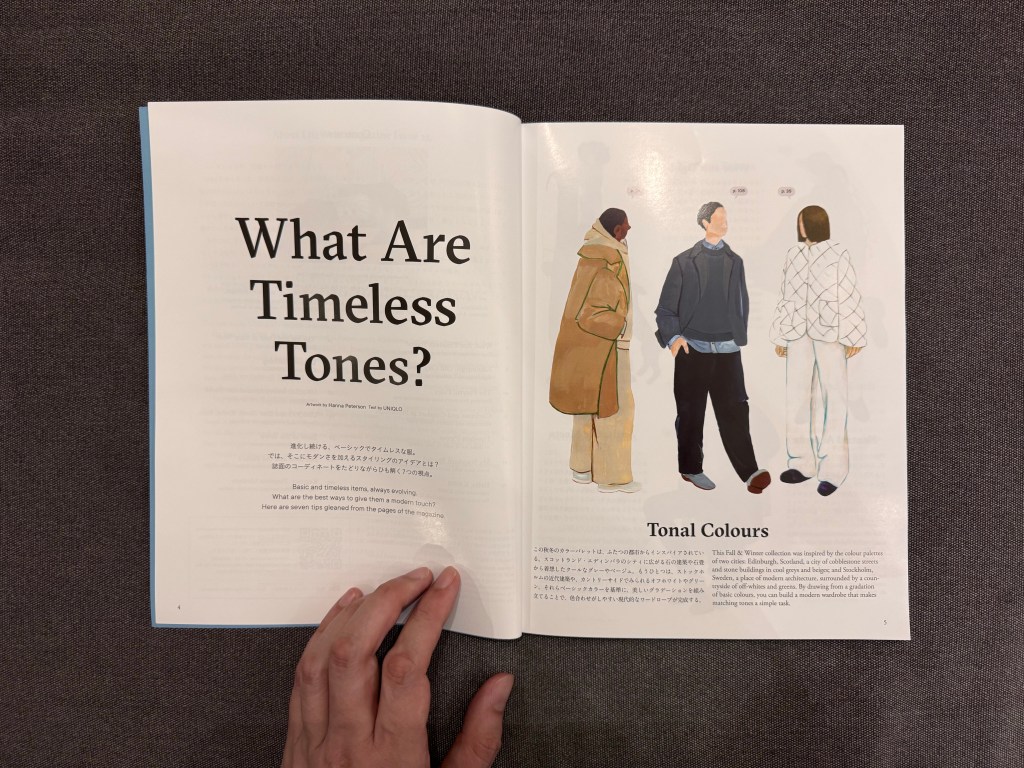
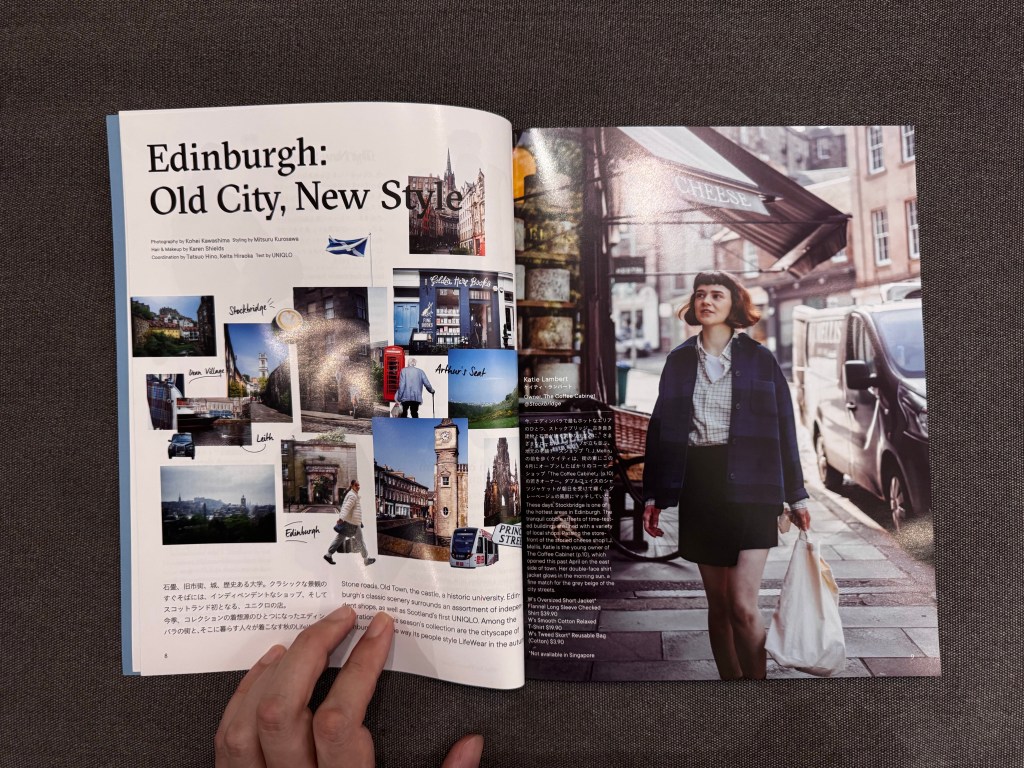
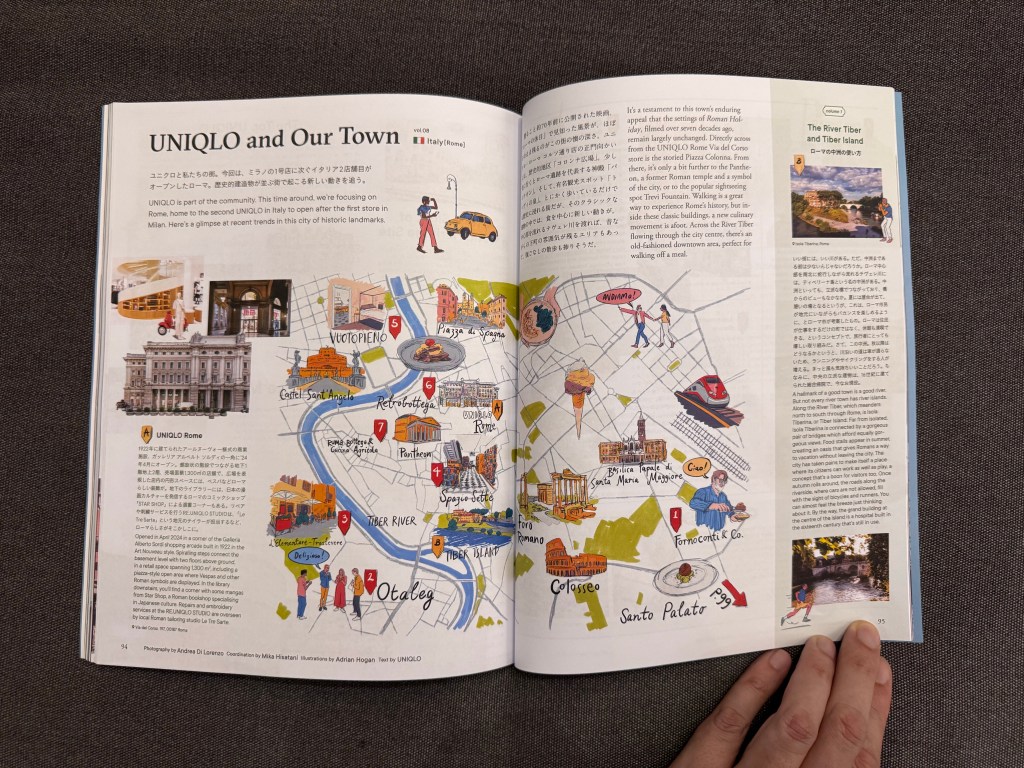
    Let’s loop back to Uniqlo: I half-joked on Instagram that one of the best design artifacts I saw whilst out exploring Singapore Design Week ‘24 was in fact Issue #11 of the free Uniqlo LifeWear magazine they give out in stores. It’s in both Japanese and English, with elements of Japanese editorial design and whimsical Monocle-esque illustrations. In addition to the expected fashion spreads of their products on models, there are also recipes, features about their global stores and the cities they’re in, and profiles of artists they collaborate with. I wish we had more brand publications like this, where there’s no distinction between making something nice for customers and trying to sell things. You can also read it online.


    On Thursday morning with some time to kill, I decided I’d best drop by the library@orchard to have a quick look before it closes down at the end of October for a lengthy renovation. It won’t be back until 2026, and the cynic in me thinks it won’t come back at all, much like how the Singapore Art Museum is now seemingly trapped in shipping port limbo, unable to return to its original downtown location because the land is now too valuable to allocate to the arts or whatever. I mentioned this before.

    Then I spent the afternoon with Peishan and Cien at an odd cafe that identifies as a co-working space — essentially you are welcome to sit there all day and leech off their power and WiFi, with no stated minimum purchase amount or anything. I don’t get the business model, but they’ve survived for years somehow. Perhaps it’s guilt based, because I ended spending twice as much in food and drink than the cost of a hot desk would be for an entire day.

    Media Activity

    I presume the other two got some work done, but I spent my cafe time clearing email newsletters and watching an episode of The Old Man, a 7-part TV series from 2021 that I didn’t know existed until recently. It stars Jeff Bridges as an aged CIA agent in hiding whose past catches up with him (I know, I know! But I’ll always make time for a set up like this), and the first two episodes were directed by Jon Watts (Wolfs, Spider-Man: Homecoming). The whole thing is so well executed that I wish it was longer. I’m told the second season, running now, has lost the plot. But trust me, if you like spy stories at all, you’ll want to see the first.

    Wolfs (2024) is now out on Apple TV+ and I enjoyed it just fine. For me, seeing George Clooney play a spiritual reboot of Winston Wolf, the fixer from Pulp Fiction (1994), is such a treat that it overrides other parts of the film being predictable or “small scale”. There’s also undeniable chemistry between him and Brad Pitt, who does that thing where he goes from smug, unlikable asshole to an alright guy after all, right before your eyes. Too bad he can’t do that with his real family. 4 stars.
    I finished The Book of Elsewhere, a sci-fi/fantasy (really, I think it’s both) novel by China Mieville and Keanu Reeves. It was extremely enjoyable while sounding in many places like a thesaurus was devoured in the writing of it. Once you get past some of the “awkward” use of big words when smaller ones would do, the rest of the writing is good, and occasionally becomes deliciously unhinged. Phrases literally collide with one another and tumble down pages like experimental poetry in some places. Elsewhere, Mieville (I assume) manages to replicate the dreamlike quality of visual storytelling — this story first appeared in a comicbook series entitled BRZRKR, by Reeves and Matt Kindt — and narrates the immortal protagonist’s violent fugue states and how he experiences passing from death to rebirth with some of the most Class-A, Colombian-grade stream-of-consciousness I’ve ever seen.

  • Week 35.24

    Week 35.24

    First, an update on last week’s air conditioning saga. During another service visit, the professionals confirmed what my online research had suggested: a malfunctioning thermistor was the reason for inconsistent cooling. To test it out, they swapped sensors between two indoor units, and now that the cause has been confirmed after a couple of days, they have to come back yet again to replace the broken one (S$161).

    Shortly after, I was coincidentally served this cocky tweet about how “reasonably smart” people with internet access can now challenge an expert about their specific problems, because 1) the information is out there, and 2) the customer has more invested in the outcome than the vendor. For the record I tried hard not to preemptively suggest it to the experts, but when they diagnosed a ‘thermistor problem,’ I wasn’t the least bit surprised.

    New house problem: We found a dead cockroach and it’s been bugging me. I made a poll on Instagram Stories and asked how many people have seen a roach in their homes in the past year, and was surprised the results were pretty much 50-50 (n=29). It might be down to how many people have apartments with integrated rubbish chutes or face open-air corridors. In any case, there’s always something wrong and I need the universe to give me a break or better mental health.

    ===

    I joined my first-ever book club after hearing about it from some folks I met in inSpaze. They meet in the app for an hour every week, and have what I assume is a typical book club discussion if not for the fact that (nearly) everyone is in a Vision Pro.

    They’ve just started on a new book, Guy Immega’s Super-Earth Mother, which I couldn’t find in the library’s catalog and had to buy off the Kobo store. The title is my least favorite part, as it could turn some readers off. I didn’t expect to enjoy it as much as I did, but I ended up finishing it in just a couple of days. I was later chastised for this, as we’re supposed to be reading it together over three weeks.

    It’s about a billionaire’s mission to send an ark of human DNA across the universe in the care of an AI (Mother-9), and how its efforts to colonize other planets goes. That premise immediately reminded me of the back-half of Neal Stephenson’s Seveneves, but this is a very different effort. I think I described it in my Goodreads review as “a compact and accessible space epic”.

    What’s making this extra special is that one participant is a friend of the author’s, and they’ve been filling us in on little Easter eggs and references to real-life experiences. There’s also a chance that Mr. Immega might join us for a short Q&A in a later session.

    This external push to read broke my summer reading block. I had stalled on Neal Stephenson’s Interface for months, but after finishing Super-Earth Mother, I breezed through another hundred pages and am enjoying it immensely.

    Kim’s pretty old Kindle Paperwhite finally died, and I got her a new Kobo Clara BW (she declined the Color model, which I still think was an extra $30 worth spending), which is a very nice and slender reader in person. I am now envious of its USB-C charging and Dark Mode support, and am trying to stop myself from buying a Libra Color to replace my first-gen Libra. At over S$300 dollars, even if I’ve read 100 free books on mine so far (I haven’t), I’d still have paid $3/book for the sheer utility of an e-ink screen, which seems silly to me because one can read perfectly well on an iPhone. Or a Vision Pro, even.

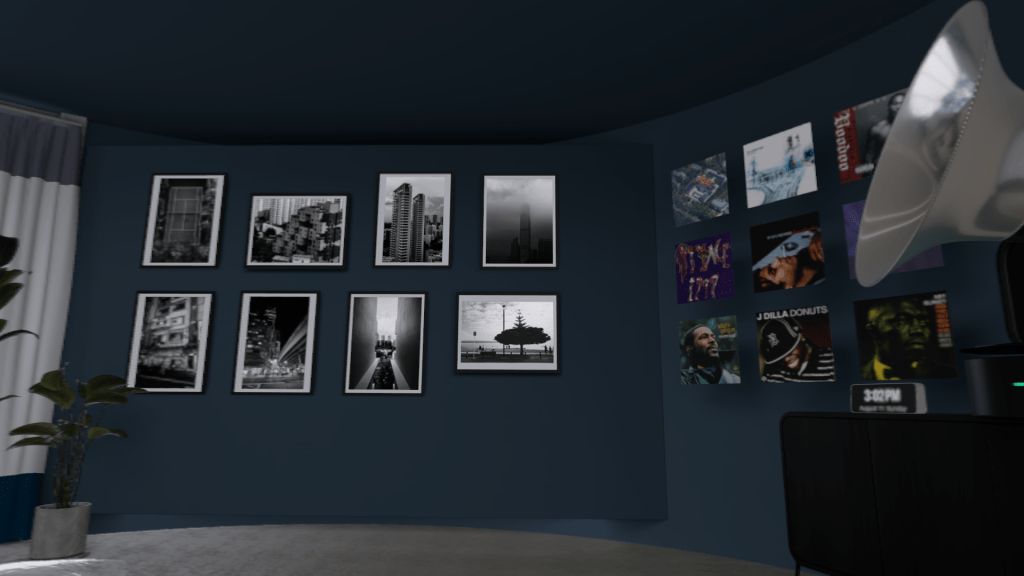
    I tried that, btw. Having giant floating pages in front of you is actually not terrible. And in doing so I hit upon another realization about the Vision Pro. Photographers are always saying that you should print your photos to appreciate them, at as large a size as you can, but how many of us really do? Most photos end up being seen on phones, and maybe laptop-sized screens. But now there’s a way to view our favorite shots at wall size and have a gallery-scale experience at home. And, I suspect, discover more flaws and limitations that will push us towards buying better gear. It’s tragic how much of the last decade we documented in piddly 12mp photos because iPhones were more convenient than dedicated cameras. Ugh!

    ===

    Media activity

    • We caught up on Sunny. This is a show that, on paper, seemed designed to light up my neurons. Robotics, AI, a Japanese setting, a “darkly comedic” mystery, a story about clashing cultures, an A24 production. But it’s not for me at all. I came across the above clip on how causality, consequence, and coherence (my terms) are essential in telling a story people can care about, and sadly Sunny fails to adhere to those rules.
    • But also on Apple TV+ is Pachinko, which has just returned for its second season, and I thoroughly enjoyed the first two episodes out now. I understand that it’s one of the most popular shows on the service, and I hope it finds an even wider audience.
    • The consensus online seems to be that Apple TV+ is full of great shows that people just aren’t discovering, and Bad Monkey is one of them. Again, I think the show’s title is the weakest link here, and you should be giving it a chance. Vince Vaughn does his thing, the dialogue crackles, and things move with causality, consequence, and coherence. It also kicks off with the discovery of a severed body part.
    • We rewatched Twister (1996) and then saw Twisters (2024). The original is an actual classic, directed by Jan de Bont (who also did Speed), and features a team of tornado chasers with actual, palpable camaraderie. You feel like you’re going along on an adventure with them, and part of that happens because the script bakes in ample downtime where they strategize, tell war stories while eating steak and eggs, and hang out in motels overnight. The sequel is almost embarrassing in how it tries to check a series of “mirror the original” boxes — there’s the in-over-their-head outsider whose terror is played for comedy, the traumatic past weighing on the female lead’s motivations, her magical gut feel that can predict weather better than the science-dependent nerds. But despite all that, it can’t reproduce the magic. Still, as a standalone movie, Twisters is not all bad, and Glen Powell is definitely becoming one of the most likable and bankable men in Hollywood. 4 and 3.5 stars respectively.
    • We also watched Office Space (1999), which I realize I’ve never really seen properly at all. It’s an anti-work masterpiece, with many themes and grievances that seem to be reemerging today. Sure, it came out around the time of The Matrix, when rebellion against cubicle offices was at its peak, but I can’t recall many films in the past ten years that have so strongly espoused quitting your dumb job, burning your workplace to the ground, and finding purpose somewhere else. 4 stars.
    • Gregg Araki’s Mysterious Skin (2004) was leaving MUBI, so I decided I’d better see it. Boy, what a downer. I looked at reviews on Letterboxd and here are some excerpts from the positive ones: “This is a flawless film, but don’t watch it.” “This is not a movie I should’ve watched.” “I will never recover from this.” “What if I just walked into oncoming traffic”. 4 stars from me, but I tried not to think about it too hard. It might be a 4.5.
    • Also leaving MUBI was the French film Summer Hours by Olivier Assayas. It’s a quiet and beautiful story about the familial unraveling that happens when a parent dies and there is ‘bric-a-brac’ to be split up and hard discussions to be had. Sad subject matter, but nowhere approaching the rock buttom of Mysterious Skin’s tragedy. Also 4 stars.
    • I tried again to start watching Assayas’s Irma Vep TV series, but various interruptions have stopped me from finishing the first episode. I know it’s not a straightforward remake of the original film, but Alicia Vikander’s character is so different from Maggie Cheung’s that I’m intrigued to see what he’s trying to say about her/them/filmmaking with this new take.

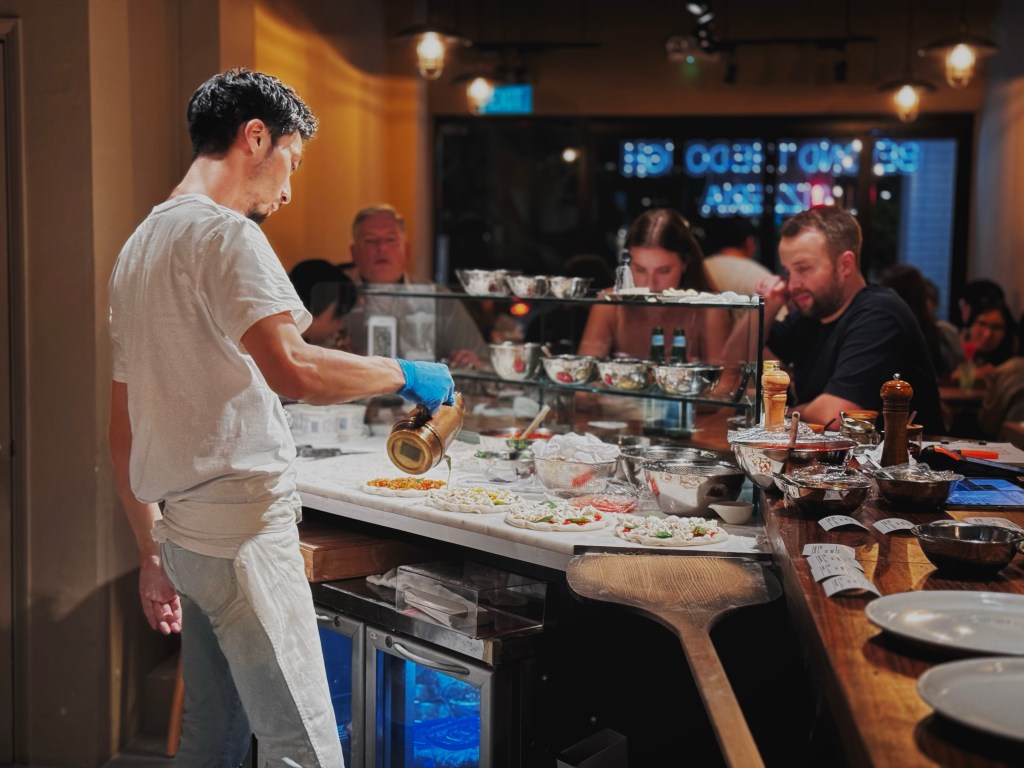
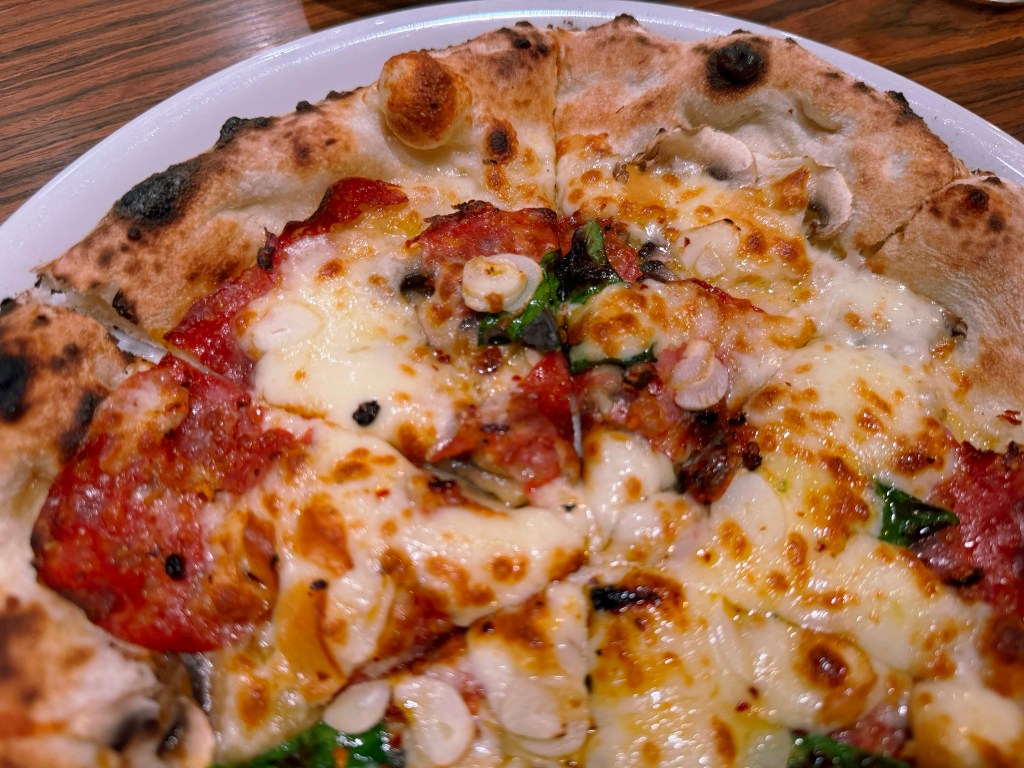
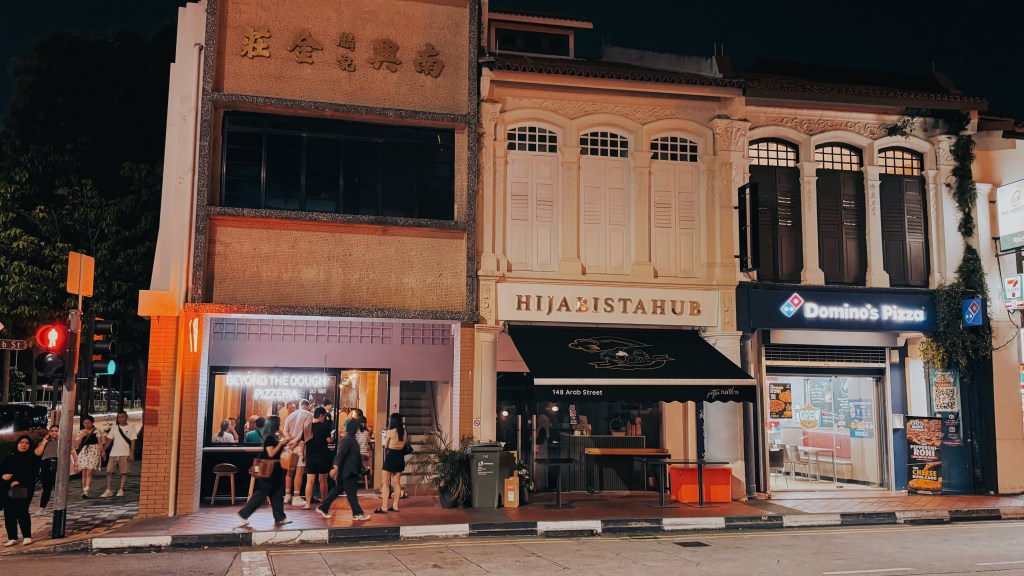
    Featured photo (top): A superb dinner we had at Beyond The Dough on Arab Street. It’s one of those places that brings obsessive Japanese craft to traditional pizza. They are amusingly two doors down from a Domino’s outlet.

  • Week 34.24

    Week 34.24

    It seems like there’s always something wrong, and I feel like it’s one problem after another these days. The same night as my near-death experience (previously on…), I came home to find that our bedroom’s air-conditioning had died instead. It would put out only semi-cool air, then just regular air, in a cycle that lasted all night. The next day, I dragged a standing fan into the room to make things a little more livable. A few nights later, when Kim returned from Australia, we started to sleep in the living room where the air-conditioning still works.

    What followed was a series of visits by different servicemen, each finding something legitimately “wrong” but none ultimately solving the problem. There was the simple fact that the unit was clogged and dirty — despite another company just having “cleaned” it two months ago. They did a regular wash (S$66), but had to return on Wednesday for a deep chemical overhaul (S$150), and a washing of the outdoor compressors ($50). When that didn’t solve it, it was discovered that the outdoor compressor was flashing an error message, and the entire power PCB (printed circuit board) needed replacement ($711.50). FWIW it’s a Mitsubishi Starmex system; future buyers beware.

    One week later, and the problem still hasn’t been addressed, and we’re still sleeping in the living room.

    I need to mention how this has lived in my head as a much bigger problem than it objectively is. After getting home from the hospital, I just wanted to lie in bed and have everything be absolutely NORMAL. To have no outstanding problems in the world — just being in a state of calm to mentally recover. But immediately, something was wrong in the home, a psychological intrusion in my metaphorical safest space. This has just made me an anxious freak all week, feeling low and spiraling into worst-case scenarios. Like, what if they find there’s a problem with the piping in the walls and need to hack them out in our bedroom? What if this is going to cost even more money than what’s already been spent? I do believe this is all likely in the coming week.

    Another source of anxiety is the actual repair visits themselves: not only is there cleaning up to do after (which I couldn’t really with a foot injury), but our compressor units are installed outside the bedroom window, over a fragile “roof” that probably can’t take a person’s full weight. To work on them, a technician has to climb out (one even did it without safety gear) and stand precariously on a tiny parapet, dangerously close to either tumbling into our living room or down several storeys. At work, seeing all the things that can go wrong is my superpower, but it’s not a useful one to have right now.

    On the bright side, my foot is much better already, and I’m able to walk normally enough to go out for short periods. I expect I’ll be back to normal in another week. Whenever the feelings of doom reach a critical point, I remember that I’m actually alive and uninjured, and a lack of air-conditioning rarely (but not never) kills anyone, and then I get a spiritual HP reset. I just need to think like that all the time and take it easy.

    ===

    Once I was able to hobble well enough, we went to see Trap (2024), which lived up to my expectations of a fun little outing. As of right now, Shyamalan’s second wind as a maker of tight little B-films based on killer elevator pitches is looking pretty sustainable, and I’m hoping for many more. Next, I’m gonna finish watching the final season of Servant, his series on Apple TV+.

    We also had time for a quick lunch with Uma of Goggler Malaysia, a media criticism outlet after my own heart that I encourage checking out even if you, like me, have nothing to do with Malaysia on a regular basis. They do a fun podcast and publish spot-on film and television reviews. We talked about his new Apple Vision Pro and I outed myself as someone who’s never seen any of the Godfather films. But I’ve taken the first step: buying the entire trilogy on the US iTunes Store at the current sale price of US$9.99. I’m planning to watch it in the AVP’s Cinema environment someday soon.

    Finally, we visited the Olafur Eliasson exhibition at the Singapore Art Museum (Tanjong Pagar Distripark) with Cien, Peishan, and James. I say finally because this visit has been postponed three times on account of our various illnesses and accidents. Unfortunately I was not moved by anything, and it felt like a series of science experiments crammed into a small soulless space that lends no gravitas or beauty to an artist’s work.

    I remember the original SAM fondly, and hope the museum will move back into its former space off Orchard Road although that’s looking more unlikely. The news can sugarcoat it all they like, but calling a remote concrete slab beside a container port ’eminently suited for contemporary arts purposes’ is a stretch. I’d love to see the so-called ‘positive feedback from visitors’ they’re receiving. Art doesn’t belong out somewhere you need shuttle buses for people to encounter it. The museum’s rightful place is wherever ordinary people are already going.

  • Week 32.24

    Week 32.24

    It was Kim’s birthday and to celebrate, we went out for some great yakiniku at a place called Yakiniquest (the name gets points for trying, I guess) where the service was great but the food was incredible. It was probably one of my Top 3 wagyu experiences, along with Matsusaka beef in Kyoto (we walked into an acclaimed, booked-out restaurant and were given a table that had just no-showed), and of course, Kobe beef in the delightful, jazz-adopting city of the same name.

    As an extra surprise, I orchestrated Cameo shoutouts from celebrities on two of the reality shows we unapologetically enjoy bingeing together: Below Deck Down Under, and Gogglebox. I put them on our media server and turned the TV on in the morning, telling her new special episodes had just dropped overnight. She bought it, and it was a fun moment.

    The rest of the week was spent in the tight embrace of the Apple Vision Pro’s dual loop band. One of the things I hoped to get out of being an early adopter of the AVP (both the product and the platform) was a closeness to this new spatial computing form as it germinates, to have a sense of “spatial nativeness” develop in my brain. A sense of its conventions and limits that would help me intuit how to navigate and create new experiences for it, should I ever want to. Which means always being on the lookout for new apps (both programs and applications) and trying them out.

    This week I spent time in a social app called inSpaze, built exclusively for the Vision Pro. As a result of that positioning, and the lack of current competition on the App Store, it’s become the de facto place to hang out and meet other Vision Pro owners to swap stories and recommendations. Try to imagine a cuter, visual Clubhouse, where you spend time in virtual living rooms you can decorate and personalize. In addition to chatting, you can look at photos and 3D models together, listen to music, and play card/board games.

    It’s worth pointing out that you don’t get a normal webcam view of each person, because you’re all wearing Vision Pros. So like all videoconferencing apps on the system, it uses Apple’s Personas: photorealistic avatars based on face scans you do when setting up your Vision Pro, that use its many sensors and cameras to mirror what your real eyes and face are doing.

    If joining a roomful of random strangers from around the world and jumping into whatever conversations they’ve got going on sounds like an introvert’s worst nightmare, that’s because it probably is. I did it anyway, and found it slightly thrilling but also chiller than expected. For one, the use of Personas creates psychological distance; it’s you, but it’s also more a puppet that looks like you. I commented on this and others agreed it made them feel safer.

    What struck me most, though, was how nice and welcoming the community feels, because we’re all early adopter nerds enthused to be sharing this novel experience. It reminds me of the internet when I was a teenager, where the thrill of meeting someone from across the world was pure and untainted by the danger and cynicism that later crept into online spaces. And of course, there’s the fact that a community gated behind a S$5,299 purchase is more likely to be well behaved.

    One nice touch that allows truly cross-border communications is the real-time translation that puts subtitles under each person speaking. In the daytime here, I’ve met a lot of Chinese speakers, and this feature has helped me to follow some conversations I otherwise wouldn’t have.

    It was during one of these afternoon sessions that I met one of the key people behind the app, and we got to talking about their opportunity, business model, and product that got me thinking more about the challenges that smaller developers are facing with this new platform. It’s a well-reported fact by now that AVP sales are low by Apple’s standards. While that’s easily explained by the steep entry price and the challenge of defining a new product category, it still poses a chicken/egg dilemma for creators.

    Solo developers and very small teams doing this on the side can probably justify toying with small apps and selling them for a few dollars, but anyone building something ambitious on the level of a social network or massively multiplayer game, for a total addressable market in the low six-figures — AND having to bankroll it for the next couple of years while Apple works on the cheaper model and second generation Pro — is being asked to take on more risk.

    I have no doubt that Apple will persevere and iterate until this category succeeds, like they always do, so it’s not a question of whether Apple Vision has a future. It just needs to convince developers and their investors to stay faithful, and seed the demand. It’s going to be tricky, and I’d like to see Apple advertising hard for the next 18 months to keep spatial computing visible and galvanize the ecosystem. Even if people can’t find the means to buy the product, they should want to.

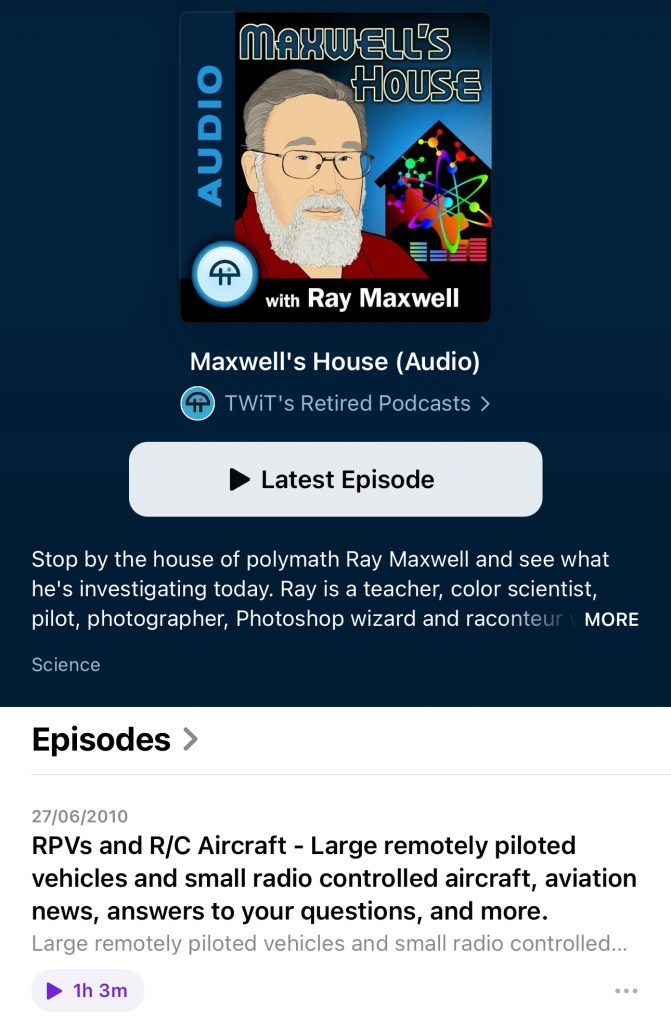
    As further proof of the magical, early-internet vibe, I logged into inSpaze early one morning and met a varied group of American users, including a hospital administrator and VR-obsessed truck driver. After many in the room logged off, I found myself speaking with a Canadian man who casually mentioned working with tech podcasting luminary Leo Laporte over a decade ago. As he continued, it dawned on me that he was Ray Maxwell, an 80-year-old polymath whose name I would often hear on Leo’s This Week in Tech (TWiT) network, where he once had his own podcast about aviation and various science topics.

    As a one-time avid listener of TWiT, I can’t overstate how starstruck I felt as Ray told me stories from his expansive career: time spent at McDonnell Aircraft in the 60s, adjacent to where the Gemini space capsules were being built; color science engineering at a company later acquired by Kodak, recommending SF stories by his friend (two-time Hugo award-winning author!?!?) Spider Robinson; and how he’s recently been into capturing spatial video for the Vision Pro.

    I recognize that the early days of any new frontier, team, or relationship are a special thrill that can’t be expected to last, so it’s up to us to maximize and enjoy every moment. Feel free to reach out if you’re getting into spatial computing and want to swap notes!

    ===

    Music

    It must be the peak of the summer release schedule, because so much new music has come out this week.

    The new Glass Animals album is one of those that starts with a banger and keeps the energy going until you’re five songs in and picking up your phone to check the tracklist in disbelief. It’s called I Love You So F*ing Much and it’s soaked through with space beats, vocoders, and addictive melodies.

    I knew they had a cult following before 2020’s Dreamland introduced them to everyone, but I foolishly never got deep into it because the phenomenally successful Heat Waves overshadowed every other song. On hindsight, that tune would have done the same on 99% of albums — it’s the longest charting song in the history of the Billboard Hot 100. Now I’m excited to soon experience their two older albums for the first time, ZABA and How to Be a Human Being.

    ROLE MODEL is back and he’s shed his hipster-emo guise for a cowboy hat after breaking up with Emma Chamberlain (I just found out). Kansas Anymore is filled with the same lite and lovable pop earworms that I enjoyed on his last album, just a lil’ bit twangier.

    beabadoobee’s This Is How Tomorrow Moves is finally out, and I’ll admit that while I’ve liked all her past releases, none of them have ever made it into heavy rotation for me. I think this will be the one that does it. Early singles Ever Seen and Take A Bite were strong songs in her usual nostalgic 90s alt-rock style (with charming videos by her boyfriend, Jake Erland), but the newest one Beaches is perfect! In any of the last three decades, Beaches would have been an instant classic. She made it while working with Rick Rubin at his ‘Shangri-La’ studio in Malibu.

    Rick Rubin continues to fascinate me as a kind of guru or shaman of the music industry, somehow wielding enormous influence without any formal musical ability himself. He’s somehow able to hypnotize or imbue artists with the confidence to create their best work, just by sitting with them and giving feedback. He wrote a book about his creative process that some reviews call an essential bible, while others say it’s a collection of trite cliches. I suppose I’ll have to read it for myself soon.

    I also found myself enthusiastically nodding along to Killer Mike’s new album, entitled Songs For Sinners And Saints by “Michael & The Mighty Midnight Revival”. It’s loaded with funky beats, soulful playing, gospel choirs, and some very sharp rapping.

    It’s safe to come out now. The Smashing Pumpkins have finished releasing their three-part concept rock opera, whatever it was called. They’re now back with a proper album that promises the good old guitar-driven songs they were loved for back in the day. It’s called… er, Aghori Mhori Mei, a title that doesn’t inspire any confidence that Billy Corgan is back on his meds. My god, the edgelordism is only accelerating with age! Here are some lyrics chosen at random: “Milk such blood / To fare thee lost from all but way / And awaken the sea I light / Our slumbers save the sleep / Wherefore we climb…” Kerrang has given it 4/5, at least. I kinda enjoyed it on a musical level but wasn’t listening closely. I’ll keep trying.

    Vultures 2 came out and I didn’t even know. I think I tapped through to Kanye’s artist page in Apple Music just on a whim and was surprised to see it at the top. Nobody wants to support him anymore with all the shit he pulls, but he’s probably better off with no one knowing about this album, if my two playthroughs so far are any indication. It’s a shoddy mess, with some songs having the seeds of greatness in them, but just withered and stunted on the vine. North West features on one song again: the awful “Bomb”, which has her repeating level 1 Duolingo Japanese phrases like “ohaiyo gozaimasu, konnichiwa” over a truly busted beat. According to one recent IG post, he’s still ‘updating it daily’ on streaming platforms so maybe check back in a few months to hear the album’s final form. Or don’t.

  • Week 31.24

    Week 31.24

    It’s been about three months since I embarked on a break from full-time employment, but my subconscious seems determined to remind me of what I left behind. I’ve had about a half-dozen dreams about work: either I’m being called back to help fix something “for just a few days” and finding I can’t leave, or I’m being given some “urgent” problem that is really a big overreaction — I must stress none of them were actually based on real situations or people, which is the weirdest part. Each time, I wake up and realize it’s not just that the problems aren’t real, but I haven’t got ANY problems like them at all, and it makes the whole thing worth it despite opportunity costs.

    With Kim’s leg injury improving, my focus shifted from caregiver to caretaker of my own neglected digital life. The first task was reviewing my digital security practices: passwords were reset, new tools deployed, and unlikely edge cases considered and guarded against. Take this as your reminder to please sort this stuff out for yourself! You must get a password manager. Use 2FA and unique passwords for every website, no exceptions. Protect yourself with a Recovery Key for your iCloud account, and add some trusted people as Account Recovery contacts and Legacy Contacts so you/they can access your data in the event of a hack or your demise.

    Next: email migration! Whoo!

    Four years ago, I switched from Gmail to Hey.com, a $99/yr email service that offered an opinionated user experience which meant leaving behind nearly two decades of history for a fresh start. They don’t support you bringing your email archives along. They don’t even let you use your own choice of email app; their web app and hybrid apps are all you get. I wrote two posts about it back then, saying I would probably not continue with my free trial. But I ended up doing it anyway, and for the most part I’ve really enjoyed trying a new approach to such an ancient, core component of online life.

    For one thing, I never got spam in my inbox. Hey unfortunately lets a lot of spam through, but they land in a separate zone called “The Screener”, along with any mail from an unknown address mailing you for the first time. From here, you can either let them in or block them. It’s a small difference, reviewing a bunch of possible spam on a separate page versus seeing them mixed in with all your legit mail, but feels huge because your inbox becomes a serene, protected space. Admittedly, taking care of “The Screener” has become daily work because spam always gets in.

    From what I’ve seen of Gmail in the past four years whenever I log in for a peek, it’s a post-spam apocalyptic wasteland. It looks like Google has just given up on detecting and filtering spam because some data-driven PM decided it won’t hurt their bottom line.

    Since my current Hey subscription ends in September, I looked into whether it might be time to switch again. Three key reasons: Apple Intelligence, performance, and $99/yr is money I don’t need to spend on email right now.

    Apple Intelligence: I’ve never liked the Apple Mail app on iOS. It felt a little underdeveloped for handling the different needs of modern email — without the tagging and search filters of Gmail, or the segregation of personal mail, newsletters, and receipts that Hey.com built their UX around.

    But the new AI-powered Mail app in iOS 18 looks exactly like what I want, and I’ve decided to embrace the power of defaults. I’m bearish on some aspects of generative AI, but this stuff is where it shines. Because Apple Intelligence will be able to understand what emails are about, it can summarize and prioritize messages while sorting them into categories like “Updates” and “Invoices”, so you can tackle them with different mental modes. I’m hoping that AI will also bring spam filtering that really works. Sadly, because Hey.com intentionally won’t support IMAP and SMTP, I can’t use them with Apple’s new app and have no choice but to leave. The Hey manifesto also contains strong wording that suggests they won’t be adding any AI features soon.

    Hey.com’s performance: It was never blazing fast to use their apps because they’re hybrids with seemingly little caching, and it annoyed me to death every time I ‘backed out’ of a link to find that the whole thread of newsletters I was reading had refreshed and I was back at the top again, but lately things have gotten even worse. About a year ago, the Basecamp/Hey founders went on a crusade against cloud hosting services and decided that they could self-host their services and save millions. I have to assume their infrastructure is extremely Western world or US-centric, because speeds have become terrible for me here in Singapore. I’m talking about noticeably slow performance waiting for EMAILS TO LOAD. I got even more confirmation of this when I tried downloading my 1.6GB .mbox archive to move elsewhere: it was capped at 100kb/s and took me over five hours. I can normally download a file of that size in maybe a minute?

    Ninety Nine United States Dollars A Year: Yeah, I can’t justify paying this much to have my email load slowly AND miss out on exciting AI features. I’m already paying for iCloud+ with tons of storage, so it seems logical to just use iCloud Mail as well. Bless Hey though, they let you keep your @hey.com email address for life even if you leave, so I’ll continue using mine and forward everything to my Apple address.

    A note about concentration risk: I’m aware there are risks in letting one company handle your entire digital life. All it takes is one successful hack locking you out of your iCloud account and it’s game over. For that reason, I would recommend NOT using the new Apple Passwords app coming in iOS 18 if you know how to select and use a third-party one. It’s a great default for people who wouldn’t use a password manager otherwise, but if you can have another basket for that egg, do it. Email is particularly important to keep separate, as most of your account passwords can be reset in the event of a hack if you still control your email address.

    But like I said about the Vision Pro and its integration with Apple Services like Arcade and TV+, I’m finding myself getting even deeper into their ecosystem and liking it fine. Where I once subscribed to differentiated, prosumer-serving alternatives to Apple’s ‘good enough’ apps, these days I prefer their simplicity and constraints.

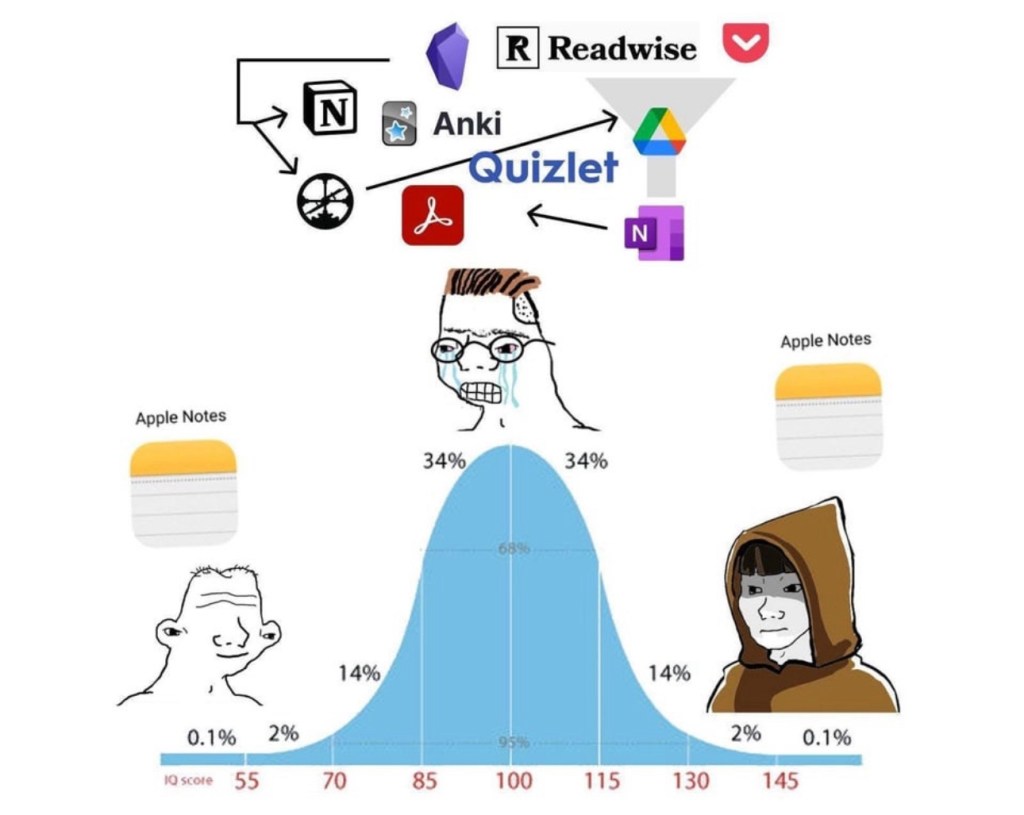
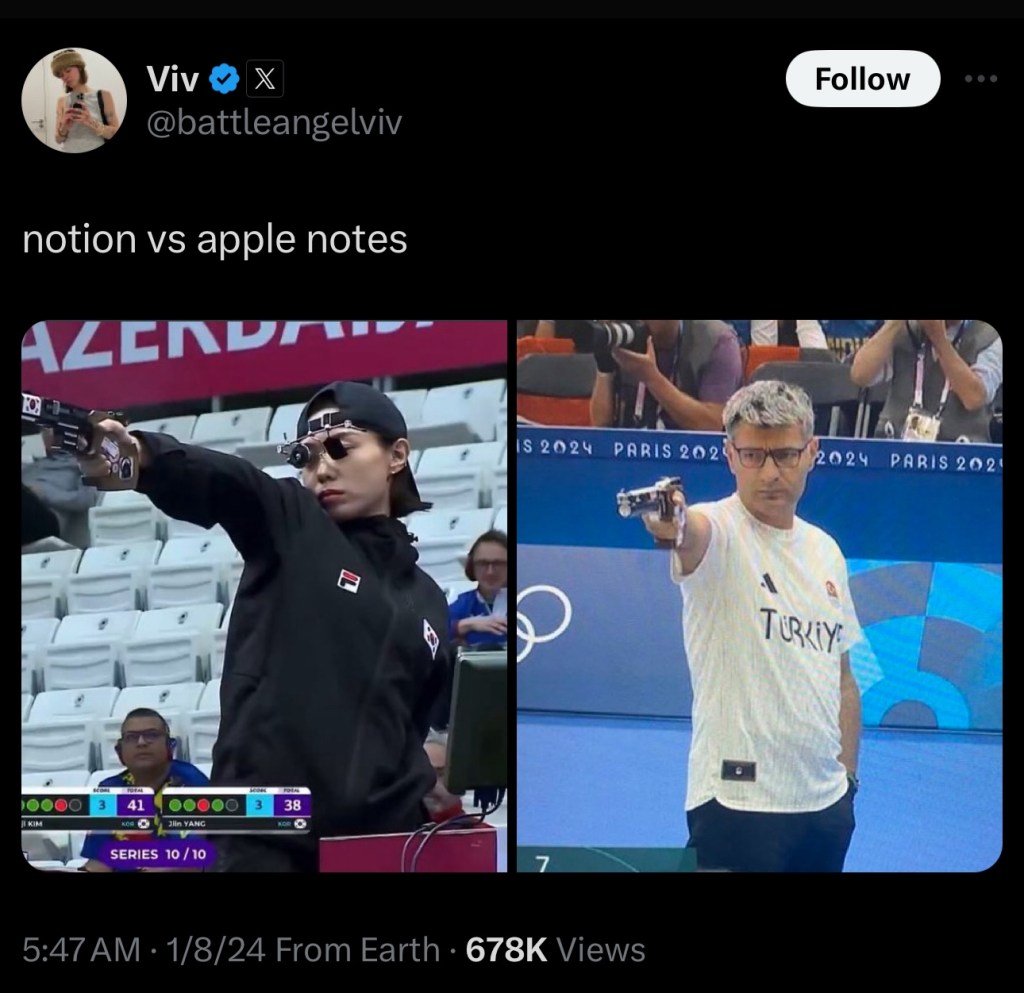
    I switched from Evernote to Apple Notes several years ago and haven’t looked back. Side note: I’ve been on an anti-Notion campaign ever since I saw an unsuccessful rollout in my last team; it’s another overpowered tool for fiddly people who like to overcomplicate their tasks. I’ve used iCloud Calendar since leaving Gmail. I’ve even ported a lot of ancient files from Google Drive and Dropbox to iCloud Drive. And now email, arguably the most crucial service of all.

    “Hang on, Apple Intelligence in the Mail app isn’t out yet and might not be until the end of the year! How will you live until then?”

    Thanks, little imaginary reader, I’m glad you asked! I’m using Spark Mail in the meantime, which I’ve dabbled with in the past using my Gmail account. It’s a mail client with a bunch of smart, AI features (for a price) that are pretty close to what Apple promises. For one, a smart inbox that works quite well at sorting your different mail types, and a feature called “Gatekeeper” that works just like Hey’s “The Screener”. Their asking price is less than Hey’s, but more than Apple’s (free, if you already pay for iCloud+).

    Just a couple of days into using Spark with iCloud Mail, and two things stand out: One, it’s so nice to use a native email app, and two, I’m actually reading my newsletters again. In Hey, newsletters are collected on a a separate, infinite-scroll page called “The Feed” which suffers from an ‘out of sight, out of mind’ problem. In Spark, received newsletters sit inside the main inbox, just collapsed into a single line. This seems to make a difference. It’s a visible nudge to check them out, and because they load and react instantly, you can actively triage them and unsubscribe/block/delete if you find yourself asking why you ever signed up for one. Where Hey’s endless stream of newsletters can get overwhelming, Spark’s (and I assume Apple’s) approach is more like a physical magazine or newspaper with a finite amount of content, which most people prefer.

    I should have taken my own advice in 2020 — it turns out Spark’s approach was always the better fit for me. I even made visual aids to explain it!

    This diagram above is how HEY is laid out, if you think of each column as a screen. In the Imbox and Paper Trail, each email is a single line item, while they are larger previews in The Feed, which is designed to give a peek into newsletters so you can decide if you want to expand and read them. This doesn’t work for me because I don’t want to keep all of Graniph’s new product announcements, but I do want to see them.

    And this is an illustration of how I’d prefer to handle my email. A single inbox view encompassing important emails and personal letters, newsletters, and updates/receipts/notifications from other services. Spark … is the closest thing I’ve found to this.

    All in, it’s been a week of fiddling with things that seemed to work just fine, but hopefully I’ve simplified and improved them for the future and not introduced more things to maintain.

    ===

    Media Activity

    • Before I could move off Hey Email, I had to finish my backlog of favorite newsletters. One of them was Craig Mod’s “Return to Pachinko Road” series from earlier this year. Over 18 days, he walked 694,942 steps and wrote close to 50,000 words in daily email updates. I read them while waiting those five hours for my mail archives to download. He’s such a good writer, and I can’t recommend enough that you sign up for his newsletters and/or membership if you can spare the money (regretfully, I can’t right now as a member of the unemployed class).
    • MUBI’s collection of films by Abbas Kiarostami is leaving the service over the next couple of weeks, so I prioritized watching them, starting with the Palme d’Or-winning Taste of Cherry (1997). God, I was not prepared for it on a Monday afternoon and fell to pieces during the old man’s monologue in the final third. Fortunately, I watched it on the TV because I don’t think Vision Pros have an IP rating. 5 stars.
    • Next was Through the Olive Trees (1994) which was very charming — the Iranian actors’ performances are fantastic, and perfectly naturalistic in keeping with the cinematography. I initially score this a 4, but it’s now a 4.5-star film for me.
    • The Wind Will Carry Us (1999) shares some landscapes and in-car camera angles with Taste of Cherry, but where the latter is heavy with life’s troubles, this one centers hope and rebellion against the narratives we find ourselves in. One could even read it as an anti-work parable: forced on a business trip of indefinite length, neglecting his family’s pleas to return home for a funeral, summoned to give gravely inconvenient (hur hur) updates to his boss at all hours, a workaholic asshole learns to relax, enjoy the local milk, and finally give his assignment the finger. 4.5 stars.
    • Fresh off Presumed Innocent, we were looking for another legal thriller to watch and discovered neither of us had seen The Firm (1993) starring Tom Cruise. Welp, it turns out there are no courtroom scenes in the film at all, and he’s a tax lawyer. Still, a very enjoyable 3.5 stars.
    • The Paris Olympics are on, and despite not caring much for sports I’ve found myself unable to resist watching competition on a global scale. Mostly tennis, but also archery, shooting, diving, gymnastics, and some athletics.

  • Week 30.24

    Week 30.24

    An enduring memory/scar I have from my university days is watching a documentary on the UK’s Channel 4 called Fat Girls and Feeders. It was about women who were extremely overweight (the term ‘morbidly obese’ may not be strong enough), to the point of being completely dependent on others for everything, and the (non-fat) men who liked and kept them that way. These women were immobile prisoners, either confined to bed or needing support to get around their homes, which were fitted with handlebars and accessibility fixtures everywhere. It was a saddening story of abuse and sadism in the guise of a consensual kink.

    But why am I mentioning this? Well, the week got off to an awful start with Kim slipping at home and pulling/spraining/tearing a leg muscle, badly enough that she couldn’t put any weight on it without wincing. So she’s spent the last six days lying in bed resting and icing it, and I’ve been the nursemaid and caregiver helping her to the bathroom, making dinner, fetching water, just being on call for whatever. And having gone through this, let me just say! Those feeder guys are really sick if they find this fun!

    Thankfully, the swelling has gone down and the pain is moderating. She can now get up and walk around slowly on her own, but sitting in certain positions still hurts. It’ll probably be a few more weeks before life gets back to normal, but this was an eye-opening preview of elderly life and if we don’t make it rich enough to afford the best AI robocare, then I hope I die before I get old.

    ===

    • 📺 We’ve been watching Netflix’s new Japanese reality series, The Boyfriend. I’d hoped it would be a spiritual successor to my beloved Terrace House, only with gay men, but it doesn’t quite capture the essence of what made TH great. Perhaps because of what happened with TH, the commentary panel here never goes too hard on the ‘contestants’, but more than that, I think it’s just a different sort of show. Terrace House was more about watching young people learning to live together and develop over a longer period, whereas The Boyfriend is overtly about “finding love” and takes place over just a few weeks.
    • 📺 We also resumed and finished Season 8 of Below Deck after a break of several months. My usual complaints about Captain Lee’s leadership apply: he’s not hands-on at all, communication is poor, and his boundaries/consequences aren’t clear and can’t be taken seriously. However, because this season took place in Feb–Mar 2020, just as Covid was brewing, seeing the crew get increasingly ominous updates from family abroad and ultimately being shut down two charters early makes for an interesting document of a very strange time.
    • 📺 The season finale of Apple TV+’s true crime/courtroom drama Presumed Innocent came out on Wednesday, and I think they stuck the landing. It’s one of the better shows on the service, and has apparently been renewed for a second season, which I assume will feature a completely new story and setting, in the manner of True Detective.
    • 📺 I’ve started on Season 1 of The Big Door Prize, also on Apple TV+, and think it’s rather good. It’s about a small town that receives a mysterious machine that tells you what your potential is, and soon everyone is reevaluating their lives and having crises. But it’s also a comedy with surprising emotional depth.
    • 🎬 I watched the seminal short film La Jetée (1962) on MUBI and immediately thought, ‘Oh this is quite like 12 Monkeys’, and unfortunately saw its twist ending coming. I wrote “√12 Monkeys” on Letterboxd, thinking I was very clever. Then I looked it up and hey, 12 Monkeys was explicitly inspired by La Jetée, so that makes sense. Despite that, it’s a must-watch because the form of it (a slideshow of black and white stills with a voiceover) is ingenious and works so well to create a slippery narrative vehicle: is this all a document? A memory? An oral story passed around in a broken future? —4 stars.
    • 🎬 I also watched The Bat Woman (1968), a truly terrible B-movie, only because it was due to leave MUBI. It reminded me of some schlocky sci-fi Singaporean films from the 60s that I’ve seen at film festivals; the acting is either hammy or wooden, the special effects are often just literal toys, and the story is a nonsensical farce. A rich lady solves crimes as Batwoman, which is also her Lucha wrestling persona (I suppose to sidestep any copyright claims), and helps the police catch a mad scientist who is trying to breed a fishman monster. It ends with a sexist joke: Batwoman, in her civilian clothes celebrating victory with two male partners, screams and hides upon seeing a mouse while the men laugh. —1.5 stars.
    • 🦻 Very little music was played this week, but I enjoyed a run-through of Jesse Malin’s first album, The Fine Art of Self Destruction, in preparation for Silver Patron Saints, the tribute album due out in September to raise awareness and funds for his recovery. It will feature covers by Bruce Springsteen, Willie Nelson, Bleachers, Counting Crows, Dinosaur Jr., Lucinda Williams and Elvis Costello, The Wallflowers, Spoon, and many more.
    • Oh I nearly forgot! XG released Something Ain’t Right, the first single from their second mini-album (out 8 Nov) and it’s another banger!