Tag: Writing

  • Week 49.23

    Week 49.23

    As usual, I find myself in disbelief that another year is nearing its end. My Goodreads Reading Challenge count stands at 11 out of 12, and I’m halfway through a book right now, so I guess I’ll just make it before New Year’s. Which, incidentally, I’ll now be spending overseas thanks to some last minute plans. I’ll say where and post some photos after I’m back.

    On reflection, it’s a bit of a shame that almost all the books I’ve read this year were just 3-star affairs. It’s like I’ve held back from tackling the big names on my reading list, choosing lighter and more inconsequential fare. In some ways, this has been a calmly chaotic year, with instability in the wider world putting everyone on edge, and that may have influenced my need for soothing, low-stakes entertainment. I saw a mention somewhere that the self-care industry is “sedating women”, making them focus on trying to fix something in themselves instead of fixing the problems out there. I can relate.

    The holiday overeating has begun (although I may have forgotten to stop after last year), which I think is linked to a feeling of letting go and treating yourself in the evenings as work slows down (or seems less important) at this time of the year. We ended up eating out a fair few times, and as I write this I’m looking forward to another trip to Maji Curry this evening.

    It’s not just fat cushioning my bones — while at Tokyu Hands this week (now simply called Hands), I saw a $75 wavy seat cushion and decided I had to have it for all the sitting around I do when working from home. Does it do anything for me? I don’t really know! But I’m treating myself. And then on the weekend we wandered into some kind of fancy organic bedding store and walked out with a pair of new pillows. Kim unfortunately may have chosen the wrong height/density for her sleeping style, but after one night I can cautiously report that mine cradles my noggin just fine.

    ===

    Where’s the usual AI garbage, Brandon? I can hear you thinking it! Well okay, so Peishan mentioned she’d made a new zine, which reminded me of a project idea I’d written down and filed away. It was to make a zine on the subject of “Breakfast”, but using only AI-generated words and images.

    If you’re thinking that sounds like a pretty mediocre zine, then you understand the challenge here. We’re now at a point where generative AI’s infinite supply threatens to drive down the perceived value of all but the best; content vs. art. So I’d like to see if my human labor of directing an AI worker to deliver above-average quality and packaging its output as a coherent product, can create something worth looking at. The only way to find out is to make it! And now that we can do custom GPTs, I decided to start by making one that acts like a diverse team of writers and artists, with a range of different styles, which can then be applied to a zine on any topic you like.

    I’m still testing it out, but so far I’ve gotten a handful of articles. And in doing so, I’ve realized that I know nearly nothing about print layouts or how to design an attractive zine. I’ve read my share of mags, of course, but without effectively taking in their details. I’m making it with Pages on my Mac, and using its “Free Layout Mode” has been the best approach I’ve found. It’s sort of like a digital version of making a physical zine: I’m moving chunks of text and cut-out imagery around on A4 canvases; almost like scrapbooking. I just need more fonts and more imagination and more time.

    ===

    • I listened to no new music this week.
    • I didn’t turn my Switch on once.
    • I haven’t seen any films.
    • We did start Season 2 of Bosch Legacy though, and that’s still as great as ever. Not just the modern noir vibes and great jazz soundtrack. It’s a show that respects its audience and their time, without overelaborating on plot points or explaining every term or acronym that comes up. We’re already on episode 7 of 10, and I’ll be sad when it’s over. Thankfully a third season has been confirmed!

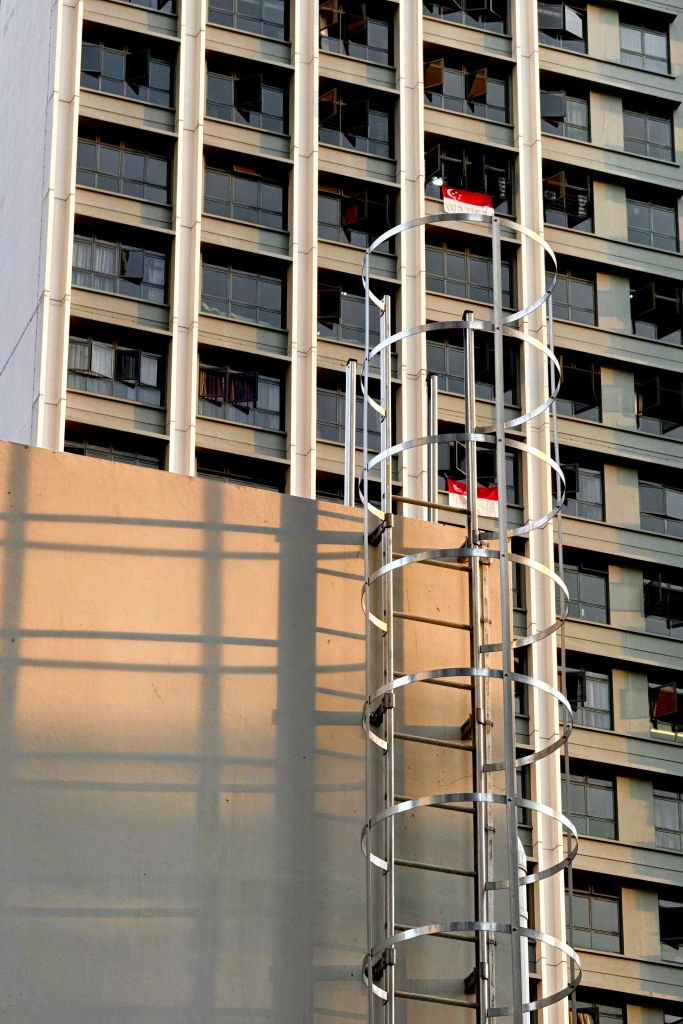
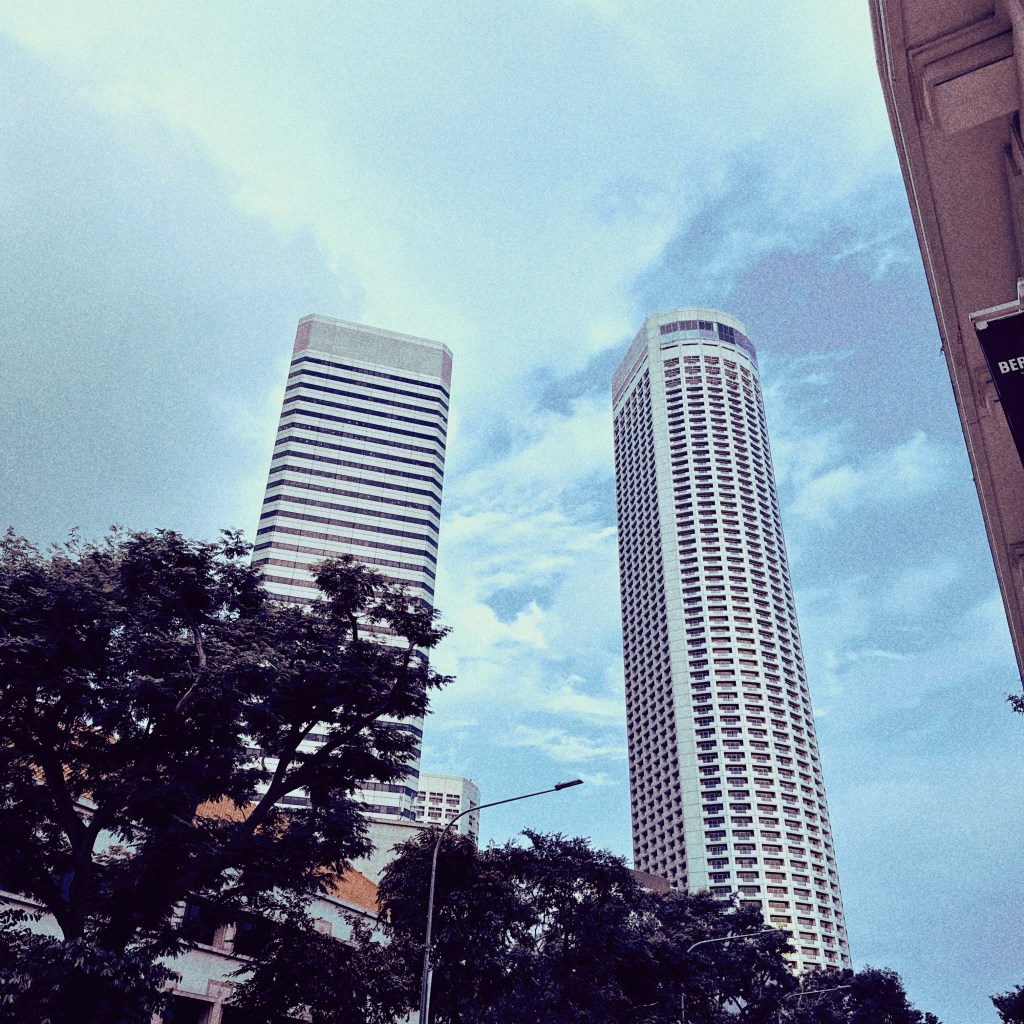
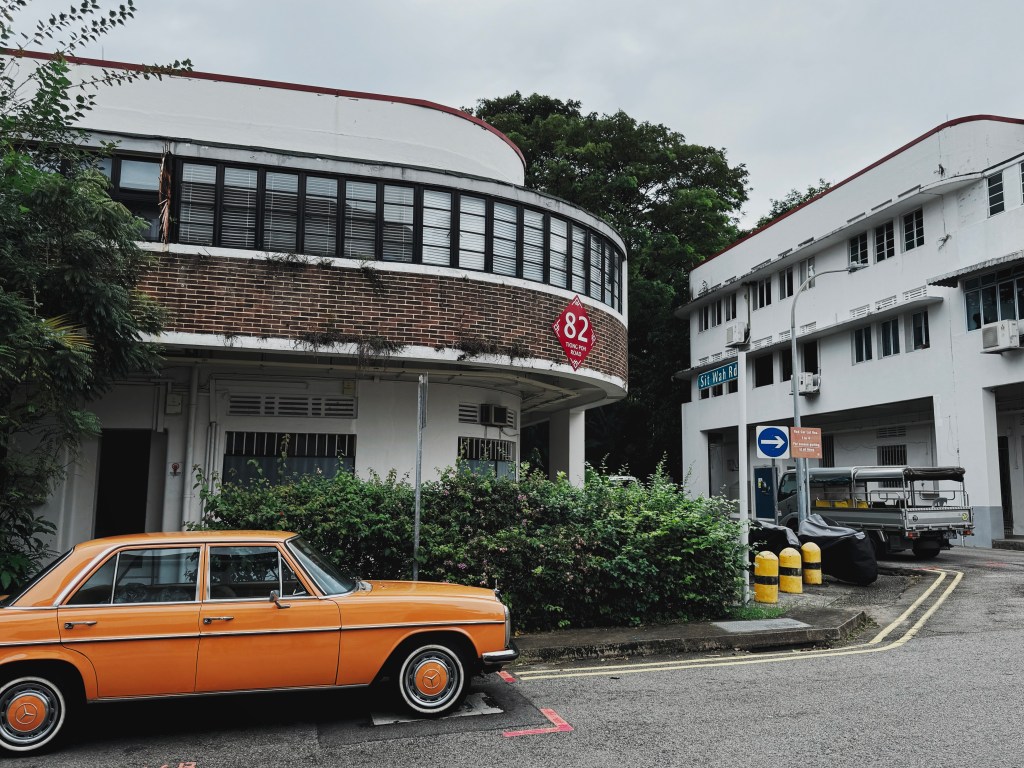
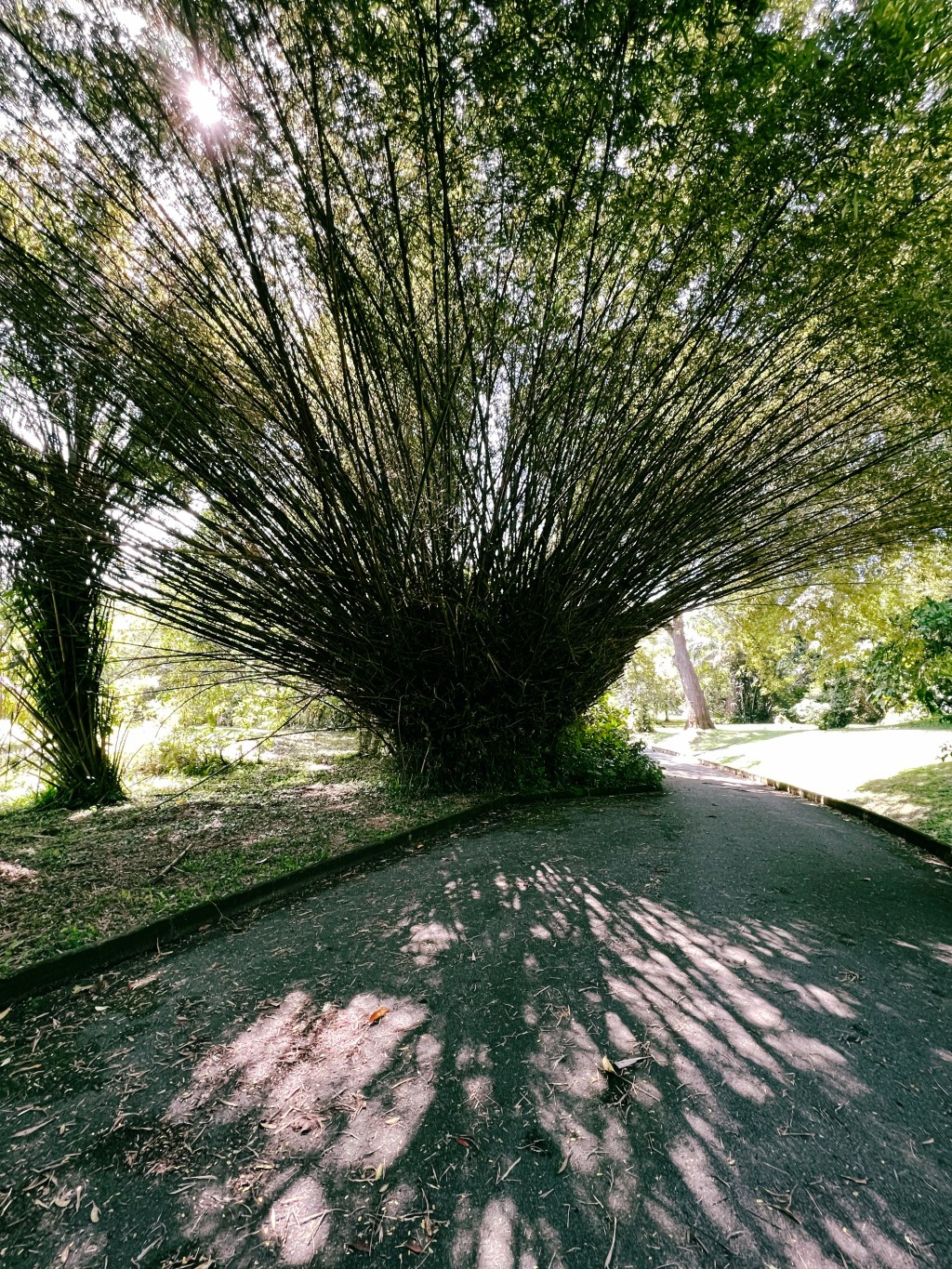
    (This week’s featured image was taken while walking around Tiong Bahru, edited with a Ricoh GR Positive Film effect simulation preset I made.)

  • Week 27.23

    I’ve thus far neglected to mention that I’ve become slightly obsessed with Korean instant noodles, which they specifically call ramyeon/ramyun, and have been buying and eating too many of them in recent weeks. I never went to ramyeon town before because I have a low tolerance for spicy food, but watching Jinny’s Kitchen might have set me off, and I’ve found that there are mild versions and that even the hot ones are sometimes worth suffering through.

    A few notes:

    • Nongshim’s Shin Ramyun is the original, the classic, the Nissin chikin ramen of Korea. The company’s English website says it’s always been a pork-based broth, but the export versions I’ve seen here in Singapore and Australia seem to be based on soy and mushrooms. There’s a new shrimp flavored version that was previously only available in China, but I have no interest in trying that.
    • I was able to find a pack of Shin Black imported from Korea, a premium version that adds beef to the pork base, and it’s certainly tastier and unexpectedly less spicy.
    • The Samyang company’s Buldak range of noodles are of course the notorious super spicy “fire chicken” ones you see in those YouTube challenge videos. I can’t eat more than a bite or two of the original (there’s also a 2x spicier one in red), but there are milder versions like jjajangmyeon and “carbonara”. Still, not for me.
    • I learnt in a video that people don’t think you should add eggs to Nongshim’s Neoguri spicy seafood noodles, which I have been doing, along with sliced cheese, kimchi, and sometimes a sausage. Oops.
    • Yeah I was not keen on this adding of sliced cheese to soup noodles, but now I don’t even think about it.
    • Of all the “Korean style” (basically red chilli and soy sauce?) noodles so far, I think my favorite might actually be Ottogi’s Jin series, which comes in Mild and Spicy versions. The Spicy one is about as spicy as regular Shin Ramyun (export), nowhere as crazy as Buldak.

    ===

    It’s not all sunshine and noodles; my increased consumption is partly due to a demanding work schedule filled with late nights and skipped meals. In general, I don’t believe these circumstances get the best out of anyone, but I’m told it’s the norm in China these days. I’d heard of 9-9-6 (working from 9am to 9pm, 6 days a week), but apparently people joke 0-0-7 is more accurate. If nothing else, you’ve now learnt a lame new way to say 24/7 today.

    I keep thinking it’ll get better soon, but it hasn’t yet. Around the same time, I tried asking ChatGPT to write some funny posts that could go viral on a new social network called Threads, but it only returned some reheated tweets. One of them hit the mark though: “Is being an adult just perpetually saying ‘after this week things will slow down’ until you die?”

    So, Threads!

    Facebook/Meta/Instagram’s Twitter clone was rumored for awhile but I guess I wasn’t expecting a global launch of this scale — normally they roll stuff out haphazardly? But I think we’re now at over 70 million sign ups in two days, for a separate app that you need to download! It seems they rushed this out to take advantage of Twitter’s shambolic state, and even then, everything has been running smoothly.

    They made the choice to go algorithmic feed only, and to populate yours at the start with suggested content. Maybe it’s because I’ve been using adblocking tools for the past few years (who am I kidding), but my recommendations have been terrible.

    It’s been giving me Singaporeans influencers, sports, beauty and fashion, and positive lifecoachy shit. I’ve since found and followed many of my sort of people, and muted over a hundred accounts I do not want. That should be enough data for it to start improving, so I’ll just have to wait until they do something with it.

    But of course, we don’t have to be on Threads. And maybe we shouldn’t, given Facebook’s reputation and past actions. Much has been made of how Elon has managed to make Mark look like the good guy here; a sizeble feat. I’m still getting a lot of specific tech and financial content on Twitter, and I enjoy the quality on Mastodon, which comes from strictly following only accounts that don’t annoy me given the lack of an algorithmic feed.

    I suspect the majority of people on Threads so far aren’t posting, just lurking and figuring out what it’s for. I’ve been followed by a few people but I don’t follow back if they have zero posts or want to have private accounts. Meanwhile, successful IG content creators are either using it exactly like they do on IG (posting memes, photos, and videos) or writing inane things to try and get engagement.

    I don’t want any of these things on a text-centric platform. It’ll take awhile to settle, and maybe it’ll just become a lame sort of normie place like Facebook.

    ===

    I’ve also been utterly captivated by George Harrison’s My Sweet Lord out of nowhere, and have probably listened to it a hundred times and sung it to myself a hundred times more this week.

    It must have come up on my Apple Music at some point and resonated in the midst of my terrible week — the intentional, sutra chanting-like repetition is brilliant, hypnotic, soothing. How can you not be crazy for a song that goes from Hallelujah to Hare Krishna and back again? That declares such pure desire to know an unknowable god, that acknowledges how life is simultaneously too long and too short, that love is all you need?

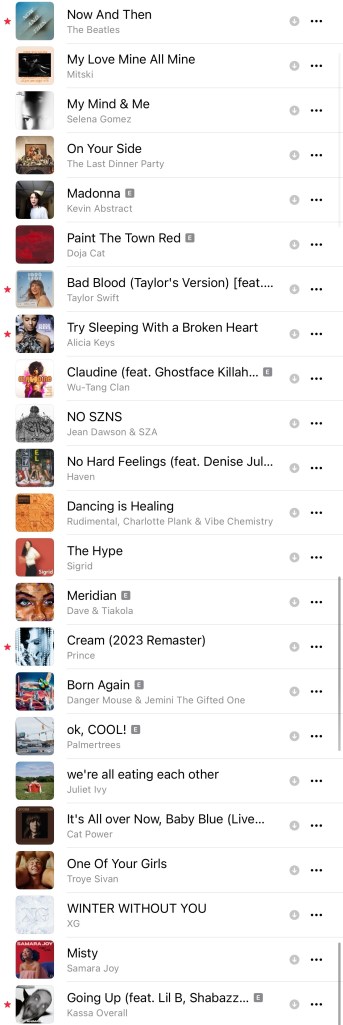
    So I made a playlist collecting all the different versions and covers I’ve been listening to: My Sweet Lords. It has 23 tracks so far, and I hope you like it and join me in this obsession.

    ===

    We started watching season 2 of The Bear and it’s truly excellent so far, as was season 1. Episode 6 is something else. It’s the television equivalent of Uncut Gems and Kendrick Lamar’s We Cry Together on the Mr. Morale & The Big Steppers album: extremely chaotic and uncomfortable, and not something you’ll rush to re-experience soon.

    We also saw Mission Impossible: Dead Reckoning Part 1 and it feels a little off. Still a good time, but some of the writing feels stilted and theatrical, and overall it doesn’t feel consistent with the others (okay, one can argue MI:2 felt nothing like the rest too, but that was when we were cycling through different directors; Christopher McQuarrie has no excuse). The challenge the team faces here is like nothing they’ve been up against before, but that veil of otherworldliness is distracting, and I didn’t get to appreciate it as much during the film. 4/5, I think.

    ===

    But we can’t end the week without some AI experiments, so I went back to my GPT-4 poetrybot and gave it my thoughts on the themes in My Sweet Lord, and it returned a pretty good poem, albeit several stanzas too long and not quite right in places. A bit of snipping and human co-creation later, we have this:

    Life is long,
    Life is brief,
    In joy, a song,
    In pain, grief.

    Love is low,
    Love is high,
    In knowing, grows,
    In doubting, dies.

    God in the small,
    In the leaf, the bird’s call,
    In the rise, the fall,
    In all the all.

    Seek the divine,
    In the day, the night,
    In the yours, the mine,
    In the dark, the light.

  • Week 21.23 (poem edit)

    An AI turned this week’s notes into poetry.

    A Chronicle of Week Twenty-One

    In a week where work did reign,
    Much to tell there’s little gain,
    Round it though, we gently dance,
    For work’s secrets shan’t have chance.

    (more…)
  • Week 19.23

    The new Legend of Zelda game, Tears of the Kingdom, launched this week about five or six years after the last one, which I never finished. I pre-ordered the new game, of course, planning to join the rest of the world on launch day, exploring together and participating in conversations online, collectively figuring out unique solutions using the game’s open-ended physics engine. For those who haven’t seen it, the new game is sort of a sandboxy, Minecrafty affair where you can weld stuff together and build novel mechanical solutions to obstacles, almost certainly in a different manner than your friends. Think rudimentary cars from planks of wood, or hovercrafts, or the forest booby traps from Rambo First Blood.

    But the guilt of never fully playing Breath of the Wild was getting to me, and I’ve been trying to get back into it over the last few weeks. Despite memories to the contrary, I’d made shockingly little progress in my 40+ hours of gameplay, spending most of my time bumbling about the countryside and climbing mountains, instead of conquering the Divine Beasts (1 out of 4) and collecting quality stuff. It seemed wrong to jump ahead to the sequel while I’m finally seeing what the last one had to offer.

    So in this past week I’ve made more progress than in the previous four years: conquered two more Divine Beasts, got the Master Sword at last, and uncovered most of the world map (two more areas to go).

    ===

    Craig Mod tweeted and tooted about having had enough of the iPhone’s (14 Pro, I assume) overprocessed look, and said he was making Halide his default camera app. Huh? But how does that help, I thought, unless he means to shoot in non-ProRAW RAW all the time (which is a thing Halide does: shoot in traditional RAW files which don’t involve the “Photonic Engine” processing pipeline). After some poking about, I realized something I should have ages ago: by turning off “Enable Smartest Processing” in Halide’s settings and choosing HEIC as the output format, you can actually take regular old (non-RAW) photos that look more natural and have more editing latitude! This effectively cancels out the iPhone 14 Pro’s image quality regressions.

    The overstimulated look of the default camera is one of the main reasons I hardly took any phone photos on my recent vacation to Japan, but if only I’d known… I could have! So with that, Halide won an instant annual subscription from me, and I now have a complication on my Lock Screen that launches straight into it.

    My toot about this was boosted by Mod, making it my most “engaging” Mastodon post ever, at 44 likes and 12 boosts.

    You have to see a comparison to understand how obnoxiously oversharpened and artificial the Photonic Engine is on the 14 Pro’s 48mp sensor for some reason. It increases local contrast and highlights texture “detail” that does not look like what you see in real life. It’s a Clarity slider turned all the way up, and I’m not a fan of Clarity sliders. The example below is a corner crop from two larger photos, not edited in any other way.

    Left: iPhone 14 Pro’s default processing | Right: Halide’s “dumb” processing is loads better

    ===

    My AI experiments this week have been around trying to teach ChatGPT to write better poetry. I posted a few days ago about getting it to do a critical reading of a poem, wherein I was completely stunned by its comprehension skills. But writing good poetry, not just gimmicky rhyming lines, that should be a different thing.

    I semi-accidentally discovered that asking a “persona” (that I’d established in another chat instance to test the idea of using an AI prompted with a human backstory as a customer research proxy) to write poetry yielded subjectively better results than when I asked a brand new ChatGPT instance. The mere suggestion that the bot’s point of view should draw references from vaguely described life experiences and preferences seemed to make a difference to what it spat out. Which is why many SF stories have AIs that don’t know they’re AIs, I guess, and they have memories of childhoods that never happened.

    Here’s a poem that “Frank” (quite a salaryman-type personality) wrote about retirement:

    A lifetime spent in labor’s thrall,
    In structured days and office halls.
    Oh, to retire, to end the grind,
    To leave the corporate world behind.

    The dawn of leisure’s quiet grace,
    In this new, unhurried pace.
    Days unbound by ticking clocks,
    Unfettered as the wandering fox.

    Yet in this expanse so vast,
    Shadows of the past are cast.
    Habits of a lifetime past,
    In this new role, steadfast.

    A time of freedom, yet confined,
    By boundaries of the seasoned mind.
    Retirement’s paradox, I find,
    Is having time, yet being time-blind.

    Wow! No? It was coming up with absolute drivel before I handed the job over to Frank in another window. Side note: I started paying for ChatGPT Plus, just to have access to GPT-4; it’s a much better poet than the default GPT 3.5 model.

    So lately I’ve been working on giving feedback to an poetry-writing AI that I named Penrose and instructed to believe in itself as a 50-year-old professor of creative writing and philosophy, who’s bad with money, had two failed “great loves” because of their selfish acts, grew up in Boston, now works in London, and so on.

    Here’s one of the first things it wrote:

    In the chilled reflection of a London morn,
    I see a face, lines etched by yesterday’s turmoil.
    Cracks, not of frailty but life, loud in their silent form,
    That’s you, mate, and it’s all right.

    Witness the march of years, the dance of decades,
    In the ceaseless play of ambition and regret.
    Weaknesses? They’re the worn pennies in your pocket,
    The unpaid bills of your character, yet, not your debt.

    They’re the stumbles on cobblestones,
    The missteps in Milan’s echo-filled alleys.
    Not a damning verdict, but life’s hasty loans,
    A ledger, not of losses, but of rallies.

    In this world where even stone yields to rain,
    We’re all apprentices to time, chiseling away in vain.
    We’re all works, works under the master’s patient hand,
    Unfinished, flawed, yet, in that, something grand.

    ===

    • I haven’t been able to bring myself to watch more of Amazon Prime Video’s Citadel beyond the first two episodes. A colleague said he quit after 10 minutes. It’s reportedly one of the most expensive TV shows ever made, at an average of $50M per episode.
    • Silo on Apple TV+ has been very good so far. It’s a little bit YA sci-fi, a little Hunger Gamey, a little Snowpiercey (but better).
    • I saw a segment on NHK about how this iconic street corner featured in Slam Dunk has been inundated by tourists now that Japan is open again. They interviewed pilgrims from S. Korea, China, and Taiwan who said they just had to come down and see it — “if you love anime at all, this place is a must”. So I decided to get started on the ancient anime, which Netflix has 8 seasons of. The day after seeing episode 1, I ended up standing behind a guy on the train watching the show on his phone.
    • The 10th Anniversary Edition of Daft Punk’s Random Access Memories is out, and the album still holds up extremely well for me. If only they’d come back to remix it in Spatial Audio, that would have been incredible.
  • An idle year in review

    An idle year in review

    Before heading back into the working world tomorrow, I took some time today to review the past year of these weekly blog posts. You don’t realize how long it’s really been until you review all the news events (daily Covid numbers jumped from two digits to four) and things you did. It’s probably not a good idea to question whether they were worth doing in the first place. Ah what the hell, let’s do it.

    Here are some ironic bits I pulled out, because hindsight:

    I’ve always envied people who find the hobbies/obsessions just for them (damage to finances and relationships aside). I’ve never met a game I loved so much that I would spend hundreds or thousands of dollars on buying its in-app purchases. Or shoes, bicycles, etc. I know people who do, though. They seem to buy almost thoughtlessly and without regret. [Week 26.21]

    That was me wishing I had a hobby I liked enough to spend on it without thinking. Not long after writing that, I bought my first NFT. Over the next few months, I would fall out of love with the idea, and then back again. At present, there are days when I spend hours browsing interesting new releases and have the urge to just catch ‘em all. I don’t even know if it’s rational, if these artworks are real, or if this web3 mode of acquisition is legit, the way it might verifiably be in the real world. I justify it by saying this intersects with my work and my interests, but the simple truth is I’ve found my version of sneaker collecting. Be careful what you wish for.

    Rather than continue reading Firebreak this week, I looked into a few topics I’ve been feeling ignorant of: what’s going on with social tokens? What do people mean exactly when they say “metaverse”, since they can’t literally imagine it’s Snow Crash, (insert Princess Amidala face) right? [Week 33.21]

    A little while later, the metaverse hype train really took off (or derailed, depending on your POV) with Facebook’s rebranding to Meta, and every other company having some interest in exploring the space. Sadly, it seems that some people really do want life to be like in Snow Crash.

    Prompted by a friend’s reports of how well their investments in the Luna token were doing, I looked into the Terra ecosystem out of Korea and was impressed by its vision — insomuch as someone with little background in economics can certify a financial flywheel logical and brilliant. I don’t know what I don’t know, but it sure looks good to me. [Week 34.21]

    Narrator: Yup, he was indeed unqualified to certify any financial flywheels.

    This tweet helped me to see that it does take longer than you’d think to disconnect from work/overwork. I thought I’d gotten to a good place in just a couple of weeks, but looking back, I’ve been giving myself a hard time about not being productive enough, not doing enough each week to learn new things, or start new hobbies, or have enough fun — and all of that is a psychological holdover from the rhythms of work/overwork. [Week 37.21]

    I’m not ready yet to sit down and properly reflect on the entire period, what I learnt and how/if it’s changed me, but the short answer I’ve been giving people along the way is based on the above. For me at least, it’s impossible to take time off and just disconnect without going through several loops of trying to relax, trying to make productive use of the time, and feeling upset that I suck at taking time off.

    The first half was more deliberately used: I planned things, I met up with people, I took stock at the end of every day to ask what I could have done instead. Fooling around with the Misery Men project was probably healthy; a way to feel like I was making something without the usual worry of whether it mattered.

    Emotionally, the volatility probably went down in the second half — I wasn’t worried too much about how the time was used because it felt like there so much of it; maybe similar to how rich people don’t think too hard about their daily expenses. At the start of this sabbatical, one of the ways I phrased my objective was “to find boredom”, by which I meant total leisure satiation. It’s not possible, of course, just an ideal, because I could goof off forever. My guess is that it was only in the final third of the year that I started to live in the right mental neighborhood. I don’t feel completely renewed and energized or anything like that, but I take the emergence of my Subconscious Heirlooms project last week as a good sign. A year ago, I would not have suddenly found the will and courage to dash off 39 drawings in a week and put them up in public to be laughed at.

    In terms of all the media activity I recorded, it looks like I watched a hell of a lot of TV, mostly disposable Netflix crap. Could have done with less of that. I spent enough time playing games, but still failed to get around to Yakuza Kiwami 2, Yakuza: Like A Dragon, Lost Judgment, Astral Chain, Unpacking, Paradise Killer, A.I. The Somnium Files, VA-11 Hall-A, and a couple more still! I didn’t read as many books as I’d have liked, and that’s a bigger regret than not clearing the games backlog. Either I get better at squeezing gaming and reading into the rhythms of daily working life, or I’ll have to take another year off soon.

    Writing anything down, whether in my journal, to friends, or in these blog posts, never felt like a waste.

  • The Stars Have Aligned

    I was surprised to learn that astrology is experiencing a comeback amongst millennials, thanks to an app called Co–Star that has been steadily growing beneath my radar. When a decade-younger friend sold it to me over drinks last week, the most interesting thing about it to me was its inexplicable use of an n-dash in the name. I installed it for a look, saw a personality trait in the natal chart* that didn’t quite match my self-image, and promptly forgot about it until the push notifications started arriving.

    Screenshot of the Co–Star app

    These nudges are titled “Your day at a glance”, and are so iconic to this audience that the Instagram filter creator known as autonommy has made one that superimposes Co–Star notifications over your head. They’re usually a single mysterious line or proverb that you’re meant to contemplate as things happen to you.

    Yesterday (an uneventful day), I was assured, “You don’t have to be afraid.” Today, it asked, “What lessons have you learned today?” Tapping into the app unleashes a torrent of AI-assembled advice that tells you how to deal with the challenges of existence as per the day’s astral alignment. The tone of voice is often surprising: acerbic, blunt, even dark.

    Instead of deleting the app as I meant to do, I discussed it with some people around me and shared a Verge article about the team behind it, and now I’ve got irl friends on this astrology social network, and we can see each other’s fates and compatibility, and I think I’m keeping it? It’s not like I’ve suddenly taken horoscopes at face value, but perhaps it fills a gap — I need someone to regularly kick my ass on personal development, and whether I agree with the “advice” or not, these prompts might get me to work a little harder at things. They’re challenges.

    Coincidentally, I spent much of yesterday reading through the backlog of email newsletters I subscribed to and then got overwhelmed by. When someone’s thoughts on screen are a year old, making reference to events that you and the internet are so over by now, but the words remain productive, insightful, and capable of inspiring you to look back at your old email newsletter project from 6(!) years ago and maybe start writing on your blog again, they can have all the paid subscription money. If you’re in need of a couple recommendations: try Dan Hon and Craig Mod’s.

    There’s always a voice gently suggesting I “write more”. Sometimes I think I write enough at work as it is. As the activities that make up my day job changed over the last few years, so did the emphasis on actual writing as a vehicle for Client Value Delivery. It took awhile to join the dots between the kind of writing I did in advertising, publishing, side projects, and now in a design/consulting context, but that still leaves out the “pleasure writing”, as one acquaintance recently called it.

    Right now, I’m feeling out of practice and clumsy when it comes to this stuff. I don’t know how to write to you anymore. Maybe I cut down on tweeting and blogging because we all entered a digital privacy crisis, but the net result was falling out of the public writing habit altogether. I lost imaginary friends.

    So. Why not try again? What do I have to be afraid of? What lessons am I learning today?

    *Those natal charts: You plug in your date/time/location of birth, and it pulls historical NASA data to see where celestial bodies were when you were born, and interprets their deviations in space each day to produce your horoscope. Are these even called horoscopes? I don’t know; that word seems dated and quacky, like something in a crinkled copy of Reader’s Digest, whereas Co–Star feels like something new — a bit of not entirely serious millennial wellness — dressed up in ancient clothes.

    A couple of years ago, we had a colleague from Hong Kong in town who would do the exact same thing as a party trick, except she manually read and interpreted the natal charts which she generated using a Chinese app. Co–Star has simply scaled this with technology and a content team.

  • Finding a Home for Your Copywriting Portfolio or: How I Learned to Stop Channeling an Art Director and Love the Words

    Finding a Home for Your Copywriting Portfolio or: How I Learned to Stop Channeling an Art Director and Love the Words

    Lots of portfolio tools advertise the ability to create a gorgeous website online within minutes, but how many are suited to showcasing a copywriter’s work? This post covers getting a basic presence up for a handful of your projects. More comprehensive site builders are only briefly mentioned.

    It’s often said that people only look into their CVs between jobs, but taking stock of what you’ve accomplished on a regular basis is a really good practice. But with a standard resumé, updating a paragraph about your current employment several times a year isn’t attractive. Fortunately for people in the creative industries, there’s the portfolio, which can be very satisfying to compile, if only to remind ourselves how little victories on a project tend to make up a bigger result.

    Not Your Creative Director’s Portfolio

    Over the last few years, I’ve seen a fair few creative portfolios, and increasingly, when one asks to see some work, a URL gets sent instead of a PDF. When I was starting out in advertising about 8 years ago, we routinely brought physical folders of printouts to interviews. If you wanted the job, you might make an extra copy to leave behind. If you’ve heard some creatives calling their folios “books”, it’s because that’s what they really were.

    Another thing that’s changed since the mid-noughties is how the presentation of a copywriter’s work has gone from showing a few ads and/or documents with long-form writing samples, to being very close to how the art guys do it. Big, colorful pictures that would reel even an illiterate eye in. Some writers’ books now haven’t got a word in them.

    Carbonmade
    Carbonmade: Your online portfolio, the door to a bright future in children’s illustrations

    Most of the people I’ve met showed off work on portfolio cum social networking sites for creatives. Places with start-uppy Web 2.x names like Carbonmade, Krop, the Behance Network, Cargo, Coroflot, and to some extent, Dribbble. Some respectable, shirt-wearing creatives had portfolio sites on their own domains, and the ones who didn’t return their pencils used blogging services like Tumblr.

    What I’ve noticed is that very few of these solutions are suited to the needs of creatives who self-identify as copywriters.

    Copywriters Are A Needy Bunch

    Designers, illustrators, and art directors are well served by the many visual portfolio tools out there. Flip through a few examples and you’ll notice a tendency to not explain the images — when it comes to showing off craft, the work often speaks for itself. Maybe it’s because most tools just don’t allow text at all, but I’ll come to that later.

    I think a writer needs a little room to take his viewer through the work. So much of what we do is problem solving and just not visible in the finished consumer-facing work (nor should it be). Some of the things a writer could supply to complement a piece of work are: some background info, a project or team story, the strategic line between proposition and product, an elucidation of the idea (if one exists), how the piece works with a wider campaign or positioning that the brand has pursued, and any measured results that came out of it. Touching on just a little of the above, versus a caption reading “Banner Execution #2” on a photo of a toothpaste tube telling a joke, can help explain yourself come Judgement Day.

    Five Steps to Happier Portfolioing

    The more I saw, the more I started to wonder, where should a copywriter put their work online? To answer that question, I signed up for a bunch and put them through their paces, and also asked colleagues and industry friends for their (possibly subjective) opinions on the leading ones. Here’s what I know, filtered through what I didn’t like.

    1. Keep Good Company

    Maybe this won’t apply where you are, but Cargo (or CargoCollective) ostensibly carries a reputation for being full of student work. I don’t know where that comes from; too many cans of Heinz baked beans styled like Warhol prints? That said, there’s probably nothing wrong with using Cargo if you ARE a student. Coroflot seems to be another good place for junior creatives to get their work in front of recruiters and large brands. DeviantArt was ranked below the two, because your application will disappear into an HR drawer labeled ‘Slashfic Writers’.

    Krop
    Krop: Your killer headlines will need killer headlines

    For professionalism, I was advised to try Krop. It charges a not-insignificant monthly price of US$10, in the league of premium site-building services like Squarespace. I didn’t see anything that justified the price against Krop’s drawbacks. Amongst those I asked, Behance enjoys a neutral to positive reputation that will not stand in the way of your looking righteous.

    As far as domains and URLs are concerned, it’s also about the right associations. If you’re on a site built for creative work, then piggybacking on their domain isn’t an issue. For example, having “behance.net/name” is okay, but “name.tumblr.com” looks like a collection of meme gifs. Using a “name.com” is great as long it’s not the “best-name-online.com” that GoDaddy recommends when your name of choice is taken.

    2. Know the Tools You’ll Need

    Behance
    Behance: Owned by Adobe now, so you’ll have to hit refresh for minor HTML updates every 10 minutes

    Plenty of sites simply don’t let you annotate or supply a paragraph of text beside your large and beautiful images. It’s practically textist. Krop is a major offender. And since we’re talking your garden-variety copywriter here, and not those mystical hybrid writer-designers who can tastefully superimpose text within their images, an ideal tool would allow writers to enter text on the page itself. In that regard, Behance trumps Krop, which only allows a short caption for each image. Not only is Behance free, it allows the mixing of as many images, embedded videos, and text blocks on a project page as needed.

    Most importantly, if you’re going to be uploading work where you’re especially proud of the writing, make sure it can be read! Being able to click and zoom in (or load the original image) is table stakes, but plenty of sites I’ve seen don’t do it. This is the point where your portfolio’s tab gets closed and your reader goes back to a ‘Hunger Games Wedding Ideas’ board on Pinterest.

    For this reason, I do not recommend using ‘free’ services that reserve this ability for paying customers, e.g. Carbonmade. Behance won’t zoom either, but you can at least reproduce your copy on the page using a text block.

    3. Create a Gallery, Not a Blog

    Your Tumblr should look like this
    If you must Tumblr, your portfolio should look a lil’ sumthin like this wicka wicka

    When a portfolio site is built on a blogging CMS, and looks like a linear blog, expectations are set for a diary of constantly evolving works-in-progress. Visitors will be less impressed by your last post being 18 months old, even if it was ahead of its time.

    Of the sites I’ve seen built on simplistic platforms like Posterous, Tumblr, Blogger, Pinterest (you gotta see this Hunger Games wedding), too few employ themes with a static front page serving as a table of contents. If your platform of choice doesn’t let you do that, find a new one. A scrolling page of entries without proper navigation is counterintuitive to your purpose: showing your recent work at a glance, and putting more details one click away.

    Some sites will also format and present a version of your resumé in addition to your portfolio. Behance and Coroflot are two that stood out for me.

    4. Decide If You Want Feedback with That

    Socially enabled sites like Behance are proud of their communities. You can follow people doing interesting work, and browse a stream of their recent work right from your front page. Gold stars, comments, resharing; all that stuff. But there’s a real need for portfolios that don’t talk back, and if you’re familiar with the teen movie trope of parents embarrassing their sons with baby stories whenever a girl comes over, you’ll understand not letting a potential mentor or employer see the “helpful” suggestions you’ve been given by others. Or your witty mom-centric replies.

    Moreover, as we’ve already covered, many of these sites are for designers and not copywriters. I’ve heard this sentiment several times: “Designers have Dribbble, but where do copywriters go to share their work and get constructive feedback from peers?” It’s a gap that no one has filled. Until then, my advice would be to keep the two as separate as you can. Find an avenue for copy feedback that works for you, and display your work on a pedestal where it belongs.

    5. Keep Open Secrets

    Another feature that’s rather important but not always available: the ability to secure projects with a password. Some client work can never be fully public, but if there’s a story in there worth telling, you might open it up to select viewers. Please don’t set your password to “password” or your first name, or have no password at all and instruct the HR person to ‘just press Enter’, because that just makes it look like passwords are a new concept to you.

    Choose Your Own Ad Venture

    The first conclusion I drew is that you’ll want to spend some money to get this right, although it doesn’t have to be a lot. Whatever your choice, make sure it looks good on mobile devices and doesn’t rely on Flash.

    Squarespace theming
    Squarespace: Can you handle this much customization? Find out with a free 14-day trial.

    My preferred solution has always been to create pages on a personal site, using whatever CMS you’re comfortable with, but that involves a fair amount of set-up and manual work. In contrast, the allure of these modern portfolio services is undeniable. Most come with the promise of page views from fellow creatives baked in, and who doesn’t like getting ‘Liked’? The drag-and-drop features and professionally designed templates are also particularly good for copywriters. Uploading a bunch of comps and artwork almost always results in a presentable page.

    Of all these services I evaluated, the only free one that would meet the needs outlined was Behance. Their paid option is called ProSite, but its fancy templates frustratingly strip away the extra text that makes their free pages compelling for writers. If that gets fixed, it would be a complete winner.

    If you’re willing to get your hands a little dirty, then Squarespace, Breezi, Virb, and WordPress are sound bets. The first two have no free options and start at around $8/mo for a standards-compliant, responsive design site. With templates as starting points and pixel-level control over every detail, they are suited to people with knowledge of web design but who don’t want to code.

    Virb
    Virb: If it’s good enough for a coffee bar in Portland, why not your portfolio?

    Virb is another all-in-one hosted site & blog solution that costs the same as Krop ($10/mo) but lets you do more. There are templates that let you bundle images and text together quite simply and beautifully.

    The open-source WordPress.org software is pretty much the gold standard for consumer CMS on the web, and if you don’t want the hassle of installing it on your own servers, WordPress.com has an ad-supported “hosted service” that takes care of everything for you, with few compromises. A number of portfolio-ready themes are available, but do pay for the domain mapping upgrade, because “name.wordpress.com” looks almost as bad as it would if it said Tumblr. Almost.

  • Write Moves

    Was time for a new logo too
    Was time for a new logo too

    After 11 years of blogging on what is now Google Blogger, I’ve exported everything and moved to a WordPress-powered site. It didn’t go all that smoothly and may still screw up, but so far I’m enjoying the platform, its modernity, and the apps/services I can now use with my blog.

    During the process, I looked back on a couple of old posts and a few abandoned other blog projects, and discovered a younger, different sounding me. I suppose that was a time when everyone kept a blog instead of a Facebook page – but it all starts the same way, nobody thinks anyone important is ever going to read their nonsense or see their silly behavior.

    But every time I read old writing, the same thing happens, and I’m sure you’re all familiar with the phenomenon: amidst the disposable are pieces you can’t believe you wrote; thoughts you could hardly string together today in quite the same way. Which is why I’m inclined to value these posts more than easy and fleeting social network updates. It seems the purpose of blog archives is to simultaneously inspire and shame our creative selves with examples of what should still be possible, and how far we have yet to go if we’ve discovered that the last few years were spent going the wrong way.