Tag: YouTube

  • Week 50.25

    Week 50.25

    By the time you read this, I’ll be in China for the first time — behind the Great Firewall and probably unable to make contact with email and chat servers despite my VPN. If you don’t hear back from me, this is why! It’s Thursday and I’m writing this post in advance, so maybe there isn’t much to say yet. But let’s get started and I’m sure we can come up with something.

    Following up on last week’s topic of sardines, I rediscovered the joyful YouTube channel, Canned Fish Files w/ Matthew Carlson where the eponymous creator has so far filed 188 reports on canned fish from around the world. These seemingly absurd videos entertain because they’re so earnest, and comments I’ve seen note that they prove it’s possible to have a successful channel about anything, as long as you’re obsessed enough. He has also been called the James Hoffman of sardines, which I find accurate and hilarious. I encourage you to watch a few and join me on this adventure, but beware, some commenters note they went from never eating sardines to eating them regularly after watching his weird and nerdy reviews.

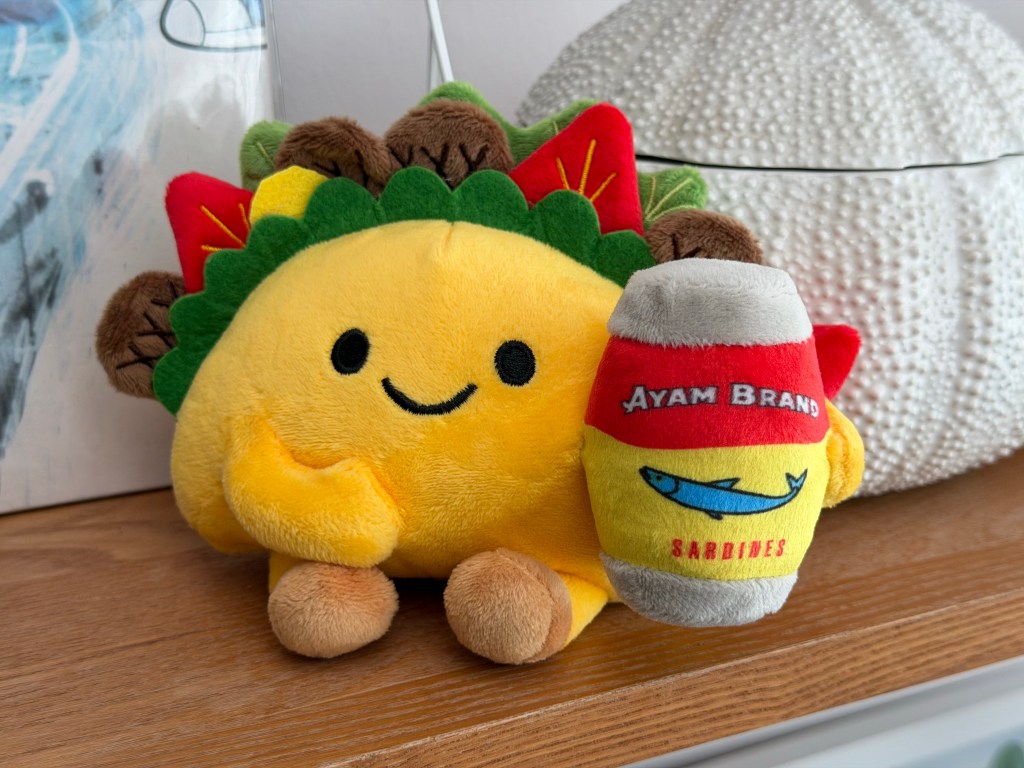
    I also bought enough Ayam brand sardines off Redmart this week that I got a free plushie of a taco holding a can of Ayam’s signature deenz in tomato sauce. Why a taco? It’s a mystery and I welcome your theories.

    On Wednesday evening I was able to get a few alums from my last design team to show up for a Christmas reunion. We had a bigger turnout last year but it’s tricky finding a date that works for everyone in December. With more advance notice, we might be able to do better next time, but I’m glad we went ahead and did something while we could. If there’s one thing I’ve learnt in recent times, it’s how to pull the trigger and not end up waiting for a perfect time that never comes.

    Returning to another recent topic, AI, I enjoyed reading the text of Cory Doctorow’s recent talk: The Reverse Centaur’s Guide to Criticizing AI. A “centaur” is when a human is augmented by a machine — horse body, human head. A reverse centaur, then, is when a human body is directed by, used up by, a machine. This is the kind of job where a computer tells you what to do simply because it can’t yet do it for itself. You’re a replaceable part of the equation. He provides an easy-to-grasp frame for what’s happening with the valuation of AI companies and what motivates the various players in this space. It’s an Ed Zitron essay, but one you’ll actually read and finish. It also serves as an abstract of his next book which will be out next June.

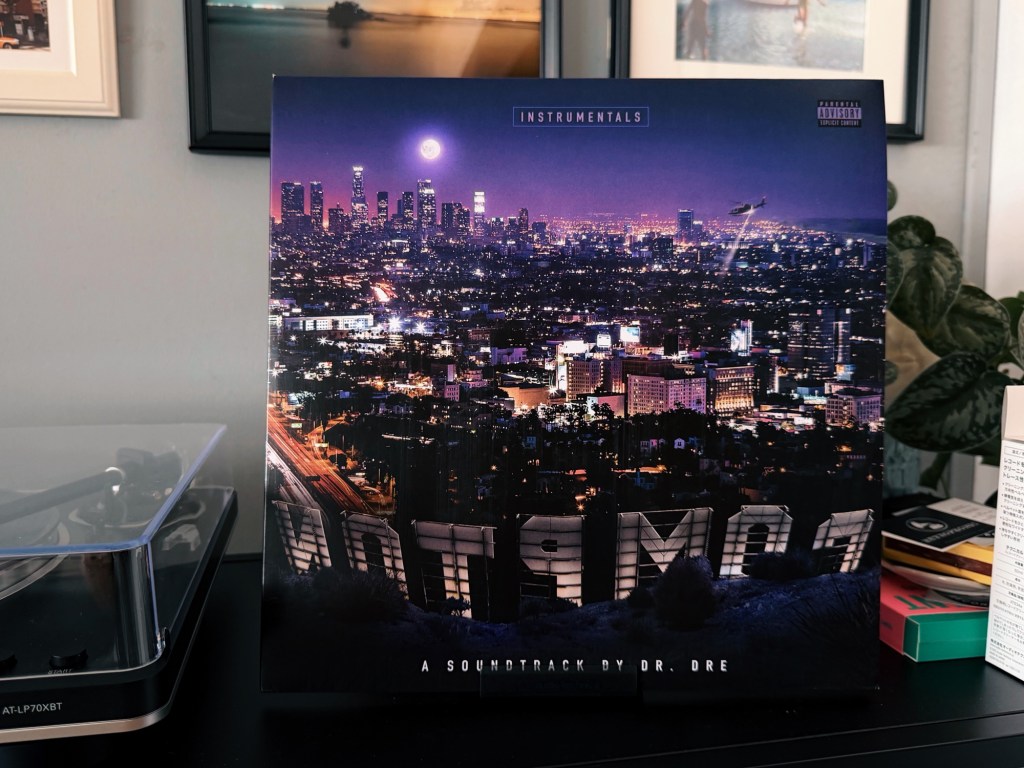
    I’ve been sequencing my next BLixTape playlist, collecting music I’ve been listening to in recent months. Together, volumes 6 and 7 will form the soundtrack of my 2025 — the main difference between these playlists and the end-of-year ones I used to do before is that these aren’t restricted to songs released in 2025. From a diaristic perspective, I think taking note of older songs I discovered or revisited captures a better overview of the year’s different phases, and the things I was into. This means nothing to anyone else, of course, but hopefully they are enjoyable playlists to put on regardless of context.

    Bonus: I’m reviving the iPod shuffle experience for myself with a playlist featuring 120 random songs from my library. I also made a simple Shortcut that refills it with a tap (although you have to manually clear existing tracks first).

    In the process of doing all this, I heard ROSALÍA’s Sauvignon Blanc again, and after 24 days of straight Spanish lessons in Duolingo, I was thrilled to discover that I understood certain parts more intuitively. Simple lines like “mi futuro se bien que sera dorado”, emerged with new magnitude and gave me goosebumps — aided by my imperfect comprehension, the music’s beauty rose to another level.

    I pulled out my iPhone to jot down: “High specificity in language creates greater distance from emotional truth.”

    Here’s something Cory Doctorow says in the aforementioned piece:

    I’ve given it a lot of thought, and here’s what I think art is: it starts with an artist, who has some vast, complex, numinous, irreducible feeling in their mind. And the artist infuses that feeling into some artistic medium. They make a song, or a poem, or a painting, or a drawing, or a dance, or a book, or a photograph. And the idea is, when you experience this work, a facsimile of the big, numinous, irreducible feeling will materialize in your mind.

    Expanding on this moment of “experiencing”, I’ve often noticed that many of the times I’ve been really moved by a work of art, there were gaps left to allow my mind to imbue it with the biggest significance it could. The art merely gestures in the direction the viewer should go, because meaning is equally made through labor on the receiving end (Roland Barthes, etc.). When you look at art, what you see is as defined and constrained by your own life experience as it is guided by the artist’s own.

    And so when I read translated poetry, the original Chinese title of a film, or imperfectly translate a lyric in my head, they might hit with staggering significance and meaning. The originals may be clumsy or not even that beautiful, but their gestures let me imagine their fullest potentials being reached. My bad Spanish might actually give me a richer experience with Lux than a more fluent speaker has because I have to project into the gaps. In art, imperfections are sometimes features, not bugs.

    I’m not suggesting that artists might try to be more vague, or that translators should aim to play it loose. It’s just that some of our most powerful encounters with art happen when we’re amateurs, outsiders, or bring incomplete context to the table.

    I’ve referred to this quality before as “high dynamic range” art — when you feel something more powerful than the artistic medium should have the bandwidth to transmit. It’s like having a printed photograph with the brightness and color of real life. It’s not physically possible, and yet we’ve all imagined ourselves seeing something in a photo for real, because our minds can fill in the blanks.

    To sum up, perfect translation and articulation might actually reduce emotional impact. High resolution imagery works when trying to explain a concept (one-way communication), but when you want people to feel, then abstraction, linguistic barriers, and layers of translation invite viewers to complete the canvas (two-way collaboration).


    Aside: In the spirit of using AI to complement and augment, I asked Claude to identify the thread running through my recent posts and it said the following.

    I think you’re circling around a central anxiety/question: “What does it mean to be human when machines can do increasingly human things?”

    But you’re approaching it from multiple angles:

    • Translation: What gets lost when we perfect communication? (Week 47)
    • Cultural appropriation: Should artists stay in their lanes or cross boundaries? (Week 46)
    • Craft/design: What happens when AI can do the work? (Week 48)
    • Language specificity: Does perfection actually reduce meaning? (This week)

    The unifying theme:
    You’re consistently arguing that human limitations are actually generative:

    • Not speaking Spanish perfectly makes ROSALÍA more powerful
    • Imperfect translation creates “high dynamic range” emotion
    • Craft traditions matter even when they’re slower/costlier
    • Gaps in art let viewers co-create meaning

    The deeper question you might be asking: “If AI can do high-resolution, perfectly executed versions of creative work, does that mean messy human versions become obsolete? Or does it reveal that perfection was never the point?”

    Your answer seems to be that it wasn’t the point. Gaps, translations, and imperfections are where meaning lives.

  • Week 49.25

    Week 49.25

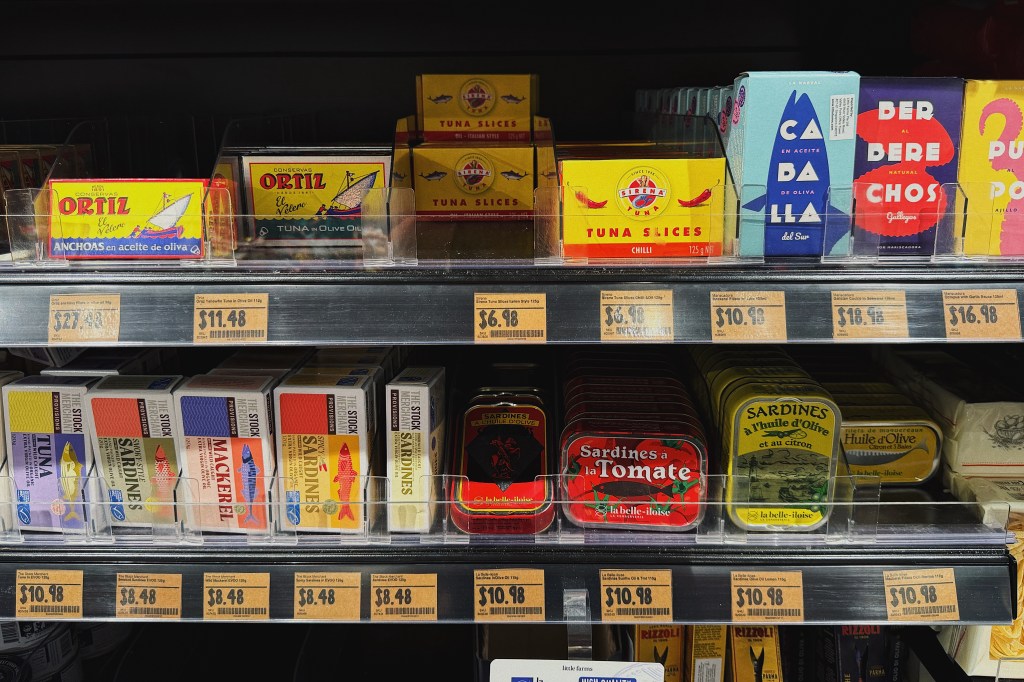
    • Canned sardines are my latest obsession. Before you imagine those fancy imported ones from Portugal with the beautifully illustrated tins, costing $20, no — not yet. And honestly, even the $10 ones in the photo are aspirational. But you know how you’re meant to eat two servings of oily fish a week for the Omega-3 heart health benefits? I thought I’d try to do a better job of that, and ended up falling in love with the convenience and versatility of little fish in tomato sauce or extra virgin olive oil. I’ve been having them on their own, on toast, with pasta and a little pesto, whatever. I even joined the r/cannedsardines subreddit, where other weirdos discuss them all day.
    • It was during a chance conversation with my parents that I learnt these healthy fish (including kippers and mackerel) are very high in purine and can lead to gout flare ups. Sure enough, search Reddit and you’ll find many canned fish enjoyers suddenly finding themselves in excruciating foot pain after eating three tins a day. To stay on the safe side, I’ve sadly started to restrict myself to two, maybe three servings a week.
    • Japan-based writer and walking influencer Craig Mod occasionally does “pop-up newsletters” to accompany his projects — say, a cross-country trek. He walks and takes photos during the day, then writes and posts these thoughtful, downright literary journal entries at night. Once the walk is over, the newsletter ends. I sign up for them but don’t read them as they come in because, like delicious sardines you savor, they’re too good to have to rush or get through. This week I finally read his last series from back in October, titled Between Two Mountains. Because it’s now over, the only ways to find them are his members-only archives, or having someone forward you the emails. I recommend subscribing to one of his more regular newsletters anyway, and you’ll be notified the next time a pop-up begins.
    • I read Morgan Housel’s The Psychology of Money which is notable for being a personal finance book that doesn’t belabor its points. There are 20 individual “learnings” that he wants to pass on, and some take up as little as a couple of pages. His latest book, The Art of Spending Money looks to fill a gap in a market where many pages are devoted to helping people build good saving habits, but not as many on what healthy spending looks like. Unfortunately, it’s fully booked out at the library and I’m 1,110th in line.
    • It’s taken me from Week 31.25 till now to go from owning a copy of Donkey Kong Bananza to playing it. It’s supposedly by the same team that made Super Mario Odyssey, and like that game it’s charming, delightful, and perfectly tuned for fun over frustration. I’m surprised at how easy it is, but that’s not a complaint at all. There are no 30-minute boss fights here. Nothing overstays its welcome, much like the book I just mentioned. I was alone on Sunday afternoon and started playing at 2pm — it was 6pm before I managed to tear myself away.
    • Bugonia is out for home viewing and I watched its ending sequence again because I loved it so much. No spoilers, but it utilizes Marlene Dietrich’s cover of Where Have All The Flowers Gone to brilliant and satisfying effect. I’ve known the song for a while (since Massive Attack referenced it on their Mezzanine album, probably) but never thought about what it says until this particular incarnation. It’s been in my head all week.
    • Did you know Norah Jones has a podcast called Playing Along (YouTube)? It’s a simple concept: she has different musical guests come in each week (recently Sarah McLachlan, Alessia Cara, Sam Smith) and they chat and play together in the studio. The conversations are super interesting for anyone who loves music because you get to hear discussions about technique and inspiration from people at the highest levels of their craft. This is what every artist has had the opportunity to do with the internet for the past two decades, but I can’t think of many who have! Apple Music artist-hosted shows are probably the closest thing, but they’re very radio like.
    • Speaking of people at the highest levels, I hereby record for posterity that two interesting executive departures from Apple were announced this week, John Giannandrea and Alan Dye, which prompted Michael and I to hop on a call and yap about it for a couple of hours.
    • So it’s beginning to feel a lot like Christmas! The Vince Guaraldi Trio’s A Charlie Brown Christmas album has been pinned to the top of my Apple Music list where I can play it on every HomePod across the apartment — all is well.
  • Week 44.25

    Week 44.25

    I saw a doctor about last week’s vertigo episode, and they concurred with my internet research that it was most likely a case of BPPV. Apparently, it really does “just happen” to anyone and they see quite a few cases of it. I was told to watch my salt intake and blood pressure, and see if the vertigo occurs “too often”, which might indicate a need for further scans.

    The doctor was surprised when I explained that we’d performed the Epley maneuver at home with a YouTube video, and said that it was probably what they’d be doing for me now if I’d still had symptoms. I didn’t explain that it had essentially been an AI consultation, because I didn’t want to get lectured about how they can be wrong. Not saying it’s a good idea, but it helped until I could get an appointment with a real doctor.

    After the doctor’s visit, I decided to have breakfast at Starbucks, a thing I used to do too often when I went in to the office. But in light of the advice I’d just been given about eating less sodium and watching my blood pressure, I opted for an egg white wrap instead of the rosemary chicken croissant that I really wanted, and it was unsatisfying. Is that what I have to look forward to now in old age? Just healthy compromises and remembering the good old days of eating crap?

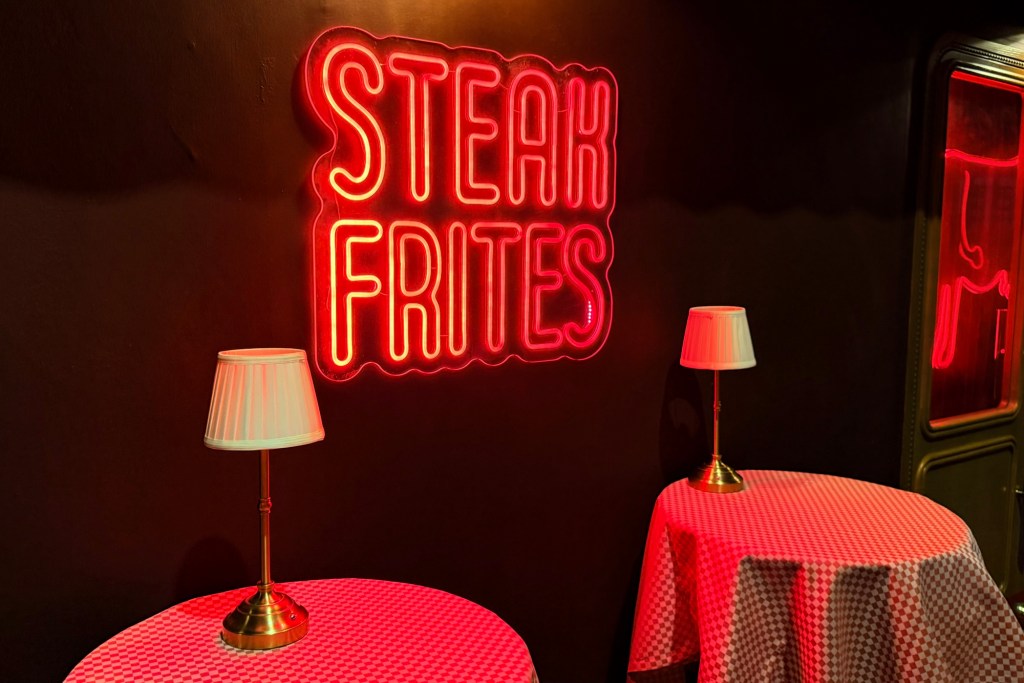
    As if eating in revenge, we had a huge dinner with Alex at a place called “La Vache!” the following night. They run a simple concept: S$68/person for a salad, ribeye steak, and unlimited French fries. Cocktails are S$26 and pretty substantial. There are also desserts if you have room, including gelato from Messina down the road. Reader, I had a lot of fries and thereby a lot of sodium. So much so I’ve spent the rest of the week trying to up my water intake to make up for it.

    ===

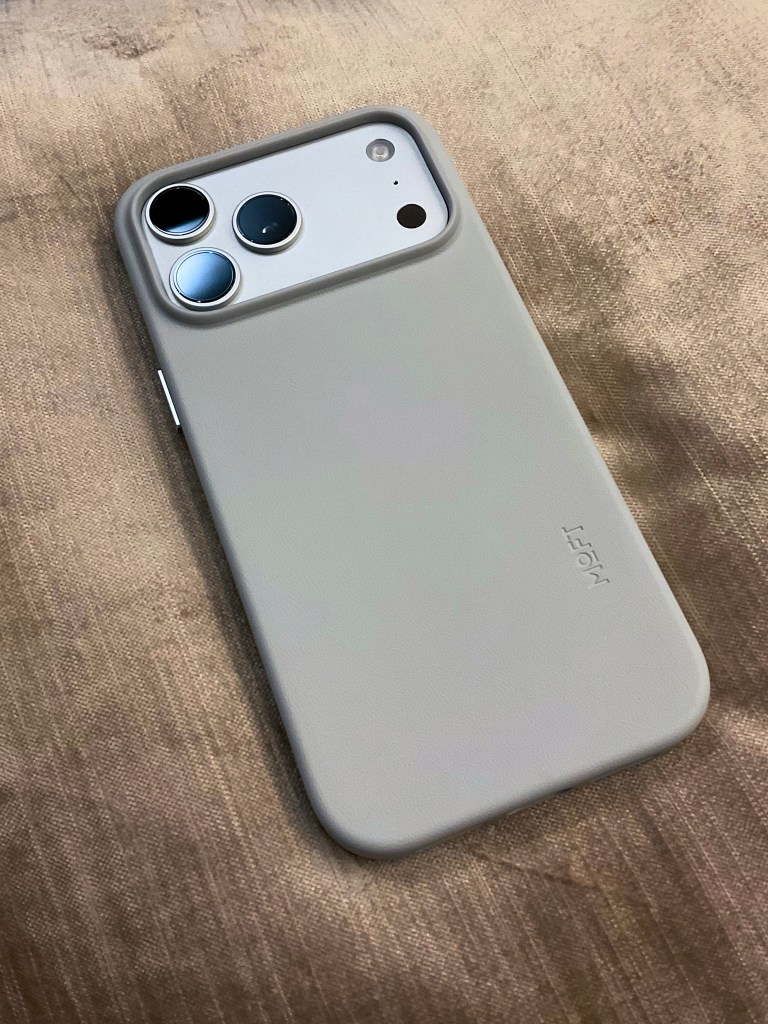
    The MOFT brand iPhone case I got a few weeks ago has been impressing me so much with its soft material and quality construction that I blinked and found that I’ve now bought more products in their MagSafe-compatible lineup.

    The Snap Phone Tripod Wallet folds out into an adjustable stand that could be useful for anyone needing to shoot photos, make video calls, or watch media handsfree. Like I said, I’m barely conscious of why/how I bought these things, because that doesn’t describe me. I suppose I’ll just have to become a content creator then! It also holds up to 2 cards, although in hindsight I should have gone with the thinner version that doesn’t.

    That’s because a few days later, I also ordered their Snap Field Wallet which holds 8 cards and even some folded bills, coins, and a SIM card tool. There’s a version of this that includes a built-in stand, but I decided against it since I already have the “tripod” for stand-related needs.

    Happily, this shopping spree concludes my search for a new minimal wallet to replace my worn and aging Bellroy. Every bearable option I’ve found has been over S$120, and because carrying a wallet is such an antiquated concept for me these days with everything on the phone, I wasn’t thrilled to spend the money. But the MOFT Field Wallet’s low price and novel origami design made for an easier and less risky decision. It’ll mainly stay in my bag, but the option of attaching via MagSafe is a nice bonus.

    ===

    I haven’t seen many films lately, so this week was a corrective period. I saw a Korean arthouse film on MUBI that I don’t regret but can’t recommend, called Woman Is the Future of Man (2004), and a more mainstream Korean thriller called The Old Woman With the Knife (2025). The titular trifecta was pure coincidence, but I also saw the new Keira Knightley vehicle, The Woman in Cabin 10 (2025). None of the above are really worth your limited time on Earth, if we’re being honest.

    Usually, whenever a three-hour film pops up in the queue, I push it down to the bottom. But this time when I saw Martin Scorsese’s Casino (1995) was leaving Netflix, it seemed like a sign to just sit down and do it. I can’t believe I waited so long though, because it’s something of a masterpiece despite the gangland tropes, and I don’t normally even like these kind of stories.

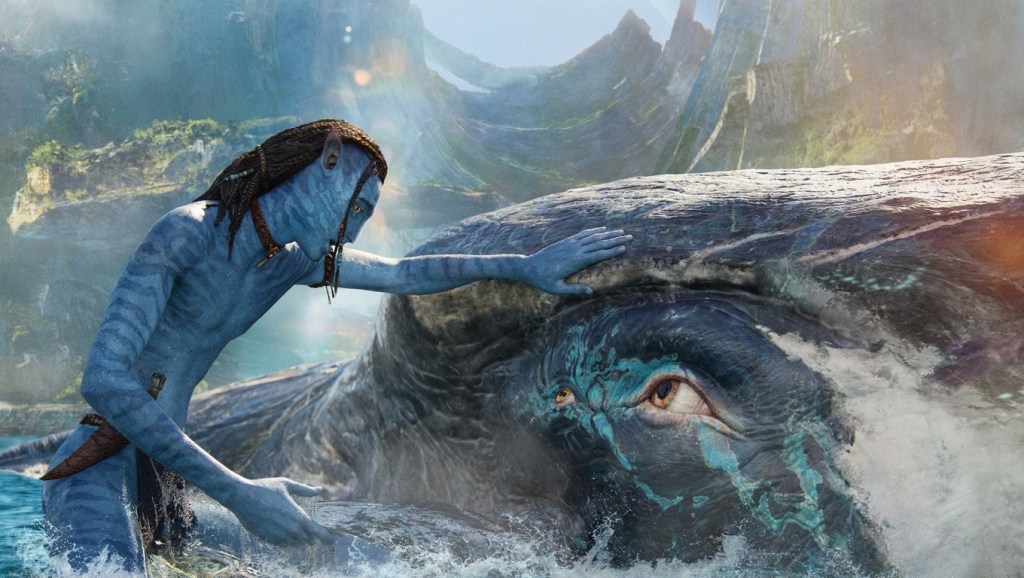
    I subscribed to Disney+ Premium to watch Avatar: The Way of Water (2022) in 3D on the Vision Pro, another three-hour movie. While the story isn’t worth the time, the immersive experience and quirky filmmaking tech was absolutely worth my money. My Letterboxd review: “The story of a Saturday morning cartoon with the technical complexity and execution of a space mission. Big failure on the part of our entire species that we can’t produce a director who can do both parts equally well. Not a film I want to see again.”

    As an example of how this is a film that you can’t really watch traditionally, it constantly switches between 24fps and 48fps shots, often within a single scene. It feels like a videogame, where you’re watching a cinematic cutscene and then it suddenly transitions into ultra-smooth gameplay. The 3D also pops in HDR clarity on the Vision Pro, where it would be dimmer on an IMAX screen. Sitting at home with Disney+ in a headset is oddly the definitive way to experience James Cameron’s shallow deep sea epic, which probably wasn’t what he envisioned.

    I swore I wouldn’t read or watch any of the Dan Brown/Robert Langdon stories, but it’s been almost 20 years so I put The Da Vinci Code (2006, only 149 mins) on one night and it wasn’t terrible. It helps that it’s a Ron Howard film, and I think I might actually see the next two films, Angels & Demons (2009) and Inferno (2016), before they leave Netflix. There was also some positive press for the new Dan Brown book in this series, The Secret of Secrets, so I’ve added it to my reading list. Younger me would be so disappointed.

    ===

    It wasn’t just me that visited the doctor this week — I brought my 2021 iPad Pro (M1) down to the Apple Store over the weekend. When the Apple Genius came up to me and asked, “So what’s wrong with your iPad?”, I answered “It‘s just old.” For a while now, I’ve suspected it of falling short of Apple’s promised “all-day battery life”, but sending it in for a replacement felt like such a hassle that I kept putting it off.

    Because this iPad model doesn’t report battery health in Settings, I figured it was easily below 80% capacity, and was prepared to pay maybe $120–150 for a new battery. So they ran their diagnostics app on it, and told me it’s actually at 86%. Huh. That’s pretty good for 4.5 years! I asked how much it would cost to replace anyway, and was told just shy of S$200, but it would be a full unit swap rather than just a new battery.

    If the battery health had been 70%, I would probably have paid the money and then had to use this for at least another two years. But at 86%, I can probably make this work for another year and then see what the new models look like. So by building a product that actually ages well, Apple has… increased the likelihood of me upgrading even sooner. That’s the 4D chess game that Tim Cook plays, folks.

  • Week 40.25

    Week 40.25

    • I’m now at the age where annual medical exams are strongly advised. Everyone around me knows someone whose life’s been upended (or worse) by a serious health issue. As much as it sucks to find out, finding out too late is worse. We went for ours this week and are waiting for results, fingers crossed.
    • I’m now also at the age where lame jokes come naturally, so when the nurse asked, “You have about five drinks on average a week? What do you like to drink?”, I replied, “What do you have?” The nurse laughed harder than expected so I’m guessing the clinic doesn’t get many patients masking anxiety with comedy.
    • They’ll probably come back and tell me I’ve got hypertension, because I definitely felt my blood pressure spiking on Saturday when Kim agreed to give It Takes Two another go on the Switch. For the uninitiated, it’s a co-op game where a married couple on the verge of divorce magically get turned into a pair of their daughter’s wooden dolls in the shed, and need to make their way back into the main house to get her help. But in order to make the journey, they’ll need to — you guessed it — work together. As a couples conflict simulator, it’s super effective. There are many videos online showing one player (usually male) getting frustrated as their partners (usually female) struggle with the hand-eye coordination required to get through the platforming sections, dying over and over. Don’t get me wrong, it’s a lot of fun, and we surprisingly played for about three hours before calling it a day.
    • Speaking of things women do differently, I watched this video essay on the rise of gambling-related activities and industries, and learnt that blind box sales are overwhelmingly driven by female buyers. Supposedly, the data bears out that women prefer to get their dopamine fixes from such lower-risk, collection-and-completion-oriented activities with a community element. I definitely have never felt especially compelled to buy more than a couple of any given gacha or blind box toy. It says men prefer higher-stakes competitive play, “go big or go home” style, or what you’d recognize as traditional gambling. The point is, businesses really know our buttons and they are pushing them every minute in the modern world.
    • Speaking of wasting money, it didn’t take long to realize that my plastic Beats case wasn’t suited to everyday use — not because it’s candy pink but because, like the iPhone it protects, it’s too smooth and hard to hold. It’s now my occasional fun case, but for other days when I want to use one at all, I’ve got the MOFT Snap Case MOVAS™ in “Misty Cove” colored “vegan leather”. Nevertheless, it feels significantly nicer: soft, textured, grippy, yet smooth enough to slide out of a pocket without turning it inside out. One additional benefit of vegan leather over the murdery kind is that it’s more stain/patina resistant. I would never have been able to risk this color with a cowhide case; it’d turn blue-black from my jeans in no time. Btw, when did we all agree to start calling PVC vegan leather? That’s quite the PR masterstroke by Big Plastic.
    • Last week, the Twitch streamer 4amlaundry once again attended the Tokyo Game Show and streamed hours of walking around the show floor. I missed it then, but watched some of the recording this week on YouTube. I was more excited when he decided to visit the Extinct Media Museum in Tokyo on Wednesday. It’s a private collection of old cameras, laptops, phones, and media devices like the Walkman/Discman, MP3 players and so on. This was on my list to visit back in February, but on the day I was meant to go, it got too cold and dark for the 15-minute walk over from Tokyo station and I decided to head home. Watching the POV stream felt like being there — except he was happy to touch all of those beautiful tech artifacts where I, the germophobe, would have declined.
    • I read a couple of books. Flowers for Algernon by Daniel Keyes is one of those titles you always hear about, but I never actually knew what it was about. I thought it was some inspirational crap like ‘Hey God, it’s Whoever, Are You Listening’, or ‘The Five People You Meet in Purgatory’ or whatever. It turned out to be about an intellectually disabled man who’s turned into a genius in a science experiment. It was also more powerful than I expected because it’s presented entirely as journal entries by the man himself, so the reader experiences his increasing intelligence and widening awareness of his position firsthand.
    • Another book was Perfection by Vincenzo Latronico, which has been getting mentioned a lot on account of being nominated for the Booker Prize this year and for being too painfully truthful a look at millennials, and our devotion to living through trends, cool hunting, digital nomadism, performative wokeness, and mediocre aesthetics. Here’s the New Yorker’s article about Perfection, which makes me want to read the Georges Perec book that inspired it. Me? I loved it, but if I’d taken a few different turns — say, moved to Berlin — I’d probably feel personally attacked.
  • Week 38.25

    Week 38.25

    I type this while listening to Sam Fender’s last album, People Watching. I’ve been meaning to hear this through for awhile, but it got buried in my ever-growing library of new music. Thankfully, with the latest update to Apple Music in the OS26 series, you can now pin up to six albums or playlists to the top of your screen. I’ve wanted this sort of ‘Now Playing’ or ‘Heavy Rotation’ virtual shelf for the longest time — it’s the first feature I’d add if designing a music player app. So this album and five other neglected ones are now sitting up there, and I can give them the attention I want.

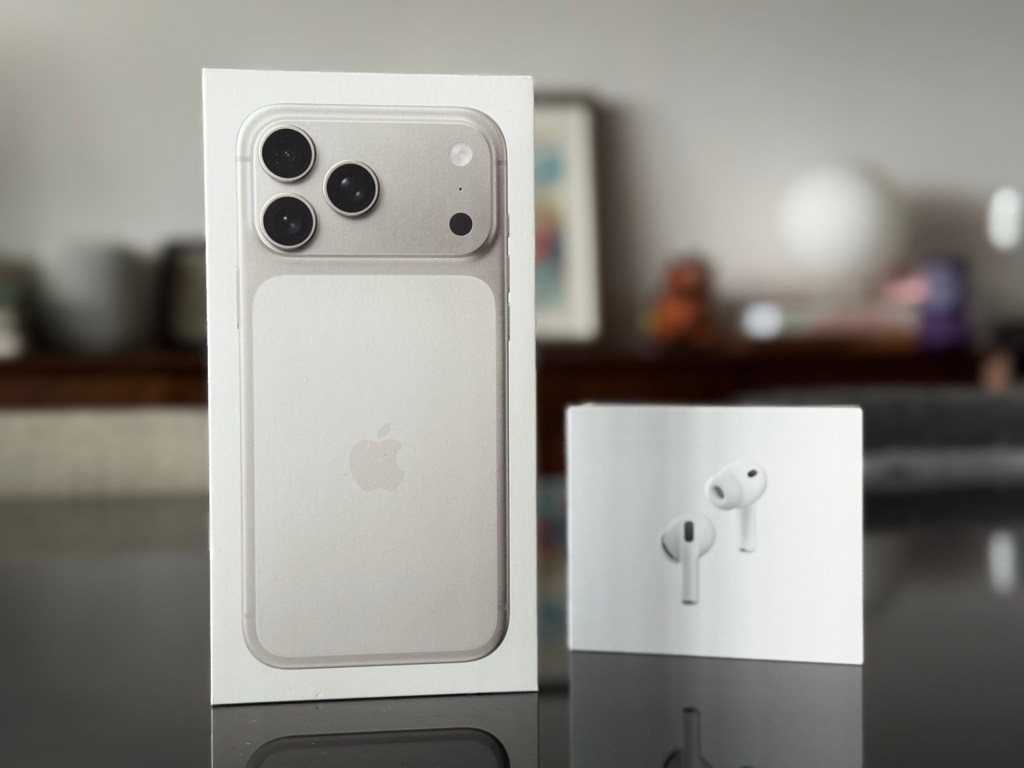
    I’ve been listening on both my new AirPods Pro 3 and an original pair of AirPods Pro, and dare I say the difference is quite obvious. Louanne asked me what I do with old pairs of headphones when I get new ones, and the answer was “put them in different rooms!”, of course. I’m fast running out of rooms. The new model sounds much more Beats-like than ever (modern Beats, not OG Monster Beats). That is to say, a bass-forward sound with a very clear, almost sparkling high end. It’s a fun sound, and I think they’ll be very popular for all kinds of music, if not audiophile-grade neutral. They appear to fit better than before too, and the difference in body shape will strike longtime AirPods users as soon as they pick them up.

    Then my new iPhone arrived, and before you judge, the old one is being returned to Apple’s Trade In partner in a few days, where it will hopefully be responsibly refurbished or at worst recycled. They’ve suggested that I’m likely to get nearly half the original cost back, which is an astounding deal for a two-year-old model! I’ll believe it when the deposit lands in my bank account.

    I’m very happy I decided to stick with the Pro Max size instead of switching to a Pro. The slight increases in height and width are visible if you put them together, but isn’t really noticeable in the hand. The increase in thickness IS, but combined with the new gentler corners on the seamless aluminum body, I think thicker is actually better? This might be the best feeling iPhone ever.

    I’ve yet to put the new camera system through its paces, but I’m excited and very pleased after a couple of days with it. Images look cleaner, and the redesigned front-facing camera is a revelation. I took a test selfie and could scarcely believe how presentable I looked. Coming from the iPhone 15 series, I’m also new to the new Photographic Styles that were introduced last year, and am getting a lot out of them. I compared photos shot in RAW with Halide and in HEIC with the default camera using a tweaked “Natural” style, and they’re extremely close in both SDR and HDR. This is a big deal! Along with the revised Photonic Engine this year, the dark days of overprocessed iPhone photos may be behind us.

    When reviews get creative

    One thing I’ve noticed this year is how bland and predictable the video reviews from the usual tech YouTubers and influencers have been. They go through the spec sheets while speaking to the camera, do a few test shots, and end without any thoughts you couldn’t have pulled out of ChatGPT. But then I saw a couple of videos from the Chinese-speaking side of the internet, and that’s when I realized Western civilization is well and truly finished.

    Take a look at these and tell me you’re not duly impressed by the storytelling creativity, production skill, points of view, and passion on display — even if you can’t understand a word (but most of them have English subtitles you can enable). They could just shoot the phones on a stand while swinging a light overhead, but they instead they go hard with CGI, costumes, sets, comedic sketches, and cinematic editing. And they do these in the WEEK they’ve given between the phones being revealed and launching.


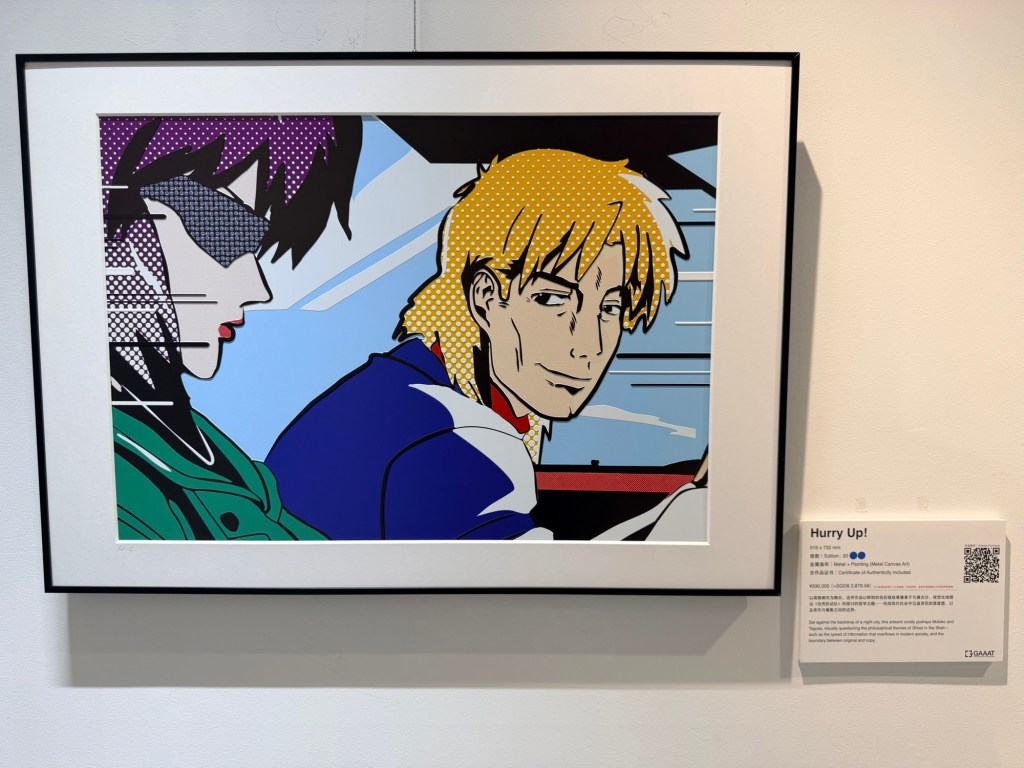
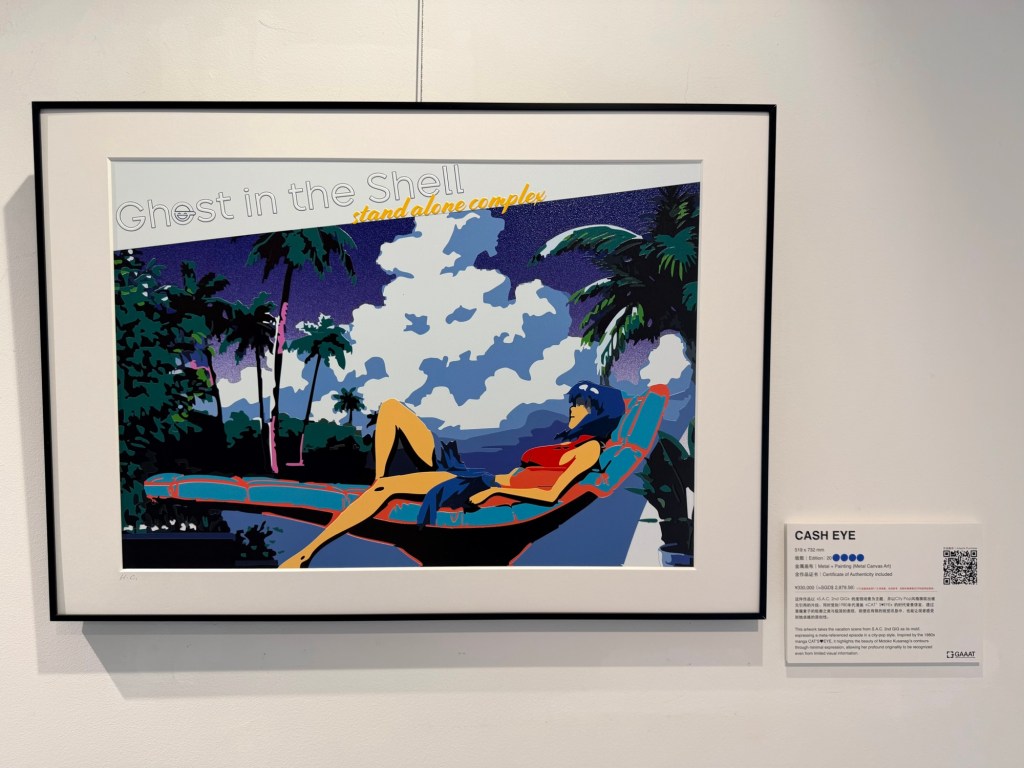
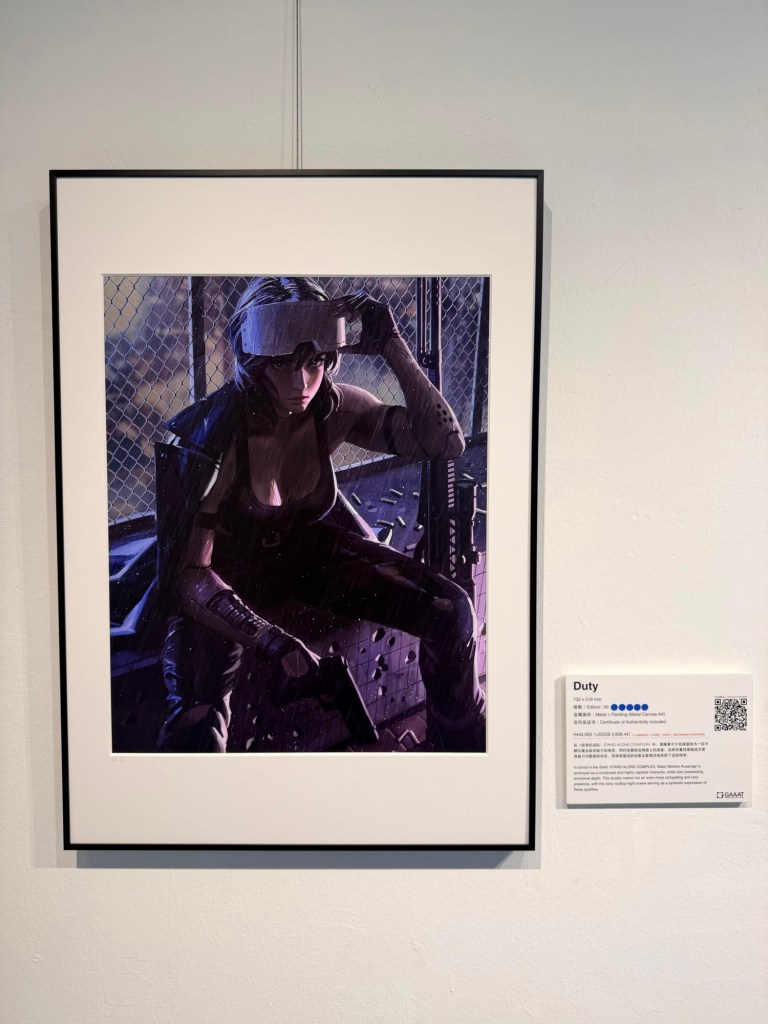
    We visited a local art sales event for works based on the Ghost in the Shell: Stand Alone Complex franchise, just to have a look. The metal-printed pieces were going for upwards of S$4,000, so there was never any chance we’d buy one — but I got a little acrylic plate standee for my desk (S$25). Above are some snaps straight from the iPhone 17 Pro Max, using only Photographic Styles.

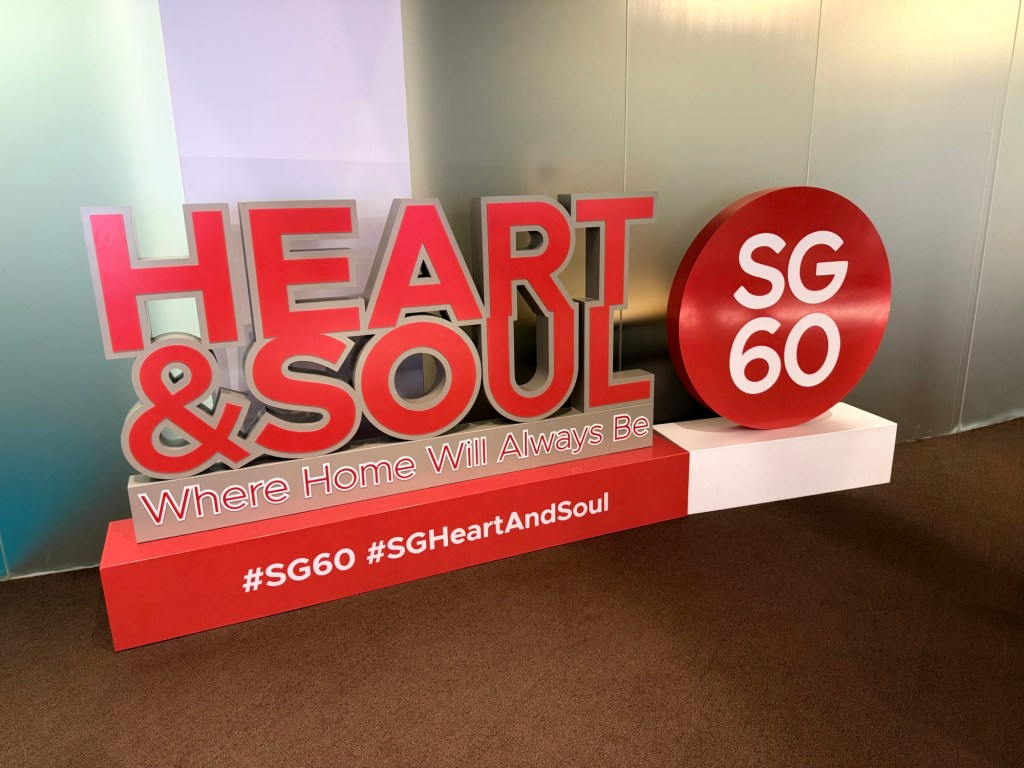
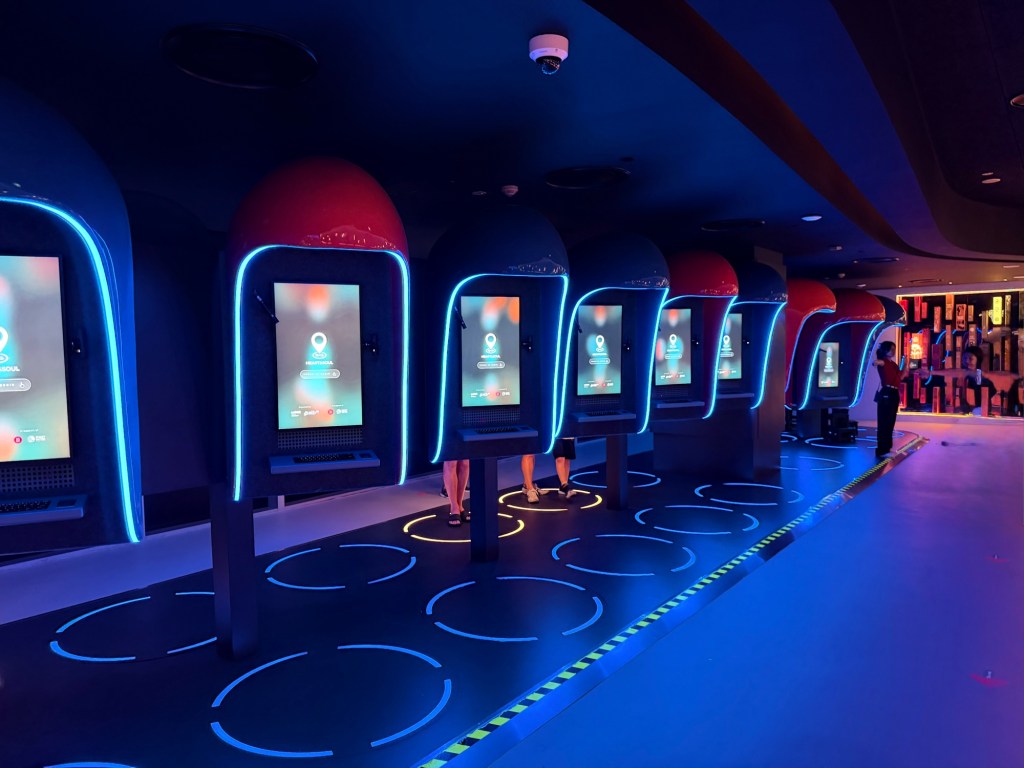
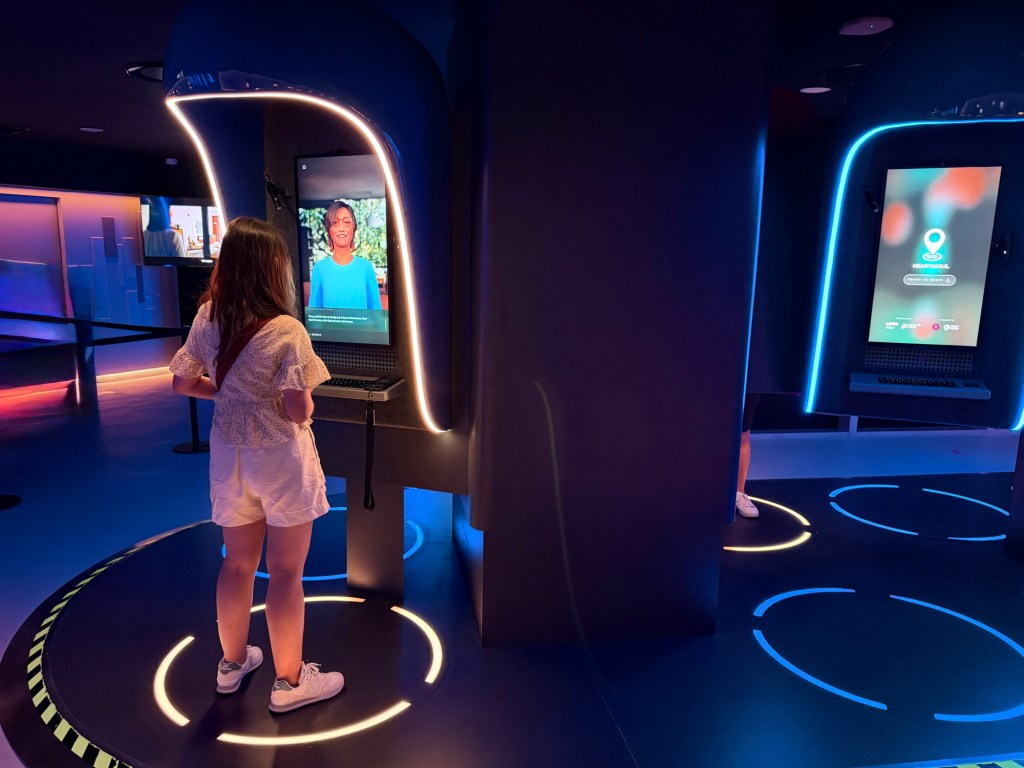
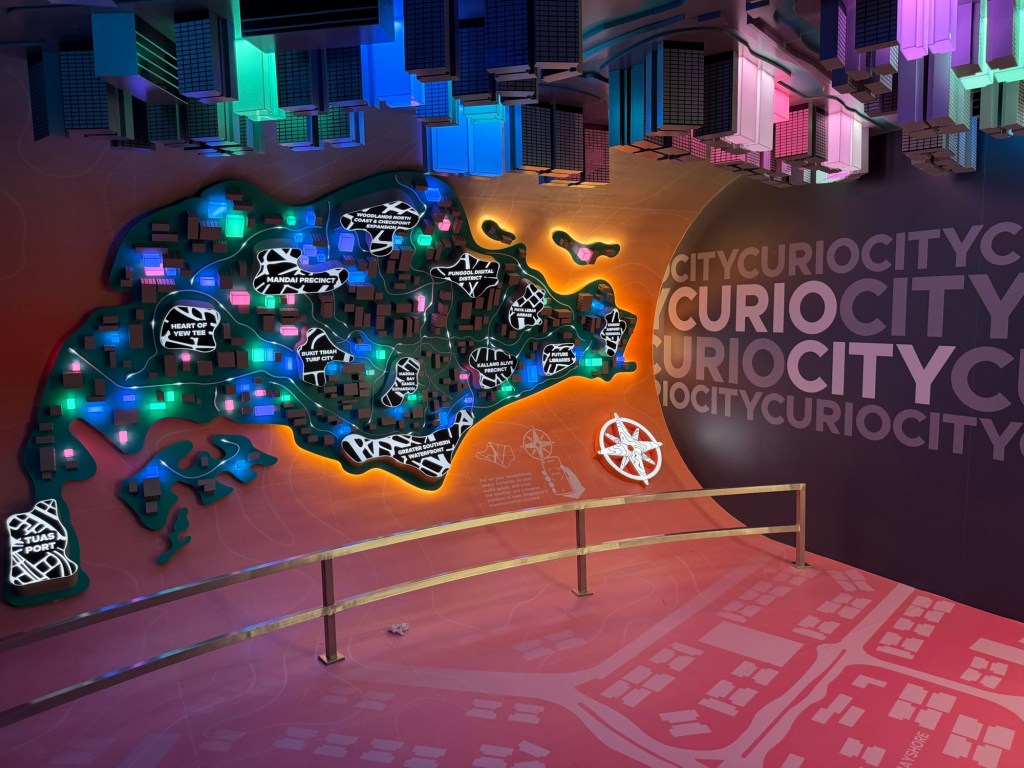
    Afterwards, we visited the SG60 Heart&Soul Experience which is being housed at the site of the old library@orchard. Supposedly it will be renovated and return as a downtown library next year, which is great news. From what I can gather, it’s meant to inspire people about what Singapore’s future might look like, and what place they’d have in it (employing lots of tech to personalize the journey). Criticisms I’ve heard are that it doesn’t go far enough, and the future shown looks kinda like the present: delivery drones, working in VR headsets, greenery everywhere. Visit and see for yourself. Bookings are required, but the tickets are free. It’s quite an involved production with each visitor being given a guide device (an encased Xiaomi smartphone) to wear around their necks, and human facilitators bringing them through the stations.

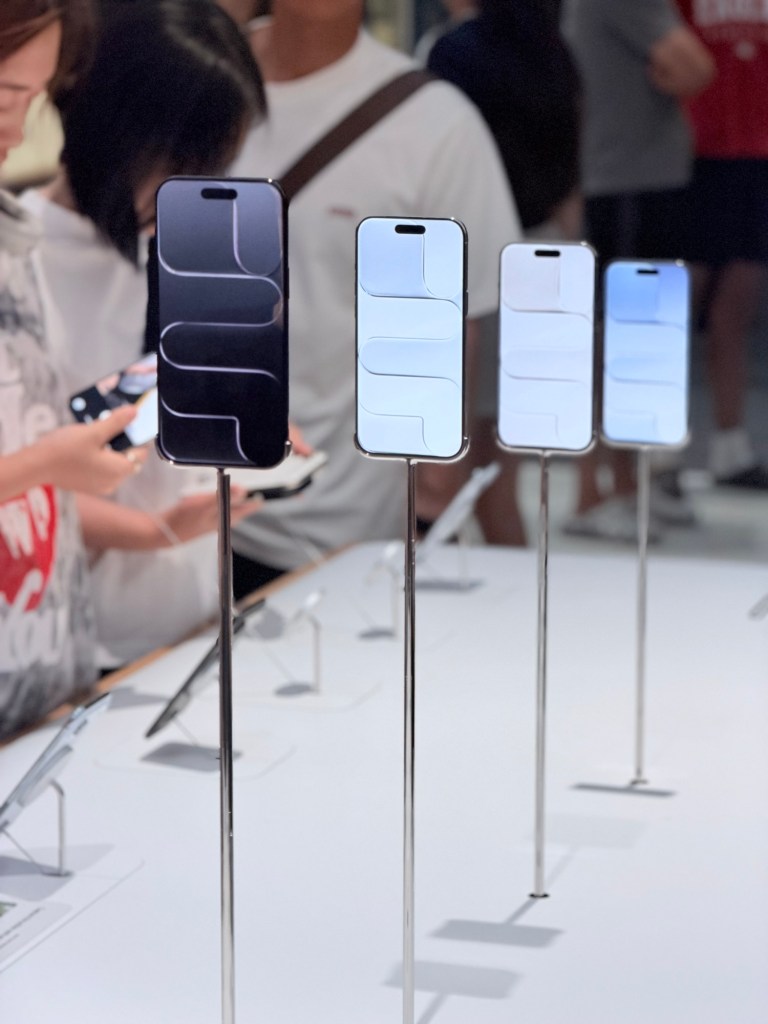
    Oh, speaking of cases, we went by Apple Orchard Road after the show to have a look at the iPhone Air, and I haven’t seen that store so packed in years. I picked up a rather loud Beats case in “Pebble Pink”, mostly because I really wanted a Beats case last year but they only made them for the iPhone 16 series. It’s hard plastic with a matte finish that’s slippery when your hands are dry but tacky enough if there’s a bit of moisture.

    Check out my reel with the Pink Panther theme:

    And while we’re on the subject of great directors, I finally sat down with Bernardo Bertolucci’s The Dreamers (2003) on MUBI. More explicit than I expected, it’s easy to see why people call it pretentious with its heavy callbacks to classic cinema, but it’s never boring and it sure knows how to use mirrors. I gave it 3.5 stars on Letterboxd, mostly because there’s “altogether too much time spent lying on floors for my liking”. There’s also one truly revolting moment where, out of money, they raid the apartment building’s trash for scraps of food and assemble the world’s grossest bento.

    Spike Lee’s Highest 2 Lowest (2025), now on Apple TV+, is a remake of Kurosawa’s High and Low (1963), which I’ll embarrassingly only get around to watching after this homage. But this is a fine film that stands on its own: a sharp, sometimes experimental exploration of class and morality, constantly playing on the gulf between generations — Motown vs. modern rap, film vs. digital, Kurosawa vs. Lee.

  • Week 24.25

    Week 24.25

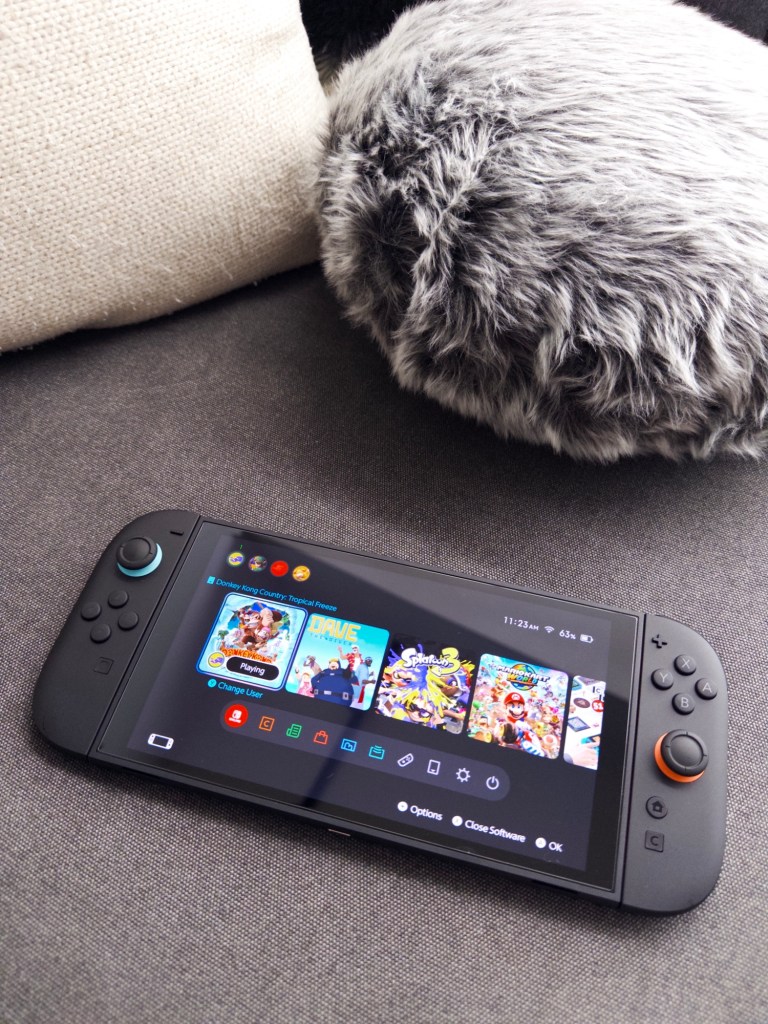
    • My Switch 2 finally arrived on Monday, praise be. It turned out to be an imported European unit, so it has the right kind of power plugs, but the included download code for Mario Kart World would only work with an EU eShop account. It didn’t take long to make one, but it’s yet another needless fragmentation of my digital footprint.
    • It’s a fantastic improvement on the original Switch. It feels more solidly built, and the magnetic Joy-Cons don’t creak and give as much when supporting the console’s weight. The screen is enormous but since the original wasn’t exactly pocketable anyway, who cares? It seems powerful enough to keep up with game requirements for easily another five years. The only regression is battery life, which they’ll surely fix with a new model two years from now.
    • I have yet to play anything on it that graphically pushes into PS5 territory with ray tracing and photorealism; although running Mario Kart World at 60fps in 4K is definitely not something the old Switch could do. That same smoothness extends to Splatoon 3, which got a Switch 2 upgrade patch on Thursday for the franchise’s 10th anniversary, and it feels amazingly fast and fluid on the new hardware. The once painful load times have been reduced to almost nothing, which is nearly worth the price of admission all by itself. At the very least, reviewers agree it’s more powerful than a Steam Deck.
    • Bert was back in town on a last-minute trip, so we met up with some of the old gang for beers and the kind of talk that middle-aged people will get up to if you let them: aging parents, how everything was much better before, and how we’d like to retire voluntarily before AI forces us to. Jussi was once again unable to make it, but he had the acceptable reason of being out of the country.
    • It was WWDC week, and with the comprehensive OS updates that were announced, it wouldn’t be an exaggeration to say that every Apple product experience will be changing this fall. I’ve had several conversations about the new cross-platform design language system they unveiled, which doesn’t have a name but is anchored by a new digital material called Liquid Glass, so people have just been calling it that. I wrote last week that I hoped the new look wouldn’t come with regressions in usability, specifically thinking about legibility and interaction clarity, but those are exactly the issues that everyone has been pointing out in the first developer beta. I’m hopeful that they’ll be able to moderate some of the more extreme decisions before the launch, but there’s no turning back. Like it or not, this is just how things are going to be for us users. What are you going to do, move to Android?
    • While talking to Michael again, one of us offered that Liquid Glass is simply a flex. It’s Apple building a visible moat with their superior silicon. Every iPhone, iPad, and Mac made in the last five years possesses power-efficient cycles to spare, which can’t be said of Android devices, save for a minority of the highest-end flagship phones. So when you look over someone’s shoulder in public and see morphing glass buttons accurately refracting the light coming off other elements on their screen at 60 to 120 fps, you’re looking at the digital equivalent of fine stitched leather. Luxury pixels. Veblen UI. Android manufacturers can’t follow Apple down this road without bifurcating the experience into cheap and premium versions, or forcing tradeoffs like reduced battery life and jankier animation.
    • The iPad got the most extreme makeover of all the platforms, and I’m a mixture of relieved, disappointed, and excited. Relieved that they’ve given up on trying to define some new paradigm for managing multiple apps on a screen; turns out the answer is just the same overlapping windows we’ve had since the first Mac. Mildly disappointed that if they couldn’t crack it after some 15 years, then maybe there just isn’t a better way. The universe might be more constrained than we’d hoped. And excited that the iPad will now be a truer laptop replacement for the majority of people, and with that increase in adoption perhaps we’ll get developers excited to build new kinds of experiences for it.
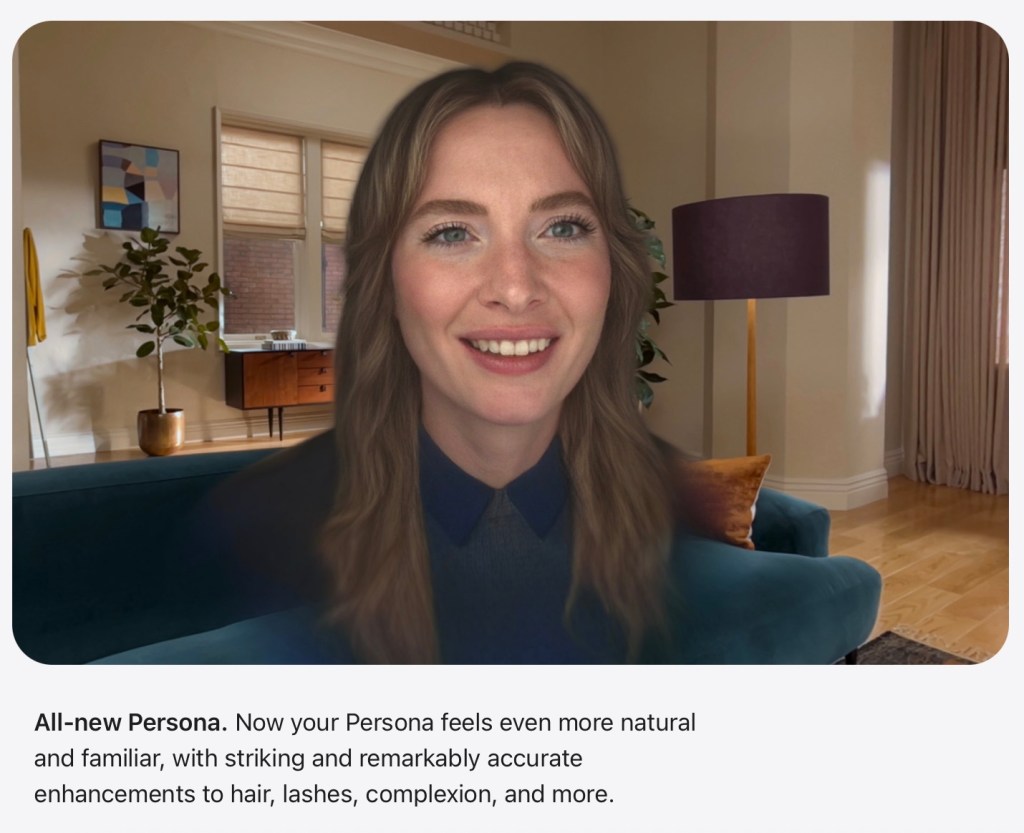
    Screenshot from Apple.com
    • As a Vision Pro owner, I can’t wait for the improved Personas, sharing virtual spaces with people nearby, and the new “spatial scene” rendering from 2D photos. I’ve already spoken to some people in inSpaze who are rocking the new Personas, and they look 10x better and more realistic than the old ones. In fact, it’s given rise to a weird social dilemma that can only exist in this age. I’ve known these people for a while and we’ve talked with each other quite a bit, but suddenly overnight, their faces have changed and it feels like I’m meeting them for the first time — or realizing I never really had. One person in the group chat looked younger now that his Persona got more accurate. Another person looked older and more intense than his previous Pixar-esque Persona suggested he was. They mentioned feeling slightly uncomfortable with how realistically they’re now presenting — the opposite of the safety that I described back in August last year: “the use of Personas creates psychological distance; it’s you, but it’s also more a puppet that looks like you.” Well, now it’s just your real face for everyone to see. I apologize in advance.

    I’ll leave you with two videos from Pulp, whose comeback album More continues to surprise me by being actually good, as if the band hadn’t gone anywhere for the last two decades. The first single has a great video (above) that uses generative AI in the best way possible. The second video below is a live performance of an old favorite, one of many appearances they’ve been making in support of the new stuff.

  • Week 4.25

    Week 4.25

    The cool rainy days continued for another week.

    • Before diving into the deeper end of Japanese literature as previously mentioned, I thought I should warm up with at least one Haruki Murakami novel first. My gut said that it’d been maybe a year or two since the last one I’d read, but no, Goodreads informs me that I finished 1Q84 in May 2020! So I picked up Norwegian Wood from the library and finished it in a few days. I now want to watch the 2010 film adaptation because there’s so much spicy dialogue in this that I can’t imagine them using. Also, Rinko Kikuchi and Kiko Mizuhara play the two female leads, and that is the most 2010 Japanese casting ever.
    • My new Kobo Clara Color started acting up during this, freezing and needing to be rebooted, losing my current progress, and draining its battery rapidly overnight. I have a post from 2013 about how I fixed similar battery issues on my Kindle, and it’s one of the most visited pages on this site. Sadly, I didn’t find any tips online about battery problems with this Kobo model, so I just did a factory reset and things seem to be going okay so far. I suspect it has something to do with using Calibre to load EPUB files on it, if said files were not perfectly formatted.
    • My friend Cong is always saying Singapore lacks authentic Vietnamese food, specifically pho, but he recently found a place that he found good enough and that’s generous with the herbs and vegetables that are hard to find here. I went with him, Mavis, and Jose to check it out for lunch on Friday, and I can say that it was a fine bowl of noodles (but can’t speak to its authenticity). No gatekeeping; it’s called Lang Nuong 1980’s on Hamilton Road near Jalan Besar.
    • I’ve never put in the time to get good at shooting video and mastering all the techniques that go into making little films, so I rarely post video ‘stories’ on social media and vacations are only documented through stills in my photo library — isn’t it funny that we still call them photo libraries (e.g. iCloud Photo Library, Google Photos) even though they contain videos? This week I found myself experimenting a little with the form, thinking I might try to make myself what people used to call a “home movie” (before sharing your life with strangers was a thing) during my time in Japan.
    • When it comes to shooting footage, I’ve found Kino and Blackmagic Cam to be the best. They let you record 4K video in Apple Log, process the video in real-time using color-grading LUTs, and save them in a standard color space in compressed HEVC files. This is much better for almost anyone than using the default iPhone camera which saves Apple Log videos using ProRes, which results in massive files. I prefer Kino a little bit more because it includes a bunch of LUTs out of the box. It also has a more beginner-friendly UI, and takes care of most things automatically to get you more cinematic results.
    • One thing it doesn’t do, that I don’t think any app does, is use your location to influence your video settings. What do I mean? I may be oversimplifying, but here in Singapore (where PAL is the broadcast standard), you get flickering lights when shooting at the common 24/30 FPS speeds because our electricity grid operates at 50hz instead of 60hz. This causes lightbulbs to pulse at 100 times a second, and you see it happening at 24fps because 100 does not divide as cleanly by 24 as it does by 25. You can apparently counteract this through some combination of shutter speed/angle, but that’s beyond me. I just know I shot a bunch of footage at 24 FPS and there was flicker all over it. It’s 2025 and it sure would be nice if an app just knew what to do!
    • When it comes to editing, I played with a bunch of the most popular apps, including the super popular CapCut by ByteDance that I believe most IG/TikTok influencers use. It’s definitely a comprehensive tool, but wants you to pay a subscription for many of its most useful features — S$105.98/yr is a little steep for amateur dabblers like me imo.
    • I hadn’t fired up iMovie in a long while, and was surprised to discover a “Magic Movie” mode was added two years ago, and it’s not bad if you’re happy to give up fine-grained control. Just select a heap of clips, and it’ll string them together with a dynamic soundtrack (the music ends naturally when your video does), transitions, and a smattering of fonts and title styles you can choose from. Being a free Apple app, I think this is probably enough for most amateur dabblers… except it doesn’t support 9:16 videos. It’s an app for boomers.
    • That restriction probably won’t affect me as I intend to shoot my videos in traditional landscape orientation anyway, but it’s nice to have options. That’s when I discovered LightCut, a completely free Chinese app that looks suspiciously like CapCut and tries to opt you into a data-sharing program (you can say no, and also deny it Bluetooth permissions while you’re at it), but is otherwise a very attractive and powerful tool for the price! Like with CapCut’s paid AI features, it can drop your clips into suitable pre-made templates and make a pretty professional-looking video with little effort on your part. I think it’s a good alternative to iMovie if you need the flexibility of freely placing text on screen, adjusting the brightness/color of individual scenes, and so on.
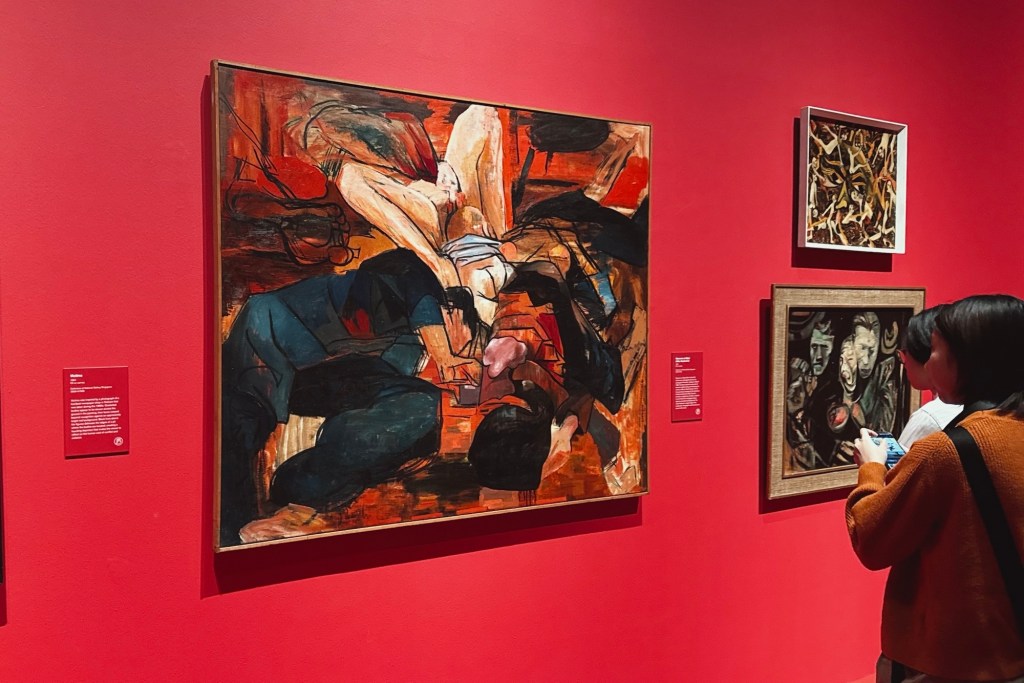
    • On Wednesday, I decided to visit the National Gallery again and see the special exhibitions leaving next week. Here’s a low-effort “Magic Movie” of my visit, just a heap of random clips shot with Kino and assembled by iMovie. I finished the whole thing on my phone over a cup of tea at the café afterwards.
    • One thing I don’t like about being in a ‘video mode’ while walking around is that it takes you out of being in ‘photo mode’. I probably took just three photos that day, and don’t know if there’s any way around it except practice.
    • I still can’t decide what the best way to shoot photos on an iPhone is right now. I vacillate between shooting Bayer RAW with an app like Halide, shooting ProRAW with the Leica LUX app, ProRAW with the default camera app, and just embracing the iPhone’s “Photonic Engine” and getting 24MP HEIF files with the default camera app.
    • Bear with the neurosis, but as part of obsessing over the above question, I’ve been testing Nitro Photo, the new-ish pro photo editing app by former Apple Photo Apps group CTO Nik Bhatt. His last app was RAW Power, which I’ve owned for years but haven’t used that much, partly because I rarely shot RAW and partly because its UI is a little clunky. Nitro is a re-imagining of RAW Power, built from the ground up with modern frameworks and a redesigned UI. From a functional and technical perspective, I think it offers a level of control that no other app, short of Adobe Lightroom, does on iOS. Neither Darkroom nor the recently acquired-by-Apple Photomator have the ability to tune RAW/ProRAW images like Nitro. You can do things like adjust the tone mapping on ProRAW photos, for instance, to get a more natural look without Smart HDR effects, or control how the Apple RAW engine renders sharpness. I’ve ported over a few of my own presets over as LUTs, and am getting into it to the point that I might plonk down $100 and make it my main photo editor. The worst thing about it is still the UI, which I must stress is not bad; just a tad dated as touch UI conventions go. Darkroom is much more pleasant to use on a small screen, but the broken state of preset syncing there has really turned me off lately.
    • This is where you say, “But Brandon, if you shoot everything in ProRAW, doesn’t that take up a ton of storage? Especially if you don’t have an iPhone 16 Pro that can employ JPEG XL compression?” Well, yes, and that does bother me. So imagine my excitement when I discovered the NO RAW app, which claims to strip out the RAW data from photos that are RAW+JPEG bundles in the iOS file system, once you’re done with editing and know you won’t go back again. I knew deep down that it’s not possible for an app to do that on iOS, but had to pay S$3 to find out how it worked. The answer? It’s essentially a solution you can build on your own in Shortcuts.app: make a new copy of your image as a HEIC file (retaining metadata), and then delete the original bundled file. Boooo! My free HEIFer shortcut does exactly this, but for JPEGs. And NO RAW has the same “flaw” as my shortcut. Namely, that the correct chronological order will only be retained if you sort your photos by Date Captured. If you sort by Recently Added, then all of these former-RAW photos will appear at the bottom. I should have known, but I’ll still use NO RAW as it gets the job done and has a date picker UI that beats any shortcut, but I might update HEIFer to do the same if anyone wants it.

    Media activity:

    • I finished watching the anime series Dead Dead Demon’s Dededede Destruction. I’d heard about it before, and then when Dandadan came out, I mistook it for this and only realized they were separate shows like many episodes later. They are eerily similar in name and synopsis: school kids dealing with an alien invasion. But Dededede is much less kinetic/comedic/wacky. 3.5/5 stars.
    • We finished Squid Game 2 and despite initially liking how it was handled, I got a little bored towards the end as the slow, dramatic deaths started to pile up. When will we get a third season, and will I care? Probably not.
    • I watched The Gleaners and I (2000) Because it’s leaving MUBI. It’s the kind of documentary you get when an experienced director picks up a novel tool (a digital video camera, in this case), and starts messing about around a topic that interests them. Here, Agnès Varda starts by interviewing people who still practice the lost art of gleaning — picking through recently harvested fields for uncollected produce — and ends up doing a cross-country investigation of waste and poverty. 4/5 stars.
    • I discovered the American YouTuber and illustrator Linh Truong aka @withlovelinh through a Japan travel/haul video she made last spring and found myself binging the last couple years of her content creator journey. She started doing vlogs in high school and has kept going with cozy life updates that interior decoration tips and other sorts of young adult life-hacking. She recently graduated from college, and it’s extremely sweet how many of her commenters say they’ve grown up with her over the years and are proud that she’s making it (1.2M subscribers and making sponsored content for Nintendo, Notion, et al).
  • Week 51.24

    Week 51.24

    This episode is brought to you by our kind sponsors at Bullet Points™: Need to keep your rambling in check while covering a dozen mundane topics? That’s a job for Bullet Points™ — creating the illusion of order since forever!

    • After wanting a simple MagSafe silicone case for my iPhone for the past few weeks, I got an $18 Amazon deal for a neutral gray one from Elago, and it’s nearly perfect.
    • In addition to having more time for informational intake and mental meanderings, I’ll probably remember the latter half of this year for the half-hearted austerity drive that’s led me to drink tea over coffee on a daily basis. This week, the Yorkshire Gold tea caddy I bought during Black Friday sales arrived, prompting me to look up the history of the tea caddy. Back when tea was too valuable to leave with servants in the kitchen, rich folk kept it locked in ornate caddies in their living rooms. Today, I store $0.12 tea bags in a flimsy tin and call it progress.
    • I’ve been struggling to read Butter by Asako Yuzuki, which has apparently been named Waterstone’s book of the year. I’m only a third of the way through after several weeks, and while there’s nothing wrong with it, it’s a bit of a compelling nothingburger. Female journalist tries to interview female serial killer. Killer encourages her to show more interest in life’s pleasures, especially good butter, and journalist slowly starts to adopt killer’s worldview. I don’t want to quit more but I’ll need to move on soon.
    • Because my book club has decided to read the sequel to A Psalm for the Wild-Built over the next two weeks, and I can’t start it until I finish Butter. A Prayer for the Crown-Shy will probably only take four hours (the length of its audiobook, compared to Butter’s 17 hours), but I don’t like multitasking with books. I already have too many ongoing TV show and game narratives crowded in my brain.
    • This year’s Goodreads Reading Challenge is in the bag anyway, with 19 proper books + four volumes of the Sakamoto Days manga completed, smashing my goal of 12 books.
    • Popular media loves a (serial) killer. We recently finished the new The Day of the Jackal series starring Eddie Redmayne as the titular assassin that the show’s directorial choices strongly encourage you to root for. It’s excellent, and the musical director is clearly a millennial who shares my taste in the classics, from the first episode starting with Radiohead’s Everything In Its Right Place.
    • We’re now watching Cross on Amazon Prime Video, based on the Alex Cross books by James Patterson, where a detective with a PhD in psychology plays cat and mouse with a serial killer. I recommend it, but the show is extremely dark AND low contrast, like someone forgot the final step in processing the image. Reacher suffered from this too, but it’s worse here. Luckily, my Sony TV has a mode that dynamically adjusts for it.
    • I rediscovered the greatness of Domi and JD Beck this week when a random video of them performing on Japanese morning TV popped up on my YouTube feed. I then went down a rabbit hole of older videos, like this one of Domi jamming with other kids at Berklee, and this one of JD headlining a Zildjian session, and am now just in awe of their incredible, otherworldly talent.
    • On Monday, we went out to see a local production at the Capitol Theater, entitled Dim Sum Dollies® History of Singapore Sixty Sexy Years. It was definitely one of the musicals of all time.
    • The end-of-year digital game sales have begun, and I urge you to add Sayonara Wild Hearts to your collection if you haven’t already. This game is both a fantastic musical album and a great playable abstraction of going through heartbreak. It’s just $7.79 on Nintendo Switch and S$8.40 on Steam (40% off in both cases). I first played it on Apple Arcade back in 2019 as a launch title for the service, but these days it’s no longer available on mobile and the fate of publisher Annapurna Interactive is in question.
    • I dusted off the PS5 to make use of my PS Plus subscription and decided to finally play a native PS5 game, since I’ve so far only played older games that were ported from the PS4, and had my socks and shoes blown off by Ratchet & Clank: Rift Apart. This game is an insane technical showcase for what the PS5 can do: thousands of particles flying everywhere, ray traced reflections, and massive, cinematic worlds that load instantly. Why have I squandered the potential of this machine for the last seven months?? If you have any recommendations for what to play next, especially if they’re in the PS Plus catalog, do let me know.
    • Last but not least, we went for Christmas dinner with the parents on Sunday night at one of my favorite buffets in town, and it’s made me aware I’ll have to watch my eating over the next couple of weeks.
    • Merry Christmas, dear readers!