This episode is brought to you by our kind sponsors at Bullet Points™: Need to keep your rambling in check while covering a dozen mundane topics? That’s a job for Bullet Points™ — creating the illusion of order since forever!
After wanting a simple MagSafe silicone case for my iPhone for the past few weeks, I got an $18 Amazon deal for a neutral gray one from Elago, and it’s nearly perfect.
In addition to having more time for informational intake and mental meanderings, I’ll probably remember the latter half of this year for the half-hearted austerity drive that’s led me to drink tea over coffee on a daily basis. This week, the Yorkshire Gold tea caddy I bought during Black Friday sales arrived, prompting me to look up the history of the tea caddy. Back when tea was too valuable to leave with servants in the kitchen, rich folk kept it locked in ornate caddies in their living rooms. Today, I store $0.12 tea bags in a flimsy tin and call it progress.
I’ve been struggling to read Butter by Asako Yuzuki, which has apparently been named Waterstone’s book of the year. I’m only a third of the way through after several weeks, and while there’s nothing wrong with it, it’s a bit of a compelling nothingburger. Female journalist tries to interview female serial killer. Killer encourages her to show more interest in life’s pleasures, especially good butter, and journalist slowly starts to adopt killer’s worldview. I don’t want to quit more but I’ll need to move on soon.
Because my book club has decided to read the sequel to A Psalm for the Wild-Built over the next two weeks, and I can’t start it until I finish Butter. A Prayer for the Crown-Shy will probably only take four hours (the length of its audiobook, compared to Butter’s 17 hours), but I don’t like multitasking with books. I already have too many ongoing TV show and game narratives crowded in my brain.
This year’s Goodreads Reading Challenge is in the bag anyway, with 19 proper books + four volumes of the Sakamoto Days manga completed, smashing my goal of 12 books.
Popular media loves a (serial) killer. We recently finished the new The Day of the Jackal series starring Eddie Redmayne as the titular assassin that the show’s directorial choices strongly encourage you to root for. It’s excellent, and the musical director is clearly a millennial who shares my taste in the classics, from the first episode starting with Radiohead’s Everything In Its Right Place.
We’re now watching Cross on Amazon Prime Video, based on the Alex Cross books by James Patterson, where a detective with a PhD in psychology plays cat and mouse with a serial killer. I recommend it, but the show is extremely dark AND low contrast, like someone forgot the final step in processing the image. Reacher suffered from this too, but it’s worse here. Luckily, my Sony TV has a mode that dynamically adjusts for it.
I rediscovered the greatness of Domi and JD Beck this week when a random video of them performing on Japanese morning TV popped up on my YouTube feed. I then went down a rabbit hole of older videos, like this one of Domi jamming with other kids at Berklee, and this one of JD headlining a Zildjian session, and am now just in awe of their incredible, otherworldly talent.
On Monday, we went out to see a local production at the Capitol Theater, entitled Dim Sum Dollies® History of Singapore Sixty Sexy Years. It was definitely one of the musicals of all time.
The end-of-year digital game sales have begun, and I urge you to add Sayonara Wild Hearts to your collection if you haven’t already. This game is both a fantastic musical album and a great playable abstraction of going through heartbreak. It’s just $7.79 on Nintendo Switch and S$8.40 on Steam (40% off in both cases). I first played it on Apple Arcade back in 2019 as a launch title for the service, but these days it’s no longer available on mobile and the fate of publisher Annapurna Interactive is in question.
I dusted off the PS5 to make use of my PS Plus subscription and decided to finally play a native PS5 game, since I’ve so far only played older games that were ported from the PS4, and had my socks and shoes blown off by Ratchet & Clank: Rift Apart. This game is an insane technical showcase for what the PS5 can do: thousands of particles flying everywhere, ray traced reflections, and massive, cinematic worlds that load instantly. Why have I squandered the potential of this machine for the last seven months?? If you have any recommendations for what to play next, especially if they’re in the PS Plus catalog, do let me know.
Last but not least, we went for Christmas dinner with the parents on Sunday night at one of my favorite buffets in town, and it’s made me aware I’ll have to watch my eating over the next couple of weeks.
Two visits to Maji Curry in 9 days. Think I’d better cut back for awhile…
I blame a medical appointment for our being in the area. Remember how Kim took a fall a couple of months ago and hurt her leg? She’s been feeling mostly back to normal but was advised to get an MRI just to be sure. Late last week we met the doctor for his interpretation, and it was worse than expected. The tendon that normally runs down her entire leg has become completely detached from its anchor point at the top of the thigh. In other words, she’s currently missing a crucial muscle involved in leg movement. In practice she can still move it, but with less strength than normal.
So the weekend was spent worrying about what this meant, until our follow up appointment this Monday with another doctor who was called to advise on surgical options. Yes, it can be fixed: they’d slice the thigh open, dig around for the loose tendon, stretch it back up, then attach it to the pelvis or wherever it’s meant to be. This would then be followed by six weeks of recovery and then indefinite physiotherapy. It also carries the risk of nicking a large nerve that happens to reside in that area.
Fortunately, this doctor’s disposition was entirely the opposite of worried. He reckoned that as long as she wasn’t an athlete concerned with peak performance, one could get by without addressing this; other muscles compensate and exercise with physiotherapy will see her through it. He said many patients just leave it, and continue to have normal lives. It was exceedingly refreshing to finally get some good news.
But in not so good news, my neighbor’s long-dreaded renovations are finally beginning next week. That means a handful of days where I absolutely can’t be home during the day (or I’d probably go deaf from the hacking of walls and tearing up of floors); a few weeks where I probably wouldn’t want to be home (noisy enough that one wouldn’t be able to read, think in peace, or get on a call); and a couple more months after that where the noise should only be a mild annoyance.
I’ve already made plans for that first phase next week, which happily coincides with Singapore Design Week. That will give me a few things to see and attend around town from mornings to evenings. And then for the rest of the month, I’ve decided to sign up for a membership with a co-working space company (a la WeWork), and spend my days hot-desking like a digital nomad or startup serf. It sounds ideal: air conditioning, power, WiFi, free coffee, and a change of scenery. I might even meet interesting people?! Although I’m more likely to be watching movies or gaming on my Switch rather than doing any real work (unless some new side project idea hits me).
This is way better than my original plan, which was to hang out at public libraries the whole time. Fewer amenities there, and a lot more competition for desks because our libraries are very popular hangouts for senior citizens these days.
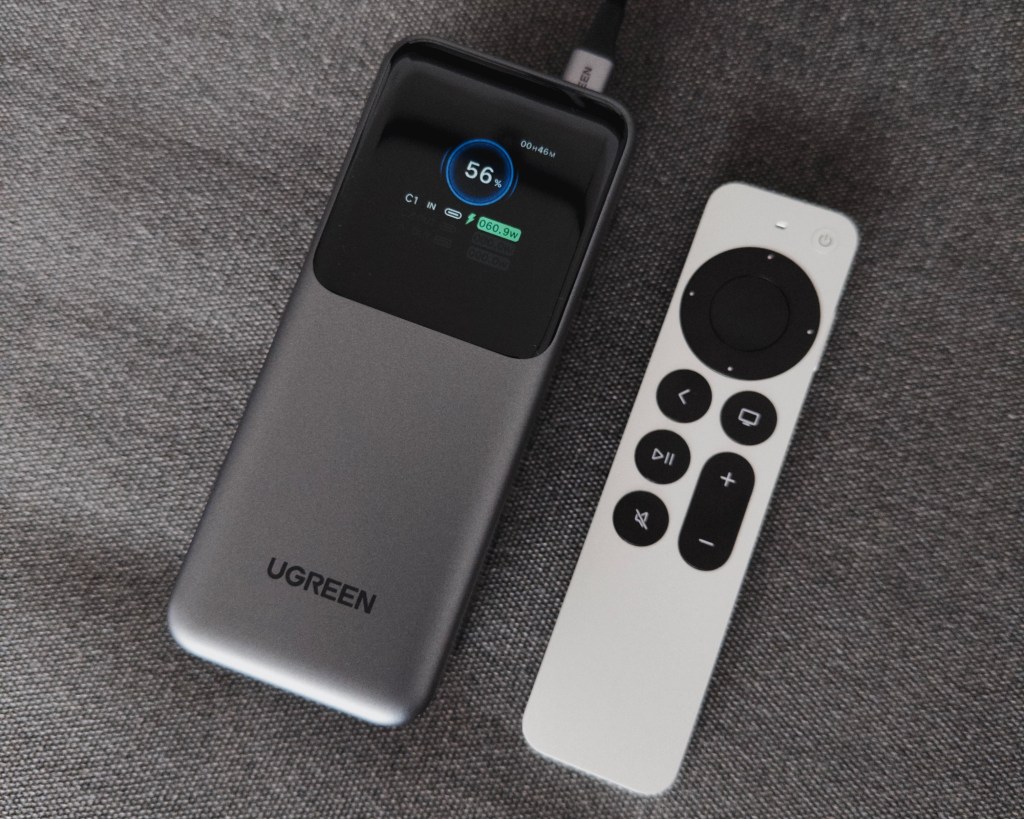
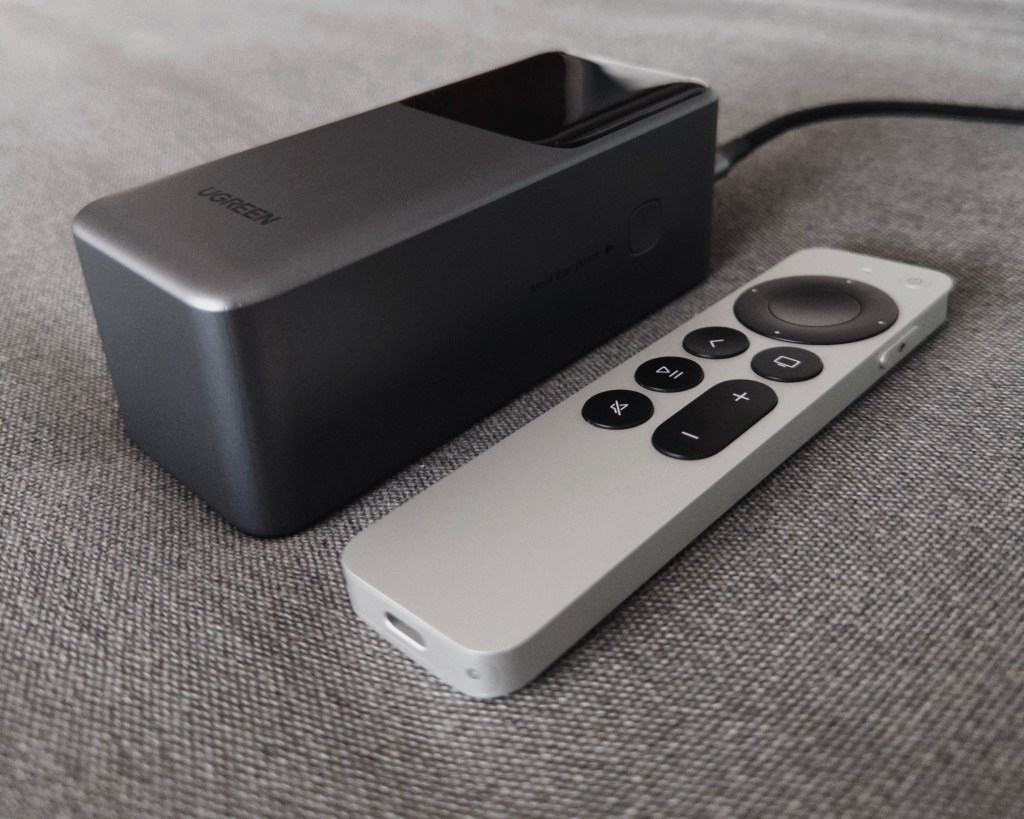
Anticipating being in libraries where plugging into wall sockets might be frowned upon, I made a premature purchase that arrived this week: the most powerful power bank I’ve ever had. My requirement was that it had to comfortably get me through a whole day or more of using everything from my phone to a MacBook to a Vision Pro.
And so I did some research on what a modern power bank looks like, and decided Ugreen’s Nexode lineup offers the best value. Anker has some competitive ones in their Prime series, but they’re twice the price and (as I discussed with Michael) they’re not even that reliable or safe these days.
If you haven’t bought a power bank in recent times, you might be surprised by what they can do now. For starters, the one I got has a 20,000mah capacity with a maximum total output of 130W over 2 USB-C PD ports and a USB-A one for legacy devices. That’s enough bandwidth to fast charge two MacBook Pros at the same time. There’s also a digital display that shows you real-time power draw stats, and estimates of how long you’ve got before the battery is depleted (or fully recharged). Ugreen claims that it uses EV-grade batteries that can stay above 80% capacity for 1,000 charge cycles (Apple’s guidance on their batteries is only 500 cycles, for comparison). Given that coworking spaces provide lots of power points, I don’t really need one now but it’s good to have around?
For the record, I’m still undecided if I actually would whip out the Vision Pro in a coworking space. But I can’t imagine not using it for an entire month. This week, I wandered into a conversation in inSpaze (an immersive social network I wrote about here) and found myself invited to a ‘live’ test of a new feature. It essentially lets you upload a large video file (say, a home movie or film that you absolutely have the distribution rights for), and invite others to watch it with you in real time.
The final release will include a special 3D environment suited for watching videos, but for this test we were just in the usual “living room” environment. Spontaneously watching a film with strangers was more fun than it sounds. Everyone was well behaved and went on mute, chatting over text instead. In that way it was better than watching a film in a real theater with inconsiderate whisperers. We gave our feedback and suggestions afterwards, and I said that a visual/spatial way to express emotions like surprise or amusement would be nice to have, better to subtly feel a sense of community with everyone else in the theater.
===
I also tried a bunch of new camera apps. Halide really started a trend with their Process Zero mode, and now I’m seeing new and existing apps tout a “no AI” approach. I won’t link the more blatant copycats, but will quickly mention a few that go beyond just adding a RAW capture feature.
Fig Camera is currently in beta and offers a novel minimal camera UI, along with the ability to create your own camera-capture-to-file processing pipeline with LUT files. It also has a couple of options for taking more natural photos with less “AI” and Smart HDR, etc.
Mood.Camera is more of a traditional retro camera app with a selection of film-inspired filters, but it also lets you select from different levels of dynamic range enhancements: from zero (expect harsh, blown highlights) to an ‘Extended’ setting that’s even more artificial than Apple’s defaults. I really liked how the dev has modeled certain aspects of lo-fi film photography that are very hard to achieve with pure HSL sliders and presets (like the ones I’m fond of making in Darkroom). Stuff like different grain sizes, halation, and textures. I impulse bought the lifetime unlock for S$20 and now slightly regret it because the color shifts are quite strong and there’s no way to turn them down at this time.
Lampa also captures pure sensor data before Apple’s process gets a chance to stack and merge and overdo the brightness. It then puts your photos through their own RAW development profiles (the app description says they’re not “just filters”). There’s no option to shoot with Apple’s processing, unlike Fig and Mood. Surprisingly, Lampa only offers four distinct and pleasantly subtle looks, unlike the plethora of filters standard in Mood.Camera and most others. I’m a fan of this minimal approach but unfortunately the pricing model is maximalist and they want S$40/yr.
Bonus: if you’ve been shooting RAW files with Halide’s Process Zero (or any other app’s single-capture RAW — not to be confused with ProRAW), you might appreciate this Darkroom preset I made that emulates the high contrast monochrome look that the Ricoh GR cameras are famous for. I repeat, they are tuned for the brightness profile of iPhone RAW files.
I’ve been watching this streamer on YouTube named Pim who runs a channel called 4AM Laundry. Every weekend, he sets off with a backpack full of batteries and modems, and livestreams his adventures going around Japan to find retro gaming gems in secondhand stores like Book-Off and Hard-Off. They are soothing and educational, and great to have on in the background as he literally does this for 9 hours at a stretch.
This week he was invited to visit the Tokyo Game Show with a press pass, so I tuned in for that. It’s an event I’ve always wanted to experience in person, even though I know it’s probably hellish and more fun in theory than practice. This was a nice way to get a glimpse of its atmosphere.
I used to drink 3–4 coffees a day, measured in espresso shots, usually from our home Nespresso machine or the office’s barista. At Starbucks prices, that would cost $10 a day or more, depending on the drink formulations. At home, about $3.20 in Nespresso pods.
While looking at where I could trim unnecessary expenses (which has resulted in pausing Netflix for the past month, I’ve barely missed it; and canceling YouTube Premium, much more painful because of how frequent the bad ads are, so perhaps a necessary expense after all), I thought perhaps I could drink more tea. After all, I like tea! It’s just a bit more bother, waiting for the water to boil and then standing there for 4–5 minutes while it brews, or at least having to remember to come back in time — I usually don’t, and then it stands there on the counter for 20 minutes becoming cold and uncommonly strong.
So I got some UK supermarket brand teabags in, because local supermarkets don’t do tea much cheaper and can’t do it much better, I assume. And boy are they ridiculously cheap. A box of 80 Sainsbury’s gold label teabags runs about S$5–6 (and less than S$2 in the UK), making each hit of caffeine about 10x cheaper than Nespresso. If you do the math, simply switching to tea will save me enough to buy a new iPhone Pro every two years.
Starbucks revenue is down, coincidence?
===
I finally got the third and final dose of my hepatitis vaccine after recovering enough from Covid — that cough is still around though. For reasons too hard to explain here, I ran into YJ immediately after, and we managed to chat for about half an hour. It was my first time seeing him in years; I think the last time was a noisy fast-food lunch just before Covid happened.
He runs a bunch of coding classes for kids and I got to sit in for a little bit of one. What I want to mention here is how astounding it is to actually watch young teens use their computers in a classroom in 2024. They swipe between desktop spaces on macOS: they’ve got windows for Discord, Telegram, YouTube, Figma, oh and some multiplayer FPS they’re killing their classmates in, casually multitasking between all of it while still participating in the lesson.
I said to YJ either we’re really old and slow, or this generation’s brains are cooked. I assume the former. We were premature in calling millennials “digital natives” because the world they and Gen Zs grew up in were not sufficiently digital. I think these kids are there now.
Media activity
I know I said I was committed to finishing Astral Chain on the Switch, but I lied. The graphics are good for the aging platform, but the story is not engaging, the levels waste my time, and the combat is over complicated for no reason. Cutting my losses.
Likewise, after 24 hours invested, I’m ready to call Yakuza: Like A Dragon the worst installment I’ve played in an otherwise brilliant series. Perhaps it’s the decision to make it more of a JRPG, with all the tedious combat and level grinding that comes with it. The city of Yokohama where you spend most of your time is so much blander than it is in Lost Judgment — just compare the maps and you’ll see Yakuza’s version is a barren wasteland where Judgment’s pops with shops and activities on every block. I’m at a stage where the game is telling me to level up before the next chapter begins, and I’m saying no to hours more of pointless street fights.
I went back to Lost Judgment to finish the add-on DLC adventure, The Kaito Files, which took about four hours. And then I deleted it along with the two games above. Clean slate and it feels good.
I decided to see more films each week, and to cut down on the decision paralysis, they don’t have to be great.
Firestarter (2022) was terrible. I was actually excited for it because I saw the original 80s film several times as a kid; it had horror vibes and terrified me. It was based on a Stephen King story and starred a child Drew Barrymore as a girl with the power to set things on fire with her mind. This new one has Zac Efron playing her dad, and there are nearly no redeeming qualities. 1/5.
I rewatched David Fincher’s The Girl with the Dragon Tattoo over two days and loved it more than I probably did when it came out. Although it wasn’t as successful, it made me want to rewatch The Girl in the Spider’s Web too, but had to confirm my vague recollection that it was a new standalone story written after Stieg Larsson’s death ended the trilogy. Turns out there are now SEVEN books in the Lisbeth Salander series, and Spider’s Web is book #4. I’ll probably read the new books first to see if they’re any good.
In the Heights was a fun musical with Lin Manuel-Miranda’s fingerprints all over it. The songs were satisfying, with the occasional clever bars that make you go ‘ooooh!’, and Jon Chu (of the Step Up films) is obviously the guy you call to direct big dance sequences. Perfect Sunday afternoon viewing. 4/5.
Completely without meaning to, I saw an Anya Taylor-Joy triple feature this week: The Northman: I was prepared for a mid-budget Viking tale, but had no idea it would be a star-studded, intensely violent, artistic triumph (4/5); The Menu: I was prepared for cannibalism and risked watching it before dinner anyway, but instead it was an absurd black comedy wrapped in layers of detestfulness — it attacks pretension with a blunt weapon forged from pretentiousness itself (3/5); and Furiosa: Jesus Christ, George Miller has action cinema running in his veins, you can’t take your eyes off the screen for a minute. Anya is incredible in all three, a victim with hidden strength. I’d like to see her do some lighter comedic material. Maybe I’ll watch Emma next week.
YouTube recommended me a music video by Kenshi Yonezu and I want to know why no one told me about this guy. I’ve seen three of his recent videos now and they’re brilliant! They make use of practical effects, clever editing, and great art direction to keep you engaged throughout the songs. Take a look:
Why do people never rinse their mouths out after brushing their teeth in the movies?
Isn’t it misleading and bad for oral hygiene education if directors leave it out for pacing reasons?
What’s the recipe for a Vesper martini?
How might a wealthy Indonesian put their billions of IDR to work beyond investing? (asking for a friend, I swear)
Aside: ‘Asking the internet’ used to be our go-to phrase, but in an era where AI might be the one answering, does the term need revising? We used to be able to say ‘asking the internet’ but what about when you’re really asking an AI? They live on the internet and were certainly trained on internet content, but the old definition meant looking up content and new replies created by people; what do we call it when the answers AI generated? Keeping in mind that these answers may well be wrong, and in ways different from how a human might be wrong, it doesn’t feel like we should use the same terms. Or maybe we’ll keep referring to any hive mind as the internet?
Can I go a week without talking about AI? I think those days may be behind us.
Even iA Writer, the Markdown text editor I use for these updates, released a new update with an AI-related feature. No, it’s not automatically finishing your sentences or summarizing your essays. They’re all about the writing experience and process, and so they’re embracing how people use ChatGPT as a writing assistant, but helping them to preserve their own authentic voices. Text pasted from ChatGPT can be visually differentiated from text you wrote yourself, so you can see the Frankensteinian stitches on your monster. It also saves this info in the metadata for provenance.
This suggests that many users send text back and forth to ChatGPT so often that they end up forgetting which bits they wrote themselves, which isn’t a problem I’ve had so far, but going forward, who knows? It’s a good idea and one I’m glad they’re testing, but iA Writer has always been a niche tool for a certain kind of user. I thnk word processors with integrated AI are going to be so widely used and loved by the end of 2024 that no one will care about who did what part.
===
I made and released a new GPT, a game called Chrono Quest where you go back in time to improve humanity’s chances of beating an alien invasion. You can read more about it in my post here, but there are many ways to succeed, limited only by your imagination and problem solving inclinations. As a kid playing text adventure games, I never thought I’d see the day they could write themselves as you played. It even creates illustrations along the way, although those aren’t strictly necessary.
I’ve got some other game ideas I’ll probably get on soon over the Christmas break. OpenAI announced yesterday that the GPT “App Store” meant to open in November was being delayed until early 2024. I guess that gives me more time to learn.
===
It’s not accurate to say I didn’t get anything during the Black Friday/Cyber Monday sales. Pixelmator Pro for Mac was 50% off, and I thought it was time I upgraded to it from regular ol’ Pixelmator, which I must have bought over ten years ago for personal use as a substitute for Photoshop. Those were the days of per-once, use-forever software. To the developers’ credit, Pixelmator Pro is still offered through that model, although their newest app, Photomator, prefers a subscription pricing plan. The latter just won Apple’s Mac App of the Year award, by the way.
Pixelmator Pro is more than just a Photoshop-type editor now, it’s also a video and vector image editor, and comes with lots of templates for creating posters, logos, and so on. And like Photomator, it has useful ML-based features for correcting color, removing noise, and increasingly resolution of photos. These are pretty old-school and conservative by the standards of generative AI — see the recent development of Magnific AI, a tool confusingly billed as “upscaling” when it’s really closer to hallucination. It can subjectively improve the quality of photos by generating plausible (but inaccurate) pixels.
Check out this “upscaling” of Tomb Raider 1.
⚡ OK, this is impressive 🤯
I also wanted to try upscaling Lara Croft from PS1 to super high resolution! Mini step by step tutorial 👇
Stumbling into the New York jazz scene by accident, I found two jazz artists I’d like to recommend: Brandee Younger and Samara Joy. Both already have a couple of albums out.
Younger is a harpist who blends genres and leans modern. You’ll hear some hip-hop production, and it’s really not what you think when you hear the word “harp”. Her new album is Brand New Life, and is apparently based on and inspired the work of legendary harpist Dorothy Ashby, who I was also ignorant of. This is a weird observation, but hear me out. The opening track, the previously unrecorded, Ashby-written piece You’re A Girl For One Man Only, has a haunting melodic fragment that I think I recognize from… the soundtrack of the Japanese game/anime Steins;Gate of all things?!
Samara Joy is a much more traditional vocalist, but what an incredible instrument her voice is. I’ll leave a video of her covering Lush Life below and you’ll see what I mean. I’m about to put her Christmas EP, A Joyful Holiday, on and get some lunch. See y’all later.
(This week’s featured image was taken at a new mall that’s sprung up in Holland Village this weekend. It’s disconcerting; the massive development has been hidden behind hoardings for the past few years, and now revealed, it’s an unexpected contrast to the other old buildings and shopfronts, like a bionic arm of mediocre high street brands slapped onto an aging body.)
The nation voted for a new president this weekend and the winner was Mr. Tharman Shanmugaratnam, which autocorrect changes to “That Man” (a tad disrespectful in my opinion). He got 70% of the vote which is pretty solid, but nobody’s surprised on account of how well liked and competent he is. It’s worth mentioning how painless the process was: my vote was in the ballot box less than three minutes after I showed up, and I was back home watching TV in 15.
Appropriately, we started Jury Duty on Amazon Prime Video and I think it’s gonna be great. It’s a pseudo-reality show where one man thinks he’s on the jury for an actual case but the whole thing is staged and everyone else is an actor. I’m watching this and wondering if everyone’s following a tight script or just improvising based on their characters, because there are events happening all the time whether the mark witnesses them or not.
That real-time play concept always makes me think of The Last Express, a classic but underplayed PC game by Jordan Mechner set on the Orient Express. It kicks off with a murder onboard and you have to move around the train investigating and staying alive amidst political intrigue and wartime spy stuff. Events are always happening, and if you’re not in the right place at the right time, you’ll miss crucial conversations. You can experience this for yourself on iOS but the app hasn’t been updated in five years and may be removed by Apple soon if they stick to their controversial plans.
A lot of other TV was seen. We finally finished season 3 of For All Mankind, an extremely strong show on Apple TV+. I binged all of the anime Oshi no Ko which is as great as everyone says; I don’t think I’ve ever seen a stronger (or longer) first episode. It’s a 90-minute movie in itself. I’m now midway through another highly rated anime: last year’s Lycoris Recoil, on Netflix. And on Michael’s recommendation we started on a Japanese drama, My Dear Exes, which is very enjoyable so far, maybe because it doesn’t feel like typical Japanese TV. It’s snappier and funnier somehow.
Oh, if Jordan Mechner sounded familiar earlier, it’s because he’s the man who created Karateka and Prince of Persia. And if you want to experience the making of a gaming classic, a new playable history lesson on The Making of Karateka is now out. And in a case of lovely things cosmically coming together, it was helmed by former Wired games editor Chris Kohler, who also wrote the article on Japanese curry that probably changed my life.
Staying on topic, we went down to the Japan Rail Cafe (operated by the actual JR East railway company from Japan, for some reason) in Tanjong Pagar because I’d heard they were doing a tie-up with the Kanazawa style Japanese chain, Champion Curry, for one month only. I had my first Champion Curry back in March, after meaning to check it out for years, and while it didn’t unseat my current favorites, it was still decent by Japanese standards and incredible by Singaporean ones. They sold a small sized plate here for S$19.90 including a drink, but it was sadly inauthentic. The curry’s consistency and deployment over the rice is not going to qualify for a Kanazawa cultural medallion any time soon, but I guess it was good enough that I’d take it any day over most local competition. But I still hope they open a proper operation locally someday and accomplish what Go Go Curry failed to do.
Champion Curry in JapanChampion Curry in Singapore
===
I was suddenly inspired to make a new series of playlists, which will periodically capture what I’m listening to, sequenced like a proper mixtape. If I had the skills to make a DJ mix of them, I would! Here’s BLixTape #1 for my Apple Music fam.
And the tracklist for people still on *ahem* lesser services:
Gold -Mata Au Hi Made- (Taku’s Twice Upon A Time Remix) — Hikaru Utada (I said I wasn’t a fan of the regular version but this remix works!)
TGIF — XG
bad idea right? — Olivia Rodrigo
You Are Not My Friend — Tessa Violet
Dancing In The Courthouse — Dominic Fike
For Granted — Yaeji
Bittersweet Goodbye — Issey Cross
To be honest (SG Lewis Remix) — Christine and the Queens
Making this involved a detour into the world of NewJeans’ music videos, which are pretty conceptually twisted and seem to comment on the parasocial relationships fans have with them. For example, in the mostly sunny poppy video for ETA, the girls might only be hallucinations seen by a sick fan, telling her that her boyfriend is cheating on her with someone at a party. So she ends up murdering him and the girl with her car! I guess this is what it takes to stand out now.
Let’s end on a nice note with another video I came across on YouTube while checking out more electronic music. This guy Don Whiting also does a great job killing it on the road — performing a two-hour drum & bass set on a bike, accompanied by a huge entourage of other cyclists. It looks like an awesome day out, at a pace even I could probably handle.
Our fridge is dying. After some eight years of dutifully cooling and freezing our food reserves, it’s losing its mind. Like a soldier left to survive too long in the jungle, it can’t tell right from wrong anymore, and it’s probably a threat to someone’s life. It started midweek when I decided to get some ice-cream and found the unopened tub mushy and soft to the touch. Ditto blocks of frozen salmon — uh oh, not a good sign.
I’ve realized in recent years that I get disproportionately upset when things go wrong in the household. They’re like waves rattling loose the stones in my psychological seawall; things at home simply need to be predictable, dependable, safe. Maybe it’s the result of some trauma. Maybe the outside world is just too much sometimes.
A new fridge has been viewed and paid for now, it will be roused from its Korean factory-induced slumber this Monday and loaded up with every surviving vegetable and condiment. I get images of them as war refugees lining up to get on a boat. They’re the tough ones, made of more shelf stable stuff. Pour one out for their fallen brothers: the spoils of war.
Do you know what new fridges cost these days? I certainly did not. I’m pretty sure our last one was under S$1,000, but they cost more now. Blame inflation, the chip shortage, whatever, but the ones under a grand now are the brands that probably don’t come to mind when you think refrigerators: Whirlpool, Electrolux, Sharp, and local OEM brands you wouldn’t think of at all. So now we’ll have our very first Samsung product, if you don’t count the displays and components they make for others.
Coupled with the so-called seasonal downturn in the markets now underway (supposedly the August and September months before a US election year tend to see significant corrections), there have been quite a few conversations about everyone feeling poor and worried. More than usual, anyway. I know one has to take a long view of these things, but the lack of bright spots is a little daunting.
CNA put out a two-part documentary on Singapore’s fiscal reserves, promising unprecedented access and interviews, which I found quite enlightening. There was a visit to a secret warehouse literally filled with tons of gold, and stories about how this war chest came into being from the early days of our independence. It had not occurred to me before that our reserves were used to weather the 2008 finance crisis and Covid without issuing more debt, a luxury most countries did not have. Nor that one of the reasons we’re able to enjoy such a low tax rate is that annual income from invested assets helps to offset spending on public infrastructure.
Here are the episodes on YouTube:
===
I had fun this week with TikTok’s “Aged” filter, which is certainly not a new concept as far as apps are concerned, but it’s probably the most advanced execution yet. Through a blend of machine learning with harvested personal data from millions of non-consenting people and regular ol’ voodoo, it shows you what you’ll look like as a pensioner (should pension funds survive the financial end times). Some people have tested it on photos of celebrities when they were younger, and the aged photos reflect how they really look now, so… this is probably how you’ll turn out! Might as well get comfortable with it.
It turns out that old me will look kinda like one of my uncles, and I’ve been having fun recording aged videos in a wheezing voice and sending them to friends and colleagues.
Some of the other trending filters on TikTok are pretty sophisticated mini apps that involve a prompt box for generative AI. It takes a photo of you and will restyle it as a bronze statue, an anime girl, or whatever you ask it to do. They are also incredibly fast, compared to other generative AI image tools, which suggests Bytedance is burning some serious cash to power these models and gain AI mindshare.
I also came across a new product called BeFake that will try to take this one feature and turn it into an entire social media network based on posting creative generative AI selfies. It makes some sense — you don’t have to be camera ready (already a low bar with some of the beauty filters now available), and you can showcase wild ideas. Will this sweep the world only for people to get tired of unreality and swing back to finding “boring” posts interesting? Stranger things have happened.
===
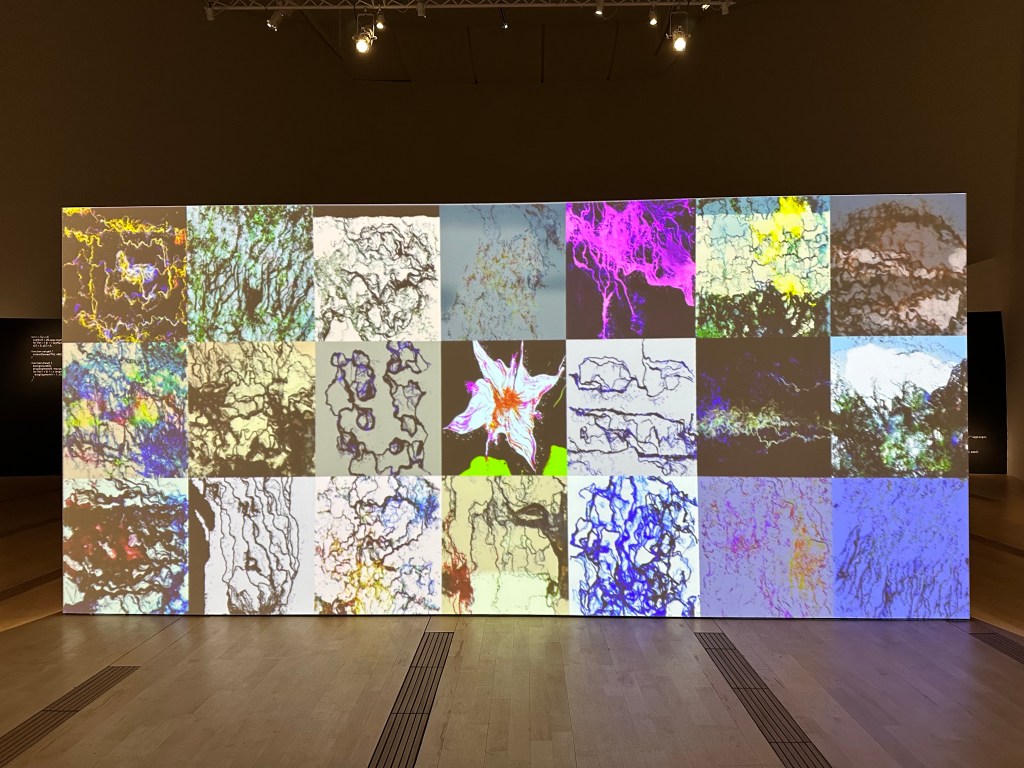
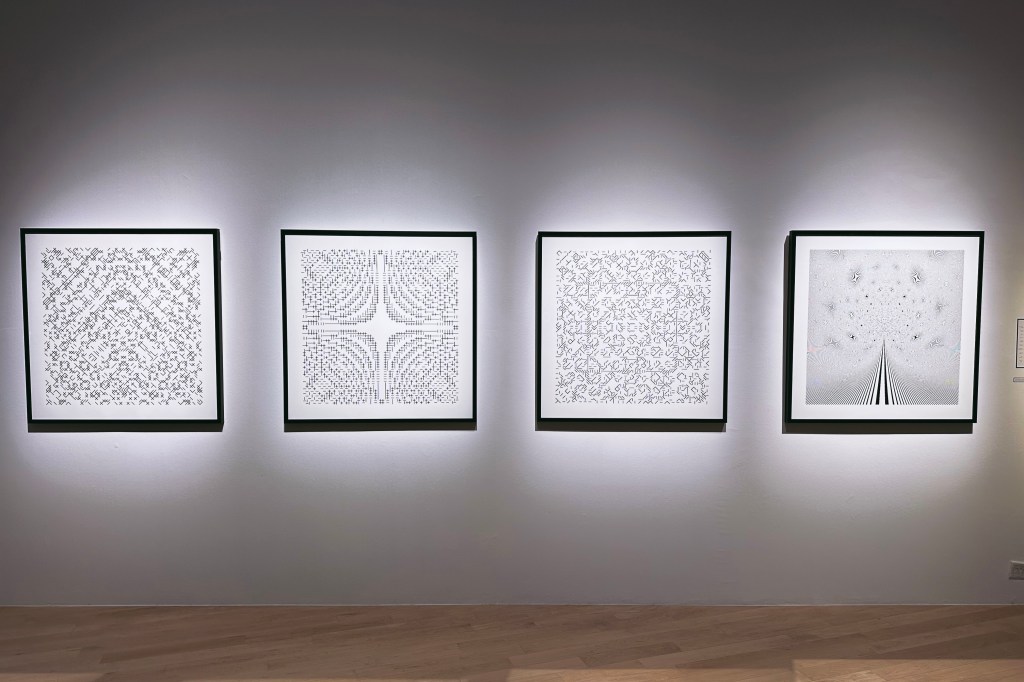
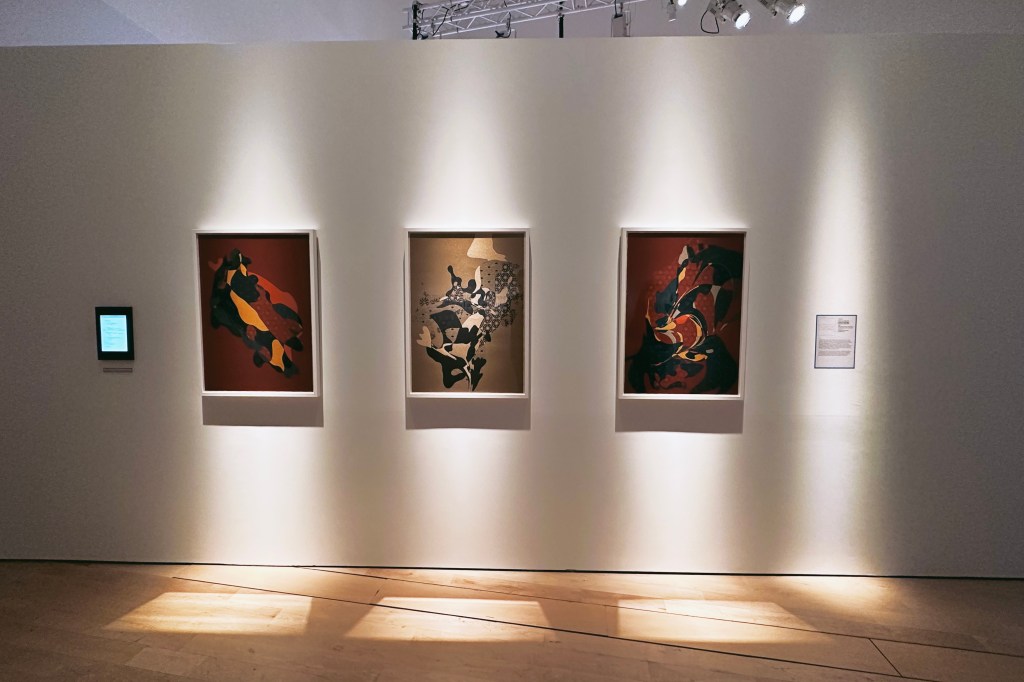
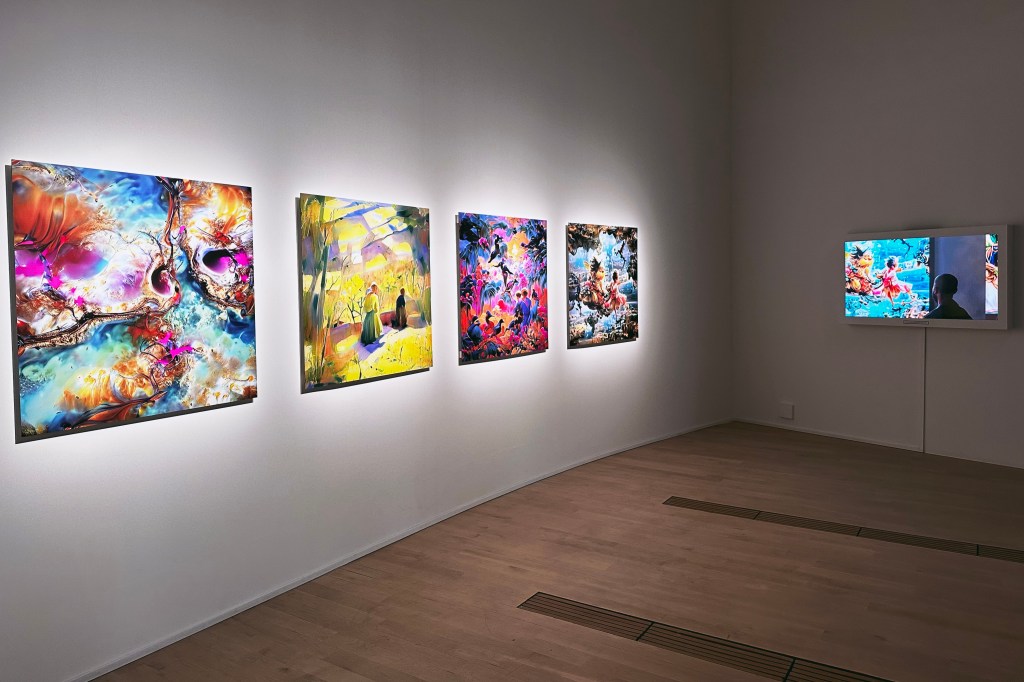
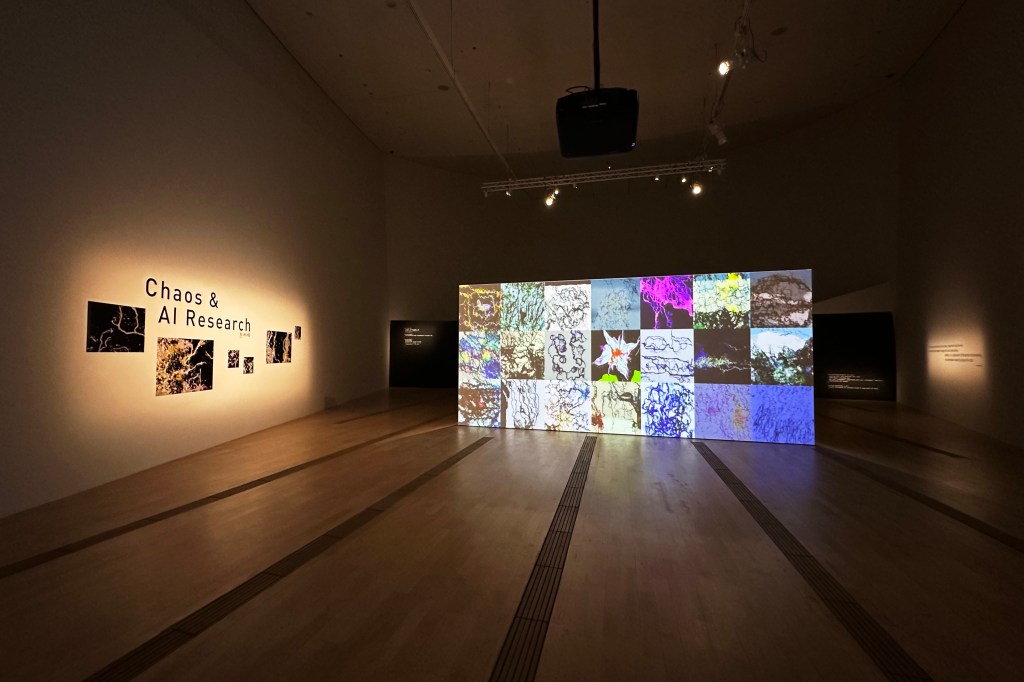
On Sunday we went to the ArtScience Museum (at the Marina Bay Sands) for a rare high-profile exhibition of digital art. Notes from the Ether says it’s focused on NFTs and AI, but it’s also got a lot of generative art that just happens to be encoded on blockchains. I was especially excited to see the inclusion of work by DEAFBEEF and Emily Xie (Memories of Qilin), and Tyler Hobbs and Dandelion Wist’s QQL project was also presented for anyone to play with.
Obviously this movement is in a weird sort of place at the moment. Valuations for most projects are as volatile as shitcoins, and a few “blue chip” projects like the ones displayed are more stable, but only about as much as bitcoin. Because NFT art is defined in large part by the medium, which is currently inseparable from talk of price and value, it’s hard to have a viewing experience divorced from these considerations. You don’t really visit a Monet exhibition and think about how much everything costs. Which is why the Open Editions I mentioned last week are interesting, and likewise with this event, which offers you a free NFT at the end. You get to co-create an artwork with an AI engine by uploading a photo of your own to be transformed, and it’s minted as a Tezos NFT if you’d like. I thought it was a very cool collectible to remember our visit by.
I don’t think I’ve ever seen more affordable tickets at this museum, just S$6 with a further 30% off if you sign up for a free “Sands Lifestyle” account, so there’s little excuse not to go if you’re remotely interested in this stuff.
Since we were already there, we also hopped into Sensory Odyssey: Into the Heart of Our Living World which pairs 8K video projections of natural scenes with immersive sounds and scents. In one space you’re smelling fresh air and damp earth in a rainforest, and in the next you’re underground with mole rats. It’s very cool, but ruined by small children being allowed to run loose in front of screens (can’t really be helped), and elderly museum staff loudly declaring that “this is a night savannah, very dark, no need to be scared!” (can be helped with training) in such a way that any illusion of being in a savannah is totally pierced — unless you’ve gone on a safari tour with a gaggle of Singaporean aunties, of course.
I’ve implemented a new blog theme, which you’ll notice if reading this on the web (as opposed to an RSS feed reader or the email newsletter — I’m surprised at how few people still use the former, and that people are using the latter). For the first time in many years, I’m experimenting with having a listing page instead of just having every post on a long page. Let me know if you think this is better.
A new cafe opened nearby and we’ve made something of a new routine to go there on Saturday mornings and spend quality time together. The coffee’s good, I get to see and hear people in this community that I’m normally ignorant of, and most importantly, it’s a chance to see cute neighborhood dogs.
After last weekend’s work commitments, I took Monday off to chill and fly my underused Mavic Mini 1 drone with my dad (who has a newer FPV model that he flies with a video headset). Hmm, I wonder if you’ll be able to use your Apple Vision Pro for such applications — I can’t see why not.
Bookworm mode has been engaged: I finished Anthony McCarten’s Going Zero, and both started and finished A.G. Riddle’s Quantum Radio this week. Along with Daniel Suarez’s Critical Mass a month ago, that’s a big dose of SF — so I’m now halfway through Sayaka Murata’s Life Ceremony, a slim collection of weird short stories. Whenever life feels like a directionless mess, I always find reading to be the cure.
Shitty films, such as the latest Fast and Furious installment (Fast X), where I couldn’t even make it past the halfway mark, don’t offer the same solace. It’s not only dumb and unengaging, it’s not even engaged with itself; the writing is awful and nothing makes you care at all. So instead, I watched Dwayne Johnson in Skyscaper on Netflix, and although it was a dumb and kinda bad action movie, it at least had a pulse.
===
Now let’s talk Beats, baby.
The long-awaited update to the Beats Studio over-ear headphone line finally dropped with the new Beats Studio Pro. My first pair was the Beats Studio 2 circa 2013, with that iconic Ammunition-designed silhouette (the original Studios were fugly, like everything from the early Monster-made Beats by Dre era) — all smooth swooping lines and a low profile on the ears. It’s a design so good they didn’t really change it in 2017 with the Beats Studio 3, and it remains untouched in 2023’s version.
Throughout all incarnations, the sound quality was, to be blunt, crappy. I love a good design as much as the next guy, but when it comes at the expense of audio quality, it’s a hard sell. But somehow, I ended up buying three pairs. Go figure.
After being acquired by Apple, there was hope that sound quality would improve, and indeed the entire Beats line has received significant upgrades, with two exceptions: the on-ear Solo series, which got a short-lived premium noise-canceling reboot with the Beats Solo Pro, and the Studio series. After the Beats Solo Pro was discontinued (my guess is Solo buyers are price sensitive and so the Pro model flopped), they went back to selling the pre-Apple Beats Solo 3 Wireless model and never bothered to update the Beats Studio 3 Wireless. Until now!
The new Beats Studio Pro looks like a proper contender for anyone on Android and those okay with skipping the latest Apple features (e.g. adaptive audio is only coming to second-generation AirPods Pro later this year). It does however have the key ones: spatial audio with dynamic head tracking, improved ANC, and USB-C support including lossless audio over a cable. Given the improved sound quality of recent releases like the Beats Fit Pro and Beats Studio Buds+, I have high hopes for these.
The Beats video aesthetic is still fresh, like an Apple design language from a parallel universe.
Beats recently brought Samuel Ross onboard as “principal design consultant”. His job? Picking out colors. Sandstone is a good-looking warm shade of white; Navy seems like an improvement on previous versions, darker and less saturated; Black is, well, black; and Deep Brown is the interesting new addition here. It reminds me of the original Zune. Ross says in the product video that he was going for “elevated” looks, but man, these are plastic. Luxe colors on plastic? Personally, I would’ve preferred a bit more energy and attitude.
However, a long-standing concern remains: the clamping force. These headphones have always been a bit tight, making them uncomfortable to wear with glasses. Early reviews indicate no change in this aspect, so that’s a good excuse to stop myself from getting them.
If I do, Sandstone has my name on it.
===
Someone mentioned how you could use ChatGPT as a therapist, which prompted me to try writing a prompt that anyone could use for this purpose. Keep in mind that you’ll get better results with GPT-4, and of course this is no substitute for real professional care and advice.
That said! I tried it out on a couple of scenarios and it was pretty good at guiding a conversation, suggesting strategies like reframing your thoughts, and helping you to reflect on your situation. I’d suggest talking to it like you would a real person, and saying things like “see you next week, what do you think we should talk about then?”
The last one came into view after watching her breathtaking performance of some Chopin on NPR’s Tiny Desk Concerts of all places (embedded below). I only just learned that she was diagnosed with multiple sclerosis (like Jacqueline Du Pré, who I mentioned a few weeks ago) in 2018, but has apparently managed to overcome it for the moment. It’s a cosmic joke that bad things happen to the most incredible talents.
Six years after I booted up my Nintendo Switch for the first time and slotted in The Legend of Zelda: Breath of the Wild’s cartridge, I finally took on the final boss this week and finished the game. Before you think this game is a monster (although it is), I effectively took a 5.5 year hiatus.
My first experience with the game was both exhilarating and overwhelming — here was a non-linear open-world adventure designed to be an exercise in self determinism. Yes, the princess has been locked in a bubble, literally waiting 100 years for you to wake up and save the kingdom, but that didn’t mean you had to hurry. You could decide to be a chef and spend time gathering rare ingredients and experimenting with recipes. You could examine every curious crevice of the natural landscape to discover the Korok seeds deviously placed by the designers, or climb foreboding mountains just for the hell of it (you’d probably find Korok seeds for your trouble).
This was a game that demanded longer play sessions — no dipping in for just five minutes — and frequent ones at that. You kind of had to remember what you were last doing and where you wanted to go next. So, faced with too much commitment and mental load, I started to distance myself from it and play other games instead.
If you’ve been following along in recent weeks, you’d know that the release of the sequel, Tears of the Kingdom, spurred me to try completing it once and for all. And it’s been quite the journey: I had to re-familiarize myself with the game’s laws of physics, Link’s complicated powers, and in the process discovered that I’d spent those first 40 hours or so essentially mucking around in just one corner of the world.
By last week, I’d finally uncovered the whole world’s layout, but with some places still unexplored and doubtlessly many secrets left to be found. I’d gotten good at fighting, and was told that I was ready for the final showdown with “Calamity Ganon”. Except… I wasn’t, not mentally.
So I spent this week’s game time mucking about and doing inconsequential side quests, like helping a group of arguing scientists collect evidence of giant monster skeletons using my digital camera (yes). And then, on Friday night, I said ‘fuck it’ fought my way to the center of the map, took the big baddie out, and saw the credits roll. It was an absolute anticlimax, partly because I was in a hurry and took a bunch of sneaky shortcuts to the final fight, instead of exploring the giant castle like I suppose I was meant to do.
So I guess the moral of the story is err… heh… it’s the journey, not the destination? And as I was telling Cien earlier that day, the game is designed so that it’s possible to start the game and simply walk a beeline straight to the final boss and kill him instantly, if you had the skills and weren’t interested in slowly unfolding the whole experience for yourself. So this implicit message was always present, and I’m glad I took the time this year to enjoy more of it.
===
Speaking of picking up old games again, I re-subscribed to the New York Times in order to play their crosswords. The last time I played a lot of them was when they released a Nintendo DS game back in 2007. In recent weeks, a group of people at work starting playing them collaboratively, and I found the experience fun enough to give it a shot. The current promotional price is just $20 USD for the first year of All Access membership ($90 afterwards).
With the installation of the NYT Games app, I’ve also got the main news app again, of course. It does a couple of things really well, namely it presents simple text and images beautifully with a handful of layout variations, and it has a personalized tab called “For You” that is finite and completable each day.
I didn’t realize how much I’d missed having a primary source of news in my life, with its own Home Screen button, but of course I’m prioritizing it only because I paid for it. I’m still enjoying Artifact, and I’ve just told it that I have an NYT sub now and it promises to prioritize it for me. Artifact has a real chance here of being the winning news aggregator.
It makes me upset how Apple Music’s personalized tab could be so much better, like an AI-compiled digest of what’s new in music that I’d be interested in. Fingers crossed for WWDC next week! (Disclaimer: I know nothing.)
===
Friday was Vesak Day here and a public holiday, so I spent the afternoon with Peishan and Cien visiting two cafes, and let me just say I am disappointed that we are allowing so many Instagrammable cafes to flourish. They’re all variations of the same bare concrete interior, tables and stools placed closely together, serviceable coffee + $20 and up full English breakfast plates template of an F&B business. We managed to land in two that offered differented value: Acoustics on Neil Road, which understands that bare concrete is a terrible environment to have conversations or listen to music in, so they invested in sound dampening wall panels and impressive looking speakers; and the Allpress pop-up cafe down the street on on 73 Duxton Road which, well, offers Allpress beans.
===
Back to AI, Jose pointed me at the Planet Money podcast which is currently producing a series of episodes about GPT. They’re using it to write and create a full actual episode, and documenting the process. Parts 1, 2, and 3 (the actual AI-produced episode). Listening to the first episode, I observed them going through the same cycle of revelations that I went through recently as I experimented with using AI to do elements of my own job. The initial curiosity and excitement, the sudden surprise at how good it is, the disbelief when it’s sometimes even better, and the slow acceptance of the chaos to come as you realize no one knows how this is gonna turn out. We live in interesting times.
===
I watched the finale of Ted Lasso’s third and possibly final season. Season 1 is everyone’s pick for the strongest arc, but I think Season 3 is right behind it now. Season 2 was disjointed and strange to me, so quite a distant third place.
I said of the episode in a group chat:
The Ted Lasso finale is one of the best I’ve ever seen. On brand, unashamed, fan servicing, heavy-handed symbolic closure with all the love in the world. 5 stars.
There’s a line in it about how absolute perfection is boring, and by being imperfect on its own terms, the final episode was effectively, truly perfect. They made some polarizing choices this year and didn’t give us what we wanted at times, but the last episode gives it all. It mirrors the beginning, it offers thematic and narrative closure, and it gives room for the satisfying character growth it nurtured to show itself off.
Their choice of song to play over the final minutes was spot on, obvious, schmaltzy, perfect. It might have been better if they’d used my favorite version featuring Fiona Apple, but what do I know.
===
A couple of weeks ago Michael pinged me to talk about Daft Punk, after I wrote about Random Access Memories, saying sheepishly that Discovery was probably his favorite album, as if RAM was a purer musical endeavor and Discovery was sonic candy for philistines. I was mostly surprised that anyone could fail to love RAM best, and admitted that I hadn’t heard Discovery in many years and hardly knew it well.
Then I saw this YouTube video by “Digging The Greats”, in which they break down the achievements in sampling that Discovery contains. Absolute magic. I keep telling myself to spend more time on shows like Song Exploder and Watch The Sound on Apple TV+ and This Is Pop, but I never seem to make the time. What I love about this 15-minute video is they don’t just play the samples and show you what Daft Punk did; they load them up and perform the melodies live on an MPC to show you how the band did it.
Then on Sunday night, the algorithms delivered me this endearingly old-fashioned 20-minute talk from Pearl Acoustics (they seem to make loudspeakers) in which their technical director, Harley Lovegrove, inducts RAM into his list of Great Recordings, and proceeds to discuss why he thinks the production and musicianship on it are noteworthy. He’s got a trained ear as you’d expect, and spends quite a bit of time talking about the incredible Giorgio by Moroder, pointing out things like how there are two different drummers on the track (I had no idea!). What makes it more fun is the fact that this is clearly not the kind of music he normally reviews — other Great Recordings include Jacqueline Du Pré’s Elgar Cello Concerto (this often moves me to tears on good headphones), and Pink Floyd’s The Dark Side of the Moon. Anyway, loved this video and it helped me appreciate a favorite album even more.
===
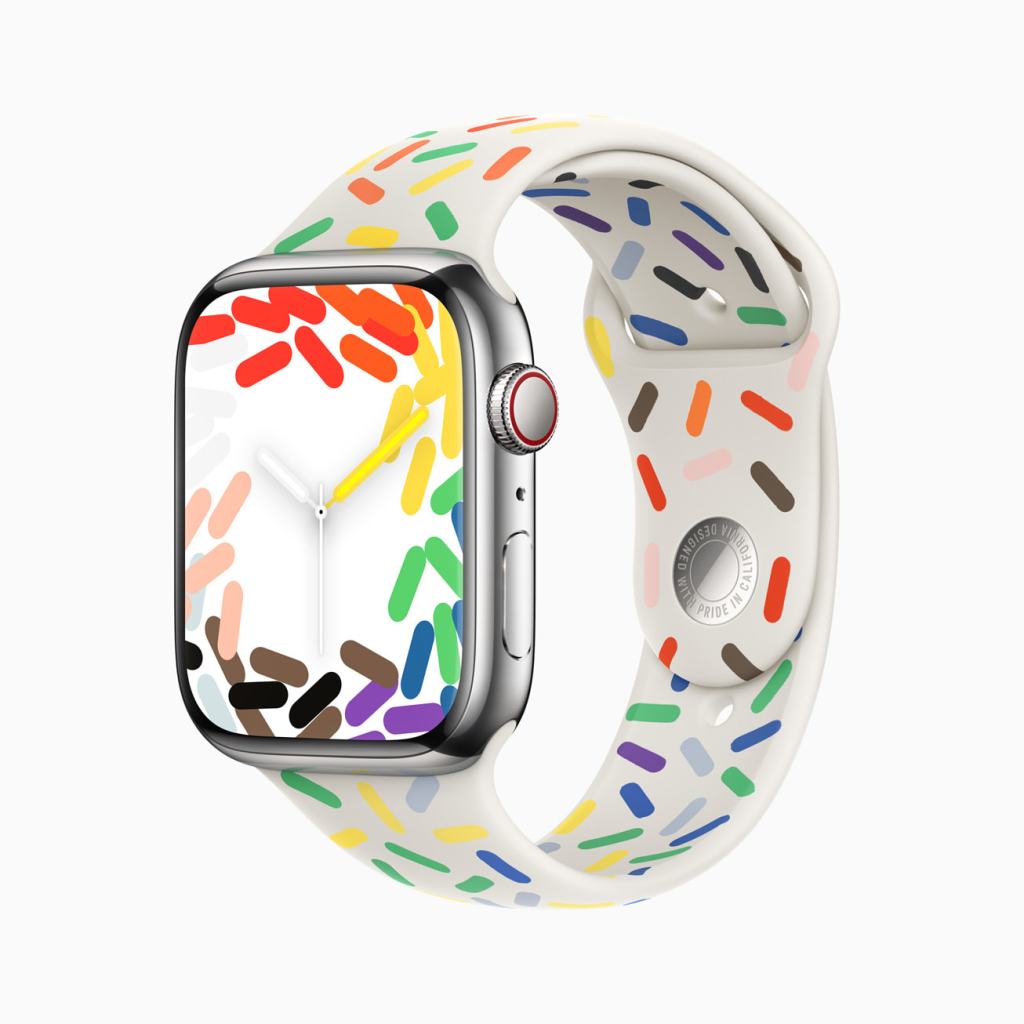
A different sort of band, but I bought the 2023 Pride band for my Apple Watch. Rather than the heavy and vibrant rainbow bars of previous versions, this year’s design has a white base with scattered color pills. It looks like birthday cake sprinkles or confetti, which is a fun vibe you don’t see in any other official Apple Watch bands, almost like something Swatch would do.
===
And now, for this week’s conclusion, brought to you by GPT:
In wrapping up, there’s something uniquely human about picking up where we left off, be it a beloved video game, a trusted news source, or a favorite TV show. That’s the joy of life’s continuity, the pleasure in seeing where a journey takes us, especially when it’s one we didn’t quite finish the first time around. These past weeks, I’ve immersed myself in familiar worlds, marveled at the capabilities of AI, and watched characters grow, and it made me realize how we continuously strive for balance, exploration, and ultimately, an understanding of our own story. We may stumble, we may take detours, but isn’t that the beauty of life’s game?


















 sangsara.net