
I turned 44. After a minor celebration, I expected to start figuring out my new daily routine, but then some bad news landed and things got worse very quickly in the first half of the week.
It was only two weeks ago that I mentioned how a family friend, someone who was a significant presence for most of my youth, was recovering from surgery while battling cancer, and now I’m sad to record that she didn’t make it. Cancer is especially cruel because it tells you to expect the worst, and still manages to surprise. I thought we’d have more time. And this happened far away, across screens and apps, limiting how much I could know and help — so the loss was twice a void, and the fact of death was conveyed by a sequence of lit-up pixels on an iPhone.
Part of what inspired me to take some time off was how I felt unable before to give important things like this my full attention. There were moments I almost didn’t answer messages or pick up the phone quickly enough for a literal life and death matter, because of something else that should have been a distraction at best. Together with other things I want to focus on more, it felt like a recalibration of priorities was due.
In the following days, it seemed like I couldn’t escape darker subjects. I tuned into NHK and landed on a grim documentary about middle-aged hikkikomori dying of starvation alone in their homes, unable to support themselves after their elderly parents passed away. I tend to think of these types of shut-ins as being in their 20s and 30s, temporarily retreating from society after some setbacks in their late-school or early-work years, but these were people in their 60s who never recovered even after four decades. For a brief moment, I wondered if that might still be in my future, but decided I would rather face the worst case of agoraphobia than run out of food at home.
I also finished Sequoia Nagamatsu’s How High We Go In The Dark somewhat unwillingly, because of how crushingly depressing it is at points. The Goodreads-like app that I’m testing, Bookshelf, has a feature called “Book Chat”, where you can discuss what you’re reading with an AI, and I told it that I couldn’t go on. It replied that “the book does touch on some heavy themes, especially in the beginning, but as you progress, you’ll notice a beautiful blend of hope, resilience, and human connection.” It was not wrong (probably plagiarized that from a bunch of reviews), but the book continued to be challenging through to the end. It’s one of those novels where multiple threads and characters finally come together and make sense as a coherent world, and manages to sidestep feeling forced or corny (although several parts should have). It was, to me, mostly a story about letting people go, and an unexpectedly sci-fi one at that.
===
It feels trivial to mention our new television now, but it provided an avenue for escape and “self-care”. At any other time, I would not have been able to shut up about how I’d been a fool to hang onto that old HD screen for nearly a decade, when the upgrade to 4K HDR is such a dramatic one. Especially given how much stuff I watch. If there’s a lesson here, it’s to stop denying yourself the small pleasures you can afford and enjoy them while you can.
===
Media activity:
- We finished Shogun, which is the most effective reminder to the world in years that Japan has a very weird relationship with death and suicide. Anna Sawai (Mariko) redeems herself here from the part she played in Monarch: Legacy of Monsters, but the MVP is Moeka Hoshi’s (Fuji) adorable haircut, which looks like two flappy dog ears on either side of her forehead.
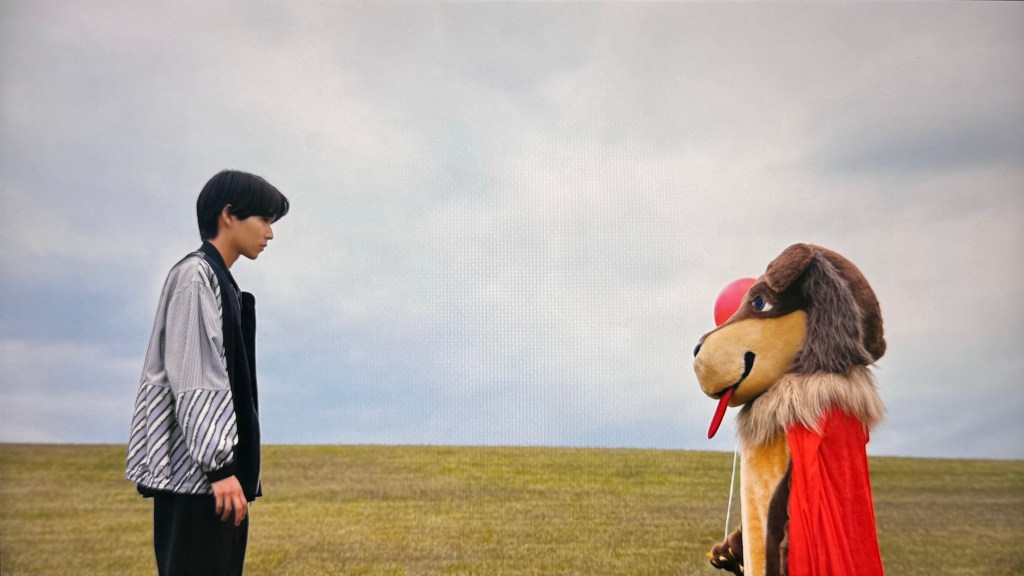
- I linked to Sawai’s Wikipedia page instead of her IMDb one because it contains the fact that she was an idol in the group Faky up to 2018. I thought the name sounded familiar, and it’s because another member, Mikako, appeared on the Netflix season of Japanese reality dating show, Is She The Wolf?, that I am NOT actually recommending here.
- I saw the final episode a few months ago and LOLed when the scene below came on. In summary: One or more of the women were secretly told to be The Wolf and string the men along, and if any of the men chose them as partners, game over. So if you’re a Japanese TV producer, what do you do to ensure everyone remembers the show’s name? Put the women in cartoony wolf suits during the emotional, tearful reveal of course.

- In an effort to save some money, I’m going to follow in Jose’s footsteps and pause my Netflix subscription while catching up on everything else we haven’t seen on Apple TV+ and Amazon Prime Video.
- I have many unfinished shows on Netflix, and many of them are so bad they’ll probably stay that way, but I wanted to finish the last three episodes of The Makanai: Cooking for the Maiko House before my subscription ends, and they were really beautiful. Hirokazu Kore-eda depicts familial ties and friendships with an intentional, unmistakable worldview that makes nearly everything he’s done among my favorites. In a show like this with innocence and sweetness at the core, he goes to the wall for it without worrying about realism. The ugliness of the world still exists, but set aside out of frame, as if to say “now is not the time”.
Coming back to what I said earlier, that might be one of my new sabbatical goals: to develop the resolve and clarity to make room for important things, and to everything else say, “now is not the time”.
 sangsara.net
Leave a comment